


AI in Medicine - curated summaries making complex issues easy to understand
Subscribed: 12Played: 147
Subscribe

© Mike Rawson
Description
AI in Medicine - Smart Summaries
Welcome to AI in Medicine - Smart Summaries, the podcast that brings cutting-edge advancements in artificial intelligence and medical research straight to your ears. In a rapidly evolving field where technology meets healthcare, staying updated can feel overwhelming. Our mission is to make complex topics accessible, engaging, and actionable for healthcare professionals, AI enthusiasts, researchers, and curious minds alike.
What You Can Expect
Every week, we delve into groundbreaking medical research, transformative AI applications.
Welcome to AI in Medicine - Smart Summaries, the podcast that brings cutting-edge advancements in artificial intelligence and medical research straight to your ears. In a rapidly evolving field where technology meets healthcare, staying updated can feel overwhelming. Our mission is to make complex topics accessible, engaging, and actionable for healthcare professionals, AI enthusiasts, researchers, and curious minds alike.
What You Can Expect
Every week, we delve into groundbreaking medical research, transformative AI applications.
73 Episodes
Reverse
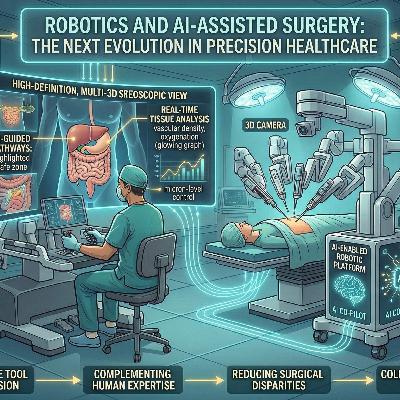
This comprehensive review examines the rapid integration of artificial intelligence and robotics within modern surgical practice. Research indicates that these advanced systems significantly enhance surgical precision and patient safety while reducing operative times and recovery periods. The text highlights innovative tools such as digital twins, neuro-visual adaptive controls, and real-time video analysis which assist surgeons in complex decision-making. While the technology offers long-term economic benefits through improved outcomes, the author acknowledges significant hurdles regarding high initial costs, data privacy, and ethical accountability. Ultimately, the sources suggest that a multidisciplinary approach is essential to ensure these life-saving innovations are implemented equitably and safely across the global healthcare landscape.
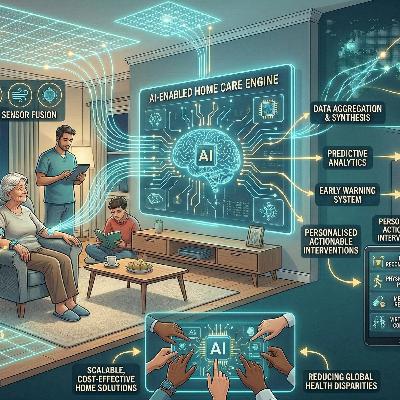
This academic review examines the evolution of AI-enabled home healthcare technologies, focusing on how medical wearables and digital diagnostics can improve chronic disease management. While these tools offer sophisticated data tracking, the authors identify significant barriers to long-term adoption, such as complex onboarding, user fatigue, and physical discomfort. To address these challenges, the text introduces the Pi-CON methodology, a framework advocating for systems that are passive, non-contact, and continuous. By shifting toward unobtrusive ambient sensing—like radar or camera-based monitoring—healthcare can move away from demanding user interactions. The source ultimately suggests that the future of smart health relies on invisible, integrated technology that prioritises user ease and data privacy. This approach ensures that medical monitoring becomes a seamless part of daily life rather than a burdensome task.

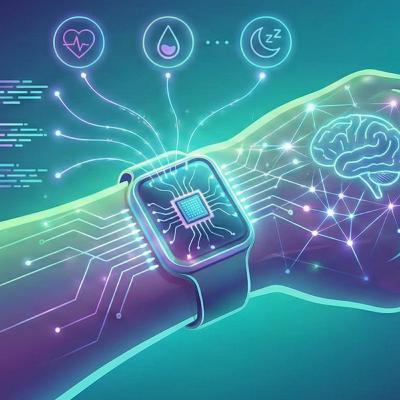
These sources provide a comprehensive review of AI-driven wearable bioelectronics and their transformative role in modern digital healthcare. The text details how advanced sensors in smartwatches, patches, and textiles monitor vital signs and biochemical markers to facilitate proactive disease detection and personalized treatments. By integrating artificial intelligence with edge computing, these devices can process complex health data locally to provide real-time alerts while enhancing data privacy. The literature also examines the fundamental materials science behind flexible, biocompatible electronics and the innovative energy-harvesting methods required for long-term operation. Finally, the sources address critical ethical, regulatory, and technical challenges, such as algorithmic bias and data security, that must be resolved to ensure global healthcare equity.

This academic review examines the transformative role of artificial intelligence within modern healthcare, highlighting its capacity to improve diagnostic accuracy, drug discovery, and surgical precision. The text details how technologies such as machine learning and deep learning process complex data to facilitate personalised treatment plans and predictive analytics. It also addresses significant implementation challenges, including data privacy, algorithmic bias, and the necessity for robust ethical frameworks. Furthermore, the authors emphasise AI’s potential to reduce global health disparities by providing scalable, cost-effective solutions for underserved and remote regions. Ultimately, the source advocates for a collaborative approach where AI serves as a sustainable tool to complement human clinical expertise.

In this episode, we explore the exciting advancements in protein folding with AlphaFold3. Here's what we cover:AlphaFold3 vs. AlphaFold2: How AlphaFold3 outperforms its predecessor in predicting the local structure of proteins and excelling in complex systems like antigen-antibody and protein-nucleic acid interactions.Faster and More Efficient: AlphaFold3 is much faster than other tools, streamlining protein folding predictions for structural biology.Limitations: Despite its advancements, AlphaFold3 still faces challenges, particularly in predicting alternative protein conformations and RNA structures.Future Refinements: Areas for improvement, such as RNA multimer predictions, where further work is needed.Tune in for a deeper dive into how AlphaFold3 is reshaping structural biology and the potential it holds for the future of protein folding research. Don’t forget to subscribe, share, and leave a review!
In this episode, we dive into the transformative role of Generative Artificial Intelligence (GenAI) in healthcare. Here's what we cover:Reducing Clinician Burnout: How GenAI can alleviate stress by streamlining routine tasks and supporting clinical decision-making.Phased Implementation: A roadmap for GenAI integration, starting with low-risk administrative tasks (e.g., automated documentation) and evolving to complex clinical functions like patient self-triage.Operational Efficiency: The potential for GenAI to optimize workflows and improve healthcare delivery.Key Concerns: Addressing challenges such as hallucinations, data privacy, and algorithmic bias in GenAI applications.Regulatory & Validation Strategies: The importance of a risk-tiered regulatory framework, local validation, and continuous human oversight.Successful Adoption: Best practices for implementing GenAI, including interdisciplinary collaboration, transparent governance, and training for both healthcare providers and patients.Don’t miss this insightful discussion on the future of AI in medicine! Be sure to subscribe, leave a review, and share this episode with your network to continue the conversation about AI's impact on healthcare.
 1
1This report provides an exhaustive analysis of this transition, forecasting the technological, clinical, and commercial trajectory of the sector over the next three years (2025–2028). It posits that the integration of Tiny Machine Learning (TinyML), advanced biosensing, and novel regulatory pathways is creating a new class of medical device: one that is continuously active, privacy-preserving by design, and capable of real-time clinical intervention without reliance on internet connectivity.
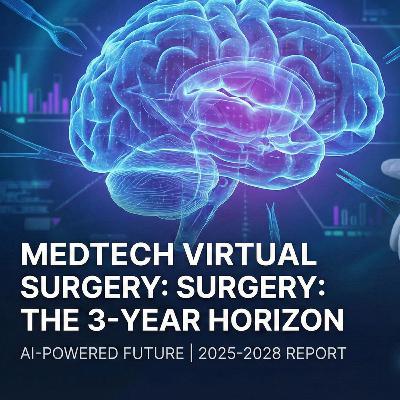
The global medical technology sector is currently navigating a profound inflection point, characterized by the transition from purely mechanical minimally invasive surgery (MIS) to intelligent, data-driven, and digitally integrated surgical ecosystems. As of late 2025, the "virtual surgery" landscape—encompassing robotic-assisted surgery (RAS), augmented reality (AR), virtual reality (VR), and artificial intelligence (AI)—has matured beyond experimental novelty into a standard of care for complex procedures. The industry is no longer defined solely by the dexterity of robotic manipulators but by the computational power, sensing capabilities, and digital connectivity that underpin them.
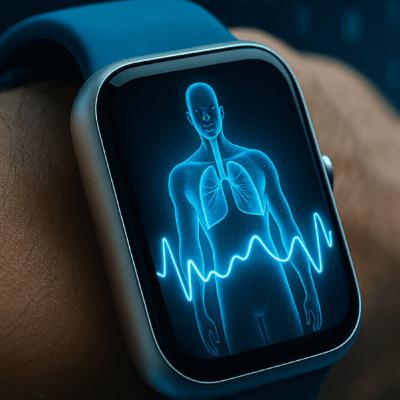
What if your wearable could think for itself — tracking your vitals, predicting risk, and acting proactively even before symptoms show?In this episode, we dive into AI in Wearable Embedded Systems for Healthcare Monitoring: A Review. We explore how cutting‑edge embedded tech, IoT sensors, and low‑power AI are combining to make health monitoring more continuous, more reliable, and more accessible than ever.You’ll hear about:How embedded systems & edge AI bring real‑time monitoring with minimal energy costsChallenges like battery life, data security, and ethical AI in these devicesWhy federated learning, explainability, and self‑powered sensors are game changersPractical use cases: chronic disease, remote care, early warning systemsIf you want to see where wearables are going next, this one’s a must-listen.
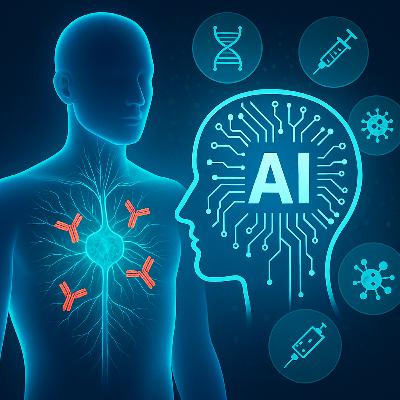
🧬 Episode Description (clickworthy, informative, optimized for Spotify/LinkedIn/YouTube)What if doctors could simulate your immune response before giving you a vaccine?In this episode, we explore the cutting-edge concept of the Immunological Digital Twin—a computational model of your immune system powered by AI and multi-omics data. This breakthrough in personalized vaccinology could transform how we prevent disease, moving far beyond the “one-size-fits-all” approach.We break down:🔍 How AI decodes your unique immune history using genomics and proteomics🧪 Why personalized vaccine strategies are already proving effective in cancer trials🛡️ How digital twins could simulate responses to flu, COVID, or even novel outbreaks⚖️ The ethical, technical, and regulatory challenges to mainstream adoptionThis is more than theory—it’s the next frontier in predictive and precision medicine.
In this episode of AI in Medicine, we spotlight 30 visionary leaders at the forefront of the AI revolution in healthcare. From diagnostics to drug discovery, precision medicine to hospital operations, these professionals are not just building tools—they’re shaping the future of medicine.We explore:How real-world healthcare challenges are being solved with AI todayThe critical role of human leadership in ethical AI implementationBreakthrough use cases in patient care, operations, and medical researchWhat makes these leaders stand out—and why it matters for the futureThis isn’t hype—it’s happening. Tune in to discover how the human-AI partnership is redefining healthcare from the inside out.
In this episode of AI in Medicine, we spotlight 30 visionary leaders at the forefront of the AI revolution in healthcare. From diagnostics to drug discovery, precision medicine to hospital operations, these professionals are not just building tools—they’re shaping the future of medicine.We explore:How real-world healthcare challenges are being solved with AI todayThe critical role of human leadership in ethical AI implementationBreakthrough use cases in patient care, operations, and medical researchWhat makes these leaders stand out—and why it matters for the futureThis isn’t hype—it’s happening. Tune in to discover how the human-AI partnership is redefining healthcare from the inside out.
In this episode of AI in Medicine, we unpack groundbreaking advances in neural interface technology—driven by machine learning. Based on a recent arXiv review, this episode explores how miniaturized neural sensors powered by embedded AI are transforming prosthetic control, real-time diagnosis (like tremor and seizure detection), and brain-state decoding.We’ll explore:How on-device ML transforms neural data into actionable insightsThe evolving design of energy-efficient, miniaturized neural systemsReal-world implications for personalized care, adaptive prosthetics, and accessible diagnosticsThe ethical and technical challenges on the path to scalable neural technologiesPerfect for listeners curious about what’s next in neurotechnology, smart wearables, and AI’s role in restoring function through thought and feeling.
In this episode, we dive into a first-of-its-kind AI healthcare landscape report built with Gemini and human insight. Based on structured data, stakeholder interviews, and applied LLM analysis, this research identifies what AI solutions are actually in use today and why when deploying AI in healthcare—from the clinic to the boardroom.We explore:The top use cases for AI in 2025 across diagnostics, care delivery, operations, and patient engagementClinician and hospital pain points: workflow friction, training gaps, EHR overloadInvestor signals: where funding is flowing—and where it's notA breakdown of the "AI Health Stack": Infrastructure, Algorithms, Applications, EthicsThe surprising disconnects between patient expectations and provider adoptionThis episode offers a grounded, forward-looking take on which AI solutions are cutting through the hype—and why successful adoption will require more than just great tech.
In this episode, we dive into a first-of-its-kind AI healthcare landscape report built with Gemini and human insight. Based on structured data, stakeholder interviews, and applied LLM analysis, this research identifies what AI solutions are actually in use today and why when deploying AI in healthcare—from the clinic to the boardroom.We explore:The top use cases for AI in 2025 across diagnostics, care delivery, operations, and patient engagementClinician and hospital pain points: workflow friction, training gaps, EHR overloadInvestor signals: where funding is flowing—and where it's notA breakdown of the "AI Health Stack": Infrastructure, Algorithms, Applications, EthicsThe surprising disconnects between patient expectations and provider adoptionThis episode offers a grounded, forward-looking take on which AI solutions are cutting through the hype—and why successful adoption will require more than just great tech.
Generative AI has surged into the medical mainstream. But what do frontline GPs actually think?This episode delves into “Generative Artificial Intelligence in Medicine,” a timely mixed-methods 2025 survey of 1,006 UK general practitioners. We explore their firsthand experiences and attitudes toward AI in clinical practice—spanning documentation improvements, diagnostic support, empathy preservation, and a clear desire for more training.Segments include:Use cases: documentation, decision-support, patient summariesConcerns: bias, training gaps, emotional disconnectWhy GPs still see AI as an aid—not a replacementWhat it will take to integrate AI responsibly in primary careLeave with a nuanced understanding of where AI stands today in the daily grind of primary care—and where it could go next.
What AI is being used right now in healthcare in Canada?What should health systems stay vigilant for as AI reshapes care?In this episode, we explore Canada’s “2025 Watch List: Artificial Intelligence in Health Care.” This early-alert guidance highlights five AI technologies—like smarter clinical training tools and AI-driven remote monitoring—that are poised to impact care delivery. But it also flags five critical hurdles—from data bias to environmental costs—that need attention before tech scales.Episode segments include:What’s next in clinical AI innovationWhy AI for notetaking and training mattersWhat keeps leaders up at night (governance, bias, regulation)How to prioritize the right solutions in real-world healthcare systemsTune in if you're building AI in health—this list shows what’s coming and why it matters.

Inflammatory skin conditions like eczema and psoriasis have long plagued patients with limited, broad-stroke treatment options.In this episode, we turn attention to a cutting-edge review on AI-enabled precision medicine for inflammatory skin diseases. We'll explore how generative AI and multimodal analysis are helping clinicians:Decode the complexity of skin disease subtypesTailor treatments based on molecular and clinical phenotypesDrive faster drug discovery and smarter clinical trialsBalance innovation with ethical design — from privacy to biasThis is a breakthrough in medical AI that's stylish and scalable. Tune in if you’re curious how AI is rewriting treatment plans for real patients.

Traditional clinical trials are slow, expensive, and often non-representative.In this episode, we explore “Revolutionizing Clinical Trials: A Manifesto for AI‑Driven Transformation,” a new collaborative vision from pharma, consultancies, and researchers. The paper proposes a transformative roadmap—using causal models and digital twins—to make trials smarter, more efficient, and deeply personalized, all while working within the current regulatory landscape.We dive into:The promise of causal inference for identifying responsive subgroups with precisionHow digital twin simulations can predict outcomes and optimize trial designReal-world implications for speed, safety, and scalingWhat regulatory and ethical guardrails are needed for clinical implementationIf new AI tools are going to reshape drug discovery and clinical research, this is where the battleground lies.
Ever wondered which companies are turning sci-fi AI ideas into real-world medical tools? In this episode, we explore "Top 20 MedTech Companies Leveraging AI in 2025", a revealing new report spotlighting innovators across diagnostics, robotic surgery, patient monitoring, and personalized care.Discover:Who’s leading the AI charge—and howReal-world examples of breakthroughs in imaging, robotics, and remote medicineThe common threads: AI strategies that actually scale in clinical settingsWhy this year could be the tipping point for medical AI commercializationIf you're curious about what’s actually working—and who’s behind it—you won’t want to miss this episode.

Comments

Download from Google Play

Download from App Store
 United States