


 Claim Ownership
Extension Fitness Podcast
Subscribed: 1Played: 0
Subscribe

© 2024
Description
This podcast is hosted by Tim Karajas, an ex-Physiotherapist turned Personal Trainer. Tim is Head Coach and Owner of Extension Fitness.
The focus of this podcast is on:
- health & fitness for middle aged and older adults
- improving performance & enjoyment for recreational distance runners
- other eclectic topics which interest the host!
About Extension Fitness:
Extension Fitness is a family owned, boutique personal training and running coaching service in Perth, Western Australia.
We help middle-aged and older adults improve their health through strength training.
We help recreational runners get faster and reduce injury risk. We do it through technique assessment & coaching, online running coaching via Final Surge and strength training.
The focus of this podcast is on:
- health & fitness for middle aged and older adults
- improving performance & enjoyment for recreational distance runners
- other eclectic topics which interest the host!
About Extension Fitness:
Extension Fitness is a family owned, boutique personal training and running coaching service in Perth, Western Australia.
We help middle-aged and older adults improve their health through strength training.
We help recreational runners get faster and reduce injury risk. We do it through technique assessment & coaching, online running coaching via Final Surge and strength training.
6 Episodes
Reverse

Today I chatted with Jackson Fyfe - Senior Lecturer, Strength and Conditioning Sciences, Deakin Uni Melbourne. He's a thoughtful practitioner of translating exercise science for the general public and a lovely bloke, to boot. We chatted about: 1/ Why do we find it so challenging to exercise? 2/ Is there even such a thing as "optimal" exercise? 3/ Why exercise and movement doesn't need to be rigid or complicated to impart a big benefit. 4/ Do tradies need to do structured training, too? Even if their jobs are really physical? 5/ How much of a difference can it make in your life for you to exercise? 6/ Why chasing "optimal", as opposed to what feels good for you, can be a dead end. 7/ Is the point of exercise science research to help people exercise (implementation science)? Or to uncover new knowledge (basic science)? 8/ Some cool physiology stuff: the systemic benefits of exercise myokines 9/ Why do GPs reach to the subscription pad so readily? 10/ Why people over 50 should lift weights
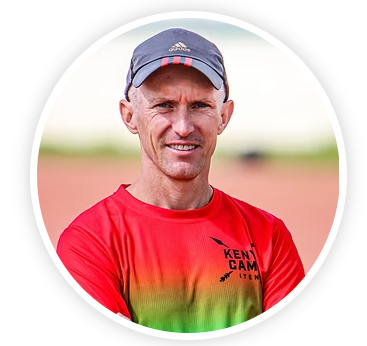
Hugo Van Den Broek is an ex-professional runner (PB Marathon = 2:12) who lives and works in distance running Mecca, Iten (Kenya). From there, he coaches Kenyan athletes (and others - me included - online). He also runs Kenya Running Camps (https://www.kenya-camp.com/). These camps are for runners of all sorts, from the complete novice to the seasoned marathoner. They offer you a chance to train in a camp setting for a good chunk of time, but more importantly, they give you a chance to learn how to level up your distance running (training, lifestyle, mindset) by learning from the best. Hugo kindly shared his time to talk about THE AEROBIC BASE. You may have heard about it, but what is it? Really? We discussed: 1/ What is the base? 2/ Why is it important for distance running success? 3/ Which events is it especially relevant for? 4/ How can runners evaluate their base? 5/ How can runners build their base? I hope you enjoy it!

Dan Williams is a Perth-based Exercise Physiologist and Business Coach. A veteran of helping people to create a durable long term exercise habit, Dan shares his reflections on what works and what doesn't. Dan is one of the most naturally curios people I know, and I have benefited a lot from his business mentoring. Check out his gym: https://rangeofmotion.net.au/ Check out his business mentoring: https://dwbc.au/businessmentoring/
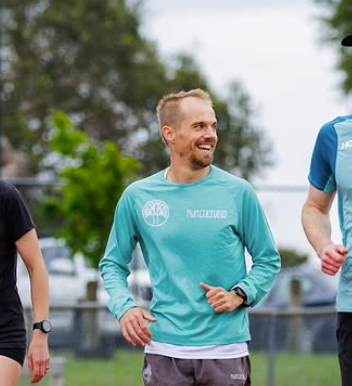
Dane and I enjoyed a chat about running injuries. What are the major causes? What are simple things that can be done to prevent and manage them? Then we talked about running technique - a shared passion. Dane's In-Person & Online Clinic: https://www.runculture.org/run-therapy Dane's (Excellent) Podcast: https://www.runculture.org/runculture-podcast Running Biomechanics Course: https://mechanicsofmovement.fitterapp.app/programs/running-biomechanics-dfc
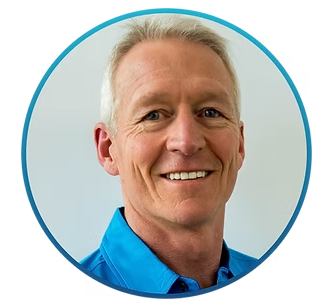
David Beard is a highly experienced Exercise Physiologist based in Perth, Western Australia. In this episode, David reflects on his long career being involved in helping people to lose weight. We cover his thoughts and observations on: what has worked what has failed what he's observed about people who have managed to lose a lot of weight and keep it off (what do they do?) We touched on these topics: 1// Metabolic flexibility (what it is and why it matters) 2// Using indirect calorimetry (what is this technology and what useful information can it provide?) 3// Why is it that a low carb diet can help you lose weight? 4// The centrality of managing hunger (and not neccessarily getting rid of it) for successfully losing weight 5// The limitations of the calories in/calories out model 6// Can people lose a lot of weight without structured exercise? If you want to enlist David's services to help you with improving your metabolic health, you can reach him at the HFRC clinic in Nedlands, Perth, Western Australia: https://www.hfrc.com.au/
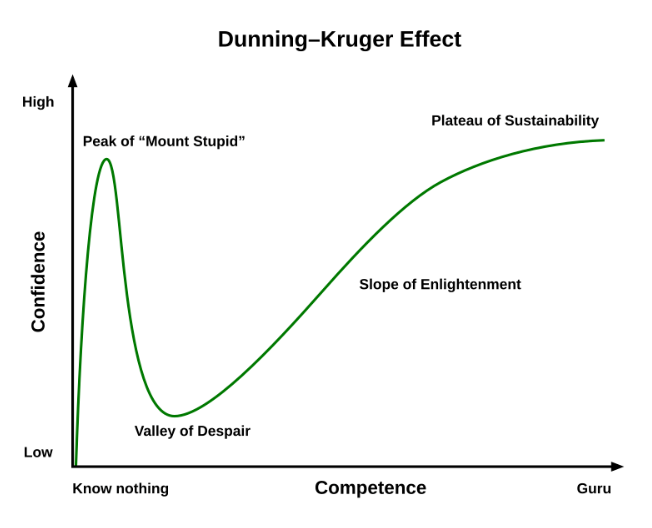
You may have heard of the Dunning Kruger Effect? It describes how your confidence to speak about something increases as you gain competence. But, noticeably, when you start to gain competence, your confidence can spike way too high too soon out of proportion with your experience and expertise, placing you atop "Mount Stupid". Then, as you gain more competence, you can descend into the "Valley Of Despair" as you realise there's a lot more to your field than you had thought. Descending into the valley of despair can be marked by embarrassment on how you've been holding forth with strong opinions, stridently preaching to the world with way too much self-assurance. After shooting my mouth off on LinkedIn regarding issues in modern day science, and understandably drawing a fair degree of pushback from people engaged in research for their day job, I have become personally acquainted with Mount Stupid. Pete O'Sullivan (Physiotherapist - Body Logic & Curtin University), who's a personal friend plus one of my online adversaries & interlocutors on this issue - kindly agreed to have a chat about his own perspective as an active researcher. This discussion with Pete provides his perspective on the trustworthiness of modern empirical research in allied health. It resulted in an increase in my own confidence that contemporary research published in high quality peer reviewed journals can be trusted.
Comments

Download from Google Play

Download from App Store
 United States