


 Claim Ownership
The Ophthalmic Physician Podcast
Subscribed: 0Played: 0
Subscribe

© 2025 Ophthalmic Physician & Publishing
Description
Conversations discussing high-yield concepts in ophthalmic medicine.
2 Episodes
Reverse
Author: John R. Martinelli, MD, OD, FAAO16:10 Audio
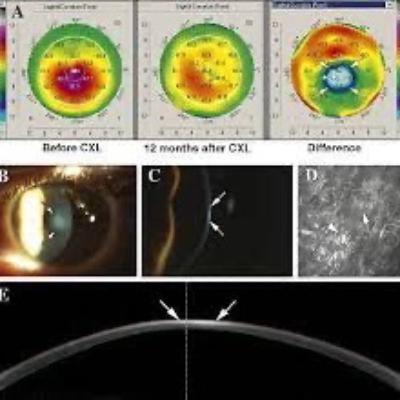
*FREE* Bonus Episode: Listen to the latest advances and treatment options for Keratoconus in 2024.
Companion to the EyeX downloadable PDF Report of the same name.
Podcast is EyeX AI powered. Material, information, concepts, words, and dialogue reviewed and approved by the author.
Author: John R. Martinelli, MD, OD, FAAO55:54 Audio
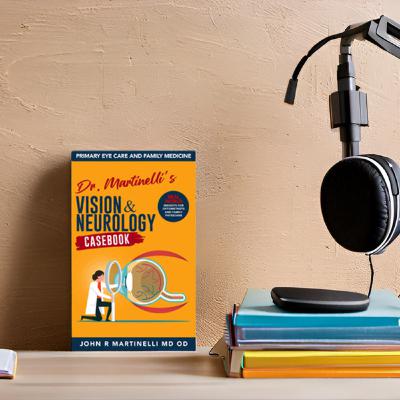
25 Real-World Cases
Main Themes:
Differential Diagnosis in Neuro-Ophthalmic Disorders: The book emphasizes a systematic approach to diagnosing visual disturbances with potential neurological origins. This includes considering a broad range of possibilities, correlating symptoms with clinical findings, and utilizing appropriate investigations like imaging and lab tests.
Importance of Patient History and Examination: The case studies highlight the value of a detailed patient history and thorough ophthalmic examination in guiding diagnostic decisions.
Beyond Primary Care: The author encourages optometrists to think beyond primary eye care and delve deeper into potential systemic causes for visual symptoms. This includes considering ordering advanced diagnostics and collaborating with other medical specialists to provide comprehensive patient care.
The Art of Patient Management: Beyond clinical skills, the author emphasizes the importance of effective communication, empathy, and building a strong doctor-patient relationship.
Most Important Ideas/Facts:
1. MUSCLE:
Myasthenia Gravis: A chest CT is crucial in suspected cases to rule out thymoma, a tumor commonly associated with this autoimmune disorder.
"A chest CT is necessary for individuals with suspected or confirmed myasthenia gravis to evaluate for thymoma, which is commonly associated with myasthenia gravis."
Cranial Nerve Palsies: The book details various causes and presentations of cranial nerve palsies impacting ocular motility, stressing the importance of recognizing patterns and ordering appropriate imaging (MRI, CT).
Lambert-Eaton Myasthenic Syndrome (LEMS): Often linked to small-cell lung carcinoma (SCLC), this disorder presents with unique patterns of muscle weakness that improve with activity, unlike Myasthenia Gravis.
2. NERVE:
Optic Neuritis: Hallmark signs include sudden vision loss, pain with eye movement, red desaturation, and a relative afferent pupillary defect (RAPD). Family history of autoimmune diseases is significant.
"Hallmark signs include sudden reduced visual acuity with or without pain, red desaturation, relative afferent pupillary defect (RAPD), and possible optic disc edema and/or pallor on retinal examination depending on severity and timing."
Papilledema: Bilateral disc edema on fundus exam and OCT suggests increased intracranial pressure. Urgent neuroimaging (MRI) is required to rule out life-threatening causes.
NAION vs. PION: Differentiating Non-arteritic Anterior Ischemic Optic Neuropathy (NAION) from Posterior Ischemic Optic Neuropathy (PION) requires a thorough history and understanding of risk factors. NAION is often associated with vascular risk factors, while PION can be linked to surgical procedures or hypotension.
Trigeminal Neuralgia (TN): This disorder causes severe, debilitating facial pain. Differentiating it from other facial pain syndromes like cluster headaches and migraines is crucial for proper management.
3. BRAIN:
Ocular Migraines: Visual auras are triggered by cortical spreading depression (CSD). Magnesium supplementation can help manage migraines by stabilizing neuronal membranes and preventing vasospasm.
"Ocular migraines involve two primary phases, the aura phase and then the pain phase, though the pain phase does not always occur. The aura phase is induced by vasospasm and/or vasoconstriction of intracranial arteries, leading to reduced cerebral blood flow and initiating what is known as cortical spreading depression (CSD)."
Transient Ischemic Attacks (TIAs): Transient vision loss or neurological symptoms should raise suspicion for TIAs, especially in individuals with cardiovascular risk factors. Urgent evaluation with MRI and MRA is necessary.
Pseudotumor Cerebri (IIH): This condition, often affecting young obese women, presents with headache, papilledema, and sometimes pulsatile tinnitus. Early diagnosis and treatment are essential to prevent vision loss.
Pituitary Adenoma: While often causing bitemporal hemianopia, atypical presentations can occur. Thorough visual field testing and neuroimaging are essential for diagnosis.
Quotes:
"Neuromuscular diseases reveal the incredible intricacy and resilience of the human body, pushing us to find new ways to support and heal." – Dr. Stanley Appel
"The human brain has 100 billion neurons, each neuron connected to 10 thousand other neurons. Sitting on your shoulders is the most complicated object in the known universe." – Dr. Michio Kaku
Key Takeaways:
Dr. Martinelli's casebook provides valuable insights into the complex world of neuro-ophthalmology. It encourages a comprehensive approach to patient care, emphasizing the importance of a thorough history, detailed examination, and appropriate investigations. The book also highlights the need for collaboration with other medical specialists to ensure optimal management of patients with visual disturbances of potential neurological origin.
Podcast is EyeX AI powered. Material, information, concepts, words, and dialogue reviewed and approved by the author.
Comments


Download from Google Play

Download from App Store
 United States