


 Claim Ownership
The Conversation Cabinet
Subscribed: 7Played: 36
Subscribe

© Josh and Ethan
Description
Open the cabinet as we navigate the complexities of world-wide politics, one quintessentially british conversation at a time.
50 Episodes
Reverse

SummaryIn this conversation, Julie Bindel discusses the current state of feminism, addressing issues such as male violence, the role of feminism in combating sexual exploitation, and the impact of masculinity on society. She emphasises the importance of good role models for boys and critiques the state’s responsibility in ensuring social equality. Bindel also reflects on the future of feminism and the lack of political representation for women's issues.Chapters00:00 Introduction to Feminism and Current Issues02:29 Understanding Male Violence and Structural Issues04:40 The Role of Feminism in Addressing Sexual Exploitation07:00 Masculinity and Its Impact on Society09:22 The Importance of Role Models for Boys11:54 State Responsibility and Social Inequality14:28 The Future of Feminism and Political Engagement
This episode is sponsored by Suffrago, a polling platform where people can make their voices heard by those in power and where politicians go to listen.Find out more here:https://www.suffrago.orgIn this episode of The Conversation Cabinet, we sit down with writer Johnny Thomson (Philosophy Minis) to explore some of life’s biggest questions: What actually makes us happy? Are humans just driven by pleasure and pain? And why are so many people feeling disconnected despite living in an age of unprecedented comfort?Johnny discusses the ancient philosophical traditions of Epicureanism, Stoicism, and Daoism and explains how these ideas can still guide the way we live today. From the nature of happiness and friendship to the dangers of chasing status, power, and wealth, we unpack how philosophical thinking can help us live more meaningful and contented lives.We also dive into: • Why Johnny believes everything humans do is ultimately driven by pleasure or the avoidance of pain • The difference between hedonic happiness and the deeper idea of eudaimonia • Why friendships may be the most important ingredient for a good life • The rise of Stoicism in modern culture • How social media and status comparison are reshaping our understanding of success • What ancient philosophers can teach us about living well in the modern worldThroughout the conversation, Johnny draws on thinkers from Epicurus and Aristotle to modern psychology, showing how philosophy is a practical toolkit for navigating life.🎙 About Johnny ThomsonJohnny Thomson is a philosopher, writer, and educator best known for the hugely popular Philosophy Minis platform. He writes for Big Think and previously taught philosophy at Oxford, sharing philosophical ideas with millions of people across social media.
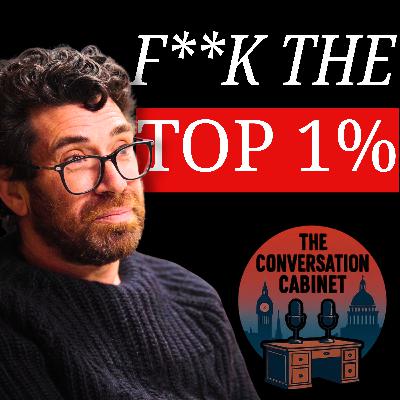
Thank you to Suffrago for sponsoring this episode! Click this link to find out more: https://www.suffrago.org/In this episode, we sit down with Adam Brichto, a filmmaker and professional "vox popper" who has mastered the art of capturing the public's voice to highlight social and political absurdity. Adam shares the secrets behind his viral hits, from being seen by 8 million people at a jury protest to his provocative "arrest me" stunt regarding international conflict. We dive deep into why independent media is challenging the narrative of billionaire-owned outlets, the "common sense" of left-wing politics, and why Adam believes wealth inequality has reached a level of literal insanity. Whether he’s exposing the truth about Nigel Farage in Clacton or explaining why record labels are "stealing" from buskers, Adam's goal is always the same: to show how "fucked up" the world is and advocate for the vulnerable.
MAKE SURE TO FOLLOW JIMMY'S JOBS OF THE FUTUREIn this conversation, Joshua Eames and Ethan Pearman engage with Jimmy McLoughlin, discussing the current challenges in the job market, particularly for young people. They explore the implications of minimum wage policies, the transformative role of AI in job functions, and the importance of career guidance. The discussion also touches on the changing nature of career progression, the value of entrepreneurship, and the significance of early work experiences such as gap years. Additionally, they reflect on the disconnect between politicians and the workforce and provide advice for navigating the evolving job landscape.
What does it mean to be "you"? In this episode, we are joined by Anil Seth, professor of cognitive and computational neuroscience at the University of Sussex and author of the best-selling book “Being You”. As one of the world’s leading researchers into the biological basis of consciousness, we had the privilege to sit down and discuss such pressing topics with him.We dive deep into the philosophical and scientific crossroads where the mind meets the machine. From the ancient debates of dualism and panpsychism to the cutting-edge ethics of brain-computer interfaces (BCIs) and AI, we explore how our brains construct a stable world from a chaotic stream of sensory data.We had the privilege to discuss the following:The Controlled Hallucination: An exploration of Anil’s landmark theory on how the brain "guesses" reality and what happens when those guesses are radically altered by psychedelics.The Philosophy of Mind: We revisit the "Hard Problem" and discuss why ideas like panpsychism and dualism are seeing a resurgence in modern thought.AI & The Simulation Trap: A look at whether artificial intelligence can truly possess "wetware" consciousness or if it remains a sophisticated "dark intelligence".The Perception Census: Discussing the massive diversity in how humans experience visual reality and what this means for social empathy and shared truth.Animal Sentience: The link between metabolic survival and the "self" and how laws may need to change to preserve the life of animals.The Legacy of Daniel Dennett: A reflection on the influence of one of the 20th century’s greatest philosophers on modern science and on Anil himself.It was incredible to spend this week’s episode with Professor Anil Seth, and this fantastic episode provides a deep dive into what a sense of “self” really is.
Most of us overlook how tiny everyday choices and overlooked policies can massively accelerate environmental progress—if only we knew how to push for real change. In this eye-opening episode, Simon Nash—the inventor of the UK’s first biolubricant made from 100% recycled plastics—reveals how capitalism and simple regulations could revolutionise sustainability without costing the earth (or your wallet).Simon shares how a small bike lubricant project in 2010 forgoing harmful chemicals and plastic bottles sparked a wider movement towards eco-friendly products. He discusses concrete strategies like taxing plastics with recycled content and enforcing transparency laws that prevent greenwashing—showing how governments can turn subtle policy tweaks into sweeping environmental wins. You'll discover the surprising ways market incentives and faith-inspired stewardship could unlock a sustainable future, avoiding pollution crises like deforestation and microchip mineral monopolies.This episode breaks down the complex politics behind green policies, exposing how left, right, and even religious values can align on environmental priorities. We explore the power of consumers, entrepreneurs, and policymakers working together to create a closed-loop economy—where waste becomes resource, and greenwash is replaced by genuine action. Simon's insights offer a blueprint for anyone who believes our planet’s future depends on smarter, more ethical innovation.Perfect for entrepreneurs, activists, or anyone eager to understand how real change happens—this conversation proves that with the right policies, small innovations, and collective will, we can build an economy that prioritises the planet’s health while empowering our future generations.
Does a "modern" faith require us to ignore the "ancient" parts of the Bible? This week, we’re at the Speak Life HQ in Eastbourne talking with Nate about the friction between 21st-century values and historic Christianity.We explore the surprising link between the current growth of conservatism and spiritual hunger, how christians can grapple with moral uncertainty in the old testament, and growing questions against the existence of god. Whether you’re a lifelong believer or just curious about the "revival" currently making headlines, this episode offers a raw and intellectual look at the questions that matter most.
SummaryIn this conversation, Paul Embry discusses his background as a firefighter and trade unionist, emphasising the disconnect between the modern left and the working class. He critiques the Labour Party for alienating traditional working-class voters and highlights the growing societal divide. Embry argues for the need to address economic issues and immigration management while calling for a return to the party's roots in representing working-class interests. He expresses cautious optimism for the future of the Labour Party if it can reconnect with its base.Chapters00:00 Introduction to Paul Embry and His Background04:20 The Modern Left's Disconnection from the Working Class08:39 The Growing Divide in Society and Its Implications12:55 Challenges Facing Political Parties and Solutions17:00 The Future of the Labour Party and Working-Class Representation
SummaryIn this conversation, Jacob discusses the pressing economic challenges facing the country, emphasising the need for government spending cuts and a reevaluation of taxation policies. He critiques the current state of the NHS and its productivity, while also exploring the political landscape and the potential for uniting the right. The discussion touches on wealth redistribution, immigration's impact on the economy, and the implications of Brexit. Finally, Jacob advocates for family values in government policy, highlighting the importance of supporting traditional family structures.Chapters00:00 Economic Challenges Facing the Country03:15 Government Spending and Taxation Policies07:33 The Role of the NHS in Economic Productivity12:05 Political Landscape and the Future of the Right16:45 Wealth Redistribution and Economic Incentives23:16 Immigration and Its Economic Impact27:55 Brexit and Its Effects on Business32:16 Family Values and Government Policy
This conversation was influenced by the Suffrago poll:‘The New Chinese Embassy plans should be approved’Have your say at:https://suff.ag/UR4HMUSummary:The conversation delves into the controversial proposal of a Chinese super embassy in London, exploring its implications on human rights, security, and UK-China relations. We express deep concerns about the potential normalisation of relations with an authoritarian regime, emphasising the historical context of China's global ambitions and the UK's economic dependence on China. We discuss the symbolism of the embassy as a representation of Chinese dominance and the need for a unified response from the UK government and its citizens. Personal stories of repression highlight the urgency of the situation, culminating in a call to action for greater awareness and resistance against authoritarian influence.Chapters00:00 Introduction to the Chinese Super Embassy Proposal02:28 Concerns Over China's Influence and Human Rights Violations05:21 Historical Context and China's Revenge Mentality07:37 UK's Economic Dependence on China10:45 The Symbolism of the Super Embassy13:17 Political Compromises and Local Council Decisions16:24 Corporate Accountability and Human Rights18:48 Public Awareness and Economic Alternatives24:59 The Need for a Strategic Response to China26:10 Personal Stories of Human Rights Violations29:05 The Symbolism of China's Presence in London32:49 The Role of Media and Public Awareness38:47 The Importance of Collective Action Against China42:58 Long-term Strategies for Addressing China's Influence
SummaryIn this conversation, Leila Cunningham discusses her political journey, values, and critiques of the Conservative Party. She emphasises the importance of family and national pride, critiques immigration policies, and discusses the role of human rights in immigration. Leila also addresses the challenges facing public services, particularly the NHS, and the need for better regulation. She highlights the importance of appealing to young voters and the significance of cultural identity and assimilation in British society.Chapters00:00 Introduction and Background of Leila Cunningham02:26 Political Views and Family Values04:58 Critique of Conservative Party Policies07:32 Discussion on Immigration and Human Rights10:12 Reform Party's Stance on Immigration12:58 Appeal to Young Voters and Future of Reform16:10 The Need for Innovation in Education17:17 University Policies and Young People's Future18:34 Employment Challenges and the Job Market19:27 Regulation and Economic Growth20:32 Balancing Worker Rights and Employment Opportunities21:32 Government Spending and Public Services23:01 Funding Public Services through Private Sector Growth23:34 NHS Challenges and the Need for Modernization26:19 Public Services Strain and Migration Impact27:50 Defining British Identity and Values
SummaryIn this conversation, we delve into various theological and philosophical topics, focusing on contemporary issues such as gender identity, the image of God, and the search for meaning in modern society. We discuss the complexities of Christian beliefs, the importance of respect and understanding in conversations about identity, and the personal faith journey of one speaker as an evangelical Christian. The dialogue highlights the challenges and nuances of discussing faith in a rapidly changing cultural landscape.Chapters00:00 Introduction to Theology and Philosophy01:09 Understanding Christian Perspectives on Contemporary Issues04:33 The Complexity of Gender Identity and Respect08:38 Personal Faith Journey and Evangelical Beliefs14:27 The Search for Meaning in Modern Society
SummaryIn this conversation, Josh and Sean O'Ciardhra delve into the themes of hyper normalisation, political leadership, and the impact of media on public perception. They discuss the current political landscape, the role of immigration in political discourse, and the rise of populism. The conversation also touches on the intersection of religion and politics, the void of meaning in modern society, and the challenges of neoliberalism. Ultimately, they reflect on the need for new political ideas and the potential for change in the future.Chapters00:00 Exploring Hyper Normalization02:38 The Role of Politicians as Managers05:06 The Rise of Far-Right Politics07:41 Immigration Rhetoric and Public Sentiment10:09 The Impact of Media on Political Divisions12:58 The Nature of Political Protests15:40 The Future of Political Change18:05 Neoliberalism: Past and Present23:18 The Legacy of Neoliberalism25:37 The Dangers of Managerialism26:02 Political Identity and Leadership28:25 The Crisis of Meaning in Politics31:50 The Role of Religion in Modern Society35:24 The Intersection of Politics and Religion39:42 The Future of Political Movements
SummaryIn this conversation, we delve into various aspects of political life, comparing the dynamics of UK and US politics, discussing leadership qualities, and exploring the ideological landscape of new political parties. We touch on pressing issues such as energy policy, migration, and the role of patriotism in national identity. The discussion also highlights the challenges faced by the left, the importance of youth engagement in politics, and the future direction of the Labour Party. Ultimately, the conversation ends on a note of optimism for the younger generation's potential to influence change.Chapters00:00 Introduction and Political Journey02:35 Comparing Political Campaigns: US vs UK05:30 Leadership Styles in Politics08:21 The Ideological Landscape of Political Parties10:54 Energy Policies and Environmental Concerns13:42 Mass Migration and Public Services16:24 Patriotism and National Identity21:12 Symbols and Puritanism in Culture23:55 Fractured Left: Challenges and Opportunities26:45 The Role of Labour and Unions in the Left29:32 Accountability and Representation in Politics33:04 Navigating Political Choices for Young Voters36:41 International Politics: Focus on Local Issues39:39 Optimism for the Future: A Call to Action
SummaryIn this conversation, we explore various themes including family dynamics, authenticity in communication, the intersection of politics and populism, the complexities of veganism and wokeness, cultural identity, and the role of religion in society. We discuss how these topics interconnect and influence contemporary beliefs and practices, emphasising the importance of authenticity and understanding in navigating these discussions.Chapters00:00 Introduction to Family Dynamics and Career Growth02:51 Authenticity in Communication and Podcasting06:08 The Politics of Populism and Authenticity08:59 Veganism, Wokeness, and Cultural Performance12:10 Religious Pluralism and Cultural Identity14:59 The Impact of Religion on Society and Politics18:10 The Future of Multiculturalism in Britain
Below is a link to Start-up Century by James. For anyone interested in the topics discussed or the trajectory of entrepreneurial innovation in this country, I suggest you have a read.https://www.amazon.co.uk/Start-Up-Century-becoming-entrepreneurs-everyone/dp/1399410598?dplnkId=6c324b7c-6dfb-4ff3-bbdc-a2139c87882a&nodl=1In this conversation, James Wise, a venture capitalist and author, discusses the evolving landscape of entrepreneurship, the impact of AI on business, and the challenges faced by small businesses in the current economic climate. He emphasizes the importance of supporting young entrepreneurs and adapting education systems to foster innovation. Wise also addresses the potential AI tech bubble and the need for government policies that encourage entrepreneurship.Chapters00:00 Introduction to James Wise02:42 Venture Capital and Government Policy05:32 The Impact of Regulation on Entrepreneurship08:21 AI: A Tool for Young Entrepreneurs11:16 The Future of Pricing in a Competitive Market13:43 Navigating the AI Bubble16:12 The Shift Towards Entrepreneurship19:01 Challenges and Changes Needed for Startups27:42 The Challenges of Education and Entrepreneurship30:11 The University Dilemma: Is It Worth It?35:11 Small Business Struggles in the Current Economy38:24 Looking Ahead: Optimism for Future Budgets40:46 Advice for Aspiring Entrepreneurs
SummaryIn this conversation, Connie Shaw, an advocate for free speech and External Affairs Officer for the Free Speech Union, discusses her experiences with media, the rise of wokeism, and the challenges of expressing gender critical views in today's society. The dialogue explores the implications of identity politics, the role of universities in fostering free speech, and the importance of tolerance in a diverse society. Shaw emphasizes the need for legal protections for free speech and the ongoing struggle against censorship. In this conversation, the speakers delve into the complexities of free speech within a diverse society, discussing the balance between protecting individual rights and the potential for ideologies to suppress dissent. They explore the implications of cancel culture, the rise of the woke right, and the challenges posed by anti-free speech ideologies, particularly in relation to women's rights and religious beliefs. The discussion emphasizes the importance of open dialogue and the dangers of censorship, advocating for the necessity of robust criticism of all ideologies.Chapters00:00 Introduction to Free Speech and Media Experience02:31 The Impact of Wokeism and Identity Politics05:36 Navigating University Politics and Free Speech08:43 The Role of the Free Speech Union11:43 Understanding Hate Speech vs. Free Speech14:45 The Future of Free Speech in Universities25:57 The Importance of Free Speech27:58 Ideologies and Free Speech Challenges30:13 Women's Rights vs. Men's Feelings32:04 Understanding the Woke Right34:44 The Rise of Ethno-Nationalism38:14 Limits of Freedom of Speech43:38 Political vs. Theological Criticism48:29 The Need for Open Conversations
SummaryIn this conversation, we speak with Matthew Rakestraw, the president of the College Democrats of Georgia, about the current state of the Democratic Party, its identity, and the challenges it faces in engaging voters, particularly in rural areas. Rakestraw emphasizes the importance of unity within the party, the need to connect with the public on key issues, and the significance of authenticity in politics. They discuss the dynamics of Georgia as a swing state, the impact of gerrymandering, and the role of young voters in shaping the future of the party.Chapters00:00 Introduction to College Democrats of Georgia02:48 Democratic Identity and Unity05:32 Engaging Rural Voters08:12 Georgia as a Swing State10:52 Democratic Policies vs. Republican Policies13:57 Building Trust with Young Voters16:19 Public Perception of Republicans18:56 Challenges for Young Voters21:35 The Role of Authenticity in Politics24:16 Gerrymandering and Electoral Strategy26:55 Conclusion and Future Outlook
We are especially grateful to the FSU for supporting our podcast via the Ian Mactaggart program, which anyone can
apply to. Check it out on their website!
Summary
In this conversation, Vinay Kapoor from the Free Speech Union discusses the organization's mission to promote free speech and address cancel culture. He explains the real-world implications of cancel culture, the balance between free speech and offense, and the challenges posed by hate speech laws. Kapoor emphasizes the need for open debate, especially in universities, and highlights the fluidity of political beliefs surrounding free speech. He advocates for a culture that tolerates disagreement and encourages young people to engage in discussions about contentious issues.
Chapters
00:00 Introduction to Free Speech Union and Vinay Kapoor
02:47 Understanding Free Speech Problems
05:38 Real-World Effects of Cancel Culture
08:40 The Balance of Free Speech and Offense
11:56 Navigating Hate Speech and Legal Boundaries
14:51 The Fluidity of Political Spectrum and Free Speech
17:47 Cultural vs. Legal Threats to Free Speech
20:39 The Role of Universities in Free Speech
23:42 Encouraging Open Debate Among Youth

Comments

Download from Google Play

Download from App Store
 United States