



 Claim Ownership
Seeking Tranquillity in France
Subscribed: 0Played: 2
Subscribe

© John Brooks Howard
Description
Stories and reflections from an American and Irish citizen living in France
leavingamerica.substack.com
leavingamerica.substack.com
24 Episodes
Reverse

In the month before our departure from the United States to take up new jobs in Ireland in 2009, my wife and I sold our cars. We had been living in Arizona, the last territory to become a state in the contiguous 48 states, where all the roads were laid out in a grid, distances between point A and point B always seemed vast, and surviving without a car is inconceivable. Now we were moving to a country smaller than the three largest Arizona counties where one drives on the left from a steering wheel on the right while shifting with the left hand. We brought our bicycles instead of the cars.Still, for many Americans, it’s hard to imagine life without a car. What if we decided to buy one? As it turned out, not having a car wasn’t the first concern. We soon learned that the U.S. was not a “Recognised State” in the eyes of the Irish National Driver Licence Service (NDLS) and we therefore could not simply exchange our Arizona driving licences for Irish ones. The law gave us permission to drive with our U.S. licences for just a year, so our first concern would be getting an Irish driving licence.It turned out that the timeframe was even narrower. We’d first have to pass a preliminary driving theory test in order to obtain a learner’s permit. Then, we’d have to sign up with a driving school for twelve hours of road experience—called Essential Driver Training (EDT). But … it was required that six months pass from the date the learner’s permit was issued before one could take the actual exam to receive a licence. In other words, if we wanted to drive legally in Ireland, we had to start our lessons within six months of arrival. That didn’t happen.Both my wife and I eventually signed up for the learner’s permit. She registered for driving lessons, completed the on-road instruction, and passed the driving test on the first try, six months after getting the learner’s permit—which we came to understand is quite a feat. I dilly-dallied, as my mother might have said, and put it off for a few years. There was an element of indignity to the situation, from my perspective: after all, I’d learned to drive on dirt roads in rural farmland before I reached my teens. Then I’d taken driving lessons at age 16 (there’s another story to be told about falling asleep at the wheel during driver training in Connecticut) and had been driving ever since.So my wife became a legal driver while I resisted. This of course became an issue when we would occasionally hire a car to explore other parts of the island. I still had my Arizona driver’s licence stamped with a credible expiration date, but we’d lived in Ireland longer than a year; moreover, since we were no longer Arizona residents, that state also would not have considered my licence to be valid. This being Ireland, however, I was not about to simply shrug and accept things as they appeared on the surface.I paid a visit to the local Garda (police) station and had a friendly chat with a couple Gardaí who happened to be standing around. I let them know I’d been living in Ireland for a certain length of time, and I wondered what would happen if I were stopped while driving a rental car and it became clear that I was not driving legally (according to the letter of the law). In some other jurisdiction the answer would have been obvious. But one of the officers cocked his head and asked, “Is the agency where you hire the car willing to provide insurance?” When I answered affirmatively, he said, “Ah, that’s the only thing we care about.”For me, that was as good as having my licence renewed. My wife, however, held me to a higher standard than An Garda Síochána (the Guardians of the Peace), and after a few years I renewed my learner’s permit and started driving lessons.My instructor was a friendly retired fellow from the neighbouring village of Dalkey. He was a man with a calm demeanour and nerves of steel who enjoyed a good chat while we were out on the road driving around. I learned that his usual transportation was a big old motorcycle he’d had for years, one that could reliably be seen parked in front of one of the less touristic pubs in his village. We talked about motorcycles and fast cars, and occasionally he rendered tips about driving. As with all learning processes in Ireland, the lessons were not about learning to drive; they were about learning to pass the driving test, which has several predictable elements, and we’d take time out during each excursion to practice them. Driving instructors knew all the routes a licence inspector would take during the exams, so we frequently travelled them as a kind of rehearsal.A couple components of the test were things I’d prepared for decades prior for my Connecticut driving test: the so-called Y-turn (or K-turn in Connecticut parlance) and backing-up into a parking space. (Oddly, parallel parking was not part of the standard driving test.) There was also a manoeuvre I felt was a bit odd: backing up around a corner (they test for this in the UK, too). We’d find a quiet neighbourhood with intersecting streets, stop, then I’d be instructed to reverse the car around the corner, using only the rearview mirrors to guide the process. The goal was to remain as close to the curb as possible throughout. When I commented that I could not imagine trying this “in the real world,” since it struck me as inherently dangerous, he explained that the point was to demonstrate driving skill—it was not to prepare me for actually doing this anywhere, at any time.Otherwise most of the counsel the instructor offered consisted of statements like “Keep checking your mirrors. If you’re not seen to be always checking the mirrors they’ll take points off and you’ll fail the test.” I began to think that I was checking the mirrors so often I was more aware of what lay behind us than what lay ahead.The day of the driving test finally arrived. My wife and I still had no car so I had to pay the driving instructor to accompany me. I entered the test centre, took the written exam, then joined the driving inspector for the road test: me behind the wheel, he next to me, tablet in hand, silently touching its screen at frequent points during the test.It happened to be a morning following an exceptionally windy night. The inspector guided me along the twisty roads of a residential neighbourhood. The roads, however, were littered with branches that the wind had brought down the night before; at one point a rubbish bin rested on its side in the middle of the road. I’d not prepared for an obstacle course. Nevertheless, to my mind, I’d aced the exam: I was not aware of a single flaw in my performance.We returned to the test centre and I followed the inspector to his office, where he sat and fiddled with paperwork for several minutes. Eventually he spoke: “Well, John, you passed the written exam but you failed the road exam.” He explained with a neutral demeanour all the errors I had committed while driving—not having stayed close enough to the curb taking a left turn, not having sufficiently checked my rear view mirrors (!), etc. Apparently backing up around the corner had not been a problem.It would be another 90 days before I could try again. Meanwhile I shared my failure with colleagues at work, and I began to hear many similar tales. One colleague, who still did not have a licence, had failed more than ten times! Others admitted, almost with a bit of pride, that they had failed too, some also more than once. And the various test centres around Dublin each had their own reputation for leniency or lack thereof. The one where I was tested was considered to be among the most lenient. But everyone considered the driving exam to be rigorous—an Irish rite of passage.On the day I took my exam for the second time it was raining, but the roads were clear and we traversed exactly the same roads I’d driven before with the inspector and the driving teacher. All the while, as I ostentatiously checked the mirrors, I thought, “I’m nailing it,” but that’s what I thought the first time, too. The inspector told me what to do, I did it, and he kept tapping his tablet without comment.Back in the office, he again silently completed his paperwork, finally looking up and peering directly into my eyes. It was to be the most Irish moment of my new life in auld Éire. His expression unchanged, he said flatly, “Well, John, you came within one point of failing again !”Ah, no “congratulations,” no “you passed this time.” Just “You almost failed” and a cold listing of the (to me) imperceptible mistakes I had made out on those suburban roads: I still wasn’t checking the mirrors to his satisfaction.Documents in hand attesting to my status as a bona fide Irish driver, I returned to the car and gave my instructor the good news. He invited me to drive home, thereby giving me something of a victory lap to celebrate with. As we drove off I told him about the inspector’s seeming disappointment that I had passed the exam, noting that I’d come “within one point of failing.” He just smiled, look at me and said, “John, it wasn’t ever about learning to drive, you’d had your licence for years. It’s really just a ritual to help you understand this little country of ours.” And, you know, I think he was right. Get full access to Seeking Tranquillity in France at leavingamerica.substack.com/subscribe
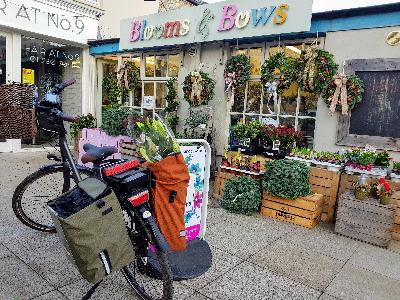
One sometimes hears comments like “swimming is a sport you can pursue no matter your age.” Or it might be golf, bowling, or even pétanque. For me it’s cycling: pedalling here and there for more than 60 years.I remember my first bicycle, the one with training wheels that I rode slowly over the uneven turf of our back yard in Massachusetts. It was red, and the training wheels didn’t help me achieve balance until my father took me out onto the seldom busy street, held his hand on my back as he ran alongside, and then finally let go. Off I went, a bird leaving the nest the first time. What I also remember, from later outings on that bike, was pedalling as hard as I could and loving how it felt.And so it was as I grew up. First, envying my brother his big Columbia bicycle with its coaster brake and “belly balloon tires,” as he called them. When he wasn’t around I’d struggle onto it and ride out into the street, slamming on the brake in the sand at the side of the road for the excitement of the skid (and the occasional skinned elbows arising therefrom). Then, one Christmas, three brand-new Phillips bikes awaited my sister, brother and me—genuine English three-speed bikes with heavy steel frames, and a generator with lights front and back. I loved that bike, and kept it for the next 43 years—even though, in full adulthood, I had received from my wife the gift of a beautiful new bike to replace it.Those bicycles led us to places we’d not have seen otherwise—they let us see more and be so much closer to the passing world-scape than through the window of an automobile. On hot summer days they let us hear the sound of insects and birds, feel the heat of the sun and the cooling breeze that a bicycle always assures. On seaside roads and paths one could smell the sea, the dried seaweed and the marsh grass with no chance of a pesky green-headed fly alighting to deliver its vicious sting. Then, years later, in the hilly high desert, pedalling to the highest points in that dry heat to quietly cast an eye across the endless landscape, the dry stony land with magnificent saguaros, ocotillos, scented acacia and the yelp of the coyote.When moving to Dublin we left our automobiles behind but the bicycles followed—taking up new duties as we foreswore car ownership thereafter. Our trusty steeds, as we called them, were now outfitted with baskets and panniers, and accompanied us on shopping excursions, into Dublin city with its narrow streets (and close encounters with menacing Dublin buses). But also to more joyful destinations where better food could be found. Down the long hill where we lived in Glenageary to Dún Laoghaire’s People’s Park on Sundays for the lively weekend market; along the coast, through Sandycove and past “Joyce’s Tower,” then to Dalkey and back to Glasthule with its fine shops for fish and veg. Those bikes took us on holidays, too, relieved of burdensome cargo, leading us down narrow country roads and Irish greenways built on long-gone rail lines, through scented farmland and past rugged coastlines—an Ireland that can only be seen that way.As the end of our working days approached the hills became steeper and longer and our steeds struggled beneath us, sometimes simply accompanying us as we walked the last 15 meters to the driveway entrance. Mounting and dismounting became self-conscious and sometimes difficult. I delayed some years before saying good-bye to my faithful mount, but one day I made the move—a handsome Dutch electric bike took its place. But the transition was not easy! The adaptation from leaning forward toward the handlebars and fully extending my legs to the upright posture my new Gazelle demanded took some time, some re-balancing, and an unpleasant fall. But in the end I sit higher, more safely and can see more than before. And this husky steed easily carried most of a week’s groceries up that Irish hill with ease.Retiring to France, our bikes retired with us—to an extent. With all that one needs within five minutes walking at least they were relieved of their duty as durable porters. Well, yes, there is the occasional trip to the Marché de la Libération, the Marché aux Fleurs, or to shops we like near Nice Port. But mostly they relax and take us on seaside balades and arbitrary urban rides, often along the many pistes cyclables (cycle paths) developed by the city of Nice in recent years.If asked, what does a bicycle mean to you, some might say fitness and health, climate responsibility, or simply transportation. I’d not contest any of those things. But many would say it means a sense of freedom—that sense of freedom I felt the first time I balanced my little bike free of its training wheels. A freedom to move silently along a roadway or path, feeling the movement of the air, hearing the calls of birds, detecting the changing scents of the seasons. Riding the bike frees us of daily cares and worries, shifts our minds to a new place where all that matters is being out gliding through the world we inhabit at any given time of life. Sometimes, that’s all we need. Get full access to Seeking Tranquillity in France at leavingamerica.substack.com/subscribe
Whether moving as a citizen of the United States or from any other country to reside in France, one of the first steps is to establish a French bank account. It’s very likely that in certain contexts—such as in obtaining a property lease—having a French bank account is a non-negotiable requirement. Some might anticipate this and open an account with a French international bank (such as BNP Paribas) before making their move to ease their entry to France, others will do so soon after arrival (and U.S. persons will learn about FATCA in the process, if they haven’t before). It’s likely your account will be called a compte courant, or “current account,” which is intended for support of everyday financial transactions.But there are a couple things to be aware of as you get settled in and become tax resident in France.Taking up residenceAt the time you open an account with a French bank, you might not yet be verifiably fiscally resident (also referred to as being tax resident) in the country. That is, you will not yet have met the conditions necessary for being fiscally resident, which are:* Your home is in France (where “home” would also potentially include a spouse, a recognised civil partner, and children)* Your main place of stay is France (i.e., you stay in France or its overseas territories for at least 183 days of the year)* You work in France (it is the place where your employment provides the bulk of your income)* The centre of your economic interests is France (it is where your major investments have been made, or it is the place from which you manage your principal activities)But once you have evidence of fiscal residency, based on the above, you might find yourself in the position of being able to get a better deal on your compte courant at the bank, and other banking services might become available to you.To formally recognise that you’re fiscally resident in France, however, a bank is likely to require concrete evidence, for example, a signed and dated lease agreement (un bail) or a justificatif de domicile (proof of address) obtained from your power utility. In addition, a bank might also look for evidence of your having submitted a tax declaration to the French tax authority, the Direction générale des Finances publiques (DGFiP) and of having obtained a tax ID before accepting that you are fiscally resident.Here’s the banking tipOnce you have sufficient evidence of fiscally residency, and certainly after you’ve received your tax statement and numéro fiscal, make an appointment with your bank counsellor to review the terms of your current account. Bring with you the French tax statement (avis d’impôt) and tax number, your passport(s), your justificatif de domicile, and documentary proofs of income.The tax statement gives incontrovertible evidence that you are a bona fide tax resident of France, with intentions of remaining in the country, and would generally be the document that banks prefer. Once submitted, the bank should update your status in its records accordingly. Your status as fiscally resident implies that you represent a lesser risk to the bank and, depending on your bank, some tangible banking advantages might arise as a result:* Lower maintenance charges on current accounts;* A wider range of banking options: savings or investment accounts might become available, for example;* Enhanced access to credit: an option for a debit card (carte bancaire) with a higher monthly limit, or for a credit card (carte bleue);* Access to insurance products that are off-limits to those not fiscally resident in the country, including the popular life insurance (assurance vie) policies that enable growth-oriented investment and certain tax advantages, especially with regard to inheritance tax.Benefits available will vary depending on the individual bank, but once you’re settled and have sufficient proof that you are fiscally resident in France, it’s probably worth your while to go back to your bank to determine how your updated status might translate to enhanced benefits. It might save you money, give you more banking options, and make your life easier. Get full access to Seeking Tranquillity in France at leavingamerica.substack.com/subscribe

Growing up I loved to read. There were always books to explore at home, many of them had been bought for my father when he was a child. Some of them I read over and over. I especially liked the books by Thornton W. Burgess which told of the lives of many colourful animals who lived near “The Smiling Pool” and were forever teased and tested by Old Mother West Wind. Old “Grandfather Frog,” sitting on his lily pad, often told tales that explained the origin or the nature of things. Before beginning his stories he would smooth his yellow waistcoat and say “Chugarum!”It also seemed that there were always a few magazines kicking around that were intended just for boys. My family didn’t subscribe to them, but they found their way into our home somehow; others were on the tables in the paediatrician’s waiting room. The one I remember best was called Boys Life. It was a publication of the Boy Scouts of America, which didn’t mean much to me. But I enjoyed reading it for some of the stories, for the comics, and especially for the advertising—which is what I recall best about it. I also had an aunt who lived in Boston, and at the corner pharmacy on her block there were racks of many comic books. Whenever I’d visit she’d give me a dime or two so I could buy one or two comic books, and over time these came to comprise a small library in her apartment. They had similar advertisements to what I’d seen in Boys Life, and I’d re-read them whenever I visited.In fact, looking back, it is a bit difficult to differentiate some of the articles from the advertising. I had an interest in shortwave and amateur radio which was stoked by the frequent articles that made it sound exotic and interesting. I also spent time looking at the radio equipment that was advertised, brands with intriguing names like “Hallicrafters,” dreaming of one day actually owning such a thing.Other products and services that were advertised made a big impression, too—a testimony, I suppose, to the ability of advertising to imprint upon the minds of children. Get full access to Seeking Tranquillity in France at leavingamerica.substack.com/subscribe

I’ve always enjoyed learning languages. As children my siblings and I were expected to learn French, at least up to a point. It was fun, and memorable—my sister and I recently spoke of those times and about the children’s books we read in French and how much we enjoyed them. Later, I found French classes in school a boring and repetitive chore, but eventually in high school the grammar drills ended and we started reading real literature. That got me re-engaged and restored my fascination with languages. We also had to respond to essay questions in French on examinations and homework assignments. So having a bilingual dictionary became indispensable.At university I discovered that the library held an extraordinary range of language dictionaries, monolingual as well as bilingual, that were essential for some of the challenging reading assignments we received. I bought myself several “serious” dictionaries before graduation (Latin↔English; German↔English, and French↔English, Latin↔English) as well as a couple pocket dictionaries for on the go. But I always found them challenging to use. Some words have several meanings, depending on context, and the meaning can change when used figuratively or in an idiomatic expression. I would scan the various numbered meanings to find the one that fit—this worked well when reading or trying to understand a recorded text, but when writing, things felt more hit-or-miss. I’m sure some things I wrote at the time must have been hilarious to my teachers.Dictionaries can also be useful in understanding which prepositions to use with which verbs—something that easily trips up beginning language learners. But they might not be so helpful with the actual spoken or written use of language, where changes of tense, number, mood or voice mutate the form of the verb. So, tools such as the Bescherelle Conjugaison volumes for French (or Le Figaro’s online Le Conjugeur) are an indispensable adjunct to even the best dictionaries. In some languages, certain verbs are associated with changes of case with nouns, pronouns and adjectives (e.g., “eines guten Mannes,” German for “of a good man,” here showing declensions in genitive case); some dictionaries can also be useful in this context, but this is a place where understanding the grammar of a language kicks in.Moving to Germany in the late 1970s was a test of my linguistic adaptability, even after two years of college German and four weeks of intensive study at the Goethe Institut. Although I had become capable in day-to-day language (other than the sometimes opaque Bavarian Mundart, or dialect, that I heard when working in Munich), writing always left me feeling insecure. I’d post letters that took two hours to write still worrying that I might sound like some kind of nincompoop. No surprise that I’d find myself in the wonderful Munich bookstores standing in the reference section, eyeing the language materials.Particularly striking was the series of dictionaries published by Duden, called “Deutsche Sprache in 12 Bänden” (German Language in 12 Volumes). It was a virtual linguistic rainbow, with colourfully bound volumes dedicated to Rechtschreibung (spelling/orthography), conventional word meanings, words borrowed from other languages, grammar and etymology, and much more. My book budget was almost non-existent—my academic stipend was insufficient, and my income from work at the Munich’s Großmarkthalle and Hotel Vier Jahreszeiten left little room for discretionary spending.Two volumes, though, were irresistible. The first was the Stilwörterbuch—a dictionary of style, i.e., a guide to the usage of German vocabulary. I don’t think I’ve ever written more than a couple paragraphs in German without consulting this volume, which gives extensive examples of the appropriate use of German vocabulary. If you wonder whether the word you know is the best possible choice, check it here. If you know a couple words that, to you, are perfect synonyms, the Stilwörterbuch will clarify the precise meaning they convey and how to use them. Not sure of which preposition follows, or of more complex idiomatic usages, this is the place to go. By the time that volume had become too brittle and loose to retain, the pages were well thumbed and sheer sentimentality made it hard for me to bid it farewell.The other book I purchased with my hard-earned D-mark was the Bildwörterbuch (picture dictionary). Before buying it I found myself returning to the bookstore several times to make use of it. Working in the kitchen of the Hotel Vier Jahreszeiten there were things I could not identity—sometimes I didn’t even know the nomenclature in English! But the Bildwörterbuch identified everything visually. Page after page showed automobile parts, dentist offices, kitchens, factory assembly lines, gardens, power plants, Renaissance buildings, and Greek temples, with each component carefully identified with the best German term to identify it. My Bildwörterbuch met the same fate as the Stilwörterbuch—it became loose over the years and, to some degree, dated, so I donated it to the library in Dublin where I was working. (They probably threw it out, saving me the agony of doing so myself.) So imagine my delight after moving to Nice, France, when I came across a used Duden publication I’d not known of before: Bildwörterbuch: Französisch und Englisch (English and French Picture Dictionary). The illustrations in the volume identify more than 28,000 objects in German, French and English. What a find! It’s first use: identifying bicycle parts that needed work or replacement after a rough move from Dublin to Nice. Handlebars—c’est un guidon; valve caps—c’est un capuchon de valve. (It’s just a shame it was published in 1983 before e-bikes became all the rage.)“I only ever use online dictionaries,” you say. “Google Translate” is for many a default choice. Some are turning to ChatGPT. I’m not immune to the convenience of online dictionaries and other language tools. Google Translate is especially helpful with slang or neologisms, but I distrust it generally otherwise. Instead I’ll pull out the mobile phone to look up newly encountered French words with WordReference. Or if I’m writing and doubt restrains my hand, I might use my newspaper subscriptions (such as Le Figaro) to look up examples of how a word is used. At home, though, I still often stand and walk to the bookcase and pull down one of the few remaining printed dictionaries to set my mind at ease.Most of the traditional language dictionaries I had collected during the course of a lifetime fell victim to downsizing at retirement. There were admittedly too many, some for languages I studied long ago to be able to better read academic writings rather than to become a speaker of them. Now I wish I’d kept some of them. After all, I still love languages, even if they’re harder and harder for me to learn as time goes on. But who knows, maybe I’ll return to learning Italian someday—after all, Italy’s just 45 minutes away. And part of the fun will be finding again the ideal (printed) Italian↔English dictionary. Andiamo!Do you have some favourite bilingual dictionaries too? Let me know in the comments!If you’ve enjoyed this or my other posts, feel free to … Get full access to Seeking Tranquillity in France at leavingamerica.substack.com/subscribe

“There are three things which are real: God, human folly and laughter. The first two are beyond our comprehension, so we must do what we can with the third.”—John F. KennedyI don’t recall precisely when I read these lines for the first time, but since that day, long ago, the words have never left me. From time to time I’ve wondered about the context in which Jack Kennedy spoke them, and was surprised to learn recently of their origin. They were written, not spoken, and were inscribed on a silver mug presented as a birthday present to a friend, Dave Powers, Special Assistant to President during the Kennedy administration, on his birthday in 1962.As a Massachusetts boy raised in the Catholic tradition, with an Irish mother, I was keenly aware of Kennedy and the challenges he faced in winning the presidency. Family members provided us children with campaign buttons; one of them read “If I Were 21, I’d Vote for Kennedy.” I don’t recall actually wearing them, particular not to school in our overwhelmingly Protestant town on the South Shore of Massachusetts. At school our young classmates echoed the prejudiced words they no doubt had heard at home about “the Pope running the country.” They even asserted that a tunnel would be built between Washington D.C. and the Vatican to facilitate the Pope’s takeover of the U.S. At a time when named telephone exchanges still existed, a frequently voiced joke was that the White House phone number would be changed to “Et cum Spirit - 220.”In retrospect, Kennedy’s election and the reality of his incomplete term in office did not eradicate such prejudices. I was at home, sick, the day of Kennedy’s assassination, but when my siblings returned home they reported that the reaction to the announcement at school of the President’s death included cheers from some of their classmates. Still, the issue of Catholicism as a barrier to national elected office does appear to have been eliminated in the aftermath of Kennedy’s demise, the remnant of these days being the moral/political question of abortion.Kennedy was from a wealthy family, and it was common knowledge in Massachusetts that not all that wealth had been earned simply through hard and honest work. However Jack Kennedy and his family claimed the high ground culturally, and his time in office came to be characterised as “Camelot”—a time of glamour, of progressive thinking and bold new endeavours, and a celebration of the arts.I think of the words Kennedy had inscribed on the gift to his friend frequently.When I think of human folly now, the connection with politics is paramount. What folly to deny what Mother Nature tells us, in ever more desperate tones, that we are destroying out planetary home? What folly to promote hatred over love, anger over reason, greed over human equality and need?I also question myself: is it folly to allow oneself to become attached, as observer or contributor, to the daily onslaught of assertions, ripostes, and indignation? Is it folly, to succumb, fret or respond as one can? Or is there perverse succour in such engagement?I worry actively about the state of our world and the state of the country where I was born. Yes, it might be foolish to suppose it makes a difference, but I share my views from time to time on the issues that concern me most—above all the tragedy of healthcare in the United States and the culture that has incubated and cultivated it. It need not be that way, if only we could, as a society, contemplate our human condition and value empathy over wealth, and place the common good above selfishness.I worry, too, about education in the United States, at all levels. Adult reading levels are of deep concern, of course; the disappearance of civics in school curricula and a lack of understanding of the functions of government has visible consequences. But should we not worry equally about the decline of the humanities? Many areas of the humanities have fallen victim to fiscal belt-tightening, and indeed to the notion that they do not contribute tangibly to workforce development. I say that is true folly.Engagement with the humanities—including the arts—teaches us to pause, reflect, contemplate and evaluate, fostering critical faculties that provide moral clarity, enable critical thinking, and the capacity to contemplate the best that human creativity has given us. They bind us to our human past, to its glories and to the depths it too often sinks. They give us the ability to focus, to sustain attention, to appreciate. Does not the ability to reflect and perceive beauty and meaning have some relationship to the capacity for empathy, for caring, and to want some sense of community and shared common values? To enable us to interpret and better understand political speech and screed? To enable us to recognise our common humanity and to behave accordingly as individuals and as a society?Laughter. I grew up with laughter. My father was a remarkable man for his wit and humour; he loved to laugh and to make others laugh with him. My grandfather’s wry humour, his laughter, and his stories resound with me still. The whole family told stories and laughed together, and the funniest stories were those where we laughed at our own folly.Laughter, together with the creative arts, is what make us so distinct as a civilised species, when we are at our best.The things I write, some are on serious topics, and I comment on some social concerns that others write about as well—these are personal rather than professional perspectives. But the folly that underlies so many contemporary events, tragedies and polemics is, as Kennedy wrote, incomprehensible. Without mitigation it is also destructive of the human spirit. I feel it, and I struggle against it. Laughter can help us find some balance, as can contemplation and the arts, so what I write attempts to share some humour and some experiences of creativity as well. Without these things I believe we would lose our humanity to anger, despair and hopelessness.Kennedy also refers to God. No, I won’t write directly about that—doing so would be, well, sheer folly. And I also won’t make the mistake of confusing the concept of God with religion, which would be foolish, too. I’ll try to stick to only what is uniquely human—our folly and our laughter. Get full access to Seeking Tranquillity in France at leavingamerica.substack.com/subscribe

Vivre dans un climat tempéré tend à éliminer les excuses pour quitter l’appartement et faire de l’exercice en raison du temps médiocre. Depuis que j’ai déménagé à Nice, j’essaie de profiter du climat agréable pour faire plus de marche aérobique—mes « marches rapides, » comme je les appelle parfois en sortant de chez moi. Le meilleur itinéraire que j’ai trouvé pour cela est de monter la Colline du Château depuis le port de Nice, puis de redescendre du côté opposé, pour arriver au pied de la Tour Bellanda, une ancienne tour défensive devenue aujourd’hui un site touristique prisé, offrant depuis son sommet des vues splendides sur la ville, le Port et la Baie des Anges.J’ai fait cette promenade de nombreuses fois, en m’arrêtant souvent dans le parc au sommet de la colline pour boire un peu d’eau ou même un café avant de redescendre. Du printemps à l’automne, mon itinéraire de retour me conduit généralement de la Tour Bellanda à travers la Vieille Ville, en empruntant la rue Droite, puis en traversant la Promenade du Paillon (un parc aménagé sur la rivière couverte du Paillon), en direction de notre appartement, situé dans le quartier de Carabacel.Cet itinéraire permet d’éviter le Cours Saleya, un quartier souvent encombré, aménagé autour de l'ancien Marché aux Fleurs de Nice, dont les nombreux étals de fleurs, nourriture, boutiques, cafés et restaurants attirent une foule immense de touristes pendant une grande partie de l’année. Un matin ensoleillé de fin de printemps, cependant, j’ai remarqué qu’il y avait relativement peu de monde—il devait être encore assez tôt—et j’ai traversé le marché, le trottoir devant moi dégagé et le soleil dans mon dos.C’est alors que mon ombre m’a parlé.J’ai baissé les yeux et j’ai remarqué, distraitement, le mouvement d’une ombre—quelqu’un qui marchait avec une démarche que je ne reconnaissais pas. En l’observant, j’ai lentement réalisé que c’était moi, c’était ma propre ombre—et pourtant elle semblait étrangère, à part, distincte, inconnue. Je ne l’ai pas reconnue même après avoir réalisé qu’il s’agissait de mon propre reflet ombragé. C’était la silhouette sombre d’un homme âgé, dont la démarche trahissait une douleur ou une blessure, ou peut-être simplement le prix naturel du vieillissement. Je me suis arrêté et j’ai réfléchi un instant, comme si j’essayais d’accepter que mes observations étaient réelles, puis j’ai repris ma route, incapable de détacher mon regard de l’ombre qui me précédait. La malaise de ses mouvements persistait, même lorsque j’essayais d’en modifier.Il y a des façons de l’expliquer, je suppose : des blessures à la hanche après un accident de vélo, l’usure corporelle ordinaire qui survient après plus de sept décennies de vie. Mais le manque initial de reconnaissance, suivi de la prise de conscience qui m’est venue lorsque mon ombre m’a parlé, était déconcertant. Ce sentiment persiste depuis.Je ne sais pas ce qui est le plus inquiétant : la conscience de moi-même qui m’est venue dans un murmure, ce matin ensoleillé, ou le fait que c’était une ombre qui détenait plus de savoir que moi.Pour recevoir de nouveaux articles, pensez à devenir un abonné gratuit ou payant. Get full access to Seeking Tranquillity in France at leavingamerica.substack.com/subscribe

Living in a temperate climate tends to erase excuses to get out and exercise because of bad weather. Since moving to Nice I’ve tried to take advantage of the pleasant climate to do more aerobic walking—my “power walks,” as I sometimes say when heading out the door. The best route I’ve found for that is to ascend the Colline du Château (Castle Hill) from Nice Port, then descend from the opposite side, emerging at the base of La Tour Bellanda, an old defensive tower that is now a favourite tourist site, offering from its apex splendid views of the city, the port and the bay.I’ve made this walk many times, often pausing in the park atop the Colline for some water or even a coffee before descending. From late Spring through Autumn my route homeward generally takes me from the Tour Bellanda through the Vieille Ville (Old City) along the rue Droite, crossing the Promenade du Paillon (a parkland built over the covered Paillon River), heading to our home in the Carabacel neighbourhood.This route avoids the often congested Cours Saleya, an area built around the old Nice flower market whose numerous food stalls, shops, cafés and restaurants attract vast crowds of tourists during much of the year. On one sunny late Spring morning, however, I noted that there were relatively few people around—it must have been quite early—and I walked through the market area, the pavement ahead of me clear and the sun at my back.It was then that my shadow spoke to me.I glanced down in front of me and noticed, distractedly, the movement of a shadow, someone walking with a gait I did not recognise. As I observed I slowly realised that it was me, it was my own shadow—and yet it seemed a stranger, apart and distinct, unfamiliar. I did not recognise it even after I realised it was my own shadowy reflection. It was the dark silhouette of an older man whose gait betrayed pain or injury, or perhaps simply the natural toll of ageing. I stopped and thought for a moment, as if trying to accept that my observations were real, then continued on, unable to look anywhere other than at the shadow that preceded me. Its awkwardness persisted, even when I tried to change it.There are ways to explain it, I suppose—injuries to a hip from a bicycle accident, the ordinary corporeal wear and tear that comes from surpassing seven decades of life. But the initial lack of recognition, then the awareness that came when my shadow spoke to me, was discomfiting. The feeling has lingered since.I do not know what is more uncomfortable, the self-awareness that came to me in a whisper on that sunny morning, or that it was a shadow that bore greater knowledge than I. Get full access to Seeking Tranquillity in France at leavingamerica.substack.com/subscribe
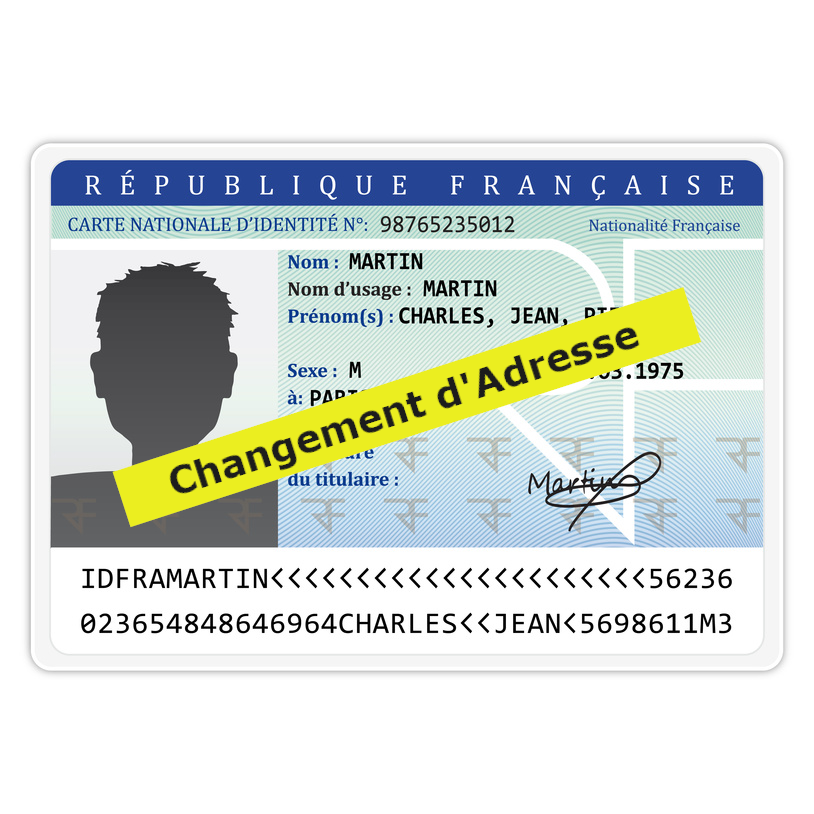
It’s one of those lasting stereotypes of life in France—coping with French bureaucracy. French residents and citizens complain about it, and it’s a commonplace among writers in the why-not-move-to-France cottage industry.But the Administration française actually provides an online tool to make one of the routine nuisances of managing bureaucratic tasks easier: changing one’s address, whether moving within the country, or moving to a location beyond its borders. It’s called the Changement d'adresse en ligne, or simply the “Online Change of Address” service.The online tool allows one to change one’s address (and in many cases one’s phone number and/or email address) with a number of public- and private-sector services:* energy suppliers (EDF, Engie, ENERCOOP);* France Travail (the French national employment bureau);* social security agencies: health insurance (including CPAM, the national health insurance provider), family allowance and retirement funds;* Service des Impôts (French tax authority);* the SIV, the service responsible for motor vehicle registration.The service is available to all bona fide residents of France, not just French citizens.To use the service you’ll need to login using either your local credentials for ServicePublic.fr or the FranceConnect authentication service. The site will then guide you through the process, consisting of verifying personal information, submitting details on changes to be made, identifying the services where you wish the changes to be made, indicating the date the changes go into effect, and finally a page that verifies all changes indicated prior to submission.Then you’re done!There might be those who assert that the invention of a service to mitigate time spent on bureaucratic functions is really just a testimonial to the oppressiveness of French bureaucracy. But the next time, as a French resident, you move and lurch from one corporate or government website to another to change your address or contact details, pause for a moment and think about how it might not have to be that way. It seems that somebody in the Administration française had that thought, too.Thanks for reading Seeking Tranquillity in France! Subscribe for free to notifications of new essays, commentary and stories. Get full access to Seeking Tranquillity in France at leavingamerica.substack.com/subscribe
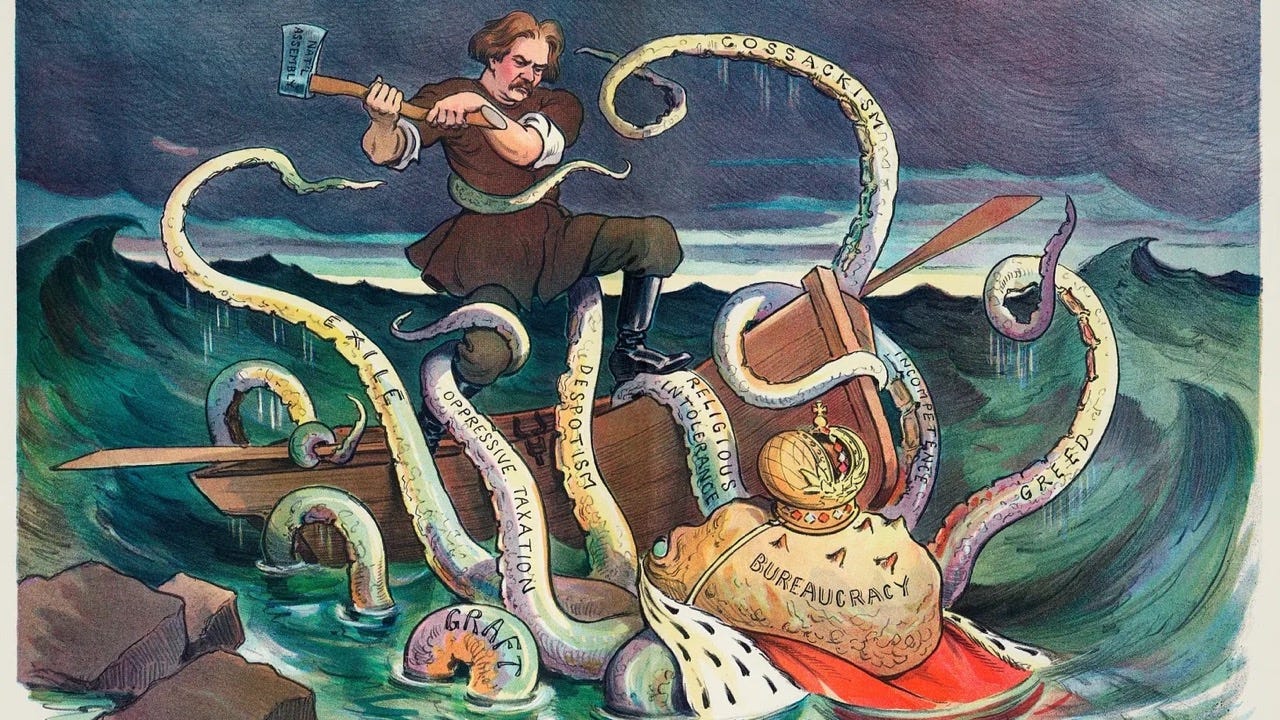
A few decades ago while working in Massachusetts, I had an employee who was an Italian citizen, but a permanent resident of the United States. In fact, he was born in Italy to Italian parents who already lived in the U.S., and he had lived almost his entire life in America. It was his personal choice to not become an American citizen. He therefore had to make periodic visits to the immigration office to renew his residency and work permits—and everyone in the office heard in detail about the bureaucratic nightmare that confronted him on these occasions—an undignified combination of complexity and dysfunction.Moving to Ireland from the U.S. my family got a taste of similar bureaucratic processes: obtaining green cards, annual visits to the Garda National Immigration Bureau (GNIB) to renew our visas, and all of the other issues that involve some kind of public service in the country. These included getting a PPS number (Personal Public Service number—the Irish equivalent of a Social Security number), applying for a Drugs Payment Scheme (DPS) card, etc. We even had to take driving lessons and pass a rigorous driving test to obtain driving licences (I failed my first road test). Then of course there were annual interactions with the tax authority, the social welfare office, and more.Visas and work permits aside, these are mostly normal things that have counterparts in the U.S.—it’s just that in the U.S. they come at you over the course of time and aren’t compressed into a relatively short transitional period. The biggest nuisance we faced as newcomers in Ireland was the full day it would take each year to renew our visas—sometimes it took three hours of queuing outside just to enter the building. And it got more expensive every year. We were naturalised as citizens after five years and one of the advantages thereafter was not having to make the dreaded annual trip to the GNIB. Apart from this we found the bureaucratic systems in Ireland to be, if anything, simpler and easier to negotiate than their U.S. equivalents. Being citizens of an E.U. country also made our eventual transition to living in France in retirement easier than it would have been otherwise.France has an undeniable reputation for having a demanding bureaucracy. Indeed, it is sometimes identified as the country that defined the modern bureaucratic state. French people embrace the stereotype and sometimes complain resignedly about it. Many expatriate commentators and consultants in the ever-growing move-to-France cottage industry also highlight this as both a necessary hurdle in moving to France from outside the European Union, and as a way of life thereafter.But I’m happy to to say that, to me, the hype about oppressive French bureaucracy hasn’t lived up to its reputation, at least not for us.I admit: part of this is because as a citizen of Ireland and therefore of the European Union we enjoy freedom of movement within the E.U.—we do not require special permission to live and work in France, so no need for visas or a carte de séjour. We do not plan to operate a business. We also qualify for the benefits of the national health insurance system, the Assurance Maladie, by simply transferring our health benefits in Ireland to France, accomplished by completing a standardised E.U. form (Form S1). Other than this our transition involved a minimum of government bureaucracy—all that comes to mind is the process of exchanging our Irish drivers licences for French ones.Bureaucracy also exists in the private sector, of course, and settling in France involves managing a range of things that, again, have their American counterparts. In our case these involved leases, insurance policies (including our “top-up” insurance or mutuelles to cover the share of medical expenses not paid by the national health insurance framework—the Assurance Maladie), setting up contracts for utilities and phone service, etc.The only truly difficult issue in this domain is the much-discussed challenge of obtaining a bank account. International banks are obligated to report to the IRS on the bank holdings of U.S. citizens (thanks to FATCA) and on this basis private banks often refuse to open accounts for American citizens. (Think of this as a situation where public-sector American bureaucracy gets layered upon private-sector French bureaucracy.) Once you have identified a bank willing to accept you as a customer, the bank will also require of you a full disclosure of your income and assets. This invariably takes the uninitiated by surprise. (Some are also surprised that getting a loan from a bank can be nearly impossible without income sourced in France or a contrat de travail à durée indéterminée, or CDI.)So yes, there are a number of bureaucratic processes to attend to when one transitions to France from another country. We did not find the transition any more challenging than moving to Ireland, other than the bank account issue (admitting again that we are E.U. citizens). But what about daily life once you’re established in France as a permanent resident?HealthcareOne of our nightmarish memories of life in the U.S. is how healthcare is administered. In retrospect, it might more accurately be characterised as a memory of experiencing healthcare as an industry, rather than as a public service.We recollect the annual challenge of selecting an insurance plan from our employers’ offerings during the annual “benefits selection period”: trying to compare benefits, evaluating costs of premiums, deductibles, co-pays; understanding the in- and out-of-network providers; examining lists to see where our GP fit into things; etc. Then we recollect the healthcare consumer’s experience—especially the expenses and complexity of hospital billing with its medical codes, going to the pharmacy and not getting a prescription filled the same day because of a need to verify pre-approval of costs, and so forth. Then there are the inevitable “annual deductibles” and “co-pays.” I won’t even mention what happens when you contact an insurer’s customer service department. Talk about bureaucracy! And it is often bureaucracy that just doesn’t work or that leaves you high and dry with unforeseeable expenses.In France, there is nothing comparable to the American process of choosing a major health insurance plan, or figuring out how things work in a system with so-called in- and out-of-network providers, etc. There is just the country’s universal health insurance system and the nationally regulated network of care providers. We can easily get an appointment with a GP, frequently on the same day; in some cases we can also make an appointment directly with a specialist physician without a GP’s letter attesting to the need for a specialist.To pay, we produce our Carte Vitale—the card that shows entitlement to benefits from the national health insurance authority, the Assurance Maladie—and all or most of the cost of the visit is paid for (if a cash payment is required in addition, it will generally be reimbursed in part or in full within a week by one’s mutuelle). Drug payments are included—I’ve never paid anything for a prescription drug in France. Dental and eye care is also covered by the Assurance Maladie. If you’re unfamiliar with the system it might sound complicated, but in practice it’s not. It’s easy. It’s not stressful. And the costs of medical services and drugs is a fraction of what you would expect to pay in the U.S. anyway.My opinion: Americans might take note that a government-administered single-payer system focused on serving the public can be more efficient, more effective, and far more beneficial to society that one whose priority is generating revenue for a handful of stockholders.TaxesFirst off, it’s important in leaving the U.S. for another jurisdiction to understand the terms of the applicable tax treaties, all of which are available in English from the IRS website. These are sometimes referred to as “totalization agreements,” the purpose of which is to relieve individuals from the burden of dual taxation. However they also define the terms by which tax is applied in other contexts as well—such as capital gains and inheritance. Read and understand the treaties: your tax accountant might not be familiar with them; most IRS staff will not have committed their terms to memory either. This is not so much bureaucratic complexity as it is simply understanding the rules by which you live.If you are working in France then there is both income tax and social charges (more about the latter below). All residents of France, including non-French nationals, must file an income tax declaration. French taxes will be calculated on world-wide income, a practice followed by the IRS as well. The tax declaration itself is relatively simple and short, and after an initial year when the declaration must be filed manually, in printed format, they can be submitted electronically. That first tax declaration is filed after the first full year of residence in France. If you are working, the tax authority then calculates the a monthly income tax deduction for the next fiscal year based on the prior year’s income; reconciliation with actual income occurs when tax declarations are filed the following year.Complexity occurs when someone who is resident in France receives income for work from a U.S. source. If the employer continues to declare you as a U.S. employee, then you would continue to pay into the U.S. Social Security system and be exempt from French social charges. Otherwise, if you work from home in France and receive U.S. income, you’ll pay income taxes in France and you will also have to arrange for payment of social charges. This is another example that comes not simply from the nature of French bureaucracy, but from the legal arrangements between two international jurisdictions regarding revenue and citizens’ fiscal obligations. Therefore advice from an accountant specialising in cross-border taxation is essential t

When I first began to work with computing technology—I needed a database to manage a combination of bibliographical and encoded musical information—I became acquainted with two consultants at my employer’s computing centre, one of whom was a musician. It was in this context that I first heard the assertion that “musicians make good programmers,” and indeed I came to understand over the years that this was something of a stereotype, at least in the years before ca. 2000.Being a musician myself I was intrigued by the concept, and in fact became somewhat immersed in development of the technical infrastructure that my project required. At a certain point I began to articulate an explanation of why musicians might take naturally to computer programming:Musicians, by practicing, are accustomed to working alone, relentlessly performing repetitive tasks, seeking to create coherence and meaning across non-verbal micro- and macro-structures, striving for perfection.In other words, we acquire technical mastery by breaking things down musically into their smallest logical components, repeating and refining these until they become fluent, then joining them with what precedes or follows to shape meaningful phrases, ultimately to build tension, expectation, resolution, and a sense of overall meaning and wholeness.One of the values I see to musical training is that one learns, through practicing techniques and skills, an approach that transposes well to learning and understanding things in both quantitative and verbal arts, such as mathematics and language. It also simply develops the ability to sustain attention for long periods of time. Language learning seems to me to have a particular kinship with music insofar as it requires listening to build understanding, as well as to enable the ability to create or recreate sounds; it requires sensitivity to the nuances of the temporal flow of sound—rhythm and meter—to shape comprehensible phrases and sentences; and it strives for the ability to detect and mimic the melodic shape of spoken language—the rise and fall of pitch in spoken language that lends it intellectual or emotional expression.Indeed I have always been fascinated with language acquisition and actively transpose approaches from musical learning and practice to language learning. How does this work?In effect, I’ve adopted an approach to learning languages—currently focusing on improving my fluency in French—that looks very much like how a musician approaches mastery of their instrument or a piece of music. A key part of this is a daily practice routine. I spend a part of almost every day in language study—sometimes no more than ten minutes if circumstances demand, but often an hour or more. While I might begin a musical practice session with exercises to limber up the muscles used while playing—scales, arpeggios, other études—I often start my language learning simply by reading aloud from the French newspapers I subscribe to. There might be new vocabulary, or a turn of phrase I have to linger on to fully discern its meaning, and these can interrupt the flow—if I am not understanding something’s meaning, I cannot read aloud in a meaningful way either. So I’ll pause, acquire understanding, then repeat so that the spoken language feels natural. I might also then make notes about vocabulary or word usage for future study.Frequently these days the newspaper offers audio versions of its articles, sometimes read by the author. There will be times when I listen to these as well. And on other days I will also record myself reading these same pieces aloud, then listen and compare (I’ve a basic recording setup I use to create voiceovers for my Substack essays). Again, this feels much like the experience of learning to perform a piece of music, recording it, then reviewing the recording—you always hear things differently during playback, and frequently things just don’t sound the way you thought. Sometimes it is quite painful, sometimes rewarding. I think of this as my cobbled-together “language lab” experience.Some language teachers frown on the old tradition of studying vocabulary lists, but it’s still part of my practice routine. Over the course of time my lists consist less of individual words than idioms, expressions and common phrases, which I find more challenging to master. It’s in this context that I find the old music practice techniques kick in. Let’s say, for example, I’m trying to master an idiom, like “être au ras des pâquerettes” (literally, “to be at the level of the daisies,” i.e., to be at a low intellectual level). I’d first take “être au ras de” (which might be used by itself in some other context), then join it up with “des pâquerettes” to build the idiom—and then someday I’ll be able to reel it off spontaneously, to everyone’s astonishment (“Il reste toujours au ras des pâquerettes!”). Or let’s take a phrase like “en être encore à ses balbutiements” (to still be in its beginning stages or infancy). I’d break it down in “en être encore” and “à ses balbutiements,” then put it together, finally building (as spontaneously as possible) new sentences that use the expression, such as “Mes efforts pour apprendre le français en sont encore à leurs balbutiements.”So does it work? I’ll only say that when I was in my twenties and learning German things took hold in memory much more easily, and it helped to have a year in Germany to drive it home. When I was learning Swedish in my thirties, in the U.S., the language lab was a godsend, and the closest thing available to hearing Swedish spoken naturally by Swedish people—it was an enormous help to be able to listen to native speakers and to hear myself trying to imitate them. Now, decades later, living in France, things seep into the consciousness and deep memory more reluctantly, but in the course of time I see steady progress. There is one other big difference: the muscles of the speech organs are more reluctant these days, set in their ways from years of speaking primarily English. I benefit from having learned some French at a very young age, but I could probably pronounce French better at age four than I do now.My humble opinion: learn to play music and to speak another language at an early age, and you’re likely to develop learning and listening skills that will last long into the future, in language acquisition but in many other contexts as well.To receive new posts and support my work, consider becoming a free or paid subscriber.Or … feel free to … Get full access to Seeking Tranquillity in France at leavingamerica.substack.com/subscribe
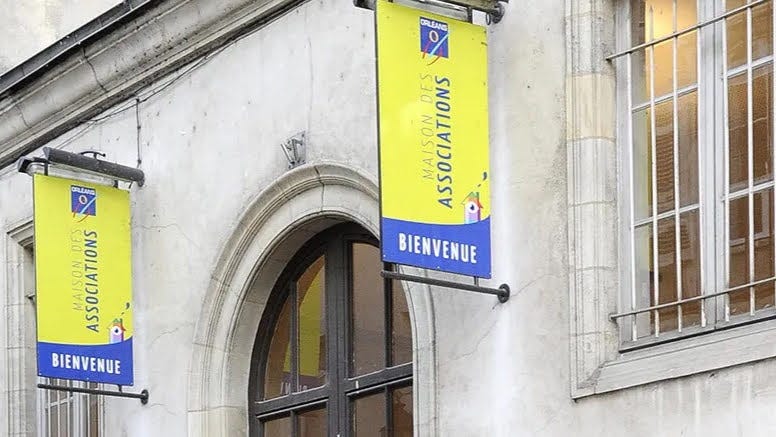
If you’re a relative newcomer to France, have a basic knowledge of French and want to gain fluency in informal daily conversation, there are many possibilities that do not involve a computer or mobile phone screen. Some of these opportunities are sponsored by associations.Although I already had a good foundational knowledge of French when moving to Nice, Côte d’Azur at the end of 2021, our first months comprised a coming to consciousness of the French I had never learned, that is, the things that aren’t taught in your average American French classes. Some examples: the language used in official documents required to transfer our citizen’s rights from Ireland to France; the processes for exchanging drivers licences; all the fine print when opening bank accounts and insurance policies; understanding lease agreements; registering with the national healthcare system; and all the other démarches administratives (administrative procedures).As these administrative processes fell into place, however, another linguistic weakness made itself known that was partially based in language knowledge, and partially in culture and attitude: ordinary everyday conversation and small talk.It’s easy enough to gain fluency in the kinds of transactions that are part of everyday life—interactions with staff at the market, bakery, or at the till in a supermarket; buying necessities at the hardware store; making an appointment on the telephone. I say these are easy because they are repetitive and involve a limited vocabulary—every transaction becomes a brief language drill. (Just make sure you can tell the time of day and know numbers well enough to easily recognise them!) But find yourself in a conversation with someone unexpectedly—a friendly person at a bus stop or discussing the weather with a neighbour—and the arbitrary excursion into small-talk can become tricky quickly.I had had a strategy for upgrading my abilities in French well before taking up residence in France—radio, television, newspaper subscriptions, youtube videos (a nice feature is being able to slow the tempo down and repeat when needed), language apps, even Alliance Française classes online. But none of these is a substitute for actually conversing with French people. We were new in town, and had no local friends or personal contacts. What to do ?France, like other European countries, has many associations, ranging from informal groups of people with common interests to large entities with legal obligations. I happened upon the Maison des Associations at Place Garibaldi, Nice, whose exterior bulletin board has notices advertising many local associations—several of which focused on language learning. I followed up with one of them and learned that, by becoming a paid member (€30 annually) , I would be eligible to participate in a range of activities sponsored by the group, including a weekly informal gathering at a café to exchange French and English language conversations, as well as a weekly atelier or “advanced French workshop” that has a more literary inclination.Once I’d become a member of the association I joined the conversation group at one of its Tuesday morning gatherings at a café. The timing of the meeting should have tipped me off to this being a group of seniors and retirees, and so it was, and it is a friendly and welcoming group at that. There were no formal introductions, I simply introduced myself to those seated closest to me. It became apparent quickly that I was one of a small handful of native English speakers present.Formally the “rule” was that conversation would be undertaken for one hour in French, and for one hour in English. The first order of business is choosing which language to start with. On my first meeting with this group we began with English, but it quickly migrated back to French. The person seated next to me explained that most of the people who attend have done so for years and that it is now more of a social gathering than a structured learning experience. Others also explained that there had previously been a near balance of French and English speakers, but the majority of British attendees disappeared once Brexit took hold. All the better for me, since my personal goal was to gain better fluency in French day-to-day conversation, and most of the conversation takes place in French.The members of this association are diverse and attend the Tuesday morning meeting as mood and possibility allow. It’s like a small-talk language immersion programme. Topics arise spontaneously and change as quickly as they appear. Sometimes the topic is obscure to someone who is not a long-time resident of France or Nice, which means learning some new tidbit about the culture, geography or local politics and politicians, for example. And everyone is curious linguistically—so interrupting a chat to ask that an unfamiliar word be explained can lead to an entirely new topic of conversation.For me, this kind of experience helped address the biggest barrier I had to speaking spontaneously in French: shyness, reticence and hesitation. These days I don’t hesitate and just keep talking, even when I hear mistakes issuing from my lips as I express myself.The atelier in “advanced French” is very different. It is led by a retired French teacher and attended generally by four to eight people. Each one-and-a-half-hour session involves reading—usually something from a literary work, magazine or a newspaper. Then discussion of vocabulary (there is always something new), application thereof, and of the topics covered. Occasionally there will be exercises that feel somewhat pedantic—lists of words and their antonyms or synonyms, crossword puzzles, etc. The workshop is also sometimes followed by a separate group that plays a Scrabble-in-French game (which I’ve chosen not to join). Sometimes it is followed by a lecture, which typically attracts forty or so primarily French attendees.I soon learned from association members of another association, this one an informal group without legal status, that sponsors a weekly French-English language exchange. I made contact by email and was welcomed into the fold. This particular group was founded by three friends years ago and is organised primarily by a French gentleman who lived much of his adult life in the United States—he is perfectly bilingual. Like the other association, its members are mostly retirees and the proportion of English to French speakers is unbalanced in the opposite direction: the ratio of French to English speakers is about 1:2. It is an informal association without legal status and participation costs €20 annually plus €3 per meeting to pay for the meeting venue.The organiser places people together in groups of three (or sometimes just two) and conversation proceeds for one hour in each language. He also distributes a document each week to serve as a potential basis for conversation. These are in fact interesting in themselves, usually elaborating on topics of local historical or cultural interest. But so far in my experience they have never played a role in the actual conversation that unfolds. Rather, conversation seems to unfold organically. Introductions often lead to interesting chats since, as it turns out, the attendees at these events tend to have certain things in common. The language interest is obvious. For many of the French participants this is linked to travel, since English has become the lingua franca of tourism; some also have English speaking spouses; and there are several former French or English teachers. There are also French participants who grew up in diplomatic families, moving here and there as assigned, and others who were born in former French colonies.Perhaps half of the native French speakers are also native Nice residents, and I always enjoy hearing their perspectives. Some were raised speaking both French and Italian; a couple also speak the niçois dialect, though they have differing opinions about whether it is a Provençal language or a Liguorian dialect. (There is also an association, Nissa Pantai, that promotes appreciation of “the use and love of the dialects of the Occitan language and, more particularly, Nissart and Alpin.”)The English speakers are, I think, even more diverse. There are people from the United States, Ireland, the United Kingdom, Singapore, Australia and elsewhere. Many have arrived in Nice over the past several years, which means that conversations often move to newcomer issues: visa renewals, problems or successes in registering for this or that public service; and of course the challenges of trying to master French language. I am always curious about the reasons why Americans in particular moved to France. Healthcare is one reason sometimes given, whereas others are fulfilling a francophile retirement dream; still others are fleeing some other aspect of American culture that has become oppressive. Expressing yourself about these sometimes emotional topics in French can be challenging if you’re at even an intermediate level in French.Beyond these specifically language-oriented associations, joining some other group focused on an activity or pastime might help with both language development and having a sense of joining the community you’re in. Check out my piece on Associations for more about this. If you’re over 55 or retired, there may be civic groups sponsoring activities and services for séniors—ask about this at the local mairie as well. (The City of Nice supports twelve Maisons des Associations and five different maisons des séniors.)There are also more formal educational venues, such as Alliance Française, as well as commercially sponsored social and language groups. There is Meetup, the company that fosters meetings among people with common interests which operates internationally. For a higher annual membership fee there is also InterNations, another international organisation focused on sponsoring activities connecting expats through socia

There is a large and growing cottage industry catering to people moving internationally, particularly from the U.S. to France. These range from individuals and couples who have moved in the past couple years and are now offering how-to advice on social media, to corporate relocation firms that can handle or assist with many of the logistics and administrative paperwork involved. Some of these services offer advice on getting settled and building a new network of acquaintances, but few speak about the potential role of French Associations. Get full access to Seeking Tranquillity in France at leavingamerica.substack.com/subscribe
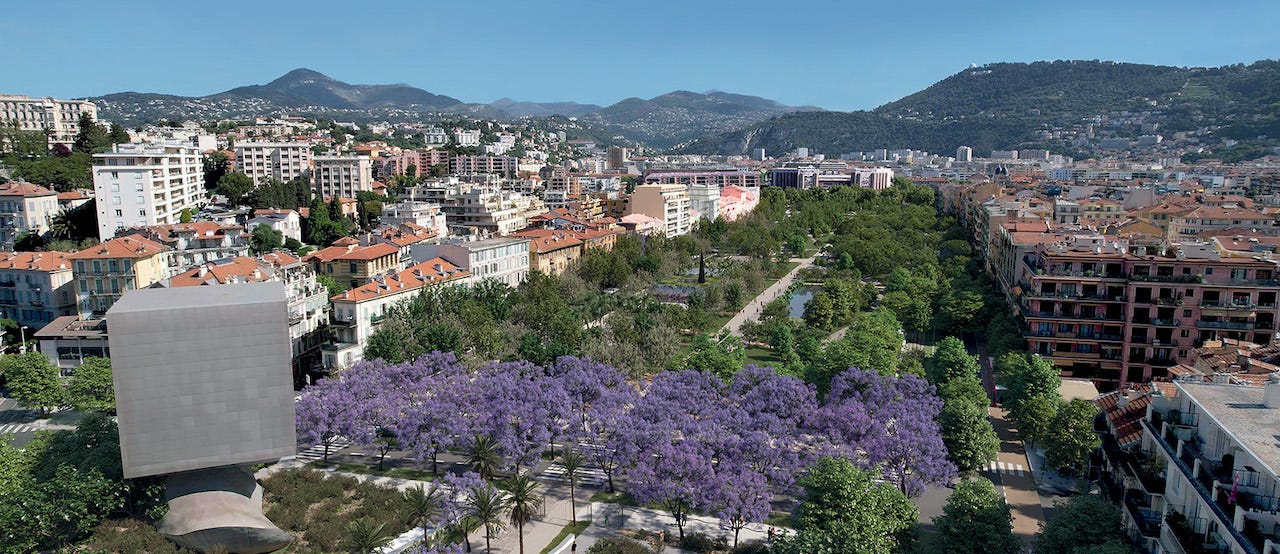
A question I hear frequently these days is, "Why did you choose Nice for retirement?” I hear it from residents of Nice most frequently (who probably can already guess some of the answers), but from others as well—including some Substack readers.There are many reasons why we chose to move from Dublin, Ireland to Nice, France when retiring at the end of 2021. It was partly from familiarity—we had made several trips to Nice and enjoyed two Christmas holidays there as a family. We appreciated the mild December weather (and the reprieve from Dublin’s often damp, grey winters) and simply being there. But choosing a place to live is different from just choosing a holiday destination, and we took the process seriously. ...Read the full text of this essay on Substack. Get full access to Seeking Tranquillity in France at leavingamerica.substack.com/subscribe
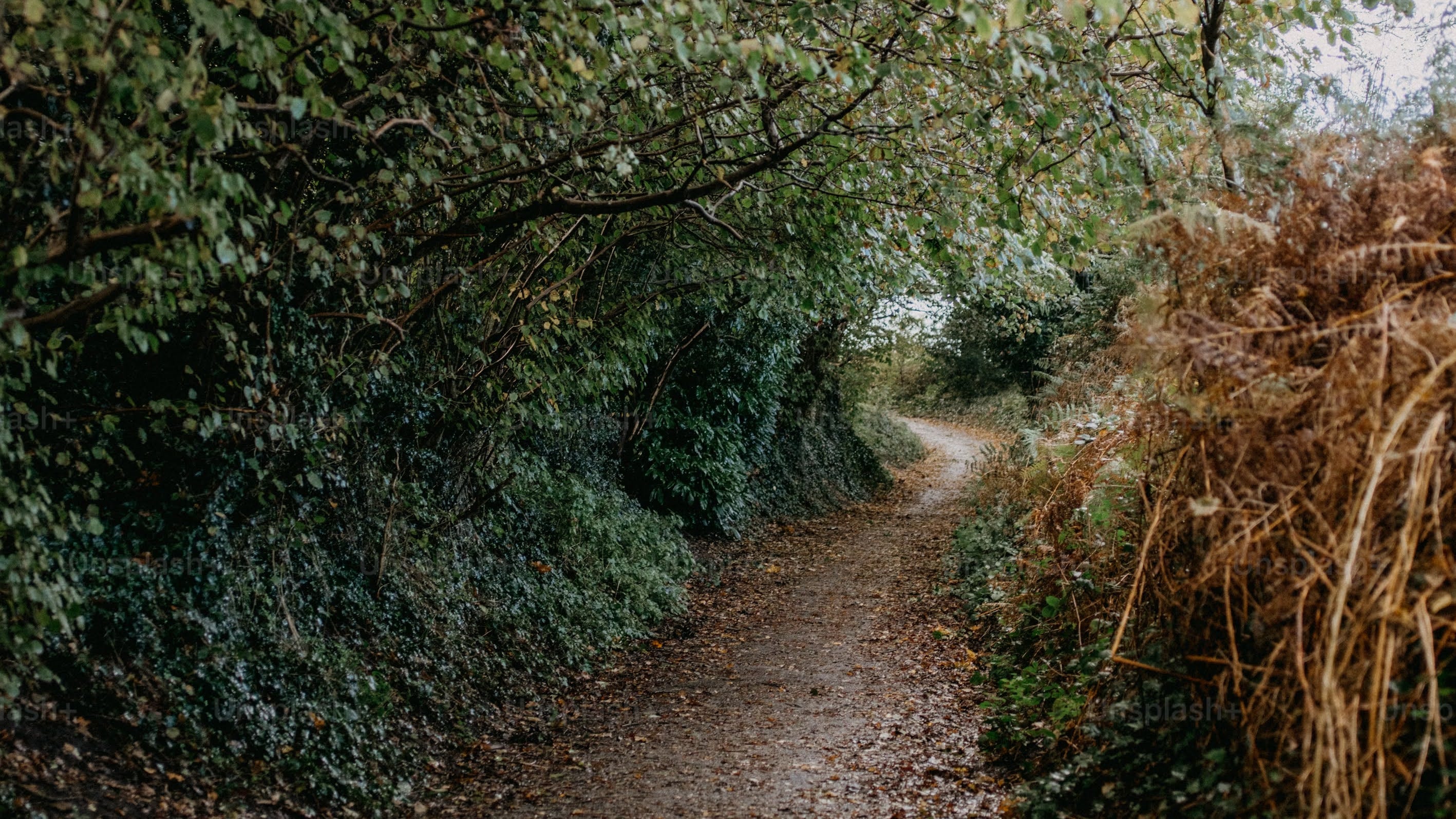
In several posts I’ve referred to my family’s departure from the U.S., which was motivated by an eminently practical concern: healthcare. Family health and well-being had not only become unaffordable, it had also become inaccessible due to the the industrial policy of not insuring individuals with “pre-existing conditions.” Subsequently the Affordable Care Act addressed the latter issue, largely by not challenging the myriad issues of healthcare costs.At the time, in 2009, I saw our departure as a difficult but necessary practical response to an existential issue. As we settled into a European culture where healthcare was adequately addressed, I came to realise that the base issue was not a single practical problem. It was, rather, a broader issue of shared societal values and of national culture. Shared societal values insofar as we believe in equitable access to healthcare for all citizens, not simply those born without chronic disease and with financial privilege (in Ireland, where we settled, access to healthcare is universally accepted as a right of the population). National culture insofar as we came to understand that American society’s expectation of the role of government is fundamentally different from that in most other Western democracies. The healthcare issue in America—indeed, issues of safety and security in general—are really symptoms of U.S. society’s historically meagre expectations of the role of government in actually supporting “life, liberty and the pursuit of happiness.”Did these latter words, from the U.S. Declaration of Independence, imply that achieving such noble goals was the responsibility of the individual, or did it declare it a responsibility shared between the citizenry and the governing nation-state? The culture appears to have embraced the former interpretation, whereas we favour the latter.In the course of time, then, it became clear to us that the deeper reason for our departure from the United States had been, in effect, a lack of alignment between our values and convictions, and those of the society we were living in.Living outside of the United States one sees the country from a different perspective. The shape of the lens through which we view things changes in many ways. The press and the media are always, as I once read while living in Germany, “ein krummer Spiegel der Realität” (a curved or distorted mirror of reality)—in Europe the press offers different perspectives while also, in general, viewing the world as a much larger place than the American media generally acknowledges. And there are other more commonplace, more quotidian and even mundane phenomena in our new place of residence that change one’s perspective: the nature of the workplace and of the workday; everyday civility; the absence of the vitriolic anger we often witness among Americans; the ability to non-contentiously discuss contrary points of view with fellow citizens; the more comprehensive safety net of the welfare state; the greater accessibility of quality education, of healthcare; the lack of disagreement among even those of very different political views on the reality of climate change; and on and on.While living in Ireland I was often asked if or when I’d return to the United States. Indeed it was an inevitable part of first conversations with people. It’s not a question I hear anymore, and I don’t believe it is because we now live in France. I think it is because the evolution of American society and government over the past while has caused many European citizens to no longer regard America as the reliable and irresistible land of promise and endless possibilities it once was, and in many ways they perceive the consequences of its evolution as something threatening, dangerous and potentially contagious. If I were now called upon to answer that question about returning to the U.S. I would have to say that the trajectory of social policy from 2000 to the present only intensifies the worries that led to our difficult decision to move to a new jurisdiction. Yes, the Obama and Biden years mitigated some concerns, but I was profoundly disappointed by the modesty—indeed the tentativeness—of reforms effected by those administrations in the domain of healthcare in particular, our key personal issue.Moreover, from 2025 the country seems like the land of broken promises. Promises with regard to the welfare of society made through programmes like Medicaid, Medicare and Social Security, or the reforms implemented by the Affordable Care Act, all now under tangible threat. Promises with regard to security and the rule of law, now cast aside, while a policy of personal revenge unfolds from the highest seat in government. Promises made in treaties with its two closest neighbours and allies, now endangered and potentially meaningless as a result of vicious and ignorant political whim. And promises made to immigrants, like my forbears, enshrined in the poetic words given to Lady Liberty by Emma Lazarus, “Give me your tired, your poor, your huddled masses yearning to breathe free, the wretched refuse of your teeming shore. Send these, the homeless, tempest-tost to me.”What country now sees the U.S. government as a reliable partner in commerce or defence? Who, internationally, will continue to regard the U.S. dollar as an infallible reserve currency or preferred medium for commerce amongst nations? And who in the U.S. citizenry truly views its government as a serious agent in addressing society’s most tangible problems—the health of the population and the health of the planet?Is there a road home for us, who will always be American citizens no matter where we reside? That path now seems impassible, overgrown with greed, corruption and lies. Someday perhaps its trail will even have become indiscernible, no more than a memory in a poisoned wilderness. Still, I ask with increasing desperation, does it really need to be this way? Get full access to Seeking Tranquillity in France at leavingamerica.substack.com/subscribe
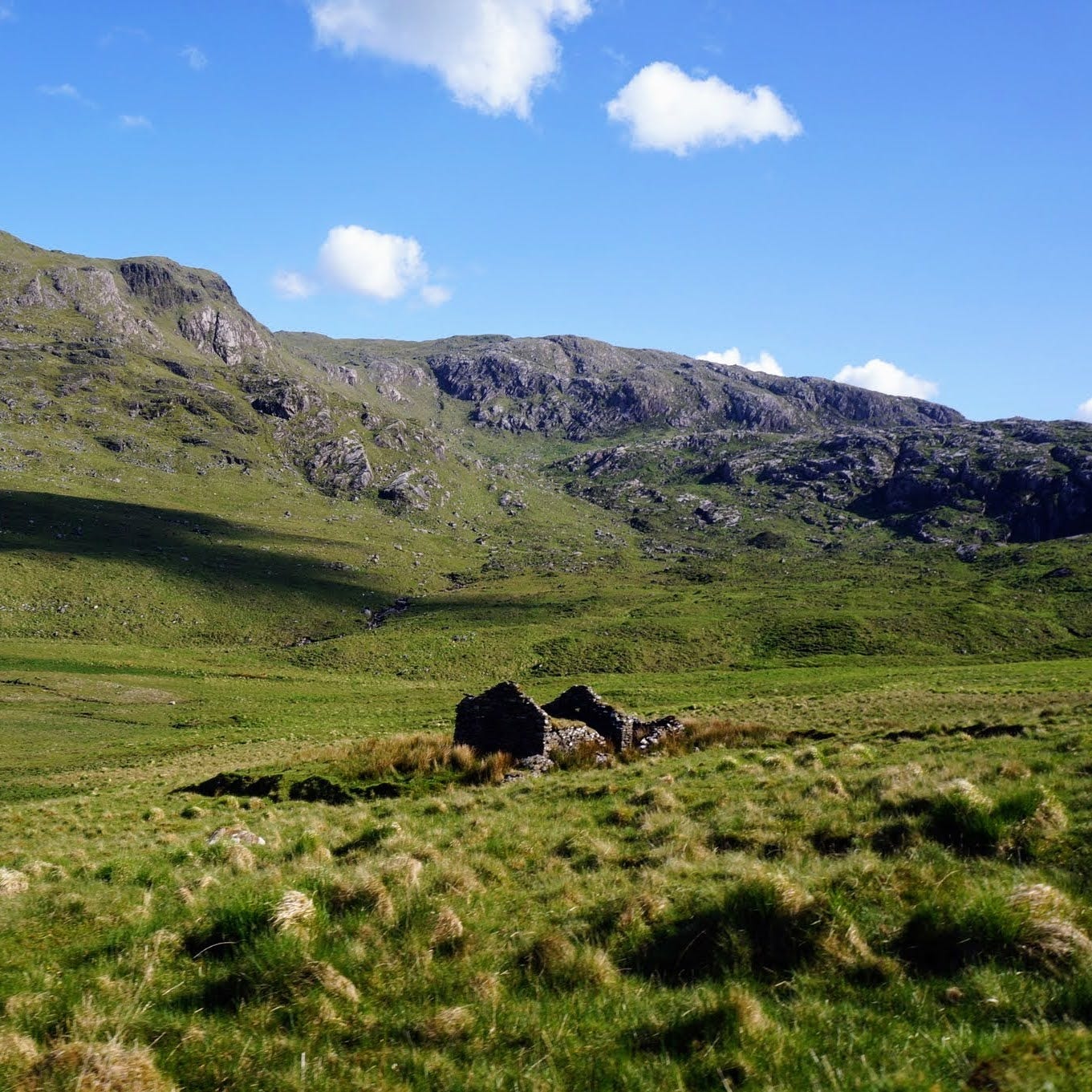
We arrived in Dublin, Ireland in September of 2009 to begin new jobs at Ireland’s largest university, which at the time identified itself as “distinctly Irish.” We had never travelled in Ireland prior to the trip my wife and I made to Dublin for the job interviews, although the maternal side of my family was also, well, distinctly Irish. In fact, I’d never given much thought to my Irish ancestry—it was simply something that was there, and was not a salient part of my identity. I quickly learned, however, that it was meaningful to my new colleagues and acquaintances.Read the text version of this podcast on Substack. Get full access to Seeking Tranquillity in France at leavingamerica.substack.com/subscribe
Living in France I still regularly hear stories about Americans’ experiences with healthcare—often focusing on the extraordinary cost of prescription drugs. The most recent tale involved a prescription for a three-month supply of Eliquis (Apixaban) for a person using a Medicare Advantage plan. The insurer had provided a “Copay card” pre-loaded with $750 to be used when purchasing drugs. The Eliquis prescription turned out to cost $1,781—so paying for the prescription required $1,031 out of pocket.I then looked up the comparable over-the-counter cost for Eliquis at pharmacies in France, for the same dosage: it was €176.85, or about 10 percent of the cost in the United States. In fact, if we were prescribed Eliquis by a doctor here in France, our cost at the pharmacy would be zero, thanks to the single-payer health insurance system and our low-cost supplementary insurance (generally referred to as a mutuelle). How could there be such an extraordinary difference?I’ve since compared the costs of fifteen prescription drugs in the U.S. and in France according to two reliable purveyors of drug information. Ten of the drugs are among the most commonly prescribed by American doctors; the others were chosen arbitrarily, but are also frequently prescribed, often for more specialised conditions. The results are shown in the table on the Substack page for this essay.The result, in aggregate, is even more astonishing than the initial comparison made with Eliquis—on average, the cost of the very same drugs (brand and dosage) in France was less than 6 percent the cost in the United States.There is something wildly wrong here. Let’s consider some reasons why.First and foremost, France has a single-payer health insurance system—the Assurance Maladie, or more formally Caisse Primaire d’Assurance Maladie (generally referred to as CPAM). This means that there is a single public-sector entity nationally that is authorised and positioned to negotiate drug prices for the whole of French society—and obviously it does so effectively.Second, there is genuine competition among the private insurers that provide supplementary health insurance. These organisations, consisting mostly of non-profits and private for-profit insurance companies, provide policies that cover costs that are not fully covered by CPAM. These organisations number in the hundreds. The high level of competition means costs are generally low, and consumers can evaluate many offerings to find one that fits their specific needs. If an individual or family cannot afford supplementary insurance, policies for those in need are also available from a range of public- and private-sector organisations.The Biden administration and the Democratic Party have trumpeted advances made in the past several years in lowering costs of prescription drugs for Medicare subscribers. Specifically this includes authorising Medicare—the country’s existing single-payer medical insurance system—to negotiate prices with drug companies. It also includes lowering the cost of insulin for those over age 65 to $35 monthly, and capping overall annual expenditure on prescription drugs (with some exclusions) to $2,000.But let’s put this into perspective. Medicare represents less than 20 percent of the U.S. population, so impact is limited. Many with Type 1 diabetes are diagnosed with the illness as adolescents, and the average age for diagnosis of all types of diabetes is 49.2 This means that some parts of the population are denied beneficial costs for insulin reserved for seniors for 15-50 years while suffering from both the disease and the costs of treatment. As a result, some will perish before qualifying for Medicare, and many others will suffer financial hardship. Also consider that many Americans over the age of 65 and living in retirement depend exclusively for income on Social Security. The average individual Social Security payment as of January 2025 is $1,976 (before taxes). So, the cap on drug payments of $2,000 annually will, for many, consume an entire month’s pre-tax income, or more.So the government’s efforts to lower drug prices in the past four years on behalf of its over-65 population have been extremely modest. Why? It is because the government and its leadership, regardless of party, also serve another powerful constituency—the private insurers who dominate the Medicare Part D marketplace, and who also control the industry that performs medical coding, prescription benefits management and the direct issuance of drugs to clients by their pharmacies. Indeed, a Federal Trade Commission report released 14 January 2025 concludes that pharmacy benefit managers (PBMs) were responsible for eye-watering increases in the cost of drugs for treatment of cancer, heart disease, HIV, and other illnesses. The report "found that the ‘Big 3 PBMs’—Caremark Rx, LLC (CVS), Express Scripts, Inc. (ESI), and OptumRx, Inc. (OptumRx)—marked up numerous specialty generic drugs dispensed at their affiliated pharmacies by thousands of percent, and many others by hundreds of percent. Such significant markups allowed the Big 3 PBMs and their affiliated specialty pharmacies to generate more than $7.3 billion in revenue from dispensing drugs in excess of the drugs’ estimated acquisition costs from 2017-2022. The Big 3 PBMs netted such significant revenues all while patient, employer, and other health care plan sponsor payments for drugs steadily increased annually, according to the staff report."(The report details other abuses as well as the cost impact on plan sponsors and individual plan participants.)These companies and their shareholders, as well as their strategies to influence members of government, actively combat meaningful change in the American prescription drug market. They also promote sales of prescription drugs through unrelenting advertising (illegal in the European Union) and similarly encourage physicians to prescribe their products with gifts of swag and free samples of medications.There is an argument that the best way forward for citizens of the U.S. is a transition to a comprehensive public-sector single-payer health insurance system, often referred to as “Medicare for All.” However, the current Medicare model falls short because its authorisation to negotiate drug prices with manufacturers is limited and because the drug payment benefits of Medicare Part D has been largely given over to the private sector which, arguably, acts on behalf of shareholders primarily and for its customers secondarily. So it is not the optimal model to replicate in comprehensive a single-payer system.The solution is not just a transition to a comprehensive single-payer system. A thorough regulatory review that addresses the full range of abuses now rampant throughout the health insurance industry and among healthcare providers is badly needed. Unless these more holistic reforms are undertaken, a single-payer system could potentially perpetuate many of the economic and healthcare abuses that currently exist. Transitioning to a public-sector single-payer system is not as trivial a transition as some maintain. This is because, for many corporations and entrepreneurs, the very notion of the government operating a social welfare system of any kind flies in the face of their concept of “free enterprise” and a lightly regulated marketplace. Resistance from private-sector industrial stakeholders will be fierce.It doesn’t have to be this way.Unfortunately, what’s still missing is genuinely overwhelming public support for reform and the political will to get it done. Get full access to Seeking Tranquillity in France at leavingamerica.substack.com/subscribe

Growing up I found the notion of speaking languages other than English intriguing. The experiences of learning French in childhood, learning German in early adulthood, then coming back to French later in life has been a fascinating cultural experience. Get full access to Seeking Tranquillity in France at leavingamerica.substack.com/subscribe
Jack Howard (1875-1971) was a noted outdoorsman who made countless expeditions in the woods of northern Maine and New Brunswick to fish, hunt, canoe, and to photograph his experiences. He ultimately came to feel that there was more sport in “hunting with a camera” than a rifle, and became ever more concerned about conservation. From 1915 onward he spoke regularly to groups ranging from sportsmen’s clubs to policy makers. He delivered the following remarks to an unidentified group of Massachusetts sportsmen during World War II, sometime after March 1943. Get full access to Seeking Tranquillity in France at leavingamerica.substack.com/subscribe
Chances are, no matter where you live, you expect there to be after-Christmas retail sales—an opportunity for merchants to sell over-stocked merchandise and to reduce inventory for an annual tax-related inventory. It’s often a great opportunity for consumers. And you might expect other kinds of sales throughout the course of the year as the seasons come and go and demand for certain goods rises, then ebbs.In France, things are just a little bit different. Get full access to Seeking Tranquillity in France at leavingamerica.substack.com/subscribe

Comments

Download from Google Play

Download from App Store
 United States