DiscoverScience from the Tap
Science from the Tap
Claim Ownership

Science from the Tap

Author: Daniel Gerrity

Subscribed: 0Played: 1
Share

Description

What are the emerging challenges facing the water industry? How do we know when drinking water is safe, and how do we measure and remove the contaminants that make it unsafe? How do we sustain communities in some of the driest places on the planet?

Here you'll find AI-generated "podcasts" (produced by Google's NotebookLM) that summarize Dr. Daniel Gerrity's peer-reviewed scientific publications on these topics. As with human podcast hosts, "Chad" and "Beth" don't always get the science exactly correct, but they do a pretty good job of making this science accessible to the public.

Bio: Dan Gerrity has a Ph.D. in Environmental Engineering from Arizona State University and is a licensed Professional Engineer in the State of Nevada. Dan's research primarily focuses on the public health implications of water reuse, which is critically important for sustaining communities in water scarce regions. Dan has worked in industry, as a tenured Associate Professor at the University of Nevada Las Vegas (UNLV), and now as a research scientist at a drinking water utility in Las Vegas.

Google Scholar: https://scholar.google.com/citations?user=sne7WfEAAAAJ&hl=en&oi=ao

21 Episodes
Reverse
Mask mandates, social distancing, and frequent hand washing became the norm during the COVID-19 pandemic. While these measures were directed at SARS-CoV-2, public health officials noticed that there were corresponding reductions in other respiratory viruses, such as influenza. But what impact, if any, did these measures have on the spread of enteric pathogens--the ones most commonly associated with diarrhea? This episode takes a "deep dive" into wastewater surveillance, but this time focusing on enteric pathogens, specifically norovirus, adenovirus, enterovirus, Cryptosporidium, and Giardia. By looking at how wastewater concentrations of these pathogens vary over time and by location, we can better understand how infections are spreading, where public health interventions might be appropriate, and even the implications for our drinking water systems. This is an AI-generated podcast created with NotebookLM based on a publication in Environmental Science: Water Research & Technology. The original article is available here: https://doi.org/10.1039/D4EW00620H
The steady climb of a roller coaster generally leads to an exciting, stomach-turning descent. But in the world of drinking water, peaks can be stomach-turning in a much different way. To mitigate these scenarios, potable reuse systems that turn wastewater back into drinking water are often designed assuming worst-case scenarios (e.g., peak pathogen concentrations). While this is a conservative approach to public health protection, it can have adverse consequences on the sustainability of these treatment systems. This begs the question: is there another way to mitigate peak pathogen conditions? This episode takes a "deep dive" into disease outbreaks, the effects on wastewater pathogen concentrations, and the implications for the design of potable reuse systems. In particular, this episode focuses on hydraulics and the effects of mixing and dispersion on contaminant spikes. In other words, can we attenuate peak virus concentrations using the law of averaging ? This is an AI-generated podcast created with NotebookLM based on a publication in ACS ES&T Water. The original article is available here: https://doi.org/10.1021/acsestwater.1c00378
There is always a baseline level of uncertainty when it comes to making critical decisions. But what do you do when there's a significant 'shock' to the system that causes this baseline uncertainty to spike? In 2020, when the genetic signal of SARS-CoV-2 was detected in wastewater, the field of wastewater-based epidemiology (WBE) was jumpstarted. But this also raised questions of whether this emerging pathogen posed any risks to public drinking water systems, particularly in the context of potable reuse. This episode takes a "deep dive" into the drinking water industry's response to SARS-CoV-2 and the COVID-19 pandemic. Specifically, this episode describes an 'editorial perspective' written in response to questions of whether our potable reuse systems were sufficiently robust to handle this new pathogen. This editorial demonstrates that we can leverage prior knowledge, identify and conduct critical research to fill knowledge gaps, and continue to protect public health, even under extreme uncertainty. This is an AI-generated podcast created with NotebookLM based on a publication in Environmental Science: Water Research & Technology. The original article is available here: https://doi.org/10.1039/D0EW90031A
Engineers don't always drive trains, and trains don't always ride on tracks. For decades, civil and environmental engineers have been designing potable reuse treatment trains to ensure that communities throughout the world have safe and reliable drinking water supplies, even in water-scarce regions. All of these treatment trains successfully convert wastewater into purified drinking water, but they don't always follow the same track.This episode takes a "deep dive" into potable reuse, providing examples from multiple cities throughout the world, to show how engineers are constantly innovating to ensure that water always comes out of your tap. This is an AI-generated podcast created with NotebookLM based on a publication in the Journal of Water Supply: Research and Technology - Aqua. The original article is available here: https://doi.org/10.2166/aqua.2013.041
What do you think of when you hear the word "ozone"? Maybe the hole in the ozone layer? Or the harmful lung irritant present in smog? In describing ozone, the American Lung Association uses the phrase "ozone is good up high, bad nearby". But what if I told you that ozone can also be good nearby?This episode takes a "deep dive" into the use of ozonation for drinking water and wastewater treatment. Ozone is a strong oxidant and disinfectant and also generates even more powerful hydroxyl radicals, resulting in an advanced oxidation process (AOP). This episode discusses how engineers leverage the power of ozone to destroy contaminants of emerging concern (CECs) that are commonly found in wastewater--an important step in making sure that recycled water is safe for public and environmental health. This is an AI-generated podcast created with NotebookLM based on a publication in Environmental Science & Technology. The original article is available here: https://doi.org/10.1021/es400781r
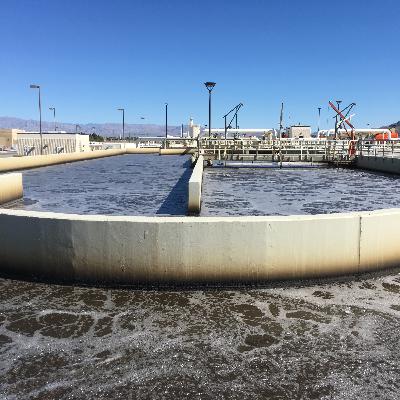
Bacteria often get a bad rap, although justified in the case of something like Legionella or E. coli O157:H7. But they're not all bad! In fact, bacteria are the workhorses of wastewater treatment, specifically secondary biological treatment with "activated sludge". Untreated wastewater is loaded with organic matter and nutrients that, if not removed, would result in severe ecological consequences upon environmental discharge. To avoid these issues, engineers design activated sludge processes--think of a chunky soup loaded with bacteria--to remove the organics and nutrients within the treatment plant. But what happens to other microorganisms, specifically viruses, as they encounter these bacterial 'chunks'?This episode takes a "deep dive" into virus removal in activated sludge processes, specifically in the context of potable reuse. Potable reuse is the process of converting wastewater into a safe and reliable drinking water supply. As you might guess, this requires A LOT of treatment and A LOT of virus removal. To minimize costs while adequately protecting public health, it's critical to "give credit where credit is due". The goal of this study was to determine whether regulators should award virus removal credit to secondary treatment to eliminate the need for other costly, energy-intensive treatment processes. This is an AI-generated podcast created with NotebookLM based on a publication in Water Research. The original article is available here: https://doi.org/10.1016/j.watres.2024.122886
Many people fear their next trip to the dentist. Best case scenario you might slip through with just an uncomfortable cleaning, but you could also wind up diagnosed with a cavity, or maybe even needing a root canal. But what if I told you that your biggest concern should be Legionella? This episode takes a "deep dive" into this emerging water-related pathogen and its connection to dental offices. We'll cover who is at risk and what mitigation measures can be implemented so you can return to your regularly scheduled dental nightmares. This is an AI-generated podcast created with NotebookLM based on a publication in the Journal of Occupational and Environmental Hygiene. The original article is available here: https://doi.org/10.1080/15459624.2021.1939878
Whether you own or rent, cost of living just keeps rising. What if I told you that roommates would not only reduce your cost of living but could also reduce your risk of infection by Legionella? Sounds crazy, right? And if you found someone who loves to take frequent and/or long showers, you could reduce your risk even further...your water bill would be a different story though.This episode takes a "deep dive" into the factors that affect your risk of infection or clinically severe illness due to exposure to Legionella in your home. By combining a Legionella growth model with simulated water demands in a model home, this study determined that risks could be reduced with more people living in the home or by implementing system purges. And 'smart purging' could reduce risks while also minimizing water waste. This is an AI-generated podcast created with NotebookLM based on a publication in Environmental Science & Technology. The original article is available here: https://doi.org/10.1021/acs.est.4c01208
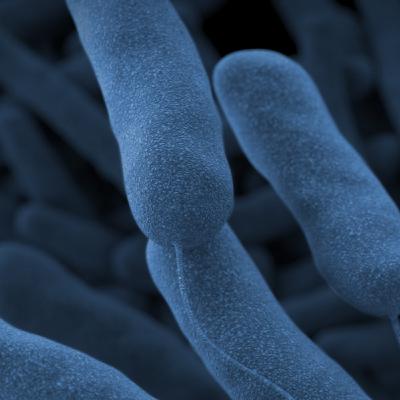
Legionella is currently the leading cause of drinking water disease outbreaks in the United States. U.S. drinking water regulations are generally based on an acceptable annual risk of infection of 1 in 10,000 people. Confirmed Legionella infections are still slightly below this benchmark, but some estimates put the true infection burden--accounting for both confirmed and undiagnosed cases--at 2 to 3 times the acceptable level. Legionella is commonly associated with premise plumbing systems (i.e., the pipes within your house), particularly in systems with insufficient maintenance and long periods of water stagnation. Although Legionella is indirectly regulated in surface water systems, there are currently no established federal regulations for Legionella in groundwater.This episode takes a "deep dive" into the occurrence and implications of Legionella in groundwater systems. Listeners will learn the basics of Legionella pneumophila, how often it's detected and at what concentrations, and, most importantly, what can be done to control Legionella to avoid the severe health outcomes associated with Legionnaires' Disease. This is an AI-generated podcast created with NotebookLM based on a publication in Water Research. The original article is available here: https://doi.org/10.1016/j.watres.2022.118615
There are now countless examples of how wastewater surveillance can be used to track trends in infectious disease transmission within a community. Most of these examples focus on established pathogens that have become endemic within those communities, including SARS-CoV-2 (the virus that causes COVID-19). But can these same wastewater methods help detect the introduction of a pathogen into a community? What if the source is just a single person? Wastewater surveillance can't be that sensitive, right?This episode takes a "deep dive" into the use of wastewater surveillance to monitor for Candida auris, which is an antifungal resistant yeast and emerging public health threat. This episode focuses on two different studies that implemented wastewater surveillance--first in Las Vegas, Nevada, where there was a known outbreak of C. auris, and then in St. George, Utah, where there was no prior evidence of C. auris in the local community. This is an AI-generated podcast created with NotebookLM based on two publications in Emerging Infectious Diseases. The original articles are available here: https://doi.org/10.3201/eid2902.221523 and https://doi.org/10.3201/eid3010.240173
The COVID-19 pandemic changed the world as we know it, and we're slowly recovering from its aftermath. But what if viruses aren't the biggest threat to humans? The opening scene from HBO's "The Last of Us" foreshadows a pathogen-driven apocalypse, but not due to a virus. Instead, this one is caused by a fungus. This episode takes a "deep dive" into the use of wastewater surveillance to monitor the prevalence of the antifungal resistant yeast Candida auris. Although it's quite different from the Cordyceps that wreak havoc in "The Last of Us", this emerging fungal pathogen can still cause dangerous infections and even death in the most severe cases. This study demonstrates how wastewater surveillance can help identify high risk locations that can be prioritized for additional screening and/or public health interventions to prevent further spread of C. auris. This is an AI-generated podcast created with NotebookLM based on a publication in Environmental Science & Technology. The original article is available here: https://pubs.acs.org/action/showCitFormats?doi=10.1021/acs.est.2c07763&ref=pdf
Have you ever bought furniture with stain-resistant fabrics? Or eaten food that was in a fast-food wrapper or cooked in a nonstick frying pan? If the answer is yes, then you may have been exposed to per- and polyfluoroalkyl substances (PFAS), at least in the past. These "forever chemicals" were highlighted in Mark Ruffalo's recent movie "Dark Waters", and the United States Environmental Protection Agency (U.S. EPA) even decided to implement strict drinking water regulations for a subset of these chemicals. But how frequently are they detected in the environment and at what concentrations? And what can we do about them? This episode takes a "deep dive" into the occurrence and likely sources of PFAS in the Las Vegas Valley watershed. A better understanding of these "forever chemicals" and where they are coming from will help us determine what actions (if any) are needed to mitigate potential effects on public and environmental health. This is an AI-generated podcast created with NotebookLM based on a publication in Science of the Total Environment. The original article is available here: https://doi.org/10.1016/j.scitotenv.2024.173361
The severity of a pathogen is often described in terms of a case fatality rate, or the ratio of people who die from the infection and associated disease vs. the total number of confirmed cases. Generally, the numerator (the number of deaths) is relatively easy to determine, but the true denominator can be elusive, as many infections go undetected or unreported. If infection by a pathogen leads to mild symptoms, or no symptoms at all, the true incidence rate will be difficult to determine. At a minimum, this can lead to a public health 'blindspot'/data gap, but it can also lead to inflated case fatality rates for emerging pathogens.This episode takes a "deep dive" into the use of wastewater surveillance to more accurately quantify the number of COVID infections within a community—in this case in Las Vegas. It also describes how whole genome sequencing of wastewater samples was used to rapidly identify SARS-CoV-2 variants of concern, sometimes before they were confirmed in clinical cases.This is an AI-generated podcast created with NotebookLM based on a publication in Science of the Total Environment. The original article is available here: https://doi.org/10.1016/j.scitotenv.2022.155410
In March 2020, the lights went out, and the Las Vegas Strip became a ghost town. More than a year later, tourists finally returned to the resorts, casinos, and night clubs as COVID restrictions were lifted and life slowly returned to normal. COVID had different plans, though, as the Delta wave arrived in summer of 2021 before it was rapidly displaced by Omicron leading into 2022.This episode takes a "deep dive" into the impacts of tourism on wastewater-based epidemiology in Las Vegas. The influx of tourists in the summer of 2021 led to a major surge in SARS-CoV-2 in Vegas wastewater, which made it difficult to accurately assess public health conditions among locals. But the arrival of Omicron actually helped quantify how much of the virus these tourists were contributing to Vegas wastewater. This is an AI-generated podcast created with NotebookLM based on a publication in JAMA Network Open. The original article is available here: https://doi.org/10.1001/jamanetworkopen.2023.0550
Las Vegas is in the Mojave Desert--one of the driest places on the planet. Receiving about 4 inches of rain per year, some people question whether it makes sense to sustain a city whose water supply seems so uncertain. But surprisingly, Las Vegas is a model city when it comes to water conservation and is also one of the most efficient cities in converting its limited water resources into economic output.This episode takes a "deep dive" into the economic value of water in the United States. It also discusses the concept of GMP/H2O, or the ratio of gross metropolitan product and the amount of water withdrawn by a given metro area. On a personal note, this is one of my favorite publications so far, and it was inspired by reading Freakonomics by Steven Leavitt and Stephen Dubner (check out their Freakonomics podcast) and Outliers by Malcolm Gladwell (also check out his podcast Revisionist History). These books are great examples of putting a unique, thought-provoking spin on a seemingly mundane dataset. This publication was my attempt at doing the same. This is an AI-generated podcast created with NotebookLM based on a publication in Water Policy. The original article is available here: https://doi.org/10.2166/wp.2011.047
On February 7th, 2010, Drew Brees and the New Orleans Saints defeated Peyton Manning and the Indianapolis Colts 31-17 in Super Bowl XLIV. The game was played in Miami--more than 2,500 miles away from the Las Vegas Strip. So how did this game affect wastewater in Las Vegas?This episode takes a "deep dive" into the effects of a special event--in this case, Super Bowl Sunday--on wastewater flow rates and its composition. Specifically, the episode discusses the significant spike in wastewater flows immediately prior to the game and how cocaine appears to be the recreational drug of choice on Super Bowl Sunday compared to a 'normal' weekend in Las Vegas. If you listened to the other podcast on wastewater surveillance of illicit drugs, you know this "Super" spike in cocaine wasn't isolated to 2010. This is an AI-generated podcast created with NotebookLM based on a publication in Water Research. The original article is available here: https://doi.org/10.1016/j.watres.2011.07.020
Unsheltered homeless individuals represent a highly vulnerable population, particularly when it comes to infectious and chronic disease. This is obviously due to the lack of shelter but also because of challenges in seeking and receiving adequate healthcare services. Also, unsheltered individuals are often missed when it comes to traditional public health surveillance. Wastewater surveillance has been shown to be an effective tool for assessing public health conditions in a community, including when there’s insufficient clinical testing. So can environmental surveillance fill a similar gap when it comes to unsheltered individuals?This episode takes a "deep dive" into the use of environmental surveillance—or sampling from untreated environmental waters—to assess public health conditions among unsheltered homeless individuals. A previous podcast focused on the water quality “fingerprint” of unsheltered homelessness, but this one explains what that “fingerprint” tells us about the level of COVID-19 in that community.This is an AI-generated podcast created with NotebookLM based on a publication in Environmental Science & Technology Letters. The original article is available here: https://doi.org/10.1021/acs.estlett.3c00938
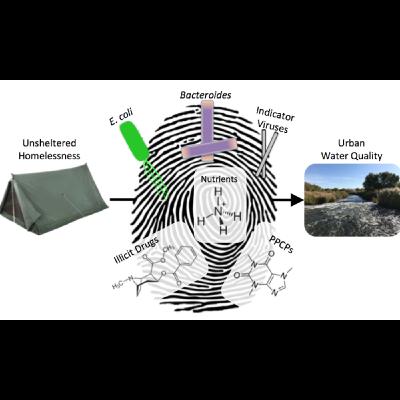
Are the implications of unsheltered homelessness confined to this vulnerable population, or is it a wider problem that affects the broader community? This episode takes a "deep dive" into the nexus of public health, environmental health, and unsheltered homelessness in Las Vegas. Specifically, this episode highlights the environmental "fingerprint" of unsheltered homelessness and the potential effects on the environment and even drinking water quality. This is an AI-generated podcast created with NotebookLM based on a publication in Science of the Total Environment. The original article is available here: http://dx.doi.org/10.1016/j.scitotenv.2022.156714For more info, check out this short documentary that was created in tandem with the scientific study: https://youtu.be/-8QlaDOcSuo?si=0qkAngZcukCaorN-For people needing assistance, help is available through Shine A Light, a 501(c)3 non-profit organization dedicated to providing resources to unhoused individuals: https://www.shinealightlv.com
Despite being described by some as "toilet to tap", indirect (IPR) and direct potable reuse (DPR) systems are capable of producing some of the highest quality drinking water on the planet. These systems involve advanced treatment of recycled water (wastewater) to augment conventional drinking water supplies, particularly in areas suffering from water scarcity or water quality impairment. But does one size fit all when it comes to potable reuse implementation?This episode takes a "deep dive" into potable reuse in Las Vegas, including how it's currently done and whether it makes sense to do it differently. Basically water is really heavy! So does it make sense to constantly lift water all the way from Lake Mead into Las Vegas, or should we reuse it over and over again before sending it back to Lake Mead? This is an AI-generated podcast created with NotebookLM based on a publication in AWWA Water Science. The original article is available here: https://doi.org/10.1002/aws2.1153
Is the opioid epidemic worsening? Is fentanyl continuing to pour into the community, or is the supply drying up? And how do special events like the Super Bowl and March Madness affect drug consumption in Las Vegas?This episode takes a "deep dive" into how wastewater surveillance was used to assess illicit drug consumption in Las Vegas. This emerging public health tool can help identify high risk locations for overdoses and evaluate the efficacy of drug policies and interventions.This is an AI-generated podcast created with NotebookLM based on a publication in Science of the Total Environment. The original article is available here: https://doi.org/10.1016/j.scitotenv.2023.168369
loading
Comments