


 Claim Ownership
This bit's brilliant
Subscribed: 0Played: 3
Subscribe

© sielliott
Description
What are the sport and music books worth reading? Another football bio? No ta. All Played Out by Pete Davies, yes please. AJ or Fury's latest? You're alright. The Sweet Science by AJ Leibling? Absolutely. A takedown of Tay Tay? How about Coal Black Mornings by Brett Anderson.
The books you need on the things you love.
The books you need on the things you love.
8 Episodes
Reverse

Welcome to **This Bit’s Brilliant**, the book podcast presented by **Simon Q Elliott** and **Paul Ging**, where life’s too short for boring books. In this episode, the pair dive headfirst into the brutal, beautiful and unsettling world of boxing with **The Knockout by Andy Clarke** – a truly outstanding book that looks at the most dramatic moment in sport and asks what it really means for everyone involved.This isn’t just a boxing book about fights and results. Andy Clarke, one of the sport’s sharpest writers and an insider with years of ringside experience, gets under the skin of boxing by focusing on the knockout itself – that split second when hope ends, everything changes, and lives are altered forever. Clarke explores the knockout from every angle: the fighter who lands the punch, the fighter who takes it, the trainers, referees, journalists, families and the silent, stunned dressing rooms that follow.Simon and Paul talk through some of the book’s most powerful moments, including Clarke’s writing on iconic British bouts like **Carl Froch vs George Groves**, as well as lesser-known but equally devastating fights that reveal just as much about boxing’s psychological cost. Along the way, the episode touches on fighters and figures such as **David Haye**, **George Groves**, **Carl Froch**, **Barry McGuigan**, **Deontay Wilder**, **Tyson Fury**, **Mike Tyson**, **Teddy Atlas** and many more, placing the book firmly in the wider boxing landscape.What makes *The Knockout* such a great read is Clarke’s ability to balance empathy with honesty. He doesn’t glamorise violence, but he doesn’t look away either. He captures what it feels like to be “hurt”, what it takes to come back from a knockout, and why for many fighters the real damage isn’t physical but emotional – to ego, identity and self-belief. From packed arenas to small halls like York Hall, this book takes you places most fans never get to see.This episode is perfect for boxing fans, sports readers, and anyone interested in the psychology of competition, courage and loss. Whether your reference points are Froch, Haye and Groves, or the raw atmosphere of grassroots boxing, this conversation shows why *The Knockout* is one of the best modern books on the sport.If you love boxing books, sports writing, and podcasts that really dig into what makes great books tick, this one’s a must-listen.Explore the fascinating world of music and sport through the lens of amazing book reviews! It even covers why plenty of people in boxing actually love the Rocky movies.On this unique podcast we dive into literature on sport and music. uncovering hidden gems and unexpected connections. From classic writing to the all time bestsellers, we'll give you book reviews that lead you to discover great writing that resonates. Join us on this captivating journey as we delve into the world of words and melodies!
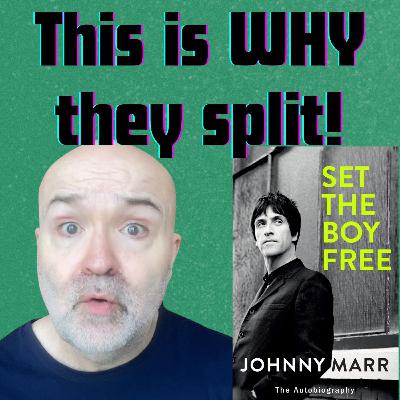
🎸 Set The Boy Free: The Johnny Marr StoryWelcome to This Bit's Brilliant, where we dive into the most fascinating music and sport books! In this episode, hosts Simon Q. Elliot and Paul Ging talk about just how good Johnny Marr's autobiography, Set The Boy Free is. This is essential listening for music fans interested in the 80s, the world of UK culture, and, of course, anyone who loves The Smiths, Morrissey, or Johnny Marr. Discover new insights into the legendary Manchester band's formation, inner conflicts, and explosive breakup.Marr's book offers a unique perspective on his life before, during, and after The Smiths. Our hosts marvel at the fact that Marr had achieved so much before the band split when he was only 23 years old!The discussion focuses heavily on the band’s internal dynamics, particularly the growing strain between Marr and Morrissey. Marr details the early signs of their eventual split, stemming from Morrissey’s resistance to management, which increasingly pushed the unwelcome role of band decision-maker and booker onto Marr. This early responsibility—dealing with everything from invoices to booking trucks—is highlighted as a major source of the resentment that led to his departure.The conversation takes a deep dive into the band's distinctive aesthetic, discussing Morrissey's famous affectations like the gladioli and the hearing aid (a nod to singer Johnny Ray). Marr’s view on the romanticizing of working-class hardship—a staple in British films like Saturday Night and Sunday Morning—is examined. He clarifies his perspective: he appreciated the aesthetic but didn't romanticize poverty, a theme also explored later in Pulp's Common People.Marr's creative genius is underscored by the incredible anecdote of him writing the music for three classic tracks—"William, It Was Really Nothing," "Please, Please, Please Let Me Get What I Want," and "How Soon Is Now?"—in just a couple of days. The hosts reflect on the nature of songwriting streaks, referencing Noel Gallagher and the difficulty of maintaining that creative flow.Marr's solo career and collaborations are explored, detailing his encounters with true rock legends.Keith Richards: Marr recalls an incredible session playing old soul songs with the Rolling Stones guitarist, noting Richards' love for music and his probable appreciation for Marr's post-punk guitar finesse, which brought back a finger-picking style reminiscent of the 60s.Paul McCartney: Marr shares the story of being called to play with the Beatle and his attempt to seek wisdom about his band breakup, to which McCartney simply replied, "That's bands for you."The episode concludes with a look at the final moments of The Smiths, detailing the breakup that occurred after Morrissey refused to show up for a video shoot. Our hosts reflect on how two very different people, like Marr and Morrissey, can intersect for a brief moment of creative brilliance before their inherent differences pull them apart, comparing it to other legendary band and team dynamics.Set The Boy Free is described as an engaging and highly recommended book, with Marr's personality shining through. Get ready to press play and enjoy this brilliant discussion!Would you like to hear about the hosts' recommendations for Station Eleven or the TikTok phenomenon Bin Game?💥 The Rise and Split of The Smiths💽 Aesthetics, Affection, and Creative Genius🎤 Post-Smiths and Colossal Connections
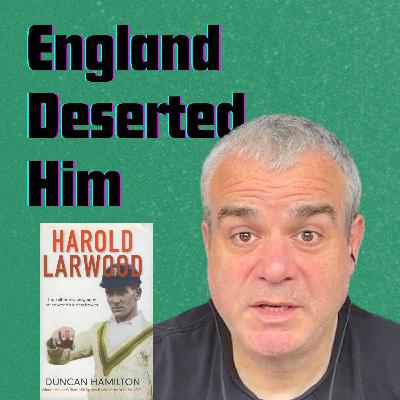
Harold Larwood: The Fastest Bowler in Cricket History | The Bodyline Ashes Scandal of 1932–33 | Duncan Hamilton Book Review PodcastStep into one of the most explosive and controversial chapters in the history of Ashes cricket — the 1932–33 Bodyline series — as we dive deep into the extraordinary life and legacy of Harold Larwood, the English fast bowler who redefined fear, speed, and sportsmanship. In this episode, we review Duncan Hamilton’s award-winning book Larwood, a masterful portrait of the man behind the mayhem — the miner from Nottinghamshire who became cricket’s most feared weapon.Regarded by many as the fastest bowler ever, Harold Larwood could reportedly reach speeds close to 100 miles per hour. But it wasn’t just his pace that made history — it was how that pace was used. Under the ruthless and calculating leadership of England captain Douglas Jardine, Larwood became the spearhead of the infamous Bodyline tactic, a strategy designed specifically to counter the genius of Sir Donald Bradman, Australia’s national hero and the greatest batsman the game has ever seen.What followed wasn’t just a cricket series — it was a sporting war that shook the Empire. The 1932–33 Ashes turned from competition into conflict. Australian crowds booed, raged, and demanded justice as Larwood’s blistering deliveries targeted the body rather than the stumps. Batsmen were injured, tempers flared, and diplomacy crumbled. The outrage grew so intense that Australia’s Prime Minister, Joseph Lyons, was forced to intervene. The Bodyline scandal strained relations between England and Australia, almost tearing apart the spirit of the game itself.But while the Australian players and public saw Larwood as a villain, the MCC (Marylebone Cricket Club) — England’s cricketing establishment — showed little concern for the storm he faced. As long as England kept winning, the MCC didn’t care about the moral fallout. When the controversy reached boiling point, and Larwood became the scapegoat for England’s tactics, the establishment turned its back on him. He was left to bear the weight of a nation’s anger — both abroad and at home.Through Duncan Hamilton’s insightful writing, we explore the human side of Harold Larwood — not just the bowler who terrified Australia, but the man who grew up in the harsh coal pits of Nottinghamshire, working long hours underground before rising to international fame. Hamilton’s book paints Larwood as a symbol of working-class grit and determination — a man who gave everything to his country, only to be abandoned when politics took over.In this podcast episode, we break down the Bodyline controversy, the tactics, the personalities, and the aftermath that changed cricket forever. We discuss Don Bradman’s brilliance, Douglas Jardine’s cold strategic mind, and Larwood’s raw physical power, all set against a backdrop of national rivalry, media outrage, and moral debate.Whether you’re a passionate cricket historian, a die-hard Ashes fan, or simply fascinated by stories of courage, controversy, and class, this is the definitive deep dive into a sporting event that transcended the boundary rope.Discover how Harold Larwood’s thunderous bowling brought Don Bradman’s batting genius under pressure, how Australian fans and cricket authorities reacted with fury, and how the fallout from Bodyline changed the laws of cricket forever.Join us as we revisit the 1932–33 Ashes series, the tactics that shocked the world, and the man whose name still echoes through cricketing folklore. Learn how a miner’s son from Nottinghamshire became the fastest bowler in history, the face of controversy, and ultimately, a hero of the game.If you love cricket history, Ashes rivalries, and the stories behind the sport’s most dramatic moments, this is the podcast episode you’ve been waiting for.👉 Don’t forget to like, subscribe, and share for more deep dives into cricket’s most fascinating stories — from Bodyline to Bradman, from Larwood to legend.
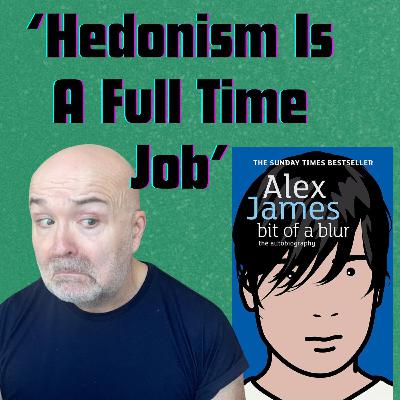
Blur were one of the biggest bands of the 90s. Simon Q. Elliott and Paul Ging explain why Alex James's memoir, A Bit Of A Blur is fun, funny and very interesting on what it was like to be a Cool Britannia rock star. Exploring the early days of Blur, the highs and lows of rock stardom, and the friendships formed in the music scene. They highlight some of the best bits that James talks about - his experiences of fame, the impact of hedonism, and the unique moments that define a rock star's life, all while maintaining a sense of humour and nostalgia for the 90s music era.TakeawaysAlex James's book offers a unique perspective on the 90s music scene.The early days of Blur were marked by excitement and excess.Fame can bring both joy and confusion to artists.Iceland provided a backdrop for self-discovery and reflection.Friendships in the music industry can be both supportive and complex.The Brit Awards were a memorable experience for Alex James.Hedonism requires constant effort to avoid falling into routine.Childlike wonder can be a powerful lens for experiencing life.The contrast between enjoying fame and its darker sides is evident.Alex James's humor and storytelling make the memoir engaging.This Bit's Brilliant is a podcast that tells viewers about great books on music, sport and culture. Because life's too short for bad books. On this unique channel we dive classics, hidden gems and unexpected connections. From classic writing to the all time bestsellers, we'll give you book reviews that lead you to discover great writing that resonates.Chapters00:00 Introduction to the Book and Author02:57 The Early Days of Blur and Fame06:09 Exploring Iceland: A Journey of Discovery08:56 The Highs and Lows of Rock Stardom12:03 Friendships and Connections in the Music Scene14:50 Memorable Experiences at the Brit Awards17:49 Reflections on Fame and Its Impact20:50 Conclusion and Final ThoughtsKeywordsBlur, Alex James, rock music, fame, memoir, 90s music scene, Iceland, Brit Awards, friendships, music industry

Music and sport books we recommend on this showWild Tales: A Rock n Roll Life by Graham Nash This is a superbly written book by perhaps the most underrated member of Crosby, Stills, Nash and Young, describing his earliest days trying to form The Hollies in his native Salford, meeting the Everly Brothers as an unknown, being hugely inspired by the Beatles and later in the 1960s escaping to California. It’s at this point that the book, named after one of his best solo albums, really lives up to its title. He details the many escapades and multiple fall outs between the members of the four piece supergroup he’s best known for and the complicated relationships between all four of them Waging Heavy Peace by Neil Young Nash’s book overlaps to a certain extent with this endearingly rambling tome from one of his colleagues. Young’s writing, like his musical work,is more off the cuff, detailing his obsession with model trains and following that unrelated kind of train, a train of thought, into unrelated anecdotes from the past, in nothing resembling chronological order! There’s almost a better sense of him in the Nash book than in his own work and, seeing as this pair are the two that probably fell out with each other the least, they’re certainly complimentary about each other. Unlike Simon’s choices, despite tempers flaring on this stage or that studio, there’s very little boxing in these two books, but they are a fantastic “One-Two” for trying to understand the solo and group dynamics of one of rock music’s most celebrated units. Around the world in 80 minutes by Rob KitsonI always liked the Now That’s what I Call Music albums. Two tapes, four sides of music, (A pig with headphones and shades on the cover… really. Google it) to me it was like the compilers knew they had to put 7 or 8 awful tunes on so the albums covered all the bases but there was always one side that was top to toe gold. In my memory at least. Rob Kitson’s pulled of the rugby equivalent of side 1 of Now 9(see below) with Around the World in 80 minutes. It’s rugby’s greatest funkin hits, revisited. Will Carling on what it was like to be told the whole of Scotland hated him, Ray Gravell apologising to Jonathan Davies’ mother who had just watched on as he flattened her son. And, perhaps a little heavier but the amazing story of how Jason Robinson emerged from a childhood next to a heroin addict brother to reach the mountaintop with England’s world cup winners in 2003.Funny, moving and above all entertaining to an audience who just love getting inside stories on great momentsNow 9 Side 1Jackie Wilson : "Reet Petite"Mental as Anything : "Live It Up"Simply Red : "The Right Thing"Erasure : "Sometimes"Robbie Nevil : "C'est la Vie"Hot Chocolate : "You Sexy Thing"The Blow Monkeys : "It Doesn't Have to be This Way"The Housemartins : "Caravan of Love"
In the Latest Episode of the Sport and Music book podcast This Bit's Brilliant Paul Ging and Simon Elliott talk about a couple of great books.
The Perfect Distance by Pat Butcher is about the rivalry between Olympic athletes Sebastian Coe and Steve Ovett and 1984: the year pop went queer by Ian Wade is about how the music we were listening to in the mid 80s changed for the better.
In The Perfect Distance Pat Butcher gets right inside the intense rivalry between the two British middle distance runners domestically in the 70s and then on the world stage at the 1980 and 1984 Olympics. The pair traded world records amid a flurry of press attention that wasn't always kind.
The book looks at their contrasting backgrounds, coaching influences, and experiences at the Olympics. The chat highlights the impact of media portrayal, class dynamics, and the significance of the 1980 Moscow Olympics in shaping their legacies. Athletics writed Butcher takes yo right inside the tense moments ahead of and during the key moments at the Moscow and LA Olympics.
In 1984 The Year Pop Went Queer Ian Wade looks at the cultural and musical landscape of 1984, highlighting the significant shift in pop music towards queer representation. He delves into the impact of artists like Bronski Beat and Queen, exploring how their work challenged societal norms and contributed to the visibility of LGBTQ+ identities in music. The discussion emphasizes the importance of this era in shaping contemporary pop culture and the ongoing legacy of these artists.
takeaways
· Coe and Ovett were the best runners in the world during the late 70s and early 80s.
· Ovett was seen as the working-class hero, while Coe had a more privileged background.
· The rivalry was fueled by their contrasting personalities and media portrayals.
· Ovett’s relationship with the press was tumultuous, leading to negative coverage.
· The 1976 Olympics were a pivotal moment for both athletes, shaping their future careers.
· The 1980 Moscow Olympics were marked by political tensions and media scrutiny.
· Coe's coaching relationship with his father was complex and influential.
· Ovett’s physical maturity gave him an early advantage in competitions.
· The aftermath of their rivalry influenced the next generation of athletes.
· Both athletes left a lasting legacy in the world of athletics.
· 1984 marked a pivotal year for queer representation in pop music.
· Ian Wade's book provides insightful commentary on this cultural shift.
· Bronski Beat's 'Small Town Boy' addressed previously taboo subjects.
· Queen's 'I Want to Break Free' faced backlash in North America for its camp humor.
· The leather subculture played a significant role in redefining masculinity in pop.
· The influence of gay culture on mainstream music is profound and lasting.
· The intersection of music and social issues was highlighted during the miners' strike.
· High energy music, often dismissed, has its own cultural significance.
· The conversation underscores the importance of acknowledging the past to understand the present.
· "Small Town Boy is an incredible piece of work."
· "High Energy, a music that's seldom celebrated."
· "The legacy of gay influence in pop."
Chapters
00:00The Rise of Coe and Ovett
02:57Class Dynamics and Rivalry
06:05Coaching and Family Influences
09:01The 1976 Olympics Experience
11:53Media Relations and Public Perception
14:48The 1980 Moscow Olympics
17:49The 800m and 1500m Finals
21:11Aftermath and Legacy of the Rivalry
27:00 The Cultural Shift of 1984
27:46 Pop Music and Queer Identity
29:16 Terrible post christmas Top of the pops
31:24 The iconography of the leather man
35:30 Queen's influence on Michael Jackson's thriller
37:43 Bronski and small Town Boy
43:43 The Legacy of Gay Influence in Pop
In this episode of This Bit’s Brilliant, the Music and Sport Book podcast, Simon Elliott and Paul Ging discuss two significant books: 'The Olivetti Chronicles' by John Peel and 'The Miracle of Castel de Sangro' by Joe McGinniss.
They explore how dry and funny John Peel was, how The Olivetti Chronicles reflects that and how Peel music and the BBC to this day. Paul met him once and wasn’t disappointed by the man. They also chat briefly about Good Night and Good Riddance, the brilliant book by David Cavanagh about John Peel
The conversation shifts to Joe McGinniss’s journey with a tiny Italian football team, Castel Di Sangro, detailing the challenges they face as they unexpectedly climb the Italian football ladder to the giddy heights of Serie B. Simon talks about how he picked the book for the show because he still remembered his first reading of it more than 20 years ago. The book tells a funny, fascinating and heartbreaking story about one season in an Italian town.
The episode concludes with regular cultural recommendations and why you should try the movie Bear Island with Donald Sutherland and also dive into the music of Fats Domino.
Keywords: John Peel, Olivetti Chronicles, Joe McGinniss, Castel de Sangro, music history, football literature, book recommendations, podcast, music influence, sports storiesnarratives.
takeaways
John Peel was a significant figure in music broadcasting.
The Olivetti Chronicles showcases John Peel's unique humor.
Joe McGuinness's book highlights the struggles of a small football club.
Embedded journalism can provide deep insights into local cultures.
John Peel's influence continues through modern radio stations like Six Music.
The Miracle of Castel de Sangro is a touching story about football.
Music and sports often intersect in unexpected ways.
Personal anecdotes can enrich the understanding of cultural figures.
The challenges faced by small teams reflect broader societal issues.
Fats Domino's music remains influential and enjoyable.
titles
Exploring the Legacy of John Peel
The Heart of Football in Castel de Sangro
John Peel: A Champion of Unique Music
Sound Bites
"John Peel was a champion of out there music."
"He was emotionally invested in the music."
"John Peel's dry humor is unforgettable."
"Football is a gateway to culture."
"Joe McGinniss tells the story beautifully."
"The Miracle of Castel de Sangro is a classic."
"Fats Domino's music is a treat to listen to."
Chapters
00:00
Introduction to the Show and Books Discussed
04:49
The Influence of John Peel on Music
09:47
John Peel's Legacy and Personal Anecdotes
14:48
Exploring the Olivetti Chronicles
17:47
The Miracle of Castel de Sangro Overview
24:12
Joe McGuinness and His Journey in Football
29:54
The Challenges Faced by Castel di Sangro
35:09
Final Thoughts and Recommendations
This Bit's Brilliant is about to launch. Simon Q Elliott talks to people about the music and sport books they love.
On Episode one Paul Ging tells Simon why he loves The Olivetti Chronicles by John Peel and a tells strange tales about where the handwritten lyrics of Teenage Kicks by the undertones are. Plus the link between Fats Domino and The Beatles.
Simon talks about the brilliant football book The Miracle of Castel Di Sangro by Joe McGinniss. A late 90s classic the book is story that involves death, drama, cocaine smuggling with occasional football.
Comments

Download from Google Play

Download from App Store
 United States