


 Claim Ownership
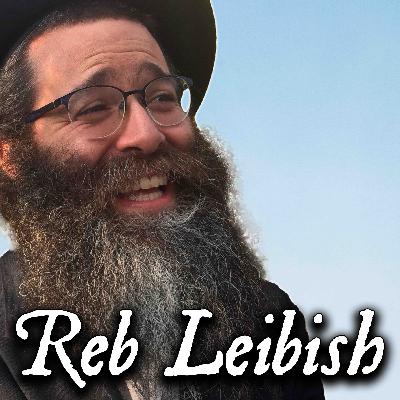
Reb Leibish Hundert Weekly
Subscribed: 4Played: 7
Subscribe

© Reb Leibish Hundert
Description
All the new shiurim given by Reb Leibish Hundert of Yeshivat Simchat Shlomo. Including parsha, Purim, Rebbe Nachman, and the yearly cycle!
467 Episodes
Reverse
Come enter Pesach feeling connecting, present, and aligned.#jewishlearning #passover #pesach #torah
"The most painful thing in the world is to be on the outside."Rav Lebish Hundert explores a radical perspective on Passover cleaning: it isn't about the dust, it's about the "Mashu"—that tiny, almost invisible mental block that keeps us from connecting to Hashem and those we love.In this episode, we learn:Why jealousy is a "spiritual mistake" based on a lack of self-knowledge.How to stop blaming the world and start taking ownership of your own "inner house."The secret of Or Nach (the Calm Light) and how it heals the frantic energy of the holiday prep.Passover, Pesach, Rav Lebish Hundert, Shlomo Carlebach, Ishbitzer Rebbe, Jewish Meditation, Jerusalem, Torah, Bedikat Chametz, Spiritual Growth, Personal Responsibility.
good shabbos!
In this profound episode, Rav Leibish Hundert dives into the core of Hisbodedus (Jewish meditation/secluded prayer), focusing on the concept of Ne’emanus v’Hismasrus Muchletus—Total Loyalty and Self-Surrender.Drawing from the teachings of Rebbe Nachman of Breslov and the Sefer Hishtapchus HaNefesh, Rav Leibish explores why true spiritual connection requires us to leave "not even a hair’s breadth" of our lives hidden from the Creator.Highlights of this session include:The Spiritual Filibuster: How pouring your heart out to Hashem can "talk His ear off," potentially halting negative decrees and focusing Divine energy entirely on your needs.The "Locked Room" Metaphor: Why keeping even one small part of your life (business, embarrassments, or self-reliance) separate from God prevents a truly "open" relationship.Chametz of the Heart: Recorded in the shadow of Pesach, Rav Leibish likens our hidden secrets and areas of false independence to chametz—the leaven that must be scrubbed away to achieve a clean heart.From "Baby Food" to Maturity: Understanding the stages of spiritual growth, from total dependency on Hashem (receiving) to active, creative contribution (giving).A Moment of Reality: Mid-way through the shiur, an air raid siren (azaka) forces the group into a safe room, providing a raw, real-time example of "running to the Source" under pressure.Join Rav Leibish for a transformative discussion on how to stop "fooling ourselves" and start relating to Hashem with the absolute transparency of a true friend.
Why does the Mishnah call the night of the search for chametz (leavened bread) "light"?In this episode of the Shlomo Carlebach Series, Rav Leibish explores the profound spiritual preparation for Passover. Drawing on the wisdom of the Mei HaShiloach and Rav Shlomo’s soul-stirring insights, we learn that the physical act of cleaning for Pesach is a "vessel" for a much greater heavenly gift: true freedom.In this episode, you’ll discover:The Gift of Freedom: Why real freedom isn't something we create, but a gift from Heaven that no one can take away.Knowing Your Root: How the "Light of the 14th" helps us recognize our unique place in God's heart.The "Two-Feet" Analogy: Why we can only truly search for our flaws (chametz) once we realize our immense potential and greatness.The Power of Connection: Insights into how our simple actions—like saying "Good Morning" to a child or straightening a Kippah—vibrate through the highest heavens.Whether you are preparing for your Seder or searching for deeper self-awareness, this teaching offers a roadmap to finding your spiritual home and the light within.
Good shabbos!#jewish learning #torah #jewishholidays #purim
Restoration isn’t about becoming someone new — it’s about returning to who you already are.In this installment of the Meshiv Nafshi series, we explore what it means to rebuild after distance, confusion, or spiritual fatigue. How do we reconnect? How do we come back without shame? And what does real teshuvah look like in daily life?A grounded, practical teaching on renewal and inner alignment.Recorded on Feb 19, 2026.
Reb Shlomo taught that every Jew carries a holy fire — even when it feels buried.This class reflects on teachings inspired by Reb Shlomo Carlebach: longing, brokenness, song, and the courage to love beyond judgment. What does it mean to see the holiness in yourself — and in others?A warm, searching exploration of Jewish spiritual resilience.Recorded on Feb 22, 2026.
There’s a kind of brokenness that opens the heart.This shiur continues exploring the teachings and spirit of Reb Shlomo Carlebach — vulnerability, prayer, and the holiness inside emotional struggle. What does it mean to be both brokenhearted and deeply alive?A reflective, soulful class on authentic avodah.Recorded on Feb 15, 2026.
What happens when tefillah stops being formal and becomes personal?This session in the Hitbodedut series goes deeper into direct conversation with Hashem — honesty, resistance, silence, and the courage to speak without scripts. We examine how personal prayer reshapes emotional life and builds real relationship.A practical and spiritual guide to living with awareness.Recorded on Feb 24, 2026.
Why is it sometimes hardest to speak when we need to most?In this installment of the Hitbodedut series, we explore the resistance that shows up in personal prayer — distraction, silence, discomfort — and how to move through it. Practical insights into building consistency and emotional honesty before Hashem.A grounded class on turning inward without escaping reality.Recorded on Feb 10, 2026.
Purim reveals what looks random is anything but.In this shiur, we unpack the inner dimension of Purim — hidden miracles, divine concealment, joy as spiritual resistance, and the power of acting even when clarity is absent. What does it mean that Hashem’s name never appears in the Megillah?A deep dive into emunah beneath the surface.Recorded on Feb 23, 2026.
Purim is not just celebration — it’s confrontation.In this session, we examine Amalek as doubt, spiritual cooling, and inner fragmentation. How do we recognize it? How do we fight it? And why is joy the weapon?A focused teaching on clarity, courage, and emunah in confusing times.Recorded on Feb 16, 2026.
What does faith look like when nothing looks miraculous?This shiur explores the spiritual message of Purim — divine orchestration beneath political chaos, personal responsibility within hiddenness, and the courage to act even when certainty is absent.A thoughtful preparation for Purim rooted in depth and clarity.Recorded on Feb 9, 2026.
What does it mean that Moshe Rabbeinu was born and passed on the same day?In this shiur, we explore the spiritual depth of 7 Adar — concealment, leadership, humility, and the hidden light that continues guiding Am Yisrael even when it seems absent. A reflection on presence within concealment, and what it means to lead without being seen.A powerful meditation on emunah, legacy, and inner strength.Follow the podcast for more Torah, depth, and inner work.
Why does the Torah follow the Ten Commandments with laws about property and damages? Rav Leibish Hundert (Rosh Yeshiva of Simchat Shlomo) reveals the inner light hidden within the "social" laws of Mishpatim.With the joy of Adar on the horizon, this shiur dives into the concept of Na'aseh V'Nishmah—the radical "Yes" we give to life before we even understand the details. Discover how the Half-Shekel of Shabbat Shekalim teaches us that our greatest strength lies in our vulnerability and our commitment to the collective.Jewish, Torah, Chassidut, Rav Leibish Hundert, Simchat Shlomo, Parshat Mishpatim, Shabbat Shekalim, Jewish Spirituality, Meshiv Nafshi.Recorded Feb 12, 2026
Why do we often only turn to prayer when we are either desperate or deeply inspired? In this soul-stirring shiur, Rav Leibish Hundert explores the concept of Tamid—the power of constancy in our relationship with Hashem.Drawing from the text Darchei HaYichud, Rav Leibish compares the practice of Hisbodedus to a "Bayis" (a home) and a marriage. Just as a home is a place you return to in every mood, and a marriage is a commitment that transcends fleeting emotions, our spiritual practice should be a constant "living spring" rather than a "failing river."Key highlights include:The Art of Constancy: Moving beyond "needing" a miracle to simply "being" at home with the Divine.Speaking To vs. Speaking About: How to transition from intellectualizing God to having a real, intimate conversation.The Pregnant Silence: Why having nothing to say in Hisbodedus is actually a sign of deep spiritual maturity and intimacy.The Legacy of Esther: Understanding how longing can be a more powerful merit than even the most perfect actions.Join Rav Leibish for a deep dive into the heart of Chassidic meditation and learn how to lower the bar for entry so that you can "enter always."Recorded Feb 3, 2026
This week, we’re diving into Page 49 of the Siman Yud, specifically looking at Rebbe Nachman’s Torah 33. We’ve all had those moments where we feel totally disconnected—maybe you're stuck in a boring business deal, grinding through a 45-minute bus ride in the heat, or even just scrolling through your phone at 3 AM feeling like you should be doing something "holier."The big takeaway from this session is that there’s no such thing as an empty space. We talk about the idea of Levushim—the "enclothings" or garments that God hides in. Whether it’s the exquisite detail of French culture or the messy physicality of our own bad habits, God is actually in the middle of it, waiting for us to notice. We discuss why we don't need to "call in sick" to our lives just to find a spiritual connection and why the "wrapper" of the physical world is actually there to help us grow, not to keep us out.Some highlights from the talk:The French Restaurant Story: What tiny portions and fancy sauces can teach us about Divine detail.The "Piranha Tank": Staying connected while swimming in the "dog-eat-dog" business world.Spiritual Confidence: Why God wants to meet you on the floor of a crowded bus, not just in a sanctuary.The iPhone Miracles: Seeing the lights and sounds of technology through a different lens.
We’re looking at a fascinating Gemara in Menachos 99b this week that asks a pretty relatable question: How much Torah do you actually have to learn to count as "continually" connected? Is saying the Shema in the morning and at night enough to hit the mark?The conversation gets into what we call the "Yitro Revolution." We talk about why the ego—the constant need to be the "best" or to compare our learning to the guy next to us—is actually the biggest thing holding us back. Using the story of Yitro (the ultimate outsider) and Moshe’s decision to personally serve him dinner, we explore why real Kabbalas HaTorah is actually about humility and "face-dancing" (smiling). It’s a deep look at why Mount Sinai shouldn't stay on a mountain, but needs to land right in the middle of your living room, your office, and your messy daily life.What we get into:Why "a little bit" of Torah is more powerful than you think.The connection between Yitro’s tattoos and Moshe’s humility.The "Plumber vs. Engineer" analogy for spiritual growth.Why the world is actually just one big dance.
Hitbodedut. Recorded Jan 27, 2026.

Comments

Download from Google Play

Download from App Store
 United States