


 Claim Ownership
APS Publications Podcast
Subscribed: 4Played: 0
Subscribe

© Copyright 2026 American Physiological Society
Description
Listen to author interviews, commentaries from thought leaders, and insightful discussions about important topics in physiology and scientific publishing. Brought to you by the American Physiological Society (APS) Publications.
102 Episodes
Reverse
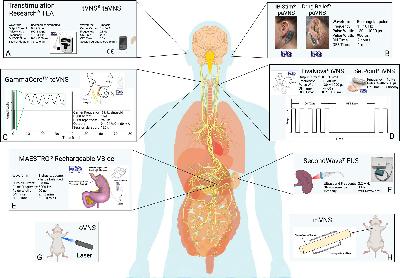
In this podcast, coauthors Yifeng Bu and Imanuel Lerman discuss their recently published review, ‘A Review of Vagus Nerve Stimulation for Disease: Comprehensive Theory and Evidence for Mechanisms of Action’. The review overviews VNS mechanisms and their translational relevance, and thus serves as a foundational resource for advancing the science and clinical deployment of precision neuromodulation and bioelectronic medicine.
A Review of Vagus Nerve Stimulation for Disease: Comprehensive Theory and Evidence for Mechanisms of Action
Yifeng Bu, Alex Liang, Benjamin U. Hoffman, Dawn M. Schiehser, Oliver Case, Alan Simmons, Ruth Klaming, Andres Gottfried-Blackmore, Ravinder K. Mittal, Christopher Puleo, Hubert Lim, Imanuel Lerman
Comprehensive Physiology 2025 16:2, e70109
https://doi.org/10.1002/cph4.70109
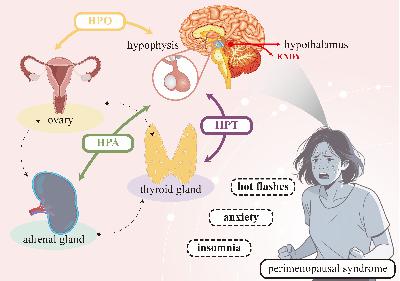
In this podcast, coauthors Yujie Xu, Han Wu, Ru Mu, Lu Yang, Yixuan Li, and Xian Ma discuss their recently published review, 'Kisspeptin Neurons as Integrative Hub: Cross-Talk of HPO–HPT–HPA Axes in Perimenopausal Reproductive Health’. The findings highlight the multi-axis pathophysiology of perimenopausal endocrine disorders and suggest therapeutic potential for treatments targeting kisspeptin neurons as part of individualized, multi-axis approaches.
Kisspeptin Neurons as Integrative Hub: Cross-Talk of HPO–HPT–HPA Axes in Perimenopausal Reproductive Health
Yujie Xu, Han Wu, Ru Mu, Lu Yang, Yixuan Li, Xian Ma
Comprehensive Physiology 2026 16:1, e70115
https://doi.org/10.1002/cph4.70115
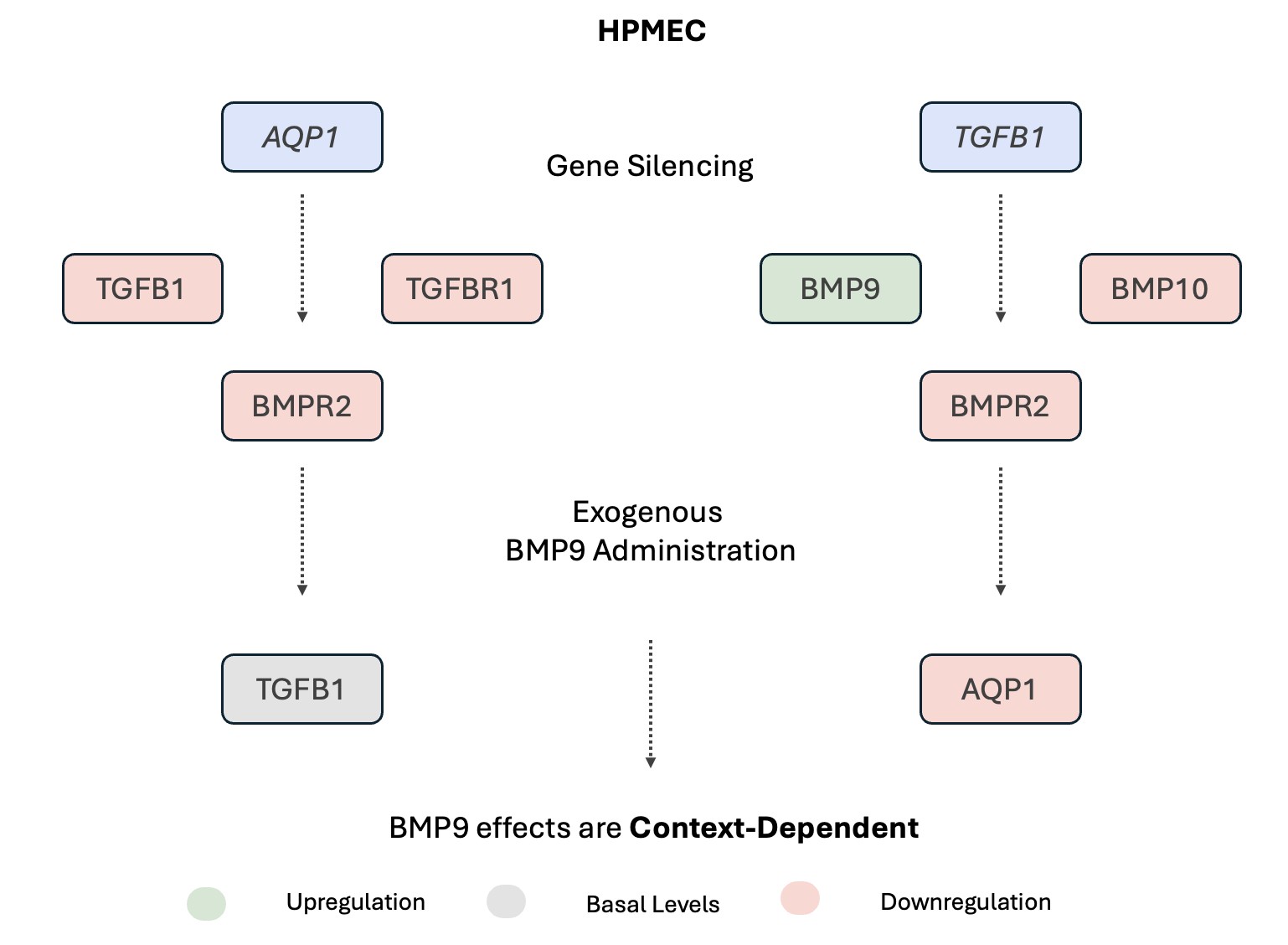
In this podcast, coauthors Chrysi Keskinidou and Nikolaos S. Lotsio discuss their recently published research article, ‘Disrupting BMP/TGF-β Signaling: Modulation of AQP1 and TGFB1 in Human Pulmonary Microvascular Endothelial Cells’. The article describes the authors' deep dive into the interactions between AQP1 and TGFB1 in human pulmonary vascular endothelial cells, and and provide a novel perspective on the interactions of the BMP/TGF-β signaling pathway.
Disrupting BMP/TGF-β Signaling: Modulation of AQP1 and TGFB1 in Human Pulmonary Microvascular Endothelial Cells
Chrysi Keskinidou, Nikolaos S. Lotsios, Kostas A. Papavassiliou, Athanasios G. Papavassiliou, Ioanna Dimopoulou, Anastasia Kotanidou, David Langleben, Stylianos E. Orfanos, Alice G. Vassiliou
Comprehensive Physiology 2025 15:6, e70066
https://doi.org/10.1002/cph4.70066
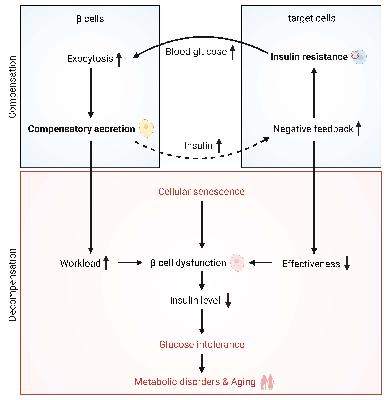
In this podcast, corresponding author Yuan-Yuan Zhang discusses the recently published review, ‘Insulin as an Accelerator and Brake of Aging: From Molecular Landscape to Clinical Interventions’. Here, Dr. Zhang describes key findings, key takeaways, and key gaps that relate to our understanding of the role of insulin in aging and how it can be leveraged for anti-aging therapies. Listen here to learn why her and her co-authors argue that the secret to healthier aging lies with insulin and in helping it find the perfect rhythm.
Shi-Cheng Chen, Xiao-Dong Sun, Yuan-Yuan Zhang
Comprehensive Physiology 2025;15(6):e70079
https://doi.org/10.1002/cph4.70079
In this episode of The APS Publications Podcast, featuring Advances in Physiology Education, coauthors Suzanne Estaphan, David Kramer, and Harry Witchel discuss their recently published article, “Navigating the frontier of AI-assisted student assignments: challenges, skills, and solutions.”
This paper presents a framework to effectively design take-home assessments in the generative artificial intelligence (AI) era with four key recommendations to navigate the challenges and opportunities posed by generative AI. From codeveloping AI literacy to fostering human-AI collaboration, the strategies empower educators to promote authentic learning, critical thinking, and ethical AI use. Adaptable to various contexts, these insights help prepare students for an AI-driven future while maintaining academic rigor and integrity.
Navigating the frontier of AI-assisted student assignments: challenges, skills, and solutions
Suzanne Estaphan, David Kramer, and Harry J. Witchel
Advances in Physiology Education 2025 49:3, 633-639
In this episode of the APS Publications Podcast, featuring an article from Advances in Physiology Education, authors Declan McLaughlin, Aisling Keane, and Joe Quinn discuss their recently published article, “The chick embryo model as an educational tool to explore the effect of alcohol on cardiovascular development.” This study explores the use of the chick embryo model as a teaching aid to illustrate connections between anatomy and physiology during development. Providing direct observation opportunities, the model allows students to witness organ formation and the impact of teratogens, focusing on cardiovascular abnormalities associated with fetal alcohol syndrome. The paper outlines practical methodologies to assess developmental outcomes. Its adaptability, affordability, and ability to spark discussions make the model a valuable resource for diverse educational environments.
The chick embryo model as an educational tool to explore the effect of alcohol on cardiovascular development
Declan McLaughlin, Aisling Keane, Joe Quinn, and Nuala Tipping
Advances in Physiology Education 2025 49:2, 438-460
In this episode of The APS Publications Podcast, featuring Advances in Physiology Education, coauthors Madyson Hintz and Aisya Ahmad Zamri discuss their recent article, “Associations between heart size and anthropometric and cardiovascular indicators: an undergraduate physiology teaching laboratory.” They share how a hands-on undergraduate lab lets students observe heart measurements with ultrasound, collect body and cardiovascular data, and explore how factors like age, sex, body size, and hand palm diameter relate to heart health.
Associations between heart size and anthropometric and cardiovascular indicators: an undergraduate physiology teaching laboratory
Madyson O. Hintz, Aisya S. Ahmad Zamri, Elizabeth W. Erickson, Frosina Barlev, Sean Coffey, and Regis R. Lamberts
Advances in Physiology Education 2025 49:2, 508-516
In this podcast, Dr. Rashmi Chandel discusses the recently published article, "Jigsaw technique: Will it help Gen Z nursing students?" This study examines the effectiveness of the jigsaw technique (JST) as a student-centered learning strategy for engaging Generation Z undergraduate nursing students. Recognizing Gen Z learners’ distinct cognitive styles and preferences, the research compares JST with conventional lectures across four physiology modules using a crossover design. Results showed significantly higher pretest, posttest, and retention scores with JST in most modules, along with strong positive student feedback regarding engagement, understanding, communication, and peer interaction. Overall, the findings suggest that integrating JST into nursing education can enhance learning outcomes while fostering essential interpersonal and professional skills in future nurses.
Jigsaw technique: will it help Gen Z nursing students?
Rashmi Chandel, Anumeha Bhagat, Anita S. Malhotra, Ravi Rohilla, Gurjit Kaur, and Kiran Prakash
Advances in Physiology Education 2025 49:2, 304-313
In this episode of The APS Publications Podcast, featuring Advances in Physiology Education, Stephen Fitzjohn and Frances MacMillan discuss their recently published article, “Active learning to improve numeracy skills and confidence using quizzes in first-year biomedical science undergraduates.” They share how thoughtfully designed, gamified quizzes in Blackboard helped students practice numeracy skills, build confidence, and achieve significant improvement. The conversation highlights a practical and adaptable teaching approach that can be easily applied to subjects beyond numeracy, offering valuable insights for educators looking to enhance student learning and confidence.
Active learning to improve numeracy skills and confidence using quizzes in first-year biomedical science undergraduates
Stephen M. Fitzjohn, Alice M. Semenenko, and Frances M. MacMillan
Advances in Physiology Education 2025 49:3, 680-685
In this episode of The APS Publications Podcast, featuring Advances in Physiology Education, James Davis discusses their recently published article, “From anonymity to engagement: the benefits of early-semester student-instructor meetings.”
This study shows that brief, early-semester student-instructor meetings foster stronger connections, increase student participation, and improve self-reported academic performance in large lecture courses. The following article demonstrates how a simple, scalable strategy can transform student-instructor relationships and enhance learning outcomes.
From anonymity to engagement: the benefits of early-semester student-instructor meetings
James T. Davis, Abigail P. Sondreal, Frederick Bauer, and Joseph T. Cornelius
Advances in Physiology Education 2025 49:3, 605-610
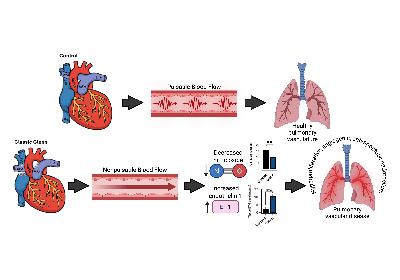
In this podcast, co-first author Jonathan Hyde discusses the recently published article, ‘Pulmonary Vascular Endothelial Dysfunction is Induced by Nonpulsatile Pulmonary Blood Flow in an Ovine Classic Glenn Model’. The study used an in vivo large animal model combined with ex vivo and in vitro studies to investigate pulmonary vascular endothelial cell dysfunction associated with the Glenn procedure. The results suggest that low, non-pulsatile flow associated with Glenn physiology plays a pivotal role in development of endothelial cell dysfunction.
Pulmonary Vascular Endothelial Dysfunction Is Induced by Nonpulsatile Pulmonary Blood Flow in an Ovine Classic Glenn Model
Jonathan Hyde, Michael A. Smith, Naveen Swami, John H. Hwang, Yenchun Chao, Jason Boehme, Gary W. Raff, Casper Noah Nilsson, Wenhui Gong, Gail H. Deutsch, Eric G. Johnson, Ting Wang, Stephen M. Black, Sanjeev A. Datar, Emin Maltepe, Jeffrey R. Fineman
Comprehensive Physiology 2025 15:6, e70071
https://doi.org/10.1002/cph4.70071
In this episode of the APS Publications Podcast, Dr. Ralph Rühl discusses his team’s new article in Physiological Genomics, “Transcriptome-driven Health-status Transversal-predictor Analysis for health, food, microbiome and disease markers for understanding of lifestyle diseases.” The article outlines the development of a novel artificial intelligence approach based on machine-learning to predict general health and food-intake parameters. This novel technique, which is based on PBMC transcriptomics from human blood, can predict a wide range of health-related markers.
Todt T, van Bussel I, Afman L, Brennan L, Ivanova DG, Kiselova-Kaneva Y, Thomas EL, Rühl R. Transcriptome-driven Health-status Transversal-predictor Analysis for health, food, microbiome and disease markers for understanding of lifestyle diseases. Physiol Genomics. 2025 Nov 19. doi: 10.1152/physiolgenomics.00026.2025. PMID: 41259124.
In this episode of The APS Publications Podcast, featuring Advances in Physiology Education, David Van Reyk discusses their study on "The use of AI large language models by university students for assignment preparation." Over 50% used AI for idea generation and drafting. PRC students showed improvements in their grades with the use of AI, while Australian students’ grades remained unchanged. Students support institutional guidance and access for responsible AI use.
The use of AI large language models by university students for assignment preparation
Hui Chen, David Van Reyk, and Brian G. Oliver
Advances in Physiology Education 2025 49:2, 517-525
In this episode of the APS Publications Podcast, featuring Advances in Physiology Education, coauthors Christine Bell and Oana Birceanu discuss their recently published article, “Educators’ experience and guide to scaffolding generative AI applications throughout a physiology and pharmacology undergraduate laboratory course.” The paper presents a two-pronged approach to reduce GenAI confusion and build AI literacy, research, and critical thinking skills.
Educators’ experience and guide to scaffolding generative AI applications throughout a physiology and pharmacology undergraduate laboratory course
Christine E. Bell and Oana Birceanu
Advances in Physiology Education 2025 49:3, 721-728
In the latest APS Publications Podcast, featuring Advances in Physiology Education, John Zubek discusses, “From virtual to reality: evaluating student attitudes through VR dissection preparations: a use case.”
VR vs. live dissections: how do students learn best? We explored their experiences to see how tech can complement STEM & healthcare training.
From virtual to reality: evaluating student attitudes through VR dissection preparations: a use case
Sarah Shine, Julia Warznie, Guoli Zhou, and John Zubek
Advances in Physiology Education 2025 49:3, 611-620
In this episode of the APS Publications Podcast, featuring Advances in Physiology Education, coauthors Serena Kuang and Nora Laban discuss their recently published Illuminations paper “From compliance to moduli: clarifying basic mechanical properties of biological tissues.”
This article advances physiology education by clarifying the basic mechanical property-related terms in physiology, introducing two fundamental terms in material science that are often missing in physiology education, and revealing the interrelationships among these terms. It serves as a handy tool kit for physiology educators, researchers, as well as clinicians to select and apply these terms appropriately based on their needs.
From compliance to moduli: clarifying basic mechanical properties of biological tissues
Nora Laban, Radwa Dawood, and Serena Y. Kuang
Advances in Physiology Education 2025 49:3, 651-658
In this podcast, coauthors Mary Pelkowski and Gabi Waite discuss their recently published Illuminations article, “Implementing core concept teaching in an integrated, clinical presentation model medical school curriculum”. They outline a practical approach to incorporating physiology core-concept teaching into an integrated, team-taught medical curriculum—combining a clinical presentation model with flipped classroom learning.
Implementing core concept teaching in an integrated, clinical presentation model medical school curriculum
Mary M. Pelkowski, Xiaojun Qi-Lytle, and Gabi N. Waite
Advances in Physiology Education 2025 49:3, 659-666

In this podcast, coauthors Maria Magdalena Quetglas-Llabrés and Manuel Jiménez-García discuss their recently published article, ‘Effects of Combining Exercise and Dietary Shifts on Motor Coordination and Oxidative Markers in a High-Fat Diet Model in Rats.' The article investigated the effect of exercise, alone or with dietary modifications, on high fat diet–induced outcomes in rats of both sexes. Authors overview the methodological approach and discuss key takeaways and next steps.
Effects of Combining Exercise and Dietary Shifts on Motor Coordination and Oxidative Markers in a High-Fat Diet Model in Rats
Manuel Jiménez-García, Maria Magdalena Quetglas-Llabrés, Maria Del Mar Ribas-Taberner, Antoni Sureda-Gomila, David Moranta-Mesquida, Silvia Tejada-Gavela
Comprehensive Physiology 2025;15(6):e70074
https://doi.org/10.1002/cph4.70074
In this episode of the APS Publications Podcast, featuring Advances in Physiology Education, coauthors Anna Smith, Fran der Weduwen, and Thomas Powell discuss their recently published Illuminations paper “The practical skills passport: a co-curricular program to enhance lab skills confidence in undergraduate neuroscience and biology students”. The COVID-19 pandemic limited in-person lab opportunities, impacting students’ skills and confidence. This episode explores the development, implementation, and evaluation of a co-curricular lab skills program designed to help students regain confidence during their return to in-person learning. Findings show that participation in the program had a positive impact on student lab confidence.
The practical skills passport: a co-curricular program to enhance lab skills confidence in undergraduate neuroscience and biology students
Anna E. Smith, Fran der Weduwen, Thomas Powell, and Gayle Doherty
Advances in Physiology Education 2025 49:3, 696-703
In this episode of The APS Publications Podcast, featuring Advances in Physiology Education, Prof. S. Mehran Hosseini discusses the study, “Misconception about the application of Dalton’s Law in respiratory physiology.”
Dalton’s Law may provide a good example for students to highlight the existence of misconceptions and their effect on gaining new knowledge. The awareness of students about this misconception may improve their learning styles.
Misconception about the application of Dalton’s Law in respiratory physiology
S. Mehran Hosseini
Advances in Physiology Education 2025 49:3, 646-650

Comments

Download from Google Play

Download from App Store
 United States