


 Claim Ownership
JohnsTarot
Subscribed: 0Played: 3
Subscribe

© Copyright 2024 All rights reserved.
Description
Free Tarot readings, how to survive the New Era, Topics of interest and Interviews
“This podcast evolved from my earlier work, JohnsTarot Podcast. What you’re hearing now is a continuation—refined, lived, and integrated.”
102 Episodes
Reverse

Emergence of the Observer
Most of us believe our problems are about what we’re doing.
We think:
if I stop this behavior
if I make better choices
if I try harder
…things will change.
But what if the problem isn’t the behavior?
What if the problem is how we think?
In this episode, I share a pivotal moment from early sobriety—about two months in—when I first saw my own thinking clearly.
Not just what I was thinking… but how I was thinking.
And for the first time, I realized:
👉 I couldn’t trust it.
This moment marked what I now call:
The Second Threshold
and
The Emergence of the Observer
From there, everything changed.
I began to understand that my drinking wasn’t the root problem—it was an expression of something deeper:
👉 my relationship to my own thinking
In this episode, I break down the system that allowed me not just to stop drinking, but to reorganize my entire internal structure:
Structure – something to hold me when I couldn’t hold myself
Guidance – borrowed thinking when mine wasn’t reliable
Reflection – tools to see patterns instead of react
Distance from Thought – learning that thoughts are not truth
I also share how this same system applies far beyond sobriety—to anxiety, relationships, stress, and the patterns we all find ourselves repeating.
This is not about belief.
It’s about experience.
It’s about learning to step back…
and observe.
If you’ve ever felt stuck in your own patterns…
this episode may help you see what’s really going on.
Contact John@johnstarot.net
Or Visit https://www.johnstarot.net
Thresholds as Transitions to New Life
There are moments in life when something shifts so completely that there is no going back. These are thresholds—points where the old life can no longer continue, and something new begins to emerge.
In this deeply personal episode, I share my own lived experiences of crossing those thresholds.
From what I call “dying on the beach”—the moment sobriety became a life-or-death decision—to the unexpected synchronicities that opened the door to a new life, these are not abstract ideas. They are real crossings, marked by uncertainty, pressure, and ultimately transformation.
I also explore:
The “jail story” as a moment of forced confrontation and redirection
The role of threshold objects—simple, tangible symbols that carry meaning at critical moments
My work in the ICU, assisting families as they approach one of life’s most profound thresholds
These experiences reveal a pattern: when we arrive at the threshold, we are asked to choose. To step forward into the unknown, or remain where we are.
This is not about fortune telling or prediction. It is about recognizing the moments when life itself calls for change—and having the awareness to respond.
At the end of the episode, I close with a tarot reflection, not as prophecy, but as a symbolic mirror of the journey.
If you have ever stood at the edge of a decision that would change everything, this episode will resonate.
Contact John@johnstarot.net

Why do we keep repeating the same mistakes, even when we know better?
In this episode of JohnsTarot, we explore a powerful pattern that appears in personal growth, recovery, and everyday life: the tendency to apply force when patience and awareness are required. Drawing from the wisdom of the Tao Te Ching, the I Ching, and the symbolic language of the Tarot, this episode examines how forcing outcomes often leads us back into the very cycles we are trying to escape.
Repeating mistakes is not simply failure—it is often a signal that we are pushing against the natural flow of events. When we try to dominate circumstances rather than understand them, the system tends to push back.
Through reflection and symbolic insight, we look at how awareness can break these loops and open the possibility of a new path forward.
Sometimes the most powerful action is not force, but alignment.
This episode invites listeners to pause, observe their own patterns, and consider where gentle adjustment may be more powerful than effort.
Themes in this episode
Repeating life patterns
The danger of forcing outcomes
Taoist wisdom on natural action
Symbolic guidance from Tarot and the I Ching
Learning from cycles rather than fighting them
Contact John@johnstarot.net
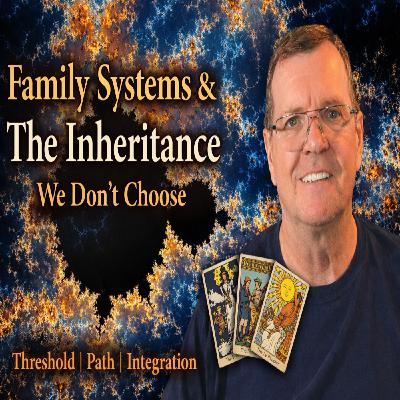
Family Systems and the Inheritance We Don’t Choose
In this episode, we explore the invisible structures that shape our lives long before we are aware of them — family systems, inherited patterns, and the emotional legacies we never consciously agreed to carry.
Every family transmits more than genetics.
We inherit coping styles, roles, tensions, strengths, silence, and sometimes unresolved trauma.
Through the lens of:
Family Systems Theory
Jungian individuation
12 Step recovery principles
Fractal patterns in relational dynamics
we examine how inherited structures influence identity, conflict, addiction, resilience, and awakening.
This episode follows the now-standard arc:
Threshold → Path → Integration
At the end, I share a free Tarot spread you can use for reflection on your own inherited patterns and how to consciously step beyond them.
This is not about blame.
It is about awareness.
We cannot choose the system we were born into.
But we can choose how we respond to it.
If this work resonates, explore the full Soul Awakening Series where psychology, recovery, symbolic systems, and lived experience intersect.
Systems Management: Field Notes from the Inside
In this episode of JohnsTarot, we step inside the lived experience of systems — not as theory, but as something felt, observed, and navigated in real time.
Drawing from personal experience across family systems, recovery, professional environments, and symbolic work, this episode explores how systems behave from the inside: how they stabilize, how they resist change, and how individuals learn to move within them without becoming defined by them.
These field notes are reflections from direct participation — moments of stepping in, stepping back, and recognizing patterns that repeat across scale. We look at maladaptive systems, generative systems, and the subtle shift that occurs when awareness replaces reaction.
Rather than offering solutions, this episode offers orientation. It invites listeners to notice structure where they once saw chaos, to recognize their position within systems, and to understand how small internal shifts can alter the field around them.
This is not about controlling systems.
It is about learning how to see them, inhabit them, and — when necessary — step out of them.
If you’ve ever sensed invisible dynamics shaping behavior, relationships, or institutions, these reflections may help you name what you’re already experiencing.
Field awareness begins here.

A far ranging interview with Tarot Master, educator and author Janis King.
Janis tells a little about her history, how she encontered Tarot and where it has lead her. A facinating story and Journey.
Contact Janis
https://janisking.uk
For the video go to YouTube Johnstarot.
The Structure Is Alive:
A Companion Reflection Podcast Description
After structure comes relationship. In this companion reflection, we sit with a realization that emerged naturally from the Awakening Series: the structure itself is alive. Not metaphorically, not mystically—but experientially, through attention, stewardship, and time. Rather than analyzing or extending the framework, this episode reflects on: How meaning-bearing structures begin to respond once completed Why stepping back is sometimes the most faithful act of care The difference between controlling a work and stewarding it What it feels like when something you’ve built no longer belongs only to you This is not a teaching episode. It is an attunement. A pause to notice what happens when a structure is allowed to breathe, self-correct, and reveal its own trajectory. For listeners who sense that their creative, psychological, or spiritual work has crossed a quiet threshold, this reflection offers language for that moment. Nothing new is being added here. Something is being recognized. 🎧 Best experienced without hurry.
Structure of the Awakening Series: Fractal Initiation
Awakening does not happen once.
It happens in patterns.
In this episode of the Structure of the Awakening Series, we explore Fractal Initiation—the hidden architecture beneath authentic spiritual transformation. Rather than a single moment of insight, awakening unfolds as a repeating cycle of Threshold → Map → Integration, occurring within episodes, life stages, and the psyche itself.
This conversation reflects on:
Why initiation is a process, not an event
How fractal patterns appear in psychology, myth, and lived experience
The difference between peak experiences and embodied integration
Why fatigue, rest, and silence are often signs of progress—not failure
This episode is not about chasing awakening, but about recognizing where you already are. It offers orientation for those who feel changed, unsettled, or quieter after deep inner work—and helps normalize the long integration phase that follows genuine transformation.
Designed for listeners who sense they are already inside the work, this episode provides structure, language, and reassurance for navigating awakening with patience, discernment, and care.
🎧 Best experienced slowly.
🌱 Let the work breathe.
If you’ve been following this series from the beginning, you may have noticed something subtle happening — not just in the material, but in yourself.
Not dramatic changes.
Not a sudden awakening.
Not a new identity.
But quieter shifts.
You may find that you listen more deeply.
That you’re more present in conversations.
That you pause before reacting.
That you’re more consistent and accountable — not because someone is watching, but because something inside you has aligned.
This final episode explores what it means to live what has already been integrated.
Earlier in life, most of us function from outer authority — rules, roles, belief systems, approval, or fear of disapproval. That stage is necessary. It helps us survive, belong, and function.
But over time — often through sobriety, loss, crisis, or sustained inner work — something begins to shift.
An inner authority starts to form.
Not ego.
Not superiority.
Not “I know better than others.”
But a quieter orientation — a sense of responsibility that arises from alignment rather than pressure.
Service, in this sense, is not about fixing others or taking on roles.
It is about living in a way that no longer leaks energy.
Living from what has already been integrated.
Allowing the work to express itself through presence rather than explanation.
This episode marks the completion of the Soul Awakening Series — not as an ending, but as the closing of a cycle.
The wheel turns.
Life continues.
And what has been integrated is lived.
The Ancient 12 Steps: Recovery as a Timeless Initiatory Path
What if the 12 Steps weren’t a modern invention at all — but the latest expression of an ancient human initiation process?
In this episode, John explores the deeper symbolic roots of the 12 Steps, tracing their structure back through ancient mystery schools, Jungian individuation, Taoist philosophy, and archetypal transformation patterns that have existed for thousands of years.
Rather than treating recovery as a medical or moral fix, this reflection reframes it as a timeless rite of passage — a structured descent into humility, surrender, self-examination, death of the old identity, and rebirth into a more conscious life.
You’ll hear how the 12 Steps echo:
• Ancient initiation rites
• The Hero’s Journey
• Jung’s process of individuation
• The Taoist path of surrender and non-interference
• Alchemical death-and-rebirth symbolism
• The Tarot’s archetypal progression
• The universal human need for transformation after collapse
This is not an argument that recovery programs are “mystical” or “spiritual bypassing.”
It’s an invitation to see them as part of a much older human technology for psychological renewal — one that predates modern psychology, religion, and even written history.
Whether you’re in recovery, curious about spiritual transformation, or simply navigating a major life transition, this episode offers a grounded, non-dogmatic perspective on why the 12 Steps work — and why they keep working.
Stay Connected with Me!
🌐 Website: https://www.Johnstarot.net
📧 Email: john@johnsTarot.net
📱 Follow Me on Social Media: Facebook : https://www.facebook.com/profile.php?id=61574175240413
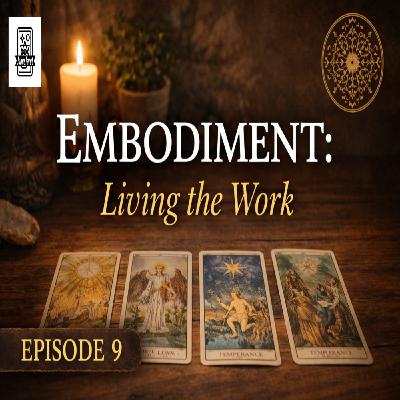
“Embodiment: Living the Work”
(John’s Tarot – Soul Awakening Series, Episode 9)
In this episode, we explore Embodiment — the stage of individuation where inner transformation leaves the realm of insight and begins to live through the body, relationships, and daily life.
Up to this point in the journey, the work has focused on inner change: shadow, persona, the inner opposite, synchronicity, and death and rebirth. But individuation does not end with understanding. It completes itself only when the work becomes lived.
Drawing from Jungian psychology, Tarot symbolism, recovery wisdom, and personal experience, this episode reflects on how psychological and spiritual growth shows up quietly and practically — not as performance, not as identity, but as stability, presence, and integrity.
✨ In this episode, you’ll explore:
• What embodiment really means in Jungian psychology
• Why insight alone is not transformation
• How inner work begins to change behavior and relationships
• Subtle signs that the work has integrated
• Why humility, consistency, and groundedness matter
• Tarot archetypes that reflect embodiment (Hermit, Temperance, Empress, World)
• A Tarot spread designed to explore embodiment responsibly
Embodiment is not dramatic.
It is faithful.
It is the slow work of living what we have come to understand.
This episode is offered as education and reflection, not prediction, doctrine, or spiritual instruction.
“Mystery Schools and Initiation”
For most of human history, cultures understood something we have largely forgotten:
that deep psychological and spiritual transformation requires initiation — not entertainment, not information, and not self-improvement.
In this episode, we explore the ancient idea of mystery schools and initiation, not as secret societies or occult institutions, but as structured cultural containers designed to guide people through profound inner change. These traditions recognized that growth unfolds in stages — and that each stage requires guidance, symbolism, testing, and integration.
Drawing from Jungian psychology, recovery, ancient wisdom traditions, and personal experience, this episode reflects on how modern culture has lost its initiatory frameworks — and what that loss has cost us psychologically, spiritually, and socially.
Rather than arguing for a return to ancient rituals, this conversation explores how individuation itself functions as a modern initiation — one that unfolds through crisis, meaning-making, and inner confrontation rather than formal ceremony.
✨ In this episode, you’ll explore:
• What mystery schools were actually for
• The psychological purpose of initiation
• Why transformation requires stages, not just insight
• How Jung’s individuation mirrors ancient initiatory paths
• The difference between spiritual growth and spiritual bypassing
• Why modern culture leaves people unprepared for deep change
• How recovery can function as an initiatory process
• What it means to be “called” into inner work
This episode is offered as education and reflection, not doctrine or romanticized spirituality. It is an invitation to consider whether your own life transitions may be part of a deeper initiatory process — even without a formal ritual to mark them.
🌐 Website: https://www.Johnstarot.net
📧 Email: john@johnstarot.net
📱 Follow Me on Social Media: Facebook : https://www.facebook.com/profile.php?id=61574175240413
(John’s Tarot – Soul Awakening Series, Episode 8)
In this episode, we explore Death and Rebirth — not as literal death, but as a psychological and spiritual process central to Carl Jung’s understanding of individuation.
Jung taught that genuine transformation requires something real to end: an identity, a belief, a role, or a way of relating to the world that no longer serves the Self. This stage is often experienced as loss, disorientation, or collapse — and is frequently misunderstood as failure rather than necessity.
Drawing on Jungian psychology, alchemy, Tarot symbolism, and lived experience, this episode examines how the psyche dissolves what is no longer viable and slowly reorganizes itself around a deeper center. This is not a dramatic or heroic process. It is quiet, demanding, and profoundly human.
✨ In this episode, you’ll explore:
• What Jung meant by psychological death
• The alchemical stages of transformation (Nigredo, Albedo, Rubedo)
• Why collapse often precedes genuine renewal
• The difference between ego loss and psychological death
• Tarot archetypes that mark transformation (Death, Tower, Hanged Man, Judgment, Temperance)
• Why rebirth is a process, not an event
• A Tarot spread designed to work with Death & Rebirth responsibly
Rebirth does not arrive as certainty or triumph.
It arrives as humility, clarity, and a new orientation toward life.
This episode is offered as education and reflection, not prediction, doctrine, or spiritual instruction.
Stay Connected with Me!
🌐 Website: https://www.Johnstarot.net
📧 Email: john@johnsTarot.net
📱 Follow Me on Social Media: Facebook : https://www.facebook.com/profile.php?id=61574175240413
Visit https://www.johnstarot.net
#DeathAndRebirth
#Alchemy
#CarlJung
#Individuation
#Tarot
#DepthPsychology
#InnerWork
#SpiritualTransformation
#JohnsTarot
I continue to explore the topic of synchronicities, why they occur and how do they guide us. Do you feel strange because you have experienced them? Don't, they are a common occurrence among the Awakened. So come join me on another ride on my psychological amesument park.
“Synchronicity: When the Self Speaks” (John’s Tarot – Soul Awakening Series, Episode 7) In this episode, we explore synchronicity — a concept introduced by Carl Jung to describe meaningful coincidence: moments when an inner psychological state aligns with an outer event, not through cause and effect, but through meaning. Synchronicity is not superstition, prediction, or magical thinking. It does not tell us what will happen. Instead, it invites us to listen more carefully to the dialogue unfolding between the ego and the deeper Self. As individuation progresses, life often feels less random. Patterns begin to appear. Encounters arrive at just the right moment. And meaning seems to emerge quietly, without force. Jung believed these moments occur when the psyche is reorganizing itself around a deeper center. Using Jungian psychology, Tarot symbolism, and lived experience, this episode explores how synchronicity appears, why it often emerges during times of transition, and how to engage it with humility rather than control.
✨ In this episode, you’ll explore:
• What Carl Jung meant by synchronicity
• The difference between coincidence and meaningful connection
• Why synchronicity often appears during individuation
• How synchronicity differs from fate or prediction
• Tarot as a symbolic language of meaning rather than fortune telling
• The role of discernment, responsibility, and humility
• A Tarot spread designed to explore synchronicity without inflation
Synchronicity does not remove choice or responsibility. It offers orientation — not instruction. This episode is offered as education and reflection, not prediction or doctrine.
Why Individuation
This episode is not about self-improvement, enlightenment, or becoming “more spiritual.”
It’s about why, in this moment in history, inner work is becoming necessary rather than optional for some people.
We are living through a period of rapid change, fragmentation of meaning, moral confusion, and the collapse of trusted external structures. For a long time, culture carried the individual. Today, more and more people are being asked to carry themselves.
Drawing from Carl Jung’s concept of individuation, this episode explores why the old unconscious adaptations — borrowed identities, group certainty, external authority, distraction — no longer work the way they once did. When these strategies fail, the psyche compensates through projection, polarization, and mass movements. What we are witnessing culturally is not pathology, but an unmet psychological demand.
Individuation is not a spiritual luxury.
It is an adaptive response.
This episode is for those who feel unsettled but can’t quite name why. For those who sense that old explanations are failing. For those who have discovered that avoiding inner work has become more painful than facing it.
We talk about:
Why individuation is not ideology, but psychological maintenance
The real cost of this work — loss of innocence, belonging, and comforting narratives
Why not everyone will choose it, and why that is not a moral failure
How inner authority replaces borrowed certainty in times of collapse
The episode closes with a quiet tarot reading — not as prediction, but as reflection — accompanied by the sound of shuffling cards and runes, offering space for integration rather than instruction.
This episode isn’t about teaching something new.
It’s about naming something that’s already happening.
“The Inner Opposite: Anima, Animus & the Path to Wholeness” (John’s Tarot – Soul Awakening Series, Episode 6)
In this episode, we explore what Carl Jung called the Inner Opposite — the Anima and the Animus — and why integrating these inner energies is essential for psychological balance, spiritual maturity, and individuation. Jung observed that each of us carries within the psyche qualities we do not consciously identify with — ways of feeling, knowing, and acting that were often set aside early in life in order to survive, belong, or function in the world. These inner opposites do not disappear. They seek expression, often through projection, relationship conflict, emotional imbalance, or inner tension. Using Jungian psychology and the symbolic language of the Tarot, this episode explores how the Anima and Animus appear in our inner lives, how they shape our relationships, and how their integration leads us toward wholeness rather than fragmentation. ✨ In this episode, you’ll explore:
• What Jung meant by the Anima and Animus
• Why these are archetypal energies, not gender roles
• How imbalance shows up when the inner opposite is ignored
• Tarot archetypes that reflect the Anima and Animus
• The role of intuition, compassion, strength, and clarity
• How integration leads to psychological and spiritual balance
• A Tarot spread designed to explore the Inner Opposite
Individuation does not mean becoming something new — it means reclaiming what was left behind. May this episode help you move toward inner balance, maturity, and wholeness.
Stay Connected with Me!
🌐 Website: https://www.Johnstarot.net
📧 Email: john@johnsTarot.net
📱 Follow Me on Social Media: Facebook : https://www.facebook.com/profile.php?id=61574175240413 Visit https://www.johnstarot.net
#Anima #Animus #InnerOpposite
#JungianPsychology #Individuation #Tarot #SpiritualAwakening #InnerWork #Wholeness #JohnsTarot
“When the Work Begins to Change You”
There comes a moment on the inner path when the work is no longer something we do —
it becomes something that acts upon us.
In this episode, I reflect on what happens when sustained inner work — whether through recovery, Jungian individuation, Tarot, or spiritual practice — begins to reshape the psyche itself. The practices that once felt intentional start to feel inevitable. Old identities soften. Certainty gives way to humility. And the person we thought we were quietly gives way to something more authentic.
This is not a moment of triumph.
It is often subtle, unsettling, and deeply transformative.
Drawing from personal experience, depth psychology, and symbolic insight, this episode explores:
How inner work begins to change the one doing the work
The psychological cost — and gift — of long-term transformation
Why genuine growth often feels disorienting rather than empowering
The shift from effort to surrender
What it means when the ego steps back and the Self begins to lead
This conversation is offered not as instruction, but as companionship — for those who find themselves changed by the very work they once chose to undertake.
If you’ve ever sensed that your inner journey is quietly reshaping you — this episode is for you.

Time to reflect. Where have we been? Where are we going? I am about halfway through, most of the difficult material is behind us.

Santa gives a brief talk on the holiday spirit

Comments

Download from Google Play

Download from App Store
 United States