


 Claim Ownership
Zubaani: South-Asian Parenting Tips and Storytelling
Subscribed: 2Played: 44
Subscribe

© Peerbagh
Description
"Zubaani" in Hindustani translates to "through the language" or "by means of language" in English. It is produced by nonprofit Peerbagh and discusses South-Asian parenting tips, books, storytelling with folk, personal, and regional stories that build our common myths and community as people.
Peerbagh is an award-winning 501c3 nonprofit organization incorporated in Austin, Texas. The nonprofit produces storytelling events and workshops and produces an illustrated South-Asia-inspired children’s quarterly magazine Bento.
Website: peerbagh.com/bookstore
Insta: instagram.com/peerbagh.stories
Peerbagh is an award-winning 501c3 nonprofit organization incorporated in Austin, Texas. The nonprofit produces storytelling events and workshops and produces an illustrated South-Asia-inspired children’s quarterly magazine Bento.
Website: peerbagh.com/bookstore
Insta: instagram.com/peerbagh.stories
15 Episodes
Reverse
White authors aren't tasked with writing stories addressing colonialism, inequality, racism, etc. Desi writers have that burden placed upon them (internally & externally: our readership demands it and the publishing industry rewards it). How do we not feed into trauma porn? How do we nurture and grow a readership that connects with and cares about our "joys" as much as our trauma? What is self-love other than our focus on stories of our successes, triumphs and joys?Guest author: Nadir ShahCo-hosts: Upasna Kakroo & Salma HussainProduced by: PeerbaghEpisode cover art: Niloufer WadiaResearch: Imtiaz Ali and Diksha SharmaSupported by: The Very Asian FoundationBooks/media in the episode:Slumdog Millionaire (Vikas Swaroop); 2009 film by Danny BoyleYou Started It (Jackie Khalileh)More then just a pretty face (Syed Masood)Honk Honk, Beep Beep, Putter Putt! (Rukhsana Khan)The Breadwinner (Nora Twomey)Bento (Peerbagh)Never Have I Ever (Mindy Kaling, 2020)
South Asia has had a long history of unique reprepresentation of various genders from the Hijra community to Shikhandi in the Mahabharata, but how are we rep-ing today? This episode deals with the representation of different gender and sexual identities in literature and why they're critical for building inclusive and loving cultures.Guest author: Adib KhorramCo-hosts: Upasna Kakroo & Salma HussainProduced by: PeerbaghEpisode cover art: Niloufer WadiaResearch: Imtiaz Ali and Diksha SharmaSupported by: The Very Asian FoundationBooks/media in the episode:Darius the Great (Adib Khorram)Keya Das’s Second Act (Sopan Deb)Manboobs (Komail Aijazuddin)Hijab Butch Blues (Lamya H )The Pregnant King (Devdutt Pattanaik)Authors: Julian Winters, Firoozeh Dumas, Marjan Kamali, Martha Wells
Our (Asian) culture has a fascination with "good" children. Obedience and co-dependency is baked into our idea of what makes a good and bad life or child. In this episode we talk about these model minority myths and how we can subvert these limiting narratives of what success means.Guest author: Annika SharmaCo-hosts: Upasna Kakroo & Salma HussainProduced by: PeerbaghEpisode cover art: Niloufer WadiaResearch: Imtiaz Ali and Diksha SharmaSupported by: The Very Asian FoundationBooks/media in the episode:Love, Chai, and Other Four-Letter Words (Chai Masala Club, #1)The Girl Who Wouldn’t Stay Within the Lines (Vinitha)Counting Down with You (Tashie Bhuiyan)Sort of (2021, Bilal Baig)A Suitable Boy (Vikram Seth)
In this episode of Zubaani we talk with full time writer and a full time model, Jyoti Rajan Gopal who dazzles the world with grace and gray hair. And importantly, we discuss, how do we break the European beauty standards and notions of what is pretty in our desi communities? What does it take to reclaim our self-worth and build safe spaces of belonging no matter how we look?Guest author: Jyoti Rajan GopalCo-hosts: Upasna Kakroo & Salma HussainProduced by: PeerbaghEpisode cover art: Niloufer WadiaResearch: Imtiaz Ali and Diksha SharmaSupported by: The Very Asian FoundationBooks/media in the episode:TJ Powar has something to prove (Jesmeen Kaur Deo)What Color is the Baby? (Harshini Vankineni)Razia Sultan (Kamal Amrohi, 1983)Mississippi Masala (Mira Nair, 1991)Laxmi's Mooch (Shelly Anand)I am Kavi (Thushanthi Ponweera)If you're not the one (Farah Naz Rishi)Desert Queen & My Patti's Saris (Jyoti Rajan Gopal)
In DDLJ, the father says "ja, Simran, ja." Was that not every desi father telling his daughter, 'go follow your heart?' We swoon. We die. We believe Shah Rukh Khan is a global treasure. Almost every South Asian writer is writing about love in one way or another. How does it show up in our homes? How does it work along lines of gender, caste, class, and age?Guest author: Uzma Jalaludin Co-hosts: Upasna Kakroo & Salma HussainProduced by: PeerbaghEpisode cover art: Niloufer WadiaResearch: Imtiaz Ali and Diksha SharmaSupported by: The Very Asian FoundationBooks/media in the episode:Dilwale Dulhaniya Le Jayenge (1995 film, Aditya Chopra)Detective Aunty (Uzma Jalaludin)When Dimple Met Rishi (Sandhya Menon)Hani and Ishu's Guide to Fake Dating (Adiba Jagirdar)
Welcome to Season 2 of the Zubaani podcast by nonprofit Peerbagh. Season two takes a deep dive into the topic of intergenerational storytelling with writers Salma Hussain and Upasna Kakroo as cohosts.Episode 5, Season 2: Stories of ConflictIn this podcast episode, we talk about stories of internalized or external conflict that are often hidden in families. Books we discuss may work as tools and resources to help navigate through these complex journeys in our families.Books and other trivia discussed in this episode:The Secret Diary of Mona Hassan (Salma Hussain)The Unlovable Alina Butt (Ambreen Hussain)The Partition Project (Saadia Faruqi)The Night Diary (Veera Hiranandani)The Big Red Lollipop (Rukhsanna Khan)I Can Be All Three (Salima Alikhan)Why: Research shows intergenerational storytelling is like a resource (similar to air, clean water) but it is inequitably distributed. Whether you live in the subcontinent or the diaspora, colonial rule and its subsequent conflicts have left the South Asian subcontinent wounded. There is intense loss of human stories that tell the stories of our resilience, empowerment, or those that celebrate joy.About: Peerbagh is an award-winning 501c3 nonprofit organization working with a mission to diversify bookshelves and build storytellers. The nonprofit creates storytelling events and produces the world’s only South-Asia-inspired children’s print magazine, Bento. Episode art by Ira Nagar. Research for the expert by Imtiaz Ali.This podcast has been made with the support of the City of Austin's Elevate Grant and Michigan Humanities.
Welcome to Season 2 of the Zubaani podcast by nonprofit Peerbagh. Season two takes a deep dive into the topic of intergenerational storytelling with writers Salma Hussain and Upasna Kakroo as cohosts.Episode 4, Season 2: Festivals & Folklore In this podcast episode, we talk about festivals and folklore from South Asia in today's times. Festivals present an easy entry point into sharing culture and the region's diversity. We also talk about folk and our cultural pasts that are all in fact changing and adapting with newer context. Books we discuss present these ideas with imaginative and inclusive new voices.Books and other trivia discussed in this episode:Archie Celebrates Diwali (Mitali Banerjee Ruths)A Vaisakhi to Remember (Simran Jeet Singh)The House Without Lights (Reem Faruqi)Mehndi Boy (Zain Bandali)The Strongest Heart (Saadia Faruqi)Farrah Noorzad and the Ring of Fate (Deeba Zargarpur)Bento's technology and connection issueTo Kill a Tiger (a film by Nisha Pahuja)Jinnealogy (Dr. Anand Taneja)Why: Research shows intergenerational storytelling is like a resource (similar to air, clean water) but it is inequitably distributed. Whether you live in the subcontinent or the diaspora, colonial rule and its subsequent conflicts have left the South Asian subcontinent wounded. There is intense loss of human stories that tell the stories of our resilience, empowerment, or those that celebrate joy.About: Peerbagh is an award-winning 501c3 nonprofit organization working with a mission to diversify bookshelves and build storytellers. The nonprofit creates storytelling events and produces the world’s only South-Asia-inspired children’s print magazine, Bento. Episode art by Ira Nagar. Research for the expert by Imtiaz Ali.This podcast has been made with the support of the City of Austin's Elevate Grant and Michigan Humanities.
Welcome to Season 2 of the Zubaani podcast by nonprofit Peerbagh. Season two takes a deep dive into the topic of intergenerational storytelling with writers Salma Hussain and Upasna Kakroo as cohosts.Episode 3, Season 2: Rewriting NarrativesIn this podcast episode, we discuss retellings that are being written for South Asian settings. We also talk about what makes these retellings authentic. The episode also talks about the colonial impact in defining hierarchies in art and writing. This has led to an odd othering of South Asian stories in the West, and we talk about desi writers who continue to subvert that.Dog noises and nods in the episode belong to Pluto (mom: Salma)Books and other trivia discussed in this episode:Runaway Dosa (Suma Subramaniam)Waiting for Father (Aftab Yusuf Shaikh)Ayesha At Last (Uzma Jalaluddin)From Waris to Heer (Haroon Khalid)In Other Words (Jhumpa Lahiri)The Broken Spell - Indian Storytelling and the Romance Genre in Persian and Urdu (Dr. Pasha Khan)1947 Earth (film by Deepa Mehta based on Ice Candy Man by Bapsi Sidhwa)Bento, The Shape of Home, issue #3 (Peerbagh)Bridgerton (TV series, Netflix)James (Percival Everett)Omkara (Film by Vishal Bharadwaj based on Shakespeare's Othello)Why: Research shows intergenerational storytelling is like a resource (similar to air, clean water) but it is inequitably distributed. Whether you live in the subcontinent or the diaspora, colonial rule and its subsequent conflicts have left the South Asian subcontinent wounded. There is intense loss of human stories that tell the stories of our resilience, empowerment, or those that celebrate joy.About: Peerbagh is an award-winning 501c3 nonprofit organization working with a mission to diversify bookshelves and build storytellers. The nonprofit creates storytelling events and produces the world’s only South-Asia-inspired children’s print magazine, Bento. Episode art by Ira Nagar. Research for the expert by Imtiaz Ali.This podcast has been made with the support of the City of Austin's Elevate Grant and Michigan Humanities.
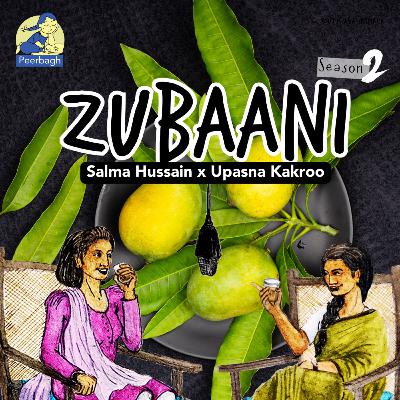
Welcome to Season 2 of the Zubaani podcast by nonprofit Peerbagh. Season two takes a deep dive into the topic of intergenerational storytelling with writers Salma Hussain and Upasna Kakroo as cohosts.Episode 2, Season 2: Food MemoriesIn this podcast episode, we discuss the role of food in storytelling and building cultural identities. We also feature children's books that bring this aspect of South Asian culture for kids and families. Mangoes are included :-)Books and other trivia discussed in this episode:100 Chapatis – Picture Book, by Derek Mascarenhas (Author), Shantala Robinson (Illustrator)Mama's Roti – Picture Book, by Raakhee Mirchandani (Author), Shreya Gupta (Illustrator)Hot, Hot Roti for Dada-ji– Picture Book, by Farhana Zia (Author), Ken Min (Illustrator)Ali the Great, Chapter Book by Saadia Faruqi (Author)Why We Eat with Our Hands: A Celebration of Indian Culture and Heritage by Anjali Jariwala (Author), Shelley Seguinot (Illustrator)Why: Research shows intergenerational storytelling is like a resource (similar to air, clean water) but it is inequitably distributed. Whether you live in the subcontinent or the diaspora, colonial rule and its subsequent conflicts have left the South Asian subcontinent wounded. There is intense loss of human stories that tell the stories of our resilience, empowerment, or those that celebrate joy.About: Peerbagh is an award-winning 501c3 nonprofit organization working with a mission to diversify bookshelves and build storytellers. The nonprofit creates storytelling events and produces the world’s only South-Asia-inspired children’s print magazine, Bento. Episode art by Ira Nagar. Research for the expert by Imtiaz Ali.This podcast has been made with the support of the City of Austin's Elevate Grant and Michigan Humanities.Website: peerbagh.com/bookstorePodcast page: https://www.peerbagh.com/zubaani-podcast-south-asian-parenting-tips-and-storytelling/ Instagram: instagram.com/peerbagh.stories
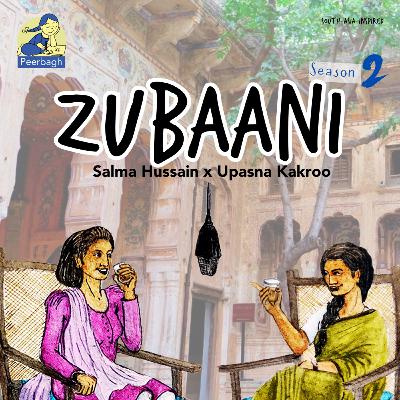
Welcome to Season 2 of the Zubaani podcast by nonprofit Peerbagh. "Zubaani" in Hindustani translates to "through the language" or "by means of language". Season two takes a deep dive into the topic of intergenerational storytelling with writers Salma Hussain and Upasna Kakroo as cohosts.Research shows intergenerational storytelling is like a resource (similar to air, clean water) but it is inequitably distributed. Whether you live in the subcontinent or the diaspora, colonial rule and its subsequent conflicts have left the South Asian subcontinent wounded. There is intense loss of human stories that tell the stories of our resilience, empowerment, or those that celebrate joy. Episode 1, Season 2: The Stories We CarryIn this podcast episode, we explore family stories, heirlooms and traditions that are passed down from generations. We talk about what it means to pass on stories, languages, and culture to kids when we're raising kids outside of the "village." We recommend books that adapt these for modern parenting contexts, and we share our own stories from grandmother’s wedding Saris to favorite books that inspire us.Books and other trivia discussed in this episode:Once Upon a Sari ( Zenia Wadhwani, Avani Dwivedi)The Katha Chest (Radhiah Chowdhury, Lavanya Naidu)Aanchal Malhotra’s Remnants of a Separation: A History of the Partition through Material Memory (Adult nonfiction)The Partition Project (Saadia Faruqi)Shakti Sweets, Srinagar https://shaktisweets.co.in/about-us/The Museum of Material Memory https://www.instagram.com/museumofmaterialmemory/About: Peerbagh is an award-winning 501c3 nonprofit organization working with a mission to diversify bookshelves and build storytellers. The nonprofit creates storytelling events and produces the world’s only South-Asia-inspired children’s print magazine, Bento. Episode art by Ira Nagar. Research for the expert by Imtiaz Ali.This podcast has been made with the support of the City of Austin's Elevate Grant and Michigan Humanities.Website: peerbagh.com/bookstorePodcast page: https://www.peerbagh.com/zubaani-podcast-south-asian-parenting-tips-and-storytelling/ Instagram: instagram.com/peerbagh.stories
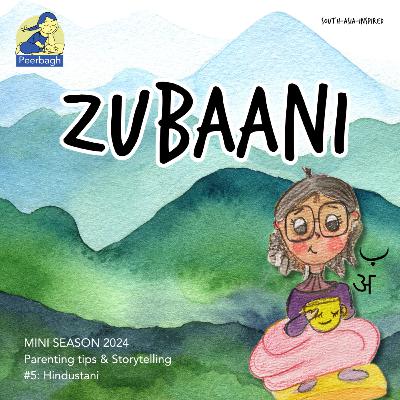
Episode 5: Hindustani
In this episode of Zubaani by Peerbagh, we speak to Urdu educator and influencer, Tamania Naqi. The episode is in Hindustani and English. We talked about contextualizing and modernizing language and stories for children in a new generation and those in the diaspora. Naqi talks about raising multilingual children that helps wire their brains to be more creative. She also shared the colonial impact on South Asians that has historically created a need to be English-speaking over giving importance to regional and local languages. We talk about tips and ideas for parents who are willing to make the effort and raise kids who can celebrate their culture and languages.
The name Zubaani was selected by Peerbagh's late founder, Vatsala Kakroo. The episode art was made by Upasna Kakroo. Krista Rodrigues supported the episode research. The background soundtrack features Slim Finger Pickings by artist Heston Mimms (2021), sourced from Imuno.
The Zubaani podcast artwork (separate from the episodes) has artwork from Anushka Singh, a grade six student from Mount Abu Public School, Delhi.
This program is supported by the Elevate grant from the City of Austin’s Economic Development Department and Texas Humanities.
About: Peerbagh is an award-winning 501c3 nonprofit organization incorporated in Austin, Texas. The nonprofit produces storytelling events and workshops and produces an illustrated South-Asia-inspired children’s quarterly magazine Bento.
Website: peerbagh.com/bookstore
Instagram: instagram.com/peerbagh.stories
Guest
Tamania Naqi, Children’s Author and Urdu Educator
https://www.instagram.com/urdumom/
Research and other writing:
Why Heritage Language is Important for Immigrant Origin Children’s Development & Learning https://immigrationinitiative.harvard.edu/wp-content/uploads/2024/02/JANUARY-2024_WHY-HERITAGE-LANGUAGE-IS-IMPORTANT-FOR-IMMIGRANT-ORIGIN-CHILDRENS-DEVELOPMENT-AND-LEARNING-FINAL.B-1.pdf
The Importance of Maintaining a Heritage Language while Acquiring the Host Language https://digitalcommons.wayne.edu/cgi/viewcontent.cgi?article=1021&context=honorstheses
Hindustani and the limits of the language concept, Dr. Madhumita Lahiri https://works.hcommons.org/records/y83dk-zc461
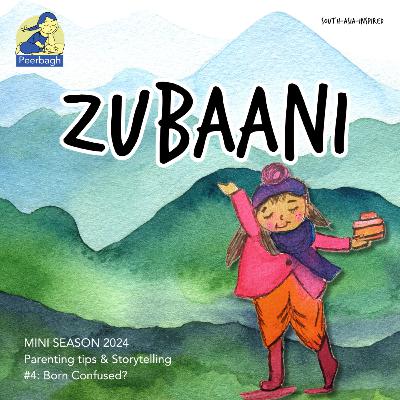
Episode 4: Born Confused?
In this episode of Zubaani by Peerbagh, we talk about the experiences of families in the diaspora that straddle two worlds between the subcontinent and the immigrant culture they're a part of. Researchers believe that the community-oriented culture of South Asians often clashes with the individualistic experiences in the West with elders and youth having different preferences toward their host culture. We spoke to author and influencer Jyoti Chand popularly known as Mamajotes about her experiences of being a part of an Indian-Burmese family with multiple languages and a very blended cultural setup. Chand provided tips for parents navigating this journey and shared her own experiences growing up often as the only Indian in her school.
The name Zubaani was selected by Peerbagh's late founder, Vatsala Kakroo. The episode art was made by Upasna Kakroo. Krista Rodrigues supported the episode research. The background soundtrack features Slim Finger Pickings by artist Heston Mimms (2021), sourced from Imuno.
The Zubaani podcast artwork (separate from the episodes) has artwork from Anushka Singh, a grade six student from Mount Abu Public School, Delhi.
This program is supported by the Elevate grant from the City of Austin’s Economic Development Department and Texas Humanities.
About: Peerbagh is an award-winning 501c3 nonprofit organization incorporated in Austin, Texas. The nonprofit produces storytelling events and workshops and produces an illustrated South-Asia-inspired children’s quarterly magazine Bento.
Website: peerbagh.com/bookstore
Instagram: instagram.com/peerbagh.stories
Guest
Jyoti Chand, YA Author and Influencer
https://www.instagram.com/mamajotes/
Research and other writing:
Ethnic identity and parenting stress in South-Asian immigrants: https://files.eric.ed.gov/fulltext/EJ832723.pdf
Berry’s model: https://open.maricopa.edu/culturepsychology/chapter/berrys-model-of-acculturation/ Biculturalism and Cognitive Complexity: Expertise in Cultural Representations: https://journals.sagepub.com/doi/10.1177/0022022106288476
Construction and validation of the Intragroup Marginalization Inventory https://psycnet.apa.org/doiLanding?doi=10.1037%2F1099-9809.13.3.232
ABCD: https://theaggie.org/2018/02/15/achieving-balance-two-separate-identities/
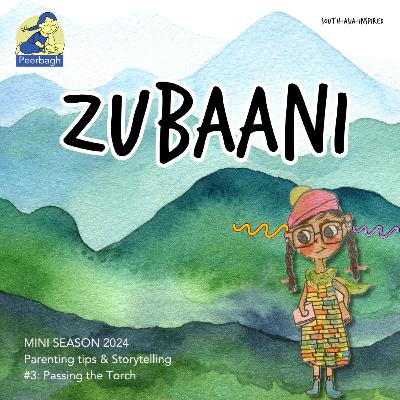
Episode 3: Passing the Torch
This episode of Zubaani by Peerbagh talks about the tools and resources parents can use to encourage storytelling and creative imagination in kids. We spoke to educator and children's book author, Natasha Padhiar who shared how children imitate their family members and how family storytelling can develop a love of stories and reading. We also discussed the role of diverse stories for South-Asian diaspora families including stories from a host culture along with stories from their heritage culture to learn from.
Natasha questioned the tokenism that may be centered in diverse storytelling initiatives and encouraged everyone to focus on everyday experiences that are equally important for children. Toward the end, we talked about the meaningful intentions to avoid performative aspects of passing on our culture to future generations.
The name Zubaani was selected by Peerbagh's late founder, Vatsala Kakroo. The episode art was made by Upasna Kakroo. Krista Rodrigues supported the episode research. The background soundtrack features Slim Finger Pickings by artist Heston Mimms (2021), sourced from Imuno.
The Zubaani podcast artwork (separate from the episodes) has artwork from Anushka Singh, a grade six student from Mount Abu Public School, Delhi.
This program is supported by the Elevate grant from the City of Austin’s Economic Development Department and Texas Humanities.
About: Peerbagh is an award-winning 501c3 nonprofit organization incorporated in Austin, Texas. The nonprofit produces storytelling events and workshops and produces an illustrated South-Asia-inspired children’s quarterly magazine Bento.
Website: peerbagh.com/bookstore
Instagram: instagram.com/peerbagh.stories
Guest
Natasha Padhiar, Educator and Children’s Book Author
https://www.instagram.com/brightandbluestudio/
Research and other writing:
How Telling Stories Helps Kids Learn, Samantha Gratton, 2021 https://www.pbs.org/parents/thrive/how-telling-stories-helps-kids-learn
Sparking Imagination And Creativity In Pre-Schoolers by Danh Chantachak https://www.shichidaathome.com/blog/sparking-imagination-and-in-pre-schoolers/
YaeBin K. and H. Petermeier 2016, Family Storytelling and the Benefits for Children, University of Nevada Cooperative Extension https://extension.unr.edu/publication.aspx?PubID=2448
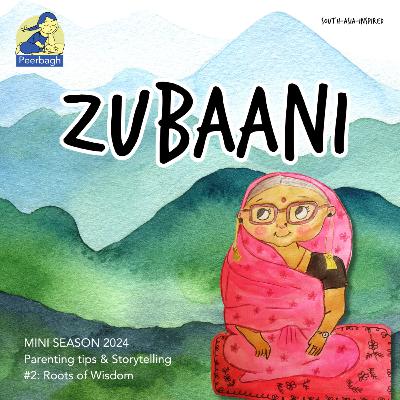
Episode 2: Roots of Wisdom
This episode of Zubaani by Peerbagh delves into intergenerational storytelling and how memory-sharing helps parents or elders pass on wisdom to the next generation. Researchers argue that intergenerational storytelling is a developmental resource and is often inequitably available. This injustice impacts everyone but marginalized communities that need them the most.
We speak to writer and publisher Anusha Velluswamy. She talks about this topic through the lens of her children's book about a sweet bond between a child and her grandmother. Anusha shares her life experience as a child of Indian-Burmese refugees and the stories that help us shape our sense of identity and place in our families and communities. We end with an understanding of how empowering stories can help those who don't see their stories in dominant narratives.
The name Zubaani was selected by Peerbagh's late founder, Vatsala Kakroo. The episode art was made by Upasna Kakroo. Krista Rodrigues supported the episode research. The background soundtrack features Slim Finger Pickings by artist Heston Mimms (2021), sourced from Imuno.
The Zubaani podcast artwork (separate from the episodes) has artwork from Anushka Singh, a grade six student from Mount Abu Public School, Delhi.
This program is supported by the Elevate grant from the City of Austin’s Economic Development Department and Texas Humanities.
About: Peerbagh is an award-winning 501c3 nonprofit organization incorporated in Austin, Texas. The nonprofit produces storytelling events and workshops and produces an illustrated South-Asia-inspired children’s quarterly magazine Bento.
Website: peerbagh.com/bookstore
Instagram: instagram.com/peerbagh.stories
Guest
Anusha Veluswamy, Children’s Book Author & Publisher, https://www.instagram.com/thelittledipperpublishing/
Research and other writing:
Indigenous Storytelling and Cultural Preservation by Linda Tuhiwai Smith (Decolonizing Methodologies, 2012) https://nycstandswithstandingrock.wordpress.com/wp-content/uploads/2016/10/linda-tuhiwai-smith-decolonizing-methodologies-research-and-indigenous-peoples.pdf
Traditional storytelling: an effective Indigenous research methodology and its implications for environmental research https://journals.sagepub.com/doi/abs/10.1177/1177180117741351
Intergenerational Storytelling and Positive Psychosocial Development: Stories as Developmental Resources for Marginalized Groups https://journals.sagepub.com/doi/10.1177/10888683241259902
Horizontal Identities, Andrew Solomon: https://andrewsolomon.com/reviews/jaacap/
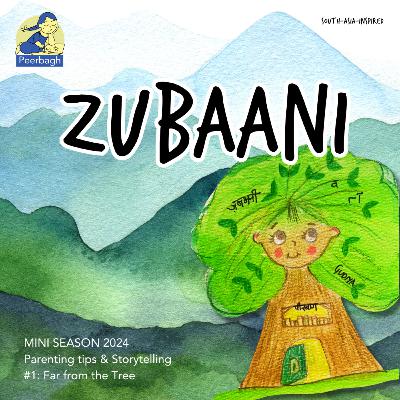
The first season of Zubaani is produced by Peerbagh with Upasna Kakroo as the host. "Zubaani" in Hindustani translates to "through the language" or "by means of language." The first season talks about South-Asian parenting tips and storytelling for our future- showcasing folk, personal, and regional stories that build our common myths and community as people.
Episode 1: Far from the tree
This episode delves into the complicated experiences of South-Asian immigrant parents or those who grow up away from their heritage cultures. We talk about the challenges parents face in teaching their children mother tongues when the world as we know it is becoming more and more homogeneous. The episode also discusses why this is a critical need for kids - both to preserve language and culture and to get a sense of roots. The host and guests share some tips for parents navigating this journey.
The name Zubaani was selected by Peerbagh's late founder, Vatsala Kakroo. The episode art was made by Upasna Kakroo. Krista Rodrigues supported the episode research. The background soundtrack features Slim Finger Pickings by artist Heston Mimms (2021), sourced from Imuno. The Zubaani podcast artwork (separate from the episodes) has artwork from Anushka Singh, a grade six student from Mount Abu Public School, Delhi.
This program is supported by the Elevate grant from the City of Austin’s Economic Development Department and Texas Humanities.
About: Peerbagh is an award-winning 501c3 nonprofit organization incorporated in Austin, Texas. The nonprofit produces storytelling events and workshops and produces an illustrated South-Asia-inspired children’s quarterly magazine Bento.
Website: peerbagh.com/bookstore
Instagram: instagram.com/peerbagh.stories
Guests and further reading:
Tasneem Diarywala, Children’s Book Author, https://www.instagram.com/tdairywala/
Vaishali Patel, Founder Sanskar Teaching, https://www.instagram.com/sanskarteaching/
Two languages dying every month: https://www.un.org/development/desa/en/news/social/indigenous-languages.html
Mother Tongue: https://longreads.com/2019/08/05/towards-chinatown/
South-Asian languages: https://www.degruyter.com/document/doi/10.1515/jsall-2021-2034/html?lang=en#:~:text=2019
Language & Culture: https://contextualscience.org/does_language_influence_culture
Vanishing Cultures: It has been estimated that approximately 10,000 spoken languages have existed. Today, only about 6,000 languages are still spoken and many of these are not being taught to children. More than half of these languages are unlikely to survive the next century. See W. Davis, ‘Vanishing Cultures’, in National Geographic, vol. 196, no. 2, pp. 62-89, 1999
Storytelling: https://education.nationalgeographic.org/resource/storytelling-and-cultural-traditions/
https://houghtonmackay.com/culture/the-art-of-indian-storytelling/s-rupsha-mitra/
https://ingostudio.com/storytelling/asian-storytelling/
https://www.unhcr.org/innovation/storytelling-in-the-wild-a-guide-for-culture-shifting-storytelling-in-natural-settings/
https://assets.press.princeton.edu/chapters/s9676.pdf
https://nccc.georgetown.edu/curricula/awareness/C10.html#:~:text=It%20is%20important%20to%20remember,it%20is%20not%20genetically%20transmitted.
Comments

Download from Google Play

Download from App Store
 United States