


 Claim Ownership
Succeed in Medicine: Practical Knowledge for Busy Physicians
Subscribed: 170Played: 7,644
Subscribe

© Copyright 2018-2025, all rights reserved, Bradley B. Block, MD
Description
Was your medical education enough to handle everything physician life demands? From lawsuits to leadership, career decisions to challenging conversations, balancing the personal with the professional — not enough was addressed in medical school, residency or fellowship.
This medical podcast fills those gaps so you can live up to the expectations that come with the white coat — not just in the exam room, but in all the places your MD follows you. This show is the physician mentor you didn’t realize you needed.
Your host, Dr. Bradley Block, a private practice ENT, is right there with you — navigating the same challenges and bringing in world-class guests to teach, as he puts it, “everything we should have been learning while we were memorizing Kreb’s cycle.” With nearly 500 episodes and close to half a million downloads, Brad has built a trusted space where physicians come for brass-tacks, immediately-applicable advice.
You don’t need another certification. You need a medical podcast that can be your physician mentor. It covers interpersonal skills, medical education, doctor personal finance, doctor charting, doctor careers, doctor mental health, physician soft skills, physician parenting, physician executive skills, medical decision making, medical professional development, physician side gigs, main gigs, reacting to bad reviews, misinformation, social media, negotiating and what to do when someone yells, “Is there a doctor on board?”
Guests have included Lady Glaucomflecken Kristen Flanary, Matt Abrahams, PhD, Gita Pensa, MD, Nneka Unachukwu, MD, (Dr. Una) Amy Fogelman, MD, and Bapu Jena, MD, PhD.
A proud founding member of the Doctor Podcast Network!
This medical podcast fills those gaps so you can live up to the expectations that come with the white coat — not just in the exam room, but in all the places your MD follows you. This show is the physician mentor you didn’t realize you needed.
Your host, Dr. Bradley Block, a private practice ENT, is right there with you — navigating the same challenges and bringing in world-class guests to teach, as he puts it, “everything we should have been learning while we were memorizing Kreb’s cycle.” With nearly 500 episodes and close to half a million downloads, Brad has built a trusted space where physicians come for brass-tacks, immediately-applicable advice.
You don’t need another certification. You need a medical podcast that can be your physician mentor. It covers interpersonal skills, medical education, doctor personal finance, doctor charting, doctor careers, doctor mental health, physician soft skills, physician parenting, physician executive skills, medical decision making, medical professional development, physician side gigs, main gigs, reacting to bad reviews, misinformation, social media, negotiating and what to do when someone yells, “Is there a doctor on board?”
Guests have included Lady Glaucomflecken Kristen Flanary, Matt Abrahams, PhD, Gita Pensa, MD, Nneka Unachukwu, MD, (Dr. Una) Amy Fogelman, MD, and Bapu Jena, MD, PhD.
A proud founding member of the Doctor Podcast Network!
503 Episodes
Reverse
A subpoena from the Department of Justice isn’t just paperwork, it’s a powerful tool that can drain resources, intimidate providers, and threaten patient care.
In this eye-opening episode of Succeed In Medicine, host Dr. Bradley Block welcomes back Dr. Crystal Beal, along with Adrian Levitt from the ACLU of Washington. In June 2025, Dr. Beal’s small private practice received one of over 20 identical DOJ subpoenas targeting providers of gender-affirming care for adolescents. While large institutions like Boston Children’s, Seattle Children’s, and Children’s Hospital of Philadelphia also received subpoenas, the impact on a solo practitioner is uniquely daunting. Dr. Beal describes the anti-climactic moment the subpoena arrived via their accountant and the immediate decision to fight it with pro bono support from the ACLU, Arnold & Porter, and Perkins Coie.
The conversation unpacks the broader context: the Supreme Court’s decision in United States v. Skrmetti, executive actions, funding cuts, and the federal government’s stated goal of ending gender-affirming care for minors. Adrian explains how the DOJ is using the Federal Food, Drug, and Cosmetic Act (FDCA) in a novel way, traditionally applied to drug manufacturers, to investigate individual physicians. The subpoena demanded extensive records, including patient names, addresses, dates of birth, Social Security numbers, training materials, and communications with pharmaceutical reps.
Throughout the episode, they emphasize their ethical obligation as a physician to provide evidence-based, life-saving care and reflect on the deeper moral questions raised by this moment in history.
Three Actionable Takeaways:
Know your rights and secure legal support early: If you receive a government subpoena or face regulatory pressure, contact organizations like the ACLU or the Abortion Defense Network immediately. Do not assume you must comply right away.
Document and practice ethically, but prepare for scrutiny: Continue providing medically necessary, evidence-based care while understanding that political targeting of certain specialties is increasing. Build relationships with legal counsel before crises hit.
Speak up and combat misinformation: Physicians have a unique platform in their communities. Learn about gender-affirming care if it’s within your scope, talk openly with colleagues and patients, and stand against efforts to criminalize or restrict legitimate medical practice.
About the Show:
Succeed In Medicine covers patient interactions, burnout, career growth, personal finance, and more. If you're tired of dull medical lectures, tune in for real-world lessons we should have learned in med school!
About the Guests:
Dr. Crystal Beal is a board-certified family medicine physician and founder of Queer Doc, providing expert, individualized queer and gender-affirming medical care. A nonbinary femme with lived experience in the community, Dr. Beal has extensive training in sexual health, queer health, and gender-affirming care. They also offer continuing education on transgender medicine through QueerCME.com.
Adrian Levitt is an attorney with the ACLU of Washington, specializing in protecting access to gender-affirming care and defending providers against government overreach.
Website: QueerCME.com
Queer Doc website: https://queerdoc.com
About the Host:
Dr. Bradley Block – Dr. Bradley Block is a board-certified otolaryngologist at ENT and Allergy Associates in Garden City, NY. He specializes in adult and pediatric ENT, with interests in sinusitis and obstructive sleep apnea. Dr. Block also hosts Succeed In Medicine podcast, focusing on personal and professional development for physicians
Want to be a guest?
Email Brad at brad@physiciansguidetodoctoring.com or visit www.physiciansguidetodoctoring.com to learn more!
Socials:
@physiciansguidetodoctoring on Facebook
@physicianguidetodoctoring on YouTube
@physiciansguide on Instagram and Twitter
This medical podcast is your physician mentor to fill the gaps in your medical education. We cover physician soft skills, charting, interpersonal skills, doctor finance, doctor mental health, medical decisions, physician parenting, physician executive skills, navigating your doctor career, and medical professional development. This is critical CME for physicians, but without the credits (yet). A proud founding member of the Doctor Podcast Network!Visit www.physiciansguidetodoctoring.com to connect, dive deeper, and keep the conversation going. Let’s grow! Disclaimer:This podcast is for informational purposes only and is not a substitute for professional medical, financial, or legal advice. Always consult a qualified professional for personalized guidance. Hosted by Simplecast, an AdsWizz company. See pcm.adswizz.com for information about our collection and use of personal data for advertising.
What if a patient’s multisystem symptoms, unexplained strokes, or exercise intolerance point to mitochondrial disease, but it takes 5–10 years and multiple specialists to confirm?
In this eye-opening episode, Dr. Bradley Block speaks with Dr. Heather Gatcombe. As both a physician and the mother of a son with mitochondrial disease, leading to metabolic strokes, heart failure, and transplant, Dr. Gatcombe shares her family’s journey, from a terrifying stroke-like episode at age 7, through years of uncertainty, negative initial genetic testing, muscle biopsy confirmation, and eventual identification of a novel nuclear DNA mutation.
They explore the heterogeneity of primary mitochondrial diseases, why presentation ranges from infancy lethality to adult-onset fatigue, and key red flags: multisystem involvement, symptom worsening with metabolic stressors, and misdiagnoses like chronic fatigue syndrome, fibromyalgia, or psychiatric conditions. The discussion covers workup, multidisciplinary care, perioperative risks, and treatment.
They stress the power of early diagnosis: better empathy, treatment changes, support groups, and hope with new therapies in the pipeline. Clinicians in every specialty need awareness, especially anesthesiologists, surgeons, and hospitalists, to prevent crises.
Three Actionable Takeaways:
Spot the Warning Signs Early: Look for patients with symptoms in 3 or more organ systems, unexplained strokes or seizures, diabetes and hearing loss, brain lesions in basal ganglia, or symptoms that worsen with stress like fever, fasting, or surgery. Send them quickly to a geneticist or mitochondrial specialist for testing. Free options exist at umdf.org
Protect Patients During Surgery or Procedures: For anyone known to have mitochondrial disease, talk to their mitochondrial specialist first. Avoid long fasting, dehydration, or extreme temperatures. Some need IV glucose before procedures and special care with anesthesia or certain drugs to prevent a dangerous metabolic crisis.
Learn More and Speed Up Diagnosis: Visit umdf.org for free doctor education (CME courses), patient support groups, and the latest on new treatments. Raising awareness helps cut the long wait for diagnosis, gives patients validation, better care, and access to emerging FDA-approved therapies.
About the Show:
Succeed In Medicine covers patient interactions, burnout, career growth, personal finance, and more. If you're tired of dull medical lectures, tune in for real-world lessons we should have learned in med school!
About the Guest:
Dr. Heather Gatcombe is a board-certified radiation oncologist at Winship Cancer Institute of Emory University and an Assistant Professor at Emory University School of Medicine. She specializes in breast radiation oncology and serves as Vice Chair for Community and Belonging. As the mother of a child with mitochondrial disease who experienced metabolic strokes starting at age 7, progressing to heart failure and transplant, she is deeply committed to raising clinician awareness, reducing diagnostic delays, and advocating for patients and families. She serves on the Board of Trustees and the Scientific and Medical Advisory Board Clinical Training and Education Committee of the United Mitochondrial Disease Foundation (UMDF).
Website: https://winshipcancer.emory.edu/profiles/gatcombe-heather.php
LinkedIn: https://www.linkedin.com/in/heather-gatcombe-md-3891875
Instagram: https://www.instagram.com/heathergatcombe
UMDF: https://umdf.org/about/board-trustees
About the Host:
Dr. Bradley Block – Dr. Bradley Block is a board-certified otolaryngologist at ENT and Allergy Associates in Garden City, NY. He specializes in adult and pediatric ENT, with interests in sinusitis and obstructive sleep apnea. Dr. Block also hosts Succeed In Medicine podcast, focusing on personal and professional development for physicians
Want to be a guest?
Email Brad at brad@physiciansguidetodoctoring.com or visit www.physiciansguidetodoctoring.com to learn more!
Socials:
@physiciansguidetodoctoring on Facebook
@physicianguidetodoctoring on YouTube
@physiciansguide on Instagram and Twitter
This medical podcast is your physician mentor to fill the gaps in your medical education. We cover physician soft skills, charting, interpersonal skills, doctor finance, doctor mental health, medical decisions, physician parenting, physician executive skills, navigating your doctor career, and medical professional development. This is critical CME for physicians, but without the credits (yet). A proud founding member of the Doctor Podcast Network!Visit www.physiciansguidetodoctoring.com to connect, dive deeper, and keep the conversation going. Let’s grow! Disclaimer:This podcast is for informational purposes only and is not a substitute for professional medical, financial, or legal advice. Always consult a qualified professional for personalized guidance. Hosted by Simplecast, an AdsWizz company. See pcm.adswizz.com for information about our collection and use of personal data for advertising.
What if the term “provider” has no Nazi roots whatsoever, and the claim that it does actually harms important conversations about healthcare?
In this myth-busting episode, Dr. Bradley Block sits with Dr. Volke Roelcke and Dr. Mical Raz as they trace the real origins of “provider” to the rise of U.S. health insurance: early Blue Cross/Blue Shield plans in the 1930s, then Medicare and Medicaid in 1965, when neutral language was needed to describe anyone delivering a paid clinical service; hospitals, physicians, nurses, physical therapists, everyone. The myth began with a single unfortunate mistranslation of the Nazi-era German term “Krankenbehandler” (a stigmatizing label restricting Jewish physicians to treating only Jewish patients) and exploded after a 2019 blog post.
They show how repeating this falsehood trivializes the actual persecution of Jewish doctors under the Nazis, turns physicians (one of the most privileged and highly paid professions in the world) into a faux “marginalized group,” dilutes the power of calling out real harm to truly vulnerable populations, and distracts from genuine issues like scope creep and regulation.
The conversation also highlights the importance of respecting expertise: physicians in medicine, historians in history, and why peer-reviewed journals should not let sweeping historical claims pass without proper review.
Three Actionable Takeaways
When you hear the “provider = Nazi” claim, correct it in one sentence: “The term has zero Nazi origins, it comes from U.S. health-insurance history. Here’s the open-access JGIM article.”
Respect expertise the same way we demand it in medicine: don’t make or publish big historical claims if you don’t speak the language or read the sources, doctors aren’t historians any more than historians are surgeons.
Focus energy on real solutions for professionalism and autonomy; lobbying, education, trust-building, clear regulation, instead of weaponizing the Holocaust for terminology battles.
About the Show:
Succeed In Medicine covers patient interactions, burnout, career growth, personal finance, and more. If you're tired of dull medical lectures, tune in for real-world lessons we should have learned in med school!
About the Guests:
Dr. Volke Roelcke is a German historian of medicine and the biomedical sciences whose work focuses on 20th-century medicine, especially under the Nazi regime and the ethical history of human-subject research. He trained in medicine, completed specialist training in psychiatry, and served for over 20 years as Professor of the History of Medicine and Director of the Institute for the History, Theory and Ethics of Medicine at Justus Liebig University Giessen before retiring. He was a member and briefly co-chair of the Lancet Commission on Medicine, Nazism, and the Holocaust.
Dr. Mical Raz is the Charles E. and Dale L. Phelps Professor in Public Policy and Health at the University of Rochester, where she also practices internal medicine at Strong Memorial Hospital. Her grandfather left Berlin for Israel in 1933; most of his family perished in the Holocaust. She teaches undergraduates about insurance systems and has published extensively on child welfare, poverty, and coercive interventions. Her books include The Lobotomy Letters, What’s Wrong with the Poor?, Abusive Policies, and Making Families.
Article: Physicians or Providers: Inventing Nazi Origins, undermines Debates on Medical Professionalism.
About the Host:
Dr. Bradley Block – Dr. Bradley Block is a board-certified otolaryngologist at ENT and Allergy Associates in Garden City, NY. He specializes in adult and pediatric ENT, with interests in sinusitis and obstructive sleep apnea. Dr. Block also hosts Succeed In Medicine podcast, focusing on personal and professional development for physicians
Want to be a guest?
Email Brad at brad@physiciansguidetodoctoring.com or visit www.physiciansguidetodoctoring.com to learn more!
Socials:
@physiciansguidetodoctoring on Facebook
@physicianguidetodoctoring on YouTube
@physiciansguide on Instagram and Twitter
This medical podcast is your physician mentor to fill the gaps in your medical education. We cover physician soft skills, charting, interpersonal skills, doctor finance, doctor mental health, medical decisions, physician parenting, physician executive skills, navigating your doctor career, and medical professional development. This is critical CME for physicians, but without the credits (yet). A proud founding member of the Doctor Podcast Network!Visit www.physiciansguidetodoctoring.com to connect, dive deeper, and keep the conversation going. Let’s grow! Disclaimer:This podcast is for informational purposes only and is not a substitute for professional medical, financial, or legal advice. Always consult a qualified professional for personalized guidance. Hosted by Simplecast, an AdsWizz company. See pcm.adswizz.com for information about our collection and use of personal data for advertising.
What if mastering communication in your marriage as a physician could be as transformative as learning a life-saving procedure in residency?
In this second part of a two-part conversation, Dr. Michael Myers shares insights from his extensive experience treating physician couples, emphasizing the value of professional help in facilitating communication during protected times like retreats or dates. He illustrates how a third party can help rephrase defensive or hierarchical language, common in medicine's decisive environment, into softer, more effective expressions, such as turning "you're stubborn" into "I feel you're digging in your heels," to foster understanding without offense.
Dr. Myers discusses dynamics when the physician is female, noting women's multifaceted identities beyond medicine and potential role reversals where husbands manage home life, but warns of conflicts arising from feelings of being taken for granted or loneliness. He highlights red flags like unexplained drinking or affairs, urging early articulation of issues to prevent escalation, and notes that most couples recover from affairs by entering a "new normal" with professional guidance.
For same-sex couples, he addresses communication stereotypes: avoidance in male pairs or overthinking in female ones, while stressing commonalities in all relationships. In dual-physician marriages, intellectualization may dominate, but reviewing arrangements like part-time work during child-rearing years and supporting paternity leave promotes respect and balance. Parting tips include finding uninterrupted time, transitioning from work mode, taking risks by being vulnerable about insecurities, and converting individual therapy into couples work to avoid exclusion.
Three Actionable Takeaways:
Seek professional facilitation for tough conversations: Use a therapist to rephrase defensive language and ensure both partners feel heard, preventing escalation into arguments or name-calling.
Regularly review relationship dynamics: Check in on sacrifices like relocations or part-time work, honoring promises and expressing appreciation to avoid resentment or feelings of being sidelined.
Take communication risks during protected time: Be vulnerable about insecurities or feelings, such as loneliness, to deepen connection, and avoid defaulting to safe topics, use this safe space to address meaningful issues.
About the Show:
Succeed In Medicine covers patient interactions, burnout, career growth, personal finance, and more. If you're tired of dull medical lectures, tune in for real-world lessons we should have learned in med school!
About the Guest:
Dr. Michael F. Myers is a professor of clinical psychiatry and recent past vice president of education and director of training in the Department of Psychiatry and Behavioral Sciences at SUNY Downstate Health Sciences University in Brooklyn. He's a specialist in physician health and the author of many books, including "Physicians with Lived Experience: How Their Stories Offer Clinical Guidance" and "Doctors' Marriages: A Look at the Problems and Their Solutions." He lectures widely on stresses in medical training, burnout, moral injury, depression, substance use, PTSD, marital discord, and reducing stigma in medicine.
Connect with Dr. Michael Myers:
Website: https://www.michaelfmyers.com
About the Host:
Dr. Bradley Block – Dr. Bradley Block is a board-certified otolaryngologist at ENT and Allergy Associates in Garden City, NY. He specializes in adult and pediatric ENT, with interests in sinusitis and obstructive sleep apnea. Dr. Block also hosts Succeed In Medicine podcast, focusing on personal and professional development for physicians
Want to be a guest?
Email Brad at brad@physiciansguidetodoctoring.com or visit www.physiciansguidetodoctoring.com to learn more!
Socials:
@physiciansguidetodoctoring on Facebook
@physicianguidetodoctoring on YouTube
@physiciansguide on Instagram and Twitter
This medical podcast is your physician mentor to fill the gaps in your medical education. We cover physician soft skills, charting, interpersonal skills, doctor finance, doctor mental health, medical decisions, physician parenting, physician executive skills, navigating your doctor career, and medical professional development. This is critical CME for physicians, but without the credits (yet). A proud founding member of the Doctor Podcast Network!Visit www.physiciansguidetodoctoring.com to connect, dive deeper, and keep the conversation going. Let’s grow! Disclaimer:This podcast is for informational purposes only and is not a substitute for professional medical, financial, or legal advice. Always consult a qualified professional for personalized guidance. Hosted by Simplecast, an AdsWizz company. See pcm.adswizz.com for information about our collection and use of personal data for advertising.
Struggling to balance a demanding medical career with a healthy marriage? It might be more common than you think.
In this part one of two eye-opening episode of Succeed In Medicine podcast host Dr. Bradley Block interviews Dr. Michael F. Myers, as they delve into frequent issues in physician marriages, including communication gaps, workaholism, and using work as an escape from home tensions. Dr. Myers shares insights on recognizing when overwork crosses into avoidance, the impact of poor role models from past generations, and practical ways to transition from work mode to family presence.
Key discussions include protecting couple time amid busy schedules, handling defensiveness in conversations, and fostering intentional dates or "grown-up time" away from kids. They also touch on generational shifts in medicine, where younger physicians prioritize life balance over endless dedication, and the importance of transparency about personal costs of overwork. Dr. Myers emphasizes treating marital communication as a skill to master, like medical training, and highlights resources like retreats for enrichment.
Whether you're a physician navigating marital discord or supporting a partner in medicine, this episode offers compassionate guidance to prevent burnout at home, strengthen relationships, and model healthy dynamics for kids, setting the stage for part two next week.
Three Actionable Takeaways:
Protect Couple Time Intentionally: Schedule uninterrupted "grown-up time" daily e.g., 30 minutes post-work with no distractions like TV or phones, or bi-weekly dates even low-cost walks; train kids to respect boundaries to rebuild connection beyond co-parenting, reducing feelings of drifting apart.
Create a Work-to-Home Transition Ritual: Build in buffer time after shifts, whether a commute unwind, quick run, or quiet moment to shift from decisiveness at work to presence at home; recognize when exhaustion is temporary and communicate needs to avoid guilt or resentment.
Listen Without Defensiveness: When a spouse flags overwork or avoidance, pause and reflect instead of rationalizing; treat communication as a learnable skill like medicine, seeking resources like marital retreats or therapy to address root issues before they escalate to fights or disconnection.
About the Show:
Succeed In Medicine covers patient interactions, burnout, career growth, personal finance, and more. If you're tired of dull medical lectures, tune in for real-world lessons we should have learned in med school!
About the Guest:
Dr. Michael F. Myers is a professor of clinical psychiatry and recent past vice president of education and director of training in the Department of Psychiatry and Behavioral Sciences at SUNY Downstate Health Sciences University in Brooklyn. He's a specialist in physician health and the author of many books, including "Physicians with Lived Experience: How Their Stories Offer Clinical Guidance" and "Doctors' Marriages: A Look at the Problems and Their Solutions." He lectures widely on stresses in medical training, burnout, moral injury, depression, substance use, PTSD, marital discord, and reducing stigma in medicine.
Connect with Dr. Michael Myers:
Website: https://www.michaelfmyers.com
About the Host:
Dr. Bradley Block – Dr. Bradley Block is a board-certified otolaryngologist at ENT and Allergy Associates in Garden City, NY. He specializes in adult and pediatric ENT, with interests in sinusitis and obstructive sleep apnea. Dr. Block also hosts Succeed In Medicine podcast, focusing on personal and professional development for physicians
Want to be a guest?
Email Brad at brad@physiciansguidetodoctoring.com or visit www.physiciansguidetodoctoring.com to learn more!
Socials:
@physiciansguidetodoctoring on Facebook
@physicianguidetodoctoring on YouTube
@physiciansguide on Instagram and Twitter
This medical podcast is your physician mentor to fill the gaps in your medical education. We cover physician soft skills, charting, interpersonal skills, doctor finance, doctor mental health, medical decisions, physician parenting, physician executive skills, navigating your doctor career, and medical professional development. This is critical CME for physicians, but without the credits (yet). A proud founding member of the Doctor Podcast Network!Visit www.physiciansguidetodoctoring.com to connect, dive deeper, and keep the conversation going. Let’s grow! Disclaimer:This podcast is for informational purposes only and is not a substitute for professional medical, financial, or legal advice. Always consult a qualified professional for personalized guidance. Hosted by Simplecast, an AdsWizz company. See pcm.adswizz.com for information about our collection and use of personal data for advertising.
Perplexed by patients with normal exams but persistent symptoms like recurrent UTIs or palpitations? It could be menopause.
In this insightful episode of Succeed In Medicine podcast, host Dr. Bradley Block interviews Dr. Lauren Streicher. They explore commonly overlooked menopause symptoms beyond hot flashes: recurrent urinary tract infections tied to genitourinary syndrome of menopause (GSM), palpitations as "hot flashes of the heart" (often sinus tachycardia without EKG changes), GI microbiome shifts causing nebulous digestive issues, xerostomia (dry mouth) linked to oral health risks, and skin/hair changes like alopecia.
Dr. Streicher emphasizes reassuring patients early, validating symptoms as hormonal, and tailoring treatments, vaginal estrogen, safe even for breast cancer patients, systemic hormones, or new non-hormonal NK3 receptor antagonists like fezolinetant. They discuss the SWAN study's findings on long-term risks from untreated hot flashes (e.g., cardiovascular disease, bone loss), the need to differentiate perimenopausal (temporary) vs. lifelong postmenopausal effects, and avoiding arbitrary hormone therapy stops after 5 years.
The conversation also touches on sexual health gaps in medicine, with tips for better history-taking and resources like Dr. Stryker's "Come Again" course. Listeners, clinicians and patients alike, will gain tools to address menopause holistically, improving quality of life and preventing complications.
Three Actionable Takeaways:
Recognize GSM in Recurrent UTIs: For postmenopausal women with new-onset recurrent UTIs, suspect genitourinary syndrome of menopause, prescribe local vaginal estrogen (cream, suppository, or ring) to restore microbiome and tissue health; it's safe for most, including breast cancer survivors on aromatase inhibitors.
Reassure on Palpitations First: When midlife women present with palpitations, lead with "This is common in perimenopause (up to 50% affected) likely autonomic dysfunction like a 'heart hot flash'"; order a Holter monitor, but emphasize it's often benign and tied to vasomotor symptoms, treatable with hormones or NK3 antagonists.
Integrate Sexual History Properly: Ditch "Are you sexually active?", ask "Many women in menopause experience low libido, pain with sex, or orgasm difficulty; are any of these issues for you?"; refer to resources like Dr. Streicher's course for evaluation scripts, screeners, and solutions to address 50% of patients' unspoken concerns.
About the Show:
Succeed In Medicine covers patient interactions, burnout, career growth, personal finance, and more. If you're tired of dull medical lectures, tune in for real-world lessons we should have learned in med school!
About the Guest:
Dr. Lauren Streicher is a clinical professor of OB-GYN at Northwestern University and founding director of its Center for Sexual Medicine and Menopause. A certified menopause practitioner, she serves on the Menopause journal's editorial board, is a Kinsey Institute fellow, and authors bestsellers like "Sex Rx" and "Hot Flash Hell." She hosts "Inside Information" podcast and created "Come Again" audio series on postmenopausal sexuality.
Connect with Dr. Lauren Streicher:
Website: https://www.drstreicher.com
Email: info@drstreicher.com
About the Host:
Dr. Bradley Block – Dr. Bradley Block is a board-certified otolaryngologist at ENT and Allergy Associates in Garden City, NY. He specializes in adult and pediatric ENT, with interests in sinusitis and obstructive sleep apnea. Dr. Block also hosts Succeed In Medicine podcast, focusing on personal and professional development for physicians
Want to be a guest?
Email Brad at brad@physiciansguidetodoctoring.com or visit www.physiciansguidetodoctoring.com to learn more!
Socials:
@physiciansguidetodoctoring on Facebook
@physicianguidetodoctoring on YouTube
@physiciansguide on Instagram and Twitter
This medical podcast is your physician mentor to fill the gaps in your medical education. We cover physician soft skills, charting, interpersonal skills, doctor finance, doctor mental health, medical decisions, physician parenting, physician executive skills, navigating your doctor career, and medical professional development. This is critical CME for physicians, but without the credits (yet). A proud founding member of the Doctor Podcast Network!Visit www.physiciansguidetodoctoring.com to connect, dive deeper, and keep the conversation going. Let’s grow! Disclaimer:This podcast is for informational purposes only and is not a substitute for professional medical, financial, or legal advice. Always consult a qualified professional for personalized guidance. Hosted by Simplecast, an AdsWizz company. See pcm.adswizz.com for information about our collection and use of personal data for advertising.
What if robots could handle tedious retraction, precise bone milling, or even autonomous suturing, freeing surgeons to focus on complex decision-making and more patients?In this episode of the Succeed In Medicine Podcast, Dr. Bradley Block speaks with Dr. Michael Yip, as he explains that today's robots primarily serve as extensions of human surgeons via teleoperation (e.g., da Vinci for precision in hard-to-reach areas), enhancing dexterity, visualization, and accuracy rather than replacing them. He highlights existing autonomous applications in "hard tissue" procedures like the Mako or Stryker robots for precise bone milling in joint replacements, and non-contact examples like CyberKnife for focused radiation therapy.For soft tissue surgery, the more challenging domain due to tissue deformation and variability, autonomy is emerging in simpler, repetitive tasks such as retraction, suctioning, or basic suturing, with demonstrations dating back 15 years but real-world deployment lagging due to engineering, data, and economic hurdles. Dr. Yip discusses why demos in controlled settings don't easily translate to ORs, the shift to data-driven AI (with risks of out-of-distribution failures), and regulatory challenges like FDA expertise gaps and defining probabilistic safety. He predicts stepwise adoption: starting with assistant-level tasks (replacing med student/intern roles in retraction/suction), then progressing to free surgeons for higher-value work, especially in underserved rural areas via telesurgery. Full "skin-to-skin" autonomy (e.g., simple lipoma excision or appendectomy) remains years away, limited by hardware combining strength, dexterity, and precision in one system, though teams of specialized robots could accelerate progress. Ultimately, robotics will alleviate surgeon burnout from growing demand, not eliminate jobs soon.Three Actionable TakeawaysEmbrace Robotics Early in Training: Surgeons and trainees should gain hands-on experience with diverse robotic technologies now, treating them as essential tools that augment precision and dexterity rather than threats to obsolescence.Focus on Repetitive Tasks for Autonomy Gains: Prioritize robotic assistance in tedious, physically demanding steps like retraction, suctioning, or basic closure to free up time, reduce fatigue, and improve efficiency in high-volume or resource-limited settings.Stay Informed on Regulatory and Economic Shifts: Monitor evolving FDA guidelines for AI/surgical autonomy, economic incentives (e.g., cost savings in joint replacements or anastomosis), and liability frameworks to prepare for integration that enhances patient access and outcomes.About the Show:Succeed In Medicine covers patient interactions, burnout, career growth, personal finance, and more. If you're tired of dull medical lectures, tune in for real-world lessons we should have learned in med school!About the Guest:Dr. Michael Yip is an Associate Professor of Electrical and Computer Engineering at UC San Diego and Director of the Advanced Robotics and Controls Laboratory (ARCLab). His research focuses on surgical robots, biomimetic design, robot learning, autonomous robotic surgery, and deformable tissue manipulation. He has received the NSF CAREER Award, NIH Trailblazer Award, IEEE RAS Distinguished Lecturer recognition, and was named Faculty Innovator of the Year at UCSD in 2024 and elected to the National Academy of Inventors. Previously a Disney researcher at Amazon Robotics, he holds a BSc in Mechatronics Engineering from the University of Waterloo, MS in Electrical Engineering from the University of British Columbia, and PhD in Bioengineering from Stanford University.Website: yip.eng.ucsd.edu and ucsdarclab.comAbout the Host:Dr. Bradley Block – Dr. Bradley Block is a board-certified otolaryngologist at ENT and Allergy Associates in Garden City, NY. He specializes in adult and pediatric ENT, with interests in sinusitis and obstructive sleep apnea. Dr. Block also hosts Succeed In Medicine podcast, focusing on personal and professional development for physiciansWant to be a guest?Email Brad at brad@physiciansguidetodoctoring.com or visit www.physiciansguidetodoctoring.com to learn more!Socials:@physiciansguidetodoctoring on Facebook@physicianguidetodoctoring on YouTube@physiciansguide on Instagram and Twitter
This medical podcast is your physician mentor to fill the gaps in your medical education. We cover physician soft skills, charting, interpersonal skills, doctor finance, doctor mental health, medical decisions, physician parenting, physician executive skills, navigating your doctor career, and medical professional development. This is critical CME for physicians, but without the credits (yet). A proud founding member of the Doctor Podcast Network!Visit www.physiciansguidetodoctoring.com to connect, dive deeper, and keep the conversation going. Let’s grow! Disclaimer:This podcast is for informational purposes only and is not a substitute for professional medical, financial, or legal advice. Always consult a qualified professional for personalized guidance. Hosted by Simplecast, an AdsWizz company. See pcm.adswizz.com for information about our collection and use of personal data for advertising.
What if a simple posture adjustment or a moment of focused listening could transform your patient encounters, making them more efficient and empathetic?In this episode of the Succeed In Medicine Podcast, Dr. Bradley Block speaks with Dr. Nick Morgan, drawing from his work coaching Fortune 50 CEOs and TED speakers, Dr. Morgan breaks down how physicians can project authority and empathy right from the first moment in the exam room. He explains the "outside-in" and "inside-out" approaches to charisma: aligning your posture for confidence and clearing mental distractions to give undivided attention. The discussion covers reading patient cues, like open vs. closed postures to gauge understanding or discomfort, mirroring body language to build rapport during tough conversations, and respecting personal space (1.5–4 feet) for meaningful exchanges. Dr. Morgan also introduces "charismatic listening," where stilling your entire body signals genuine presence, fostering trust in seconds. Whether delivering bad news or handling hostile patients, these tools help doctors communicate more effectively, reducing visit times while improving outcomes.Three Actionable TakeawaysMaster Posture for Authority: Before entering the room, align your body against a wall or take a deep breath to stand at full height. This conveys confidence without arrogance and sets a professional tone.Clear Your Mental To-Do List: Pause for 30 seconds to erase distractions, using a personal ritual (like a head twitch or imaginary gesture) to focus solely on the patient, ensuring undivided attention that builds trust instantly.Practice Charismatic Listening: During key moments, face the patient fully, still your body, and maintain open posture to listen with your "whole body". This signals empathy and receptivity, especially in emotional or critical exchanges.About the Show:Succeed In Medicine covers patient interactions, burnout, career growth, personal finance, and more. If you're tired of dull medical lectures, tune in for real-world lessons we should have learned in med school!About the Guest:Dr. Nick Morgan is one of America's top communication theorists and coaches. As the founder of Public Words, he has spent decades helping leaders, entrepreneurs, and TED speakers master charisma and public speaking. He is the author of acclaimed books including Power Cues: The Subtle Science of Leading Groups, Persuading Others, and Maximizing Your Personal Impact. A former fellow at Harvard's Kennedy School, he bridges biology and communication to coach Fortune 50 CEOs, government officials, and keynote speakers.Website: publicwords.comAbout the Host:Dr. Bradley Block – Dr. Bradley Block is a board-certified otolaryngologist at ENT and Allergy Associates in Garden City, NY. He specializes in adult and pediatric ENT, with interests in sinusitis and obstructive sleep apnea. Dr. Block also hosts Succeed In Medicine podcast, focusing on personal and professional development for physiciansWant to be a guest?Email Brad at brad@physiciansguidetodoctoring.com or visit www.physiciansguidetodoctoring.com to learn more!Socials:@physiciansguidetodoctoring on Facebook@physicianguidetodoctoring on YouTube@physiciansguide on Instagram and Twitter
This medical podcast is your physician mentor to fill the gaps in your medical education. We cover physician soft skills, charting, interpersonal skills, doctor finance, doctor mental health, medical decisions, physician parenting, physician executive skills, navigating your doctor career, and medical professional development. This is critical CME for physicians, but without the credits (yet). A proud founding member of the Doctor Podcast Network!Visit www.physiciansguidetodoctoring.com to connect, dive deeper, and keep the conversation going. Let’s grow! Disclaimer:This podcast is for informational purposes only and is not a substitute for professional medical, financial, or legal advice. Always consult a qualified professional for personalized guidance. Hosted by Simplecast, an AdsWizz company. See pcm.adswizz.com for information about our collection and use of personal data for advertising.
How can physicians and their teams deliver exceptional patient experiences, even when things go wrong?In this episode of Succeed In Medicine Podcast, Dr. Bradley Block interviews Shep Hyken, as he shares practical strategies for elevating patient care, emphasizing that "amazing" service doesn't require grand gestures, it's about being slightly better than average, consistently. Drawing parallels from hospitality giants like the Ritz-Carlton, he explains how using patients' names, setting clear expectations, and leveraging technology like patient portals can reduce friction and build loyalty.The conversation dives into handling "moments of misery," such as late appointments or scheduling mishaps, with a five-step process: acknowledge the issue, apologize, discuss resolutions, own the problem, and act with urgency. Shep also stresses the importance of creating a patient-focused culture through leadership, training, and hiring for personality fit. He introduces concepts like "destination employment" to foster employee fulfillment and uniqueness, ensuring staff feel empowered to deliver compassionate care. Ultimately, Shep reinforces that patients compare healthcare experiences to top-tier service in any industry, so practices must prioritize convenience, empathy, and proactive communication to stand out.Three Actionable TakeawaysDefine "Amazing" as Consistent Excellence: Aim to be just 10% better than average every time—through friendly interactions, using patients' names, and meeting expectations reliably—to create loyalty without over-the-top efforts.Turn Complaints into Opportunities: Use a five-step process for moments of misery: acknowledge the issue, apologize, discuss fixes with options, own the resolution personally, and act urgently to rebuild trust.Build a Patient-Focused Culture: Start with leadership by defining a one-sentence vision for the experience, communicate it repeatedly, train staff ongoingly, role-model behaviors, defend the standards, and celebrate successes to empower your team.About the Show:Succeed In Medicine covers patient interactions, burnout, career growth, personal finance, and more. If you're tired of dull medical lectures, tune in for real-world lessons we should have learned in med school!About the Guest:Shep Hyken is a customer service and experience expert, award-winning keynote speaker, researcher, and New York Times and Wall Street Journal bestselling author. He has been quoted in hundreds of publications and is the author of eight books, including his most recent, "I'll Be Back: How to Get Customers to Come Back Again and Again." Shep works with companies and organizations that want to build loyal relationships with their customers and employees.LinkedIn: linkedin.com/in/shephykenWebsite: hyken.comAbout the Host:Dr. Bradley Block – Dr. Bradley Block is a board-certified otolaryngologist at ENT and Allergy Associates in Garden City, NY. He specializes in adult and pediatric ENT, with interests in sinusitis and obstructive sleep apnea. Dr. Block also hosts Succeed In Medicine podcast, focusing on personal and professional development for physiciansWant to be a guest?Email Brad at brad@physiciansguidetodoctoring.com or visit www.physiciansguidetodoctoring.com to learn more!Socials:@physiciansguidetodoctoring on Facebook@physicianguidetodoctoring on YouTube@physiciansguide on Instagram and Twitter
This medical podcast is your physician mentor to fill the gaps in your medical education. We cover physician soft skills, charting, interpersonal skills, doctor finance, doctor mental health, medical decisions, physician parenting, physician executive skills, navigating your doctor career, and medical professional development. This is critical CME for physicians, but without the credits (yet). A proud founding member of the Doctor Podcast Network!Visit www.physiciansguidetodoctoring.com to connect, dive deeper, and keep the conversation going. Let’s grow! Disclaimer:This podcast is for informational purposes only and is not a substitute for professional medical, financial, or legal advice. Always consult a qualified professional for personalized guidance. Hosted by Simplecast, an AdsWizz company. See pcm.adswizz.com for information about our collection and use of personal data for advertising.
Could medications originally designed for diabetes actually help treat addiction, eating disorders, and the biology of cravings?In this part 2 of 2-part episode of Succeed In Medicine Podcast, Dr. Bradley Block sits down with Dr. Sean Wharton, to dig deeper into the science, myths, and emerging uses of GLP-1 agonists. Dr. Wharton explains that these medications don’t simply reduce appetite, they calm what he calls “food noise,” the constant mental pull toward eating that many people with obesity experience. This neurological effect has opened the door to exciting possibilities: early research suggests GLP-1 drugs may also reduce cravings for alcohol and other addictive behaviors. Dr. Wharton also clarifies the confusing world of brand names. Ozempic and Wegovy are both semaglutide; Mounjaro and Zepbound are tirzepatide. The differences are largely about FDA indications and insurance coverage, not completely different medications.The episode tackles common fears patients and clinicians hear every day. Do these medications cause eating disorders? No, in fact, they may help treat them. Are the side effects dangerous? Usually not, and most are manageable with proper dosing. Is “Ozempic face” real? It’s simply normal fat loss, not a drug-specific problem. Most importantly, Dr. Wharton reinforces a compassionate, evidence-based message: obesity is a chronic, biological disease, and GLP-1 medications are tools to treat it, just like medications for blood pressure or diabetes.Three Actionable TakeawaysGLP-1 Medications Affect the Brain as Much as the Stomach: These drugs reduce “food noise” and cravings, helping patients regain control over eating behaviors. Their impact is neurological, not simply about willpower or restriction.Side Effects Are Real—but Usually Manageable: Nausea, constipation, and GI symptoms are the most common issues, especially early on. Starting low and increasing doses slowly makes treatment far more tolerable.Treatment Decisions Should Be Individualized: Not every patient must stay on these medications forever. Conversations about duration, goals, and expectations should be collaborative and tailored to each person.About the Show:Succeed In Medicine covers patient interactions, burnout, career growth, personal finance, and more. If you're tired of dull medical lectures, tune in for real-world lessons we should have learned in med school!About the Guest:Dr. Sean Wharton holds doctorates in Pharmacy and Medicine from the University of Toronto. He is the Director of the Wharton Medical Clinic, a community-based weight management and diabetes clinic, and serves as Assistant Professor at the University of Toronto and Adjunct Professor at McMaster and York Universities.Dr. Wharton is the lead author of the 2020 Canadian Obesity Guidelines, recognized worldwide, and has published extensively in major medical journals including the New England Journal of Medicine. He is a passionate advocate for health equity and improving the way obesity is understood and treated in healthcare.LinkedIn: linkedin.com/in/drseanwhartonWebsite: whartonmedicalclinic.comAbout the Host:Dr. Bradley Block – Dr. Bradley Block is a board-certified otolaryngologist at ENT and Allergy Associates in Garden City, NY. He specializes in adult and pediatric ENT, with interests in sinusitis and obstructive sleep apnea. Dr. Block also hosts Succeed In Medicine podcast, focusing on personal and professional development for physiciansWant to be a guest?Email Brad at brad@physiciansguidetodoctoring.com or visit www.physiciansguidetodoctoring.com to learn more!Socials:@physiciansguidetodoctoring on Facebook@physicianguidetodoctoring on YouTube@physiciansguide on Instagram and Twitter
This medical podcast is your physician mentor to fill the gaps in your medical education. We cover physician soft skills, charting, interpersonal skills, doctor finance, doctor mental health, medical decisions, physician parenting, physician executive skills, navigating your doctor career, and medical professional development. This is critical CME for physicians, but without the credits (yet). A proud founding member of the Doctor Podcast Network!Visit www.physiciansguidetodoctoring.com to connect, dive deeper, and keep the conversation going. Let’s grow! Disclaimer:This podcast is for informational purposes only and is not a substitute for professional medical, financial, or legal advice. Always consult a qualified professional for personalized guidance. Hosted by Simplecast, an AdsWizz company. See pcm.adswizz.com for information about our collection and use of personal data for advertising.
Are GLP-1 medications truly revolutionizing medicine—or are we just seeing the latest healthcare hype cycle?In this part 1 of 2- part episode of Succeed In Medicine Podcast, Dr. Bradley Block sits down with Dr. Sean Wharton, to explore the real story behind GLP-1 agonists, how they were discovered, how they work, and why they suddenly became cultural blockbusters. Dr. Wharton explains that while the public sees these drugs as new, clinicians in diabetes care have been using them for over a decade. Originally developed to treat type 2 diabetes, GLP-1 medications revealed an unexpected benefit: meaningful weight loss. What began as a “sleeper drug” for glucose control became a global phenomenon once their impact on appetite and cravings was understood.A major theme of the discussion is the concept of “food noise”—the relentless mental pull toward food that many patients experience. Dr. Wharton describes how this biological drive makes long-term weight loss extraordinarily difficult and why willpower alone is rarely enough. GLP-1 medications work by quieting this food noise, helping patients regain control over their eating behaviors.The conversation also tackles tough questions clinicians and patients ask every day:Why do people need to stay on these medications long-term? Why do patients with diabetes lose less weight than those without? Is obesity truly a disease, and how should doctors talk about it? Are the benefits due to the drug itself or simply the weight loss? Dr. Wharton breaks down the biology of GLP-1 hormones, their role in insulin regulation and appetite control, and why these drugs have been such rare “unicorns” in medicine, highly effective with relatively few side effects.This episode sets the stage for Part 2, where they will dive deeper into myths, side effects, and practical prescribing guidance.Three Actionable TakeawaysObesity Is a Biological Disease, Not a Willpower Problem: Food noise and cravings are driven by hormones and brain chemistry. GLP-1 medications treat these biological mechanisms, not a character flaw.Long-Term Treatment Is Often Necessary: Just like medications for blood pressure or cholesterol, GLP-1 drugs address a chronic condition. Stopping treatment usually means the underlying biology—and weight—returns.Language Matters in Patient Care: Clinicians should approach weight with empathy and humility. Inviting patients into a respectful conversation about options is far more effective than blaming or shaming.About the Show:Succeed In Medicine covers patient interactions, burnout, career growth, personal finance, and more. If you're tired of dull medical lectures, tune in for real-world lessons we should have learned in med school!About the Guest:Dr. Sean Wharton holds doctorates in Pharmacy and Medicine from the University of Toronto. He is the Director of the Wharton Medical Clinic, a community-based weight management and diabetes clinic, and serves as Assistant Professor at the University of Toronto and Adjunct Professor at McMaster and York Universities.Dr. Wharton is the lead author of the 2020 Canadian Obesity Guidelines, recognized worldwide, and has published extensively in major medical journals including the New England Journal of Medicine. He is a passionate advocate for health equity and improving the way obesity is understood and treated in healthcare.LinkedIn: linkedin.com/in/drseanwhartonWebsite: whartonmedicalclinic.comAbout the Host:Dr. Bradley Block – Dr. Bradley Block is a board-certified otolaryngologist at ENT and Allergy Associates in Garden City, NY. He specializes in adult and pediatric ENT, with interests in sinusitis and obstructive sleep apnea. Dr. Block also hosts Succeed In Medicine podcast, focusing on personal and professional development for physiciansWant to be a guest?Email Brad at brad@physiciansguidetodoctoring.com or visit www.physiciansguidetodoctoring.com to learn more!Socials:@physiciansguidetodoctoring on Facebook@physicianguidetodoctoring on YouTube@physiciansguide on Instagram and Twitter
This medical podcast is your physician mentor to fill the gaps in your medical education. We cover physician soft skills, charting, interpersonal skills, doctor finance, doctor mental health, medical decisions, physician parenting, physician executive skills, navigating your doctor career, and medical professional development. This is critical CME for physicians, but without the credits (yet). A proud founding member of the Doctor Podcast Network!Visit www.physiciansguidetodoctoring.com to connect, dive deeper, and keep the conversation going. Let’s grow! Disclaimer:This podcast is for informational purposes only and is not a substitute for professional medical, financial, or legal advice. Always consult a qualified professional for personalized guidance. Hosted by Simplecast, an AdsWizz company. See pcm.adswizz.com for information about our collection and use of personal data for advertising.
This episode is sponsored by Lightstone DIRECT. Lightstone DIRECT invites you to partner with a $12B AUM real estate institution as you grow your portfolio. Access the same single-asset multifamily and industrial deals Lightstone pursues with its own capital – Lightstone co-invests a minimum of 20% in each deal alongside individual investors like you. You’re an institution. Time to invest like one.—---------------------------Join us for Doctor PodFest in Florida! Go here to secure your ticket: Here—---------------------------What if owning your medical mistakes could rebuild trust and prevent future harm?In this profound episode, Dr. Bradley Block sits down with Dr. Danielle Ofri, to explore the raw realities of errors in medicine. Sharing a vivid story from her residency, Dr. Ofri discusses why mistakes happen, the difference between guilt which drives improvement, and shame which paralyzes, and the power of genuine apologies. Ideal for physicians grappling with perfectionism, this conversation offers strategies for self-compassion, seeking mentors, and creating systems that support clinicians, helping you continue caring without being crushed by uncertainty.Three Actionable Takeaways:Distinguish Guilt from Shame: Guilt focuses on the error and motivates change e.g., "I forgot the long-acting insulin, next time I'll double-check protocols". Shame attacks your identity "I'm a bad doctor". Dr. Ofri advises recognizing this to avoid paralysis; practice by journaling an error's facts versus your emotional narrative, then discuss with a trusted colleague to reframe it productively.Bear Witness to Suffering: For patients and peers, simply listening and acknowledging pain builds trust, whether it's a patient's chronic illness story or a colleague's post-error distress. Try this: Next time a teammate struggles, offer a quick check-in like "Need a coffee break?" to foster community and remind them they're valued beyond one mistake.Deliver Genuine Apologies: Avoid passive language; own your role actively e.g., "I'm sorry my oversight contributed to this outcome, I've been reflecting deeply and changing my process". Patients value transparency and prevention steps; role-play with a mentor before tough talks to ensure honesty while consulting risk management for legal guidance.About the Show:Succeed In Medicine covers patient interactions, burnout, career growth, personal finance, and more. If you're tired of dull medical lectures, tune in for real-world lessons we should have learned in med school!About the Guest:Dr. Danielle Ofri is a primary care internist at Bellevue Hospital and clinical professor at NYU. She's a renowned writer on medical emotions for outlets like The New York Times and The New Yorker. Founder of Bellevue Literary Review, she's authored books like "What Doctors Feel" and "When We Do Harm," focusing on errors and humanity in medicine. Website: danielleofri.comAbout the Host:Dr. Bradley Block – Dr. Bradley Block is a board-certified otolaryngologist at ENT and Allergy Associates in Garden City, NY. He specializes in adult and pediatric ENT, with interests in sinusitis and obstructive sleep apnea. Dr. Block also hosts Succeed In Medicine podcast, focusing on personal and professional development for physiciansWant to be a guest?Email Brad at brad@physiciansguidetodoctoring.com or visit www.physiciansguidetodoctoring.com to learn more!Socials:@physiciansguidetodoctoring on Facebook@physicianguidetodoctoring on YouTube@physiciansguide on Instagram and Twitter
This medical podcast is your physician mentor to fill the gaps in your medical education. We cover physician soft skills, charting, interpersonal skills, doctor finance, doctor mental health, medical decisions, physician parenting, physician executive skills, navigating your doctor career, and medical professional development. This is critical CME for physicians, but without the credits (yet). A proud founding member of the Doctor Podcast Network!Visit www.physiciansguidetodoctoring.com to connect, dive deeper, and keep the conversation going. Let’s grow! Disclaimer:This podcast is for informational purposes only and is not a substitute for professional medical, financial, or legal advice. Always consult a qualified professional for personalized guidance. Hosted by Simplecast, an AdsWizz company. See pcm.adswizz.com for information about our collection and use of personal data for advertising.
This episode is sponsored by Lightstone DIRECT. Lightstone DIRECT invites you to partner with a $12B AUM real estate institution as you grow your portfolio. Access the same single-asset multifamily and industrial deals Lightstone pursues with its own capital – Lightstone co-invests a minimum of 20% in each deal alongside individual investors like you. You’re an institution. Time to invest like one.—-----------------------------Join us for Doctor PodFest in Florida! Go here to secure your ticket: Here------------------------------What if an angry patient's "eruption" isn't an attack on you, but a desperate attempt to protect something vital, like their health, time, or family?In this essential episode, Dr. Bradley Block sits down with Luke Wiesner, a seasoned conflict specialist who's trained hundreds of healthcare teams, to unpack de-escalation strategies for volatile patient interactions. Drawing from his decade of experience in mediation and coaching, Luke introduces the "volcano" model: eruptions stem from underlying pressures, not malice. He outlines a repeatable framework: regulate yourself, relate to their emotions e.g., frustration over wasted time, seek understanding, and collaboratively solve problems while offering choices. They discuss avoiding defensiveness, acknowledging experiences even if "wrong", empowering staff with boundaries, and knowing when to escalate for safety. Perfect for physicians and teams facing post-COVID edge in offices or hospitals.If tense encounters leave you or your staff drained, this blueprint empowers you to de-escalate safely, foster trust, and reduce burnout, making you the office hero.Three Actionable Takeaways:Regulate yourself first to avoid fueling the fire: When facing an eruption, pause for deep breaths or a quick mental reset, remind yourself they're protecting something vital (health, time, money). This prevents defensiveness, decoupling you from being seen as the "threat," and sets the stage for calm rapport-building.Relate and reflect to build connection: Acknowledge their emotion with muted words like "frustrated" or "concerned", avoid "angry" to prevent pushback. Reflect on their experience: "This probably isn't how you planned to spend your afternoon, I can see how frustrating that is." Genuinely show you care to shift from adversaries to allies, using nonverbal cues like tone for authenticity.Solve collaboratively and set boundaries: Offer options for control e.g., "We can slot you in two weeks or add you to the waitlist, which works?". If inappropriate (e.g., profanity, threats), give a choice: "I'd like to help, but I can't if you continue speaking that way—let's adjust, or I'll need to involve my manager." Know your office's escalation protocol (e.g., security) for safety.About the Show:Succeed In Medicine covers patient interactions, burnout, career growth, personal finance, and more. If you're tired of dull medical lectures, tune in for real-world lessons we should have learned in med school!About the Guest:Luke Wiesner has been a conflict specialist since 2014, offering mediation, coaching, training, and facilitation to workplaces, families, communities, and individuals. He's partnered with hundreds of organizations across industries, including healthcare, where he's helped physicians, surgeons, and teams de-escalate patient conflicts, improve communication, and resolve issues in clinical and office settings. LinkedIn: Luke Wiesner Website: https://www.lukewiesner.comAbout the Host:Dr. Bradley Block – Dr. Bradley Block is a board-certified otolaryngologist at ENT and Allergy Associates in Garden City, NY. He specializes in adult and pediatric ENT, with interests in sinusitis and obstructive sleep apnea. Dr. Block also hosts Succeed In Medicine podcast, focusing on personal and professional development for physiciansWant to be a guest?Email Brad at brad@physiciansguidetodoctoring.com or visit www.physiciansguidetodoctoring.com to learn more!Socials:@physiciansguidetodoctoring on Facebook@physicianguidetodoctoring on YouTube@physiciansguide on Instagram and Twitter
This medical podcast is your physician mentor to fill the gaps in your medical education. We cover physician soft skills, charting, interpersonal skills, doctor finance, doctor mental health, medical decisions, physician parenting, physician executive skills, navigating your doctor career, and medical professional development. This is critical CME for physicians, but without the credits (yet). A proud founding member of the Doctor Podcast Network!Visit www.physiciansguidetodoctoring.com to connect, dive deeper, and keep the conversation going. Let’s grow! Disclaimer:This podcast is for informational purposes only and is not a substitute for professional medical, financial, or legal advice. Always consult a qualified professional for personalized guidance. Hosted by Simplecast, an AdsWizz company. See pcm.adswizz.com for information about our collection and use of personal data for advertising.
This episode is sponsored by Lightstone DIRECT. Lightstone DIRECT invites you to partner with a $12B AUM real estate institution as you grow your portfolio. Access the same single-asset multifamily and industrial deals Lightstone pursues with its own capital – Lightstone co-invests a minimum of 20% in each deal alongside individual investors like you. You’re an institution. Time to invest like one.___________Join us for Doctor PodFest in Florida! Go here to secure your ticket: Here___________In a world drowning in clutter, how can physicians reclaim their space and sanity? Host Dr. Bradley Block welcomes Tracy McCubbin, to explore the psychology behind hoarding and practical decluttering strategies. With two decades of helping clients—including many doctors—McCubbin explains how our hunter-gatherer instincts and sentimental attachments fuel a $10 billion storage industry. She addresses Dr. Block’s paper-hoarding habits, the outdated textbooks in his office, and the challenge of managing kids’ toys, offering insights on separating decluttering, organizing, and cleaning. This episode equips physicians with tools to break free from clutter paralysis and foster independence in their families.Three Actionable Takeaways:Separate decluttering, organizing, and cleaning: Declutter first. Ask: Do I need, like, or use it? Toss sentimental "might-need-it-someday" papers unless reading immediately. Then organize. Where does it live so I can find it fast?. Clean last. Physicians: Ditch printed articles or outdated textbooks, bookmark digitally; info doesn't vanish and evolves quickly.Personalize systems to your brain: Match organization to how you process e.g., chronological vs. categories. For doctors' "paper people" habits, use bookmark folders over prints. At home/office, ensure stuff supports goals: rest, work, family, not blocks them. Habits like "keys in bowl" prevent morning chaos, especially for neurospicy/ADHD brains.Curb kid/family clutter at the source: Rotate toys monthly to spark imagination, fewer toys, more play, per child development. Parents and grandparents: Skip guilt buys; teach cleanup for independence ("Know where army guys are? Grab 'em yourself!"). Couples: If space allows. Prioritize shared goals over perfection. Turn old ones into quilts if needed.About the Show:Succeed In Medicine covers patient interactions, burnout, career growth, personal finance, and more. If you're tired of dull medical lectures, tune in for real-world lessons we should have learned in med school!About the Guest:Tracy McCubbin is the CEO and founder of dClutter Fly, one of America’s top decluttering companies, where she has helped thousands of clients, including physicians, clear clutter over the past 20 years. She is the author of Making Space Clutter-Free and her latest book, Make Space for Happiness. Recently, she transformed dClutter Fly into a franchise, empowering others to join her mission. Known for her practical and empathetic approach, McCubbin addresses the emotional and psychological barriers to decluttering, offering solutions tailored to busy professionals.Website: https://dclutterfly.comInstagram: https://www.instagram.com/tracy_mccubbin/?hl=enYoutube: http://www.youtube.com/@tracy_mccubbin About the host:Dr. Bradley Block – Dr. Bradley Block is a board-certified otolaryngologist at ENT and Allergy Associates in Garden City, NY. He specializes in adult and pediatric ENT, with interests in sinusitis and obstructive sleep apnea. Dr. Block also hosts The Physician’s Guide to Doctoring podcast, focusing on personal and professional development for physiciansWant to be a guest?Email Brad at brad@physiciansguidetodoctoring.com or visit www.physiciansguidetodoctoring.com to learn more!Socials:@physiciansguidetodoctoring on Facebook@physicianguidetodoctoring on YouTube@physiciansguide on Instagram and Twitter
This medical podcast is your physician mentor to fill the gaps in your medical education. We cover physician soft skills, charting, interpersonal skills, doctor finance, doctor mental health, medical decisions, physician parenting, physician executive skills, navigating your doctor career, and medical professional development. This is critical CME for physicians, but without the credits (yet). A proud founding member of the Doctor Podcast Network!Visit www.physiciansguidetodoctoring.com to connect, dive deeper, and keep the conversation going. Let’s grow! Disclaimer:This podcast is for informational purposes only and is not a substitute for professional medical, financial, or legal advice. Always consult a qualified professional for personalized guidance. Hosted by Simplecast, an AdsWizz company. See pcm.adswizz.com for information about our collection and use of personal data for advertising.
This episode is sponsored by Lightstone DIRECT. Lightstone DIRECT invites you to partner with a $12B AUM real estate institution as you grow your portfolio. Access the same single-asset multifamily and industrial deals Lightstone pursues with its own capital – Lightstone co-invests a minimum of 20% in each deal alongside individual investors like you. You’re an institution. Time to invest like one.____________What if the search for your “one true purpose” is actually making you miserable and the real path to a regret-free life is simpler than you think?In this insightful conversation, Dr. Bradley Block reconnects with returning guest Dr. Jordan Grumet to explore the ideas in his new book, The Purpose Code. Building on his first book Taking Stock, Jordan tackles the question he’s asked most: “How do I actually find purpose?” He breaks down why we get purpose wrong, introduces Big P vs. little p purpose, and shares why focusing on process over outcome creates abundance, community, and lasting happiness. From hospice stories to personal examples like podcasting and baseball cards, Jordan shows physicians how to build purpose around what truly fills them up, without needing to quit medicine or chase scarcity-driven goals.If you’ve ever felt purpose anxiety or wondered whether being a doctor is “enough,” this episode offers a practical, liberating framework to live intentionally and regret-free.Three Actionable Takeaways:Distinguish Big P from little p purpose: Stop chasing scarce, audacious goals (e.g., curing cancer, becoming a billionaire) that breed anxiety and failure. Instead, identify activities where you love the process itself regardless of outcome or pay. Ask: “Would I do this even if no one paid me or noticed?” These abundant little p purposes bring joy, flow, and surprisingly greater impact.Build purpose now, not after financial milestones: Don’t wait for financial independence to pursue what lights you up. Use the 5–6 hours of daily free time most people have to fill time slots with purposeful activities. At work, maximize what you enjoy (addition), minimize what you loathe (subtraction), or switch roles or employers to increase joy without blowing up your finances.Pair purpose with meaning for true happiness: Purpose (present/future actions that fill you up) needs meaning, a heroic narrative of your past, to thrive. Reframe past struggles as a hero’s journey “I am enough” to quiet victim stories that sabotage new purposeful pursuits. Strong relationships and community naturally flow from living your little p purpose, which research shows is the biggest predictor of health and longevity.About the Show:Succeed In Medicine covers patient interactions, burnout, career growth, personal finance, and more. If you're tired of dull medical lectures, tune in for real-world lessons we should have learned in med school!About the Guest:Dr. Jordan Grumet, known as Doc G, is an associate medical director at Unity Hospice, a Plutus award-winning podcaster for Earn & Invest, and a prominent voice in the Financial Independence, Retire Early (FIRE) community. With a background in internal medicine and a shift to hospice care, he authored Taking Stock: A Hospice Doctor’s Advice on Financial Independence, Building Wealth, and Living a Regret-Free Life, which reshaped how people align money with values. His second book, The Purpose Code (releasing January 7, 2025), explores creating purpose through process rather than goals, drawing from his hospice insights and personal journey to inspire a fulfilling life.LinkedIn: http://linkedin.com/in/jordan-grumet-38a506179 Website: https://jordangrumet.com/ Podcast: https://podcasts.apple.com/ng/podcast/earn-invest/id1440355498About the Host:Dr. Bradley Block – Dr. Bradley Block is a board-certified otolaryngologist at ENT and Allergy Associates in Garden City, NY. He specializes in adult and pediatric ENT, with interests in sinusitis and obstructive sleep apnea. Dr. Block also hosts Succeed In Medicine podcast, focusing on personal and professional development for physiciansWant to be a guest?Email Brad at brad@physiciansguidetodoctoring.com or visit www.physiciansguidetodoctoring.com to learn more!Socials:@physiciansguidetodoctoring on Facebook@physicianguidetodoctoring on YouTube@physiciansguide on Instagram and Twitter
This medical podcast is your physician mentor to fill the gaps in your medical education. We cover physician soft skills, charting, interpersonal skills, doctor finance, doctor mental health, medical decisions, physician parenting, physician executive skills, navigating your doctor career, and medical professional development. This is critical CME for physicians, but without the credits (yet). A proud founding member of the Doctor Podcast Network!Visit www.physiciansguidetodoctoring.com to connect, dive deeper, and keep the conversation going. Let’s grow! Disclaimer:This podcast is for informational purposes only and is not a substitute for professional medical, financial, or legal advice. Always consult a qualified professional for personalized guidance. Hosted by Simplecast, an AdsWizz company. See pcm.adswizz.com for information about our collection and use of personal data for advertising.
This episode is sponsored by Lightstone DIRECT. Lightstone DIRECT invites you to partner with a $12B AUM real estate institution as you grow your portfolio. Access the same single-asset multifamily and industrial deals Lightstone pursues with its own capital – Lightstone co-invests a minimum of 20% in each deal alongside individual investors like you. You’re an institution. Time to invest like one.—-----------------------------What if planning wasn’t about rigid to-do lists… but about carving out time for surfing with your kids, date nights, and saying “no” to overwhelm?In this practical episode, Dr. Bradley Block sits with Dr. Sarah Hart-Unger to explore her simple system for goal-setting and life management. Sarah reveals how she evolved from a time-strapped resident to a mom of three who balances medicine, podcasts, and adventure. Dive into yearly visioning (e.g., “What do I really want?”), quarterly goals, monthly calendars, and daily rituals that prevent fires from derailing your dreams. She shares pitfalls like neglecting partner time, the power of friend spreadsheets, and why spontaneity thrives on structure. Drawing from her book, “Best Laid Plans“ and courses, Sarah proves planning is the “knife-sharpening” for a delicious life—efficient, fun, and regret-free.If your to-do list runs you instead of the other way around, this is your blueprint to reclaim balance and build memories that matter.Three Actionable Takeaways:Start with yearly visioning: Dedicate hours annually to brainstorm big dreams (e.g., surfing with kids). List audacious goals, then revisit seasonally. Break into quarterly milestones like booking a trip, to keep them alive. This ensures daily life aligns with what excites you, turning “someday” into reality without overwhelm.Master task management: Use a “brain dump” to capture everything, then categorize into urgent vs. important. Schedule non-negotiables first (e.g., dates, friends), block deep work, and review weekly. Embrace tools like digital calendars or spreadsheets to track progress, preventing fires while creating space for spontaneity and joy.Evaluate opportunities thoughtfully: Before saying yes, scan your calendar for fit. Consider energy, family, and fun. Phases matter: Early career? Take more risks. With kids? Be selective. Prioritize relationships (e.g., friend tiers, date nights) to avoid regrets. Planning sharpens life like a chef’s knife—efficient and delicious.About the Show:Succeed In Medicine covers patient interactions, burnout, career growth, personal finance, and more. If you're tired of dull medical lectures, tune in for real-world lessons we should have learned in med school!About the Guest: Dr. Sarah Hart-Unger is a practicing physician, podcaster, and planning expert who honed her methods during residency and motherhood. Creator of Best Laid Plans Academy with over 100 graduates, she hosts the podcasts Best Laid Plans (solo on planning) and Best of Both Worlds (co-hosted with Laura Vanderkam on work-life fit). Her new book, Best Laid Plans: A Simple Planning System for Living a Life That You Love, offers modern tools for busy lives, balancing medicine, family, and fun.Connect with Dr. Sarah Hart-Unger:Book: Best Laid Plans (available mid-December at major retailers)Podcasts: Best Laid Plans; Best of Both WorldsWebsite: theshubox.com (for courses, blog, and more)About the Host:Dr. Bradley Block – Dr. Bradley Block is a board-certified otolaryngologist at ENT and Allergy Associates in Garden City, NY. He specializes in adult and pediatric ENT, with interests in sinusitis and obstructive sleep apnea. Dr. Block also hosts Succeed In Medicine podcast, focusing on personal and professional development for physiciansWant to be a guest?Email Brad at brad@physiciansguidetodoctoring.com or visit www.physiciansguidetodoctoring.com to learn more!Socials:@physiciansguidetodoctoring on Facebook@physicianguidetodoctoring on YouTube@physiciansguide on Instagram and Twitter
This medical podcast is your physician mentor to fill the gaps in your medical education. We cover physician soft skills, charting, interpersonal skills, doctor finance, doctor mental health, medical decisions, physician parenting, physician executive skills, navigating your doctor career, and medical professional development. This is critical CME for physicians, but without the credits (yet). A proud founding member of the Doctor Podcast Network!Visit www.physiciansguidetodoctoring.com to connect, dive deeper, and keep the conversation going. Let’s grow! Disclaimer:This podcast is for informational purposes only and is not a substitute for professional medical, financial, or legal advice. Always consult a qualified professional for personalized guidance. Hosted by Simplecast, an AdsWizz company. See pcm.adswizz.com for information about our collection and use of personal data for advertising.
This episode is sponsored by Lightstone DIRECT. Lightstone DIRECT invites you to partner with a $12B AUM real estate institution as you grow your portfolio. Access the same single-asset multifamily and industrial deals Lightstone pursues with its own capital – Lightstone co-invests a minimum of 20% in each deal alongside individual investors like you. You’re an institution. Time to invest like one.-------------------------------------------What do you do when a colleague needs coaching but resists every step? In this essential episode for physician leaders, host Dr. Bradley Block welcomes back Dr. John Schneider, as they explore starting productive conversations with those who don't want to hear it: from remediation for below-standard behavior to subtle issues. Dr. Schneider stresses asking questions from their perspective, building psychological safety, and inviting participation to open doors for change, not pushing through them. He warns against "hammer" approaches like HR escalation unless minimum competencies fail, and shares the "challenge plus support" quadrant: challenge without support leads to retreat; support without challenge stalls growth. Drawing from his roles as Assistant Dean for Faculty Coaching and private practice coach, he emphasizes leading with belief in people, connecting to their original "calling" in medicine, and accepting that not everyone will walk through the door. If you're in leadership facing resistance. This episode offers nuanced, practical strategies to foster trust, inspire evolution, and avoid burnout for you and your team.Three Actionable Takeaways:Start with Their Perspective, Not Yours: When addressing resistance, ask questions that uncover what they need, not what you think they need. Avoid starting from remediation or "hammer" tactics; build psychological safety by showing you believe in them, inviting participation to make change feel meaningful and voluntary.Balance Challenge and Support for Growth: Use the quadrants: Challenge without support causes retreat; support without challenge leads to stagnation. As a leader, consciously provide both, holding accountable while being "with them" to open doors for self-reflection and behavior shifts, even if they don't always step through.Reconnect to Their Original Calling: Remind resistant colleagues of why they chose medicine, the inspiration that's often buried under policies and metrics. Frame changes as ways to rediscover that purpose, making evolution feel like a personal win, not an imposed fix; not everyone changes, but this invites possibility.About the Show:Succeed In Medicine covers patient interactions, burnout, career growth, personal finance, and more. If you're tired of dull medical lectures, tune in for real-world lessons we should have learned in med school!About the Guest: Dr. John Schneider is the Division Chief of Rhinology and Anterior Skull Base Surgery and Associate Professor at Washington University in St. Louis. He serves as the university’s first Assistant Dean for Faculty Coaching and is a Master Certified Physician Development Coach. In addition to his academic and clinical roles, Dr. Schneider runs his own coaching practice called Physicians’ Mind Coaching, focused on helping physicians improve self-awareness, leadership, communication, and professional fulfillment. He is a nationally recognized expert in physician coaching, particularly in having difficult conversations, addressing disruptive behavior, building psychological safety, and guiding reluctant physicians toward personal and professional growth. He trains faculty coaches at Wash U and frequently speaks on topics including conflict resolution, the coach approach in leadership, and burnout prevention.Email: john@physiciansmind.comAbout the Host:Dr. Bradley Block – Dr. Bradley Block is a board-certified otolaryngologist at ENT and Allergy Associates in Garden City, NY. He specializes in adult and pediatric ENT, with interests in sinusitis and obstructive sleep apnea. Dr. Block also hosts Succeed In Medicine podcast, focusing on personal and professional development for physiciansWant to be a guest?Email Brad at brad@physiciansguidetodoctoring.com or visit www.physiciansguidetodoctoring.com to learn more!Socials:@physiciansguidetodoctoring on Facebook@physicianguidetodoctoring on YouTube@physiciansguide on Instagram and Twitter
This medical podcast is your physician mentor to fill the gaps in your medical education. We cover physician soft skills, charting, interpersonal skills, doctor finance, doctor mental health, medical decisions, physician parenting, physician executive skills, navigating your doctor career, and medical professional development. This is critical CME for physicians, but without the credits (yet). A proud founding member of the Doctor Podcast Network!Visit www.physiciansguidetodoctoring.com to connect, dive deeper, and keep the conversation going. Let’s grow! Disclaimer:This podcast is for informational purposes only and is not a substitute for professional medical, financial, or legal advice. Always consult a qualified professional for personalized guidance. Hosted by Simplecast, an AdsWizz company. See pcm.adswizz.com for information about our collection and use of personal data for advertising.
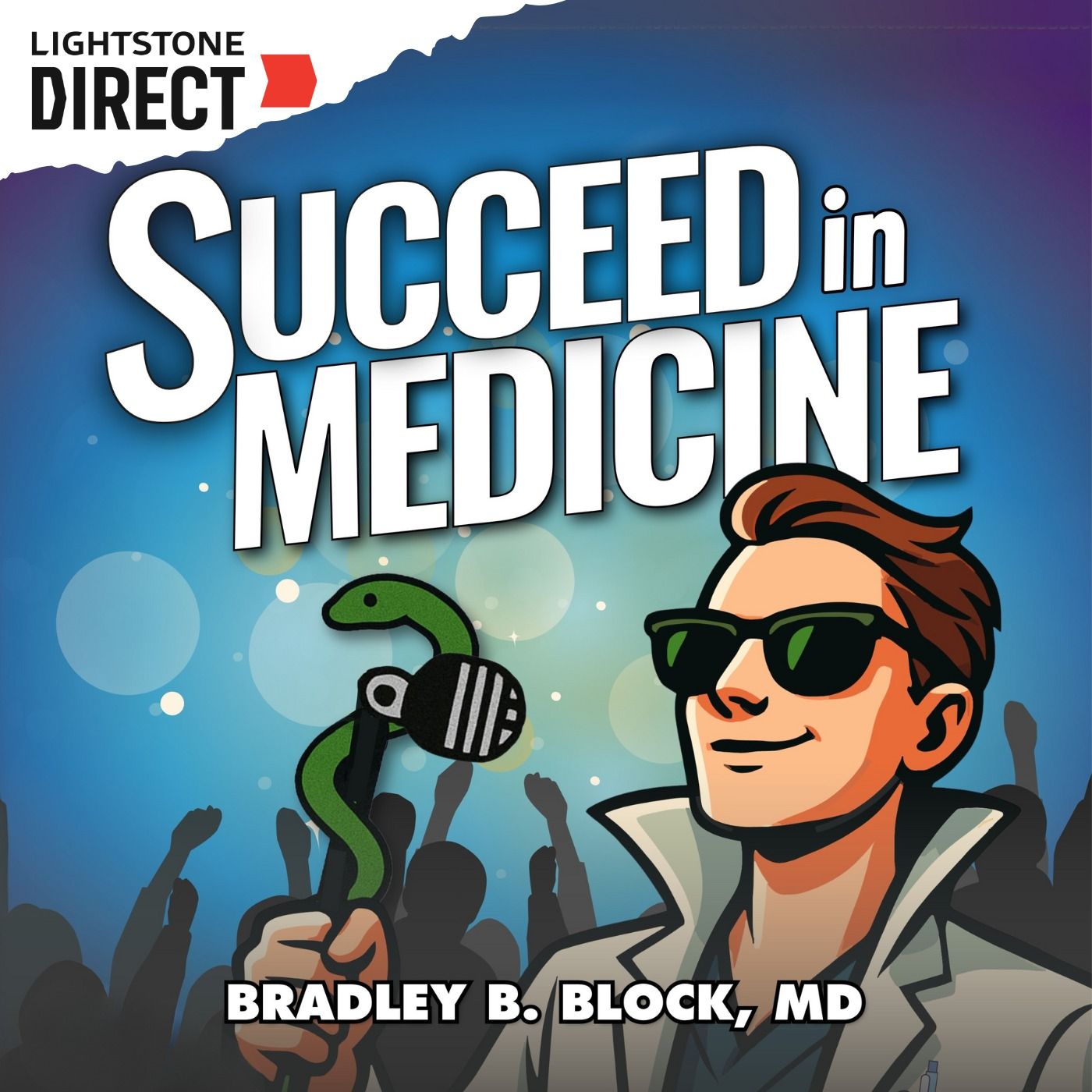
This episode is sponsored by Lightstone DIRECT. Lightstone DIRECT invites you to partner with a $12B AUM real estate institution as you grow your portfolio. Access the same single-asset multifamily and industrial deals Lightstone pursues with its own capital – Lightstone co-invests a minimum of 20% in each deal alongside individual investors like you. You’re an institution. Time to invest like one.-------------------------------------When a patient storms in frustrated or scared, what if you could de-escalate in under 90 seconds? In this eye-opening episode, host Dr Bradley Block chats with Doug Noll, as he explains "affect labeling": simply reflecting emotions ("You’re frustrated, worried, scared") to downshift the brain’s limbic system and reactivate executive function. Backed by UCLA studies, this tool builds instant trust, makes visits efficient, and works on anyone, from ER patients to grocery clerks. Learn the 3-step process: ignore words for 90 seconds, read emotions innately, and reflect without "I understand." Doug shares role-plays, practice tips like labeling TV ads or silent shows, and why this flips arguments by meeting the universal need to be heard. Perfect for physicians facing high-stakes emotions, this episode equips you to listen people "into existence" for calmer, more connected care.Three Actionable Takeaways:Master Affect Labeling Basics: Ignore words for 90 seconds, read emotions instinctively (we’re hardwired for it), and reflect with "You" statements like "You’re frustrated, scared, confused." This downshifts the limbic system, calms patients fast, and builds trust by showing deep understanding without saying "I get it."Practice Everywhere for Real-World Skill: Label emotions in ads, silent TV scenes, or checkout chats to hone listening without words. Start with strangers ("You’re excited your shift’s ending?") to see shoulders drop and rapport build, proving it works beyond medicine, even in prisons or arguments.Flip Tension into Connection: In visits, label all fears upfront (pain, failure as parents) to deregulate emotions, then hype positively ("You’re loving, doing everything right"). This meets the unmet need to be heard, ends escalations, and makes encounters efficient, enjoyable, and loyalty-building.About the Show:Succeed In Medicine covers patient interactions, burnout, career growth, personal finance, and more. If you're tired of dull medical lectures, tune in for real-world lessons we should have learned in med school!About the Guest:Doug Noll is a former civil trial lawyer turned award-winning mediator and peacemaker. He left a successful legal career to focus on resolving deep conflict and teaching de-escalation skills that actually work even in maximum-security prisons. Co-founder of the Prison of Peace Project, Doug has trained incarcerated individuals to become certified mediators, proving his methods succeed in the toughest environments.He is the author of the bestselling book De-Escalate: How to Calm an Angry Person in 90 Seconds or Less, which teaches a neuroscience-backed technique called affect labeling (reflecting emotions to instantly calm the brain), and offers the Advanced Emotional Competency online course.Website: dougnoll.comEmail: doug@dougnoll.comBook on Amazon : De-EscalateAbout the Host:Dr. Bradley Block – Dr. Bradley Block is a board-certified otolaryngologist at ENT and Allergy Associates in Garden City, NY. He specializes in adult and pediatric ENT, with interests in sinusitis and obstructive sleep apnea. Dr. Block also hosts Succeed In Medicine podcast, focusing on personal and professional development for physiciansWant to be a guest?Email Brad at brad@physiciansguidetodoctoring.com or visit www.physiciansguidetodoctoring.com to learn more!Socials:@physiciansguidetodoctoring on Facebook@physicianguidetodoctoring on YouTube@physiciansguide on Instagram and Twitter
This medical podcast is your physician mentor to fill the gaps in your medical education. We cover physician soft skills, charting, interpersonal skills, doctor finance, doctor mental health, medical decisions, physician parenting, physician executive skills, navigating your doctor career, and medical professional development. This is critical CME for physicians, but without the credits (yet). A proud founding member of the Doctor Podcast Network!Visit www.physiciansguidetodoctoring.com to connect, dive deeper, and keep the conversation going. Let’s grow! Disclaimer:This podcast is for informational purposes only and is not a substitute for professional medical, financial, or legal advice. Always consult a qualified professional for personalized guidance. Hosted by Simplecast, an AdsWizz company. See pcm.adswizz.com for information about our collection and use of personal data for advertising.
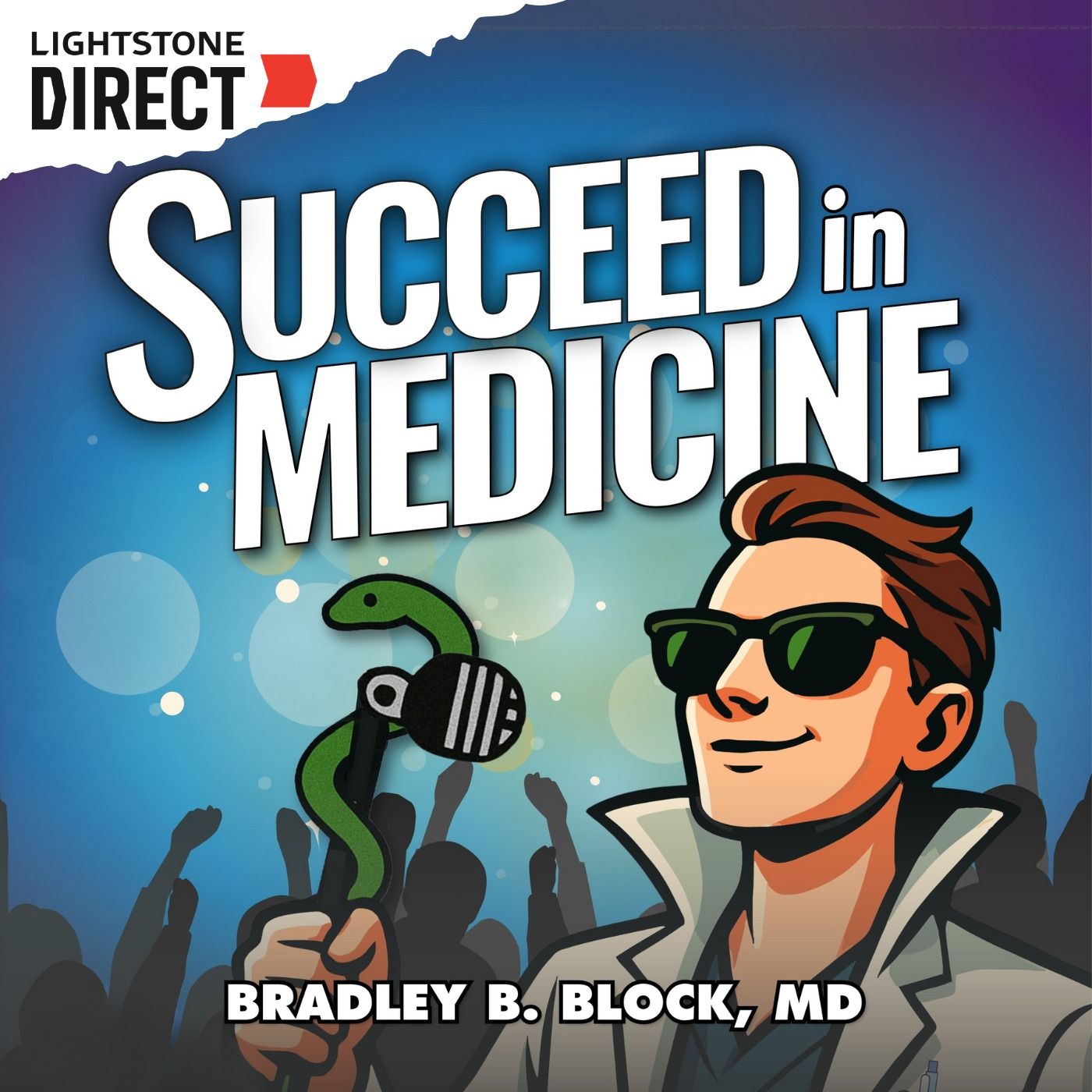
This episode is sponsored by Lightstone DIRECT. Lightstone DIRECT invites you to partner with a $12B AUM real estate institution as you grow your portfolio. Access the same single-asset multifamily and industrial deals Lightstone pursues with its own capital – Lightstone co-invests a minimum of 20% in each deal alongside individual investors like you. You’re an institution. Time to invest like one. How do you rise in academic medicine without losing your sense of purpose?Dr. Bradley Block joins Dr. Joseph Losee for a powerful conversation about the real path to academic advancement. Drawing from over two decades as a department chair, program director, and mentor, Dr. Losee reveals how saying “yes” shaped his journey from young faculty member to national leader—and why the same word must be used intentionally at different seasons of life.The discussion explores the balance between sacrifice and wellbeing, the shifting culture of academic medicine, and how meaning and mentorship sustain long-term fulfillment. Dr. Losee also shares insights on conflict resolution, leadership development, and his latest venture, Clarity Med Solutions, where he pioneers early dispute mediation to restore trust and healing between physicians, patients, and health systems.This episode is a roadmap for physicians seeking impact, growth, and balance—without losing sight of what truly matters.Three Actionable Takeaways:Say Yes With Intention: Early in your career, saying yes opens doors, builds credibility, and creates opportunities. But as your life evolves, align your yeses with your passions—and protect your energy for what truly matters.Sacrifice is the Path to Leadership: Every leader pays a price for impact. True advancement in academic medicine requires time, service, and persistence—but when rooted in purpose, those sacrifices yield meaning and legacy.Relationships Are the Real Reward: From mentoring residents to mediating patient disputes, relationships—not titles—define success. Meaning in medicine comes from connection, compassion, and helping others thrive.About the Show:Succeed In Medicine covers patient interactions, burnout, career growth, personal finance, and more. If you're tired of dull medical lectures, tune in for real-world lessons we should have learned in med school!About the Guest:Dr. Joseph Losee is Vice Dean for Faculty Affairs at the University of Pittsburgh School of Medicine and the Dr. Ross H. Musgrave Endowed Chair of Pediatric Plastic Surgery. A nationally recognized surgeon, educator, and leader, he has authored over 250 publications, edited seven textbooks, and led multiple professional societies.He co-chairs the UPMC Physician Wellbeing Initiative, teaches leadership in the Katz Graduate School of Business, and is the founder of Clarity Med Solutions, a consulting firm specializing in leadership coaching and conflict resolution.📍 Connect with Dr. LoseeUniversity of Pittsburgh School of Medicine – Faculty ProfileLinkedIn: linkedin.com/in/joseph-loseeAbout the Host:Dr. Bradley Block – Dr. Bradley Block is a board-certified otolaryngologist at ENT and Allergy Associates in Garden City, NY. He specializes in adult and pediatric ENT, with interests in sinusitis and obstructive sleep apnea. Dr. Block also hosts Succeed In Medicine podcast, focusing on personal and professional development for physiciansWant to be a guest?Email Brad at brad@physiciansguidetodoctoring.com or visit www.physiciansguidetodoctoring.com to learn more!Socials:@physiciansguidetodoctoring on Facebook@physicianguidetodoctoring on YouTube@physiciansguide on Instagram and Twitter
This medical podcast is your physician mentor to fill the gaps in your medical education. We cover physician soft skills, charting, interpersonal skills, doctor finance, doctor mental health, medical decisions, physician parenting, physician executive skills, navigating your doctor career, and medical professional development. This is critical CME for physicians, but without the credits (yet). A proud founding member of the Doctor Podcast Network!Visit www.physiciansguidetodoctoring.com to connect, dive deeper, and keep the conversation going. Let’s grow! Disclaimer:This podcast is for informational purposes only and is not a substitute for professional medical, financial, or legal advice. Always consult a qualified professional for personalized guidance. Hosted by Simplecast, an AdsWizz company. See pcm.adswizz.com for information about our collection and use of personal data for advertising.
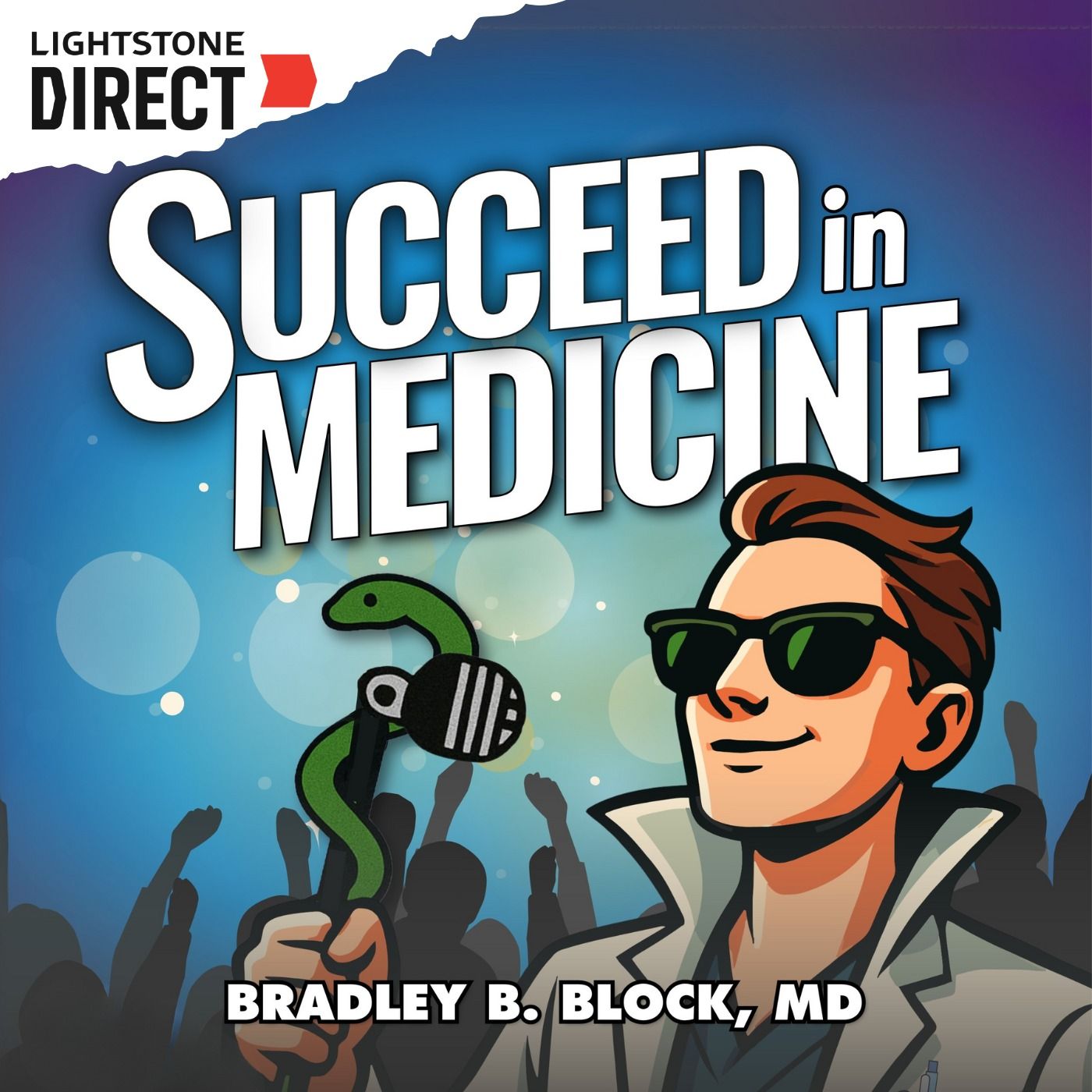
This episode is sponsored by Lightstone DIRECT. Lightstone DIRECT invites you to partner with a $12B AUM real estate institution as you grow your portfolio. Access the same single-asset multifamily and industrial deals Lightstone pursues with its own capital – Lightstone co-invests a minimum of 20% in each deal alongside individual investors like you. You’re an institution. Time to invest like one.___________________ Ever wonder why success doesn’t feel successful?You’ve checked every box — med school, residency, family, stability — yet still feel that quiet tug of restlessness. Dr. Richard Boyatzis, joins Dr. Bradley Block to unpack why even accomplished physicians often lose their sense of meaning mid-career. Drawing from his Intentional Change Theory, Dr. Boyatzis explains that fulfillment dips every 7–10 years as part of our natural life cycle — what he calls liminality, the space between “what was” and “what’s next.” The fix isn’t distraction (real estate, side gigs, or skydiving), but rediscovering your vision — your “ideal self” — and aligning daily work with your true values.He warns against the trap of coaching for compliance — trying to fix patients (or yourself) through fear and goals. Instead, focus on coaching with compassion — inspiring sustained change through purpose, gratitude, and hope. Physicians, he says, thrive when they reconnect to why they entered medicine: to help, heal, and matter. Through personal stories, neuroscience, and humor, Dr. Boyatzis offers a practical roadmap for reigniting passion without abandoning your profession — whether that means teaching, mentoring, volunteering, or simply reframing success through renewed purpose.Three Actionable Takeaways:Revisit Your Vision Every 7–10 Years: Midlife restlessness isn’t failure — it’s biology. Reflect on your ideal self by asking, “If my life were fantastic 10–15 years from now, what would it look like?” Write it down, talk it out, and use it to guide new choices in work and life.Coach (and Care) with Compassion, Not Compliance: Patients — and physicians — change through hope, not fear. Replace “If you don’t…” warnings with vision-driven goals (“What do you want to live for?”). Shared purpose boosts motivation, treatment adherence, and well-being.Recharge with Purposeful Connection: Gratitude and positive storytelling aren’t fluff — they activate the parasympathetic system and restore energy. Start meetings or days with one uplifting story, or jot three things you’re grateful for. It rewires stress into meaning. About the Show:Succeed In Medicine covers patient interactions, burnout, career growth, personal finance, and more. If you're tired of dull medical lectures, tune in for real-world lessons we should have learned in med school!Dr. Richard Boyatzis is a Distinguished University Professor at Case Western Reserve University and one of the world’s most cited scholars on emotional intelligence, leadership, and behavior change. Co-author of Primal Leadership and Helping People Change, his latest book, The Science of Change, distills decades of research into how individuals and organizations achieve sustained transformation. A global consultant and teacher, his work has reached over 1.5 million learners worldwide.LinkedIn: https://www.linkedin.com/in/richard-boyatzis-401822a Website: case.eduAbout the Host:Dr. Bradley Block – Dr. Bradley Block is a board-certified otolaryngologist at ENT and Allergy Associates in Garden City, NY. He specializes in adult and pediatric ENT, with interests in sinusitis and obstructive sleep apnea. Dr. Block also hosts Succeed In Medicine podcast, focusing on personal and professional development for physiciansWant to be a guest?Email Brad at brad@physiciansguidetodoctoring.com or visit www.physiciansguidetodoctoring.com to learn more!Socials:@physiciansguidetodoctoring on Facebook@physicianguidetodoctoring on YouTube@physiciansguide on Instagram and Twitter
This medical podcast is your physician mentor to fill the gaps in your medical education. We cover physician soft skills, charting, interpersonal skills, doctor finance, doctor mental health, medical decisions, physician parenting, physician executive skills, navigating your doctor career, and medical professional development. This is critical CME for physicians, but without the credits (yet). A proud founding member of the Doctor Podcast Network!Visit www.physiciansguidetodoctoring.com to connect, dive deeper, and keep the conversation going. Let’s grow! Disclaimer:This podcast is for informational purposes only and is not a substitute for professional medical, financial, or legal advice. Always consult a qualified professional for personalized guidance. Hosted by Simplecast, an AdsWizz company. See pcm.adswizz.com for information about our collection and use of personal data for advertising.


Download from Google Play

Download from App Store
 United States
Great episode, really resonated with me. Thank you for sharing.