


 Claim Ownership
eMotors: Electric Revolution
Subscribed: 1Played: 59
Subscribe

© eMotors Electric Revolution
Description
Innovation, Technology, and Tomorrow's Driving
Welcome to the podcast that explores the electric mobility revolution. Each episode takes you on a journey to discover the latest innovations, cutting-edge technologies, and driving experiences that are shaping the future of automobiles. An electrifying journey into the future of sustainable mobility. If you enjoy these episodes or find them useful, you can buy me a coffee through this link: https://buymeacoffee.com/emotorselectricrevolution.
Welcome to the podcast that explores the electric mobility revolution. Each episode takes you on a journey to discover the latest innovations, cutting-edge technologies, and driving experiences that are shaping the future of automobiles. An electrifying journey into the future of sustainable mobility. If you enjoy these episodes or find them useful, you can buy me a coffee through this link: https://buymeacoffee.com/emotorselectricrevolution.
690 Episodes
Reverse
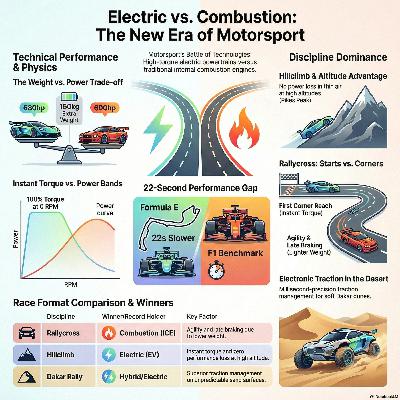
These sources analyze the ongoing technical competition between electric vehicles (EVs) and internal combustion engines (ICE) across various elite motorsport disciplines. In Rallycross, the "Battle of Technologies" highlights how the instant torque and superior power of electric cars are countered by the lightweight agility and braking advantages of traditional petrol engines. Meanwhile, Formula 1 remains the global benchmark for top speed and engineering complexity, significantly outperforming Formula E in lap times and aerodynamic grip. The documentation also explores how electric powertrains dominate high-altitude hillclimbs due to their oxygen-independent motors and revolutionize desert racing with precise traction control. Ultimately, the audio illustrate a transition period where racing serves as a high-stakes laboratory for sustainable innovation and mechanical efficiency.
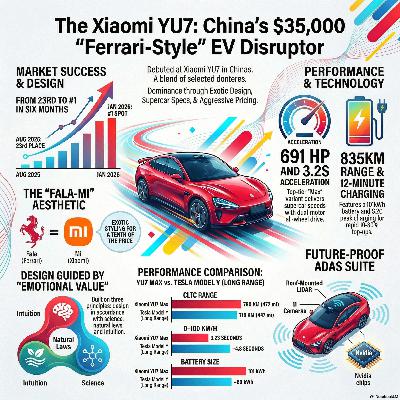
The provided episode details the rapid ascent of the Xiaomi YU7, a high-performance electric SUV that has recently become the top-selling vehicle in China. Despite being produced by a company primarily known for consumer electronics, this model has gained immense popularity due to its competitive pricing and a design that closely mimics the Ferrari Purosangue. The vehicle offers impressive technical specifications, including three distinct power tiers and advanced interior features like massaging seats and integrated entertainment screens. Its commercial success is highlighted by its jump from 23rd place to the top spot in just six months, outperforming established automotive brands. Looking forward, the tech giant plans to expand its influence by launching this successful model in European markets next year. In the broader context of the Chinese market, this shift reflects the growing dominance of tech-driven electric cars over traditional combustion engine models.
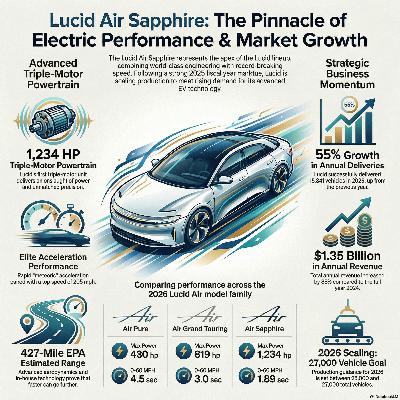
This episode presents a creative segment from a fictional program called Olimpo Elettrico, which reimagines the Greek Titaness Asteria in a modern context. Rather than focusing on traditional mythology, the narrative explores which luxury electric vehicle would best suit a goddess associated with falling stars and night oracles. The author suggests the Lucid Air Sapphire as her ideal choice, highlighting its aerodynamic glass roof and silent, high-performance motors as parallels to her celestial nature. By linking her ancient story of transformation into an island with modern long-range battery technology, the source bridges the gap between classical legends and cutting-edge automotive engineering. Ultimately, the piece serves as a playful exercise in thematic branding, using the goddess’s divine traits to illustrate the premium features of a high-end electric sedan.

The automotive manufacturer MG is preparing to launch a new, affordable electric city car called the MG2 to strengthen its presence in the European market. Scheduled for a 2026 debut and a 2027 release, this compact vehicle aims for a competitive price point of approximately 20,000 euros. Technical details suggest the car may utilize the E3 platform, featuring integrated battery technology and front-wheel drive to optimize efficiency. Its design is expected to reflect a modern British aesthetic while incorporating digital interior features inspired by current models. By introducing this model, MG intends to directly challenge other low-cost electric rivals such as Dacia and Renault. Overall, the text highlights the brand's strategic move toward making sustainable urban mobility more accessible to the general public.
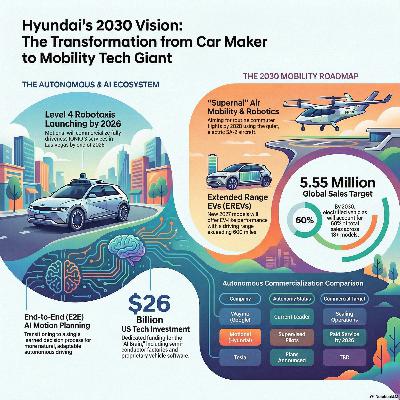
The provided audio details Hyundai's strategic evolution as a diversified technology leader beyond its traditional automotive roots. Through an interview with Francesco Calcara, the CEO of Hyundai Italia, the source highlights the company’s expansion into robotics, hydrogen power, and artificial intelligence, including the creation of AI-generated marketing campaigns. While maintaining a strong focus on hybrid and electric vehicles, the brand is restructuring its commercial network and prioritizing full supply chain control, from steel production to advanced automation. Future goals involve launching five new models by 2027 and increasing market awareness of their sophisticated technological ecosystem. Ultimately, the episode illustrates a transition toward integrated mobility and high-tech innovation to remain competitive in a shifting global market.
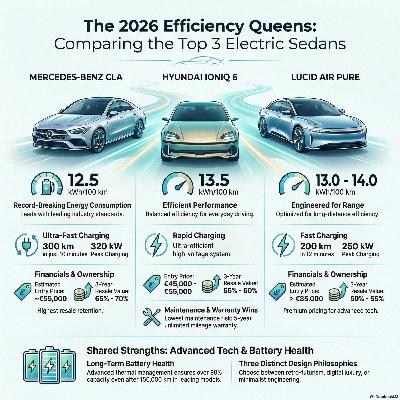
The provided episode compares three leading electric vehicles scheduled to define the efficiency standards of 2026: the Mercedes-Benz CLA, the Lucid Air Pure, and the Hyundai IONIQ 6. Each model represents a distinct approach to sustainable mobility, ranging from high-tech luxury and advanced engineering to affordable performance. The analysis highlights critical technical data, such as energy consumption rates and ultra-fast charging capabilities, where the Mercedes leads in speed and the Hyundai offers accessible high-voltage architecture. Beyond mechanics, the source evaluates the interior experience, contrasting Mercedes’ AI-driven interface with Lucid’s sustainable elegance and Hyundai’s minimalist design. Ultimately, the text serves as a buyer's guide, categorizing these cars based on their price points, software sophistication, and driving range to help consumers choose the vehicle that best fits their lifestyle.
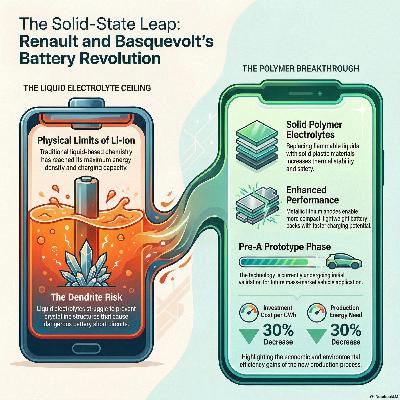
The provided audio details a strategic partnership between Renault’s electric division, Ampere, and the Spanish startup Basquevolt to advance next-generation battery technology. By replacing volatile liquid electrolytes with solid polymer materials, the companies aim to produce solid-state lithium-metal batteries that are safer and more energy-dense than current models. This innovation addresses the physical limitations of traditional lithium-ion cells, potentially offering faster charging speeds and increased driving range for future electric vehicles. Beyond performance benefits, the collaboration focuses on reducing manufacturing costs and energy consumption by approximately 30% during the production process. While the project is currently in the early prototyping phase, it represents a significant move toward making high-performance electric cars more affordable for the mass market. Overall, the source highlights a major industrial shift toward compact, thermally stable, and cost-effective energy storage solutions.
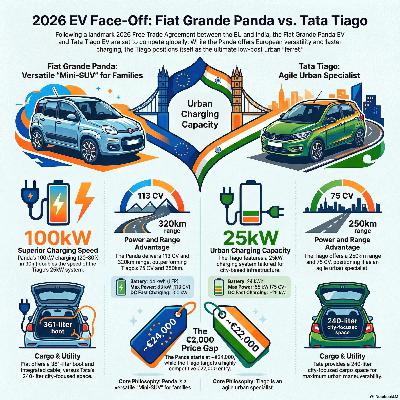
This source evaluates the Fiat Grande Panda EV and the Tata Tiago EV as premier choices for urban electric mobility in 2026. While the Fiat model is tailored for the European market with its advanced safety features and modern-retro aesthetic, the Tata Tiago remains the undisputed leader in India due to its affordability and rugged build. The comparison highlights that the Grande Panda excels in comfort and technological integration, whereas the Tiago offers unmatched value for budget-conscious commuters facing harsh road conditions. Ultimately, the superior option depends on the geographic region and specific economic incentives available to the driver. By contrasting these two vehicles, the source illustrates how regional infrastructure and pricing strategies dictate the success of electric city cars.

These source provide a comprehensive guide to identifying and avoiding the widespread scams and hidden costs associated with the car rental industry in 2026. The episode highlight common pitfalls, such as predatory damage claims, deceptive fuel policies, and high-pressure insurance sales at the rental desk. Experts emphasize the importance of thoroughly documenting a vehicle's condition with photos and choosing reputable agencies rather than selecting the cheapest advertised rate. Additionally, the texts warn against sophisticated digital fraud, including fake websites and fraudulent social media operators who solicit untraceable payments. To ensure financial protection, travelers are advised to scrutinize rental contracts, verify secure payment methods, and confirm their own insurance coverage before departing. Finally, the sources suggest that independent research and vigilance are the best tools for preventing unexpected fees and legal complications.
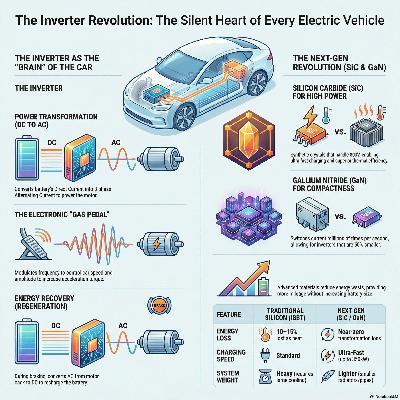
The provided episode explores the technological evolution of electric vehicle inverters, moving away from traditional silicon toward advanced materials. By implementing Silicon Carbide (SiC) and Gallium Nitride (GaN), manufacturers can significantly reduce energy waste previously lost as heat. These wide-bandgap semiconductors allow for ultra-fast charging speeds, lighter cooling systems, and a notable increase in driving range without requiring larger batteries. Industry leaders like STMicroelectronics and Infineon are driving this shift by scaling up production to make these efficient components more affordable. Ultimately, the source argues that the future of automotive competition lies in semiconductor chemistry rather than just aesthetic design.
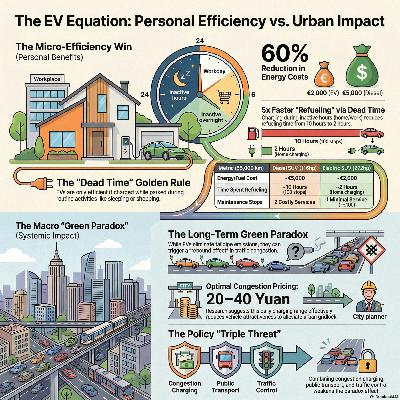
These sources examine the shifting landscape of electric vehicle (EV) adoption, with a specific focus on the environmental and economic hurdles of the transition. One report provides a technical analysis of the systemic paradoxes inherent in new energy markets, while the other offers a detailed strategic roadmap for Qatar's eMobility future. Key discussions include the impact of extreme temperatures on battery efficiency and the necessity of expanding charging infrastructure to meet national sustainability goals. The texts also highlight the importance of localizing supply chains for critical minerals like lithium and fostering public-private partnerships to lower ownership costs. Ultimately, the materials illustrate how a combination of renewable energy integration and targeted policy can accelerate the global shift toward zero-emission transportation.
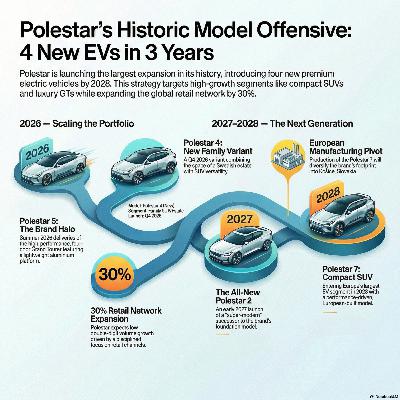
Under the leadership of Michael Lohscheller, the Swedish electric vehicle manufacturer Polestar is launching an aggressive strategic expansion involving four new models over the next three years. This initiative begins with the summer release of the high-end Polestar 5, followed by a versatile family-oriented variant of the popular Polestar 4 in 2026. By 2027, a modernized successor to the Polestar 2 will debut with increased interior space and a more independent design identity. The growth plan concludes in 2028 with the Polestar 7, a compact SUV manufactured in Europe to compete in the high-volume electric crossover market. To support this product blitz, the company is also rapidly enlarging its retail network to boost global sales and visibility.
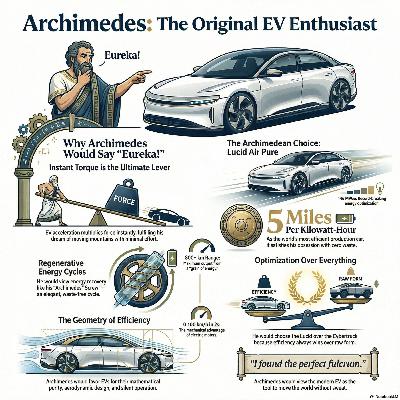
The provided source explores the life and scientific contributions of Archimede of Syracuse, reimagining the ancient genius as a modern fan of electric vehicle technology. It details his historical breakthroughs in mathematics, physics, and engineering, highlighting his obsession with mechanical efficiency and the optimization of force. By drawing parallels between his inventions, like the Archimedean screw and the lever, and modern features like regenerative braking and instant torque, the source argues that he would prize EVs for their mathematical elegance. The narrative specifically identifies the Lucid Air Pure as his likely car of choice due to its record-breaking energy efficiency and minimalist design. Ultimately, the episode illustrates how Archimede’s ancient principles of geometry and physics remain the foundation for cutting-edge sustainable transportation.
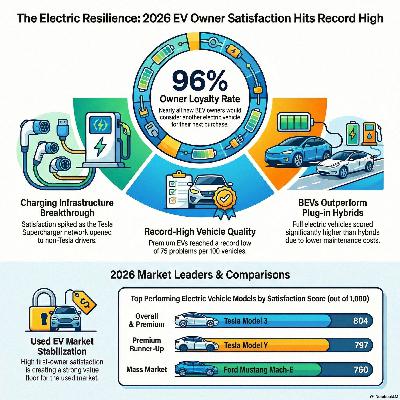
The provided source outlines the results of the 2026 JD Power study regarding the ownership experience of electric vehicles in the United States. This research highlights a historic peak in consumer loyalty, with nearly all current owners planning to purchase another battery-powered car despite broader market fluctuations. The Tesla Model 3 leads the rankings due to its superior charging infrastructure and software, while the Ford Mustang Mach-E secures second place for its reliability and driving dynamics. Improvements in battery technology and infotainment systems are cited as primary drivers for this increased satisfaction across more than thirty different models. However, while full electric vehicles show high reliability, the data suggests that hybrid alternatives still face more frequent technical challenges. Ultimately, the report confirms that enhanced real-world range and operational efficiency are successfully fostering a dedicated base of electric vehicle enthusiasts.
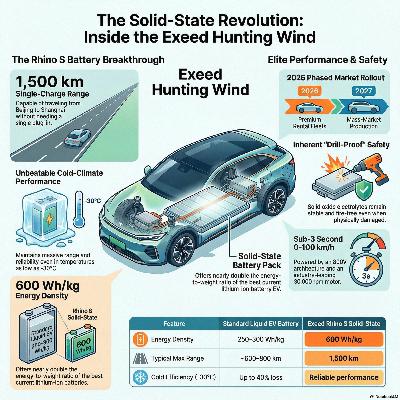
The provided source details the Exeed Liefeng, an upcoming high-performance electric vehicle from China’s Chery Group slated for a 2026 release. This luxury "shooting brake" model distinguishes itself through a revolutionary solid-state battery known as the Rhino S, which offers exceptional energy density and safety. This advanced power source enables a projected driving range of 1,500 km while maintaining efficiency in extreme sub-zero temperatures. Beyond its battery, the vehicle features a high-speed motor capable of reaching 100 km/h in under three seconds and utilizes an 800V architecture for rapid charging. The car is also equipped with a sophisticated AI cockpit featuring 3D display technology to enhance the user experience. Ultimately, the Liefeng represents a strategic move to challenge elite competitors like Porsche and Tesla in the global premium EV market.
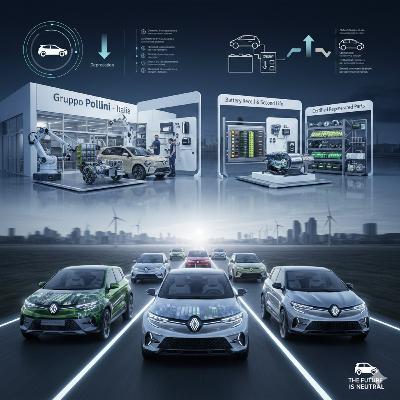
Renault’s 2026 strategy focuses on a diverse lineup of electric vehicles built on dedicated platforms to meet various consumer needs. Through an expanded ecosystem of circular economy initiatives, the company is transforming how cars are maintained by prioritizing component regeneration over disposal. By investing in specialized recycling networks in Italy, Renault ensures that parts like motors and batteries can be repaired or repurposed for a second life. These advancements allow for modular battery repairs and software updates that significantly reduce ownership costs and combat vehicle depreciation. Ultimately, the brand aims to create long-lasting, sustainable transportation that remains technologically relevant through hardware upgrades and extensive material recycling. This comprehensive approach shifts the automotive model from a disposable commodity to a durable, evolving investment.
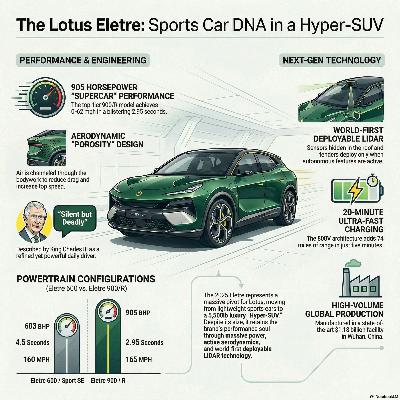
The provided source details King Charles' recent acquisition of a high-performance Lotus Eletre, a luxury electric vehicle valued at approximately £140,000. This hyper-SUV represents a shift in the royal fleet toward sustainable transportation, joining other electric models and new charging infrastructure at the monarch's residences. Although the Lotus brand carries a historic British heritage, the article notes that this specific model is manufactured in China under the parent company Geely. The author evaluates the car's impressive technical specifications, highlighting its massive horsepower and rapid acceleration despite its significant weight. Ultimately, the source portrays the vehicle as a successful fusion of traditional racing DNA and modern, zero-emission technology fit for a king.
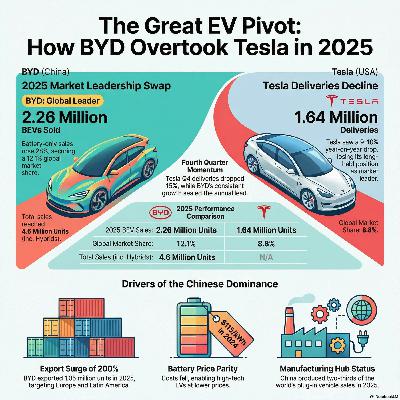
The provided source details the rapid global ascension of the Chinese automotive industry, highlighting how its focus on electric vehicles (EVs) has shifted market power away from traditional Western and Japanese manufacturers. Significant milestones are noted, such as BYD surpassing Tesla in annual sales and China becoming the premier world hub for vehicle exports and production. The analysis emphasizes that Chinese brands maintain a competitive edge by offering advanced features and longer range at much lower price points than their international rivals. Data from regions like Australia illustrates this trend, showing that nearly all top-selling electric models are now manufactured or owned by Chinese firms. Ultimately, the source suggests that China’s early investment in green technology has secured its position as the dominant force in the future of transportation.
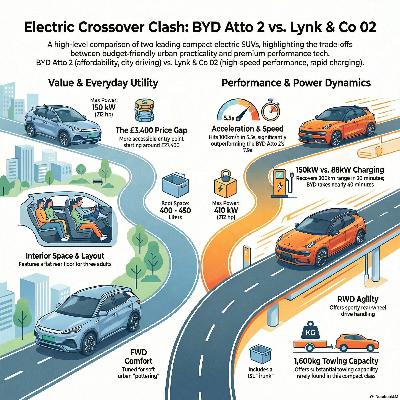
The provided source compares the Lynk & Co 02 and the BYD Atto 2, two compact electric crossovers that share similar battery capacities but target different market segments. While the Lynk & Co 02 leverages Swedish engineering and higher performance metrics like top speed, the BYD Atto 2 focuses on energy efficiency and a more accessible entry-level price. Interior comparisons highlight the Lynk & Co's premium aesthetics and superior cargo flexibility against the BYD's practical five-seat layout. Mechanical differences are noted in their charging port locations and specialized handling technologies, with the BYD offering a slight edge in daily range. Ultimately, the sources illustrate a choice between upscale European quality and cost-effective electric utility.
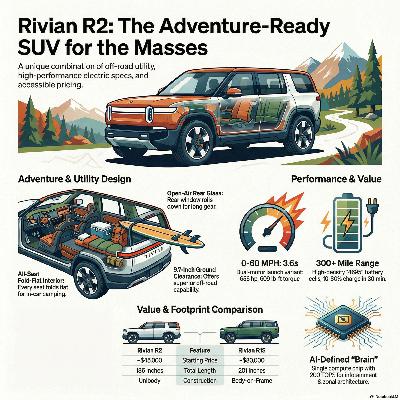
The Rivian R2 is presented as a versatile, adventure-oriented electric SUV designed to bridge the gap between rugged utility and mass-market appeal. While its American debut is slated for 2026, the European launch has been delayed until at least 2028 to prioritize production stability. The vehicle distinguishes itself through innovative spatial features, such as fully reclining seats for camping and a unique retractable rear window for transporting outdoor gear. Technically, the R2 utilizes advanced cylindrical battery cells that offer superior thermal management and a longer lifespan compared to previous technologies. It positions itself as a robust competitor to the Tesla Model Y, trading aerodynamic minimalism for superior off-road capability and interior practicality. Ultimately, the source highlights the R2 as a technology-forward option for drivers who value durability and outdoor functionality over traditional luxury.

Comments

Download from Google Play

Download from App Store
 United States