


 Claim Ownership
Build Mode
Subscribed: 139Played: 2,710
Subscribe

© TechCrunch
Description
On Build Mode, TechCrunch's Startup Battlefield Editor Isabelle Johannessen cuts through the startup mythology to uncover how founders survive the brutal early days, navigate impossible funding landscapes, and somehow keep their companies — and sanity— intact. Each season, Isabelle is joined by founders, investors, and operators to dig into specific aspects of the startup journey, from creative go to market strategies to founder mental health. The interviews are full of candid startup wisdom—think cap table drama, co-founder breakups, and pivot panic. So, if you’re starting a company or or even just thinking about it, this is your survival guide.
216 Episodes
Reverse

This week on Build Mode, we’re joined by David Park, co-founder and CEO of Narada, an enterprise AI agent platform spun out of UC Berkeley AI Lab research. Narada uses large action models to automate complex, multi-step workflows across enterprise systems. After previously co-founding and exiting Coverity, Park is now building his second company with a different playbook: Stay lean, talk to customers, and don’t raise before you’re ready.
In this episode, he shares why Narada spent a year making nearly 1,000 customer calls before raising institutional capital, how the company reached 99.99% reliability in production environments, and why he believes too much funding too early can derail even the strongest teams. Park also reflects on his experience as a Startup Battlefield Top 20 company and the lessons he’s carried from his first exit into building Narada.
He breaks down:
Why customers won’t tell you your “baby is ugly” — but their wallets will
How Narada achieves enterprise-grade AI reliability
Why raising money before product-market fit can be dangerous
The discipline of building a lean, “mean building machine”
When to scale your go-to-market team (and when not to)
Why founders must stick to their values, even under pressure
Lessons from Startup Battlefield and building in public
Apply to Startup Battlefield: We are looking for early-stage companies that have an MVP. So nominate a founder (or yourself): techcrunch.com/apply. Be sure to say you heard about Startup Battlefield from the Build Mode podcast.
Founders Summit: If you want to take these conversations beyond the podcast, then come join us in person at a TechCrunch event on June 9 in Boston, we're hosting our founders Summit, which is essentially build mode in real life. It's a full day focused entirely on founders, builders and the conversations that actually move startups forward. It's also a great way to sharpen your story. Get your tickets.
TechCrunch Disrupt: If you're thinking about applying to Startup Battlefield, then October 13 to 15 in San Francisco, we're back for TechCrunch Disrupt, where the Startup Battlefield 200 takes the stage. So if you want to cheer them on, or just network with 1000s of founders, VCs, and tech enthusiasts, then grab your tickets.
Use code buildmode15 for 15% off any ticket type
00:00 – Why customers won’t tell you the truth (but their wallets will) 02:43 – What Narada does: enterprise AI agents powered by large action models 04:28 – Enterprise reliability: reaching 99.99% accuracy 07:32 – Trust, security, and on-prem deployment 12:26 – Bootstrapping, 1,000 customer calls & finding real pain 15:05 – Raising after traction & meeting their lead VC at Disrupt 18:47 – Scaling responsibly after product-market fit 22:46 – Go-to-market strategy & leveraging channels 23:48 – From Coverity exit to Narada: a founder’s second act 27:05 – Founder advice: passion, grit & integrity 30:20 – Fake it till you make it? Not quite. 30:44 – Startup Battlefield experience 36:05 – Final reflections on disruption & building for impact
New episodes of Build Mode drop every Thursday. Hosted by Isabelle Johannessen. Produced and edited by Maggie Nye. Audience development led by Morgan Little. Special thanks to the Foundry and Cheddar video teams.
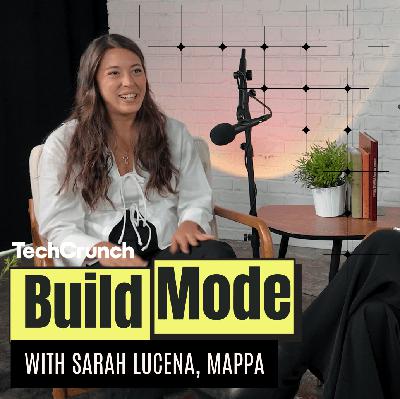
This season on Build Mode, we’re breaking down what it really takes to build a world-class team and that starts with hiring the right people the first time.
This week, we’re joined by Sarah Lucena, founder and CEO of Mappa, a behavioral intelligence platform that uses voice AI to decode human behavior in under 60 seconds. After rebuilding teams over and over again early in her career, Sarah set out to answer the question: why do “great on paper” candidates fail to flourish after their hired?
In this episode, she explains how Mapa analyzes thousands of voice biomarkers, from speech patterns to linguistic signals, to build behavioral profiles and match candidates based on compatibility, not just the on-paper credentials. They help their clients make the right hired the first time, saving crucial time and money.
She breaks down:
• Why most hiring decisions are still a gamble • Compatibility vs. similarity (and why it matters) • How voice biomarkers reveal behavioral traits • How to reduce bias without lowering the bar • How founders should think about building aligned teams
Whether you’re hiring your first employee or scaling a fast-growing startup, this episode will change the way you think about talent, team dynamics, and what it really means to be a “fit.”
Chapters:
00:00 – Why great hires still fail 00:47 – Meet Sarah Lucena (Founder & CEO, Mappa) 01:39 – What Mappa does: voice → behavioral intelligence 04:22 – Why voice (not video) is the best signal 06:03 – The proprietary dataset & real-life outcomes 12:30 – Mapping companies, not just candidates 14:27 – Compatibility vs. similarity 16:10 – Bias, diversity & better hiring signals 23:53 – Expanding beyond hiring (VCs, finance, insurance) 30:16 – Using Mappa to evaluate investors 33:02 – Building Mappa’s own team 35:49 – Founder advice: patience, compatibility & lawyers 39:16 – Startup Battlefield experience 41:29 – Outro
New episodes of Build Mode drop every Thursday. Hosted by Isabelle Johannessen. Produced and edited by Maggie Nye. Audience development led by Morgan Little. Special thanks to the Foundry and Cheddar video teams.
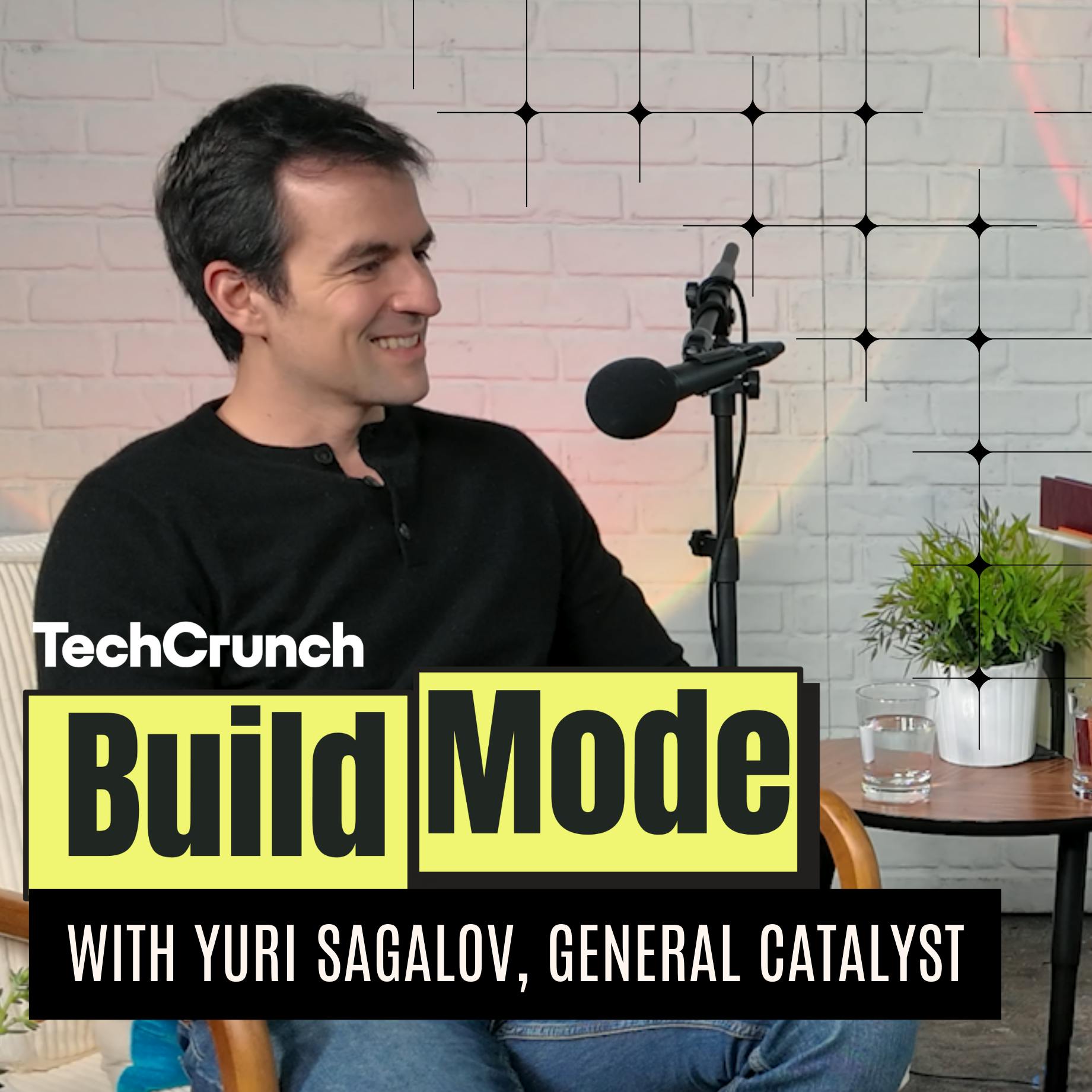
Build Mode is back. This season we’re breaking down what it really takes to build a world-class founding team starting with your cap table, equity structures, and startup compensation strategy.
We kick off with Yuri Sagalov, managing director at General Catalyst and former founder, YC partner, and seed investor at Wayfinder Ventures. Yuri has worked with hundreds of pre-seed and seed-stage startups, and he shares practical advice on how early-stage founders should think about startup equity, cap table design, investor selection, and compensation structures from day one.
He breaks down:
The 3 types of investors (and which one to avoid)
Why your cap table is part of your team
The 20–25% seed dilution rule
How to split equity with a co-founder
How to talk to early employees about risk and compensation
No matter where you are in your startup journey, this episode will help you get the incentive structure right from the beginning.
Chapters:
00:00 - Why your first hires deserve more equity 00:31 - Meet Yuri Sagalov (YC → General Catalyst) 02:12 - Your cap table is part of your team 02:50 - The 3 types of investors (avoid this one) 05:02 - How to split equity with a co-founder 07:55 - How much equity to give early employees 09:37 - How to talk compensation and risk 12:31 - Red flags in formation docs and vesting 18:27 - Advisors for equity? Usually a mistake 20:05 - The 20–25% seed dilution rule 26:03 - The shift to 10-year stock options 34:11 - Don’t scale before product-market fit 39:23 - Final advice: Just start and choose your co-founder carefully
New episodes of Build Mode drop every Thursday. Hosted by Isabelle Johannessen. Produced and edited by Maggie Nye. Audience development led by Morgan Little. Special thanks to the Foundry and Cheddar video teams.
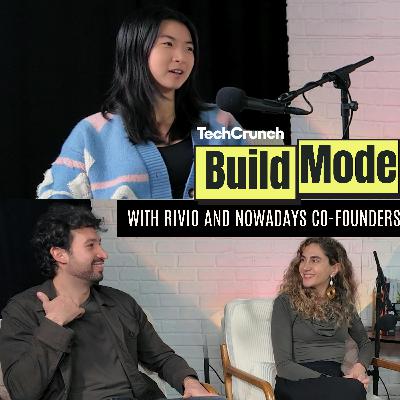
In startups, choosing a co-founder is often compared to choosing a spouse. But what happens when your co-founder actually is family?
In this episode of Build Mode, host Isabelle Johannessen explores how founders navigate co-founder relationships that come with built-in trust and unique challenges. First up is Hala Jalwan and Alessio Tresanti, the married co-founders of AI agent for procurement focusing on autonomous sourcing, Rivio. They discuss building a company from the same household and why clear roles and communication matter when both your personal and professional lives are on the line.
Then Isabelle talks with Anna Sun, co-founder of Nowadays, an AI co-pilot for corporate event planning that she launched with her sister Amy shortly after graduating from MIT. Sun explains how their sibling dynamic shapes decision-making, team culture, and the way they move quickly as founders.
They discuss:
How trust shapes strong co-founder partnerships
The benefits and challenges of building a startup with family
Dividing roles and decision-making between co-founders
Hiring and culture in early-stage startups
Why some founders turn to co-founder coaching to navigate conflict
This episode looks at how unconventional co-founder relationships can become a startup’s biggest advantage and why trust may be the most powerful tool a founding team has.
Apply to Startup Battlefield: We are looking for early-stage companies that have an MVP. So nominate a founder (or yourself): techcrunch.com/apply. Be sure to say you heard about Startup Battlefield from the Build Mode podcast.
TechCrunch Disrupt: If you're thinking about applying to Startup Battlefield, then October 13 to 15 in San Francisco, we're back for TechCrunch Disrupt, where the Startup Battlefield 200 takes the stage. So if you want to cheer them on, or just network with 1000s of founders, VCs, and tech enthusiasts, then grab your tickets.
Use code buildmode15 for 15% off any ticket type.
New episodes of Build Mode drop every Thursday. Hosted by Isabelle Johannessen. Produced and edited by Maggie Nye. Audience development led by Morgan Little. Special thanks to the Foundry and Cheddar video teams.
Every founding team is a mix of personalities, communication styles, and strengths. That can be a superpower or cause founders to butt heads. Without a clear framework for navigating conflict, even the strongest teams can fall apart before they really get started.
This week on Build Mode, Isabelle Johannessen sits down with Ian Schmidt, strategic advisor at Trimergence, to unpack the “personal operating system” behind every founder. As a coach, consultant, and occasionally a bouncer, Ian helps teams build the self-awareness and relational tools they need to scale without unnecessary friction.
They discuss:
Why founders should invest in coaching before conflict escalates
How to repair after conflict goes sideways
The importance of understanding your own triggers as a leader
How to create space for the self-work that actually saves time long-term
Following last week’s episode on family co-founders, this conversation expands those lessons into practical tools any founding team can use.
Apply to Startup Battlefield: We are looking for early-stage companies that have an MVP. So nominate a founder (or yourself): techcrunch.com/apply. Be sure to say you heard about Startup Battlefield from the Build Mode podcast.
TechCrunch Disrupt: If you're thinking about applying to Startup Battlefield, then October 13 to 15 in San Francisco, we're back for TechCrunch Disrupt, where the Startup Battlefield 200 takes the stage. So if you want to cheer them on, or just network with 1000s of founders, VCs, and tech enthusiasts, then grab your tickets.
Use code buildmode15 for 15% off any ticket type.
Chapters:
00:00 Why Conflict Isn’t the Problem
02:18 The Founder Operating System
04:21 Why Co-Founders Clash
05:34 How to Map Your Personal OS
10:26 Start Early or Pay Later
16:59 Frameworks for Navigating Conflict
23:32 Relationships, Loneliness & Support Systems
31:15 Identity, Habits & Scaling Yourself
New episodes of Build Mode drop every Thursday. Hosted by Isabelle Johannessen. Produced and edited by Maggie Nye. Audience development led by Morgan Little. Special thanks to the Foundry and Cheddar video teams.
It takes a village to build something great. In Season 2 of Build Mode, we go deep on how to assemble a founding team that signals ambition, execution, and long-term success. Founders and investors share candid lessons on hiring, structuring, and scaling teams that actually win. New episodes coming February 19.
n the season finale of Build Mode, Isabelle Johannessen sits down with Paul Irving, Partner and COO of GTMfund, to discuss go-to-market strategies for the AI era. Paul shares specific, actionable advice on how early-stage startups can win even when facing well-funded competitors who iterate at lightning speed. He also explains why distribution has become the final remaining moat when technical advantages disappear in months instead of years, and why every company needs a unique go-to-market motion tailored to their specific ICP.
If you just can’t get enough AI-native GTM strategies, check out this episode of the GTMnow podcast: Build your AI Outbound Machine with ChatGPT
Chapters:
00:00 Intro
00:44 Meet Paul Irving - GTM Fund
04:02 Finding Competitive Edge in Specific Channels
07:34 Matching Operators to Startups with AI
12:08 The End of the B2B SaaS Playbook Era
14:09 Creative GTM Strategies
16:18 The Power of Warm Introduction Mapping
23:04 Success Stories: Ryder and Vanta
25:25 Red Flags in Go-to-Market Strategy
27:29 Advice for Resource-Constrained Founders
31:22 When to Start Hiring a GTM Team
34:57 Outro
Isabelle Johannessen is our host. Build Mode is produced and edited by Maggie Nye. Audience Development is led by Morgan Little. And a special thanks to the Foundry and Cheddar video teams.
We're bringing you a special TechCrunch podcast crossover episode. Isabelle joins Equity Hosts Kirsten Korosec, Anthony Ha, and Rebecca Bellan to dissect the year's biggest tech developments, from mega AI funding rounds that defied expectations to the rise of "physical AI," and make their calls for 2026.
The group tackled everything from why AI agents didn't live up to the hype in 2025 (but probably will in 2026), to how Hollywood will push back against AI-generated content, to why VCs are facing a serious liquidity crisis.
Listen to the full episode to hear:
Why world models are the next big thing in AI and how they're different from large language models
The death of "stealth mode" for AI startups and the rise of alternative funding sources
Predictions on regulatory chaos around AI policy and what Trump's recent executive order means for startups
Hot takes on IPOs: Will OpenAI and Anthropic actually go public in 2026?
Rapid-fire predictions including Johnny Ive and Sam Altman's inevitable public breakup, the return of dumb phones, and why everyone will be calling themselves "AI native"
What's coming in Build Mode season 2: A deep dive into team building, hiring, and finding co-founders
Chapters:
00:00 Intro - TechCrunch Build Mode & Equity Crossover Episode
00:27 Meet the Hosts - Predictions Episode Introduction
02:49 Reviewing 2024 Predictions - The Mega Funding Rounds
05:40 AI Startup Funding Challenges and Alternative Capital Sources
08:05 2026 AI Predictions - World Models and the Next Evolution
12:41 Physical AI - The Intersection of Robotics and Intelligence
14:07 AI in Media and Content Creation
18:48 Netflix-Warner Brothers Deal and FTC Predictions
21:09 The LP Direct Investment Trend
23:26 IPOs and Deep Tech Capital Challenges
25:49 Startup Battlefield Trends - Verticalized AI Across Industries
28:08 Rapid Fire Predictions - Fashion, Self-Driving Cars, and More
30:25 The Dumb Phone Comeback and Foldable iPhones
32:51 Build Mode Season 2 Preview - People and Team Building
New episodes of Build Mode drop every Thursday. Isabelle Johannessen is our host. Build Mode is produced and edited by Maggie Nye. Audience Development is led by Morgan Little. And a special thanks to the Foundry and Cheddar video teams.
Founders Gabriel Sanchez (Enspectra Health) and Tom Harries (Earth Funeral) share what it takes to build in heavily regulated industries where "move fast and break things" simply won't work. In this episode of Build Mode, they reveal the realities of navigating FDA approval processes, state-by-state regulations, and cultural taboos while building products that are literally matters of life and death. Gabriel walks through Enspectra's nearly decade-long journey to FDA clearance for their skin imaging device, while Tom discusses building a human composting service as an alternative to cremation and burial. They offer tactical advice on iterating while waiting for regulatory approval, planning your runway when success is largely out of your hands, and raising venture capital in spaces that many investors consider too taboo to touch.
Chapters:
00:00 Intro
00:30 Meet Gabriel Sanchez - Enspectra Health
02:34 The First FDA-Approved Skin Imaging Physics in 28 Years
04:24 From Stanford Lab to Clinical Device
06:43 Navigating FDA Clearance and Reimbursement Strategy
43:33 Scaling While Managing Regulatory Barriers
46:55 Where Earth is Today and Future Growth
48:00 Outro
New episodes of Build Mode drop every Thursday. Isabelle Johannessen is our host. Build Mode is produced and edited by Maggie Nye. Audience Development is led by Morgan Little. And a special thanks to the Foundry and Cheddar video teams.
Venture capitalists Ross Fubini (XYZ Ventures) and Leslie Feinzaig (Graham & Walker Ventures) pull back the curtain on how VCs build their own go-to-market strategies — not just how they evaluate startups, but also how they win over LPs and founders alike. In this episode of Build Mode, they share hard-won lessons from raising their first funds and how that experience allows them to empathize with founders. They discuss why "founder-market fit" applies to VCs too, how authentic thought leadership beats manufactured content, and why the best investor relationships start years before you need the money. Plus, the importance of building trust over transactions and why your network truly is your competitive advantage in venture.
Chapters:
00:00 Intro
01:01 Meet the VCs: From Netscape to Costa Rica
03:06 The Horror Show of Raising a First Fund
05:29 Building a Fund as Proof of Concept
08:52 The Schtick: Why VCs Need a Unique Thesis
11:44 Thought Leadership That Actually Works
15:34 The Qualification Process: Knowing in Two Minutes
19:06 Authentic vs. Manufactured Content
27:59 Building Relationships Before You Need Money
30:00 Founder-Market Fit for VCs
32:52 Key Takeaways: Person, Firm, Terms—In That Order
36:45 Field Notes: Creative Ways VCs Court Founders
New episodes of Build Mode drop every Thursday. Isabelle Johannessen is our host. Build Mode is produced and edited by Maggie Nye. Audience Development is led by Morgan Little. And a special thanks to the Foundry and Cheddar video teams.
Alltroo co-founders Kyle Rudolph and Jon Walburg share how they transformed their pro-athlete star power into a fundraising platform that allows their community the ability to donate to a variety of organization and win high-value prizes. In this episode of Build Mode, they reveal how they leveraged their networks to disrupt the charitable giving industry, from raising half a million dollars for the NFL in their first year to learning hard lessons about scaling too fast. They discuss the pivot from $10,000 golf tournaments to $10 sweepstakes entries, building trust with both celebrities and fans, and why your network is your greatest competitive advantage.
Chapters: 00:00 Intro 00:58 Meet the Founders: From NFL to Tech Startup 03:53 The $10,000 Golf Tournament That Sparked Everything 06:14 Navigating the Nonprofit-Tech Startup Hybrid Model 11:44 Leveraging Star Power: The NFL Partnership Win 15:34 Getting Athletes to Say Yes: The Trust Factor 19:06 When Identity Crisis Hits: Scaling Too Fast 27:59 The Mistake of Outsourcing Your Vision 30:00 Founder Market Fit: Your Network Is Your Net Worth 32:52 Key Takeaways: Building Thought Leadership Without Celebrity Status
New episodes of Build Mode drop every Thursday. Isabelle Johannessen is our host. Build Mode is produced and edited by Maggie Nye. Audience Development is led by Morgan Little. And a special thanks to the Foundry and Cheddar video teams.
Glīd CEO and founder Kevin Damoa shares what it takes to win Startup Battlefield 2025 and build a company solving real infrastructure problems. Fresh off his victory, De reveals how a veteran's perspective on logistics led to an autonomous solution bridging congested roads and underutilized rail. Plus, he shares how mindfulness, mission-driven culture, and $70M in early customer commitments positioned Glīd for success.
Chapters:
00:00 Intro
01:13 What Glīd does: Autonomous transloading explained
02:40 From military logistics to founding Glīd
04:05 Moving containers: The versatility of TEUs
04:47 $70M in commitments and five railroad partnerships
05:01 Why Glīd launched three products at once
08:47 The Startup Battlefield experience and preparation
12:15 Pitching on stage: Nerves, preparation, and execution
15:32 The camaraderie among Startup Battlefield competitors
19:47 Veteran founders and mission-driven companies
25:01 Post-win momentum: Customers, investors, and talent
27:15 Hiring on vibes: Glīd's culture of God, family, self, and commitment
28:25 Kevin's advice: Meditate, don't freak out
29:00 Tips for aspiring Startup Battlefield applicants
New episodes of Build Mode drop every Thursday. Isabelle Johannessen is our host. Build Mode is produced and edited by Maggie Nye. Audience Development is led by Morgan Little. And a special thanks to the Foundry and Cheddar video teams.
Luna co-founder Jas Schembri-Stothart and Untapped Solutions founder Andre Peart share how they cracked go-to-market for audiences most startups avoid. In this episode of Build Mode, they reveal the guerrilla tactics, trust-building strategies, and creative experiments that helped them reach teenage girls and formerly incarcerated workers—from crashing Taylor Swift concerts to keynoting re-entry conferences.
Chapters: 00:00 Intro
03:15 Getting Grilled by Teens: Luna's School Roadshow
05:04 The Ambassador Army That Designed the App
06:11 When Teen Content Goes Viral on TikTok
07:32 Untapped's Origin: From Prison to Building Solutions
11:03 The Power of Storytelling in B2B Sales
14:02 Navigating Data Privacy with Sensitive Populations
15:29 The Challenge of Dual Audiences: Teens and Parents
17:43 Why Word of Mouth Beats Any Ad Campaign
19:41 The Taylor Swift Concert That Almost Got Shut Down
22:15 Key Takeaways for Any Founder
22:41 Field Notes: Creative Go-to-Market from the Community
New episodes of Build Mode drop every Thursday. Isabelle Johannessen is our host. Build Mode is produced and edited by Maggie Nye. Audience Development is led by Morgan Little. And a special thanks to the Foundry and Cheddar video teams.
Forethought AI co-founder Deon Nicholas shares how he built a company that puts customers (not hype) at the center. In this episode of Build Mode, he unpacks his “7-Failure Rule,” the early experiments that shaped Forethought’s success, and why conviction should always come from your users, not your investors.
Chapters:
00:00 Intro
01:23 The Founder Journey: Adapting Every 6-9 Months
05:33 From AI Research to Solving Business Problems
11:12 Finding Your Customer: The Importance of User Conversations
18:22 Building Demos and Landing First Paying Customers
25:12 The Seven Failure Rule for Product Market Fit
30:38 Preparing for and Winning TechCrunch Disrupt
35:16 The Reality of Fundraising and Chasing Metrics
39:07 Navigating Competition in Customer Service AI
43:03 Stepping into Chairman and What's Next
44:57 Outro
New episodes of Build Mode drop every Thursday. Isabelle Johannessen is our host. Build Mode is produced and edited by Maggie Nye. Audience Development is led by Morgan Little. And a special thanks to the Foundry and Cheddar video teams.

Build Mode is TechCrunch's newest podcast, hosted by Startup Battlefield Editor, Isabelle Johannessen. This season we’re talking with founders and VCs sharing hard-won lessons on getting to market—the right way, the hard way, and the creative way.
TechCrunch is launching a new podcast Build Mode, which brings candid startup wisdom from the people who build, break, and build again. Build Mode is hosted by our very own Startup Battlefield Editor, Isabelle Johannessen who is joined by founders, investors, and operators to dig into the uncomfortable truths about startup life. Think cap table drama, co-founder breakups, and pivot panic. Wherever you are in your startup journey, this podcast will be your field guide. Season 1 is launching November 13.
This is our last episode of Found so we wanted to share where it all started. Please enjoy our very first episodewith Jordan Crook and Darrell Etherington interviewing Iman Abuzeid from Incredible Health. Please be sure to check out the other TechCrunch podcast: Equity And if you find yourself missing Found, you can always go back into the archives at techcrunch.com/found.
For this week's episode, we’re sharing a bonus conversation from backstage at this year’s TechCrunch Disrupt. Tim De Chant talked with Areeb Malik, co-founder and CTO of Glacier; Allison Wolff, co-founder and CEO of Vibrant Planet, and Hyuk-Jeen Suh, co-founder of Venx and general partner at SkyRiver Ventures. On stage the panel discussed how a startup can balance doing good with delivering the financial returns they need to keep the lights on. They continue in that vein for this bonus conversation as they dive deep into how successful founder have built profitable companies that are good for the world.
Enterprise AI is booming so it’s no wonder that, as companies figure out how to implement it, the industry of AI infrastructure is emerging. This week Becca and Dom talk to Nick Frosst from Cohere, the AI company building natural language models for enterprise customers. They discuss why Frosst thinks the AI boom isn’t built on a bubble, whether or not AI companies are building toward a “digital god”, and how AI regulation could be a good thing.
(0:00) Introduction
(6:15) Enterprise applications for AI language models
(12:12) Building multilingual models
(14:58) Fundraising and the AI bubble
(19:46) AI and sustainability
(25:14) Building the Cohere team
(29:44) Host discussion
Found posts every Tuesday. Subscribe on Apple, Spotify or wherever you listen to podcasts to be alerted when new episodes drop. Check out the other TechCrunch podcast: Equity . Subscribe to Found to hear more stories from founders each
Connect with us:
On Twitter
On Instagram
Via email: found@techcrunch.com
In this episode, Dom and Becca are joined by Former Bonobos CEO Andy Dunn to talk about his mission to reverse America's loneliness epidemic through Pie, an app built to facilitate connections in the real world. They discuss the lessons Dunn brought from fundraising for Bonobos to Pie, founder mental health, and building a consumer movement in the midwest.


Download from Google Play

Download from App Store
 United States
loved it. keep rocking Amanda
I loved it. it was so so so inspiring