


 Claim Ownership
West Side Church of Christ - Elkton Ky
Subscribed: 0Played: 0
Subscribe

© 2026 Doug Gregory
Description
This podcast includes Sermons and other content for the West Side Church of Christ located at 725 W. Main St, Elkton KY. We hope that you can join us for services. We have bible class on Sunday mornings at 9 am and Worship at 10 am. We meet again at 5:30 pm Sunday Evenings, and Wednesday at 6:30 pm. If you are not able to join us then please enjoy our content. :-)
77 Episodes
Reverse
Watch the video version here: https://youtu.be/Mz4psHL_FfcIntroduction: The Airbnb AnalogyThe sermon opens with the origin story of Airbnb, explaining its name: "Air" from air mattresses rented out during events, plus "Bed and Breakfast."Founders faced ridicule and rejection; told their idea was crazy.In 2008 recession, they sold custom Cheerio boxes (political themes) to raise $30,000 and keep the company afloat.Today, Airbnb is valued at ~$74 billion, a global leader in property rentals.Key takeaway: Founders persisted because they saw potential others couldn't; they moved pieces, proved critics wrong, and were ultimately right.Analogy to God: God sees what others can't, moves pieces sovereignly, and is always right.God's SovereigntyDefined: God's ability to make plans and the authority/capability to execute them without hindrance.Biblical reference: Isaiah 46:8-11 God contrasts Himself with false idols: "I am God, and there is none like me, declaring the end from the beginning... My counsel shall stand, and I will accomplish all my purpose." God calls events and people into being; what He speaks, He brings to pass. God's ProvidenceTied to sovereignty: Providence is "sovereignty in motion"—God actively working things according to His will.Biblical reference: Ephesians 1:11-14 "In him we have obtained an inheritance, having been predestined according to the purpose of him who works all things according to the counsel of his will." God seals believers with the Holy Spirit as a guarantee of inheritance. Example: Israelites repeatedly messed up, but God's plan wasn't thwarted—He worked through it without removing free will.Providence in action: God isn't passive; He's actively shaping events.The Story of Jonah: Lessons on ProvidenceThe sermon uses the Book of Jonah (chapters 1-4) to illustrate providence. Familiar elements like the "big fish" are highlighted, but emphasis is on deeper themes, including chapter 4's intrigue.Providence Knows (Eternal Intelligence - "EI") Jonah 1:1-2: God commands Jonah (a Hebrew prophet) to go to Nineveh—a Gentile city, capital of Assyria, Israel's arch-enemy—and preach against its evil. Why send an unwilling preacher who hates them? Because God knows it will work: The entire city repents. Parallels: God sends a boy (David) to fight Goliath, or stutterer Moses to lead Israel—because He knows the outcome. Application: When opportunities or challenges keep arising that we feel unqualified for, consider God's greater knowledge. "Maybe I know something you don't... Maybe you have more talent than you think." Providence isn't always a clear roadmap; some events stem from our or others' decisions, but God may be guiding. Providence Pursues Jonah 1:3-17: Jonah flees to Tarshish (opposite direction), boards a ship. God sends a storm; mariners pray to false gods (ineffective), cast lots (falls on Jonah). Jonah admits fleeing God; tells them to throw him overboard. They try to row back but can't; pray to God, throw Jonah in—storm stops instantly. Mariners fear and worship the true God. Not accidents: Storm, lots, calm sea—all providence pursuing Jonah. Why pursue? God cares, even when we're stubborn. He's not frustrated like humans; He has backups but values each person. Application: What if recurring "bad" circumstances are God chasing you back to His path? Providence is Misunderstood Jonah 1:17-2:10: God appoints a great fish to swallow Jonah for 3 days/nights. Jonah prays from the belly: Acknowledges distress, God's salvation; vows thanksgiving (Jonah 2:1-9). Fish wasn't punishment but salvation: Jonah expected to drown (no rescue available); fish saved him from certain death. Though uncomfortable (smelly, dark), it preserved life. Parallels: Acts 8—persecution scatters Christians from Jerusalem, but they preach everywhere, spreading the Gospel (disaster becomes blessing). Application: What seems like the "worst thing ever" may be a hidden blessing. Use wisdom: Learn from past experiences to "fight what I feel with what I know to be true." Providence Positions (Right Place, Right Time) Jonah 3:1-4: God commands Jonah again; he obeys, preaches to Nineveh (a massive city, 3 days' journey across). Speculation: Fish (likely air-breathing whale) swam for 3 days, possibly carrying Jonah 300-600 miles closer to Nineveh (from Mediterranean toward east), shortening his overland journey from ~600 miles. God doesn't specify, but providence likely positioned him advantageously, not further away. Application: God can redirect us efficiently, even through detours. Providence Exposes Your Heart Jonah 3:5-10 & 4:1-11: Nineveh repents fully (from king to animals); God relents from destruction. Jonah angry: Prays for death, admits he fled because he knew God is gracious, merciful, slow to anger (Jonah 4:2). Pouts outside city, hoping for destruction. God appoints: Plant for shade (Jonah glad), worm to kill it, scorching wind/sun (Jonah faints, wants death). God questions: "Do you do well to be angry?" Jonah pities the plant he didn't create, but not Nineveh's 120,000+ innocents (children) and livestock. God's multitasking: Works on Nineveh's repentance while exposing Jonah's prejudice/heart issues. Parallels: Hebrews 4:12—God's Word as a sword revealing heart's thoughts/intents; prodigal son "comes to himself" in the pigpen. Open ending: We don't know if Jonah changes, but providence reveals flaws for growth. Application: God uses circumstances to mirror our true selves; He's never doing just one thing. Conclusion and InvitationWrap-up: Perhaps it's providence you're hearing this—struggling, hurting, needing repentance or salvation.God and His people love you; seek help (e.g., become Christian, talk to someone).Final thought: Salvation belongs to the Lord (Jonah 2:9). Don't leave without addressing your needs.
Watch the video version here: https://youtu.be/nghLyyTp6q8Sermon Summary: The Power of a Single WordIn this sermon, Pastor explores the profound impact of words, drawing parallels between historical inventions like the printing press and modern AI revolutions. He highlights how one misplaced or omitted word can alter history, lives, and even eternal destinies, using biblical wisdom to urge listeners to guard their speech.Key Highlights:Historical Anecdote: The Printing Press Revolution The invention of the printing press obsoleted scribes, who painstakingly copied texts by hand. In 1631, a printing error in the King James Bible omitted "not" from Exodus 20:14, resulting in "Thou shalt commit adultery." This tiny mistake—missing one word out of over 783,000—led to fines, recalls, and the company's downfall. Lesson: Words are precious and powerful; one error can change everything.Biblical Examples of Dangerous Words: The Word That Doesn't Belong (Genesis 3): The serpent twists God's command by adding doubt ("You will not surely die"), leading to humanity's fall. Modern parallels include false doctrines built on subtle additions like "don't" in "You don't have to obey." Challenge: Ask who benefits from such ideas—God, you, or someone else? The Quiet Word (Proverbs 16:28): Whisperers (gossips) spread strife and separate friends. Gossip can be true but shared with wrong intentions. Test: If you'd be mortified if it went public, it's likely harmful. Satan tempts with what we desire, making it "fun" but destructive. The Harsh Word (Proverbs 15:1): A soft answer calms anger, but harsh tones escalate it. You can be right but deliver it wrongly (e.g., responding to an apology with sarcasm). Real-life tip: Harshness often stems from personal stress—don't "kick the dog" when mad at the cat. The Worthless Word (Matthew 12:33-37): Out of the heart's abundance, the mouth speaks. We'll account for every careless (empty or lazy) word on judgment day. Examples: Inappropriate jokes or persistent bad language. Grace covers struggles, but the tongue is like a fire (James 3)—hard to tame but worth the effort. The Unreliable Word (Matthew 5:33-37): Let your "yes" be yes and "no" be no; avoid oaths or evasive promises. It's tempting to lie politely (e.g., faking interest in an event), but honesty builds trust. If prone to forgetting, act immediately (e.g., pray on the spot instead of promising later). The Ultimate Word: Jesus (John 1:1-5) Jesus is "the Word" through whom all was made, bringing light that darkness can't overcome. His love shines into our hearts (2 Corinthians 4:7), helping us combat our slips in speech.Closing Invitation:The pastor admits no one's perfect with words but encourages growth together. If you need encouragement, prayer, or to respond—whether for baptism, repentance, or support—reach out during the invitation or to elders. Don't leave without the word you need today.This message reminds us: Words shape realities—use them wisely to build, not break. Perfect for discussions on communication, integrity, and biblical living!

Watch the video version here: https://youtu.be/fl527UPlHYkI. Introduction: The Disruption of PlansThe Reality of Disruption: Life often goes according to plan, which lulls us into a false sense of security. We get used to the routine.The Question: How do we react when the "normal plan" is impossible? (e.g., A snowstorm preventing worship, a project stalled).The Thesis: Life doesn't always go to plan, but we choose how we react to the disruption. We can either be overcome by the "evil" of the day, or we can find the "good portion" in the unexpected.II. The Danger of Despising "Small Things" (Old Testament)Context: The Israelites return from captivity to rebuild the Temple under the leadership of Zerubbabel.The Mixed Reaction:The Joy: The foundation is laid, and the younger generation rejoices.The Disappointment: The older generation, who saw Solomon’s Temple, weeps because the new work seems small and insignificant by comparison.Scripture: Ezra 3:11–12"And they sang responsively, praising and giving thanks to the Lord, 'For he is good, for his steadfast love endures forever toward Israel.' And all the people shouted with a great shout when they praised the Lord, because the foundation of the house of the Lord was laid. But many of the priests and Levites and heads of fathers' houses, old men who had seen the first house, wept with a loud voice when they saw the foundation of this house being laid, though many shouted aloud for joy..."The Consequence of Comparison: Because the people felt the new temple "wasn't good enough," they became discouraged, and construction stopped for 16 years.God’s Correction: God speaks through the prophet Zechariah to encourage them not to look down on humble beginnings.Scripture: Zechariah 4:10"For whoever has despised the day of small things shall rejoice, and shall see the plumb line in the hand of Zerubbabel."Application: When our big plans fail, we often feel "gypped" by the smaller reality in front of us. We despise the small thing because it isn't the big thing we planned.III. Redeeming the Time (The Theology of Reaction)The Command: Paul instructs us to walk wisely and make the best use of our time.Scripture: Ephesians 5:15–16"Look carefully then how you walk, not as unwise but as wise, making the best use of the time, because the days are evil."The Definition of "Evil Days": What makes a day evil? It is often our reaction to the circumstances.The Strategy: We answer the "evil" of a bad day (or cancelled plans) with good actions.Scripture: Romans 12:21"Do not be overcome by evil, but overcome evil with good."Synthesis: Are the days only "evil" if we allow them to be? We have the agency to redeem a bad situation by choosing a good reaction.IV. Choosing the "Good Portion" (Gospel Example)The Narrative: Jesus visits Mary and Martha.Martha: Represents the "Plan." She is distracted by serving, anxious, and troubled because things (presumably) aren't going smoothly or she lacks help.Mary: Represents "The Moment." She stops to appreciate what is right in front of her (Jesus).The Rebuke and Invitation:Scripture: Luke 10:41–42"But the Lord answered her, 'Martha, Martha, you are anxious and troubled about many things, but one thing is necessary. Mary has chosen the good portion, which will not be taken away from her.'"Application: The difference between a good day and a bad day is often what we choose to focus on.You can focus on the snowstorm and the cancelled plans (Martha).Or you can focus on the unique opportunity to slow down and sit with family (Mary).V. Conclusion: Embracing the UnexpectedPersonal Reflection: The speaker admits the struggle of wanting to be productive/busy but being forced to stop.Reframing the Negative:Negative: We cannot meet for church today.Positive: We get to eat breakfast with family (a rarity), and the absence of church today will make the gathering next Sunday even sweeter.Final Challenge: Pay attention to what is in front of you. Do not be so focused on what you don't have (the failed plan) that you miss the joy of what you do have (the present moment).

Watch the video version here: https://youtu.be/nLSwWiVGIv4Introduction: The "Anti-Love" SongThe Hook: The speaker references the song "Love Hurts" (famously covered by Nazareth in 1975).The Lyrics: Quotes the cynical lyrics: "Love is just a lie made to make you blue... Love hurts."The Rebuttal: The speaker validates the feeling—pain is often tied to love—but rejects the song’s conclusion.If love were truly bad, the solution would be to build walls and never connect with anyone.The Truth: We cannot do that because we are designed to crave love; we need it more than air.The Goal: Since there is no "magic wand" to remove pain, the speaker aims to make sense of it. Pain is not needless torture; it is the price of something crucial.I. Pain is a Signal of Love (Jesus at Lazarus’ Tomb)Scripture: John 11:32-36The Scene: Jesus arrives at the funeral of Lazarus. Despite knowing He would raise him, Jesus weeps ("Jesus wept" - v.35).The Observation: The Jews watching didn't just see tears; they saw the relationship behind them.Verse 36: "See how he loved him!"The Connection: The depth of our grief is directly tied to the depth of our love.We do not grieve for strangers because we do not have a relationship with them.Key Takeaway: Pain is not worthless; it is a signal of the love we had and still have. Love does not disappear when a life ends.II. The Value Added by Love (The Death of Dorcas)Scripture: Acts 9:36-39The Scene: Peter arrives after the death of Dorcas (Tabitha). The widows surround him, weeping and holding up the tunics and garments she had made.The Symbolism: Why show the clothes?It wasn't about the monetary value (e.g., a $20 coat).It was about the investment. The clothes represented Dorcas’s time, talent, and care.The Connection: Love hurts because we recognize the immense value that person added to our lives.Reference to 1 John 4:16: God is love, and because we are made in His image, love adds essential value to our existence.III. The Pain of Lost Opportunity (Paul and the Ephesian Elders)Scripture: Acts 20:35-38The Scene: Paul says his final goodbye to the Ephesian elders before boarding a ship.The Sorrow: The group weeps and embraces Paul.The Root of Pain: The text notes they sorrowed "most of all" because they would "not see his face again."The Connection: A major part of grief is the realization that we lose the earthly opportunity to give and receive love from that person.Conclusion: Love Gives Even When It HurtsThe Trade-off: To remove the pain, you would have to remove the love. The speaker concludes that the love is worth the pain.The Ultimate Example: John 15:12-14"Greater love has no one than this, that someone lay down his life for his friends."Final Charge:Jesus demonstrated that love gives even when it causes pain (laying down His life).Call to Action: We cannot quit loving. Even in grief, we must continue to love one another.Invitation: An offer for prayer, support in the "Shepherd's Room," or simply finding comfort in the community.

Watch the video version here: https://youtu.be/KPlp4TgIZlgStructure of the MessageI. Beyond the First Day (Opening Thought) The message opens with a reflection on the transition from the "first day of the week" (Sunday) to the rest of our lives. While we gather specifically on this day, the speaker reminds us that:We have the privilege of Jesus Christ’s presence with us all the time, not just during the service.We should look forward to that continuous communion with Him.II. The Call to Action: "Be Rich Toward God" The core encouragement is to take the energy of the gathering and apply it daily.The Challenge: Do not let your service end when the church doors close.The Application: Use every single day to "do something for God," actively seeking ways to be rich in spirit and service toward Him throughout the week.III. Congregational Updates & Scripture Study The speaker highlights the upcoming "Bible Bowl" event, directing the congregation's attention to specific chapters for study.Scripture Reference: John Chapters 9, 10, and 11Key Theme: Within these chapters, the focus is drawn specifically to Jesus as the Good Shepherd (found in John 10).IV. The Invitation (Closing) The message concludes with an open invitation based on the character of the Good Shepherd.Accessibility: Jesus is described as being "here" and "reached" easily by those in need.The Call: If anyone needs the Good Shepherd or needs to "come forward," they are invited to do so as the congregation stands to sing.Scripture ReferencesJohn 9, 10, 11 (Context for the upcoming Bible Bowl)Note: The speaker specifically highlights the "Good Shepherd" passage found in this text.
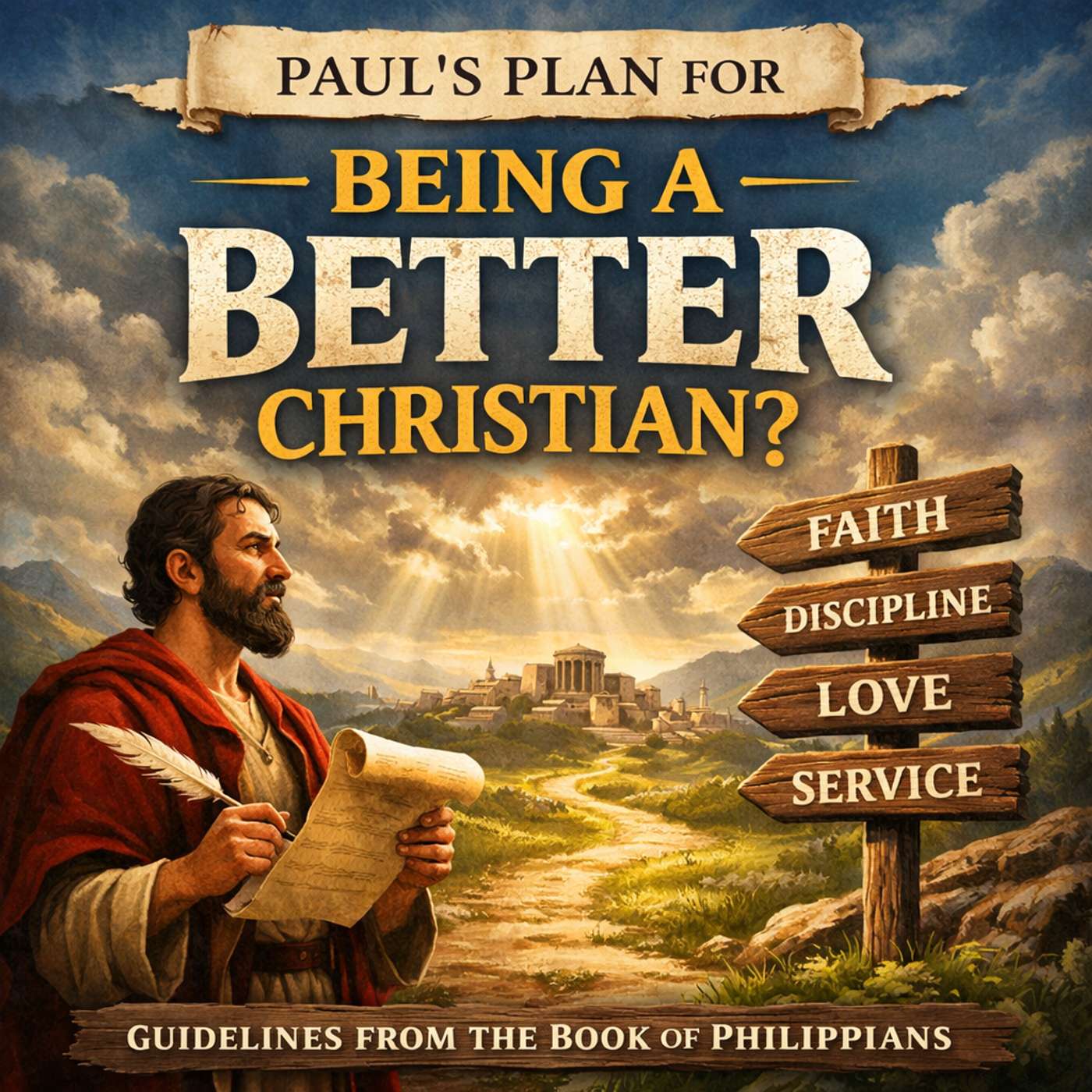
Watch the video version here: https://youtu.be/DEPQ6tyPsIYShow NotesEpisode Summary Some men risk everything for a dream. Heinrich Schliemann risked his fortune and reputation to find the ancient city of Troy—a place everyone else said was a fable. In the New Testament, the Apostle Paul took an even greater risk, counting all his previous status and achievements as loss for the sake of knowing Christ.In this first service of 2026, we look at Philippians 3 to uncover Paul’s "recipe" for spiritual growth. Just as muscles only grow when they are strained to the point of failure, our spiritual lives require us to forget what lies behind and strain toward what lies ahead.Key TakeawaysThe Schliemann Example: Like the man who discovered Troy, we must be willing to pursue a vision even when it requires risking our comfort or current status.Self-Evaluation vs. Common Sense: Paul was confident in his salvation ("I am going to heaven"), but he never let confidence override the common sense that he still had work to do.The Art of Forgetting: Spiritual growth requires "forgetting what lies behind." This isn't accidental memory loss; it is an active, mental struggle to refuse to let past failures or successes weigh you down.Straining Forward: Growth is uncomfortable. Just as lifting heavy weights requires exertion, pressing on toward the high calling of God requires spiritual strain.Don't Move: The secret to long-term faithfulness is often simply refusing to quit.Scripture References (ESV)Philippians 3:3-21: "For we are the circumcision, who worship by the Spirit of God and glory in Christ Jesus and put no confidence in the flesh—though I myself have reason for confidence in the flesh also. If anyone else thinks he has reason for confidence in the flesh, I have more: circumcised on the eighth day, of the people of Israel, of the tribe of Benjamin, a Hebrew of Hebrews; as to the law, a Pharisee; as to zeal, a persecutor of the church; as to righteousness under the law, blameless. But whatever gain I had, I counted as loss for the sake of Christ. Indeed, I count everything as loss because of the surpassing worth of knowing Christ Jesus my Lord. For his sake I have suffered the loss of all things and count them as rubbish, in order that I may gain Christ and be found in him, not having a righteousness of my own that comes from the law, but that which comes through faith in Christ, the righteousness from God that depends on faith—that I may know him and the power of his resurrection, and may share his sufferings, becoming like him in his death, that by any means possible I may attain the resurrection from the dead. Not that I have already obtained this or am already perfect, but I press on to make it my own, because Christ Jesus has made me his own. Brothers, I do not consider that I have made it my own. But one thing I do: forgetting what lies behind and straining forward to what lies ahead, I press on toward the goal for the prize of the upward call of God in Christ Jesus. Let those of us who are mature think this way, and if in anything you think otherwise, God will reveal that also to you. Only let us hold true to what we have attained. Brothers, join in imitating me, and keep your eyes on those who walk according to the example you have in us. For many, of whom I have often told you and now tell you even with tears, walk as enemies of the cross of Christ. Their end is destruction, their god is their belly, and they glory in their shame, with minds set on earthly things. But our citizenship is in heaven, and from it we await a Savior, the Lord Jesus Christ, who will transform our lowly body to be like his glorious body, by the power that enables him even to subject all things to himself."Hebrews 10:24: "And let us consider how to stir up one another to love and good works."2 Corinthians 10:5: "We destroy arguments and every lofty opinion raised against the knowledge of God, and take every thought captive to obey Christ."
Watch The Video Version Here: https://youtu.be/7r2aN-aavTgJesus’ parable of the wicked tenants is a warning: it’s possible to “show up” around God’s things and still disrespect God’s Son—by refusing to be shaped, acting like what we have is ours, and ignoring God’s warnings.Hook / Opening Story (Ulysses S. Grant)March 1864: Grant travels from Nashville to Washington, D.C. to meet President Lincoln and be named commander of the Union Army.Arrives late at night—no one meets him. He walks to the Willard Hotel (historic D.C. hotel).Clerk gives him the last room—an attic “broom closet” room—rudely, not realizing who he is.Later the clerk sees the registry: “U.S. Grant and son” and panics—moves him to the presidential suite.Point: Sometimes we disrespect someone because we don’t recognize them… and sometimes we disrespect even when we DO know.Main TextMatthew 21:33–46 — Parable of the tenantsOwner plants a vineyard, leases it to tenants, leaves.Sends servants to collect fruit: they’re beaten, killed, stoned.Finally sends his son: “They will respect my son.”Tenants kill the son to seize the inheritance.Jesus quotes: the rejected stone becomes the cornerstone; the kingdom is taken from fruitless tenants and given to those who produce fruit.Why This Parable MattersAppears in 3 of the 4 Gospels → God is emphasizing something weighty.The spotlight phrase: “They will respect my son.”Challenge: It’s easy to talk about “outsiders” disrespecting Jesus… but the real gut-check is:Can Christians disrespect the Son—unintentionally or through a hardened heart?Answer: Yes.Three Ways We Can Disrespect the Son (Applications)1) Refusing to “Build” (Rejecting the Cornerstone)Jesus = the perfect cornerstone (foundation and alignment).Christians = living stones being built up (cf. Peter’s imagery).We don’t have to be perfect, but we must be progressing:A heart that says: “I want God; I want growth; I want change.”Disrespect happens when we say:“I want the blessings… but I don’t want the shaping.”“I’ll attend, sing, partake, and go through motions… but won’t work on my rough edges.”Punchline: If Jesus was tortured and crucified for me, and I refuse to change—what does that say about my heart?Key idea: “Good enough” Christianity quietly insults the Savior.2) Wanting His Place (Acting Like It’s Mine)Tenants killed the son because they wanted his inheritance.Modern parallel: not that we want to “be Jesus,” but we live like:My time is mineMy money is mineMy resources are mineStewardship lens:Everything belongs to God; we manage it for Him.Illustration: Good SamaritanHe gave bandages, oil, time, transportation, money, rest, and ongoing responsibility.He treated what he had as something to use for mercy.Disrespect shows up as:“I don’t want to share.”“I don’t have time right now.”“That’s inconvenient.”Often the “small” refusal is the moment God intended to open a door for someone to see Christ.Key idea: When I cling tightly, I’m acting like I own what God entrusted.3) Ignoring the Warnings (Rejecting the Messengers)Owner didn’t surprise them with expectations—he sent messengers ahead of time.They abused the warnings instead of heeding them.Parallel: John the Baptist warned and prepared the way—and was killed.Today: Scripture is not decorationNot just a “family Bible on the shelf”It is God’s warning, guide, and preparation for judgment and faithfulness.Disrespect happens when we treat God’s word like background noise:“I meant to… I just never got around to it.”Hard truth: intentions don’t outweigh priorities.Key idea: Neglecting God’s Word is not neutral—it’s disrespectful.The Warning and the Fork in the RoadMatthew 21:40–41 — the owner will come; the lease is terminated; the vineyard is given to others who will bear fruit.Matthew 21:43–44 — you either:Build on the stone, orGet crushed by itThere aren’t endless middle options.Tone Check (Pastoral Heart)This isn’t shared to scare or beat people down.It’s a sober, loving warning meant to wake us up.We need each other because spiritual laziness is real—even for preachers.Community helps:Sometimes we gently lead someone out.Sometimes we “snatch them from the fire” (Jude imagery).Practical Takeaways (Listener Application)Inventory my “rough edges”: What have I refused to let God change?Stewardship audit: Where am I acting like my resources are truly mine?Warning check: Is my Bible opened regularly—or just present in the house?Fruit question: If my faith were judged by fruit alone, what would it show?Suggested Closing / Call to ActionAsk: “In what way am I disrespecting the Son—by refusing growth, clinging to ownership, or ignoring warnings?”Encourage: Don’t delay. Don’t settle for motion without transformation.Invitation: If you need help, repentance, prayer, or accountability—reach out and let the church help.Scripture References Mentioned/Alluded ToMatthew 21:33–46 (Primary text)1 John 1:7–10 (ongoing cleansing/confession and walking in the light)John 14 (Holy Spirit bringing Jesus’ teaching to remembrance)Jude (helping others—gentle rescue vs snatching from fire)1 Peter 2 (cornerstone / living stones concept, implied)
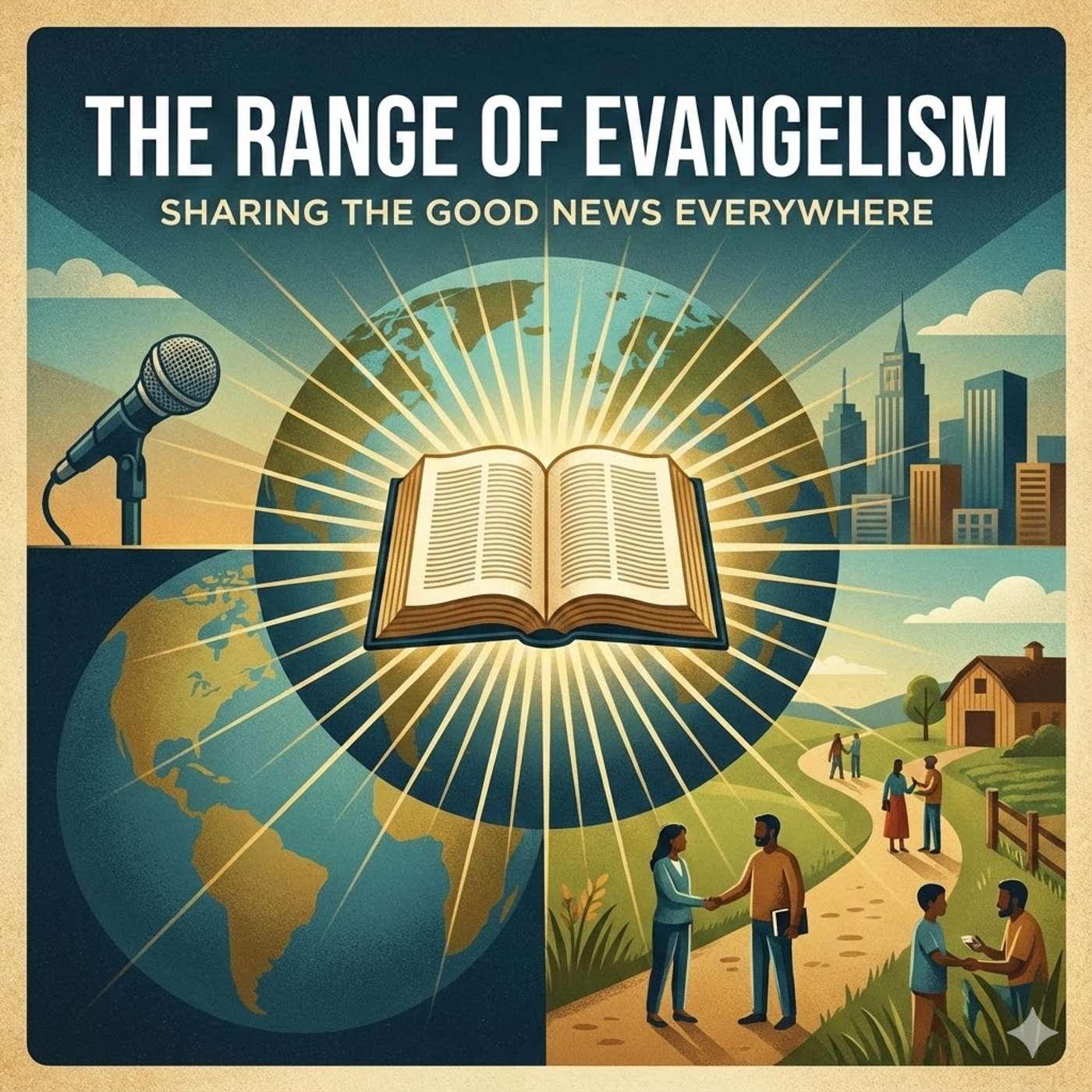
Watch The Video Version Here: https://youtu.be/LEDp4srATtkEpisode Title: The Range of EvangelismEpisode Summary Why did General Motors overtake Ford in the early 20th century? While Henry Ford offered one car in one color, Alfred P. Sloan realized that people are different—they need a "car for every purse and purpose."In this message, we apply that same logic to the church. There is no single "shampoo bottle" method (lather, rinse, repeat) for bringing people to Jesus. Different people require different approaches. We explore four specific evangelism tactics found in Scripture, ranked from the simplest invitation to the most physically demanding service.Key Scripture ReferencesJohn 1: Philip and NathanaelMark 5: The Gerasene DemoniacLuke 19: ZacchaeusMark 2: The Paralytic and his FriendsMain TakeawaysThe "Ladder" of Evangelism: Just as GM created a ladder of cars (Chevy to Cadillac), there is a ladder of effort in evangelism.Level 1: The Simple Invitation (John 1): "Come and See." You don’t need a theology degree. Sometimes, people are ready, and all they need is a simple invite to church.Level 2: The Personal Testimony (Mark 5): "Go and Tell." You can't mess up your own story. When people see a change in your life (like the demoniac clothed and in his right mind), your history gives you authority.Level 3: Restitution & Repentance (Luke 19): Sometimes showing Jesus means fixing what you broke. Like Zacchaeus, making things right with others can break down barriers and prove your change is real.Level 4: Physical Service (Mark 2): "Roof Ripping." Sometimes you have to carry the mat. Meeting a physical need (sweat equity) creates the opportunity to meet a spiritual need.

Watch the video version here: https://youtu.be/KcIe-5yt19cEpisode SummaryPresident Harry Truman’s mother-in-law, Madge Wallace, famously despised him. Despite her hostility, Truman treated her with kindness and respect until the day she died. How do we maintain that level of character when dealing with people who make our lives miserable?In this episode, we dig into Psalm 120 and Romans 12 to find the biblical blueprint for dealing with conflict. We discuss the importance of leaving vengeance to God, understanding the root of our anger, and refusing to let the bad behavior of others lower our spiritual standards.Key TakeawaysRemember God’s Track Record (Psalm 120:1): Before panicking about a current conflict, remember that God has answered you in distress before. Your situation might be hard, but it is not new to God.Name the Problem (Psalm 120:2): You have to identify the deceit or the issue clearly. Sometimes, doing the emotional legwork to find the root cause reveals if the problem is truly them, or if it is actually within us.Leave the Vengeance to God (Psalm 120:3-4): It is natural to want justice, but we are not equipped to mete it out correctly. Like adding salt to mashed potatoes, only God knows the exact, perfect amount of judgment required.Accept the World is Broken (Psalm 120:5-6): We often ask, "Why me?" sometimes the only answer is that we live in a fallen world. This world is not meant to be a comfortable commune; it is a refining fire meant to prepare us for the next life.Don’t Lower Your Standards (Psalm 120:7): When the world speaks war, you must speak peace. This isn’t about being a pushover; it is about not letting evil overcome you. If you return hate for hate, the world has successfully controlled you.Scripture References (ESV)Romans 12:9-21: "Repay no one evil for evil, but give thought to do what is honorable in the sight of all. If possible, so far as it depends on you, live peaceably with all."Psalm 120: "In my distress I called to the Lord, and he answered me. Deliver me, O Lord, from lying lips, from a deceitful tongue."Romans 8:29: "For those whom he foreknew he also predestined to be conformed to the image of his Son..."

Watch the video version here: https://youtu.be/y25gCnePW3QTitle: One More Night with the Frogs (Getting Unstuck)Main Text: Exodus 8:1–15I. Introduction: The Danger of Ignoring SignsThe Mount St. Helens Illustration (May 18, 1980)The mountain gave warning signs (swelling, heat) long before it blew.Harry Truman (The Lodge Owner): Despite warnings, he refused to evacuate his home at Spirit Lake.The Result: He perished under 150 feet of ash and debris because he refused to move.The Spiritual ApplicationPeople make decisions every day that are spiritually reckless.Every person is teetering on the edge of eternity (Heaven or Hell).The difference in destination is determined by the decisions we make to move or stay put.II. The Warning: We Are Not Without NoticeScripture: Exodus 8:1–2The Context:God told Pharaoh exactly what would happen: "If you refuse to let them go, behold I will plague all your country with frogs."The arrival of the frogs should not have been a shock; it was a promised consequence.Application:We live in a world of warning labels (some silly, some serious).God has given us clear warnings through His Word (the Bible).We often get "stuck" because we ignore the warning signs until we fall into the hole.Key Truth: Change cannot happen until we admit we ignored the warning. We must stop blaming others and take responsibility.III. The Pride: Making the Problem WorseScripture: Exodus 8:5–7The Magicians' Response:Instead of removing the frogs, the magicians used their secret arts to bring more frogs upon the land.Reference: This follows the pattern of Exodus 7 (turning staffs into snakes), though eventually, they fail to replicate God's power (referenced Exodus 8:18 regarding the gnats).The "Run the Wheels Off" Mentality:Human nature dictates that when we mess up a little, we might as well mess up a lot (e.g., cheating on a diet or relapsing in addiction).Pharaoh’s magicians tried to disprove God rather than help the situation.Key Quote: "Circumstances can make you a victim, but only pride can keep you one."Fighting against God is a losing battle; you cannot outsmart Him.IV. The Procrastination: Choosing "Tomorrow"Scripture: Exodus 8:8–10The Absurd Exchange:Pharaoh asks Moses to plead with the Lord to remove the frogs.Moses asks, "When?"Pharaoh answers, "Tomorrow."The Logic of Being Stuck:Why spend one more night with frogs in your bed?We often choose to stay in our mess because it is familiar (The "warm poopy diaper" analogy).We want to hang on to a shred of control.The Turning Point:There is a difference between "I want it fixed" and "I want to fix it."Scripture: Luke 15 (The Prodigal Son). The change happened when he "came to himself" in the pig pen.The hardest step is always the first one—moving from the unknown into action.V. Conclusion: The Danger of ReliefScripture: Exodus 8:12–15The Outcome:God did exactly what Moses asked; the frogs died and were gathered into stinking heaps.However, when Pharaoh saw there was a "respite" (relief), he hardened his heart again.Final Challenge:Don’t be like Pharaoh. Don't wait for "tomorrow" to deal with your spiritual condition.God is capable of bringing better things, but we must be willing to get unstuck.Consequences may remain (the land still stank), but the heart can be healed.

Watch the video version here: https://youtu.be/8cmv3NWIQq8Summary of the Sermon: “God’s Plot” & “A Tool in God’s Hands”Introduction – The “Brookie”People often struggle with decisions, like choosing a dessert.A “brookie” (brownie + cookie) is the result of not choosing—and this sermon is the same: two messages blended into one.Both come from Acts 9 and the story of Saul’s conversion.SERMON 1: “God’s Plot”1. God Uses Unlikely People (Acts 9:1–2)Saul was a violent persecutor of Christians—the last person we would choose.Scripture shows God repeatedly chooses the unlikely (e.g., David overlooked by his own family).God’s choices don’t align with ours; He sees the heart.2. God Uses Unlikely Circumstances (Acts 9:3–6)Saul’s change began with a dramatic encounter on the road to Damascus.Ministry often happens in strange, unexpected situations—Facebook posts, random meetings, unusual life moments.What looks unpromising to us is often exactly the place where God works.3. God Brings Others Into the Story (Acts 9:10–14)Enter Ananias, the reluctant helper.God always provides people at the right time (like Philip and the Ethiopian eunuch).Ministry is interconnected—God uses people to reach people; we are not meant for isolated Christianity.4. People Still Must Choose (Acts 9:17–19)Even after the encounter, Saul still had to respond—he had a choice.Ananias obeyed regardless of how Saul responded.God brings opportunities, but He does not remove human responsibility.5. People Really Can Change (Acts 9:20–22)Saul immediately began preaching Christ.People were shocked—“Is this the same man?”Transformation still surprises people today, but God can radically change lives.Summary of God’s Plot: Unlikely people, unlikely circumstances, unexpected helpers, personal choice, and real transformation—all repeated over and over again. God’s plot hasn’t changed.SERMON 2: “A Tool in God’s Hands” (Shorter Sermon)1. Saul Was a Chosen Tool (Acts 9:15–16)God calls Saul a “chosen instrument”—meaning a tool designed for a specific job.Like a surgeon’s instrument or a custom-made tool, Paul was crafted for a particular purpose.2. We Are God’s Tools Too (Ephesians 2:10)All Christians are God’s workmanship—created to accomplish good works prepared in advance.God designs us uniquely for the assignments He intends for our lives.3. Tools Sometimes Get Worn or Hurt (1 Peter 4:12–16)Being used by God often involves struggle, hardship, and spiritual “pressure.”Suffering for Christ is not strange; it’s part of being a tool in God’s hands.Paul himself endured hardship (2 Corinthians 12:7–10).4. The Worst Thing for a Tool Is Not Being UsedA tool left on the shelf becomes wasted potential.Christians are meant to serve, act, go, shine, and endure—not sit unused.Conclusion – “Are You Really That Different From Paul?”Paul’s story shows a pattern God still uses:An unlikely personIn an unlikely situationWith another person involvedWho had to make a choiceAnd who shocked others with real changeThat same pattern is seen in our lives.God designed each of us as a tool for His purposes—large or small.Whatever someone needs (help, prayer, support, answers), God loves them, the church loves them, and the invitation is open.If you'd like, I can also: ✅ Turn this into a bullet-point outline for preaching ✅ Create a PowerPoint using your sermon template ✅ Make a short summary handout Just let me know!
Watch the Video Version Here: https://youtu.be/0-xJ7lnlAXI"Being Certain Not Circumstantial," is a sermon delivered at the West Side Church of Christ. The speaker uses a real-life survival story and the biblical book of Habakkuk to discuss maintaining faith during hopeless situations.Summary of the Sermon:Opening Story of Survival: The message begins with the story of Briana Cassell, a woman who crashed her car into a drainage ditch in rural Illinois. She survived for six days with two broken legs, drinking water wrung from a hoodie, before being discovered by a contractor [00:11]. The speaker uses her ordeal to illustrate feelings of hopelessness and the sense that no one is coming to save you [03:30].The Prophet Habakkuk's Complaint: The sermon transitions to the Old Testament prophet Habakkuk, who lived during a time when it felt like evil was winning and God was silent. Habakkuk cries out, asking how long he must call for help while God seemingly does not listen [04:21]. The speaker notes that despite appearances, God always knows and cares about our situation [08:11].Waiting on God: Although Habakkuk struggles with God's plan (using a wicked nation to judge His people), he decides not to abandon his faith. Instead, he chooses to "stand at [his] watch post" and wait for God's answer, demonstrating patience and a willingness to listen rather than just complain [13:08].Certain vs. Circumstantial Faith: The climax of the message focuses on Habakkuk's prayer in Chapter 3. After recounting God's power, the prophet declares that even if the fig tree does not blossom and the fields yield no food, he will still rejoice in the Lord [18:07]. The speaker argues that true faith, love, and trust must be certain (unwavering) rather than circumstantial (dependent on things going well) [18:48].The Example of Job: The sermon concludes by referencing Job, whose faithfulness was tested to prove he didn't just love God for the blessings ("stuff") he received. The speaker challenges the audience to consider if their own faith would survive if their circumstances fell apart [20:22].
Watch The Video Version Here: https://youtu.be/2ky3DZBk1bo"What to do when you don’t know what to do."The Opening Illustration: The Impossible RescueThe sermon opens with the dramatic true story of the 2018 Thai Cave Rescue. Twelve members of a youth soccer team and their coach were trapped by monsoon floodwaters deep inside a cave system.1The Dilemma: The situation was impossible. The water was rising, the boys were trapped miles in, and professional Navy SEALs were struggling to navigate the currents.The Solution: It required admitting they couldn't save themselves. They had to call in outside specialists (cave divers and an anesthesiologist). The risky plan involved sedating the boys and dragging them out underwater—something that seemed impossible but was their only hope.The Spiritual Bridge: Just as those boys were trapped and helpless, we face moments in life where we are "between a rock and a hard place," powerless to save ourselves.The Biblical Context: 2 Chronicles 20The sermon transitions to the story of King Jehoshaphat of Judah.The Situation: Judah is being surrounded by a massive alliance of armies (Moabites, Ammonites, and Meunites).The Crisis: Jehoshaphat is afraid.2 He is outnumbered, outgunned, and facing a "monsoon" of enemies. He cannot fix this problem on his own.The 4 Steps: What to Do When You Are PowerlessThe preacher outlines four practical steps based on Jehoshaphat’s reaction in 2 Chronicles 20:1. Assess the Problem (v. 1-4)You must distinguish between problems you can fix (like putting antifreeze in a truck) and problems that are beyond your human ability.Key Takeaway: When you realize the problem is bigger than you, stop running around trying to fix it and making a bigger mess. Admit you are powerless.2. Communicate & Focus on God (v. 5-12)Jehoshaphat "set his face to seek the Lord." This wasn't just a casual prayer; it was a total shift of focus.Key Scripture: "We are powerless against this great horde... We do not know what to do, but our eyes are on you." (v. 12)Key Takeaway: When you don't know what to do, you need to know where to look. Focus on the One who can solve it.3. Listen (v. 13-17)Communication is a two-way street.3 After praying, you must listen for God’s answer. God speaks through:His Word: The Bible.His People: Wise counsel and other believers (Proverbs 11:14).The Message Received: God tells them, "Do not be afraid... for the battle is not yours, but God's."4. Worship (v. 18-21)Before the battle was even won, the people bowed down and worshipped. They sent the choir out in front of the army.4Key Takeaway: Worship God not just for the outcome you want, but because He is worthy. The result of this worship was that the enemy armies turned on each other and destroyed themselves.The ConclusionThe sermon concludes with the comforting realization that while we are on the battlefield, the battle ultimately belongs to God. Just as the Thai boys had to trust the divers completely to carry them out, we must trust God to carry us through "valleys of the shadow of death."

Watch the video version here: https://youtu.be/ZVDa3xPFXlwSummary: “Be Careful How You Treat Them”Introduction: The Power of Simple KindnessThe sermon opens with a true story of Ruth Reed, a woman in New Jersey who made a resolution to bless others.One day she paid for a man’s food at Wawa—who turned out to be country singer Keith Urban.The story illustrates that the world is starving for kindness, and small acts of compassion can shine light into darkness.Jesus calls His followers to be “the salt of the earth” and “the light of the world” (Matthew 5:13–16 ESV).The preacher asks, “How will they taste and see without kindness?” Kindness is how the world experiences God’s love through us.Personal Story: A Stranger Named GeorgeThe preacher recalls meeting a man named George Rolls, a traveling drifter who claimed the Holy Spirit brought him to church.George was warmly welcomed by the congregation, stayed a few days, and deeply appreciated the kindness shown to him.Later, the preacher saw George walking down the road pulling a cart that said “Jesus loves you” and “John 3:16.”This encounter led to reflection: What if this man was more than he appeared?—prompting the message “Be Careful How You Treat Them.”1. They Might Be AngelsScripture: Hebrews 13:1–2 ESV — “Do not neglect to show hospitality to strangers, for thereby some have entertained angels unawares.”The focus is not just on angels, but also on love and hospitality—meeting others with generous enthusiasm.The preacher compares this to “mystery shoppers”: What if God sends “mystery visitors” to test our compassion?The lesson: Be kind to all, because we may never know who God has sent across our path.2. They Might Be God (or His Concern)Scripture: Luke 2:41–47 ESV — Jesus as a 12-year-old in the temple.For three days, people in Jerusalem likely fed or sheltered the Son of God without realizing it.The preacher emphasizes God’s love for children, quoting passages about protecting “little ones.”Lesson: Be careful how you treat the young and vulnerable—God cares deeply for them.3. They Might Be “Nobodies”Scripture: Matthew 25:31–40 ESV — “As you did it to one of the least of these my brothers, you did it to me.”Those considered “nobodies” by society are precious to God.Showing compassion to the overlooked reveals a heart aligned with God’s love.True kindness isn’t natural—it’s spiritual, learned from God, not the world.4. They Might Give You a Chance to ServeScripture: Luke 10:25–37 ESV — The Good Samaritan.Serving others rarely happens at a convenient time.The Samaritan was busy, yet stopped to show mercy—just as Jesus gave His time on the cross when it wasn’t “convenient.”Every act of kindness may be a God-given opportunity to serve Him and to grow in faith.5. They Might Become the Next ChristianScripture: John 4:1–42 ESV — Jesus and the Samaritan woman at the well.Jesus reached across social barriers, offering living water and transforming her life.She became a witness, leading many others to believe.Lesson: We never know who might respond to kindness and become a follower of Christ through our compassion.Conclusion: Kindness as a Vessel for the GospelKindness opens the door for people to see Jesus through us.It is how we reflect His love, break through bitterness, and invite others into the family of faith.The closing appeal: “Be careful how you treat them.” Every person—angel, child, stranger, or “nobody”—could be part of God’s plan.

Watch the video version here: https://youtu.be/HN2l70OPbsESummary: “How to Be Thankful”Introduction: Gratitude in WorshipThe speaker begins by thanking the congregation for investing effort into worship, particularly in making communion meaningful.He notes that even the communion bread was homemade, showing love and devotion to God through service.Story of Corrie ten BoomCorrie ten Boom, a Dutch watchmaker and author, and her family helped hide Jewish people during World War II.They were eventually caught and sent to a concentration camp where living conditions were horrific—especially because their hut was infested with fleas.Corrie’s sister Betsy reminded her of 1 Thessalonians 5:14–18, emphasizing:“Rejoice always… give thanks in all circumstances” (ESV).Betsy insisted they should be thankful even for the fleas, though Corrie initially couldn’t.Later, they discovered that the guards avoided entering their hut because of the fleas—allowing them to hold daily Bible studies freely.Corrie realized God had used even the fleas for good, teaching true thankfulness.Transition: Thanksgiving as a Way of LifeThe speaker points out that Thanksgiving should not be a single day, but a lifestyle.True gratitude is shown through action, not just thought or feeling.Psalm 100 – “A Psalm for Giving Thanks”Psalm 100 is unique because its title is part of the original text, not a later addition—it was literally written for giving thanks.In only five verses, there are seven action verbs—showing that thankfulness involves doing, not just thinking.1. Make a Joyful Noise (v. 1)The Hebrew word means “to shout a proclamation,” like a herald announcing news from the king.Gratitude cannot be hidden—it should be expressed outwardly.The speaker gives an example of writing “Praise the Lord” on a car part, simply to express thankfulness.2. Serve the Lord with Gladness (v. 2a)Gratitude naturally leads to service.Service must be done with gladness, not out of obligation.Examples:Job—served God faithfully even through suffering.Paul and Silas—sang and prayed while imprisoned (Acts 16:25).Choosing joy and focusing on blessings helps maintain thankfulness even in hardship (“We got fleas… but the guards won’t come”).3. Come into His Presence with Singing (v. 2b)Coming before God is intentional, not accidental—it requires preparation and a right heart.Worship should be approached joyfully, not out of duty (“I get to worship,” not “I have to”).The congregation participates in a song to demonstrate heartfelt worship.4. Know that the Lord Is God (v. 3)Thankfulness begins with knowing who God is:He is Creator (Ephesians 2:10).We belong to Him—“we are His people and the sheep of His pasture.”Recognizing we are sheep keeps us humble and prevents self-righteousness (Luke 18:9-14).5. Enter His Gates with Thanksgiving (v. 4)Thankfulness must be expressed directly to God—say “thank You.”Jesus healed ten lepers, but only one returned to give thanks (Luke 17:11-19).Everyday blessings—warm homes, food, safety—should inspire daily gratitude.Remember that every good thing comes from God (Psalm 50:10).6. The Reason for Gratitude (v. 5)“For the Lord is good; his steadfast love endures forever, and his faithfulness to all generations.”Even when life is difficult, God’s goodness and faithfulness remain constant.Life’s valleys are temporary—“I walk through the valley…” (Psalm 23:4).This hope is reason enough to be thankful.Conclusion: Living ThankfullyThankfulness isn’t a reaction to comfort—it’s a deliberate act of faith.Like Corrie ten Boom, we can find gratitude even in “the fleas.”The invitation is extended for anyone who needs prayer, encouragement, or help to find that thankful heart again.
Watch the video version here: https://youtu.be/vlE043nx1sU “Why Don’t You Sing” based on your transcript:Introduction: Malvina Farkle Day — Everyone ParticipatesStory from Lindsey Wilson College: Malvina Farkle Day—a surprise day of service and fun honoring a fictional student devoted to community and joy.Everyone—students, staff, even the president—participates in service projects and celebrations.Key takeaway: “Everyone joins in.”Sets the stage for the sermon theme: participation in worship, especially singing.Singing as Participation in WorshipConnection to current West Side Church leadership discussions about worship and traditions.Focus today: singing—why we do it, what it means, and what Scripture teaches.The Book of Psalms — A Model for ExpressionPsalms serve as a guide to worship and prayer, expressing every human emotion to God.Key categories and sample chapters:Worship – Psalms 95, 100, 150Human Emotion – Psalm 6 (sorrow), 13 (grief), 35 (confusion), 118 (joy)Prayer – Psalms 5, 17, 42Teaching and Reflection – Psalms 25, 119Prophecy – Psalms 22, 110Psalms teach that singing and prayer are ways to communicate joy, anger, frustration, hope, and more—honestly and directly before God.Example: Paul and Silas in Prison (Acts 16:19–34 ESV)“About midnight Paul and Silas were praying and singing hymns to God, and the prisoners were listening to them.”Context: Beaten and jailed unjustly—yet they sing and pray.Application:Most of us would respond with anger or despair.But Paul and Silas worship through suffering—their faith produces witness (the jailer and his family are converted).Lesson: Singing in hard times shows the world we’re different and can lead others to salvation.Ephesians 5:15–20 ESV — Singing to One Another and to God“…be filled with the Spirit, addressing one another in psalms and hymns and spiritual songs, singing and making melody to the Lord with your heart…”The focus isn’t on instruments but on heart and participation.Singing serves two directions:To one another – encouragement, unity.To the Lord – worship, gratitude.God knows your heart—but your brothers and sisters need to hear your voice.Even if you’re off-key, your effort matters; your singing teaches and strengthens others.Colossians 3:12–16 ESV — Singing Builds Harmony and Gratitude“…teaching and admonishing one another in all wisdom, singing psalms and hymns and spiritual songs, with thankfulness in your hearts to God.”Singing connects to compassion, forgiveness, and unity.We “teach and admonish one another” through song—our voices instruct and uplift.Again, two directions:Horizontal – to one another.Vertical – to God.Heavenly Preview: Singing in RevelationRevelation portrays heaven as filled with singing around God’s throne.Challenge: If we don’t sing here, why would we expect to sing there?Personal Reflections and Emotional Power of SongObservations from leading singing:Parents smiling at children, others crying from emotion or memory.Songs connect deeply to personal experiences (“How Great Thou Art” and memories of his grandfather).Music ties emotion to faith—joy, sorrow, hope.Final Challenge: Sing Like a Child (Matthew 18:3 ESV)“Truly, I say to you, unless you turn and become like children, you will never enter the kingdom of heaven.”Children sing boldly without fear or self-consciousness.Adults often lose that freedom.Challenge: Regain that childlike spirit—sing sincerely, joyfully, and without worry about how it sounds.Big Idea: If you won’t sing on earth, what makes you think you’ll sing in heaven?Summary SentenceTrue worship requires participation—singing from the heart to God and to one another with gratitude, sincerity, and childlike joy.Would you like me to turn this into a sermon handout or PowerPoint outline using your standard 4:3 format next?
Watch the video version here: https://youtu.be/hn7K3F_lXmsHere’s a summary with clear section headings and bullet points of your sermon “Powerful or Dangerous?”Introduction: From Song Leading to ChemistryBegins by appreciating song leaders for their challenging role.Introduces the idea of chemistry—mixing elements to achieve desired results.Transitions to the theme of power and danger, using chlorine trifluoride (ClF₃) as an illustration.Illustration: Chlorine Trifluoride — Power and DangerDescribes ClF₃ as a hypergolic oxidizer—ignites on contact with almost anything, even asbestos.Story: A 2,000-lb cylinder ruptured in Shreveport, LA; it burned through 12" of concrete and 36" of gravel.Only controllable by removing oxygen—impossible during a fire.Though dangerous, it’s essential in semiconductor manufacturing where nothing else works better.Lesson: Used properly, it’s safe and useful; used wrongly, it’s catastrophic.Analogy: Power equals potential danger (e.g., guns vs. Nerf guns).Transition: What About God?Raises the central question:“Is God powerful? Yes. But is God dangerous?”Answer: It depends on how you treat Him.Misusing God—treating Him as a tool or token—can be deadly.Case Study 1: Israel Misuses God (1 Samuel 4)Israel loses to the Philistines, then decides to bring the Ark of the Covenant into battle as a good-luck charm.God does not bless their superstition—Israel is defeated again, 30,000 die, the Ark is captured, and Eli’s sons die.Lesson: You can’t use God for your own purposes.Modern example: People who only pray “when they need a favor” (Jelly Roll’s song lyric).Emotional appeal: How do you feel when someone uses you? God feels indignation too (Psalm 7:11 ESV — “God is a righteous judge, and a God who feels indignation every day.”)Case Study 2: Philistines Misuse God (1 Samuel 5)The Philistines put the Ark in the temple of Dagon.Next morning, Dagon’s statue falls face-down.Next day, its head and hands are cut off.God demonstrates His supremacy over idols.Insight: God becomes a “stumbling block” to those who reject Him (1 Peter 2:8).Application: The wicked destroy themselves on God’s truth—“The wicked flee when no one pursues” (Proverbs 28:1 ESV).Case Study 3: Israelites Look into the Ark (1 Samuel 6)When the Ark is returned, the men of Beth-shemesh look inside and 70 die.Even curiosity and carelessness toward God’s holiness are judged.Reminder: God’s grace allows mistakes, but not flippancy.Reference: Romans 6:1 ESV — “Are we to continue in sin that grace may abound? By no means!”Case Study 4: Putting God on the Shelf (1 Samuel 7:1–12)The Ark sits unused in Kiriath-jearim for 20 years.During that time Israel falls into idolatry and chaos.Finally, Samuel calls them to repent and serve God only.They obey, fast, and pray.God thunders against the Philistines and gives victory.Samuel sets up a stone of remembrance called Ebenezer, meaning “Till now the LORD has helped us” (1 Samuel 7:12 ESV).Application: The Ebenezer StoneEncourages everyone to take a physical stone home as a reminder:“Till now the LORD has helped us.”Place it where you struggle most—car, desk, home—as a visible sign of God’s help.Reminder: If God has helped us till now, He will continue to do so if we remain faithful.Closing InvitationGod is powerful, and misused power is dangerous.But when we honor Him rightly, His power protects, delivers, and comforts.2 Corinthians 1:3–4 ESV — “Blessed be the God... of all comfort, who comforts us in all our affliction, so that we may be able to comfort those who are in any affliction.”Invitation to respond—receive comfort, repent, or renew faith.Main IdeaPower becomes danger when misused. God’s power is life-giving only when we approach Him with obedience, reverence, and humility.

Watch the video version here: https://youtu.be/BO3_KxrRVBs“And the People Had a Mind to Work” — SummaryHook: A Modern “Mega-Build” vs. God’s WorkIllustration: Saudi Arabia’s NEOM “Line”—an enormous, glass-walled, car-less city—shows we have the tech and tools for massive projects.Point: Whether NEOM succeeds or fails will hinge on politics and money—not tools. Likewise, God’s work doesn’t fail for lack of divine resources; it stalls when God’s people won’t work.Text & Big Idea (Nehemiah)Setting: Nehemiah in exile hears Jerusalem’s walls are ruined, prays, and is sent to rebuild.Big Idea: God restores His people when they set their hearts and hands to the work.Key verse: Nehemiah 4:6 (ESV) — “So we built the wall. And all the wall was joined together to half its height, for the people had a mind to work.”What Nehemiah Heard & FeltNehemiah 1:3–4 (ESV): “…The wall of Jerusalem is broken down, and its gates are destroyed by fire. As soon as I heard these words I sat down and wept and mourned for days, and I continued fasting and praying before the God of heaven.”How God Opened the DoorNehemiah, the trusted cupbearer, appears sad; the king asks what he wants.Nehemiah 2:4 (ESV): “Then the king said to me, ‘What are you requesting?’ So I prayed to the God of heaven.”Nehemiah “shoots the moon”: asks for time off, timber, letters—and God grants it.Common Reasons We Don’t Work—and Nehemiah’s Answers“The problem is too big.”Jerusalem’s wall ~2.5 miles around, up to ~40 ft tall, ~8 ft thick—no machinery—yet God supplied what they needed.“It’s been this way too long.”The ruins had sat ~13–14 years; the right time to act was now.“It’s too dangerous.”Enemies threatened attack mid-build. Nehemiah armed workers and posted guards.Nehemiah 4:14 (ESV): “Do not be afraid of them. Remember the Lord, who is great and awesome, and fight for your brothers, your sons, your daughters, your wives, and your homes.”“I’m not skilled enough.”Chapter 3 lists perfumer, goldsmith, merchants, priests, rulers—not masons. God used ordinary people to do extraordinary work.“I’m above that work.”Nehemiah 3:5 (ESV): “…the Tekoites repaired, but their nobles would not stoop to serve their Lord.”Jesus washed feet—no one is “too good” for kingdom work.“My part is too small to matter.”Nehemiah 3:23 (ESV): “After them Benjamin and Hasshub repaired opposite their house…”Small sections add up; every “drop in the bucket” counts.What Church Life Is ForLeaders exist to equip everyone for ministry, not to do it all themselves.Ephesians 4:11–12 (ESV): “And he gave the apostles, the prophets, the evangelists, the shepherds and teachers, to equip the saints for the work of ministry, for building up the body of Christ,”When each part works, the body grows in love and maturity (Eph 4:13–16).Applications for UsAdopt Nehemiah’s reflex: pray → plan → ask boldly → get to work.Own your section of the wall: start “opposite your house”—serve where you are.Refuse fear and pride: serve humbly; trust God amid risk.Work together: like draft horses that pull more together than alone—our combined effort multiplies.Call to ActionAsk: What is my section of the wall this week?Pray Nehemiah’s prayer, take the next faithful step, and join the work—because “the people had a mind to work” (Neh 4:6, ESV).
Watch the video version here: https://youtu.be/ktSe75OVvuk“Sanctify Christ in Your Hearts” — SummaryOpening & Pastoral EncouragementRejoices at the sound of children in worship—future leaders of the church.Brief travel note: worshiped with the South Walton Church of Christ; gratitude for the universal fellowship of believers.Funeral visitation reflection: comfort anchored in a Christian’s hope.Main Text & Big IdeaText: 1 Peter 3:15 ESV — “but in your hearts honor Christ the Lord as holy, always being prepared to make a defense to anyone who asks you for a reason for the hope that is in you; yet do it with gentleness and respect.”Big Idea: When Christ is set apart in our hearts, we’re ready to explain our hope with courage and Christlike character.Why Hope Matters (Funeral Reflection)We can’t “preach someone into heaven,” but a faithful life evidences real hope.Christian hope (eternal life with Jesus) sustains the grieving and strengthens witness.Defense Requires a Good OffenseIn a spiritual war, a strong “offense” is daily discipleship: Scripture, prayer, fellowship, loving conversation.Gentle, informed communication defends the faith without attacking people.Example 1 — Courage Under Pressure (2 Samuel 10:9–12)Joab and Abishai split Israel’s forces when surrounded by Syrians and Ammonites.Mutual support plan: “If they are too strong for me… you help me; if too strong for you… I’ll help you.”Call: “Be of good courage… for our people and for the cities of our God.”Courage serves God’s people, our families, and our communities.Application: Stand for truth with teamwork and bravery when culture presses on every side.Example 2 — Compromise Creates Scandal (2 Samuel 11–12)David’s lapse with Bathsheba snowballs: lust → adultery → deception → murder → deep family pain.Nathan’s rebuke leads to confession and forgiveness, yet consequences remain.Key Warning: 2 Samuel 12:13–14 emphasizes that sin gives “occasion to the enemies of the LORD to blaspheme.”Application: When we lose focus on God, our failures harm our witness and embolden opponents.Daily Practices that Keep Christ “Set Apart”Word & Prayer: “Read your Bible, pray every day” — consistent habits grow resilience.Fellowship & Service: Encourage one another; model faith for children who will lead tomorrow.Spiritual Armor: Ephesians 6:16 ESV — “In all circumstances take up the shield of faith, with which you can extinguish all the flaming darts of the evil one.”Tone & Method of Our DefensePrepared, gentle, respectful (1 Peter 3:15).Not attacking persons; presenting God’s truth with clarity and love.Hymn Tie-In“Anywhere with Jesus” — a sung confession of the safety and courage that flow from Christ’s presence.InvitationTo the lost: Believe, repent, confess Christ, and be baptized (begin the lifelong walk).To the struggling: Seek prayers and help; re-set Christ as holy in your heart and resume the daily practices of hope.

Watch the video version here: https://youtu.be/GOyO1MfDg04“No Choice but to Choose” — SummaryOpening Illustration: Fukushima & Costly CourageNuclear plants run continuously; when support systems fail, they’re like a “temperamental 2-year-old”—they’ll meltdown if not supplied.2011 Fukushima: Plant manager Yoshida faced failed cooling and chose a controversial lifesaving action—pump seawater (which would ruin reactors) to prevent a total meltdown.Principle: Sometimes the right choice is costly and unpopular, but it protects lives. Our spiritual choices carry eternal stakes.Life as a Road: Two PathsLife is a journey; you’re moving whether you notice or not.There are two ways: the broad, easy road to destruction and the narrow, hard road to life.Matthew 7:13–14 (ESV): “Enter by the narrow gate. For the gate is wide and the way is easy that leads to destruction… For the gate is narrow and the way is hard that leads to life, and those who find it are few.”The Narrow Way Must Be “Built”The narrow path isn’t just “there”; we build it with God’s plan—cutting down obstacles, filling valleys, straightening what’s crooked (repentance lived out).Luke 3:2–6 (ESV) (selected): “Prepare the way of the Lord, make his paths straight… every valley shall be filled… the crooked shall become straight, and the rough places shall become level ways…”The Real Decision Point: Whose Voice Will You Hear?Our world is noisy; two voices call constantly:Wisdom (God) cries out in the streets.Proverbs 1:20–23 (ESV) (selected): “Wisdom cries aloud in the street… ‘If you turn at my reproof… I will make my words known to you.’”Satan roars, seeking someone to devour; we must resist, sober-minded and watchful.1 Peter 5:6–10 (ESV) (selected): “Your adversary the devil prowls around like a roaring lion… Resist him, firm in your faith…”To hear God, we must be still amid the noise.Psalm 46:10 (ESV): “Be still, and know that I am God.”Testing Wisdom: Earthly vs. HeavenlyEarthly wisdom breeds jealousy, selfish ambition, disorder.Heavenly wisdom is pure, peaceable, gentle, open to reason, full of mercy and good fruit.James 3:13–18 (ESV) (selected): “This is not the wisdom that comes down from above… But the wisdom from above is first pure, then peaceable, gentle, open to reason…”Expect Resistance While You BuildDoing good often meets nearby evil; the work is hard but holy.Romans 7:21 (ESV): “So I find it to be a law that when I want to do right, evil lies close at hand.”Yet God cares for and sustains the righteous.Psalm 37:25 (ESV): “I have been young, and now am old, yet I have not seen the righteous forsaken or his children begging for bread.”On the Same Road: Help Fellow TravelersLike the Good Samaritan, those in a strong position lift the wounded. A rising tide lifts all boats; Jesus repeatedly stopped to help.The Non-Optional Choice: Slaves of Sin or of RighteousnessYou will serve something—sin leading to death, or obedience leading to righteousness. Neutrality is a decision.Romans 6:16–18 (ESV) (selected): “You are slaves of the one whom you obey, either of sin, which leads to death, or of obedience, which leads to righteousness… having been set free from sin, have become slaves of righteousness.”TakeawayLike Yoshida, you may face choices that cost you—but save lives (including your own).Build the narrow road daily by repentance and obedience.Choose whose voice you’ll heed. If you “don’t decide,” you’ve already decided.Invitation: Be set free from sin and walk the narrow way with Christ.

Comments

Download from Google Play

Download from App Store
 United States