


 Claim Ownership
The Media Odyssey
Subscribed: 26Played: 384
Subscribe
© (c) 2025 The Media Odyssey
Description
Each week, two of media’s most influential thinkers, Evan Shapiro & Marion Ranchet, take on the hottest media topics with their hottest takes, helping their audience chart a course through the maelstrom that is today’s Media Odyssey.
Based in the US, Evan Shapiro is the Media Industry’s official Cartographer, known for his well-researched and provocative analysis of the entertainment ecosystem in his must read treatises on Media’s latest trends and trajectories.
Marion Ranchet, French expat based in Amsterdam, has become the industry’s go-to expert in all things streaming, building a following for turning even the most complex problems into easily digestible and actionable insights.
Ranchet and Shapiro are known for their sharp-yet-accessible content on Media consumption, audience trends, and the shifting fundamentals of the business itself. Even during the toughest of topics, they each make talking about Media fun. Together every week, these two will offer entertaining, often humorous, and always educational content on today’s Media Odyssey.
Based in the US, Evan Shapiro is the Media Industry’s official Cartographer, known for his well-researched and provocative analysis of the entertainment ecosystem in his must read treatises on Media’s latest trends and trajectories.
Marion Ranchet, French expat based in Amsterdam, has become the industry’s go-to expert in all things streaming, building a following for turning even the most complex problems into easily digestible and actionable insights.
Ranchet and Shapiro are known for their sharp-yet-accessible content on Media consumption, audience trends, and the shifting fundamentals of the business itself. Even during the toughest of topics, they each make talking about Media fun. Together every week, these two will offer entertaining, often humorous, and always educational content on today’s Media Odyssey.
74 Episodes
Reverse
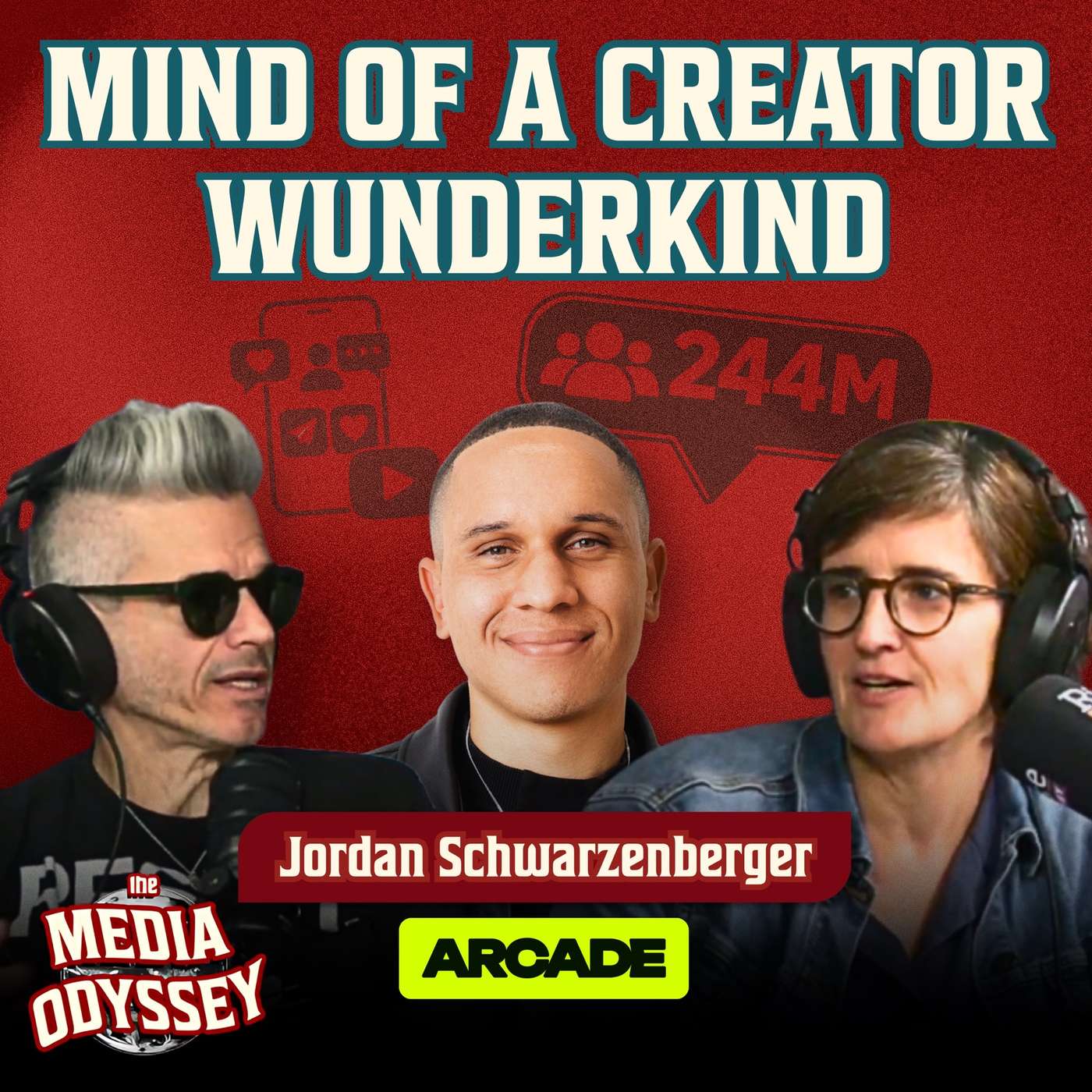
244 million followers and a six-month content calendar: Jordan Schwarzenberger explains why showing up daily is the only strategy that matters. Welcome to The Media Odyssey Podcast!In this episode, Evan Shapiro and Marion Ranchet break down the Nielsen/MRC measurement crisis that rocked the US advertising industry, then sit down with Jordan Schwarzenberger, CEO and co-founder of Arcade Media and manager of the Sidemen. The conversation reveals how the entire US advertising market transacted on flawed data for a year, while simultaneously showing how creator-led media companies are building sustainable businesses by thinking like traditional media. Rather than defending old systems, Jordan makes the case for why daily content and ritualistic consistency combined with treating YouTube channels as distinct brands is the only path forward.The episode is a reality check on how broken measurement has become in traditional media, while creator-led companies are professionalizing their operations, building real media plans, and capturing budgets that were previously reserved for legacy broadcasters.Key Takeaways:1. Nielsen and MRC Hid Flawed Measurement Data for Nearly a Year The Media Rating Council discovered problems in Nielsen's methodology almost a year ago but said nothing to the industry. The entire US advertising industry transacted in the Upfront on data they knew was not properly vetted. Sean Cunningham from VAB stated this cost the industry hundreds of millions of dollars.2. BBC Hired Matt Brittin, Ex-President of Google Europe The BBC hired Matt Brittin, former president of Google in Europe, as their new CEO. This represents a shift toward hiring digital natives to lead public service media organizations. Brittin previously worked in traditional broadcasting before a successful career at Google, making him someone who understands both the BBC culture and big tech. 3. The Sidemen Have 244M Followers and a 55-Person Team The Sidemen have 244 million followers across all platforms and employ 55 people in their entertainment team. They plan content six months in advance, which allows them to sell to brand planners who set budgets quarters ahead. Their goal is to be bought like LabBible and Vice were—on media plans with CPMs and economies of scale. Most creators can't access major advertiser budgets because they lack the planning, consistency, and inventory that media planners require.4. Daily Content and Ritualistic Consistency Are Essential for Success Weekly podcasts are no longer enough. Audiences now expect daily content to build ritualistic habits. The Daily Wire built 900,000 paid subscribers at their peak by showing up every day with 20-40 minute shows since 2013-2014. Streamers on Twitch and Kick are "winning the most out of anyone." Getting into people's daily habits is the key to building connection in a decentralized, saturated world.5. YouTube Is Underserved and Users Run Out of Quality ContentYouTube production is hard, time-intensive, and resource-heavy compared to podcasts, so creators default to lower-effort formats. There's a massive lack of consistent, regular, high-quality programming that becomes part of users' daily rituals.6. Netflix and YouTube Combined Create the Strongest Media StrategyJordan states that the combination of Netflix and YouTube together represents the best media strategy. Netflix provides the premium, appointment-viewing content while YouTube delivers daily touchpoints and ritualistic engagement. 7. Individual YouTube Channels Should Be Content-Specific Channel 4's 4.0 made the mistake of aggregating all content on one channel instead of spinning out individual format channels. YouTube wants to find specific audiences over time, so when a viewer watches one video and doesn't watch the next 10 on an aggregated channel, it signals disinterest to YouTube and hurts the entire channel's performance.Thank you to Jordan Schwarzenberger for joining the pod!Jordan Schwarzenberger - https://www.linkedin.com/in/jordanschwarzenberger/ Arcade - https://www.linkedin.com/company/wearearcade/ Interested in sponsorship? https://forms.gle/2LCWfX2HBNT8mtpx8Connect with us on Linkedin:Evan Shapiro - https://www.linkedin.com/in/eshap-media-cartographer/Marion Ranchet - https://www.linkedin.com/in/marionranchet/The Media Odyssey Podcast - https://www.linkedin.com/company/the-media-odyssey-podcast
(00:00) - Dropping Out for Vice
(00:33) - Podcast Intro and Headlines
(00:57) - Nielsen MRC Measurement Scandal
(02:41) - Dash Panel Shakes the Gauge
(07:33) - Why Panels Fail Today
(09:25) - UK Media Leadership Shift
(10:09) - BBC Picks Ex Google Boss
(13:59) - Meet Jordan Schwarzenberger
(15:57) - From Vice to LadBible Rise
(26:18) - Building Sidemen Into a Company
(32:17) - YouTube Audience Ceiling
(32:44) - Netflix Editorial Boost
(34:04) - Sidemen Netflix Blueprint
(34:41) - Funding Risk and New IP
(36:39) - Who Really Gets the Lift
(38:01) - Monoculture Is Dead
(43:04) - Creator Access Explained
(46:33) - Selling YouTube Like TV
(52:33) - Broadcasters YouTube Mistakes
(57:27) - Rituals Daily Content Wins
Get The Stream by Tubi!US: https://tubitv.com/thestream?utm_campaign=262713069-The%20Stream%202026&utm_source=influencer&utm_medium=thought%20leader&utm_content=evan%20shapiroInternational: https://app.box.com/shared/static/h0cfoaqw4paub3hoi65pv0qxwdmhexf9.pdfParamount's $110B acquisition projects impossible growth, while Tubi data shows 80% canceling paid services. Welcome to The Media Odyssey Podcast presented by The Stream by Tubi!In this episode, Evan Shapiro and Marion Ranchet dissect two reports: the Paramount investor deck projecting their Warner Brothers Discovery acquisition, and Tubi's "The Stream" report on consumer streaming behavior. The conversation reveals how Paramount's financial projections defy their own recent performance trends, while simultaneously showing why consumers are abandoning paid streaming for free ad-supported options. Rather than finding synergies that make business sense, the hosts expose a deal driven by ego and questionable foreign investment sources, even as consumer data proves the market is moving away from premium paid services.The episode is a reality check on how corporate consolidation in media is disconnected from actual consumer behavior, with streaming fatigue driving audiences toward free platforms at the exact moment media companies are doubling down on expensive acquisitions and debt-heavy strategies.Key Takeaways:1. Paramount's Investor Deck Projects Revenue Growth Despite Years of Decline The investor deck projects combined revenue growing from $66 billion in 2025 to $84 billion by 2030. However, from 2023-2025, combined company revenue actually declined from $71 billion to $66 billion. EBITDA has been flat or down over the last three years, but the deck projects growth starting immediately. The deal includes $8 billion in tech cuts, $6 billion in business services cuts, $4 billion in real estate sales, and $3 billion in enterprise resource planning optimization over five years—yet claims no massive layoffs. Bank of America downgraded Paramount stock from buy at $13 to sell at $11, stating integration will take years and projected synergies won't materialize quickly.2. The Deal Will Create $80+ Billion in Debt With Questionable Funding Sources The $110 billion acquisition will saddle the combined company with over $80 billion in debt. David Ellison claims they'll double motion picture output to 30 films per year, which the hosts note is not logistically possible given film development timelines. For comparison, Disney and Fox combined produced only 19 movies last year (down from Fox's 25 pre-acquisition and Disney's ~15).3. Consumer Data Shows Massive Shift From Paid to Free Streaming According to Tubi's "The Stream" report with Harris Poll: 77% prefer on-demand over scheduled linear streaming (3-to-1 preference). 84% of all audiences and 90% of Gen Z would watch ads for free streaming services. 80% are canceling paid services and signing up for free services to fight rising costs. 76% would rather watch a free platform with ads than pay for a premium platform with an ad tier. 4. European Box Office Is 70% Dependent on US Films, Creating Vulnerability Close to 70% of European box office revenue comes from US movies (in 2024 it was 63% US, 33% European, the rest global). European ticket sales are down 5.5% but revenue is stable due to ticket price increases. The European box office is estimated to generate $10 billion in 2026, a 7% increase. Interested in sponsorship? https://forms.gle/2LCWfX2HBNT8mtpx8Connect with us on Linkedin:Evan Shapiro - https://www.linkedin.com/in/eshap-media-cartographer/Marion Ranchet - https://www.linkedin.com/in/marionranchet/The Media Odyssey Podcast - https://www.linkedin.com/company/the-media-odyssey-podcast
(00:00) - Welcome and Episode Setup
(01:05) - Tubi Stream Report Highlights
(01:24) - Streaming as Social Life
(02:41) - Free Streaming and Ad Tolerance
(04:37) - Creator Content Meets TV
(05:34) - Back to Paramount Deal Deck
(06:53) - Deck Assumptions and Synergy Cuts
(16:26) - Europe Overlap and Sky Showtime
(19:32) - Europe Strategy Doubts
(20:54) - Tech Stack Nightmare
(22:05) - Branding and Gravitas
(22:54) - Pluto FAST Opportunity
(24:39) - Discovery Content vs Linear
(26:04) - Europe Sports Rights Edge
(33:01) - Cinema Reliance and Fears
(36:48) - Pushback and Wrap Up
Versant spins out with $2B free cash flow, ITV faces Sky acquisition, Banijay grows experiential 18%, and Canal+ hits 42.3M subscribers. Welcome to The Media Odyssey Podcast live!In this earnings coverage episode, Marion Ranchet and Evan Shapiro break down results from four companies undergoing major transformations: Versant's spinout from Comcast, ITV's potential acquisition by Sky/Comcast, Banijay's post-Endemol Shine merger performance, and Canal+'s global expansion strategy. The conversation reveals the challenges traditional media companies face as cable declines, the strategic missteps in corporate separations, and how European companies are diversifying revenue streams to survive. Rather than celebrating growth, the hosts examine whether these transformations make strategic sense or simply expose dying businesses. The episode is a reality check on how media consolidation and spinouts are reshaping the industry, with some companies finding success through diversification while others struggle to justify their existence as standalone entities.Key Takeaways:1. Versant (spun out from Comcast)Versant generated $2 billion in free cash flow despite total revenue down 5% and net income down 32% year-over-year in 2025. Overall, distribution was down, advertising down, licensing business down but growth came from platforms (Fandango, Rotten Tomatoes, Golf Now, CNBC streaming). Interestingly, Comcast kept Bravo (the most valuable programming brand) with Peacock instead of spinning it out with Versant, showing a lack of strategic thinking.2. ITV ITV saw subscriptions flat year-over-year with no growth, but digital ad revenue up 12% year-over-year, preventing a worse outcome. Sky + ITV combined would become the #2 TV outlet in the UK, second only to BBC, jumping over YouTube and far surpassing Netflix as the largest ad platform. ITV Studios is a profitable powerhouse with Love Island (the #1 streamed show last year on Peacock) and a growing US arm, yet the acquisition would potentially leave Studios behind.3. BanijayExperiential business grew 18%+ (still under €400 million but growing fast) and the gaming/sports betting business generated €1.6 billion out of €4.9 billion total revenue (nearly one-third of total revenue), growing 9.5% year-over-year and surprising the hosts. Banijay is now planning €50 million in cost synergies through integration, which means layoffs that will take time in European markets due to labor regulations4. Canal+ Where other platforms saw flat subscriptions, Canal+ grew total subscribers by 8% year-over-year to 42.3 million subscribers with the Multichoice acquisition. Now, the company operates in close to 50 countries across Africa, Asia, and multiple European territories. Their strategy paid off when subscribers under the age of 26 grew 17x since 2019 by building a €20/month package (half the typical price) with no commitment to address the "too expensive" problem.Interested in sponsorship? https://forms.gle/2LCWfX2HBNT8mtpx8Connect with us on Linkedin:Evan Shapiro - https://www.linkedin.com/in/eshap-media-cartographer/Marion Ranchet - https://www.linkedin.com/in/marionranchet/The Media Odyssey Podcast - https://www.linkedin.com/company/the-media-odyssey-podcast
(00:00) - Live Show Kickoff
(00:30) - Earnings Agenda Setup
(01:01) - Comcast Spinout Overview
(02:29) - Why Spin It Out
(04:30) - Streaming Pivot Debate
(07:31) - What Brands Matter
(09:37) - Europe Shift to ITV
(12:11) - ITV Deal and Studios Split
(19:45) - Banjay and All3 Media
(23:41) - Scaling Little Dot Playbook
(24:30) - Gaming Revenue Surprise
(25:32) - Betting and Experiential Growth
(26:47) - Cost Synergies and Layoffs
(27:33) - Will Regulators Approve
(28:32) - Canal Plus Name Debate
(30:15) - Canal Plus Strategy and Growth
(34:12) - MultiChoice Deal and Africa
(37:47) - Wrap Up Next Episode and Events
Archive content finds new life on YouTube while broadcast TV is officially "a blip in history." Welcome to The Media Odyssey Podcast live from MIP London!In this special live episode from MIP London, Evan Shapiro sits down with Martin Trickey, who runs Zoo 55, ITV Studios' digital distribution arm that launched just over a year ago. The conversation reveals how traditional broadcasters are finally waking up to the massive untapped value in their archives, how YouTube is television for older demographics as well as younger people, and why the broadcast era was just a temporary moment in human storytelling. Rather than defending the traditional TV model, Martin makes a compelling case for why broadcasters must radically transform or become irrelevant. The episode is a reality check on how quickly the media landscape is changing, with 55% of the British population now millennials and younger who never developed traditional broadcast habits. Success now requires mastering social video alongside streaming not instead of it.Key Takeaways:1. Archive Content Unlocks New Value on YouTube ITV's Zoo 55 is finding massive value in archive content that was gathering dust on shelves. Old episodes of shows like Hell's Kitchen and River Monsters are discovering entirely new audiences on YouTube who never saw them during their original broadcast runs. This represents a significant new revenue stream from content that had no previous monetization path.2. YouTube Audiences Span All Demographics, Not Just Young People The biggest demographic watching full episodes of Coronation Street on YouTube is 65+, and they're watching mostly on TV devices. Everybody is watching content on YouTube regardless of age. The assumption that it's only for younger audiences is false. Archive content attracts both younger viewers discovering shows for the first time and older viewers who are now consuming familiar content on YouTube instead of traditional broadcast.3. Broadcast Television Was "A Blip in History" The monopolies that free-to-air broadcasters had in the 1960s-1980s are gone and never coming back. Peer-to-peer and social communication is how people have told stories since cave painting, and we've returned to that model. In 1985, shows on BBC One or ITV at 8pm guaranteed audiences because there was nothing else on. That era is over.4. No Traditional Viewing Habits Means Streaming Will Not Fully Replace Broadcast55% of the British population are millennials and younger who did not grow up with the same broadcast habits as their parents and grandparents. The time previous generations spent on television has been replaced by a combination of streaming AND social video—not just streaming. Younger generations actually watch less streaming than older generations. The idea that 100% of the TV audience will migrate to streaming alone is false.5. Building Communities on Social Video Requires Significantly More Work Cutting through on social platforms is incredibly difficult compared to traditional broadcast. It requires great content plus discoverability work (thumbnails, titles, metadata), engagement with super fans and influencers, and constant optimization. Broadcasters must work far harder to build communities on social video than they ever did building TV audiences, but it's essential for survival.6. 2026 Is the Year for Brand Direct Deals on YouTubeITV expects 2026 to be the year they move significantly into brand direct deals beyond programmatic advertising. YouTube is expected to launch dynamic brand insertion in the second half of 2026, allowing creators to swap out sponsored segments without taking down and re-uploading entire videos. This will allow creators and partners to keep a larger share of revenue, and ITV plans to offer brands the ability to co-create content and distribute it across their network of social channels.Thank you to Martin Trickey for joining the pod!Martin Trickey - https://www.linkedin.com/in/martintrickey/Zoo 55 - https://www.linkedin.com/company/zoo-55/Interested in sponsorship? https://forms.gle/2LCWfX2HBNT8mtpx8Connect with us on Linkedin:Evan Shapiro - https://www.linkedin.com/in/eshap-media-cartographer/Marion Ranchet - https://www.linkedin.com/in/marionranchet/The Media Odyssey Podcast - https://www.linkedin.com/company/the-media-odyssey-podcast
(00:00) - Welcome and Introductions
(00:37) - Zoo 55 One Year In
(01:22) - What Is Zoo 55
(02:34) - Games and Metaverse Plays
(05:16) - Archive Value on YouTube
(06:55) - YouTube Audience Is TV
(08:18) - Building Community on Social
(11:02) - River Monsters Discovery Lessons
(13:36) - Archive Gold Rush
(14:04) - Rights and Rediscovery
(14:51) - When Archives Age Badly
(16:00) - YouTube Monetization Reality
(17:02) - Partner Sales Explained
(19:05) - Premium Bundles and Pricing
(19:52) - Brand Deals and Dynamic Inserts
(22:24) - US Growth and Industry Future
Netflix backs out of the bid for Warner Bros. Discovery (aka “Disco Bros”), leaving Paramount Global — sorry, “Nepomount” — as the likely merger partner. Welcome to another live earnings edition of The Media Odyssey.In this episode, Evan Shapiro and Marion Ranchet break down the bombshell developments between Warner Bros. Discovery and Paramount. Is this smart consolidation… or a true “Titanic meets the iceberg” moment?Key Takeaways:1. Netflix Walks Away — Political Pressure?The timing raises eyebrows: Ted Sarandos’ White House visit came just days before Netflix exited the bid. Was there political pressure? Possibly. Regardless, the $2.8B breakup fee gives Netflix fresh optionality — whether that means acquiring Lionsgate, Xbox, Roku… or choosing disciplined restraint.2. Two Sides of the Same CoinWarner Bros. Discovery and Paramount share strikingly similar business challenges: linear decline, streaming plateau, advertising pressure.Can merging two structurally similar companies create real transformation? We predict significant layoffs and a battle over which brand identity survives — HBO or Paramount.3. U.S. Political Risk in 2026With midterm elections approaching, regulatory and political pressure could intensify. Evan suggests Attorneys General in film- and TV-heavy states may resist the merger to protect jobs and local economies. The political calendar could directly impact whether this deal closes.4. European Market FalloutMuch like the Disney–Fox merger, Europe could see substantial layoffs and market recalibration — especially around sports rights.Marion raises key questions:What happens to SkyShowtime (the Paramount–Comcast JV)?Could Max, Channel 5, and Pluto TV consolidate further?Does this create a stronger #3 player — or just a bigger struggling one?5. The Bigger Issue: Streaming’s PlateauWhile mega-mergers dominate headlines, the core business is slowing. Streaming growth is flattening, churn remains high, and by the end of the decade the model may resemble today’s cable ecosystem. Advertising helps — but it cannot fully offset structural decline.Interested in sponsorship? https://forms.gle/2LCWfX2HBNT8mtpx8Connect with us on Linkedin:Evan Shapiro - https://www.linkedin.com/in/eshap-media-cartographer/Marion Ranchet - https://www.linkedin.com/in/marionranchet/The Media Odyssey Podcast - https://www.linkedin.com/company/the-media-odyssey-podcast00:00 Introduction and Naming the Disaster03:55 Warner Brothers Discovery's Performance17:07 The Impact of Mergers on the Industry22:43 The Future of Netflix and Strategic Acquisitions27:08 Question #1 - Will Oracle become the backbone of WBD/Paramount?28:22 The Impact of Sports Rights on Streaming32:02 The State of Streaming in Europe34:37 Challenges in Monetizing Streaming and FAST Services37:56 Branding and Identity in Mergers42:30 The Future of SkyShowtime44:28 Placing Bets on the Merger45:59 Upcoming Events; Marion and Evan at Stream TV Libson
Pinterest loses 14% in five days, Roku posts its first profitable year, and Netflix's market cap drops $200 billion. Welcome to The Media Odyssey Live!In this live earnings coverage episode, Evan Shapiro and Marion Ranchet break down results from Pinterest, Roku, and TF1, while also discussing the ongoing Netflix-Warner Brothers Discover-Paramount saga. The conversation reveals how mobile-first platforms like Meta and TikTok are crushing traditional social media, how Roku finally achieved full-year profitability after pivoting from hardware to platform, and how European broadcasters are making deals with streamers to survive. Rather than celebrating growth, the hosts examine what's really driving (or killing) these businesses and how consolidation fears are freezing the entire media industry.The episode is a reality check on how companies that seemed invincible just a few years ago are now struggling to compete, while the bidding war for Warner Brothers Discovery is creating dangerous industry-wide paralysis.Key Takeaways:1. Pinterest Is Losing the Social Media Battle Despite User GrowthPinterest reported 16% revenue growth for 2025 and monthly average users up 12% year-over-year in Q4. However, their stock dropped 14% in five days following earnings. The company cannot close direct transactions because users shop on Pinterest then complete purchases on Amazon, Meta, or TikTok. Pinterest acquired TV Scientific, a CTV advertising company, to try to activate their shoppable e-commerce data on the big screen. The fundamental problem is that Pinterest is losing advertising share to Meta, TikTok, YouTube, and Amazon, particularly on mobile where those platforms dominate.2. Roku Achieves First Full-Year Profitability After Platform PivotRoku posted their first profitable full calendar and fiscal year in 2025 after pivoting from hardware-first to platform-first in 2014. Their market valuation dropped from $50 billion (at $500 per stock) in 2021 to $13 billion today. Platform revenue is now over $4.5 billion compared to hardware revenue of half a billion, making hardware only 12-13% of the overall business. The Roku Channel now includes 70,000 AVOD titles, over 400 FAST channels, and 72 premium subscriptions (similar to Amazon Channels). Subscription revenue, not just advertising, drove them to profitability with a dual revenue stream model.3. TF1 and Netflix Strike Partnership Deal for French MarketTF1, France's largest broadcaster, struck a deal with Netflix to bring their entire programming suite to Netflix users in France. The deal launches in June 2026, with TF1 handling ad sales for Netflix inventory. TF1's streaming revenue grew 36% (a combination of subscription and advertising). When combined, TF1 and Netflix become extremely attractive to advertisers by reaching both TF1's older broadcast audience and Netflix's younger streaming demographic. Across Europe, new players like Samsung TV Plus use TF1 as their ad sales house, while HBO Max uses Canal+, because selling advertising at scale requires local expertise.4. Netflix's Warner Brothers Discovery Bid Creates Industry-Wide FreezeNetflix's market capitalization has dropped $200 billion (approximately) since they started bidding on Warner Brothers Discovery. The bid would cost $82-84 billion and put Netflix $85 billion in debt. Ted Sarandos called it "an accelerator" and said "we don't need Warner Bros," despite the company previously saying they'd never do ads (now they do), never do sports (now they do), and that YouTube is "just for wasting time" (while signing Jake Paul, Ms. Rachel, and Sidemen). The bidding war has frozen Netflix, Paramount, and Warner Brothers Discovery in place—affecting hiring, programming purchases, and business development. Global film and TV purchases were down 15% last year, partly due to this freeze effect.Interested in sponsorship? https://forms.gle/2LCWfX2HBNT8mtpx8Connect with us on Linkedin:Evan Shapiro - https://www.linkedin.com/in/eshap-media-cartographer/Marion Ranchet - https://www.linkedin.com/in/marionranchet/The Media Odyssey Podcast - https://www.linkedin.com/company/the-media-odyssey-podcast
(00:00) - Welcome & Live Check-In (Oman, Ramadan, construction chaos)
(01:06) - What’s on Today: Earnings + the Netflix/Paramount/WBD saga teaser
(01:37) - UK Next Week: Keynote + MIP London live show with guest co-host
(03:01) - Pinterest Earnings: Growth, guidance, and the ad market squeeze
(05:50) - Pinterest’s Shopping Problem: Why it can’t close the transaction
(08:29) - Roku Earnings Setup: Nerdy culture, pivot to platform-first
(09:56) - Roku’s Pandemic Boom to Profitability: Ads + subscriptions mix
(12:45) - Inside The Roku Channel: FAST, premium subs, and the marketplace play
(16:29) - Roku’s Moat & M&A Speculation: Apple/Microsoft buyout talk
(18:36) - Roku’s Limits Outside the US: Europe timing, Samsung/LG dominance
(19:46) - Roku’s US-First Strategy vs. Going Global (and the Microsoft Wildcard)
(20:34) - TF1 Earnings Snapshot: Linear Ads Down, TF1+ Streaming Up—But Not Enough Yet
(22:20) - The Big Challenge: Moving Advertisers to Digital & Making SMB Buying Easy
(23:10) - TF1 x Netflix Partnership: New Reach, Younger Audiences, and Ad-Sales Leverage
(24:06) - Europe’s Local Ad-Sales Reality: Why Streamers Need Traditional Broadcasters
(25:15) - ITV + Sky Parallels: Consolidation for Inventory, Reach, and Ad Dollars
(27:43) - Netflix–Paramount–WBD Bidding War: Industry Freeze and Spending Pullback
(31:21) - Viewer Q&A: Will the TF1 Deal Grow Audience or Dilute the Brand?
(33:35) - Is Netflix Out of Ideas? Ads, Franchises, and the Cost of a Mega-Merger
(36:30) - Wrap-Up Game & What’s Next: If Not WBD, Then What Should Netflix Buy?
Amazon invests $200 billion in AI, Roblox pays out $1 billion to creators, and Spotify's ad sales decline. Welcome to another episode of The Media Odyssey Live!In this live earnings coverage episode, Evan Shapiro and Marion Ranchet break down results from Amazon, Roblox, Sony, and Spotify. The conversation reveals a massive AI spending race across Big Tech, the dramatic shifts happening in gaming away from traditional consoles, and the ongoing struggles of audio advertising. Rather than celebrating growth numbers, the hosts examine what the investments and losses actually mean for each company's long-term strategy and whether the spending will pay off.The episode is a reality check on how companies are pouring unprecedented amounts into AI infrastructure while some core businesses struggle, and how the gaming industry is splitting between platform-first models and traditional console-dependent approaches.Key Takeaways:1. Amazon Hits $200 Billion in AI Investment With Mixed ResultsAmazon announced a $200 billion AI infrastructure investment for next year, the highest among Big Tech companies covered in recent earnings (compared to Apple's $15 billion, Microsoft's over $100 billion, and Meta's close to $140 billion). 2. AWS is growing, but the Stock Response is MutedAWS grew 24% and advertising continued at 20%+ growth, but net income only grew 6%. Amazon reported 315 million Prime viewers, their first subscriber disclosure in two years. Amazon's stock response was muted despite strong AWS and e-commerce performance, signaling market concern about whether the massive AI investment will show returns.3. Roblox Stands Apart from Console-Dependent ModelsSony and Microsoft's gaming divisions both had bad fourth quarters, with Sony reporting minus 4% in gaming sales. Meanwhile, Roblox had a massive year and fourth quarter, reporting 144 million daily active users (35% under 13, 38% ages 13-17, and 27% over 18). Roblox paid out over $1 billion to creators in 2025 but has never been profitable. Most profitable gaming is either mobile or live gaming, and 65% of all in-game advertising is generated by Roblox. Microsoft's $70 billion Activision acquisition is 75% live gaming, not console business.4. Spotify's Ad Sales Declined 4% Despite Subscription GrowthSpotify's ad sales were down 4% in Q4 year-over-year, despite Q4 being the best ad sales quarter of the year. However, subscription revenue grew 14% and Spotify has the least churnable subscription in all media.5. Video Podcast Consumption is being VitalVideo podcast consumption grew over 90%. The number one podcasting platform on Earth is YouTube, with a billion people watching YouTube podcasts on TV every month. Overall, about a third of total podcast consumption is split between Spotify, Apple, and YouTube, with YouTube leading.6. Netflix and Spotify Strike Video Podcast DealSpotify announced a deal with Netflix to distribute video podcasts, including The Ringer and Bill Simmons content. The deal makes Spotify's entire video strategy potentially break even or profitable immediately. However, the exclusivity nature of the deal means podcasts on Netflix cannot be on YouTube, which some view as shortsighted given YouTube's dominance in video podcasting. The deal reflects Netflix's attempt to become a daily touchpoint and steal the podcasting crown from YouTube.Interested in sponsorship? https://forms.gle/2LCWfX2HBNT8mtpx8Connect with us on Linkedin:Evan Shapiro - https://www.linkedin.com/in/eshap-media-cartographer/Marion Ranchet - https://www.linkedin.com/in/marionranchet/The Media Odyssey Podcast - https://www.linkedin.com/company/the-media-odyssey-podcast
(00:00) - Introduction and Catching Up
(00:33) - Earnings Season Overview
(01:37) - Amazon's Earnings Breakdown
(03:38) - AI Investments and Market Reactions
(08:32) - Gaming Industry Insights
(10:13) - Roblox and the Future of Gaming
(19:01) - Sony's Performance and Strategic Choices
(20:36) - Sony's Resilience and Music Business Growth
(21:24) - Spotify's Evolution and Challenges
(23:40) - Spotify's Advertising Struggles and Video Strategy
(26:40) - Stream TV Europe and Upcoming Events
(28:35) - Q&A and Final Thoughts
Google crushes expectations even as YouTube slows, and Disney names a CEO to distract from its numbers. Welcome to The Media Odyssey Live!In this live earnings coverage episode, Evan Shapiro and Marion Ranchet break down Google and Alphabet’s Q4 2025 wins and Disney's less positive performance. The conversation reveals surprising shifts in where advertising dollars are flowing, with mobile and social platforms capturing growth that once went to traditional video platforms. Rather than celebrating wins, the hosts dig into what the numbers actually reveal about maturing products, shifting consumer behavior, and the growing challenge of competing across multiple devices and formats.The episode is a reality check on how even dominant players like YouTube are facing headwinds, while free ad-supported platforms are quietly gaining massive ground against premium subscription services.Key Takeaways:1. Google Beat Expectations But YouTube Growth Is SlowingGoogle beat expectations on both top and bottom line, with cloud revenue growing 48%. However, YouTube revenue growth in Q4 was less than 10%, missing expectations for the first time in recent memory. This signals YouTube is becoming a maturing product, with the majority of Q4 advertising upside going to TikTok and Meta instead. Despite the slowdown, YouTube's full-year revenue outpaced Netflix's total revenue, and Google now has the same number of subscribers across Premium, Music, and Red as Netflix has total subscribers.2. Mobile and Social Are Outpacing TV in Ad SpendingA record $13 billion in midterm political advertising is coming in 2026, with the majority of growth going to mobile-first, targeted advertising on platforms like Instagram and TikTok rather than traditional TV or even Connected TV. The money that used to flow to cable is now moving to Instagram and TikTok, signaling that mobile and social will outpace even connected television growth in 2026. YouTube needs to refocus on mobile and shorts to compete, as their heavy focus on TV has left mobile vulnerable.3. Disney's Streaming Strategy Faces Challenges Disney's revenue was up only 5% in Q4, with net income down 9% for the quarter. However, net income grew 140% year-over-year, driven entirely by streaming services bouncing back toward profitability. The sports business (ESPN) was not profitable in Q4, mostly because of rights fees, with only 1% revenue growth but a 23% drop in operating income. Disney is positioned to add vertical video to their streaming platform as a way to embrace social-first experiences and the creator economy.4. FAST Surpassed Netflix in Q4 EngagementFree Ad-supported TV platforms collectively surpassed Netflix in Q4 2025 television engagement in the United States according to Nielsen's Gauge. Tubi grew revenue 19% year-over-year and had its second profitable quarter, reaching 3% on the Gauge. Roku Channel hit 2.5%, and when combined with other FAST platforms not measured by Nielsen (like Samsung TV Plus), FAST collectively exceeded Netflix's share even with Netflix's massive December performance. This represents the biggest competitive threat to both YouTube and Netflix going forward.Interested in sponsorship? https://forms.gle/2LCWfX2HBNT8mtpx8Connect with us on Linkedin:Evan Shapiro - https://www.linkedin.com/in/eshap-media-cartographer/Marion Ranchet - https://www.linkedin.com/in/marionranchet/The Media Odyssey Podcast - https://www.linkedin.com/company/the-media-odyssey-podcast
(00:00) - Introduction and Greetings
(00:35) - Earnings Season Coverage Begins
(01:21) - Google's Performance Analysis
(04:26) - Mobile vs. TV Advertising Trends
(10:25) - AI and Google's Strategy
(11:25) - Disney's Financial Results
(16:32) - Discussion on Parks and Revenue
(17:30) - Challenges with Leadership and Talent Management
(18:40) - The Future of ESPN and ABC
(21:10) - Embracing the Creator Economy
(22:06) - Vertical Content and Social Media Strategies
(24:34) - Industry Comparisons and Market Analysis
(29:30) - The Rise of Vertical and Micro Content
(31:24) - Conclusion and Upcoming Topics
Apple, Microsoft, and Meta — with a quick detour into Comcast — have all reported earnings, and we’re breaking it down. Welcome back to The Media Odyssey podcast. In this episode, Evan and Marion ask the big question: why did the market cheer some results and punish others, even when the numbers looked strong?The conversation dives into iPhone surprises, AI spending anxiety, advertising dominance, and what all of this says about where big tech and media are headed next.Key Takeaways:1. Apple: iPhone to the Rescue (Again)Apple posted a better-than-expected quarter, mostly thanks to strong iPhone demand — the first real year-over-year growth in four years. Much of that growth came from China, which raises questions about how repeatable it is. Services revenue crossed $100B annually, but growth is slowing, and iPhones still account for over half of Apple’s total revenue. Still cautious, Apple is taking a wait-and-see approach to AI, focusing on on-device features rather than building massive infrastructure. And finally we pose the question: with such a premium audience, why hasn’t Apple built a serious advertising business yet?2. Microsoft: Great Numbers, Nervous InvestorsMicrosoft delivered strong results across the board, with cloud and AI continuing to power growth. Despite that, the stock dropped as investors worried about how much the company is spending on AI, especially through its OpenAI partnership. Copilot adoption is real, but expectations were even higher — and the market wanted faster proof. Gaming (including Activision Blizzard) barely got a mention, highlighting ongoing uncertainty about Microsoft’s role in the future of gaming. Bottom line, we found Microsoft is getting punished not for weak performance, but for investing too aggressively.3. Meta: Ads Win, Spending ShrugsMeta’s quarter was all about advertising strength — higher impressions and higher prices. Even though net income was down for the year, the stock jumped as investors bought into Meta’s AI vision. AI at Meta isn’t about selling tools — it’s about making ads smarter, products faster, and teams smaller. Unfortunately, Reality Labs continues to bleed cash, and the metaverse is quietly fading into the background. But with promises to leverage AI-driven efficiency (aka layoffs), Wall Street seems convinced that will boost margins down the line.4. Comcast & Peacock: Scale Matters Comcast lost hundreds of thousands of broadband customers, a worrying sign for its core business. Peacock is still small, still losing money, and limited by its US-only strategy. Without global scale, the streaming math gets very hard — especially as content costs stay high5. The Bigger PictureAdvertising is the growth story — subscriptions have hit a ceiling. A handful of tech giants now control the majority of global ad spend, reshaping the media economy. AI works best when it’s built into massive platforms, not sold as a standalone product. The market is rewarding clear AI narratives and punishing uncertainty — even when the fundamentals look strong.Interested in sponsorship? https://forms.gle/2LCWfX2HBNT8mtpx8Connect with us on Linkedin:Evan Shapiro - https://www.linkedin.com/in/eshap-media-cartographer/Marion Ranchet - https://www.linkedin.com/in/marionranchet/The Media Odyssey Podcast - https://www.linkedin.com/company/the-media-odyssey-podcast
(00:00) - Introduction and Overview of Earnings Reports
(01:35) - Deep Dive into Apple's Earnings
(07:00) - Analyzing Microsoft's Performance
(16:59) - Meta's Strategy and Market Reaction
(28:47) - Comcast's Struggles in the Streaming Era
(35:26) - Regulatory Challenges in Advertising
(39:17) - Controversies in YouTube Measurement
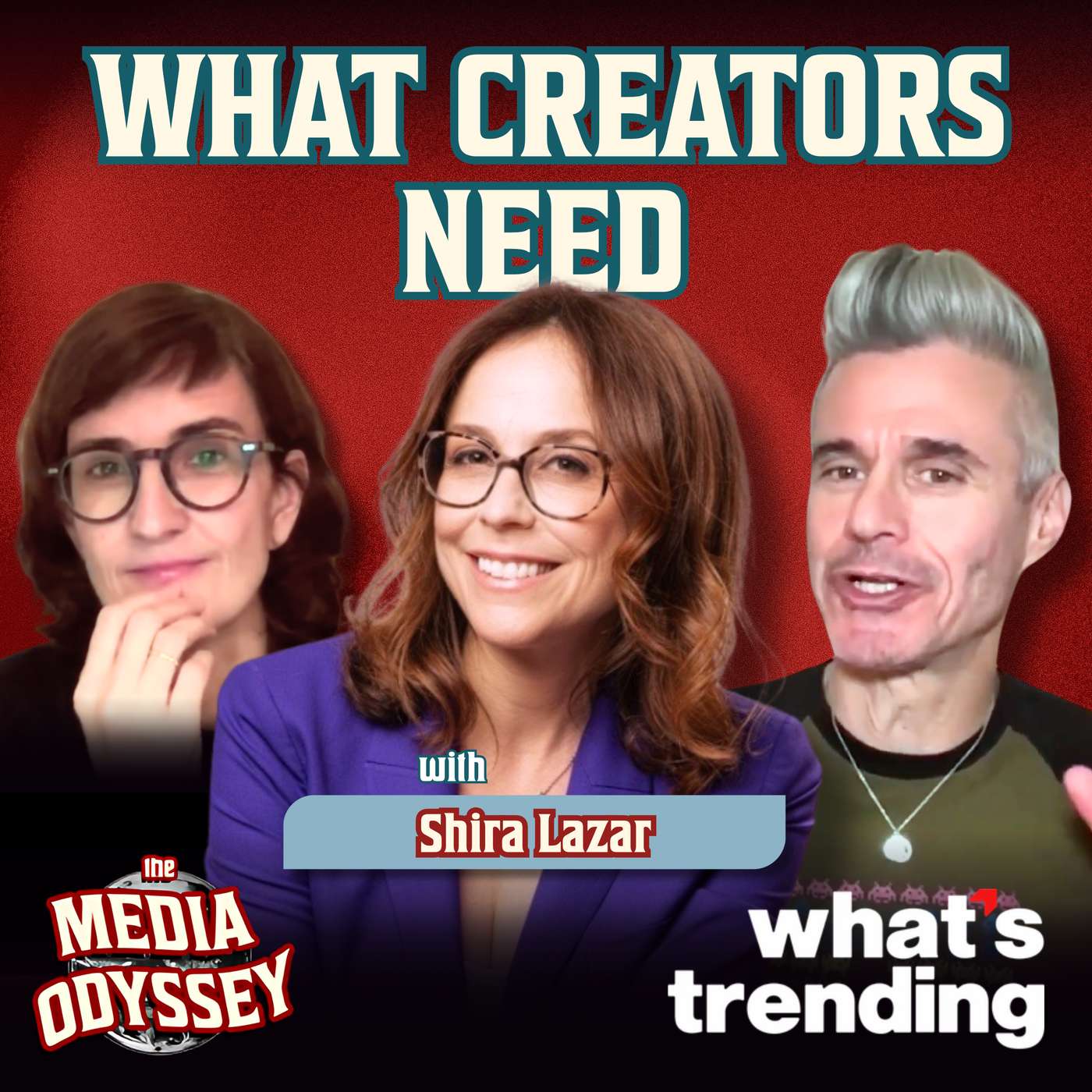
The Creator Economy has 1.5 million creators, billions in revenue, and… zero worker protections. Welcome back to The Media Odyssey Podcast!In this episode, Evan Shapiro and Marion Ranchet sit down with Shira Lazar, founder of What's Trending and a pioneer in the creator economy. The conversation covers Shira's journey from early vlogger at CBS News to building a digital media brand covering internet culture, and dives deep into her current work on the Creator Bill of Rights and mental health advocacy for creators through her organization Creators 4 Mental Health. Rather than focusing on growth metrics or platform strategies, Shira, Marion, and Evan tackle the human side of content creation including the mental health challenges, lack of industry protections, and systemic issues facing the millions of people who make up the creator economy.The episode is a reality check on how the creator economy, despite generating billions in revenue for platforms and brands, still lacks basic worker protections and the mental health support structures that exist in traditional industries.Key Takeaways:1. The Creator Economy Is a Real Industry That Lacks Basic ProtectionsThere are 1.5 to 10 million creators in the US (compared to 83,000 steel workers) yet creators operate in what's described as the "Wild West" without established worker protections. The creator economy generates enormous revenue, with Meta alone generating more than all television on Earth, and Unilever putting half their marketing budget into creator partnerships. Despite this scale, creators lack the fundamental protections, unions, and support systems that exist in traditional industries.2. Mental Health Crises in the Creator Economy Need Systemic SolutionsCreators face unique mental health challenges from constant platform algorithm changes, metrics obsession, isolation, and financial instability. While awareness of mental health issues exists, there's no clear infrastructure or accessible resources for creators to get help. The Creator Bill of Rights initiative aims to establish mental health support as a foundational element of the industry rather than an afterthought, making resources tangible and accessible.3. The Industry Was Built by Accident, Not DesignUnlike traditional industries that were planned and structured over time, the creator economy emerged through happenstance without intentional design or worker protections built in. The automotive industry had headquarters, roads, and eventually unions, but the creator economy is asymmetrical with no central structure. This requires building frameworks from scratch, including state and federal level recognition, rather than trying to retrofit traditional models.4. Corporate Media Faces Similar Mental Health Issues Without the AwarenessThe mental health challenges aren't unique to creators, corporate media employees struggle with burnout, loneliness, and shame around mental health, but without the same level of awareness or conversation. In corporate environments, mental health struggles are often seen as a disgrace despite theoretical access to company resources. The creator economy has an advantage in that there's at least recognition that something is wrong and needs to be fixed, creating an opportunity to build support systems into the foundation of the industry.Thank you Shira Lazar for joining the pod!Shira Lazar: https://www.linkedin.com/in/shiralazar/ What’s Trending: https://www.linkedin.com/company/what's-trending/Creators 4 Mental Health: https://www.creators4mentalhealth.com/ Interested in sponsorship? https://forms.gle/2LCWfX2HBNT8mtpx8Connect with us on Linkedin:Evan Shapiro - https://www.linkedin.com/in/eshap-media-cartographer/Marion Ranchet - https://www.linkedin.com/in/marionranchet/The Media Odyssey Podcast - https://www.linkedin.com/company/the-media-odyssey-podcast
(00:00) - Introduction and Guest Introduction
(01:39) - Shira Lazar's Journey in the Creator Economy
(02:02) - The Evolution of What's Trending
(05:05) - Challenges and Innovations in the Creator Space
(09:14) - Collaboration and Mapping the Creator Ecosystem
(18:31) - Monetization and Value in the Creator Economy
(27:38) - Understanding the Value of Time and Experience
(28:31) - Challenges in Influencer Marketing
(30:53) - The Importance of Hiring Experts
(32:30) - Mental Health in the Creator Community
(32:50) - Founding Creators for Mental Health
(36:33) - Key Findings from the Mental Health Survey
(43:31) - The Creator Bill of Rights
(52:30) - Reflecting on Mental Health and Social Media
Google officially beat Apple and HBO Max is conquering Europe. Welcome back to The Media Odyssey Podcast! In this episode, Evan Shapiro and Marion Ranchet focus on two media milestones that didn’t get the attention you expect: Google officially surpassing Apple in scale, and HBO Max’s long-awaited launch across key European markets. Rather than treating these as isolated news items, the conversation explains why both moments matter and what they reveal about platform economics, global strategy, and competitive positioning.The episode is a reality check on how quickly the hierarchy is changing, and how even long-anticipated launches now arrive in a far more crowded, expensive, and competitive environment.Key Takeaways: 1. Google Has Officially Passed Apple in SizeGoogle, along with the rest of Alphabet, beat out Apple with a higher annual revenue and faster top-line growth. What once looked unthinkable now reflects Google’s dominance across advertising, platforms, and global scale.Apple’s business remains strong, but it’s reliance on hardware and services tied closely to its ecosystem have kept growth down it is missing out on a core two thirds of consumers. 2. HBO Max Is Finally Launching Across EuropeHBO Max’s rollout into major European markets, a move years in the making, finally began. The launch represents a major operational and branding milestone for Warner Bros. Discovery.Timing is a strategic Risk for HBO Max, arriving in Europe after Netflix, Prime Video, and Disney+, making customer acquisition more difficult and more expensive than it would have been earlier. Launching now means competing in a market where consumer budgets are tighter and subscription fatigue is real.3. Scale Is Now the Deciding FactorWhether it’s Google surpassing Apple or HBO Max expanding internationally, the episode reinforces that scale is increasingly what determines who can compete effectively.Interested in sponsorship? https://forms.gle/2LCWfX2HBNT8mtpx8Connect with us on Linkedin:Evan Shapiro - https://www.linkedin.com/in/eshap-media-cartographer/Marion Ranchet - https://www.linkedin.com/in/marionranchet/The Media Odyssey Podcast - https://www.linkedin.com/company/the-media-odyssey-podcast
(00:00) - Introduction and Overview
(01:12) - HBO Max's European Launch
(04:05) - Strategic Partnerships and Deals
(11:58) - Pricing Strategies and Market Impact
(16:29) - Potential Acquisitions and Future Outlook
(24:43) - Netflix's Ad Tier Success
(25:10) - HBO Max's Struggles in Europe
(25:56) - Telco Deals and Bundling
(27:48) - Google Surpasses Apple in Market Cap
(28:59) - Google's AI and Search Dominance
(40:19) - Apple's Challenges and Future
(43:39) - The Era of Commodity Hardware
(46:35) - Upcoming Episodes and Events
Netflix’s earnings beat expectations, but the numbers reveal a business increasingly reliant on optics, pricing, and financial engineering rather than underlying engagement growth.In this live earnings breakdown episode of The Media Odyssey Podcast, Evan Shapiro and Marion Ranchet analyze Netflix’s latest quarterly results, separating headline wins from structural concerns. While revenue, profit, and subscriber figures all came in strong, deeper engagement metrics tell a more cautious story. The conversation focuses on growth rates, viewing hours, ad revenue contribution, and the financial implications of Netflix’s proposed Warner Bros. Discovery acquisition.The Numbers: 1. Netflix Reported 325 Million Subscribers (After Saying It Would Stop)Despite previously stating it would no longer report subscribers, Netflix disclosed a global total of 325M, reframing what likely ~23M net adds without explicitly saying so.2. Revenue and Profit Growth Remain StrongNetflix reported +15% revenue growth in Q4 and +16% for the full year, with net income up ~25% in Q4 and ~26% year over year, comfortably beating Wall Street expectations.3. Engagement Growth Is Essentially FlatTotal viewing reached 191B hours annually, up only ~1B hours half-over-half. Average viewing now sits at roughly 1.7 hours per subscriber per day, down from ~2 hours a few years ago.4. Netflix’s Share of Total TV Viewing Remains Under 10%Even during an all-time high month driven by Christmas Day, Netflix accounted for ~9% of total TV usage per Nielsen Gauge data.5. Advertising Generated ~$1.5B, Still Only ~3% of RevenueNetflix disclosed $1.5B in ad revenue, representing roughly 2–3% of total revenue, with management signaling plans to double and eventually triple that figure.6. Roughly 40% of New Subscribers Are on the Ad TierThird-party estimates suggest ~40% of recent subs are ad-supported, but Netflix provided no ARPU, churn, or engagement data tied to those users.7. Guidance Was Lowered Despite the Earnings BeatNetflix reduced forward guidance, contributing to a ~7% stock drop overnight, highlighting investor concern despite strong backward-looking results.8. The Proposed Warner Bros. Deal Would Push Debt to ~$85BIf completed, Netflix would take on roughly $50–54B in new debt, bringing total obligations close to $85B, a key factor behind market skepticism.Interested in sponsorship? https://forms.gle/2LCWfX2HBNT8mtpx8Connect with us on Linkedin:Evan Shapiro - https://www.linkedin.com/in/eshap-media-cartographer/Marion Ranchet - https://www.linkedin.com/in/marionranchet/The Media Odyssey Podcast - https://www.linkedin.com/company/the-media-odyssey-podcast
(00:00) - Introduction and Welcome
(00:14) - Event Highlights and Advertising Chat
(00:53) - Netflix Earnings Report Breakdown
(02:36) - Subscriber Numbers and Engagement
(04:44) - Netflix's Strategic Moves and Market Reactions
(05:47) - Streaming Industry Trends and Predictions
(06:59) - Warner Brothers Discovery Deal Analysis
(09:34) - Global Market Insights and HBO Content
(16:37) - Advertising Business and Future Prospects
(19:09) - Ad Strategies and Market Competition
(20:01) - Disney's Ad Selling Prowess vs. Warner Brothers' Struggles
(20:39) - Netflix's Efforts to Improve Ad Sales
(20:53) - Live Q&A Session Begins
(21:34) - Disney's Model and Market Competition
(23:11) - Warner Acquisition and Franchise Opportunities
(26:56) - Vertical Video and Social Features
(31:19) - Global Market Opportunities and Challenges
(33:48) - Wrapping Up and Audience Engagement
CES isn’t about gadgets anymore, but who controls the interface between audiences, data, and distribution.Welcome back to The Media Odyssey Podcast! From CES, Evan Shapiro and Alan Wolk, Co-Founder and Lead Analyst of TVREV, unpack what this year’s show revealed about the future of media, entertainment, and technology while expanding on their predictions for 2026. Beyond the hype of AI demos and hardware announcements, the conversation centers on power shifts: who owns how we get information, who controls discovery, and which companies are quietly positioning themselves as the new gatekeepers.Rather than signaling a breakout moment, CES reinforces a familiar reality. Platforms are consolidating influence, AI is moving into the background, and media companies face shrinking control over how audiences find and engage with content.Key Takeaways:1. Media Is Entering a Prolonged Era of “Feudal Fragmentation”Alan predicts that the monoculture is gone for the foreseeable future, replaced by thousands of disconnected content bubbles with their own truths, celebrities, and norms. This fragmentation isn’t new, but it will deepen through the rest of the decade, making shared cultural moments increasingly rare.2. There Is No Longer a Single Source of Truth and That Has ConsequencesThe loss of mass media gatekeepers means audiences now operate from entirely different realities. News can be fully ignored, expertise is routinely dismissed, and misinformation thrives because there is no longer a common reference point for facts.3. The End of Expertise Is Both Dangerous and LiberatingTraditional experts and institutional authority are losing power, but this also enables creators and outsiders to build massive media businesses without permission. The upside is democratization, the downside is the erosion of trust in skill, craft, and knowledge.4. Power in Media Is Decentralizing Away from HollywoodAlan predicts that media power will continue to disperse geographically and structurally. New creator-led studios are emerging in Texas, Brazil, Nigeria, and beyond, attracting talent away from traditional Hollywood centers as production costs fall.5. Niche Audiences Will Become the Foundation of Sustainable Media BusinessesThe era of building new mega-brands is over. Instead, companies and creators will build profitable businesses around passionate, well-defined niche communities. Even if those audiences are invisible to the mainstream.6. Discovery and Serendipity Are Breaking DownAlgorithmic feeds increasingly show audiences more of what they already like, making it harder for genuinely new ideas to surface. Alan predicts fewer breakout cultural movements and more recycling of familiar formats, sounds, and franchises.7. Sports Remains the Last True MonocultureLive sports still cut across bubbles and deliver shared, simultaneous experiences. Alan predicts sports will retain outsized importance for advertisers and platforms, even as niche sports slowly grow and fragment over time.Thank you, Alan Wolk for joining the pod! https://www.linkedin.com/in/alanwolk/ Interested in sponsorship? https://forms.gle/2LCWfX2HBNT8mtpx8Connect with us on Linkedin:Evan Shapiro - https://www.linkedin.com/in/eshap-media-cartographer/Marion Ranchet - https://www.linkedin.com/in/marionranchet/The Media Odyssey Podcast - https://www.linkedin.com/company/the-media-odyssey-podcast
(00:00) - Introduction and Guest Introduction
(00:45) - First Impressions of CES
(01:38) - Predictions for the Media Industry
(02:19) - Descent into Feudal Media
(02:50) - The Concept of Monoculture
(06:43) - Fragmentation of Media and Advertising Challenges
(19:57) - Rise of Decentralized Media Power
(22:13) - The Downside of Algorithmic Recommendations
(23:32) - The Loss of Serendipity in Media Discovery
(24:24) - Challenges in Finding Quality Content
(25:31) - The Role of Curators in Media Discovery
(29:21) - The Rise of Niche Audiences
(32:05) - The Continued Importance of Sports
(37:14) - The Future of Media and AI's Role
(39:24) - Advice for Navigating the Changing Media Landscape
The media industry isn’t heading for a clean recovery but bracing for another year of pressure, recalibration, and structural change.Welcome back to The Media Odyssey Podcast with a special thanks to Spectrum Reach! In this first part of their 2026 predictions, Evan Shapiro and Marion Ranchet lay out what the coming year will likely bring for media, technology, and entertainment. They cover ongoing layoffs, fragile ad markets, the rise of global distribution strategies, and a new phase of AI-driven discovery. 2026 will test which companies have truly adapted and which are still relying on outdated assumptions.2026 is not a breakout year, but a proving ground, where survival depends on cost discipline, platform fluency, and the ability to monetize audiences directly rather than through legacy intermediaries.Key Takeaways:1. 2026 Will Be Another Brutal Year for Media EconomicsEvan predicts that advertising markets will remain soft, public service media will continue to face funding pressure, and layoffs will persist across the industry. There will be no broad recovery, only isolated winners and many organizations forced to do more with less.2. Discovery Will Matter More Than Content VolumeMarion predicts that success in 2026 will be defined by distribution and discoverability, not by how much content companies produce. Media organizations that don’t adapt to YouTube, FAST, social, and AI-driven discovery will struggle to reach audiences at all.3. The AI Bubble Will PopBoth predict that generative AI and large language models will reshape discovery, navigation, and search long before they meaningfully change creative workflows. The biggest short-term impact of AI will be invisible but existential for traffic-driven media, but the hype and direct-to-consumer models are unsustainable. 4. GEO Will Undermine Traditional SEO-Based Media ModelsEvan predicts that Generative Engine Optimization will replace classic SEO as search engines move from links to answers. Media companies built on referral traffic will see declining reach unless they rethink how their content surfaces in AI-driven environments.5. FAST Will Become More Crowded and Less ForgivingMarion predicts continued FAST channel proliferation without equivalent ad growth. The result: more fragmentation, lower yields, and fewer viable players with success limited to brands with strong IP, live content, or true differentiation.6. Media Companies Will Be Forced to Think Globally by DefaultGrowth will increasingly come from international audiences, not domestic ones. Both predict that companies without global distribution strategies will hit growth ceilings faster in 2026.7. Experimentation Will Be a Core Survival RequirementThe final prediction is cultural: organizations that don’t test formats, platforms, and monetization aggressively will fall behind. In 2026, waiting for clarity will be a losing strategy.Thank you to Spectrum Reach! https://www.linkedin.com/company/spectrum-reach/ Interested in sponsorship? https://forms.gle/2LCWfX2HBNT8mtpx8Connect with us on Linkedin:Evan Shapiro - https://www.linkedin.com/in/eshap-media-cartographer/Marion Ranchet - https://www.linkedin.com/in/marionranchet/The Media Odyssey Podcast - https://www.linkedin.com/company/the-media-odyssey-podcast
(00:00) - Introduction and Hosts
(00:57) - First Prediction: AI Bubble Burst
(04:03) - Debate on AI's Future
(10:01) - Second Prediction: Micro Drama Bubble
(14:22) - Third Prediction: Outcome-Based Advertising
(17:01) - Fourth Prediction: Midterm Election Advertising
(19:19) - Fifth Prediction: Social Media Politicians
(21:51) - Sixth Prediction: New Generation of Media CEOs
(25:56) - Seventh Prediction: Media Mergers and Acquisitions
(27:06) - The Largest Leverage Buyout in Corporate History
(27:21) - The Role of Saudis in American Media
(27:38) - Mergers and Acquisitions in Advertising
(29:00) - Cultural Clashes in Mergers
(29:56) - Netflix's Strategic Moves
(31:23) - The Future of European Media
(31:57) - Predictions for Media Mergers
(34:30) - The Rise of YouTube and Social Media
(39:09) - The Impact of AI on Media
(43:18) - The Extinction of Ad-Free Viewing
(49:55) - Final Thoughts and Predictions
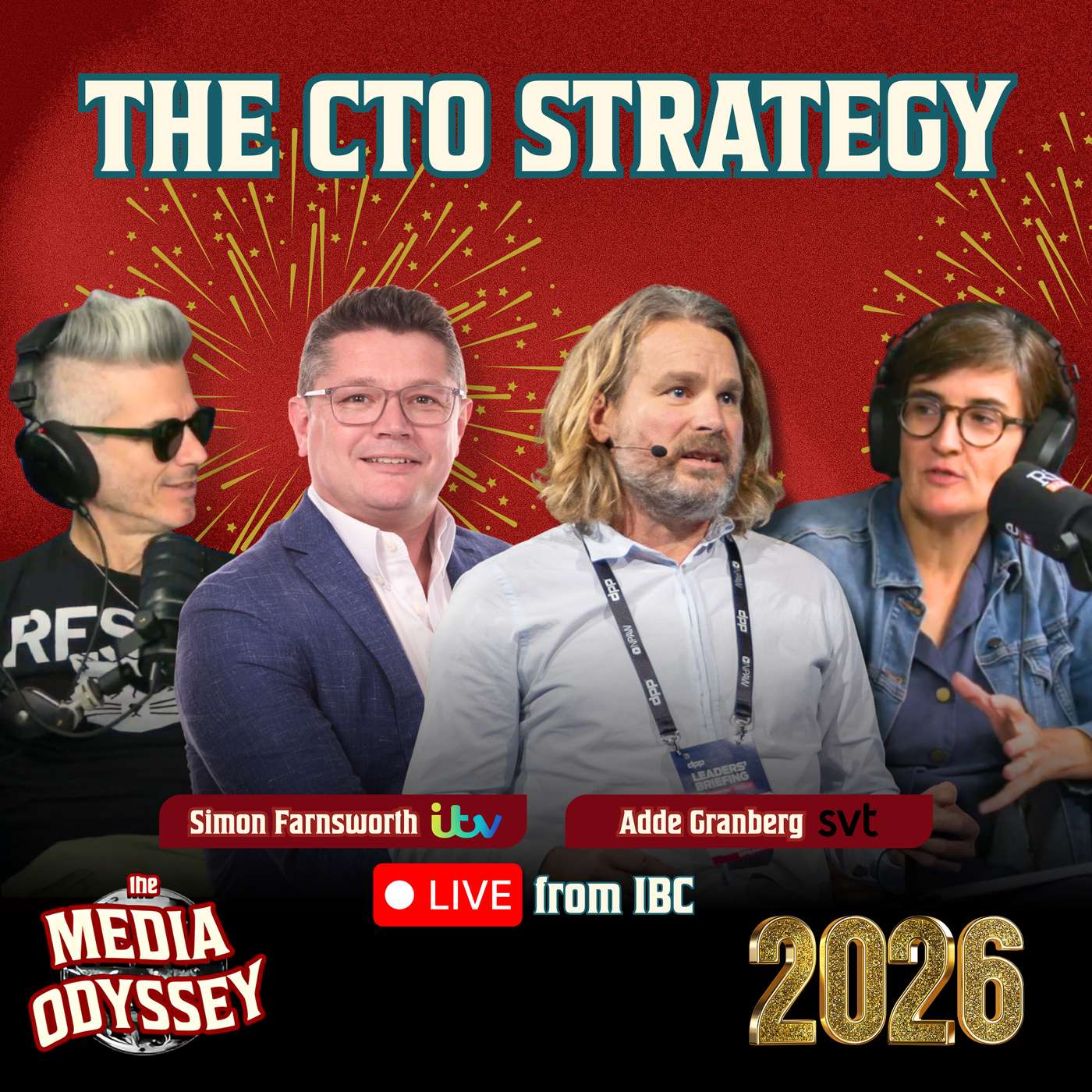
Happy New Year from The Media Odyssey podcast! We're regifting this episode hosts Evan Shapiro and Marion Ranchet recorded live from IBC with Simon Farnsworth (ITV) and Adde Granberg (SVT), two CTOs (or as they call it, “Chief Transformation Officers”) reshaping European public broadcasting. The conversation explores how legacy broadcasters can adapt to a digital-first, fragmented world while facing off against trillion-dollar tech giants.They discuss the shift from “doing digital” to “being digital,” how generative AI and cloud-based workflows can unlock beyond-human-scale production, and the biggest challenge broadcast is facing is mindset. Both guests stress that the real battle is cultural, not technical: broadcasters must abandon outdated standards, embrace platforms like YouTube and TikTok, and put audience needs, not legacy processes, at the center.Key Takeaways:From Tech to TransformationFor Farnsworth and Granberg, a CTO’s role is less about gadgets and more about changing mindsets—translating the power of technology to boards and teams, and shifting organizations from “doing digital” to truly “being digital.”Cloud, AI, and Beyond-Human ScaleGenerative AI, cloud production, and 5G enable content creation and distribution at scales humans can’t manage alone. From using AI to cast Love Island more efficiently, to producing Sweden’s iconic Vasaloppet ski race with drones over 5G, both ITV and SVT show how tech can cut costs, lower carbon footprints, and improve the creative product.Break the Walled GardensToo many broadcasters still cling to the idea that their own platform is the only destination. Farnsworth argues that distribution on YouTube, TikTok, and even Disney+ is additive, not cannibalistic—and essential to reaching younger audiences.Mindset Over StandardsThe biggest barrier isn’t tech, it’s culture. Both CTOs stress the need to ditch outdated broadcast standards and industry obsessions with hardware, replacing them with audience-first, software-driven, cross-platform strategies. Without this shift, public broadcasters risk irrelevance.Collaboration or DeclineEurope’s broadcasters must collaborate more deeply, from projects like Freely in the UK to shared production and distribution tools. Competing with “death stars” like Google, Amazon, and TikTok requires pooling resources, not building new silos.Interested in sponsorship? https://forms.gle/2LCWfX2HBNT8mtpx8Connect with us on Linkedin:Evan Shapiro - https://www.linkedin.com/in/eshap-media-cartographer/Marion Ranchet - https://www.linkedin.com/in/marionranchet/The Media Odyssey Podcast - https://www.linkedin.com/company/the-media-odyssey-podcastSimon Farnsworth: https://www.linkedin.com/in/simon-farnsworth-26521253/ Adde Granberg: https://www.linkedin.com/in/addegranberg/?originalSubdomain=se
(00:00) - Introduction to Media Odyssey Podcast
(00:08) - What is IBC?
(00:56) - Marion's IBC Experience
(01:36) - Generational Divide in Media
(04:59) - The Affinity Economy
(06:15) - Redefining Broadcasting
(07:35) - Introduction to Whale TV
(08:03) - Whale TV's White Label Journey
(09:44) - The Shift to Streaming
(11:39) - Whale TV's Business Model
(19:48) - Whale TV Plus Explained
(21:59) - Advertisers and Connected TV Challenges
(22:32) - Whale TV's Unique Advertising Opportunities
(23:59) - Emerging Advertising Categories
(25:34) - Balancing User Experience and Monetization
(26:03) - Innovative Ad Formats
(29:25) - Global Reach and Collaboration
(30:56) - Industry Challenges and Future Directions
(36:41) - Conclusion and Final Thoughts
Happy holidays from The Media Odyssey podcast! We're regifting this episode where hosts Marion Ranchet and Evan Shapiro sit down with Dhar Mann, one of the most successful independent creators in the world, to unpack what it really means to build an owned-and-operated media empire in the age of platforms. With over 70 billion views across social media, Dhar has mastered the art of storytelling at scale without relying on traditional Hollywood systems.In a sharp, insightful conversation, Dhar shares the mechanics behind his studio’s meteoric rise, the values that drive his content, and why creators should think like CEOs. From data-driven production to brand-safe storytelling, this episode offers a rare look into what it takes to succeed at the intersection of commerce, creativity, and community.Key Takeaways:1. Dhar Mann Studios Operates Like a Scalable, Independent Media CompanyDhar built his studio from scratch with full vertical integration: in-house scripting, production, post, and distribution. Producing more than 100 episodes a year with over 100 full-time employees, he’s proving that creator-led companies can compete with and outperform traditional studios.2. Storytelling is Engineered for ImpactThe key to Dhar’s success is emotional storytelling. Every script is optimized through data, test reads, and feedback loops. His team analyzes performance daily, adjusts thumbnails, titles, and narrative arcs in real time and shoots with Shorts and long-form in mind across YouTube, Facebook, TikTok, and beyond.3. Brand Safety Doesn’t Mean BoringDhar Mann’s content is deeply family-friendly and advertiser-safe, which makes it attractive to brands. But it’s not sanitized—it tackles real issues like bullying, poverty, and prejudice through emotionally resonant narratives that audiences connect with.4. Platform Diversification is StrategicFrom Facebook and YouTube to Snapchat, TikTok, and even theatrical releases, Dhar doesn’t rely on one platform. His team adapts content formats to fit algorithmic behaviors—using Shorts for reach and long-form for retention and monetization.5. Creators Should Think Like CEOs Dhar’s biggest advice to creators: treat your channel like a business. Build teams, invest in infrastructure, understand your audience, and create repeatable systems. Virality is nice—but building a long-term, sustainable operation is the real win.Thank you Dhar Mann for joining the pod!LinkedIn: https://www.linkedin.com/in/dharmann/Interested in sponsorship? https://forms.gle/2LCWfX2HBNT8mtpx8Connect with us on Linkedin:Evan Shapiro - https://www.linkedin.com/in/eshap-media-cartographer/Marion Ranchet - https://www.linkedin.com/in/marionranchet/Newsletters:Marion Ranchet - https://marionranchet.substack.com/Evan Shapiro - https://eshap.substack.com/
(00:00) - Introduction and Welcome
(00:35) - Creators at Cannes Lion
(01:21) - Dhar Mann's Backstory
(01:55) - The Hero's Journey in Storytelling
(03:28) - From Struggles to Success
(04:19) - Transition to Content Creation
(04:56) - Accidental Filmmaking
(11:21) - Scaling Up and Staying Scrappy
(19:39) - Economic Model and Community Focus
(22:02) - Balancing Mission and Economics
(22:36) - Exploring Ad-Supported and SVOD Models
(22:54) - YouTube's Dominance and Competitors' Strategies
(25:36) - Ownership and Analytics in Content Creation
(27:27) - The Power of Community and IP
(28:18) - Partnership with Samsung and Production Speed
(34:24) - Future Opportunities and Nonfiction Content
(38:00) - Advice for Aspiring Creators
(43:20) - Concluding Thoughts and Final Reflections
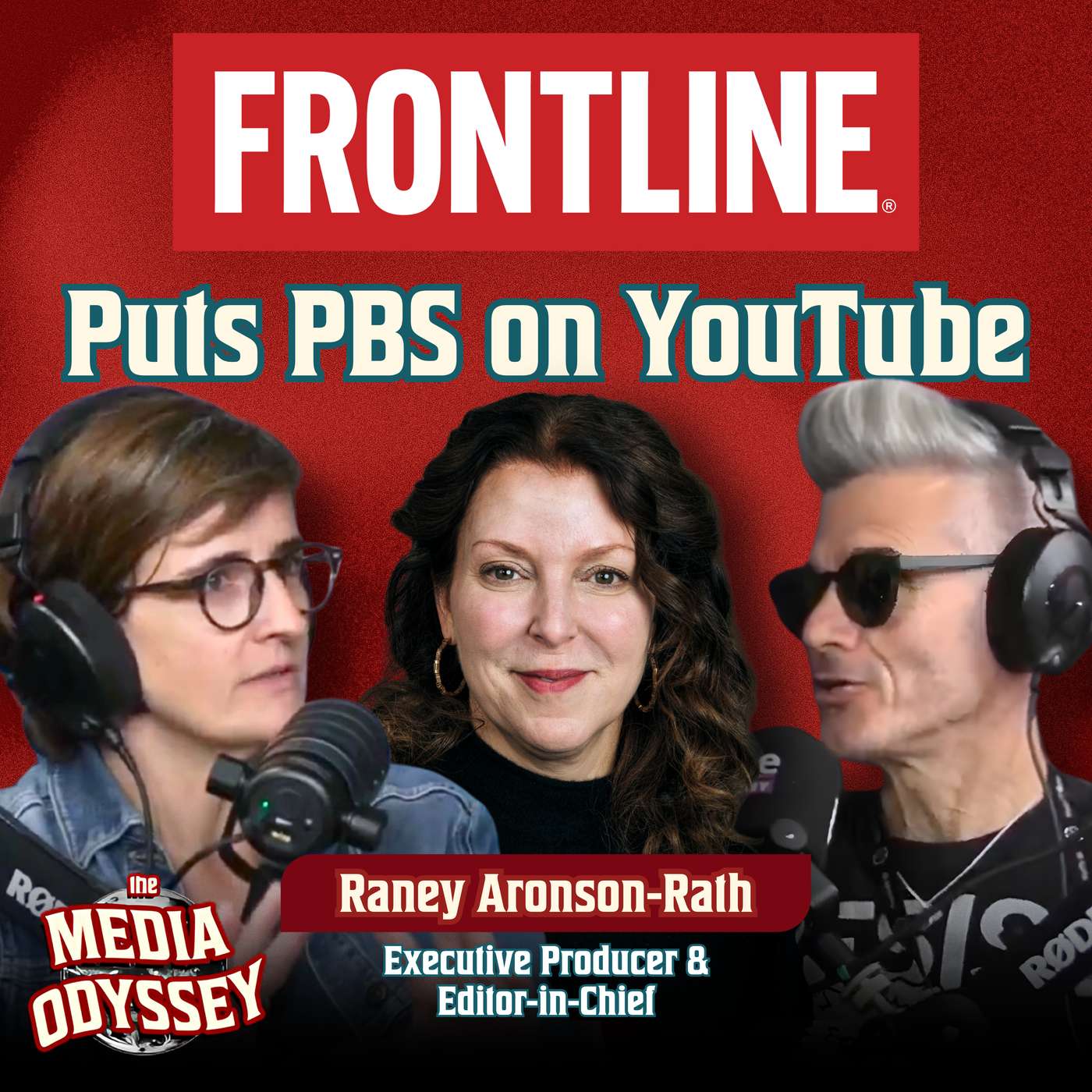
Public service media isn’t outdated, instead, it’s fighting for relevance, trust, and survival in a fractured global information ecosystem.Welcome back to The Media Odyssey Podcast. In this episode, Evan Shapiro and Marion Ranchet sit down with Raney Aronson-Rath, Executive Producer of Frontline and Editor-in-Chief of Documentaries at GBH, for a conversation on the future of public media. From political pressure and funding cuts to platform expansion and audience trust, the discussion explores why public broadcasters must be everywhere audiences are without sacrificing journalistic integrity.Through Frontline’s transformation into a broadcast-plus-streaming powerhouse, the episode examines how YouTube, social video, theatrical releases, and global distribution have become essential tools for sustaining factual storytelling in an era of misinformation and declining institutional trust.Key Takeaways: 1. Public Media’s Survival Depends on Platform Expansion, Not RetrenchmentPublic broadcasters can no longer rely solely on linear TV. To stay relevant and trusted, they must meet audiences on YouTube, social platforms, streaming, and in theaters. They need to be wherever public conversation is happening.2. YouTube Is Additive, Not Cannibalistic for Public Service MediaFrontline’s experience shows that YouTube doesn’t replace broadcast audiences. In fact, YouTube extends reach over time, attracts younger viewers, and builds long-tail viewership that linear TV alone cannot sustain.3. Streaming Requires a Long-Term Mindset ShiftUnlike broadcast’s appointment viewing, streaming rewards longevity. Frontline films often grow for years, accumulating millions of views with high watch time, forcing teams to think beyond premiere-night metrics.4. Community and Trust Are the Core Competitive AdvantagesPublic media’s strength isn’t scale but credibility. Building engaged, thoughtful communities around factual content is essential in a media ecosystem flooded with misinformation.5. Short-Form Is Editorial, Not Promotional To reach younger audiences, Frontline treats social video and shorts as a serious journalistic format with its own language instead of marketing cutdowns of long-form work.6. Global Distribution Is Both a Mission and a StrategyWith one-third of Frontline’s audience outside the U.S., platforms like YouTube enable public media to reach global audiences including countries where traditional broadcasters refuse to air critical journalism, but where audiences need to see it most.7. Public Media Must Be Everywhere Both In Person and OnlineFrom YouTube to theaters to festivals, Frontline Features reflects a belief that storytelling is more powerful when audiences can experience it both collectively and individually.8. The Cost of Absence Is Being Replaced by Worse InformationIf trusted public media doesn’t fill digital spaces, misinformation will. The choice isn’t whether to engage platforms like YouTube, it’s whether to leave them to actors with lower standards.Interested in sponsorship? https://forms.gle/2LCWfX2HBNT8mtpx8Connect with us on Linkedin:Evan Shapiro - https://www.linkedin.com/in/eshap-media-cartographer/Marion Ranchet - https://www.linkedin.com/in/marionranchet/The Media Odyssey Podcast - https://www.linkedin.com/company/the-media-odyssey-podcastThank you, Raney Aronson-Rath for joining the pod!Raney Aronson-Rath: https://www.linkedin.com/in/raney-aronson-0343aa8/Frontline: https://www.linkedin.com/company/frontline-pbs/Headshot credit: Michael Buckner/Deadline
(00:00) - Introduction to the Media Odyssey Podcast
(00:09) - Public Media Under Pressure
(00:55) - BBC Controversy and Public Trust
(02:58) - Challenges Faced by Public Broadcasters
(04:02) - Public Media Funding Issues
(04:47) - The Role of Public Media in Democracy
(05:59) - Public Broadcasting in the US
(07:25) - Embracing Digital Platforms
(09:13) - Introducing Raney Aronson from Frontline
(11:16) - Frontline's Digital Transformation
(15:43) - Impact of YouTube on Frontline's Reach
(23:56) - Simultaneous Broadcast and Streaming Strategy
(26:22) - The Evolution of PBS Viewership
(27:10) - Leadership and Digital Expansion
(28:08) - Global Reach and YouTube Strategy
(29:05) - Commitment to Journalistic Standards
(31:14) - Frontline Features and Theatrical Impact
(34:18) - Challenges in Documentary Distribution
(39:42) - International Co-Productions and Self-Distribution
(43:44) - The Importance of Public Media
Media is not shifting, it’s revealing which predictions actually mapped the year and which trends will define what comes next.Welcome back to The Media Odyssey Podcast! In this special “Predictions Wrapped” episode, Evan Shapiro and Marion Ranchet revisit the forecasts they made a year ago and grade themselves on accuracy. They discuss YouTube’s explosive rise on CTV, Netflix’s unexpected innovation, creator-driven cultural dominance, the slow grind of CTV fragmentation and more. They break down the bets they nailed and the ones that missed the mark.The conversation also surfaces the biggest forces shaping 2025: global broadcaster collaboration, a reshaped M&A landscape, a creator economy that has become central to mainstream media, and an AI boom that is both overhyped and quietly transformative behind the scenes.Key Takeaways: 1. YouTube’s Transformation Into the No. 1 TV Channel Was the Prediction of the YearEvan’s call that YouTube would finally be recognized as true television proved spot-on: it became the #1 TV channel in the U.S. for months, dominated industry conversation, and strengthened global partnerships. Lean-back YouTube viewing is now mainstream.2. Netflix Proved More Open and Innovative Than ExpectedMarion’s prediction that Netflix needed to evolve beyond its walled garden came true through major deals with TF1, Spotify, creators, and new M&A exploration. The company is clearly signaling a shift toward becoming a broader entertainment hub.3. 2025 Really Was the Year of the CreatorCreator-led programming defined industry conversations everywhere from MIPCOM to Cannes Lions. Big media invested heavily in creator partnerships and creators like MrBeast built full-blown media empires. Creators are sitting at the center of the cultural and business agenda.4. Some Big Bets Didn’t MaterializeMarion’s expectation of an aggressive, high-stakes fight among CTV operating systems didn’t happen. Instead, the space stagnated: incremental partnerships, UI improvements, and slow expansion replaced the “vicious competition” anticipated.5. AI Was Both Boringly Effective and Wildly OverhypedEvan’s call that AI would be simultaneously underwhelming and inflated proved true. The real impact was invisible backend optimization at major tech companies, while valuations, hype cycles, and consumer expectations outpaced real-world product maturity.6. Broadcasters in Europe Became More Collaborative Than EverMarion’s prediction about unprecedented cooperation among European broadcasters wasn’t just correct, it overperformed. With TF1 and Netflix, FranceTV and Prime Video, Sky and ITV, and MFE’s acquisitions, 2025 became a landmark year for cross-border, cross-platform partnerships.7. M&A Defined the Year and Will Shape 2025 Even MoreEvan’s expectation of massive consolidation was validated by Paramount and Skydance, NBCUniversal and Omnicom Media Group, MFE, the WBD bidding saga, and political forces now influencing dealmaking. The industry’s next chapter will be written through mergers rather than standalone growth.8. The Job Market Was Worse Than Expected and Still Getting TougherThe darkest but most accurate prediction: 2025 saw more media layoffs by October than all of 2024. With more M&A ahead, layoffs are expected to continue, making reinvention, networking, and career resilience essential for 2025.Interested in sponsorship? https://forms.gle/2LCWfX2HBNT8mtpx8Check out the full Substacks grading all of last year's predictions:Evan Shapiro - https://eshap.substack.com/p/youtube-is-tv Marion Ranchet - https://www.streamingmadeeasy.com/p/my-2025-predictions-the-mbappe-reportThe Media Odyssey Podcast - https://www.linkedin.com/company/the-media-odyssey-podcast
(00:00) - Introduction and Podcast Overview
(01:07) - Grading Predictions: YouTube's Dominance on TV
(04:16) - Grading Predictions: Netflix's Innovations
(09:32) - Grading Predictions: The Rise of the Creator Economy
(19:16) - Grading Predictions: AI's Impact and Future
(25:14) - Grading Predictions: European Broadcasters' Collaborations
(30:10) - Media Landscape Predictions
(30:49) - Mergers and Acquisitions Impact
(31:57) - Corporate America and Government Influence
(33:11) - European Media Market Shifts
(34:53) - Streaming Services and Consolidation
(40:36) - Ad-Supported Streaming Future
(45:15) - Job Market Challenges in Media
(46:33) - Advice for Facing Job Loss
(53:28) - Reflecting on Predictions and Future Plans
Hollywood isn’t just consolidating, it’s entering a new era where politics, regulation, and financial pressure determine who survives.Welcome back to The Media Odyssey Podcast! In this emergency episode, Evan Shapiro and Marion Ranchet break down the stunning news that Netflix has emerged as the leading bidder for Warner Bros. Discovery’s studio and streaming divisions. They unpack why the offer makes financial sense, why it’s already triggering political backlash, and how the deal could reshape theatrical windows, global streaming strategy, and the balance of power in Hollywood.Key takeaways: 1. Netflix’s Bid Makes Financial Sense but Faces Political TurbulenceWhile Netflix’s all-cash offer is firm on the numbers, political reaction (especially in California) creates real uncertainty about whether the deal can actually close.2. California Is the Biggest Obstacle, Not Classic Antitrust LawState officials argue the acquisition would hurt jobs and local production, making Sacramento a more immediate threat to approval than Washington.3. A Deal Would Accelerate Hollywood’s Shift Toward BlockbustersIf Netflix gains WBD’s film assets, mid-budget movies and secondary franchises risk being sidelined in favor of tentpole IP and global retention drivers.4. Max’s International Launch Is Colliding With Merger ChaosWBD’s major European rollouts are happening at the worst possible moment, creating instability for teams and confusion around the service’s future.5. Even in the Best Case, the Path Ahead Is Long and PainfulHearings, investigations, and political battles would dominate the next year — and Netflix leadership would be pulled deep into the process.Interested in sponsorship? https://forms.gle/2LCWfX2HBNT8mtpx8Connect with us on Linkedin:Evan Shapiro - https://www.linkedin.com/in/eshap-media-cartographer/Marion Ranchet - https://www.linkedin.com/in/marionranchet/The Media Odyssey Podcast - https://www.linkedin.com/company/the-media-odyssey-podcast
(00:00) - Introduction and Current Events
(00:20) - Breaking News: Netflix Acquires Warner Bros. Discovery
(01:10) - Controversy and Reactions
(03:32) - Deal Approval Challenges
(04:26) - Financial and Consumer Implications
(05:02) - Regulatory and Political Hurdles
(08:05) - Potential Outcomes and Industry Impact
(08:48) - Speculations on Future Leadership
(10:11) - International Launch and Timing Issues
(11:09) - Impact on Studio and Theatrical Business
(16:40) - The Future of Independent Films
(17:41) - Conclusion and Upcoming Episodes
Modern media isn’t just transforming, it’s rebuilding itself around fandom, experimentation, and platform-native storytelling.Welcome back to The Media Odyssey Podcast! In this episode, Evan Shapiro and Marion Ranchet sit down with Holly Graham, Chief Commercial Officer, and Ben Arnold, SVP of Commercial Operations, of Little Dot Studios, one of the most influential digital operators in global entertainment. With more than 1,000 channels across YouTube, FAST, TikTok, and social platforms, plus a massive network of owned brands, Little Dot has become a blueprint for how media companies build fandom, monetize digital ecosystems, and reinvent themselves for a two-way, audience-driven world.From Gordon Ramsay’s 13-year rise into a digital-first global brand to Prime Video’s fandom-led multi-IP strategy, Holly and Ben break down why scale, creative experimentation, and audience listening now outperform legacy programming instincts. They also show why digital success requires trust, patience, and a willingness to let creators and fans shape how IP lives across platforms.Key Takeaways:1. Fandom Is the Strategy, Not the OutputLittle Dot builds everything around fandom, treating it as the engine that drives reach, creativity, and long-term engagement. Their teams are staffed with true super-fans who understand the language, culture, and behavior of each IP, making authenticity the core ingredient of every channel they run. This approach transforms digital from a promotional outlet into a genuine community hub.2. YouTube Has Become Television on CTVTwo-thirds of Little Dot’s YouTube viewing now happens on connected TVs, turning long-form uploads, compilations, and multi-episode drops into lean-back viewing experiences. For audiences, YouTube isn’t competing with television anymore because it is television, except that it also offers personalization, lower ad loads, and a two-way feedback loop that traditional TV never did.3. Scale and Experimentation Outperform PlanningWith more than 1,000 channels, Little Dot’s scale gives them platform intelligence no single studio can build alone. They test formats, edits, lengths, narrative styles, and platform behaviors in real time, learning faster than legacy teams who rely on strategy decks instead of iteration. The Little Dot belief: you won’t think your way into success, you test your way into it.4. Letting Go Is a Competitive AdvantageHolly and Ben emphasize that brands must have the courage to let creators interpret their IP and fans influence direction. The companies that win are those willing to invite new voices into the ecosystem and trust experts who understand platform culture. Transformation only happens when studios stop over-engineering and start collaborating.5. Monetization Is a Flywheel, Not a Single Revenue StreamAds matter, but they’re only one part of the business. Little Dot helps partners build revenue holistically from subscriptions and watch-time to fandom-driven merch, licensing, gaming skins, and cultural relevance that boosts performance across TV, streaming, and social. Digital becomes the funnel that powers the entire IP ecosystem, not merely a place to chase views.6. Patience and Persistence Beat ViralityDigital success isn’t instant; rather, true growth comes from long-term audience development, consistent experimentation, and evolving strategy over years, not weeks. Many of Little Dot’s partnerships last a decade because real transformation requires time, trust, and a steady willingness to learn.Interested in sponsorship? https://forms.gle/2LCWfX2HBNT8mtpx8Connect with us on Linkedin:Evan Shapiro - https://www.linkedin.com/in/eshap-media-cartographer/Marion Ranchet - https://www.linkedin.com/in/marionranchet/The Media Odyssey Podcast - https://www.linkedin.com/company/the-media-odyssey-podcastLittle Dot Studios - https://www.linkedin.com/company/little-dot-studios-limited/ Holly Graham - https://www.linkedin.com/in/holly-graham-ba616b104/?originalSubdomain=uk Ben Arnold - https://www.linkedin.com/in/benoarnold/
(00:00) - Introduction and Episode Overview
(00:32) - Insights from the International Emmys
(02:51) - The Importance of Fandom in Modern Media
(04:18) - Challenges in Media Transformation
(07:29) - Introducing Little Dot Studios
(07:59) - Little Dot Studios' Approach to Digital Platforms
(09:07) - Scaling and Monetizing Content
(14:06) - The Role of Fandom in Content Strategy
(26:01) - Gordon Ramsay's Digital Transformation
(26:43) - Strategic Content Evolution
(27:36) - Engaging with Fandoms
(31:00) - Prime Video's Multi-Fandom Strategy
(32:04) - YouTube's Creator-Centric Approach
(36:21) - Monetization Strategies and Challenges
(41:01) - Advice for Traditional Studios
(42:43) - The Importance of Patience and Trust
(48:03) - Closing Thoughts and Reflections

Comments

Download from Google Play

Download from App Store
 United States