


So What About AI Agents
Subscribed: 9Played: 46
Subscribe

© Philippe Trounev
Description
🎙 What About AI Agents is your go-to podcast for exploring the rapidly evolving world of AI agents. From automating workflows to revolutionizing industries, we break down the latest advancements, real-world applications, and emerging trends in AI.
Join us weekly as we uncover how AI agents are shaping our future, featuring expert interviews, thought-provoking insights, and stories that bridge the gap between humans and intelligent systems. Whether you're an AI enthusiast, industry professional, or simply curious about the tech shaping tomorrow, What About AI Agents has something for you.
Join us weekly as we uncover how AI agents are shaping our future, featuring expert interviews, thought-provoking insights, and stories that bridge the gap between humans and intelligent systems. Whether you're an AI enthusiast, industry professional, or simply curious about the tech shaping tomorrow, What About AI Agents has something for you.
57 Episodes
Reverse
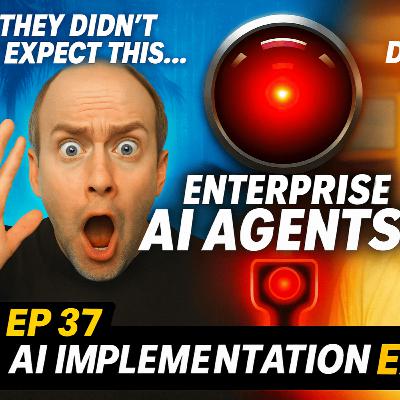
keywordsAI agents, enterprise implementation, pharmaceutical sector, SAP, ChatGPT, employee training, AI adoption, technology consulting, Infosys, automationsummaryIn this conversation, Philippe Trounev interviews Patrick Rayes, a senior principal at Infosys Consulting, about the implementation of AI agents in enterprise settings, particularly in the pharmaceutical sector. They discuss the challenges faced during AI adoption, the importance of human intervention, and the approval processes required in regulated industries. Patrick shares insights on employee training and the top-down approach necessary for successful AI integration, as well as managing expectations and misconceptions about AI capabilities.takeawaysAI implementation in enterprises requires a top-down approach.Human intervention is still necessary in AI processes.Approval processes in regulated industries are crucial for AI adoption.Employee training and education are key to successful AI integration.AI agents can simplify complex workflows and processes.Managing expectations about AI capabilities is essential for stakeholders.The pharmaceutical sector has specific requirements for AI implementation.A centralized interface enhances user experience with AI tools.Consulting firms play a vital role in guiding AI adoption.Companies must adopt AI with the same urgency as the internet.titlesNavigating AI Implementation in EnterprisesThe Role of Human Intervention in AISound Bites"AI is getting big right now.""Human intervention is still required.""AI agents simplify complex processes."Chapters00:00Introduction to AI Agents in Enterprises02:19AI Implementation in Pharmaceuticals and Banking04:43Challenges and Lessons Learned in AI Adoption07:01Human Intervention in AI Processes09:37Real-World Examples of AI Implementation11:02Approval Processes for AI in Regulated Industries12:45Comparing AI Tools: SAP Jewel, ChatGPT, and Gemini15:21Employee Adoption and Training for AI Systems18:03Impact of AI on Workflows and Efficiency20:41Managing Expectations Around AI Capabilities23:24Consulting Strategies for AI Transformation26:10Safeguarding Proprietary Knowledge in AI28:56Key Takeaways for Successful AI Implementation

In this episode, Philippe Trounev interviews Rome Thorstenson, a software engineer and AI researcher, discussing the intersection of AI and cybersecurity. They explore the current state of code security, the role of AI agents in identifying vulnerabilities, and the challenges of trusting these systems. Rom shares insights from his research at NeurIPS and emphasizes the importance of proactive security measures for developers.takeaways80% of the code shipped to production is not secure.AI agents are increasingly used to analyze code for vulnerabilities.Security often takes a backseat to feature development.Evaluating the security of a code base is a complex task.Prompt injection poses significant risks for AI systems.Developers need to prioritize security in their workflows.Rafter offers tools to simplify security scanning for developers.Research in mechanistic interpretability can enhance AI security agents.The landscape of cybersecurity is evolving with AI advancements.Proactive security measures are essential to combat emerging threats.titlesAI's Role in Cybersecurity: A Deep DiveUnderstanding Code Vulnerabilities with AI AgentsSound Bites"AI writes most of the code.""80% of the code is not secure.""Prompt injection is a huge problem."Chapters00:00Introduction to AI Agents in Cybersecurity02:41The State of Code Security and Vulnerabilities05:10Building AI Agents for Code Analysis07:52Evaluating AI Agents and Benchmarking10:27Autonomous Feedback Loops in Cybersecurity13:07Trusting AI Agents for Security Fixes15:47Understanding Vulnerabilities and AI's Role18:42Real-World Examples of Vulnerability Detection23:25Navigating App Development Challenges24:32Getting Started with Rafter28:03Understanding Mechanistic Interoperability35:06Interpreting Model Features and Security37:49Top Security Practices for Developershttps://www.docsie.ioJoin us on Discord https://discord.gg/pAUGNTzv

In this episode, Philippe Trounev interviews Laurent Cohen from Getoblic, who discusses the deployment of 1.6 million voice AI agents. Laurent explains the transition from a SaaS model to an infrastructure layer, emphasizing the importance of data gathering and SEO strategies. He shares insights on unit economics, cost efficiency, and the monetization strategies for their voice AI services. The conversation also covers the workflow of AI agents, team structure, early success metrics, and competitive advantages in the voice AI market.takeawaysThe deployment of 1.6 million voice AI agents is a significant achievement.Shifting from a SaaS model to an infrastructure layer is crucial for scalability.Unit economics and cost efficiency are vital for sustainable growth.SEO should be handled in-house as it is the DNA of a company.Gathering data is essential for training AI agents effectively.Monetization strategies include offering free claims for businesses to engage with the platform.AI agents work in a structured workflow to handle customer inquiries.A small team can achieve significant results with the right automation.Early success metrics include claimed pages and minutes spent with voice agents.Building competitive moats involves leveraging unique data and insights.Sound Bites"We need to scale data.""Money is the enemy.""Let's help each other."Chapters00:00Introduction to Voice AI at Scale02:54The Shift from SaaS to Infrastructure Layer05:24Unit Economics and Cost Efficiency08:13SEO Strategies and Data Gathering11:07Monetization Strategies for Voice AI14:11Workflow of AI Agents16:50Team Structure and Automation19:40Early Success Metrics and Conversion22:19Building Competitive Moats25:07The Future of Voice AI and Marketing StrategiesJoin us on Discord https://discord.gg/pAUGNTzv

In this conversation, Michael Ullam, CEO of Tenki AI, discusses the intricacies of building AI agents, particularly in the context of prediction markets. He emphasizes the importance of understanding limitations, building trust with users, and the architecture of multi-agent systems. Michael shares insights on logging practices, avoiding overfitting, and the cost-effectiveness of predictions. He also touches on the long-term vision for Tenki AI, strategies for product launch, and the advantages of bootstrapping a startup. Throughout the discussion, he provides valuable advice for founders looking to navigate the AI landscape.takeawaysUnderstanding limitations is crucial for AI agents.Building trust with users is essential for success.Multi-agent systems can improve forecasting accuracy.Breaking down problems into subcomponents enhances performance.Logging practices are vital for system improvement.Avoiding overfitting is key to reliable predictions.Rapid feedback loops are beneficial in prediction markets.Validating demand before product development is important.Bootstrapping can be more efficient than seeking venture funding.Focus on solving real problems that you personally experience.titlesUnlocking the Power of AI AgentsBuilding Trust in AI SystemsSound Bites"What actually works when building agents?""Logging everything helps improve the system.""Validate demand before building your product."Chapters00:00Introduction to Tenki AI and Michael Ullam00:48Building Trust in AI Agents03:37Understanding Tenki's Multi-Agent Architecture06:56Challenges in Multi-Agent Systems10:16Logging and Evaluation Practices12:32Avoiding Overfitting in Predictions15:01Cost and Efficiency of Predictions17:23Long-Term Vision for Tenki AI19:09Common Playbook for Building AI Agents20:58Advice for Founders in AI Development30:40Opportunities in AI and Final Thoughtshttps://www.docsie.ioJoin us on Discord https://discord.gg/pAUGNTzv

summaryIn this conversation, Philippe Trounev and Mitchell Jones delve into the complexities of agentic payments and the necessary payment infrastructure for the evolving AI economy. They discuss the challenges faced by AI startups in managing payments, the importance of measurement and optimization in payment systems, and the future of agent-to-agent payments. The conversation highlights the need for budgeting controls and trust in agent networks, emphasizing the role of gateways in facilitating these processes.takeawaysAgentic payments require a clear understanding of costs and value delivery.Current payment infrastructures are inadequate for the needs of AI startups.AI startups must adapt their pricing strategies beyond traditional models.Using a payment gateway simplifies the integration of multiple AI models.Measurement is crucial for managing costs in AI operations.Budgeting controls are essential for preventing runaway costs in agentic systems.Trust and accountability are vital in agent-to-agent transactions.The future of payments will involve more automation and less human intervention.Experimentation with pricing models is now more feasible for startups.Building a robust payment infrastructure is critical for the success of AI applications.Keywordsagentic payments, payment infrastructure, AI startups, payment systems, budgeting, trust, agent-to-agent payments, LavaPayments, FinTech, AI economyChapters00:00 Understanding Agentic Payments02:28 The Role of Payment Infrastructure in AI05:21 Optimizing Payment Systems for AI Startups08:07 The Future of Agent-to-Agent Payments11:03 Budgeting and Control in the Agentic Economy13:50 Building Trust in Agent Transactions16:45 The Evolution of AI Agents and Payments19:25 Challenges in Agent Communication and Budgeting22:29 The Importance of Measurement in Payment Systems25:18 Future Use Cases for Agent Payments28:08 Final Thoughts on the Agentic Economy

In this conversation, Philippe Trounev and Paul Schmidt discuss the concept of agentic sales organizations, focusing on how AI can empower sales teams by alleviating mundane tasks and enhancing efficiency. They explore the role of sales research agents, essential tools for implementing AI in sales, and the importance of data hygiene. The discussion also covers the cost considerations for introducing AI and predictions for the future of sales technology.takeawaysAgentic sales organizations empower sales teams with AI tools.Sales research agents can save significant time for sales reps.Proposal agents help create polished presentations quickly.Personalization in outreach is key to engaging prospects.Data hygiene is essential for effective AI implementation.Sales teams should document processes for better AI output.Integrating AI should feel seamless for salespeople.Cost-effective solutions exist for implementing AI in sales.AI can help sales teams focus on high-value tasks.Domain expertise is crucial when selecting AI tools.https://www.docsie.ioJoin us on Discord https://discord.gg/pAUGNTzv

EP 48 – Agentic DevOps | Featuring Scott Rowlandson (NetOrca)In this episode, Philippe Trounev sits down with Scott Rowlandson from NetOrca to unpack one of the most urgent questions in technology today:We dive deep into the evolution of DevOps, the rise of AI agent orchestration, and how automation is reshaping engineering teams across regulated industries like financial services.Scott brings real-world experience from working in high-compliance environments—where automation isn’t just helpful… it's essential. Together, we explore:How automation is changing the DevOps landscapeWhy DevOps roles aren’t disappearing—but evolvingAI agents and the future of engineering workflowsReducing delivery times in complex tech stacksWhy regulated industries rely heavily on automation“Human-in-the-loop” DevOps modelsWhat skills DevOps engineers MUST develop to stay relevantAutomation will eliminate some manual DevOps tasks.But demand for skilled DevOps engineers is increasing, not shrinking.AI agents will drastically accelerate deployment, compliance, and operations.DevOps pros who embrace orchestration and automation will lead the next era.The future of engineering is hybrid: AI + humans working together.Is AI automation about to replace traditional DevOps roles?🔥 Key Topics Covered🎯 Main Takeaways

In this insightful conversation, Philippe Trounev and Padraic O'Reilly discuss the evolving landscape of compliance and automation in cybersecurity. They explore the challenges and opportunities presented by AI agents, the importance of quality assurance, and the role of human oversight in maintaining effective compliance systems. The discussion also touches on the future of agentic compliance and the balance between automation and human involvement.https://www.cybersaint.ioand https://www.docsie.ioJoin us on Discord https://discord.gg/ceKz5d4b
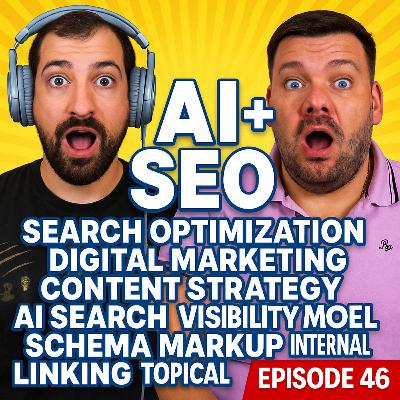
SummaryIn this conversation, Philippe Trounev and Daniel Horowitz discuss the evolving landscape of SEO in the age of AI. They explore how traditional SEO practices are being disrupted by AI search results, the importance of adapting strategies to focus on middle and bottom funnel content, and the necessity of building topical authority and internal linking structures. Daniel shares insights on best practices for optimizing for AI search, emphasizing the need for comprehensive and specific content, as well as the importance of schema markup. The discussion highlights the challenges and opportunities presented by AI in the SEO field, and the need for continuous adaptation to stay relevant.TakeawaysSEO has shifted to a fragmented search landscape due to AI.Top of the funnel content is becoming less effective.Internal linking is crucial for AI crawlers.Building topical authority is essential for visibility.Content must be specific and comprehensive to rank well.AI search results are easier to manipulate, leading to disinformation.User behavior is changing; quick answers are preferred.The visibility model is replacing traditional click-through models.Schema markup is increasingly important for AI search optimization.The role of SEO professionals is evolving to be more strategic. TitlesNavigating the New SEO Landscape with AIThe Death of Top Funnel SEO StrategiesSound bites"Top of the funnel is basically dead.""You need to build topical authority.""Less is more for AI crawlers."Chapters00:00 Introduction to AI and SEO Strategies11:52 Building Middle and Bottom Funnel Content Strategies21:55 Implementing Best Practices for AI SEO27:31 The Future of SEO and AI IntegrationKeywordsAI, SEO, search optimization, digital marketing, content strategy, AI search, visibility model, schema markup, internal linking, topical authority

KeywordsAI projects, hype vs reality, return on investment, success metrics, narrow use casesSummaryIn this conversation, Ammar Bhaisaheb discusses the critical aspects of initiating AI projects, emphasizing the importance of distinguishing between hype and reality. He advocates for a focused approach, where projects are defined by narrow use cases and measurable goals. The conversation highlights the necessity of modeling return on investment before embarking on any AI initiative, ensuring that projects are viable and worth the investment of time and resources.TakeawaysThe very first chat with clients is to separate hype versus reality.AI projects should be approached with a scalpel, not a will.Success in AI requires a narrow, super use case.Clear goals must be measurable for AI projects.Modeling return on investment is crucial before coding.Projects should aim for a three to five X return on investment.If a project can't deliver ROI, it's not worth pursuing.Focus on measurable outcomes to ensure project success.Narrow use cases lead to better-defined AI projects.Invest time only in projects that meet ROI criteria.TitlesNavigating the AI Hype: A Practical ApproachThe Scalpel Method: Precision in AI ProjectsSound bites"Separate the hype versus reality in AI.""Pick a narrow, super use case.""Clear goal that you can actually measure."Chapters00:00 Introduction to AI Agents and Their Impact00:07 Choosing the Right Use Cases for AI Agents00:43 Data: The Foundation of AI Success

KeywordsAI, government contracts, agentic AI, compliance, certifications, small business, technology, security, federal government, entrepreneurshipSummaryIn this conversation, Philippe Trounev and Cordell Robinson discuss the burgeoning field of agentic AI and the significant investment the US government is making in this area. They explore the steps entrepreneurs need to take to sell AI agents to the government, including navigating the registration process, understanding compliance and certification requirements, and the lifecycle of government contracts. Cordell shares insights on the types of AI solutions in demand, the importance of security, and the advantages of partnering with established firms to access government contracts. The discussion emphasizes the potential for small businesses to thrive in this niche market as the government increasingly seeks innovative AI solutions.TakeawaysThe US government is heavily investing in agentic AI.Entrepreneurs must register their businesses on sam.gov to sell to the government.Compliance with NIST 800-171 is crucial for DoD contracts.The certification process can take several months, so start early.Government contracts often require a competitive bidding process.Selling existing products may involve customization for government needs.Security audits are essential for government contracts.Partnerships can enhance credibility and access to government opportunities.There is a growing demand for AI solutions in government, especially in security.Small businesses have a unique opportunity to enter the government contracting space.TitlesUnlocking Government Contracts for AI SolutionsNavigating the Complex World of Government ContractingSound bites"You have to register your business on sam.gov.""You can bid on contracts for the government.""NIST 800171 is your in-house security audit."Chapters00:00 The Rise of Agentic AI in Government02:56 Navigating Government Contracts: The Basics05:17 Compliance and Certifications for Small Businesses08:17 Bidding on Government Contracts: The Process11:00 Partnerships and Accelerating Government Sales13:43 Financial Aspects of Government Contracts16:43 Security Requirements for Government Products19:29 The Advantages of Selling to the Government22:02 Identifying High-Demand Use Cases24:50 Cost and Competition in the Government Contract Space

KeywordsAI, video analytics, security, Vault AI, incident detection, privacy, technology, company culture, future of AI, Igor OlteanuSummaryIn this episode, Igor Olteanu, co-founder of Vault AI, discusses the transformative impact of AI-powered video analytics on physical security. He shares his journey from military service to tech innovation, the technology behind Vault AI's solutions, and the importance of real-time incident detection. Igor addresses privacy concerns, highlights the effectiveness of their technology, and shares notable success stories. He also reflects on the cultural insights gained from his time at Google and how they influence the company culture at Vault AI. Finally, Igor offers his thoughts on the future of AI in security and encourages listeners to embrace innovation.TakeawaysIgor transitioned from military to tech due to a passion for innovation.Vault AI focuses on real-time incident detection in educational spaces.The technology uses geolocation and 3D mapping for accuracy.AI validation is complemented by human oversight to reduce false positives.Privacy concerns are addressed by clarifying existing camera usage.The effectiveness of AI allows for 100% camera monitoring.Notable incidents include detecting medical emergencies and bullying.Company culture emphasizes direct communication and innovation.Igor's military background aids in understanding security needs.The future of AI in security will see increased adoption and trust.TitlesTransforming Security with AI: Igor Olteanu's JourneyReal-Time Threat Detection: The Future of SafetyChapters00:00 Introduction to Vault AI and Igor's Journey02:49 The Technology Behind Vault AI's Video Analytics05:12 Real-Time Incident Detection and Response08:02 Privacy Concerns and Customer Objections10:50 Effectiveness of AI in Security13:41 Notable Incidents and Success Stories16:47 Cultural Insights from Google to Vault AI19:24 Building a Strong Company Culture22:00 The Future of AI in Security24:47 Final Thoughts and Encouragement
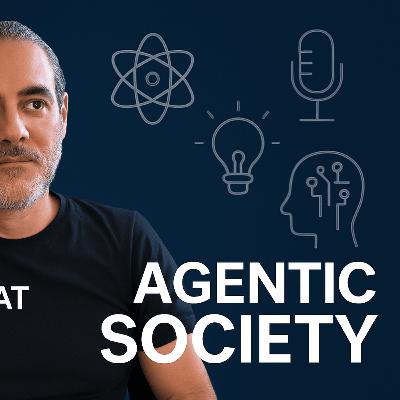
KeywordsAI agents, agentic society, culture, ethics, workforce, education, technology, future generations, automation, human-AI interactionSummaryIn this conversation, Philippe Trounev and Duri Chitayat explore the transformative impact of AI agents on society, culture, and the workforce. Duri shares his insights on how AI can be integrated into company culture, the challenges of teaching AI about human culture, and the implications for future generations growing up in an AI-driven world. They discuss the ethical responsibilities of AI developers and the need for a robust educational framework to prepare for a future where AI plays a central role in our lives. The conversation emphasizes the importance of trust, ethics, and adaptability in navigating the evolving landscape of technology and society.TakeawaysDuri Chitayat emphasizes the need for AI to adapt to human culture.AI agents can fundamentally change business models and operations.Understanding cultural nuances is crucial for effective AI integration.The future workforce will require new skills and adaptability due to AI.Ethics in AI development is essential to prevent negative societal impacts.Trust will become a key factor in human-AI interactions.Education systems must evolve to prepare children for an AI-driven world.Diversity of skills will be important for future job security.Cognitive decline can occur if we rely too heavily on AI.A balance between technology use and human interaction is necessary.TitlesNavigating the Agentic RevolutionAI Agents: Redefining Business and CultureSound bites"Agents must adapt to our culture""We might lose autonomy with AI tools""Prepare for a genetic society"Chapters00:00 Introduction to Agentic Society02:50 Cultural Integration of AI Agents05:25 The Role of AI in Corporate Culture08:12 AI and the Next Generation10:37 Future Workforce and Education13:36 Ethics in AI Development16:04 Preparing for a Genetic Society

SummaryIn this episode, Philippe Trounev and Grant McCracken discuss the evolving landscape of cybersecurity, particularly focusing on the role of agentics and AI in enhancing security measures. They explore the implications of new attack vectors like prompt injection, the potential for agent-to-agent attacks, and the innovative approach of agentic pen testing. Grant shares insights on how AI can improve the efficiency and effectiveness of security testing while emphasizing the importance of foundational cybersecurity practices. The conversation highlights the balance between leveraging advanced technologies and maintaining robust security protocols.TakeawaysCybersecurity is evolving with the introduction of agentics.Fundamentals of cybersecurity remain crucial despite new technologies.68% of data breaches originate from human error.Prompt injection is a significant new attack vector.AI can identify existing vulnerabilities but not create new ones.Agentic pen testing offers continuous, fatigue-free testing.Contextual vulnerabilities are better identified by AI.AI pen testing could reduce costs compared to human testers.Dark Horse aims to make cybersecurity solutions accessible.AI compute costs are high but expected to decrease over time.TitlesThe Future of Cybersecurity: Agentics and AIUnderstanding Cybersecurity in the Age of AISound bites"68% of data breaches start at the human layer.""Prompt injection is a new attack vector.""Agentic pen testing can run 24/7 without fatigue."Chapters00:00 Introduction to Cybersecurity and AI Agents01:42 Changing Attack Vectors in Cybersecurity03:44 Human Layer Vulnerabilities and AI's Role07:13 Prompt Injection and Offensive Strategies11:26 Agentic Systems and Security Risks12:58 Agent-to-Agent Attacks and Communication Risks17:03 Agentic Pen Testing: A New Approach21:33 Cost Efficiency of Agentic Pen Testing24:48 Exciting Developments in AI Pen Testing27:53 Future of Agentic Pen Testing and Market Potential
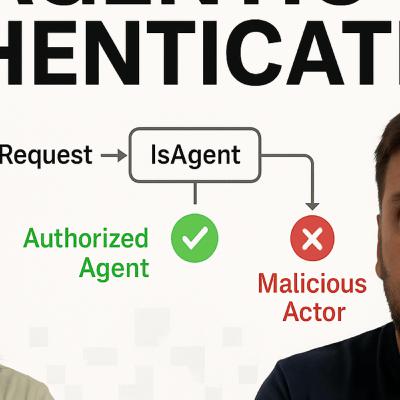
SummaryIn this episode, Philippe Trounev interviews Bobbie Chen, a product manager at Stytch, about the challenges and solutions related to AI agents, particularly in the context of security and fraud prevention. They discuss the concept of agentic experience, the importance of effective authentication methods, and the need for businesses to protect themselves from bad bots. Bobby shares insights on implementing agentic solutions, navigating compliance issues, and the future of fraud prevention in an increasingly automated world.TakeawaysAI agents have unique needs that differ from human users.Agentic experience is crucial for effective interaction with AI.Security measures must evolve to protect against bad bots.Device fingerprinting is a key tool in identifying fraudulent activity.CAPTCHAs are becoming less effective against sophisticated attacks.Shadow banning can be an effective strategy against spammers.Integrating agentic solutions can be quick and efficient.Compliance with regulations like GDPR is essential for businesses.The future of fraud prevention will require constant adaptation.Understanding attack vectors is vital for effective security measures.TitlesNavigating the World of AI AgentsThe Importance of Agentic ExperienceChapters00:00 Introduction to AI Agents and Security Challenges02:51 Understanding Agent Experience05:24 Agent Authentication and Security Risks08:03 Identifying Good and Bad Agents10:38 Defending Against Malicious Bots13:22 Real-World Impacts of Agentic Attacks16:07 Implementing Agentic Solutions18:52 Future of Fraud Prevention and Agentic Technology21:47 Navigating Privacy and Compliance Issues24:29 Final Thoughts on AI Agents and Security

KeywordsAI, drug discovery, Pauling.AI, language models, FDA approvals, automation, inhibitors, in silico experiments, agentic prompts, healthcareSummaryIn this conversation, Javier Tordable from Pauling.AI discusses the innovative approach to drug discovery using AI and language models. He explains the mission behind the company, the challenges of FDA approvals, and the automation of literature reviews and simulations. The discussion also covers the importance of inhibitors in drug discovery, the differences between in silico and wet lab experiments, and the need for adaptability in AI models. Tordable emphasizes the significance of the mission in improving healthcare and the potential for partnerships in the drug discovery process.TakeawaysPauling.AI aims to shorten drug discovery time significantly.AI-generated drugs follow the same FDA approval process as traditional drugs.Language models excel at reviewing and summarizing prior research.Automation of initial simulations can save weeks of work.Most drugs developed are inhibitors, which block specific biological processes.In silico experiments are a focus for Pauling.AI, differentiating from wet lab experiments.The risk of hallucinations in AI requires careful management in drug discovery.Adapting to rapid changes in AI models is crucial for success.Human-initiated interactions guide the AI agents' processes.The mission of drug discovery is to improve lives, not just profit.Sound bites"Most drugs are inhibitors.""We focus on in silico experiments.""Human-initiated interaction is key."Chapters00:00 Introduction to Agentic Drug Discovery02:15 The Role of AI in Drug Discovery04:55 Current State of AI-Driven Drug Development07:25 Challenges in Drug Discovery and AI Integration10:04 Optimizing AI Agents for Drug Discovery12:53 Human-AI Collaboration in Drug Discovery15:39 Future of AI in Drug Discovery18:13 Insights and Best Practices for Building AI Agents21:10 The Economics of Drug Discovery23:41 Conclusion and Future Directions
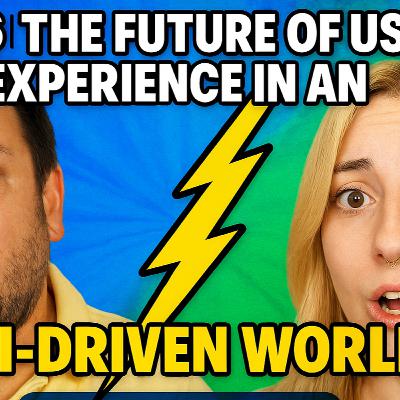
In this episode, Ginny Delaiter, founder and CEO of BDS Digital Agency, discusses the intersection of user experience (UX) and artificial intelligence (AI) in marketing. She emphasizes the importance of integrating AI into UX design while maintaining a human-centered approach. The conversation explores how AI can enhance user experience, the need for accessibility in AI-driven designs, and the evolving landscape of UI/UX as AI becomes more prevalent. Ginny shares insights on best practices for adapting websites for AI agents and the importance of educating users about new technologies.takeawaysUser experience should be the center of the product.AI gives us open doors to do faster work and better work.We need a human interloop in the process of UX design.Blocking the agent means losing traffic and visibility.Agents are smarter than traditional search engines like Google.UX strategies need to be done by humans, not just AI.Don't say no and refuse everything new; adapt to change.A good website should be understood by both people and AI.UX is all about education and guiding users through the experience.We need to think about different personas in UX design.
Featuring Adrian Greyvenstein, Growth & Partnerships Lead at Melio AI🎙️The podcast is hosted by Phillipe Trounev, Founder of Docsie.io and videodokuta.com, and it's your go-to resource for exploring the rapidly evolving world of AI agents. Don't miss this exciting conversation! 🎧
Featuring Adrian Greyvenstein, Growth & Partnerships Lead at Melio AI🎙️The podcast is hosted by Phillipe Trounev, Founder of Docsie.io and videodokuta.com, and it's your go-to resource for exploring the rapidly evolving world of AI agents. Don't miss this exciting conversation! 🎧
Featuring Adrian Greyvenstein, Growth & Partnerships Lead at Melio AI🎙️The podcast is hosted by Phillipe Trounev, Founder of Docsie.io and videodokuta.com, and it's your go-to resource for exploring the rapidly evolving world of AI agents. Don't miss this exciting conversation! 🎧

Comments

Download from Google Play

Download from App Store
 United States