


 Claim Ownership
 The After-Action Report
The After-Action ReportSubscribed: 5Played: 42
Subscribe

© Seth Hettena
Description
Unveiling hidden truths about military special operations and intelligence operations
theiceman.substack.com
theiceman.substack.com
11 Episodes
Reverse
I was lucky to have the chance to talk to Robin J Brooks, who is a former FX strategist at Goldman Sachs and formerly the chief economist at the Institute for International Finance. He’s been writing a lot on the oil crisis here on Substack, and we had a great conversation about oil prices, oil shocks, and where things are headed. Here’s the transcript, which has been lightly edited for clarity.============================================================TRANSCRIPT: Seth Hettena interviews Robin Brooks============================================================SETH:All right, everybody. Thank you for joining us. I’m joined today by Robin Brooks. Robin, as most of you know, is a prolific Substacker who has been writing quite eloquently and prolifically about the price of oil and the gyrations in the markets we’ve seen recently. Robin is a senior fellow at the Brookings Institution in Washington. He’s also former chief strategist for the financial markets at Goldman Sachs. He has a PhD in economics.The goal of this conversation is — I’m not an economist — but I’m hoping it will be accessible to people who are well-versed in the financial markets and those who are just interested in trying to understand what’s going on. I’ve kind of designed the chat around that.Just to get started, let’s start with some basics here, Robin. Because the numbers are confusing. If you’re not well versed in the financial markets and you hear oil is at a hundred, you go on Google and it says 94, 89, whatever it is. What’s going on? Why are there different prices of oil?ROBIN BROOKS:Thanks for having me, Seth. This is really fun to do. I, like you, really enjoy Substack, and I kind of believe that there’s a niche or a demand for accessible financial market research. I really appreciate this opportunity to try and promote that and talk about what I think is going on.So let’s start with oil and how that market works. Obviously, there’s oil drilling that happens all around the world. The United States is a prolific driller. The Europeans, much less so. The UK is a driller. The Norwegians are drillers. And the vast majority of oil is produced in the Persian Gulf.To give you a rough idea — and I’ll just throw out a few stats on the global market — total production is around 100 million barrels per day. One barrel, I think, is 42 gallons. Of that, through the Strait of Hormuz, which is a passage around 20 to 22 miles wide, about 20 million barrels a day pass, mostly from Saudi Arabia. The Saudis are, I think, 30 or 40% of total traffic, then Iraq, and then a number of other countries like the UAE, Kuwait, and Iran. Russia, to give another example, produces about 10 million barrels of oil per day, of which it exports seven. The U.S. is a humongous producer — it’s the world’s biggest — but since we’re big gas guzzlers, we consume everything here at home, so we’re not big net exporters. We are a net exporter, which I’ll come back to in a second.So there are, given that geography, three key prices. One is WTI, which is the benchmark price for the United States — that stands for West Texas Intermediate. There are different grades, but you can think of WTI as the reference price for oil traded in the United States. Then there’s Brent, which is the benchmark global price, thought of as a European price, but really it’s a global price — I’ll come back to why in a second. And then there’s oil traded in the Gulf and across Asia: Dubai Fateh oil. That’s a third price.The reason Brent is this global reference rate is because it sits — and it’s doing it right now — in between Dubai and WTI. WTI has risen the least during this latest oil shock. Why? Because the United States is relatively independent in terms of importing oil. We are a net exporter. The closure or significant impairment of the Strait of Hormuz means that 20 million barrels of oil per day has shrunk significantly, and so Dubai crude has risen much more. Brent sits in the middle, closer to WTI than to Dubai, but it’s risen less.There’s a fourth oil price that really matters in this conflict: gasoline prices here in the United States. So there’s WTI, Brent, Dubai, and then the average gasoline price at the pump per gallon. Think about it this way — what the Iranians are trying to do, they have no prayer of matching the U.S. militarily. Can’t happen. But they can push up oil prices. The hope they have is that they inflict so much political damage on Trump here domestically that continuing the war just becomes too painful for the president. We have midterms later this year. Those midterms are incredibly important for the president because who knows what might happen if the Democrats win both houses. The Iranian hope is to push up oil prices so much that continuation of this war becomes impossible.As some people may know, I did a podcast — a similar Substack podcast — with Paul Krugman, the Nobel Prize-winning economist, that was published on Saturday. There was a lot of Q&A after that, and I put out a Q&A on oil prices and the energy shock today on my Substack. You can think of WTI since the shock as having risen about 45 to 50 percent, Brent having risen 65 percent, and Dubai having risen around 120%. That gives you an idea of the regional disparities. U.S. gasoline prices at the pump are up around 35%.That tells you two things. One, the global oil market is global. If oil prices in the Middle East and Asia go up, at some point it’ll become economical to shift oil that would have been consumed in the United States. Outside the United States, you have to cover the transportation costs. The transportation routes are long. But at some point, arbitrage starts to kick in, which is why, even though we are an oil exporter, our own oil prices and gasoline prices have risen. We can’t isolate ourselves completely.It’s also true that gasoline prices at the pump here in the United States have risen much less than, say, Dubai — like a quarter as much. Do I think the mullahs in Iran have massive leverage on Trump? I think that tends to get overplayed in a lot of the coverage. After Russia invaded Ukraine in 2022, the price of a gallon of gasoline rose to around $5 that summer. We are below $4 now — we’re at $3.90. It just isn’t the same kind of crisis that we had back then.SETH:Gas prices are almost a political benchmark for presidential popularity in some cases. If you want to follow where gas prices are headed, is WTI the index to watch?ROBIN BROOKS:Yes. Since this is all about putting political pressure on Trump — that’s the one card the Iranians can play — it’s really WTI that matters, and really it’s U.S. gasoline prices that matter. Those can differ from WTI because, of course, there are margins. If people feel like they can get away with charging more for gasoline, they’re going to jack up the margins. So there can be differences between those two. But the U.S. is what matters.SETH:I want to turn to oil shocks. My first political memory — I’m 56 now — was waiting in line at a gas station in New York and being turned away because they ran out of gas. That was after the ‘73 oil crisis, which was the first major oil shock and perhaps one of the biggest. Oil shocks are really interesting to me. They’re interesting to you, but for different reasons, because obviously they affect the financial markets, but they’re also geopolitical and they presage huge changes in world order sometimes. The ‘73 oil crisis led to our close alliance with Saudi Arabia. The ‘79 oil crisis with Iran — which is being repeated again — led to basically doubling down with Saudi Arabia, ended our relationship with Iran, and led to the U.S. seeing the Middle East as a major strategic asset. That’s why we are where we are today — since then, we’ve had troops and ships and a big military presence in the Middle East.But you’ve argued that while we’re seeing an oil shock, it’s somewhat contained — comparable to what we saw after the Russian invasion of Ukraine. Can you walk us through that?ROBIN BROOKS:Let me say a couple of things. Let me start by saying: if you have a shock and disruption in the supply of oil, that doesn’t mean oil prices go to the moon. We’re not in a world where oil prices go to 200, 300, 400, 500. The question is a step change. Are we going from $73 a barrel — roughly where we were before the attack on Iran, February 27th, we all woke up on the 28th going, oh my God, what’s happening now? — to $100, which is where we are right now? Or should they be $150? Or $200? We’re not talking about $1,000. Why? Because $1,000 would cause such demand destruction that oil prices would then fall — you’d have a reverse dynamic. The only reason I’m highlighting this is because this is really a discussion about the magnitude of a risk premium: how much of a level shift does the disruption in the Strait of Hormuz imply? I’ll go through two quick calculations in a second.The other thing I want to say — and I don’t want to sound too conspiratorial here — is that I did lots of work on Russia sanctions after Russia invaded Ukraine. The thing that drove me completely nuts was Western commodity analysts and journalists — I’m not going to name any names, but they’re very visible, everyone’s going to know who I’m talking about — basically doing the bidding of the oil industry and making apocalyptic forecasts. Often those forecasts were basically lobbying against any kind of U.S. or European sanctions pressure against Russia.I’ll give you an example. In 2022, after Russia invaded Ukraine, the West decided to cap the oil revenue that Russia gets from oil prices. It took almost a year to get this done — which is always bad, because one year of design for any kind of policy means you are going to be lobbied really hard. One U.S. investment bank has a commodity team headed by a woman with a very Russian-sounding name. They put out a forecast that summer of close to $400 a barrel, basically saying if the G7 oil price cap on Russia happened, the o
Thank you Jack Poulson, Aya, jfgfollows, Margaret Saracco, and many others for tuning into my live video with Shawn Howard AVDD! Join me for my next live video in the app. This is a public episode. If you'd like to discuss this with other subscribers or get access to bonus episodes, visit theiceman.substack.com/subscribe
This is a public episode. If you'd like to discuss this with other subscribers or get access to bonus episodes, visit theiceman.substack.com/subscribe

On March 4, 2002, deep in the snow-covered peaks of Afghanistan, Air Force Combat Controller John Chapman died in one of the most heroic actions of the war. Years later, a grainy, infrared video of his last stand—fighting alone against a superior enemy force—shocked the nation and earned him the Medal of Honor.But how that video came to light is a story few know.In this episode of The After Action Report, I speak with Frank Dailey, a former Air Force intelligence analyst who was on the inside from day one. Dailey walks us through the operation that led to Chapman’s death, the initial attempts to bury the video, and the internal resistance from SEALs who didn’t want the narrative to change. It’s a conversation about truth, power, and the quiet battle waged to honor a fallen hero the right way.If you care about accountability in elite military units, intelligence ethics, and what it really takes to speak truth to power in Washington, don’t miss this one.🎧 Listen now on YouTube, Spotify, or wherever you get your podcasts. 📌 Andrew Milani's paper on Takur Ghar: Pitfalls of Technology: A Case Study of the Battle on Takur Ghar Mountain, Afghanistan, available at: https://apps.dtic.mil/sti/citations/ADA414541Theme music by Ryan HettenaTitle card by Dean LubenskyListen on Apple Podcasts:Listen on Spotify: This is a public episode. If you'd like to discuss this with other subscribers or get access to bonus episodes, visit theiceman.substack.com/subscribe
Retired police officer Matt Cubbler opens up about his years-long quest to uncover the truth behind the suspicious death of Navy SEAL Commander Job Price, his high school classmate. Cubbler pulls no punches as he exposes glaring holes in the official investigation, explores the hidden pressures of elite military life, and shines a light on troubling patterns of secrecy and corruption within the SEAL community.#Jobprice #Mattcubbler #navyseals #sealteam6 #investigations #military #militarycorruption #suspiciousdeath #crimestory #crimesceneinvestigation #forensicanalysis #justice This is a public episode. If you'd like to discuss this with other subscribers or get access to bonus episodes, visit theiceman.substack.com/subscribe
Before dawn on March 4, 2002, a U.S. special operations team landed on an Afghan summit — and into an ambush. What followed was a brutal firefight, two Medals of Honor, and a decades-long battle over the truth. I’m joined by retired Air Force Chief Master Sergeant Rob Harrison and retired Navy SEAL Eric Deming, two veterans with firsthand knowledge of the fight and its impact on the special operations community, to break down what really happened on Takur Ghar.Email Eric Deming at e.d.215 (at) protonmail.comTheme music by Ryan HettenaListen on Apple Podcasts: Listen on Spotify: This is a public episode. If you'd like to discuss this with other subscribers or get access to bonus episodes, visit theiceman.substack.com/subscribe
Why are we still talking about Takur Ghar, 23 years later?In this episode of The After-Action Report, I’m joined by Sean Naylor, a seasoned journalist and author who was embedded with the 101st Airborne during Operation Anaconda in 2002. For more than two decades, Naylor has been digging into the battle on Takur Ghar, uncovering the hard lessons and lingering controversies that still shape military thinking today.We dive into the operational missteps, the impact of command decisions, and the ongoing debates surrounding military honors—including the Medal of Honor awarded to John Chapman. Sean also shares his perspective on the challenges of reporting in military environments and offers insight into his latest work, covering the mysterious Havana Syndrome affecting diplomats and spies.* Buy Sean’s 2005 book, Not a Good Day to Die, on Amazon. * Read Sean’s 2016 interview with Britt Slabinski in The New York Times.* Sean’s explosive 2018 report in Newsweek.* His report this month is in Air & Space Forces magazine.* Don’t miss Sean’s explosive report on Havana Syndrome in The High Side.Credits: Theme music by Ryan HettenaDownload on Apple PodcastsOr Spotify This is a public episode. If you'd like to discuss this with other subscribers or get access to bonus episodes, visit theiceman.substack.com/subscribe
In this episode of The After-Action Report, Air Force veteran Rob Harrison recounts his experiences during the 2002 battle of Takur Ghar in Afghanistan, where he witnessed the extraordinary heroism displayed by Air Force combat controller John Chapman. He sheds light on the controversy surrounding Chapman’s Medal of Honor, the complex upgrade process, and the Navy SEALs’ unprecedented efforts to challenge his recognition. Harrison offers a gripping firsthand account of the battle, the soldiers’ struggles, and the continuing fight to honor Chapman’s legacy.Download on Apple PodcastsOr Spotify This is a public episode. If you'd like to discuss this with other subscribers or get access to bonus episodes, visit theiceman.substack.com/subscribe
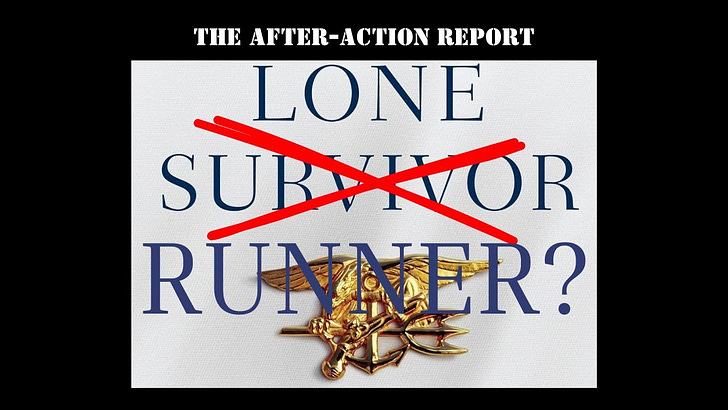
Retired Navy SEAL Eric Deming is back to tell all about Marcus Luttrell's training failures and the disastrous events of Operation Red Wings, which became widely known through the book and film Lone Survivor. If you want to watch the podcast check out the link below: Operation Red Wings has some eerie similarities to the subject of our last podcast, the Battle of Takur Ghar, better known as Roberts Ridge. Once again, a SEAL team was ambushed after landing a helicopter on a mountaintop in Afghanistan. And just as in Roberts Ridge, a rescue helicopter rushes to the scene and is shot down with even more lives lost. Was it just a coincidence? Did the SEALs fail to learn from their mistakes? Deming stresses the importance of accountability, leadership's impact on military operations, and the need for transparency within the SEAL community. He also highlights the emotional toll on SEALs and their families from false narratives, advocating for truth to honor fallen heroes' sacrifices.It’s also available on Apple Podcasts:And Spotify: This is a public episode. If you'd like to discuss this with other subscribers or get access to bonus episodes, visit theiceman.substack.com/subscribe
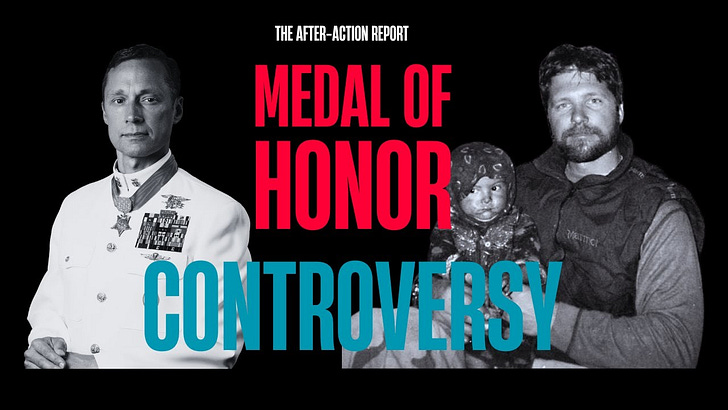
Retired Navy SEAL Eric Deming joined me on the latest After-Action Report podcast to discuss what happened on March 4, 2002, on Takur Ghar mountain in Afghanistan—events that resulted in the deaths of seven service members and two Medals of Honor, one of which remains hotly contested.A video version of this podcast is available on YouTube:It’s also available on Apple Podcasts: And Spotify: This is a public episode. If you'd like to discuss this with other subscribers or get access to bonus episodes, visit theiceman.substack.com/subscribe
Dr. Samantha Crompvoets, Ph.D is a sociologist with over 20 years of experience who has conducted extensive empirical research for Australia's Department of Veterans’ Affairs and Department of Defence.Read her 2016 paper that touched off the investigation of war crimes in Australia's Special Operations Command. Additional background on the Brereton Report.Dr. Crompvoets book, Blood Lust, Trust & Blame, is available on Amazon.For a good overview of the sensational libel of Australia's most-decorate soldier, check out the Guardian's podcast, Ben Roberts-Smith vs. The Media.Thanks to Ryan Hettena for the theme music and Erik Carstensen for help with production. This is a public episode. If you'd like to discuss this with other subscribers or get access to bonus episodes, visit theiceman.substack.com/subscribe
Comments


Download from Google Play

Download from App Store
 United States