


 Claim Ownership
Global Infrastructure Sherpa Podcast
Subscribed: 0Played: 0
Subscribe

© Global Infrastructure Sherpa
Description
GIS offers two premier business solutions: M&A Deal Sheets, which present concise summaries and analyses of recent M&A transactions, and Competitive Intelligence Reports, a deep dive into the investment strategies of market leaders.
globalinfrastructuresherpa.substack.com
globalinfrastructuresherpa.substack.com
11 Episodes
Reverse

As the global economy electrifies and digitizes simultaneously, one input remains absolutely fixed: land. Yet few investors are paying attention to how valuable it’s become—not for speculation, but for long-duration leases tied to infrastructure-grade demand.In this episode, I expand on this week’s premium article to explore:* Why developers of solar farms, battery parks, and AI compute centers all require the same kind of land* The overlooked economics of 25–40 year land leases with CPI-linked escalators* The structural tailwinds benefitting publicly listed landowners, from REITs to utilities and surface rights holders* How a handful of companies are stacking lease revenue on top of existing asset bases—with minimal incremental riskWhether you’re focused on real assets, income strategies, or infrastructure optionality, this episode offers a second-layer map of who’s really positioned to win. Get full access to Global Infrastructure Sherpa at globalinfrastructuresherpa.substack.com/subscribe
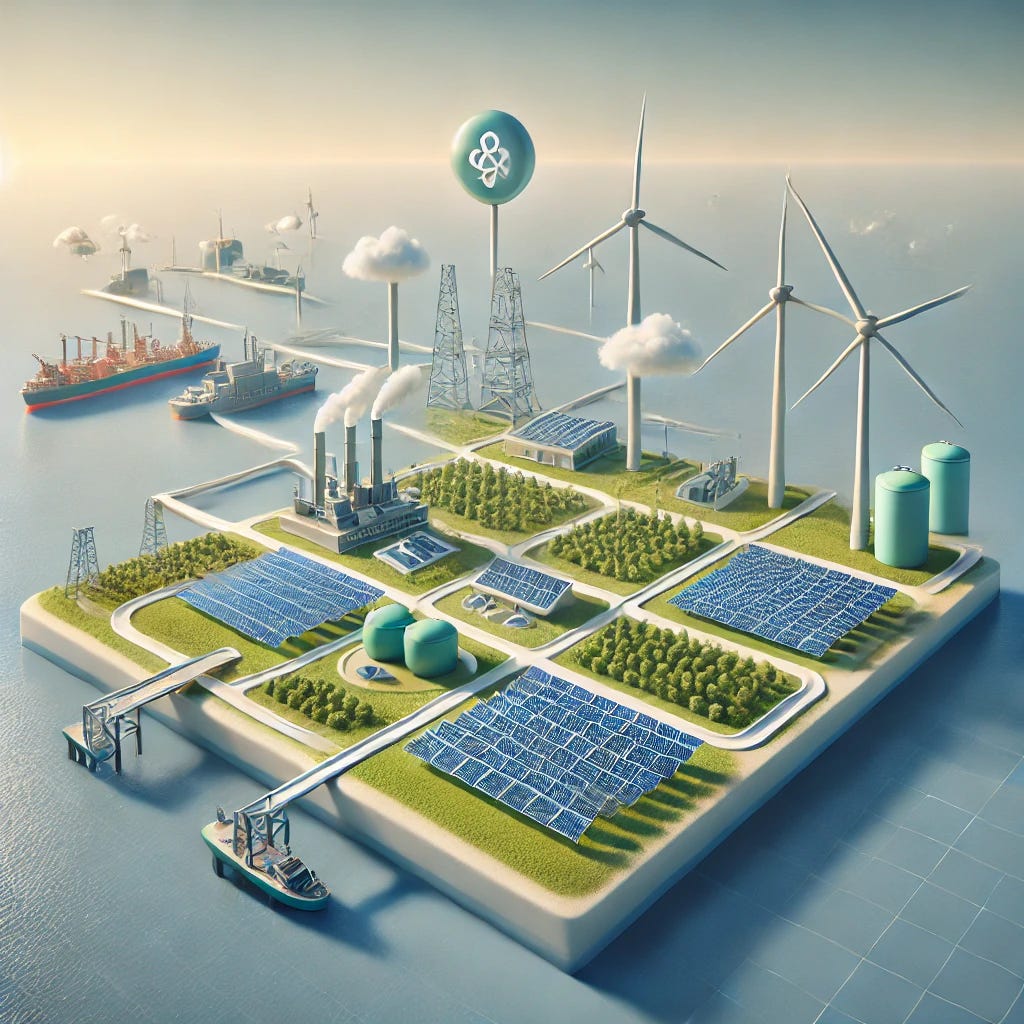
Overview:In this episode of Global Infrastructure Sherpa, we examine Copenhagen Infrastructure Partners’ (CIP) extensive joint venture strategy across the renewable energy landscape. Operating in diverse markets such as India, Denmark, the U.S., Chile, Indonesia, and the Netherlands, CIP collaborates with leading players like Amp India, Vestforbrænding, Avangrid, and Vattenfall. We’ll explore how these partnerships range from project-specific developments to broader operational alliances and equity investments. Tune in as we highlight key initiatives like the Vineyard Wind project in the U.S. and Chile’s HNH green hydrogen venture, unpacking the strategic importance of such large-scale collaborations in the global energy transition.This report has been prepared based on publicly available information and is intended for informational purposes only. While every effort has been made to ensure the accuracy and completeness of the information contained herein, we make no guarantee, warranty, or representation, express or implied, as to its accuracy or reliability. Any actions or decisions taken based on the information presented in this report are at the sole discretion and risk of the reader. We expressly disclaim any and all responsibility or liability for any direct, indirect, or consequential loss or damages that may arise from reliance on the information contained in this report. Before making any decisions based on the content of this report, you are advised to consult with a qualified professional or trusted advisor. Get full access to Global Infrastructure Sherpa at globalinfrastructuresherpa.substack.com/subscribe

In this podcast episode, we break down some of the biggest recent moves in the infrastructure and investment world this week.This weeks’ free podcast covers transactions by Goldman Sachs, Blackstone, Gazprom, Enel Green Power, Potentia Energy, GoZero Group, Altus Power, StackAdapt, Inpex, FirstLight fiber, Brookfield, Encore Renewable Energy, Kodiak Gas, EQT and many others.This podcast has been prepared based on publicly available information and is intended for informational purposes only. While every effort has been made to ensure the accuracy and completeness of the information contained herein, we make no guarantee, warranty, or representation, express or implied, as to its accuracy or reliability. Any actions or decisions taken based on the information presented in this report are at the sole discretion and risk of the reader. We expressly disclaim any and all responsibility or liability for any direct, indirect, or consequential loss or damages that may arise from reliance on the information contained in this report. Before making any decisions based on the content of this report, you are advised to consult with a qualified professional or trusted advisor. Get full access to Global Infrastructure Sherpa at globalinfrastructuresherpa.substack.com/subscribe

In this podcast episode, we break down some of the biggest recent moves in the infrastructure and investment world this week.The podcast covers, among others, Brookfield financing to Encore Renewable Energy to support its solar and energy storage portfolio. Tikehau Capital’s acquisition of German engineering advisory firm TTSP HWP, with DC Advisory serving as financial advisor. PAI Partners negotiations to acquire a majority stake in aviation services firm Alvest. We also discuss QIC debt financing transaction for Ridgewood Infrastructure’s APP Jet Centre, a U.S.-based airplane hangar infrastructure portfolio.We cover how Databricks secured funding from investors including Temasek Holdings, Qatar’s sovereign wealth fund, and Meta Platforms. We discuss Blackstone plans to acquire a $1 billion power plant in Virginia near data centers and how Brookfield has closed two real estate deals in Japan, including a stake in a luxury hotel in Tokyo, AviAlliance has finalized its acquisition of AGS Airports and many others.This podcast has been prepared based on publicly available information and is intended for informational purposes only. While every effort has been made to ensure the accuracy and completeness of the information contained herein, we make no guarantee, warranty, or representation, express or implied, as to its accuracy or reliability. Any actions or decisions taken based on the information presented in this report are at the sole discretion and risk of the reader. We expressly disclaim any and all responsibility or liability for any direct, indirect, or consequential loss or damages that may arise from reliance on the information contained in this report. Before making any decisions based on the content of this report, you are advised to consult with a qualified professional or trusted advisor. Get full access to Global Infrastructure Sherpa at globalinfrastructuresherpa.substack.com/subscribe

Today we're diving into a groundbreaking development that's shaking up the tech world. A Chinese AI startup named DeepSeek has recently launched an AI Assistant that has climbed to the top of Apple's App Store in the United States, surpassing even ChatGPT.DeepSeek's innovative approach utilizes lower-cost chips and less data, challenging the long-held belief that advanced AI development requires substantial investments in high-end hardware. This paradigm shift has led to significant market volatility, with tech giants like Nvidia, Microsoft, and Meta experiencing notable declines in their stock prices. Investors are now questioning the future demand for high-tech chips and the overall direction of AI investments.In today's episode, we'll explore the implications of DeepSeek's rise, the reactions from Western tech companies, and what this means for the future of artificial intelligence. Stay tuned as we delve into this unfolding story.This report has been prepared based on publicly available information and is intended for informational purposes only. While every effort has been made to ensure the accuracy and completeness of the information contained herein, we make no guarantee, warranty, or representation, express or implied, as to its accuracy or reliability. Any actions or decisions taken based on the information presented in this report are at the sole discretion and risk of the reader. We expressly disclaim any and all responsibility or liability for any direct, indirect, or consequential loss or damages that may arise from reliance on the information contained in this report. Before making any decisions based on the content of this report, you are advised to consult with a qualified professional or trusted advisor. Get full access to Global Infrastructure Sherpa at globalinfrastructuresherpa.substack.com/subscribe

In this episode, we break down some of the biggest recent moves in the infrastructure and investment world. Aligned Data Centers raised a massive $12 billion to ramp up capacity for the booming AI and cloud sectors, while Allianz Global Investors and the EIB secured $491 million for a climate action fund aimed at emerging markets. Brookfield made waves with a $1 billion purchase of Divvy Homes' portfolio, and CalPERS shook things up with a multi-billion-dollar private equity sale to Ardian, AlpInvest, and Partners Group. We also dive into major renewable energy investments, including €400 million for German battery storage, and Stonepeak’s latest push into private credit with the Boundary Street Capital acquisition. Plus, Blackstone’s power plant buy in Virginia and Qatar’s bet on Instabase.This podcast has been prepared based on publicly available information and is intended for informational purposes only. While every effort has been made to ensure the accuracy and completeness of the information contained herein, we make no guarantee, warranty, or representation, express or implied, as to its accuracy or reliability. Any actions or decisions taken based on the information presented in this report are at the sole discretion and risk of the reader. We expressly disclaim any and all responsibility or liability for any direct, indirect, or consequential loss or damages that may arise from reliance on the information contained in this report. Before making any decisions based on the content of this report, you are advised to consult with a qualified professional or trusted advisor. Get full access to Global Infrastructure Sherpa at globalinfrastructuresherpa.substack.com/subscribe

This podcast covers several deals in the infrastructure space this past week. For example, KKR and PSP Investments acquired a minority stake in two American Electric Power (AEP) transmission companies for $2.82 billion. This investment focuses on modernizing infrastructure and improving grid reliability, addressing the growing demand for electricity in the U.S.AEP will retain majority ownership and operational control of the assets, while the partnership positions KKR and PSP Investments to benefit from the expanding energy sector and the increasing need for dependable power transmission. This transaction highlights the critical role of private capital in enhancing the nation’s energy infrastructure. Get full access to Global Infrastructure Sherpa at globalinfrastructuresherpa.substack.com/subscribe

NVIDIA Corporation has emerged as a driving force behind the twin revolutions of accelerated computing and generative artificial intelligence, achieving record-breaking financial results in 2024. With revenues soaring 126 percent to $60.9 billion, the Silicon Valley giant is not only dominating the tech industry but is also reshaping global economies and industries.Under the leadership of CEO Jensen Huang, NVIDIA has transitioned from its roots in gaming GPUs to become a key player in artificial intelligence and data center technologies. Its products now power advancements in healthcare, automotive, manufacturing, and climate science. Huang calls this the dawn of a generative industrial revolution, a vision that places NVIDIA at the center of a profound technological transformation.Generative artificial intelligence, which can create text, images, and even biochemical structures from simple prompts, has become the defining technology of this era. NVIDIA’s Hopper GPU platform, alongside its cutting-edge Blackwell architecture, has enabled the development of trillion-parameter AI models that are driving breakthroughs across industries.In healthcare, NVIDIA’s AI tools are accelerating drug discovery. Companies like Genentech and Amgen are leveraging NVIDIA’s BioNeMo platform to analyze protein structures and design new therapeutics. Automotive manufacturers, including Mercedes-Benz and BYD, are adopting NVIDIA’s AI systems to build AI-defined vehicles with capabilities ranging from autonomous driving to personalized user experiences.In manufacturing, NVIDIA’s Omniverse platform allows companies to create digital twins of factories. These virtual models simulate and optimize production processes, reducing costs and accelerating innovation. The platform is gaining traction among industrial leaders such as Siemens and Dassault Systèmes.A trillion dollars worth of existing data centers needs to be modernized to meet the growing demand for AI computing, and NVIDIA is capitalizing on this opportunity. Its GPUs are central to this shift, providing significantly higher energy efficiency compared to traditional CPU-based systems. NVIDIA claims its accelerated computing solutions could save 19 terawatt-hours of electricity annually, equivalent to taking nearly three million cars off the road.While these energy-saving promises are enticing, critics caution that achieving such sustainability gains requires widespread adoption of NVIDIA’s systems, which may not occur as quickly as the company predicts.NVIDIA’s growth comes with challenges. The company relies heavily on Taiwan Semiconductor Manufacturing Company for its chips, making it vulnerable to geopolitical tensions between the United States and China. Supply chain disruptions could impact its ability to meet surging global demand for AI infrastructure.Governments are also becoming wary of NVIDIA’s growing influence. Countries like Canada, France, and India are building AI infrastructure with NVIDIA’s tools, but this reliance on a single corporation raises concerns about technological sovereignty. Regulators are watching closely as the company consolidates its position in the AI ecosystem.NVIDIA promotes generative AI as a tool to augment human capabilities and boost productivity, but there is growing concern about its impact on jobs. The automation of complex tasks threatens to displace workers across industries, from logistics to healthcare. While NVIDIA’s technology promises efficiency and innovation, the broader social implications remain uncertain.One of NVIDIA’s greatest strengths is its ecosystem, which includes nearly five million developers and partnerships with more than 40,000 companies. This interconnected network creates a cycle of innovation that drives demand for NVIDIA’s hardware and software while attracting more developers. The company’s CUDA platform, a key enabler of accelerated computing, has become an industry standard.This ecosystem has made NVIDIA the linchpin of the AI revolution, giving it unparalleled influence over the future of computing and industry. As generative AI becomes integral to everything from business processes to national security, NVIDIA’s central role is likely to grow.NVIDIA’s vision for the future extends far beyond its current achievements. The company aims to power AI factories that will produce intelligence as efficiently as power plants generate electricity. These factories will underpin industries worth trillions of dollars and redefine how economies operate.However, the road ahead is fraught with risks. From regulatory scrutiny to geopolitical tensions and ethical dilemmas, NVIDIA faces significant hurdles. Its ability to navigate these challenges will determine whether it emerges as the hero of this new era or becomes a cautionary tale.For now, NVIDIA’s success signals the arrival of a new industrial revolution, one where computing power and artificial intelligence shape the world’s future. Whether this transformation leads to universal progress or deepened inequalities remains a question that governments, industries, and societies must grapple with.This report has been prepared based on publicly available information and is intended for informational purposes only. While every effort has been made to ensure the accuracy and completeness of the information contained herein, we make no guarantee, warranty, or representation, express or implied, as to its accuracy or reliability. Any actions or decisions taken based on the information presented in this report are at the sole discretion and risk of the reader. We expressly disclaim any and all responsibility or liability for any direct, indirect, or consequential loss or damages that may arise from reliance on the information contained in this report. Before making any decisions based on the content of this report, you are advised to consult with a qualified professional or trusted advisor. Get full access to Global Infrastructure Sherpa at globalinfrastructuresherpa.substack.com/subscribe

What Does PSP Investments Put Its Money Into—And Why?The Public Sector Pension Investment Board (PSP Investments) is one of Canada's largest pension investors, managing $264.9 billion in assets as of the end of its 2024 fiscal year. Founded to safeguard the retirement futures of public sector workers, members of the Canadian Forces, and the Royal Canadian Mounted Police, PSP’s investment choices reflect a careful balancing act: achieving high returns while keeping risks in check. A Portfolio Built on DiversificationPSP Investments takes a global, multi-asset-class approach, allocating capital across equities, private assets, real estate, and infrastructure. The philosophy is clear: diversify to protect against market downturns while delivering consistent, long-term returns.At the heart of PSP’s portfolio are capital markets, which account for 42.2% of its net assets under management (AUM). This segment focuses on public equities and forms the foundation of PSP’s strategy. Yet it’s the private equity portfolio that stands out, boasting a robust 14.8% five-year annualized return. This segment accounts for $40.4 billion (15.3% of total AUM) and focuses on high-growth, scalable investments across industries ranging from technology to insurance.On the real assets side, infrastructure investments play a pivotal role, with $34.5 billion allocated to projects such as renewable energy and utilities. PSP's infrastructure portfolio, which includes wind farms across Canada and a controlling stake in Athens International Airport, aims to provide inflation-protected returns—a crucial feature for pension liabilities tied to long-term inflation risks.Natural resources—think timberland and agriculture—make up 5.7% of the portfolio, adding an element of downside protection thanks to their uncorrelated performance with traditional markets. PSP is now one of the world’s largest owners of farmland and forests.The Canadian FactorDespite its global reach, PSP remains tied to its home market. About 19% of its assets are invested in Canada, with significant holdings in real estate, public equities, and infrastructure. For example, its recent acquisition of Hydroméga Services Inc. expanded its renewable energy footprint domestically, adding 2,000 MW of wind, solar, and hydro projects to its pipeline. Hydroméga’s long-standing collaboration with Indigenous communities aligns with PSP’s broader ESG priorities.PSP’s Canadian investments are not just about patriotism. They reflect a strategy to anchor its portfolio with assets that deliver stable, inflation-sensitive returns, such as infrastructure projects. The firm has also backed local innovation, partnering with venture capital managers like Radical Ventures to tap into emerging tech trends.Betting Big on Private MarketsA defining characteristic of PSP’s portfolio is its tilt toward private markets, which now account for nearly 50% of its AUM. The rationale is simple: while private assets are less liquid, they offer higher returns and diversification benefits compared to public markets. Infrastructure, real estate, and private equity are all designed to match the liabilities of its pension plans, which stretch decades into the future.Private equity investments reflect PSP’s willingness to double down on sectors it understands well. Its initial 2015 investment in Amwins Group, a U.S.-based specialty insurance broker, has been a resounding success. The deal paved the way for further investments in Alliant Insurance Services and Convex Group, building a network across the specialty property and casualty insurance sector. These investments have consistently outperformed, even amid economic headwinds.Specific Examples of InvestmentsPSP Investments’ portfolio is a rich tapestry of projects and assets spanning multiple sectors and geographies, reflecting its commitment to diversification and resilience. Among its recent high-profile investments is the acquisition of Hydroméga Services Inc., a Canadian renewable energy producer with a development pipeline of over 2,000 MW across wind, solar, storage, and hydroelectric projects. This acquisition not only bolstered PSP’s renewable energy footprint but also underscored its dedication to sustainable investing. Hydroméga has long been a pioneer in renewable energy development and operations in Québec and Ontario, and the deal includes partnerships with Indigenous communities, providing shared economic benefits and fostering long-term local engagement.In infrastructure, PSP significantly expanded its aviation portfolio by increasing its stake in Athens International Airport to over 50% during the airport’s IPO in early 2024. Athens International Airport, one of Europe’s fastest-growing hubs, welcomed 28.2 million passengers in 2023—a 24% year-on-year increase—and was named “Best Airport in Europe” by ACI EUROPE in its size category. Managed through PSP’s subsidiary AviAlliance, the asset exemplifies PSP’s strategy of investing in inflation-protected, high-performing infrastructure with stable cash flows.Another standout investment lies in PSP’s natural resources portfolio, which is now valued at $15.2 billion. This includes timberland and agricultural assets designed to provide diversification and inflation protection. A notable initiative within this space is Mosaic Forest Management’s BigCoast Forest Climate Initiative, which deferred logging on 40,000 hectares of private land in British Columbia, generating carbon credits under the Verified Carbon Standard. This program aligns with PSP’s commitment to sustainability while offering strong downside protection in volatile markets.In private equity, PSP’s strategic investments in the specialty property and casualty insurance sector have delivered significant returns. The firm initially acquired a stake in Amwins Group, a U.S.-based wholesale insurance broker, in 2015. Amwins has since become one of PSP’s most successful private equity investments, delivering record returns in fiscal 2024. Building on this success, PSP expanded its footprint in the sector with investments in Alliant Insurance Services and Convex Group Limited, creating a network that spans the insurance value chain.Closer to home, PSP has been deeply involved in urban development through its acquisition of the 370-acre Downsview Airport Lands in Toronto. The site is being redeveloped in partnership with global real estate firm Hines into a mixed-use urban space. This long-term project highlights PSP’s ability to blend real estate investment with sustainable urban planning, creating value for both the portfolio and local communities.These examples illustrate how PSP Investments leverages its scale, expertise, and commitment to sustainability to deliver strong returns while aligning with its long-term mandate to support Canada’s public sector pension plans. Each investment reflects the organization’s ability to navigate complex markets while staying focused on its mission.Why Sustainability Is a Strategic PriorityAs a long-term investor, PSP sees sustainability not as a concession but as a competitive advantage. The organization has embedded climate considerations into its investment framework, aiming to future-proof its portfolio against the risks posed by a transitioning global economy. In 2023, PSP was tapped to manage the Canada Growth Fund, a $15 billion public initiative designed to accelerate the country’s clean energy transition.PSP’s renewable energy investments exemplify this strategy. The acquisition of Hydroméga aligns with its belief that transitioning to a low-carbon future presents both risks and opportunities. Similarly, its AviAlliance subsidiary—an airport investment platform—has prioritized sustainability, with Athens International Airport ramping up green energy initiatives as part of its growth strategy.The Bigger PictureUnderpinning all these decisions is PSP’s mission: to meet its mandate of delivering strong, risk-adjusted returns that ensure the sustainability of Canada’s federal pension plans. By blending public and private investments, leveraging its scale, and staying ahead of long-term trends like decarbonization and demographic shifts, PSP aims to thrive in an increasingly volatile investment landscape.What PSP invests in is ultimately a reflection of why it exists: to safeguard the financial futures of Canada’s public sector workforce while navigating the complexities of a global economy. For this $264.9 billion giant, the question isn’t just about today’s returns—it’s about securing tomorrow’s.This report has been prepared based on publicly available information and is intended for informational purposes only. While every effort has been made to ensure the accuracy and completeness of the information contained herein, we make no guarantee, warranty, or representation, express or implied, as to its accuracy or reliability. Any actions or decisions taken based on the information presented in this report are at the sole discretion and risk of the reader. We expressly disclaim any and all responsibility or liability for any direct, indirect, or consequential loss or damages that may arise from reliance on the information contained in this report. Before making any decisions based on the content of this report, you are advised to consult with a qualified professional or trusted advisor. Get full access to Global Infrastructure Sherpa at globalinfrastructuresherpa.substack.com/subscribe
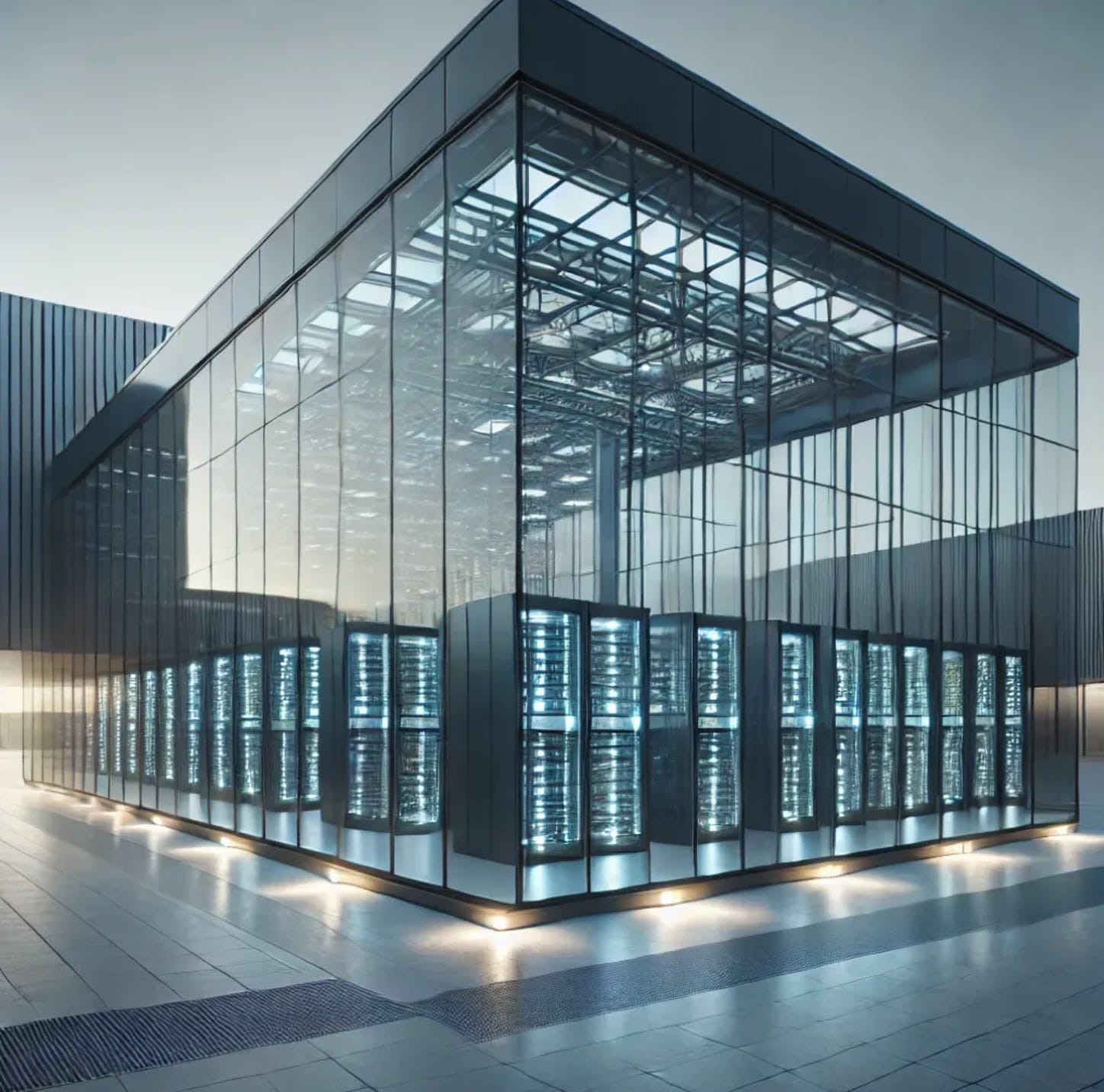
Key Players and Their BackersThe data center industry is dominated by a mix of technology giants, specialized infrastructure providers and real estate companies, each backed by deep-pocketed investors. These players form the backbone of an industry experiencing explosive growth, where capital intensity and strategic foresight define success.Hyperscale PowerhousesThe hyperscale data center segment is dominated by a select group of technology giants that have redefined the industry through massive investment, innovation, and global reach. Companies such as Amazon Web Services (AWS), Microsoft Azure, and Google Cloud represent the pinnacle of this segment, with facilities designed to handle massive amounts of data and support the computational demands of modern digital applications, from artificial intelligence to video streaming to e-commerce. Together, these giants account for the lion's share of the market, both in terms of infrastructure capacity and revenue generation.Amazon Web Services (AWS)AWS, a division of Amazon, is a leader in the hyperscale market with an extensive network of data centers located in regions around the world. Its operating model is based on a mix of owned facilities and long-term leases, allowing it to scale flexibly. AWS's continued expansion is fueled by annual investments in excess of tens of billions of dollars. Key to its growth is a robust customer base that includes Fortune 500 companies, startups, and government agencies, all of which rely on AWS for cloud computing and storage services.Microsoft AzureMicrosoft Azure is a close competitor to AWS, leveraging Microsoft's existing relationships with enterprises and its vast product ecosystem, including Office 365, Dynamics, and LinkedIn. Azure has invested heavily in hyperscale facilities, often located near major business hubs, to support latency-sensitive applications such as real-time analytics and IoT.Microsoft's hyperscale strategy includes a strong focus on hybrid cloud solutions, targeting organizations that need a mix of on-premises and cloud resources. A key differentiator for Azure is its alignment with Microsoft's sustainability commitments, including plans to become carbon negative by 2030. The company has been a pioneer in adopting advanced cooling technologies, such as liquid immersion cooling, to reduce its environmental footprint.Azure's growth is supported by a mix of internal funding and external partnerships. Its financial stability is bolstered by Microsoft's position as one of the world's most valuable companies, attracting support from sovereign wealth funds and large institutional investors.Google CloudGoogle Cloud has positioned itself as a leader in data-driven innovation, offering advanced capabilities in AI, machine learning and analytics. The company's hyperscale data centers are among the most advanced in terms of energy efficiency, and Google was the first major company to achieve carbon neutrality and is now working toward 24/7 carbon-free energy for all of its operations.Google's data center strategy includes focusing on strategic locations, often near renewable energy sources, to minimize environmental impact. It also invests in custom hardware and software, such as Tensor Processing Units (TPUs), to optimize performance for AI workloads. The company's deep pockets, fueled by Alphabet's strong cash reserves, enable sustained investment in cutting-edge infrastructure and technologies.Google Cloud has attracted a mix of enterprise customers and smaller businesses, growing its market share in a highly competitive environment. It continues to gain support from institutional investors, who view Alphabet as a safe bet in both technology and sustainability-focused investments.Chinese Hyperscale LeadersChina's hyperscale market is dominated by Alibaba Cloud, Tencent Cloud, and Baidu AI Cloud, each backed by the financial clout of their parent companies. Alibaba Cloud, the largest player in the region, has expanded aggressively in Asia and beyond, positioning itself as a global competitor to AWS and Azure. Its facilities are often developed with strategic support from Chinese state-owned banks and local governments, aligning with Beijing's digital infrastructure goals.Tencent Cloud, which leverages its dominance in gaming and social media through platforms such as WeChat, has similarly invested in hyperscale centers to support its expanding ecosystem. Baidu AI Cloud is heavily focused on AI applications, benefiting from partnerships with academic institutions and the Chinese government to advance its research and development.Emerging Contenders in HyperscaleOutside of the established giants, companies such as Oracle Cloud and IBM Cloud are carving out niches in the hyperscale market, targeting specific industries such as financial services, healthcare, and government. These companies often leverage partnerships with private equity firms and real estate developers to fund expansions and compete in a crowded market.Colocation ProvidersEquinix and Digital Realty are the giants of the colocation market, catering to companies seeking state-of-the-art facilities without the overhead of owning and operating their own infrastructure. Known for its interconnection services, Equinix has consistently attracted capital from sovereign wealth funds and pension funds, including Singapore's GIC and the Ontario Teachers' Pension Plan. Digital Realty, meanwhile, benefits from a diversified investor base, including real estate investment trusts (REITs) and private equity firms.These players have been at the forefront of acquisitions, consolidating smaller players to expand their geographic reach. For example, Digital Realty's acquisition of Interxion strengthened its position in Europe, while Equinix has been aggressively expanding in the Asia-Pacific region. Infrastructure Investors: Betting Big on DataPrivate equity firms and sovereign wealth funds are increasingly driving the industry's expansion. Blackstone's acquisition of QTS Realty Trust was a landmark deal that signaled the appetite for large-scale investment in digital infrastructure. Similarly, KKR and GIP's purchase of CyrusOne marked another high-profile private equity entry into the sector. These investors are attracted to the hybrid nature of data centers as both technology and real estate assets, offering stability and growth.Sovereign wealth funds from the Middle East, including Abu Dhabi Investment Authority (ADIA) and Mubadala, have emerged as prominent backers of data center projects, particularly in underserved markets in Asia and Africa. Emerging Players: Regional and Niche OperatorsIn addition to global players, regional operators are carving out market niches. Companies such as Scala Data Centers in Latin America, NEXTDC in Australia and Airtel Nxtra in India are tapping into local demand, often with the backing of specialist investors. For example, Scala is funded by DigitalBridge, a leading investor in digital infrastructure, while Airtel Nxtra has secured partnerships with international funds to expand its operations.These regional operators often focus on greenfield projects in underserved markets, leveraging their local expertise and government partnerships. The Role of Strategic CapitalThe rapid expansion of the global data center industry has attracted significant interest from strategic capital providers who view these facilities as a unique hybrid of real estate, technology, and infrastructure assets. With soaring demand for cloud computing, artificial intelligence (AI), and edge applications, data centers present a compelling investment case. This capital influx is reshaping the industry's landscape, driving innovation, expansion, and sustainability.Private Equity: Catalysts for Consolidation and GrowthPrivate equity (PE) firms have emerged as dominant players in the data center space, leveraging their resources to consolidate markets and drive growth. A notable example is Blackstone's $10 billion acquisition of QTS Realty Trust in 2021. Post-acquisition, Blackstone provided QTS with resources to expand its portfolio, including new greenfield projects in underserved markets.Similarly, KKR and Global Infrastructure Partners (GIP) joined forces to acquire CyrusOne for $15 billion. This move positioned the firms to capitalize on hyperscale and colocation trends, particularly in North America and Europe. CyrusOne’s strategic expansion into Europe after the acquisition highlighted PE’s role in facilitating cross-border growth and operational upgrades.Private equity firms also play a role in modernizing older facilities, funding retrofits to improve energy efficiency and attract ESG-focused tenants. This dual strategy of expansion and modernization is particularly attractive to institutional investors seeking stable, long-term returns.Sovereign Wealth Funds: Long-Term StakeholdersSovereign wealth funds (SWFs) bring a long-term investment perspective, often aligned with national strategies for digital and economic transformation. For example, GIC, Singapore’s sovereign wealth fund, has partnered with Equinix, a global colocation provider, to develop data centers in Asia-Pacific. Similarly, the Abu Dhabi Investment Authority (ADIA) has invested heavily in greenfield data center projects in the Middle East and North Africa (MENA) region. These investments align with the UAE’s broader diversification goals, moving away from oil dependency toward technology-driven industries. Infrastructure Funds: Bridging Real Estate and TechnologyInfrastructure funds are uniquely positioned to invest in the data center sector, combining expertise in large-scale developments with a growing focus on digital assets. Brookfield Asset Management, a global leader in infrastructure investment, has been particularly active in funding hyperscale projects. Its partnership with Digital Realty in India aims to capture the region’s surging demand for data services, especially in

This podcast offers an in-depth exploration of the critical role rare earths and critical minerals play in the green economy, emphasizing their importance in technologies like electric vehicles, wind turbines, solar panels, and grid-scale batteries. We break down the differences between rare earths and critical minerals, explaining their abundance, extraction challenges, and why they are essential for industries driving the global energy transition.We focus on the investment opportunities these resources present, covering key sectors such as mining, processing, recycling, and alternative materials. Listeners will learn how to identify promising companies in mining exploration, battery manufacturing, and innovative recycling technologies. The discussion also highlights emerging industries benefiting indirectly, such as EV charging infrastructure and supply chain optimization, offering a broader perspective on secondary and tertiary effects that could create significant growth opportunities.The podcast dives into geopolitical dynamics, with a close look at China's dominance in rare earth production and the reliance on cobalt mining in the Congo. We explore how supply chain vulnerabilities and ethical concerns around environmental impact and labor practices are shaping the market, as well as how diversification and sustainable sourcing can mitigate risks.Listeners will also discover how technological innovations, such as rare-earth-free motors and cobalt-free batteries, are transforming the landscape and creating new avenues for investment. The episode concludes with actionable insights for investors on navigating this complex and rapidly evolving space, balancing profitability with sustainability, and contributing to a greener, more resilient future. Whether you're an experienced investor or just beginning to explore this sector, this podcast provides the knowledge and strategies to capitalize on the opportunities presented by the global resource race. Get full access to Global Infrastructure Sherpa at globalinfrastructuresherpa.substack.com/subscribe
Comments

Download from Google Play

Download from App Store
 United States