


 Claim Ownership
Operate Podcast
Subscribed: 8Played: 95
Subscribe

© Copyright 2025 All rights reserved.
Description
A behind-the-scenes look at company building from the perspective of builders themselves - this is how we operate! With host Carey Ransom.
166 Episodes
Reverse
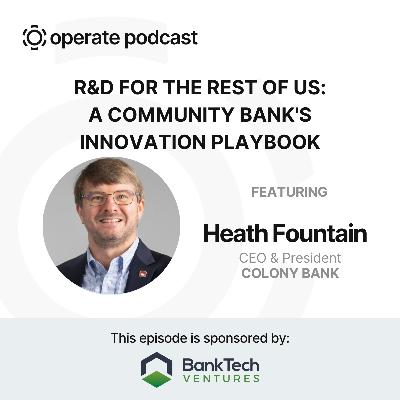
In this new format "brief" episode of the Operate Podcast, I caught up with Heath Fountain, CEO of Colony Bank, the largest community bank in Georgia with locations spanning Georgia, Alabama, and the Florida Panhandle. We explored how community banks can approach innovation strategically without overextending their resources. Heath shared the practical thinking behind his bank's decision to get involved in collaborative innovation efforts such at BankTech Ventures and how that choice has paid dividends in unexpected ways.
Our conversation centers on a fundamental challenge facing community banks today: the technology landscape is evolving rapidly, but most institutions lack the internal resources to evaluate every emerging solution on their own. Heath described how his team framed their innovation investment as research and development expense, a mental model that helped his board understand the value of staying connected to the broader fintech ecosystem. Rather than trying to be on the bleeding edge, Colony Bank has found success positioning themselves just behind the leading edge, keeping pace with change without taking on unnecessary risk.
Heath offered candid insights into the tangible outcomes of this approach, including how networking with other technology-forward bankers led to hiring their Chief Innovation Officer, someone they would have never encountered otherwise. We discussed how having access to vetted portfolio companies has streamlined vendor evaluation, helping the bank discover solutions they didn't even know they needed. The conversation also touched on Heath's advice for peers trying to make the case to their own boards, including the simple math of spreading investment over time and comparing it to the cost of consultants or dedicated hires.
Throughout our discussion, Heath emphasized that the goal isn't to chase every trend, but to have the knowledge and relationships in place to make informed decisions when opportunities arise.
LINKS
Colony Bank (https://www.colony.bank )
Heath Fountain on LinkedIn (https://www.linkedin.com/in/heathfountain/ )
Bank Tech Ventures (https://www.banktechventures.com/ )
Chapter Markers
00:00 Preview
00:29 Intro
00:45 Sponsor
01:19 Why Community Banks Need Outside Innovation Partners
02:53 Finding a Chief Innovation Officer Through Networking
03:20 Getting Practical Value from Portfolio Companies
04:16 Making the Case to Your Board
05:15 Thinking About It as R&D Expense
06:27 Staying Just Behind the Leading Edge
06:53 Outro
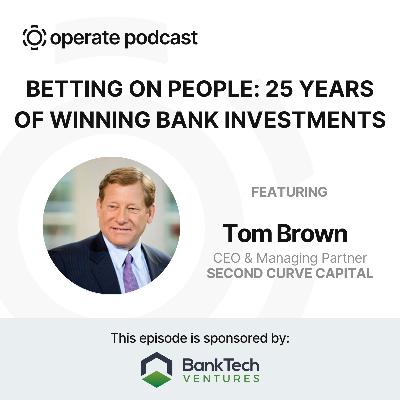
In this episode of the Operate Podcast, we dive deep into the world of banking investment strategy with Tom Brown, CEO and founder of Second Curve Capital. Tom brings an incredible 40-plus year perspective on the banking industry, starting as a top-rated Wall Street analyst before founding his equity investment firm exclusively focused on financial services about 25 years ago.
What makes Tom's approach truly unique is his commitment to understanding banks at the execution level, not just through financial statements and management presentations. We explore how early in his career he realized that bank executives often believed they were implementing cutting-edge strategies, but the reality on the front lines told a different story. This led him to develop his now-famous practice of visiting bank branches, applying for credit cards, and even showing up unannounced on a teller floor to test whether what management said matched what actually happened there.
Our conversation covers the evolving competitive landscape facing community and regional banks, particularly the threat from neobanks like Chime that are profitably serving market segments traditional banks have struggled with. Tom shares his perspective on why the relationship banking model still matters for banks under $10B in assets, but emphasizes that success requires increasingly sophisticated use of data, technology, and marketing. We discuss why many publicly-traded banks have become too risk-averse, how bringing executives from larger institutions to smaller banks can create tremendous value, and why JP Morgan Chase's Jamie Dimon religiously reads Tom's banking newsletter to understand what his bank cannot do.
Tom offers candid insights on where banks are over-investing and under-investing, from data lake projects that are becoming obsolete thanks to AI, to marketing budgets that remain stuck at 2% of expenses when they should be climbing higher. We explore the talent challenge facing community banks and how they can better attract digital-native young professionals by emphasizing the unique opportunity to work with diverse data and businesses. Throughout the conversation, Tom's philosophy remains clear: as an investor, he is ultimately making bets on people, and the ability to evaluate execution separates winning investments from losing ones.
Chapter Markers:
00:00 Preview
00:37 Intro
00:53 Sponsor
01:28 Tom Brown's Journey from Analyst to Fund Manager
06:19 The Turning Point: Going to the Branch Floor
07:43 The Customer Profitability Story
09:16 The Challenge of Executive Branch Visits
11:43 Investment Framework: Screening with Metrics, Deciding on People
13:14 The Power of Turnaround Executives
13:57 Bringing Big Bank Experience to Smaller Banks
16:45 50 Years of Change, Same Solutions
18:38 The Relationship Game and Geographic Focus
18:50 Jamie Dimon's Perspective on Community Banks
21:09 Finding Your Customer Segment Focus
22:37 The Line of Business vs. Relationship Approach
25:36 Technology Decision-Making Challenges
27:36 The Biggest Blind Spot: Risk Aversion
30:56 CEO as Chief Technology Officer
32:26 The Marketing Investment Gap
33:05 Capital One's Marketing Budget: 20%
36:27 Branch Strategy Done Right: Fifth Third's Approach
39:03 The Data Management Evolution
40:52 Attracting Digital Native Talent
44:52 The Death of New Bank Charters
46:09 The Neobank Threat: Chime as the Nucor of Banking
48:40 Outro
Resources:
Second Curve Capital (https://www.secondcurve.com)
Tom Brown's Banking Weekly Newsletter (https://www.secondcurve.com/Tom-Brown-Banking-Weekly)
Sponsor: Bank Tech Ventures (https://www.banktechventures.com/)
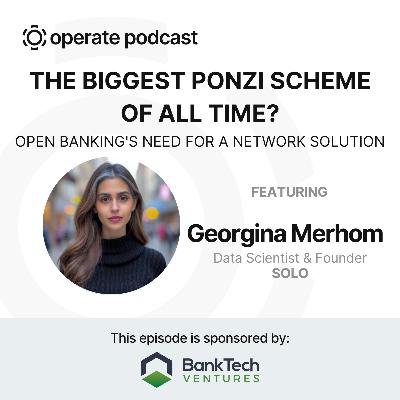
I'm so grateful that Georgina joined me for a conversation to explore the future of financial data infrastructure. As the founder and CEO of SOLO, she brings a unique outsider perspective to financial services, having started her career as a data scientist in cybersecurity before founding Egypt's first cross-border payments app, Ziv Me, which she later sold to the National Bank of Egypt.
We dove deep into the fundamental problems with today's financial data systems, where customers must constantly reintroduce themselves to every institution despite having established trust records elsewhere. Georgina explained how the current infrastructure was built to scale transactions rather than relationships, creating $30 billion in annual data collection costs for banks and frustrating reset experiences for consumers.
Georgina revealed the shocking reality behind credit bureaus, describing them as "the biggest Ponzi scheme of all time" where banks pay for data they already had and provided. She contrasted this with SOLO's vision of a customer data clearing house that would make trust portable across financial institutions while maintaining proper regulatory compliance as an FCRA-regulated entity.
We explored the concept of data as representing relationships rather than just transactions, and how SOLO's network model could transform the $50 billion annual spend on data collection and aggregation into a collaborative system where banks are incentivized to help customers rather than hoard their information. Georgina also shared candid insights about entrepreneurship, including the importance of founder-market fit and learning when to listen to "no" as market feedback rather than obstacle to overcome.
I hope this conversation offers a compelling vision for how financial services could work better for everyone - banks, fintechs, and consumers alike - through smarter data architecture and aligned incentives.
RESOURCES:
Learn more about Solo: https://solo.one
Connect with Georgina Merhom on LinkedIn: https://www.linkedin.com/in/georginamerhom
Thanks to show sponsor, BankTech Ventures: https://www.banktechventures.com
Chapter Markers
00:00 Preview
00:37 Intro
00:53 Sponsor
01:26 Introducing Georgina Merhom and SOLO
04:45 Challenges in Traditional Banking Data Systems
08:38 SOLO's Innovative Approach to Data Collection
09:49 Use Cases and Benefits of SOLO
13:45 Regulatory Challenges and Responsibilities
17:56 The Future of Open Banking and Data Sharing
26:45 The SOLO Network Model
35:57 Georgina's Entrepreneurial Journey
43:19 Advice for Aspiring Entrepreneurs
47:47 Final Thoughts
48:12 Outro

In this episode of the Operate Podcast, we took a deep dive into the world of community banking with John Maxfield, the mind behind Maxfield on Banks. We explored the critical role community banks play in local economies and the unique challenges and opportunities they face. John discussed his journey from studying various subjects like high-altitude mountaineering and maritime disasters to his in-depth 20-year exploration of the banking sector, driven by a long family history of community bank investments and the 2008 financial crisis. His investigative approach, including a recent cross-country road trip to visit banks, reveals the profound differences these institutions can make in their communities.
John also shared his insights on innovation within the banking industry, emphasizing the importance of steady, incremental improvements rather than disruptive, high-risk changes. He highlighted the need for banks to know their customers deeply, adapting to modern challenges like AI without losing the personal touch that defines community banking. We also discussed the characteristics of great bankers, focusing on their ability to make independent decisions, often shaped by overcoming personal hardships. John named Ross McKnight of InterBank as a prime example of such leadership.
We dug into the dynamics of bank leadership, the essential nature of understanding and serving one's community, and the importance of strong, independent boards. John provided a historical lens on banking cycles, emphasizing the necessity of maintaining discipline and avoiding dramatic changes during volatile times. This episode offered a rich perspective on how community banks can navigate current challenges and continue to serve their vital role in American society.
RESOURCES:
Subscribe to Maxfield on Banks: https://www.maxfieldonbanks.com
Connect with John J. Maxfield on LinkedIn: https://www.linkedin.com/in/johnmaxfield
Chapter Markers
00:00 Preview
00:14 Intro
00:30 Sponsor
02:38 John's Journey and Passion for Banking
04:09 The Road Trip and Insights on Community Banks
04:58 Deep Dive into Banking History and Theory
11:37 Challenges and Innovations in Banking
20:35 Spotlight on Ross McKnight: America's Best Banker
23:42 The Challenge of Standing Alone
23:59 Analyzing Top Bankers
24:33 Subjective Data and Personal Stories
25:27 The Impact of Hardship on Leadership
26:55 Leadership and Board Dynamics
27:53 Rallying Cry for Independence
29:48 The Role of Community Banks
34:28 Navigating Economic Challenges
40:25 The Value of Banking in Society
41:26 Conclusion and Call to Action
41:43 Outro

In this episode of the Operate Podcast, we explored leadership through volatility with Dan Holt, co-founder and CEO of BillGO. Rather than looking back at his entire career, we focused on the major transformation he's currently navigating both personally and professionally as his company pivots its business model.
Dan shared candidly about reducing his team from 340 to 150 employees while discovering that a somewhat neglected part of their business was actually growing and thriving with 90% profit margins. He discussed how his leadership approach had to evolve, realizing that the fighter mentality and feeling of invincibility that previously served him well had become limitations to where he needed to go.
Our conversation explored Dan's perspective that "the hardest battles aren't outside, they're inside," and his development of practices to maintain calm during crisis – including intentional morning routines, daily exercise, and slowing down to ask better questions. He emphasized how a leader's presence can either diminish or create space for trust and innovation.
We also discussed Dan's evolving view on "wartime" versus "peacetime" leadership, suggesting that effective leaders need both capacities simultaneously. Throughout the episode, Dan offered valuable insights on maintaining transparency during difficult transitions and how treating people with compassion through challenges builds lasting resilience and trust.
Thanks to show sponsor, BankTech Ventures.
Chapter Markers:
00:00 Preview
00:40 Intro
00:58 Sponsor
01:30 Introduction and Background
03:20 Current Leadership Transformation
06:45 Leading Through Volatility
13:32 Self-Leadership and Growth
17:14 Daily Practices for Leadership
19:52 Building Company Culture
24:10 Building Trust Through Change
28:50 The Pivot Decision
35:10 Wartime vs. Peacetime Leadership
42:59 Moving Forward: BillGO's Future
44:39 Outro
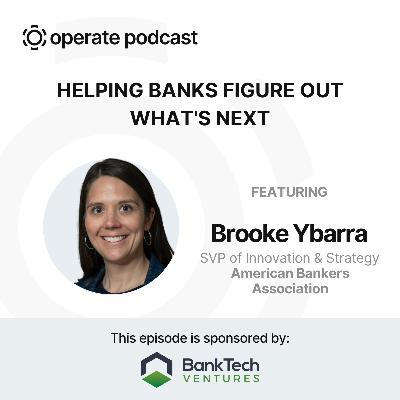
Brooke Ybarra and I dive into the intricacies of innovation and transformation within the banking industry in this episode. She is currently SVP of Innovation and Strategy at the American Bankers Association (ABA). Brooke shares her unique career journey, starting with the CIA, strategy consulting, a significant corporate role during the pandemic, and finally her impactful position at the ABA. We discuss how she has infused creativity and a forward-thinking mindset into the association, particularly focusing on how partnerships between banks and fintechs are evolving and the current state of innovation in banking.
Brooke emphasizes the importance of aligning technological advancements with customer needs and how banks can leverage external solutions to meet these needs effectively. We also touch on the challenges of infrastructure upgrades, the relevance of middleware, and the shift towards a more digitized banking environment. Furthermore, we explore the role of AI in banking, how banks can stay competitive with non-bank financial services, and ways to attract new talent into the banking industry. Brooke provides valuable insights on maintaining integrity, continuous learning, and embracing change. This episode is packed with productive thoughts and expert perspectives on how banks can navigate and thrive in the rapidly changing financial landscape.
Thanks to show sponsor, BankTech Ventures.
Chapter Markers
00:00 Preview
00:57 Intro
01:13 Sponsor
01:47 Guest Introduction: Brooke Ybarra
02:59 The Intersection of Banking and Technology
04:24 Current State of Innovation in Banking
05:50 Challenges and Opportunities for Banks
08:01 The Role of ABA in Banking Innovation
17:29 Diversifying Revenue Streams for Banks
22:10 Infrastructure Challenges in Banking
26:04 The Digital Transformation Imperative
28:38 Fraud Concerns in Digital Banking
29:49 The Importance of Online Presence
30:58 AI in Banking: Current State and Future Prospects
34:55 Customer Expectations and Personalization
37:26 Challenges in Data Infrastructure and Literacy
39:30 Finding the Right Technology Partners
41:11 Attracting Talent to the Banking Industry
44:10 Non-Bank Competition and Regulation
46:31 Brooke's Journey to the ABA
49:41 Brooke's Core Values
51:13 Brooke's Habits/Rituals
52:37 Advice for Early Professionals
54:48 Outro
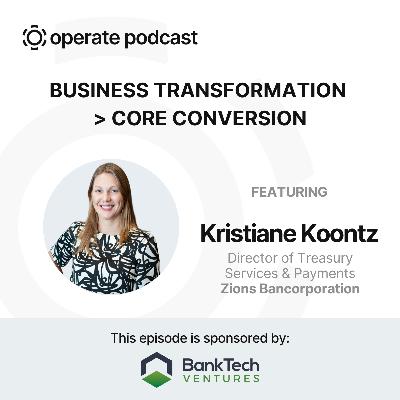
In this episode of the Operate Podcast, we explore the complex and crucial topic of technology transformation within the banking sector, with Kristiane Koontz, EVP and Director of Treasury Services and Payments at Zions Bancorporation. We dive into the significance of replacing legacy banking systems, a daunting project that Kristiane and her team successfully completed over a decade-long journey. Kristiane sheds light on the challenges of a complete business transformation and how much bigger it is than a "core conversion." She explains how Zions maintained operational continuity while integrating new technologies, and restructured organizational processes and data governance systems. Zions' commitment to this massive overhaul shows their goal of staying competitive and efficient in a rapidly evolving banking industry.
We also discuss the broader implications for U.S. community banks and the role of technology partners in driving innovation. Kristiane elaborates on how Zions' transformation efforts have positioned them uniquely and competitively within the market, enabling faster product development cycles, enhanced customer experiences, and improved data utilization for fraud prevention and personalization.
Additionally, Kristiane shares her perspective on the future of banking, particularly the importance of easier technology access for community banks and strategic vendor partnerships. She emphasizes that continued innovation and adaptability are vital for community banks to thrive amidst industry consolidation and change. Kristiane generously shares her insights on leading a transformative project and also offers advice to those entering the profession today, highlighting the significance of continuous learning and understanding the core business of banking.
Thank you to show sponsor, BankTech Ventures.
Chapter Markers
00:00 Preview
01:15 Intro
01:32 Sponsor
02:08 Guest Introduction: Kristiane Koontz
03:26 Challenges of Legacy Banking Technology
05:31 The Complexity of Core Transformation
08:26 Global Perspectives and U.S. Core Providers
12:26 Zions Bank's Core Transformation Journey
22:53 Real-Time System Benefits and ROI
25:59 Team Morale and Future Innovations
29:02 Leveraging Broader Banking Transformation
29:54 Investing in Treasury and Payments
30:36 Customer-Centric Transformation
33:35 Strategic Partnerships and Vendor Management
39:52 Unified Customer Experiences
42:17 Digital Transformation Challenges
47:32 Leadership Insights
51:56 Personal Rituals
54:30 Advice for Future Bankers
56:20 Outro
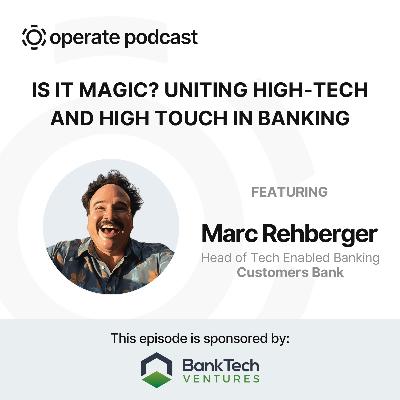
In this episode of the Operate Podcast, we explored the transformation of the banking sector through technology, leadership, and community engagement. Our guest, Marc Rehberger, delves into his journey from technology companies to leading tech-enabled banking at Customers Bank. We discussed cutting-edge advancements in real-time payments, the strategic adoption of technologies like RTP and FedNow, and their long-term impacts on financial institutions. The discussion highlighted how banks have adapted to unprecedented times, emphasizing agility, decision-making, and the integration of modern FinTech solutions with traditional banking practices. We also touched on the invaluable role of community banks in the U.S. financial system, their unique understanding of local markets, and the collaborative ecosystem they foster. Throughout the episode, we emphasized the balance between technological adoption, regulatory compliance, and maintaining personal customer relationships, which we both believe will persist in banking. Marc shared his insights on leadership, the power of mentorship, and the importance of investing in people, concluding with practical advice for professionals eager to innovate in their banking careers. Tune in to discover how combining traditional banking strengths with modern technology creates a dynamic and exciting environment for both customers and employees.
Thanks to show sponsor, BankTech Ventures!
CHAPTER MARKERS:
00:00 Preview
00:37 Intro
00:54 Sponsor
01:28 Guest Introduction: Marc Rehberger
02:40 Marc's Career Journey
05:17 Transition to Customers Bank
07:56 Role and Responsibilities at Customers Bank
15:14 Challenges and Successes in Banking
24:37 The Importance of Community Banks
27:28 Challenges Facing Community Banks
29:04 The Importance of Technology Partnerships
31:31 Advice for Bankers on Tech Integration
36:43 The Role of Core Technology in Banking
38:47 The Future of Banking: Open Banking and Portability
47:55 Core Values and Personal Reflections
50:53 Advice for Early Career Professionals
52:59 Conclusion and Final Thoughts
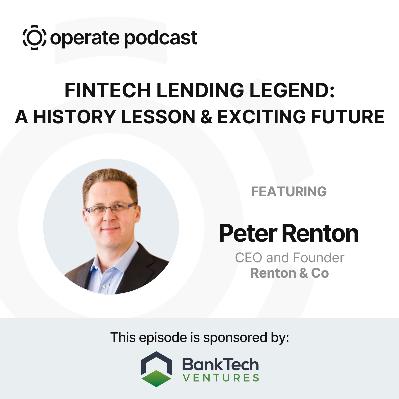
In this episode of the Operate Podcast, we take a behind-the-scenes look at the birth of fintech P2P and marketplace lending with Peter Renton, one of its pioneers. Peter shared his extensive background, starting from his early days as a self-directed investor to founding key fintech companies like Lend Academy and LendIt, which later became Fintech Nexus. We discussed his journey into peer-to-peer lending and its evolution as institutional investors entered the space. The conversation spans the rise of fintech innovation, the challenges of scaling peer-to-peer platforms, and the role of community banks in the future of financial services. Peter recounted the bubble in the fintech lending space around 2015 and how the industry adapted following the Lending Club debacle in 2016. He also shared his advice for fintech founders, emphasizing the importance of diversification in funding sources and customer acquisition strategies.
We delved into notable companies like Upstart and their pivots in the fintech landscape. Additionally, Peter reflected on the transition from LendIt to FinTech Nexus to encompass a broader range of fintech innovations for their content and events. We touched on the increasing interest of banks in fintech events from 2016 onwards and the changing landscape post-pandemic. Peter discussed emerging trends in fintech, such as embedded lending, mobile wallets, and new payment rails. He highlighted the necessity for community banks to adopt technology and attract younger customers. Lastly, Peter introduced his new consulting venture, Renton & Co, aimed at guiding fintech companies through content strategy, marketing, and market analysis. Enjoy this comprehensive look at the past, present, and future of fintech.
CHAPTER MARKERS:
00:00 Preview
00:34 Intro
00:47 Sponsor
01:19 Meet Peter Renton: A Fintech Pioneer
02:50 Peter's Early Fascination with Finance
04:04 Discovering Peer-to-Peer Lending
05:36 Building Lend Academy and LendIt
09:21 The Evolution of Marketplace Lending
18:39 Reflections on the Fintech Lending Boom
27:19 Kudos to Dave Girard (UpStart) and Team
28:04 The Shift to FinTech Nexus
29:04 Expanding Beyond Lending
32:16 Challenges and Stress of the Events Business
32:48 The Impact of the Pandemic
33:54 Future of FinTech and Embedded Lending
37:47 The Role of Community Banks
42:38 Advice for Community Bank CEOs
49:18 Peter's New Venture: Renton & Co
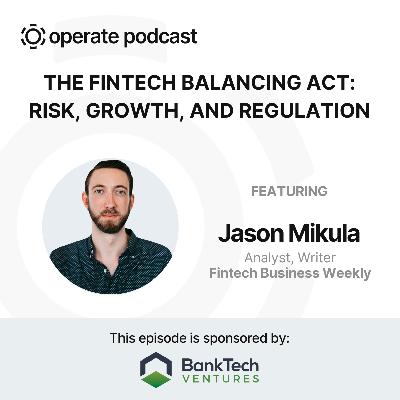
In this episode, we get an insider look into the financial technology landscape with Jason Mikula. Jason shares his journey, from his unexpected entry into financial services and digital marketing to launching the publication Fintech Business Weekly. He emphasizes the importance of understanding customer acquisition metrics and analyzes the evolution of fintech innovations like online lending, BNPL, Banking as a Service, etc.
We delve into the mechanics of Banking as a Service (BaaS) and the complex relationships between fintechs, middleware platforms, and banks. Jason is currently in the middle of reporting on news as it breaks around Synapse, Evolve and several fintechs, as well as the thousands of customers caught in the middle of it. He highlights the regulatory challenges and the balancing act between risk and growth. Our discussion also addresses the current regulatory landscape and the future of partner banking, stressing the need for sustainable and economically sound practices. Tune in for a comprehensive conversation that explores the intricacies of fintech and digital banking services.
CHAPTER MARKERS:
00:00 Preview
00:45 Intro
00:58 Sponsor
01:31 Meet Jason Mikula, Analyst and Writer of FinTech Business Weekly
03:23 Jason's Background in Financial Services
04:27 Joining Enova and Learning Subprime Lending
05:22 Marketing Metrics and Customer Acquisition
07:05 Challenges in Digital Financial Services
09:09 The Importance of Digital Marketing in FinTech
14:29 Starting FinTech Business Weekly
17:38 Analyzing the FinTech Landscape
20:10 Insights on BNPL and Market Valuations
23:32 Banking as a Service and Middleware Companies
31:49 Regulatory Challenges and Partner Banking
40:23 Regulatory Priorities and Market Impact
44:46 Systemic Risks and Community Banks
48:53 Conclusion and Final Thoughts
In this episode of the Operate Podcast, we give you a behind-the-scenes look at company building with Isabella Sun, Founder and CEO of Short Story, a subscription e-commerce company serving petite women. The discussion sheds light on Isabella's journey from a structured finance career to becoming a successful e-commerce entrepreneur catering to a niche market. We explore how a personal pain point sparked the idea for Short Story and how comprehensive market research highlighted the need for better-fitting apparel for petite women.
Isabella shares her unconventional path to e-commerce, including her participation in Y Combinator and the early days of building Short Story from her apartment. We discuss the challenges and milestones of growing the company, the importance of understanding customer needs through data, and the nuances of creating products that foster loyalty and excitement among customers.
The conversation also covers how Short Story has managed to achieve profitability without heavy reliance on marketing, leveraging organic growth and customer satisfaction. Isabella highlights her strategies for financing the company creatively and the role of technology and data in scaling operations. This episode provides valuable insights into staying ahead in a competitive market through continuous innovation and an unwavering focus on customer experience.
Towards the end, we dive into Isabella’s personal routines, the mental toughness required for entrepreneurship, and her advice to budding entrepreneurs. This episode offers an inspiring look at how a strong vision and an obsessive customer-centric approach can lead to extraordinary results.
Thank you to episode sponsor, BankTech Ventures.
CHAPTER MARKERS:
00:00 Preview
01:00 Intro
01:13 Sponsor
01:45 Meet Isabella Sun, Founder of Short Story
03:22 Identifying a Market Need
05:07 Early Challenges and Growth
08:35 Customer Connection and Proud Moments
11:14 Navigating E-commerce and Apparel Industry
14:39 Leveraging Data and Technology
23:41 Future Opportunities and Competitor Insights
28:32 Biggest Misconceptions
31:20 Personal Insights, Rituals, & Entrepreneurial Journey
37:53 Closing Thoughts
In this episode of the Operate Podcast, we got a behind-the-scenes look at company building from Tiffany Haynes, COO at Fingercheck. Tiffany discussed her transition from a 19-year career at Jack Henry to her role at Fingercheck, a startup focused on payroll and HR services for small businesses. She highlighted the challenges and learning curves she faced and the importance of establishing foundational structures for growth. Tiffany emphasized the need to slow down before speeding up and building a solid organizational core.
Tiffany also reflected on her various roles at Jack Henry, including Chief People Officer and General Manager of a business unit that supported over 100 banks and credit unions. She shared her passion for transformational work and the importance of growth and resilience. These experiences provided her with deep insights into the banking industry's inner workings and maintaining strong customer relationships, which have been invaluable in her current role at Fingercheck.
The discussion included Fingercheck's market differentiation by offering enterprise-level capabilities, tailored for small businesses. Tiffany talked about the company's mission to automate administrative tasks, allowing small business owners to focus on what truly matters. She shared her excitement about the company's growth potential and the team's unity, describing the joy of achieving their goals together.
She provided strategic insights into the future of banking, emphasizing the need for regulatory clarity and collaboration among traditional banks, fintechs, and other stakeholders. She stressed the importance of a customer-centric approach, balancing personal relationships with digital convenience. Finally, Tiffany offered advice for early career professionals, encouraging them to take risks, stay resilient, and deliver meaningful work that improves lives.
Thanks to show sponsor, BankTech Ventures.
CHAPTER MARKERS:
00:00 Preview
00:46 Intro
00:55 Sponsor
01:28 Meet Tiffany Haynes: COO at Fingercheck
02:39 Transitioning from Corporate to Startup
04:13 Challenges and Surprises in a Startup Environment
08:47 Fingercheck's Unique Market Position
13:49 Reflections on Jack Henry and Career Highlights
27:37 Challenges in Banking Sales and Marketing
29:45 Understanding Consumer Needs
32:17 Adapting to Digital Transformation
34:09 Innovative Ideas for Banking Industry
39:52 Personal Journey in Banking Tech
44:04 Balancing Work and Personal Life
47:24 Role and Success as a
49:16 Current Challenges in Sales and Marketing
50:35 Advice for Early Career Professionals
52:12 Closing Remarks
In this episode of the Operate Podcast, we dive deep into the evolution of 'Banking as a Service' (BaaS) and its complexities. My guest, Rafael DeLeon, the SVP of Industry Engagement at NContracts, shares his extensive insights on the partnership dynamics between community banks and fintech companies. We explored how these relationships started, the operational challenges they faced, and how they've matured over time. Rafael discussed the importance of trust, risk management, and regulatory compliance in these partnerships, highlighting the transition from what he calls the 'Wild West' of BaaS to a more structured environment today.
We also talked about the broader regulatory environment in the banking industry, focusing on how regulators are handling the rapid pace of change, interest rates, and macroeconomic challenges. Rafael provided his perspective on recent enforcement actions and what they signal to the industry, emphasizing the need for transparency, strong risk management systems, and strategic planning.
From there we addressed the impact of technology on smaller banks and how it can enable them to be more efficient and competitive. Rafael shared his optimistic outlook on the future of community banking, particularly how fintech partnerships and regulatory guidelines will shape the industry's landscape.
Towards the end of our conversation, Rafael reflected on his career transition from a long tenure at the OCC to his current role at Ncontracts. He discussed how his new position allows him to leverage his regulatory expertise and passion for the banking industry to foster innovation and compliance. This episode provided a comprehensive look at the current and future state of community banking, making it a must-listen for anyone interested in financial services, fintech, and regulatory affairs.
Thank you to show sponsor, BankTech Ventures.
EPISODE CHAPTER MARKERS:
00:00 Preview
00:36 Intro
00:49 Sponsor
01:21 Meet Rafael DeLeon: SVP of Industry Engagement at Ncontracts
02:27 Banking as a Service: Challenges and Evolution
05:58 Regulatory Oversight and Compliance
10:56 Risk Management in Banking Partnerships
19:46 Future of Banking and Regulatory Environment
35:36 Technology's Role in Small Banks
38:09 Bridging the Tech-Bank Language Gap
41:27 Journey to Becoming a Bank Regulator
47:20 Transition to NContracts
50:19 NContracts' Growth and Innovations
53:38 Rafael's Superpower: Connecting People
56:23 Future of Banking: AI and Payments
57:50 Regulatory Vigilance and Risk Management
59:47 Accountability in Regulatory Agencies
01:01:05 Final Thoughts and Farewell
In this episode of the Operate Podcast, we delve into the use of AI & Machine Learning within the commercial real estate lending industry. My guest is Shayne Skaff, co-founder and CEO of Blooma, a SaaS company revolutionizing commercial real estate lending and portfolio management.
Our discussion outlines Shane's entrepreneurial journey, the origins of Blooma, and the challenges and opportunities within the commercial real estate market. Shane shares insights into the impact of technology on underwriting and portfolio management, the adaptability of the workforce to technological advancements, and the significance of community banks to the economy. The conversation also touches on the future of machine learning and AI in banking, the importance of data quality, and the vision for Blooma to facilitate lender and borrower connections and streamline the syndication process within commercial real estate.
Thanks to show sponsor, BankTech Ventures.
CHAPTER MARKERS:
00:00 Preview
00:33 Intro
00:46 Sponsor
01:16 Meet Shayne Skaff: Co-Founder & CEO of Blooma
02:26 Navigating the Complex Landscape of Commercial Real Estate Loans
07:16 The Evolution of Blooma: From Idea to Industry Innovation
10:08 Bridging the Gap: Technology Adoption Across Generations
17:55 The Future of Commercial Real Estate: A Vision for Innovation
20:18 Harnessing AI and ML: The Backbone of Blooma's Technology
25:40 The Challenge of Data Management in Banking
27:42 The Entrepreneurial Journey: Insights from Shane Scaff
38:47 Mentorship and Continuous Learning: A Founder's Perspective
43:53 Looking Ahead: Family, Business, and the Future
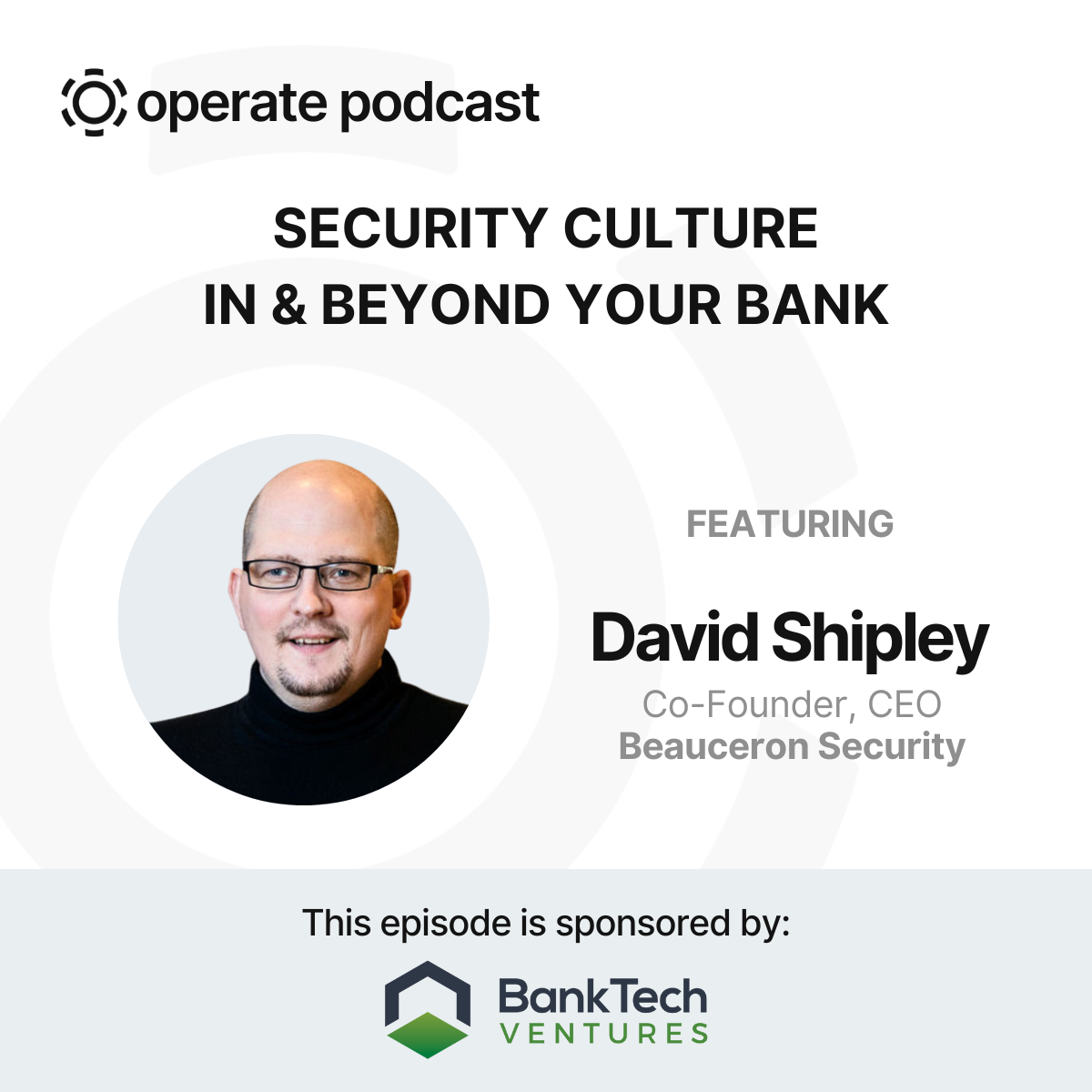
In this episode, we delve into cybersecurity and the importance of making it relevant to each individual, beyond just their organization. My guest is David Shipley, Co-founder and CEO of Beauceron Security. David shares his journey from a career-altering cybersecurity incident at the University of New Brunswick to leading a cloud-based platform designed to enhance personal and organizational cybersecurity practices by empowering people to be in control of technology. The discussion explores current cybercrime trends in the banking industry, as well as the impact of geopolitical instability and technological advancements on cyber risk, the role of AI in both aiding and complicating cybersecurity efforts, and strategies for building positive security cultures within organizations. He also reflects on the challenges and rewards of growing a startup in Canada, emphasizing the importance of team resiliency, continuous learning, and embracing failure as a pathway to innovation.
Thanks to show sponsor, BankTech Ventures.
CHAPTER MARKERS:
00:00 Introduction
01:14 Meet David Shipley: From Military to Cybersecurity CEO
02:28 Current Cybersecurity Challenges and Trends
07:36 Strategies for Banks to Combat Cyber Threats
17:23 The Beauceron Inception Story: A Cybersecurity Journey
26:05 Evolving Security Awareness Training
26:59 Customer Success Stories: Phishing Defense and Employee Training
30:13 Reflections on the Startup Journey
33:27 The Impact of Cybersecurity Work
35:45 Operating a Canadian Startup
41:14 Looking Ahead: Growth, AI, and the Future of Cybersecurity
46:34 David's Rituals & Disciplines
50:24 Closing Remarks
In this episode of the Operate Podcast, we delve into the essential role that technology and data analytics play in the banking industry's future. My guest was Brian Bauer, CEO of Revio, a promising banking and analytics technology startup that's making waves by assisting banks in leveraging their core banking transaction data to foster growth. Brian shares his journey from a 10-year military career to becoming a leader in the FinTech and banking sectors, emphasizing his participation in a FinTech accelerator and his experience co-founding a banking startup in the cannabis sector.
Our discussion includes the significant impact of technology on banks' competitiveness, the shift towards a practical approach to innovation within community banks, and how data analytics can aid banks in understanding their customers better. Brian elaborates on how Revio empowers banks to not only identify but act on business opportunities through insightful analytics of customers' external financial activities. The conversation also touches on the evolving landscape of banking technology and how banks' ability to make timely decisions significantly influences their readiness for future challenges.
Highlighting the importance of culture, team building, and the role of entrepreneurship in driving change, this episode provides a comprehensive look at how banks can navigate the volatile financial world by embracing innovation and data-driven strategies.
CHAPTER MARKERS:
00:00 Preview
00:33 Intro
00:45 Sponsor
01:17 Brian Bauer, CEO at Revio
02:48 Banking in a Year of Change: Insights and Adaptations
07:35 The Shift Towards Practical Innovation in Banking
10:03 Revio's Mission: Deepening Bank-Customer Relationships Through Data
20:45 Real-World Impact: How Revio Empowers Banks with Data-Driven Insights
26:35 Competitive Analysis: A New Perspective for Banks
27:51 The Roadmap Ahead: Enhancing Bank Insights
30:57 Data Literacy and Infrastructure in Banking
37:21 The Entrepreneurial Journey: Lessons from a Fintech Accelerator
45:02 Cultivating High Performance and Looking Forward
And thanks to show sponsor, BankTech Ventures!
Given all that is going on in partner banking between community banks and fintechs, it was good timing to have Adam Shapiro on from Klaros Group.
We took a deep dive into the evolving landscape of the financial industry, particularly at the intersection of banking, innovation, and regulation. Adam shared his extensive experience in it. Our discussion focused on 'banking as a service' (BaaS), diving into the regulatory scrutiny it is facing and the importance of understanding the changing regulatory landscape for banks and fintechs. Adam provided insights into compliance, risk management, and the potential of technology to address these challenges effectively.
He also touched on the impact of recent regulatory actions, the importance of banks investing in lines of business like BaaS, and strategies for fintechs in partnering with banks. Looking forward, Adam shared his optimistic view on the future of finance, highlighting the roles of embedded finance and technology in shaping a compliant, innovative, and consumer-friendly financial ecosystem.
This episode offers invaluable insights for financial industry professionals, regulators, and anyone interested in the future of banking and fintech partnerships.
CHAPTER MARKERS:
00:00 Highlight
00:16 Intro
00:28 Sponsor
00:59 Adam Shapiro, Partner/Co-founder of Klaros Group
02:03 Banking as a Service (BaaS): Navigating Regulatory Waters
03:54 The Importance of Compliance and Risk Management in BaaS
08:52 Advising Fintechs in a Tightening Regulatory Environment
18:33 The Future of Banking and Fintech Collaboration
21:48 The Genesis of Klaros Group
23:56 Reflecting on Four Years at Klaros
34:43 Predictions for Banking, Regulation, and Fintech in 2024
38:14 Adam Shapiro's Personal Insights and Rituals
43:02 Looking Ahead with Klaros Group
Thanks to show sponsor, BankTech Ventures.
Entrepreneurs always inspire me, and Michael Berman re-affirmed that when we met a couple years ago. It's also been a pleasure to build a partnership with him and his company, NContracts. He shared a lot of company and personal history, as well as industry perspective, in this conversation.
With an increased need for efficient and effective risk, vendor and compliance management in banks, NContracts is well-positioned to help community banks to better compete. And that's what we align on so strongly between our 2 firms.
Thanks to show sponsor, BankTech Ventures.
In this episode, I interviewed Winter Mead, founder and CEO of Coolwater Capital, an incubator/accelerator that helps launch and scale venture capital funds, as well as a fund to invest in them and community to support them.
This was a super fun, engaging and important conversation for emerging fund managers. He's met and worked with thousands of them!
Winter shares how the venture capital fundraising environment has shifted over the past few years, from an incredibly hot market in 2020-2021 to more challenging conditions in 2023. He remains optimistic for 2024 based on renewed LP interest and attractive valuation opportunities.
When asked if VC can drive value at scale, Winter argues it becomes more like growth investing, focused on larger, de-risked opportunities. The best VCs balance ambition with patience to invest at the right pace and scale.
On emerging manager success, Winter says early portfolio validation and liquidity events demonstrate traction, while regular LP reporting builds confidence and alignment. He emphasizes the importance of building out operations to prove institutional readiness.
Coolwater's mission is to incubate the next generation of net positive, founder-friendly VCs globally. Winter is excited about their back office program helping funds prepare for operational due diligence and their salon events that educate LPs on early-stage investing.
Winter believes success requires a flexible, long-term mindset. As he says, "If you believe the world is zero sum, then you've missed the point of venture."
Thanks to show sponsor, BankTech Ventures, as well.
It was an absolute pleasure to have Kraig Lounsberry and Mike Kelley from Community Bankers Association of Illinois on the podcast. As the leaders of the association and service corporation, respectively, they advocate for and support community banks at one of the largest bank state associations in the country. 2024 is also their golden anniversary (50 years), and demonstrates how relevant and effective they have been for decades.
This conversation was fun to learn the history of CBAI, how they have adapted and evolved, and what they see happening in the years ahead for community banks and their association.
We've been so fortunate to develop a partnership in the past few years, and we share a belief in the importance of community banks to their communities, see the servant leaders that work in community banks and want to support them, and want to help community banks evolve and transform as effective technology can make them high tech and high touch.
Thanks to show sponsor, BankTech Ventures.

Comments

Download from Google Play

Download from App Store
 United States