


 Claim Ownership
Startup Hustle
Subscribed: 713Played: 43,949
Subscribe

© 2024 Startup Hustle
Description
Startup Hustle is a podcast for entrepreneurs, by entrepreneurs. With the mission of telling the real story of startups and entrepreneurs, topics range from funding to failure and beyond. If you want to start, own, or build a business then you're in the right place.
1362 Episodes
Reverse
In this episode, entrepreneur Chris Jones shares his journey from personal tragedy to building MatchRite Care, a healthcare data integration platform. He discusses product-market fit, scaling strategies, and the importance of community and continuous learning in entrepreneurship.⏱️ Episode Breakdown00:00 The Entrepreneurial Journey Begins02:54 The Birth of MatchRite Care06:07 Navigating Product Fit and Market Strategy09:04 The Importance of Data Sharing in Healthcare12:01 Scaling vs. Selling: The Business Model Dilemma15:08 Consulting and Mentorship in the Entrepreneurial Space17:45 The Value of Lifelong Learning and Community Support20:48 Reflections on the Entrepreneurial JourneyLinks & ResourcesConnect with Chris Jones on LinkedInWhat Smart CTOs Are Doing Differently With Offshore Teams in 2025Subscribe to the Global Talent SprintFull Scale – Build your dev team quickly and affordablyIf you’re trying to get your team out of the basement and into real product ownership, this episode is your playbook. Stop being a ticket factory. Build teams that think, create, and lead.Follow the show, rate it, and send this to someone who’s still trying to do “real Scrum.” They need it more than you do.
In this episode of Startup Hustle, Matt Watson interviews Mark Roberge, a former HubSpot executive and current venture capitalist, about his journey from engineering to sales and the importance of scaling startups. Mark discusses the genesis of HubSpot, the significance of sales in startups, and the concept of product-market fit. He emphasizes the need for customer research, avoiding false positives in feedback, and identifying the ideal customer profile. Mark also shares insights on scaling strategies, key metrics for success, and the science behind scaling businesses effectively.⏱️ Episode Breakdown00:00 The Genesis of HubSpot02:56 Transitioning from Engineering to Sales06:06 The Science of Scaling08:53 The Importance of Selling Early12:12 Understanding Customer Needs14:58 Avoiding False Positives in Feedback15:39 Design Partner Dilemma18:21 Target Audience Insights19:56 Ideal Customer Profile Framework23:00 The Science of Scaling25:05 Understanding Growth Investment30:55 Navigating Growth Challenges35:25 Final Thoughts on Scaling SuccessTAKEAWAYSSales is crucial for startup success.Understanding product-market fit is essential before scaling.Customer research should start at the ideation stage.Avoid false positives by validating customer interest.Identify your ideal customer profile to focus efforts.Scaling should be approached methodically and strategically.Establish leading indicators of customer retention.Sales methodologies must evolve as the company grows.Demand generation must align with growth aspirations.The science of scaling involves data-driven decision making.Links & ResourcesConnect with Mark Roberge on LinkedInWhat Smart CTOs Are Doing Differently With Offshore Teams in 2025Subscribe to the Global Talent SprintFull Scale – Build your dev team quickly and affordablyIf you’re trying to get your team out of the basement and into real product ownership, this episode is your playbook. Stop being a ticket factory. Build teams that think, create, and lead.Follow the show, rate it, and send this to someone who’s still trying to do “real Scrum.” They need it more than you do.
In this episode of Startup Hustle, Matt Watson interviews Krishna Oza, founder and COO of Git Hired, discussing the challenges of hiring software engineers, particularly for startups. Krishna shares his personal experiences that led to the creation of GitHired, an AI-driven platform designed to help startups find the right technical talent based on proof of work. The conversation delves into the unique needs of early-stage developers, the importance of product thinking, and how GitHired identifies and surfaces 10x engineers. Krishna also discusses the business model of GitHired and the struggles faced by startup founders in finding suitable engineering talent.TAKEAWAYSKrishna's personal experience with hiring challenges inspired GitHired.Startups need engineers who can match their fast-paced environment.Early-stage developers are builders who understand product development.Product thinking is crucial in today's AI-driven landscape.10x engineers possess product vision and minimal organizational friction.Get Hired surfaces hidden engineering talent through GitHub analysis.The platform creates one-page portfolios for applicants based on their work.Complexity of projects is a key factor in evaluating candidates.The business model includes a flat fee for successful hires.Startup founders often struggle to find engineers who can build for users.⏱️ Episode Breakdown00:00 The Genesis of GitHired03:01 The Ideal Early Stage Developer07:01 The Importance of Product Thinking10:10 Identifying 10x Engineers12:52 The Role of Proof of Work20:09 Business Model and Market Fit23:40 Startup Founder StrugglesLinks & ResourcesConnect with Krishna Oza on LinkedInWhat Smart CTOs Are Doing Differently With Offshore Teams in 2025Subscribe to the Global Talent SprintFull Scale – Build your dev team quickly and affordablyIf you’re trying to get your team out of the basement and into real product ownership, this episode is your playbook. Stop being a ticket factory. Build teams that think, create, and lead.Follow the show, rate it, and send this to someone who’s still trying to do “real Scrum.” They need it more than you do.
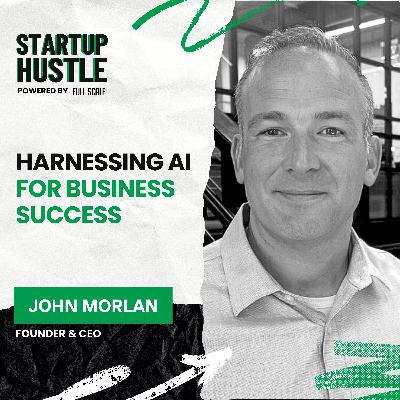
In this episode of Startup Hustle, Matt Watson interviews John Morlan, founder and CEO of Smarter Risk, about the transformative impact of AI on startups. John shares his journey of integrating AI into his business, enhancing productivity, and improving collaboration with developers. He discusses the balance between product-led and sales-led growth strategies, the importance of knowledge management, and the challenges of achieving product-market fit. The conversation emphasizes the necessity of hands-on involvement from founders and the evolving role of AI in business operations.⏱️ Episode Breakdown00:00 Introduction to AI in Startups00:57 John's Journey with AI04:58 Prototyping and Development with AI09:47 Balancing Coding and Leadership15:03 Sales vs. Product-Led Growth19:51 Building a Knowledge Base with AI24:57 Final Thoughts on AI and ProductivityLinks & ResourcesConnect with John Morlan on LinkedInWhat Smart CTOs Are Doing Differently With Offshore Teams in 2025Subscribe to the Global Talent SprintFull Scale – Build your dev team quickly and affordablyIf you’re trying to get your team out of the basement and into real product ownership, this episode is your playbook. Stop being a ticket factory. Build teams that think, create, and lead.Follow the show, rate it, and send this to someone who’s still trying to do “real Scrum.” They need it more than you do.
In this episode, Matt Watson interviews Matt Haycox, an experienced entrepreneur who shares insights from his 25 years in business, focusing on capital raising, the challenges of entering the tech space as a non-technical leader, and the impact of AI on business development. Haycox discusses his journey from traditional businesses to tech ventures, emphasizing the importance of understanding both technical and commercial aspects of business. He also highlights the value of learning from mistakes and building trust within teams.Chapters00:00 Introduction to Matt Haycox02:52 Matt's Entrepreneurial Journey05:46 Transitioning into Tech and SaaS09:00 The Role of AI in Business Development11:55 Understanding the Micro-SaaS Landscape15:08 The Importance of a Good CTO18:03 Learning from Mistakes in Business21:05 Conclusion and ResourcesLinks & ResourcesConnect with Matt Haycox on LinkedInWhat Smart CTOs Are Doing Differently With Offshore Teams in 2025Subscribe to the Global Talent SprintFull Scale – Build your dev team quickly and affordablyIf you’re trying to get your team out of the basement and into real product ownership, this episode is your playbook. Stop being a ticket factory. Build teams that think, create, and lead.Follow the show, rate it, and send this to someone who’s still trying to do “real Scrum.” They need it more than you do.
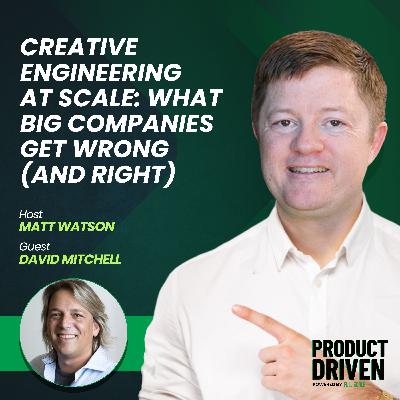
What happens when you mix creative agency chaos with world-class engineering? You get teams that don’t just write code—they own the product.In this episode, I’m talking with David Mitchell, CTO at VML, one of the biggest creative agencies on the planet. With thousands of engineers and global clients like Wendy’s and United Airlines, David’s teams are building things that most devs only dream of—and doing it without getting buried in bureaucracy.We break down what it really takes to foster creative engineering inside a massive org, how to keep engineers out of the ticket-taking trap, and how AI is reshaping what engineering leadership actually looks like.If you lead teams and want to stop micromanaging, or if you're just tired of pretending Agile is still helping... this one’s for you.⏱️ Episode Breakdown[00:15] — What is a "creative engineer" and why don’t we have more of them?[06:00] — Why software engineering should be creative work[07:40] — The evolution of engineering: From basement coders to business thinkers[11:20] — Ownership vs. ticket-taking: How VML trains teams to lead[13:30] — Journey-Driven Development and the myth of “API-first”[20:45] — Is AI changing how we build software—or just hyped?[24:00] — Hackathons, prototyping, and the rise of “vibe engineering”Links & ResourcesConnect with David on LinkedInProduct Driven - Get the BookSubscribe to the Product Driven NewsletterWhat Smart CTOs Are Doing Differently With Offshore Teams in 2025Subscribe to the Global Talent SprintFull Scale – Build your dev team quickly and affordablyIf you’re trying to get your team out of the basement and into real product ownership, this episode is your playbook. Stop being a ticket factory. Build teams that think, create, and lead.Follow the show, rate it, and send this to someone who’s still trying to do “real Scrum.” They need it more than you do.
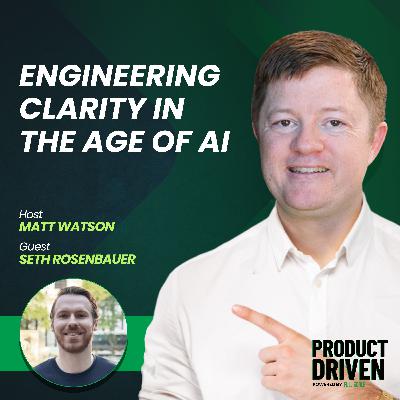
Engineering Clarity in the Age of AI: How Docs, Context, and Product Thinking Shape Better SoftwareSeth Rosenbauer is the founder of a tool that uses AI to help engineers create better documentation—and, more importantly, the right thing, faster.But this conversation isn’t just about tooling.It’s about how context is the new currency in engineering. Why your team’s ability to understand what to build and why is more critical than ever. And how AI is changing the shape of product communication, technical documentation, and engineering ownership.Whether you lead a growing dev team or are trying to ship more with less, this one’s for you.Key Discussion PointsSeth’s journey: From PM to founder to doc tool builderWhy traditional documentation fails engineersThe real cost of unclear requirementsWhat AI can (and can’t) fix in engineering communicationHow better docs lead to better productsThe problem with "done"—and how teams miss the last 10%Building a culture of engineering ownershipLinks & ResourcesConnect with Seth Rosenbauer on LinkedInJoggrProduct Driven - Get the BookSubscribe to the Product Driven NewsletterWhat Smart CTOs Are Doing Differently With Offshore Teams in 2025Subscribe to the Global Talent SprintFull Scale – Build your dev team quickly and affordably
Matt is joined by Karell Ste-Marie, founder of The Serious CTO YouTube channel. Together, they tackle one of the biggest hidden challenges in software companies: the language and cultural barrier between engineers and executives.Karell and Matt break down why innovation is so rare in large organizations, why engineers and business leaders often talk past each other, and how the CTO role often becomes the critical bridge between the two worlds.Key Discussion PointsThe cultural resistance to change inside enterprisesHow introversion and communication style shape engineering cultureWhy the best CTOs speak “both languages”Lessons from mistakes made on the path to leadershipResources & LinksThe Serious CTO on YouTube – Karell’s channel where he shares insights on engineering leadershipProduct Driven - Get the BookSubscribe to the Product Driven NewsletterWhat Smart CTOs Are Doing Differently With Offshore Teams in 2025Subscribe to the Global Talent SprintFull Scale – Build your dev team quickly and affordably
Product management is being rewritten in real time, and AI is doing the editing.Matt sits down with Jerel Velarde, product manager at Full Scale Ventures, to discuss how AI is reshaping the relationship between PMs and engineering. We dive into what Jerel calls prompt prototyping, how expectations for product velocity have changed, and why the best PMs today are blending design, strategy, and code—all while staying laser-focused on validation over output.If you're a founder, CTO, or product leader trying to navigate the new frontier of product development, this one's for you.Key Discussion PointsIs “Product Manager” even the right title anymore?The new definition of PM: focused on outcomes, not artifactsHow PMs are using AI to validate fasterHow to lead product in a startup vs. a scale-upHow to think about MVPs when AI can build anythingResources & LinksConnect with Jerel on LinkedInProduct Driven - Get the BookSubscribe to the Product Driven NewsletterWhat Smart CTOs Are Doing Differently With Offshore Teams in 2025Subscribe to the Global Talent Sprint
Matt is joined by product and leadership consultant Randy Silver to unpack one of the most frustrating problems in product organizations: everyone knows where they want to go, but no one knows how to actually get there.Together they explore what causes this breakdown in execution, how companies drift from product strategy to dysfunction, and what strong leadership really looks like at scale.Key Discussion PointsWhy strategy is easy—execution is the problemWhy in-shitification happensThe three organizational dysfunctions Randy sees mostWhy autonomy without alignment failsThe real root of dysfunction: unclear product strategyWhat leaders can do right now to fix the messResources & LinksRandy Silver’s consulting work https://randysilver.comFollow Randy on LinkedIn Randy SilverGood Strategy Bad Strategy by Richard Rumelt Link to BookSubscribe to the Product Driven Newsletter: https://productdriven.com/newsletterWhat Smart CTOs Are Doing Differently With Offshore Teams in 2025: https://hirefullscale.com/offshore-hiring-guide
In this episode, Matt is joined by Laura Tacho, CTO at DX — one of the leading voices in developer experience research and tooling. Together, they unpack how AI is really affecting software development teams, why developer experience has a “marketing problem,” and why organizational friction — not technology — is the biggest productivity killer.If you’ve been wondering whether AI is living up to the hype in engineering teams, this conversation will give you the data, the reality, and the leadership takeaways you can act on today.Key Discussion Points[00:48] – What “Developer Experience” Really Means[02:55] – The Real Sources of Developer Friction[03:44] – Core Developer Experience Problems (Pre- and Post-AI)[05:46] – Clarity as a Competitive Advantage[07:25] – The Mistake of “Shit Shielding”[08:18] – How AI Raises the Stakes for Product Thinking[10:00] – The 10x Developer Myth’s Real Origin[11:30] – Measuring Developer Experience with the DX Index[14:00] – The Role of Leadership in Removing FrictionResources & Links DX – Research and tools for improving developer experience: https://getdx.com/Developer Experience Index https://getdx.com/dxi-reportingSubscribe to the Product Driven Newsletter: https://productdriven.com/newsletterWhat Smart CTOs Are Doing Differently With Offshore Teams in 2025: https://hirefullscale.com/offshore-hiring-guide
AI can scaffold an app in seconds, but can it refactor that thousand-line React file when the first bug hits production? In this episode, I sit down with Brian Jenney software engineer and program owner of the coding bootcamp Parsity, to draw a hard line between “code that runs” and “code that lasts.” From mentoring career-switchers to stress-testing AI in real-world pipelines, Brian shares why craftsmanship and product judgment still beat copy-paste prompts.🔗 Essential Links (Start Here!):Full Episodes: https://product-driven.captivate.fm/episodesConnect with Matt Watson on LinkedIn: https://www.linkedin.com/in/mattwatsonkc/Subscribe to the Newsletter: https://newsletter.productdriven.com/Powered by Full Scale: https://fullscale.io/GET THE PRODUCT DRIVEN BOOK: https://productdriven.com/bookConnect with Brian on LinkedIn :https://www.linkedin.com/in/brianjenney/Check out Parsity here: https://www.parsity.io/Key Discussion Points:“You have to be smarter than the AI.” Why blindly shipping generated code is the fastest way to paint yourself into a technical-debt cornerThe hidden risk of non-deterministic models—like failing a simple “greater-than” check in production testsA training rule of thumb: no AI for your first months of study, then use it only to reinforce fundamentals—not replace themThe “house-of-cards” analogy for code quality and why maintainability still matters when AI writes the first draftHow Parsity’s tight-knit model turns plumbers, teachers, and even doctors into disciplined, product-minded engineers
If you’re running a startup, chances are you’re the bottleneck. Brittany Rastsmith joins Product Driven to talk through why founders constantly end up in this trap and how to escape it. She works with early-stage companies through her consulting firm, Bloom Remote, and she's seen it all. We get into how to create clarity, visibility, and accountability across your team so you’re not stuck answering every question, solving every problem, or staying up all night wondering if anything is getting done. If you want your team to take ownership and drive outcomes—not just check boxes—this episode is for you.[01:00] - Why being the bottleneck it's a stage [02:30] - Choose your hard: micromanage or build trust [07:30] - How to measure what matters[10:30] - Delegating doesn't work if you dump chaos [14:30] - Explain your thinking if you want your team to carry it out [16:00] - The power of decision logs and written rationale [19:45] - Why psychological safety is key to team ownership [21:30] - Rubber-stamping is the death of progress [24:00] - Why most managers are untrained (and why that matters) [28:00] - Productivity vs. busyness: where your team might be stuck [29:15] - Inputs vs. outcomes: how to tell what's actually broken [31:05] - Where to find Brittany and learn more about Bloom RemoteLinks & Resources:Brittany Rastsmith on LinkedIn: Bloom RemoteGet the Book: https://mybook.to/productdrivenNewsletter: productdriven.comConnect with Matt: https://linkedin.com/in/mattwatsonGet the Offshore Hiring Guide: https://hirefullscale.com/offshore-hiring-guide
The 10X Developer Decoded: Why Technical Co-Founders Are Startup Gold 💎In this revealing conversation, we unpack one of tech's most polarizing concepts while exploring the brutal realities of building technical partnerships in today's startup ecosystem. Host Matt Watson and Noah Lindner (ex-Airbnb engineer turned consultant) deliver unfiltered insights that challenge conventional wisdom about technical hiring and startup team dynamics.🔗 Essential Links (Start Here!):Get the Book: https://mybook.to/productdrivenNewsletter: productdriven.comConnect with Matt: https://linkedin.com/in/mattwatsonFull Scale Ventures: https://fullscaleventures.comGet the Offshore Hiring Guide: https://hirefullscale.com/offshore-hiring-guideYC Co-Founder Matching: https://ycombinator.com/cofounder-matchingThe Evolution of Engineering Excellence 🚀Redefining 10X: From Myth to MethodologyThe conversation opens with a fascinating transformation—how the once-toxic "10X developer" stereotype has evolved into a legitimate business advantage. Noah's perspective shift reveals something profound: the best engineers aren't just writing code faster; they're architecting workflows that eliminate friction entirely.Real-World 10X Impact:Before: 30-minute CI builds crushing team velocityAfter: 2-second feedback loops enabling continuous iterationResult: Exponential productivity gains through systematic optimizationThe Technical Co-Founder ParadoxMatt delivers a game-changing insight: "To really be a true technical co-founder, they've got to have the vision for what's being built... not just the technical vision, but the product vision."This distinction separates true startup partners from highly-paid order-takers—a critical differentiation in today's competitive landscape.Chapter Timestamps:00:00 - Deconstructing the 10X developer phenomenon08:30 - Technical co-founder vs. founding engineer dynamics16:45 - The four pillars of engineering leadership25:20 - Why big tech creates product-blind engineers32:15 - Navigating the golden handcuffs dilemmaThe Changing Startup LandscapeThe conversation reveals how technological democratization is reshaping co-founder dynamics. When any PM can create "lovable prototypes" using no-code tools, the bar for technical co-founders rises significantly. Success now requires scalable prototyping—building MVPs that can evolve rather than require complete rebuilds.The New Technical Leadership ModelMatt's four-quadrant framework provides clarity:Strategy: Long-term architectural visionOperations: Team efficiency and process optimizationProduct: User experience and market alignmentTechnical: Core engineering excellenceFor early-stage startups, product and technical mastery matter most—operations and strategy complexity come later.Have you experienced the "order-taker engineer" phenomenon? How did your team address it?What's your framework for evaluating technical co-founder potential beyond coding ability?How do you balance technical debt concerns with rapid iteration demands?Share Your Story: Tag us with your technical co-founder journey—the wins, failures, and lessons learned. Let's build a knowledge base for the next generation of technical partnerships.Subscribe for more unfiltered insights on technical leadership, product strategy, and startup team dynamics.
From Coding to Catalyst: The Evolution of Technology Leadership 🚀Journey through the transformation of modern CTOs with industry veteran Kathy Keating, who shares battle-tested insights from scaling teams of 2 to 450+ engineers. This episode unravels the complex tapestry of technology leadership, exploring how yesterday's code-focused roles have evolved into today's strategic business catalysts.🔗 Essential Links (Start Here!): Get the Book: https://mybook.to/productdrivenNewsletter: productdriven.comConnect with Matt: https://linkedin.com/in/mattwatsonFull Scale Ventures: https://fullscaleventures.comGet the Offshore Hiring Guide: https://hirefullscale.com/offshore-hiring-guideThe Leadership Evolution Story 📖The Great Divide: Once upon a time, software engineers were the product owners, customer advocates, and technical architects all rolled into one. They flew across continents to understand telecom fraud patterns, immersed themselves in customer operations for weeks, and returned with deep domain expertise. Today's specialized world has created powerful capabilities—but at what cost?The Four Pillars of Engineering Leadership: Matt introduces a provocative framework suggesting no one masters all four domains: Strategic visioning, Operational excellence, Technical depth, and Product intuition. The conversation challenges us to identify our strengths while building systems that compensate for our natural limitations.Behind the Framework: CTO Levels Decoded 🔍Kathy reveals the methodology behind assessing technology leadership maturity—from solo programmer (Level 0) to industry thought leader (Level 10). Each level demands mastery of previous foundations while introducing new complexities like acquisitions, strategic partnerships, and organizational transformation.The Assessment Reality: A comprehensive 50-question evaluation generating 60-page strategic roadmaps. Hundreds of leaders have used this framework to identify gaps and accelerate growth—proving that systematic development beats trial-and-error learning.Chapter Timestamps:00:00 - Opening: Two Authors, One Mission 02:14 - Defining Modern CTO Reality 04:11 - The Four-Type Leadership Framework 07:21 - CTO Levels: Decoding the Hierarchy 09:25 - Career Path Truth: How Do You Actually Become a CTO? 16:58 - Strategic Advice: The Power of Starting Small 17:52 - Then vs. Now: 20 Years of Engineering Evolution22:03 - The Product-Engineering Divide Crisis 26:12 - AI Revolution: Promise and Peril 32:44 - Resources: CTO Levels and Liquid Book Overview 33:09 - Final Thoughts and Next StepsWhich of the four engineering leadership types resonates most with your current role—Strategic, Operational, Technical, or Product? Share your experience in the comments and let's discuss how to build complementary teams that cover all bases.
Product Driven: Building Software Teams That Ship Value 🚀In this special book launch episode, we dive deep into the intersection of engineering leadership, product thinking, and the transformative impact of AI on software development. Join Matt Watson and Craig Ferril as they explore the revolutionary "Product Driven Model" and why traditional development approaches are becoming obsolete.🔗 Essential Resources:Get the Book: https://a.co/d/100RmwCNewsletter: productdriven.comConnect with Matt: https://linkedin.com/in/mattwatsonFull Scale Ventures: https://fullscaleventures.comGet the Offshore Hiring Guide: https://hirefullscale.com/offshore-hiring-guideKey Discussion Highlights:🎯 The Product Driven Model (Five Core Components)Vision: Understanding the "why" behind every decisionFocus: Keeping customer outcomes at the centerClarity: Providing just enough context without overwhelmingShared Ownership: Distributing responsibility across teamsCourage: Creating psychological safety for innovation🤖 AI's Leadership ChallengeEngineering bottlenecks are shifting from throughput to directionTeams going "2x faster in the wrong direction" create bigger problemsLeadership must evolve from requirement-feeders to vision-communicatorsThe rise of "low-code thinking" in traditional development🎯 From Individual Contributors to LeadersThe transition from "doing" to "enabling others to do"Four types of engineering leadership: Strategic, Operational, Technical, and ProductWhy most leaders aren't good at all four (and shouldn't try to be)Chapter Timestamps:00:00 - Book Launch Introduction & "Find Your Craig"08:16 - Why AI Makes Product Thinking Critical15:03 - The Death Spiral of Internal Focus18:07 - Creating Cultures of Courage vs. Fear23:14 - The Five Components of Product Driven Model32:40 - Future of Engineering Leadership37:22 - Closing the Feedback Loop with Introverted Teams💡 Key Takeaways:For Engineering Leaders:Stop being the bottleneck - build teams that don't need youCreate environments where "calling the baby ugly" is celebratedFocus on making other people more productiveFor Product Teams:Shift from feature factories to outcome-driven developmentEmbrace the "win or learn" mentalityConnect every technical decision to customer valueFor Organizations:AI won't solve leadership problems - it will expose themCulture and strategy must work in tandemThe future belongs to teams that think like product ownersThe conversation reveals a fundamental shift happening in software development. As AI democratizes code creation, the competitive advantage moves from "how fast can we build" to "what should we build and why." Teams that master this transition will thrive; those that don't will find themselves building faster in the wrong direction.💬 Join the Conversation: How is your engineering team adapting to the AI-driven future? Share your experiences with implementing product thinking in technical teams!🎧 Subscribe to Product Driven for more insights on building software teams that deliver real value.Special thanks to Craig Ferril for the thoughtful discussion and early feedback on the book. The future of software development isn't just about better tools - it's about better thinking.
Product Driven: The Book Launch - A Software Leader's Journey to Creating High-Performance Teams 📚After months of intensive writing and years of industry experience, Matt Watson unveils his groundbreaking book "Product Driven" - a comprehensive guide for engineering leaders seeking to build teams with a genuine product mindset. This isn't just another business book; it's a practical roadmap for transforming how software teams think, work, and deliver value.In this revealing first look, Matt shares the personal journey that led to creating this essential resource for the tech industry. Drawing from his extensive career building and scaling software products, he addresses a critical gap in leadership literature - how to actually build and manage teams that think like product owners, not just code executors.🔗 Essential Resources:Get the Book: https://a.co/d/100RmwCNewsletter: productdriven.comConnect with Matt: https://linkedin.com/in/mattwatsonFull Scale Ventures: https://fullscaleventures.comGet the Offshore Hiring Guide: https://hirefullscale.com/offshore-hiring-guideKey Discussion Points:The evolution from developer conference speech to comprehensive leadership guideWhy product mindset separates high-performing developers from the restThe cultural transformation required for sustainable team successPractical frameworks for engineering leaders to implement immediatelyThe 500-hour writing journey and lessons learnedChapter Timestamps:00:00 - The Big Reveal: First Look at Product Driven00:22 - The Origin Story: From Conference Speech to Book01:30 - The Culture Revolution: Why Leadership Matters02:38 - The Writing Process: 500 Hours of InsightsReady to Transform Your Team? Share your biggest leadership challenge in the comments - what's preventing your developers from thinking like product owners? Let's discuss practical solutions that actually work in real engineering environments.
Breaking Through Requirements Hell: How AI is Revolutionizing Software Development 🚀In this compelling exploration of technological transformation, host Matt Watson connects with Chris Rickard, founder of UserDoc, broadcasting from Vietnam. Their conversation unveils a profound shift happening across the software industry—one where artificial intelligence is fundamentally reshaping the relationship between business stakeholders and development teams.What emerges is a fascinating paradox: as AI accelerates coding capabilities, the critical constraint shifts from "how do we build it?" to "what exactly should we build?" Chris's journey from software engineer to product innovator illustrates this transformation, revealing how traditional bottlenecks are being reimagined through AI-powered requirements management.🔗 Essential Links (Start Here!): Full Episodes: https://product-driven.captivate.fm/episodes Connect with Matt Watson on LinkedIn: https://www.linkedin.com/in/mattwatsonkc/ Subscribe to our Newsletter: https://fullscaleteam.com/newsletter Get our FREE Ebook: https://fullscaleteam.com/productfirstteams Powered by Full Scale: https://fullscale.io/ Download the FREE Offshore Hiring Guide: https://hirefullscale.com/offshore-hiring-guideUserDoc: https://userdoc.comChris Rickard on LinkedIn: https://www.linkedin.com/in/chrickard/Key Discussion Points:AI-Powered Requirements Creation: How UserDoc accelerates requirements by 50-70% while maintaining human oversightReverse Engineering Legacy Systems: Converting complex source code (including COBOL) into understandable business featuresThe Shifting Development Bottleneck: Why clarity becomes paramount when AI makes development fasterIntegration with Modern Workflows: Connecting requirements directly to AI coding tools like Cursor and GitHub CopilotChapter Timestamps:00:00 - The Universal Developer Dilemma02:28 - Genesis of UserDoc07:57 - Beyond Product Managers: Who Really Needs This14:40 - Technical Challenges of Code Analysis22:44 - The Great Bottleneck Shift27:04 - Pricing and Market AccessibilityReady to break free from requirements chaos and accelerate your development workflow? The conversation with Chris Rickard reveals a pivotal moment in software development—where AI amplifies human potential rather than replacing it. Share your own requirements management challenges in the comments below. How has AI changed your development process? What bottlenecks are you experiencing as coding becomes more automated?
Learning Through Play: How Boddle Built Educational Games That Kids Actually WantIn this insightful conversation, Matt Watson talks with Clarence Tan, founder and CEO of Boddle Learning, about their journey building educational games that have reached over 10 million users. Clarence shares how they tackled the classic problem of educational games - how to make them as engaging as regular games while maintaining educational value. By creating fun games first and then "sneaking in" learning content, Boddle has found success in the competitive educational technology space.The most valuable lesson? Get out of the office and actually watch users interact with your product. Rather than spending money on complex analytics, the Boddle team discovered their biggest product issues simply by visiting classrooms and observing how kids used their app. Clarence also shares how they eventually cracked the monetization code by understanding that parents were buying subscriptions not because they understood the educational benefits, but because their kids wanted the in-game items.🔗 Essential Links (Start Here!):Full Episodes: https://product-driven.captivate.fm/episodesConnect with Matt Watson on LinkedIn: https://www.linkedin.com/in/mattwatsonkc/Subscribe to our Newsletter: https://newsletter.productdriven.com/Powered by Full Scale: https://fullscale.io/GET THE PRODUCT DRIVEN BOOK: https://productdriven.com/bookCheck out Boddle here: https://www.boddlelearning.com/Key Discussion Points:🎮 Building educational games that are genuinely fun first🧠 How Boddle "sneaks in" learning content after establishing engaging gameplay💰 The journey from zero users to 10 million through COVID and beyond📊 Why watching actual users beats fancy analytics tools🔑 The monetization breakthrough: understanding kids are the real decision makers🚀 Pivoting from building many games to focusing on the most successful one📱 How Boddle connects with both teachers and parentsChapters:00:00 - Introduction and Welcome00:46 - Origins of Boddle Learning02:08 - Making Education Fun Through Games04:17 - Early Funding and Productization05:36 - Impact of COVID on Growth07:42 - Getting on the White House Educational Resources List08:19 - Server Challenges with Rapid Growth09:04 - Moving to Tulsa for VC Funding10:30 - The "Leaky Bucket" Discovery11:21 - Monetization Challenges13:57 - Finding the Most Popular Game Mode14:51 - The Pet Battle Game Success15:58 - NFT Experiment Mistakes16:52 - Keeping Education in Fun Games18:45 - The Power of Classroom Observation20:47 - First-Time User Experience Issues22:32 - Learning to Sell to Parents Through Kids25:40 - Tapping Into the Entertainment Wallet26:45 - Boddle Bucks and Future Growth27:38 - Impact and Educational ValueReady to transform your child's screen time into learning time? Visit https://www.boddlelearning.com/ to try their educational games that kids actually want to play!
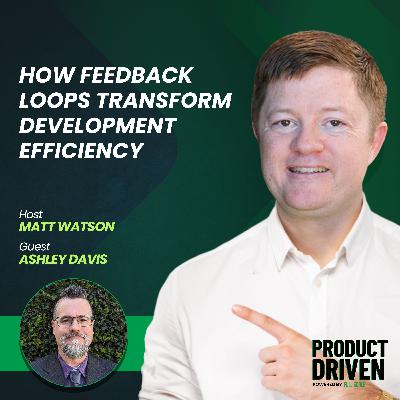
Feedback-Driven Development: Optimizing Your Software Engineering ProcessIn this enlightening conversation with author Ashley Davis, Matt Watson explores the concept of feedback-driven development and how it shapes effective software engineering practices. Ashley, author of "Bootstrapping Microservices" and the upcoming "The Feedback-Driven Developer," shares valuable insights on how developers can leverage feedback loops to enhance their productivity, make better decisions, and deliver more value to customers. They discuss the shifting landscape of software development in the age of AI, the importance of personal feedback systems, and why understanding product priorities is crucial for modern developers.🔗 Essential Links (Start Here!):Full Episodes: https://product-driven.captivate.fm/episodesConnect with Matt Watson on LinkedIn: https://www.linkedin.com/in/mattwatsonkc/Subscribe to our Newsletter: https://fullscaleteam.com/newsletterGet our FREE Ebook: https://fullscaleteam.com/productfirstteamsPowered by Full Scale: https://fullscale.io/GET THE PRODUCT DRIVEN BOOK: https://productdriven.com/bookAshley Davis on Twitter: @ashleydavis75"Bootstrapping Microservices" book: Manning.com/books/bootstrapping-microservices-with-docker-kubernetes-and-terraform"The Feedback-Driven Developer" (Early Access): Manning.comKey Discussion Points:🔄 The concept of personal feedback loops in the development process🎯 How prioritizing by "value over cost to deliver" leads to better decisions🔍 The critical importance of getting clarity before diving into code🚀 Why prototyping is one of the most effective feedback mechanisms🤖 How AI is shifting the bottleneck from engineering to product decision-making⚠️ The pitfall of "moving fast in the wrong direction" with AI assistance🧩 Techniques for self-review and maintaining working code🏗️ When microservices architecture makes sense (and when it doesn't)Chapters00:00 - Introduction and Welcome00:25 - The Experience of Being a Tech Book Author00:53 - Origins of "The Feedback-Driven Developer" Book02:11 - Defining "Feedback" in Software Development03:52 - The Importance of Understanding Trade-offs05:35 - Ensuring You're Working on the Right Thing07:34 - Getting Feedback on Implementation Approaches09:06 - Clarity as the Fuel of Software Development11:16 - AI's Impact on the Software Development Bottleneck13:13 - Why the Best Developers Think Like Product Owners14:54 - Process Theater vs. Value Delivery16:19 - Building Feedback into Your Development Loop17:23 - Production Monitoring and Performance Feedback19:32 - Key Insights and Aha Moments from the Book22:44 - Developers QA-ing Their Own Code25:21 - When to Use Microservices Architecture27:43 - Book Information and Closing ThoughtsReady to transform your development process with effective feedback systems? Get early access to "The Feedback-Driven Developer" at Manning.com by searching for the book title. New chapters are released every month or two, and the first three chapters are available now. Check the show notes for a special discount code for our listeners!


Download from Google Play

Download from App Store
 United States
There's never been a better time to start making high-quality social media videos than now, with a growing list of video features and video ideas on various platforms, I encourage you to learn more about it here https://www.12yfilms.com/ . You'll understand how a social media video strategy has helped your company by examining data and analyzing your customers' actions.
Great podcast, very informational, a lot of gems being taught. Thanks. 👍🏽
Wow, cool! And how can I join you? And by the way, how long have you been on the market? https://castbox.fm/home?country=ru
Great show, just try not interrupt your guests so much when they have a thought. Just some constructive criticism.