


 Claim Ownership
 A Broadway Body: Continued Conversations
A Broadway Body: Continued ConversationsSubscribed: 1Played: 0
Subscribe

© Megan Gill
Description
A Broadway Body: Continued Conversations is a safe space for people to come to learn about how to cultivate a healthy body image. This is a place where questions will be asked, topics will be explored, and conversations will be had. I do not have the answers myself. Through the Continued Conversations Series overarching goal is to continually bring guests into this space to speak about their expertise in their fields to bring us closer to collective understanding.
While this space is geared towards performers, all walks of life are welcome! My intention is to share information that could help anyone struggling with relating to their self-image, and I plan to bring on guests outside of the performance space as well.
Hit “subscribe now” to get notified when I share a post. There is an option to join a paid plan for $8/month or $60/year - beginning May 2025, this plan will be where I share the Continued Conversations Series with my guests. You’ll also gain instant access to our community where you can comment on posts and engage with our A Broadway Body community!
Email me at themegangill@gmail.com with any topics or questions you’d like me to dive into, if you have a suggestion for a guest you’d like to hear from, or if you would like to be interviewed for the blog yourself!
Subscribe to the newsletter on Substack and remember to sign up for a paid plan if you’d like to receive the Continued Conversations Series + join our community starting May 2025!
----------
Disclaimer: While I’m not a licensed therapist, registered dietician, or medical health professional and cannot speak to body image topics from a clinical, trauma-informed place, I am an expert of lived experience. I’m an academic of my own body, and I’m passionate about facilitating conversations with other humans about their relationships with their bodies. I believe it’s important to continue conversations about healthy body image in creative spaces as a means to heal individuals as well as the collective whole. But just know the information presented in this medium is not professional mental health advice or medical advice, and any questions or concerns you have should always be directed to your health providers.
themegangill.substack.com
While this space is geared towards performers, all walks of life are welcome! My intention is to share information that could help anyone struggling with relating to their self-image, and I plan to bring on guests outside of the performance space as well.
Hit “subscribe now” to get notified when I share a post. There is an option to join a paid plan for $8/month or $60/year - beginning May 2025, this plan will be where I share the Continued Conversations Series with my guests. You’ll also gain instant access to our community where you can comment on posts and engage with our A Broadway Body community!
Email me at themegangill@gmail.com with any topics or questions you’d like me to dive into, if you have a suggestion for a guest you’d like to hear from, or if you would like to be interviewed for the blog yourself!
Subscribe to the newsletter on Substack and remember to sign up for a paid plan if you’d like to receive the Continued Conversations Series + join our community starting May 2025!
----------
Disclaimer: While I’m not a licensed therapist, registered dietician, or medical health professional and cannot speak to body image topics from a clinical, trauma-informed place, I am an expert of lived experience. I’m an academic of my own body, and I’m passionate about facilitating conversations with other humans about their relationships with their bodies. I believe it’s important to continue conversations about healthy body image in creative spaces as a means to heal individuals as well as the collective whole. But just know the information presented in this medium is not professional mental health advice or medical advice, and any questions or concerns you have should always be directed to your health providers.
themegangill.substack.com
23 Episodes
Reverse
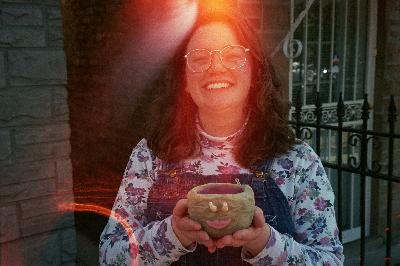
Everyone please welcome Liz J to A Broadway Body: Continued Conversations! Liz and I were a part of the same university program, so we’ve known each other for quite some time now. I was so excited to bring Liz in for a conversation about body image.Liz pulled back the curtain on being raised in a musical theatre world and discussed how the beauty and body standards of Broadway impacted her as a teen and into adulthood. She talks about her relationship to dance, body modifications, and bodily agency. This was such an impactful conversation for me to be a part of, and I cannot wait for you to hear it!In our conversation, we discuss…* When Liz first started using the phrase “A Broadway Body”* Richard Simmons Tapes - seeing people in different sizes of bodies dancing for fun* The impact of the wild ideologies preached to us in musical theatre* Pursuing what body modifications work for you and respecting others’ bodily agency* Our thoughts on plastic surgery, aging, body modifications* Art about the beauty standards, overconsumption, body image, and moreResources Liz speaks on in our conversation:* Books: * Girl on Girl* The Manicurist’s Daughter* Films:* The Substance* Dumplings* Helter Skelter* Death Becomes Her“ I’m thinking about just the experience of the contrast of being a high schooler with a BFA problems Twitter account to then being a college student getting a BFA, I guess I don’t necessarily want to rehash all the wild feedback that a lot of us got in our program, but a lot of us were getting wild feedback that reinforced these ideas that you need to look a certain way to perform and you need to look a certain way to be even worthy of being seen on stage. I didn’t realize that I was thinking about things in those terms until after college.”- Liz JMegan Gill: Hi, Liz!Liz J: Hey, Megan!Megan Gill: I’m so excited that you’re here today and that we get to chat!Liz J: Oh, I’m so excited to be here. Yeah, thanks for having me!Megan Gill: Absolutely! Do you wanna just start by introducing yourself and a little bit about the work that you do in the world?Liz J: Sure, so I’m Liz J. So Megan and I went to college together. We were in the musical theater world.Megan Gill: We were.Liz J: So I have that background and I still very much consider myself a creative person and do a lot of creative work, but I’m not really doing it for money. And I kind of like that setup right now. I have a normal-person job working at a law firm. So I’m mostly making trainings for new attorneys, and it’s a really great job in a lot of ways. And I still am able to be creative.For example, I’m working on a training right now that I get to design puppets for it. That’s crazy. In what world are puppets at a law firm. But I have a really cool team that I work with, and I feel they see what I’m interested in and take interest in the things that I’m interested in and are very open-minded about what my role can look like. Yeah, I just am lucky to work with people who are also creative.So, outside job-job, I also do puppetry and I make solo music and I’m in a choir and I make visual art and I write, and I wrote a musical with one of my best friends. Yeah.Megan Gill: Whoa. Tell me more if you can.Liz J: I mean it’s a really silly and campy musical, and we wrote the first draft in 2019, which is kind of wild to say because that is now a long time ago. But yeah, we had performance dates set for 2020, and then 2020 happened. So obviously we had to take a step back. And yeah, we weren’t sure when it would be a good time to do an in-person show again. So we kind of put it aside for a while. And then last year we brought it back up and we started working on it again, and we started working on it with Garrett Welch he’s helping us arrange the music, so…Megan Gill: Cool.Liz J: Hopefully gonna be producing it soon. It’s been a long journey, but that’s okay.Megan Gill: Totally okay. This is so exciting, and I’m so excited to hear that you’ve stuck with it this long.Liz J: Yeah, yeah. I mean, it’s not been consistent this whole time. we’ve kind of put it to the side for good chunks of time, but I think that’s also been good for it, you know? We can live life, do other creative projects, and then we kept wanting to revisit it, which I think says something the fact that we wanted to complete this project.Megan Gill: Yeah. Agreed. I think that’s beautiful and lovely. It’s had time to breathe. It’s ready.Liz J: Yeah, word. Exactly.Megan Gill: Yeah. Okay, cool. I love that. Thanks for sharing all of that stuff. So yeah, we had crossover years at the same college program together. We weren’t in the same year, but whatever. It doesn’t matter because we were still in a lot of the same classes and we were still performing together and in dance together and probably even in scene study at some point. Yeah.Liz J: Shows, yeah.Megan Gill: Yes. Shows together, all of that good stuff. So that’s how we met. That’s our origin story. And I think that we met at this time where I was in a very different place in terms of relationship to my body. So I’m curious to hear a bit of your body image story and how your evolution as an actor and a creative and just a human being in general has influenced that.Liz J: Yeah, so I mean, like I think a lot of young performers, I got bit by the bug early and was really, really passionate about it and really striving, I guess might be the word. I basically from the first time I did a musical in middle school, I just really wanted to do whatever it took to keep doing that. Let’s see. I’m trying to think how exactly to really phrase this.I really wanted to pursue musical theater really hard, and when I was in high school, I was in a bunch of dance classes and I felt I was kind of playing catch-up because I hadn’t been dancing my entire life. And I think a lot of girls who were raised in the nineties, got a lot of wild feedback about what it meant to – as you’re growing up, what you should look like and what kind of body you’re taught is desirable. So that’s the air we’re breathing, at that time. It was very much a present – it was just incredibly on my mind throughout high school and into college. Thinking about my body is part of this package.It’s kind of stunning thinking about myself being a teenager, having these thoughts like, “Ooh, I am something to market.” But it really – the teachers that I listened to, their messaging really stuck with me that I was just very much thinking of myself as a commodity from this tender age.And yeah, when I got to college, it was a lot of also similar messaging. Megan, I’m honestly, I’m thinking about just wild, wild shit that I thought in high school because I’m like it really was – I don’t wanna get on here and trauma dump. That’s not it. I’m not – I don’t wanna be like, “Here are all these crazy things that were said,” but I do wanna demonstrate, like, okay, it really was so present.I had all these friends that I was doing theater with in high school, and we had a satirical Twitter account called “BFA Problems.” We were high schoolers. We were not pursuing a BFA, but it was like we had a Twitter account and the icon was a LaDuca and we were just tweeting all this stuff about, about literally saying the phrase “Broadway body” in Tweets as high schoolers, you know? I’m 15, and we were deep in it. And one of my other very good friends who also went on to go to college for musical theater, he and I would do P90X in the morning.Megan Gill: In high school.Liz J: We were 16! That’s wild. You know? And so, it was just on my mind from an early – it’s early. That is an early age. That’s kind of wild thinking about a teenager thinking of – yeah.Megan Gill: Hyper-fixating on bodies in this way. Yeah, agreed.Liz J: Yeah.Megan Gill: Agreed because as kids we’re so active, and a lot of kids play a sport or maybe have an afterschool activity. And so we do these things and there’s a long time of your childhood where you don’t even think twice about how much you’re moving your body. And then there comes a point, and for me it was high school as well, where I realized, “Oh, you mean I can move my body in this certain type of way or this much, and it can then look potentially a different way than it does now? And I don’t what I look like right now because all these messages tell me I shouldn’t look what I look right now.” It’s that moment that forever changes you. And I feel when that moment happens so early, even in high school, when our brains are not developed yet, it really can mess with your psyche. Yeah.Liz J: Yeah. Yeah. And I mean, it was it is pretty stunning. I don’t know. I’m just thinking about how I had a childhood doctor say, “Hey, your kid should play a sport.” And so, I started doing swim team, and that’s also a tough sport.Megan Gill: I’m sorry, I’m smiling because I also did swim team in high school.Liz J: Wait, yes! I remember this!Megan Gill: So I feel you!Liz J: Yeah. I keep saying it was just in the air, but it was I’m thinking about being on swim team and then later going to the dressing room at Hollister and Abercrombie and you know always having an idea of which size you are and wondering – literally talking to friends about what size jean they wear.Megan Gill: This is stuff that’s very fascinating actually, because I think a lot of these high-school conversations that we – I think a lot of us had very, very similar conversations. Or for instance, just the fact that we were both on a swim team where not only are you in a bathing suit in front of spectators, your whole team, but also that’s where I realized, “Oh, I can lift weights and move my body this much and maybe lose some weight because society’s telling me that my body is not good the way it is, and I need to change it.” It’s all of these different facets of what you’re talking about I think are such a universal experience for so many young people.Liz J: Yeah. Yeah. I mean, I’m also just thinking about the books that were out at that point, s
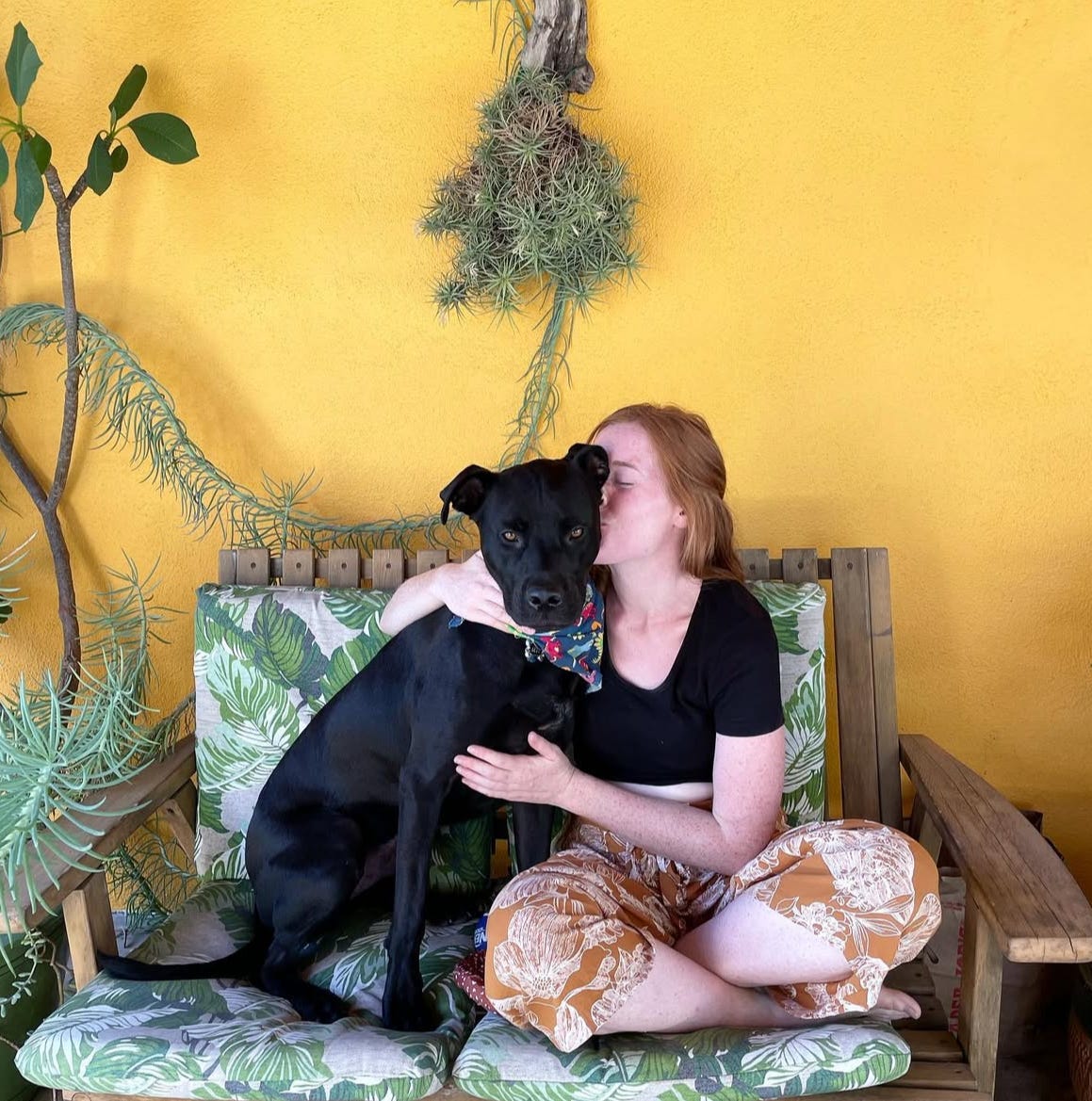
Everyone please welcome my friend and fellow actor, writer, producer, Christine Dickinson, to A Broadway Body: Continued Conversations! Christine is an actor, a writer, and a producer, and I met in our acting class at Crash Acting a few years ago. She very recently debuted her one-woman play “Mother” in Los Angeles, CA, and the show was phenomenal. We’d had this conversation before I saw it, and I will say that many topics of convo that Christine brought to the fore were beautifully touched on in her show.In our conversation, we discuss…* Breaking the generational trauma cycle (with body image and more broadly)* The debut of her one-woman, one-act show “Mother” and what inspired her to write the play* How rehearsing her play brought her body image story front and center* The conscious permission it takes to write about topics we don’t necessarily feel “qualified enough” to speak on* The comment her play makes about the impacts of social media on today’s culture* Navigating our feelings around our bodies* Her body image story - from being praised for being thin and invalidated in her feelings about her body, to uncovering a body image story through the rehearsal of her playChristine so openly shared her body image story with me, and her vulnerability to speak on these topics she’s just recently started to face head on is beautiful. Her thoughts on generational trauma and the impacts of social media on our individual body image are powerful, and I cannot wait for you to hear our conversation!“I think a lot of comparison is what comes up in the play, kind of in a subtle way. But there are a lot of different videos in the video sequences that you see that indicate that my character is doing girlhood or womanhood incorrectly. So you have one person saying, “Hey, if your body is larger, that’s bad, and you should fix that.” And then another person, “If your body is smaller, that’s also bad and you should fix that.” And then, “Oh, you should be dainty and feminine and always keep a groomed appearance.” And then like, “No, fuck that!” And then, you know, all of these different, you know, expectations about what we should and shouldn’t use our bodies for. And yeah, then there’s, you know, the whole topic of what happens to your body during pregnancy. That’s something that’s explored in one of the video series as well.”- Christine DickinsonMegan Gill: Hi, Christine! I’m so excited to talk with you, and I’m just so glad that you’re here.Christine Dickinson: Hi! Thank you so much for having me. I’m very excited. I’m a big fan. I’m a big Megan fan.Megan Gill: Hey, I’m a big fan of you! Do you wanna just start by introducing yourself and introducing your work in the world?Christine Dickinson: Yes, I’m Christine Dickinson and I am an actor, playwright, and new producer. And right now, I am producing my first original work called Mother, which will be a workshop production of my one-woman show.Megan Gill: Which is just so exciting because, at the time of recording this, you are premiering this piece to the world in just a couple of days!Christine Dickinson: Yep. Yep!Megan Gill: How do you feel?Christine Dickinson: I think, more than anything, excited but also terrified. So I would say it’s probably equal parts both. This has been something that’s been marinating for me for a couple of years. A few years ago, I wanted to write a screenplay of this kind of a thing, and now it’s kind of evolved into a play and, you know, that’s a little bit more my realm anyway than film. So I’m definitely excited to share the story in a medium that I have been working in for so long. But scary because I’ve never really put my own voice out there like this before. So I would say it’s a little bit of both.Megan Gill: Oof, I just got chills. That is so, so totally fair. Okay, so the premise of your story is, “In this comedy thriller play, a daughter faces the cost of being a woman in a modern world where her mother isn’t answering her calls.”Christine Dickinson: Yes.Megan Gill: Can you share a bit more about the premise in the story and kind of these themes of what it is to be a young woman today and how those themes are woven into the piece?Christine Dickinson: Yeah, absolutely. So the play opens when a daughter, my character, comes in from a long-haul flight, and the first call is, you know, just checking in with the mom like, “Hey, I got home,” that kind of thing. And it becomes pretty clear that something happened during the last moments that we saw each other, because I guess the idea is that we live on opposite sides of the country, and I no longer live near my mom. So the phone is really the only way that we can connect. So there’s this idea that something happened, and we’re not quite sure what happened, but there was some sort of tension between daughter and mother that was unresolved before the daughter left to get on a plane to go back home.So that’s where we start. And throughout the play, without giving too much of it away, we start to see this person’s life shake out kind of maybe how you would imagine it to with a lack of guidance or support. And many of the troubles, again, without getting too much into it, because it’s only 40 minutes. So I’m like, there’s not a ton that I could really tell about the plot that’s not a total spoiler.Megan Gill: Totally. No spoiler alerts!Christine Dickinson: I’m like, I just tell you the whole thing right now. “In scene six, this happens.”Megan Gill: I’m like, “No, I’m seeing the play this weekend!” And I’m so excited. I cannot wait!Christine Dickinson: Yes. Okay. I won’t spoil it for you. But, you know, it’s everything to do with the things that we have to face, particularly as women in a modern world, everything from pressures of how we look, pressures of how we are coming off (especially to people who have authority over us like employers), pressures of being equal parts girl boss and equal parts dainty, feminine. And then we kind of dive into this whole world of like, whoa, okay, these are modern lenses on these issues, but these are really issues that have existed for centuries.So we kind of go back and look at some ancestral stuff a little bit and some things that – like what happens when we experience traumatic things and we leave those traumatic things unchecked and we continue to reproduce, especially when it’s a woman giving birth to a daughter, and then she has a daughter, and then she has a daughter. And how those cycles kind of don’t break themselves unless somebody breaks it.Megan Gill: That is such an important thing to be talking about and something that I very much think our generation is all about looking at and uncovering and trying to get to the bottom of. So I just think it’s really beautiful and also quite relevant to probably what many women are unpacking today.Christine Dickinson: Hmm. Yeah. Thank you. What’s really interesting about writing this play was that I think we had actually had a conversation years ago because, when I saw your short, A Broadway Body, the screening of that, I felt really inspired. And I was like, “Oh, I’m writing something that’s kind of touching on something similar to this.” And I think we had a conversation about that because I was so inspired. I was like, “How did you sit down and write this?” I kind of felt like I abandoned that project for a while, but then I sat down, I think it was February, and I was, like, “Ooh, I’m really kind of feeling something right now.” And so, I just sat down without thinking of it being a play or anything. I think I just wrote a conversation or a one-ended phone conversation, like a voicemail, like so much of this play is a voicemail series. So I think I just wrote one. From there I was like, “Oh, this is kind of setting something off in me a little bit.” And then I stepped away from it for I think a couple weeks, and then I went back to it and I read it and I was like, “Oh, no, no, no. Something else happens after this.” And it just kind of one thing led to the next, to the next.I just, over the course of maybe two months, kept walking away and then coming back, and then it was just so abundantly clear what happens next in this person’s story. And I didn’t know how this play was going to end until I sat down and I wrote the final scene. And I think my fiancé, who was literally in the room. He came in, in the middle of me writing it, and he was like, “Hey, how was your –?” And I was like, “No. No, no, no. Hold on, hold on!”Megan Gill: “Zip it! Not now!”Christine Dickinson: Hold on one sec. Hold one second. And then da, da, da da, last line of the play. “Okay. Yes, it was fine. Um, take five and I’m gonna read you this.” So yeah, it just – like, I had no idea some elements of it, that were coming in, until literally I was writing it. It was as if something was kind of moving. It sounds silly when I say it, but it’s like something else was moving through me that was not my own narrative anymore, even though it felt like it started off that way.And even in the rehearsal of it, the reading of it, all of this, we had a dress rehearsal on Sunday, and even in that I’m like, “Oh, there are things that I’m discovering in this text that I was not aware that I was putting into it.” Yeah, so it’s been a really strange experience. So bizarre for me and foreign but cool.Megan Gill: Wow, that’s so cool and so magical. And how beautiful that you literally produced these words and these words came out of you, and yet you’re still finding so much in them and so much that you are discovering and didn’t know was coming out of you at the time. Are you familiar with Elizabeth Gilbert’s work?Christine Dickinson: Not super.Megan Gill: Okay. She wrote this book called Big Magic. When I was moving out to LA, I read it and I was obsessed with this concept because it had happened to me one time before, and it’s this concept of inspiration is flying out there, right? And then inspiration hits you, and either you take it right then and there
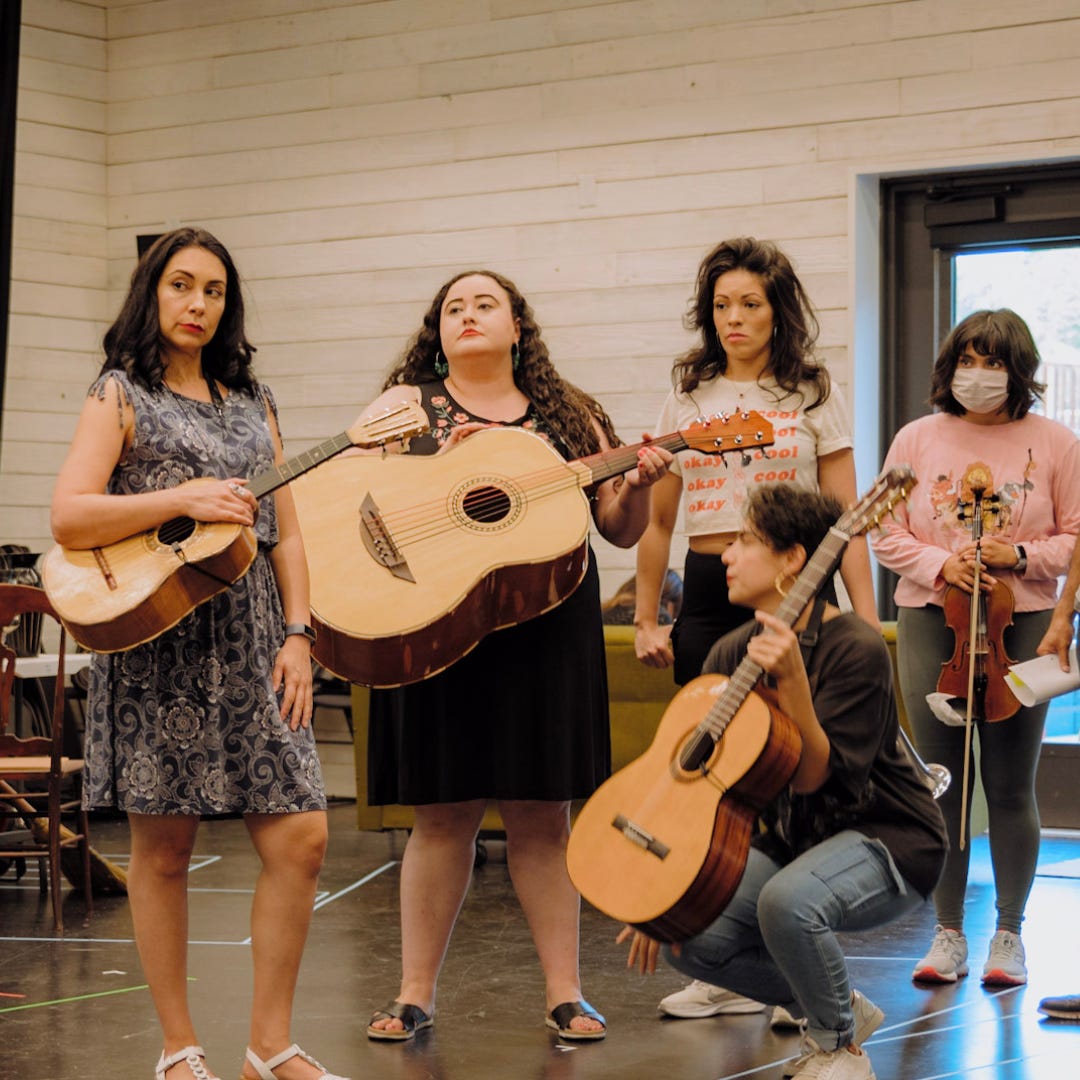
Everyone please welcome Jennifer Ledesma to A Broadway Body: Continued Conversations! Jennifer is an actor based in Chicago. She and I were auditioning in the Chicago theatrical market at the same time back in 2016-2018, and while we’d never booked the same show, we’d always see each other at auditions, in class, and in the community. (If you’re in the Chicagoland area, catch her in a show!)In our conversation, we discuss…* How prevalent it is for curvy and plus-size women to not be cast as the leading lady, love interest roles in musical theatre* Being told to switch majors (away from musical theatre) in college, yet being one of the only working actors from her class* The complexities of how our bodies and identities show up in the work that we do as actors* Destigmatizing the BFA* How Jennifer felt seeing a character breakdown that was meant for her, as a curvy, Latina actor* How the “F” in BFA ultimately doesn’t matter* Rediscovering the joy of dance through getting back into a movement practice that felt aligned for her and supportive of her strength and stamina goals* The juxtaposition of knowing what you want to change about yourself and not hyper-fixating on them and viewing them as imperfections* Embracing your curves instead of feeling shame for themOur bodies and identities are so complex. Jennifer reminds us that so much of who we are impacts the work we do as artists. We discussed so many important topics, and Jennifer shared some incredible perspectives on an array of body image-related topics. I cannot wait for you to hear our conversation!“ I think that just adds a whole other layer to the whole conversation that we’re having about body image and perspective, because I think that’s why I was also really powerful with seeing a show like “Real Women Have Curves” on Broadway. There’s not a lot of spaces were we’re celebrating plus-size women of color, specifically Latina plus-size women, in the industry, and just a specific space for that. It’s such an indescribable feeling, but I would love to see more shows like that representative of those communities and inviting in what makes us special or what makes us unique and inviting us to embrace all those “imperfections” rather than excluding us from an industry in spite of them.”- Jennifer LedesmaMegan Gill: Hi, Jennifer. Thanks for being with me today!Jennifer Ledesma: Hi, Megan. I’m so excited that we’re finally doing this!Megan Gill: Me too. I can’t wait to chat! Do you wanna just start by introducing yourself and then sharing a little bit about who you are in the work that you do in the world?Jennifer Ledesma: Yeah my name’s Jennifer Ledesma. My pronouns are she/her. I grew up in Southern California, around the Anaheim, Disneyland area, but now I live in Chicago. I got my Bachelor of Arts degree in Musical Theater, and that’s primarily what I do. I primarily focus on stage acting in the musical theater world. When I was younger, I was training both as a vocalist and as a dancer separately, and it wasn’t until high school, where I was kind of trying to decide which route I wanted to go as a performer, when I went off for college. And then I found theater very late in high school. But that just kind of seemed like, you know, the best place to combine my passions for both.And then I also play a few instruments. So yeah, and then I ended up moving out here to Chicago for school. And I’m very thankful for that because I probably never would’ve considered Chicago as a place to pursue theater. But I fell in love with it, and I’ve been here ever since. So I’ve been here for over ten years now, which is kind of crazy to think about.But yeah, I mostly do musical theater, but what I love about Chicago is that I feel it’s really easy to pursue different ventures of the performing arts. So, you know, still performing in film, TV, commercial work. I feel Chicago’s really encouraging of new work too. So a lot of work that I booked coming out of school was a lot of new work. So yeah, that’s a little bit about me in a nutshell.Megan Gill: I love that, and that’s where we met. We met in Chicago in the theater world. It is such a lovely community and a special, special place to be an artist and to be a creative.Jennifer Ledesma: Yeah, and I feel with you and me, we’ve never worked together, but I feel we always ran into each other at auditions, and it was always so nice to see a friendly face. And I think that’s something that you really get the sense of in the Chicago theatre community. I feel everyone’s really, you know, advocating for each other as much as possible.Megan Gill: I agree. It’s very unique and very lovely, and I miss it!So, in light of what we’re here to chat about today, I’m wondering how your relationship to your body and body image influences how you show up as a performer in auditions, onstage, in these communal spaces.Jennifer Ledesma: Yeah, I feel that’s such a loaded question and a very complex question to think about, and that’s why I’m so glad that we’re having this conversation. You know, I spoke a little bit about my background. My primary art when I was a kid is I started taking dance classes at the age of five because I have asthma, so my mom wanted me to do something active that wasn’t sports related, so I wouldn’t be out with dirt or whatever. And so I’ve been a dancer from age five through now. And my relationship to my body as a dancer has always been really interesting because I don’t have a typical dancer body. I am a curvy Latino woman. My boobs came in way earlier than a lot of my other friends when I was growing up. And, you know, I would always hear comments when I was preparing for dance recitals of – you know, when they would be fitting costumes on me, and they would make jokes of, like, “Oh, you’re just, you know, a little bit more well-endowed than the other girls.” And you know, it was always light fun, but I think I was definitely conscious about it, and I feel like that definitely probably also had an influence on me knowing that if I did pursue dance over being a vocalist when I was a kid, I knew that I was gonna have a really hard time doing that as an adult just because I didn’t have a dancer body. And I think it has definitely transferred in my life as an actor now.It’s hard because, you know, I feel, even with my family, my mom is my biggest cheerleader. She’s the most supportive person, but she’s also very conscious about it as well. And I think when I was growing up, she would try to make comments of, “Oh, I’m just trying to make these comments to protect you because I want you to succeed,” which I understand her perspective, but it’s hard because, you know, when you hear your own mother, making comments about your body and that kind of thing. And I think as a musical theater artist, there are definitely times when I do ask myself would I be considered for certain roles if I didn’t look the way that I did?And I even had this conversation with my agent when he and I have sat down and had check-ins of, “Okay, what’s working? What’s not working?” Because there came a point in my career about a year ago where, you know, I was getting auditions but I wasn’t getting callbacks, or I was getting callbacks but I wasn’t booking the job, or my agent was submitting me for things and we weren’t getting auditions. So part of me wondered because I’ve always gotten comments from people throughout my career here in Chicago.You know, I started off doing a lot of ensemble work and have kind of worked my way up getting more supporting, leading roles. And I’ll always encounter people who are like, “I didn’t know you could sing like that. Why haven’t we heard you sing more?” And I’ve always kind of wondered would I book more leading lady-type work if I didn’t look the way that I did, you know, if I wasn’t a curvy woman. Because I feel like, especially the musical theater industry, can lend itself really heavily into stereotypes. So being a curvier girl, I feel I’m always pushed towards the best friend type or the comedic type or, god forbid, I’ve been called in for so many, grandma, 40-year-old, 50-year-old-woman tracks, which even in college, they prepped me for that, which is just – it really can do a psyche on yourself because it’s like, “No, I know I’m a 20, 30-year-old woman, and I know I can sing these roles, so it’s disappointing that I’m not being given the chance just because I don’t fit a certain mold.And so, going back to your question in terms of how I show up, I feel I try not to let it push me down in terms of what I want to go out for. But it’s hard because sometimes I feel like if I’m self-submitting myself for something, I question, okay, do I want to submit myself for the role I think I have the better chance of booking or the better chance of getting an audition for, or do I want to submit for the character that I resonate more with or that I know I could do really well?I have a pretty wide range as a vocalist. And I have a very upper-soprano register of my voice that my voice teacher is very supportive with. And he’s always like, “I want more people to hear this lovely part of your voice.” But, you know, as a plus-size woman, I just – you know you don’t see a lot of plus-sized women play the Lauries in Oklahoma or the golden age girls. So, and even Gentleman’s Guide, the love interest.And, you know, going back to the whole comment I made about how it can have an influence on your psyche, it’s like yeah, curvy girls never get to play the love interest or it’s not seen as the norm in musical theater. And it’s just disappointing because in real life we have love interests! We have blooming love lives!Megan Gill: Yes, absolutely. It is so disappointing and so disheartening, and so, it’s interesting to hear your perspective now in 2025, specifically, because it’s like okay, how much progression are we making? “We” as a loose term for the music theater industry, whether in Chicago, in New York, on Broadway whatever it i
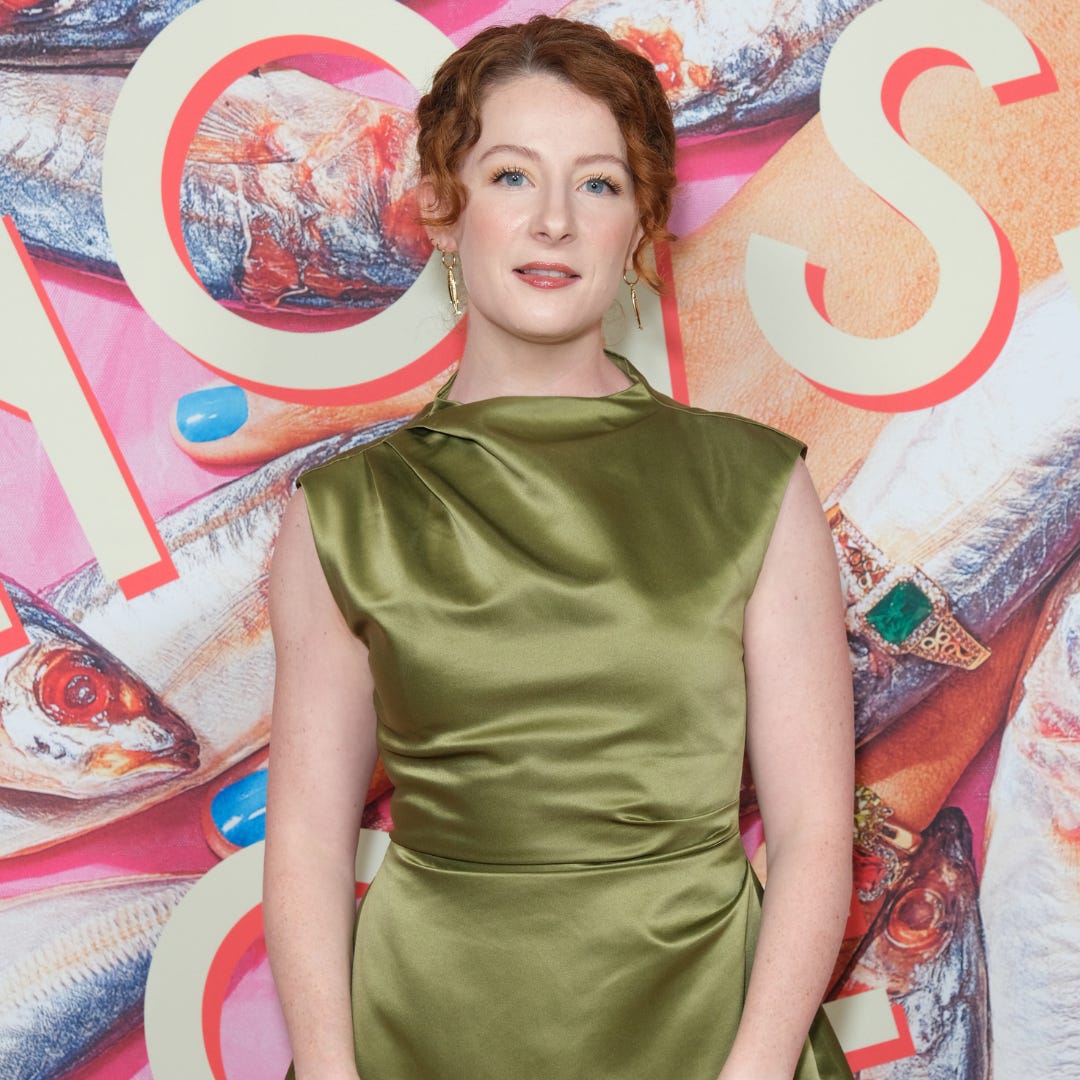
Everyone please welcome Beth Hawkes to A Broadway Body: Continued Conversations! As both an actor and photographer of actors, Beth is a multi-talented creative human being. I met Beth online in a business program in 2020, and I’ve shot with her in-person three times now! Each time I’ve done a shoot with her, she’s beautifully captured my essence as a human being at that particular time in my life, which has been lovely to experience.In our conversation, we discuss… Where the line of body image encouragement yet honoring each individual's insecurities lies; Beth’s incredible ability to capture her subjects’ true essence; the non-physical aspects of our acting careers that can lead us to deepening with character, and therefore bookings; wearing the clothes that we actually feel good in and love to our photoshoots and auditions so we can show up present and involved (instead of worrying about how we look/fussing with our hot shorts); and accepting our changing bodies as we move through different phases of our big, beautiful lives.Beth’s lens on encouraging her clients to accept their bodies for how they are while also honoring each client’s individual thoughts and feelings around their bodies is incredibly nuanced and beautiful. She values her relationship between herself (as photographer) and her clients. It’s clear how important making them feel comfortable in front of her camera is. She ultimately wants her clients to show up as their best selves to their shoots, and we discuss how us actors can get out of our own ways when shooting with a photographer, so we can hopefully get some pretty authentic photos of ourselves. Spoiler alert: shooting with Beth will be the confidence boost you didn’t know you needed. I cannot wait for you to hear our conversation!“ At the end of the day, who you are authentically and the way that you show up and the energy you bring, all of that is what sets you apart from everybody else because there's no one like you at all. And so, it's one thing to be like, “Oh my gosh, [the industry is] so focused on the way that I look and all these things,” but it's another thing to also say, “Yeah, but nobody else looks like me, and that's like such a gift.” And so, at a certain level, it's not really about who's the most talented. It's about who's the guy [for the job]. It could be about looks maybe, but a lot of the times it's about energy and the way that you approach whatever you're auditioning for and all the life experience that's been behind you to bring you to this point today and the way that you approach it.”- Beth HawkesMegan Gill: Hey Beth, I'm so excited to have you for this conversation today!Beth Hawkes: I am so excited to be here. Thank you so much for having me, Megan!Megan Gill: Of course. Do you want to start with just chatting a little bit about yourself and introducing who you are and your work?Beth Hawkes: Yeah. So my name is Beth Hawkes. I'm an LA based actor and photographer. And I have been doing photography professionally for the last five and a half/six years or so. I started in the pandemic because, like so many actors, the entertainment industry was completely at a standstill. And everybody kind of started to think what else do I have besides acting? And photography was the thing that I always loved and I always had done in college and high school, just shooting my friends and having, you know, little photo shoots for free doing their head shots. And then I decided, well, okay, what would it look like if I turned this into a business? And kind of it could be perfect being able to, you know, have control over my schedule and to be able to stay connected in the industry as well.Yeah, and then that's where I met you, which was our program that we did with Ashli Pollard, Square One Accelerator, which was learning how to build your business and create systems to make it as efficient as possible. And I learned a lot, and that really is what launched my photography business. And it's ebbed and flowed over the years for sure. There have been times where I have kind of let it go by the wayside and then times where I've really gone for it. And now, it's really my full-time income, which is great. And yeah. And then here and there I'll, you know, I'll get the acting gig or two and reschedule stuff. And yeah, that's me.Megan Gill: Okay, this is fun because not only are you an actor, someone who uses their physical body for their work, right, but you're also a photographer of a lot of actors and artists and creatives where you're capturing the physicality and the physical bodies of these other actors. So you're kind of really living in this world of dealing with not only maybe your own physical body, but then also others and kind of all of the things that come up when you're shooting people and all of the body stuff around that. So I'm really excited to talk to you about that because I feel you're getting multiple perspectives here.I know we've briefly spoken and we all have a body image story, right. But with your own relationship to your own physical body, but then also getting to be behind the camera and seeing your clients. I'm curious if there's anything that you want to start with as far as your relationship to your own body or things that really come up in a lot of sessions for you that you see just off the top of your head that you want to talk about or bring to light?Beth Hawkes: Yeah. I mean, it feels two separate things in a way. I can really empathize with my clients when they come to me, because I would say 90% of clients come to me and when they're shooting, they'll be like, “Okay, I'm insecure about this,” or “I prefer this side of my face,” or “Oh, okay, keep an eye on my hair. It tends to do this weird thing.” And I empathize with them, but I also am like I never would've noticed or cared about that. And I'll look through the photos and, to me, each side looks the same – of the face – or the pooch that they're worried about in their stomach or something. It's not at all what they think it is in their head. And it looks great and they look amazing. I am constantly like I wish my clients could see themselves the way that I see them, which is just slightly perfectly imperfect. There could be a photo where they look amazing and the focus is perfect and their hair is perfect, but they don't like the way that their leg looks, and so they won't post or choose that photo. And that's such a shame to me because I don't think people – I mean, we all know that no one cares about you as much as you do. No one's really thinking about you as much as you're thinking about yourself. And I'm faced with it constantly in photography.Especially when I'm editing and choosing photos, I'll be culling, and if a client has mentioned, “I really don't like the way that my chin does this,” I will eliminate some of those photos just knowing that they don't like it. And even if it's a photo that I I'm like they're not gonna want to see this. I don't want them to open their session gallery and be like, “Ugh, I hate the way that my –,” you know, even if the photo looks fantastic, I don't want them to be disappointed by the way that they look. So I do take that into account when I'm editing.Yeah, and I also will, I have a few go-to poses that kind of help hide certain insecurities and parts of the body if they want, or that will emphasize parts of the body that they want to emphasize, things that. And it's just interesting because, you know, it's really vulnerable to have your photo taken. And I get it too.As far as my personal journey goes, you know, I've always felt generally happy with my body, and there were times where I've gained weight or lost weight. I haven't really let it affect me too much. I mean, you know, it's tough when your clothes start to fit differently, but I'm usually just like, “Ugh, but my clothes. I don’t want to have to get new ones.” But I definitely get it because if you’re like, “Oh, take a photo of me out and about,” and then I'm like, “Oh, my god, that angle is not flattering on me personally.” And then my friends will do exactly what I do as a photographer, which is say, “What? Really? I never would've noticed. You look great.”So yeah, it's a constant battle with, you know, wanting to help people accept themselves for how they are, and also honoring their feelings about their own body because they're paying me to capture them, and so, I have a job to do at the end of the day.Megan Gill: Yeah, it's not necessarily your weight to carry to show up in therapist mode. Like you said, that's not your job.Beth Hawkes: Yeah.Megan Gill: But it is really beautiful how nuanced your take on capturing your clients is, and I've experienced it myself in working with you. Just how encouraging and empowering you are behind the camera, I think, hopefully allows your clients to show up and maybe not necessarily accept those flaws about themselves or the parts of themselves that they're insecure about, but maybe start to not put so much weight on them. And granted, I feel it does take hearing that time and time again. “I don't even see that. I don't even see that.” And then once you understand the concept of the fact that we are so hyperfocused on the way that our own body looks that, “Oh, my photographer isn't seeing me through the same lens that I'm seeing me?” And, “Oh, my friends aren't seeing me through that same lens either?” I think it's really difficult to come to the place of acknowledging that and being able to understand that sometimes our view of our own bodies and of our own selves is potentially a bit dysmorphic or warped or, you know, our brains like to do silly things and play tricks on us. And I'm glad that you are showing up and riding that fine line, like you said, of being encouraging, but then also honoring each individual client's preference when it comes to their body.Each individual is going to have their own relationship to their own body and their own person

Everyone please welcome my friend and fellow Wichita State alumni Maddie Mason, to A Broadway Body: Continued Conversations! Maddie is a dance teacher and choreographer based in Oklahoma City, OK. We’d attended university at the same time and danced in many a class together, and I was thrilled to have a conversation with her!The way Maddie speaks about showing up to the dance spaces she leads is of the utmost importance if we want to shift outdated narratives about dancers’ bodies. Not only is her lens as a dance teacher and choreographer so needed in today’s dance world, she’s also a mom. Hearing her talk about how she shows up around her kids and ensures to not talk down about other people’s bodies in front of them gives me hope for our future generations to come. Maddie is a gem of a person, and I cannot wait for you to hear our discussion around body image and dance!“ Like you said, in “Cabaret,” the ensemble member was wearing the exact same costume, and they probably created a costume for her, the exact same design as everybody else. Instead of, I don't know how many times it was, “Here's the box. Here's the costumes. Find one that you fit in.” And there was a time in college where I was like, “I don't fit into any of these, so either I have to find a different costume, or I'm not in this piece, or I have to work to fit into a costume.” It’s stuff like that that is treating people with humility. And as an artist, I don't feel like we grew up learning that or feeling like we deserved that. And now that we're grownups, we can change that and make sure we're in spaces where that is not happening, where that's not the culture.”- Maddie MasonMegan Gill: Hi, Maddie! Thank you for being with me here today for this conversation. I'm so excited to talk.Maddie Mason: Thank you for having me, Megan.Megan Gill: Of course! Do you wanna start by just introducing yourself and sharing a little bit about the work that you do in the world today?Maddie Mason: Yeah, so my name is Maddie Mason. I am 35 years old. I am originally from Wichita, Kansas. I graduated from college with a BFA in Dance Performance. From there, I worked at the college level, worked with kids in studios. I've done choreography workshops. We've done workshops! But in 2019, my husband and I moved to Vegas, and I taught dance out there at studios until COVID, and then everything changed. But now we live in Oklahoma City. We love it. We're getting settled, and yeah, I'm still teaching dance and kind of freelancing here and there.Megan Gill: I love that. We love the freelancer life. And we went to school together during the same time. We were both in adjacent programs at our same college. That is where we met in our origin story. So we have a lot of the same community and come from a similar collegiate educational background too.Maddie Mason: Yes. Yeah, I think we both – I think it was, I don't know, modern or jazz that we were in together, but we had a lot of mutual friends, and so it was I knew you, you knew me, and then we got to dance together.Megan Gill: Yeah, and I was always that music theater kid that was taking random dance classes that I didn't need to take. Like I think I would just show up and not even be enrolled!Maddie Mason: You were! You would take everything. You'd be like, okay, hip hop this semester. I'm pretty sure we took tap a couple times together. There were a lot of tap memories there.Megan Gill: Probably.Maddie Mason: Oh, yeah. Good times. It feels like a lifetime. It's just wild.Megan Gill: Good times, it really does. It’s pretty wild.Maddie Mason: We're all grown up now. All the lessons we’ve learned.Megan Gill: It's crazy. Okay, so you grew up in the dance world. Have you just been dancing your whole entire life? I know you mentioned that your mom and your aunt were both dancers in the eighties, so I imagine that you just came out of the womb in dance classes.Maddie Mason: Honestly, yeah. My mom taught with me. My parents opened up the studio in, I think it was ‘86 or ‘87, and my mom taught pregnant with me up until the day before I was born. So I've been there the whole time and it's so cute because I got to do that with my daughter too. So I got to teach with her and my belly up until the day before she was born. So it's kind of a generational thing. But yeah, my daycare, nursery was in the studio in the back room, and it's kind of just I really had no choice. It was just what we did, you know? My mom wasn't gonna pay a babysitter. She was gonna stick me in ballet class.And so, I've never known a world without dance, which gives me, I think, an interesting perspective. Instead of people who find their passion for it, I think mine grew, for sure, and there have been so many ups and downs that it's just been an interesting ride from the very beginning.Megan Gill: Yeah, this thing that you just came into and this way of life that you didn't know any differently. Did it take you time to – did you kind of resist it at points or were there times where you were like, “I don't love this”? Is that what you were talking about?Maddie Mason: Oh yeah. I think in elementary school was the first time it was all my friends were joining Girl Scouts, and that seemed really fun. But my mom owned a dance studio, so it was like, “Well, after school we pick you up when we go to the studio.”So I felt like I did miss out on normal kids activities. So I did, in elementary school, see a lot of friends doing different stuff that I did want to maybe get into. But dance was always the main focus, and I don't think it was until maybe eighth grade that it clicked for me and I was like, “Oh, I love this. I wanna do this.” And I've always wanted to be a teacher from the very beginning. I mean, every little girl dreams of being a dancer. And in middle school it was like, “Oh, I wanna be a Britney Spears backup dancer.” And then, you know, it was the first time I think I had gotten a scholarship for the next year, and I was like, “Oh my gosh.” I just idolized those teachers and was like I want to make people feel like how they made me feel.So I think from the beginning and having my mom as a teacher, seeing that side of things just kind of I knew that was the path I wanted to take, but, no, as a kid, it's confusing, and you're like, “How am I gonna get here?”Megan Gill: Totally. I love that. I'm curious, as someone, obviously when you're a dancer or a dance teacher, you spend a lot of time in front of the mirror, right? So obviously growing up in dance – I also grew up in the dance world, you just learn that looking at yourself in the mirror is a way of life also.Maddie Mason: Yeah.Megan Gill: That is how you self-correct. That's how you check your form. It’s such a tool, but I also feel like it this thing that can lead some people to a very dark place when it comes to their body image. I'm curious how growing up in front of the mirror in dance impacted your body image from a young age and how growing up in that space affected you as far as how you saw yourself and related to your body.Maddie Mason: Yeah, so I always, as a child, never really gave it a thought. My sister has always been bigger than I am. And so, she got a lot of the brunt of when it came to, “Oh, here's what you should eat. Here's what you shouldn't eat.” My mom came from the eighties high-cut leotard Spandex days where it was like we have a cigarette and a Diet Coke for lunch, and that's it.And so, we grew up – you know, my mom always with the fad diets, at a young age, hearing about all that and looking at how my mom treated that whole world and her own body. I saw it. I think my sister experienced a lot more of that trauma. A lot of it was aimed at her a little more because I had a higher metabolism than she did. We ate the same things, we had the same diet, the same routine. We were just different. And that was hard for my mom too. It was hard for her to have a kid who wasn't just naturally thin from the get go.And so, my mom also had to work kind of at the body she has in a different way. So she was like, “I did this. When I gained weight as a kid, this is what I did to fix it, and you can fix it too. You just have to not eat this or this.”So all of that was aimed at my sister, but I was definitely observing it and listening and taking it in. It didn't really hit me, I guess, until I graduated high school because I had danced my whole life growing up. I was always active, always dancing constantly. I didn't give a second thought to my nutrition, really. When I got to high school age, I mean, I could feed myself.So I gained weight right after high school. I mean, lots of people do. And it was like that summer, right after high school, I'd had a little freedom. I didn't have to dance that summer. It was the first time I think I'd been given a break ever.Megan Gill: Wow.Maddie Mason: So I ate, I slept, I drank, and I gained a lot of weight. And for me it was, “Oh no.” I remember it being such a terrifying feeling because growing up, this is the worst thing that could happen to you. How dare you be comfortable and relax. And it was always, “You gotta be on top of it. You gotta be strict.”So that’s my background there, but then again, I remember hanging out with these two boys that I went to school with and they were saying, I don't know. They had mentioned something about my weight, and I kind of brushed it off and it was whatever. So I go to ballet school right after high school. This is my summer break, and then I enrolled in a private college, and it was a strict ballet program. We only had 30 minutes to tap, 30 minutes of jazz a week. And I don't know what I was thinking because it was totally not for me, but it was a strict ballet program, so I immediately lost all the weight I had gained over the summer, not in a healthy way because my instructor was going by the bar and patting my belly. But I remember those same boys seeing me and going, “Oh, thank god you lost that weight because yo

Everyone please welcome my Jennie Hughes, to A Broadway Body: Continued Conversations! Jennie is a multi-hyphenate theatre-maker based in New York City. She’s also the co-founder of Forager Theater Company, making art with those in her orbit to tell the stories she believes in. Jennie and I met in our college program, and her personal adversities as a stage actor helped shaped the story for my short film, A Broadway Body. Jennie’s body image resilience is admirable, and I’m obsessed with how Jennie’s experiences, as both an actor and a director/choreographer, lead her to cast a variety of different human beings in her productions.In our conversation, we debunk “clean girl aesthetic,” how it feels to come out of a college musical theatre program and reorient to our health, “The Chicago Effect,” and finding the balance when it comes to food, movement, and overall health. I cannot wait for you to listen into Jennie’s thoughts around bodies onstage and her own body image journey too!“I'm now trying to find the middle between working out and obsessing, and never working out and not thinking twice about any portion of my health. Like you said, it's all balance. And doing something for me instead of for other people is kind of where I'm at in my body journey.“- Jennie HughesMegan Gill: Jennie, do you want to introduce yourself and a little bit about your work and the work you're doing in the world now?Jennie Hughes: Absolutely. So I'm Jennie. I am a New York City-based theater maker. I am multi-hyphenate to the extreme. I am the co-founder and artistic director of Forager Theater Company, which I'm really happy that we just got our 501-C3 Nonprofit status, so I'm really excited to be in that world. It's gonna be a challenge but a new challenge and one where hopefully people can give us tax-free donations and their lives a little bit easier.Yeah, so our mission as a company is actually my mission as a person, which is to make theater and art with what is around you and who you have in your orbit, the pieces that physically come to you. I'm a huge street picker. I love to take furniture and stuff from the street, and I kind of take that mindset with me in every aspect of the theater world. If I meet someone with an interesting idea, I'm like, “Oh, how can I make that a play or a concert, or things that.” And I also am really interested in the idea of sustainability, both environmentally but also humans, you know? I feel a lot of times in our industry, actors and directors and designers are kind of seen as commodities or things – obviously we're all humans, we're all people, but oftentimes we're expected to sort of be a machine and power through. And I'm really interested in creating space where you're a human first and an artist second. So that's a kind of my zhuzh as a person.I moved to New York City almost nine years ago, and we'll get into it more, but I started as an actor you know, got my little BFA and then moved to New York City straight out the gate from graduating. I always directed in school and assisted everybody, and we can get into that a little bit more later, but I grew really sort of excited by the potential of making something from the ground up. So I do a lot of original work and a lot of plays and musicals and things like that. So that's me!I of course have a side gigs barista teaching nannying, and I try to find work that excites me and I can still feel creative while doing so. So that's my biz!Megan Gill: That's lovely. That's so important. And I also really appreciate how you have followed your heart, moving from being an actor to becoming a director and now having a theater company where you get to tell the stories you want to tell and you get to cast the bodies you want to see on stage. And I think it's so, so vital that more of us are doing that and making space for those types of productions.Would you want to share a little bit about the ways in which you make sure that you're prioritizing centering different humans and different humans’ stories?Jennie Hughes: Yeah, absolutely. I grew up obviously in the theater scene, and we went to the same college which I don't think our school is unique in its sort of fatphobia. I think that that is just a very common thread when it comes to many schools and BFA programs. But I was lucky enough during that time to be parallel learning with my mentor at the time. She ran a theater company, and she was really always pushing me to choreograph and assistant direct and help in any way I could. And she gave me the advice, you know, when I wasn't getting cast in school like, “Oh, well why don't you be the assistant director? Why don't you be the assistant choreographer and try to be the voice that you wish you had in the space, in the rooms?”So I learned a lot by observing these directors and people, but again, the parallel person in my life, that's the reason I stuck with it. I think if I had just had the BFA program, I probably would've been so disheartened, you know? But I had this woman who was casting tall girls as ingenues. She was casting fat girls. She was casting any type of body in an unconventional casting way. I've always just known that that was the way to go, but I didn't have that example in school. I had it with my mentor.And I think that I kind of went off on a tangent, but with my work, one of the big reasons I wanted to direct and produce was, yes, to tell my own stories and to tell the stories that I feel passionately about. And you learn very quickly when you move to a new city, or at least New York City, that if you want something done you can't just wait for it to happen. You do have to just make it. And not all of us have that privilege. Not everybody has the privilege to work a full-time job and then have the energy and the stamina to do your other work outside of that. I do think that's a very privileged thing that I get to do. Some people, you know, have to wait and things that. So I want to recognize that too.But my purpose is I look at Broadway and I look at commercial theater and they're – not to shit on Broadway. They’re trying, but it’s still with the goal of just ticking a box and selling tickets. And I'm more interested in, well, why can't a fat person play a romantic lead? And same with queerness and transness too. I'm developing a show right now where we want it to be a collective of people, and we're pushing really hard to make the trans actors not only play trans characters, you know? Why do we put people in these tight boxes? I was always put in like, “Oh, well you're curvy, so how about you be the mom? How about you be the best friend?” Which, sure, I love playing those characters, but I was lucky to go to a program after college where I was putting myself in these boxes. We're getting a little bit into my actor side now, but I was putting myself in these boxes.I went to the Open Jar Institute by the way. It was super eye-opening and really cool. And any young folks out there should try to go and check it out because the guy who runs it, his whole concept is that if you teach yourself that you can only jump so high, you'll never jump higher, you know? And I was sort of putting myself in this box. I was like, “Oh, well, you know, I know I'm kind of bigger, so I'm feeling really pressured to lose weight, but I just hate working out. No matter what I do, I can never be thin enough.” And in school they were like, “Well, so just try harder.” They're like, “Here's this diet book. Here's this exercise plan,” right? And when I got to New York City, my mentor goes, “Well, do you want to work out? Do you want to be thin?” And I was like, “Well, no, but I feel I have to.” And he goes, “You can dance circles around all these other girls. That makes you surprising. That makes you interesting. If you don't want to be thin, you don't need to be. Just do what you want to do and trust that whoever sees that is going to know what to do with it,” basically.And that was great. And once I clocked that and once I understood, “Oh wait, it's actually a waste of my time and energy to force myself into this box, I started getting more and more callbacks.” Almost every dance call I went to, I got kept because I just went in with the knowledge that I know what I'm doing, you know? And sometimes it will be rewarded, you know, or not even rewarded, but that it's worth trying and it's not worth waiting until you're the right body to do something.Megan Gill: Right. Do you feel that completely shifted your confidence and your alignment with showing up authentically as a human and a performer?Jennie Hughes: Absolutely. It totally did. And I think it's still so ingrained. The fatphobia and the body checking is really, really ingrained in us depending on, you know, your upbringing and whatever. But at least if you went to a BFA program, you're aware of what your body looks like. But I honestly – and again, this might just be because this is my path in life – but I started to sort of collect other people like me in my circles. I started to find the people who were not aligning with five-foot-eight, a hundred and, you know, whatever pounds. And I started making stuff with them. I would start doing cabarets and play readings in my living room and things like that. I'm trying to find the right words. I feel everybody knows that what they're seeing on commercial Broadway is everyone's perception of the ideal. But if you look around you, everybody does not look like that. So I'm kind of like I want to create theater with people who agree that that's not reality. And I also want to make theater for people who want to see themselves represented in media.And when I saw Head Over Heels with Bonnie Milligan, I saw it with my sister who could be Bonnie Milligan's daughter, you know not daughter literally, but they look very similar. They had a similar voice. I saw it with her, and if I had had that musical – because I was already living in the city at that point. Bu
Everyone please welcome my long-time friend and fellow musical theatre actor and entrepreneur, Stacy Keele, to A Broadway Body: Continued Conversations! Stacy is not only an actor, she’s also a certified Human Design reader + Neuro-linguistic Programming coach helping chronically-ill entrepreneurs build body-led businesses their way, so they can show up in business authentically and avoid burnout.In our conversation, we discuss how the hustle and grind of pursuing a professional musical theatre career in NYC left Stacy sick and struggling, but also ultimately brought her to her work today. Stacy dives into how Human Design can bring us back into our bodies and help us better relate to the ways we are meant to move in the world. She also ties all of this into how she functions herself (and helps spoonie-preneurs function) best as women in business in chronically-ill bodies. Stacy is a true light, and I cannot wait for you to hear our conversation!“If you're a chronically-ill actor, or you're on the verge, or you feel like you're going that way, please, please, please take a step back and say, “How am I navigating life? Because theater's hard. It's hard emotionally. It's hard mentally. It's hard physically. Eight shows a week if you're on Broadway is hard fricking work. So we have to take care of ourselves in every capacity to be well enough to perform, which is a luxury and a privilege in itself. And so, when we can align with our design, it just helps make all of that so much easier to do.”- Stacy KeeleStacy Keele: So, hello, my name is Stacy Keele, also known as the Spoonie CEO Advisor. So I am currently helping spoonie-preneurs with chronic conditions, so chronically-ill entrepreneurs. I help guide them to reclaim their rest, rhythm, and revenue using Human Design. And Human Design is a map of your energetic DNA rooted in ancient wisdom and science. So it's this cool crossroads of science and woo. It is a tool. It's not a belief system, so you don't have to subscribe to any school of thought or religion to learn and experiment with your design. But it's a tool to really help us tap into who we were designed to be energetically in this world, which I think fits in a lot with our stories and A Broadway Body.Megan Gill: Absolutely and just honoring your body and all of that good stuff.Stacy Keele: Yeah, and it's been a wild, wild journey for me in these last 15 years from when we graduated from college, from the musical theater program, and after that I moved to New York City, and I lived there for a decade. And I worked my little butt off hustling, hustling, hustling, working eight jobs at a time. I found myself working at Ellen’s Stardust Diner for about seven years, which was wonderful and beautiful, and also brutal as hell. Trying to balance all of these parts of being an actor and running your own business, which is really what being an actor is, I think if I could go back and do it over, I would definitely have that mindset a little bit more instead of just trying to fit into all of these boxes that we think we have to fit into and that we have to shrink ourselves into. I worked myself into the ground trying to make all of this work, and I had success in New York. You know, I did. I got my equity card. I did a children's tour. And then COVID hit, and we located back down to Austin, Texas, which is where I am now.But throughout all of that, trying to fit into boxes, trying to make the New York Life work, trying to make me fit into the New York life (is how I will say it) really led me to some chronic illness issues, and I got diagnosed with my first chronic illness – because we start to collect them like little puzzle pieces – was Hashimoto's, so a thyroid autoimmune. And I really came to that discovery when I was nannying (one of my million jobs in New York), and I found that I couldn't walk like five blocks without having to sit down. And I was like, “This is wild. What is going on here?” And so, I tried to find the answers, all the doctors. I finally ended up getting diagnosed with an autoimmune. And then quickly after that, I was diagnosed with Endometriosis and then Adenomyosis and then Psoriasis, and they just started happening to me.And looking back, now knowing my Human Design, my energetic DNA, I realized that I was operating completely in opposition to how I'm designed. And I found that that was the biggest missing piece to what was going on. And now that I know in Human Design, I am an energy type that is a non-sacral, which means we don't have as much doer energy as the rest of the energy types. And how going back to college, going back to early New York days, I would do it a hundred percent differently. I would honor my energetic DNA. I would show up authentically. Looking back, I think of all the ways that I tried to change myself in order to be what casting wanted, what our school wanted, what we were told would book. And now I'm like, what a whole other life ago, you know? Instead of just showing up in the room and saying, “This is me.” I would wake up every day and I would straighten my hair and then I would wave it, and I have naturally curly hair. Like what?Megan Gill: Oh, yep.Stacy Keele: Like, what? What was I doing? You know, I was spending so much energy and brain capacity focusing on the foods I was eating and how to lose weight and how to, you know, ultimately ended up in all of those, you know, eating-disorder cycles because I just believed that I had to “fix myself” to book work, to be a successful actor, to succeed in any sort of way, shape, or form in this lifetime. And now I know that that is absolutely untrue and that could I have gone back and shown up authentically, I probably would've been more successful.Megan Gill: And my story is similar, unfortunately, and I think for a lot of us, we try to shrink ourselves to fit into these boxes, specifically as actors looking to book work. Hearing you speak on all of that, I can't help but think, wow, if you and I were able to go back to our time in college now, knowing what we know now, obviously learning we've learned and experiencing what we've experienced and coming into ourselves and our bodies now, I think that, at least speaking for myself, I would've been so much more confident onstage, so much more confident in class, so much more confident in my art. I would've been able to perform more authentically. And I think it would've made me a stronger actor –Stacy Keele: And person.Megan Gill: Oh my god. Yes, absolutely. And then not to mention the fact that we were wasting so much brain power and time and energy on trying to “fix ourselves” to be this thing that our professors, the casting directors, the industry, the agents wanted us to “br,” at least what we thought in our heads. I'm like, wow, I could have taken all of that and energy and put it into becoming a better actor.Now, I'm obsessed with television. In college and thereafter, up until the pandemic, I didn't watch tv. And now it's interesting because I'm making movies now, so it makes a little bit more sense that I'm really obsessed with TV. But wow, I just spend time watching the art and I’m just so grateful to have been, as one of my recent guests and friends Amy said, removed from the matrix. I removed myself from that way of life and that way of thinking. And now I'm able to actually do the things that I wanna do and that I love and put time and energy into watching art and making art instead of thinking, “What am I going to eat tonight? Oh no, I need to go work out X amount today because of XYZ,” and all of the bullshit that weunfortunately were succumbed to.”Stacy Keele: Yeah, I think what it really comes down to is we were so focused on the how, “How are we going to make this work? How are we going to be cast? How are we going to, you know, be successful and be what everyone wants,” that we lost track of the why. Why are we doing this, you know? It's like for you now, you're creating such beautiful, creative, important mission-based work that back then was not even on the radar because we were spending so much time worrying about, you know, how we looked and how we were perceived and if we could be the right type. And now it's just focused on the art in the mission, which is really the why. Why is so importantMegan Gill: Yeah, absolutely. And it's also interesting that we've both kind of diverted from the traditional musical theater actor trajectory. And I think that says a lot about where we've come as people as well as far as relating to ourselves and our bodies and honoring our energies. And it is a hustle,nand it is a hustle that I at least realized I was no longer willing to take part in, and also for me and the way that I energetically move in the world, it didn't work for my lifestyle anymore. And I mean, I'm very grateful that it didn't lead me to a chronic illness. I'm very, very grateful. But still, I was burnt out. I wasn't able to do the life things I wanted to. I was struggling for money. I was not stable, not happy in that grind. And even here in LA it's like there are things that I just say no to because I'm like, “Nope,” you know. I kind of like just being home. I don't really wanna travel and work unless it's for something that I really care about.So I really appreciate you bringing that part of it up as well. And I'm curious to know a little bit more about how honoring that energy has led you – how your life is now versus when you were in the hustle of New York and, and the grind and the go, go go and this and that. I'm just curious to hear you speak on that.Stacy Keele: Yeah, absolutely. It's completely different, like wildly, wildly different. And again, you know, I've said it already a couple times on this call, but you know, going back, I would just do things completely differently. I was throwing spaghetti against the wall being like, “Will this work? Will they like me here? Can I lose ten more pounds and be cast in this? Am I the right t
Everyone please welcome my sweet friend and mindset coach, Amy McNabb, to A Broadway Body: Continued Conversations! I’ve known Amy since 2021 when we met in an online business program. She’s slowly but surely become a dear friend of mine as well as the mindset coach I work with as an actor and a business woman. Amy is a voice actor, a singer, and a mindset coach for actors and businesswomen. Amy’s work has impacted me deeply. She has a special way of supporting female actors, and there was no doubt I needed to bring her on for a conversation.Amy shines a light on so many vital body image topics. Her thoughts on removing yourself from the societal matrix is a beautiful representation of what it’s like to be combating diet culture and the harmful side of the beauty industry. She discusses how to navigate wardrobe as an actor both on stage and on screen. She also shares her personal journey with listening to her body and intuitively eating. This conversation with Amy was wildly healing for me, and I hope it’s healing for you too. I hope you walk away reminded of just how much you sparkle, and in the words of Amy, “Shine, baby, shine.” ✨ “ [This conversation] was a cool opportunity to step outside the Matrix a little bit and observe it and also observe it in a way that's not negative. Because I think it's really easy to be like, “This fucking sucks. It sucks that there's diet culture. It sucks that we are supposed to be thin. It sucks that we're in a time that there's a magic pill, magic shot that'll make you thin,” which for some people is super freeing, which is awesome. But it's a hard time, a hard thing, and it's easy to just like, “Damn the torpedoes,” and just be like, “This sucks.” So it's fun to talk about it in a way that's like, well, we're all in it together. We're just kind of in different spots of it, but we're all here.”- Amy McNabbMegan Gill: I'm wondering, because you specifically work with actors and because the stuff you're working on is a lot of the mindset stuff, has body image come up for you with your clients? Obviously, please do not disclose anything. But I'm just curious to know how often that comes up, if that's something that you find yourself approaching with your clients, and just how that shows up for you in your work.Amy McNabb: Yeah. So it does come up, I think, especially because I work with women. All of my clients know this, and I will say it here publicly, I am not a therapist. I'm not a licensed therapist. I do not have a degree in psychology, and I do not have certifications in body image management or eating disorders or body dysmorphia or anything like that. So I'm very careful in those conversations because I'm very aware, being friends with a lot of folks who are. Experts in that area and having dealt with body dysmorphia over the course of my life and disordered eating in various forms over the course of my life, I don’t ever want to say the wrong thing, and I think to each person it is such a sensitive topic, right? So I am very careful when it comes up. And oftentimes in sessions when, when something comes up, whether that's a body related thing or any kind of trauma related thing, that's typically in the conversation where I will say, “So, as a reminder, a therapist. I'm not certified in this. I'm not licensed in this. So anything that we talk about within this, this is gonna be me as a friend, and it's not a professional opinion,” because I just want to be really careful, and I, and I try to just find ways to lift up the person and remind them who they are and how powerful they are and that, you know, they’re beautiful as they are. But it does come up, right, because especially if you're on camera or on stage, you're being seen in an amplified manner. And so, you are feeling more exposed.And so it definitely has come up. It's interesting because it comes up across the board, but you know, with newer actors, a great example is the first time that they try on costumes for a show, let's say for a stage show, and if they're newer, it's like, “I don't like the way my body looks in the costume. I don't like the way I feel. Everyone's gonna see me. Why does she get to be the pretty girl and I have to be the frumpy one? All of that stuff comes up. And in my job in that moment. My job is to really just let them know they're not alone in that feeling and that that's super normal and that no matter what, when you're doing theater, let's say, or film, when you put on the costumes for the first time, there's definitely gonna be a moment where you're like, “How do I look? How does my body look?” And how's a lot of work there as internally as a person to say, “Well, how does this serve the character?” right? But that's always gonna be the second thought.The other area that comes up a lot is in headshots. Yeah. I think in headshots it's – the advice I typically give with headshot is, especially if you've struggled with body dysmorphia or if you've struggled with just the way you look in general, when they come back to you, do a first glance, scroll through, and then you'll get all of those thoughts, all of the negative thoughts. You're gonna notice all the things that you've hated about your body for a long time, or the things that you used to hate about your body, or the things that you love about – you might not notice the love, but the hate's gonna come first. And so, typically I’m like, “Do a flash through. Do not actually make any assessment of them and whether they're good or bad, but put them aside. Take a couple days, and then go back, and typically that nice voice will kind of come through.” So yeah, those are really the two areas where it comes up the most.Megan Gill: This is really interesting to hear because as I'm sure you might be able to relate with this in your own ways, but as someone who's been acting for a long time, both on stage and on screen, I feel I'm so immune almost to seeing myself in these various forms, in various costumes. I mean, I haven't been on stage in a long time, so there's that. But it makes so much sense that for a newer actor, especially someone who's maybe in their adult years or post-college grad to have all of these thoughts come up. Because I feel it's a little bit different when you're a kid. I'm really glad that they have you. And yes, you're not a licensed professional, per se, but the ways in which it sounds you are uplifting your clients and you're reminding them that they're good and reminding them, “Hey, how does this wardrobe serve character?” Because ultimately that's what it's about. Just having that other – one more voice reminding you that you're okay and that sometimes we are our harshest critic.I love the rundown of, “Give yourself some time with your headshots. Try not to be too overly critical,” because oh my god, no matter what, no matter how I'm feeling about myself and my body, I can look at a session, and we can always find something that we don't right? That's inevitable.Amy McNabb: Yeah, and I think, you know, it's interesting, right? Because I think for maybe more seasoned actors, you could still have the moment with the costume where you're like, “No, please don't put me in this in front of other people.” But I think there's more of a muscle that's been worked over the years where you can be like, “Okay, well, I don't have a choice. Or maybe I do have a choice. Maybe I can give feedback and be ‘Hey, can we let these pants out a little bit? Because they're really tight for what I'm trying to do,’” right? So you have more options, I think, when you've been in it for a while, because you know you can ask, but also you do have that muscle of, “All right, well, it serves a character and also there's nothing I can do in the meantime, so moving on.”But that's not to say that I don't have these conversations with people who've been in it for a while because our bodies are always changing, especially as women. I mean our bodies change over the course of a month. The different parts of our cycle have different body reactions, different hormones, different, you know, water retention, all kinds of things, and also different eating habits, which can make people feel a certain way. So I definitely talk to seasoned actors about this also. And often within that, the conversation's less about what my costume looks and more, “I don't recognize myself,” or “I don't feel like me, and it makes me anxious to be seen in this moment.” But what I love and admire about all of my clients and about actors in general is that, typically, we push through that because we love the art so much and we love an opportunity to do what, to quote a client, what makes us feel we're flying. And so, we will move through it. It is painful often, but we'll do it because it's an opportunity to do the thing we love, you know?Megan Gill: I have to wonder how much moving through it and circumventing all of those thoughts and struggles and inner things that we harp on, I wonder how going through that all and getting to the actual art and the execution of the art, then, I don't know, helps us work through all that stuff even on a subconscious level. I don’t know. That's just such an interesting point to bring up.Amy McNabb: So I grew up doing theater, and then I did a tiny, tiny bit of on camera, and then now I do voiceover. Theater's interesting, right? Because you have the moment when you put on the costume and you're like, “Oh boy.” I always played the nerds. I was always a character role. I was not the ingenue. I'm kind of too funny and too loud to be the ingenue. So I was always these other character parts, and so the costumes were always – there was always a moment. In college, I remember walking down the hallway once and the third show that I was in and one of the upperclassmen, I was in another rough costume, just a big flowery, floral hat, and I was supposed to be this kind of unattractive woman. It literally described that, “unattractive woman,” in the scr
Everyone please welcome my dear friend and fellow actor and model, Chloé Godard, to A Broadway Body: Continued Conversations! Chloé is an actor, hand model, fit model, yoga teacher, and voiceover artist, along with a close friend of mine. From working with her hands on set for companies like Mattel, to fit modeling for shoe companies like Lulu’s, to acting in national commercials and film, Chloé is no stranger to her body parts being in the spotlight.In our conversation, we touch on so many important topics. Chloé shares how she strives to use inclusive language while leading her yoga classes, the importance of listening to cues from your body so you can properly nourish and move your body, and how we have to reframe what our personal best looks like because our bodies are constantly shifting and evolving from day to day. There’s so much wisdom Chloé shared in our conversation, and I cannot wait for you to listen!“ I have been thinking about, too, inclusivity for all bodies, and I know there's gonna be so many things that I'll miss, but I've even been thinking about how not everyone has ten fingers and ten toes. So instead of cueing people, and for this example saying, “Stretch your ten fingers out on the mat,” I don't know, I just say, “Stretch your fingers out on the mat.” Some people have trauma with their body, and using trauma-inclusive language, I find that fascinating and I wanna even learn more about that. You could just go on and on how different people's minds are and their bodies and the things that go on with that, but I think we do have to give you ourselves grace and other people grace at the end of the day.”- Chloé GodardChloé Godard: My whole life story through my body. I guess we'll kinda start from the beginning.Megan Gill: Okay. I love it.Chloé Godard: I was a dancer. I didn't do sports, so I danced competitively for 10 years with my sister, which was so fun. I guess some people do say dance is a sport, you know? There are two different schools of thought for that, but I loved dance. It was such a fun way to be creative and express myself and use my body. That was probably when I was in middle school to high school, and then that's when I got into more theater and stuff like that.Then when I went to college, I danced a little bit less, and I was a little bit more in the theatrical realm, and you probably get this too, doing theater in college is a lot of body movement still. I also did stage combat, so I did a lot of training with rapier dagger, knife onstage, physical contact. So looking back, I feel like I have been really in tune with my body and have used it in so many different shapes and forms, constantly using it even though I was not an athlete.Then when I came to Los Angeles for acting, I stopped dancing and was using yoga as my form of fitness. I've been doing yoga since I was 15, so a long time. And I'm now a certified yoga teacher as of March of this year, 2025. So that's been such a fun journey doing it for so long but now doing it in a different aspect. Then being in Los Angeles trying to support myself acting for so long is when I fell into hand modeling, and I've done a lot of toy commercials, and that has been very fun because I never imagined being a hand model or knowing what a hand model was.Megan Gill: Knowing that your hands could be such a hot commodity in your career.Chloé Godard: Yeah! Front and center. So I wanted to play piano when I was younger, but my parents couldn't afford to get me lessons, so I played guitar a little bit, and then my dad would just always compliment my hands. He'd say, “Oh, you have such beautiful thin, long fingers.” So then with hand modeling, that was always just a funny thing. I'd be like, “Oh, well I guess people have noticed my nice hands. So I do feel like they're proportionate to my body. But yeah, it's been fun to see a part of me on screen and also knowing that it's my hand. I'll see certain commercials and I'll be like, “Oh, okay, that's my hand,” or I won't remember a commercial, and I'll look back and I'll say, “Oh yeah, that's my thumb.” Now I feel like I know my hands so well. How often do you look at your body parts and know what they look like, you know? Do you know what your elbow looks like? Can you pick your foot out of a lineup?Megan Gill: Maybe, honestly. I don't know. I'm kind of weird like that. I like my feet, so I look at them.Chloé Godard: I’m like, “I could put my hand outta a lineup.” And my wrist is my favorite body part. I love my wrists. They're nice and little, tiny. I like the little bones. I love seeing the little veins on the insides. I'm like, “Oh, I'm alive. That's so nice and beautiful.”Megan Gill: Blood is pumping through me.Chloé Godard: Blood is pumping through me.Megan Gill: And how cool also that your hands, this thing that we almost like – I don't mean to speak for you, but I almost take for granted, or we never look at our hands and we're like, “What a good part of our body.” Well, when I was transcribing, I was maybe praising my hands like, “Wow, you're doing a lot of good work for me,” especially when I started to notice they would get sore and tired and all of that, but what a cool experience to connect so deeply and to have such a strong relationship with this part of your body that not many people probably have a strong relationship with.Chloé Godard: Yeah! I'm so grateful for my hands, and through yoga I also learned how important your feet are to your body, and just like that is your foundation and how you stand upright and straight. Your foot health is so important. So the more knowledge that I gain and the more experiences that I have, I'm finding that I find a greater appreciation for my body and the things that they can do. Like my feet, like using my hands.I'm very protective of my hands. Cooking in the kitchen, I love to do. I can't rock climb anymore, getting calluses. I love strength training, so I wear gloves at the gym. So it's really, taking care of your body is something I find really important instead of shaming my body. I think I want to have this healthy body for as long as I can. So like strength and mobility are really important to me and feeding myself, nourishing myself. So I just feel such gratitude for the body that I have and for all the things that I can do, yeah.Megan Gill: I love that. I think that's such a beautiful reframe too. Instead of expending energy, like you said, shaming your body or the things you don't like about your body or the way your body looks, you're expending energy on. Taking care of these parts that are so integral to your career, to how to your livelihood. And not only that, but I think that's just such an important lesson that I'm looking at that thinking, wow, that's so lovely that being a hand model has kind of – I don't know if it's synonymous with this appreciation you have for caring for these parts of your body so deeply.But I am even thinking, because I also am. In a yoga practice, myself and my hands and feet are what get me through each of my classes, right? And so, even just having appreciation for, “Wow, these hands and these feet allow me to go to a yoga class and move my body in the way that I enjoy moving my body, and how freaking cool is that?” MaryJane really wants to be a part of this conversation.Chloé Godard: She’s like, “I love yoga.” Downward facing dogs.Megan Gill: “I love my paws too!”Chloé Godard: Oh, MaryJane, you have the cutest paws. Wow, sweet girl.Megan Gill: But I love that. Something that I really – as someone who, myself, has struggled with a lot of disordered eating habits in my past and who is now coming to this place of having a really, for the most part, pretty healthy relationship with my eating habits and food and the way that I nourish myself, I really appreciate observing you nourish yourself. And I think that you just do it unapologetically and you, from what I can tell, just seem very intuitive and joyful about the ways you're nourishing yourself.It's very interesting for me, it's like once you see it, you can't unsee it. So I kind of pay attention to these types of things in my friends, not only the language that they use about their bodies and food and exercise, but also their behaviors. And that's something that I really admire in you and I think is so important because so many people put so much focus on it or have a tendency to shame themselves. I just think that that's really lovely and wanted to share that with you.Chloé Godard: Thank you. Where your mind goes, your energy flows, what is that saying? Something like that. So yeah, I just try to think of what gift can I give myself? So if I wanna go work out in the morning, setting my electrolytes and my coconut water out the night before and like a protein bar or something because I've noticed the more I get attuned to my body and certain rituals, what is a help to me.Working out first thing in the morning on an empty stomach and really tired, I can't do things that I normally can do, but if I get a good night's sleep, if I have a little something to eat, if I have my water the morning of or night before, then I notice I can hold crow pose longer, or I can lift a little bit heavier weight. So it's just trying to set myself up and talking to myself most of the time in a kind way to help me. Because I wanna be my own best friend, not my worst enemy.Megan Gill: Yeah. Amen to that right there. That's honestly half the battle, and I think it's so difficult to build that friendship with yourself. I'm having all these conversations, I call them me-to-me conversations where I'm like, “Me-to-me.” But those conversations used to be very negative and very toxic, and it was just shame, shame, shame, beating myself up left and right. Whereas now, they've shifted to a lot friendlier conversations. And I think that that's like such an interesting paradigm shift that I wanna explore more.And that I hope more people start to explore a little bit more too beca
Everyone please welcome my new friend, Health and PE educator, as well as the founder of Pretty Little Lifters, Tiffany Ragozzino to A Broadway Body: Continued Conversations! Tiffany and I were connected by a mutual friend who I recently shared a conversation with (hi Maddie McGuire!) because of our shared passion for dismantling diet culture and leaning into strength and wellness.Tiffany is battling a social media driven world in her classroom to remind her TikTok-loving students the importance of having physical strength and general wellness, and she leads by example. Her stories of conversations she’s had with students and the ways in which she’s working to even educate their parents when she has the opportunity gives me hope for our future generations when it comes to helping them to foster a healthy self-image.I walked way from our conversation feeling empowered as heck, and I hope you feel the same! Please check out The Pretty Little Lifters podcast and follow Tiffany to stay updated with the incredible work she’s doing!“ We do a lot of weightlifting, we also do Pilates too. We're well-rounded; we're balanced. But sometimes I'll hear them say, “Oh, I just want to do Pilates.” And when I hear it and I'm like, “That's great for muscular endurance, but what are we gonna do for muscular strength? This is what we're doing for muscular strength.” I'm constantly course-correcting. I'm trying to teach them, “This is long-term health and fitness. That's what I want for you. So I'm not gonna do any quick fixes because that doesn't go with what I'm teaching you.” So it's almost a little bit more of an accountability, I guess you could say. It helps me really practice what I preach. The information that I'm sharing with them, I really do want it to be aligned because I do feel like they will find me more authentic when they see me also living my truth and doing the things I teach them.”- Tiffany RagozzinoMegan Gill: Would you want to start by diving into a little bit of your own body image story, your body image journey, and kind of what led you to your work today?Tiffany Ragozzino: So it's so funny you asked this question because I was recently talking to a friend about body image, especially since I work with teenagers and I teach PE and health, and we were sharing our stories. It's interesting navigating – I'm a millennial, so I grew up during those primitive Y2K moments. When I was a teenager, just getting all of those stories of being skinny and how nothing tastes as good as skinny feels. That was a wild time to grow up when the celebrities gracing the covers of magazines were extremely thin. A lot of them had eating disorders, and that's what we were used to. That was the expectation.I've always been on the thinner side, so I kind of fit into that socially-acceptable body. And it was really interesting because when I started wanting to do weightlifting, a lot of people were like, “Oh my gosh, don't get too big. Don't get too manly. Don't get too big,” and I was like – and I was just excited to do really cool stuff. I was just like, “Wait a minute, I want to do really cool things with my body!”Megan Gill: Yeah, “I want to lift some heavy shit out here! I want to be strong!” Yeah.Tiffany Ragozzino: Exactly. So it was very interesting, and you know what's funny? I think when I started doing a lot of things with street training, it was the first time that sometimes like being on the thinner side or lean didn't always work to my advantage because I remember there was this one photo shoot I wanted to do and participate in, and the person whose gym it was was like – and he didn't say it directly to me, but I kind of heard through the grapevine where it's like, “Oh, she's a little too thin. We want somebody muscular,” and I was like, “Okay, is this where we're shifting to?” But I kind of wasn't mad at it, you know what I mean? I was like, “That's cool. This guy wants to show strong women. He wants to show a different body type and not maybe more of my typical body type that you see already.” So it was actually a really cool experience to be on the other side of that.Megan Gill: Yeah, it kind of shook up your world a little bit? In a world where we always have known where the ideal is, “How small can we be?Tiffany Ragozzino: Exactly.Megan Gill: For then someone to come in and be like, “No, actually, maybe we want someone a little bit thicker or with a little bit more muscle,” or whatever it may be. Yeah, I could see how that's such a wild concept.Tiffany Ragozzino: Yeah, exactly.Megan Gill: But also it’s so important to reflect all types of bodies, right? Not that your body isn't needed, but just having a diverse range of different body types.Tiffany Ragozzino: Yeah, exactly. And this was, you know, in the earlier 2000s still. So it was kind of cool to hear something like that because you didn't get to see that very much.Megan Gill: Right. Totally. I'm also a millennial, so I feel you.Tiffany Ragozzino: So you get it.Megan Gill: I get it, right there with you.Tiffany Ragozzino: Yeah. So it was definitely an interesting transition. And what's funny too is when I did start strength training, that shift that I had even in the beginning, because at first it was really like aesthetic, you know? It was just like, “Okay, I want a six pack. I want to see my muscles. I want to be so lean” And then there was a shift when I really started getting into Olympic lifting, gymnastics training, more like CrossFit stuff, I was like, “Wait, I need to be really fed. I need to be fueled. I need to be strong to be able to keep up with all these really cool athletes and figure out how my body can move in a different way.” And it's interesting because that even came with its own – body image is so weird. It's so weird because you go from one extreme to the other.So then there I was in this new arena of like, “I want to be strong like them. I want those muscles. I want this,” and then it was just like a whole different fixation of being strong and having that six pack and not being so just thin and skinny. I just feel like that pendulum has just kind of swung back and forth, and it was really healthy to step away from aesthetics a little bit and really focus on what I can do. But it is kind of interesting to just always see that pendulum swinging a little bit.Megan Gill: Like societally, you mean, or for yourself?Tiffany Ragozzino: Yeah. Yeah, I think societally because, unfortunately, as we've seen throughout history, women's bodies are trends, unfortunately, you know? And so, I don’t know if you remember when booties were in, and then everyone was like, “Okay, we're gonna squat, we're gonna hip thrust, we're gonna do this.” And you can see the reflection in fitness, in types of movements people are doing, in the way we dress. So it's really interesting to kind of try to separate yourself from that. But as a society, it's really hard to, you know?Megan Gill: Right. Of course, of course. Especially in this time where everybody keeps using this phrase, and I'm like, okay, I get it. It's like, “Thin is in.” Like, “Thin is back.” The early two thousands are back, and it is very true because in the way celebrities now, these people that have access and have money, have access to like these other tools to alter their bodies, or just easier access, I would say. It is quite clear, I keep seeing – and I try not to judge also, but I can see that people are not wrong. Thin is very much around us right now, and a lot of people want that. That's the ideal again which does suck because strong is so important.I'm curious also because, as someone who – I mean, I grew up dancing. I've been pretty active my whole life. I’m deep into a hot yoga practice myself right now.Tiffany Ragozzino: Ooh, I love hot yogaMegan Gill: Oh, it's been so, so good for me. Mentally, I feel like I've never been stronger. I actually have triceps, and I've never really been able to feel a tricep in there before, so it's really cool. Like, “Wow.” I feel really, really strong and really mentally well, and I have a really great relationship with my movement practice. It's taken me a long time to get here.When “thin is in,” – I'm just using that phrase as like a general way that we're trending right now, societally, as far as body goes, in my eyes, I think it takes the focus off of strength of general wellness and off of building that muscle so that we can age and be able to walk and move and have that strength and flexibility and mobility still. That's really important. For me, it's really important. I look at my parents, and I want them to be strong as they age. I understand how vital that is. So I'm just curious to hear your take on that.Tiffany Ragozzino: It's crazy. I don't know if you're on TikTok, but like the rise on SkinnyTok has been interesting, to say the least. And it's weird. So I started teaching at the school. I work at an all-girls school, which is amazing. It's the ideal population that I want to work with. So getting to talk about these topics with my girls, with my high school students is so important. But I started working there in 2018. It is now 2025. And like I said, that shift that I've seen in these seven years, I saw it.When I started, it was very like girl power, we're gonna be strong, diversity representation, body diversity. All of that was really present, and I was bringing a lot of that into my curriculum, and I still continue to do that, but at the same time, the world around us was also really promoting that, right? It was everywhere. Brands were getting on board. And yes, was some of it performative? Now we know, yes. But it wasn't just me. Collectively, a lot of people in the health and fitness industry were on board, but now we're in 2025, and I am seeing the decline.So I feel like, as a health teacher and PE teacher, I've had to work a little bit of overtime because now that it's swinging back the other way to this whole, you know, SkinnyTok situati

Everyone please welcome my friend and fellow fit model Alia Parise to A Broadway Body: Continued Conversations! Alia and I have been seeing each other around the fit model world for a few years now. We often work together with the same clients, and I knew I needed to have a conversation with her.Alia is a plus model who works with a wide range of clients. Because we both actively work as fit models, I wanted to discuss her experience as it pertains to her own body image. Her insight into what it takes to mentally protect yourself as a fit model is very similar to my own experience, and it was so lovely and healing to chat with someone who works in the same industry.She references how fitting has helped her relate better to her own body and how, despite diet culture and the beauty industry’s loud opinions, she doesn’t want her body to change because she likes the size she’s at - something I can very deeply relate with as well. Alia is a wealth of knowledge in the fit world, and her views on body image inspired me. I left our conversation feeling as empowered as ever in my body, and I hope hearing Alia’s story empowers you too!“ So it's understanding your measurements and how it relates to the public, so you almost become an advocate for other people of your size. And knowing how those comments affect you, that's where you can shut other people down, whether it's a tech, a designer or a friend, and you become a person who can speak for others, and that's really, really gratifying. “- Alia PariseAlia Parise: So I've always been a big girl. My dad was 6’3”, my mom was always 5’7”. So I've always been very tall on the thicker, curvier side. And, you know, growing up through high school and middle school, I was always the tall girl. I always stood at least four or five inches taller than my friends. But I was also always fuller-figured – I'm a 2X model. Most of my clients consider me 2X. And so, I would tend to wear baggy clothing, just things I was really comfortable in, you know, always kind of hiding my body, right? And I didn't get a lot of comments about people saying stuff to me because the thing about being the tall girl was nobody wanted to mess with me. So that was good. I didn't really get picked on a lot.So going into college, I went to an art school. So again, it was really chill. Everybody there was very relaxed. Everybody's kind of focused on their art, so it wasn't really a lot of cliquey. It was kind of divided by majors. I was a graphic design major, and right out of college, I went into this lingerie company. And I know now that they were not very good. At the time, I just took it as a learning experience. So they said, “Oh, as a graphic designer, you're just gonna be back here behind the computer, making sure all the photos look good.” That lasted for all of one photoshoot.So, from there, I started working the photoshoots. I worked hand in hand with the designers. At one point, I was helping them. She was “Ah, I need an idea for this.” I was even helping her. I was like, “Well, what if you try this for a design?” And she and I got very, very close, and we're still friends to this day, but they would also try stuff on me. And I still wasn't kind of comfortable in my body, but I was like, “Nobody's looking. We're all girls. I'm like whatever, I kind of don't care.” And then they brought in a new person to do marketing, and she saw that they were trying some stuff on me. She pulls me aside and goes, “You know you can get paid for that?” I said, “No, I didn't know that.” I didn't even know what a fit model was.Megan Gill: Yeah.Alia Parise: This was about seven years ago. And by that time, this job had just really deteriorated. The place was getting more and more toxic. And so, I was actually on an open casting for Torrid for a fit model, and they were my exact measurements, size 18. And it was actually during that casting that the designer and I were like, “We've had it. We quit!” I was coming home from the casting, I emailed this job and I just said, “I quit!”Megan Gill: Mm-hmm. Good for you!Alia Parise: Honestly, the best thing I could have done because this place was toxic. It was like too many cooks in the kitchen, and nobody wanted to take responsibility for anything. But I did chalk it as a learning experience because I did learn, you know, how things were supposed to fit, how photoshoots are actually run, coordinating this model with this agency and this photographer. So that was good.From there, straight up quitting that job. I got the number of the agency that that girl had recommended the new marketing person, and I've been with that agency ever since. I went not necessarily full-time into fit modeling because, you know, as you start as a fit model, your work is slow. It was about a month or two before I got a really good client. I was there twice a week starting off, and from there I got thrown into the deep end of the fitting pool. I started off doing swimwear.Megan Gill: I actually started off doing swimwear as well. So you're like, “Ope!” Yeah, you're right in it. Okay. Cool. Cool, cool.Alia Parise: Exactly. I got thrown into the deep end. It's like I'm trying on skimpy underwear. And so, I got thrown into the deep end of the pool. I was having a conversation with somebody else one time. They're like, “I didn't realize just how much you're actually naked.” I was like, “Well, yeah, you're constantly changing clothes. You're not always naked in front of people, but yes, depending on what you're wearing.”Megan Gill: Right, and I feel like that forces you to get a little bit more comfortable with your body, kind of right off the bat, or not even comfortable, but it forced me to be okay with being in bikinis in front of people, you know?Alia Parise: Absolutely. I definitely agree with that. That first job where I got two days a week, it was knitwear, so it was like sweaters like this, shirts, skirts. And so, that got me a little more comfortable into actually talking about fit modeling, you know, fixing this, fixing that.And then going into swimwear, like you said, I started to get more comfortable with my body much faster. And what I did realize, I got this from a couple of the techs, a couple of the designers, is they want you to be happy in the clothes. And so, it's like what can I do to change this? So you would be happy buying this? And that really changed my mindset. So they want the clothes to look good on you, and they want you to feel good in them, so you would be comfortable buying them at whatever price range they have at that point.And so, I really got really comfortable with myself really fast. I've always been a big girl all my life. I've never been smaller than a 16 (except when I was 16). So I got comfortable being bigger chested, being curvier in my hip, and I've never really had a problem with that. But also what I've learned in fit modeling is you go into a fitting, and you're gonna hear a couple of phrases like, “This looks awful. “This doesn't look good.” And “Oh, this looks terrible. We need to fix it.” And if you're new to fit modeling and don't know anything about constructive criticism, that's gonna hurt.Megan Gill: Yeah.Alia Parise: So I will say having that little bit of design background from design school, teachers telling you your art sucks, fix, has given me a little bit of a thicker skin. So I will say, I feel like I had a little bit of a leg up there.Megan Gill: Mm-hmm. I can relate with you on that too, coming from the theater world and the acting world where I'm so used to hearing no at this point, that when I get feedback or when I get that email like, “Oh, sorry, we went in a different direction.” I'm like, “Oh, wow, that's out of the norm.” So I can relate with you on that. I think it does help prepare you to not take things personally when comments are made, or when maybe you don't get the job even, or helping you understand that it's not about your body. It's not your body that “doesn't look good.” It's like we're here for like garments, right?Alia Parise: Exactly, you develop a little bit of a thicker skin. Every now and again, you get some comment that was just like, okay, that was out of line. I think you mentioned here, not necessarily horror stories, but that first client, that swimmer client, they had a male tech there. It's not often that you see men who are techs, but every now and again, you get one. And we were talking about plans for the weekend. I said, “Oh, I'm going to the Sriracha factory.” Once a year. They had like a big open house. You get to see them process the chilies and they have different vendors come in. It was very, very cool. I don't know if they still do that. I need to look that up.Megan Gill: That's so cool.Alia Parise: And so, I was very excited telling them about this. I was like, “They have all these things you could try, sriracha chips and all this other stuff.” And he made some comment to the effect of, “Well, don't overdo it this weekend. I want these samples to fit on Monday.” And I was like, “Excuse me?”Megan Gill: Yep. Mm-hmm. Wild.Alia Parise: Even the other texts and the designers looked at him like, “I can't believe he said that.” He wasn't there for that long afterwards. I maybe he had one more fitting with him, and then he was gone.Megan Gill: Okay, that's good because that's, oof. Yeah.Alia Parise: They realized that’s not okay.Megan Gill: Which is great because I feel like there are so many spaces in which those comments are so normalized. I mean, and it's even weirder coming from men. I was on a job recently, and it was a male designer. So not a tech, but still. And he was like saying something about how my bust was a little bit under spec, so I was wearing a thicker bra to hit their spec. And he was like, “Oh, are you wearing the proper undergarment?” And I was , “Yeah. And she was like, “Yeah, she's hitting 37 and a half bust,” whatever. And he said something about how the other designer said that I was
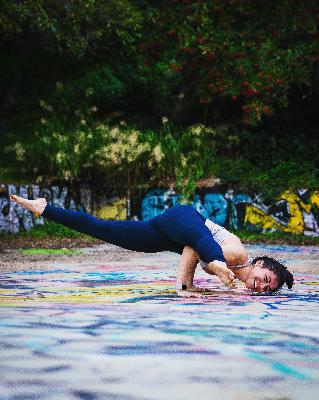
Everyone please welcome my yoga teacher and new friend Marissa Procelli to A Broadway Body: Continued Conversations! I’ve been taking Mar’s yoga classes for about two years now, and it wasn’t long before I recognized she approaches her teaching through a healthy body image lens. Her language in her classes spoke to me and allowed me to further deepen my connection to my own body in my practice.Mar is an incredible leader, and I’m so excited to share our conversation with you. There are so many chunks of wisdom hiding in here for you, and I hope if you’re in the South Bay/LA area, you come take one of her classes to experience her magic for yourself!“ It's really hard in this industry to not have people look at your body as your business card because, as a teacher, whether it's privates or yoga or strength training or Pilates or whatever, when they come to your class, a lot of people, whether they mean it consciously or not, look at your body as your business card. I can teach things that I don't know how to do in my own body. I can prep you and get you all ready to go and work into the splits. Do I have my full splits? No, I do not. My hope is that for people to understand, as teachers, it's about our knowledge, it's about what we've studied, it's about how much work we put into creating either a flow or a playlist or a type of class. My hope is that people start to see the teacher as what they teach and not what they can do in their own practice.”- Marissa ProcelliMarissa Procelli: So when I was two years old, I was diagnosed with Rheumatoid Arthritis. And so, with that, your joints tend to stiffen and swell and you lose your range of motion in a lot of parts of your body. And growing up with that, I was always in and out of remission, and because of that, I felt like I spent most of my life numbing my body because I was told that I shouldn't feel pain. And so, with all my medications, I was constantly numbing and subsiding the pain, but because of that, I was numbing everything, yeah? And your body's supposed to have a conversation with you, and you're supposed to get input from your body.So growing up I was very active still. I played a lot of sports. Even when I was in the depths of my RA, I always found an alternative. I wasn't cleared to do land sports in high school halfway through. And so, I quit volleyball and basketball, which volleyball I played for, like, five years, and then I just switched to water polo and swim, and I was like, “Okay, I guess I can't do heavy-impact sports, but I can go in the water. So movement was always something that I really enjoyed.And then college happened, and at least my college experience was a lot of going out, a lot of eating fast food, a lot of drinking, and, yes, academics, and I had a lot of great experiences. And I was an athletic trainer or assistant for the football team there. So I did learn about the body, and I was a public health major. But yeah, I was going out, I was having fun. So then when I moved here to LA, I was a very swollen version of myself just because I didn't really understand how to take care of myself.So then when I started yoga, I was thinking, “Oh, this –.” Well, first, I actually didn't like it in terms of, I thought it was so challenging and it wasn't my vibe. But then I realized, after the class, I felt better in my body, and I said, “Oh, I haven't felt good in my body, or I haven't felt period in a long time.” So that was in 2016, and then I was in a really stressful job at the time as a behavior therapist, and I did in-home services, and I was getting a lot of anxiety attacks. And so, I started going to yoga more, and I was like, “Okay, I want to do teacher training.”So I did teacher training, and at the same time as doing teacher training, I'm injecting myself once a week with my arthritis medication. I'm on what's called Methotrexate, which I was on for 20 years off and on, which is a type of chemo. But it helps regulate RA in the body. And so, I'm going from very westernized medicine to learning about yoga, which is very different.And so, then after I did teacher training, I was like, “Okay, how can I incorporate what I have learned in my choices, in how I move my body, how I fuel my body, how I rest my body versus just relying on medication?” So then, I went to a nutritionist. I switched my diet, which was hard. It was like an elimination diet, so I took out things, brought it in, and so, then I figured out what worked. And that was in 2018, like I said, injections on the chemo meds. Six months later, I got off, and I have not been on it since.Megan Gill: Oh my god, my heart.Marissa Procelli: So that was 2018, and it's 2025, and I have not had one ounce of medication for my arthritis since.Megan Gill: That is incredible.Marissa Procelli: Yeah. So the downside part, though, is that because of my diet, I ended up dropping a lot of weight quite quickly, so much so that I dropped I think it was, like, 23 pounds in two and a half months. And I'm a small human. I'm five two. I haven't weighed myself in years, so I don't know how much I weigh, but like I don't have a ton to lose. And while my body was feeling great about not being on meds anymore, the compliments, which I know you hear the word compliment and you're like, “Oh, that's nice. That's a good thing.”Megan Gill: But I know exactly what you mean. Yes.Marissa Procelli: And literally everyone was like, “What are you doing? What?” I still remember to this day walking into my yoga studio and another student looking at me and said, “Oh my god, you lost half of yourself. What did you do?” In like a I-want-to-know-the-secret type of way.Megan Gill: Oh my god.Marissa Procelli: Yeah. So what was initially a good thing then started turning into me getting very intense about my diet, so much so that one of my best friends, still best friend, who's a teacher, a fellow teacher who also has a past of body image and eating disorders, she reached out and was like, “Hey, I'm worried about you, and I just want to check in and see what's up.” And she is a very vital component as to what pulled me out of a very slippery slope.So after that, I started seeing a nutritional therapist and kind of going back onto being balanced. But I was so hardcore about the diet for my RA that it then wasn't about RA anymore. It was about everyone giving me compliments and me wanting to continue that and almost this weird feeling of like, “I feel like if I start gaining weight again, I'll let them down.” It was very weird expectations.Megan Gill: Especially as the person who is leading a movement space where people are looking to you as like their, not mentor, but the leader in that area, yeah.Marissa Procelli: Yeah, and also like what I wrote on the notebook was I just was talking about it with a friend, it's really hard in this industry to not have people look at your body as your business card, because as a teacher, whether it's privates or yoga or strength training or Pilates or whatever, when they come to your class, a lot of people, whether they mean it consciously or not, a lot of times they look at your body as –Megan Gill: The projected results or something like that?Marissa Procelli: Exactly. Yeah, as, like, your business card. So it was very tough, and now I'm kind of – I felt really good about it. I did have a bit of a low recently because, like I said, I got sick when I got back. Every time I get sick, after, it's always like, “Oh, like you look great.Megan Gill: “I was just sick!”Marissa Procelli: Yeah! Malnutrition? Is that where we're going for? Yeah, so there are still moments where I have to really pause and back up, and honestly, a lot of my fellow teacher friends, we chat about it every once in a while of the comments that people will make or the things that they expect from themselves based on us. Yeah, I mean, it's definitely there. It's not something we make up. It's a very active conversation, which is hard to, like, navigate sometimes of how to change that topic or almost make it a learning moment in moments.Megan Gill: Mm-hmm. Like kind of steer the conversation, so that they walk away being like, “Oh, maybe that’s not how I should – maybe I shouldn't speak to my teacher in that way,” not from a disrespectful standpoint.Marissa Procelli: No, and it's all good intentions, right? I do feel that. A lot of people, especially towards me, I don't think they're being malicious in any way, but it's more of we're so used to that.Megan Gill: That conversation is so embedded in our culture.Marissa Procelli: Yes, it is.Megan Gill: It's everywhere! It’s everywhere.Marissa Procelli: Yeah, and then I come from a Hispanic family, so it's kind of the opposite. When I go home, a lot of it is like, “You need to eat more.” A lot of the “endearing” terms are gordo and flaco, which is fat and skinny. And they are originally like endearing terms. They really are. But now we're in a world where they didn't really age well.Megan Gill: Mm-hm, totally. And that they could be triggering said under certain circumstances, yeah.Marissa Procelli: Yeah. So it is, it's a lot of navigating other people's impressions of you. And again, a lot of it I don't think is bad. I think it's just so ingrained in us to just say something out loud.Megan Gill: Yep. About our bodies, about the way people look.Marissa Procelli: Comparing…Megan Gill: Oh my god, yes. Or even like you said earlier, the simple compliment that you think is a compliment, but when you're complimenting someone's appearance, okay, I mean, I do it. And I like having this conversation because it's like I've really challenged myself to maybe not pay a compliment about someone's appearance. Even if I'm thinking something I like about their appearance, just to challenge myself to think differently and challenge myself to not fall into that trap because I think it's so easy for all of us. And of course, and it's okay to be like, “You're beautiful. Your skin is glowing.”
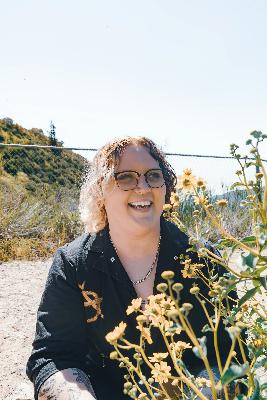
Everyone please welcome my newer friend and fellow actor Asher Phoenix to A Broadway Body: Continued Conversations! Asher and I met through a dear friend (hi, Kate Stoss), and I’m so beyond grateful for our discussion about body image. In our conversation, we discovered we both work through the Internal Family Systems modality in our own therapy sessions, and Asher speaks on how some parts of themself (like their eating disorder) are not enemies but simply broken friends, and how much of a better world we’d live in if we could view those in the world around us that are hurting in this way too. The way Asher speaks to empowering their trans subjects in their photography work is chef’s kiss, and they have so many important nuggets of wisdom on how we can do better for the trans community in the arts.Asher is an actor and photographer currently based in Kansas. Their passion is portraiture for trans people and they focus on helping trans people embrace their bodies in front of a camera, which I truly believe is insanely impactful work. Keep an eye out for their future work in clinical psychology - I cannot wait to see where Asher’s future work leads them! Asher shares their story with such generosity and compassion, and I really cannot wait for you to hear our conversation!Spoiler alert: if you have not seen “The Civility of Albert Cashier,” Asher does spill how the musical ends (for good reason)“I really am most passionate about doing portrait shoots where the subject is not comfortable in their skin and very clearly needs guidance into being comfortable in front of the camera. And I've had the honor of doing body neutrality practices with my clients where they come to me and they're like, “I don't like the way I look, but I trust you to make something out of this.” And then I'll lead them through a guided meditation-type thing where I'm just like, “Name the part of the body that brings you the most insecurity, and tell me something neutral about it. Tell me what its function is.” And so, for me, I guess an example of this for me would be I am insecure about my hands, which are very strategically tattooed. But they hold my camera, and that's – the coolest thing is that they serve a purpose and a function for me every single day creatively, and I am grateful for that.“- Asher PhoenixMegan Gill: I would just love to learn a little bit more about your lens and where you're coming from the artistic, creative perspective as well.Asher Phoenix: Yeah, totally. I, so as far as theater goes, I have been doing it since I was, like, seven years old. I grew up begging to play boys’ roles, and my parents still had no idea I was trans. But I guess most notably I played Randolph McAfee in Bye Bye Birdie. And it was the first time I had ever had to bind my chest for a role, and that was at Friends University my freshman year. And I just remember the costuming designer profusely apologizing as she handed me a binder and I put it on and was like, “Whoa, this is me. This is cool. Yeah.”And then I insisted that it was more logistically sound to wear boxers with my costume so that I had something sturdy for the mic pack to hold onto. But really I was just taking a deep dive into exploring gender. And I don't know, that role really opened up my entire world as far as gender expression and coming out as trans goes.And a few months after that, I went to Chicago to see The Civility of Albert Cashier, their initial run. For those listening who don't know what Albert Cashier is, it's a musical about a transgender Civil War veteran who was found out once he was placed in a nursing care facility, and had his pension taken away, had to go on trial ultimately just for being trans. And, spoiler alert, he ended up dying because he was forced into a dress and tripped on the dress, fell, and went into cardiac arrest.Megan Gill: Oh, my.Asher Phoenix: And he was a real person. His grave is a four-, or five-hour drive from where I'm staying now. So I really wanna make it up there just to pay respects to a Civil War veteran who literally changed my whole life and will continue to do so if Albert continues to get the stage time that it deserves.But professionally, I pivoted when I left college my sophomore year to pursue photography, music photography, concert photography. But I really am most passionate about doing portrait shoots where the subject is not comfortable in their skin and very clearly needs guidance into being comfortable in front of the camera. And I've had the honor of doing body neutrality practices with my clients where they come to me and they're like, “I don't like the way I look, but I trust you to make something out of this.” And then I'll lead them through a guided meditation-type thing where I'm just like, “Name the part of the body that brings you the most insecurity and tell me something neutral about it. Tell me what its function is.”And so, for me, I guess an example of this for me would be I am insecure about my hands, which are very strategically tattooed. But they hold my camera, and that's the coolest thing is that they serve a purpose and a function for me every single day creatively, and I am grateful for that.Megan Gill: Yeah, that’s beautiful.Asher Phoenix: This last August, I had the pleasure of doing media and photography work for The Civility of Albert Cashier's run in Los Angeles, and it was like the first fully produced and costumed – and even the script was rewritten a little bit because there was, arguably, some trans trauma porn that happened in the original where they showed Albert's death, and it just wasn't necessary. It hit, but it was hard to watch in a way that it shouldn't be for trans people. And so, they rewrote the ending to just give a narrative of what happened in his last years, which I think props to Jay and Keaton and Joe for coming up with the new finale that they did because it was incredible. But yeah, I got to do photography work for that and write a little writeup about my story and how The Civility of Albert Cashier has impacted my story for LA Times, which is, like, the greatest honor.Truly, I consider myself a multifaceted artist. I love writing, I love photography, but I also still really enjoy performing. Just navigating a medical transition with being on stage has been difficult because I went through a good two years where I just couldn't sing, and it was so sad. But it comes back eventually. It just is a major waiting process, and that sucked for the time being. But I'm grateful to have found my voice again.I actually just recently – my college choir director had her last concert at Friends University and invited alumni to come back and sing a couple songs, and I got to learn the tenor part and sing with my new voice, and it was a lot of fun.Megan Gill: Ah, that's amazing. That's powerful. I’m glad you had that opportunity, especially at a place like your college –Asher Phoenix: Me too.Megan Gill: – a place that you have ties to that you've previously studied at. Oh, that's so great. Thank you so much for sharing all of that. There are so many things to talk about!I just think it's really cool and impactful that you had the opportunity to take photography of this musical that had such an impact on you. I’m not sure how many years prior you first saw it?Asher Phoenix: Nine years. Eight years? Something like that.Megan Gill: Oh, my gosh, wow! Okay, either way that really hits that eight, nine years later you got to come back and capture this piece through a different creative lens. I just think that's so powerful, and I'm so glad that you had that opportunity, and I hope that you get to do more – I hope that you get to follow the show as it's produced elsewhere because it needs to be produced elsewhere, like you were saying.I was reading up on the Jagged Little Pill – what happened with that musical as far as the casting goes, because I wasn't super familiar myself until you had mentioned it to me. So I went on a little bit of a deep dive. And just reading about how many non-binary and trans characters there actually are written into musicals is really not okay and truly just not reflective of our world. Yeah, I would love to talk a little bit more about that and about your experience watching on as this huge Broadway musical decided to just completely rewrite this non-binary character into a cis female character, and the harm that was done by a cis female actor even being cast in the role in the first place.Asher Phoenix: Yeah. Yeah, that was a major blow. I grew up listening to Alanis, and I love her, and like she's been such a Madonna for the queer community, such a fierce advocate. And then she goes on to be part of the making of the script for Jagged Little Pill, and expectations for other people get us nowhere in life. But I guess I just had this expectation that – I don't know, a hope that she would be more fierce of an advocate for keeping that role as non-binary.I have to give Lauren Patton, I think, credit because it was actually a big wake up for them as far as gender goes. But trans roles are not there for cis people to realize that they're trans. Trans roles are there for trans people to be cast as them from the get-go.Megan Gill: Amen.Asher Phoenix: And I'm so glad that Lauren is now on their own gender diversity exploration process, whatever. I just think that if I were in her shoes as someone who thought they were cis, I would not have even auditioned for that role because it's not for you. Yeah. Yeah.Megan Gill: Right. Oh, I was gonna say, as a cis female, I, where I stand now as an actor, would not for one second audition. Now, back when I was in college and specifically in college when a bunch of my best friends around me were queer, I remember having the thought of, “Oh, it would be so cool to play a queer character and get to explore that.” Obviously, I know now and have known for many years now that is just not appropriate and that those characters and those r
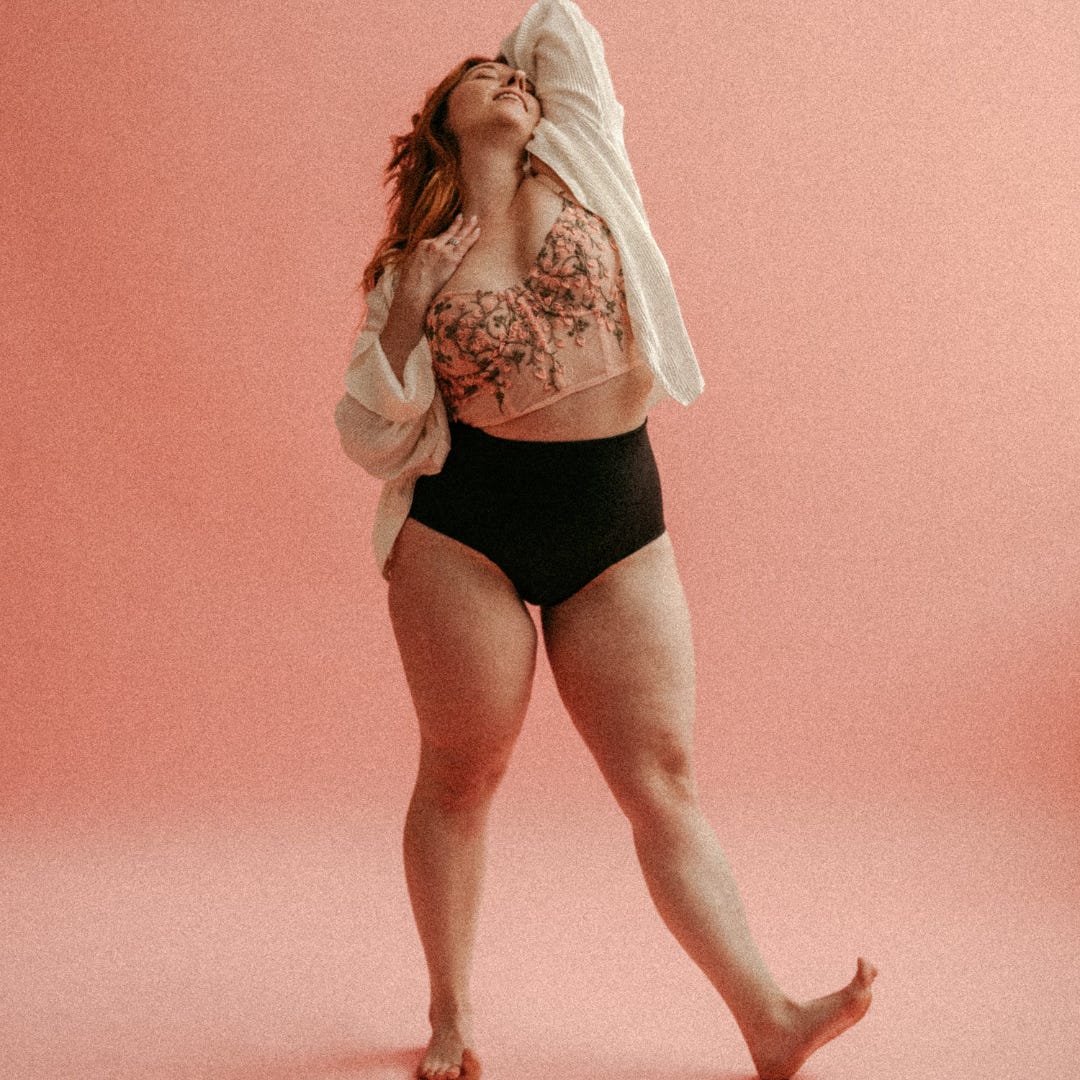
Everyone please welcome my college friend and fellow creative Ashley Justice to A Broadway Body: Continued Conversations! Ashley and I went to Wichita State University together circa 2010-2014-ish, and this girl knows the body!!! She was in the dance department, and I was in the musical theatre department. Ashley is an insanely talented dancer and choreographer, and I had the pleasure of taking many a dance class alongside her.Ashley is one of the first people who opened up to me about her experience in our college program when I was crowdfunding for “A Broadway Body” back in 2021. She shared what she’d gone through during our time in college, and I opened up about my experiences and those of friends of mine, and I knew I had to create the film to expose what goes on behind the closed doors of collegiate dance, theatre, and musical theatre programs.Ashley is a dancer, choreographer, SLT instructor, and barre instructor in New York City. She’s found her own community of advocates for her work in NYC, but that hasn’t come without its share of emotional labor. Ashley’s lens on having to carry the burden of being a dancer in a societally unconventional “dancer body” is extremely important and nuanced in a culture that lumps certain body types with certain professions. I hope you walk away changed after hearing Ashley’s story!“ I've been told more than once that I have like a Black girl body, right? And that is racist. Not that it's racist to me, right. It's racist to Black people and to Black women, and also depending on who it's coming from it’s an insult, right? And it doesn't insult me. I don't feel any insult being compared to Black women at all. But if it's coming from a white person, I know that that's an insult, right? It's a microaggression, and it's not a microaggression — I mean, I guess it's a microaggression to me, but it's a microaggression of putting Black people beneath you and then putting me in that category with Black people that are underneath you. So that's a whole other layer that I've talked about with friends and with people, and it's why, in dance, the people that've encouraged me the most are usually people of color. White people in dance are genuinely not my advocates. I don't try to have them be my advocates, and I don't seek out people of color for that. The people that have become closer, given me opportunities, or taken the time to ask me what I want have always been people of color and never white people.“- Ashley Justice Ashley Justice: I turned 27 in February of 2020. I feel like I was robbed of my late twenties where I was feeling finely grounded and then the world said, “Ha ha ha!”Megan Gill: “JK , LOL.” We are reclaiming those years.Ashley Justice: Yeah. Oh, but speaking of that, I feel like that was such an interesting time mentally. I mean, I probably told you that I had a really severe ED pretty much my whole life. But that was such an interesting time where I knew it was flaring up, or that the thoughts or the anxiety around it was flaring up, because as soon as I stopped being active in my New York life, I was like, “Oh my God, I'm not gonna be able to do anything. Everything's gonna change, da, da, da.” And I was like, “Okay.” I remember having to tell myself, “You're going to gain weight and it's fine.”That did happen, but I remember having to coach myself through it because, “There's just no way you can be as physically active as you were.” I didn't have access to a real gym, so I couldn't really lift weights or anything. And I also didn't want to go into hyper –Megan Gill: – force yourself to do something that you genuinely don't want to do.Ashley Justice: And I remember that was a really big moment because I was like, “Oh shit.Like I really have to sit with this.”Megan Gill: And do the hard – to me, like the easy out would be that we're gonna just fall back into old patterns, we're gonna just do what we've always known instead of approaching the challenging path of – wow, how aware of you to be able to be holding your own hand like, “It's gonna be okay.”Ashley Justice: Yeah, because I was like, I could hyper control everything I eat and really restrict because that would make the most sense to go from being really active and not having to think about it as much to only thinking about what I'm consuming, but that's the big issue that I had anyway, right? So I was like, “Oh crap.”And I wasn't in a healthy enough space to be like, “Well, some of that's valid.” If you're removed from ED brain, a normal thing to do would be to modify your intake with what you're doing in a day.Megan Gill: Yeah, from a “fitness” perspective, “nutrition” perspective.Ashley Justice: Yeah, your activity decreases, so your intake of calories should decrease. But it was such a stark change. It literally went from a full life –Megan Gill: Like night and day, and not to mention the state of the world, which then, at least for me in my experience, put my mental health at like an – it really tested me mentally.Ashley Justice: Same.Megan Gill: And with anxiety and everything.Ashley Justice: And a big thing that triggers my ED is control, right? And the state of the world, we couldn't control it. So the pattern, or the “easy” thing for me to do would've been to go right back into that. That's how I felt in control, just everything I eat, make sure that – and I was like, “I'm releasing that because I genuinely can't control any of this,” and the idea of trying to manage this in this time of uncertainty was like so much. So I had to release it, and it's been a thing because my body really did change from that point.So that's something that I'm still managing being like, “Okay, it was a big change that happened over those couple years.” That was a challenge for sure.Because you go from, I had just turned 27, I had just moved to New York. I was in the depths of having all these dreams and really trying to navigate that. And then it was all kind of ripped, and it was a big challenge for my body image. It was hard.And then coming back to all of it, post that, I mean, I feel like no one talks about we just started doing capitalism again like it was a normal thing to do.Megan Gill: Wait, what? Like, “What is all of this again? It's been a year,” or however long. I don't know how long – lockdown lasted for quite some time. But I feel like the ease back into like, what is this normalcy – when are gym's opening? When are we able to go outside again and be back in public?Ashley Justice: Well, and it was like I was working in a restaurant and doing group fitness. Everything was just – all of my normalcy was ripped away.Megan Gill: How long, can I ask, were you away from that pre-COVID life? How long would lockdown have lasted for you?Ashley Justice: I think what happened was March happened, everything shut down. That was the middle of March. I lasted about three weeks in this apartment before I went to New Orleans to go home with my family. I was like, “I can't be in this apartment anymore.”And so, I was there until I think maybe May or June. So a few months – March, April, May, June, so a few months. Because then it became summer and we started doing these outdoor classes and things were like a little bit more. And then I think August or so hit and I went back to New Orleans.Megan Gill: Yeah, which also disrupts any semblance of normalcy that we're trying to create or like a daily flow.Ashley Justice: Yeah, routine or something to do. And being able to teach was far and in between. They had kind of reduced us. They had a few people teaching online, like Zoom classes. But I was a brand new instructor. I think I had gotten certified in February of 2020. And so, everything that I was working towards had been very much ripped away from me. And I was just trying to hold onto it a little. I could have easily just been like, “Oh, fuck, whatever,” but I didn't wanna do that because I had hindsight. I was like, “No, when it reopens, I wanna be able to come back to it. I worked too hard to have it in New York to not do it.”So I really had tried to dig my feet in, but, you know, it was very tumultuous for a time. My niece's mom also passed at that point though. And so, it was a weird time. So I remember that being August and me being like, “I think I just have to –,” and like the classes weren't really – it was turning into fall. Outdoors, the thing that was allowing us to do it was coming to an end. So all of that was kind of just like in the air. So I was like, “I'm just gonna go home until whenever.”And I think I was home for – I was obviously paying my rent and my stuff was here, but I was laid off from my restaurant. I was laid off from my fitness job, so neither one was operating. And then eventually Landry’s sold our restaurant, so it was like, okay, that's not reopening.So I stayed. I stayed until Barre3 was like, “Hey, what's the –,” I mean, I got my first vaccine in New Orleans. I was there for like a while, which was nice because I was with my family and my sister lives in Houston, so I was going back and forth to Houston some of the times. And yeah, my niece was born in February of 2020. So it was my sister's first baby, so there was a lot going on that was kind of nice to be home for a little bit. So I just spent a lot of time with my best friend and my family for a while. And that was nice because I wasn't working.But while I was teaching, I would sub dance. I was subbing at Barre3 in New Orleans because I was like, “No, I'm gonna keep doing it. You guys can't tell me that I am not teaching,” so I picked up classes there, and I was teaching in person and on Zoom, so I was like, “You guys can't tell me that,” because New Orleans was a little different. You had to wear a mask, and I think it was maybe seven people or whatever. So it was in person and they were doing it on Zoom, so people could come in, and they were in person too.So I was doing that, and I was working the front desk some days. So I was doing som
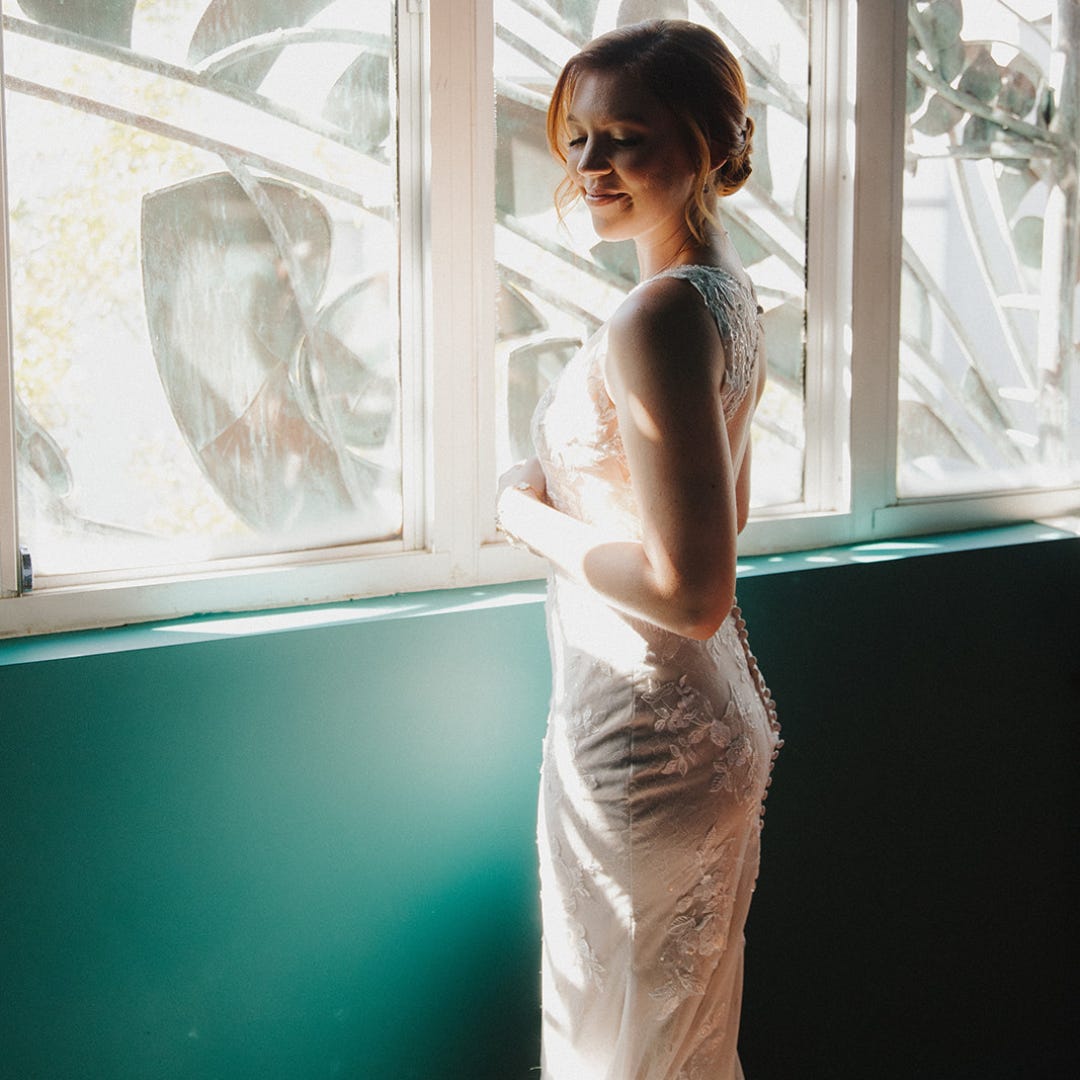
Everyone please welcome lovely friend and fellow (voice)actor Maddie McGuire to A Broadway Body: Continued Conversations! Maddie and I met online in 2020 during Ashli Pollard (of The Doers)’s business course, Square One Accelerator. We’d only known each other over the internet until the fall of 2024 when we finally got to meet in person! Since then, we’ve gotten closer and closer, and Maddie was one of the first people to express to me how much she believes in what I’m doing with this project. (Thank you Maddie!)Maddie is an inspirational gem of a human being. She’s the voice of Comcast on TV (along with many others), and she does a lot of other voice acting work as well. She’s such a humble, caring, talented woman with a heart of pure gold, and I am so excited for you to hear our conversation. Our discussion floats around connecting with our bodies to allow us to use our voice confidently in the spaces we frequent, the journey of embracing aging and our ever-changing bodies (and careers), and Maddie’s journey with running a half marathon. Tune in and enjoy Maddie and I’s conversation!“It’s been happening recently too, Megan. Probably from a year ago when we first kind of met and I was hearing so much about your business, I feel like my brain – I've just been so much more open to explore what comes up, whether that be a feeling, a thought, challenging myself to be like, “Let's just try something different today with the workout clothes I'm wearing,” or whatever the case may be, instead of getting locked into comfort, not that that's a negative thing at all. I just think that that's become such a safety net, especially in COVID for me. I'm just ready to write a new permission slip, and that's what all these findings are is like, “Okay, what's that permission slip we're writing next, and what are we kind of sorting through to get there?””- Maddie McGuireMaddie McGuire: I feel like I've had a couple phases before in my life where it's almost like I woke up and realized my body has changed, and then it's forced me to reevaluate my relationship with my body, health, clothes, feeling sexy, feeling strong, all of those things. And so, I feel like I'm in a period of that, of almost like, okay, things have changed. I'm accepting that. Now, what does past acceptance and actually falling in love with my body again look like, or a different form of the relationship.Megan Gill: Yeah. It’s evolving and how do you mentally have radical acceptance for the way that it's evolving while also working towards loving and caring for and appreciating the changes, because I feel like it's so easy to be like, “Ah! I’m changing!” Whether it's my body is changing in the sense that it's getting older, or my knee is starting to hurt a little bit more now, or whether it's in a sense of, “Oh, I've gained weight,” or “Oh, I've lost weight, and like now my clothes don't fit, and how am I supposed to feel sexy in a pair of jeans that don't fit me right, whether I've gained weight or lost weight?”So, oh, gosh. I feel like this is just such a relatable topic probably for so many women and people in general.Maddie McGuire: Yeah.Megan Gill: Do you feel like you've gone through different periods in your life of having to reevaluate kind of like you are right now?Maddie McGuire: Yeah. I feel like – and I was thinking about that too, where I was like, when have I felt like this before? And every time's different, obviously, but I feel like the first big one, I was never like chubby, per se, as a kid, but I definitely had a lot of baby fat in my tummy and my face. And then when I started going through puberty, really, almost like the last two years of high school, growing a little bit and things changed, I got more attention. I was also starting to act at that time, and I was mainly doing theater improv things off camera. And then that was kind of the first time I was also starting to do on-camera acting. My body was changing.And I feel like I've been pretty lucky because I don't think I've ever had a true issue with disordered eating, per se. But there are two times in my life where, looking back, I was like, oh, I had tendencies that kind of started like ebbing into that category. And that was the first time where I was like, “Oh, I'm getting praise. I'm getting validation for the changes that my body naturally did. Let's do more.”Megan Gill: Mm, yeah. Wow.Maddie McGuire: So let's control our eating more, everything. That was the first time I even noticed it. And then from there, there's been a couple other times throughout my twenties, I feel like when I was 25, that was the first time I was like, “Oh, I have hips. My hips are starting to come in.” I was like, “I'm looking different in jeans than I did when I was 21 or 22 or 18.”And then I really think there was like another big shift into my thirties where I was like, “Oh wow, okay. My body's like becoming more womanly, and it's actually becoming a lot stronger than it used to be.” And also I think I've noticed different things with my face and my neck and other parts of my body. So yeah, I would say around 18, 25 and then 31/32 have been three very distinctive markers where I was like, “Oh.” I woke up and I feel like I noticed the shift.Megan Gill: This is so interesting, and how fascinating that it's coming out of like our teenage years, and into your early twenties, and then sort of around that 25 mark where you're like, “Okay, well, I'm definitely not a teen teenager anymore. I'm like a full young adult.” And then I do think moving into your thirties, I mean, I'm experiencing it myself where you're like, “Oh, these are the gray hairs that they talk about, that our moms talked about. These are the crow's feet or the wrinkles,” or “My friends are getting Botox? Like, what? Okay, do I need to get Botox?” Like, all of those things that then come with being in your thirties. Or, gosh, I was in my yoga class this morning and seriously my knee, there was a little pain there. And I'm like, “Am I good?” Oh, my god.Maddie McGuire: You know, when they're like, “Okay, whatever, obviously be aware of your body,” in different classes. You’re like, “Not for me, I'm fine.” And then yeah, all of a sudden you're like, “Is this one of those moments where I'm pushing myself?” Because I want to be like, “No, you're fine. That's not happening. But you're like…”Megan Gill: Like, I'm literally aging. Yeah, I'm 32, but at the same time, our bodies day by day are getting older and just having that recognition. But that's beside the point.I think that what's most interesting to me about what you were saying before about your recognition of, “Oh, I'm coming into –,” I think you said like your last couple years of high school when you started to notice that the way your body was naturally changing and evolving was leading you to get more attention. I think that's a really important piece to pull out and note here. And how that, then, catapulted you to want to continue to maintain that.Maddie McGuire: Right.Megan Gill: Because I also can very much relate with that sentiment as well. And for me it was when I entered college was when I started to realize that if I ate this and worked out like this, my body would get smaller.Maddie McGuire: Mm-hmm.Megan Gill: And then that’s when I started to get the attention that I'd never gotten in high school, middle school, prior. And, I mean, I think I was very much driven by a similar mentality of like, “I need to maintain this because I don't ever wanna go back to the world before where I didn't get attention - in acting, from my peers, from my family, from boys.” Whatever it was, it was like, “Oh yeah, no, this is what –,” like the comments about how my body was changing and how my body looked at that point. That is what society teaches us is “good” or what we should “strive for,” right? At least like when we were going through our high school and college years in the 2000s/2010s.Maddie McGuire: Well, and you said two things, Megan. There was something you posted on your Instagram that pretty much was like, “Bodies are meant to change. Bodies are literally always in a state of growth,” and that really stuck with me when I saw it. So I've been thinking about that since I saw it on your Instagram a couple weeks ago, and then you just said something about “maintain,” this need or this want to maintain this size, this look, this whatever it is that we've been getting validation and praise for. And I feel like those two thoughts literally just captured so much of the duality that I've been in of this acceptance of, “Wait, my body's like a growing, living organism that is changing every day, and this trying to relinquish that almost gripping on wanting to still maintain something that, one, is not even relevant or longer there anymore. But there still is this little bit of a fight that I'm constantly trying to reframe that's like, “What if XYZ could lead back to the ballpark of what that size was,” you know what I mean?Megan Gill: Yes. No, I know exactly what you mean because I think that's when we get caught in this really, really detrimental cycle of control in order to get the thing that we think we should want. And there's no freedom in that. There's no joy in that, at least in my experience. And it's just like a lot of unfortunate mental gymnastics that, then, we are hyper-focused on like the eating and the exercise and the equation of if I do this plus this I'll get this result, which then takes us away from all of the wonderful things that we want to do with our lives, all of the wonderful things that matter.I think that it's so difficult, and it does take a lot of energy to do what you're doing with bringing yourself back to like, “Okay!” Do you find that every time that comes up for you and every time you recognize that those thoughts are there and are present for you, that you're able to have a lot more awareness now at this stage of your life to be like, “Oh, this is coming up.

Everyone please welcome my wonderful friend and fellow creative Scarlett Dyer to A Broadway Body: Continued Conversations! Scarlett and I met when we both first moved to Los Angeles in 2019 through the Crash Acting community, and we have been friends ever since. Scarlett is an actor, a fashion designer, a costume designer, a writer, and an activist. She designed the wardrobe for my short film, “A Broadway Body,” and she has recently written an original feature film screenplay featuring a female lead who’s in a wheelchair.Scarlett is a bright, shiny, vibrant incredible force of a human being, not to mention extraordinarily talented, and I am so thrilled for you to hear our conversation. We discuss all things ableism in Hollywood, how Scarlett is working to normalize leading roles that feature disabled actors, and her experience of existing in a wheelchair as an actor. She is making such an impact in the many different creative areas she lives in, and I cannot wait to see where she is ten years from now.“ When I'm out with my friends at a bar just, like, living my normal life and some old man comes up to me and is like, “I just think it's so great that you're out living your life. You are out in public at night having fun. Good for you,” or someone else is like, “Um, you don't look like you need a wheelchair. Why are you in a wheelchair?” Like, excuse me. Don't look —? What is that? What is that? Talk about body image. Like, what is that? What is that? Because I don't look classified disabled to you? That is so offensive, not only to me, but the entire community because it comes in all different shapes, sizes, forms, everything. ”- Scarlett DyerScarlett Dyer: Yes, I did just write a screenplay. It is a romcom, and it's called Get Lucky. It's set in Ireland. I went to Ireland about a year ago, and I was just so inspired, and I had so many just ideas coming to me driving around in a van and looking at cows and sheep and I was like, “This is so a romcom. This needs to be romcom.” And I was like, “I have to write this.”Megan Gill: I love that.Scarlett Dyer: I literally took things that actually happened and implemented it in a more dramatic way. So it's very close to home to me. And it features a female lead who uses a wheelchair because I'm a wheelchair user, and as an actor and a writer and a designer, that's really what I want to bring into the industry and to the world is a greater representation for this community because it has been so, so underrepresented. And we need a female lead in a romcom who is not tokenized, who is a real person, who is iconic and fun and badass, the whole nine. We need that. We need to see that. So yeah, I wrote it.Megan Gill: You wrote it, Scarlett! You wrote the damn thing. And also she sounds a lot like the energy that you bring and the energy that you give.Scarlett Dyer: Oh, I channeled myself. I sort of wrote what I know I guess.Megan Gill: Right? Isn't that what all the advice tells us to do?Scarlett Dyer: That's what they all say, just write what you know! And so, I was like, “Okay!” The character, she is different from me in a lot of ways. She's fictionalized. She has things that are a lot different from me, but we share the same disability. In that way we share similarities due to that. But she's different from me, yeah. I wanted to make sure of that.Megan Gill: Oh, I'm just so glad that you are writing this role, and would the goal be for you to play her?Scarlett Dyer: I definitely want to play the role, for sure, for sure, for sure. So this is kind of like the first thing I've written. This is my first feature film that I've written, original feature film. But I don't really know where to begin with producing, so I definitely think I might need some help with that area, just getting it to the right people and, you know, me making friends in that kind of way, but acting in it, yes, I'm so down for that. Yeah.Megan Gill: Yeah. I love that, and I think that's really important and an important way to get your voice out into the world, not only as the writer but also as the person portraying the role as well.Scarlett Dyer: Yeah, yeah. Yes, thank you for saying that.Megan Gill: Of course. When I look at you and I look at the work that you're writing and the work that you do and how you show up in acting class and how you show up in the commercials that you're in, and I'm just frickin’ cheering you on because you're right, we do need more representation, and it's unfortunate that the cultural norm just chooses to leave disability out of the conversation a lot of times. They choose to leave a lot of things out, but it's like, this is something I feel like that we are starting to see a little bit more and more, but it’s not the norm. It’s not the go-to, right?Scarlett Dyer: It’s really not. It's really not. Yeah, it's overlooked, and I am all about representation for all communities, for all marginalized groups. But yeah, you know, the disabled community has been so overlooked. And even going into auditions for these roles, like “wheelchair user,” they don't know what they're looking for. Are you looking for a manual wheelchair? Are you looking for a power wheelchair? It's different and sometimes they don't quite know what to expect, and that can also conflict with casting and it kind of can make it awkward sometimes. And it's like, “Well are you able to do this? Are you able to move your arms in this way and do this sort of thing?” And it's kind of like that sort of dehumanizes it in a way.So I just really, with this script, it really shows how this character lives her life, and that is really what I wanted to show.Megan Gill: I feel like that hits for me for you, being able to show up as you are and not have it questioned, not have someone ask you something.Scarlett Dyer: I get asked so many things.Megan Gill: I can only imagine. But also it’s so devastating and sad because that just falls down like the emotional labor of that –Scarlett Dyer: Yeah.Megan Gill: – constantly, I can imagine, is coming back to you and coming back to you. And yes, there's a lack of education in general in society, in our cultureScarlett Dyer: Yeah, there is.Megan Gill: But then showing up in a space, like in the casting office and having these questions asked of you, where we're already, you know, as actors, a lot of times you're showing up to an audition in person. The nerves are already there, and it's not fair for them to be tenfold because you're like, “Well, are they gonna ask me something out of pocket today? What weird question am I gonna have to answer today?”Scarlett Dyer: And don't get me wrong, there have been so many, so many cool instances where they're so nice and so cool and like so accepting and excited to be casting differently-abled roles. But sometimes they'll just expect that I can do something, and then I show up to the thing and it's like I can't do it. And even some of the things my agent sends me – I had to have a meeting with them and just say, “This is kind of hard for me to do, these kinds of things.” Because doing self-tapes even when it's like, “Okay, well, they're obviously not gonna pick me because I can't do this activity,” you know?Megan Gill: Mm-hmm.Scarlett Dyer: Or I can do it, but I can do it in a different way – in my own way.Megan Gill: You can do it in your own way, right.Scarlett Dyer: Yeah, where it's like, I'm not sure they're gonna go for that. They're just gonna want somebody who can do it easily, quote “normally,” which I hate.Megan Gill: Yeah, I hate that too. I'm sitting here thinking do you ever put yourself on tape for those roles where you're like, “They're probably not going to cast me because I quote unquote ‘can't do this’ the way they're probably gonna quote unquote ‘want to see it?’”Scarlett Dyer: I still do.Megan Gill: Okay, I love that. I love to hear that.Scarlett Dyer: Yeah, I still do. Thank you. That’s so supportive!Megan Gill: Even though I know mentally it potentially could be taxing I to have the preconceived notion that maybe you won't book it, but it's only because I've been there in my own ways as an actor.Scarlett Dyer: Absolutely.Megan Gill: And I don't mean to speak for you in that matter.Scarlett Dyer: No, no, no. That is so accurate. And it's also like, okay, are they gonna see this and be like, “Hmm, nice try sweetie”? And that thought kind of makes me be like sometimes I don't want to do it. But then I over think that, and I'm like, “No, I'm getting in front of these people. It’s fine. I'm just gonna do it. I'm gonna do my best.” And yeah, I just recently did one for a makeup brand and they wanted – I do my makeup in a very unique way, and it's not typical, “Get ready with me.”Megan Gill: You did a tutorial, and you shared it!Scarlett Dyer: I did share it.Megan Gill: And it was incredible, and I'm so glad you did that. It’s also so badass.Scarlett Dyer: Thank you. That means everything. I love makeup. I've taught myself how to do makeup in my own way. And so yeah, they were like, “Show us how you – show us a little makeup routine.” So I did. I did one for them, and I didn't hear back, and I was kind of getting my hopes up a little because I was like, “Oh, maybe they'll want to feature this unique way of doing makeup.” But it's okay. I don't let it get to me. I just am like, “That's fine. Next!”Megan Gill: I can see a world in which somebody is going to represent you in that way, someone's gonna be like, “Her. We want her, and we want her way of doing it.”Scarlett Dyer: Yeah. Yeah. That’s really special.Megan Gill: It would be incredible to see a beauty spot where you are doing the makeup in your own way.Scarlett Dyer: I know. Thank you for saying that.Megan Gill: It's not just you doing it in your own way; you're representing this whole community of people.Scarlett Dyer: I would love if someone with any sort of disability went into Sephora and saw a video of a makeup brand. You know how they have little displays or something. I
Trigger Warning: This conversation contains discussion of eating disorders, body dysmorphia, and weight loss drugs. There is a lot of nuance in our conversation around cultural conditioning of weight gain stigma and the stigma of weight loss drugs. Please take care of yourselves as you listen and avoid if these topics might be triggering for you.Everyone please welcome my dear friend and fellow actor Kacie Patricia to A Broadway Body: Continued Conversations! Kacie and I met at Crash Acting and instantly hit it off. She’s an insanely talented actor, a sweet angel of a human being, and I can’t wait for you to hear her story.In our conversation, Kacie opens up about her body image story and how seeking weight loss drugs pulled her out of a toxic, all-or-nothing body image cycle. Her vulnerability to share about her journey was so brave, and I feel so grateful to have a space where my guests feel safe enough to open up about some really tough topics. Kacie walked us through her story from when she was young until now. She shares about how her all-or-nothing mentality sabotaged how she’s previously tried to care for her body, and she opens up about how her past silent suffering, shame cycles, and how her journey of seeking weight loss medication has forced her to open up and talk about her body image struggles.Kacie’s vulnerability opened my eyes and my heart, and I hope hearing her story does the same for you.“ All we can do is just keep talking about it and just trying to change it and giving ourselves safe spaces to talk to each other about it. Because it’s felt really, really, really healing for me, this conversation specifically, but just this past year in therapy and the journey that I've gone on. I healed a part of myself that I did not know needed to be healed, or I started to at least. We’re never fully healed. But those insecurities will always be there.”- Kacie PatriciaKacie Patricia: When I think about my body image, the word impossible comes up. I feel like I've had an impossible relationship with my body for literally as long as I can remember. I probably wanna say it started in middle school, even before. But when I think about it, it's interesting because I'm like, well, I never had anybody tell me that I was fat or looked different. It's society that makes you feel that way. It's like I was never told or felt a certain way, you know? I don't know. I'm trying to pinpoint in my mind the moment where I was like, “Oh, I don't feel good about myself,” or “I don't look like my friends,” or “I don't look like this person,” or “How do I look like this person?” and there really isn't a moment, but there’s obviously magazines and TV and all the girls that I looked up to as a kid and friends.And so, when I think about when I was younger, some of the big moments that stand out were my mom would always look at herself in the mirror and grab her stomach or the sides of her body and be like, “Oh my god, I'm so fat. Oh my god, I'm so fat.” And I would see that and I never said anything. I never really said anything until I was older. But that was really detrimental to the way that I was thinking about myself as a tween.Megan Gill: Like the witnessing of that over and over again.Kacie Patricia: The witnessing of that.Megan Gill: Of what it subconsciously does to you kind of thing?Kacie Patricia: Yeah, exactly. And I remember my best friend in middle school had a really, really, really intense relationship with her body. And she would not eat for days, and she would go to the gym and run on the treadmill for hours and burn thousands of calories at a time. And she would go to these really, really extreme lengths for days at a time to try to achieve this body. And she always talked about how she thought she was so fat or she can't eat this today, or she can eat this next week or not today. And I just remember I personally never felt like I wanted to do those things to myself. But seeing how intense it got for her, I was like, “Oh my God. If she feels this way about herself, how should I be feeling about myself? Oh my God. Something is going on here.” But also we were kids, so it was just like we weren't thinking about it that deeply, you know? It was just kind of like, “This is intense, but, you know, we're in middle school, so.”But yeah, it was really, really, really intense. And she was my closest friend from like seventh, eighth, ninth grade. And then I remember kind of realizing as we got older that she was just bigger boned, you know? Her body wasn't made to be so tiny, and she was working towards this body that she was never gonna be able to achieve most likely without starving herself and making herself sick. And it was really, really sad to see. Looking back, I haven't thought about this in like a really long time, actually. I hope she's doing well, and I hope that she's worked on that relationship and it's really, really sad to think about how intense she was feeling and these extreme lengths she was going to at such a young age. We were, like, 12, 13 years old. I think I remember telling my mom about it and my mom feeling really bad, but it definitely started making me think about myself more.I remember she was just a little bit bigger than me. She was taller than me. She always had a flat stomach and a proportionate body. It was just like her legs were a little bit bigger and her shoulders were a little bit broader. She was just a little bit bigger. That was it. And I think I always was smaller, and maybe she thought she was trying to achieve the way I looked or our other friends looked, when it was just like never gonna happen for her. And it was just really, really, really sad to think that was happening at such a young age.Kacie Patricia: But for me, I think the biggest issues for me have always been I’ve never had a flat stomach my entire life.Megan Gill: Girl, can I relate with you on that?Kacie Patricia: Never, and I've always thought, “Okay, there's something wrong with me. Everything else looks okay. But this is a part of me that I just cannot figure out.”Megan Gill: Yeah. Right, “Why me? Why do I have this bump when all my friends –.” Ever since I was a kid, ever since I was a child I've always had it. It's always been with me, and looking at my friends’ stomachs and being like, “Well, wait. I don’t get it! The math isn’t mathing!”Kacie Patricia: Yes. Right. The math isn't math thing at all. Yeah, now I'm thinking about things that I haven't thought about in a while that I guess I did go to some extreme lengths starting in, like, eighth grade, freshman year of high school.I remember when this friend specifically, we were starting to talk to boys. It was when I had my first kiss that summer, and then all of a sudden we were like going to each other's lake houses and like wearing bikinis, but I didn't feel comfortable in a bikini, and I was like, “Okay, now I have to do something about this.” My body was starting to form and fill out, and then all of a sudden I wanted to look good for boys and whatever.And I remember the summer going into freshman year of high school, I decided that I wasn't going to eat and that I was gonna come home off the bus and run, like, a mile before my parents got home, so they didn't know that I was doing it. For me, it was always silent suffering. It was like nobody could know that I felt this way about myself. That's literally how it's been up until this year of my life, to be honest. It's like nobody could know that I'm insecure about this. If I never talk about it, nobody will ever know. Nobody will ever think anything.Megan Gill: And it'll just magically change and then that’s that.Kacie Patricia: Exactly. Yeah, and in a way, the silent suffering was just a way of pretending it wasn't really there and not acknowledging it. And so, I didn't realize how much it was really affecting me until much later in life.But yeah, I remember this one summer I was not eating and running when I got home from school, and then that was not working for me. I literally maybe did a couple days, and then I was like, “I can't do this anymore. This is not sustainable,” and then I would go right back to just regular life. And that was kind of a cycle that went on for the next five/ten years of my life. It was just like something would make me feel really bad about myself, and then that day I would decide, “Okay, I'm not gonna eat,” or “I'm going to eat just one thing, and then I'm gonna exercise so much, and I'm gonna do that for the next however long it takes, and if I just do that, then I'll be good. Then I’ll be good.”Megan Gill: “Then I'll like my body, and I'll like the way I look, and I will be better and therefore worthy.” Like, all of those types of thoughts that pop up for you?Kacie Patricia: Mm-hmm. Yes. “If I could just do this one thing, then everything would be better, and then I'll feel good about myself, and I won't have to worry about it,” thinking it was so simple. It was never sustainable for me. I never was able to commit to doing anything like that for longer than, like, a day or two. Yeah, never longer than that. And for that reason, I think I always told myself, “You're fine. You don't have an eating disorder. You don't have these things. Think about people who are starving themselves and making themselves throw up all the time. You've never done that, so you're just like everybody else.”And so, I think I like sort of gaslit myself into thinking that this was just normal behavior and normal thoughts to have. And that it wasn't actually that bad, even though it was–Megan Gill: That it wasn't actually affecting you in the ways that it actually was, yeah.Kacie Patricia: Right. Right. Yeah. Yeah, I was thinking because I wasn't going too extreme, so I couldn't keep up with it for more than a day, that it wasn't really that extreme for me.Megan Gill: Right. That it wasn't an actual disordered eating pattern, ir that it wasn't deemed worthy of an actual diagnosis, per se?Kaci
Trigger Warning: This conversation contains discussion of eating disorders and nutrition post-recovery. Please take care of yourselves as you listen and avoid if these topics might be triggering for you.Everyone please welcome my friend and fellow Substack writer Sarah Plenge to A Broadway Body: Continued Conversations! Sarah and I met while I was thick in the depths of a serving job, and she brought a little beam of light to my life every Tuesday night. We have since kept in touch, and on a recent strand walk with Sarah, I knew I had to have a body image conversation with her.In our conversation, Sarah speaks on how much clarity she has in her life now that she’s out of the weeds of her eating disorder. She shares about so much deeply impactful insight into how her experience has shaped how she now lives her life and how she creates her art and how healing has brought her closer to all of the wonderful things she wants for her life. Listen for her take on how our bodies are our best friends and how we need to shape our culture to treat others with kindness and respect.It was a true honor to have Sarah as part of this series. She’s so wise when it comes to the topics of body image and nature. Sarah drops pure poetic gold in this conversation, including but certainly not limited to this quote that’s stuck with me since we spoke: “We are flowers; we are not meant to bloom year round.“ I can’t wait for you to listen to our conversation and soak up all of the goodness Sarah has to share!“One really big shift I had in recovery was starting to see my body as the best friend I'll ever have and the only one that I'll have for the entirety of my life, and she is the only one that knows everything. Everything! What an incredible friend. And she's held me through all of it - the excruciating pain and the boundless joy. I vow to take care of her just as much as she takes care of me.” - Sarah PlengeSarah Plenge: I was trying to get my thoughts in order before we sat down to talk, and one thing I was reflecting on in kind of my own body image journey and even how it's affected my professional life and obviously my personal life, but it's been really interesting for me. I think the greatest lesson that my eating disorder has gifted me has been the power of choice, and we really get to choose what we subscribe to in life and especially the media that we consume and the messages that we're telling our self. And I will say probably the biggest shift that happened internally on my recovery and that continues to happen in so many aspects of healing in my life is my self-talk and how I choose to talk to myself and others and, especially, I mean around body stuff and around food, and a lot of it feel can feel like automatic and overwhelming at times, but I really focus on trying to be willing to receive the pause because there's always a pause between thoughts. And before I go down this rabbit hole of like freaking out because a certain pair of jeans doesn't fit, what can I do to be like, “Hey, actually, I don't want to wear this outfit because it's really uncomfortable,” and that's fine. And some days the jeans fit, and sometimes they don't, and that's fine and super normal. And It really sucks that our education system does not involve an aspect of talking about how our bodies fluctuate and change and delves into hormones. And I mean, that's probably a function of a lot of research not getting funded, and we're like just learning so much about women's bodies as women are allowed more and more into STEM spaces, and that's a whole different conversation, so I'll stop myself there.Megan Gill: Yeah, no, but also an important thing to point out. It's very true. I think that so much of it is the lack of our education, even as young women. I'm so grateful that there is more research being done about women and our bodies. And even just the simple fact that we fluctuate so much over the course of a 30-day cycle, body-wise, is something that I didn't realize until recently. Like, everyone's talking about your luteal phase and your follicular phase, and I'm learning like, “Oh yeah, duh, of course this makes sense,” and of course our bodies and our energy levels and our minds are going to be different over the course of our cycle. And I do think it's important to point out.Sarah Plenge: And I think a really big piece of it that I am learning right now is that all of the seasons are okay and feelings are perfectly safe. They show up and they pass through, and it's just all water in the creek and it all flows on at some point. And I think as women especially go through these seasonal periods, within our cycles especially, it's kind of cool that every month we are offered an invitation to go in and explore whatever's in there. And like I know that my diet really affects how my cycles work, and the more I've gotten in touch with that, the more I've actually been open to eating to feel good and not to look a certain way, and how can I fuel myself to move in the ways that I want to and not just move because I want this set of muscles to look good or I want this outfit to look good or I want this person to pay attention to me. It's crazy all these things that like go through our heads all the time!Megan Gill: Oh, yes! And all of these things I think we, at least in my experience, did not speak about to anyone until now. And it's just It's sad that we, for so long, I think were struggling on our own in those ways, trapped in our own minds with all of these thoughts.Sarah Plenge: Oh, so much shame.Megan Gill: So much shame. And just looking in the mirror and even trying to get ready one day, right, this morning, it comes down to the self-talk. It’s like I'm not going to let myself go there. Doing the healing to get to a point where you're like, “Hey, I'm aware that I'm, I'm having these thoughts. And I'm gonna honor the thoughts,” because they're gonna pop up. Like you said, it's normal. We get to revisit it every month, you know,Sarah Plenge: Hey buddy!Megan Gill: Before I kind of went on this deep dive of my own healing, I used to be like, why is it that like two weeks out of my cycle I feel really good about myself, and I'm vibing, I like feel good in my body, I like the way I look, I have a lot of energy. And then the other two weeks I'm like, oh, I don't feel good in my body, I don't like the way I look, nothing fits, nothing feels good. Like, oh, hmm, now it makes sense to me. And also just honoring those phases and honoring the thoughts that come up and having enough awareness, that's what I was getting to.Sarah Plenge: No, I understand. But it's also learning can I love the question, can I love the uncertainty, can I love the place that feels weird and gushy and unhealed and not fit, for five minutes? It's fine, you know? I don't know, listening to you talk just now brought up a couple things for me where I think so much of an eating disorder is wanting to shrink, right? And it's wanting to fit into a mold that we perceive that is in front of us. I'm speaking about my experience and also experiences that I've connected with with others. And I think, at least for me, it was so much about this desire to be loved. And I was like, “If I can look a certain way, then people are going to like me, and I'm not going to have to deal with my stuff.” And that doesn't work for a very long time. We're super seasonal creatures. We're not meant to look a certain way all the time, and so much of my healing has been around learning to accept myself as I am and knowing that I am enough just as I am right now in this moment and that is worth everything, and I don't want to waste any more of my precious, sweet time on this planet trying to be someone that I'm not. It doesn't work, and it never has for me, and whenever I stray off the path, my body has a really funny habit of reminding me, “Hey, man, go enjoy what's right in front of you.”I'm having that experience right now, where I have had two really random injuries this month. And I just moved to a place that's super beautiful, and I was intending on exploring all this nature. And I've actually been brought back into myself in being like, actually, I don't have to move through nature really intensely in order to enjoy it. I actually get to go sit and be still with this place and appreciate it for what it is. And how does the sun move through the trees and what can that teach me? And how can I go be in nature in this body and still feel beautiful? Because that's really what we want at the end of the day. It's like we all want to know that we're worthy and loved and capable of connection and just to be ourselves. That’s so much of what it's about, and it is really interesting that I think a lot of – I mean everyone of every gender might struggle with an eating disorder, but I'm just speaking from the experience as a woman, and so many of the women I know have, especially in LA and growing up here, so many of us have gone through just like weird stuff with food, even if it wasn't just with an eating disorder. How many, how many of the women I know have tried to be smaller? And how many of us have used our food as a method of control? And how many of us have demonized our emotions? I sure did. I've used it since I was a little kid, emotional eating. I didn't know any other coping skills. I was like, “The ice cream makes my brain feel awesome.”Megan Gill: Same, same! So I'm gonna eat a whole friggin half-gallon of it, quarter-gallon, something like that, yeah!Sarah Plenge: And it was delicious, and I really wish it had been like, actually, that was super okay to do. And I actually went through a phase where I just really needed to eat a lot of ice cream when I was weight restoring, and it felt really scary, and I kind of wish I had just been able to relax and eat the ice cream.Megan Gill: Like enjoy it?Sarah Plenge: Yeah, because I didn't. I was so scared of the ice cream, but I had to eat it. It was crazy! Recove
Everyone please welcome my long-time friend, hairstylist, style coach, and overall style icon Geena Mericle to A Broadway Body: Continued Conversations! Geena is one of the most authentic and beautiful humans I have ever met in my lifetime, and she’s a true rainbow in human form. Not only is she one of my dear friends, but she’s also an expert personal stylist who’s had a direct impact on my personal style and how I express myself in the world. (She once told me I shouldn’t wear black because black clothing does not reflect my personality - I took her wisdom to heart, and I wear a whole heck of a lot more color now.)In our conversation, Geena speaks about feeling stifled in clothes that didn’t properly represent who she is on the inside, her core top value of expression, and how discovering your personal style can change how you show up in the world. I cannot wait for you to hear our conversation. Geena’s lens on clothes and self-expression is one I hold in high regard, and her views on supporting older women in expressing their true inner selves is one the world needs more of. Enjoy my continued conversation with the lovely Geena Mericle!“ Those moments, I've never taken it for granted getting to be in those intimate spaces with my clients and really understanding how they view themselves. And I can't do a lot, but I try in a two-hour session to at least turn the boat around a little bit to get them to start seeing and connecting with themselves again.“- Geena MericleMegan Gill: I feel like through our conversations about the work that you do, as far as, I call it helping people discover their personal style, I know we've had a couple conversations where you've been like, “Meg, shouldn't be wearing black. Don't ever wear black. Your personality does not match with black clothing. It's not the same vibe,” and honestly, I've really taken that with me. And I was very resistant to it at first, and now here I am in my mauve. I’ve found what works for me.Geena Mericle: Yes.Megan Gill: There’s something to this work that you do, so I'd love if you could share a little bit about it and how you've grown since maybe we've even last spoken about it.Geena Mericle: Yeah. Yeah, so I help women discover their authentic style, and I like to think of it as it's their self-expression. It's their inner self that's coming out on the outer surface for people to see and experience who that person is on an individual level. And it started with my own journey into this and working in an environment where I'm a hairstylist. And so, I worked in a salon where we wore all black and it was just a very fashion forward, edgy way of being in the beauty industry. And so, I didn't really question it, and I did it for years, and it was seen as professional. And so, that's where I was when I discovered this other thing of like, “Oh, well, if I actually dress to who I am and let that self-expression show, that resonates and that ripples out to other people,” instead of hiding and instead living to these old standards of beauty and rules that have just been created for over many years.The shift for me happened in 2016. Just being able to step back and really critically think about it, I've always been someone that has been interested in taking some sort of personality test and like, “Oh, like, I wonder what I am!” And just from a psychology standpoint just understanding myself a little bit better. I always had a desire to understand like other people too.And so, I was already doing things like that just in my personal life. And so, then when this frame of, “Oh, well, how you express yourself is also an extension of who you are,” that hit hard because I was like, “Oh, I've been totally –,” not ignoring it. I obviously was working in the world of beauty, but I didn't understand the power behind it until walking it out, understanding it for myself, and then turning around and teaching other people and helping other people. But that journey definitely started with me for myself first.And just over the years, probably since I've seen you, I've definitely grown into really honing in, not just what the framework is for, because I think it's for everybody to look at and understand. But I specifically am really passionate about aging and beauty, and over my life and my career, I have experienced clients and mentors of mine that have all, you know, said these things to me about how they view their own age and how they view themselves. And that has always been a part of me. But in the business I'm in today, that is who I'm running after is older women and showing them that they have a place in this conversation of beauty and they're not invisible. They deserve to feel fully expressed and authentic to who they are just as much as someone that's 21 and doing that naturally. I think each generation has their version of what that self-expression looks like. But if we follow the aging process, at some point, it’s been taught to you that once you reach a certain age, you're invisible, the world no longer sees you, and you kind of just need to give up, and I am here to dismantle those beliefs and help women really see their beauty again.Megan Gill: Ugh, I love that. We are not subscribing to that. I'm right there with you. As an actor and someone who is using my body to tell stories, I am very passionate as well about older women being able to show up as themselves and not feeling like, as an older actor, they need to get the Botox, and they need to fix themselves because that's not a proper representation of our actual world. So I'm right there with you, and I think that's really powerful work, and really impactful, and I'm just so glad that you're doing what you're doing.As I'm sitting here listening to you, I keep coming back to this piece of, well, if we are properly representing ourselves, our true authentic selves, who we are on the inside, outwardly, isn't that where our confidence really thrives and isn't that where we can truly be our best selves in the world because we're not hiding and because we're not feeling insecure and in maybe clothes that we don't relate with or clothes that – I know when I was wearing a lot of black, I was living in Chicago at the time, kind of like right before you told me all this. And I kind of had this, not bad bitch energy about me, but I was kind of closed off to others, and it was from a place of insecurity and from a place of, “Don't see me because I'm scared. I'm scared for you to see me. I don't want you to see me.”And so, I think that even in your simple comments to someone like me about exploring different color palettes even in the clothing that I'm wearing has really helped me shine, helped who I am as a person shine on the outside, and It's very fun because – and not to make this about me. But just as an example, I have just been hearing a lot more feedback from people around me lately about how vibrant I am and how much they love my laugh and all of these things that I really have to truly attest some of this feedback that I'm getting and some of how I'm showing up in the world today to something as simple as opening my eyes to see a different way of presenting myself to the world.And I really just thank you for, however many years ago, that was (five, six, seven years ago) for even just sitting down with me and opening my brain up to some of these concepts and to the work that you do, and I just think it's so important. And yeah, I just also wanted to share that about me because it's really cool and it feels really good to finally feel that confidence and even just in a place of I'm putting myself out there more which is scary. It's scary to put yourself out there and be vulnerable in any setting. And granted, I am 32 years old, so I can imagine if you're 52 years old or 62 years old, that it only compounds and gets more and more maybe daunting to kind of put yourself out there in a world where you maybe feel like you can't keep up as much.Geena Mericle: Again, to give people an insight of our relationship, we did meet in college, and I went and visited you in 2019. I came out to LA, so that's what we're talking about when I had this conversation with you.Megan Gill: I remember I came to Ladybird, which you are still working with them today, which is very cool, in kind of a different capacity.Geena Mericle: Yes!Megan Gill: But I remember I came and you did my hair, and that's the first time that you kind of told me about all of this. And I think that was 2018, right before you came out here.Geena Mericle: You’re so right! You're right, because I probably would have told you then about my own transformation, all that. Then I remember coming out in 2019 to visit you, and we'd had these conversations around your image. You were working in a fitness environment at the time, and I know you were just kind of struggling in that as well. And we’d had so many just in-depth, personal conversations through that week. I literally came home, got off the plane, and there was a double rainbow happening. I'm not kidding you. I got home. I have pictures of it on my phone. I don't even know if I ever shared that with you.Megan Gill: You probably did.Geena Mericle: But I I just remember I saw those rainbows, and it was a pivotal moment both of us, but I just knew that something amazing was coming out of that weekend together.Megan Gill: Oh, my gosh. Me too. I think about it often, and obviously how much I miss you and just wish that we were closer proximity wise, in general. But yeah, it was really impactful. And I even remember we went to Malibu one day, and you inspired me to wear like these bright red pants with a white and red top and a red bow, which is funny because I wore that shirt on Valentine's day. It says “girls run thangs.”Geena Mericle: Yes.Megan Gill: I’m very single at the moment, so I was like, “Yes, it's red. Galentine's Day, let's go.” So I still have it, and that’s so much more of how I'm dressing in my dail
Trigger Warning: This conversation contains discussion of eating disorders, nutrition, and body dysmorphia. Please take care of yourselves as you listen and avoid if these topics might be triggering for you.Everyone please welcome my friend and acting consultant Jen DiBella to A Broadway Body: Continued Conversations! Jen is an actor, acting coach, and acting career consultant. I’ve been working with Jen since 2020, and not only is she a wonderful human being, she’s also an insanely talented actor and knows exactly what she’s doing when it comes to helping actors.Jen approaches our conversation through her lens as both an actor and a coach. She spoke about her own body image story and shared how she brings what she has experienced in this industry into her coaching sessions and career consultations to help better support the actors she works with. Jen is incredible, and I cannot wait for you to hear our conversation!Below, I’ve selected a few excerpts from our conversation for the blog. If you’d like to listen to the full talk, you can hit play above or listen on Apple Music or Spotify.When I was younger in dance classes, we had this dance teacher who was notorious for (I mean, rightfully so) coming up to someone going, “Are you okay? Are you eating?” this and that, and it almost became a goal to me and my best friend – and we were young, maybe 12 or 13. We wanted to have a talk with that dance teacher. We wanted that dance teacher to say, “Are you okay? Are you eating?” Because we thought that that was a spotlight being shown on us. Like, “We're thin. We're thin.” How unhealthy is that?- Jen DiBellaMegan Gill: It's also funny asking people, “Hey, do you want to get coffee with me and talk body image?” How fun! Can this be the norm?Jen DiBella: I feel like so many people in LA would be like, “No.”Megan Gill: “You want me to divulge all of the weird things that my brain thinks about my body?”Jen DiBella: And, like I said earlier to you while we were off record, it is something, my relationship to my body, my relationship to body image, is not only something that has shaped who I am as a person, but also an artist. In this industry, I've had to work with different tools to make me feel more secure when I'm feeling insecure. I think now as a consultant and talking to actors every day, of all shapes, sizes, colors, whatnot, there's more perspective for me to get outside of my own self and to hear what other people are concerned about, and then look back into the mirror going, “Okay, you just told that person they have nothing to worry about. Why are you worrying about this?” And I just think it's really important especially as a consultant and coach who just wants the best things for actors.Megan Gill: And for the actors that you love and that you work with and that you just see the good in them.Jen DiBella: I know I'm partial, but everyone I work with, I'm just like, “You're amazing! You can do this! You succeed at everything you do!” And I'm so proud of them, and so, it hurts my heart when someone gets a breakdown for a character and they go, “Oh, but they're gonna want someone like this. They're gonna want someone like this,” physically. I'm like, fuck that.Most of the time, no one knows what they're looking for, so give them the best option that they can find, and you're not going to be ignored. And second of all, just get out of your own way, I think is really what it comes down to. Just get out of your own way. You have no idea what they're looking for. You're limiting yourself.Now, you could say that, but then I'd do the same shit to myself, and I'd have to catch myself and go, “Okay, well, walk your walk,” you know?Megan Gill: Which is just so hard to do. It's so easy to sit here and compliment your friend.Jen DiBella: Yes!Megan Gill: It's hard to look in the mirror and compliment yourself.Jen DiBella: Yeah.Megan Gill: And isn't that just really sad?Jen DiBella: Because when it comes to seeking validation from partners, from friends, just having this conversation and prepping to think about certain things that did shape me with body image, when I was younger in dance classes, we had this dance teacher who was notorious for, I mean, rightfully so, coming up to someone going, “Are you okay? Are you eating?” this and that, and it almost became a goal to me and my best friend – and we were young, maybe 12 or 13. We wanted to have a talk with that dance teacher. We wanted that dance teacher to say, “Are you okay? Are you eating?” Because we thought that that was a spotlight being shown on us. Like, “We're thin. We're thin.”Megan Gill: Right, like that's the goal.Jen DiBella: How unhealthy is that?Megan Gill: Oh my god. Oh my god. Oh my god. And it's wild, too, because that teacher was probably – good on that teacher for checking in with the students, absolutely. But the educator doesn't understand how that, then, affects the other students who are not having that conversation, or who are not being pulled aside. It's like, whoa, the psychological gymnastics of that then trickles out.Jen DiBella: But also, something that I hadn't thought about until you invited me to have this conversation – it’s interesting because, again, trigger warning for eating disorders, anorexia specifically. I think that these thoughts are there with you at a pretty young age and if you are – I don't want to say vulnerable to them. I don't really know where it comes from, but starting in dance classes, real young, I can remember looking in the mirror, because we all have to wear our leotards (hat was the uniform, obviously) and just thinking, “Oh, my legs are thicker than theirs. Why do I have a butt, and why don't they?”Megan Gill: Yeah, me too, girl.Jen DiBella: And then it was also just kind of like, “I'm so pale. I need to wear blush all the time.” Like, it also did develop into other things, and guess what? I'm still so pale. But it led to other things, but at a young age, thinking, “Okay, I look different in a leotard.” That was one thing.I booked my first commercial, maybe one of my first commercials, in seventh grade, and it was this big deal. I got to take Amtrak to a different location. I got to go with my mom, obviously. And they needed my sizes, and me and this – so I was probably 13 or 12, in seventh grade, right? Something like that? And the other girl, who was +18 to always play younger. She was 20, I think, and it was me and her in this commercial playing high school students or something. And she was a size zero. I remember they asked for numbers. Numbers is what always what it came back to you for me. So, she was a size zero. I was a size six slash eight. And I just remember, “But she's so much older than me. Like, why am I so young with this larger number?”Megan Gill: Oh, god, yeah. Yeah.Jen DiBella: And then trying on the pants that wardrobe got for me, also, let's just keep in mind, all sizes are not uniform. Every single brand that is mass produced, it's still a frickin’ struggle to find jeans that fit me correctly, for most people. And so, yes, a size six in whatever brand I was wearing, I was six. Whatever brand wardrobe got, I did not fit in the six. So they had to go out shopping and get it, and then all of a sudden I felt guilty for that because they had to go get me a different size. I also felt, “Why did I have another number that was larger than my co-worker?”And what's really sad – oh god, I feel like this is where my childhood kind of died. In a way. Oh my god, in a way. I had such a beautiful childhood. I love my family so much. But on the way to the shoot on Amtrak, my mom and I were so excited and like I got a Frappuccino from Starbucks and I got a big cookie for the train. And then on the way back from the shoot, my mom was like, “Do you want to get Frappuccino? Do you want to get –?” and I wouldn't have anything. And this is where it starts because I felt like I inconvenienced wardrobe that they had to go get a different size. First of all, props to wardrobe. They always have multiple sizes.Megan Gill: Right, yes. For this reason.Jen DiBella: They were not mad at me.Megan Gill: Yeah. No, no, of course not.Jen DiBella: They were like, “Oh, we need to go up a size. That’s fine.”Megan Gill: When you’re that young and this is your first experience with it, it's a big moment, and you don't really know what's going on, and you're taking it all in, and you're learning.Jen DiBella: So that's where the awareness started, and Seventeen magazine at the time, I just mentioned Frappuccinos, and they had some kind of article, “Are You Drinking Your Calories?” I think it was Seventeen magazine. I can't say. I loved Seventeen magazine,.Megan Gill: Oh, there was a lot of that stuff. A lot of diet culture, beauty industry baked right on into those magazines, yeah.Jen DiBella: Yeah, so then I was suddenly very aware of what I was putting into my body. Cut to two years later, I was a freshman in high school, and my best friend passed from cancer. That's a really young age, obviously, to have that happen, to have you try to wrap your head around what was happening. My friend was there, and then he wasn't.And so, I didn't know that this happened until I was in therapy but because I didn't have control of the death, I did have control of how much I worked out and how much I ate and how much I didn't eat. So, it became anorexia.____________Megan Gill: Something recently that came up for me is like, I am a fit model, so I'm getting measured all the time. This week I was measured way under what I normally am and I was like, “What the hell is going on? This is wild. But my brain instantly went, “Okay, we're going to go have pizza for dinner!” Like, no, no, no. We're not doing that. Like, yes, we are having pizza for dinner, but not because we are – yes, smaller. Like, no, no, no, no. And we can, we're allowed to eat the pizza. It's like, no, fuck no. We're always allowed to eat the pizza, and we should eat the pizza. It's stil

Comments

Download from Google Play

Download from App Store
 United States