


 Claim Ownership
Encyclopedia of Catholic Theology
Subscribed: 8Played: 46
Subscribe

© Encyclopedia of Catholic Theology
Description
The ECT is an online, open-access resource providing readers with a contemporary presentation of the teaching of the Catholic Church.
www.ectplus.org
www.ectplus.org
91 Episodes
Reverse
Fr. Cajetan Cuddy, O.P. reflects on the Beatitudes in the Sermon on the Mount. Though universally admired, the Beatitudes are often reduced to moral ideals or spiritual self-help. But Jesus is not describing abstract virtues—He is revealing Himself.The Beatitudes are Christ’s own self-portrait. He is the meek, the merciful, the pure of heart, the peacemaker who suffers for the Kingdom. These are not behaviors we achieve on our own, but the fruits of union with Him. In receiving Jesus, we receive His life, His mercy, and His saving identity. This is a public episode. If you'd like to discuss this with other subscribers or get access to bonus episodes, visit www.ectplus.org/subscribe
This is a public episode. If you'd like to discuss this with other subscribers or get access to bonus episodes, visit www.ectplus.org/subscribe
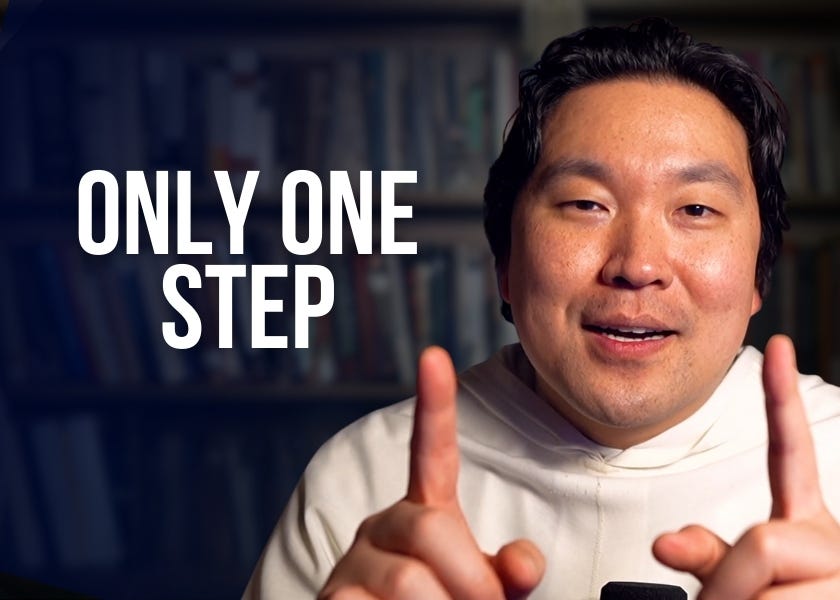
Fr. Cajetan Cuddy, O.P. reflects on John 1 and the strange confession of St. John the Baptist, who sees Jesus repeatedly yet insists that he did not know Him. Sight alone, even religious experience, is not enough to know who Christ truly is.Faith begins when we believe not because we see or verify, but because God has revealed the truth. The Christian life falters when Jesus becomes an instrument for our plans rather than the end Himself. Holiness is not achieved through self-improvement or strategy, but through a simple, consuming union with Jesus, in whom we finally know who He is—and who we are. This is a public episode. If you'd like to discuss this with other subscribers or get access to bonus episodes, visit www.ectplus.org/subscribe
Fr. Cajetan Cuddy, O.P. reflects on the Baptism of the Lord and St. Peter’s proclamation that God shows no partiality. Through the sacrament of Baptism, Jesus does not merely affirm who we already are, but truly changes us—configuring us to Himself and giving us a new identity as adopted sons and daughters of God.While God is open to all, we often cling to our own partiality, accepting only a version of God that fits our preferences and priorities. Baptism cuts through this limitation. God’s loving non-partiality transforms us, draws us out of ourselves, and unites us to Christ in a way that is not symbolic but real, sacramental, and saving. This is a public episode. If you'd like to discuss this with other subscribers or get access to bonus episodes, visit www.ectplus.org/subscribe
Fr. Cajetan Cuddy, O.P. reflects on Matthew 2 and the different responses to the birth of Jesus. While the Magi rejoice at the coming of the newborn King, Herod and all Jerusalem are troubled. The same Savior who brings peace also exposes what resists being changed.Jesus does not save partially or selectively. His kingship reaches every part of the human person—nothing lies outside His transforming love. The Gospel still provokes the same question today: will we rejoice at the Savior who gives Himself completely, or fear the love that leaves nothing unchanged? This is a public episode. If you'd like to discuss this with other subscribers or get access to bonus episodes, visit www.ectplus.org/subscribe
This is a free preview of a paid episode. To hear more, visit www.ectplus.orgIn this episode of the Encyclopedia of Catholic Theology podcast, Dr. Matthew Levering reflects on his journey to the Catholic faith and his vocation as a theologian. He discusses his formation within the Catholic intellectual tradition, his engagement with figures such as Augustine, Aquinas, and Newman, and why genuine renewal in theology requires resi…
Fr. Cajetan Cuddy, O.P. reflects on Colossians 3 and Ephesians 5 and St. Paul’s teaching on marriage. These passages are often read as statements about authority or hierarchy, but St. Paul is revealing the measure of Christian love itself—Christ’s love for the Church.Husbands are called to love as Christ loves, by giving everything without reserve. Wives respond with the Church’s total self-gift to Christ. Marriage is not an abstract ideal or a social arrangement, but a sacramental participation in the saving love of Jesus, made possible by grace and lived in the concrete reality of daily life. This is a public episode. If you'd like to discuss this with other subscribers or get access to bonus episodes, visit www.ectplus.org/subscribe
Fr. Cajetan Cuddy, O.P. reflects on Matthew 1 and the naming of Jesus. The angel commands Joseph to name the child Jesus because He will save His people from their sins. Jesus is not merely a title or a symbol—His name reveals who He is and what He does.In a world where words often deceive, God does not lie. Names correspond to reality. Jesus means Savior, and Emmanuel means God with us. In Christ, salvation is not theoretical but sacramental and present now. The One who was born of the Virgin still saves, still speaks truth, and still remains with His people. This is a public episode. If you'd like to discuss this with other subscribers or get access to bonus episodes, visit www.ectplus.org/subscribe
Fr. Cajetan Cuddy, O.P. reflects on James 5 and the meaning of Christian patience. St. James calls us to wait for the Lord, but Christian waiting is never passive. Christ already comes to us in the sacraments and in faith, shaping our minds, loves, and daily actions.We wait for Jesus by waiting with Jesus. The same Lord who will appear in glory is the Lord who is present now, and those who live in union with Him today will not be surprised when He comes. Every moment gains eternal meaning when lived in His presence. This is a public episode. If you'd like to discuss this with other subscribers or get access to bonus episodes, visit www.ectplus.org/subscribe
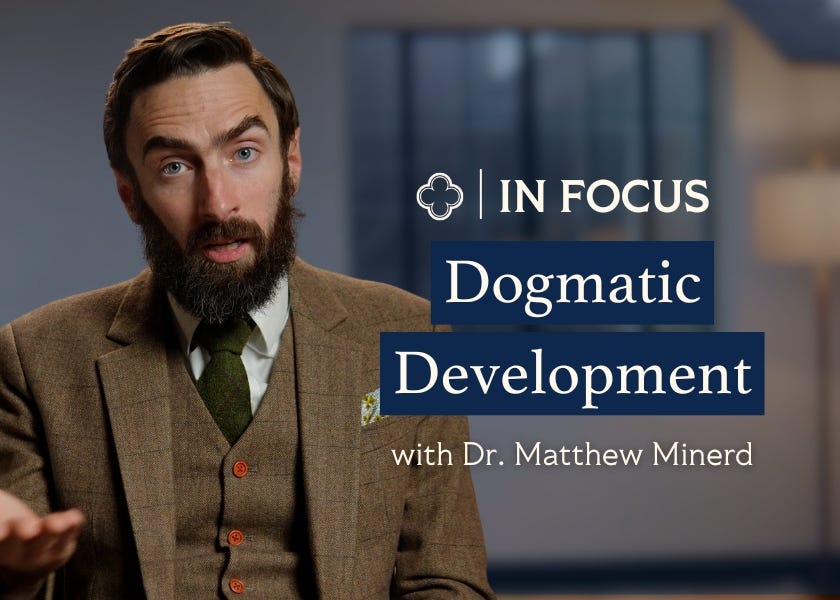
How does the Church clarify revealed truth across time?In this episode of In Focus, Dr. Matthew Minerd introduces the Catholic understanding of dogmatic development—how the Church unfolds what God has revealed without changing its substance. He explains the philosophical groundwork, the distinction between mystery, dogma, and doctrine, and why development means explication, not innovation. Highlighting key moments in the Church’s history, he shows how dogma becomes more explicit while remaining the same faith delivered once for all. This is a public episode. If you'd like to discuss this with other subscribers or get access to bonus episodes, visit www.ectplus.org/subscribe
Fr. Cajetan Cuddy, O.P. reflects on John the Baptist in Matthew 3 as the model for every Christian in public life. John is the greatest of the prophets and the least before Christ — a man who knows his gifts and vocation only in relation to the Lord. He baptizes with water for repentance, yet points entirely to the One who is mightier, whose baptism with the Holy Spirit and fire eclipses his own. John shows that magnanimity and humility meet in a life wholly ordered to Jesus. In a world of platforms and personalities, he teaches us to be great and small at the same time — always pointing to Christ, always finding ourselves in Him. This is a public episode. If you'd like to discuss this with other subscribers or get access to bonus episodes, visit www.ectplus.org/subscribe
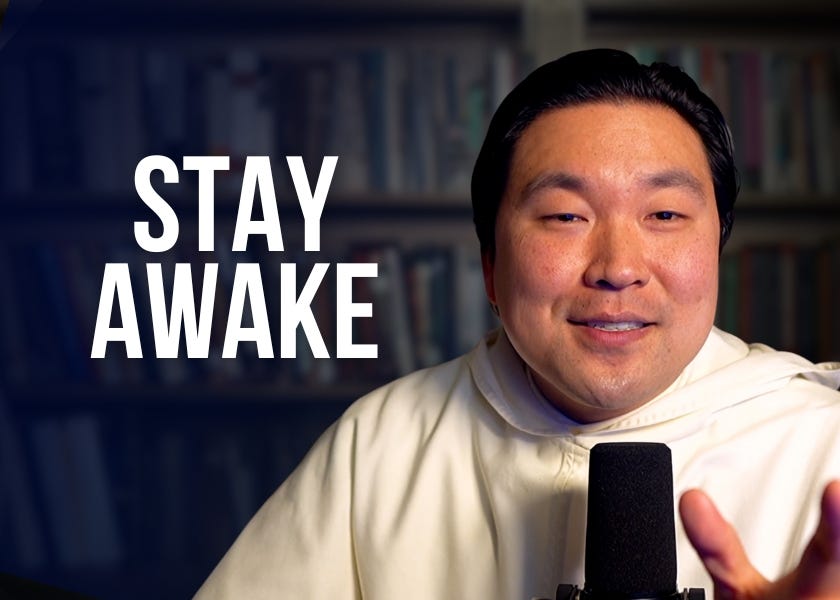
Fr. Cajetan Cuddy, O.P. reflects on on Matthew 24 and Jesus’ command to “stay awake.” Two men in the field, two women at the mill—both groups are working, alert, active, and yet Jesus says only one is truly awake. The difference is not physical awareness but spiritual attentiveness.It is possible to live a good life, fulfill duties, and still be asleep to the One who matters most. Prayer is not merely asking for things—it is the raising of the mind to God. By turning our thoughts to Jesus throughout the day, in love and recollection, we remain awake to His coming. This is a public episode. If you'd like to discuss this with other subscribers or get access to bonus episodes, visit www.ectplus.org/subscribe
This is a free preview of a paid episode. To hear more, visit www.ectplus.org
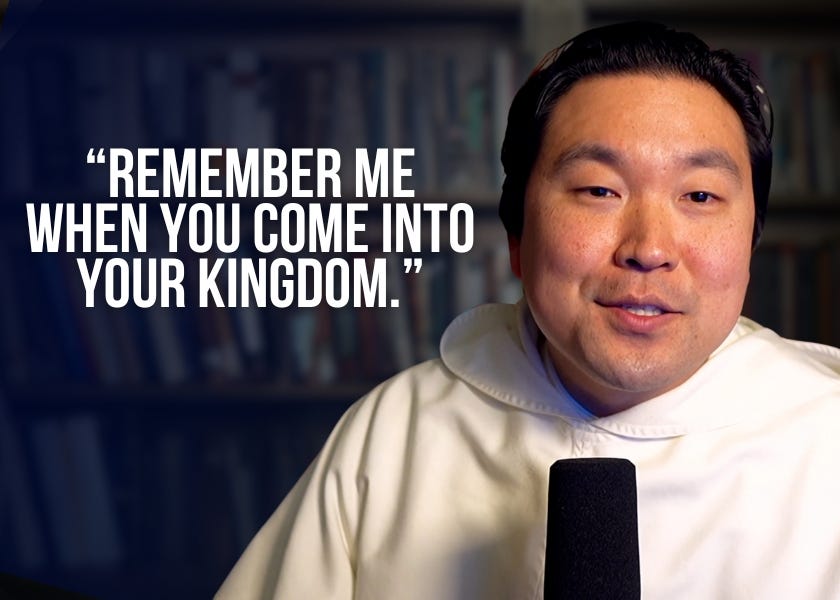
Fr. Cajetan Cuddy, O.P. reflects on Luke 23 and the three attitudes toward salvation revealed at the crucifixion. The rulers and soldiers claim Jesus must save Himself. The first criminal admits his need for salvation but still thinks Jesus must save Himself first. Only the good thief understands who Jesus is, turning to Him simply and humbly: “Jesus, remember me when you come into your kingdom.”Jesus has no need of salvation. He alone is Savior, and to be remembered by Him is to be united to Him—caught up into His loving knowledge and mercy. The one who entrusts himself to Christ receives what Christ alone can give: “Today you will be with me in paradise.” This is a public episode. If you'd like to discuss this with other subscribers or get access to bonus episodes, visit www.ectplus.org/subscribe
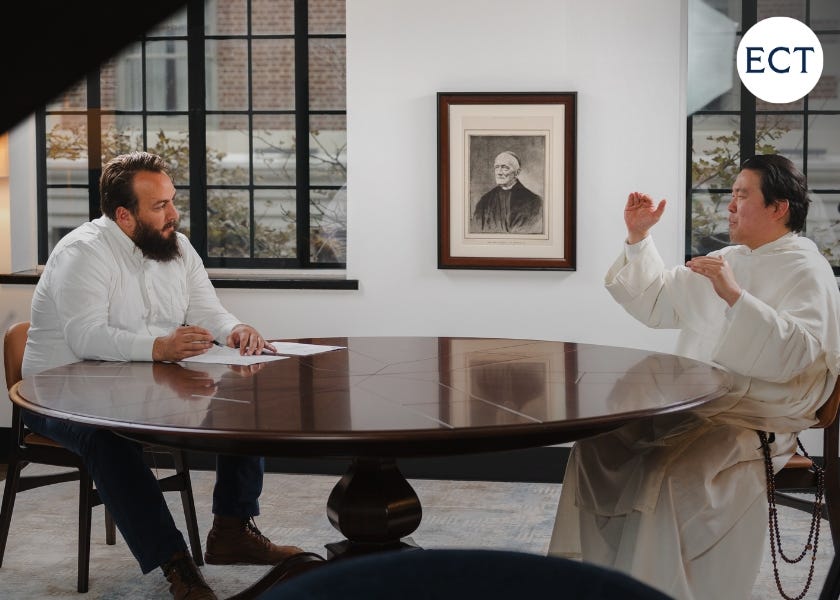
This is a free preview of a paid episode. To hear more, visit www.ectplus.orgOn this episode of the Encyclopedia of Catholic Theology Podcast, Gideon Barr speaks with Fr. Cajetan Cuddy, O.P., about the history of casuistry—its roots in the seminary, its limits, and how Veritatis Splendor and St. Thomas Aquinas renew moral theology by returning to Christ, virtue, and the life of grace.
Fr. Cajetan Cuddy, O.P. reflects on Luke 21 and the striking truth that we can speak with Jesus—and even discuss what He speaks about—yet still miss Him. In the Gospel, people focus on the temple’s beauty and signs instead of the Savior before them. So too in prayer, we can become absorbed by circumstances rather than by Christ Himself. Jesus never loses sight of His mission, our salvation, and the saints are simply those so captivated by Him that they forget themselves. This is a public episode. If you'd like to discuss this with other subscribers or get access to bonus episodes, visit www.ectplus.org/subscribe
This is a free preview of a paid episode. To hear more, visit www.ectplus.orgIn this episode of the Encyclopedia of Catholic Theology podcast, Fr. Romanus Cesario, O.P., reflects on his Dominican formation before Vatican II and his lifelong teaching career. He discusses how Catholic theology shifted in the areas of moral theology, the sacraments, and ecumenism, and why renewal depends on returning to theology as a sacred science…
Fr. Cajetan Cuddy, O.P. reflects on John 2 and Jesus driving the money changers from the temple. Far from mere anger, this moment reveals the true economy of divine worship. We often approach God with a spirit of exchange—offering prayers or promises in return for blessings—but Jesus overturns every form of spiritual bartering. In the economy of salvation, God gives 100% of Himself and invites us to give 100% of ourselves in return. Nothing less captures the fullness of His love or our response of faith. This is a public episode. If you'd like to discuss this with other subscribers or get access to bonus episodes, visit www.ectplus.org/subscribe
Fr. Cajetan Cuddy, O.P. reflects on John 6 and Jesus’ words: “This is the will of my Father, that everyone who sees the Son and believes in Him may have eternal life.” Salvation is not partial—it is the redemption of the whole person, body and soul. Seeing Christ is not mere sight, but the union of knowing and being known, faith leading to communion. In this life, we see through faith; in heaven, through glory. The Christian life is the journey of learning to see and know Jesus ever more clearly. This is a public episode. If you'd like to discuss this with other subscribers or get access to bonus episodes, visit www.ectplus.org/subscribe

Fr. Cajetan Cuddy, O.P. reflects on Luke 18 and the parable of the Pharisee and the tax collector. The Pharisee prays to himself, comparing his goodness to others, while the tax collector simply cries out for mercy. In truth, salvation does not come through comparison or self-justification. We are not saved by being “good people,” but by receiving God’s mercy in humility. The one who looks to Jesus, not to himself, goes home justified. This is a public episode. If you'd like to discuss this with other subscribers or get access to bonus episodes, visit www.ectplus.org/subscribe

Comments

Download from Google Play

Download from App Store
 United States