


 Claim Ownership
Newcomer Pod
Subscribed: 39Played: 1,372
Subscribe

© Eric Newcomer | newcomer.co
Description
Join Eric Newcomer, Tom Dotan, and Madeline Renbarger to get the inside story on the biggest news in Tech, Silicon Valley, and Venture Capital.
185 Episodes
Reverse

Shardul Shah, Partner at Index Ventures, was one of the first checks into Wiz — the Israeli cybersecurity company Google acquired for $32 billion. It wasn't luck. It was a decade-long relationship with the founders, a willingness to wire money on conviction alone, and a philosophy that treats risk calculus as a fool's errand.In this conversation, Eric sits down with Shardul to unpack how the Wiz deal actually came together, what Google really bought for $32 billion, and why mid-sized acquisitions almost always fail. They get into how Index thinks about doubling down across funds, why Shardul refuses to invest in a founder he's only met over Zoom, and what he saw in the Wiz founders a decade before anyone else was paying attention.They also talk about what's next — the categories Shardul is hunting, the founders he's already betting on, and why he thinks everything that happened with Wiz should stretch every entrepreneur's sense of what's possible.Eric Newcomer covers the inner workings of startups and venture capital. Subscribe for interviews with the people building and funding the next generation of tech.
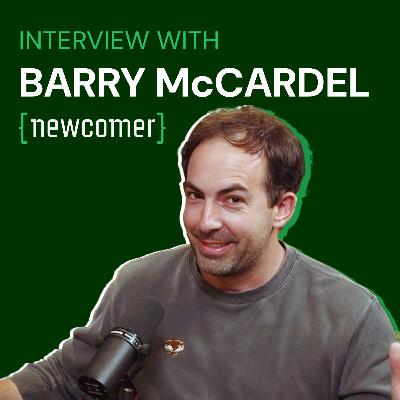
Barry McCardel spent years at Palantir before co-founding Hex, the AI data platform he describes as “Cursor for data.” In this conversation with Eric Newcomer, he breaks down Palantir’s business model, the truth about forward deployed engineers, how AI agents are changing data analytics and business intelligence, and why Hex is taking a different path in enterprise software.They also get into AI agents, the future of data work, the reinvention of business intelligence, whether white-collar jobs are really at risk, and the fight over Anthropic, defense tech, surveillance, and government power.
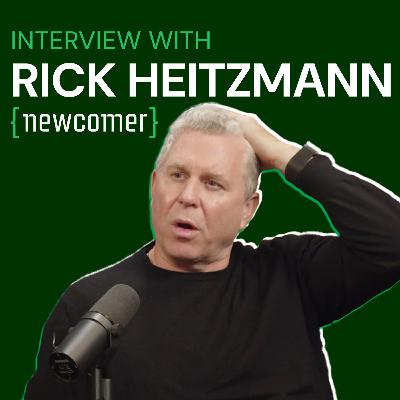
Rick Heitzmann of FirstMark joins the Newcomer Podcast to discuss the state of venture capital, the AI investment boom, and why the next wave of tech IPOs may be closer than many expect.Rick shares how investors are thinking about AI infrastructure, the role of data as the core advantage in the AI race, and why massive private capital has allowed companies to stay private far longer than in previous cycles. As AI companies continue raising unprecedented amounts of money, the conversation turns to what happens when that capital eventually runs out and why public markets may become the next step.Eric and Rick also discuss the broader venture cycle, the impact of market uncertainty on IPO timing, and how investors are navigating a period defined by rapid technological change and massive AI spending.This conversation explores how venture capital is adapting to the AI era and what it could mean for the future of startups, public markets, and the next generation of tech giants.
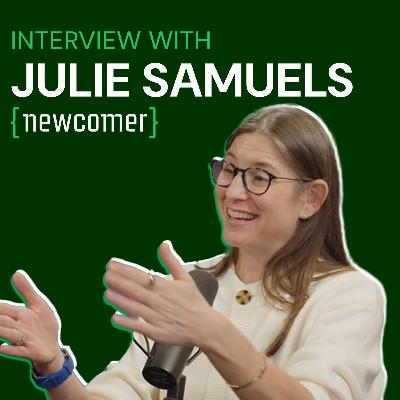
How does New York’s tech industry navigate AI, city politics, and a new mayor in the Trump era?Julie Samuels, President and CEO of Tech:NYC, joins the Newcomer Podcast to discuss the growing intersection of technology and politics. Samuels has spent years at the center of New York’s tech ecosystem, working with founders and policymakers as the industry becomes a larger force in public policy.Eric and Julie talk about tensions between the tech industry and progressive politics, including the rise of Zohran Mamdani and how tech leaders are navigating a shifting political landscape. They also discuss Trump-era tech politics, efforts to modernize government with technology, New York’s Empire AI initiative, and debates around wealth taxes, billionaire flight, and the energy demands of AI data centers.Julie also explains the work Tech:NYC does behind the scenes to advocate for the industry while trying to bridge the growing gap between technologists and the public.Subscribe for more conversations with the people shaping technology, venture capital, and policy.
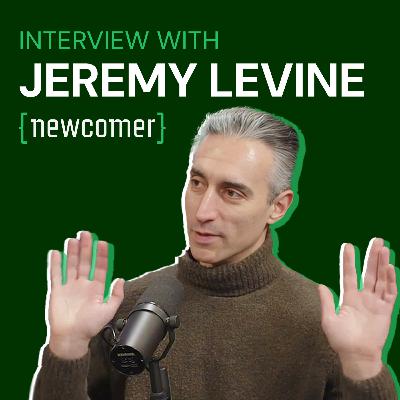
How does one of the most established venture capital firms in the world think about the so called “SaaS apocalypse”? Jeremy Levine of Bessemer Venture Partners joins the Newcomer Podcast to discuss the SaaS repricing, the acceleration of AI, and why venture capital remains a long game.We unpack whether SaaS is broken or simply reset after years of excess, and why AI companies are scaling faster than anything we have seen before. Jeremy shares his perspective on foundation model giants like Anthropic, the coming wave of robotics, and the unsolved manipulation problem that could define the next decade.We also discuss scale in venture capital, how AI is changing investing, and why, in Jeremy’s words, this is ultimately a patient person’s game.
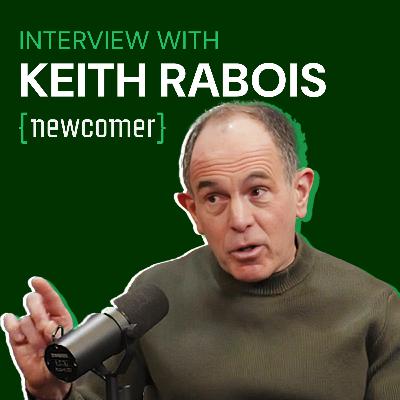
Keith Rabois joins the Newcomer Podcast for a wide-ranging conversation that moves between tech, venture capital, and politics.On the tech side, we start with Brex being acquired by Capital One and what that means for Ramp. Rabois argues that banks won’t build the “finance organization of the 21st century,” and frames Ramp’s ambition as building the CFO’s “eyes, ears, and actions” across a company. We also discuss Rippling’s strategy, investor responsibilities around integrity and ethics, and how he thinks about “barrels and ammunition” when companies try to do many things at once.From there we get into AI investing and Rabois’s view that what matters is the end-customer value proposition and the durability of the advantage. He explains Rogo as an AI “copilot” for investment bankers and talks about workflow and data moats.The episode also turns heavily to politics and current events: Trump, tech’s relationship with the administration, immigration (including H-1B and O-1 visas), free speech, and foreign policy debates (including China, Europe, and the Middle East). We also argue through a recent incident involving law enforcement and protest/obstruction, and close with Opendoor—where Rabois lays out his view of the company’s turnaround, retail investors, and the company’s weekly “accountability” metrics updates.
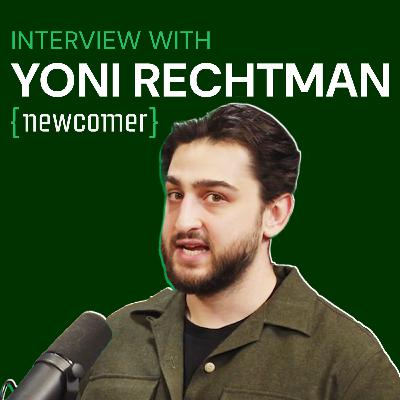
Today on the Newcomer Podcast, we're joined by Yoni Rechtman, a partner at Slow Ventures and one of the most outspoken voices in venture capital right now. Rechtman doesn't hold back on Trump, the tech industry's political reckoning, or where the real opportunities in AI actually are.We talk about why Slow Ventures deliberately avoided foundation models despite the massive returns, where the second-order effects of AI create better investment opportunities, and how the firm is using "growth by buyout" to build billion-dollar companies in unsexy industries like parking lots.We also discuss Silicon Valley's response to the Trump administration, the Alex Pretti shooting, why Rechtman believes most venture capitalists are "amoral financiers" chasing momentum rather than principles, and what happens when the institutions that underpin entrepreneurial capitalism start to erode under authoritarian pressure.Rechtman shares his contrarian investment philosophy of finding "weird takes on important stories," why he thinks Git is structurally broken in the age of AI-generated code, and how AI is inverting every system built on scarce production and abundant attention.This conversation goes beyond typical VC talking points, addressing the uncomfortable questions about what the industry stands for when democracy itself is at stake.🎙️ New episodes every week! Subscribe and turn on notifications to stay ahead of the next big story.👇 Watch more from The Newcomer Podcast:https://www.youtube.com/playlist?list=PL0Yg1id5olJMOyUnYF5AZnIo2ZXdyYd-L 🔗 Read more at newcomer.co🐦 Follow us: @NewcomerMediaIf you want honest, insider analysis from the heart of tech and venture capital…you’re in the right place.
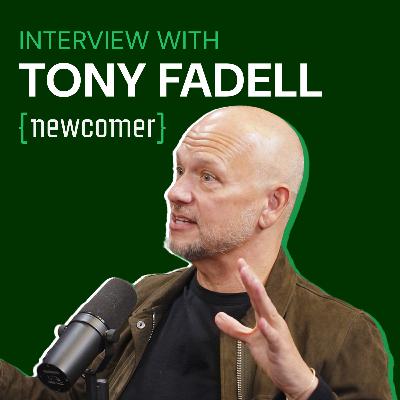
Today on the Newcomer Podcast, we’re joined by Tony Fadell, one of the most influential figures in modern hardware design. Fadell helped bring some of the most important consumer electronics to life and has shaped how people interact with technology.We talk about where the next major tech device might come from, whether it’s a pin, a pen, headphones, or the device already in your pocket, and how Apple and other major tech companies are approaching the future of hardware.We also discuss the rumors surrounding Fadell as a potential contender for the next CEO of Apple, what he would do if he were in that role, and how leadership decisions at that level actually get made. Fadell shares his view on why OpenAI is pursuing a strategy of becoming too big to fail, and what that signals about the next phase of the industry.This conversation goes beyond product launches and press releases, focusing instead on how power, scale, and design choices shape the tech ecosystem.This is the Newcomer Podcast.🎙️ New episodes every week! Subscribe and turn on notifications to stay ahead of the next big story.👇 Watch more from The Newcomer Podcast:https://www.youtube.com/playlist?list=PL0Yg1id5olJMOyUnYF5AZnIo2ZXdyYd-L 🔗 Read more at newcomer.co🐦 Follow us: @NewcomerMediaIf you want honest, insider analysis from the heart of tech and venture capital…you’re in the right place.
Today on the Newcomer Podcast, we’re at MongoDB.Local for a series of conversations on how enterprise AI is actually being built.MongoDB CEO CJ Desai joins the show 65 days into the role to explain why San Francisco is “back,” how MongoDB is repositioning itself for the AI era, and why unstructured data has made the company’s platform a natural foundation for AI-native applications. He shares his view on the AI hype cycle, the rapid rise of companies like OpenAI and Anthropic, and why MongoDB is staying model-agnostic as AI product cycles accelerate.We also sit down with Rippling’s Head of AI Ankur Bhatt to discuss how AI is being deployed inside a live enterprise system. The conversation covers building agents across payroll, IT, and finance, why agent identity and accountability matter, and how Rippling is approaching permissions, access control, and AI-driven productivity at scale.A grounded look at the enterprise AI stack, from the data layer to real-world deployment.MongoDB #Rippling #AIAgents #VentureCapital

Today on the podcast, we’re joined by an old friend, New York Times correspondent Katie Benner.We look back on our days covering tech together at The Information and our old podcast Dead Cat, before diving into her new book, Miracle Children: Race, Education, and a True Story of False Promises.The book examines a school reform experiment that claimed a 100 percent college acceptance rate, and what happened when the pressure to prove success overtook reality. Benner’s reporting traces how race, politics, and institutional incentives shaped decisions that ultimately left students paying the price.We talk about how incentives shape outcomes, why well intentioned systems often fail the people they are meant to serve, and what this story reveals about meritocracy, power, and institutional decision making in America. This conversation is not about ideology. It is about how systems behave when results matter more than reality.

The AI boom is hitting real limits. In this episode, the Newcomer team breaks down why data centers are running out of power, what is really happening inside OpenAI after its latest shakeup, and why neocloud players like CoreWeave may be heading toward a financial crunch.Eric Newcomer, Tom Dotan, and Maline Renberg explain the investor panic behind the scenes, the brutal GPU economics, and what these cracks mean for the future of AI infrastructure.
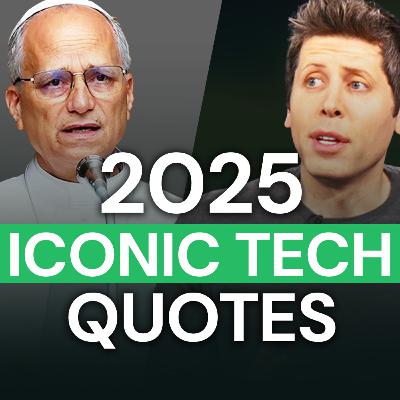
What do Sam Altman, Jensen Huang, Reid Hoffman, Marc Andreessen, and Elon Musk actually believe about the future of tech?In this episode of the Newcomer Podcast, we break down the quotes that defined tech in 2025. From OpenAI and Anthropic to venture capital, regulation, and Silicon Valley power, these are the moments where powerful people said the quiet part out loud.Rather than reacting to headlines, we look at the specific lines that revealed how AI companies think about compute and money, how venture capital is consolidating power, and why tech and politics are now inseparable.We cover:What Sam Altman and OpenAI revealed about scale and computeHow VC giants like Andreessen Horowitz and Lightspeed talk about power and accessWhy AI regulation looks very different in public than it does in privateThe quotes that mattered more than any keynote or earnings callThis is a year-in-review told through the words that shaped it.

How do you quietly raise $9 billion in a world obsessed with hype? In today’s episode, we break down the rise of Lightspeed Venture Partners: the ultra-successful, strangely under-the-radar mega-fund shaping the next decade of AI, enterprise, and consumer tech. Lightspeed has posted huge exits this year while sidestepping the froth of the AI bubble… so what are they doing differently?But first, we dig into the new rift between Amazon and OpenAI, and how shifting alliances in Big Tech are reshaping the AI economy. Why is Amazon repositioning now? What does it signal for OpenAI, Anthropic, and the broader AI stack? And who actually benefits when tech giants redraw the map?This episode goes deep on: • What makes a mega fund — and why so few succeed • How Lightspeed raised $9B without becoming a public personality cult • Amazon’s evolving AI strategy and why it matters for everyone • Whether the “AI bubble” is real — and who’s insulated if it pops • Who really controls the future of the AI economyIf you want to understand power in Silicon Valley right now, this is the episode.
The bidding war for Warner Bros. Discovery is over…for now. Netflix shocked Hollywood by announcing a deal to acquire the storied studio and its crown jewel, HBO Max, beating out a massive $108 billion hostile bid from Paramount.But in this episode, we argue that the $87 billion mega-deal is nothing more than a desperate move by Hollywood to consolidate power. David Zaslav’s WBD was a "fiasco," and the merger of "prestige" content like Succession with Netflix's data-driven content has the industry freaking out. The real threat to Hollywood isn't a rival studio, but Silicon Valley. We explain why Netflix and Paramount are fighting each other while the true watch time beast is YouTube and TikTok.
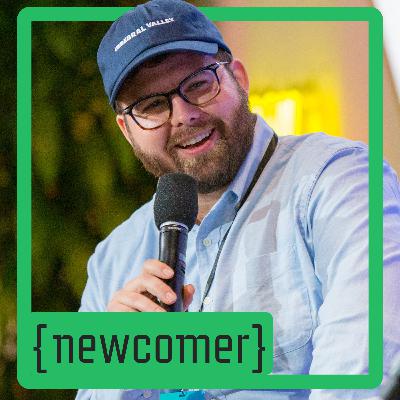
In this episode, we break down the revelations around David Sacks, the venture capitalist now serving as the Trump administration’s de-facto AI czar, while simultaneously holding deep financial ties across the AI industry he’s helping shape.Following the New York Times’ recent reporting, we examine how Sacks positioned himself at the center of both AI policy and AI investing, and what happens when the person influencing federal AI strategy is also betting on the companies affected by those decisions.Is this a historic conflict of interest? A new model of tech-government entanglement? Or simply the inevitable outcome of Silicon Valley’s growing political power?We dig into:- How Sacks became the administration’s key voice on AI- The scale of his investments in AI companies- What “no conflict, no interest” looks like in practice- Why industry insiders are divided on whether this is savvy or dangerous- What this means for AI regulation, startups, and U.S. competitiveness
Investigative journalist Ellen Huet joins the show to discuss her stunning new book on OneTaste, the wellness startup that rose to Silicon Valley fame before spiraling into allegations of manipulation, coercion, and cult-like control. We unpack how a company selling “female empowerment” turned into one of tech’s most disturbing cautionary tales, and what its downfall reveals about power, charisma, and the blind spots of the startup world.This conversation goes deeper than the headlines and asks a larger question:How does a community built on self-improvement end up crossing the line into harm?If you follow the intersection of tech, power, psychology, and accountability, this is one you won’t want to miss.
Reid Hoffman Breaks Silence on Epstein Emails & AI PowerToday on the Newcomer Podcast, Reid Hoffman joins me for a wide-ranging conversation on AI power, regulation, politics, and the future of the tech economy. We get into everything — AGI timelines, Sam Altman’s real competition, AI policy, and why Reid says we’re not in a bubble. We also cover his political involvement this year, the Epstein email revelations, and his views on crypto’s future in Washington.This is a fast, sharp, insider conversation with one of tech’s most influential voices.
MongoDB.local San Francisco is happening on January 15th. Learn more and register here → http://mdb.link/sf-dot-local At the Cerebral Valley AI Summit, we surveyed more than 300 founders and investors with one question:“Which billion-dollar AI startup would you short?” The answers were… blunt.In this episode, Eric, Max Child and James Wilsterman break down the most surprising picks, what they reveal about the state of AI in 2025, and the shifting mood inside the industry. We also revisit the biggest moments from the summit — from agentic AI to the sustainability of today’s valuations.
Buckle up—today's episode takes you inside the war on AI slop and Anthropic's bold plan to fix artificial intelligence's biggest problems. We kick things off at the Cerebral Valley AI Summit, where Anthropic CPO Mike Krieger shares why AI needs to be truth-seeking and what their team is doing to fight misinformation and "brainrot." From explosive funding announcements to real talk about the future of agentic AI, you're getting all the behind-the-scenes intel.Then, Max Child sits down with Mati Stunashevsky, CEO of ElevenLabs, for a fresh take on how voice AI is taking over everything from customer support and gaming to wild celebrity voice clones. It’s all about authenticity, safety, and vertical-specific innovation—plus, why voice might just be your next favorite interface.As always, we're diving deep into the industry, serving up candid conversations, and making sense of the latest AI trends, so you can stay ahead in the game.MongoDB.local San Francisco is happening on January 15th. Learn more and register here → http://mdb.link/sf-dot-local
Everyone has predictions about AI, but what happens when AI predicts itself?In this episode of The Newcomer Podcast, Eric is joined by Cerebral Valley co-hosts Max Child and James Wilsterman to let AI map out its own 5-year plan. From AGI timelines to AI in healthcare, movies, and beyond.Can AI really forecast its own future, or are we all buying into its self-created hype?

Comments

Download from Google Play

Download from App Store
 United States