


 Claim Ownership
The NeuroKrish Immersion
Subscribed: 3Played: 55
Subscribe

© NeuroKrish
Description
Join us on the Neurokrish Podcast, where Dr. Ennapadam S. Krishnamoorthy and guest experts explore the fascinating world of neuropsychiatry and integrative medicine. From groundbreaking neuroscience to holistic wellness, each episode dives into the mysteries of the brain and mind, offering fresh insights, inspiring stories, and practical advice. Perfect for anyone curious about mental health and the science behind it. Discover, be inspired, and embark on a journey to understand and improve mental well-being with us.
59 Episodes
Reverse
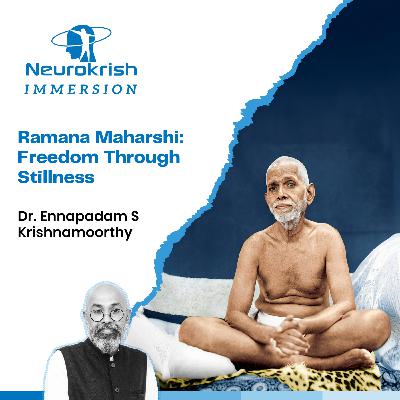
In Season Two of Neurokrish Immersion, Many Phases of Freedom, we explore Sri Ramana Maharshi and the radical stillness that defined his liberation. From a teenage death experience in Madurai to 54 years at Arunachala, this episode examines vichara, self inquiry, the collapse of egoic doership, and the neuroscience of the silent mind. Is freedom achieved through effort, or revealed when the seeker falls away?
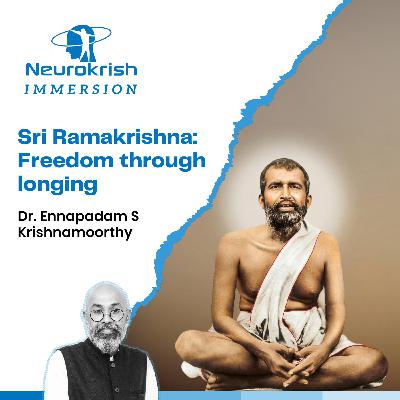
In this episode of Neurokrish Immersion, Many Phases of Freedom Season Two, we explore Sri Ramakrishna and the seeker archetype. Unlike the disciplined path of the Buddha or the intellectual clarity of Adi Shankara, Ramakrishna represents freedom through overwhelming longing. What happens when emotion overwhelms regulation? When the limbic system floods the narrative self? Through a neural and psychological lens, we examine Ramakrishna’s ecstatic states, his encounter with Mother Kali, repeated Samadhi, and the radical surrender known as Sharanagati. This is not a story of belief. It is a story of surrender, of ego collapse through affective overload, and of transformation that leads not to pathology, but to humility, compassion, and inclusion. What if freedom is not achieved by strengthening the self, but by offering it repeatedly until nothing remains?
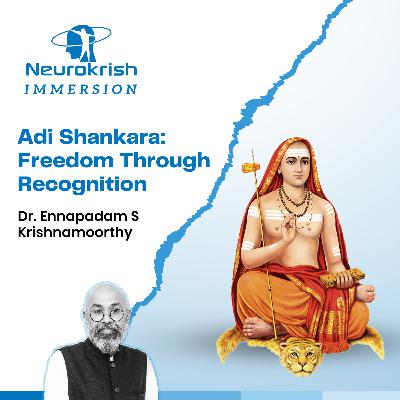
In this powerful episode from The Many Faces of Freedom series, we explore the radical path of Adi Shankara, the legendary exponent of Advaita Vedanta. Unlike freedom through emotional regulation, Shankara's liberation comes from dismantling the illusion of identity itself. Discover how contemplative inquiry, neuroscience, and non-duality converge to illuminate a path where freedom is not earned but realized.
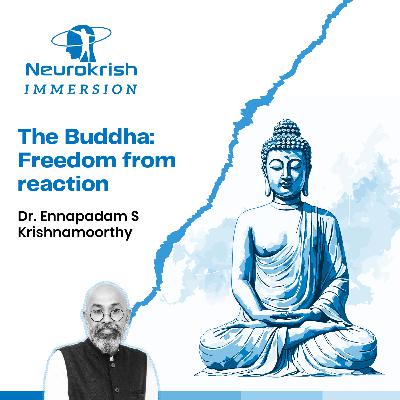
In this first episode of Season 2 of Neurokrish Immersion, we begin our exploration of freedom with the archetype of the Buddha. Through a deep dive into Buddhist thought, neuroscience, and personal storytelling, we understand freedom not as an escape or suppression, but as a profound shift in how the mind relates to experience. This episode illuminates how regulation, awareness, and compassion offer a practical and transformative path to liberation.
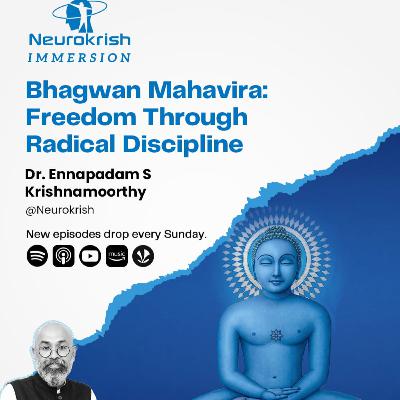
Born a prince in 6th century BCE Bihar, Vardhamana walked away from a life of ultimate privilege to conduct one of the most radical spiritual experiments in human history. This episode of the Neurokrish Immersion Podcast explores the life of Bhagwan Mahavira, diving into the Jain technology of Tapasya and meditation. Discover how his journey of absolute non-reactivity offers a profound blueprint for rewiring the brain’s emotional circuits and achieving true inner freedom.
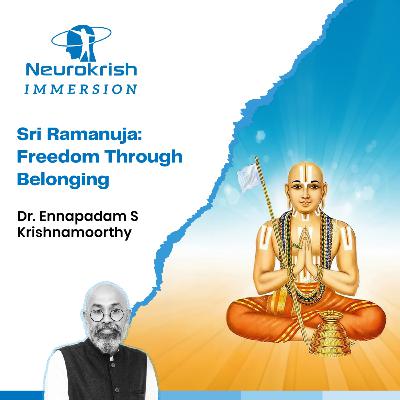
In Season 2 of the Neurokrish Immersion, The Many Phases of Freedom, we explore the life and philosophy of Ramanuja, the great architect of Visistadvaita. From a young disciple who wept at a harsh interpretation of the divine, to a revolutionary thinker who challenged Advaita’s doctrine of Maya, Ramanuja redefined freedom not as dissolution, but as belonging. We examine his seven great untenables of Advaita, his doctrine of relational non-dualism, his radical act of sharing the sacred mantra, and his vision of devotion as expansive, communal, and neurologically regulating. This is the story of freedom through relationship, grace, and sacred ecosystem building.
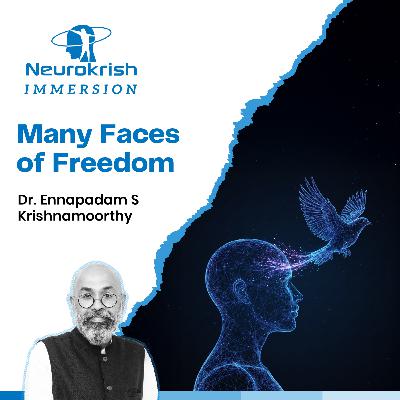
This threshold conversation explores the many faces of freedom, not just as political or economic liberation, but as a deeper inner relationship with the self. Through personal reflections, clinical encounters, ancient archetypes, and timeless stories like that of Shankara and the chandala, this episode invites you into a subtle inquiry: What does it truly mean to be free?
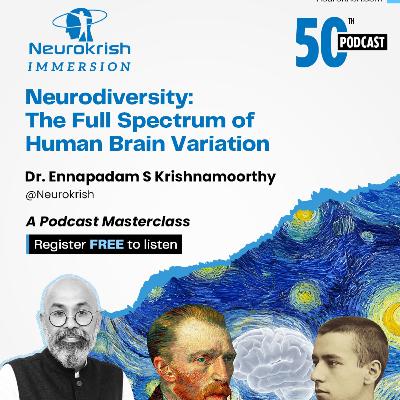
Join us for a comprehensive masterclass on neurodiversity where we explore the radical truths of how human brains vary. From the intense emotional landscapes of the Gershwin syndrome in epilepsy to the "spiky profiles" of twice-exceptional children, we examine how brain biology shapes personality, morality, and creativity. We delve into the tragic genius of Vincent van Gogh and the extraordinary, polymathic mind of Kumagusu Minakata, exploring how their neurodiversity fueled unparalleled contributions to art and science. This episode is a deep dive into why "different" is not a euphemism for "worse" and how the right environment can transform a neurological liability into a remarkable asset.
Why do we laugh, cry, or feel deeply moved by music?In this immersive episode of Neurokrish Immersion, we explore the deep neural roots of laughter, tears, and music, the universal expressions of human emotion. From the ancient rhythms that predate language to the power of sound in therapy and memory, join us on a journey through neuroscience, emotion, and meaning. This is where science meets soul.
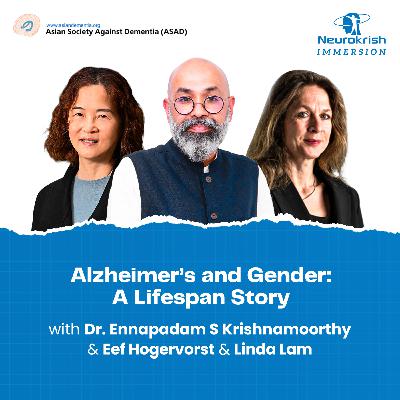
Two out of three people living with Alzheimer’s dementia are women, and this striking disparity cannot be explained by longevity alone. In this episode of Neurokrish Immersion, we summarize a powerful webinar by the Asian Society Against Dementia, delivered by Professor Eef Hogervorst, Professor of Biological Psychology at Loughborough University, UK, and chaired by Professor Linda Lam of the Chinese University of Hong Kong. The episode explores how hormonal transitions, especially menopause, cardiovascular health, lifestyle, education, sleep, and stress shape dementia risk across a woman’s lifespan. From estradiol’s neuroprotective role to the nuanced timing of hormone replacement therapy, this conversation reframes dementia prevention as a lifelong, personalized strategy for women.Listen to the whole discussion by clicking the link below https://youtu.be/kCBa5v7hU5M
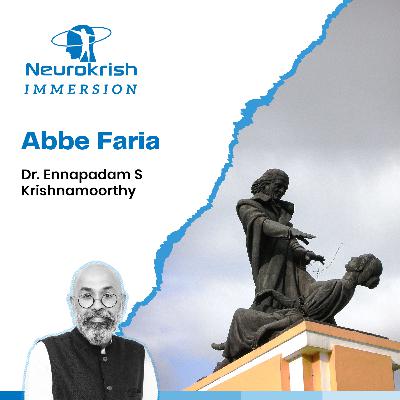
In this episode of Neurokrish Immersion, we explore the extraordinary life and ideas of Abbe Faria, the Goan priest who transformed hypnotism from Mesmer’s mystical magnetism into a psychology rooted in attention, agency and the human mind. Through the lens of Dr. Egas Moniz’s writings, we trace how Faria’s radical insight, that hypnosis arises from within the subject, anticipated modern neuroscience by two centuries. Discover how his observations connect to today’s understanding of brain networks, healing, therapy and contemplative traditions across cultures.
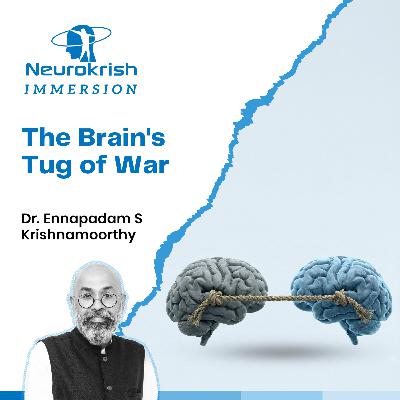
In this episode, we explore the tug-of-war between the limbic system and the prefrontal cortex, and how this dynamic equilibrium influences our behavior, emotions, and personality. Through the lens of historical case studies like Phineas Gage, we dive into the fascinating world of neuropsychology and the impact of brain structure on human behavior
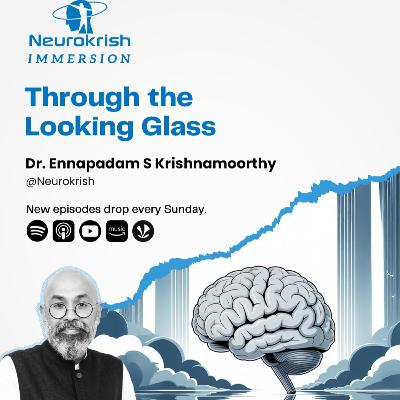
In this episode of Neurokrish Immersion, we explore how behavior often changes before memory, movement, or speech. From mild behavioral impairment and apathy versus ebulia, to pseudobulbar affect, Parkinson’s impulse control disorders, Lewy body hallucinations, and the frontal and temporal networks that shape personality, we show why “he is not himself anymore” can be the brain’s first cry for help, and how early recognition can improve care and compassion.
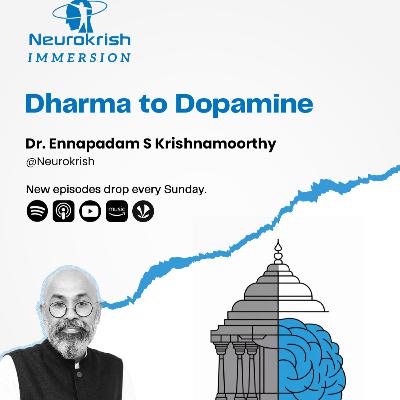
Timed with Udbhavada Museum Studio’s handcrafted totem on the Ramayana and Ramar Pattabhishekam, this Neurokrish episode reimagines the epic as a living map of the mind. We unpack Dharma as regulation, dopamine as drive, and read Rama, Sita, Lakshmana, Hanuman, and Ravana as neural archetypes. From prefrontal control to salience and default mode networks, from vagal tone to the dopamine trap, discover how epic wisdom illuminates today’s brain science and the daily tug of war between what we should do and what we want to do.
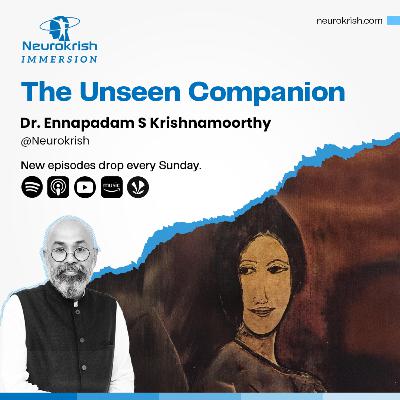
Explore the universal phenomenon of sensing an unseen companion with Dr.Ennapadam S.Krishnamoorthy, from Rabindranath Tagore's Jeevanadevata and the accounts of explorers like Shackleton's Fourth Man and Messner's Silent Climber, to cross-cultural mystic parallels and the latest neuroscience of felt presence. Discover how brain systems like the Temporoparietal Junction (TPJ) and the Default Mode Network (DMN) construct this powerful, guiding presence under conditions of extreme stress, isolation, or deep contemplation. Is it survival mechanism, divine presence, or a unique interplay of your brain's architecture? Tune in to Neurokrish Immersion to find out.
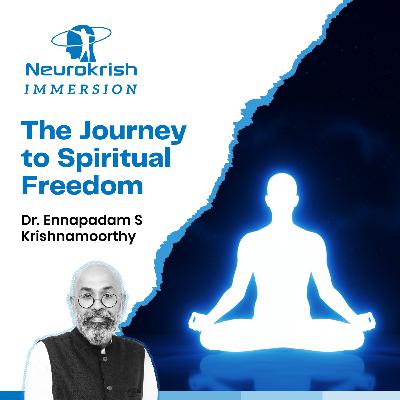
In the first episode of the Neurokrish immersion series, we explore Osho’s radical take on spiritual freedom, living totally with awareness. From Zorba the Buddha to Tantra as acceptance, to everyday meditation in walking, eating, listening and breathing, this episode invites you to question conditioning, meet death without fear, and live here and now with joy, love and playfulness.
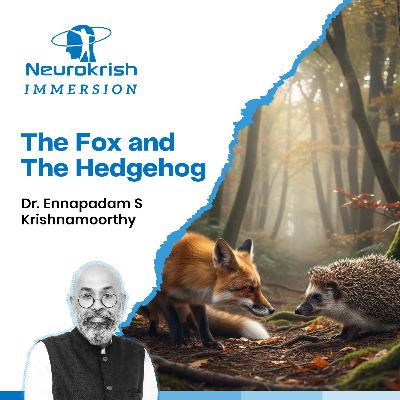
Are you a fox who adapts fast, or a hedgehog who wins with one big focus? In this Neurokrish Immersion, we explore Isaiah Berlin’s famous parable, how Plato and Shakespeare model the two mindsets, what Philip Tetlock’s research reveals about prediction, and why great companies switch between fox thinking for strategy and hedgehog focus for execution. We also unpack the brain networks behind each style and leave you with practical ways to train flexible, resilient leadership.
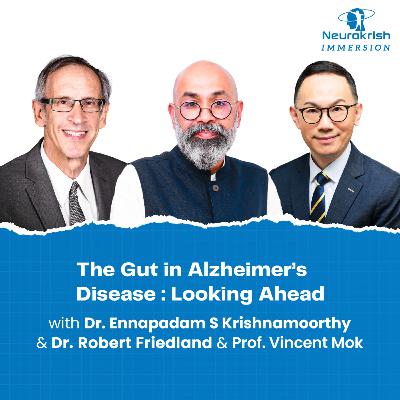
On the eve of World Alzheimer’s Day, Dr. Ennapadam S. Krishnamoorthy hosts Prof. Robert Friedland and Prof. Vincent Mok for a candid deep dive into the gut-brain axis in neurodegeneration. From bacterial amyloids that can cross seed brain proteins, to aquaporin 4, meningeal clearance, oral and ear microbiomes, and why lifestyle and diet still matter, Prof. Friedland challenges the field to think deeper than plaques, asking better questions and looking beyond the gut to mouth, skin, and even earwax.
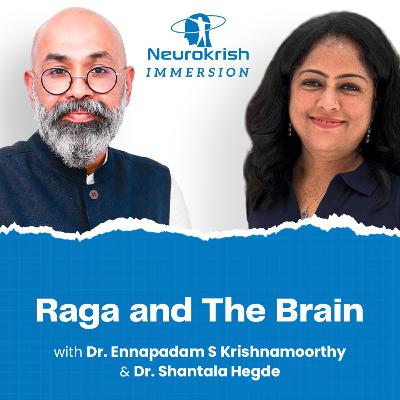
Clinical neuropsychologist and neuromusicologist Dr. Shantala Hegde joins Neurokrish to unpack how ragas shape emotion, attention, and memory, why Indian musical structures matter for the brain, and how rhythm and melody can aid rehab across Parkinson’s, dementia, and more. From time of day ragas to dopamine and neural plasticity, this conversation bridges Indic knowledge and modern neuroscience with vivid examples and real patient stories.
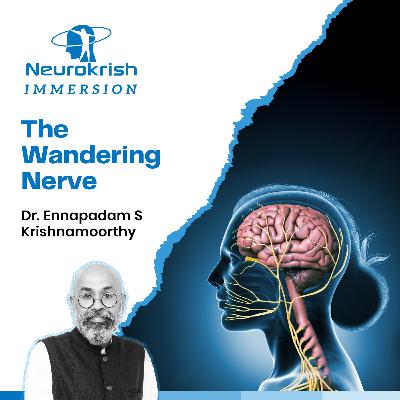
This episode explores the vagus nerve, also known as the "great wanderer" and the body's information superhighway. It delves into the history and evolution of vagus nerve stimulation (VNS), from invasive implants to modern non-invasive devices, and its wide-ranging clinical applications in treating neurological conditions like epilepsy, dysautonomia, and headaches. The podcast also connects VNS to ancient Indian science through the concept of Kundalini, presents a compelling case study of a patient with long COVID who found relief through an integrative approach, and highlights simple, everyday practices that stimulate this crucial nerve.

Comments

Download from Google Play

Download from App Store
 United States