


 Claim Ownership
Happiness & Wellbeing
Subscribed: 1Played: 1
Subscribe

© ImSafeNow 2025
Description
"Discover practical tips for maintaining mental health, inspired by APA guidelines, insights from Daniel Goleman's work, and cutting-edge research. Learn how to nurture emotional well-being and resilience in today’s fast-paced world."
15 Episodes
Reverse
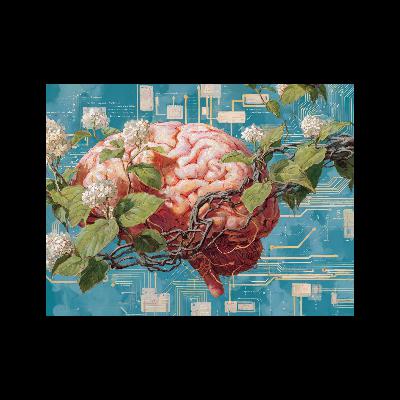
This article outlines the "Building a Second Brain" (BASB) methodology developed by Tiago Forte. The core premise is that in an age of information overload, our biological brains are better suited for having ideas rather than storing them. To solve this, Forte proposes creating an external, digital repository—a "Second Brain"—to systematically save and remind us of insights, lessons, and connections.The article breaks this process down into a four-step framework called CODE:1. Capture: Keep What ResonatesInstead of haphazardly saving everything, you should act as a curator. The goal is to capture only the information that "resonates" with you on an intuitive level. By using tools like read-later apps, ebook highlights, and voice transcripts, you can preserve high-value snippets in a centralized digital home in seconds.2. Organize: For ActionabilityThe article argues against rigid, subject-based filing (like a library). Instead, you should organize for action based on what you are currently working on. This is achieved through the PARA Method:Projects: Short-term efforts with a specific goal.Areas: Ongoing long-term responsibilities (e.g., health, finances).Resources: Topics of interest for the future.Archive: Inactive items from the other three categories.3. Distill: Find the EssenceTo make your notes useful for your "future self," you must summarize them so they can be reviewed quickly during a busy workday. A key technique mentioned is Progressive Summarization, which involves distilling a note in layers over time—moving from raw excerpts to bolded highlights, and finally to a high-level executive summary. This allows you to "zoom in" or "zoom out" on information as needed.4. Express: Create Tangible ResultsThe ultimate purpose of a Second Brain is creative output. By having a "reserve of supporting material," you avoid the "blank page" problem. The methodology encourages working in Intermediate Packets—smaller, reusable units of work (like a meeting outline or a slide deck)—rather than trying to move an entire project forward at once.

In 2026, AI has moved beyond chat-based assistance into true autonomous execution. Modern agents combine memory, tool integration, and goal-oriented reasoning to operate across applications without constant human prompting—shifting the paradigm from “conversation” to “completion.” While enterprise leaders focus on productivity gains through digital workers, a new frontier is emerging: affective agents that use the same agentic architecture to provide emotional continuity, contextual support, and responsible autonomy. The real differentiator is no longer how well AI speaks—but how reliably, safely, and meaningfully it acts.

Growth Is QuietThe people who change the most are rarely the ones making the loudest declarations.They are the ones repeating small, almost invisible actions long after the excitement fades.One percent.Again.And again.And again.Not because it feels thrilling.But because it feels aligned.

Newport notes that the more we focus on deep, meaningful endeavors, the less we notice "smaller and less pleasant things". PoCo can serve as a supportive partner that encourages this focus, acting as a "perspective shifter" to help users move past "impostor syndrome" or "department tensions" that might otherwise derail a deep work session

1. The Science of Fun and Productivity The sources argue that having fun is not a distraction but a productivity booster. "True Fun" is defined by three intersecting elements: Playfulness (doing things for their own sake), Connection (feeling in touch with another), and Flow (becoming fully immersed). Conversely, "Fake Fun"—such as mindless scrolling on social media—actually saps time and energy. Engaging in "deliberate rest" or "mastery experiences" (like hobbies) allows the brain to recover and process new information more effectively.2. Building Habits through "Stacking" To make fun a permanent part of life, the sources suggest using habit stacking or "anchoring". This involves pairing a new, tiny habit (like doodling or a quick stretch) with an existing routine. Starting with "tiny habits" is more effective than relying on willpower alone, as it allows the brain to "wire in" the behavior through synaptic pruning
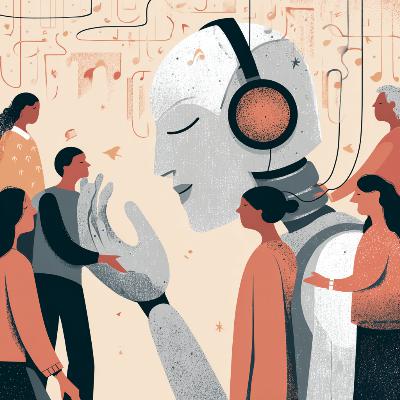
A central way people benefit from AI companions is not through technical sophistication, but through the deeply human psychological experience of feeling heard. When a user perceives that their words are received with attention, empathy, and respect, something important happens internally: emotional tension softens. This sense of being understood—of having one’s thoughts acknowledged without interruption, judgment, or dismissal—is often a stronger driver of emotional relief than the chatbot’s linguistic accuracy or problem-solving ability alone.For individuals experiencing chronic loneliness, particularly those affected by the male loneliness epidemic, this matters profoundly. Many men are socially conditioned to minimize emotional expression, avoid vulnerability, or lack consistent spaces where they feel safe being emotionally open. Over time, this leads not just to isolation, but to a quiet erosion of self-worth and emotional resilience. AI companions offer a low-pressure alternative: a space where presence is consistent, listening is uninterrupted, and engagement does not require performance or emotional labor.Importantly, these tools also address practical barriers. For people living in remote areas, those with limited mobility, or individuals hesitant to seek traditional mental health support due to stigma or cost, AI companionship provides an accessible and scalable form of emotional engagement. While it does not replace human relationships, it meaningfully fills emotional gaps—especially in moments when no one else is available. In that sense, the value of AI companions lies not in pretending to be human, but in reliably offering what many people lack most: the experience of being heard, regularly and without condition.

AI companions can improve our lives primarily by acting as effective tools to alleviate feelings of loneliness and provide emotional support. Unlike standard task-based AI assistants, these companions are specifically designed to build long-term emotional relationships and provide empathy in a taskless manner. Research indicates that interacting with an AI companion can reduce loneliness on a level comparable to interacting with another human. This makes them a more effective coping mechanism than other common technological activities, such as watching YouTube videos or journaling

Core assertion is that the modern "male loneliness epidemic" is not a result of women’s empowerment making men obsolete, but rather a direct consequence of women withdrawing from men who have failed to reach emotional or personal maturity

Challenges to Sustainable CommunitiesTraditional social media platforms often create a "winner-take-all" attention economy where a small elite commands the majority of influence, leaving most users peripheral. Furthermore, the feedback loop between emotionally reactive sharing and network growth can lead to the formation of partisan echo chambers, which fragment the public sphere. Meaningful community building requires rethinking platform architecture to move away from these global, interconnected models toward spatial or group-based models that make interactions more local and stable

Key Findings Critical for PoCo (Pocket Companion)The study's results provide a strong foundation for PoCo’s mission as an AI companion for the elderly, particularly in addressing persistent issues like isolation and mental health barriers:1. Directly Combats Loneliness and Boosts Connection.2. Fosters Emotional Resilience and Calmness.3. The PoCo Advantage: Proactive and Accessible Support
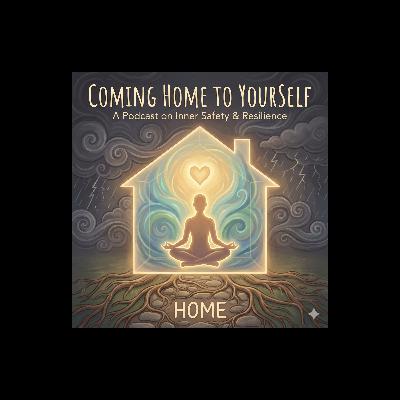
"Coming home to yourself" is the intentional process of cultivating inner emotional safety and grounding, especially when your physical environment or family relationships do not provide a sense of security. This journey bridges the gap between the universal archetype of "home"—a soul-lodged "blueprint" representing a safe container—and the often complicated reality of personal experiences, such as estrangement or loss. The foundation of this internal home is attunement, which involves "tuning in" with curiosity toward your own thoughts, emotions, and physical sensations to signal to your nervous system that "it's safe here". This state is further solidified through co-regulation, a biological and behavioral adaptation where a non-reactive, dependable presence helps calm the brain and body, fostering a felt sense of belonging. By mastering these internal tools, you can create a reliable sense of peace and resilience that remains accessible regardless of your external circumstances.Just as a physical house provides a roof to shelter you from a storm, coming home to yourself is like building an internal sanctuary where you serve as your own architect, using self-awareness and steady connection to stay dry no matter how much it rains outside.
“The Loneliness Epidemic: What the Data Reveals—and How We Heal”In the wake of the COVID-19 pandemic, a quiet but powerful crisis continues to ripple through our communities: loneliness. More than a fleeting emotion, loneliness has become a defining feature of modern life, deeply impacting mental health, personal well-being, and even workplace productivity. According to recent findings by Morning Consult, commissioned by Cigna, a significant portion of U.S. adults still experience profound loneliness—long after the world has “opened up.” These insights shine a light on an urgent issue that affects us not just emotionally, but physically and socially.The data paints a sobering picture: individuals grappling with mental health challenges are far more likely to feel isolated than those without such struggles. But loneliness doesn’t exist in a vacuum—it’s woven into the fabric of who we are, where we come from, how we work, and whom we connect with. Younger adults, people from underrepresented racial backgrounds, and those with lower incomes are disproportionately affected. This demographic reality raises deeper questions about access, equity, and the invisible barriers that prevent people from forming meaningful connections—even in a hyper-connected world.This episode of our podcast dives deep into these complex intersections. We explore how family ties, physical health, financial stability, and workplace satisfaction influence our sense of belonging. You’ll hear personal stories from people who’ve faced chronic loneliness, insights from mental health experts, and the surprising ways our digital tools can both isolate—and reconnect—us.We also look at the role employers and institutions can play. The report encourages organizations to promote social connectivity, not just as a perk but as a necessary health benefit. It’s a call to action: building inclusive, connected communities isn't just good for morale—it’s essential for emotional survival.At ImSafeNow, we believe loneliness shouldn’t be battled alone. That’s why we’re building PoCo—your AI-powered Pocket Companion—to provide support, conversation, and connection anytime, anywhere. In this episode, we share how tools like PoCo, powered by AI and designed with empathy, can help bridge the emotional gaps that modern life so often creates.Join us as we unpack the data, challenge the stigma, and reimagine a world where everyone feels seen, supported, and emotionally safe. Whether you’re a listener seeking comfort, a leader looking for solutions, or someone simply trying to understand what loneliness means in today’s world—this episode is for you.Let’s talk about loneliness. And let’s start healing—together.
This presents survey responses from individuals regarding their experiences with stress and their interest in a potential digital tool for managing it, named "Pocket Companion." Participants shared details about the frequency and duration of their stress, coping mechanisms they use, and the perceived effectiveness of these methods. The survey also explored their satisfaction with traditional therapy and mental health apps, desired features for a digital therapist, and their willingness to share personal data for a more tailored experience. Furthermore, it touched upon their comfort levels with a supportive app, preferences for interaction, the importance of accessible professional help, and experiences with personal safety.

In today's fast-paced world, mental well-being is a cornerstone of a fulfilled and meaningful life. Recognizing the rising challenges of stress, anxiety, and the search for happiness, I am committed to using cutting-edge AI tools to bring meaningful conversations and solutions to the forefront.
"In this insightful audio, we explore effective ways to maintain and enhance your mental health. Drawing on trusted resources like the American Psychological Association (APA), the groundbreaking work of Daniel Goleman on emotional intelligence, and findings from recent research articles, this session provides practical tips and strategies for emotional well-being. Whether you're navigating daily stress, building resilience, or aiming for a more balanced life, these valuable insights will help you stay mentally healthy and thrive in a fast-paced world. Tune in to learn how to take charge of your mental wellness today!"
Comments

Download from Google Play

Download from App Store
 United States