


 Claim Ownership
Reflex Integration Through Play
Subscribed: 7Played: 88
Subscribe

© Kokeb McDonald, OTR/L
Description
Welcome to the Reflex Integration Through Play (RITP) Podcast, your go-to resource for empowering therapists, educators, and parents with effective strategies to support children’s development. This podcast bridges the gap between science and play, offering actionable tools to create measurable, trackable, and repeatable treatment plans that make a real difference.
46 Episodes
Reverse
In this episode, Kokeb McDonald sits down with occupational therapist and RITP-certified therapist Katie Williams for a candid conversation about ADHD in girls and why it’s often missed until adulthood.Katie shares her own late diagnosis in her early forties and reflects on how it helped her reinterpret lifelong struggles with perfectionism, rejection sensitivity, sensory needs, time blindness, emotional regulation, and cycles of burnout and depression.This episode emphasizes how ADHD can present as “hyperactive on the inside,” with masking, daydreaming, high performance at school followed by emotional crashes at home, and anxiety or depression appearing before ADHD is recognized.Kokeb and Katie discuss social expectations for girls, the impact of negative comments and labeling, and practical therapy approaches, building rapport, supporting unmasking, parent coaching, and helping kids identify what they truly like and feel (including interoception and emotional regulation). They also highlight how therapists’ words and co-regulation shape outcomes and encourage screening when “lazy” or “not trying hard enough” becomes a repeated description.Timestamps00:00 Welcome + Why This Series Matters: ADHD in Girls01:18 Katie’s Late ADHD Diagnosis & Looking Back With Clarity02:38 Why Girls Get Missed: Internal Hyperactivity, Perfectionism & Burnout07:07 What ADHD Really Is (Beyond the Name/DSM) + Dopamine Seeking Risks09:30 Girls vs Boys: Daydreamers, ‘Lazy’ Labels, and At-Home Meltdowns11:51 Social Expectations & Masking: Hygiene, Clothes, and Rejection Sensitivity13:38 Adult Reflections: Sensory Needs, College Struggles, Time Blindness19:13 OT Treatment Approach: Unmasking, Rapport, and Parent Coaching24:17 Goal-Setting Challenges: Decision Fatigue, Initiation, and Letting Kids Lead26:59 Language That Heals: Reframing, Backtracking, and the 5:1 Positivity Shift🎯 Resources Mentioned:📘 Integrating Primitive Reflexes Through Play and Exercise book series🔗 Learn more: ritp.info/books📱 RITP App – home and school tools for therapists and families🔗 Download the app: ritp.info/app📌 Other ResourcesLearn about our upcoming LIVE WEBINAR https://ritp.info/intro-courseLearn about the RITP Clinical Foundations 3-Day Intensive http://ritp.info/3-dayLearn more about the Reflex Integration Through Play Certification program: https://ritp.info/certificationPrevious episodes and resources: https://www.integratingreflexes.com/blog/
In this episode, we wrap up the 'Creating an At-Home Program' series by focusing on the importance of tracking progress and maintaining effective communication with your therapist.🧠 Discover simple ways to monitor your child’s growth, record progress, and maintain communication with therapists. Learn how tracking and collaboration strengthen outcomes in your reflex integration journey.Tune in for practical tips on enhancing your child's development through effective, engaging, and fun home exercises.Timestamps00:00 Introduction to Visual Feedback and Communication00:32 Welcome to the Final Episode00:40 Tracking Progress and Effective Communication01:35 Simple Record Keeping01:59 Using Visual Tools for Motivation02:28 Recording Videos for Growth03:48 Sharing Updates with Your Therapist04:57 Celebrating Progress and Building Confidence05:21 Key Takeaways and Final Thoughts05:58 Resources and Encouragement06:13 Closing Remarks🎯 Resources Mentioned:http://ritp.info/family📘 Integrating Primitive Reflexes Through Play and Exercise book series🔗 Learn more: ritp.info/books📱 RITP App – home and school tools for therapists and families🔗 Download the app: ritp.info/app📌 Other ResourcesLearn about the RITP 3-Day Intensive http://ritp.info/3-dayLearn more about the Reflex Integration Through Play Certification program: https://ritp.info/certificationPrevious episodes and resources: https://www.integratingreflexes.com/blog/
In this episode, we explore step six of the 'Create an At Home Program' series, focusing on tailoring your child's home exercise program to their unique needs and preferences. Emphasizing brief, focused activities over prolonged, frustrating sessions, we provide actionable advice on breaking down tasks, using rhythmic tools like a metronome, and incorporating creativity and play.🧠 Every child is unique. Learn how to customize exercises to your child’s interests, abilities, and learning style. Discover how play-based movement can make therapy enjoyable and more effective at home.Tune in for practical tips on enhancing your child's development through effective, engaging, and fun home exercises.Timestamps00:00 Focused Activities vs. Frustration00:29 Introduction to Step Six: Tailoring the Program00:46 Understanding Your Child's Unique Needs01:48 Personalizing Your Child's Home Program01:54 Breaking Down Instructions02:34 Using Rhythm and Metronomes03:22 Shortening and Simplifying Exercises04:01 Making Exercises Playful04:56 Celebrating Small Wins06:01 Adapting Based on Response06:59 Key Takeaways and Flexibility08:07 Resources and Tools in the RITP App08:49 Preview of Final Episode: Tracking Progress09:03 Final Encouragement and Conclusion🎯 Resources Mentioned:📘 Integrating Primitive Reflexes Through Play and Exercise book series🔗 Learn more: ritp.info/books📱 RITP App – home and school tools for therapists and families🔗 Download the app: ritp.info/app📌 Other ResourcesLearn about the RITP 3-Day Intensive http://ritp.info/3-dayLearn more about the Reflex Integration Through Play Certification program: https://ritp.info/certificationPrevious episodes and resources: https://www.integratingreflexes.com/blog/
In this episode, we dive into step five of the 'Create an At-Home Program' series, emphasizing the crucial role of consistency for lasting progress. The episode explores practical strategies like substituting activities, integrating exercises into daily routines, keeping sessions short, and establishing predictable structures.🧠 Consistency is key to your child’s success. Find out how to build daily routines, integrate exercises into play, and make progress sustainable through repetition, structure, and positive reinforcement.These methods help to seamlessly incorporate movement into your child's daily life. Tune in for actionable insights on building consistency that boosts brain-body communication and fosters long-term developmental success. For additional help, visit the RITP for parents website for home program templates, videos, and guides.Timestamps00:00 Introduction to Consistency in Home Programs00:58 Making Consistency Easy: Substitute Before Adding01:56 Integrate Exercises into Daily Activities03:03 Keep It Short and Consistent03:34 Create a Predictable Structure04:47 Family Connection Time05:55 Key Takeaways and Final Thoughts07:19 Next Episode Preview: Tailoring Exercises🎯 Resources Mentioned:📘 Integrating Primitive Reflexes Through Play and Exercise book series🔗 Learn more: ritp.info/books📱 RITP App – home and school tools for therapists and families🔗 Download the app: ritp.info/app📌 Other ResourcesLearn about the RITP 3-Day Intensive http://ritp.info/3-dayLearn more about the Reflex Integration Through Play Certification program: https://ritp.info/certificationPrevious episodes and resources: https://www.integratingreflexes.com/blog/
In this episode, we dive into step four of the 'Create an At Home Program' series, focusing on the significance of creating a safe environment for your child's learning and development. Emphasizing both emotional and physical safety, this session provides practical advice on how to manage your own emotions, stay present and supportive, and prioritize quality over quantity in exercises.📘 Learn strategies to create a calming environment that promotes learning, connection, and successful reflex integration.🧠 Understand why emotional and physical safety are essential for your child’s progress.Key takeaways include the importance of your calm presence, the foundational role of safety, and the encouragement of small wins to boost your child's confidence and motivation. Tune in to learn how to foster a secure and supportive atmosphere that facilitates true learning and integration for your child.Timestamps00:00 Understanding Child Safety in Learning Environments00:14 Introduction to Creating a Safe Environment01:00 Emotional and Physical Safety02:19 Practical Tips for Ensuring Safety03:52 Encouragement and Support Strategies04:52 Key Takeaways and Next Steps🎯 Resources Mentioned:📘 Integrating Primitive Reflexes Through Play and Exercise book series🔗 Learn more: ritp.info/books📱 RITP App – home and school tools for therapists and families🔗 Download the app: ritp.info/app📌 Other ResourcesLearn about the RITP 3-Day Intensive http://ritp.info/3-dayLearn more about the Reflex Integration Through Play Certification program: https://ritp.info/certificationPrevious episodes and resources: RITP Podcast
In this episode, Kokeb McDonald discusses step three of the 'Create an At Home Program' series, focusing on the importance of targeting specific exercises related to your child's developmental needs. Emphasizing quality of movement over complexity, Kokeb provides practical advice on matching exercises to your child's goals, tracking their responses, and collaborating with specialists like occupational therapists.📘 Learn practical tips for selecting and adapting movements to improve focus, coordination, and sensory regulation using the RITP framework.🧠 Discover how to choose targeted, play-based exercises that match your child’s needs. This episode highlights the significance of a play-based approach to reflex integration, maintaining a safe and enjoyable environment for your child's growth. Tune in for actionable insights on enhancing your child's developmental journey through effective home programs.Timestamps00:00 Welcome to the RITP Podcast00:11 Understanding Your Child's Needs01:03 Creating Effective Home Programs01:38 Resources for Parents01:59 Selecting the Right Exercises02:34 Practical Tips for Exercise Selection03:55 Monitoring and Adjusting Exercises05:13 Example Home Program06:48 Explaining the Why to Your Child07:46 Key Takeaways and Final Thoughts08:42 Looking Ahead: Creating a Safe Environment🎯 Resources Mentioned:25% OFF:📘 Integrating Primitive Reflexes Through Play and Exercise book series🔗 Learn more: ritp.info/books📱 RITP App – home and school tools for therapists and families🔗 Download the app: ritp.info/app📌 Other ResourcesLearn about the RITP 3-Day Intensive http://ritp.info/3-day Learn more about the Reflex Integration Through Play Certification program: https://ritp.info/certificationPrevious episodes and resources: RITP Podcast
In this episode, we dive into we delve into understanding your child's unique developmental challenges. Before jumping into exercises, it's crucial to observe and understand the child's current skills and milestones.📘 Learn the importance of collaborating with a service provider and how to effectively track gross and fine motor skills, visual skills, cognitive skills, and social skills.🧠 Discover how retained reflexes may be affecting your child's development and how to design the right treatment plan.This episode emphasizes the power of daily observation and guided collaboration with therapists to transform frustration into clarity and compassion, setting the stage for success in the next steps of your child's development journey.Timestamps00:00 Introduction: Social Skills and Movement Patterns00:26 Welcome to Reflex Integrations through Play00:49 Understanding Your Child's Developmental Challenges01:25 Collaborating with Specialists02:23 Key Areas to Observe in Your Child04:34 The Importance of Observation06:03 Connecting Observations to Reflex Patterns08:34 Becoming Your Child's Advocate10:06 Conclusion and Next Steps🎯 Resources Mentioned:25% OFF:📘 Integrating Primitive Reflexes Through Play and Exercise book series🔗 Learn more: ritp.info/books📱 RITP App – home and school tools for therapists and families🔗 Download the app: ritp.info/app📌 Other ResourcesLearn more about the Reflex Integration Through Play Certification program: https://ritp.info/certificationPrevious episodes and resources: RITP Podcast
In this episode, we dive into how to recognize retained primitive reflexes and what they mean for your child’s development. You’ll learn to:🧠 Discover the foundation of reflex integration and how it supports your child’s physical, emotional, and cognitive development through the RITP for Parents approach.📘 Learn how understanding primitive reflexes can empower parents to build effective at-home therapy programs.Timestamps00:00 Introduction to At-Home Program Series00:27 Understanding Your Child's Developmental Challenges01:05 Collaborating with Specialists02:03 Key Areas to Observe in Your Child06:14 Connecting Observations to Reflex Patterns10:53 Final Thoughts and Next Steps🎯 Resources Mentioned:25% OFF:📘 Integrating Primitive Reflexes Through Play and Exercise book series🔗 Learn more: ritp.info/books📱 RITP App – home and school tools for therapists and families🔗 Download the app: ritp.info/app📌 Resources & LinksLearn more about the Reflex Integration Through Play Certification program: https://ritp.info/certificationPrevious episodes and resources: RITP Podcast

In this episode, we dive into how to recognize retained primitive reflexes and what they mean for your child’s development. You’ll learn to:🔍 Identify common signs that a child may have retained reflexes, from poor posture to sensory sensitivities.🧠 Understand why these reflexes sometimes stay active and how they impact learning, attention, and behavior.📘 Explore holistic factors that contribute to reflex retention, such as birth experiences, skipped milestones, and limited movement opportunities.🎯 Learn practical ways to observe and collect information to share with your therapist for a more accurate evaluation.🤝 Discover how play-based activities can support reflex integration at home and in therapy.🌟 See how integrating reflexes helps children (and adults) move with more confidence, coordination, and emotional balance.Timestamps00:00 Introduction to Reflex Integration00:15 Understanding Primitive Reflexes01:58 Identifying Retained Reflexes03:51 Observing and Collecting Data on Student Behavior05:43 Parental Guidance and Data Collection07:02 RITP Resources and Programs08:57 Conclusion and Final Thoughts🎯 Resources Mentioned:25% OFF:📘 Integrating Primitive Reflexes Through Play and Exercise book series🔗 Learn more: ritp.info/books📱 RITP App – home and school tools for therapists and families🔗 Download the app: ritp.info/app📌 Resources & LinksLearn more about the Reflex Integration Through Play Certification program: https://ritp.info/certificationPrevious episodes and resources: RITP Podcast
In this episode, we dive into how teachers can support students with reflex integration in the classroom. You’ll learn to:🔍 Identify signs of retained reflexes, such as difficulty sitting still and poor posture.🧠 Discover practical strategies to enhance learning and behavior through simple classroom activities.📘 Explore the Reflex Integration Through Play (RITP) school program, which provides structured, easy-to-implement activities that promote brain-body connection.🎯 Understand how these methods improve focus, behavior, and overall student development.🤝 Recognize the importance of movement breaks and collaboration with occupational therapists.🌟 See how integrating reflex-based activities benefits all students — not just those with identified challenges.Timestamps 00:00 Introduction to Reflex Patterns and Child Development00:44 Identifying Signs of Retained Reflexes in Students03:06 Challenges in the Classroom Due to Retained Reflexes04:26 Observing and Collecting Data on Student Behavior05:49 Impact of Reflex Retention on Behavior and Academics09:24 Classroom-Friendly Activities for Reflex Integration14:29 Implementing Reflex Integration Programs in Schools17:50 Collaboration Between Teachers and Therapists21:38 Encouragement and Resources for Teachers26:46 Conclusion and Final Thoughts🎯 Resources Mentioned:✏️ Reflex Integration Through Play at School: https://ritp.info/school📘 Integrating Primitive Reflexes Through Play and Exercise book series🔗 Learn more: www.integratingreflexes.com📱 RITP App – home and school tools for therapists and families🔗 Download the app: ritp.info/appLearn more about the Reflex Integration Through Play™ Certification program: https://ritp.info/certificationPrevious episodes and resources: RITP Podcast
Learn how to create a simple, effective, and play-based home program that strengthens your child’s motor, sensory, and emotional development. Discover practical tips for parents to turn everyday routines into opportunities for growth, connection, and joy.💡 In this episode, you’ll learn:• Why home programs are essential for lasting progress• How repetition and play strengthen brain-body connections• Simple daily movement routines parents can easily implement• Step-by-step strategies for building consistency and engagement• How the RITP Books and App make home practice easy, fun, and effectiveWhether you’re a parent, therapist, or educator, this episode will empower you to make small, consistent changes that lead to big developmental wins. Because when parents lead with play, children thrive.🎯 Resources Mentioned:📘 Integrating Primitive Reflexes Through Play and Exercise book series🔗 Learn more: www.integratingreflexes.com📱 RITP App – home and school tools for therapists and families🔗 Download the app: ritp.info/app

Watch how play, patience, and RITP is helping a little boy grow into a confident, curious, and strong young man!Today Sarah Wen shares her journey as the mother of 4-year-old Robert, who faced challenges with motor planning, muscle tone, and emotional regulation, with Kokeb. Through Reflex Integration Through Play™ (RITP), Sarah found a supportive, play-based approach that helped Robert build strength, confidence, and independence. From learning to ride a bike to thriving in social settings and even managing daily routines with joy, Robert’s transformation has reshaped his entire family dynamic. Sarah highlights the power of incorporating exercises into everyday life, the role of the RITP app in keeping consistency and motivation high, and the peace that comes from seeing her son flourish.Whether you’re a parent, therapist, or educator, this testimony shines a light on how RITP can make an incredible difference for children struggling with retained reflexes, motor planning delays, or emotional regulation.Episode Highlights00:00 Meet Sarah Wen and her son Robert01:00 Early challenges: torticollis, plagiocephaly, weak muscle tone, and emotional regulation struggles02:30 How motor planning delays affected confidence and social life04:00 First impressions and hesitation about RITP05:00 How a school OT introduced the family to reflex integration therapy06:00 Play-based therapy using cars and favorite toys to motivate Robert07:00 The RITP app: making home exercises fun and manageable09:00 Building exercises into daily routines (bedtime, reading, hallway games)10:00 Overcoming initial reluctance with sticker charts and progress motivation12:00 Breakthroughs: independence, bike riding, better sleep, trying new activities14:00 Emotional, physical, social, and academic improvements16:00 Transformation in family dynamics and home life17:00 Positive feedback from teachers, peers, and grandparents18:00 Reduced parental stress and healthier family rhythms19:00 Sarah’s encouragement to other parents considering RITP20:00 Final reflections: three words that describe Robert nowLearn more about the Reflex Integration Through Play™️ Certification program at https://ritp.info/certificationPrevious episodes and resources: RITP Podcast👩🏽🎓 FOR THERAPISTS 👨🏼🎓For pediatric OTs and service providers, our 5-step Reflex Integration Through Play™️ program will give you the knowledge, tools, and experience to confidently help your clients reach their developmental goals with less stress, while having more fun. https://ritp.info/therapists👩👧👦 FOR PARENTS 👨👧👧Working to integrate reflexes at home? Get the 7 Steps to an At-Home Therapy Program for free in your inbox. https://ritp.info/7-steps📱RITP Reference App📱Check out our Reflex Integration Through Play mobile app, with all our exercises, including videos!https://ritp.info/app📚BOOKS📚 https://amzn.to/3R1hoE5Our best-selling Reflex Integration Through Play book series is available now!✅ Moro Reflex✅ Asymmetrical Tonic Neck Reflex ✅ Symmetrical Tonic Neck Reflex ✅ Tonic Labyrinthine Reflex ✅ Spinal Galant Reflex🌟COMMUNITY🌟 Connect with us inside our FREE Facebook group!https://www.facebook.com/groups/1629371470539695
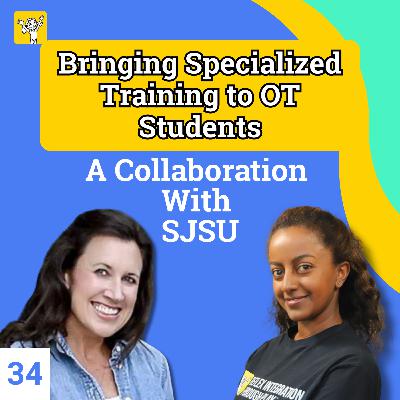
With Guest: Dr. Courtney Boitano, San José State UniversityReflex Integration Through Play™ is moving from clinics to classrooms—and now to the university level! In this episode, Kokeb and Dr. Courtney Boitano share how RITP is shaping future occupational therapists with hands-on, play-based training that bridges the gap between theory and practice.Dr. Boitano - OT, professor, and capstone coordinator at San José State University - talks about integrating reflex-based, play-centered training into OT education. She shares her journey from pediatric practice to academia, how she discovered RITP, and why giving OT students hands-on experience with reflex integration creates the “missing link” between theory and practice. Together, they discuss piloting a bridge program for students, the importance of observation skills, and how reflex integration through play transforms not only classrooms but also therapy outcomes for children and families.Whether you’re an OT student, educator, or seasoned therapist, this episode highlights how collaboration is reshaping the future of occupational therapy.Dr. Courtney Boitano has been a practicing OT since 2007. She is currently the capstone coordinator at San Jose State University in San Jose, California. Her primary practice area is pediatrics and school-based practice. She is also the owner of OT Outside and works with children in private schools and in their homes.Episode Highlights:00:00 – Introduction to Dr. Courtney Boitano and her background in pediatrics and academia03:00 – Why reflex integration wasn’t taught in traditional OT programs04:00 – How Kokeb’s OT Schoolhouse interview led to this partnership06:30 – SJSU students using RITP books and games in real sessions08:00 – Making reflex integration practical and functional for clients13:30 – Creating a “bridge program” to mentor new OTs after graduation17:00 – Building student confidence with mentorship and applied learning18:30 – Shifting OT perspectives on reflex integration as functional, play-based practice21:00 – Why results matter: transforming skepticism into support23:00 – Reflexes as the missing link in treatment planning25:00 – Post-pandemic challenges in pediatrics and the value of group/social therapy26:30 – Advice for OT students and professors: the power of observation and hands-on learning🎓 Learn more about Reflex Integration Through Play™ Certification: https://ritp.info/certification🌐 Connect with Dr. Courtney Boitano - San José State University OT Program https://www.otoutside.com/📘 RITP Reflex Integration Book & Game: https://ritp.info/resources

What if just six months of playful therapy could transform your child’s focus, strength, and even their spine? In this inspiring parent interview, you’ll hear how Reflex Integration Through Play™ (RITP) has changed one family’s life.In this heartfelt episode, Kokeb speaks with Jeanine Allen, a disability attorney and devoted mom, who shares her powerful story of walking alongside her daughter’s journey with Reflex Integration Through Play™ (RITP). Diagnosed with a rare chromosome deletion, autism spectrum disorder, epilepsy, and motor challenges, Jeanine’s daughter faced overwhelming obstacles in daily life—from feeding difficulties and poor balance to limited communication and social engagement.Through the support of an RITP-certified occupational therapist and consistent practice with the RITP app, Jeanine witnessed life-changing improvements. Within weeks, her daughter began focusing better, following multi-step instructions, and even engaging socially with peers. Over six months, her physical strength, emotional calm, and academic participation grew dramatically—surprising even her medical specialists with changes that “should not have happened.”Jeanine’s testimony offers hope and encouragement to parents navigating similar challenges, highlighting how RITP’s playful, structured approach can unlock new levels of growth and independence for children with complex needs.Episode Highlights:0:00 – Meet Jeanine Allen, disability attorney and parent of an RITP child1:00 – Her daughter’s rare genetic condition and early medical challenges2:00 – Daily struggles with feeding, mobility, communication, and independence3:45 – Discovering RITP through occupational therapy4:30 – Breaking down exercises (like snow angels) into achievable steps5:00 – Remarkable spinal changes confirmed by orthopedics6:00 – Improvements in listening, responding, and following directions7:00 – Using the RITP app daily at home to build consistency8:30 – Emotional growth: reduced anxiety, more peace, classroom focus9:30 – Physical milestones: climbing stairs, stronger grip, improved balance10:30 – Academic and social gains—peer play, group tasks, classroom engagement12:00 – Rapid results noticed by teachers, therapists, and riding instructors14:00 – How the therapist tailored sessions with compassion and teamwork15:30 – Parent stress relief and greater confidence at home16:30 – Transformation in three words: Focused, Stronger, Less Anxious17:00 – Why Jeanine encourages all parents to try RITP👉 Learn more about the Reflex Integration Through Play™ Certification program here: https://ritp.info/certification👉 Explore the RITP App for guided exercises and video demonstrations.
Are you struggling to connect reflex integration with real-life therapy goals? In this episode, Kokeb unpacks how to connect reflex integration work with meaningful functional goals in occupational therapy. While many therapists can identify retained reflex patterns, translating that knowledge into daily treatment sessions can feel overwhelming. Kokeb shares practical strategies for linking reflex patterns to functional outcomes, following developmental progressions, using done-for-you home and school programs, and embedding reflex work into purposeful play. She also highlights the importance of clinical observation, so therapists can better assess how reflexes impact movement and participation. Whether you’re working on handwriting, fine motor development, or social play, this episode will help you create treatment plans that are measurable, trackable, and truly functional.Episode Highlights - 00:00 – The challenge of bridging reflex integration with functional therapy goals01:00 – Why reflex goals alone don’t meet functional needs02:00 – Linking reflex patterns (e.g., palmar grasp) to functional outcomes like handwriting03:00 – Using developmental milestones as a treatment framework04:00 – The importance of revisiting foundational skills for lasting growth05:00 – How the RITP app and done-for-you programs support therapists, parents, and schools06:30 – Embedding reflex work into purposeful play-based sessions08:00 – Making therapy engaging through obstacle courses and child-led play09:00 – Building stronger clinical observation skills to identify reflex patterns in natural play11:00 – How to create treatment plans that are measurable, repeatable, and trackable👉 Learn more about the Reflex Integration Through Play™ Certification Program - https://ritp.info/certification👉 Explore the RITP App & Done-for-You Programs - https://ritp.info/app👩🏽🎓 FOR THERAPISTS 👨🏼🎓For pediatric OTs and service providers, our 5-step Reflex Integration Through Play™️ program will give you the knowledge, tools, and experience to confidently help your clients reach their developmental goals with less stress, while having more fun. https://ritp.info/therapists👩👧👦 FOR PARENTS 👨👧👧Working to integrate reflexes at home? Get the 7 Steps to an At-Home Therapy Program for free in your inbox. https://ritp.info/7-steps📱RITP Reference App📱Check out our Reflex Integration Through Play mobile app, with all our exercises, including videos! https://ritp.info/app📚BOOKS📚 Our best-selling Reflex Integration Through Play book series is available now: https://amzn.to/3R1hoE5!✅ Moro Reflex✅ Asymmetrical Tonic Neck Reflex ✅ Symmetrical Tonic Neck Reflex✅ Tonic Labyrinthine Reflex ✅ Spinal Galant Reflex🌟COMMUNITY🌟 Connect with us inside our FREE Facebook group https://www.facebook.com/groups/1629371470539695 ReflexIntegration #OccupationalTherapy #PediatricOT #FunctionalSkills #ChildDevelopment #Reflexes #TherapistTips #ReflexIntegrationThroughPlay #RITP #PediatricTherapySUBSCRIBE to our channel to receive free occupational therapy resources.

Ever feel like you spend more time planning than treating? In this episode, Kokeb McDonald tackles the overwhelm many pediatric OTs face when it comes to treatment planning. Instead of drowning in endless prep work and scattered resources, discover how to create clear, focused, and effective session plans that prioritize progress. Kokeb shares practical strategies like starting with targeted screenings, applying the “one thing” approach, embedding repetition and carryover through home and classroom programs, collaborating with the child’s team, and incorporating the child’s personal interests for better engagement. Learn how to simplify your planning so you can focus on what matters most—helping kids thrive.Episode Highlights- 00:00 – Why pediatric OTs feel overwhelmed with treatment planning-01:00 – How a targeted screening (like the RITP Screening Checklist) sets the foundation- 02:00 – Choosing 1–3 goals per session for clarity and success- 03:00 – Applying the “one thing” approach from *The One Thing*- 04:00 – Embedding repetition and carryover through home and classroom programs- 05:00– Leveraging the RITP app’s done-for-you programs- 06:00 – Collaborating with parents, educators, and other service providers- 07:00 – Tailoring treatment to a child’s personal interests for better motivation- 08:30 – How to involve the child directly in home practice- 09:00 – Wrapping up: streamlining planning to reduce burnout and improve outcomesResources Mentioned- 👉 Learn more about the Reflex Integration Through Play™ Certification program: https://ritp.info/certification- *The One Thing* by Gary Keller and Jay Papasan👩🏽🎓 FOR THERAPISTS 👨🏼🎓For pediatric OTs and service providers, our 5-step Reflex Integration Through Play™️ program will give you the knowledge, tools, and experience to confidently help your clients reach their developmental goals with less stress, while having more fun. https://ritp.info/therapists👩👧👦 FOR PARENTS 👨👧👧Working to integrate reflexes at home? Get the 7 Steps to an At-Home Therapy Program for free in your inbox. https://ritp.info/7-steps📱RITP Reference App📱Check out our Reflex Integration Through Play mobile app, with all our exercises, including videos! https://ritp.info/app📚BOOKS📚 Our best-selling Reflex Integration Through Play book series is available now: https://amzn.to/3R1hoE5!✅ Moro Reflex✅ Asymmetrical Tonic Neck Reflex ✅ Symmetrical Tonic Neck Reflex✅ Tonic Labyrinthine Reflex ✅ Spinal Galant Reflex🌟COMMUNITY🌟 Connect with us inside our FREE Facebook group https://www.facebook.com/groups/1629371470539695 #PediatricOT #ReflexIntegration #RITP #OccupationalTherapy #ChildDevelopment #OTTreatmentPlanning #OTTips #TherapyTools #OTBurnoutPrevention #SensoryIntegrationSUBSCRIBE to our channel to receive free occupational therapy resources.

What if that child’s “attention problem” isn’t ADHD or behavior at all—but a hidden vision challenge that’s been overlooked? In this episode of the Reflex Integration Through Play™ podcast, pediatric OT Kokeb McDonald uncovers the surprising link between visual skills, primitive reflexes, and attention, sharing research, real-life examples, and strategies every therapist and educator should know.While many children (and adults) are referred for self-regulation or sensory issues, underlying visual skills—rather than vision clarity—may be the real culprit. Kokeb shares research linking visual problems to ADHD-like symptoms, explains how primitive reflexes impact vision and attention, and outlines what therapists should look for in holistic screenings. You’ll also learn practical ways to identify signs of visual fatigue, task avoidance, and postural challenges so interventions can be more effective from the start. This episode encourages therapists to consider vision as part of the “whole child” approach and provides resources to help you sharpen your clinical skills.Episode Highlights -01:00 – Why “visual” is different from “vision”03:00 – Attention as a whole-body skill, not just cognitive05:00 – How postural control and vestibular input affect focus06:00 – Signs of visual attention challenges: gaze shifts, fatigue, distractibility08:00 – Task avoidance and fine motor impacts09:00 – How retained reflexes interfere with vision and attention11:00 – The role of peripheral vision and spatial awareness in safety and anxiety12:00 – Research linking visual problems to ADHD-like symptoms14:30 – Why vision screening is part of RITP’s holistic approach16:00 – Case example: attention challenges tied to visual deficits17:00 – Importance of screening across all developmental domains18:30 – Collaborating with specialists and educating parents19:30 – Whole-child approach to attention: integrating vision screening into treatment plans Links and Resources Mentioned - Eye Tests, Exams & Therapy for Kids and Adults with ADD/ADHD**https://www.visiondevelopmentcenter.com/best-eye-exam-is-vision-exam/vision-therapy-for-add-adhd-eyes-attention-disorders/**Undiagnosed eye problems can affect children’s learning**https://www.aoa.org/news/inside-optometry/aoa-news/aoa-president-champions-back-to-school-eye-exams-in-nationwide-media-blitz**Understanding Overlap Between Vision Problems and Attention Challengeshttps://www.insightvisionoc.com/vision-therapy/understanding-the-overlap-between-vision-problems-and-attention-challenges/👉 Learn more about the Visual Skills and Primitive Reflexes course here: https://ritp.info/visual👉 Learn about the RITP Certification Program: https://ritp.info/certification👩🏽🎓 FOR THERAPISTS 👨🏼🎓For pediatric OTs and service providers, our 5-step Reflex Integration Through Play™️ program will give you the knowledge, tools, and experience to confidently help your clients reach their developmental goals with less stress, while having more fun. https://ritp.info/therapists👩👧👦 FOR PARENTS 👨👧👧Working to integrate reflexes at home? Get the 7 Steps to an At-Home Therapy Program for free in your inbox. https://ritp.info/7-steps📱RITP Reference App📱Check out our Reflex Integration Through Play mobile app, with all our exercises, including videos! https://ritp.info/appConnect with us inside our FREE Facebook group!https://www.facebook.com/groups/1629371470539695 SUBSCRIBE to receive free occupational therapy resources.
It wasn’t until Kokeb took her own children to a vision therapist that everything clicked. What she discovered changed how she viewed reflex integration—and how it could transform outcomes for other kids, too.In this episode of the Reflex Integration Through Play™️ podcast, host Kokeb McDonald explores how unintegrated primitive reflexes can disrupt visual development in children—often leading to behavioral, learning, or postural challenges in the classroom. Sharing personal experience as both a pediatric OT and a parent, Kokeb discusses how early visual issues like poor eye teaming and tracking can be misdiagnosed as attention disorders, and why a holistic assessment approach is crucial. She outlines several reflexes—such as ATNR, STNR, TLR, and the Landau reflex—and their impact on visual coordination, posture, balance, and functional classroom skills.Kokeb encourages therapists, educators, and parents to work collaboratively with vision therapists and emphasizes the importance of functional-based reflex screening. Whether you're a therapist seeking better evaluation tools, a parent wanting answers, or an educator noticing attention issues in the classroom, this episode highlights the critical (but often overlooked) link between vision and reflex integration.Episode highlights:[02:30] Why vision therapists prioritize reflex work before visual skills training[03:30] Overview: What are primitive reflexes?[05:00] Developmental role of reflex patterns in early life[06:30] How vision is influenced by reflexes like ATNR, STNR, TLR, and Landau[08:00] Importance of tummy time for head control and early vision development[09:00] Why therapists need full, holistic training to address retained reflexes[10:00] Case study: Smart child struggling with group tasks due to vision issues[12:30] Visual screening revealed lack of eye teaming and midline crossing[14:00] Classroom signs: full-body movement instead of isolated head movement, poor eye contact[15:30] Functional red flags: messy handwriting, visual fatigue, letter reversals[17:00] Importance of integrating vision, vestibular, and balance assessments[18:00] Final reminder to collaborate with vision therapists and other professionals[19:00] Access the online course and learn play-based screening and activitiesEpisode Links:Eye Tests, Exams & Therapy for Kids and Adults with ADD/ADHD**https://www.visiondevelopmentcenter.com/best-eye-exam-is-vision-exam/vision-therapy-for-add-adhd-eyes-attention-disorders/**Undiagnosed eye problems can affect children’s learning**https://www.aoa.org/news/inside-optometry/aoa-news/aoa-president-champions-back-to-school-eye-exams-in-nationwide-media-blitz**Understanding Overlap Between Vision Problems and Attention Challengeshttps://www.insightvisionoc.com/vision-therapy/understanding-the-overlap-between-vision-problems-and-attention-challenges/👉 Learn more about the Visual Skills and Primitive Reflexes course here: https://ritp.info/visual👉 Learn about the RITP Certification Program: https://ritp.info/certification👩🏽🎓 FOR THERAPISTS 👨🏼🎓For pediatric OTs and service providers, our 5-step Reflex Integration Through Play™️ program will give you the knowledge, tools, and experience to confidently help your clients reach their developmental goals with less stress, while having more fun. https://ritp.info/therapists👩👧👦 FOR PARENTS 👨👧👧Working to integrate reflexes at home? Get the 7 Steps to an At-Home Therapy Program for free in your inbox. https://ritp.info/7-steps📱RITP Reference App📱Check out our Reflex Integration Through Play mobile app, with all our exercises, including videos! https://ritp.info/appConnect with us inside our FREE Facebook group!https://www.facebook.com/groups/1629371470539695 SUBSCRIBE to receive free occupational therapy resources.
In this eye-opening episode of the Reflex Integration Through Play™ podcast, host Kokeb McDonald dives into one of the most misunderstood and under-assessed areas in child development—functional vision. You’ll learn why passing a 20/20 vision test doesn’t necessarily mean a child can see well enough to learn, focus, and thrive. Kokeb breaks down the three critical components of vision: acuity, efficiency, and processing, and explores how retained primitive reflexes—like the ATNR and TLR—can affect a child’s visual development and performance. She also explains the importance of collaborating with vision specialists, recognizing red flags in both children and adults, and using purposeful, play-based activities to support visual development.You’ll walk away with practical strategies to observe visual inefficiencies, partner effectively with other professionals, and implement the RITP play-based approach using the Visual Skills & Primitive Reflex Development Course, with a live training and Q&A coming up August 29.Episode highlights:01:00 – The 3 parts of vision: acuity, efficiency, and processing02:45 – Real-world examples of vision challenges beyond 20/20 eyesight04:00 – Symptoms and behavior that may signal visual system overload05:15 – Eye-opening stat: 1 in 4 children have undiagnosed vision problems06:30 – How vision issues affect development, school, self-esteem, and adulthood07:10 – The impact of retained reflexes (ATNR, TLR, Palmar, etc.) on visual development08:45 – Why crossing midline isn’t just physical—it’s visual too09:50 – The importance of muscle coordination and perception in vision11:30 – Kokeb’s personal reflections on missing vision screening as an OT12:20 – Observable signs of visual fatigue and dysfunction in therapy and classroom14:30 – Partnering with vision therapists and developmental optometrists15:30 – How RITP’s play-based approach supports visual development16:50 – Movement breaks and classroom-friendly tracking activities for teachers18:10 – Some simple screening examples: tracking, convergence/divergence, etc19:30 – Vision’s role in behavior mislabeling and creating accurate treatment plansImportant research on vision:Eye Tests, Exams & Therapy for Kids and Adults with ADD/ADHDUndiagnosed eye problems can affect children’s learningUnderstanding Overlap Between Vision Problems and Attention Challenges👉 Visual Skills and Primitive Reflex Development Course https://www.integratingreflexes.com/courses/visual-skill-and-primitive-reflex-development/👉 Certification Program Link: https://ritp.info/certification👩🏽🎓 FOR THERAPISTS 👨🏼🎓For pediatric OTs and service providers, our 5-step Reflex Integration Through Play™️ program will give you the knowledge, tools, and experience to confidently help your clients reach their developmental goals with less stress, while having more fun. https://ritp.info/therapists👩👧👦 FOR PARENTS 👨👧👧Working to integrate reflexes at home? Get the 7 Steps to an At-Home Therapy Program for free in your inbox. https://ritp.info/7-steps📱RITP Reference App📱Check out our Reflex Integration Through Play mobile app, with all our exercises, including videos! https://ritp.info/app📚BOOKS📚 https://amzn.to/3R1hoE5Our best-selling Reflex Integration Through Play book series:✅ Moro Reflex✅ Asymmetrical Tonic Neck Reflex ✅ Symmetrical Tonic Neck Reflex ✅ Tonic Labyrinthine Reflex ✅ Spinal Galant Reflex🌟COMMUNITY🌟 Connect with us inside our FREE Facebook group!https://www.facebook.com/groups/1629371470539695 SUBSCRIBE to receive free occupational therapy resources.
Kokeb McDonald builds on a recent Q&A session from inside the RITP Certification Program to offer a deeper, more holistic approach to pediatric screening. Beyond simply identifying retained reflexes, Kokeb highlights three essential areas that every therapist should be considering during evaluations: reflex patterns, functional movement, and developmental/social connection. You’ll learn how to spot compensation patterns, why observing children in natural play environments is so crucial, and how movement, milestones, and communication all work together for effective treatment planning. Whether you're a therapist, clinic owner, educator, or parent, this episode is packed with insight you can start using today!🔗 – Learn more about our RITP Certification Program: https://ritp.info/certificationEpisode Highlights[02:00] The big picture: reflex integration is just one part of the screening process[03:00] Screening for reflex patterns—what to look for[04:30] Observing compensations and overflows during testing[05:00] Structured vs. natural environments in reflex screening[05:45] Functional movement: sit-to-stand, crawling, and posture[06:45] Recognizing how retained reflexes can affect classroom behavior[07:30] Developmental milestones: what was skipped or delayed?[08:15] Quality of movement vs. just hitting milestones[08:50] Emotional and social connections in screening—how the child interacts[09:30] Body awareness, joint attention, and expressive ability[10:00] Sensory processing and the foundation of reflex integration[11:30] Building personalized treatment plans through observation and data#PediatricTherapy #ReflexIntegration #OccupationalTherapy #RITP #SensoryProcessing #DevelopmentalMilestones #FunctionalMovement #ParentSupport #TherapyTools #ChildDevelopment #RITPPodcast

Comments

Download from Google Play

Download from App Store
 United States