


 Claim Ownership
Curtains up! A Historical Perspective on Drama.
Subscribed: 1Played: 3
Subscribe

© Rohan
Description
Step backstage with me on Curtains Up! the podcast that uncovers the rich, dramatic stories behind the evolution of theater. From the divine rituals of ancient Greece to Shakespearean intrigue, and from the glitz of Broadway to the rise of modern experimental theater, Curtains Up! explores how drama has shaped culture and society across centuries. Perfect for theater lovers, history buffs, and anyone curious about the art that mirrors our humanity. Join me for captivating episodes, exclusive interviews, and behind-the-scenes insights into the world’s greatest stories ever performed.
25 Episodes
Reverse
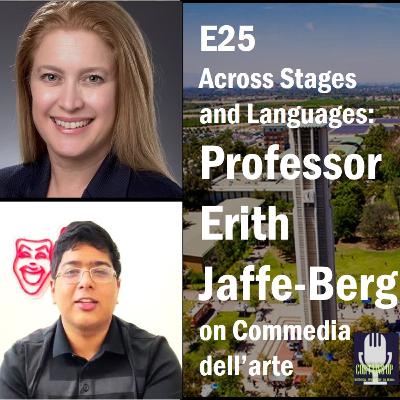
SummaryIn this episode of Curtains Up, Professor Erith Jaffe-Berg shares her insights into the historical context of Commedia dell'arte, her personal journey into theater, and the significance of multilingualism and improvisation in performance. She discusses the misconceptions surrounding Commedia, the role of language in performances, and how these elements can be applied to modern theater practices. The conversation highlights the importance of cultural exchange and the versatility of Commedia actors, providing a rich understanding of this theatrical tradition.TakeawaysProfessor Jaffe-Berg's journey into theater began with acting.She emphasizes the importance of multilingualism in theater.Commedia dell'arte features diverse dialects and languages.Improvisation relies on the cohesion of the ensemble.Language plays a crucial role in audience engagement.Misconceptions about Commedia include its improvisational nature.Commedia actors were versatile performers, not just comedians.The physicality of performance aids in understanding dense texts.Noble Laureate, Dario Faux's work exemplifies the blend of language and body in performance.Modern productions can benefit from Commedia's techniques. Sound bites"I grew up in a bilingual home.""Dario Faux was a comedian, an actor, a writer."Chapters00:00 Introduction to Commedia and Its Scholar01:02 Journey into Theater and Multilingualism04:34 The Role of Multilingualism in Commedia09:12 Improvisation and Cohesion in Commedia14:16 Cultural Exchange and Audience Engagement17:45 Myths and Misconceptions about Commedia20:50 Bridging Historical and Modern Theater28:46 Resources for Exploring Commedia dell'arte

" It connects to every other form of art because it's all about the troupe" - David Alan RobySummaryThis conversation explores the vibrant world of Commedia dell'arte, a theatrical tradition that emphasizes movement, collaboration, and responsiveness. David Roby shares his journey into this art form, discussing its historical significance, the role of masks, and the importance of ensemble work. The dialogue also highlights common pitfalls for new actors and offers practical advice for those looking to engage with Commedia today.TakeawaysTheater is about movement, collaboration, and understanding human nature.Commedia dell'Arte is built on masks, movement, and stock characters.The structure in Commedia allows for creativity within boundaries.Responsiveness is key in Commedia, as actors react to their audience.Masks challenge actors to use their entire body for expression.Common mistakes include relying too much on words instead of physicality.Commedia remains relevant for modern actors as a tool for inspiration.Ensemble work is crucial; there is no solo Commedia performance.New actors should trust their instincts and embrace the learning process.Experimentation and preparation are essential for successful performances.Sound bites"You have to be the character now.""The show must go on.""You have to make it happen."Chapters00:00 Introduction to Commedia dell'arte01:34 David Roby's Journey into Commedia04:55 The Structure and Playfulness of Commedia08:25 The Evolution of Commedia and Its Historical Context09:20 Distinct Features of Commedia dell'arte10:49 The Role of Masks in Commedia14:38 Common Mistakes in Comedic Acting17:44 The Relevance of Commedia Today25:23 Advice for Newcomers to Commedia31:07 educational-intro-high-short.wavKeywordstheater, Commedia dell'arte, acting, performance, masks, improvisation, comedy, historical theater, ensemble, acting techniques
SummaryIn this episode of Curtains Up, host Rohan explores the vibrant world of Commedia dell'Arte, a revolutionary form of street theater that emerged during the Renaissance. He discusses its origins, key characteristics, and the influence of stock characters on modern comedy. The episode also delves into the famous play 'The Servant of Two Masters' by Carlo Goldoni, highlighting its improvisational elements and comedic misunderstandings.TakeawaysCommedia was an important art form for being unique in the sense that it was mostly improv.The evolution of Renaissance theatre saw a shift from religious to secular themes.Commedia actors trained in exaggerated physicality, mime, and acrobatics.The Servant of Two Masters incorporates key elements of Commedia.Stock characters like Harlequin and Pantalone are unforgettable.Commedia democratized theater by bringing it to the streets.Improvisation is central to Commedia performances.Each actor specialized in a stock character for their entire career.The play is known for its physical humor and fast-paced dialogue.Improvisation can add depth to a narrative-driven structure.TitlesUnmasking Commedia dell'ArteThe Evolution of Renaissance TheatreSound bites"The original slapstick.""It democratized theater.""Comedietal art didn't just entertain."KeywordsCommedia dell'Arte, Renaissance theatre, improvisation, stock characters, physical comedy, The Servant of Two Masters, Carlo Goldoni, Italian theatre, theatrical history, comedy

SummaryIn this episode of Curtains Up, Rohan interviews Constantine, a scriptwriter for high school and college theater studying Cinema and Media studies in University of Washington. They discuss the creative process of scriptwriting, the unique challenges faced in educational theater, and the often-overlooked role of scriptwriters. Constantine shares his experiences with deadlines, collaboration, and the importance of scriptwriting in bringing stories to life on stage. He also offers valuable advice for aspiring scriptwriters, emphasizing the need to write consistently and seek feedback.TakeawaysConstantine started scriptwriting in high school and found his passion for it.Writing for educational theater involves collaboration with peers.Scriptwriters are often overlooked in favor of actors and technicians.Deadlines are a significant challenge for scriptwriters.Constantine emphasizes the importance of feedback in the writing process.He is currently working on a script for a New Works Festival.Scriptwriting and screenwriting require different approaches but share common challenges.Constantine encourages aspiring writers to write regularly, even for fun.The creative process is a journey that involves constant learning and improvement.Understanding the role of scriptwriters is crucial for appreciating theater.Sound bites"Deadlines do matter, keep them in mind.""It's a learning process, keep writing.""You have to make it exist first."Chapters00:00 Introduction to Scriptwriting and Its Importance05:57 Challenges in Scriptwriting11:56 Advice for Aspiring ScriptwritersKeywordsscriptwriting, theater, creative process, educational theater, deadlines, collaboration, high school theater, college theater, undervalued writers, playwriting

"Keep your eyes and mind open."- Moumita BhattacharyaKeywordstheater, directing, choreography, Seattle theater, Moumita Bhattacharya, audience interpretation, artistic influences, House of Joy, casting, storytellingSummaryIn this episode of Curtains Up, Rohan interviews Moumita Bhattacharya, a prominent theater director and choreographer in Seattle. They discuss her journey from Indian classical dance to theater, her experiences in the Seattle theater scene, and the artistic influences that shape her work. Moumita shares insights on audience interpretation, the challenges of choreography, and the intricacies of casting characters. She concludes with valuable advice for aspiring directors, emphasizing the importance of storytelling and continuous learning.TakeawaysMoumita's journey into theater began with Indian classical dance.Abhinaya, the act of emoting, is integral to storytelling in dance.The Seattle theater community is receptive to diverse stories.Artistic influences come from various sources, including cinema and dance.Audience reactions can differ greatly from the director's expectations.Choreographing movement in a play without explicit direction is challenging.Casting requires understanding the essence of each character.Performers should embody their characters rather than just play them.Aspiring directors should watch many shows to learn and absorb.Telling relevant stories is crucial for connecting with audiences.
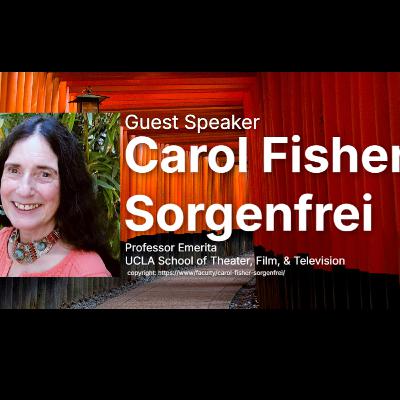
In this episode of Curtains Up, host Rohan Sengupta engages with Dr. Carol Fisher Sorgenfrei, a renowned expert in Japanese and intercultural performance. They explore Dr. Sorgenfrei's journey into Japanese theatre, the fusion of Noh and Greek theatre, and the distinct differences in performance styles between Japanese and Western theatre. The conversation also delves into the significance of design elements in Japanese theatre, memorable performances, and advice for young theatre students interested in global performance traditions.takeawaysDr. Sorgenfrei was inspired by a professor to study Japanese theatre.Her first experience in Japan solidified her passion for avant-garde theatre.She wrote a play combining Medea with Noh style, which won a contest.There are intriguing similarities between Greek tragedy and Japanese Noh.Noh has a continuous performance history unlike Greek theatre.Design elements like masks in Noh carry deeper meanings.Experiencing a powerful performance can transcend consciousness.Navigating between cultures enriches creative work.Young theatre students should explore global performance traditions.The elegance of Noh and the energy of Kabuki are captivating.Japanese theatre, Noh, Kabuki, intercultural performance, theater studies, Dr. Carol Fisher Sorgenfrei, global performance traditions, avant-garde theater, Greek tragedy, cultural dialogue

summaryIn this episode of Curtains Up, host Rohan interviews rising star Jerik Fernandez, who shares his unique journey into the world of theater, his experiences in the MFA acting program at the University of Washington, and his aspirations for the future. Jerik discusses the importance of storytelling in acting, the challenges and rewards of pursuing a career in the performing arts, and offers valuable advice for aspiring actors. The conversation highlights the vibrant Seattle theater community and the transformative power of theater.TakeawaysJerik's journey into theater began unexpectedly at a mall play.He found his passion for acting during high school despite limited exposure to the arts.The MFA program at UW is an all-consuming experience focused on honing craft.Jerik emphasizes the importance of storytelling in acting.He believes that making people feel good is a primary goal of acting.The pandemic highlighted the need for connection through theater.Jerik's friends from college also pursued acting, creating a supportive community.He values the experience gained from understudying professional actors.Jerik encourages aspiring actors to follow their passion despite practical concerns.The magic of theater is felt when performing for an audience.Sound Bites"I just remember that play a lot.""I had never done a play before.""I just want to make people feel good."
"The emotions are raw, the stakes are high."In this episode, Rohan delves into the rich tapestry of Japan's theatrical traditions, focusing on Noh, Kabuki, and Bunraku. Each form of theater offers a unique perspective on culture, emotion, and storytelling, showcasing the evolution of performance art in Japan from the Edo period to the present day. The discussion highlights the distinct characteristics of each style, their historical significance, and their emotional impact on audiences.takeawaysKabuki is known for its boldness and scandalous themes.Noh Theatre emphasizes atmosphere over action.Bunraku puppetry can evoke deep emotional responses.The Edo period was a time of cultural explosion in Japan.Noh performances often explore themes of ghosts and spirits.Kabuki performances are characterized by elaborate costumes and makeup.Bunraku requires extensive training for puppeteers.Kabuki actors are often seen as celebrities in their own right.The stories told in these theaters reflect historical and cultural values.Each theatrical form offers a unique lens into human experience.Sound Bites"Watching Noh is like walking through a dream.""Kabuki isn't just theater, it's an event."
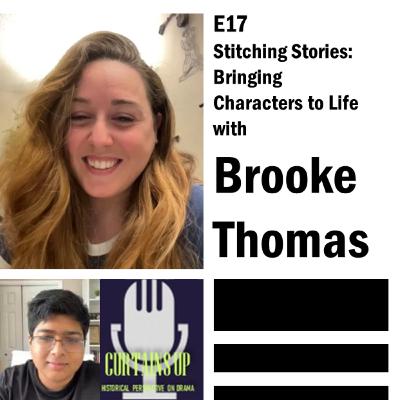
"No two theater careers are alike."In this episode of Curtains Up, host Rohan speaks with Brooke Thomas, a costume shop assistant, about the vital role of costuming in theater. Brooke shares her journey into costume design, detailing the intricate processes involved in creating costumes, the differences between her role and that of a costume designer, and the often unseen work that goes into costume preparation. She also offers valuable advice for aspiring costume designers, emphasizing the importance of sewing skills and gaining practical experience.TakeawaysThere's so much that goes into costuming and trying to get actors in a costume.I do a lot of purchasing for the actors.Learning how to construct costumes is essential for any costume designer.There's a lot of research that goes into the costume world.The costume designer is responsible for the overall look and feel of the costumes.Measurements are really important for trying to get a very precise fit on clothes.There's so much time and energy that goes into what somebody is wearing on stage.We pride ourselves in making sure that clothes actually fit really well.Sewing is a very good life skill to have.Chapters00:00 The Importance of Costuming in Theater04:20 Brooke's Journey into Costume Design09:13 Roles and Responsibilities in Costume Design12:40 Behind the Scenes: The Unseen Work of Costumers15:16 Advice for Aspiring Costume Designers17:24 educational-intro-high-short.wav

"You can't have a show with one person."SummaryIn this episode of Curtains Up, host Rohan interviews lighting designer Grace McIntyre, who shares her journey into lighting design, the importance of collaboration in theatre, and her creative process. Grace discusses how she associates colors with characters, the challenges she faces in designing lighting for different productions, and offers advice for aspiring lighting designers. The conversation highlights the significance of lighting in enhancing the audience's experience and the collaborative nature of theatre production.TakeawaysLighting design can be one of the most overlooked yet powerful parts of a production.Grace started in theatre acting before transitioning to lighting design.She associates each character with a specific color to enhance storytelling.Collaboration with directors and other designers is crucial for a successful production.Actor safety is a key consideration in lighting design.The audience's focus is influenced by what they see on stage.Grace emphasizes the importance of asking for help and collaboration in learning.Balancing school and lighting design can be challenging but rewarding.Creating a signature lighting moment involves creativity and technical skill.Grace dreams of designing lighting for musicals like Six and The Little Mermaid.

"Sound can make or break a mood."SummaryIn this episode of Curtains Up, host Rohan speaks with sound designer Riley about the integral role of sound in theatre. They discuss Riley's journey from acting to sound design, the collaborative nature of theatre production, the emotional impact of sound on audiences, and the challenges faced in sound design. Riley shares valuable advice for aspiring sound designers and emphasizes the importance of sound in storytelling, illustrating how it can enhance or detract from a performance.TakeawaysRiley transitioned from acting to sound design, finding a passion for it.Tech Week is a crucial learning experience for sound designers.Collaboration with lighting designers is essential for cohesive production.Sound can significantly influence audience emotions and character journeys.Riley emphasizes the importance of pre-recorded sound effects in productions.The software QLab is a key tool for running sound during shows.Negative feedback can be challenging but is part of the learning process.Dedication and hard work are vital for success in sound design.Sound design requires a deep understanding of the narrative and mood.Riley values the collaborative relationship with lighting designers. Chapters00:00 The Magic of Sound in Theatre03:18 Riley's Journey into Sound Design06:11 Collaboration in Theatre Production09:14 The Emotional Impact of Sound12:06 Challenges in Sound Design15:21 Advice for Aspiring Sound Designers18:17 The Importance of Sound in Storytelling
"You can't be afraid of the word no."In this enlightening conversation, Professor Kathy Perkins shares her journey from aspiring actress to a renowned lighting designer and theater historian. She discusses her commitment to amplifying the voices of Black women in theater, the collaborative nature of lighting design, and her artistic philosophy that prioritizes storytelling over ostentation. Perkins also offers valuable advice for aspiring theater artists, emphasizing the importance of mentorship and the courage to seek help in a competitive industry.takeawaysProfessor Perkins emphasizes the importance of mentorship in the theater industry.She began her journey in lighting design after a friend's suggestion.Her work focuses on amplifying the voices of Black women playwrights.Lighting design is a collaborative process involving directors and other designers.Perkins believes that subtle lighting enhances storytelling.She has designed over 300 productions, each with a unique approach.The importance of understanding the script and director's vision is crucial.Perkins advocates for a balance between technology and storytelling in lighting.She encourages young artists to explore various lighting opportunities.The theater industry requires resilience and the ability to handle rejection.
SummaryIn this episode of Curtains Up, host Rohan interviews Isabella Marziello, an assistant stage manager from Seattle. They discuss Isabella's journey from acting to stage management, the unique theater culture in Seattle, and the challenges faced in regional theaters. Isabella shares insights on the importance of communication, community, and self-care in the demanding world of theater. She also offers valuable advice for aspiring stage managers, emphasizing the significance of shadowing and gaining exposure in the field.TakeawaysIsabella started in theater through acting after an injury.She found her passion for stage management in college.Seattle's theater community is highly connected and supportive.Working with experienced professionals is invaluable for learning.Theater culture in Seattle fosters collaboration and growth.Stage management requires anticipating needs and supporting the team.Communication is key to handling stress and conflicts backstage.Taking breaks is essential for maintaining performance quality.Shadowing experienced stage managers provides practical insights.Exposure through internships is crucial for aspiring stage managers.TitlesBehind the Curtain: The Role of Stage ManagersFrom Actor to Stage Manager: A JourneySound bites"I just wanted to be a part of it.""We have a strong community.""It was so fun."Chapters00:00 The Unsung Heroes of Theater: Introduction to Stage Management03:03 From Acting to Stage Management: A Personal Journey05:55 The Unique Theater Culture of Seattle09:03 Navigating Challenges in Regional Theater11:52 Advice for Aspiring Stage Managers
SummaryIn this engaging conversation, Lou Champoux-Roberts shares his journey from acting to stage management, detailing the complexities and joys of working in high school theater. He discusses the multifaceted role of a stage manager, the challenges of balancing school and theater commitments, and the importance of time management. Lou also reflects on memorable productions, crisis management experiences, and offers valuable advice for aspiring stage managers. The conversation concludes with light-hearted fun questions, providing a well-rounded view of Lou's passion for theater.TakeawaysLou's journey into theater began in third grade.Acting experience enhances technical abilities in theater.Stage managers handle auditions, rehearsals, and show calls.The favorite part of stage management is seeing the show come together.Balancing school responsibilities with theater is challenging.Tech Week involves intense preparation and coordination.Recent production highlights include the Phantom Tollbooth.Crisis management is essential in high school theater.Time management is a crucial skill for stage managers.Aspiring stage managers should volunteer and build reliability. Sound Bites"The show has to keep going.""I write a lot of lists.""It was a pleasure."Chapters00:00 Introduction to Lou Champoux-Roberts03:01 Favorite and Most Challenging Aspects05:02 Recent Production Highlights06:02 Show Must Go On Moments07:37 Organization and Stress Management09:57 Leadership vs Problem Solving11:04 Lessons Learned from Stage Managing12:08 Changing Perspectives on Theater12:58 Advice for Aspiring Stage Managers14:03 Fun Questions and Closing Thoughts
In this episode, Rohan explores the often-overlooked aspects of theater production, highlighting the vital roles of stage managers, costume designers, lighting designers, and directors. The conversation delves into how these unsung heroes contribute to the storytelling process, ensuring that every performance runs smoothly and captivates the audience. From the intricate details of props to the coordination required behind the scenes, the episode emphasizes the collaborative effort that brings a theatrical production to life.
In this special episode of Curtains Up, Rohan and Professor Carol Symes explore the rich history of medieval theater, discussing its origins, the influence of the church, and the evolution of performance arts. They delve into how community and religious practices shaped theatrical traditions, the power dynamics surrounding theater, and the lasting impact of medieval practices on modern performance. The conversation highlights the importance of storytelling and the role of theater in society, emphasizing its ability to critique power and engage audiences.Enjoy this thought provoking episode where Prof Carol Symes explains why the real dark age of theater is the 16th century and not the middle ages and the capacity of theater in the middle ages to be the critique of power which we seem to have lost to capitalism in the enclosed and gilded proscenium arches of the modern age. TakeawaysMedieval theater emerged from community questions about identity and the divine.The absence of purpose-built theaters allowed performances to occur anywhere.Medieval performances were often improvised and not heavily scripted.The church played a complex role in both supporting and critiquing theater.Critics of medieval theater often reflected power struggles rather than genuine censorship.The 16th century marked a significant restriction on theatrical expression.Shakespeare's work is deeply rooted in medieval theatrical traditions.Theater's evolution includes a shift from community engagement to commercial enterprise.The proscenium arch represents a shift towards a more passive audience experience.Theater remains a vital form of storytelling and social critique.
In this episode, we explore the evolution of theater during the medieval period, from liturgical drama performed in churches to vernacular mystery and morality plays staged in public squares. We will discover how the church influenced dramatic structure, content, and performance spaces, and how guilds and traveling troupes contributed to a vibrant theatrical culture. Key Themes include Liturgical Drama (e.g., Quem Quaeritis trope)The Role of the Church in TheaterMystery, Miracle, and Morality PlaysPageant Wagons and Public PerformancesAllegory and Religious SymbolismDecline of Religious Drama and Rise of Secular FormsSit back and take a journey through the middle ages.
Join me in conversation with Professor Xing Fan who is a specialist in Chinese drama, theatre, and performance culture, with research interests in Asian performance aesthetics, historiography, intercultural collaborations, and gender studies. She is the author of Staging Revolution and has contributed peer-reviewed articles, translations, and essays to various academic journals and books. A practitioner as well as a scholar, she has training in multiple Asian performance arts, has won the Po‘okela Award for Best Leading Female Role, and currently serves as the President of the Association for Asian Performance while holding editorial roles in academic journals.
Step into the mesmerizing world of ancient Chinese theater! In this episode of Curtains Up!, we journey through time to explore how performance arts evolved from sacred rituals in the Zhou Dynasty to the breathtaking spectacle of Peking Opera.Discover the theatrical innovations of the Tang Dynasty’s Pear Garden, the poetic dramas of the Yuan Dynasty, and the vibrant artistry of Ming and Qing opera traditions. We’ll also spotlight legendary figures like Guan Hanqing, Tang Xianzu, and Mei Lanfang, whose work shaped the legacy of Chinese theater.Whether you're a theater enthusiast or a lover of cultural history, this episode unveils the rich traditions, dramatic styles, and artistic mastery that continue to inspire performers today.🎧 Tune in now and let the stage transport you through centuries of theatrical brilliance! #CurtainsUp #ChineseTheater #PekingOpera #TheaterHistory
In today’s special episode, we’re pulling back the curtain on one of the most intriguing—and sometimes eerie—elements of theater: Superstitions. My friends Neil and Luke joins me in a conversation explaining some of the fascinating ones. From the infamous ‘Scottish play’ to the mysterious ‘break a leg,’ we’ll explore the rituals and beliefs that have been passed down through generations of actors, crew members, and theater enthusiasts. Join us as we uncover the fascinating history, strange origins, and lingering magic of superstitions in the theater.So, sit back, relax, and let’s take a deep dive into the superstitions that keep the spotlight shining bright.

Comments

Download from Google Play

Download from App Store
 United States