


 Claim Ownership
The Parshah on Fire
Subscribed: 1Played: 19
Subscribe

© Hillel Eisenberg
Description
The Weekly Parshah, Ignited with Energy, mixed with some Passion, and dramatically served to you on Fire
138 Episodes
Reverse

When the Jews were about to enter the land of Eretz Yisrael through the Jorden River they were instructed to erect huge stones, plant them in the middle of the river, and then write the Torah on them. Whats strange is that these stones were engulfed by the mighty river mere moments after we walked through it. What was the point of them? What good are monuments that sink to the bottom of a river three minutes after we erect them? The answer might surprise you.
Thousands of years ago we stood atop a mountain and accepted the Torah. This wasn't an intellectual commitment that we could get out of with expensive lawyers. This was a metaphysical transformation that our very bodies underwent that makes us Jews not just think differently but live an entirely different existence. Hitler couldn't have been more right when he said "Judaism isnt a religoun its a race". True, we are a race. The holiest one on the face of the Earth.
The Jewish people ascended two mountains, one to receive blessings and one to receive curses. Har Gerizim and Har Eival. There is a geographical phenomenon about these two mountains. Despite being less than two hundred feet from one another and having access to the same nutrients, sunlight and rain one is lush and alive and one is desolate and dead. Why? How did that come to be? And what does that have to do with us? The answer might surprise you.

The Ben Sorer- the Wayward son, is by far one of the most dramatic and puzzling mitzvos in the Torah. We take a thirteen year old who ate a little too much food drag him to court, label him beyond repair and we stone him to death. Why? What did he do wrong? Aren't little thirteen year olds merely immature hungry kids who will one day grow out of their childhood food obsessions? Why are we stoning them to death? The answer might surprise you.
The Torah in its abundant concern for the poor in our society put in place many Mitzvos ensuring we give parts of our crop to the needy. Whats strange is one of those agricultural Mitzvos is Maaser Sheni which commands us to take our crop to the city of Yerushalayim and simply eat it there. We dont give anything to the poor. We didn't sing any song. We didn't chant any spiritual chant. We just showed up, ate and returned. What was the point of this Mitzvah? What are we accomplishing? The answer might surprise you.

There is an Amoraic Statement that seems bizzarre. It is "man doesn't sin unless a wave of stupidity overcomes him" (Sotah 3a). Whats strange is that this doesn't seem to be the case. Don't most people sin because they are tempted by it? Gossiping about a competitor isn't stupid. It might be mean and selfish but it's not stupid? So what does the Gemara mean? The answer might surprise you.
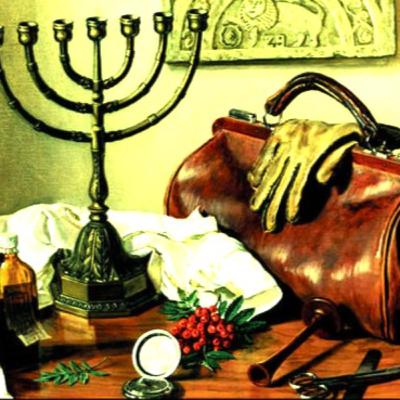
Jew's fascination with medicine has been true for thousands of years. In the year 1500 half the doctors in the entire continent of Europe were Jewish. Over Ten Popes had Jewish Doctors. Even the notorious and vicious anti-Semites Ferdinand and Isabella of Spain had a Jewish Doctor. Why is this? What led to the Jew's attachment to medicine? The answer might surprise you.

Haazinu is the song we were taught moments before our initial entrance into the Holy Land. The Torah tells us that this little song should be sung at any time that life gets difficult. It's the song that should accompany us wherever our travels take us. Why? What is it about this song that makes it so important? Isnt a song just ........ a song? The answer might surprise you.

One would think that the very first topic Moshe discusses in his historic farewell speech would be a foundational one. One that applies to the entire Jewish people. One that galvanizes every individual to remain spiritually robust while in their new land. Yet Moshe talks about Judges and Leaders being fair and patient. Why did he start with that? Why start with something that applies to less than one percent of the Jewish populace? The answer might surprise you.

There have been many sinners in the Jewish people's time in the desert. All were punished. Some were killed. But none recieved a punishment anyware close to the bizarre phenomenon that swalloed Korach whole. Why is that? What was so different about Korach that propelled God to decree that a normal punishmant would not suffice? The answer might surprise you.
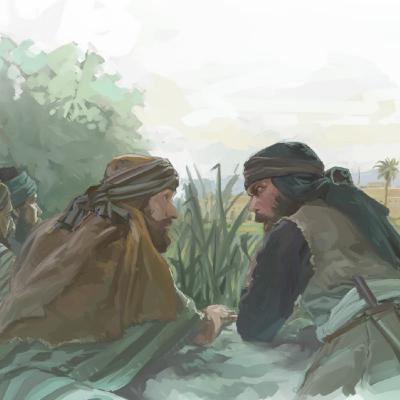
The sin of the Twelve Spies had more negative ramifications than any other sin in the entire Torah. It wiped out the entire generation. It prolonged the building of the Beis Hamikdash for hundreds of years. It gave birth to what is now called Tisha B'av; the saddest day of the Jewish year. The question is what was so bad about what the Twelve Tribes did? How do their actions explain the amount of pain and bloodshed that they brought about? The answer might surprise you.
Why is it that certain times in Judaism we go after one's mother while other times we go after one's father. One's tribe, one's name, one's inheritance goes after one's father. One's Jewishness and one's firstborn status goes after the mother. Is there a rhyme and reason or is it merely arbitrary? The answer might surpirse you.

From the Great Flood to the firey destruction of the city of Sodom to the killing of Shechem to the eradication of Amalek, Canaan and Midyan, the Torah seems to take a very militant approach to dealing with sinners. Arent we the people of the book not the people of the sword? How do we explain the Torahs surprising attachment to violence and the promotion of it? The answer might surprise you.

Pinchos stuck up for the Jewish people by killing Zimri amidst his adulteries actions. Whats strange is how he was rewarded. Pinchos became Eliyahu Hanavi, a man who has never died and is still alive today helping Jews worldwide in distress. Why did Pinchos merit this reward? Why was he chosen of all the holy people in our history to be our immortal savior? The answer might surprise you.
Balak was one of the worst men the Jews every encountered. He wanted nothing more than the deaths of every one of us, man women and child, and wouldnt rest until he succeeded. So why was he rewarded with having a grandchild named Dovid Hamelech? Why did God reward this evil man with having the greatest king in our history be his decendant? The asnwer might surprise you.
The Torah demands us to thank Hashem for the bad in our lives with the same amount of appreciation and love as we would thank Hashem for the good. How are we possibly able to pull that off? How is a man who just broke his collar bone supposed to thank God with the same degree of love as he would thank Him the night he married off his youngest daughter? This Parshah contains the answer and it might surprise you.

Unity is a tremendously foundational concept in Judaism. So isn't it odd that the Torah seems to divide us into twelve very distinct tribes each with different flags with different colors with different emblems and different logos? Doesn't that fly in the face of unity? The answer might inspire you.

All 410 years of the first Bais Hamikdash were credited to Aharon. Why? What was it about him specifically? The answer might surprise you.

No sin in the entire Torah is given as much attention as the sin of Loshon Hara/gossip. It is the Proverbial mother of all sins. The King of Iniquities. The question is why? Why is it so bad? How did it climb the mountain of sin and plant itself on the top? The answer might surprise you.
Is there something magical and mystical about those ancient Karbanos- sacrifices, or is there perhaps something about them far simpler? The answer might make you think.

Comments

Download from Google Play

Download from App Store
 United States