


 Claim Ownership
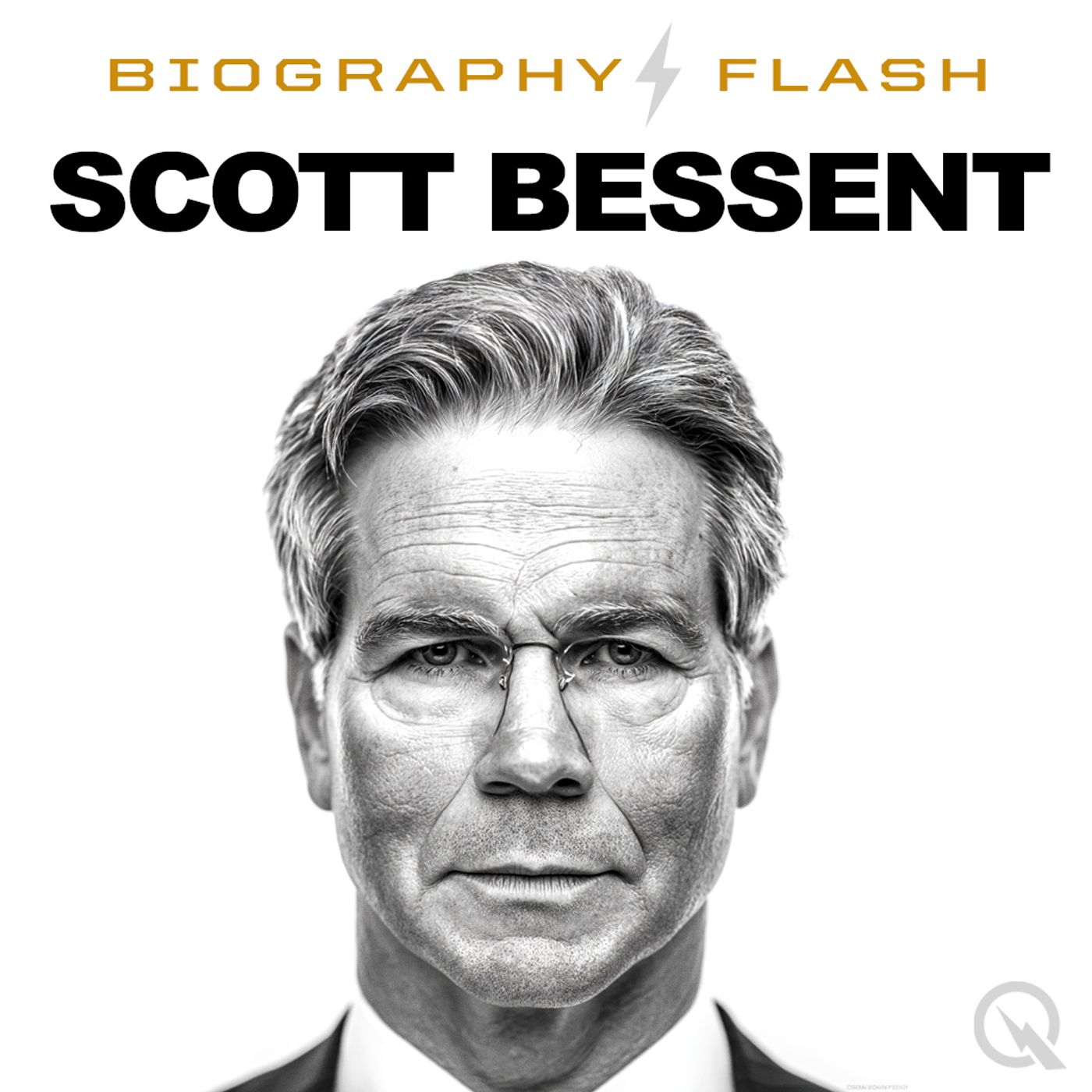
Scott Bessent - News and Info Tracker
Subscribed: 7Played: 131
Subscribe

© Copyright 2025 Inception Point Ai
Description
This is your Scott Bessent - News and Information podcast.
Discover the latest updates and insights on Scott Bessent with the "Scott Bessent News and Info Tracker" podcast. Stay informed with regular episodes that cover breaking news, in-depth analysis, and expert commentary on Scott Bessent’s ventures and influence in the financial world. Perfect for investors, industry enthusiasts, and anyone fascinated by the strategies and successes of this leading figure. Tune in to keep your knowledge current and gain a deeper understanding of the financial landscape with Scott Bessent as your focal point.
For more info go to
https://www.quietplease.ai
Check out these deals https://amzn.to/48MZPjs
Discover the latest updates and insights on Scott Bessent with the "Scott Bessent News and Info Tracker" podcast. Stay informed with regular episodes that cover breaking news, in-depth analysis, and expert commentary on Scott Bessent’s ventures and influence in the financial world. Perfect for investors, industry enthusiasts, and anyone fascinated by the strategies and successes of this leading figure. Tune in to keep your knowledge current and gain a deeper understanding of the financial landscape with Scott Bessent as your focal point.
For more info go to
https://www.quietplease.ai
Check out these deals https://amzn.to/48MZPjs
258 Episodes
Reverse
Treasury Secretary Scott Bessent is making significant moves to reshape how the United States handles digital asset regulation and financial crime prevention. On April 8th, Bessent announced a major regulatory push through the Treasury's Financial Crimes Enforcement Network and the Office of Foreign Assets Control, introducing new rules under the Guiding and Establishing National Innovation for U.S. Stablecoins Act, known as the GENIUS Act.The timing is critical. According to blockchain analytics data, crypto-linked money laundering has surged dramatically, reaching an estimated eighty-two billion dollars in 2025, up from just ten billion in 2020. Chinese-language laundering networks alone processed roughly forty million dollars in crypto transactions per day in 2025, with nearly eighteen hundred wallets collectively linked to about sixteen point one billion dollars in flows.Bessent's proposed rules target stablecoin issuers and related firms, requiring them to implement robust anti-money laundering and counter-terrorism financing programs alongside sanctions compliance systems. These requirements include risk monitoring frameworks, internal controls, regular audits, and the capability to detect, block, and report suspicious transactions. The compliance deadline is set for January 2027.Beyond digital asset oversight, Bessent has been pushing Congress to pass the Digital Asset Market Clarity Act. According to reporting from major financial outlets, he warned that Senate floor time is scarce and emphasized that companies are increasingly relocating crypto development to places with clear rules like Abu Dhabi and Singapore. He stated that the benefits of operating in the United States rarely outweighed the risks under the current regulatory uncertainty.On the tax front, Bessent highlighted the impact of new deductions enacted through the One Big Beautiful Bill Act. According to IRS filing season statistics, more than four point six million taxpayers have claimed the no tax on tips deduction, while nearly twenty million have benefited from the overtime deduction. Average tax refunds are up eleven point one percent compared to last year, with taxpayers receiving an average of thirty-five hundred twenty-one dollars back.The Treasury also released guidance on Qualified Opportunity Zones, which permanently renewed and strengthened tax incentives for investment in underserved communities. The nomination period for new zones opens July first, 2026, with designations effective January 1st, 2027.These actions reflect Bessent's broad agenda to modernize financial regulation while addressing both national security threats and economic opportunity.Thank you for tuning in and please remember to subscribe. This has been a Quiet Please production. For more, check out quietplease dot ai.For more http://www.quietplease.aiGet the best deals https://amzn.to/3ODvOtaThis content was created in partnership and with the help of Artificial Intelligence AI
U.S. Treasury Secretary Scott Bessent is pressing Congress to act swiftly on cryptocurrency legislation. In a Wall Street Journal opinion piece published today, according to Coinpedia Fintech News, Bessent warns that delays in passing the Clarity Act could push innovation to hubs like Singapore and Abu Dhabi, threatening Americas leadership in digital assets. He calls it a national priority, stating we must act now before its too late.Bessent highlights that nearly one in six Americans owns digital assets, with major banks launching crypto products and blockchain expanding into payments and tokenized assets. The Clarity Act has stalled in the Senate for over 260 days, and midterm election pressures may worsen delays. Senator Cynthia Lummis supports him, urging bipartisan action now.A key hurdle is debate over stablecoin rewards. Banking groups fear they could drain deposits from traditional banks, but White House economic analysis from the Council of Economic Advisers, as reported by Coinpedia, shows minimal impact. Banning rewards would boost bank lending by just zero point zero two percent, or about two point one billion dollars, mostly benefiting large banks.Today, the Treasury Department announced a proposed rule to implement the Guiding and Establishing National Innovation for U.S. Stablecoins Act, or GENIUS Act, per the official Treasury press release. Issued jointly by the Financial Crimes Enforcement Network and the Office of Foreign Assets Control, it sets anti-money laundering and sanctions compliance for permitted payment stablecoin issuers. Bessent says this strengthens American leadership in digital finance while protecting against illicit threats and minimizing burdens on innovators.These moves signal a push for clear rules to keep the U.S. ahead in crypto without stifling growth.Thank you for tuning in, listeners. Please subscribe for more updates. This has been a quiet please production, for more check out quiet please dot ai.For more http://www.quietplease.aiGet the best deals https://amzn.to/3ODvOtaThis content was created in partnership and with the help of Artificial Intelligence AI
Scott Bessent, the United States Secretary of the Treasury, made headlines this week with key announcements on economic programs. On April 6, the Treasury Department designated The Bank of New York Mellon Corporation, known as BNY, as its financial agent for the new Trump Accounts program, according to the official Treasury press release. BNY partnered with Robinhood, which will act as brokerage and initial trustee. This setup aims to help every eligible child access a Trump Account quickly. The program, part of the One Big Beautiful Bill Act signed last year, provides a one thousand dollar pilot contribution from Treasury for United States citizen children born between January first, two thousand twenty five, and December thirty first, two thousand twenty eight, who have a valid Social Security number. The Trump Accounts app launches on July fourth, two thousand twenty six, with BNY managing initial accounts and developing a secure platform alongside Robinhood and the National Design Studio for user friendly features.Bessent also appeared at the opening of USA House Davos two thousand twenty six, the first official American headquarters on the Davos Promenade, as captured in a YouTube video from the event. Joined by United States Ambassador to Switzerland Callista Gingrich and Swiss Ambassador to the United States Ralf Heckner, he highlighted American presence at the global forum. Gingrich announced the Freedom two hundred fifty initiative, celebrating Americas two hundred fiftieth birthday with a focus on rights from God, not government.Earlier comments from Bessent resurfaced amid reports on Trump family linked cryptocurrency ventures. The Times noted his statement during October sanctions on Southeast Asian Prince Group figures, including Chen Zhi, where he warned of transnational fraud costing Americans billions and pledged Treasury leadership against such crimes.Public interest spiked with searches for Scott Bessent very large refunds, tied to over one hundred fifty billion dollars in potential early two thousand twenty six tax refunds, per the Economic Times.Listeners, thank you for tuning in. Please subscribe for more updates. This has been a quiet please production, for more check out quiet please dot ai.For more http://www.quietplease.aiGet the best deals https://amzn.to/3ODvOtaThis content was created in partnership and with the help of Artificial Intelligence AI
U.S. Treasury Secretary Scott Bessent has been actively engaged in significant financial policy initiatives as the administration continues to reshape America's monetary strategy. According to reporting from a Davos 2026 event, Bessent opened the USA House at the World Economic Forum in Switzerland, positioning himself at the center of discussions about the nation's economic direction during what analysts are calling a pivotal moment in global finance.The Treasury Department under Bessent's leadership announced a major partnership on April 6th to implement the Trump Accounts program. The department designated The Bank of New York Mellon Corporation as the financial agent to support this initiative, with Robinhood serving as the brokerage and initial trustee. This program stems from the Working Families Tax Cuts provision signed into law last July and represents a substantial undertaking to establish savings accounts for eligible children born between January 1, 2025 and December 31, 2028. The program will provide a pilot contribution of one thousand dollars from the U.S. Treasury to participating children who are U.S. citizens with valid Social Security numbers. The Trump Accounts app, a custom white-label platform designed exclusively for Treasury, is scheduled to launch on July 4, 2026.Beyond domestic initiatives, the Treasury Department's work under Bessent's direction reflects broader strategic objectives regarding America's position in global finance. Analysts note that the administration is pursuing what some call Bretton Woods 2.0, an effort to re-anchor oil pricing in U.S. dollars and establish new digital financial rails including dollar-backed stablecoins and tokenized Treasuries. These moves are designed to maintain the U.S. dollar's central role in global commerce while integrating modern digital payment systems.Bessent's presence at international forums like Davos underscores the Treasury's commitment to engaging with global financial leaders on matters of currency stability, trade policy, and monetary innovation. The coordination between Treasury, major financial institutions like BNY Mellon, and trading platforms like Robinhood demonstrates the department's effort to modernize America's financial infrastructure while maintaining government oversight.Thank you for tuning in and please subscribe. This has been a Quiet Please production. For more, check out quiet please dot ai.For more http://www.quietplease.aiGet the best deals https://amzn.to/3ODvOtaThis content was created in partnership and with the help of Artificial Intelligence AI
Treasury Secretary Scott Bessent recently announced a bold plan to temporarily lift sanctions on 140 million barrels of Iranian crude oil already on tankers at sea. According to The Street, this move aims to flood global markets with supply and keep oil prices from surging past 100 dollars per barrel amid Operation Epic Fury, the United States and Israeli military campaign against Iran. Bessent explained on Fox Business Networks Mornings with Maria that the oil, previously sold at steep discounts to China, would now flow at market prices to allies like Japan, South Korea, Malaysia, Singapore, and India. The Treasury Department followed through on March twentieth with a strictly limited authorization, allowing only the sale of this stranded oil and barring new purchases or production, as reported by The Hill.The Hill reports that Bessent framed this as using Irans own oil against it, since Iran would struggle to access the revenue due to ongoing restrictions on its financial system. This unsanctioning forms part of a larger effort adding around 440 million barrels to markets, including 130 million barrels of previously unsanctioned Russian crude and a record 400 million barrel coordinated release from strategic petroleum reserves. Just International notes that the Strait of Hormuz closure has slashed oil flows from 20 million barrels per day to near zero, driving United States gasoline prices up over 85 cents per gallon.In other news, Eurasia Review mentions Bessent complained about not being consulted on an appointment, though details remain sparse. An Instagram post from Mimi Swaby indicates Bessent pledged to buy Argentine pesos, possibly funded by United States resources, but specifics are limited. At the World Economic Forum in Davos, LAist reports Bessent called California Governor Gavin Newsom economically illiterate after criticizing his scheduled appearance at the United States venue, amid tensions with the Trump administration.These steps highlight Bessents focus on stabilizing energy markets during geopolitical strain.Thank you for tuning in, listeners. Please subscribe for more updates. This has been a Quiet Please production, for more check out quietplease.ai.For more http://www.quietplease.aiGet the best deals https://amzn.to/3ODvOtaThis content was created in partnership and with the help of Artificial Intelligence AI
Treasury Secretary Scott Bessent has been at the center of major economic moves amid rising global tensions. According to The Street, Bessent announced a plan to temporarily lift sanctions on 140 million barrels of Iranian crude oil already on tankers at sea. This aims to flood global markets with supply and keep oil prices from surging past 100 dollars per barrel during Operation Epic Fury against Iran. He explained on Fox Business Networks Mornings with Maria that the oil, previously sold at discounts to China, would now flow to allies like Japan, South Korea, Malaysia, Singapore, and India at market prices. The Treasury followed through on March 20 with a limited authorization for only in-transit oil, not new production, as reported by The Hill. Bessent framed it as using Irans own oil against it, while maintaining maximum pressure on Tehrans access to international finance.This move pairs with a record 400 million barrel coordinated release from strategic petroleum reserves, the largest in history, to counter disruptions in the Strait of Hormuz where flows have dropped sharply. The International Energy Agency notes this as one of the biggest supply shocks ever, pushing United States gasoline prices up over 85 cents per gallon. Just International reports Bessent calling Iran a central force in global terrorism, yet the unsanctioning stabilizes energy without easing broader sanctions.On another front, NTD says the Treasury and Internal Revenue Service plan new guidance on political expression by religious organizations. This clarifies the 1954 Johnson Amendment, which bars tax-exempt groups like churches from advocating candidates. Bessent stated religious liberty is foundational to the Constitution, especially timely during Holy Week and Passover. Guidance follows a court case and aims for release later this year.Bessent also discussed fraud crackdowns in a Jesse Kelly video, announcing a Treasury website for whistleblowers on taxpayer theft, offering rewards up to 30 percent of fines levied.Listeners, thank you for tuning in and remember to subscribe. This has been a quiet please production, for more check out quiet please dot ai.For more http://www.quietplease.aiGet the best deals https://amzn.to/3ODvOtaThis content was created in partnership and with the help of Artificial Intelligence AI
Treasury Secretary Scott Bessent recently praised President Trump's leadership for building the strongest economy in history, which he says fuels military strength and progress toward core objectives in Iran. According to a Republic Media Network report, Bessent stated that economic security is national security, keeping Americans secure and prosperous.In a Fox News interview recapped by Bloomberg and Fortune, Bessent made a bold claim about the Strait of Hormuz. He said the United States will retake control of the straits to ensure freedom of navigation, using United States escorts or multinational ones. The Street reports this promise aims to stabilize oil markets amid a global deficit of ten to twelve million barrels a day, with coordinated releases from strategic reserves helping close the gap. Devdiscourse notes Bessent views the oil market as stable with increased marine traffic.Democrats pushed back on a Treasury Education Department deal. ABC News reports Senator Elizabeth Warren and others sent a letter to Bessent and Education Secretary Linda McMahon, urging them to rescind the transfer of nearly one point seven trillion dollars in student loans and programs like Free Application for Federal Student Aid and Pell Grants. They call it illegal under the Consolidated Appropriations Act of twenty twenty six.Treasury marked National Financial Literacy Month. A Treasury press release quotes Bessent saying financial literacy unlocks opportunity for every American and fuels the American Dream, especially on the eve of the nation's two hundred fiftieth anniversary. Listeners can visit My Money dot gov for tools on saving, investing, and planning.Treasury announced tax relief for Department of Homeland Security workers amid a shutdown now in its forty sixth day. A Treasury release has Bessent saying this thirty day extension with penalty relief eases burdens so officers can focus on keeping Americans safe. Fox News covered the move.On stablecoins, Treasury issued a notice of proposed rulemaking for the Guiding and Establishing National Innovation for United States Stablecoins Act. The Treasury press release says it sets principles for state regimes matching federal ones for issuers under ten billion dollars.Treasury will meet insurance regulators on private credit markets starting in April, per a Treasury announcement and Korea JoongAng Daily.Thank you listeners for tuning in. Please subscribe for more. This has been a Quiet Please production, for more check out Quiet Please dot ai.For more http://www.quietplease.aiGet the best deals https://amzn.to/3ODvOtaThis content was created in partnership and with the help of Artificial Intelligence AI
US Treasury Secretary Scott Bessent recently praised President Trumps leadership for building the strongest economy in history, which he says fuels military strength and progress toward core objectives in Iran. In a statement shared on YouTube, Bessent declared that economic security is national security, and Trumps approach keeps Americans secure and prosperous.On April 1, the Treasury Department under Bessent announced tax filing relief for Department of Homeland Security personnel affected by an ongoing shutdown. Treasury Secretary Scott Bessent said in a press release that this provides a 30-day automatic extension with penalty and interest relief, allowing DHS employees to focus on their mission without financial penalties.Bessent also marked the start of National Financial Literacy Month on April 1, emphasizing that financial literacy unlocks opportunity for every American. In a Treasury press release, he stated that understanding informed financial decisions fuels the American Dream, especially as the nation nears its 250th anniversary. The department highlighted resources on MyMoney.gov and upcoming events with federal agencies.In crypto regulation news, the Treasury on April 1 proposed rules under the GENIUS Act for stablecoin issuers. The plan allows those with under 10 billion dollars in issuance to opt for state oversight if it meets federal standards on reserves, anti-money laundering, and sanctions. Issuers hitting 10 billion must shift to federal supervision, as detailed in the Treasurys notice of proposed rulemaking.Bessent oversaw the announcement to include President Trumps signature on dollar bills for the countrys 250th anniversary. He called it a powerful way to recognize historic achievements and economic growth. However, a YouGov poll reported by Fox 11 Online shows six in 10 Americans oppose this, with 48 percent strongly against it.Additionally, the Treasury plans meetings starting in April with domestic and international insurance regulators to discuss private credit markets, risks, and management practices, according to a Treasury press release.Thank you listeners for tuning in, and please subscribe for more updates. This has been a quiet please production, for more check out quiet please dot ai.For more http://www.quietplease.aiGet the best deals https://amzn.to/3ODvOtaThis content was created in partnership and with the help of Artificial Intelligence AI
Treasury Secretary Scott Bessent is launching an aggressive nationwide campaign to recover potentially hundreds of billions of dollars lost to fraud, with a major focus on whistleblower incentives. According to Treasury announcements, Bessent is offering whistleblowers between 10 and 30 percent of recovered funds to expose schemes across healthcare, Medicaid, and COVID-19 relief programs. The Treasury Department has already received more than 700 leads since the program began.Bessent attributes much of the fraud problem to the previous administration's decision to reduce fraud detection controls in order to expedite pandemic relief payments. He stated that many agencies under the Biden administration gutted their fraud departments and never restored them once the emergency passed. Financial institutions have reported a 20 percent increase in suspicious activity reports, particularly in healthcare and pandemic relief fraud. Bessent is calling for greater transparency from states like New York and California, arguing that stronger oversight is needed to restore integrity to government programs.On a separate front, Bessent recently highlighted positive developments in the 2026 tax filing season. According to remarks at a Long Island Business Roundtable, refunds are up more than 10 percent compared to the previous year. He credited the President's Working Families Tax Cuts for putting money back into Americans' pockets. More than 4.6 million taxpayers have claimed the No Tax on Tips deduction, while nearly 20 million have benefited from No Tax on Overtime provisions. On average, the law is reducing taxes for roughly 12 million small business owners by nearly seven thousand dollars.Bessent also announced that children born during the current presidential term will receive a one thousand dollar contribution from the Treasury Department that will be immediately invested in an index fund. All children under 18 are eligible for Trump Accounts if their parents fill out the required tax form.Additionally, Bessent has been discussing efforts to reopen the Strait of Hormuz, signaling ongoing work on international economic and trade matters.Thank you for tuning in. Remember to subscribe for the latest updates on Treasury Department initiatives and economic policy. This has been a quiet please production. For more, check out quiet please dot ai.For more http://www.quietplease.aiGet the best deals https://amzn.to/3ODvOtaThis content was created in partnership and with the help of Artificial Intelligence AI
Scott Bessent, the United States Secretary of the Treasury, highlighted strong results from the 2026 tax filing season in recent remarks at the Long Island Business Roundtable, according to the Treasury Department press release. He noted refunds are up more than 10 percent nationwide compared to last year, with nearly half of filers benefiting from President tax provisions in the Working Families Tax Cuts. More than 4.6 million taxpayers claimed the No Tax on Tips deduction, and nearly 20 million gained from No Tax on Overtime, with over 25 percent of returns including that benefit. The law cuts taxes for about 12 million small business owners by an average of nearly 7 thousand dollars, including a permanent 20 percent Small Business Deduction delivering around 4 thousand 600 dollars in relief to 8 million entrepreneurs. Bessent also announced Treasury contributions of 1 thousand dollars to Trump Accounts for children born during the Presidents term, invested in an index fund, with all under 18 eligible via Form 4547 on tax returns.On Fox and Friends, as reported by Fox Business, Bessent unveiled a new whistleblower program offering up to 30 percent of recovered funds to tipsters exposing fraud, targeting hundreds of billions stolen during COVID relief under the prior administration. The Treasury Departments Financial Crimes Enforcement Network manages it, covering Medicaid, Medicare, government aid, money laundering, and sanctions violations. Over 700 leads have come in already, directed to Treasury dot gov, alongside Vice President JD Vances Task Force to Eliminate Fraud, per Komo News.Bessent told Inside Trade the United States will retake control of the Strait of Hormuz with escorts if needed to restore trade.These moves aim to boost worker pay, curb waste, and secure global routes.Thank you for tuning in, listeners. Please subscribe for more updates. This has been a Quiet Please production, for more check out Quiet Please dot ai.For more http://www.quietplease.aiGet the best deals https://amzn.to/3ODvOtaThis content was created in partnership and with the help of Artificial Intelligence AI
Scott Bessent, the United States Secretary of the Treasury, made headlines this week with a bold decision on currency design. The Treasury Department, under his leadership, announced on Thursday that it will place President Donald Trumps signature on all new United States paper currency. This marks the first time a presidents signature will appear on bills during their sitting term, according to the Jamaica Gleaner.Bessent, a former hedge fund manager known for his expertise in global markets, confirmed the move as part of modernizing the nations money supply. He stated that the change honors the presidents economic vision while ensuring secure, high quality printing. The initiative targets upcoming series of dollar bills, starting with one hundred dollar notes, with rollout expected later this year.Treasury officials explained that Trumps signature, in a crisp engraved style, will appear alongside the usual portraits like Benjamin Franklin. This decision follows Bessents recent push to streamline currency production amid rising demand from digital economy shifts. Bloomberg reports Bessent emphasized during a briefing that the update boosts national pride without added costs to taxpayers.Wall Street Journal coverage highlights how Bessents choice aligns with his pro growth agenda, including tariff policies and tax cut extensions. Critics, per CNN, question the timing, but Bessent defended it as a simple tradition update long overdue.Listeners, stay tuned for more on Bessents role in shaping United States fiscal policy amid trade talks and debt ceiling debates. Thank you for tuning in, and please subscribe for daily updates. This has been a quiet please production, for more check out quiet please dot ai.For more http://www.quietplease.aiGet the best deals https://amzn.to/3ODvOtaThis content was created in partnership and with the help of Artificial Intelligence AI
Scott Bessent, the United States Secretary of the Treasury, made headlines this week with a bold decision on new paper currency. According to the Jamaica Gleaner, the Treasury Department announced on Thursday that it plans to include President Donald Trumps signature on all new United States paper currency. This marks the first time a sitting presidents signature will appear on bills, breaking from tradition where only the Treasury Secretary and the Treasurer sign them.The Jamaica Gleaner reports that Bessents signature will also feature on the currency. The move honors the nations 250th birthday. Bessent stated, There is no more powerful way to recognize the historic achievements of our great country than with United States dollar bills bearing Trumps name.This announcement has sparked discussion among listeners about presidential influence on currency design. Traditionally, bills like the 100 dollar note carry the signatures of Treasury officials alone, symbolizing fiscal independence. Now, Trumps name alongside Bessents adds a historic layer to everyday money.No other major decisions from Bessent surfaced in the last few days, but this currency plan highlights his role in celebrating national milestones through Treasury actions. Listeners interested in economic policy should watch for printing timelines and public reaction.Thank you for tuning in, and please subscribe for more updates. This has been a Quiet Please production, for more check out Quiet Please dot ai.For more http://www.quietplease.aiGet the best deals https://amzn.to/3ODvOtaThis content was created in partnership and with the help of Artificial Intelligence AI
U.S. Treasury Secretary Scott K. H. Bessent chaired a key meeting of the Financial Stability Oversight Council on March 25, 2026, at the Treasury Department in Washington. The U.S. Department of the Treasury press release details how the council held executive and open sessions to review financial stability issues. In the executive session, members received briefings on the councils quarterly financial stability monitor, covering banking sector developments, financial markets, household finances, and financial innovation. Topics included geopolitical risks, artificial intelligence investments, and private credit sector growth. Council members highlighted the financial systems resilience and their monitoring efforts. They also discussed tools to track household financial resilience, consumer credit, and fraud impacts on economic security.In the open session, the council voted unanimously to publish proposed interpretive guidance on nonbank financial company designations in the Federal Register for 45 days of public comment. This guidance revives elements from the councils 2019 approach, emphasizing an activities-based focus on risks rather than individual firms, while incorporating economic growth and security into risk analysis. It adds a pre-designation off-ramp for companies or regulators to address threats transparently. The council approved minutes from its December 11, 2025, meeting and heard updates from the Federal Reserve, Office of the Comptroller of the Currency, and Federal Deposit Insurance Corporation on banking supervision reforms and simplified regulatory capital standards.Ahead of the meeting, Senator Jack Reed pressed Bessent in a letter to review emerging cracks in credit markets, particularly private credit from nonbank lenders like private equity firms. Reed warned of hidden leverage and systemic risks that regulators might overlook, urging forward-looking assessments.Separately, on March 25, biofuel and agriculture groups wrote to Bessent, Agriculture Secretary Brooke Rollins, and Energy Secretary Chris Wright, calling for 45Z clean fuel production tax credit regulations that support farmers.Treasury also announced conferences on optimizing artificial intelligence regulations for banks and financial institutions. Bessent stated that AI leadership bolsters economic security and that regulation should shift from constraint to supporting productivity growth.Thank you for tuning in, listeners. Please subscribe for more updates. This has been a quiet please production, for more check out quiet please dot ai.For more http://www.quietplease.aiGet the best deals https://amzn.to/3ODvOtaThis content was created in partnership and with the help of Artificial Intelligence AI
U.S. Treasury Secretary Scott K. H. Bessent convened a meeting of the Financial Stability Oversight Council on March 25, 2026, in Washington. The U.S. Department of the Treasury press release details how the council held executive and open sessions to review key financial developments. In the executive session, members received briefings on the quarterly financial stability monitor, covering banking sector updates, financial markets, household finances, and financial innovation. Discussions highlighted geopolitical risks, artificial intelligence investments, and private credit sector growth. Council members emphasized the financial systems resilience and their monitoring efforts. Treasury staff also presented tools to track household financial resilience, including consumer credit conditions and fraud impacts on economic security.In the open session, the council unanimously voted to publish proposed interpretive guidance on nonbank financial company designations in the Federal Register for 45 days of public comment. This guidance revives elements from the 2019 version with enhancements focused on economic growth and security, prioritizing activities-based risk assessments over targeting individual firms. Secretary Bessent stated in the Treasury readout that this approach identifies threats before they harm the economy. Updates from the Federal Reserve, Office of the Comptroller of the Currency, and Federal Deposit Insurance Corporation covered banking supervision reforms and simplified regulatory capital standards.Ahead of the meeting, Senator Jack Reed pressed Secretary Bessent in a letter to review emerging cracks in credit markets, particularly private credit risks from nonbank lenders like private equity firms. Reed urged assessing hidden leverage and interconnections for systemic threats, noting gaps in forward-looking oversight by the council and Office of Financial Research.Separately, Treasury plans conferences on optimizing artificial intelligence regulations for banks and financial institutions. Secretary Bessent acknowledged AI risks to consumers and markets but stressed its role in economic security and productivity, shifting from constraints to growth support.Biofuel and agriculture groups wrote to Secretary Bessent on March 25, urging 45Z clean fuel production tax credit regulations to benefit farmers.Thank you for tuning in, listeners. Please subscribe for more updates. This has been a Quiet Please production, for more check out quietplease.ai.For more http://www.quietplease.aiGet the best deals https://amzn.to/3ODvOtaThis content was created in partnership and with the help of Artificial Intelligence AI
Treasury Secretary Scott Bessent faced tough questions on NBC from Kristen Welker about the administrations Iran policy. The David Pakman Show reported on March twenty fourth twenty twenty six that Bessent struggled to clarify if President Trump is ending or escalating the conflict over the Strait of Hormuz. Bessent said the approach involves both taking out Iranian missile systems and factories while destroying fortifications along the strait led by General Kaine and Secretary Hegsith. He argued sometimes you escalate to deescalate but avoided a direct answer on whether the war is winding down.Welker pressed on sanctions noting they aim to block Iran from getting money yet Bessent suggested redirecting their oil sales from China to buyers like Japan Korea Indonesia Malaysia or even Iran itself. He insisted Iran was getting funds from China anyway so the policy shifts the flow without fully denying revenue. The David Pakman Show highlighted this as incoherent since sanctions lose impact if Iran still profits.On funding the war Welker asked if taxes would rise given past claims of budget shortages. Bessent called it a ridiculous question saying the budget already has a trillion dollars for the military and Trump planned to expand it before the conflict. He rejected tax hikes outright contrasting with prior messaging on national debt and cuts to social programs.This interview aired March twenty third twenty twenty six amid reports of erratic Trump statements like threats to bomb Iranian nuclear sites followed by claims of productive talks that Iran denied. Bessent appeared defensive on framing and follow ups dodging clear policy objectives.Listeners thank you for tuning in and please subscribe for more updates. This has been a quiet please production for more check out quiet please dot ai.For more http://www.quietplease.aiGet the best deals https://amzn.to/3ODvOtaThis content was created in partnership and with the help of Artificial Intelligence AI
Treasury Secretary Scott Bessent faced tough questions on NBC from Kristen Welker about the Iran conflict. The David Pakman Show reported on March twenty-three, two thousand twenty-six, that Bessent struggled to clarify if President Trump is ending or escalating the war. Bessent said the administration is destroying Iranian missile systems and factories while targeting fortifications along the Strait of Hormuz. He claimed escalation and deescalation can happen together, sometimes you escalate to deescalate.Welker pressed on whether Trump is winding down the war or expanding it. Bessent called the options not mutually exclusive. The interview highlighted erratic signals from Trump, who threatened to bomb Iranian nuclear sites on Saturday if the strait stays closed, then claimed productive talks the next day. Iran denied any discussions.On sanctions, Bessent explained that easing them could redirect Iranian oil from China to buyers like Japan, Korea, Indonesia, Malaysia, or even Iran itself. Welker asked if sanctions aim to block Iran from getting money at all. Bessent said Iran was getting funds from China anyway, so the point is to change the flow.Welker also questioned funding the war. Bessent rejected raising taxes, noting the budget already has a trillion dollars for the military. Trump planned to build it up even before the conflict. Bessent called the tax question ridiculous.These exchanges show policy tensions amid ongoing Strait of Hormuz issues and military actions.Thank you for tuning in, listeners. Please subscribe for more updates.This has been a Quiet Please production, for more check out quietplease.ai.For more http://www.quietplease.aiGet the best deals https://amzn.to/3ODvOtaThis content was created in partnership and with the help of Artificial Intelligence AI
Treasury Secretary Scott Bessent made significant moves this week as the Trump administration grapples with the escalating Iran conflict and its severe impact on global energy markets. Facing skyrocketing oil prices that have rattled financial markets, Bessent announced a historic policy shift that marks a dramatic departure from decades of American economic strategy.In response to crude oil prices remaining elevated at 112 dollars per barrel, Bessent revealed that the administration would temporarily lift sanctions on Iranian oil sales for the first time in decades. This unprecedented move allows oil already at sea as of Friday to be purchased by the United States and its allies, a stark reversal of the traditional leverage Washington has wielded against Tehran.Bessent justified the decision by pointing out that approximately 140 million barrels of sanctioned Iranian oil were being hoarded by China at reduced prices. By unlocking this existing supply for global markets, Bessent contended that the United States could quickly bring relief to worldwide energy pressures caused by the conflict. He explained that expanding the amount of available worldwide energy would help stabilize prices that have been destabilized by the strait closure.However, Bessent's position revealed deep contradictions within the administration's Iran strategy. In the same announcement labeling Iran as the head of the snake for global terrorism, he acknowledged that steps would be taken to prevent Tehran from directly benefiting from the oil sales, though he did not clarify how this prevention would occur. The announcement immediately drew criticism even from within Republican ranks, with Representative Nancy Mace of South Carolina posting on social media that the administration was bombing Iran with one hand while buying Iranian oil with the other.Despite Bessent's optimism about the temporary sanctions lift, analysts remain skeptical about its actual impact. Patrick De Haan, head of petroleum analysis at GasBuddy, stated that he does not expect the temporary suspension to have a major impact on gas prices, noting instead that the de facto closure of the Strait of Hormuz presents the greater obstacle to price relief.The Treasury Secretary's actions underscore the severe economic pressure the Iran war is placing on the global economy, forcing the administration to pursue contradictory measures in an attempt to stabilize energy markets.Thank you for tuning in and please remember to subscribe. This has been a quiet please production, for more check out quiet please dot ai.For more http://www.quietplease.aiGet the best deals https://amzn.to/3ODvOtaThis content was created in partnership and with the help of Artificial Intelligence AI
Treasury Secretary Scott Bessent played a key role in the Trump administrations recent move to lift sanctions on Iranian oil sales. This decision, announced Friday, allows oil already at sea to be sold freely for the first time in decades. According to One News, the step aims to ease skyrocketing global energy prices amid the ongoing war with Iran.Bessent explained the rationale in a post on X. He noted that sanctioned Iranian oil has been hoarded cheaply by China. By temporarily unlocking this supply, the United States will add about 140 million barrels to world markets. This helps relieve short-term pressures from the conflict, he wrote. One News reports that Bessent called Iran the head of the snake for global terrorism but stressed the move prevents Tehran from profiting directly.The action comes as President Trump talks of winding down the war, now in its fourth week. Trump posted on social media that the United States is close to meeting objectives, including degrading Irans naval and missile capabilities. Yet the administration also sent three more warships and 2500 Marines to the Middle East, per One News. This surge, plus a Pentagon request for 200 billion dollars in extra funding, suggests no quick end.Oil markets reacted sharply. Brent crude hit 112 dollars per barrel Friday, driving up United States fuel prices and contributing to a 1.5 percent drop in the S and P index. Analysts like Patrick De Haan of GasBuddy say the sanction lift offers limited relief. The Strait of Hormuz closure has a bigger impact on supply, he told One News.Critics highlighted contradictions. South Carolina Representative Nancy Mace posted on X that the United States is bombing Iran with one hand and buying its oil with the other.Bessents involvement underscores his focus on stabilizing energy markets during the unpredictable conflict.Thank you for tuning in, listeners. Please subscribe for more updates. This has been a quiet please production, for more check out quiet please dot ai.For more http://www.quietplease.aiGet the best deals https://amzn.to/3ODvOtaThis content was created in partnership and with the help of Artificial Intelligence AI
US Treasury Secretary Scott Bessent has been actively managing multiple economic crises this week as the conflict with Iran continues to reshape global energy markets.In an interview with Fox Business Network on Thursday, Bessent announced that the US may unsanction Iranian oil on water in the coming days as part of broader efforts to stabilize energy prices. He emphasized that the US is not attacking Iran's energy infrastructure and has allowed Iranian oil to continue flowing out of the Gulf. Bessent indicated there are additional tools available, including the possibility of another Strategic Petroleum Reserve release to keep prices down. He also stated that the US Treasury is intervening in markets by creating excess supply with oil already on the water, though the department will not engage in direct financial market intervention.The Treasury Department has taken several major actions to address energy supply disruptions caused by the Iran war. According to Treasury data, the US has already spent 11 billion dollars on strikes against Iran in less than two weeks, with the war costing approximately 891 million dollars per day based on Pentagon operational data.To boost oil supplies, Bessent's department eased sanctions on Venezuela this week, authorizing US companies to conduct business with Venezuela's state-owned oil company. The Treasury also issued a temporary 30-day waiver on Russian energy sanctions, allowing Russia to sell oil already loaded onto tankers. Treasury officials have described these measures as narrowly tailored, short-term steps to promote stability in global energy markets.The Russian oil waiver has proven financially beneficial to Moscow, with crude prices no longer trading at a discount. According to energy analysts, Russia's average crude oil export earnings during the first two weeks of the Iran war reached an estimated 230 million dollars per day, representing 26 percent more than February's daily average. Additionally, Bessent authorized a separate 30-day waiver allowing Indian refiners to purchase Russian oil.Regarding broader economic outlook, Bessent expressed optimism about US growth, stating he expects it to exceed three percent for 2026. He also noted that tariff investigation results will arrive in July, with expectations that the new tariff regime will remain unchanged under the current administration.Bessent indicated that Japan may play a role in supplying the market with oil reserves, noting that President Trump has an excellent relationship with Japanese leadership.Thank you for tuning in. Please remember to subscribe. This has been a Quiet Please production. For more, check out quiet please dot ai.For more http://www.quietplease.aiGet the best deals https://amzn.to/3ODvOtaThis content was created in partnership and with the help of Artificial Intelligence AI
Scott Bessent, the United States Secretary of the Treasury, recently discussed key economic and geopolitical issues in interviews and announcements. In a podcast with The Master Investor hosted by Wilfred Frost, as reported by MEXC, Bessent addressed the ongoing conflict with Iran, stating the presidents top priority is weakening Irans military capabilities, including missiles and navy, while eliminating its role in global terrorism. He noted cumulative war costs at about eleven billion dollars based on recent data, with sufficient fiscal buffers in place and strong demand for United States Treasury bonds.Bessent emphasized the Treasury markets role as the worlds deepest and most stable, committing to its transparency and resilience amid tensions like the conflict with Iran. On oil prices surging toward one hundred dollars per barrel, he dismissed rumors of government intervention, according to AInvest on March eighteen, saying such actions are neither underway nor straightforward, which eased some market pressures.Regarding shadow banking, Bessent clarified his role focuses on preventing systemic risks to regulated banks, with no current indications of broader problems despite volatility. He also covered recent G7 meetings on energy, including releasing four hundred million barrels from strategic reserves, and potential navy escorts for oil tankers through the Strait of Hormuz if needed.On March nineteen, Peoples Daily Online reported Bessent telling Sky News the United States spent eleven billion dollars on strikes against Iran in less than two weeks, with daily costs around eight hundred ninety one million dollars per a think tank analysis, as the campaign enters its third week.Upcoming, Bessent will preside over the Financial Stability Oversight Council meeting on March twenty five at the Treasury Department, per Mondo Visione, discussing financial stability updates, nonbank designations, and banking reforms in open and executive sessions.These developments highlight Bessents focus on market stability, war financing, and international coordination amid rising tensions.Thank you for tuning in, listeners. Please subscribe for more updates. This has been a Quiet Please production, for more check out quiet please dot ai.For more http://www.quietplease.aiGet the best deals https://amzn.to/3ODvOtaThis content was created in partnership and with the help of Artificial Intelligence AI

Comments

Download from Google Play

Download from App Store
 United States