


 Claim Ownership
Kollectively Vigilant: Law and Crime
Subscribed: 8Played: 3
Subscribe

© Kollectively Vigilant | Law and Crime
Description
Kollectively Vigilant: Law & Crime is a true crime analysis podcast examining how justice systems function — and how they fail.
Hosted by Dr. D, a professor and lawyer, alongside Sam, an educator and counselor, the show analyzes real criminal cases through legal frameworks, criminology, and psychology.
Each episode moves beyond narrative into structure: court procedure, institutional design, prosecutorial decisions, evidentiary standards, and systemic breakdowns across jurisdictions.
This is not banter-driven storytelling. It is structured analysis of crime, law, and power.
Hosted by Dr. D, a professor and lawyer, alongside Sam, an educator and counselor, the show analyzes real criminal cases through legal frameworks, criminology, and psychology.
Each episode moves beyond narrative into structure: court procedure, institutional design, prosecutorial decisions, evidentiary standards, and systemic breakdowns across jurisdictions.
This is not banter-driven storytelling. It is structured analysis of crime, law, and power.
47 Episodes
Reverse

Cult Leader Gurmeet Ram Rahim: The Dera Sacha Sauda CaseIn this episode of Kollectively Vigilant, we examine Gurmeet Ram Rahim Singh, the controversial leader of the religious movement Dera Sacha Sauda, which attracted millions of followers across northern India.Behind the spectacle of massive gatherings, political influence, and self-produced films portraying him as a heroic figure, disturbing allegations began to surface. In 2017, Ram Rahim was convicted of S.A.-ing and R-wording two women who had come to the Dera seeking spiritual guidance, a verdict that triggered deadly riots across parts of Haryana and Punjab.We trace the rise of the movement, the whistleblower letter that exposed the allegations, the murders linked to the case, and the legal battles that followed. Later, Dr. D and Sam explore the psychology of devotion, power, and loyalty inside high-pressure groups.Hi, we are Sam, the psychologist, and Dr. D, the lawyer and professor. Here at Kollectively Vigilant, we learn the law through true crime. We have 40+ episodes in English and a Hindi podcast for listeners who want to explore more.
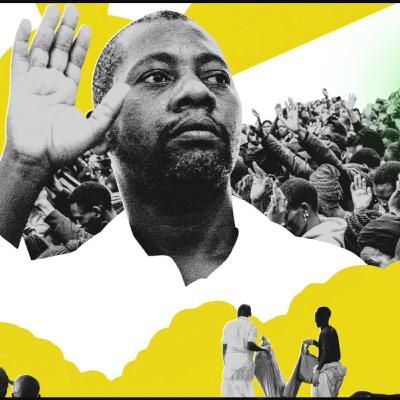
In 2023, authorities in Kenya uncovered mass graves in the Shakahola Forest, exposing one of the deadliest cult cases in modern African history.Paul Mackenzie, leader of the Good News International Church, is accused of instructing followers to starve themselves and their children in order to “meet Jesus.” Hundreds of bodies were recovered from shallow graves in a forest compound.Mackenzie and several associates now face multiple criminal charges in connection with the deaths.In this episode, we examine:• The structure of the cult• The legal charges filed against its leader• Criminal liability in coercive religious movements• State oversight failures• The tension between religious freedom and criminal accountabilityThis is a case study in mass manipulation, institutional breakdown, and preventable tragedy.Kollectively Vigilant: Law and Crime.

In October 2022, 12-year-old Lola Daviet disappeared inside her Paris apartment building. Hours later, her body was discovered in a suitcase.This episode examines what happened — and what the French courts ultimately established.We break down:• The timeline of events on October 14, 2022• The CCTV footage and movements inside the building• What was proven in court versus what was speculation• How the Cour d’assises functions• The role of judges and jurors in French criminal trials• How verdicts are reached in serious felony casesThis is not just a story of a child’s murder. It is a deep dive into how France prosecutes its most serious crimes — and whether the system worked as designed.

In this episode of Kollectively Vigilant, Dr. D analyzes the Mazan mass rape case involving Gisèle Pelicot — the French trial that exposed drug-facilitated sexual assault, digital complicity, and the normalization of violence within “ordinary” domestic life.Dozens of men were charged after it was revealed that Pelicot had been chemically sedated and assaulted over an extended period.We break down:• The structure of the French criminal process (inquisitorial procedure)• The role of the investigating magistrate• Charging decisions in mass sexual assault cases• The legal framework of French rape law (violence, constraint, threat, surprise)• Why “consent vs intent” becomes a battlefield in courtWe then zoom out to examine the criminology: coercive control, power hierarchies, moral disengagement, and collective participation in abuse.This is not only a trial — it is a case study in how modern legal systems confront systemic sexual violence.Welcome to Kollectively Vigilant, where we learn the law through true crime.and how group participation turns atrocity into routine. With Gisèle Pelicot’s memoir A Hymn to Life: Shame Has to Change Sides releasing on February 17, 2026, this episode is your legal + criminological explainer of the case the world is already searching for.
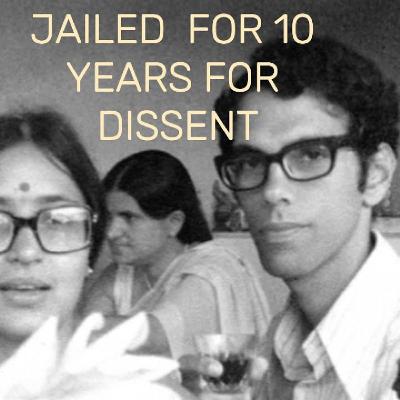
What happens when an activist is arrested under India’s anti-terror law, the UAPA?This episode examines the case of Kobad Ghandy — civil liberties advocate, tribal rights activist, and author of Fractured Freedom: A Prison Memoir — who spent years in prison following his 2009 arrest.Through his experience, we explore:• The Unlawful Activities (Prevention) Act (UAPA)• Undertrial detention in India• High-Risk Ward incarceration• Bail restrictions under anti-terror statutes• The distinction between dissent and unlawful activityFrom prolonged pre-conviction detention to restrictions on lawyers, reading material, and medical care, this episode analyzes how India’s anti-terror framework operates in practice.Where is the line between national security and civil liberty?Welcome to Kollectively Vigilant, where we learn the law through true crime.https://rolibooks.com/product/fractured-freedom/

In 1960s Italy, rape was legally considered a crime against family honor — not against the woman herself. Under the so-called “marry-your-rapist” provision, a man could avoid prosecution by marrying his victim.Franca Viola refused.Kidnapped and sexually assaulted in Sicily, she rejected the expectation that she would enter a forced marriage to restore “honor.” Her decision triggered national debate and helped dismantle the legal doctrine that allowed marriage to erase sexual violence.In this episode, we examine:• The history of Italy’s “marry-your-rapist” law• Honor-based legal systems• The marital rape exemption• How similar provisions existed — and in some places still exist — worldwide• The legal reforms that followed Viola’s defianceThis is a case that transformed Italian criminal law and reshaped how sexual violence was defined in Europe..
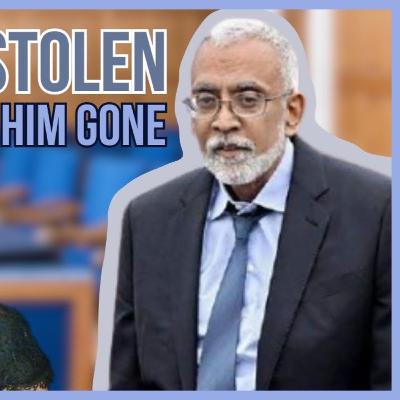
He spent 43 years in a Pennsylvania prison for a murder he always maintained he did not commit.His conviction collapsed after newly uncovered files revealed suppressed evidence, flawed forensic testimony, and serious Brady violations involving FBI ballistics analysis. After more than four decades behind bars, he was finally exonerated.But freedom was short-lived.Within moments of his release, ICE agents detained him — seeking to deport him to India, a country he left as an infant.In this episode, we examine:• The anatomy of a 43-year wrongful conviction• Brady violations and prosecutorial misconduct• FBI forensic failures• Exoneration after decades• The intersection of criminal justice and immigration lawHow does a justice system imprison an innocent man for 43 years — and then attempt to remove him from the country he has called home his entire life?Welcome to Kollectively Vigilant, where we learn the law through true crime.
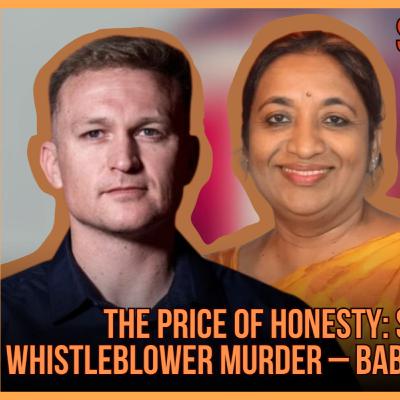
Corruption in South Africa is not an abstract policy issue — it has a body count.In August 2021, a senior health department official was assassinated after flagging over R850 million in suspicious tenders linked to Tembisa Hospital. Her attempts to freeze payments and demand a forensic audit placed her directly in conflict with powerful procurement networks.This episode examines how public tender systems are manipulated, why whistleblower protections fail, and how accountability often stops with hired gunmen rather than political architects.
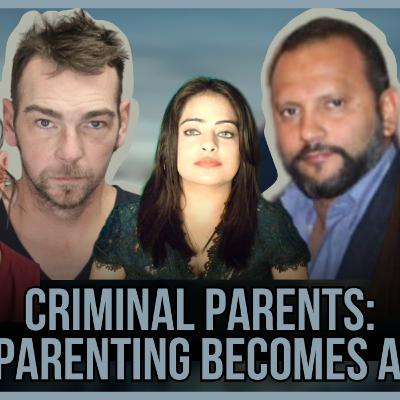
What happens when a child commits a crime — and the parents go to prison?In this episode of Kollectively Vigilant, we examine three landmark cases where parents faced criminal charges for their children’s actions:• James and Jennifer Crumbley in Michigan — the first parents in U.S. history convicted in connection with their son’s school shooting in Oxford.• A single mother in upstate New York accused of criminal responsibility for her 11-year-old child’s actions.• The Pune Porsche case in India, where questions of wealth, privilege, and parental negligence collided with tragedy.We explore:• Criminal negligence and parental liability• Duty of care in U.S. and Indian law• The expanding legal boundaries of responsibility• When parenting becomes prosecutableAt what point does failure to act become a crime?Welcome to Kollectively Vigilant, where we learn the law through true crime.
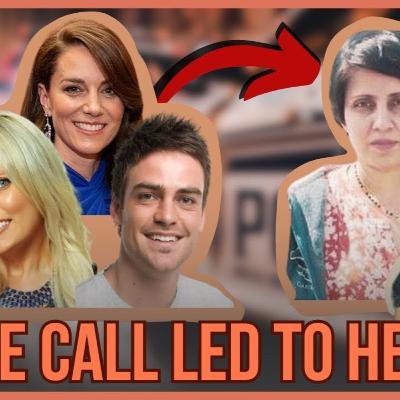
In December 2012, nurse Jacintha Saldanha at London’s King Edward VII Hospital answered a prank call from Australian radio hosts posing as Queen Elizabeth II and Prince Charles. Believing the call was genuine, she transferred it to a colleague caring for Kate Middleton, who was then hospitalized during her pregnancy.The prank was broadcast worldwide. Three days later, Jacintha Saldanha was found dead in an apparent suicide.This episode examines:• The Royal prank call scandal• Media ethics and broadcaster accountability• Workplace pressure and public shaming• Criminal liability in prank-related tragedies• The legal fallout for the radio hosts and the hospitalWas this a harmless joke — or a preventable tragedy shaped by media culture and institutional pressure?Welcome to Kollectively Vigilant, where we learn the law through true crime.

From Europe to Southeast Asia, so-called “nuisance vloggers” are being arrested, deported, and jailed for disruptive and dangerous online stunts.Ramsey Khalid Ismael has faced arrests in multiple countries. Vitali is currently imprisoned in the Philippines. Indian vlogger SD Khan was detained and deported after threatening sexual violence in Turkey.At what point does viral content become criminal conduct?In this episode, we examine:• Public nuisance laws• Threats of sexual violence and criminal liability• Arrests and deportation powers• Cross-border enforcement• What Indian law can do about nuisance influencersThis is the intersection of free speech, internet fame, and criminal law.Welcome to Kollectively Vigilant, where we learn the law through true crime.

This stalker and her tale of destruction is like no other.

A female teacher at Mumbai’s elite Bombay Scottish School was arrested for alleged misconduct involving a male student — and then granted bail despite being charged with violating court-ordered restrictions.The case triggered a national debate: Are female offenders treated more leniently than men in similar cases? Do gender perceptions influence bail decisions and sentencing outcomes?In this episode, we examine:• The Bombay Scottish School controversy• Allegations of prohibited contact with a minor• Bail and pre-trial release in Indian criminal law• Gender disparities in sentencing• Whether similar patterns appear globallyThis is not just a scandal. It is a legal question about equality before the law.Welcome to Kollectively Vigilant, where we learn the law through true crime.

A young self-made millionaire in the UK was lured into a house and set on fire while still alive.Behind the killing was a teenage girl at the centre of a love triangle — a girl who would later leave prison, rebuild her life, and eventually marry a man who became a London borough mayor.In this episode, we examine the burning murder, the manipulation that led two young men to carry out the attack, the earlier violent death of the victim’s father, and the unsettling reinvention that followed.This is a story about obsession, image, ambition — and how a brutal past can disappear behind public respectability.
hree members of one family walked into a Costco store in Riverside County, California. All three were shot.Kenneth French, who was mentally disabled, was killed. His mother and father were also struck by gunfire and seriously injured.The shooter was off-duty police officer Salvador Sanchez. He was not criminally convicted and was later cleared in court, though the case resulted in a civil settlement.In this episode, we examine the facts of the shooting, the legal proceedings, the use-of-force debate, and the unresolved questions that continue to surround this case.This is not just a store shooting. It is a case about policing, mental health, and accountability.

Shivani Kumar was an investigative journalist — and a new mother.When she was murdered, speculation initially pointed toward her reporting. But the truth was far more personal — and far more explosive.In this episode, we examine Shivani’s relationship with a high-ranking diplomat, the whispers of political proximity, the tensions behind closed doors, and how an illicit affair may have led to her death.Was this a crime of jealousy, control, or something larger connected to power and reputation? We unpack the evidence, the relationships, and the scandal that followed.This is not just a story about journalism. It is a story about intimacy, influence, and the fatal intersection of sex and power.

A once-celebrated gifted child grew into a successful adult — and later, a convicted killer.What began as an artistic partnership and high-profile marriage spiralled into public disputes, accusations, and ultimately, murder. In this episode, we examine the deaths of Hema Hirani and Harish Bhambhani, the breakdown of a relationship played out in the public eye, and the legal consequences that followed.We explore the psychology behind brilliance, ego, resentment, and escalation — and how a story that began with promise ended in conviction.
Despite millions of devoted followers, political connections, and years of influence, the criminal justice system eventually intervened. We break down the charges, the courtroom battle, the witness testimony, and the conviction that led to a life sentence.We also explore how cult loyalty, intimidation, and public pressure shaped the legal process — and what this case revealed about power, religion, and accountability in modern India.This episode focuses on the prosecution, the verdict, and the wider implications of holding a spiritual empire legally responsible.
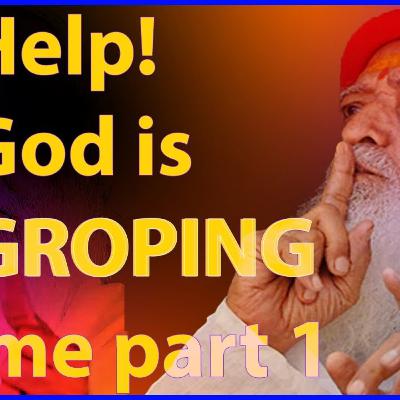
He called himself a spiritual guide. Millions called him “Bapu.” Politicians sought his blessings. Followers built an empire around him.But behind the sermons and saffron robes were allegations of sexual abuse, coercion, and exploitation inside one of India’s most powerful cult networks.In this episode, we examine the rise of Asaram, the machinery of devotion that protected him for years, and how survivors began speaking out against a man who was treated as divine. We also explore how power, politics, and public reverence shielded a cult leader until the law finally intervened.Part 1 focuses on the ascent — how a self-styled godman built influence over millions, and why so few questioned him.
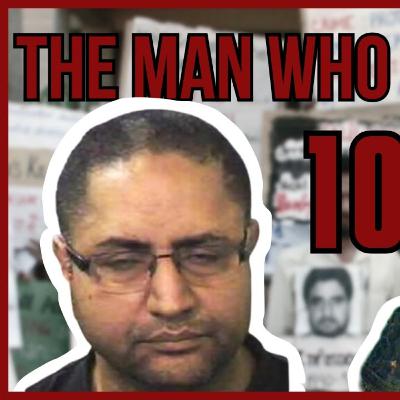
A former Indian army officer is accused of murdering Kashmiri human rights activist Jalil Andrabi before fleeing the country under the shadow of an Interpol notice.Years later, living abroad, the same man would kill members of his own family in a murder-suicide, taking critical information with him.This episode examines the allegations surrounding the Kashmir case, the international pursuit that followed, the appeal to the United Nations by the victim’s family, and the unanswered questions left behind after the family annihilation.

Comments

Download from Google Play

Download from App Store
 United States