


The Object
Subscribed: 148Played: 2,698
Subscribe

© All rights reserved
Description
”The Object” podcast explores the surprising, true stories behind museum objects with wit and curiosity. An object’s view of us. Hosted by Tim Gihring, produced by the Minneapolis Institute of Art.
109 Episodes
Reverse

It's the Season 8 premiere! Claude Monet, by the 1900s, is the most famous artist in the world, a singular genius (if not exactly genial). But there is another Monet: Blanche Hoschedé Monet. The only artist Claude Monet takes under his wing—and almost completely forgotten, until now.
A story of what it means to be an artist, and what happens when your story is not your own. You can see Hoschedé Monet's 1888 Snow Effect landscape, recently acquired by the Minneapolis Institute of Art, here.
A new series of The Object LIVE!, our live tapings of The Object podcast begins this spring with "Talk Dürer to Me!" With fun quizzes, music, and of course storytelling, all about the quirky German genius Albrecht Dürer—around his 555th birthday—and the splendid weirdness of the Renaissance. Date and special guest to be announced soon. Recorded live in the historic Pillsbury Auditorium at our home museum in Minneapolis.
Leave us a review wherever you listen and subscribe so you never miss an episode as Season 8 gets rolling.

This rollicking, sold-out live show of The Object podcast was recorded February 7, 2026, at the Minneapolis Institute of Art with host Tim Gihring and musical guest jeremy messersmith. It's our Valentine's show, with quizzes, storytelling, and curator conversation all about the gods in—and often out of—love.
Messersmith, a NPR Tiny Desk alum whose new song F••• This has become a viral hit, performs a choice selection of tunes about our tragicomic relationship with the heart, plays a quiz, and talks about the ideal love song. European art curator Rachel McGarry explains why we remain enamored of classical myths. And Gihring spins a story of Eros and Psyche across thousands of years.
A big thank-you to messersmith, McGarry, and show runner Dexter Carlson, who donned an inflatable plastic cupid-bear costume for her welcome remarks that probably should have remained petroleum.
Our season 8 premiere is just weeks away in mid-March! Subscribe so you never miss an episode and keep an eye out for the next live taping sometime in May.
Free tickets are going fast for the next live taping of The Object podcast with special guest jeremy messersmith on February 7 in Mia’s historic Pillsbury Auditorium. A Valentine's show with jeremy performing live, storytelling, and "Wait Wait Don't Tell Me" style quizzes, all about the art of love. It’s The Object LIVE!—everything you love about the podcast, live on stage. Reserve your free tickets here or at the Tickets page at artsmia.org.
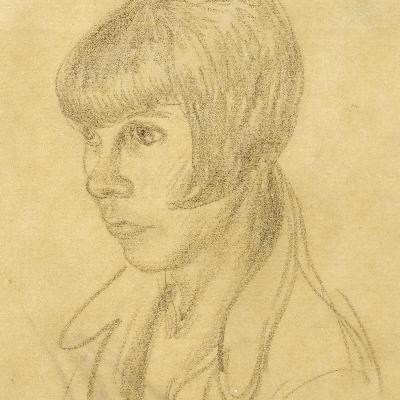
Now on with the show: Wanda Gág was the original celebrity cat mom. The talented, bob-sporting, fiercely independent illustrator and author of Millions of Cats, a book that essentially invented the children’s genre and made her famous. She was every woman who liked men just fine but refused to build her life around them. Guest host Lizzi Ginsberg looks back at the surprising life and work she did create in the 1920s and ’30s, as she moved between Minnesota and New York.
You can see Gág’s marvelous self-portrait now on view at the Minneapolis Institute of Art, along with Roaring Twenties art in “Gatsby at 100.” And many other prints by her in the collection.
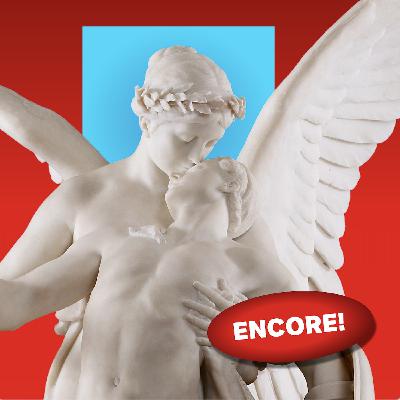
NEWS! Tickets will be available starting January 7 for The Object LOVE!, our very Valentine's live show with special guest jeremy messersmith on February 7 in the Minneapolis Institute of Art's historic Pillsbury Auditorium. All about the gods in (and often out of) love, whose stories have long captured our imagination in art. Tickets are free but limited—go to the tickets page at the Mia website to reserve or for details.
Now on with the show: No one lives forever. But that hasn’t stopped people from trying, and for a long time the noble way to avoid getting old and dying was to avoid getting old at all: the Greek notion of the “glorious death” that confers immortality in battle. It’s an idea that resurfaces throughout history—until it meets its match in a war of many deaths and little glory. You can see Kiss of Victory, the famous sculpture that kicks off this episode and launched the career of Sir Alfred Gilbert, in the collection of the Minneapolis Institute of Art.

In the 1890s, B.A. Haldane sets up a photography studio in Alaska and begins documenting the vibrant life of his Tsimshian community—even as non-Native photographers like Edward Curtis are trekking to reservations, documenting what they believe is a "vanishing race.” Quietly contradicting a president and scientists steeped in theories of white supremacy and evolution, Haldane and other Native artists offer an alternative vision only now being rediscovered. A story of resistance and resilience and what we miss by seeing only through our own lens.
You can learn more about Haldane in the work of Tsimshian scholar Mique’l Dangeli. And revisit the exhibition “In Our Hands” that featured Haldane and other Native photographers at the Minneapolis Institute of Art.
Tickets are going fast for our next exclusive live taping of The Object podcast on October 30 at the Minneapolis Institute of Art, with special guest Chan Poling (The Suburbs, The New Standards), fun quizzes, curator conversation, and of course storytelling—all about the 100th anniversary of The Great Gatsby and the art of the Jazz Age. Tickets are absolutely FREE but you do need to have them. Go to the Tickets page at Artsmia.org and get yours today!
And now, today's episode:
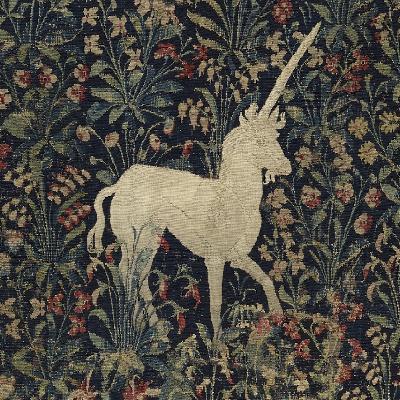
Artists have captured unicorns for thousands of years, and for most of that time people thought they were both magical and real. What can an imaginary creature tell us about ourselves? What did we lose when we stopped believing? And why do we still love them anyway?
You can see unicorns in art through the ages in the collection of the Minneapolis Institute of Art, including a "millefleurs" tapestry from the late Middle Ages, a remarkable 1555 engraving of "A King Pursued by a Unicorn" by Jean Duvet, and Albrecht Dürer's "Abuction on a Unicorn" from 1516.
Thanks to Natalie Lawrence and Marguerite Ragnow for sharing their expertise on this episode.
Lawrence is a freelance writer with a PhD from the University of Cambridge on exotic monsters in early modern Europe. Check out her new book, Enchanted Creatures: Our Monsters and Their Meanings.
Ragnow is a historian and curator of the James Ford Bell Library at the University of Minnesota, a collection about trade and exploration, featuring rare books, maps, and manuscripts. She is working on a book about unicorns.
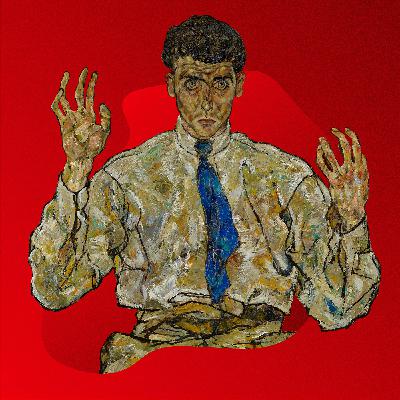
Vienna in the early 1900s is a kind of paradise of power and beauty, the center of an empire that will seemingly go on forever. Only an eccentric young artist, who sees faces in trees and finds God in the forest, seems to understand the fall that is coming. A loss of innocence that will consume him—and much of the world.
You can see the work of Egon Schiele, Josef Hoffman, and the other artists, designers, writers, and philosophers mentioned in this episode in the new exhibition "Timber! Art and Woodwork at the Fall of the Austro-Hungarian Empire" at Mia.
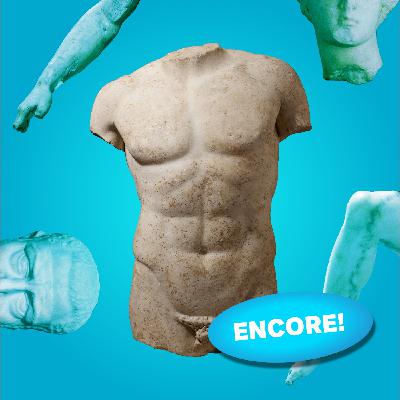
Save the date: The next live taping of The Object podcast will be October 30 at 7 p.m. at the Minneapolis Institute of Art, absolutely free. Special guest and ticket info coming soon. Now, enjoy this encore episode about a story as old as life itself: things fall apart. But what really happened to all those ancient statues missing arms, legs, heads, and other appendages? And how have we come to treat them as normal—a normal way of seeing the classical age, like paintings of the Renaissance or black-and-white photos of the 1900s? Have they shaped a perception of the past as more remote, mysterious, and, well, broken than it really was?
See some of the battered artworks mentioned in this episode, including the Tiber muse, a Graeco-Roman torso, an ancient Egyptian figure, and the Venus de Milo.
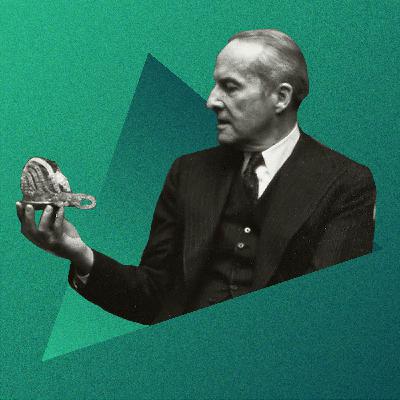
Truth and fiction collide in two stories of museum life. One of a curator who goes missing in the 1950s. The other of a curator who finds himself in the aftermath of World War I, a life chronicled in diaries recently found inside a forgotten storage space. A life filled with beauty and tragedy and the redemptive power of art.
Save the date: The next live taping of The Object is October 30 at 7 p.m. at the Minneapolis Institute of Art, all about the 100th anniversary of The Great Gatsby, F. Scott Fitzgerald, and the art of the Jazz Age. Guests and details coming soon!
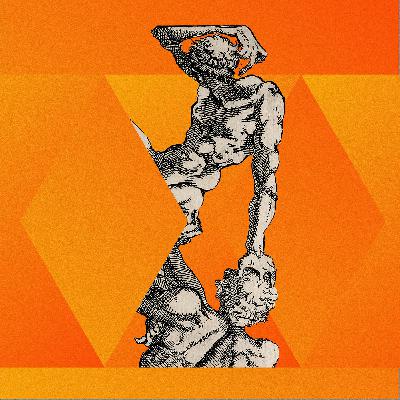
The Renaissance, which began in Italy some 700 years ago, may be one of the last true ideals we have. It's this beacon of beauty and truth that led us out of the Dark Ages. It gave us Leonardo da Vinci, Michelangelo, and Raphael. But the Renaissance was also extremely, delightfully weird. A story of what happens when repression recedes and freedom moves in—and how this strangeness gave us our modern world.
You can see some of the "weird" artworks discussed in the episode here. Then, if you're able, see them in person at the Minneapolis Institute of Art.

New episode! In the 1920s and ’30s, Mary Sully makes her way from Standing Rock Reservation in South Dakota to New York City and then around the country, making surprising, delightfully abstract portraits of American celebrities: Fred Astaire, Shirley Temple, Amelia Earhart. “Personality prints,” she calls them, though the most intriguing personality they reveal might be her own. A personality and a story that challenges everything you think you know about Native America—and all of America—in the early 20th century.
You can see Mary’s “personality prints” the Minneapolis Institute of Art this summer. Photo courtesy of the Mary Sully Foundation.

Kicking off Pride Month with a surprisingly epic encore episode about Grant Wood. In the 1930s, the Iowa artist is one of the most famous people in America. The mind behind "American Gothic"—the painting of the man, the woman, and the pitchfork. An artwork so celebrated and so curious it’s called the “modern Mona Lisa.” But as times change and jealousy spreads, Wood suddenly finds himself fighting for his life and livelihood, protecting a secret he hid almost everywhere but in his art.
You can see Wood’s quirky, nostalgic style in "The Birthplace of Herbert Hoover," in the collection of the Minneapolis Institute of art.
Some see a tender self-portrait in "Sentimental Yearner," a drawing made for Sinclair Lewis’s "Main Street."

The next live taping of The Object is May 11—the show is sold out, but don't forget to come if you have tickets and watch for the next live taping coming up.
This encore episode reprises last year's popular episode about one of our oldest relationships with a non-human: dragons, and the very different ways we've imagined them in different parts of the world. Helping or hurting, making rain or breathing fire. The difference, of course, is us. Here, a brief, beastly history of the creature we can’t live with—or without.
You can see many manifestations of dragons, European and Asian, in Mia’s collection.

New episode! It is the stuff of legend, how Claude Monet discovers Japanese art in the late 1800s and becomes one of the most famous artists in the world. But one influence is as real as he is mysterious. The artist behind the "great wave" and hundreds of other iconic images. The artist who calls himself Hokusai (at least for a time), and only becomes more powerful after he's gone.
You can see art by both Monet and Hokusai, side by side, in the show "Hokusai / Monet" on view at the Minneapolis Institute of Art through August 10.
If you snagged tickets to the next live taping of The Object, with Dessa, on May 11—nice work! They're now sold out. In the meantime, enjoy this encore presentation of one of our most popular episodes ever. He was the original rebel with a cause, dedicated to showing the world a new way of seeing. But what if Claude Monet's real cause was...Claude Monet? What if his rise from scorn and poverty to become one of the most beloved and wealthy artists in history was fueled by myth and marketing? Can we love him anyway?
You can see Monet's work, well, almost everywhere. But you can see it now, in conversation with the art of Japanese artist Katsushika Hokusai, at Mia: https://new.artsmia.org/exhibition/hokusai-monet
Big news! It’s the first episode of Season 7 AND tickets are now available for the next live taping of The Object podcast, featuring musical guest Dessa, quizzes, curator conversation, and storytelling on Sunday, May 11, at 2 p.m. at the Minneapolis Institute of Art. All about surrealism, humor in art, and Mia’s beloved Aphrodisiac Telephone by Salvador Dalí—on his 121st birthday! It’s “Your Lobster is Ringing!,” the second and biggest edition yet of The Object LIVE! Tickets are FREE but limited. Reserve your seats now by going to the tickets page on the Mia website or follow this link: https://tickets.artsmia.org/events/0193e565-7c1c-d9d9-1b45-09cd98f22f2c
And now, today’s episode:
Nick Cave is a young Black art professor in Chicago when, in the 1990s, he makes his first “Soundsuit.” A kind of musical armor, born of pain and pride and self-preservation. He’s now made more than five hundred, adding to the long and fascinating history of going incognito to truly be oneself. A powerful story of the lengths we all go to be both seen and heard.
You can see a soundsuit from 2010 in the collection of the Minneapolis Institute of Art: https://collections.artsmia.org/art/111576/soundsuit-nick-cave
(Listen for a rare "performance" of the Mia soundsuit in this episode.)
Or in the “Giants” exhibition of art from the Dean Collection of Swizz Beatz and Alicia Keys, now on view at Mia: https://new.artsmia.org
The seventh season of The Object begins March 24!
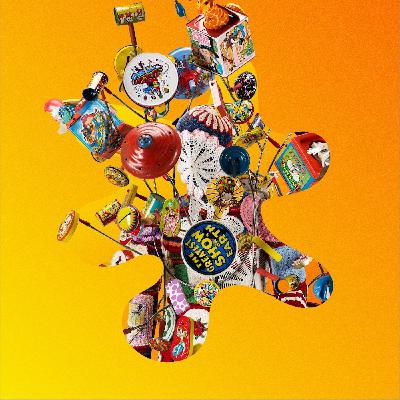
Today, an encore presentation of an episode about Joe Minter and the "yard show" artists of Alabama. Thirty-five years ago, Joe Minter received a vision. Soon, his half-acre property outside Birmingham, Alabama, began to fill with sculpture—reflections on everything from slavery to 9/11 to climate change—fashioned out of junk: car parts, toys, industrial detritus, gizmos of all sorts. An elaborate example of the Southern Black tradition of the yard show, with Minter as its genial showman. Now, it's among the last of its kind, and as museums and collectors come calling, the race is on to determine the fate of Minter’s art and how to think about it.
You can see Minter's art in Alabama, of course, and at the Minneapolis Institute of Art: https://collections.artsmia.org/art/132218/voyage-in-chains-joe-minter

Season 7 of The Object starts March 24! Here, a special episode from the archives about Love and Art in capital letters.
When the young Italian artist Amedeo Modigliani moves to Paris, in the early 1900s, he soon meets a very talented (and very married) Russian poet. What happens when Love and Art come together, as the rest of the world is falling apart?
You can see one of Modigliani’s iconic Head sculptures, in the collection of the Minneapolis Institute of Art, here: https://collections.artsmia.org/art/1502/head-amedeo-modigliani
(Spoiler alert) You can see a close-up of the secret fossil discussed on the show here.

This first-ever live show of The Object podcast (recorded at the Minneapolis Institute of Art on January 23, 2025) features music and storytelling celebrating French painter Édouard Manet and his Impressionist friends and frenemies (yes you, Monet). Watch for more live shows coming soon!
You can see one of Manet's portraits, as discussed on the show, in the collection of the Minneapolis Institute of Art: The Smoker.
On the 90th anniversary of the groundbreaking Tatra automobile, we bring you this encore episode from The Object's first season. A story of the last major war in Europe, when nothing seemed capable of slowing the Third Reich—except, the legend goes, the very fast, very unusual Tatra car from Czechoslovakia. A poignant tale of poetic justice, grace in wartime, and the utopian future that wasn't. You can see a Tatra T87 in the collection of the Minneapolis Institute of Art: https://collections.artsmia.org/art/98653/tatra-t87-four-door-sedan-hans-ledwinka

Comments

Download from Google Play

Download from App Store
 United States