


 Claim Ownership
Secret Life of Books
Subscribed: 2,261Played: 21,628
Subscribe

© 2025 Secret Life of Books
Description
Every book has two stories: the one it tells, and the one it hides.
The Secret Life of Books is a fascinating, addictive, often shocking, occasionally hilarious weekly podcast starring Sophie Gee, an English professor at Princeton University, and Jonty Claypole, formerly director of arts at the BBC.
Every week these virtuoso critics and close friends take an iconic book and reveal the hidden story behind the story: who made it, their clandestine motives, the undeclared stakes, the scandalous backstory and above all the secret, mysterious meanings of books we thought we knew.
-- To join the Secret Life of Books Club visit: www.secretlifeofbooks.org
-- Please support us on Patreon to keep the lights on in the SLoB studio: https://patreon.com/SecretLifeofBooks528?utm_medium=unknown&utm_source=join_link&utm_campaign=creatorshare_creator&utm_content=copyLink
insta: https://www.instagram.com/secretlifeofbookspodcast/
youtube: https://www.youtube.com/@secretlifeofbookspodcast/shorts
The Secret Life of Books is a fascinating, addictive, often shocking, occasionally hilarious weekly podcast starring Sophie Gee, an English professor at Princeton University, and Jonty Claypole, formerly director of arts at the BBC.
Every week these virtuoso critics and close friends take an iconic book and reveal the hidden story behind the story: who made it, their clandestine motives, the undeclared stakes, the scandalous backstory and above all the secret, mysterious meanings of books we thought we knew.
-- To join the Secret Life of Books Club visit: www.secretlifeofbooks.org
-- Please support us on Patreon to keep the lights on in the SLoB studio: https://patreon.com/SecretLifeofBooks528?utm_medium=unknown&utm_source=join_link&utm_campaign=creatorshare_creator&utm_content=copyLink
insta: https://www.instagram.com/secretlifeofbookspodcast/
youtube: https://www.youtube.com/@secretlifeofbookspodcast/shorts
Hosted on Acast. See acast.com/privacy for more information.
118 Episodes
Reverse
It’s Oscars week!The golden statues will get dished out on Sunday evening in Los Angeles and the world will be watching. Literary classics are big, yet again. Guillermo del Toro’s Frankenstein and Chloe Zhao’s Hamnet have received multiple nominations, and Jesse Buckley has already won BAFTA and Golden Globe for her performance as Anges, aka Anne Hathaway, Shakespeare’s wife. Where do new adaptations and retellings leave the literary originals? Is the rage for reinterpretations revealing that books matter the most, or replacing books with easier, more exciting consumables?For lovers of Hamnet, does Hamlet still matter and if so, why? Does yet another adaptation of Mary Shelley’s Frankenstein, this time starring Jacob Elordi, the glowed-up Darcified Heathcliff of Emereld Fennell’s recent “Wuthering Heights,” give us new insights? Or does Shelley’s masterpiece sink beneath the icy polar seas of the Hollywood publicity machine, even as Elordi’s new version of the monster is unsinkable?Become a subscriber by signing up at Apple: http://apple.co/slobOr join our Patreon community here: https://www.patreon.com/c/secretlifeofbookspodcast Hosted on Acast. See acast.com/privacy for more information.
 1
1As part of our series on the writing of Toni Morrison we’re lucky enough to record a conversation with one of the world’s leading Toni Morrison scholars, Professor Autumn Womack. Autumn has spent more time with the Morrison Papers at Princeton University than pretty much anyone else – except (maybe) Morrison herself.Autumn describes the experience of coming to Morrison’s writing for the first time in high school, returning to it years later to her as a graduate student and finally getting to teach Morrison's novels at Princeton, where Morrison spent the last years of her writing life. We hear about the fire that nearly destroyed all Morrison's records, and the librarians who saved her papers.Autumn explains why archives are anything but boring – and how some discoveries she and her students made can change the way we read Morrison’s great novels.More about Autumn and her workhttps://english.princeton.edu/people/autumn-womackAn essay Autumn mentions: “Rootedness: The Ancestor as Foundation” (1984)Become a subscriber by signing up at Apple: http://apple.co/slobOr join our Patreon community here: https://www.patreon.com/c/secretlifeofbookspodcast Hosted on Acast. See acast.com/privacy for more information.
Song of Solomon (1977) propelled Toni Morrison into mainstream recognition as a major American writer, not just of her own generation but all generations, past present and to come. Song tackled something close to the “whole” of African American history, weaving multi-generational stories that included Africa itself, the southern landscapes of plantation slavery and the Civil War, and the post-abolition north. It’s a family chronicle, focusing on the life story of the well-to-do Macon Dead III, aka “Milkman,” who grows from boy to man in 1930s and 40s Michigan. The book brilliantly combines mythology, history, domestic and magical realism. Song of Solomon quickly became famous, expressing a growing awareness among American readers in the late 1970s that the Black civil rights movement of the past 3 decades was, at best, a partial success. One of Morrison’s signature qualities was to focus on writing about Black characters for Black readers, in ways that moved beyond the tropes, devices and storylines that white readers could understand and that previous generations of Black writers had been able to immerse themselves in, In this episode, the second in our series on the great Nobel Laureate, we continue the story of how Morrison disrupted virtually all existing expectations about how a Black woman novelist would sound. In Song of Solomon she chose a male protagonist to retell a deep history of African cultural magic, annexing the names, stories and language of the Christian Bible to create a story that refuses to do anything that readers of other American retellings of biblical epics were expecting.Become a subscriber by signing up at Apple: http://apple.co/slobOr join our Patreon community here: https://www.patreon.com/c/secretlifeofbookspodcastHosted on Acast. See acast.com/privacy for more information. Hosted on Acast. See acast.com/privacy for more information.
With all the fuss and fanfare around Wuthering Heights, we’re worried Emily Bronte is getting more than her fair share of attention. So today we shift the SLOB-light to her younger sister Anne, author of the remarkable The Tenant of Wildfell Hall, published in 1848. Anne wrote it in a whirlwind after the successes of Wuthering Heights and Jane Eyre, determined to prove herself a Bronte in talent and spirit.And though Anne is now the least celebrated of the Bronte trio, Tenant at the time of its publication it was considered the most shocking in the Bronte collective oevre. Anne had fearlessly pulled back the veil on marital infidelity, domestic violence, alcoholism, and the systemic torments of Victorian masculinity and marriage laws.Listeners will spot fascinating overlaps with many of the key scenes and motifs in Emily’s and Charlotte’s writing — like the fact Lord Huntingdon, the violent villain of Tenant, shares his initial with Heathcliff; that he sometimes bears an odd resemblance to Mr. Rochester, and that Wildfell Hall itself has the same initials as Wuthering Heights. But Tenant of Wildfell Hall is also uniquely its own creation, and today Sophie and Jonty get to work unpacking what makes it so extraordinary.To wrap this Bronte mini-series up we ask, should Tenant of Wildfell Hall be classed as peak Bronte, the equal of Wuthering Heights and Jane Eyre? And should Emerald Fennell be making Tenant the next stop on her raunchy, irreverent period adaptation-spree?Become a subscriber by signing up at Apple: http://apple.co/slobOr join our Patreon community here: https://www.patreon.com/c/secretlifeofbookspodcastHosted on Acast. See acast.com/privacy for more information. Hosted on Acast. See acast.com/privacy for more information.
A special bonus episode about the blockbuster phenom of Jane Austen’s 250th Birthday celebrations. Sophie’s guest is Professor Devoney Looser, one of the world’s leading Austen scholars, and the author of the brilliant Wild for Austen: A Rebellious, Subversive, and Untamed Jane, about the unscripted, occasionally unhinged world that Jane Austen really knew, and which influenced her writing.We talk about why the Austen obsession has only gone from strength to strength, and Devoney looks ahead to Austenmania in 2026, with new screen adaptations coming to delight the fans.Get the Book:Devoney Looser, Wild for Austen: A Rebellious, Subversive, and Untamed Jane, St Martin’s Press, 2025.More fun coverage:From Alexandra Schwartz, a SLOB guest, in the New Yorker: https://www.newyorker.com/newsletter/the-daily/jane-austens-uncommon-compassionhttps://www.nytimes.com/interactive/2025/12/16/books/jane-austen-250th-birthday.htmlListen to our episode about Mrs. Dalloway with Alex Schwartz Hosted on Acast. See acast.com/privacy for more information.
Best Valentine’s Day ever! SLOB’s “Wuthering Heights” watch-party. Sophie and Jonty take it character by character – inanimate characters included — to decide who are the winners and who are the losers in the Fennell-Robbie-Elordi mash-up adaptation of Emily Bronte’s novel. And in the episode’s gripping second half they move onto the really meaty questions: race, class, sex, domestic violence, and pets.As the movie poster says, Come Undone - with SLOB - this Valentine's season.Become a subscriber by signing up at Apple: http://apple.co/slobOr join our Patreon community here: https://www.patreon.com/c/secretlifeofbookspodcastHosted on Acast. See acast.com/privacy for more information. Hosted on Acast. See acast.com/privacy for more information.
The storm clouds are gathering in anticipation of the Valentine’s Day release of Emerald Fennell’s raunchy film adaptation of Emily Bronte’s Wuthering Heights. The film has been described by one critic as “very horny, very sumptuous, and very demented.” Margot Robbie looks set to change the way we read this beloved classic, well, if not forever, for a few weeks during awards season.It’s fair to say that anyone remotely connected to the world of classic literature is standing by, getting ready to jeer.And it’s also fair to say that the film has propelled Wuthering Heights to become the most read classic of 2026. The New York subway, the London Tube and many other transport systems worldwide are dotted with earnest young people, proudly nose-deep in their Penguin Wuthering Heights.If SLOB has a motto, it’s be prepared. To ready our devoted listeners for the big V. Day release, we’ve recorded a brand-new episode on Wuthering Heights. Emily Bronte’s novel, which may just be the most unhinged, genre-busting, unputdownable classic in English, is back, bigger, better, and balmier than when SLOB recorded our first episode back at the very beginning of this podcast.We drink deep, but always with our trademark cheeky humor, in Emily Bronte’s biography, the secrets behind the book’s writing, and why the Heathcliff-Catherine love-story it is most definitely not GOATED, as the kids say.Become a subscriber by signing up at Apple: http://apple.co/slobOr join our Patreon community here: https://www.patreon.com/c/secretlifeofbookspodcastHosted on Acast. See acast.com/privacy for more information. Hosted on Acast. See acast.com/privacy for more information.
Sophie talks to Richard Ovenden, OBE, the 25th Bodley’s Librarian at Oxford, about the manuscript of Frankenstein, one of the most extraordinary, and fascinating, literary treasures of all time. Richard is head of Oxford’s Bodleian, as well as the University's libraries, museums, and even botanical gardens. Though Richard isn’t personally dusting off the attic vases or planting the bulbs, he does still spend huge amounts of time with rare books and manuscripts.In this thrilling bonus episode he talks about how the Bodleian came to own the manuscript of Mary Shelley’s Frankenstein, along with the large, fascinating, and often very weird collection gathered from the Shelley family and their friends over several generations.This is an amazing behind-the-scenes look at what goes on in the world’s great libraries, why old books really matter, and why SLOB was right all along that Percy Bysshe Shelley is bad news.To see the manuscript, go to the Digital Bodleian: https://digital.bodleian.ox.ac.uk/objects/53fd0f29-d482-46e1-aa9d-37829b49987d/Become a subscriber by signing up at Apple: http://apple.co/slobOr join our Patreon community here: https://www.patreon.com/c/secretlifeofbookspodcastHosted on Acast. See acast.com/privacy for more information. Hosted on Acast. See acast.com/privacy for more information.
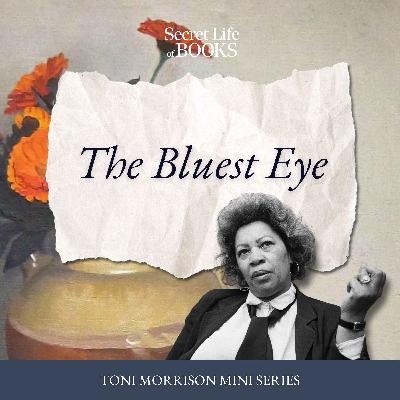
Published in 1970, written by an unknown new writer, The Bluest Eye is the great African American novelist Toni Morrison’s debut. It remains in many ways her most radical. It’s one of the most banned books in America since its publication – for its unflinching, explicit depictions of domestic abuse, racial and sexual violence in small town America. Morrison wrote openly about Black sex and Black violence, challenging the increasingly celebratory tone of American literature in the late 1960s. Reviewing her in the New York Times, the legendary critic John Leonard recognized just how important Morrison’s voice would be. ““The Bluest Eye” is an inquiry into the reasons why beauty gets wasted in this country. The beauty in this case is black; the wasting is done by a cultural engine that seems to have been ‘designed specifically to murder possibilities,” he wrote. “She does it with a prose so precise, so faithful to speech and so charged with pain and wonder that the novel becomes poetry.” Morrison would go on to write many Modernist-inflected literary tours de force, including Song of Solomon and Beloved, and is the first and only Black woman to win the Nobel Prize for Literature. We’ll be taking deep dives into Morrison’s work across four special episodes of SLOB, for Black History Month.Become a subscriber by signing up at Apple: http://apple.co/slobOr join our Patreon community here: https://www.patreon.com/c/secretlifeofbookspodcastHosted on Acast. See acast.com/privacy for more information. Hosted on Acast. See acast.com/privacy for more information.
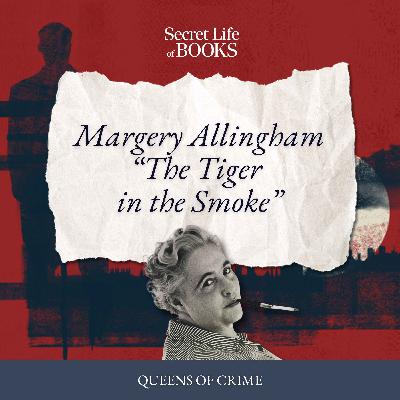
A serial killer on the loose in the foggy, battle-scarred streets of London after the Second World War. Margery Allingham's The Tiger in the Smoke (1952) is Bleak House meets 1984 meets Silence of the Lambs. In this last in the current Queens of Crime series, Sophie and Jonty looks at how Allingham - more, perhaps, than the other Queens of Crime - evolved her craft to suit the changing world around her. She dials back the importance of her aristocratic front-man sleuth Campion (who she first introduced in 1929) to focus more on the grizzled, working-class detective Charlie Luke. This book is a stepping stone out of Christieland into the world of PD James and Ruth Rendell.Become a subscriber by signing up at Apple: http://apple.co/slobOr join our Patreon community here: https://www.patreon.com/c/secretlifeofbookspodcastHosted on Acast. See acast.com/privacy for more information. Hosted on Acast. See acast.com/privacy for more information.
With the release of Chloe Zhao's rapturously acclaimed film Hamnet, adapted from Maggie O'Farrell's much-loved 2020 novel, SLOB re-releases one of our earliest episodes.Hamnet is a beautiful, lyrical novel about Anne Hathaway, Shakespeare's wife, and the early death of their son, Hamnet. O'Farrell refocussed Shakespeare's story on the women who are usually only glimpsed at the edges of his life, reinventing Anne Hathaway as a vivacious, sexy, creative and compelling full character. In doing so she reimagines Hamlet the play as a mediation on family, love, and loss, organized around Shakespeare's wife.Our Hamnet episode itself is a historical curiosity. #18, in the earliest days of our podcast, it's officially SLOB juvenilia. We've changed and grown in the last year, and we owe everything to our listeners who tell us how it is and how it should be.Please tell us what you think about Hamnet, book or film, by jumping on our Patreon chat: https://www.patreon.com/messages/9473d46b4c7d4e59be6239f82a3e8115?mode=campaign&tab=chatsWhether you plan to see the film or not, this book has stayed in the zeitgeist ever since it was published.Become a subscriber by signing up at Apple: http://apple.co/slobOr join our Patreon community here: https://www.patreon.com/c/secretlifeofbookspodcast Hosted on Acast. See acast.com/privacy for more information.
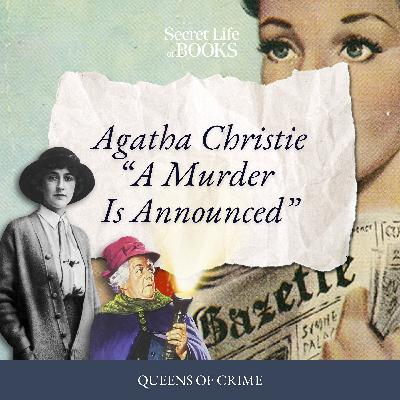
A Murder is Announced (1950) was Agatha Christie’s 50th published book. So when better than the 50th anniversary of her death to celebrate one of her greatest works - and introduce Miss Marple into the back SLobalogue? In this third episode in our Queens of Crime series, Sophie and Jonty skip daintily from one side of the Second World War to the other to see if - and how - Agatha Christie’s plots and characters were impacted by the devastation. What we find is an England down-at-heel. Austerity. Rationing. Widespread poverty. Deserters roaming the country. Paranoia and fear of foreigners. When a murder occurs at the (still) charming village of Chipping Cleghorn, the local police are all at sea. The problem is nobody really - truly - knows their neighbours anymore and are people who they say they are? Enter Miss Marple, the Victorian relic with a mind like a sink, to put everything straight - and remind us all that Agatha Christie truly has no peer when it comes to an elegant and rollicking good crime story. Become a subscriber by signing up at Apple: http://apple.co/slobOr join our Patreon community here: https://www.patreon.com/c/secretlifeofbookspodcastHosted on Acast. See acast.com/privacy for more information. Hosted on Acast. See acast.com/privacy for more information.
This week, for the second of our episodes on the Queens of Crime, we travel by steamer with Ngiao Marsh and her celebrated detective Roderick Alleyn, who decides to go on holiday in Marsh's native New Zealand — no trivial undertaking for an Englishman in the 1930s. Alleyn comes to NZ for the mountains and rivers, but stays for the bloody and highly innovative murder of a theater impressario, whose company is touring from London with the magnificent leading lady Carolyn Dacres.P.D. James, a second gen Queen of Crime herself, wrote that ‘the method of death in a Ngaio Marsh novel tends to linger in the memory.’ Much about this novel lingers in the memory, including the remarkable descriptions of New Zealand's scenery and perhaps most of all Marsh's decision to bring Maori culture and traditions to the forefront of the story. In Vintage Murder, Marsh creates a tension between three factions - the imperial mentality of the touring theater company, the colonial subservience of the New Zealand police force, and the irrepressible agency of Maori culture. And while Roderick Alleyn has everyone metaphorically sipping together at the end, those tensions remain unresolved. Vintage Murder is a great thriller AND a disturbing portrait of late British imperialism. Become a subscriber by signing up at Apple: http://apple.co/slobOr join our Patreon community here: https://www.patreon.com/c/secretlifeofbookspodcast Hosted on Acast. See acast.com/privacy for more information.
James Runcie is author of the acclaimed Grantchester Mysteries - the focus of six books and a hugely successful ITV television series - following vicar-sleuth Sidney Chambers in his sleuthing career from the early 1950s to the late 1970s. James talks to Jonty about where he finds the gold in the Golden Age of Crime. In particular, Dorothy L Sayers, Agatha Christie and John Dickson Carr. He then talks about the inspiration behind the Grantchester Mysteries, which develops into a conversation about his father - who was Archbishop of Canterbury in the 1980s - and the trials and tribulations of the Church of England in the late 20th Century.The Grantchester Mysteries are:Sidney Chambers and the Shadow of Death (2012)Sidney Chambers and The Perils of the Night (2013)Sidney Chambers and The Problem of Evil (2014)Sidney Chambers and The Forgiveness of Sins (2015)Sidney Chambers and The Dangers of Temptation (2016)Sidney Chambers and the Persistence of Love (2017)The Road to Grantchester (2019)As well as discussing many books from the Golden Age, James and Jonty both enthused about David Kynaston's brilliant and ongoing 'Tales of a New Jerusalem' cycle of history books focused on Britain after the Second World War. The cycle, which started with Austerity Britain (2007), has been a big influence on Grantchester.Become a subscriber by signing up at Apple: http://apple.co/slobOr join our Patreon community here: https://www.patreon.com/c/secretlifeofbookspodcast Hosted on Acast. See acast.com/privacy for more information.
Last year, the SLoBlight lingered briefly on Agatha Christie when we celebrated the centenary of The Murder of Roger Ackroyd from 1925. This book, more than any other, heralded the start of the so-called Golden Age of Detective Fiction between the two world wars. Taught, short and fraught with menace, these novels were in large part a response to the chaos and brutality of the First World War. The public needed order and diversion. Highly regulated games became popular - contract bridge, crosswords, Mah Jong - and so did detective fiction. These games indeed frequently appear in As the initiation ceremony to the Detection Club shows, detective fiction was a sort of literary game - with clear rules of engagement and a puzzle for the reader to unravel. In this mini-series on the Golden Age of Detective Fiction we’re looking at what happened after Roger Ackroyd. As the 1930s darkened with the great depression, the rise of fascism and - dare we say it - the rather bleak view of human nature contained within Freudian psychoanalysis, so too did detective fiction. At the forefront of these changes were the so-called Queens of Crime - Agatha Christie, Dorothy L Sayers, Ngaio Marsh and Margery Allingham.Become a subscriber by signing up at Apple: http://apple.co/slobOr join our Patreon community here: https://www.patreon.com/c/secretlifeofbookspodcast Hosted on Acast. See acast.com/privacy for more information.
George Eliot’s Middlemarch is the Mount Everest of Victorian fiction. A book so brilliant and monumental that it’s taken us a year of planning to take it on. But as we close out 2025, we’ve established our Middlemarch base camp and started the climb.To put it another way, we’ve recorded an episode in which we treat listeners to the story behind the story of the greatness that is Mary Ann Evans, the woman who became George Eliot. Middlemarch is, in many people’s opinions, the greatest novel in English. To help understand why it’s so amazing, how Eliot learned to write like this, and her life as a reader, writer, daughter and lover (plus, the story behind her pen name), we give you this primer episode.Starting this Friday, we have new subscriber-only episodes every two weeks about Middlemarch itself, going book by book through this magnificent classic. This is how Eliot meant Middlemarch to be read - through 8 stages. One for each of the serialized volumes that ran through 1871 and 1872 before the book was published as a whole in 1874.Join up for the bookclub by becoming a paid subscriber on Patreon, and come along with us for the adventure.Books discussed in this episode:George Eliot, MiddlemarchGeorge Eliot’s translated works: David Friedrich Strauss, The Life of Jesus, Critically Examined; Ludwig Feuerbach’s The Essence of Christianity; Benedictus de Spinoza, EthicsGeorge Eliot, Scenes of Clerical LifeGeorge Eliot, Adam BedeGeorge Eliot, The Mill on the FlossGeorge Eliot, Silas MarnerGeorge Eliot, RomolaGeorge Eliot, Felix Holt, The RadicalGeorge Eliot, Daniel Deronda Become a subscriber by signing up at Apple: http://apple.co/slobOr join our Patreon community here: https://www.patreon.com/c/secretlifeofbookspodcast Hosted on Acast. See acast.com/privacy for more information.
It won't come as a surprise to SLOB fans that the literary classics invented Christmas.But if you've got your finger on the buzzer and are already mouthing the words "Dickens, A Christmas Cracker" think again.We take you back to Christmas Eve, somewhere in North Wales, around about 1385 (brrrr). Cue the giant, jolly yet murderous Greene Knight, who shows up in the local mead hall, and issues a complicated and charmingly allegorical seasonal challenge to the Knights of the Round Table.From there we pay visits to the frankly unsatisfactory Christmases of the English Renaissance (wet, high-fiber pudding porridge, anyone?), the austere anti-Christmases of Puritan England, the weak-tea Christmas-adjacent efforts of the eighteenth-century, and then — boom — the advent of Victorian Christmas excess, with trees, fairy lights, turkeys, and giant inflatable santas in every front yard.We wish all our beloved SLOB listeners a Merry Christmas, and whether you celebrate or not we know you'll find the Cracker a veritable trove of literary trinkets and tidbits.Become a subscriber by signing up at Apple: http://apple.co/slobOr join our Patreon community here: https://www.patreon.com/c/secretlifeofbookspodcast Hosted on Acast. See acast.com/privacy for more information.
Unless you've been living under a rock, you'll know that Jane Austen has a big birthday this week -- her 250th to be exact. Happy Birthday Jane!Over here on SLOB we're throwing Jane a party, and we've invited guests. They're truly the guests of honor. The women who made Jane Austen. You may not know all of their names, or any of them. We introduce some literary superstars from their own day, who influenced Austen's craft, storytelling, irony and encouraged her appetite for wild, subversive stories.We tend to see Austen as a lone genius, carving out a voice for women in a world where they were often unheard. She was, in fact, just a particularly brilliant member of a wider social and literary movement. She was great, and she was great because she stood on the bonnets of giantesses. Please meet the bolters, bad-asses, barn-stormers, bold adventurers. The bloody-minded and the bloody-brilliant.Writers and books mentioned in the episode:Aphra Behn, Oroonoko and Love-Letters Between a Nobleman and His SisterDelarivier Manley, The New AtlantisEliza Haywood, Love in ExcessCharlotte Lennox, The Female Quixote and HenriettaAnn Radcliffe, A Sicilian Romance; The Romance of the Forest; The Mysteries of Udolpho; and The ItalianMary Wollstonecraft, A Vindication of the Rights of Women; A Short Residence in Sweden, Norway and Denmark; Maria; or, the Wrongs of WomanFrances Burney, Evelina, Cecilia, Camilla and The WandererCharlotte Smith, Elegiac Sonnets and The Old Manor HouseElizabeth Inchbald, A Simple StoryMaria Edgeworth, Castle Rackrent, Harrington and Belinda.Jane Austen, The Beautifull Cassandra (juvenilia) Hosted on Acast. See acast.com/privacy for more information.
Are you a cat-person or a tyger-person? William Blake was both. Find out why such a big fuss about "The Tyger," which never fails to show up in google searches for the best poem in English. "The Tyger" has a lot going for it: short, punchy, mystical and definitely about a tiger. But beyond that, everything is up for grabs. Who was this William Blake, not just one of the most loved poets of all time, but among the strangest. Had he actually seen a tiger in 1794, or is his tiger a metaphor for other powerful, scary, orange things, like the French Revolution, child-labor, or other Romantic Poets? Why were tigers in the news at the time, and what does Blake's poem have to do with much-loved mechanical tiger in the Victoria and Albert museum? Sophie and Jonty discuss Blake's quirky brilliance as an illustrator, his similarity to Chagall, his early life and late obsession with John Milton, and the literary rarity of Blake's being both a Great Poet and a Nice Guy. Hosted on Acast. See acast.com/privacy for more information.
Stephen King and Shirley Jackson agree that The Turn of the Screw is the GOAT of ghost-stories. It’s a gripping, excellently creepy potboiler about a mad governess and a pair of haunted children in a scary Victorian country house.Henry James already had 14 novels and a load of short fiction behind him when he wrote The Turn of the Screw, and he channeled his talent for opaque, ambiguous storytelling to come up with one of the most truly chilling psychological thrillers ever written.The novella – yes we’re happy to report that this is a short read – was serialized over three months in a magazine called Collier’s Weekly and then reprinted with another story as The Two Magics. It was a hit, which it needed to be because avid listeners to SLOB will remember that the 1890s in London was a competitive time for supernatural page turners. We’re looking at you, Dracula, Sherlock Holmes and The Picture of Dorian Gray. Find out why this is the decade of the unputdownable classic Hosted on Acast. See acast.com/privacy for more information.


Download from Google Play

Download from App Store
 United States
mnmmhnn nnbnn no gnnnn
It's too bad you did this episode before you did the episode on LoTR, because Bilbo's birthday party would get top marks in all categories.
One reason the play is so frequently performed is because it's got no major roles and about 15 smallish but juicy roles, making it tailor made for school and amateur theater productions. It's also a good play! I do think it's weird that you keep referring to Titania as having stolen the changeling; she did take him from his people after his mother's death in childbirth, but it's Oberon who wants to steal him to be his "henchman" (with implication of pederasty). I'm team Titania on this one.
I'm a little surprised you didn't mention that the play as it's typically performed was drastically cut, at the theater-manager's request, from four acts to three. I saw a production that included the additional act (with the infamous debt-collector scene); the main thing I remember about it is that Cecily, who in the standard version is charmingly eccentric, appeared quite mad.
How could you leave out Pangur Ban? That passage from Mansfield Park is from the section where everybody in the Bertram family is campaigning to get Fanny to accept Crawford's proposal. Lady Bertram's idea of an inducement to get Fanny to marry a man she doesn't love is to promise her a puppy, illustrating Lady Bertram's shallowness and detachment from reality. She is so languid, I always imagine her as drugged with laudanum or something.
Isn't there a girl in Picnic at Hanging Rock (the one who eventually kills herself) who has a crush on Miranda?