


 Claim Ownership
Pacific Polarity
Subscribed: 4Played: 11
Subscribe

© Richard and Jersey
Description
Facilitating dialogue on the Indo-Pacific region, exploring diverse viewpoints on governance, geopolitics, and historical trends.
pacificpolarity.substack.com
pacificpolarity.substack.com
30 Episodes
Reverse
Chris Sidoti unpacks Myanmar’s war through the lenses of battlefield dynamics, China’s shifting calculations, and the enduring vulnerability of the Rohingya. He argues that China’s recent tilt back toward the junta reflects a short-term stabilisation strategy driven by security and economic interests, but one that will likely prove mistaken as the military’s defeat becomes unavoidable. Against a backdrop of weak and fragmented international action—and an America retreating from human rights leadership—Sidoti contends that regional actors, particularly Australia, must step up. While the global human rights project is at a low ebb amid a return to great-power spheres of influence, he remains convinced that human rights will ultimately re-emerge, because they remain a core aspiration of ordinary people, including those suffering through Myanmar’s conflict. This is a public episode. If you would like to discuss this with other subscribers or get access to bonus episodes, visit pacificpolarity.substack.com
In this episode of Pacific Polarity, Costa Rican economist and former politician Otton Solís Fallas discussed the US capture of Venezuela’s Nicolás Maduro, the logic of the “Donroe Doctrine,” and the consequences of US–China rivalry for smaller states. Otton argues that Washington’s actions mark a return to a colonial-era “might makes right” approach, with Trump discarding democratic rhetoric in favor of a blunt assertion of American interest. He suggests many Latin American countries quietly share this unease but lack the freedom to say so, echoing the region’s historic subordination to external powers. Otton hopes China can act as a necessary economic counterweight that can expand room for maneuver for smaller countries—though he also warns that America’s moral retreat may create a more dangerous world with fewer shared standards. This is a public episode. If you would like to discuss this with other subscribers or get access to bonus episodes, visit pacificpolarity.substack.com
Arnaud Bertrand argues that the new US National Security Strategy signals a reluctant American acceptance of a multipolar world and a search for ways to coexist rather than dominate. He contends that China’s worldview is fundamentally non-missionary and oriented toward an integrated global system rather than bloc confrontation, shaped by history and cultural distance from the West. Arnaud suggests that hawkish shifts in Europe and Japan reflect anxiety over US retrenchment, even as Washington itself increasingly recognises China’s leverage and the need to accommodate its core concerns. Ultimately, he warns against a Cold War mentality, urging states to avoid rigid camps and instead pursue flexible, interest-based engagement in a more fluid global order. This is a public episode. If you would like to discuss this with other subscribers or get access to bonus episodes, visit pacificpolarity.substack.com
Cyan Ventures' Shaun Chau discussed Australia’s failed COP bid, the global headwinds facing climate action, and what a pragmatic path forward might look like for the climate camp. This is a public episode. If you would like to discuss this with other subscribers or get access to bonus episodes, visit pacificpolarity.substack.com
James Laurenceson of the Australia-China Relations Institute at UTS shares his thoughts on China’s economic headwinds, the US–China trade war, and the state of Australia–China relations. This is a public episode. If you would like to discuss this with other subscribers or get access to bonus episodes, visit pacificpolarity.substack.com

Zhao Long of the Shanghai Institute for International Studies shares how China sees its role in a shifting global order. Dr Zhao argues that China can break the historical cycle of great powers seeking spheres of influence, instead advancing a development-driven model for Asia within a multipolar world. He highlights initiatives like the Global Governance Initiative and the SCO Development Bank as concrete steps toward collective security. Dr Zhao also notes that many regional states view US-China rivalry as both risk and opportunity, leveraging competition to attract investment and diversify partnerships. On Russia-US dynamics, he sees little chance of genuine rapprochement but no major downside for China, and he emphasizes that dialogue and mutual understanding remain essential for stability. This is a public episode. If you would like to discuss this with other subscribers or get access to bonus episodes, visit pacificpolarity.substack.com
Sheena Chestnut Greitens discusses how China is extending its internal security model abroad, and what that means for U.S. strategy in the Indo-Pacific. She explains how Beijing’s campaign-style governance and surveillance technologies are being repurposed as tools of global security influence, raising risks of autocratization, but also potential blowback for China reminiscent of Cold War overreach. From the Solomon Islands to Taiwan, she outlines the implications for Australia, regional allies, and the U.S., where debates over securitization, alliance management, and even academic engagement with China reveal the difficult trade-offs of balancing security and openness in an increasingly contested order. This is a public episode. If you would like to discuss this with other subscribers or get access to bonus episodes, visit pacificpolarity.substack.com
Former Ambassador Andrew Goledzinowski discusses the shifting balance of power in Southeast Asia and what it means for Australia. From the risks of a potential U.S. retrenchment, to the stabilising role of competition between Washington and Beijing, he argues that Australia has few viable strategic alternatives to its alliance with the United States. Drawing on his experience across Southeast Asia and beyond, Goledzinowski highlights the opportunities in critical minerals, the challenges of sustaining immigration support at home, and why regional engagement requires both patience and long-term commitment. Above all, he stresses that international affairs resemble chaos theory, a “butterfly effect” where small shifts can ripple unpredictably. This is a public episode. If you would like to discuss this with other subscribers or get access to bonus episodes, visit pacificpolarity.substack.com
On this episode of Pacific Polarity, Natalie Sambhi, Executive Director of Verve Research, discussed how Indonesian President Prabowo Subianto is caught between protest and power politics, navigating domestic unrest while striving for a place on the world stage. Dr Sambhi explains how Prabowo’s push to be seen at major international fora reflects Indonesia’s ambitions as a Global South power, even as China looms large in its hedging strategy and Western partners fret over Jakarta’s openness to multiple alignments. At home, Prabowo faces mounting demonstrations and a legacy of military influence that continues to shape Indonesian politics, though the army remains a deeply trusted institution. The conversation explores how these internal and external dynamics intersect, and what they reveal about Indonesia’s balancing act between stability at home and relevance abroad. This is a public episode. If you would like to discuss this with other subscribers or get access to bonus episodes, visit pacificpolarity.substack.com
Syaza Shukri, Associate Professor at the International Islamic University Malaysia, discusses how Malaysia is navigating deep-rooted ethnic politics at home and shifting geopolitical currents abroad under Prime Minister Anwar Ibrahim. She highlights how Malaysia’s affirmative action policies and mono-ethnic party system continue to shape divisive domestic debates, while on the global stage, suspicions of both China and the West complicate foreign policy perceptions. Although Anwar has leaned into the language of “Asian civilisation,” Syaza argues his diplomacy is less about aligning with Beijing than about engaging all sides, even if that stance is less appreciated in Western capitals. Political Islam and Malaysia’s role as ASEAN summit host further underscore the country’s search for harmony between its domestic identity and international positioning. This is a public episode. If you would like to discuss this with other subscribers or get access to bonus episodes, visit pacificpolarity.substack.com
Jersey Lee spoke with Lowy Institute’s Sam Roggeveen about Australia’s strategic future. Roggeveen, author of The Echidna Strategy, argues for a continental defence posture rather than tying Australia to AUKUS and US forward defence priorities, warning that Washington’s interest in Asian dominance is inconsistent and driven more by prestige than necessity. He sees Australia as the largest Pacific power with the capacity to build a regional sphere of influence, while Southeast Asia risks falling into China’s orbit. He also warns that Trump’s second term would pose greater challenges than his first, reflects on lessons from Brexit for Australia, and stresses the need to rethink how to secure Australia’s independence and political traditions in an era of shifting power balances. This is a public episode. If you would like to discuss this with other subscribers or get access to bonus episodes, visit pacificpolarity.substack.com
Paulo Nogueira Batista Jr., former IMF executive director and founding VP of the BRICS New Development Bank (NDB), discusses why both institutions fall short in serving the Global South.He explains how IMF reforms to boost developing countries’ representation stalled because meaningful change would increase China’s voting share — something the West resists — while the U.S. insists on keeping veto power. This, he argues, entrenches geopolitical bias, with the IMF acting as a “North Atlantic Monetary Fund.”Paulo also critiques the NDB: voting rules that entrench founding BRICS power, weak transparency, politicized leadership, and no resident board to engage members. He calls ex-president Marcos Troyjo “totally unqualified” and explains why Putin kept Dilma Rousseff in charge rather than nominating a Russian.They also discuss the BRICS Contingent Reserve Arrangement’s Melbourne origins, why private cryptocurrencies won’t drive de-dollarization, how the U.S. “GENIUS Act” could backfire, and why Trump’s tariffs might strengthen BRICS cohesion. This is a public episode. If you would like to discuss this with other subscribers or get access to bonus episodes, visit pacificpolarity.substack.com
Will Glasgow, China correspondent for The Australian, talks about the complexities of reporting from China, the evolving state of China-Australia relations, and more This is a public episode. If you would like to discuss this with other subscribers or get access to bonus episodes, visit pacificpolarity.substack.com
International Crisis Group's William Yang discusses about Taiwan’s increasingly precarious geopolitical position as it faces mounting pressure from China and shifting demands from the US. He unpacks the implications of US “reciprocal tariffs,” stalled trade negotiations, and the cancelled Latin America trip, as well as domestic political tensions heightened by a failed DPP-led recall effort. William discusses Taiwan’s constrained ability to hedge, the limits of “resist China” messaging, and the need for pragmatic policy shifts, such as rethinking energy and defence strategies. He also reflects on regional dynamics, the role of Japan and Australia, and the importance of coupling deterrence with reassurance in cross-strait relations. This is a public episode. If you would like to discuss this with other subscribers or get access to bonus episodes, visit pacificpolarity.substack.com
Dr Nguyen Khac Giang discusses how Vietnam’s domestic politics and foreign policy are shaped by intensifying US-China rivalry. He discusses Vietnam’s adaptation of China’s development model, the political impact of its anti-corruption drive, and the country’s deep reliance on trade as both strength and vulnerability. Dr Nguyen explains how Vietnam balances ties with China (a regime and economic partner) and the US (a security partner), and outlines Hanoi’s long-term shift toward a “Banyan diplomacy” strategy, deepening domestic roots and diversifying international partnerships to reduce geopolitical risk. This is a public episode. If you would like to discuss this with other subscribers or get access to bonus episodes, visit pacificpolarity.substack.com
In this episode of Pacific Polarity, Donald Low elaborates on what makes the Singapore model click, as well as the lessons in governance that China and America can continue to learn from Singapore’s experience. This is a public episode. If you would like to discuss this with other subscribers or get access to bonus episodes, visit pacificpolarity.substack.com
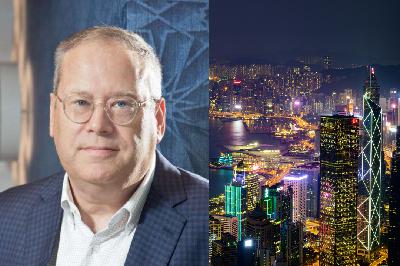
In the latest episode of Pacific Polarity, Ambassador Kurt Tong offers sharp reflections on American diplomacy in Asia. He underscores growing demands on the State Department’s capacity, particularly as issues like trade increasingly intersect with domestic politics, requiring careful coordination across multiple U.S. federal agenciesJersey LeeWelcome to this episode of Pacific polarity. Today we’re speaking with Ambassador Kurt Tong. Ambassador Tong is Managing Partner at The Asia Group, where he leads consulting teams focused on Japan, greater China and Korea, and on East Asia regional policy matters. He is a former senior U.S. diplomat with around 30 years of experience, including roles as Principal Deputy Assistant Secretary for Economic and Business Affairs, ambassador to APEC, consul general in Hong Kong, and as director for Asian economic affairs at the National Security Council. A key architect of the Trans-Pacific Partnership and U.S.-Korea Free Trade Agreement, he also played a leading role in the Six-Party Talks with North Korea, and U.S. economic engagement across the Asia-Pacific. Ambassador Tong, great to have you on.Kurt TongGreat to be here.Jersey LeeAs Consul General to Hong Kong and Macau through much of the first Trump presidency, were there ever times when you found out about a new US policy via tweet, and how did you handle that situation? What would be your advice to your former colleagues, given the higher stakes in this second Trump presidency, on managing diplomatic relations with this uncertainty looming over them?Kurt TongI think that President Trump is, as you note, well known for using a variety of ways to get out his message. He's used his social media, I think, more than any president has to both conduct political debates as well as make announcements about his objectives with respect to policy, so that's different. Every president will change policy and find different ways of explaining that, both to other governments, to their own government, to the congress, to the public, so I tend to focus on more the policy itself rather than the delivery mechanism.What you're implying, and I think it's quite self-evident, is that in the second Trump administration, the president has come in with a high degree of determination to change a lot of things about US policy and about the conduct of the US government.So that's a well-known fact and, I haven't worked for the administration for six years, so I don't have any direct experience with the second Trump administration. But it's certainly a different type of administration than a lot of people are used to.Richard GrayAt a recent congressional hearing, Wendy Cutler argued the cultural challenge within the state department is that economic affairs tracks are viewed as less desirable than the political affairs tracks. Do you agree that this is a substantive issue, and if so, what can be done to remedy the undervaluing of economics within American diplomacy? Especially as we think about Asia, where politics, security, and economics are pretty intricately intertwined.Kurt TongI don't know the context in which Wendy said that. I was, for a couple of years, as you noted in the introduction, the principal deputy to the Assistant Secretary and the Economic Bureau of the State Department. And when a gentleman named Charles Rivkin was my boss, the Assistant Secretary, Charlie and I were conducting a very concerted effort to strengthen the economic function within the State Department. Because for decades, really, the question of how economic policy get made and how does the State Department get involved in that process and shape it, and then coordinate the other aspects of foreign policy together with economic policy.I've thought about this problem a lot. It's not a recent thing by any means. I actually think that the recognition both publicly and internally of the importance of economic policy in diplomacy is continuing to go up year by year, including in the current administration; the difficulty is how do you institutionalize that and then how do you carry it out in practice.So one of the problems for the state department is that it doesn't have statutory authority over the making of international economic policy; financial policy is made by Treasury Department, trade policy by USTR—all this is more complicated than just one agency, but the lead agency is USTR; agricultural by Agriculture; industrial promotion and trade controls, which have become more and more important recently because of US-China friction, by the Commerce Department; energy policy by the Energy Department, and so on down the line.The State Department traditionally only had management over a few narrow areas. Back when the US had textile quotas, the State Department did textile quotas. The aviation negotiations have traditionally always been done by the State Department. And then the State Department has had some statutory authority over economic sanctions and also has had some authority over licensing of military related exports. Having foreign service officers at embassies work in the state department in Washington and then still know enough about this very complex policymaking process, to do a good job, is really complicated.So what we were trying to do is increase the opportunities for diplomats to get experience on US domestic economic policy formation, because unlike human rights policy for example, something that affects other countries more than affects the United States, trade policy affects the US as much or more than it does the counterparty country, so it's absolutely a matter of both domestic policy and foreign policy.In that context, it's unrealistic for the State Department to think that it's going to be put in charge of everything, and be allowed to decide everything for the U.S. So in that context, knowing more is the way to empower the diplomats to make them more effective. A lot of efforts have been made over the years to try to strengthen that—the individual capability to understand the issues and negotiate them with foreign governments—because that's often required of economic issues focused diplomats. And I think a lot of progress has been made.Recently, I'm quite concerned about the downsizing of the State Department functions and the removal of one of the most important tools of foreign economic policy, which is overseas development assistance.So more than the issue that you cited and the way that you cited it, I think the deeper concern is, is the State Department maintaining its full functionality given the intense budgetary and political pressure that it's been put under? And is the U.S. giving away some of its most important tools of foreign economic policy, which is development assistance? And I think I'm very concerned that the answer to both of those is bad.Richard GrayYeah. And as a related note, one of the things that I wanted to talk about was the role of investment, both public and private. And so, through your work at the Asia Group, how do you think about the role commercial relationships play in enhancing these bilateral relations?While the United States currently is restricting market access through tariffs and some upping the ante of export controls, it still is a pretty large recipient of and disperser of FDI in the Asia-Pacific. A little over a year and a half ago, I attended an event with Singaporean Ambassador Lui, and he says something along the lines of, China is our largest trading partner, but America is our most important investor. And while investment and trade in consort would certainly be an ideal for more comprehensive economic engagement, to what extent can private sector investment be a stopgap for these market restrictions? And as you're indicating, this is perhaps even more pressing with the closure of USAID, where private investment is both going to have to fill the diplomatic gap for trade access and public investment. How do you think about these things playing out, the role that companies are playing, and perhaps the broader aperture of what U.S. diplomatic relations might be like with some of these valves cut off?Kurt TongYeah, that's a very complex question that you've asked. The U.S. is both the number one source of outbound direct investment, portfolio investment, financing in general, as also the largest licensor and supplier of productive technology. And those often go together. the money and the technology and the managerial capabilities that go with them.It's also the biggest host of inbound investment because it's the largest economy, and traditionally has been very, very open for the most part to foreign investment in the US, because foreign investment is good for an economy.The political view of outbound investment over the years has varied and been a bit contradictory; so when people think about, do we want these Fortune 100 companies to be successful and have their stock prices go up and create more jobs in the United states, the answer is yes; these companies often say that in order to grow and be successful, they need to be globally competitive, not just competitive inside the United States, and they say that in order to be globally competitive, they often need to invest overseas and produce overseas and often produce and import things back to the United States that have been produced overseas, because those are cost-effective approach to making money and growing their companies.The political contradiction comes not from, if you ask any politician or American citizen, do you want your most successful companies to be successful? They say, oh yeah, we want that. If you ask them, should they be allowed to invest freely in other countries and leverage economic growth in other countries to the benefit of US shareholders? They say, yeah, that sounds great. But then if you say, should US companies build factories overseas to produce stuff and sell it back to the United States, you get a very mixed view because
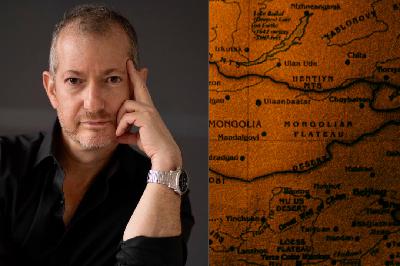
What's driving dynamics across Asia? In our latest Pacific Polarity episode, Dr. Evan A. Feigenbaum of the Carnegie Endowment for International Peace breaks down the key geopolitical trends reshaping the Indo-Pacific.Our expansive dialogue covered several topics, including:* Climate change in the Pacific,* A prospectus of AUKUS and U.S.-Australia relations,* China’s hardware-software tech ecosystem,* The future of rule-setting in Asia,* U.S.-China economic statecraft, and* The importance of American strategists to understand the concerns and aspirations of Asian states as independent actors, as opposed to pawns in the competition between the United States and China. This is a public episode. If you would like to discuss this with other subscribers or get access to bonus episodes, visit pacificpolarity.substack.com
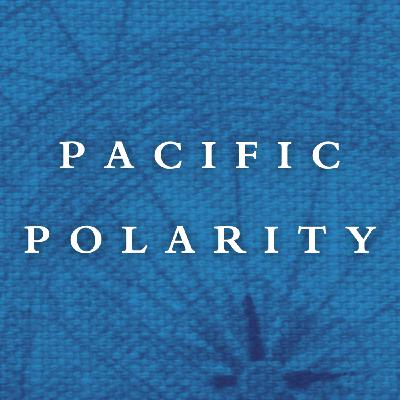
Richard GrayWelcome to today's episode of Pacific Polarity. Today we're speaking with Dr. Kazuto Suzuki, who is director of the Institute of Geoeconomics at the International House of Japan and professor at the Graduate School of Public Policy at the University of Tokyo. Dr. Suzuki also serves as president of the Japan Association of International Security and Trade, and an advisor of the Japanese government on National Space Policy Committee of the Cabinet Office. Dr. Suzuki, pleasure to be speaking with you.Kazuto SuzukiPleasure is all mine. Thank you.Richard GrayRecently in Japan Times, you argued that we were witnessing a transition from a defensive economic security to an approach of geoeconomics, which combines both offensive and defensive tools of economic statecraft. Can you describe this transition and Japan's role within Japan?Kazuto SuzukiWell, initially Japan has been interested in the concept of economic security, largely because we have been under pressure from China with regard to the export of rare earth minerals, various critical minerals, and also because Japan has been involved in a lot of supply chain network with China.But because of the intensive confrontation between the United States and China, especially after the first Trump administration, I think the economic relationship, especially in China using the economy as a weapon, and imposing various mechanisms such as export control on critical minerals and also controlling much harder in the Chinese domestic market.So in that regard, Japan had to take certain actions to improve the resilience of the Japanese industry and Japanese economic relationship with China. And therefore, we launched the concept of economic security. In 2022, Japan has established a law called the Economic Security Promotion Act, or ESPA, which targeted mainly improvement of the resilience of the supply chain, and also protecting the critical infrastructure, including the 5G network. After the establishment of ESPA, Japan, of course, took various measures to improve its economic resilience.But we gradually understand that the world is getting much complicated, including the tariff policy by the second Trump administration. So, we are now thinking of using the Japanese economic capabilities, especially focusing on the indispensability of the Japanese products in the global market, especially in terms of material, machine tools, or the manufacturing equipment. So these are the strengths of Japanese industry and Japan is indispensable in the upper stage of the production cycle. And we think that having this sort of strength in economic statecraft or economic indispensability in the global market we would be able to take advantage of this as the tools to express ourselves in the global supply chain.But unlike China, Japan has much less or little leverage against the global market. And we do need to maintain the free trade and free exchange of goods, in order to survive, because obviously Japan is a resource poor country. We depend heavily on the international trade. So we think that it is important to use this economic statecraft or economic indispensability in the global supply chain as the tools to build up the much stronger international frameworks such as CPTPP.Perhaps some of you may not know, maybe Australian audience understands very well about the CPTPP. This was a free trade agreement after the Trump administration left the TPP negotiation. The TPP was originally started with the 12 countries, but when the first Trump administration came into power, Mr. Trump decided to leave the TPP, and the TPP was on the verge of collapse. But Mr. Abe, Prime Minister then, he took initiative to restore the TPP negotiation and reframed the TPP to the CPTPP. So that was one of the examples that Japan took leadership in maintaining the free flow of global trading goods and to make sure that we will be engaged in the free trade.I think this is getting more and more important under the second Trump administration, where the tendency of protectionism is much stronger. And I think Mr. Trump's economic policy against US allies is now being very severe, and really hit on the capabilities of the economic activities of both Japan and Australia. I think it is in a sense the reason why Japan is using the economic statecraft not in an aggressive way, but for the cooperative way, is probably the reflection of the change of the international economic system.Jersey LeeYeah, so we will get to the longer-term challenge posed by China later on. Right now, as you mentioned, Japan has this current conflict in the economic realm and the trade realm with the US. Many had thought that Japan might be the first country to sign a trade deal with the US, including many in the current US administration. So first of all, why do you think that did not materialize? And given that China's had a preliminary deal with the US, that also came as quite a surprise to the world in terms of how much tariff reduction China received, particularly as it came on the heels of a notably less significant deal with the UK. So how do you think this was received in Japan? And do you think that all of this makes a deal with the US more or less likely?Kazuto SuzukiWell first of all, I think being a first does not necessarily mean a good thing. I think the reason why the UK was the first to make a deal is because the UK does not have the trade surpluses against the United States. In other words, from a US point of view, it's not a trade deficit country. So it's easier to use the tariff as a leverage to negotiate with the UK; and even when there is no trade deficit, the US still imposed a baseline 10% tariff against UK. The 10% of tariff is still a very large scale tariff and UK will face a very difficult moment for exporting its goods to the United States.But in terms of the automobile tariff, which is 27.5%, UK has the quota for the low tariff, which is 10%, for 100,000 vehicles per year. But UK is exporting almost 100,000 vehicles, which is okay for UK. The problem is that Japan is exporting 10 times more than the UK. So the conditions are quite different. And tariff negotiation with the United States and Japan is more complicated than the UK.The tariff agreement with China was basically, it is just an adjustment of the excessive escalation. So it was an escalation control mechanism rather than the negotiation. Basically, there's no deal with China. It is just simply bringing down these very excessive tariff level, like 145% to the 30%. If there is no agreement in the 90 days, then it will come back to the 54% (note: initial rate after “Liberation Day”). These are basically the beginning of the trade negotiation. It's not the conclusion of any tariff negotiation. Apart from that, there's no agreement.Fiji is another one, but Fiji is a very small economy and it's easy to deal. So I think Japan needs to take more time to negotiate with the United States because we are still far apart of our demand and the U.S. demand. And there's no reason that we accelerate the negotiation, because time is on our side. Even if it passed the July 9th, which is the end of the 90 days postponement of the so-called reciprocal tariff, even after the July 9th, probably it is the United States which face the more difficult situation. So I think the United States will have more incentives to conclude the negotiation. So in that regard, I think we can make the deal in a stronger position. So I think taking more time for negotiation is not a bad thing.And after all, the negotiation is to make an agreement which is acceptable for both countries. We cannot accept such high tariff on automobile, which is the bread and butter of Japanese economy. And there is no reason that we need to haste for the negotiation.Richard GrayAnd so to transition on from this, while it's important to coordinate on economic security and geoeconomic challenges between allies, it's also somewhat important for there to be a positive agenda of having reliable and continual investment relationships. And so this is where it's sort of the continual derailing of the Nippon steel acquisition of US Steel is in many ways very confusing. So on one end, Japan is an ally of the United States, but the Biden administration commented that the purchase was a national security concern. On more of the logistical and corporate specific challenges, Nippon Steel had cutting edge technology that would boost US steel manufacturing. And what's more, the union's preferred purchaser, Cleveland Cliffs, had recently laid off 950 workers in Illinois and Pennsylvania. And so there was going to be some downsizing in staffing regardless of who the purchaser would be.So with all of this in mind, a question of the US as a reliable place to invest in and to receive investment from, I think there's some level of ambiguity, which is not helpful to U.S.-Japan relations at large. And at this moment, President Trump has indicated his support of the acquisition, and it looks like it will go through. But there are many questions that still remain, including but not limited to his claim that the acquisition will lead to 70,000 new jobs. I don't know if Nippon Steel knows where that number exactly came from. In your view, what are some of the lessons that the Japanese government and Japanese companies have drawn from this saga?Kazuto SuzukiWell, the first lesson is don't propose the acquisition of the national interest of the country during the election time. The second is that steel and Aluminium has been a major U.S. interest for many, many years, ever since 1970s. And I think this is the hardest sector to penetrate into, and it is understandable that the United States is trying to restore the manufacturing jobs and manufacturing capabilities. Of course, the competitiveness of the US steel industry is much, much less, and I don't think it is economically reasonable, but I think when it comes to a question of maintaining
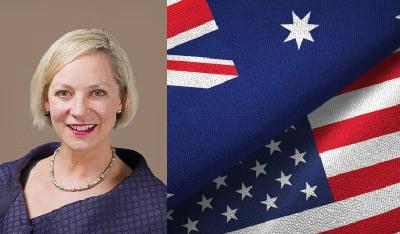
For this episode, we spoke with Ambassador Jane Hardy, non-resident senior fellow at the United States Study Centre, University of Sydney, and served as ambassador to Spain, Australian Consul General in Honolulu. Ambassador Hardy discusses her diplomatic postings, in particular the work that goes into engaging with America, and comments on the state of the alliance in Trump 2.0. She reveals that, even though she only left the post of Consul General to Honolulu in June 2021, she had no prior knowledge of AUKUS, which was announced in September 2021. This is a public episode. If you would like to discuss this with other subscribers or get access to bonus episodes, visit pacificpolarity.substack.com

Comments

Download from Google Play

Download from App Store
 United States