


 Claim Ownership
 2 Dads 1 Movie
2 Dads 1 MovieSubscribed: 1Played: 51
Subscribe

© All rights reserved.
Description
2 Dads 1 Movie is a podcast where two middle-aged dads sit around and shoot the shit about the movies of the '80s and '90s. One each episode.
56 Episodes
Reverse
Nic brought the pleated-linen-pants-and-mullet energy this week with Road House (1989), a movie both dads discovered in their late teens and have been unironically-slash-ironically in love with ever since. Steve first caught it during a freshman year hangout in a dorm room with a big TV and a bigger DVD collection. Nic remembers it as the ultimate bro night movie — rewatchable, quotable, and conveniently unappealing to any women who might've been around. Not that there were options.Patrick Swayze stars as Dalton, a legendary "cooler" — a job title neither dad has ever encountered in real life despite a combined several decades of barroom experience. Dalton is recruited to clean up the Double Deuce, a honky-tonk in Jasper, Missouri, where the nightly routine includes sweeping up eyeballs, throwing bottles through chicken wire, and negotiating breast access for cash. The town has maybe 5,000 people, one stoplight, and inexplicably more LA-caliber women than a casting call. Nic notes they all look like Larry and Balki's girlfriends from Perfect Strangers, which is an observation that shouldn't work as well as it does.Dalton lays down three rules — never underestimate your opponent, take it outside, and be nice — and Steve connects his philosophy to, of all things, Schitt's Creek. Meanwhile, Ben Gazzara's Brad Wesley runs the town through a protection racket and a JCPenney, and the dads cannot get over the fact that this man's big power move is bragging about bringing a mid-tier department store to rural Missouri. His introduction across three scenes amounts to: helicopter, pool party, reckless driving. "Hell of a guy," Nic deadpans.Sam Elliott shows up looking cooler than he's ever looked, Keith David shows up long enough to say they're out of whiskey, and Nic mourns the movie they could've had if the long humping scene had been replaced with more of either. The throat rip is everything it's remembered to be. The doctor's moral outrage about it is baffling to both dads. And Dalton's body count goes from zero to roughly eight in about fifteen minutes, which feels like poor pacing or exceptional restraint, depending on your perspective.Road House wraps up the '80s leg of 2 Dads 2 Decades, and the dads send the decade off with a movie that's half popcorn classic, half beautiful disaster. The premise doesn't make sense, the plot has more holes than Emmett's house has walls, and Dalton may have technically been the worst thing to ever happen to Jasper. But God, is it fun.
Beetlejuice (1988) is one of those movies where everybody thinks they've seen it more times than they actually have, and both dads discovered exactly that when they sat down with Tim Burton's PG-rated fever dream about dead suburbanites, haunted real estate, and a bio-exorcist with boundary issues.Steve picked this one, and it's personal. He was 8 when his parents took him and his brother to see it in theaters, and he credits Beetlejuice and Gremlins as the one-two punch that turned him into a horror kid. Nic's relationship with the film is fuzzier. He saw it young but suspects the Saturday morning cartoon warped his memories, much the way the Ghostbusters cartoon convinced a generation that Slimer was a main character. Revisiting Tim Burton after covering Pee-wee's Big Adventure earlier in the run, both dads are struck by what a bigger budget ($15 million, same as Wall Street) let Burton do with practical effects, puppetry, and that unmistakable Danny Elfman score. Nic pauses to note that Danny Elfman is the most perfectly named man in show business. If his name were Craig Winchester, none of this works.The conversation lingers on Michael Keaton, and rightly so. The makeup was largely his idea. A huge chunk of his lines were improvised. Nic calls the performance a cross between Freddy Krueger, the Heath Ledger Joker, and Ace Ventura, and honestly that tracks. There's a loving sidebar about the single PG-rated F-bomb (and accompanying crotch honk), which Nic reports his 5-year-old niece has faithfully committed to memory and recited back to her father in full. The MPAA giveth, and children taketh away.Both dads light up over the Banana Boat Song dinner party sequence and the way it builds from confusion to pure joy, only to completely backfire as a scare tactic. Steve confesses an early crush on Winona Ryder's goth Lydia that he traces directly to the first girl he dated in high school. And a brief, pointed observation about Jeffrey Jones lands with the kind of silence that says more than the joke did. Catherine O'Hara, meanwhile, gets nothing but love. Her "indoor outhouse" line, the Deo dinner party kickoff, and the immortal "they're dead, it's a little late to be neurotic" all get their flowers.Not everything holds up under the magnifying glass. The pacing drags in stretches. The shrunken head effect at the end is the weakest in the movie. The extras at Miss Shannon's School for Girls are, by both dads' estimation, not a single one of them under 45. But the stuff that works still works beautifully, and as Steve puts it, this is one of those movies that sticks with you so indelibly that it's just always there in the back of your mind. Six-and-a-half out of ten from the dads, and a reminder that there's still no better entry-level horror than the movies that started it all.
Nic brings Wall Street to the table this week, and the reasoning is hard to argue with: how have the Dads spent 50-plus episodes in the '80s and '90s without Michael Douglas? Oliver Stone's 1987 ode to pinstripes and insider trading follows Bud Fox, a hungry young broker played by Charlie Sheen, as he claws his way into the orbit of corporate raider Gordon Gekko by way of Cuban cigars, 59 consecutive phone calls, and one very illegal stock tip he picked up from his dad. From there, things go exactly the way Martin Sheen's face tells you they will.Both Dads came in familiar with the movie's fingerprints more than the movie itself. Steve knows the Boiler Room scenes quoting Wall Street better than any actual scene in Wall Street, and Nic, ever the CPA, paused the conversation to verify Bud Fox's tax math on a $50K salary across federal, state, city, and payroll. It checks out. Oliver Stone did his homework, even if subtlety was never on his syllabus. The dads clock Stone's sledgehammer approach early and never stop finding new examples, from Bud literally asking "who am I?" on his balcony to the foreshadowing so thick you could spread it on beef tartare, which, speaking of, Gekko serves Bud a portion roughly the size of a pot roast with an egg yolk on top. Nic didn't even think it was beef tartare because "the thing was so big."The supporting cast gets plenty of attention. Martin Sheen plays Bud's father, and the Dads agree he's the only genuinely good person in the entire film. Daryl Hannah's Darian, Razzie winner for Worst Supporting Actress, redecorates Bud's apartment into what Nic calls "Caligula's playhouse" complete with Styrofoam Doric columns, and at one point announces her dream of producing "a line of high quality antiques," which Steve correctly identifies as possibly the dumbest business plan ever committed to screen. And then there's Gekko's toddler, sporting a pumpkin pie haircut so distracting that Nic says it looks like someone painted a kid on an egg.The "greed is good" speech lands, Douglas's Oscar-winning glare lands harder, and a late-film detail where you can hear Bud's ice rattling because Charlie Sheen is subtly shaking with rage earns genuine admiration. But the financial schemes stack up and get harder to follow each time, and the third act collapses into a sprint. Both Dads leave with the same recommendation: if you want this story told better, go watch Boiler Room or binge Billions.Greed may or may not be good, but "I create nothing, I own" hits different in 2026.
Steve brought a childhood favorite to the table this week, and Nic brought a grudge he didn't know he had. Ferris Bueller's Day Off (1986) is John Hughes's love letter to the perfect skip day — a senior with no car but a god-tier hacking setup, a best friend's dad's priceless Ferrari, and a city full of places most suburbanites never bother to visit. Steve first watched it on LaserDisc in elementary school and has seen it a few dozen times since. Nic? He'd seen it once, maybe, and knew the ska band Save Ferris before he knew what it was referencing.What follows is a spirited 90-minute argument about whether Ferris Bueller is a charming rogue or, as Nic puts it, a selfish, entitled con man running "Ferris LeVey's Day of Do What Thou Wilt." The dads agree on more than you'd expect: the parents are shockingly good people being ruthlessly exploited, Cameron Frye is the emotional core of the movie, and Ed Rooney is a man who abandoned an entire student body to stalk a teenager through the suburbs. They compare Ferris to Leonardo DiCaprio in Catch Me If You Can, note the convenient fantasy logic that lets nobody hear him when he breaks the fourth wall, and wonder why the real Abe Froman never showed up to claim his table. Steve drops a jaw-dropping Ferrari deep cut — a 1961 250 GT California sold at Pebble Beach in 2025 for $25.6 million, meaning the car in the movie is now worth more than the inflation-adjusted budget of the film itself. And yes, Ben Stein's economics lecture about the Hawley-Smoot Tariff Act hits a little different in 2026.The parade scene becomes a full flashpoint. Nic's take: a teenager hijacking a German heritage celebration to lip-sync a Beatles cover while a marching band pretends to play along is grounds for a riot, not a standing ovation. Steve doesn't entirely disagree but has decades of goodwill banked. Cameron's poolside diving board stunt, Jeannie's clutch save at the back door, and Charlie Sheen's method-or-meth approach to looking strung out all get their due. Two dads, one LaserDisc classic, and a gap wide enough to park a kit car Ferrari in.
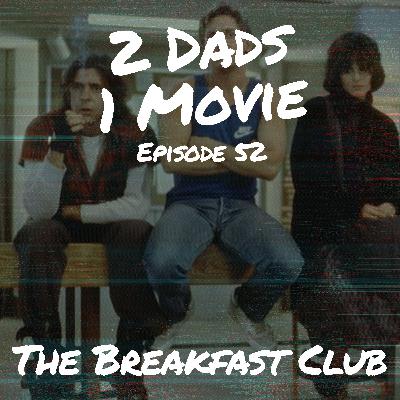
This week the Dads get detention along with The Breakfast Club, and what was supposed to be a conversation about a teen movie turns into something closer to a therapy session for two middle-aged fathers who suddenly can't stop seeing their own kids in every frame.Both dads have history with this one, but neither watched it young enough for it to hit the way John Hughes intended. Steve saw it in high school and thought these kids' problems felt like ancient history. Nic watched it more recently with his wife and daughter and came back different. Now, rewatching it through the lens of parenthood, they find a movie that's less about being a teenager and more about surviving the adults who are supposed to be raising you. The budget was a million bucks, the cast was seven people, nobody ever leaves the school, and it returned 51.5 times its cost, making it the biggest ROI of any movie the podcast has covered. Nic is duly impressed. Steve is doing the math on how nice that library is compared to anything either of them ever set foot in.The real surprise is Bender. Steve comes in ready to be annoyed and walks out calling him the best character in the movie. Not just the troublemaker, but the emotional engine of the whole thing, a kid with terrifying emotional intelligence and a cigar burn on his arm from a father he can only talk about in impressions. The Vernon-Bender supply closet scene gets a full breakdown, with both dads noting the exact moment each character realizes they went too far. Andy's confession about Larry Lester lands even harder as parents. And Brian's near-whispered admission about the flare gun and the unbearable weight of a B average nearly breaks Steve, who says he almost cried watching it this time around, thinking not about his own childhood but about the silences between sentences where kids hide what they're really feeling.There are lunches ranked, Canadian girlfriends invoked, and the eternal question of who flicks a perfectly good roach in 1984 suburban Illinois. But underneath all the Moliere-pumps-my-nads quotables, this one lands where it counts.Sincerely yours, the Dads.
This week, the Dads continue their 2 Dads 2 Decades march with 1984's Ghostbusters.Steve has seen Ghostbusters well over a hundred times. He watched it on LaserDisc as a four-year-old, weekly through high school and college, and still has an autographed photo of Murray, Aykroyd, and Ramis hanging on his wall. Nic's history is a little more modest: he saw it young, lost track of it in the no-VCR, no-cable wilderness of his childhood, and circled back in high school when everybody was passing tapes around and quoting lines at each other. Both dads came in hot for this one, and the conversation has the giddy energy of two people who know they're about to have a really good time.They dig into everything that makes the movie tick: how the practical effects hold up spectacularly because the ghosts actually affect the real world around them (proton blasts carve burning gashes in walls, Slimer eats real food off real plates), why Murray and Aykroyd are both operating at absolute peak here, and the way Dan Aykroyd's fast-talking pseudo-science sounds so confident you just nod along like he was a guy who walked into a building holding a clipboard. There's a deep appreciation for Ray Stantz's dangling cigarette, the eggs frying on Dana's countertop, and the fact that a concert cellist apparently makes enough to afford a corner penthouse on Central Park West. Nic, wearing his CPA hat, is particularly horrified by Louis Tully cheerfully broadcasting his clients' financial details at his own party, a fireable offense dressed up as Rick Moranis being delightful.The Huey Lewis plagiarism saga gets a full airing, including the detail that Ivan Reitman accidentally planted the song in Ray Parker Jr.'s brain by leaving it as a temp track in early footage. Steve mounts a passionate defense of the "Dr. Venkman, not Mr. Venkman" principle, rooted firmly in being married to a doctor. And there's a solid minute spent reckoning with the fact that Dan Aykroyd apparently wrote himself a ghost blowjob into a PG movie, which is a power move that transcends decades. The dads land firmly on the same side of this one: Ghostbusters holds up, the jokes still hit, the effects (minus one rough patch with the running gargoyles) still work, and the whole thing ends exactly when it should, with marshmallow raining from the sky and Louis Tully asking who does your taxes.
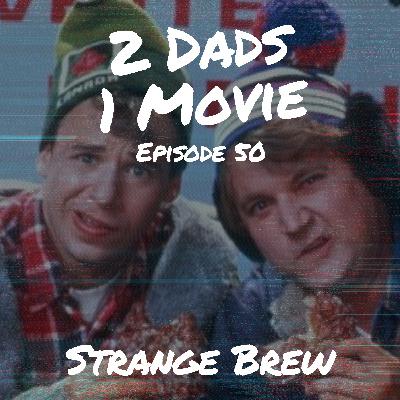
For their 50th episode, the dads crack open a 24-pack of nostalgia with Strange Brew (1983), the Rick Moranis and Dave Thomas comedy that somehow became every kid's unofficial guide to Canadian culture. Nic picked this one as a palate cleanser after the heavier terrain of Thief and Fast Times at Ridgemont High, and both dads went in carrying the same memory: this was the movie that taught an entire generation of American kids to say "hoser," "take off," and "eh" with unearned confidence. Nic admits the film basically served as his "mental Canadian embassy" well into college. Steve grew up quoting it with his friends and bonding over hockey culture. Neither had watched it in roughly twenty years.What they found is a cheerfully absurd 90-minute romp about two beer-obsessed brothers who stumble into a Hamlet-flavored murder conspiracy involving mind-control lager, a synthesizer-wielding villain with unexplained superhuman strength, an asylum full of hockey-playing inmates in Stormtrooper gear, and a ghost communicating through an arcade cabinet. Max von Sydow plays Brewmeister Smith with the intensity of a man who negotiated ass-kicking privileges into his contract. There's a lawyer who does full-contact karate on a gaggle of reporters. There's a dog named Hosehead who, without any prior foreshadowing whatsoever, flies. The currency system runs entirely on donuts and loose beer. And the movie holds the distinction of being the first film on the show that actually lost money at the box office, pulling in just $1.9 million against a $4 million budget, which prompts Nic to compare it to The Velvet Underground: nobody saw it, but everyone who did started a movie podcast.Both dads agree this is the clear ancestor of Wayne's World and wish the film had pulled in more SCTV talent for cameos. They rediscover the slang gem they somehow missed as kids: calling everything "beauty." And while the McKenzie brothers' delivery starts to wear a little thin by the final act, the affection is real. Happy 50th, hosers. Beauty episode, eh.
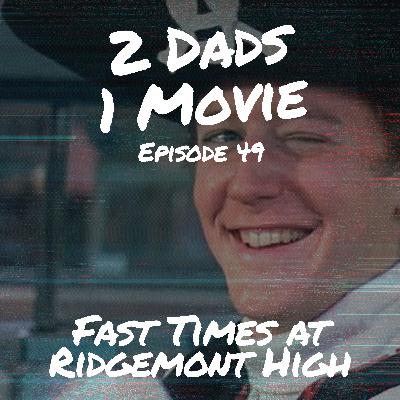
This week, the Dads dive into Fast Times at Ridgemont High (1982), Cameron Crowe's undercover-journalism-turned-screenplay debut brought to life by first-time director Amy Heckerling. Both Steve and Nic trace their history with the film back to high school sleepovers and VHS rewatches, and the rewatch hits different through 2026 eyes. The killer soundtrack gets immediate love, with Jackson Browne's "Somebody's Baby" and the Cars' "Moving in Stereo" earning their permanent spots in the cultural memory bank. The Dads walk through the Sherman Oaks Galleria opening with genuine nostalgia for a time when malls were thriving ecosystems, not just an abandoned Sears and a DMV, and spend a solid chunk reminiscing about their own local mall in Pleasanton and the lost art of getting dropped off at 10 and picked up at 4.The conversation zeroes in on the film's surprisingly nuanced handling of its teenage characters. Steve highlights Amy Heckerling's direction of Stacy's first sexual experience as deliberately non-exploitative, noting the dissociative camera work that centers Stacy's discomfort rather than serving up male-gaze titillation. Both Dads appreciate that the film treats abortion matter-of-factly, especially given how close it was to Roe v. Wade. They dissect Mike Damone's "proto-pickup artist" advice to Mark Ratner, agreeing some of it is genuinely useful while the rest is manipulative garbage. Nic coins Damone's vibe as "unshakable dork confidence," and both Dads land on a nuanced read of his betrayal of Rat: Stacy has her own autonomy and chose Damone, but Damone still crossed the line by inviting himself inside. Nic pulls out the film's best hidden joke, Damone's handwritten expense ledger listing "abortion, $75" alongside a tentative Rod Stewart ticket purchase.Sean Penn's Spicoli remains the film's secret weapon, from "no shirt, no shoes, no dice" to ordering pizza directly to Mr. Hand's classroom. The Dads marvel at how Penn's performance walks the line between stoner savant and genuine comedic genius, wondering if 1982 audiences could have predicted the Oscar-caliber career ahead. Steve and Nic both land in similar territory on the film overall: Steve calls it a solid 80s time capsule that moves fast and still feels relevant in the underlying teenage chaos, while Nic admits the characters are more interesting than the plot, noting the comedy doesn't land quite as hard as memory suggests. Both agree it's a breezy, enjoyable rewatch, even if neither is rushing back for another round anytime soon.
This week, the Dads fire up the cutting torch on Thief (1981), Michael Mann's gritty directorial debut that launched a career and divided a podcast booth. Steve came in completely blind, having never even heard of this Chicago-set crime noir, while Nic had been curious about it for years without ever actually watching. Fresh eyes all around, which makes the resulting conversation all the more combustible.From the jump, the Dads lock onto what makes this movie tick: it's a vibe. Nic falls hard for the Tangerine Dream synth score and moody nighttime visuals, calling it essential to the film's atmosphere. Steve? He's ready to throw the score out a window. He compares it unfavorably to Vangelis's work on Blade Runner, finding Tangerine Dream's sound harsh and intrusive where Vangelis brought texture and depth. The music sits on top of the movie rather than underneath it, he argues, actively pulling him out of scenes. Meanwhile, James Caan's Chicago accent becomes a flashpoint. Steve hears pure cartoon, something out of a Bill Swerski sketch, while Nic mounts a defense: maybe a guy raised in the foster system and incarcerated most of his life just emerges with a generic tough guy voice. The Dads also spend considerable time marveling at Caan's character pulling out a literal vision board during a diner scene to woo Tuesday Weld, a collage so pristine they can't figure out how it was physically produced in 1981.The running jokes pile up: diamonds stored in loose paper wraps instead of proper envelopes, money measured in inches, and the film's complete failure to signal when Frank has traveled from Chicago to Los Angeles. Nic appreciates the professional heist details and Frank's meticulous code, while Steve remains unmoved by a protagonist who, by the big job, is basically having his welding helmet put on for him like a princess. When Frank torches his own life in the final act, the Dads wrestle with whether the movie earns that moment or just speeds through it. Either way, Thief proves there's always something to dig into, even when the Dads aren't seeing eye to eye.
This week, the Dads kick off their new 2 Dads 2 Decades series with 1980's Airplane!, and Steve arrives with the ultimate childhood credential: he first watched this movie at two years old on laserdisc. His parents reconsidered their parenting choices when three-year-old Steve looked up at them and said, "What a pisser." Nic's introduction came via TV broadcast around age eight, and both Dads credit this Zucker-Abrahams-Zucker classic with shaping their sense of humor. Steve went deep on the research, watching the 1957 disaster film Zero Hour! that Airplane! spoofs nearly shot-for-shot, and spends much of the episode pointing out how many "serious" lines are lifted verbatim from that film, including "I picked a bad week to quit smoking."The Dads marvel at the stunt casting that put four dramatic actors into their first-ever comedic roles: Leslie Nielsen, Robert Stack, Lloyd Bridges (whose sons Jeff and Beau talked him into it), and Peter Graves. They dig into the gags that still land perfectly, from the white zone/red zone airport announcement bickering (performed by the actual married couple who did LAX announcements) to the Mayo Clinic doctor with mayonnaise jars behind him and a beating heart bouncing around his desk. The smoking ticket bit, the drinking problem visual gag, the line of passengers waiting to slap the hysterical woman with increasingly dangerous weapons, "We have clearance, Clarence. Roger, Roger. What's our vector, Victor?"—all rock solid forty-five years later. They also appreciate the details, like how the actress being slapped suggested making that line of attackers longer, which turned a good joke into an iconic one.But the Dads also wrestle with what hasn't aged well, from Captain Oveur's deeply uncomfortable cockpit conversation with young Joey to the Peace Corps basketball sequence that lands with a thud in 2026. Steve frames it this way: 1934's It Happened One Night is as far from Airplane! as Airplane! is from today, which helps explain why some jokes feel like artifacts from another era. Still, this is a movie where the sum of its parts outweighs the whole, a gag-a-second comedy that launched Leslie Nielsen's second act and taught a generation that deadpan delivery of absurd lines is an art form.
This week, the Dads wrap up JanuArnie with Nic's personal favorite Schwarzenegger film, 1985's Commando, and Steve is seeing it for the very first time. Nic describes it as "black tar Arnie," the most purely distilled version of what makes Schwarzenegger movies tick, and he's been quoting it with college buddies for decades. The film wastes zero time establishing its chaos: four minutes in, three bodies are already on the ground, and the Dads haven't even gotten to the famous daddy-daughter ice cream montage where young Alyssa Milano smashes a cone into Arnold's face while deer eat from his hands like he's Snow White with biceps.The villain situation sparks some heated discussion. Bennett, played by Vernon Wells, shows up looking like "Freddie Mercury in a crocheted chainmail vest" with fingerless gloves and a leather jacket, and Steve cannot get over how unintimidating he is. He's soft in the middle, clearly obsessed with Matrix in a way that reads more like a scorned ex-lover than a mortal enemy, and the Dads agree there's no counterbalance to Arnold's superhuman hero. Then there's Sully, a five-foot-two sleazeball in an oversized David Byrne suit who delivers increasingly disgusting one-liners until Arnold dangles him off a cliff and delivers the immortal "Remember when I said I'd kill you last? I lied." The Dads also geek out over recognizing the Beverly Hills Cop mansion, Bill Paxton's early cameo as a Coast Guard radar guy, and the baffling amount of steel drum in a movie set entirely in Los Angeles.The final assault on the compound is where Commando truly earns its reputation: Arnold kills the same seven stunt guys multiple times each, throws saw blades through skulls, and fires a machine gun while standing completely exposed as hundreds of bullets somehow miss him entirely. The Dads catch action figures on visible stands during explosion shots and marvel at a body count so absurd it defies mathematics. It's loud, ridiculous, and exactly what Nic promised: pure, uncut Arnie at his most gloriously over-the-top.
This week, the Dads take another step through JanuArnie with James Cameron's 1994 spy action-comedy True Lies, and Steve is practically vibrating with joy from minute one. He calls it possibly the most fun he's had watching any of the 45 movies they've covered together. The film doesn't let up for its full two hours and twenty minutes, and neither do the Dads, who find themselves completely won over by Cameron's crowd-pleasing magic. From Arnold emerging from a frozen Swiss lake with a perfect tuxedo under his wetsuit to subtitle parentheticals reading "perfect Arabic," the guys geek out over every slick spy detail while Tom Arnold's Gib provides running commentary from the surveillance van, lamenting his ex-wife who took the ice cube trays out of the freezer. What kind of sick bitch does that?Jamie Lee Curtis absolutely steals the show, and the Dads are here for it. Her legendary hotel room striptease gets the extended appreciation it deserves, with Steve and Nic marveling at her physical comedy chops and the sheer commitment of her performance. The dance is awkward and sexy and hilarious all at once, right down to her ankle buckling in those heels. Bill Paxton's sleazy used car salesman Simon earns equal time, spinning tales about being the mystery spy from the hotel shootout while eating a hot dog and declaring that "the 'Vette gets 'em wet." The Dads debate the impossibility of fast-forwarding and rewinding cassette tapes to precise dialogue cues and agree it's somehow less believable than anything involving nuclear warheads.Then there are the Harrier jets. Steve loved Harriers as a kid, and this movie delivers them in full glory for the entire third act, from bridge pursuits to Arnold blasting out an entire floor of a Miami skyscraper. A pelican tips a truck off a bridge. Jamie Lee Curtis beats Tia Carrere senseless with a champagne bottle that refuses to break. Dana steals the detonator key despite having zero spy training. It's gateway Arnie at his absolute peak, surrounded by James Cameron's bulletproof blockbuster instincts and a cast firing on all cylinders.
This week, the Dads get their asses to Mars with 1990's Total Recall, the second Verhoeven joint on the podcast and a movie that has seared itself into the collective consciousness whether you've seen it or not. Nic's pick here, and he wastes no time pointing out this is peak Arnie at peak powers, a cable descrambler classic, and one of the all-time great films for doing impressions of a man in distress. Steve agrees, noting that so much of our cultural love for Schwarzenegger comes from imitating the specific noises he makes, and this movie is absolutely overflowing with them.The Dads walk through the dystopian premise of a company that will implant fake vacation memories directly into your brain, and immediately spiral into how psychotically insane the "ego trip" upgrade sounds. Why would anyone want to believe they were a secret agent and then just wake up and go back to jackhammering? The cognitive dissonance alone would destroy you. Nic's wife gets a solid moment when the nail-painting receptionist appears on screen with her instant-color-change manicure tech, prompting a frustrated "son of a bitch!" from the couch. They appreciate the Verhoeven commentary on casting Schwarzenegger as a quote-unquote regular guy, acknowledge that Sharon Stone is acting her face off while playing a character who is also acting her face off, and give proper respect to the escalator shootout, the human shield that got used for way too long, and Johnny Cab's inexplicable decision to kamikaze itself into a wall over an unpaid fare.The conversation inevitably lands on three boobs, Kuato's weird little voice, the "see you at the party" callback, and the big question: is any of this real? Steve's now convinced the whole thing is an ego trip and Quaid is a lobotomized vegetable, while Nic figures he just wakes up disappointed and goes back to his crappy life married to peak Sharon Stone. Either way, blue sky on Mars was a new one.
This week, the Dads kick off JanuArnie with 1987's Predator, and it's clear from the jump that Steve would die for this movie. As in, top ten favorite of all time, no notes, completely unhinged levels of love. Nick's right there with him, calling it the ultimate guys' guys movie and the perfect beer-chugging, high-fiving experience. They walk through the testosterone-soaked helicopter ride, Jesse Ventura's sexual Tyrannosaurus energy, and the absurdity of Arnold arriving dressed like he works at Target.The Dads marvel at the 72 on-screen deaths during the guerrilla camp assault, Blaine's legendary "I ain't got time to bleed" followed by Poncho's perfect reaction face, and the sheer gratuity of watching Arnold bend vines over his shoulders while making a bow and arrow. They note that Carl Weathers apparently had to take his shirt off just to help pull a rope, which tracks. Nic's wife gets a few good lines in, observing that there's "not a lot of dialogue, just a lot of big puss jokes" and that the unmasked Predator has "a Dark Crystal-ass looking face." The Dads dig into the film's clever creature design, the way the Predator adapts its tactics based on circumstance, and the deeply satisfying payoff of Billy's laugh getting replayed in the alien's dying moments as it finally gets the joke.They wrap by marveling at the fact that this movie stars two future governors, that the Predator suit actor also played Harry in Harry and the Hendersons, and that 80s action movies just hit different than anything made since. If it bleeds, we can kill it, and if it's Predator, it absolutely rules.
This week, the Dads close out the 2025 Dadvent Calendar with Rocky IV (1985), a film they openly question is even a movie at all. Steve's verdict: it's two boxing matches and four music videos loosely tied together with a little bit of dialogue. Nic calls it eight montages in a trench coat. They're both right. The Dads marvel at the sheer audacity of a 91-minute runtime that somehow contains nearly 30 minutes of training sequences, driving montages, and flashbacks set to complete songs that fade out naturally, as if Stallone couldn't bear to cut a single track short. The Christmas bonafides are slim: the final fight takes place on Christmas Day, there's a tree visible behind Rocky's son, and the robot wears a Santa hat. That's it. That's the Christmas.Ah yes, the robot. The dads cannot get over the fact that Rocky gifts his brother-in-law Paulie a talking robot servant for his birthday instead of the sports car he wanted. This is a Season 7 of ALF type decision, Nic notes, a creative choice that belongs in no franchise. Meanwhile, Rocky gives his wife Adrian a wraparound watch and a deeply unsettling anniversary cake featuring bride-and-groom figurines in boxing gloves. The implications are not great. Carl Weathers, doing all the heavy lifting as Apollo Creed, gets a full James Brown concert before getting beaten to death in an exhibition match while Rocky holds the towel and does nothing. The Dads point out, correctly, that Rocky is the villain of his own movie: a man who let his best friend die, then abandoned his family on Christmas to fight in Soviet Russia because he needed to avenge a guy he clearly loved more than his wife.It's loud, sweaty, deeply stupid, and somehow still kind of fun if you treat it like the world's most expensive music video compilation.

This week, the Dads crack open another window of the Dadvent Calendar with Die Hard (1988), the action Christmas classic that redefined what an everyman hero looks like when he's barefoot, bleeding, and absolutely not having it.Steve and Nic dig into everything that makes this movie work, from the brilliant "fists with your toes" setup that justifies our hero's shoeless chaos to Alan Rickman's ludicrously good turn as the gentleman criminal Hans Gruber. They obsess over Theo's sports commentary running gag, debate whether Notre Dame would really be playing USC on Christmas Eve, and unanimously agree that Ellis is the most perfectly hateable 80s cocaine douchebag ever committed to film. "Hans, bubbe, I'm your white knight" gets the appreciation it deserves, as does the fact that this movie basically invented the MP5 as the standard issue bad guy weapon for the next decade. There's some pointed commentary about Al Powell's tragic backstory being framed a little too sympathetically, and plenty of love for Argyle living his best life in the parking garage while everything above him descends into absolute mayhem.The dads also celebrate the details that make rewatches so rewarding: the samurai armor in the vault, the "no more table" and "no bullets" one-liners that deserve their own remix, the way Holly knows John's still alive because only he could drive someone as unhinged as Karl, and the sheer audacity of a movie that finds time for titty distractions and a "Helsinki Syndrome" joke while blowing up an armored SWAT vehicle with a floor-mounted rocket launcher. When a movie this influential is also this endlessly quotable and fun, you just watch it every December like the Christmas tradition it absolutely is.
This week, the dads open another door on the Dadvent calendar with Home Alone (1990), the Christmas classic that feels impossible to skip during the holiday season. Steve and Nic dive headfirst into the beautiful chaos of the McAllister household, marveling at the absolute sociopath behavior of packing for a two-week international trip the night before a morning flight. They wonder aloud why an eight-year-old is trusted to pack his own bag when Nic's own wife still has to check his suitcase for missing socks. The dads dissect every baffling detail: the family's inexplicably red-and-green permanent decor, the suspicious number of mannequins in the basement (Buffalo Bill would be proud), and the staggering fact that $122.50 bought ten pizzas in 1990. They also note, with some alarm, that every single pizza appeared to be topped exclusively with kalamata olives and zero pepperoni.The conversation turns to the many adults who should have called the cops but didn't. The grocery store clerk, the pizza delivery boy, the town Santa, Old Man Marley. An entire village conspired, through sheer negligence, to let an eight-year-old nearly get killed by burglars. Speaking of those burglars, the dads conduct a thorough injury audit, tallying up blowtorched scalps, paint cans to the face, BB gun shots to sensitive areas, and the tar situation that led to Marv's barefoot ornament stomp. They agree that Daniel Stern's tarantula scream is the greatest man-scream of the decade, possibly ever, and praise the film's surprising physical comedy chops from both Stern and an against-type Joe Pesci. Nic gives particular love to John Candy's brief but perfect turn as the pushy polka bandleader, calling it the detail that elevates the whole thing.It's a warm, chaotic, deeply 90s time capsule that somehow makes you feel cozy even while children commit felonies and criminals sustain injuries that would kill lesser men.
This week, the dads continue their Dadvent Calendar with The Ref (1994), a pitch-black Christmas comedy where a cat burglar named Gus hijacks the wrong couple and spends his Christmas Eve playing unwilling marriage counselor to a pair of wealthy Connecticut WASPs who simply will not stop fighting. Steve brought this pick to the table as a movie he's loved since college, one he watches nearly every holiday season. Nic came in cold, his Dennis Leary fandom from the "No Cure for Cancer" days somehow never steering him toward this one until now.The dads dig into the film's hostile charm: the Scandinavian nightmare dinner with lit candle wreaths and Middle Earth cuisine, the volunteer cops who accidentally record It's a Wonderful Life over their only evidence, and the blackmailing military school kid who might be the most competent person in the whole movie. They marvel at Judy Davis absolutely dominating every scene she's in, holding the screen like a stage actress while delivering ice-cold lines about garnish and corpses. Steve calls out Kevin Spacey's presence with the requisite asterisk, but acknowledges the man is undeniably good here, especially in the present-opening scene where he finally tells his mother to shut the fuck up and offers to buy her a cross she can nail herself to. Nic notes his frustration with the wacky escalation format and wishes for more Leary ranting, but appreciates the Christmas bones of the thing.The dads align on Judy Davis as the MVP, debate the ethics of therapists attending family dinners, and bond over the universal experience of stopping for food before arriving at a relative's house because you know the situation will be weird.A holiday hostage comedy where the gunman is somehow the most reasonable person at the table.
This week, the dads tackle Trading Places (1983), the John Landis comedy that asks the age-old question: what if you took a rich guy's entire life and gave it to Eddie Murphy? What follows is the dads marveling at how this movie somehow gets away with everything, from its gleefully un-PC opening minutes to Jamie Lee Curtis in one of her most revealing roles. They're genuinely impressed by Eddie Murphy's performance, calling out his ability to sell both the comedy and the emotional beats, and they can't stop talking about Dan Aykroyd's commitment to the bit, especially during his spectacular downward spiral. The gorilla suit comes up. The Santa beard comes up. The sheer audacity of the third act comes up a lot.The conversation veers into fond territory when they dig into the Duke brothers as villains, the satisfying mechanics of the commodity exchange scheme (which they absolutely do not fully understand), and why this movie feels like it belongs to a different era of studio filmmaking. There's genuine affection here for the craft, the pacing, the way the screenplay threads everything together, and how Landis directs it all with confidence. They also spend quality time on Denholm Elliott and the supporting cast, appreciating how stacked this thing is with talent. The nostalgia runs deep, but so does the respect for what the movie pulls off, even when it's being completely ridiculous.They wrestle with the movie's rougher edges, the stuff that wouldn't fly today, and somehow land on the idea that Trading Places is both a perfect time capsule and a genuinely smart comedy about class and capitalism wrapped in an absolutely unhinged Christmas caper. It's dumb. It's brilliant. It's Trading Places, and it still works.
This week, the dads take on 1997's Face/Off, and Steve is practically vibrating with excitement because he's been waiting to do this one since before they even started the podcast. The John Woo-directed, Nicolas Cage-starring bonkers masterpiece gets the full breakdown treatment, starting with a delightfully nerdy timeline tracing how Sam Raimi, Quentin Tarantino, and the Oscars accidentally conspired to give us a movie where two A-listers literally swap faces. They dig into the absurdity of the premise, the logistics of the surgery, the unhinged performances, and the question of whether anyone on earth could have sold this role better than Cage. It's a love letter wrapped in gleeful confusion.The conversation careens through John Travolta's "dead son revenge plot," the infamous peach-eating scene, speedboat terrorism, and a prison that somehow operates like a gladiatorial death arena with absolutely zero oversight. They marvel at Cage's face doing all the heavy lifting, debate whether the movie is too long, and try to unpack why the film ends with what might charitably be called "problematic child acquisition." The dads also wrestle with the tonal whiplash of a movie that's simultaneously a gonzo action spectacle and a deeply weird meditation on identity, family, and face-touching. They can't decide if it's brilliant or dumb, so they settle on both.It's Cage at his unhinged best, Woo at his most operatic, and two dads at peak "we need to talk about this" energy.

Comments

Download from Google Play

Download from App Store
 United States