


 Claim Ownership
TOOL or DIE Podcast - Reindustrialize, Rebuild, or Retire
Subscribed: 3Played: 36
Subscribe

© Joel Johnson
Description
Exponent of radical reindustrialization in the U.S.A. A weekly podcast with the people forging the future of American manufacturing.
www.toolordie.com
www.toolordie.com
30 Episodes
Reverse

🎙️ Maneva is building video-based AI agents that plug directly into real-world manufacturing environments and deliver real-time insights across safety, uptime, quality, and process improvement without changing the floor layout or installing a new camera system.This week on TOOL OR DIE, we talk to Rae Jeong, Maneva co-founder and CEO. From his roots in a blue-collar Alberta town to AI research at Google DeepMind, Rae shares how his experience in robotics, factory work, and frontier AI led to Maneva’s mission: to democratize high-performance factory intelligence through edge-deployed, reinforcement-learning-driven video agents.We cover the surprisingly hard edge of video AI in manufacturing—from jammed conveyors and missed safety protocols to process drift and equipment failure—and how learning systems trained on video, not just static images, might define the next wave of manufacturing optimization.Timestamp:01:00 – From South Korea to Alberta to DeepMind: Ray Kim’s unusual path06:30 – What AI at DeepMind taught him about the limits of research10:30 – Why he left DeepMind to start Maneva13:00 – Maneva’s core pitch: video-to-action AI for messy, real-world factories17:00 – Why reinforcement learning on the edge matters21:00 – Mission-critical AI that integrates with PLCs, not the cloud24:00 – Beyond defect detection: using AI for downtime and predictive maintenance28:00 – Introducing Kaizen: factory-wide root cause analysis across agents31:00 – Real-world RCA: how video caught a missing prep station34:00 – The cost of jams and what video AI can really preventKey Topics:* Edge-deployed AI in high-variance, high-volume environments* Reinforcement learning vs pretraining for real-world reliability* Why video (not “vision”) matters in industrial intelligence* Video-based RCA: identifying bottlenecks and preempting downtime* Oneva’s broader thesis: Kaizen 2.0 powered by AI agents, not binders🔧 Learn more: Maneva.aiSponsorThis episode of TOOL OR DIE is brought to you by DOSS, the adaptive ERP.DOSS kills implementation hell by working directly with your team, connecting all your systems to minimize data entry so you can focus on production. Instead of barging in like a bull in a china shop, they take a deep look at your actual operations and build a system that matches how you operate today, replacing only the parts that need improving—rather than trying to fix what’s already working great.DOSS — One Platform, Total VisibilityTOOL OR DIE is hosted by Joel Johnson, former science & tech journalist turned corporate strategist who built brands like Gizmodo, WIRED.com, and Wirecutter; and Alex Roy, General Partner at New Industry Venture Capital (NIVC.us), known for breaking the Cannonball Run record and his work in autonomous vehicles. Each week, they speak with the people actually rebuilding American manufacturing—one machine, one company, one idea at a time.Follow them at:LinkedIn: joeljohnson | alexroyX: @joeljohnson | @alexroy144 Get full access to TOOL or DIE at www.toolordie.com/subscribe

Kevin William is a car journalist. He keeps going to China to drive new Chinese cars, write about what he sees and experiences and feels with his own two hands. But his reports about the rapidly increasing quality of Chinese cars for InsideEVs.com over the last year have been controversial for Western audiences, many of whom simply can’t believe a really easy-to-fathom, if painful concept: Chinese cars aren’t just really good now. They might be better than every other car being made.This episode isn’t about politics or U.S. ambition—it’s about reality. About what happens when you ignore a competitor for too long, and then wake up to find they’ve leapfrogged you. From the software-defined vehicle myth to the quality gap between Tesla and Chinese EVs, Kevin walks us through how and why the Chinese car industry matured so fast and why so many in the West still don’t get it.Timestamp:01:00 – Kevin Williams’ viral “Chinese cars are good” reporting05:00 – Debunking software-defined vehicles in the West08:00 – BYD, Xiaomi, and China’s EV quality edge12:00 – IP theft vs. learning by doing: what’s really going on18:00 – Nationalism, media backlash, and the fragility of Western auto pride24:00 – Why OEMs ignored China’s rise—and now regret it30:00 – Which Chinese brands are actually good? And which are failing?34:00 – Tesla’s fading advantage in China38:00 – What U.S. and European automakers need to do—nowKey Topic:* How Chinese EVs leapfrogged Tesla in infotainment and ride quality* Why "IP theft" isn’t the core issue—complacency is* OEMs’ blind spot: millions of sales in China, zero situational awareness* The backlash to truth-telling in auto journalism* InsideEVs’ Kevin Williams on what Western execs won’t say out loud🔧 Read Kevin's latest: InsideEVs.comSponsorThis episode of TOOL OR DIE is brought to you by DOSS, the adaptive ERP.DOSS kills implementation hell by working directly with your team, connecting all your systems to minimize data entry so you can focus on production. Instead of barging in like a bull in a china shop, they take a deep look at your actual operations and build a system that matches how you operate today, replacing only the parts that need improving—rather than trying to fix what’s already working great.DOSS — One Platform, Total VisibilityTOOL OR DIE is hosted by Joel Johnson, former science & tech journalist turned corporate strategist who built brands like Gizmodo, WIRED.com, and Wirecutter; and Alex Roy, General Partner at New Industry Venture Capital (NIVC.us), known for breaking the Cannonball Run record and his work in autonomous vehicles. Each week, they speak with the people actually rebuilding American manufacturing—one machine, one company, one idea at a time.Follow them at:LinkedIn: joeljohnson | alexroyX: @joeljohnson | @alexroy144 Get full access to TOOL or DIE at www.toolordie.com/subscribe

🎙️ Not every manufacturing company is a giant or a startup. Some are still family-owned companies slogging it out, making key components that look simple but involve detailed problem solving every single day.Numberall Stamp & Tool Co. is a family-run, rural Maine manufacturer making industrial marking tools for everything from lobster traps to Apollo missions. You’ve probably touched something they helped serialize—metal tags, numbered seals, marked valves—and never known it.But the company’s real story is in its resilience. Founded during the Great Depression to stamp poultry leg bands, Numberall grew into a small but essential supplier for defense, aerospace, medical, and heavy industry. Now in its third generation, it’s modernizing under pressure—holding tight tolerances, adding CNC machining, and training the next wave of machinists (when they can find them), all from a town of 800 people.Daniel, Alex, and Dieter—two generations of the Numberall family—join TOOL OR DIE to explain how rural manufacturers survive offshoring, boom-bust cycles, and demographic shifts. From WWII bomb sights to GE medical cuffs to engraved tags on the moon, this episode explores what legacy craftsmanship looks like when it’s still alive and evolving—and what it will take to pass it on.Timestamps01:00 – Numberall’s founding: chicken bands and rotary stamps in 1930s New York04:00 – The move to Maine and becoming a three-generation family business07:00 – What modern industrial marking looks like—and why it still matters10:00 – Surviving downturns: dot-com crash, 2008, COVID, and inflation14:00 – CNC modernization and cutting down weeklong jobs to hours17:00 – Why tight tolerances matter in precision stamping21:00 – Small team, long tenures: how to grow without losing legacy skills25:00 – Workforce scarcity in rural towns and the automation trade-off30:00 – From Apollo to Saudi oil rigs: Numberall’s surprising global footprint34:00 – The role of human-readable marks in a digital supply chain37:00 – Made in Maine: rebuilding manufacturing from small-town shops40:00 – What federal support would actually help Main Street manufacturersKey Topics* Numberall’s 95-year evolution and intergenerational leadership* How industrial stamping still outperforms lasers in speed and simplicity* Tight tolerances and raised engraving: the machining behind the marks* Surviving multiple manufacturing downturns as a small supplier* The strategic role of rural U.S. manufacturers in global supply chains* CNC upgrades and macro programming for legacy products* Why reshoring alone isn’t enough: training, capital, and market access* Engraving bomb sights and stamping serials for the moon missions🔧 Learn more: numberall.comSponsorThis episode of TOOL OR DIE is brought to you by DOSS, the adaptive ERP.DOSS kills implementation hell by working directly with your team, connecting all your systems to minimize data entry so you can focus on production. Instead of barging in like a bull in a china shop, they take a deep look at your actual operations and build a system that matches how you operate today, replacing only the parts that need improving—rather than trying to fix what’s already working great.DOSS — One Platform, Total VisibilityTOOL OR DIE is hosted by Joel Johnson, former science & tech journalist turned corporate strategist who built brands like Gizmodo, WIRED.com, and Wirecutter; and Alex Roy, General Partner at New Industry Venture Capital (NIVC.us), known for breaking the Cannonball Run record and his work in autonomous vehicles. Each week, they speak with the people actually rebuilding American manufacturing—one machine, one company, one idea at a time.Follow them at:LinkedIn: joeljohnson | alexroyX: @joeljohnson | @alexroy144 Get full access to TOOL or DIE at www.toolordie.com/subscribe

🎙️ Magnets without rare earths. Didn’t even know it was possible. Yet Niron Magnetics is making them in Minnesota and very soon the rest of the world.Simply put, what Niron has done is one of the most exciting and important industrial-scale innovations happening in the United States today. Magnets are critical in the electric motors that power everything from EVs to drones to robotics.But current magnets, like the ones in almost everything you own, need “rare earths” to function—rare earths that are sometimes mined in the United States, but never processed here. Which is why China often uses them as a trade lever, as they process more rare earths than any other country.Niron changes all of that, using a process that requires no rare earths and is even more powerful than what’s available with standard neodymium magnets.It’s huge.Niron CEO Jonathan Rowntree joins TOOL OR DIE to explain how Niron’s tech could transform everything from EV motors to defense drones to data center cooling—and why America’s magnet crisis is bigger than most people realize. From the legacy of the Manhattan Project to the geopolitical chokehold of Chinese exports, this is a deep dive into the guts of the devices that run our world, and the urgent need to build domestic capacity from the atom up.Timestamps01:00 – What’s so hard about neodymium? And what is Niron doing differently?04:00 – A rare earth-free magnet: iron nitride and how it works07:30 – The environmental and geopolitical risks of traditional rare earth magnet supply11:00 – Coming out of stealth and the global rare earth crisis 2.014:00 – Commercial pilot facility launched; full-scale factory coming in 202717:00 – Performance gains: higher thermal stability, motor efficiency improvements21:00 – Small motor demand: drones, humanoid robots, and data center cooling25:00 – Scaling U.S. magnet production from grams to 10,000 tons29:00 – The capital challenge: what funding hard tech actually requires33:00 – IP protection, cyber threats, and building a team for scale36:00 – Why domestic magnet production could drive reshoring of entire supply chains40:00 – What else needs to be rebuilt: copper, steel, automation, and skilled laborKey Topics* Iron nitride as a rare earth-free alternative to neodymium magnets* The technical and geopolitical vulnerabilities of global magnet supply* Niron’s commercialization roadmap: pilot facility to 10,000-ton factory* Motor design, thermal stability, and efficiency performance tradeoffs* Strategic applications: EVs, drones, defense, data centers* Reshoring through component innovation: building near demand* U.S. capital markets and the gap in scaling hard tech* The future of skilled labor in an automated manufacturing world🔧 Learn more: nironmagnetics.comSponsorThis episode of TOOL OR DIE is brought to you by DOSS, the adaptive ERP.DOSS kills implementation hell by working directly with your team, connecting all your systems to minimize data entry so you can focus on production. Instead of barging in like a bull in a china shop, they take a deep look at your actual operations and build a system that matches how you operate today, replacing only the parts that need improving—rather than trying to fix what’s already working great.DOSS — One Platform, Total VisibilityTOOL OR DIE is hosted by Joel Johnson, former science & tech journalist turned corporate strategist who built brands like Gizmodo, WIRED.com, and Wirecutter; and Alex Roy, General Partner at New Industry Venture Capital (NIVC.us), known for breaking the Cannonball Run record and his work in autonomous vehicles. Each week, they speak with the people actually rebuilding American manufacturing—one machine, one company, one idea at a time.Follow them at:LinkedIn: joeljohnson | alexroyX: @joeljohnson | @alexroy144 Get full access to TOOL or DIE at www.toolordie.com/subscribe

🎙️ It’s easy to think America doesn’t manufacture anything, but it’s simply not true. But one of the open questions around manufacturing in 2025 is simply: what if American manufacturing were more connected? What if the factories, logistics partners, and service providers already exist but need a new kind of network—one with actual business operations answers—to unlock them?Chris Nolte is a co-founder of Bloom, a Detroit-based operations marketplace (but with national reach) that helps emerging hardware companies scale. From electric motorcycles to autonomous robots and prefab homes companies, Bloom is helping hardware founders match with domestic manufacturers and logistics partners, then helping both sides finance, communicate, and operate with maximum speed.Bloom is hard tech grease.Nolte talks with TOOL OR DIE about the long tail of American manufacturing: why so many companies outsource by default, why so few people know that critical suppliers are still here, and how Detroit’s legacy supply chain can—and must—diversify beyond cars. From tariffs to tooling, high-mix manufacturing to culture change, Chris cheerfully explains the real reasons reshoring is hard to a hard-headed idiot (me) and what it’s going to take to make it work.Thanks again to Newlab Detroit and Michigan Central for hosting us. We’ll be publishing a few more episodes than usual over the next few weeks; we met several great companies in Detroit and don’t want to sit on episodes.Timestamps:01:15 – What Bloom does: connecting hardware startups with overlooked U.S. manufacturing04:00 – Beyond matchmaking: Bloom’s tools for financing, best practices, and logistics07:15 – Why reshoring isn’t just patriotic—it’s strategic risk management10:00 – Rethinking vertical integration and the myth of doing everything in-house13:45 – The “missing middle” in American manufacturing: why scale is so hard17:00 – Can Detroit build something that’s not a car? Why it must22:00 – The hidden factories: who’s assembling TVs and scooters in the U.S. right now26:00 – The real limiter: tariffs that penalize domestic production30:00 – Why communication—not tech—is the real bottleneck for U.S. suppliers33:45 – Bloom’s future: automating matching with AI, building the “Shopify for manufacturing”37:00 – Rebuilding industrial culture with Zoomers, grit, and mutual respectKey Topics:* Building a modern network of domestic suppliers, 3PLs, and service shops* The real costs and incentives behind offshoring—and what’s changing* The bottleneck of American "medium-scale" manufacturing* Tariffs, rare earths, and supply chain gaps* Using software and shared infrastructure to de-risk hardware startups* Detroit’s next chapter—and why it must extend beyond the automotive industry* Cultural challenges in U.S. factories—and how better communication changes everything* What it takes to speed up reshoring without giving in to nostalgia🔧 Learn more: BuildWithBloom.comSponsorThis episode of TOOL OR DIE is brought to you by DOSS, the adaptive ERP.DOSS kills implementation hell by working directly with your team, connecting all your systems to minimize data entry so you can focus on production. Instead of barging in like a bull in a china shop, they take a deep look at your actual operations and build a system that matches how you operate today, replacing only the parts that need improving—rather than trying to fix what’s already working great.DOSS — One Platform, Total VisibilityTOOL OR DIE is hosted by Joel Johnson, former science & tech journalist turned corporate strategist who built brands like Gizmodo, WIRED.com, and Wirecutter; and Alex Roy, General Partner at New Industry Venture Capital (NIVC.us), known for breaking the Cannonball Run record and his work in autonomous vehicles. Each week, they speak with the people actually rebuilding American manufacturing—one machine, one company, one idea at a time.Follow them at:LinkedIn: joeljohnson | alexroyX: @joeljohnson | @alexroy144 Get full access to TOOL or DIE at www.toolordie.com/subscribe

🎙️ Global trade data used to be buried in bureaucratic sludge until Dave Applegate turned it into ImportYeti, a tool for transparency (if you’re a shopper) and competitive advantage (if you’re building a competitor). It’s a really great tool just as a piece of UX on top of customs data. And that Dave and his team have built a business on top of it for power users—basically building the Bloomberg terminal for international shipping—is so clever.Dave joins TOOL OR DIE to explain how he’s made international shipping records searchable, visual, and dead simple to use for anyone, from journalists to supply chain strategists.This episode isn’t just about customs data, though: it’s about what that data reveals. From revealing where most leather jackets are actually made (hint: not in New York or even Texas) to exposing how many companies quietly source goods from countries with poor labor practices, Dave’s perspective born from years soaking in manifests and supply chain problems reframed many of our presumptions about the last few years of impact from pandemics and tariffs. Dave also walks us through the real post-COVID supply chain shifts (and what didn’t happen), the geopolitics of nearshoring and transshipping, and how companies are navigating tariffs, IP theft, and the long tail of ESG.And most importantly: why adult diaper imports are more geopolitically significant than you think.Timestamps00:00 – What is Import Yeti? Open customs data, visualized and searchable02:45 – From making mugs to mapping trade flows: the origin of the platform04:30 – The viral value of searching company imports (and the serious business behind it)06:45 – Why companies are finally moving away from China—slowly09:10 – Ecosystems drive manufacturing hubs: from Silicon Valley to Pakistan leather11:45 – Should the U.S. build a new Shenzhen—or many specialty zones?13:00 – Why no one changed their supply chains after COVID14:30 – China, ESG, and the illusion of ethical sourcing17:00 – What happens when Vietnam has its own China moment?18:30 – Reverse engineering global supply: Vietnam ≠ Mexico ≠ Pakistan21:00 – Will rising economies adopt IP law—or repeat China’s playbook?23:00 – Who pays for deeper insights? How Import Yeti’s model works25:00 – Custom trade data as a tool for industrial planning and due diligence27:00 – Tariff whiplash: the real impact of trade policy volatility30:00 – The “de minimis” loophole and why it may finally be closing32:00 – What data doesn’t show: raw materials, commodities, and the limits of visibility34:00 – Transshipping and tariff dodging: the hidden reality of many “non-China” imports36:00 – Sex objects, adult diapers, and the unexpected scale of niche imports37:30 – Why America still lacks manufacturing for strategic essentials like PPEKey Topics* Making government trade data accessible—and why it matters* Global supply chain realignments post-COVID, post-ESG, post-China* Tariffs, transshipping, and the search for non-China manufacturing* Data as leverage: sourcing, competition, and compliance* The blind spots of global trade transparency* What America didn’t build after COVID—and why it might matter next time🔧 Learn more: ImportYeti.com | U.S. Customs Data Explained | UFLPA & Forced Labor InfoSponsorThis episode of TOOL OR DIE is brought to you by DOSS, the adaptive ERP.DOSS kills implementation hell by working directly with your team, connecting all your systems to minimize data entry so you can focus on production. Instead of barging in like a bull in a china shop, they take a deep look at your actual operations and build a system that matches how you operate today, replacing only the parts that need improving—rather than trying to fix what’s already working great.DOSS — One Platform, Total VisibilityTOOL OR DIE is hosted by Joel Johnson, former science & tech journalist turned corporate strategist who built brands like Gizmodo, WIRED.com, and Wirecutter; and Alex Roy, General Partner at New Industry Venture Capital (NIVC.us), known for breaking the Cannonball Run record and his work in autonomous vehicles. Each week, they speak with the people actually rebuilding American manufacturing—one machine, one company, one idea at a time.Follow them at:LinkedIn: joeljohnson | alexroyX: @joeljohnson | @alexroy144 Get full access to TOOL or DIE at www.toolordie.com/subscribe

🎙️ America’s drinking water infrastructure is aging—and out of sight can’t keep meaning out of mind. But what if we could see inside the systems that keep our cities alive to make smarter and more timely repairs?Motmot is building inspection robots that do exactly that—swimming through water pipes under cities like Detroit, delivering critical insights before leaks turn into catastrophes. This week on TOOL OR DIE, we sit down with the company’s chief engineering officer Cale Colony (and graduate researcher at University of Michigan’s field robotics program) to talk about field robotics, municipal decay, and the long tail value of putting cameras—and AI—where no one’s looked before.From his Iowa farming roots to submarine design, Cale walks us through the evolution of agricultural automation, the limits of vertical farming, and why he sees water infrastructure as one of America’s most neglected and fixable challenges. It’s a conversation about the future of cities, the power of simple solutions paired to complex machinery, and the hidden vascular system under our streets.These are the first of several podcasts recorded at Newlab Detroit on the Michigan Central campus. Thanks to both for hosting us—we’re long on Detroit’s future as a manufacturing powerhouse that draws on the genius and know-how of its engineering and scaling experts.Timestamps:01:15 – The Motmot mission: building tiny robots for municipal water pipes04:00 – Hardware as a service: inspection robots, tethers, and recovery06:45 – Design constraints: no GPS, SLAM in pipes, power vs communication10:10 – Blue Robotics chassis, neutral-buoyancy tethers, and hull adaptations13:00 – What kinds of pipes matter most: potable vs sewer vs steam15:00 – Where old cities lose water—and why most don’t notice18:30 – How cities like Detroit or Flint overbuilt their water infrastructure22:00 – GIS systems, asset mapping, and the cost of knowing what you own25:00 – Sensors: vision, acoustics, ultrasonics, and future modular packages28:00 – Tuberculation, sediment buildup, and keeping the robot centered30:30 – Modeling pipe decay with visual data (and not knocking off the rust)32:00 – From submarines to agtech: the founder’s path through robotics35:00 – What robotics could do for diversified farming and food sovereignty38:00 – The case for small, smart, bio-diverse farms—and robots to support them41:00 – Lessons from vertical farming failures and what comes nextKey Topics:* Why America’s water infrastructure is leaking—and no one’s looking* Design and deployment of modular inspection robots for public utilities* The value of mapping municipal water systems, especially in older cities* Tuberculation, corrosion, and the hidden life cycle of metal pipes* Agricultural robotics and the future of biodiversity-driven farms* Why vertical farming failed, and what could work instead* Using automation to re-localize and decentralize food and water systems* Robotics as a long-tail strategy for environmental and civic resilience🔧 Learn more: Motmot.ai | University of Michigan Field Robotics GroupSponsorThis episode of TOOL OR DIE is brought to you by DOSS, the adaptive ERP.DOSS kills implementation hell by working directly with your team, connecting all your systems to minimize data entry so you can focus on production. Instead of barging in like a bull in a china shop, they take a deep look at your actual operations and build a system that matches how you operate today, replacing only the parts that need improving—rather than trying to fix what’s already working great.DOSS — One Platform, Total VisibilityTOOL OR DIE is hosted by Joel Johnson, former science & tech journalist turned corporate strategist who built brands like Gizmodo, WIRED.com, and Wirecutter; and Alex Roy, General Partner at New Industry Venture Capital (NIVC.us), known for breaking the Cannonball Run record and his work in autonomous vehicles. Each week, they speak with the people actually rebuilding American manufacturing—one machine, one company, one idea at a time.Follow them at:LinkedIn: joeljohnson | alexroyX: @joeljohnson | @alexroy144 Get full access to TOOL or DIE at www.toolordie.com/subscribe

🎙️ We want more factories in the U.S. For better products, for growing the middle class, for national pride and national security.But not everything America once made is coming home—and certainly not immediately. So how should we be thinking about the future—and power—of American manufacturing on a global scale?Elaine Dezenski—senior advisor at the Foundation for Defense of Democracies and head of its Center on Economic and Financial Power (CEFP)—joins TOOL OR DIE to deliver a clear-eyed assessment of America’s industrial strategy (and historical lack thereof), the backlash to China’s global Belt and Road Initiative, and the growing awareness that America’s market idealism might be served by understanding that the economy can be a coordinated force.Elaine argues that we’re already in a hot economic war—and we’re fighting it without the direction of an economic Pentagon. From misunderstood assumptions about the global order to the scramble for supply chain resilience, this episode connects the ideological, geopolitical, and deeply practical implications of reshoring and ally-shoring. Her proposal? A new economic architecture rooted in shared democratic values and strategic co-production—and more integrated decision-making between industry, capital, and government.Timestamps::01:15 – Peter Zeihan’s “End of the World” and U.S. maritime dominance04:00 – The myth of globalization: who benefits in a fractured order?06:30 – Why North America is well-positioned in a decoupling world08:00 – Nearshoring vs. ally-shoring: what's the real strategy?10:00 – Arctic trade routes, rare earths, and geopolitics at the poles12:00 – China's Belt and Road backlash and the illusion of soft power15:00 – The limits of authoritarian infrastructure diplomacy17:00 – Defining “ally-shoring” and its policy architecture20:00 – Can a hemispheric economy replace the global order?24:00 – Strategic tariffs, capital incentives, and building an iPhone in America28:00 – FDD’s evolution: from counterterrorism to economic statecraft31:00 – Reindustrialization as bipartisan economic defense34:00 – Smart power vs. soft power: what really moves global outcomes38:00 – The case for a new “economic Pentagon” and an American-style industrial policy44:00 – U.S. foreign investment: friends, foes, and forgotten guardrails48:00 – If Fukuyama was wrong, what comes next?Key Topics:* Why the U.S. needs a coordinated industrial strategy now—not later* The hidden costs of China's Belt and Road Initiative* How reindustrialization can be framed as a national—and democratic—security imperative* Why North America could anchor a new “near-global economy”* Building prosperity through values-driven co-production* What the Foundation for Defense of Democracies is actually doing in this fight* The missed opportunity of the Apple iPhone myth* Economic warfare tools vs. free-market dogma🔧 Learn more: fdd.org | Elaine Dezenski on LinkedInSponsorThis episode of TOOL OR DIE is brought to you by DOSS, the adaptive ERP.DOSS kills implementation hell by working directly with your team, connecting all your systems to minimize data entry so you can focus on production. Instead of barging in like a bull in a china shop, they take a deep look at your actual operations and build a system that matches how you operate today, replacing only the parts that need improving—rather than trying to fix what’s already working great.DOSS — One Platform, Total VisibilityTOOL OR DIE is hosted by Joel Johnson, former science & tech journalist turned corporate strategist who built brands like Gizmodo, WIRED.com, and Wirecutter; and Alex Roy, General Partner at New Industry Venture Capital (NIVC.us), known for breaking the Cannonball Run record and his work in autonomous vehicles. Each week, they speak with the people actually rebuilding American manufacturing—one machine, one company, one idea at a time.Follow them at:LinkedIn: joeljohnson | alexroyX: @joeljohnson | @alexroy144 Get full access to TOOL or DIE at www.toolordie.com/subscribe
🎙️ Austin Bishop, co-founder of the New American Industrial Alliance (NAIA)—known by most as the people behind the REINDUSTRIALIZE conference—joins TOOL OR DIE to explain how an engineering kid from Cleveland ended up helping create one of the most influential gatherings in American manufacturing.From early days of Atomic Industries to igniting a movement, Austin breaks down the convergence of venture capital, legacy SMBs, and policy leaders that’s driving America’s reindustrialization wave. REINDUSTRIALIZE isn’t another trade show—it’s a new convening model for serious builders, capital allocators, and government leaders reshaping U.S. industry, one where old heads and new make plans to accelerate American manufacturing.TIMESTAMPS:00:00 – On location at the Reagan Library02:14 – Austin Bishop joins: from Cleveland roots to venture capital04:45 – Founding Atomic Industries and confronting the tooling bottleneck10:00 – Why venture capital ignored manufacturing until supply chain collapse14:00 – How REINDUSTRIALIZE started as a small meetup and went viral20:00 – The real mandate: connecting capital, operators, and policymakers26:00 – Why REINDUSTRIALIZE avoids the trade show model33:00 – Building a true cross-sector network: startups, SMBs, primes, and government38:00 – The European industrial retreat vs. U.S. industrial resilience44:00 – Reindustrialization as a nonpartisan national security imperative50:00 – Why longtime U.S. manufacturers remain skeptical—and why that’s logical55:00 – The last firms standing: SMBs thriving after 50 years of offshoring pressure1:02:00 – Innovation isn’t always tech—it’s often business model expansionKey Topics:* Why tooling remains the hidden bottleneck for global manufacturing* How venture capital is finally waking up to industrial capacity gaps* The accidental product-market fit behind REINDUSTRIALIZE’s rapid growth* Bridging venture, policy, defense, and legacy industrial operators* The deeply rational skepticism inside America’s remaining industrial base* The structural advantage the U.S. holds over Europe in industrial policy* Reindustrialization as a politically non-aligned but nationally urgent project* How SMBs are evolving to capture defense and government work🔧 Learn more: reindustrialize.comTOOL OR DIE is hosted by Joel Johnson, former science and technology journalist and corporate strategist who pioneered brands like Gizmodo, WIRED.com, and Wirecutter, and Alex Roy, a General Partner at New Industry Venture Capital (NIVC.us) known for breaking the Cannonball Run record and his work in autonomous vehicles. Each week, they speaks with the people actually rebuilding American manufacturing—one machine, one company, one idea at a time.Follow them at:* LinkedIn: linkedin.com/in/joeljohnson | linkedin.com/in/alexroy* X: @joeljohnson | @alexroy144 Get full access to TOOL or DIE at www.toolordie.com/subscribe

🎙️ Nate Ames helps run a very clever program at Ohio State University. While the “Center for Design and Manufacturing Excellence” is an official arm of the school, it functions more like a paid internship. Hundreds of students have worked on real projects from over 150 companies, learning not just skilled trades and engineering, but also how to work within the same type of corporate and team structures they’ll be plopped into when they graduate.It’s like a trade school and an internship all in one—hands-on access to machines and project management—and it’s setting a template for future hybrid programs at universities around the country.In this episode of TOOL OR DIE, Nate explains why universities have failed to keep up with the pace of American industry—and how CDME is getting young people up to speed. By running like a startup and building with undergrad students instead of just grad students, CDME is turning research into real products and students into deployable talent.From running R&D projects for DARPA to building design-for-manufacture workflows with startups, CDME is rewriting the playbook for academic innovation and reshoring-ready manufacturing.TIMESTAMPS:00:00 – Intro and TOOL OR DIE updates02:08 – Nate Ames joins: from machining entrepreneur to CDME leader05:25 – What universities get wrong about product development09:40 – How CDME runs like a job shop with students on the line13:15 – Solving the “valley of death” between research and manufacturing17:30 – Why DARPA cares about DFM—and what that means for startups22:50 – Student-built parts that actually go into fielded defense products28:00 – How CDME scales from prototypes to production without breaking the model34:10 – What startups misunderstand about manufacturing38:00 – The reshoring moment and what’s needed to sustain itKey Topics:* Why academic R&D often fails to cross into real-world production* CDME’s unique model: acting like a job shop, building like a startup* Turning paid student labor into manufacturing muscle* Design-for-manufacturing (DFM) as a national security issue* Creating deployable talent pipelines, not just credentials* Bridging institutional knowledge with urgent, real-world problems🔧 Learn more: cdme.osu.eduTool or Die is hosted by Joel Johnson, former journalist, corporate strategist, and builder of brands like Gizmodo, Jalopnik, and Wirecutter. Each week, he speaks with the people actually rebuilding American manufacturing—one machine, one company, one idea at a time.SponsorThis episode of TOOL OR DIE is brought to you by DOSS, the adaptive ERP.DOSS kills implementation hell by working directly with your team, connecting all your systems to minimize data entry so you can focus on production. Instead of barging in like a bull in a china shop, they take a deep look at your actual operations and build a system that matches how you operate today, replacing only the parts that need improving—rather than trying to fix what’s already working great.DOSS — One Platform, Total Visibility Get full access to TOOL or DIE at www.toolordie.com/subscribe
🎙️ Matt Puchalski, founder and CEO of Bucket Robotics, joins TOOL OR DIE to explain how building defect-detection cameras for self-driving cars led him to modernize factory inspection systems. Bucket is attacking the quality-critical task of surface inspection with synthetic data, low-cost cameras, and vision software designed for factory floors, not research labs. From his time at Argo AI to leading reliability teams, Matt shares how empathy, donut diplomacy, and deeply nerdy tooling are giving American manufacturers better ways to detect defects and stay competitive.TIMESTAMPS:02:14 Matt Puchalski: from Argo AI to launching Bucket Robotics04:45 What’s broken in factory vision systems—and why most inspection tech is obsolete10:00 Making defect detection scalable with cheap cameras and smart software14:00 Why factory floors don’t need better hardware—they need better lighting and code21:00 The pricing model: how Bucket sells defect detectors per-part, not per-factory26:00 Hidden complexity: why manufacturing tires is a masterclass in material science33:00 What trade shows reveal about the people actually fixing U.S. manufacturing36:00 The missing middle: how reindustrialization needs capital, not contentKey Topics:* Why low-cost cameras + synthetic data beat expensive vision hardware* What manufacturers actually want from defect detection systems* The cultural and technical gap between software startups and factory operators* Surface inspection as the gateway to smarter QA and modular manufacturing* The true challenge of selling to manufacturing: empathy and 6:00 a.m. Teams calls* How to bootstrap job shops—and why we need more of them🔧 Learn more: bucket.botTOOL OR DIE is hosted by Joel Johnson, former journalist, corporate strategist, and builder of brands like Gizmodo, Jalopnik, and Wirecutter. Each week, he and co-host Alex Roy speak with the people actually rebuilding American manufacturing—one machine, one company, one idea at a time. Get full access to TOOL or DIE at www.toolordie.com/subscribe
🎙️ Jim Belosic, co-founder and CEO of SendCutSend, joins Tool or Die to explain how a small side hustle making car parts turned into one of the most important new manufacturers in the U.S. SendCutSend reinvented custom metal fabrication by embracing high-mix, low-volume production a the modern online shopping experience. It’s ecomm software meets lots and lots hardware. From nesting algorithms and logistics infrastructure to empowering kids with BattleBots and CAD, SendCutSend is creating a new type of job shop for American manufacturing, one that serves hobbyists and increasingly industrial clients alike.TIMESTAMPS:* 00:00 Intro and update on Tool or Die* 02:14 Jim Belosic joins the show* 04:30 From software startup to laser-cutting shop* 10:45 Why serving hobbyists opened the door to industry customers* 14:00 How SendCutSend makes money on one-off parts* 20:00 Building out capacity in Nevada, Kentucky, and Texas* 26:00 The truth about CNC machining vs. 3D printing* 33:00 DFM education, customer churn, and printing from your garage* 38:00 What reindustrialization actually looks like—on the groundKey Topics:* How SendCutSend made high-mix, low-volume profitable at scale* Why design for manufacturability (DFM) can be the biggest bottleneck in hardware* The hidden logistics challenges behind modern job shops* Why American factories are thriving but invisible* Teaching the next generation with BattleBots, FIRST, and CAD* How to rethink product design for modularity and U.S. manufacturing🔧 Learn more: sendcutsend.comTool or Die is hosted by Joel Johnson, former journalist, corporate strategist, and builder of brands like Gizmodo, Jalopnik, and Wirecutter. Each week, he speaks with the people actually rebuilding American manufacturing—one machine, one company, one idea at a time. Get full access to TOOL or DIE at www.toolordie.com/subscribe
🎙️ I met Cameron because he DM’d me and said “Would you ever want to talk to a guy who just started working as a machinist?” To which I replied (professionally) “You bet your ass I would.”Cameron Schatz is 25, didn’t (yet) finish college, and just a few years ago was fixing hot tubs and driving an hour each way to work. Today, he’s a CNC machinist at Lycoming Engines, cutting steel and running gauges on precision aircraft parts. And while most people follow a path into manufacturing, Cameron bushwhacked his way in—with no formal training, no family background in the trades, and no plan except “try everything and work hard.”We talk about the Kaizen project that got him interested in production flow, the shop culture differences between union and non-union jobs, and how he went from stacking parts at a laser cutter to running precision measurement on \$10,000 aerospace components. We also get into the emotional math of leaving your first real shop job, what a UAW contract actually feels like from the floor, and why making the leap into skilled manufacturing feels like joining a secret society… only one with lathes.He’s curious, self-taught, and determined to push past the ceiling. Loved this conversation.---TIMESTAMPS03:00 Growing up between Washington state and Pennsylvania08:00 First factory job: refurbishing hot tubs14:00 Kaizen meetings and shipping department leadership17:00 First steps into machining22:00 Getting into the CNC shop with no credentials28:00 The move to aerospace: joining Lycoming Engines31:00 How the UAW job board and labor grades actually work37:00 Being bumped, bidding, and union culture43:00 “If you’re stuck, you don’t have to stay stuck”48:00 What he’s working on next---KEY TOPICS* First-person account of entering manufacturing without a technical degree* Union vs non-union culture in American factories* Learning machining from the ground up* The informal mentorships that shape careers* Emotional labor of leaving your first “real” job* Modern industrial work as a vector for personal growth* The latent intelligence and ambition of America’s young tradespeople🔧 Follow Cameron: @cameron_schatzTool or Die is hosted by Joel Johnson (with visits from co-hostAlex Roy), former tech journalist, corporate strategist, and builder of brands like Gizmodo, Jalopnik, and Wirecutter. Each week, Joel talks with the people building the future of American manufacturing. Get full access to TOOL or DIE at www.toolordie.com/subscribe
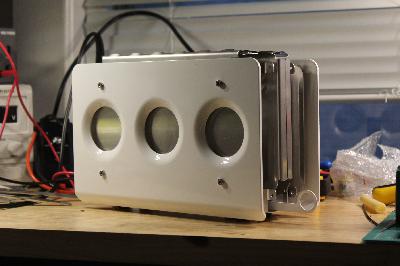
🎙️ Industrial designer and former auto journalist Peter Holderith joins Tool or Die to talk about… well, we should be talking about the hybrid kit sports car he’s designing and building from scratch with no hard tooling, no team, and no OEM funding.But instead we’re talking about this toaster that he’s designing because Jim Belosic of SendCutSend challenged him (and others!) to design a 100% Made In America Toaster. (Peter’s design is…very kickass.)Thankfully this is a podcast and I edit it so I can talk about whatever I want, so we also go into Peter’s true life mission as a car nut and engineer: making an entirely new type of kit car. From 3D-printed body panels to aluminum tube chassis construction, Peter explains why this might be the first real kit car of the new reshoring era.Oh, we also talk about his Peltier-cooled beer chiller that pulls 800 watts and needs two gaming PC power supplies to operate.This is what modern manufacturing looks like when you give an insane clever man access to SendCutSend, tasteful New England ales, and not nearly enough time or self-control. Loved this talk.TIMESTAMPS* 00:00 Redefining the American toaster* 02:00 Why SendCutSend is sponsoring maker weirdos* 05:00 Peter’s path from industrial design to automotive journalism* 09:00 Making the “Weather Orb” from scratch* 14:00 The science and art of a 5-minute beer chiller* 18:00 Building a hybrid kit car with no hard tooling* 24:00 Flat-pack sports cars and the future of Osh Cut & SendCutSend* 31:00 What even *is* a modern car now?* 36:00 How to make the front axle electric and the rear gas-powered* 39:00 Safety, SolidWorks, and sane madnessKey Topics* Modern prototyping using SendCutSend, Osh Cut, and RMFG* Hybrid drivetrain design with decoupled axles* 3D printing for structural and body components* Why we’re finally ready for real reshored kit cars* The crossover between car culture and manufacturing revival* Low-volume production without compromise📺 YouTube: Peter Holderith’s channel🔧 Follow Peter: [@holderithdesign](https://twitter.com/holderithdesign)Tool or Die is hosted by Joel Johnson (with visits from Alex Roy), former tech journalist and co-founder of brands like Gizmodo, Jalopnik, and Wirecutter. Each week, Joel speaks with people building the future of American manufacturing.#KitCars #HybridSportsCars #SendCutSend #AmericanManufacturing #DIYEngineering #ToasterChallenge #AutoDesign #Reshoring Get full access to TOOL or DIE at www.toolordie.com/subscribe
🎙️ Ted Feldmann (@teddyfeld), founder of Durin, joins Tool or Die to discuss how his startup is tackling one of the most overlooked but vital problems in American reindustrialization: the lack of modern drilling rigs for mineral exploration. Ted explains why the U.S. is decades behind on core sampling tech, how Durin is building a programmable drilling rig from the ground up, and what it would take for the U.S. to decouple from China’s stranglehold on critical minerals.TIMESTAMPS:* 00:00 The goblin problem and bad sci-fi drilling* 01:00 What Durin actually does: small-bore exploration rigs* 03:00 Why drilling is the single biggest cost in mineral exploration* 06:00 Automation vs. skilled labor in the field* 08:00 Real-time sensor challenges underground* 11:00 U.S. resource potential and rare earths supply constraints* 14:00 How public data could kickstart a new gold rush* 17:00 The regulatory bottleneck: permitting vs. drilling* 21:00 Naming a mining company after a Tolkien character* 23:00 Space mining and what Durin might do next* 25:00 Rig update: pilot test in Nevada and what comes afterKey Topics:* Why U.S. mining is bottlenecked at the exploration stage* How Durin is building “programmable rigs” for remote, autonomous core sampling* The massive opportunity in rare earths—and why we’re under-exploring* A more cost-effective path to identifying economic deposits* What mining (and drilling) automation really looks like* The national security implications of letting exploration lag behind👉 Learn more: durin.comTOOL OR DIE is produced by Johnson & Roy (Johnson-Roy.com), a strategic advisory firm focused on technology, mobility, manufacturing, and robotics. Your hosts are Joel Johnson, tech media veteran behind Gizmodo, Jalopnik, and Wirecutter, and Alex Roy, General Partner at New Industry Venture Capital (NIVC.us) and longtime voice in autonomy and transportation.Follow them:* LinkedIn: alexroy | joeljohnson* X: @alexroy144 | @joeljohnson* Web: johnson-roy.com Get full access to TOOL or DIE at www.toolordie.com/subscribe
🎙️ Tool or Die welcomes three fine gentlemen from IACMI – The Composites Institute, who are leading national efforts to rebuild America’s manufacturing workforce from the ground up. Justin Brooks oversees workforce development initiatives like America’s Cutting Edge (ACE) and METAL, programs designed to tackle the skilled labor shortage in machining, casting, and forging. David Roberson, a Marine Corps veteran and ACE’s lead instructor, shares his personal story of transition from the military to machining—and how he’s helping others do the same. And Greg Harrell, Workforce Coordinator for METAL, brings decades of experience in precision engineering and technical education to connect schools, veterans, and industry.TIMESTAMPS:* 00:00 Introduction to IACMI and the METAL program* 06:00 From DOD bombs to boot camps—Justin’s story* 11:00 David’s transition from the Marines to machining* 18:00 How the ACE and METAL programs actually work* 24:00 The hands-on appeal of pouring real molten metal* 30:00 Changing perceptions about dirty jobs and skilled trades* 36:00 How students and veterans are finding purpose in manufacturing* 43:00 What’s next for IACMI and nationwide manufacturing trainingKey Topics:* Why machining, casting, and forging are critical to defense reshoring* How short boot camps are giving veterans and students career-launching skills* The DOD’s role in scaling workforce training programs nationwide* Fixing the broken pipeline between education and skilled industrial jobs* Why “dirty” doesn’t mean dead-end—and why Gen Z is starting to get it* The unexpected power of making something real with your own hands👉 Learn more: iacmi.org | americascuttingedge.org | MetalforAmerica.orgTOOL OR DIE is produced by Johnson & Roy (Johnson-Roy.com), a strategic advisory firm focused on technology, mobility, manufacturing, and robotics. Your hosts are Joel Johnson, tech media veteran behind Gizmodo, Jalopnik, and Wirecutter, and Alex Roy, General Partner at New Industry Venture Capital (NIVC.us) and a longtime voice in autonomy and transportation.Follow them:* LinkedIn: alexroy | joeljohnson* X: @alexroy144 | @joeljohnson* Web: johnson-roy.com Get full access to TOOL or DIE at www.toolordie.com/subscribe
🎙️ Caleb Chamberlain, co-founder of Osh Cut, joins Tool or Die for a loose conversation about the viral video that hit a nerve in U.S. manufacturing circles. The video—posted by a frustrated entrepreneur—calls out American manufacturers for being unwilling or unable to build a simple ATM kiosk enclosure, contrasting that experience with seamless production in China. Joel, Alex and Caleb break down where he's right, where he's wrong, and what the story reveals about the structural gaps in American industry—especially for high-mix, low-volume manufacturing.TIMESTAMPS:* 00:00 Intro & viral video setup* 02:00 The mystery of WTI Wireless* 04:00 Why Osh Cut was founded* 07:00 U.S. manufacturers: optimized for repeat jobs, not first-time customers* 10:00 “American manufacturers are babies?” Not quite* 13:00 Why high-mix, low-volume work is still so hard* 20:00 What’s missing: no U.S. equivalent of Alibaba* 28:00 What Caleb would do with $250 million* 33:00 Should you scale services or open new shops?* 38:00 Could Osh Cut’s platform become a SaaS business?* 44:00 Why many legacy shops won’t survive the next decadeKey Topics:* The real reasons U.S. manufacturers turn down small or custom jobs* Why digitizing quoting is only 20% of the challenge* The case for vertically integrated, software-native factories* What it would take to build an American manufacturing marketplace* Reshoring, tariffs, and the shrinking pool of capable shops* Why Caleb thinks this is the time to build in U.S. manufacturing👉 Website: oshcut.comTOOL OR DIE is produced by Johnson & Roy (Johnson-Roy.com), a strategic advisory firm focused on technology, mobility, manufacturing, and robotics. Your hosts are Joel Johnson, longtime tech journalist and builder (General Motors, Gizmodo, Wirecutter), and Alex Roy, General Partner at New Industry Venture Capital (NIVC.us) and veteran of the autonomy and mobility space.Follow them:* LinkedIn: alexroy | joeljohnson* X: @alexroy144 | @joeljohnson* Web: johnson-roy.com Get full access to TOOL or DIE at www.toolordie.com/subscribe
🎙️ Gabe Elias, CEO of Material, joins Tool or Die to discuss his journey from Honda engineer to Formula One designer to battery manufacturing innovator. We explore how Gabe's determination to work in F1 led him to quit his stable job at Honda, move to England, and eventually land a position at Mercedes F1, where he contributed to seven world championships. Now, Gabe's startup is revolutionizing battery manufacturing with 3D printing technology that allows for custom-shaped batteries that could transform everything from consumer electronics to electric vehicles.TIMESTAMPS:* 00:00 Introduction* 00:15 Gabe's journey to Honda and F1 aspirations* 08:30 Moving to England and Oxford Brookes University* 14:00 Landing a job at Mercedes F1* 19:40 Formula One engineering experience* 22:30 Crossover between F1 and mass market manufacturing* 26:50 Leaving F1 for Rivian* 29:20 Tesla's innovations in EV manufacturing* 32:20 Founding Material and 3D printed batteries* 39:40 Material's business model and future plansKey Topics:* How Gabe strategically targeted Honda hoping for a path to F1* Quitting his job and telling his manager he'd be an F1 engineer within a year* The rigorous technical interview process at Mercedes* Why F1 engineering knowledge has limited crossover to mass manufacturing* How Tesla's zonal architecture is revolutionizing EV production costs* Material's ability to create custom-shaped batteries for any device* The chemistry-agnostic approach to battery manufacturing at Material* How 3D printed batteries could extend the range of EVs and runtime of devicesTOOL OR DIE is produced by Johnson & Roy (Johnson-Roy.com), a strategic advisory firm specializing in technology, mobility, manufacturing, and robotics. Your hosts are Joel Johnson, a former technology journalist and media executive who pioneered brands like Gizmodo, Jalopnik, and Wirecutter, and Alex Roy, a General Partner at New Industry Venture Capital (NIVC.us) known for breaking the Cannonball Run record and his work in autonomous vehicles.Follow them at:* LinkedIn: linkedin.com/in/alexroy | linkedin.com/in/joeljohnson* X: @alexroy144 | @joeljohnson* Web: johnson-roy.com#Manufacturing #Batteries #Formula1 #StartupLife #3DPrinting #EVs #Engineering #MaterialScience Get full access to TOOL or DIE at www.toolordie.com/subscribe
🎙️ Gavin Stener, founder of 67 Designs, joins Tool or Die to discuss his journey from ERP software to building a U.S.-based manufacturing company focused on high-quality off-road vehicle mounts and accessories. We explore the challenges of American manufacturing, the fight against counterfeiters, generational knowledge transfer, and the cultural shift needed for reindustrialization.TIMESTAMPS:* 00:00 Introduction* 02:33 Gavin's background and early engineering experiences* 05:00 ERP software and manufacturing challenges* 15:35 Why Goldratt's "The Goal" is essential reading* 25:15 Manufacturing culture and respect for tradespeople* 33:45 The founding mission of 67 Designs* 38:20 Counterfeiting challenges and IP protection* 50:40 Patent prosecution and Chinese IP tactics* 58:10 The path forward for American manufacturing* 01:05:45 Closing thoughts on reindustrializationKey Topics:* How early experiences with machining in Australia shaped Gavin's manufacturing philosophy* The history and evolution of ERP systems in manufacturing* The critical importance of respecting skilled trades workers* Why 67 Designs was founded to transfer knowledge from older generations* How counterfeiting and Amazon impact small American manufacturers* The challenges of patent protection and intellectual property* Why manufacturing revival needs educational, legal, and supply chain reform* The importance of domestic manufacturing for national security and economy👉 Follow: 67designs.com | X: @67designsTOOL OR DIE is produced by Johnson & Roy, a strategic advisory firm specializing in technology, mobility, manufacturing, and robotics. Your hosts are Joel Johnson, a former technology journalist and media executive who pioneered brands like Gizmodo, Jalopnik, and Wirecutter, and Alex Roy, a General Partner at New Industry Venture Capital (NIVC.us) known for breaking the Cannonball Run record and his work in autonomous vehicles.Follow them at:* LinkedIn: linkedin.com/in/alexroy | linkedin.com/in/joeljohnson* X: @alexroy144 | @joeljohnson* Web: johnson-roy.com#Manufacturing #AmericanManufacturing #CounterfeitPrevention #IntellectualProperty #Reindustrialization #ERP #OverlandGear #SkilledTrades Get full access to TOOL or DIE at www.toolordie.com/subscribe
🎙️ Barrett Ames, CTO of BotBuilt, joins Tool or Die to discuss how his company is revolutionizing home construction with robotic framing technology that dramatically reduces build time. We explore how BotBuilt's approach differs from failed construction startups by focusing on flexibility and real-world applications, the severe labor shortage in construction, and how Barrett's background in NASA robotics and DARPA challenges led him to tackle America's housing crisis.TIMESTAMPS:* 00:00 Introduction* 02:00 BotBuilt's approach to construction automation* 08:40 Why previous construction automation efforts failed* 14:00 Working with building inspectors and code compliance* 19:30 Barrett's background in robotics at NASA and DARPA* 26:20 The T-shaped skills needed for industrial innovation* 34:50 Handling construction labor shortages* 41:30 The future of robotic construction technology* 48:20 Building tech companies outside traditional tech hubsKey Topics:* How BotBuilt's robots cut framing time from 14-21 days to 4-8 hours* The skilled labor crisis in construction (40% of contractors over age 50)* Robot-built panels vs traditional stick-built and 3D printed construction* The role of computer vision and AI in handling inconsistent lumber* Why North Carolina provides unique advantages for hardware startups* The future of automation in electrical, plumbing, and other construction trades👉 Follow: https://x.com/botbuilt_ Website: botbuilt.comTOOL OR DIE is produced by Johnson & Roy (Johnson-Roy.com), a strategic advisory firm specializing in technology, mobility, manufacturing, and robotics. Your hosts are Joel Johnson, a former technology journalist and media executive who pioneered brands like Gizmodo, Jalopnik, and Wirecutter, and Alex Roy, a General Partner at New Industry Venture Capital (NIVC.us) known for breaking the Cannonball Run record and his work in autonomous vehicles.Follow them at:* LinkedIn: linkedin.com/in/alexroy | linkedin.com/in/joeljohnson* X: @alexroy144 | @joeljohnson* Web: johnson-roy.com#Manufacturing #Construction #Robotics #Housing #AmericanManufacturing #Automation #NorthCarolina Get full access to TOOL or DIE at www.toolordie.com/subscribe

Comments

Download from Google Play

Download from App Store
 United States