


 Claim Ownership
UNWON with Keely Covello
Subscribed: 4Played: 6
Subscribe

© Keely Brazil Covello
Description
13 Episodes
Reverse
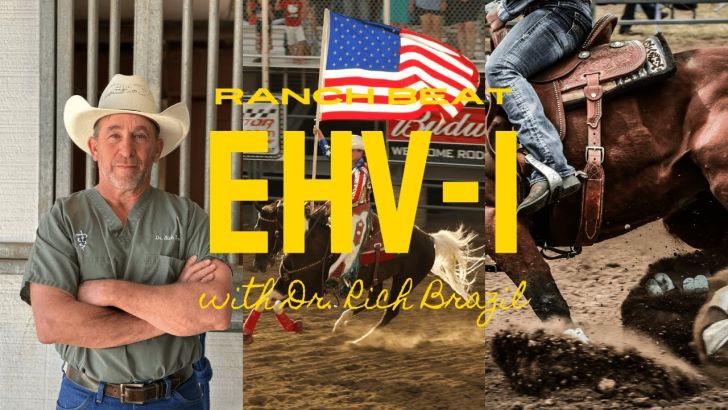
In this special Ranch Beat episode, Dr. Rich Brazil joins me to lend his insight on the current outbreak of Equine herpesvirus 1 (EHV-1) canceling major events across the horse world. He answers your questions like: What is EHV-1? Is there a vaccine? How does it spread? What are early symptoms? How should you handle a horse you believe may have been exposed?Then we answer a few audience questions and talk about his life as a large animal vet, father of eight (including me!), and Ranch Vision founder. Enjoy this episode and let me know what you’d like to learn about next!00:00 Introduction to Dr. Rich Brazil04:45 Understanding EHV-1: The Outbreak and Its Impact09:43 Symptoms and Transmission of EHV-113:48 Preparing for a Career in Large Animal Veterinary Medicine19:36 The Future of Large Animal Veterinary MedicineShow NotesSponsored by Ranch Vision: www.ranchvision.ioSpecial thanks to Josh Woolwine for creating our intro. Follow Josh at www.instagram.com/hjwoolwine.UNWON is reader-supported. To receive new posts and support independent Western journalism, consider becoming a free or paid subscriber. Get full access to UNWON at www.americaunwon.com/subscribe
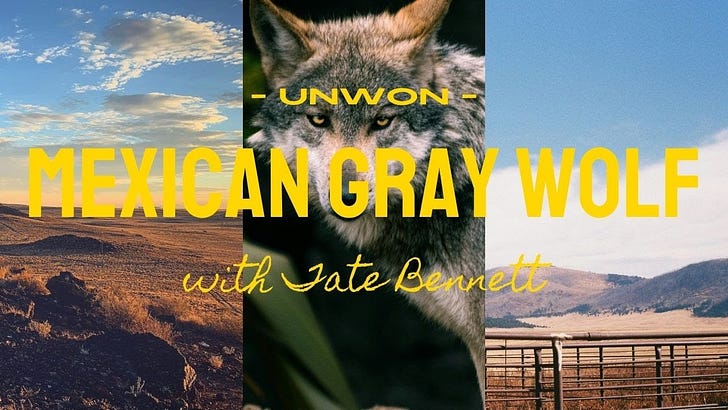
Ranchers in the American Southwest are dealing with an escalating threat. The Mexican gray wolf has become an increasing liability to ranchers and residents of Arizona and New Mexico.“Wolves have killed our cattle in Arizona and in New Mexico. Wolves have changed our culture. They have changed how we live in wolf country.”Tom Paterson, New Mexico RancherTate Bennett, head of Rural Policy at the America First Policy Institute in Washington, D.C., has co-authored a new white paper titled “The Mexican Gray Wolf: A Threat to Rural Prosperity.” In it, she addresses the problem ranchers are facing and encourages government action.She joins me today to discuss what ranchers are dealing with and how the government can properly implement the Endangered Species Act (ESA) so that the needs of rural Americans are balanced with those of wildlife in the American Southwest.Show Notes:"The Mexican Gray Wolf: A Threat to Rural Prosperity" by Tate Bennett https://www.americafirstpolicy.com/issues/the-mexican-gray-wolf-a-threat-to-rural-prosperitySponsored by Ranch Vision: www.ranchvision.ioSpecial thanks to Josh Woolwine for creating our intro. Follow Josh at www.instagram.com/hjwoolwine.UNWON is reader-supported. To receive new posts and support independent Western journalism, consider becoming a free or paid subscriber at www.americaunwon.com. Get full access to UNWON at www.americaunwon.com/subscribe
Six months after the press conference in D.C. where Agriculture Secretary Brooke Rollins announced criminal charges against the Maudes had been dropped, Heather fills us in on what’s happened to her family since and answers your questions.We discuss what it has been like working with Secretary Rollins, Chief Schultz, and other members of the Trump administration; whether the Forest Service agents involved in her family’s case have been held accountable; the dire need for more voices from the American West in D.C.; and more.02:13 Introduction to the Maude Case08:09 The Impact of Bureaucracy on Ranching Families14:01 Challenges in Communication and Resolution20:11 Internal Review and Accountability25:56 Concluding Thoughts and Future Outlook34:00 Cultural Change in Bureaucracy42:00 Legal Challenges and Resolutions48:15 The Impact of Bureaucracy on Agriculture54:19 Faith and Purpose in Adversity59:26 Grassroots Advocacy and the Future of AgricultureSponsored by Ranch Vision: www.ranchvision.ioSpecial thanks to Josh Woolwine for creating our intro. Follow Josh at www.instagram.com/hjwoolwine.Subscribe and support UNWON: www.americaunwon.com Get full access to UNWON at www.americaunwon.com/subscribe

Today I am speaking with Matt Kendall, sheriff of Mendocino County in California’s infamous Emerald Triangle, the epicenter of black market marijuana production. Sheriff Kendall blows the lid off some of the most under-covered and shocking stories in the U.S. today. Cartels are running rampant on Native American reservations and transnational criminal drug trafficking organizations are operating on U.S. soil including on our public lands and national forests. Illicit cannabis is stealing millions of gallons of water in the drought and fire-prone West every single day. Kendall also talks about being a California sheriff under Governor Gavin Newsom, his restrictions on working with ICE, and trying to advocate for victims in a state that is increasingly pro-predator. He explains how legalization has impacted the cannabis market, how over-regulation is killing rural America, and much more. This episode is shocking and you won’t hear this info anywhere else.Thank you for listening, please enjoy the show and be sure to rate, review, and subscribe wherever you tune in including YouTube, Apple Podcasts, and Spotify.Watch High Country Murder short documentary:More UNWON coverage:UNWON is reader-supported. Support independent journalism for rural America by becoming an UNWON subscriber. Get full access to UNWON at www.americaunwon.com/subscribe

Theodora Johnson is a cattle rancher and mom of three, born, raised, and still ranching in Siskiyou County, California. She’s also an award-winning journalist; one of the few who covered the reality of the infamous Klamath Dam removals that California governor Gavin Newsom has touted as a major victory.WATCH ON YOUTUBE:We talk about what’s happened since the Klamath River dams were pulled in 2024. From destroying salmon to watersheds to small towns, pulling the dams has harmed Siskiyou County in profound ways, and the worst may be yet to come for ranchers. Theo warns that agriculture is being set up to take the fall for this man-made catastrophe. We talk about what appears to be the intentional targeting of small, independent producers in California. We talk about the intrusion of wolves in the Siskiyou County area, how the Endangered Species Act and “emergency drought declarations” have been used to control agriculture, and so much more.This episode is powerful and I’m so grateful for Theo’s voice as a journalist speaking truth to power in rural California.Read Theodora’s exposé on the Klamath Dam disaster here: Get full access to UNWON at www.americaunwon.com/subscribe
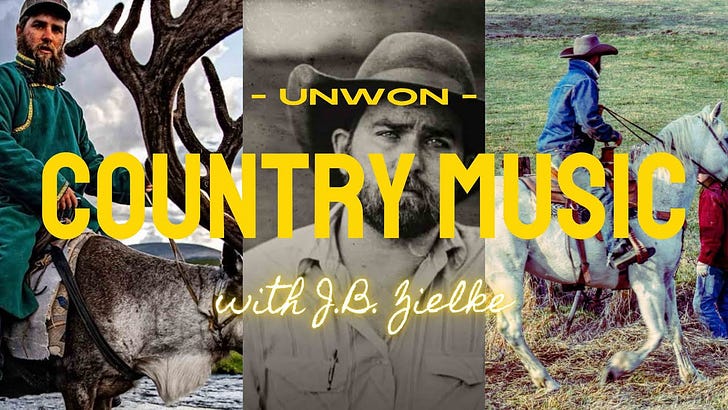
J.B. Zielke is a world-traveling cowboy, author, and the host of the latest and greatest event on the Western music scene: Dusty Vaquero Days in Gillette, Wyoming, set to launch its inaugural weekend this Friday and Saturday (May 30-31).I met J.B. years ago. He set me a pre-release copy of his phenomenal memoir “The Lost Cowboy” where he describes his adventures cowboying on six continents. He’s living proof that the West isn’t won and adventure is still out there for those brave enough to find it.Now, he’s launched a new project: Traveling with his camera, he is documenting emerging sound coming out of the northern American West, a movement he calls Western Grit. On his YouTube channel Dusty Vaquero, J.B. is recapturing the soul of country music by profiling artists with a strong connection to agriculture, often on their ranches or in their barns or backyards or saddle shops, raw, stripped down to the basics, recording a song they wrote that means a lot to them in a place they love.J.B. and I talked about his storytelling, his world travels, cowboying in South Africa, the large animal vet medicine crisis, how a Mongolian herdsman kickstarted his friendship with Colter Wall, living out of a minivan, the top destination on his bucket list (not sure what I expected he was gonna say, but it wasn’t this), the world’s most dangerous place to be a cowboy, the historical figure J.B. credits with “making the cowboy cool,” and a whole lot more.Follow The Lost Cowboy on Instagram and Dusty Vaquero on YouTube and be sure to buy his book. Whatever J.B. does next, I for one don’t want to miss it.Buy your tickets to Dusty Vaquero Days here!Show notes:* Purchase “The Lost Cowboy” by J.B. Zielke* Ranch Album (1987) - Directed by Gail Steiger Get full access to UNWON at www.americaunwon.com/subscribe
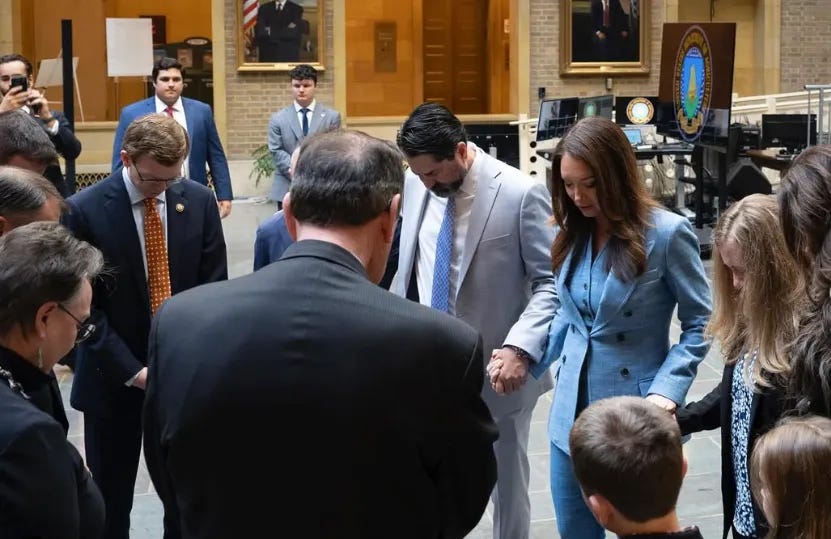
Heather Maude is finally free to speak about her case and what the federal government put her family through.Her case has been called "private property rights precedent-setting issue of a generation.”After covering the Maude family’s case for close to a year, I was finally able to sit down with Heather and hear about what her family dealt with at the hands of the U.S. Forest Service. Heather is a former ag journalist, a fifth-generation rancher, and a mother of two. Her family’s case went viral, got the attention of the Trump administration, and set a vital precedent for agriculture and property rights. We talk about what happened, what still needs to happen, the future of private property rights and agriculture, and where her case stands today.Show notes:-Sponsored by Ranch Vision. Learn more and schedule a free demo at www.ranchvision.io.-All UNWON coverage of the Maude case-Videos of the USDA press conference with Brooke Rollins’ and Heather Maude’s remarks-Maude Case: Frequently Asked Questions by Heather Maude (Tri-State Livestock News)-Day Writing by Heather Hamilton-Maude: With God (Tri-State Livestock News)UNWON is reader-supported. Support independent journalism for rural America by becoming an UNWON subscriber at www.americaunwon.com. Get full access to UNWON at www.americaunwon.com/subscribe
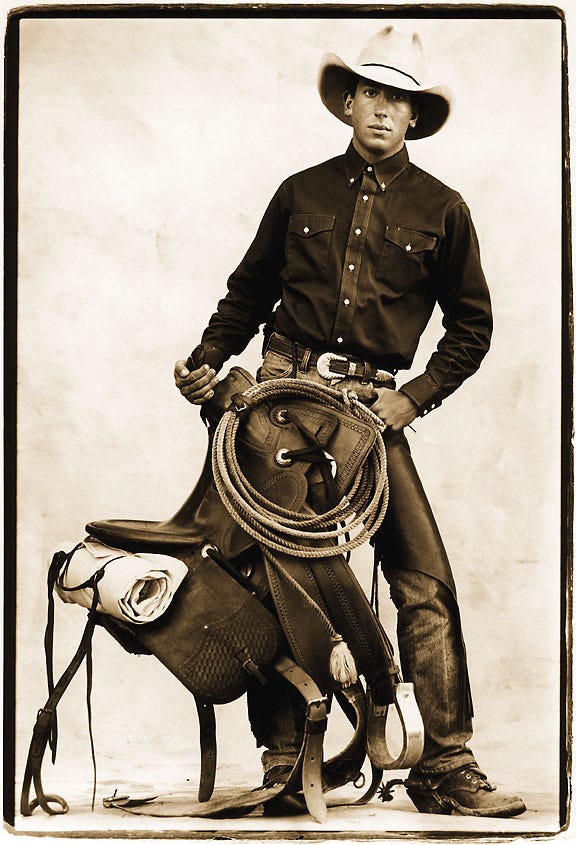
Casey Murph is a consummate Westerner, a man out of his time but here to remind us about the old ways and the things that still matter. For many years, he led the mule string at the Grand Canyon and now runs cattle on his family’s historic ranch in Navajo County, Arizona. He’s a regular writer for Range Magazine.In our interview today, we talk about how the National Park Service effectively ended the iconic Grand Canyon mule rides, and what that program meant for American tourists and the culture and history of the Grand Canyon. We talk about how various government agencies have evolved to oppose ranching and the Western way of life, and just why that might be. We talk about the adventures still to be had in the American West, and why it’s worth fighting for. We also talk about Casey’s latest fight; facing off threats to his grazing leases in the form of giant, sprawling solar energy projects backed by powerful and deep-pocketed interests.As always with Casey, I learn so much from our conversation. Be sure to follow Casey on X where he is a wealth of information, and see more of his writing at Range Magazine.Show Notes:* Read the UNWON interview with Casey Murph on wilderness designations* Listen to “The Dude String Trail” by Dave Stamey Get full access to UNWON at www.americaunwon.com/subscribe
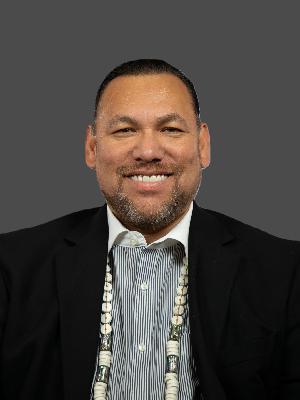
Eddie “E.J.” Crandell has deep roots in Lake County, California, where he serves as chairman of the county board of supervisors and vice chair of the Robinson Rancheria of Pomo Indians.On Friday, Supervisor Crandell generously made time for an interview between meetings. I wanted to ask about his board’s bold decision to reach out to President Trump asking the federal government to intervene in the planned demolition of two dams that supply water for 600,000 residents in rural Northern California—something no other local county boards have done even as the date for final dam surrender looms. Last week, a Trump official said the Bureau of Reclamation is looking into the request.Our conversation was broad-ranging. We talked about his career of military service, the work he’s done representing rural and tribal communities, his meetings with Gavin Newsom, how California politicians and media have used Native voices when expedient while ignoring others, how a powerful NGO called CalTrout single-handedly kept Supervisor Crandell and Lake County out of a group that could have taken over management of the Potter Valley Project, how rural communities have been hurt by California’s soft-on-crime policies, and much more.This is an underdog story between an underserved rural county and some of California’s most powerful interests, ambitious politicians, and influential NGOs. What started as a local clash has reached the national stage, and Supervisor Crandell is right in the middle of it. Get full access to UNWON at www.americaunwon.com/subscribe
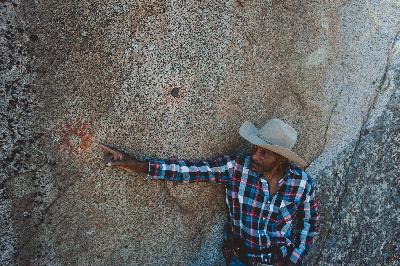
In honor of National Ag Day, I’m beyond excited to share the trailer for a film project very close to my heart. You Just Can’t See Them From the Road is my first full-length documentary. My sister Michaela and I had been wanting to shoot a film on the vanishing ranches of the American West for some time when California Rangeland Trust approached us. They gave us enormous trust and creative freedom to tell this story about West Coast ranching—the men and women who feed us and sustain our landscapes, who you just can’t see from the road. Our bootstrapped team of four traveled up and down the state of California to tell the story of the men and women who feed us, manage our lands, but who you just can't see from the road.Stream the trailer at www.americaunwon.com.Film Synopsis:An immigrant family in California’s Central Valley faces the loss of their land and way of life. One of the few remaining ranching families in the Bay Area watches urban sprawl creep in from every direction. Cowboys work in the shadow of the historic Hearst Castle. Wildlife find refuge on the biggest expanse of private land in Southern California. One of the largest Black landowners in the state discovers Native American artifacts on his ranch.Presented by California Rangeland Trust and directed by Keely Brazil Covello and Michaela Brazil Gillies, You Just Can’t See Them From the Road is a documentary portrait of the vanishing ranchers of the American West—invisible to and misunderstood by the rapidly modernizing society they sustain. Get full access to UNWON at www.americaunwon.com/subscribe
Nate Chisholm is a grazing ecologist and rancher currently based in Kenya, where he is studying the impact of megafauna on savanna grassland ecosystems. For years, he ranched in Marin and Sonoma counties, including Point Reyes. He has amassed a decade of scientific research on the impact of grazing in environments very similar to Point Reyes, where a group of 12 ranchers are currently being removed after years of hostility from the National Park Service. Nate’s research shows that cattle grazing on the California coast has a profound and positive impact on biodiversity and native plant cover. His work emphasizes the loss California is about to suffer as decades of generational ranching knowledge prepare to leave Point Reyes National Seashore.I asked Nate to share his findings, what he’s learned about grazing, how a scientist who loves savannas became a cattle rancher, whether the Tule elk can replace cattle on Point Reyes, and if the Park Service ever showed an interest in his research.This episode is fascinating for anyone who loves nature, wildlife, American grassland, and the science behind ranching.To see the scientific results Nate shares, visit the Sonoma Mountain Institute website where all his data including photos of grassland change are publicly available (plot 1, plot 2, and plot 3 as shown in the episode).Follow Nate at Project Savanna on Instagram and his website www.projectsavanna.com.UNWON is reader supported. Click below to become a free or paid subscriber and help support independent Western journalism! Get full access to UNWON at www.americaunwon.com/subscribe
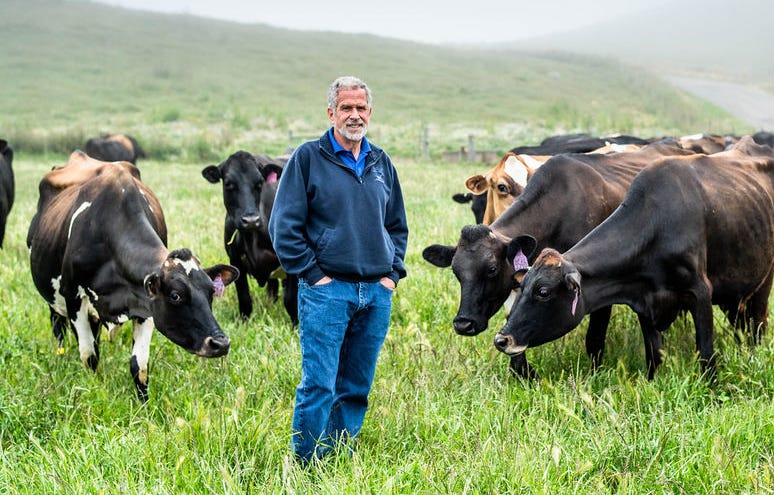
Albert Straus is a legend in organic farming and the regenerative food movement. He is the founder of Straus Family Creamery, the oldest certified organic creamery in the United States.He has been an outspoken advocate and champion for the farmers and ranchers on Point Reyes, fighting tirelessly for his neighbors. His creamery sources milk from dairies on the peninsula.In 1940, there were 4.6 million dairy farms in the U.S. Now there are less than 26,000. The ranchers being evicted from Point Reyes are gagged. Straus shares his perspective after years of watching Marin County and California change around him—from a cutting-edge haven of organic, ethical food production to a “playground for billionaires” hostile to the small farmers and ranchers who made Marin special.UNWON is reader supported. If you want to be part of our effort to produce independent Western journalism and storytelling, please consider becoming a paid subscriber.Q&A with Albert StrausCondensed and slightly edited for clarity in written format from two interviews with Mr. Straus. Listen to our conversation in the video above or stream on Apple Podcasts.Albert, thank you so much for joining me today. I appreciate you being here and speaking for the ranchers on Point Reyes since they really can't speak for themselves.Thank you for having me, Keely.Let's start with you and your background. Straus Family Creamery is, I believe, the first organic creamery in the United States. Is that right?My dairy farm, which is not on Point Reyes but on Tomales Bay, was the first certified organic dairy west of the Mississippi River, and our creamery was the first 100% organic creamery in the United States back in 1994. Since then almost 90% of the dairies in Marin and Sonoma County are certified organic.My family has been running the dairy since the 1940s. We stopped using herbicides in the 70s, and I began using no-till planting methods in the 80s. We developed this whole organic farming community. Prince Charles, before he was King Charles, visited Marin on his honeymoon with Camilla because of his interest in organic farming.You’ve been a vocal advocate for the Point Reyes ranchers. Why have you been working so hard to help them?My mission and the mission of the Creamery is to help sustain family farms in Marin and Sonoma County by providing high quality organic dairy products that are minimally processed and to help revitalize rural communities for education and advocacy everywhere. We've seen a demise of our farms. In 1940, there were 4.6 million dairy farms in the United States. Now there are less than 26,000 left.Smaller family farms are in a rapid decline, as well as our rural communities. We're losing the basic ability to produce high quality food locally and keep our communities together. We're on the tipping point of losing everything. So for me, it's my home, it's my business, it's my livelihood, and the community I love. They’re saying that we're polluting, we're inhumane. Animal certified organic standards address animal welfare. We're all under very tight environmental controls and permits, and so there's no pollution. All this made-up science and lawsuits against farmers is just to drive them out of business—mainly livestock and dairy farmers. I do not understand why people are attacking their own food system.How have you watched Marin County change?My father started our dairy farm in 1941 and my parents worked their whole lives to facilitate a dialogue between farmers, environmentalists, community members, and government to come up with a common vision and strategy for the future.My mother was a co-founder of the first agricultural land trust in the nation, Marin Agricultural Land Trust or MALT. And since then, they've preserved over half the farmland in Marin County to stay in agriculture in perpetuity.We supported the formation of the Point Reyes National Seashore because it had a balance of agriculture, wilderness, and reintroducing some elk to a preserve. We supported the Coastal Commission formation to preserve the coast because it had that balance—to protect and promote agriculture and rural communities along with public access and tourism.But it's become very polarized towards open space and tourism at the expense of the community, farms, and food production.When Point Reyes National Seashore was created, it was with the vision of maintaining agriculture in Marin County, correct?The Seashore had in its founding legislation a pastoral zone that was supposed to be agricultural, and that was supposed to continue on. We saw it as a positive way to preserve our community identity and prevent over-development. There’s been a narrative that this was never meant to be, but that’s not accurate. It was about 25% of the agricultural land in Marin County agricultural output. We’re losing all that. We’ve lost it over the past few decades because of the pressures that the Park Service has put on these farms to restrict their ability to have a business and be able to stay in their houses.You were in Paris last year, you’ve led the climate smart movement in dairy, you’ve been a huge part of the regenerative agriculture movement. These are our ideal farms and ranches that we’re losing. I’ve been working on an organic carbon neutral farming model for the last couple decades. We have a program for all our 13 dairies to be carbon neutral by 2030 off of practices. We’re well on the path—my own dairy is over halfway to carbon neutrality, where the milk coming from our dairies will have an equal or lower carbon footprint than any plant-based dairy alternative. Last October, the United Nations Food and Agriculture Organization (FAO) and the International Dairy Federation asked me to come to the 2024 Paris World Dairy Summit to sign onto an international declaration of collaboration around climate change and sustainability in dairy. In the next 25 years, we have to produce as much food, to feed almost 10 billion people, as we have in the last 10,000 years combined. Dairy and livestock products are essential nutrients to feeding the world, and local production is essential so we’re not shipping food all over the world. The fact is we're importing most of our food into the United States now. It's not sustainable.What we're doing in Marin County and Sonoma County has been a model for the world. We've had a history of working together. Now we're polarized as a society. We need to get back together to move our food and farming system forward.Do you think that the Park Service has welcomed ranchers? Or do you think that the Park Service doesn't see their mission as compatible with agriculture?I think that it's the latter. The Park Service and these organizations have a very different view of parks and open space.We’re seeing land trusts and county, state, and federal parks taking animals off. I found out the California State Park System doesn't allow grazing of any kind, even by goats and sheep. Historically, we've always had cattle grazing, which created income for the state. Now they have all this dry fodder that is just primed for wildfires. We have fires that cost billions in damages and people’s lives. Wildfires account for 2.5 times the amount of carbon in the atmosphere as all fossil fuel emissions. I think that we haven't done our part to educate the public around farming and how food is produced. We need to get back onto a track where we're educating the public, showing them how we farm, that we do it humanely, we don't pollute, and we have a system that's really an example. That’s something I really want to take on as part of the solution.We also have to stop farms being a target of lawsuits meant to drive them out of business. This litigation around Point Reyes has displaced all these families and farms. They say, well you have 15 months to leave. That's not enough to start another farming operation. There's a lack of understanding that farms can't be just moved from one place to another overnight. It takes a long time.So I think there's a disconnect about what it takes to farm, what are the benefits of it, and how do we work together and support a local farming and food system that’s really been sustainable.California wants to put organic food in all public schools, yet they're not working together with us to help that happen. We're losing farms and we're short of organic milk now, across the country.What can you say about the pressures the farmers have been experiencing for the past few years? Water quality samples were taken during a drought when they had no water flowing in the creek, to say that the dairies were polluting. They used that to create more regulations, more pressure on the dairies. They reduced the number of animals they could have on their land with no data to support it. Actually they should have had a lot more animals. So they couldn't have enough animals to make an economic unit.They did not allow pasture improvement, either seeding or mowing. They ended up taking silage land away, so the farmers had to be reliant on outside feed. There was infrastructure they weren't allowed to improve—roofs and a lot of the houses. When there were problems with the septic systems that the park was supposed to fix, they blamed the farmer. And then the elk had been just not managed and released on all of the farmland, which cost one dairy over $100,000 a year just to feed them because they took the alfalfa hay from the cows and broke all the fences and ate all the pastures.It's been a constant, long-term pressure. They wore these farmers out. When they came in with a settlement, I think that was the best outcome that the ranchers could see because the Park Service was not a landlord that worked with them.Do you think that these environmental groups were complicit with the Park Service in trying to get these ranchers out?The environmental groups sued the park three years ago for the second time. The ranchers and dairies joined the lawsuit on the side
It was a real honor to speak with private forestry consultant Craig Blencowe, a leader in sustainable forest management. I asked Craig about timberland management, fire prevention, what’s changed in the American timber industry, spotted owls, bark beetles, what has gone wrong at the U.S. Forest Service, why we stopped salvaging lumber on public land after wildfires and hurricanes, why lumber is less dense than it used to be, what he means by a multi-use approach to public land, why he prioritizes the well-being of rural communities in his practice, and much more.Craig is based in Mendocino County, California. He graduated from Stanford University with a degree in biological sciences and worked for the National Park Service before beginning his private practice. Craig was the first SmartWood-certified resource manager and in 2024 received the California Licensed Forests Association Award for Outstanding Forester. Let me know your thoughts in the comments!UNWON is reader supported. To receive new posts and support independent Western journalism and storytelling, consider becoming a free or paid subscriber.UNWON exists to tell the stories of the people who build, feed, and protect this nation. Keely Brazil Covello is a Western writer, journalist, and filmmaker. Learn more and subscribe at www.americaunwon.com. Get full access to UNWON at www.americaunwon.com/subscribe
Comments


Download from Google Play

Download from App Store
 United States