


 Claim Ownership
The Future in Flight Podcast
Subscribed: 2Played: 5
Subscribe

© Copyright 2024 All rights reserved.
Description
Ready to explore the skies and unlock your potential in aviation? The Future in Flight Podcast is your go-to weekly show for inspiration, education, and empowerment. Produced by Creative Relay Media and AviNation USA, this engaging podcast connects young adults, teens, and their families with the tools and insights they need to pursue fulfilling aviation careers and hobbies.
Each episode features captivating stories, expert interviews, and practical advice, blending family-friendly entertainment with cutting-edge industry insights. From highlighting young achievers to diving into the latest aviation technology, The Future in Flight Podcast is your roadmap to discovering the endless possibilities in the world of flight.
Whether you’re dreaming of becoming a pilot, exploring aerospace engineering, or simply curious about the aviation industry, this podcast equips you to take off toward your goals. Subscribe now and join a growing community of future aviators ready to soar to new heights!
Each episode features captivating stories, expert interviews, and practical advice, blending family-friendly entertainment with cutting-edge industry insights. From highlighting young achievers to diving into the latest aviation technology, The Future in Flight Podcast is your roadmap to discovering the endless possibilities in the world of flight.
Whether you’re dreaming of becoming a pilot, exploring aerospace engineering, or simply curious about the aviation industry, this podcast equips you to take off toward your goals. Subscribe now and join a growing community of future aviators ready to soar to new heights!
60 Episodes
Reverse
🎧 Episode Summary
What if aerospace students could take their classroom equations and turn them into real, flyable aircraft designs—without ever cutting balsa wood or stepping into a wind tunnel?
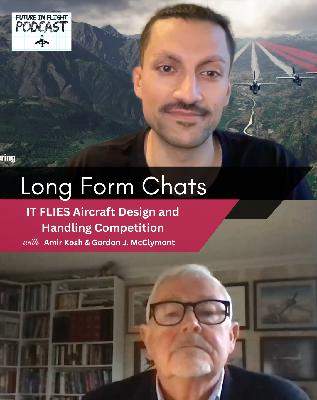
In this episode of The Future in Flight Podcast, host Shawn Staerker sits down with Amir Kosh and Gordon McClymont to explore ST Engineering Antycip’s IT FLIES—a groundbreaking design-build-fly competition powered by high-fidelity, physics-based simulators.
Unlike traditional competitions, students don’t just design aircraft on paper—they fly them in professional-grade simulators and receive real-time feedback from experienced test pilots. From sixth-generation fighters to humanitarian aid drones, teams bring bold concepts to life and experience the full aerospace engineering cycle: briefing, flight testing, debriefing, iteration, and refinement.
With competitions hosted in the U.S. at University of Dayton and in the UK at Swansea University, IT FLIES is shaping the next generation of aerospace engineers by bridging theory and real-world application.
This episode dives into simulation fidelity, the power of iteration, the importance of engineer–pilot collaboration, and why feeling lift and drag—even virtually—changes everything.
If you’ve ever wondered how today’s students become tomorrow’s aircraft designers, this is the inside look you’ve been waiting for.
✨ Key Points
What Makes IT FLIES Different
Students design aircraft and fly them in real-time, physics-based simulators.
Professional test pilots evaluate each design.
The competition mirrors real aerospace development cycles.
Brief → Fly → Debrief → Revise.
Why Simulation Matters
Turns equations into physical motion.
Allows rapid iteration before major investment.
Prevents “negative training” from entertainment-based simulators.
Helps students feel aerodynamics instead of just calculating it.
Lessons Students Learn
Iteration is essential to engineering success.
Communication between engineers and pilots is critical.
Not every bold design works—but every flight teaches something.
Real-world aerospace is collaborative, not siloed.
Competition Highlights
Hosted twice yearly (U.S. and UK).
Open to international university teams.
Awards for Best Flight Performance, Best Presentation, and Most Innovative Design.
Winning university holds the traveling trophy until the next competition.
Careers & Real-World Impact
Students have earned internships following the competition.
IT FLIES strengthens resumes with practical, applied experience.
Participants gain exposure to real aerospace industry processes.
🕒 Chapter Timestamps
0:00 – 1:17 | Introduction: What is IT FLIES?
1:18 – 5:00 | Origins of the Competition & Why Simulation Matters
5:01 – 10:57 | The Test Pilot Perspective: Real-World Design Cycles
10:58 – 16:26 | Aerodynamics Comes to Life: Feeling Lift & Drag
16:27 – 20:17 | Design Surprises & Iteration in Action
20:18 – 23:56 | Skills That Translate to Aerospace Careers
23:57 – 28:30 | International Competitions: U.S. & UK
28:31 – 32:09 | Awards, Innovation & Student Experience
32:10 – 39:52 | Fun Questions: Dream Aircraft, Destinations & Flight Legends
39:53 – End | Final Reflections: Iteration, Courage & the Future of Aerospace
🔗 Links & Resources
IT FLIES Competition (ST Engineering Antycip):
https://steantycip.com/events/
AviNation USA:
https://www.avinationusa.com/
Creative Relay Media:
https://creativerelaymedia.com/
Blue skies, smart designs, and remember—great aircraft aren’t built in a single pass. They’re built through iteration, collaboration, and the courage to test your ideas.
Summary
The intersection of tradition and innovation in aviation takes center stage as this episode explores Purdue University's online aviation programs and the timeless utility of the windsock. The narrative culminates with the compelling story of Bessie Coleman, whose pursuit of a pilot's license in segregation-era America exemplifies the ongoing journey toward making aviation more accessible to all.
Produced in partnership with AviNation, The Future in Flight Podcast aims to educate, empower and inspire the next generation of aviation enthusiasts.
Takeaways
Purdue University has a long aviation history, being the oldest collegiate aviation program in the U.S.
The transition to online aviation programs has made education more accessible to aspiring pilots nationwide.
Purdue Global partners with flight schools to provide rigorous training while saving students money.
Students can earn their FAA certificates and ratings in an accelerated timeframe.
The windsock has evolved from military use to a critical safety tool in aviation.
Modern windsocks are engineered to withstand extreme weather conditions and provide real-time data.
Bessie Coleman became the first African American woman to earn an international pilot's license in 1921.
Coleman used her fame to advocate for equality in aviation and inspire future generations.
Her legacy continues to inspire young aviators today, especially in the Black community.
***We’re growing!***
Due to the overwhelmingly positive response to our first two shows, we’re making them a little longer moving forward!
Summary
In this episode of The Future in Flight Podcast, host Shawn Staerker interviews pilot and creator Nick Henderson, whose extraordinary aviation journey spans from childhood in Indonesia to military service and a thriving career as an offshore helicopter pilot for the oil industry. Nick shares insights on his unique path, the realities of the profession, and the future of automation in aviation.
The episode also features an in-depth look at Wisk Aero's autonomous air taxi and its potential to revolutionize urban air travel.
Plus, the Vintage Aircraft segment highlights the iconic Beechcraft Model 18, a staple in aviation history.
Key Takeaways
Nick Henderson’s early aviation passion – Growing up in Indonesia and traveling globally fueled his love for flight.
Military service influence – Nick’s time in the Army post-9/11 instilled a lifelong commitment to service.
Life on an oil platform – A structured, high-tempo work environment requiring precision and endurance.
Challenges of a pilot’s lifestyle – Long time away from home despite flexible work schedules.
Misconceptions about helicopters – They glide effectively in emergencies, contrary to common belief.
Automation’s growing role in aviation – Advanced tech, like Airbus H-160’s TCAS-2, is revolutionizing flight safety.
Advice for aspiring pilots – Define clear goals and be prepared for a tough but rewarding journey.
Wisk Aero’s air taxi vision – Aiming for autonomous, affordable urban air travel.
Passenger convenience features – Charging ports, Wi-Fi, and wheelchair accessibility enhance the experience.
Affordability goals – Wisk Aero is targeting pricing similar to UberX to make air travel accessible.
Beechcraft Model 18 history – A versatile aircraft that played a key role in both civil and military aviation.
***BONUS EPISODE***
Thank you for the wonderful response to our premier episode! Since you enjoyed that one so much, we thought we'd offer this INCREDIBLE show as a bonus.
It's our small way of saying "thank you" for listening and supporting!
Summary
In this episode of The Future in Flight Podcast, host Shawn Starker takes us on an exhilarating journey into the world of seaplane aviation with special guest Steve Guetter, General Manager of Advanced Flight Training and Leasing. Steve shares his lifelong passion for aviation, from childhood dreams of flight to becoming a seaplane pilot and instructor. We explore the unique challenges and thrills of landing on water, the vital role of seaplanes in fire suppression and emergency response, and the crucial environmental efforts led by the Seaplane Pilots Association.
But that’s not all—this episode also delves into the future of sustainable aviation, discussing game-changing innovations such as hydrogen propulsion and electric aircraft. With organizations like NASA and the National Renewable Energy Laboratory (NREL) leading the charge, we uncover how aviation is evolving to reduce its environmental footprint. Buckle up as we soar through these exciting topics!
Takeaways
Steve Guetter's childhood fascination with aviation led him to become a seaplane pilot.
Seaplane aviation offers unique experiences and challenges compared to traditional flying.
Seaplane pilots often serve as environmental stewards, protecting waterways.
The skills learned in one type of flying can be applied to others.
Seaplanes connect remote areas, demonstrating the versatility of amphibious aviation.
Seaplanes are used for various purposes, including air ambulances and firefighting.
Sustainable aviation is a growing focus within the industry, with initiatives like NASA's AACES 2050.
Electric and hydrogen-powered aircraft are becoming a reality for the future of flight.
Airports are also adopting sustainable practices to reduce their environmental impact.
The future of aviation is not just about speed, but also about sustainability and community.
Summary
In our PREMIER episode of the Future in Flight podcast, we explore the inspiring journey of Mike Salmon, who transitioned from military service to a successful career in aviation maintenance and entrepreneurship. His story highlights the importance of finding purpose and embracing unexpected opportunities. We also delve into the Tennessee Tree Toppers, a community dedicated to paragliding and hang gliding in the beautiful Sequatchie Valley, showcasing the thrill of flight and camaraderie among aviation enthusiasts.
Takeaways
Mike Salmon's journey began with a chance decision at a military recruitment office.
His military experience taught him the importance of purpose in aviation maintenance.
Transitioning from military to civilian life can be challenging but rewarding.
Mike found purpose again as an air ambulance mechanic, saving lives.
He emphasizes the critical role of homegrown mechanics in aviation safety.
Mike's entrepreneurial spirit led him to help found Aviation Design and Supply.
Helping transitioning veterans find their place in civilian life is fulfilling for Mike.
Young people should be open to opportunities in aviation; timing is key.
The Tennessee Tree Toppers offer a welcoming community for aspiring pilots.
The Sequatchie Valley is a stunning location for paragliding and hang gliding.
🎧 Episode Summary
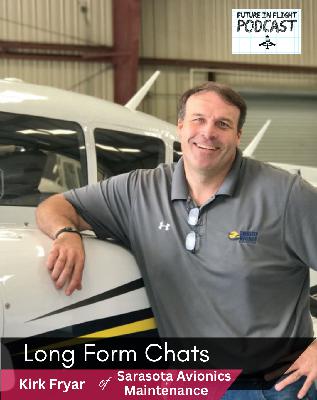
Get ready for takeoff with Kirk Fryar, head of Sarasota Avionics and Maintenance, as he takes us behind the scenes of one of aviation's biggest events - SUN ‘n FUN! In this high-energy episode, Kirk shares what it's like to bring 30 team members to Florida's premier aviation showcase, complete with golf cart convoys and epic booth setups. From sponsoring aerobatic legends like Patty Wagstaff and Skip Stewart to showcasing cutting-edge avionics in a beautifully restored 1965 Piper with a full G3X system, Sarasota Avionics goes all-out to make SUN ‘n FUN unforgettable.
This conversation takes an incredible turn as Kirk opens up about his global aviation adventures - from installing avionics in Bangladesh to working with the Cyprus Air Force in Greece, and building relationships across Brazil's massive aviation community. Whether you're curious about the future of aviation under new MOSAIC rules, want to know what survival gear every pilot should carry, or just love hearing about aviation culture around the world, this episode delivers non-stop excitement. Plus, get the inside scoop on where to find Kirk's team at SUN ‘n FUN, including a special autograph session with aerobatic pilot Melissa Burns!
✨ Key Points
🛩️ Sarasota Avionics brings 30+ team members to SUN ‘n FUN with elaborate booth setups in Hangar C
🌟 They sponsor top aerobatic performers including Patty Wagstaff, Skip Stewart, and Ghost Rider airshows
🌍 Kirk's team travels globally for installations - from Bangladesh flight academies to Greek helicopter services
🔧 New Mosaic rules could revolutionize older aircraft upgrades with modern G3X systems and autopilots
🍺 Don't miss the new "Swamp" food court in Hangar E - plus Melissa Burns autograph session Thursday!
🕒 Chapter Timestamps
0:00 — 2:30 | SUN ‘n FUN Prep - 30 People, One Mission
2:30 — 8:00 | Patty Wagstaff Stories and Aerobatic Sponsorships
8:00 — 15:00 | Mosaic Rules and Aircraft Upgrade Opportunities
15:00 — 22:00 | The Evolution of Avionics Technology
22:00 — 28:00 | Going Global - International Aviation Adventures
28:00 — 35:00 | Bangladesh to Greece - Working Worldwide
35:00 — 42:00 | Brazil's Amazing Aviation Culture
42:00 — 47:00 | Survival Gear and Backcountry Flying Tips
47:00 — 49:00 | Where to Find Sarasota Avionics at SUN ‘n FUN
🔗 Links & Resources
Sarasota Avionics: www.sarasotaavionics.com
Sarasota Avionics IG: https://www.instagram.com/sarasotaavionics/
AviNation USA: https://www.avinationusa.com/
SUN ‘n FUN: https://flysnf.org/
SUN ‘n FUN STOL Basecamp Facebook: https://www.facebook.com/STOLBasecamp
Patty Wagstaff Aviation School: https://pattywagstaff.com/school/
Melissa Burns autograph session: Thursday at Hangar C (time TBD)
New Swamp Food Court: Hangar E at SUN ‘n FUN
🎧 Episode Summary
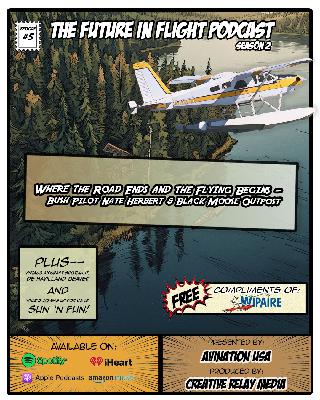
Ever heard the sound of a de Havilland Beaver buzzing over water at dawn? For most of us, that's pure adventure movie material. But for Nate Herbert, growing up in Red Lake, Ontario—once the world's second-busiest airport during the 1930s gold rush—that was just another Tuesday morning. In this incredible episode, we dive into the wild world of bush flying with one of Canada's most authentic aviation voices, exploring how a kid who used to hate flying (seriously, he'd puke off the floats) became the pilot behind Black Moose Outpost's fleet of nine aircraft serving 12 remote wilderness camps.
From emergency wildfire response to luxury fly-out fishing adventures, Nate's story proves that the most authentic paths in aviation often start with the most unexpected motivations. His advice for aspiring bush pilots? Forget the romance—focus on character, hard work, and the reality that in bush flying, no two landings are ever the same.
Plus, we explore the legendary de Havilland Beaver in our Vintage Aircraft Spotlight and preview our upcoming SUN 'n FUN coverage that's going to be absolutely epic.
✨ Key Points
🛩️ Bush flying isn't about romance—it's about problem-solving, character, and landing on lakes that change every single day
🔥 Wildfire season transforms luxury outfitters into emergency responders, flying into smoke with half-mile visibility
✈️ The Pilatus PC6 Porter is Nate's pick for most capable bush plane—able to land in 150-200 foot gaps between obstacles
🎯 Getting hired as a bush pilot? Flight hours help, but employers want to see hard work experience like welding, farming, or firefighting
🤖 AI can't automate adventure—bush flying careers are among the most future-proof in aviation
🕒 Chapter Timestamps
0:00 — 1:18 | The Sound of Adventure: Growing Up in Red Lake
1:18 — 2:12 | From Hating Flying to Protecting Family Legacy
2:12 — 3:26 | When Aviation Becomes Your Social Life
3:26 — 4:40 | Pandemic Dreams to 12 Camps and 9 Aircraft
4:40 — 6:45 | The Reality of Float Plane Operations
6:45 — 8:08 | Fire Season: When Adventure Gets Serious
8:08 — 9:03 | What It Takes to Fly in the Bush
9:03 — 16:35 | Vintage Aircraft Spotlight: The de Havilland Beaver
16:35 — 19:47 | SUN 'n FUN Preview: Field Coverage and Live Broadcasting
🔗 Links & Resources
Black Moose Outpost: https://blackmooseoutposts.com/
Nate Herbert on Instagram: @nateherbert
Wipaire: https://wipaire.com/
SUN ‘n FUN: https://flysnf.org/
Sun 'n Fun Radio: LiveATC.net and AM 1510
Creative Relay Media: https://creativerelaymedia.com/
Full Throttle Airshows: https://fullthrottleairshows.com/
AviNation USA: https://www.avinationusa.com/
Hilo Social Media: https://www.hilosocialmedia.com/
🎧 Episode Summary
What happens when a single rule change unlocks an entirely new generation of aircraft—and new opportunities for people who dream of flying?
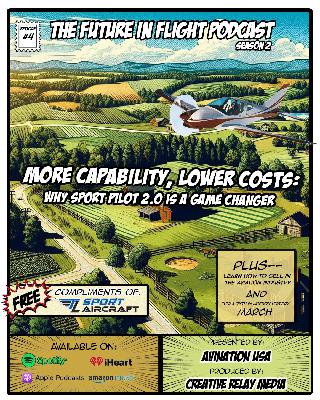
In this episode, host Shawn Staerker explores one of the most important developments in modern general aviation: MOSAIC, often called Sport Pilot 2.0. You’ll learn how this long-awaited FAA modernization could allow aircraft to fly faster, carry more passengers, and cost less to operate—while opening the door for more people to enter aviation without a traditional medical certificate.
But the conversation doesn’t stop on the flight line. Shawn also introduces listeners to aviation entrepreneur Tom Lelyo, who took an unexpected path from youth ministry to selling private jets—and built a thriving career in aviation sales along the way. His story reveals a powerful truth: you don’t have to be a pilot or mechanic to succeed in aviation.
And in our monthly history segment, we travel through the remarkable milestones of March—from the first successful parachute jump from an airplane to the invention of liquid-fueled rockets, the birth of Top Gun, and the daring solo flight around the world by Steve Fossett.
This episode is about innovation, opportunity, and the many different doors into aviation—some technical, some entrepreneurial, and some still waiting to be discovered.
Thank you to our long-time show supporters—TL Sport Aircraft, builders of modern, efficient aircraft designed to expand access to flight training and recreational aviation. Explore their lineup and see the future of light aviation up close at the upcoming SUN 'n FUN Aerospace Expo 2026.
✨ Key Points
Understanding MOSAIC (Sport Pilot 2.0)
Introduced to modernize the Light Sport Aircraft category first created in 2004.
Removes the long-standing 1,320-pound weight limit for many aircraft.
Shifts focus from weight limits to stall speed as the key safety metric.
Allows up to four seats in qualifying aircraft.
Opens the door to turbine engines, retractable gear, and more advanced avionics.
Designed to make aircraft more capable while maintaining strong safety standards.
How MOSAIC Could Change Flight Training
Modern aircraft can carry more payload, including students and examiners.
Lower fuel burn and maintenance costs may reduce the cost of flight training.
New aircraft technology increases student interest and engagement.
Flight schools may gain access to more efficient and capable training aircraft.
Expands pathways into aviation for younger and cost-conscious students.
Spotlight: Modern Light Aircraft Innovation
Composite construction and glass cockpits are becoming standard in training aircraft.
New engines offer higher performance with improved fuel efficiency.
Aircraft design is shifting toward capability, safety, and operational flexibility.
Manufacturers are preparing new aircraft models ahead of finalized regulations.
Aviation Careers Beyond the Cockpit
Aviation sales is a growing career path within the industry.
Private jets can be accessible to business owners and professionals—not just billionaires.
Success in aviation sales depends on persistence, communication, and relationship-building.
Creating educational content can help build trust and professional credibility.
Mentorship and community play a critical role in career growth.
This Month in Aviation History (March)
1912: First successful parachute jump from a powered aircraft in the United States.
1926: Robert Goddard launches the world’s first liquid-fueled rocket.
1949: First nonstop flight around the world by the B-50 Lucky Lady II.
1969: First flight of the Concorde supersonic passenger jet.
1969: Establishment of the U.S. Navy Fighter Weapons School—Top Gun.
2001: The Russian space station Mir completes its final descent.
2005: Steve Fossett becomes the first person to fly solo nonstop around the world.
🕒 Chapter Timestamps
0:00 – 1:54 | Introduction: The future of aviation and the promise of MOSAIC
1:55 – 3:43 | The origins of Light Sport Aircraft and early limitations
3:44 – 5:35 | What changes under Sport Pilot 2.0
5:36 – 8:59 | How MOSAIC could reshape flight training and aircraft design
9:00 – 10:44 | Why this rule change matters for the future of aviation
10:45 – 12:07 | Career Spotlight: From youth pastor to jet sales professional
12:08 – 15:54 | Building a career in aviation sales and entrepreneurship
15:55 – 18:59 | This Month in Aviation History: Rockets, Concorde, and Top Gun
19:00 – 22:25 | Space stations, unique airlines, and record-setting flights
22:26 – End | Closing reflections: The sky still has room for dreamers
Links
TL Sport Aircraft:
https://tlsportaircraft.com/
AVSales Talent:
https://avsalestalent.com/
AviNation USA:
https://www.avinationusa.com/
Creative Relay Media:
https://creativerelaymedia.com/
SUN ’n FUN Aerospace Expo:
https://flysnf.org/
🎧 Episode Summary
Sport Pilot 2.0 explained: What if one rule change could reshape the future of light sport aviation?
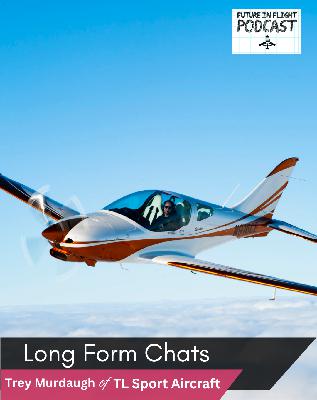
In this episode of The Future in Flight Podcast, host Shawn Staerker sits down with Trey Murdaugh of TL Sport Aircraft to break down one of the most talked-about developments in general aviation today: MOSAIC, widely referred to as Sport Pilot 2.0. This conversation offers a clear, practical look at Sport Pilot 2.0 explained—what it means, why it matters, and how it could dramatically expand aircraft capability while making flying more accessible.
From increased aircraft performance and turbine options to expanded flight training opportunities and lower operating costs, this episode highlights why manufacturers, flight schools, and pilots alike are watching these regulatory changes closely. You’ll also get an inside look at TL Sport Aircraft’s evolving lineup—from efficient trainers to high-performance sport aircraft—and what attendees can expect to see at the upcoming SUN 'n FUN Aerospace Expo 2026.
This episode is about innovation, accessibility, and the exciting future of grassroots aviation—and provides a timely look at Sport Pilot 2.0 explained for pilots, students, and aviation enthusiasts alike.
✨ Key Points
Sport Pilot 2.0 Explained: What is MOSAIC?
An evolution of the Light Sport Aircraft (LSA) category introduced in the mid-2000s.
Designed to expand aircraft capability while maintaining strong safety standards.
Removes many previous limitations, allowing for more advanced aircraft design.
Focus shifts from strict weight limits to stall speed as the primary performance metric.
Major Changes Under Sport Pilot 2.0
Up to four seats instead of two.
No fixed maximum aircraft weight.
Higher stall speed limits (up to ~61 knots).
Retractable landing gear and constant-speed propellers allowed.
Potential for turbine and multi-engine aircraft in the category.
Greater flexibility for manufacturers to build stronger, more capable aircraft.
Impact on Flight Training and Accessibility
Aircraft can carry more payload, including instructors, examiners, and full fuel.
Lower acquisition and operating costs compared to traditional training aircraft.
Reduced maintenance downtime with modern engines and systems.
Increased student interest due to newer technology and performance.
Potential to make flight training more affordable and scalable.
Why Sport Pilot 2.0 Matters for Affordable Aviation
Expands opportunities for recreational pilots and aging aviators.
Encourages innovation among manufacturers.
Improves aircraft safety through stronger designs.
Creates new pathways for entry into aviation careers.
Supports the growth of grassroots aviation communities.
Spotlight: TL Sport Aircraft Lineup
Sirius — A stable, high-wing aircraft ideal for training environments.
Stream — A tandem, retractable-gear aircraft designed for performance and efficiency.
Sparker — A side-by-side sport aircraft capable of high speeds and advanced handling.
Sirius Backcountry — A rugged taildragger built for STOL and off-airport operations.
New engine options, including turbocharged and turbine configurations, expand mission capability.
What to Watch at SUN ’n FUN 2026
Expanded TL Sport Aircraft product lineup on display.
Demonstrations of the new Sirius Backcountry aircraft.
Sponsorship of the STOL Invitational event.
Opportunities to see next-generation light aircraft technology up close.
🕒 Chapter Timestamps
0:00 – 0:31 | Introduction: Affordable aviation and the promise of Sport Pilot 2.0
0:32 – 2:35 | Sport Pilot 2.0 explained: Understanding MOSAIC
2:36 – 5:51 | The history of Sport Pilot and why change was needed
5:52 – 9:28 | Safety, performance, and the future of aircraft design
9:29 – 11:33 | Regulatory uncertainty and industry preparation
11:34 – 13:56 | Key Sport Pilot 2.0 changes explained
13:57 – 17:51 | Training benefits and cost advantages for flight schools
17:52 – 18:18 | Why the aviation community is excited
18:19 – 22:11 | Inside TL Sport Aircraft: Models, performance, and innovation
22:12 – 22:55 | Where to learn more about the aircraft lineup
22:56 – End | Preview: SUN ’n FUN 2026 and the future of light sport aviation
🔗 Links
TL Sport Aircraft:
https://tlsportaircraft.com/
SUN ’n FUN Aerospace Expo:
https://flysnf.org/
AviNation USA:
https://www.avinationusa.com/
Creative Relay Media:
https://creativerelaymedia.com/
🎧 Episode Summary
This episode takes you on an incredible journey through aviation excellence and history.
We kick things off rolling down the runway with California Aeronautical University's competitive flight team—a squad that’s climbed from 20th place at nationals in 2022 to seriously eyeing a top-10 finish. Along the way, they take to the skies cross-country in “Little Red,” a 1965 Cessna 150, competing in NIFA events while building a culture rooted in safety, discipline, and sportsmanship. That commitment has earned them four consecutive Red Baron Team Sportsmanship Awards.
Then, host Shawn Staerker is joined by his daughter Ellie for a powerful Women’s History Month segment celebrating the trailblazers who helped build aviation from the ground up. From Raymonde de Laroche—the first woman to earn a pilot’s license in 1910—to the legendary Night Witches of World War II, and modern pioneers like Lucy Young, still flying at 71, this conversation makes one thing clear: aviation has always belonged to those bold enough to pursue it.
We wrap things up with a destination spotlight on Everglades Air Park, where presidential history meets short-field flying and Cuban sandwiches—and where every landing adds another story to the logbook.
✨ Key Takeaways
✈️ From Underdogs to Contenders
CAU’s flight team has transformed from a 20th-place program into a top-10 contender through grit and teamwork.
🏆 Character Counts
Four straight Red Baron Team Sportsmanship Awards highlight that how you fly matters just as much as how well you fly.
👩✈️ Women in Aviation—From Day One
Since 1910, women have played a central role in aviation’s growth—not as footnotes, but as pioneers.
🌙 The Night Witches
Soviet pilots flew daring nighttime bombing missions in WWII—cutting engines mid-flight to silently glide over enemy targets.
🐊 Destination: Everglades Air Park
A 2,400-foot runway, rich history, and unforgettable food make this a must-visit for adventurous pilots.
🕒 Chapter Timestamps
0:00 — 1:27 | Introduction to CAU Flight Team’s Journey
1:27 — 2:44 | Understanding NIFA Competition Structure
2:44 — 4:30 | Student Commitment & “Little Red” the Cessna 150
4:30 — 7:13 | Cross-Country Adventures & Lightspeed Aviation Partnership
7:13 — 9:35 | Awards, Safety Culture & Future Goals
9:35 — 11:11 | Transition to Women’s History Month Segment
11:11 — 19:28 | Women Who Built Aviation (featuring Ellie Staerker)
19:28 — End | Future in Flight Destinations: Everglades Air Park
🔗 Links & Resources
California Aeronautical University Flight Team
Lightspeed Aviation
The 99s (Women Pilots Organization)
Women in Aviation International
Everglades Air Park (X01) — Everglades City, Florida
NIFA (National Intercollegiate Flying Association)
AviNation USA

🎧 Episode Summary
From a tiny corner of a Venice hangar to multiple locations across Florida, Sarasota Avionics has built something truly special in the aviation world.
In this episode, we sit down with Zach Fryar and Mat Davis—two key team members—who share the incredible journey of how three guys fixing radios grew into one of aviation’s most beloved avionics companies. Their secret? Treating customers and employees like family while delivering cutting-edge technology upgrades.
Zach and Mat take us behind the scenes of modern avionics installations—from full glass panel upgrades to becoming a Cirrus Service Center. They discuss the ongoing challenge of finding skilled technicians, share their thoughts on the future of aviation technology (spoiler: they’re not ready for pilotless planes), and explain why treating your iPad like backup equipment is always a smart move.
Plus, we explore career opportunities in avionics and get the inside scoop on their famous Sun ’n Fun parties that draw crowds from across the aviation community.
✨ Key Points
🛠️ Humble beginnings: Started with three guys in one-third of a hangar fixing radios—now operating multiple locations across Florida
👨👩👧👦 Family-first culture: Employees and customers are treated like family, complete with birthday parties and holiday invitations
🎯 Shift to glass panels: Upgrades dominate as pilots move away from six-pack instruments due to parts availability
✈️ Cirrus Service Center: Achieved through a rigorous certification process and specialized training
🔮 Future of aviation: More automation is coming—but human pilots remain essential for dynamic situations
🕒 Chapter Timestamps
0:00 — 2:18 | From Three Guys to Aviation Empire: The Sarasota Avionics Origin Story
2:18 — 4:25 | Building Family Culture: Keeping the Small Shop Feel
4:25 — 8:29 | Finding Great Techs: The Challenge of Aviation Talent
8:29 — 11:14 | Career Transition: From Automotive to Avionics
11:14 — 15:02 | Consultation Process: Understanding Customer Needs
15:02 — 18:13 | Cirrus Service Center: The Path to Certification
18:13 — 20:13 | Future of Aviation: Will Pilots Become Obsolete?
20:13 — 24:59 | Avionics Upgrade Process: From Consultation to Delivery
24:59 — 28:00 | Industry Trends: Glass Panels & iPad Integration
28:00 — 32:12 | Sun ’n Fun & Customer Connections
32:12 — 35:19 | Career Advice for Future Avionics Techs
35:19 — 38:54 | Rapid Fire Fun: Snacks, Dream Aircraft & Flying with Legends
🔗 Links & Resources
Sarasota Avionics Website – https://sarasotaavionics.com/
SUN 'n FUN Aerospace Expo – https://flysnf.org/
AviNation – https://www.avinationusa.com/
🎧 Episode Summary
Ever wonder what makes those glass screens in airplane cockpits actually work? This episode takes you inside the world of avionics with Zach Fryar from Sarasota Avionics and lead technician Mat Davis. From a humble corner of a Venice, Florida hangar with three guys and broken radios, Sarasota Avionics has grown into one of the Southeast's most respected shops. But this isn't just a business success story—it's about the people who make modern aviation possible and why avionics might be the perfect career path for tech-savvy young people.
We also go behind the scenes with Jacob Peed, Editor-in-Chief of AviNation USA Magazine, as they gear up for Sun and Fun 2026. Plus, in our Vintage Aircraft Spotlight, we explore the massive Convair B-36 Peacemaker—a 10-engine beast that could fly around the world without stopping and helped define the Cold War era. Whether you're curious about cutting-edge cockpit technology or aviation history, this episode shows how the past, present, and future of flight all connect.
✨ Key Points
🔧 Modern avionics is more than just screens—it's integrated systems that require skilled techs who are part engineer, part detective
💼 Avionics careers are future-proof with aging workforce and increasing technology complexity creating huge opportunities
📱 If you can use an iPhone, you can probably master modern glass cockpit systems like Garmin's GTN and G1000
📰 Aviation USA Magazine connects aviation stories from contributors aged 8 to 78, proving everyone has a story worth telling
✈️ The B-36 Peacemaker had a 230-foot wingspan, 10 engines, and could carry nuclear weapons—but never dropped a bomb in combat
🕒 Chapter Timestamps
0:00 — 1:21 | Introduction: From Corner Hangar to Aviation Empire
1:21 — 2:25 | The Culture That Builds Craftspeople
2:25 — 4:52 | What Avionics Actually Is: Systems Thinking
4:52 — 7:07 | The Glass Revolution and Garmin's Dominance
7:07 — 9:29 | Career Paths: Why Avionics Needs You
9:29 — 11:56 | The Future of Automation vs. Human Pilots
12:00 — 19:21 | Aviation USA Magazine and Sun and Fun Preview
19:21 — 25:42 | Vintage Spotlight: The Convair B-36 Peacemaker
🔗 Links & Resources
Sarasota Avionics: sarasotaavionics.com
AviNation USA Magazine: avinationusa.com
Sun and Fun Fly-In: flysnf.org
National Museum of the US Air Force (B-36 location): nationalmuseum.af.mil
🎧 Episode Summary
What if aerospace engineering students didn’t just design aircraft on paper—but actually watched real test pilots fly their creations? In this episode of The Future in Flight Podcast, host Shawn Staerker takes you inside IT FLIES, an innovative international design-build-fly competition where students bring their aircraft concepts to life in high-fidelity simulators used in real-world aircraft development.
We hear from competition leaders and test pilots about how simulation transforms abstract aerodynamics into hands-on experience—and why iteration, feedback, and collaboration between engineers and pilots mirrors the real aerospace industry.
Then, Shawn sits down with Nate Ehlers—C-17 instructor pilot, airline captain, and founder of the Backseat Pilot training system. Nate shares his unconventional path through civilian training, regional airlines, and the Air Force Reserve, proving that persistence beats rejection every time. From landing with light gun signals after a radio failure to building a tool that’s helped thousands of CFIs save time and money, his story is one of innovation born from challenge.
Finally, we break down one of aviation’s universal languages: V-speeds. From V1 and rotation to maneuvering speed and landing reference speeds, this segment demystifies the “cheat codes” that keep pilots safe and aircraft performing at their best.
This episode is about bridging theory and reality, turning obstacles into opportunity, and understanding the language of flight.
Thank you to our partners:
✈️ AviNation USA – https://www.avinationusa.com/
🎙️ Creative Relay Media – https://creativerelaymedia.com
✨ Key Points
IT FLIES: From Theory to Test Flight
International aerospace design-build-fly competition.
Students code aircraft concepts into high-fidelity, physics-based simulators.
Real test pilots brief, fly, and debrief student designs.
Emphasizes iteration, feedback, and real-world engineering practices.
Hosted in the UK (Swansea University) and the U.S. (University of Dayton).
Awards include best performance, presentation, and innovation.
Nate Ehlers’ Aviation Journey
Childhood dream inspired by his grandfather, a WWII B-29 flight engineer.
Earned a business degree before pursuing flight training.
Flew regionals, joined the Air Force Reserve (C-17 Globemaster III).
Served 12 years as a C-17 pilot and instructor.
Landed via light gun signals after a radio failure—sparked idea for reference tools.
Founded Backseat Pilot to provide editable CFI lesson plans and training resources.
Mission: Double student confidence and halve the time to CFI readiness.
Key lesson: Highly motivated students outperform naturally talented but unmotivated ones.
C-17 Flying Highlights
Tactical departures and steep climb profiles.
Assault landings into short fields.
Night air refueling and low-level mountain flying.
Instructor role focused on risk management and real-world decision-making.
V-Speeds: The Language of Flight
“V” may derive from vitesse (French for speed).
Standardized speeds used worldwide.
White Arc: Flap operating range (VSO to VFE).
Green Arc: Normal operating range (VS1 to VNO).
Yellow Arc: Caution range (smooth air only).
Red Line: VNE (Never Exceed).
Critical takeoff speeds: V1 (decision), VR (rotation), V2 (safety climb).
Climb speeds: VX (best angle), VY (best rate).
VA (maneuvering speed) decreases as aircraft weight decreases.
Landing speeds: VREF, VAP, VLE, VLO.
🕒 Chapter Timestamps
0:00 – Introduction: Engineering meets real-world flight
2:00 – Inside IT FLIES: Simulation, iteration, and test pilots
9:30 – Why iteration matters in aerospace design
11:30 – AviNation USA spotlight
12:30 – Meet Nate Ehlers: From business grad to C-17 pilot
15:30 – Tactical flying the C-17
16:30 – The radio failure that sparked Backseat Pilot
18:00 – Rethinking CFI training
19:00 – Motivation vs. talent in aviation
21:00 – V-Speeds explained: The cheat codes of flight
27:00 – Landing speeds and final safety insights
29:00 – Closing reflections and call to action
🔗 Links & Resources
AviNation USA: https://www.avinationusa.com/
Creative Relay Media: https://creativerelaymedia.com/
Backseat Pilot: https://backseatpilot.com/ (Use code FIFPOD for 20% off)
IT FLIES Competition: https://steantycip.com/events/it-flies-usa-2026/
🎧 Summary
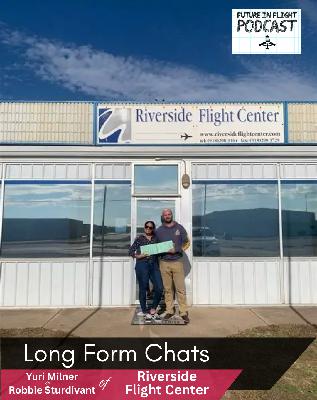
In this episode of the Future in Flight podcast, host Shawn Staerker welcomes Robbie Sturdivant and Yuri Milner from Riverside Flight Center in Tulsa, Oklahoma, to discuss their unique approach to flight training and the success stories that have emerged over their 25 years in business. They delve into the advantages of training in Oklahoma's diverse weather conditions and bustling airspace, which prepares pilots for real-world challenges. Riverside Flight Center's student-first philosophy, commitment to high standards, and focus on creating well-rounded, safe, and competent pilots are highlighted throughout the conversation.
The discussion explores Riverside Flight Center's structured part 141 training program, their emphasis on visual flight training before introducing advanced technology, and the value of their in-house maintenance program. Robbie and Yuri share insights into how they address the pilot shortage by attracting both domestic and international students, fostering a positive learning environment, and offering a $25 discovery flight to break down barriers to entry. This episode provides valuable information for aspiring pilots and anyone interested in the future of flight training.
✨ Key Points
Strategic Location: Oklahoma offers diverse weather and busy airspace, ideal for comprehensive training.
Student-First Approach: Riverside Flight Center prioritizes student success with structured training and personalized attention.
In-House Maintenance: On-site maintenance ensures high safety standards and well-maintained aircraft.
Comprehensive Training: A blend of traditional methods and modern technology prepares pilots for various aviation careers.
Addressing Pilot Shortage: Focus on domestic students and accessible discovery flights help grow the pilot community.
🕒 Chapter Timestamps
0:00 — 0:25 | Introduction to Riverside Flight Center and the Flight Training Landscape
0:26 — 1:16 | Location and Environment: Flying in Tulsa, Oklahoma
1:17 — 3:00 | Advantages of Training in Oklahoma's Weather and Airspace
3:01 — 4:08 | 25 Years of Success: Yuri's Vision for Riverside Flight Center
4:09 — 5:56 | Riverside Flight Center's Training Philosophy and Part 141 Structure
5:57 — 7:44 | Student-First Approach: Yuri's Philosophy on Flight Training
7:45 — 9:15 | Addressing the Pilot Shortage: Domestic vs. International Students
9:16 — 12:10 | A Typical Day at Riverside Flight Center: Concurrent Flight and Ground Training
12:11 — 13:53 | Aircraft and Technology: Foundational Visual Flight Training
13:54 — 16:16 | Simulation and Advanced Training: Integrating Technology
16:17 — 17:01 | Success Stories: Pilots Flying Worldwide
17:02 — 19:15 | Measuring Success: The Impact of Riverside Flight Center Graduates
19:16 — 21:43 | Maintenance Program: On-Site Maintenance and Safety Standards
21:44 — 23:47 | Examining Authority: Benefits for Students
23:48 — 26:41 | Motivation and Positivity: Maintaining High Success Rates
26:42 — 28:46 | Student Focus: Skills for Success in Flight Training
28:47 — 31:58 | Fun in Aviation: Discovery Flights and Introductory Experiences
31:59 — 34:20 | Overcoming Challenges: Focusing on Education and Excellent Pilots
34:21 — 35:30 | Riverside Flight Center's Commitment to the Aviation Community
35:31 — 37:10 | Connecting with Riverside Flight Center: Contact Information
37:11 — 39:19 | The Future of Flight Training: Adapting to Technology and Regulations
39:20 — 41:38 | Favorite In-Flight Snacks and Dream Aircraft
41:39 — 42:28 | Dream Co-Pilot/Passenger and Destination
42:29 — 43:31 | Closing Remarks and Contact Information
43:32 — 47:25 | Financing Challenges in Vocational Flight Training
47:26 — 50:00 | Shift in Mentality: Vocational vs. Collegiate Training
50:01 — 53:33 | Career Landscape: Opportunities Beyond Airlines and Final Thoughts
🔗 Links & Resources
Riverside Flight Center: riversideflightcenter.com
Riverside Flight Center Facebook: https://www.facebook.com/RiversideFlightCenter/
AviNation USA: https://www.avinationusa.com/
Creative Relay Media: https://creativerelaymedia.com/

🎧 Episode Summary
In this episode of the Future in Flight podcast, host Shawn Starker interviews J.J. Madison, a Harvard-educated writer, safety advocate, and author of "Yikes! 100 Smart Pilots and the Dumb Things They Did." J.J. shares his circuitous path to aviation, which began with a childhood fascination with helicopters and eventually led him to mentorship from the Tuskegee Airmen. He discusses the importance of mentorship, community, and continuous learning in aviation, as well as his mission to make aviation safer and more accessible through storytelling and the Victor Kilo Fund, which provides flight scholarships for under-resourced communities.
The conversation delves into J.J.'s experiences in various aircraft, from 19-seat turboprops to 737s, and his commitment to aviation safety, inspired by his time on an airline's aviation safety committee. J.J. emphasizes the value of sharing mistakes and learning from others' experiences, highlighting the role of NASA reports in promoting safety. He also touches on the future of aviation, including the potential of electric and hybrid aircraft and the increasing need for skilled aviation professionals from all backgrounds to maintain the integrity of the national airspace system.
✨ Key Points
🚁 J.J. Madison's unconventional journey into aviation, fueled by childhood dreams and mentorship from the Tuskegee Airmen.
📚 The importance of storytelling in aviation safety and education, as highlighted by J.J.'s book, "Yikes!"
🤝 The role of community and mentorship in supporting aspiring pilots, especially those from under-resourced communities.
💰 The Victor Kilo Fund's mission to provide flight scholarships and make aviation more accessible.
✈️ The future of aviation, including the potential of electric and hybrid aircraft and the need to address the skilled labor shortage.
🕒 Chapter Timestamps
0:00 — 0:14 | Introduction to J.J. Madison
0:15 — 1:17 | Shawn Starker introduces the podcast and J.J. Madison's background
1:18 — 3:50 | J.J. Madison shares his early experiences and path to aviation
3:51 — 5:13 | Discussion about the opportunity to be mentored by the Tuskegee Airmen
5:14 — 7:25 | Preparedness meeting opportunity and J.J.'s aviation experiences
7:26 — 10:16 | Advice for people transitioning into aviation later in life
10:17 — 11:09 | Importance of seeing representation in the pilot community
11:10 — 13:35 | J.J. discusses the impact of living examples and the need for diverse representation in aviation
13:36 — 14:05 | The skilled labor issue in aviation and the need for broadening the talent pool
14:06 — 16:17 | J.J.'s interest in aviation safety and his work with NASA reports
16:18 — 18:22 | The inspiration behind J.J.'s book and the Victor Kilo Fund
18:23 — 19:07 | Show supporter: Flight Sunglasses
19:08 — 20:18 | Details about the Victor Kilo Fund and flight scholarships
20:19 — 21:11 | How to get involved with the Victor Kilo Fund
21:12 — 23:07 | The power of stories in conveying messages about aviation safety and community building
23:08 — 23:54 | Emphasis on the word "Yikes!" and expressive language in the cockpit
23:55 — 26:48 | J.J. shares stories and experiences from his aviation career
26:49 — 30:00 | More aviation stories and the importance of aeronautical decision-making skills
30:01 — 31:15 | Discussing NASA reports and sharing "Yikes" moments
31:16 — 31:29 | How to connect with J.J. Madison
31:30 — 34:19 | The future of automation in aviation and the importance of jobs that AI can't replace
34:20 — 35:33 | J.J.'s favorite in-flight snacks and the story behind the banana
35:34 — 36:26 | J.J.'s dream aircraft
36:27 — 37:50 | Who J.J. would choose to fly with
37:51 — 40:01 | Closing remarks and takeaways
🔗 Links & Resources
Yikes! 100 Smart Pilots and the Dumb Things They Did: http://www.yikesthebook.com/
Victor Kilo Fund: http://www.yikesthebook.com/
Aviation Safety Reporting System (NASA Reports): https://aviationsafetyreportingsystem.gov/
FLYTE Sunglasses: http://FLYTE.Aero/
AviNation USA: https://www.avinationusa.com/
Creative Relay Media: https://creativerelaymedia.com/
🎧 Episode Summary
This episode of "The Future in Flight Podcast" explores Riverside Flight Center in Tulsa, Oklahoma, a flight school that has been quietly revolutionizing pilot training for 25 years. The episode highlights the school's impressive 90% completion rate, cost-effective vocational program, and unique approach to training, which emphasizes real-world conditions and a strong focus on student success. Yuri Milner, the founder, shares his philosophy of incorporating the best practices from other flight schools while eliminating the negatives.
The podcast also delves into a concerning trend in general aviation: the monetization of ADS-B data. It discusses how companies are tracking aircraft landings and charging fees, potentially penalizing pilots for safety-conscious decisions like aborting landings. Don Frano from StopADSB Abuse warns that this practice could lead to increased congestion, safety risks, and ultimately, the decline of general aviation, mirroring the situation in Europe.
Finally, the episode explores the historical origins of the commercial airline pilot uniform, tracing its roots back to Pan American World Airways and the desire to instill trust and professionalism in early aviation.
✨ Key Points
- 🚀 Innovative Flight Training: Riverside Flight Center's unique approach to pilot training, emphasizing real-world experience and student success, leads to a 90% completion rate and faster career paths.
- 📡 Safety-First Approach: Riverside Flight Center prioritizes safety by bringing maintenance in-house, using simulation strategically, and teaching students to accept feedback, ensuring competent and responsible pilots.
- ⚙️ ADS-B Data Concerns: The monetization of ADS-B data raises concerns about penalizing safety and potentially leading to the decline of general aviation, highlighting the need for pilot advocacy.
- 🛩️ Legacy of Flight: The commercial pilot uniform's nautical roots reflect a desire to convey trustworthiness and authority in the early days of aviation, a tradition that continues to influence the industry.
🕒 Chapter Timestamps
0:00 — 0:30 | Introduction to Riverside Flight Center
0:31 — 2:06 | Yuri Milner's Philosophy and Riverside's Success
2:07 — 2:57 | Location Advantages and Real-World Training
2:58 — 4:28 | Cost-Effective Training and Discovery Flights
4:29 — 6:00 | Safety Standards and Feedback
6:01 — 7:22 | Riverside's Impact and Yuri's Reward
7:23 — 9:18 | Conclusion of Riverside Segment and Introduction to ADS-B Concerns
9:19 — 10:50 | ADS-B Data Monetization and its Impact
10:51 — 12:24 | Consequences of ADS-B Fees and Safety Risks
12:25 — 13:41 | The Future of Aviation and Pilot Advocacy
13:42 — 14:46 | Conclusion of ADS-B Segment and Introduction to Cockpit Culture
14:47 — 15:55 | Early Aviation and the Need for Trust
15:56 — 18:00 | Pan Am's Naval-Inspired Uniforms
18:01 — 19:46 | Meaning of Pilot Stripes and Conclusion
🔗 Links & Resources
Riverside Flight Center: https://riversideflightcenter.com/
StopADSB Abuse: https://stopadsbabuse.com/
AviNation USA: https://www.avinationusa.com/
Creative Relay Media: https://creativerelaymedia.com/
🎧 Episode Summary
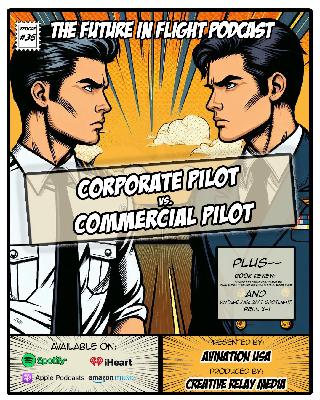
What’s the difference between flying a packed Boeing 737 on a fixed schedule and launching a Gulfstream on a moment’s notice for a CEO? In this episode of The Future in Flight Podcast, host Shawn Staerker breaks down the real-world differences between airline aviation and corporate aviation—from lifestyle and pay to schedules, autonomy, and long-term career flexibility.
The episode then shifts to safety, storytelling, and learning from mistakes with a deep dive into YIKES! 100 Smart Pilots and the Dumb Things They Did Yet Lived to Tell About Them by airline pilot and author J.J. Madison. Drawing from thousands of NASA Aviation Safety Reports, Shawn explores how pilots truly learn—through human error, honest reflection, and shared experience—and how one book is now funding real-world flight scholarships for underserved students.
The episode wraps up with a Vintage Aircraft Spotlight on the Bell X-1, the bright orange rocket plane that shattered the sound barrier in 1947. From Chuck Yeager’s broken ribs and broom-handle ingenuity to the sonic boom that changed aviation forever, this segment reminds us that progress comes from curiosity, courage, and pushing past the impossible.
This episode is about choices, consequences, and courage—whether you’re choosing a career path, learning from a mistake, or daring to fly faster than anyone ever had before.
✨ Key Points
Airline vs. Corporate Pilot Careers
Airline pilots operate under Part 121 with structured schedules, seniority-based bidding, and union protections.
Corporate pilots fly under Part 91 or 135, handling everything from flight planning to catering and customs.
Airline flying offers predictability and long-term job security; corporate flying offers flexibility, autonomy, and variety.
Airline pilots can earn up to $475,000+ at major carriers; top corporate pilots can earn $250,000+ at established operators.
Many pilots transition between the two paths over their careers—no choice is permanent.
Lessons from YIKES! by J.J. Madison
Pilots learn best through stories, not just procedures.
NASA Aviation Safety Reports allow pilots to share mistakes anonymously so others can learn without repeating them.
Fatigue, distraction, and human factors—not lack of skill—cause many incidents.
A go-around is never a failure; it’s good decision-making.
YIKES! turns real mistakes into safer skies and funds flight scholarships through the Victor Kilo Fund.
Aviation Access & Scholarships
YIKES! book sales have funded $5,000–$10,000 flight scholarships.
Scholarships support organizations like Eagle Flight Squadron and under-resourced flight and STEM programs.
Representation and mentorship play a critical role in bringing new voices into aviation.
Vintage Aircraft Spotlight: The Bell X-1
First piloted aircraft to exceed Mach 1 in level flight (October 14, 1947).
Flown by Chuck Yeager, despite two broken ribs.
Rocket-powered, bullet-shaped design based on .50-caliber ballistics.
Reached Mach 1.06 on its first supersonic flight and Mach 1.45 in later missions.
Laid the groundwork for modern supersonic and experimental aircraft.
🕒 Chapter Timestamps
0:00 – 5:30 | Airline vs. Corporate Aviation: Lifestyle, schedules, and pay
5:31 – 7:59 | Choosing your aviation path & career flexibility
8:00 – 13:20 | YIKES!: Learning from mistakes & NASA safety reports
13:21 – 17:30 | Scholarships, mentorship, and aviation access
17:31 – 18:54 | Why mistakes make better pilots
18:55 – 25:00 | Vintage Aircraft Spotlight: The Bell X-1 and breaking the sound barrier
🔗 Links
YIKES! The Book: https://www.yikesthebook.com
AviNation USA: https://www.avinationusa.com
Creative Relay Media: https://creativerelaymedia.com

🎧 Episode Summary
What happens when a lifelong passion for aviation, speed, and service collides with a legendary cross-country challenge? In this episode of The Future in Flight Podcast, host Shawn Staerker sits down with Chris Holder of Concord Battery and Charlie Duffie of CJ Aviation to unpack an ambitious and heartfelt mission: a 31-hour Cannonball Run across the United States to raise $1 million for the Tango 31 Aero Club.
Chris and Charlie dive into the history of the Cannonball Run, the engineering and performance behind Charlie’s hand-built Factory Five Type 65 Coupe, and the logistics of attempting a coast-to-coast drive at speed—all while honoring the legacy of Kevin Lacey, founder of Tango 31. The conversation highlights how Tango 31 has transformed the lives of underserved youth by teaching them to build, maintain, and fly aircraft, producing pilots, A&P mechanics, and aviation leaders now working across the industry.
Beyond the car and the run, this episode is about giving back, sustaining aviation education, and creating a future pipeline of skilled professionals. With industry-wide support, major sponsors, and a growing wave of momentum, this Cannonball Run is more than an endurance challenge—it’s a mission to ensure Kevin Lacey’s vision lives on and expands nationwide.
Thank you to everyone supporting this effort and helping keep aviation dreams alive for the next generation.
✨ Key Points
The Cannonball Run for Tango 31 Aero Clube
A 31-hour coast-to-coast Cannonball Run honoring Tango 31
Southern Route: Jacksonville Beach, FL to San Diego, CA
Goal: Raise $1 million to ensure long-term sustainability for Tango 31 Aero Club
The Mission Behind Tango 31
Founded by Kevin Lacey, aviation icon and mentor
Youth rebuild donated aircraft from the ground up, then learn to fly them
Alumni now include corporate pilots, A&P mechanics, and industry professionals
Funds will support insurance, travel, aircraft operations, and program growth
The Car & The Build
Hand-built Type 65 Factory Five Type 65 Coupe
480 horsepower, ~2,740 lbs, built for speed and endurance
Inspired by Carroll Shelby’s aviation and racing legacy
Designed for performance, safety, and long-distance comfort
Industry & Community Support
Sponsors include Concord Battery, Michelin, Lightspeed Aviation Headsets, and more
Strong backing from aviation manufacturers and distributors
Early commitments already exceeding $70,000
What’s Next
Teaser videos and updates rolling out on Concord Battery’s social platforms
Planned stop at Tango 31 in McKinney, Texas, with youth aircraft escorting part of the run
Car appearance (and possible drag race!) at Sun ’n Fun
🕒 Chapter Timestamps
0:00 – 0:44 | Introduction & the 31-hour Cannonball concept
0:45 – 4:39 | History of the Cannonball Run & route selection
4:40 – 11:41 | Tango 31 Aero Club, Kevin Lacey’s legacy, and youth impact
11:42 – 16:29 | Record times, strategy, and modern-day challenges
16:30 – 22:30 | The Factory Five Type 65 Coupe: design, power, and performance
22:31 – 27:30 | Logistics, fuel strategy, comfort, and endurance
27:31 – 31:24 | Sponsors, fundraising, and how to get involved
31:25 – End | Final reflections, legacy, and the future of Tango 31
🔗 Links
Tango 31 Aero Club (Donations via Zeffy): https://www.zeffy.com/en-US/donation-form/31-hours-for-tango-thirty-one
Concord Battery: https://www.concordebattery.com/
AviNation USA: https://www.avinationusa.com/
Creative Relay Media: https://creativerelaymedia.com/
BULBag: https://bulbag.com/

🎧 Episode Summary
What happens when a hand-built Shelby Daytona Coupe, a cross-country Cannonball Run, and a youth aviation nonprofit collide? In this episode, host Shawn Staerker takes listeners on an unforgettable journey where speed meets purpose and aviation becomes a force for generational change.
The story begins with Chris Holder (Concorde Battery Corporation) and Charlie Duffie (CJ Aviation)—two lifelong aviation enthusiasts undertaking a bold mission: driving a 408-horsepower Shelby Daytona Coupe coast-to-coast in just 31 hours to raise funds for Tango 31 Aero Club, a youth aviation program that has transformed dozens of young lives. Their run honors the legacy of Kevin Lacey, Tango 31’s founder, whose passion for mentoring underserved youth through aircraft restoration and flight training continues to inspire the aviation community after his passing.
From there, Shawn shifts gears—literally and figuratively—into aviation innovation, spotlighting Hartzell Propellers and their new Falcon Series, which brings century-old engineering expertise into the affordable aviation market by cutting propeller weight in half without sacrificing reliability.
The episode closes with a fascinating deep dive into one of aviation’s most important safety tools: the phonetic alphabet. Shawn unpacks its wartime origins, international testing, and why words like Alpha, Bravo, and Niner are carefully engineered to save lives in noisy cockpits and across language barriers.
This episode is about legacy, persistence, and community—and how aviation thrives when people refuse to let good ideas, or good people, be forgotten.
✨ Key Points
🏁 31 Hours for Tango 31
Chris Holder and Charlie Duffie attempt a Southern Cannonball Run from Jacksonville Beach, FL to San Diego, CA.
Goal: 31 hours, symbolizing Tango 31 Aero Club.
Mission: Raise $1M to make Tango 31 self-sustaining after the loss of founder Kevin Lacey.
Tango 31 students rebuild donated aircraft and learn to fly them—many go on to aviation careers.
Over $70,000 in commitments pledged immediately after the mission was announced.
Ultimate vision: Expand Tango 31 into a nationwide model for youth aviation education.
🛩️ Giving Back Through Aviation
Kevin Lacey’s legacy lives on through the students he mentored.
Over 40 youth have gone through Tango 31 since 2017.
Alumni now work as pilots, A&P mechanics, and for companies like Cirrus Aircraft.
“No pressure, no diamonds” becomes the guiding philosophy of the mission.
⚙️ Hartzell Propellers & Affordable Aviation
Hartzell Propellers has been innovating since 1917.
The Falcon Series is designed for engines like the Rotax 916.
Weight reduced from ~40 lbs to ~20 lbs—major performance gains.
Mission-specific prop design supports LSA, kit aircraft, and modern sport flying.
OEM partnerships (CubCrafters, Van’s) can reduce costs for builders and pilots.
📡 The Aviation Phonetic Alphabet
Developed through WWII and finalized internationally by ICAO and NATO.
Designed to eliminate confusion across languages, accents, and poor radio quality.
Examples:
Alpha (ALFA) for global pronunciation
Tree, Fife, Niner for clarity
Used worldwide by pilots, ATC, emergency services, and beyond.
One of aviation’s most successful safety innovations.
🕒 Chapter Timestamps
0:00 – 1:30 | Introduction: Speed, purpose, and aviation community
1:31 – 9:40 | 31 Hours for Tango 31: The Cannonball Run mission
9:41 – 11:00 | Honoring Kevin Lacey & the legacy of Tango 31
11:01 – 16:20 | Hartzell Propellers: Century-old innovation meets modern flying
16:21 – 22:30 | Propeller evolution, weight savings, and mission-based design
22:31 – 33:30 | The aviation phonetic alphabet: History, safety, and global impact
33:31 – End | Final reflections, community call-to-action, and closing thoughts
🔗 Links & Resources
Tango 31 Aero Club:
https://www.t31aeroclube.com/
Concorde Battery Corporation:
https://www.concordebattery.com/
CJ Aviation:
https://www.mcfarlaneaviation.com/cj-aviation/
Hartzell Propellers:
https://www.hartzellprop.com/
AviNation USA / Aviation Magazine:
https://www.avinationusa.com/
Creative Relay Media:
https://creativerelaymedia.com/

🎧 Episode Summary
In this high-energy interview, Michelle Leon, Operations Manager at Levil Aviation, discusses the common thread that links her diverse career background: people. From her early days in hospitality and dentistry to leading operations in aviation and manufacturing, Michelle explains how the philosophy of servant leadership has guided her success.
We explore how Levil Aviation is disrupting the avionics market with affordable, safety-enhancing equipment and the specific strategies Michelle uses to build a paperless, highly efficient workplace. The conversation also tackles the critical need for workforce development and how early exposure to trades can change the trajectory of students' lives.
➡️ Be sure to check out our newest show sponsor: BULBag USA!
⭐ Key Points
Servant Leadership: Being in the trenches with your team and focusing on their growth leads to a more resilient culture.
The Appreciation Gap: Utilizing the 'Five Languages of Appreciation' to recognize employees in the way they actually want to be seen.
Women in STEM: Overcoming industry biases by maintaining credibility and leading with knowledge.
Early Exposure: The importance of introducing middle schoolers to CNC machining and robotics before they choose a career path.
NORSEE Approval: A breakdown of how the FAA allows safety-enhancing equipment to reach pilots faster.
🕒 Chapter Timestamps
00:00 - Introduction and Michelle's diverse career journey
00:54 - Servant leadership lessons from the dentistry world
03:54 - Why workforce development energizes the team
04:54 - Moving toward paperless and digital-first operations
06:11 - Boosting morale through the Five Languages of Appreciation
08:04 - Earning respect as a woman in aviation and manufacturing
13:06 - Why middle school is the 'sweet spot' for trade exposure
19:32 - Introducing Levil Connect: The future of data collection
22:12 - Deep dive into the FAA's NORSEE approval process
28:29 - Advice for building a professional network
🔗 Links & Resources
Levil Aviation Official Website
Creative Relay Media
AviNation
BULBag USA

Comments

Download from Google Play

Download from App Store
 United States