


 Claim Ownership
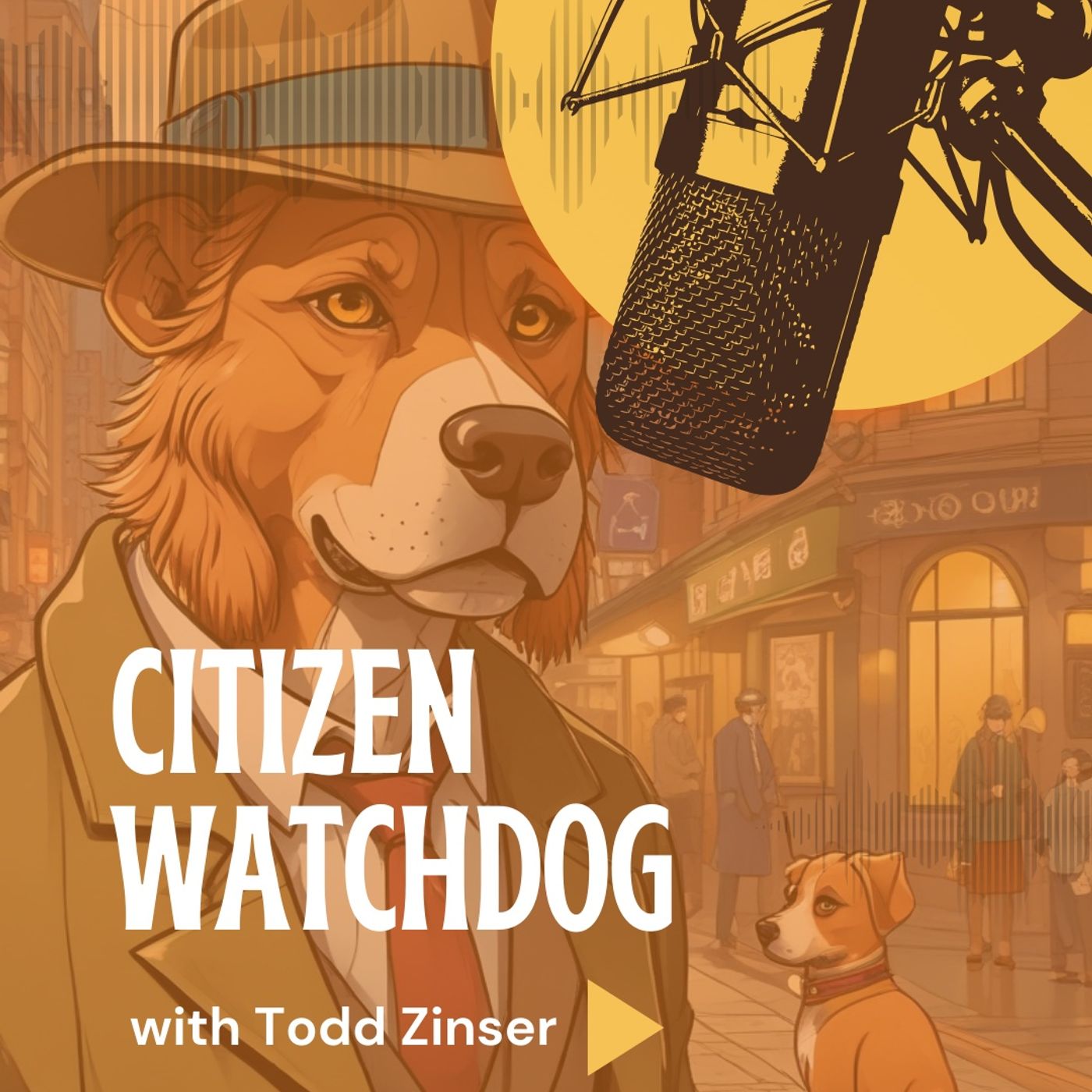
Citizen Watchdog with Todd Zinser
Subscribed: 2Played: 2
Subscribe

© Copyright Joe Strecker Productions
Description
The city of Cincinnati and Hamilton County are run by the same party. There is no overight or dissenting voice....this is where Todd Zinser comes in. Todd bio is below
https://docs.house.gov/meetings/AP/AP19/20150225/102984/HHRG-114-AP19-Bio-ZinserT-20150225.pdf
He will keep an eye out on all the shenanigans in Hamilton County and the City of Cincinnati. Nothing gets by Todd Zinser...the Citizen Watchdog
https://docs.house.gov/meetings/AP/AP19/20150225/102984/HHRG-114-AP19-Bio-ZinserT-20150225.pdf
He will keep an eye out on all the shenanigans in Hamilton County and the City of Cincinnati. Nothing gets by Todd Zinser...the Citizen Watchdog
48 Episodes
Reverse
Todd Zinser discusses the ongoing challenges facing the Cincinnati retirement system, particularly in light of a recent mediation regarding a class action lawsuit. The conversation delves into the funding status of the pension system, the implications of the Cincinnati Futures Commission's recommendations, and the potential regionalization of the city's waterworks as a means to address the pension deficit. The episode highlights the city's moral obligations to its retirees and the need for strategic financial planning to ensure the sustainability of the pension system.
In this episode, Todd Zinser discusses the ongoing issues surrounding the Cincinnati railway trust fund and the city's struggle to effectively utilize the funds for infrastructure projects. He highlights the low percentage of funds spent, the challenges faced by the city in managing these resources, and the need for better accountability and transparency. Todd offers recommendations for improving the situation, including increasing the city's capacity to manage infrastructure projects and establishing a more effective drawdown system for fund distribution.
In this episode of Citizen Watchdog, Todd Zinser reflects on the past year of podcasting, discussing key themes such as public safety, railroad issues, internal audits, and ongoing investigations like the lead pipe scandal. He emphasizes the need for transparency and accountability in city governance, highlighting conflicts of interest and the impact of COVID funds on local government. Looking ahead, Todd shares his plans for future initiatives and the importance of oversight in Cincinnati.
In this episode of Citizen Watchdog, Todd Zinser delves into the complexities surrounding the COVID funding received by the city, exploring how the funds were categorized, the challenges in tracking their distribution, and the implications for future tax increases. He highlights the lack of transparency in spending and the need for accountability in how the funds were utilized, particularly concerning nonprofit support and budget stabilization efforts.
In this episode, Todd Zinser discusses the mechanics of passing legislation in city council, focusing on the increasing normalization of emergency ordinances. Todd highlights the implications of this trend on democracy, citizen engagement, and the legislative process. Through research and analysis, the Citizen Watchdog reveals the alarming frequency of emergency ordinances and the challenges they pose to public oversight and accountability. Todd calls for reform to ensure that citizens have a voice in the legislative process and emphasizes the need for transparency in local governance.
In this episode of Citizen Watchdog, host Todd Zinser delves into the pressing issue of truancy in Cincinnati Public Schools. He highlights the significant impact that absenteeism has on students' learning environments and the overall school district. Zinser discusses the evolution of truancy management, noting the shift from traditional truant officers to absence intervention teams, which aim to address chronic absenteeism through a more supportive approach rather than punitive measures. He emphasizes the confusion surrounding the definitions of chronic absenteeism and habitual truancy, and the challenges in gathering reliable data to assess the effectiveness of these intervention teams.Zinser further explores the current state of chronic absenteeism in Hamilton County, revealing that Cincinnati Public Schools ranks 22nd out of 607 schools in terms of absenteeism. He raises concerns about the lack of data on the performance of absence intervention teams and suggests that the City of Cincinnati should commission an independent study to evaluate their effectiveness. The episode concludes with a call for greater oversight and collaboration between city government and public schools to ensure that students receive the support they need to attend school regularly.
In this episode, Todd Zinser discusses the recent proposal to increase the earnings tax in Cincinnati, examining the city's financial situation, including the impact of COVID relief funds and previous tax increases. Todd argues that the city has sufficient funds and questions the justification for the proposed tax hike, emphasizing the need for transparency and accountability in city budgeting.TakeawaysThe city has received significant revenue increases recently.COVID relief funds were intended for more than just operational costs.The earnings tax increase proposal lacks a solid justification.The city has not fully utilized the COVID relief funds available.There is a concern about overlapping funding for city projects.The earnings tax increase is seen as a political maneuver rather than a necessity.The current city budget is substantial, raising questions about the need for more taxes.Historical context shows a shift in the city's taxation approach.Transparency in city budgeting is crucial for public trust.Future discussions will focus on the city's financial management and tax proposals.
In this episode of Citizen Watchdog, Todd Zinzer discusses the complexities of taxation in Cincinnati, focusing on the recent tax increases, historical context, and the implications of government spending. He critiques the current city council's approach to managing taxes and budgets, emphasizing the need for fiscal responsibility and transparency in public finance. The conversation also touches on the impact of property tax reassessments and the potential for earnings tax increases, urging listeners to remain vigilant about government financial decisions.****** CORRECTION NOTICE **********At approximately 13:20, Todd misstated the gross increase in county property tax collections. He said the increase was $128 million; the correct figure is approximately $184 million. The error understated the increase, and the overall point remains the same.
In this episode, Citizen Watchdog Todd Zinser discusses the recent $8.1 million settlement approved by the Cincinnati City Council regarding a class action lawsuit stemming from the protests following George Floyd's death. He examines the public's reaction, the council's handling of the situation, and the broader implications for law and order in the community.Chapters00:00 Cincinnati's $8.1 Million Settlement Overview11:49 Public Reaction and City Council's Response17:06 Implications for Law and OrderTakeawaysThe $8.1 million settlement was approved by the Cincinnati City Council.Public outrage stemmed from the perception that the city was rewarding rioters.The council's due diligence in the settlement process was questioned.There was a significant disparity between the city's settlement and the county's penalty.The tactics used by police during the protests were scrutinized in the lawsuit.The settlement reflects a broader trend seen in cities across the country.The city opted for a settlement to avoid a potentially larger jury award.Public communication about the settlement was poorly managed.The council's lack of thorough questioning raised concerns about accountability.The situation highlights ongoing tensions between law enforcement and community relations.
Join us on Citizen Watchdog with Todd Zinser as we unravel the complexities of the city's lead service line replacement program, which has been running for several years. This episode uncovers startling revelations from a recent audit that found significant mishandling of the scrap lead pipes, intended for recycling, that mysteriously went missing over a five-year period. We explore the implications of this oversight, the environmental hazards it might pose, and the city's accountability in ensuring proper disposal of these potentially toxic materials. We'll also discuss the procedures the city employed to protect workers, but question whether these measures are sufficient or merely scratching the surface of a much larger issue.
Could Cincinnati transform its city services by handing over the reins of the Women, Infants, and Children (WIC) program to Hamilton County? Tune in as Todd Zinser dissects the historical and financial intricacies of Cincinnati's administration of this vital nutrition initiative. With a substantial $3.5 million budget in play, Todd grapples with the perplexing lack of transparency in fund allocation between city and county residents. The deep dive zeroes in on the alarming gaps in the internal audit, revealing a failure to meet Generally Accepted Government Accounting Standards (GAGAS) and exposing weak internal controls over EBT cards, crucial for program integrity.
What if your neighborhood was quietly being reshaped by unregulated group homes, or if the seniors in your community were living in appalling conditions? In our latest episode, we pull back the curtain on a host of pressing issues facing our city, starting with the growing concern over group homes in East and West Price Hill.We also examine the shift in how schools manage truancy, moving from truant officers to innovative absence intervention teams.Our journey doesn't stop there. We tackle the complex world of government contracts and grants, focusing on identifying and preventing fraud, waste, and abuse. This conversation is not just about oversight; it's about empowering you, our listeners, to play a pivotal role in ensuring accountability. Visit my Facebook page or www.cincinnatiwatchdog.com to share any insights or information you might have.
Is Mayor Aftab Purval over-hyping his achievements ? Join Todd Zinser as he unravels the truth behind his claimed milestones in Cincinnati. From the largest infrastructure grant in U.S. history to groundbreaking financial programs, Todd scrutinizes the reality of these declarations. Was the credit for the Brent Spence Bridge grant truly earned, or are we seeing a puffed-up narrative? And those so-called "baby bonds"—are they really what they seem, or just 529 savings accounts with a misleading label? Todd lays it all out, from grant funding discrepancies to the complexities of city finances managed by nonprofits, inviting you to question the transparency of it all.Todd sifts through promises of 40,000 new housing units and bold zoning changes. Are these goals feasible, or just political smoke and mirrors? Todd's critical eye also lands on the hefty millions poured into public safety upgrades—will these truly translate into safer neighborhoods? Lastly, Todd tackles crime prevention initiatives like Act for Cincy, pondering their real impact in the absence of concrete results.
This episode tries to put the Collaborative Agreement in perspective. There is no longer a formal agreement and perhaps the solution is for all the parties to negate an actual agreement rather than keep touting the Collaborative Agreement as if it is still a formal agreement.
City contracts should prioritize the public good, but Cincinnati's recent agreements with Iris Roley raise serious questions. Why would a city bypass competition and transparency in awarding contracts? Todd scrutinizes the city's decision-making process, the financial stakes at play, and the city manager's ongoing review. Caught on body-worn cameras, Roley's role in police collaboration has drawn criticism, especially from the Fraternal Order of Police. Yet, the city dismissed these complaints, leaving us to wonder about the implications for public trust and accountability.In our latest Citizen Watchdog episode, we peel back the layers on procurement irregularities within Cincinnati’s government. Uncovering unauthorized commitments, missing documentation, and the peculiar attachment of the Government Square Initiative to Roley's contract, we expose systemic issues that could undermine taxpayer value. The unfair competitive advantage rule kept Roley from bidding on a program she helped craft, highlighting a critical conflict of interest. Join Todd for an engaging exploration of these pressing issues and the urgent need for transparency and integrity in public contracting.
Mayor Aftab's conflict of interest created by his membership on the board of directors of Cintifuse, which is a non-profit receiving a lot of money from the city as a "Leveraged Support Partner."
City Hall's reluctance to invest in public safety is jeopardizing our city's future. With a staggering $5.42 million supplemental appropriation now on the table due to a tragic crime incident, we critically examine the city council's approach to safety investments and their over-reliance on crime statistics. Our discussion doesn't stop there; we also shed light on our pursuit of transparency, revealing significant gaps in documentation related to Iris Rowley’s consulting contracts with the city. This episode provides a thorough examination of urban public safety policies, questioning the prevalent narrative that simply addressing societal roots can curb crime.
Corruption and financial mismanagement aren't just the costs of doing business—they're symptoms of a deeper problem. This episode uncovers the shocking findings of an internal audit on Cincinnati's lead service line replacement program, revealing how misappropriated scrap lead pipes have lined the pockets of a city employee while the city failed to capitalize on their recycling value. As we peel back layers of neglect, a disturbing picture of oversight—or lack thereof—emerges, raising pressing questions about how city resources are allocated. Are we too complacent in addressing these systemic issues? Join us as we dissect the imbalance in financial auditing and the Civilian Complaint Authority, and why it matters.Explore the broader financial implications of the missing lead pipes over a five-year period and how it highlights a glaring need for accountability and transparency. The episode pushes against the prevailing narrative that treats corruption as inevitable, arguing instead for a robust audit program to safeguard against financial leakage. Governance, risk assessment, and transparency aren't just buzzwords—they're the keystones of effective city management. Additionally, discover how to access the detailed audit report and additional resources on CincinnatiWatchdog.com, complete with graphs, photos, and a unique visual from ChatGPT. Prepare to rethink what you've been told about city oversight.
This episode sheds light on the urgent need for a formal risk assessment within the city, highlighting my frustration with the city manager's lack of transparency and dismissive stance on essential reports. We dissect the Cincinnati Futures Commission's hurried conclusions, questioning the undue influence of business interests and the glaring lack of neighborhood voices, as revealed in a critical memo from Meeka Owens.As Cincinnati gears up for election season, we can't afford to overlook the city's unfinished business. This episode sounds the alarm on the broader implications of the proposed 2026-2027 budget, touching on critical initiatives like regionalizing the water works and leasing golf courses, all stemming from the Futures Commission’s agenda. We urge you to arm yourself with knowledge—review the commission’s report and Meeka Owens' insights on CincinnatiWatchdog.com. Staying informed is crucial as we navigate these pivotal issues and prepare to make informed choices at the polls.
Join George Brunemann from RestoreLiberty.US for an engaging conversation with Cincinnati expert and former Inspector General Todd Zinser, who pulls back the curtain on the city's most pressing challenges. Todd, known for his podcast "Citizen Watchdog with Todd Zinser," brings his insider knowledge to explore the complexities of crime data accuracy and governance that are impacting Cincinnati's public safety landscape. In the wake of a viral video from the jazz festival, Todd shares his firsthand experience in addressing the city's governance and oversight needs, including his communications with the city council about crime reporting and the controversial decision to eliminate a police district. Buckle up for an inside look at how accurate crime data and effective governance are essential to tackling Cincinnati's ongoing safety issues.The conversation doesn't stop there as we scrutinize the city's fiscal health with Todd's expert guidance. The challenges of Cincinnati's financial management are laid bare, from underfunded employee pensions to staggering deficits in infrastructure and fleet management. Todd weighs in on the city's significant capital spending and the mayor's administration's approach to a no-confidence vote from the FOP. As we examine the broader implications of these financial hurdles, Todd's insights shed light on the critical need for strategic planning and transparent governance to secure a stable future for Cincinnati. This episode is a must-listen for anyone interested in the gritty details of city management and the path to a safer, more financially sound Cincinnati.https://restoreliberty.us/podcasts

Comments

Download from Google Play

Download from App Store
 United States