


 Claim Ownership
Bitcoin.com News Interviews
Subscribed: 42Played: 349
Subscribe

© Bitcoin.com
Description
Interviews with the most interesting leaders, founders and investors in Bitcoin and cryptoverse.
416 Episodes
Reverse

In this conversation with Bitcoin.com News, WeChange CEO Rob Tökölyi shares why he pivoted from 16 years in traditional currency exchange to building the future of crypto on-ramps. From surviving the regulatory gauntlet in Europe to making self-custody as simple as online banking, Robi discusses the real barriers to crypto adoption—and why stablecoins, not Bitcoin headlines, represent the everyday transformation ahead.Guest: Robert Tökölyi, CEO of WeChangeHost: David SencilRecorded: March 11, 2026In this conversation:- His path from currency exchange entrepreneur to WeChange founder- How non-custodial fiat-to-crypto on-ramps work (and why they're different)- Why self-custody adoption requires better UX, not more tech-savvy users- The regulatory double-bind: MiCA, the Bank of England, and why startups face a compliance arms race- Stablecoins vs. Bitcoin: which will drive real adoption?- Why "crypto selling out to TradFi" is really about market sentiment, not fundamentalsAbout WeChange:WeChange is a global, non-custodial fiat-to-crypto on-ramp and off-ramp platform headquartered in Budapest, Hungary. In one transaction, users move money from their bank account directly to their crypto wallet with a flat 2.5% fee—no hidden charges, no intermediate steps. Unlike custodial exchanges, WeChange never holds user funds or keys, preserving the sovereignty that makes crypto revolutionary.Links:- Website: https://wechange.com/ - Twitter: @wechangeappChapters:00:00 - Introduction to Crypto00:23 - Appreciation and Introduction 00:36 - Robert's Background 01:28 - Transition to Crypto02:48 - Challenges in Currency Exchange 04:15 - Introduction to Crypto 05:30 - Crypto and Regulation 07:13 - Introduction to WeChange 10:02 - Currency Exchange Process 11:46 - Simplifying Onboarding 13:15 - Bank Transfers and Delays 15:24 - Self-Custody Adoption 17:21 - Importance of Self-Custody 18:13 - Global Expansion Challenges 20:08 - Regulation and Compliance 22:17 - Thoughts on MICA 23:20 - Regulation Favoring Incumbents 25:11 - Future of Crypto 27:31 - Emotional Impact of Crypto 30:27 - Excitement for Stablecoins 31:21 - USD Dominance in Stablecoins 33:17 - Hungary's Perspective on Stablecoins 34:55 - Closing Remarks#Crypto #Bitcoin #Stablecoins #CryptoRegulation #SelfCustody
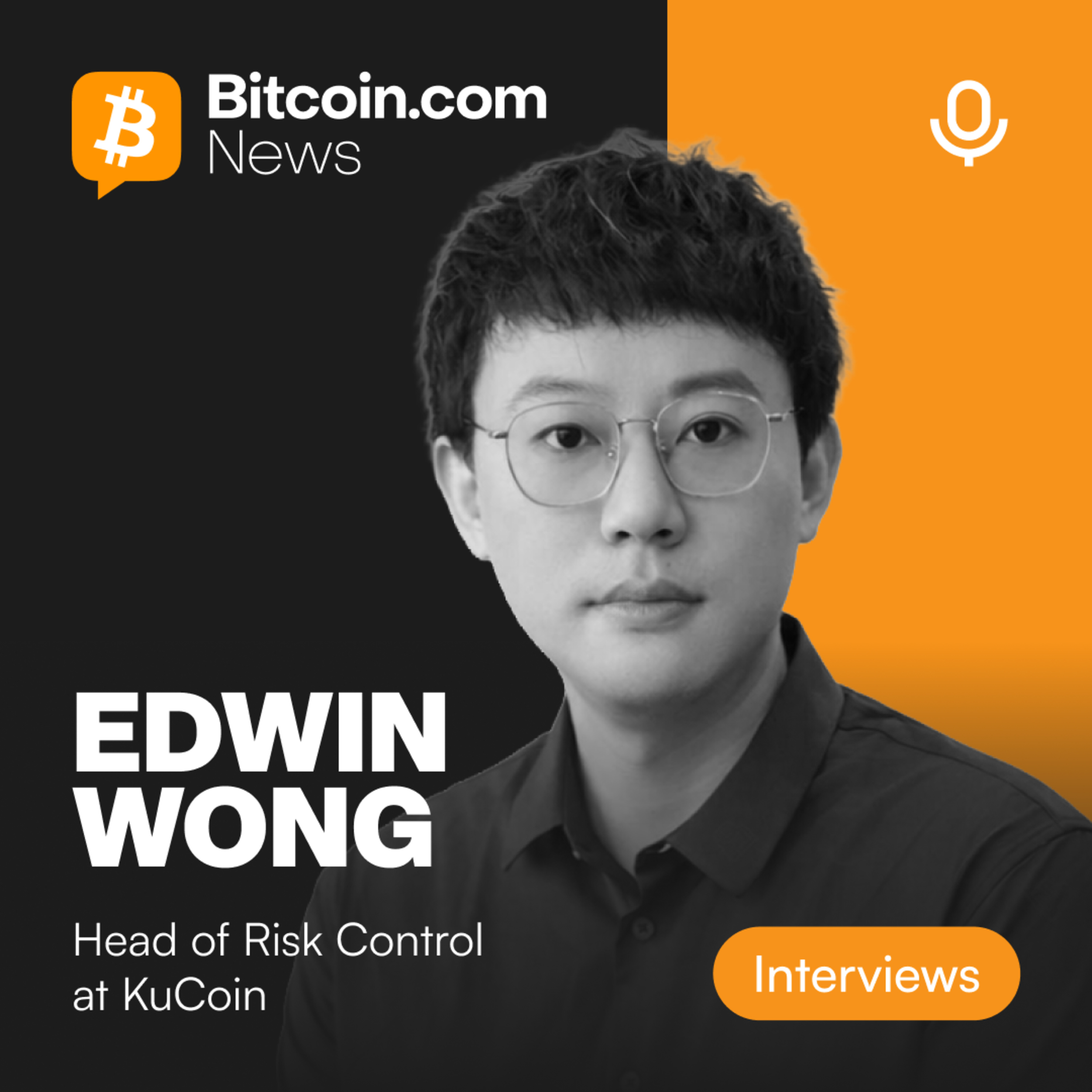
For years, the story was clear: crypto companies were leaving Hong Kong for Singapore.In this exclusive interview, Edwin Wong (VP & Head of Risk Control at KuCoin) reveals why KuCoin shut down its Singapore office and moved operations back to Hong Kong… and why many firms may be following the same path.What changed?Why now?And is Hong Kong quietly becoming the global crypto capital again?Edwin breaks down the real reasons behind this shift — from regulatory clarity to institutional trust — and explains why Hong Kong could outperform Singapore, Dubai, and other crypto hubs in the years ahead.He also dives into:• The origin of perpetual futures (and Hong Kong’s role)• Why US–China tensions may NOT matter as much as people think• Hong Kong’s crypto ETF advantage and what it means for big money• The difference between being “crypto-friendly” vs “crypto-ready”• What the return of major trading firms signals for 2025If you want to understand where the crypto industry is actually heading in Asia — this is a must-watch.About the Guest:Edwin Wong is VP and Head of Risk Control at KuCoin, one of the world’s largest crypto exchanges serving 30M+ users globally.📍 Filmed at Consensus HK 2026 | Bitcoin.com News👉 Follow Bitcoin.com News official X account for more exclusive crypto interviews: https://x.com/BitcoinNews/👉 Learn more about KuCoin: https://www.kucoin.com/🎙 Host: David SencilTimestamps:00:00 Introduction01:09 From Traditional Finance to Crypto02:22 Regulation of Major Exchanges03:05 Global Regulatory Differences04:01 KuCoin’s Growth Strategy06:59 Hong Kong’s Crypto History08:25 HK’s Key Innovations10:12 Top Crypto Cities (2017–2026)12:33 Hong Kong’s Competitive Edge14:12 US–China Impact on Crypto15:20 Hong Kong vs Singapore

Founded by British aristocrat and high-stakes gambler Lord Porchester (Porchy), Housebets is live right now, giving away more than $5,000,000 in their sign-up airdrop, the most generous offer in online gambling history.Porchy, the son of the Earl of Carnarvon, didn’t launch Housebets because he wanted another startup. He launched it because he was personally sick of being treated like a walking ATM. He’s played every major platform at very high stakes, seen every trick (rigged bonuses, locked out of accounts, delayed & frozen payouts), and finally decided to build the casino he always wished existed — then hand the keys to the players. He recently joined the Bitcoin.com News podcast to share his vision to create a casino platform built on transparency and fairness for players.Porchy, the founder of Housebets, began the discussion by sharing his background in betting and crypto gaming. His interest started at a young age while attending Eaton, where he found he could access Betfair. His journey into crypto was driven by frustrations with traditional sports betting, such as a significant amount of money being owed and the lack of payment recourse from bookmakers, which led him to see the benefit of creating liquidity pools to ensure users get paid reliably.Porchy explained that the initial Housebets model, built on smart contracts and Polygon, was adapted because users were unwilling to deal with network downtime and contract signing. He stressed the importance of building trust, adapting the model to focus on transparency with reserves and margins, and having a public dashboard showing deposits, withdrawals, turnover, and profit and loss, even without being fully on-chain.The core of the Housebets model, according to Porchy, is to be the lowest edge, sustainable casino. This is achieved by planning to give away 100% of the house edge through rewards and keys. He noted that while a casino cannot offer 0% edge forever, Housebets can try to get close to it by providing rebates and giving players a higher chance of winning than a traditional casino.Porchy also detailed the $5 million allocation for the rewards program and the system for on-chain bonuses. Housebets has analyzed the deposit history of top bookmakers and tiered people to receive bonuses ranging from $20 to $100,000, but with a significantly lower turnover requirement (around 10 times) compared to the 35 times often seen in traditional casinos. Porchy confirmed they track ERC20 wallets, primarily USDT and ETH users, estimating nearly two million wallets qualify, while also implementing accurate scoring on token holding duration to mitigate abuse from “abusers” or “farmers.”Regarding the HBTS token, Porchy stated that it is designed to capture all the platform’s value and transparently show its allocation, primarily to stakers. These stakers are granted control over determining the amount of additional rewards that go to users in the long run. Porchy’s confidence in the token’s success is tied to a “flywheel effect”: token holders are incentivized to encourage platform usage and increased turnover, which in turn benefits the token’s value by growing with the platform’s volume.In terms of future vision, Porchy confirmed the project was inspired by Hyperliquid’s community-first airdrop model, and the ultimate goal is for Housebets to become the “Hyperliquid of gambling.” Looking ahead five years, he envisions a heavy focus on developing an aggregated sports book, which will pool liquidity to solve the issue of users being limited by existing bookmakers.To learn more about the project visit housebets.com, and follow the team on X or Telegram.

Hugo Philion, Co-founder of Flare and CEO of Flare Labs, shares the developments underway at the EVM-based Layer 1 blockchain. Philion, who brings a strong background from finance and machine learning, details Flare’s mission to build an end-to-end decentralized finance ecosystem around the vast, yet underutilized, XRP asset. He shares his vision that a superior technology, like decentralized finance, is an inevitable progression that will eventually supplant existing, intermediary-heavy financial systems.Flare operates as a unique Layer 1, leveraging embedded data protocols to power its bridges and DeFi ecosystem. It has built a full suite of on-chain functionalities for XRP holders, allowing users to engage in borrow/lend, trade on decentralized exchanges (DEXes), create decentralized stablecoins, and open collateralized options strategies—all directly with XRP. The immediate focus for the platform is to expand these markets, build substantial liquidity, and prepare for the next critical phase: pairing XRP with a variety of real-world assets on-chain.To make this ecosystem accessible to all XRP holders, Flare recently rolled out its game-changing Flare Smart Accounts. This innovative abstraction eliminates the need for retail users to acquire the native Flare token or download a new wallet, allowing them to control Flare transactions—such as minting FXRP and depositing into a vault—directly from the XRP Ledger. This user-friendly mechanism has driven significant adoption, with FXRP, the bridged version of XRP on Flare, growing by 31% in just 10 days since the Smart Accounts launch, reaching approximately 133 million units.While committed to being retail-friendly, Philion emphasizes that a major market unlock lies in enabling institutional products, given that an estimated 60-70% of XRP is held on exchanges. Looking to the future, he asserts that the migration of all traditional real-world assets—including stocks, bonds, and derivatives—to blockchains is inevitable. The current plan is to maximize the usage and liquidity of XRP, which will then serve as a driver for integrating other major tokens like Bitcoin into the Flare DeFi ecosystem.A critical barrier to institutional adoption of real-world assets on-chain is the need for privacy in trading and complex applications. To address this, Flare is preparing for its highly anticipated Flare 2.0 update, which will introduce a new compute layer. This layer is designed to enable applications to sit off-chain with full privacy while settling securely on-chain. This powerful and flexible, privacy-preserving compute layer will position Flare as a vital hub for RWA, allowing for the creation of complex applications like DEXes and lending protocols for assets issued on Flare or connected chains like the XRP Ledger.To learn more about the technology visit flare.network, and follow the team on X.

SVP of Business Development at Bullish and Chairman of Consensus, Michael Lau, joins David Sencil at Consensus Hong Kong to discuss why Hong Kong is becoming the world's most important city for the convergence of TradFi and crypto.Topics covered:• Why HK ranked #1 globally for IPOs in 2025 — and what that means for crypto• The developer talent gap: "Nobody stays here"• Live events in the age of AI: physical presence as the new scarcity• How HK compares to Singapore, Dubai & Korea as a crypto hub• The institutional adoption thesis for Hong KongRecorded at Consensus Hong Kong.00:00 Michael Lau's Journey into Finance and Technology03:00 The Role of Consensus in the Crypto Ecosystem06:12 Conferences as Catalysts for the Crypto Industry08:55 Hong Kong: A Rising Crypto Hub12:00 Comparing Asian Crypto Hubs14:58 Challenges and Opportunities for Hong Kong18:01 The Future of Crypto in Hong Kong

Animoca Brands Chairman Yat Siu makes a bold prediction: within the next few years, there will be 30 to 50 billion AI agents operating online. And they won't live on Facebook or Google — they'll live on the blockchain.In this wide-ranging conversation, Yat breaks down why crypto infrastructure was built for this moment, why Europe faces "technology colonization," and what Apple's 30% Patreon fee reveals about platform power.In this conversation:• Bitcoin acting as a safe haven vs. risk asset• Hong Kong's position as Asia's financial hub• The real state of NFTs and gaming• Animoca Combines: AI agents for everyone• His prediction: 30-50 billion agents on-chain• Why digital identity matters more for agents than humans• Agent swarm security experiments at AnimocaAbout the Guest:Yat Siu is the Chairman and Co-founder of Animoca Brands, one of the world's leading blockchain gaming and investment companies. Animoca Brands has made over 400 investments in Web3 projects.📍 Bitcoin.com News✅ Subscribe for more interviews with the biggest names in crypto and Web3.🔗 Links:Bitcoin.com News: https://news.bitcoin.comAnimoca Brands: https://www.animocabrands.comYat Siu on X: @ysiu

A veteran of the global crypto industry, Colin Goltra has been an early adopter and advocate for digital assets throughout his career.Colin Goltra is the Chief Executive Officer of Morph, a blockchain platform building universal infrastructure for borderless payments and financial services. He recently joined the Bitcoin.com News Podcast to talk about the market.In this episode Colin identifies the previous year as the critical "stablecoin moment," driven by a perfect storm of regulatory clarity (like the Genius Act and MiCA) and technological advancements on smart-contracting ecosystems that have finally solved the performance and scalability issues that plagued earlier attempts with Bitcoin. Morph's mission has pivoted to stablecoin-based global payment settlement, adopting a "ruthlessly pragmatic" strategy to prepare for a market that could be dominated by either one or two fiat-backed stablecoins (USD-linked like USDC and USDT) or by a rise in relevant regional stablecoins.He highlights the profound impact of stablecoins in emerging economies, where access to the dollar provides a crucial hedge against high local fiat inflation, citing the Philippine Peso as a prime example. Looking at the current landscape, Colin pinpoints four key active verticals in crypto: institutional stablecoin-based payments, the significant growth of Real-World Assets (RWAs), prediction markets for valuable information, and the emerging space of Agentic AI, which will require crypto layers for payment and transacting.The long-term vision for crypto, according to Colin, anticipates a transition from a purely "cryptonative" era to a more institutional and pragmatic phase over the next decade. He predicts that for the average person, the underlying blockchain infrastructure will "melt away at the UX level," becoming an invisible rail for better, faster payment solutions. A major challenge remains a knowledge gap for small and mid-sized businesses. To address this, Morph is funding a $150 million payment accelerator to incentivize traditional payment businesses to migrate their transaction volume onto the Morph chain.
Robinhood’s General Manager of Crypto, Johann Kerbrat, joins David Sencil at Consensus Hong Kong to discuss the launch of Robinhood Chain, the company’s public testnet, and its $1M global hackathon.They cover:Moving traditional financial assets fully on-chain24/7 trading and instant settlementPerpetuals and global expansionRobinhood’s Layer 2 strategyPrediction markets as one of its fastest-growing business linesAI integration through CortexThe future of on-chain financial infrastructureRecorded at Consensus Hong Kong 2026.
Terminal 3 CEO Gary Liu breaks down the four unsolved problems threatening agentic commerce — including the OpenClaw breach that proved your private data is never safe once it touches an agent's memory. Plus: why Singapore stepped back from retail crypto, and why Hong Kong leads Asia.00:00 The Importance of Data Privacy and Security04:07 Gary Liew's Journey to Terminal 308:10 Real-World Applications of ID Verification and Financial Credentials12:11 AI Credentials and the Future of Autonomous Agents15:48 Regulatory Challenges and Global Perspectives on Blockchain19:58 Hong Kong's Position as a Crypto Hub23:51 Talent Retention and the Future of Innovation in Hong Kong

Mahad Mohamed is a senior crypto tax and accounting specialist with over 25 years of experience in public accounting and tax advisory. His background includes work with Big Four firms and government tax authorities, giving him deep insight into regulatory review and enforcement.Mahad Mohamed is the CEO of Block3 Finance, a firm dedicated exclusively to cryptocurrency taxation, accounting, and advisory. He recently joined the Bitcoin.com News Podcast to talk how cryptocurrency is taxed, primarily in Canada and the U.S., and what traders, investors, and builders need to understand to stay compliant:Mahad advises crypto traders, investors, and builders on reporting, audits, and long-term tax structure, with deep expertise across Bitcoin, high- volume trading, DeFi, staking, NFTs, mining, and cross-border crypto activity. His work is focused on audit-ready reporting, clean records, and defensible tax positions that stand up under real regulatory scrutiny.Block3 Finance works with clients operating across centralized exchanges and on-chain protocols, delivering accurate reporting, audit support, and tax structures aligned with current regulatory expectations. The firm places strong emphasis on clean records, defensible positions, and practical decision-making that holds up under real scrutiny.

Mahad Mohamed is a senior crypto tax and accounting specialist with over 25 years of experience in public accounting and tax advisory. His background includes work with Big Four firms and government tax authorities, giving him deep insight into regulatory review and enforcement.Mahad Mohamed is the CEO of Block3 Finance, a firm dedicated exclusively to cryptocurrency taxation, accounting, and advisory. He recently joined the Bitcoin.com News Podcast to talk how cryptocurrency is taxed, primarily in Canada and the U.S., and what traders, investors, and builders need to understand to stay compliant.Mahad advises crypto traders, investors, and builders on reporting, audits, and long-term tax structure, with deep expertise across Bitcoin, high-volume trading, DeFi, staking, NFTs, mining, and cross-border crypto activity. His work is focused on audit-ready reporting, clean records, and defensible tax positions that stand up under real regulatory scrutiny.Block3 Finance works with clients operating across centralized exchanges and on-chain protocols, delivering accurate reporting, audit support, and tax structures aligned with current regulatory expectations. The firm places strong emphasis on clean records, defensible positions, and practical decision-making that holds up under real scrutiny.You can book a free 30-minute consultation at calendly.com/mahadblock3finance, tailored to your unique crypto activity, to understand your exposure, reporting obligations, and next steps before issues become costly.A major topic of discussion this episode was the misunderstanding that taxes only apply when cashing out to fiat; in reality, every crypto transaction, including selling, swapping, and spending, is a taxable event, with no minimum threshold for reporting gains. Tax authorities like the CRA, Revenue Quebec, and the IRS inquire about crypto use on tax returns, and the CRA recently sent 440,000 audit letters to inquire if recipients are crypto users. Tax agencies look closely at whether a user is an investor or a day trader, often using an eight-page questionnaire with about 30 questions to assess the user's involvement. A key distinction involves the volume of transactions; having more than 10 to 15 transactions a year, or more than 15 staking/reward transactions, can flag a user as a day trader. Automated trading is also a strong indicator of being a day trader.If classified as a day trader, income is taxed as business income at high personal marginal tax rates, versus a capital gain. Mahad strongly recommends that day traders incorporate, as a corporation's tax rate in Canada is only 12.2% on gains up to half a million, and personal assets can be transferred to the corporation using a Section 85 Rollover. Specific crypto activities are also addressed: staking rewards and airdrops are taxable at their fair market value upon receipt, and the daily nature of these payments can increase the risk of being classified as a day trader. Winnings from prediction markets are taxable, unlike lottery winnings in Canada, because they involve crypto as the medium of prediction. Losses from hacks or exchange failures are not automatic write-offs; they require proper documentation, such as filing a police report and obtaining a federal file number, which Block3 Finance uses to defend the loss claims if audited.Looking ahead, Mahad predicts an increase in audits, on-chain analysis, and less tolerance for errors from governments as education and awareness become more widespread. Global data sharing is also imminent, with the Common Reporting Standard on Crypto-Assets (CARF) set to begin in 2027, meaning tax authorities will have access to international wallet information. Finally, he emphasizes the importance of estate planning, urging crypto users to have an up-to-date will and proper documentation to ensure that beneficiaries and executives can access their crypto, wallets, and seed phrases, noting that "death and taxes are both guaranteed".

At Consensus Hong Kong 2026, David Sencil hosts a forward-looking discussion on how artificial intelligence is transforming finance and digital systems.Featuring:- Bryan Benson (CEO, Aurum)- Tobias Bauer (Co-Founder & GP, TBV)- Yat Siu (Chairman & Co-Founder, Animoca Brands)Topics include:- AI-native financial markets- The emergence of the agentic web- Stablecoins and global financial access- Digital identity and accountability- Centralization vs decentralization- Regulation and innovationAI is no longer optional for founders or financial institutions. It is becoming foundational infrastructure.Watch the full conversation to understand where finance is heading next.00:00 Introduction to AI and Finance02:50 The Underestimation of AI's Potential05:55 AI in Retail and Institutional Finance08:53 The Future of AI Finance12:02 Democratizing Financial Literacy through AI14:55 The Role of Blockchain in AI Finance18:13 The Evolution of the Internet of Value20:53 The Agentic Web and Its Implications23:47 Challenges and Concerns in AI and Finance28:43 Navigating AI Regulation and Its Challenges34:38 The Importance of Digital Identity in AI39:04 The Intersection of AI, Politics, and Regulation44:34 Integrating AI into Business Strategies51:57 The Future of AI: Opportunities and Challenges#Bitcoin #Crypto #ai

Jason Sheman, COO of Bitcoin.com, joins us at Bitcoin MENA to reflect on how the crypto industry has matured since 2017.We discuss the decline of marketing fluff, the rise of institutional adoption, self-custody versus custodians, regulation, privacy, and why Bitcoin’s long-term success may look boring — but is ultimately bullish.This conversation also covers global crypto hubs, conference culture, market cycles, and what to expect as Bitcoin continues integrating into a more digital world.
ComTech Gold is a digital asset platform enabling the tokenization of physical gold for the digital economy. Built on the XDC Network, ComTech Gold issues CGO — a 100% physical gold-backed token.Lim Say Cheong is an award-winning finance and digital assets leader and Chief Adviser for Digital Assets at ComTech Gold, with deep experience across global capital markets and sovereign advisory. He now focuses on advancing tokenized gold and real-world assets to enable transparent, accessible, and globally investable on-chain products. He recently joined the Bitcoin.com News Podcast to talk about the technology.To learn more about the project visit ComTechGold.com, and connect with Lim Say Cheong on LinkedIn.
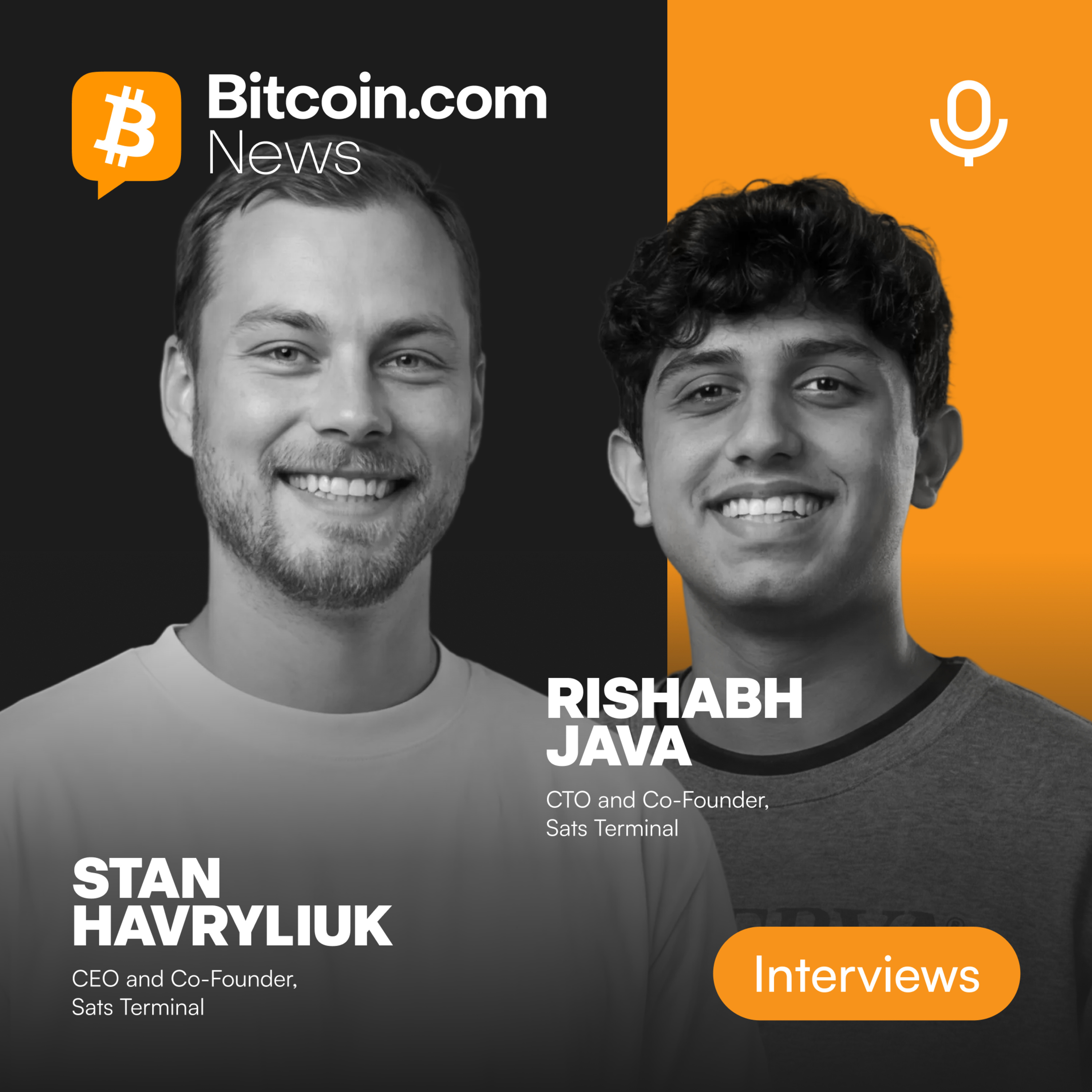
Sats Terminal is the first native Bitcoin super app, bringing together Bitcoin loans, yield, and trading in a single interface and developer SDK. Sats Terminal is backed by YZi Labs (formerly Binance Labs), Coinbase Ventures, and Draper Associates.The founders of Sats Terminal recently joined the Bitcoin.com News Podcast to talk about the technology.Stan Havryliuk (CEO and Co-Founder) and Rishabh Java (CTO and Co-Founder) of Sats Terminal shared their journey, starting with their backgrounds in crypto and fintech. Stan had previous experience with Bitcoin.com and running a large Eastern European exchange, while Java had built and sold a fintech company, finding crypto to be a more open building environment. The inspiration for Sats Terminal stemmed from a highly problematic user experience Stan encountered while trading BRC20s, which resulted in him overpaying significantly for a single token. This incident highlighted a clear need for good, user-friendly interfaces in the growing Bitcoin DeFi market to encourage wider adoption. The two founders met online while working on a previous project and formalized their partnership after meeting in person in Buenos Aires.The company secured notable financial backing from major investors. Java's connection to Coinbase Ventures was established after winning an AI agent hackathon at their San Francisco office, which led to a successful pitch. Stan described how they were quickly accepted into the YZi Labs (aka Binance Labs) accelerator program after applying shortly before the deadline on a friend's recommendation, benefiting from a good product growth trajectory at the time. They also received early backing from the Draper family of VCs, including Draper Associates, Draper Dragon, and Boost VC. Stan's key advice for aspiring startups seeking funding is to "just keep building" and iterating fast, emphasizing that consistency compounds into success, alongside networking and participating in hackathons.Java elaborated on the evolution of native Bitcoin assets, moving from Ordinals to BRC20s and then to the improved Runes standard. He reported that Sats Terminal has already captured approximately 70% of the market share for trading Runes, showcasing their success in the ecosystem. They also acknowledged that the Bitcoin ecosystem's complexity, due to the lack of a central authority, means the market will ultimately decide which token standard becomes the long-term winner.The core of Sats Terminal's vision is encapsulated in their motto: "never sell your Bitcoin," but instead to make it work through products like trading, earning, and borrowing. Stan highlighted their belief that Bitcoin is the "only pristine collateral for loans," and their products are laying the groundwork for Bitcoin's transition from "digital gold" to a "productive asset." Java detailed their Borrow product as a self-custody, trust-minimized cross-chain loan solution where users can collateralize their Bitcoin for a loan without KYC. Stan announced that the first version of the Earn product, designed to simplify DeFi complexity for end-users, is being finalized and expected to go live in the next few weeks.Stan Havryliuk, CEO and Co-Founder of Sats Terminal, early Bitcoin investor and Web3 veteran with over eight years of experience scaling crypto businesses worldwide. Ex-Bitcoin.com and zondacrypto.com (BitBay.com).Rishabh Java, CTO and Co-Founder of Sats Terminal, serial entrepreneur, inventor, and Bitcoin builder with a proven track record of creating great technologies. Winner of 50 international hackathons, awarded by Steve Wozniak at 15 for BCI tech and exited Web2 startup at 21.To learn more about the project visit the website, and follow the team on X.

Bitcoin podcasters Stephan Livera and Robin Seyr discuss the true role of Bitcoin education, why podcasts don’t create initial interest but build long-term conviction, whether the four-year cycle is breaking down, OG whale selling, self-custody debates, privacy narratives, and why Bitcoin’s best advocates often aren’t Bitcoiners at all.From institutional adoption to echo chambers, debates, and the future of Bitcoin media, this conversation explores how Bitcoin actually grows.00:00 Introduction to Bitcoin Podcasting and Its Role02:47 The Role of Podcasters in Bitcoin Education06:12 Personality Traits of Bitcoiners09:02 Evolution of Bitcoin Guests and Perspectives11:51 Diverse Worldviews in the Bitcoin Community15:03 The Importance of Open Dialogue in Bitcoin18:01 Advocacy and Representation in Bitcoin20:46 The Need for Diverse Voices in Bitcoin23:06 Mainstream Adoption Through Influencers27:18 Podcasting Insights and Interview Preparation35:13 The Future of Bitcoin's Market Cycles43:52 Privacy Concerns in Bitcoin
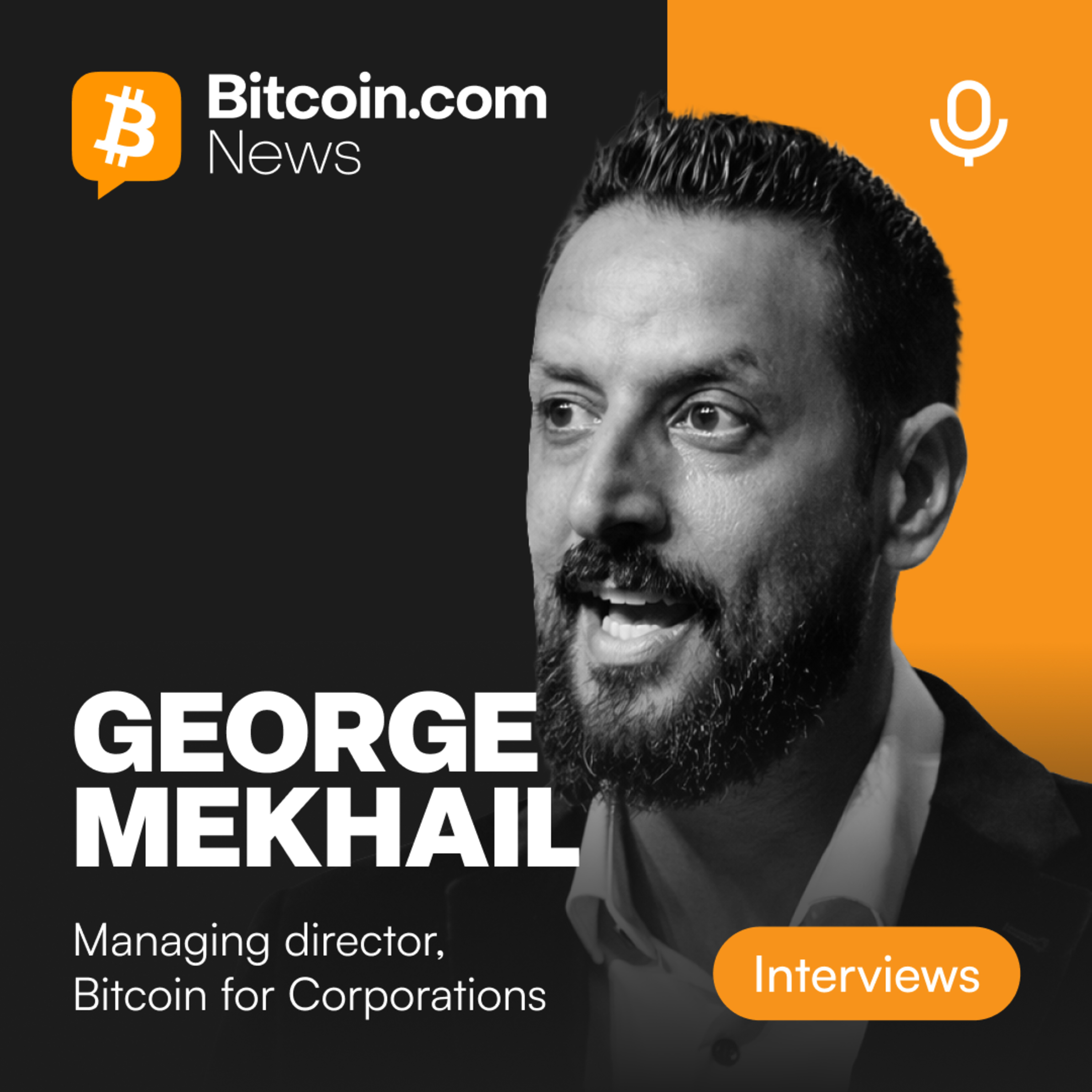
George Mekhail, Managing Director of Bitcoin for Corporations at BTC Inc, explains why Bitcoin is no longer being ignored by institutions — it’s being actively challenged.In this interview from the Bitcoin MENA Conference, George breaks down why corporate Bitcoin treasury companies are being targeted, how global corporate adoption is accelerating, the role of advocacy in protecting Bitcoin companies, and whether the traditional four-year Bitcoin cycle still applies.Topics covered include: • Why institutions are pushing back against Bitcoin • Corporate Bitcoin adoption around the world • Regulatory friction in Europe vs the United States • The MSCI proposal targeting Bitcoin-heavy balance sheets • Whether Bitcoin’s four-year cycle is changing

Dylan LeClair, Head of Bitcoin Strategy at Metaplanet, joins David Sencil at the Bitcoin MENA Conference to explain how a new generation came to Bitcoin before traditional economic theory — and how that perspective now informs one of the most aggressive corporate Bitcoin strategies in the world.This interview covers Metaplanet’s Bitcoin treasury model, using Japanese capital markets to acquire Bitcoin, volatility and options strategies, institutional adoption, why the four-year Bitcoin cycle may never have existed, and why macro liquidity now drives Bitcoin markets.00:00 Introduction to Bitcoin and Personal Journey03:01 Role and Responsibilities at MetaPlanet05:49 Investment Strategies and Market Dynamics08:55 Custody and Capital Raising Strategies11:56 Market Navigation and MNAV Insights15:09 Institutional Interest and Regulatory Landscape17:48 Bitcoin's Future and Privacy Considerations

Ralph Gebran, Managing Partner of Onramp MENA, joins David Sencil at the Bitcoin MENA Conference to explain why Bitcoin custody remains the biggest unresolved issue for institutional and sovereign adoption.This conversation explores proactive regulation in the UAE, how Bitcoin is viewed differently from crypto in the region, institutional hesitancy, centralized custody risks, sovereign involvement, and what to expect from Bitcoin adoption across MENA in 202600:00 Custody Challenges in Bitcoin Adoption01:10 Bitcoin's Historical Context in MENA04:41 Regulatory Approaches in the GCC07:32 Public Perception of Bitcoin in the UAE09:40 Regulatory Nuances Across UAE Regions11:53 Institutional Perspectives on Bitcoin13:36 Institutional Adoption Trends in MENA18:01 Custody Solutions for Institutions23:04 Sovereign Wealth and Bitcoin Investments27:24 Future Outlook for Bitcoin in MENA

Bitcoin mining was designed to be permissionless and decentralized — but is that still true today?At @bitcoinmenaconf, @MiningGrid sits down with @graminitha1 to break down how mining is becoming increasingly centralized, why corporate concentration poses long-term risks to Bitcoin, and how retail-accessible, self-custodial mining can help rebalance the network.The conversation covers:– Why mining centralization threatens Bitcoin’s core principles– Self-custody vs custodial exposure to Bitcoin– Whether mining remains sustainable long-term– The role of retail miners in securing the network– Why participating in mining can protect your Bitcoin investment📍 Conference: @bitcoinmenaconf🎙 Host: @graminitha1🏗 Guest: @MiningGridSubscribe00:00 Introduction to Mining Grid and Its Founders03:00 The Vision Behind Mining Grid06:03 Core Solutions and User Experience08:51 Market Expansion and User Journey11:47 Decentralization vs. Centralization in Mining15:13 The Importance of Self-Custody18:07 Sustainability of Bitcoin Mining20:53 Market Cycles and Future Predictions23:52 Conclusion and Future of Mining Grid to our channel and hit the bell "🔔" icon to get notifications:https://www.youtube.com/bitcoincomofficialchannel?sub_confirmation=1► Who are we?Since 2015, Bitcoin.com has been a global leader in introducing newcomers to crypto. We make it easy for anyone to buy, spend, trade, invest, earn, and stay up-to-date on cryptocurrency and the future of finance. Our mission is to help everyone take ownership of their Bitcoin and their financial future.Buy, sell, trade, earn, use, and learn crypto with the Bitcoin.com Wallet:https://branch.wallet.bitcoin.com/I1dhGnyGNpbStay informed with timely and objective crypto, published daily:https://news.bitcoin.com/Get educated with up-to-date content from Bitcoin.com’s learning center:https://www.bitcoin.com/get-started/Trade permissionlessly on Bitcoin.com's decentralized Verse DEX where you can also earn yield:https://verse.bitcoin.com/► What is Verse?VERSE, which launched in December 2022, is Bitcoin.com’s rewards and utility token. Get VERSE for free in the Bitcoin.com Wallet app, and use it to earn Bitcoin and other rewards.—Join our community and follow us for updates ⬇️►X: https://x.com/Bitcoincom►X News Account: https://x.com/bitcoinnews►Instagram: https://www.instagram.com/bitcoin.com_official/►Discord: https://discord.gg/hux4sugcQS►Telegram: https://t.me/GetVerse►LinkedIn: https://www.linkedin.com/company/bitcoin.com/►Linkedin News Account: https://www.linkedin.com/company/bitcoin-com-news/


Download from Google Play

Download from App Store
 United States
Roger Ver 👑