


 Claim Ownership
The Cancer Letter
Subscribed: 10Played: 37
Subscribe

© The Cancer Letter
Description
The Cancer Letter, an independent weekly news publication, has been the leading source for information on the issues that shape oncology since 1973.
With a dedicated audience of oncology’s leaders, The Cancer Letter stays on top of breaking news and advances in oncology, providing authoritative, award-winning coverage of the development of cancer therapies, drug regulation, legislation, cancer research funding, health care finance, and public health.
This weekly podcast features interviews, discussions, and more to dig deep into the issues that shape oncology.
With a dedicated audience of oncology’s leaders, The Cancer Letter stays on top of breaking news and advances in oncology, providing authoritative, award-winning coverage of the development of cancer therapies, drug regulation, legislation, cancer research funding, health care finance, and public health.
This weekly podcast features interviews, discussions, and more to dig deep into the issues that shape oncology.
68 Episodes
Reverse
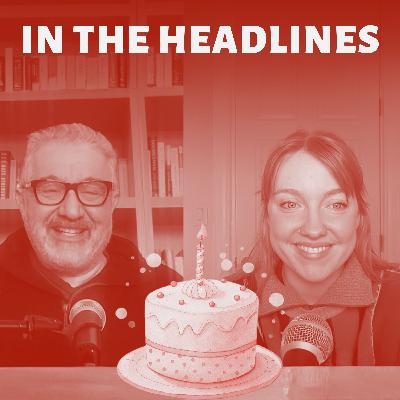
When The Cancer Letter founder Jerry Boyd carried the first print run of his little eight page oncology newsletter into an NCAB meeting in 1973, he certainly could not have predicted that, half a century later, his experiment would branch out into this thing called “podcasts.”On this week's episode, Paul Goldberg, editor and publisher of The Cancer Letter, and Jacquelyn Cobb, associate editor, celebrate the one year anniversary of The Cancer Letter Podcast.Boyd understood that oncology was a community, and a community is engaged in storytelling. Once you get past the sci-fi hurdle of explaining podcasting to a time traveler from the 70s, he would have seen the impact it could have.“When you publish a story, there is, you hope, conversation. And this way, we can be part of the conversation,” Paul said. For Paul, who started at The Cancer Letter when it was still a "Washington newsletter" and watched it grow over the proceeding three decades into what we now describe as a magazine. The Cancer Letter Podcast is the next iteration of this continuous experimentation with storytelling."We started doing that some years ago. So, it's always experimentation and storytelling. There's really nothing more complicated or more important than storytelling, so here we are," Paul said.The Cancer Letter Podcast began last year after Donald Trump began his second term, with two regular segments: In the Headlines, like this episode, and The Directors, a monthly series where Paul asks directors of cancer centers what is keeping them up at night.The Directors, in particular, plays an important role in the current political climate, creating a space for leaders in the field to address the significant changes and challenges that have emerged under the MAHA agenda.But for Boyd, time traveling from 1973, the most shocking realization would have been that the oncology community is still around, and still relevant. An optimist, he strongly hoped that, through the great efforts of the War on Cancer, the disease would long since have been eradicated—and The Cancer Letter with it.This episode of The Cancer Letter Podcast was sponsored by City of Hope. Learn more at http://www.cityofhope.org. Stories mentioned in this podcast include: On Day 2 as director of NYU Perlmutter, Anirban Maitra talks about the advantages of running a matrix cancer centerLetai: NCAB's ad hoc working group plays major role in advising NCI on extramural researchBlack History Month: Otis Brawley shares how lessons learned in West Side Detroit shape his stance on cancer preventionThe National Highway Traffic Safety Administration has a profound, albeit not immediately obvious, impact on cancer A transcript of this podcast is available: https://cancerletter.com/podcastc/20260211-anniversary/
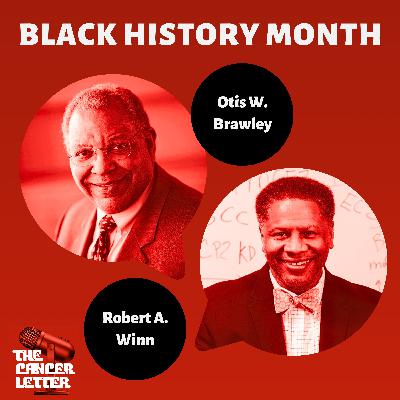
Growing up in inner-city Detroit, Otis Brawley had a thriving community made up of his parents, Jesuit priests, friends, and neighbors encouraging him that he could do anything he put his mind to. Brawley’s parents worked at the local Veteran’s Hospital, his father in janitorial services and his mother in food services. Neither graduated from high school, but they had high aspirations for their son, and would not take no for an answer. “I can remember in 1970, when I was 11 years old, the census taker came to the house,” Brawley said. “She was a Black woman, and she was surprised that my father expected me to go to college. He got very upset. The idea that I would not go to college was just not acceptable.”Brawley, now the associate director of Community Outreach and Engagement at Sidney Kimmel Comprehensive Cancer Center at Johns Hopkins University, shared this story in a recent conversation with Robert A. Winn in honor of Black History Month.Winn, who is director and Lipman Chair in Oncology at VCU Massey Comprehensive Cancer Center, is The Cancer Letter’s guest editor for Black History Month.A transcript of this episode is available: https://cancerletter.com/black-history-month/20260206_3/
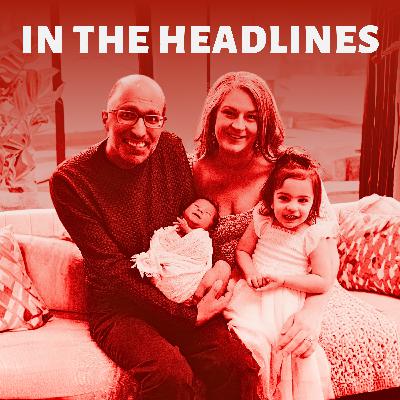
Last week’s issue of The Cancer Letter included an obituary that the entire staff at The Cancer Letter had been dreading for years: Abdallah Abou Zahr, an oncologist at Roger Maris Cancer Center in Fargo, ND, died Jan. 23 of a liposarcoma after a five-year battle with the disease. Abou Zahr’s story had become personal for The Cancer Letter. In February 2024, an intimate story of how cancer hijacked his family’s future—and of how his colleagues and community rallied around him—became one of the magazine’s most read articles. His family’s story highlights the heartbreaking reality that even those who work in oncology are not immune to the devastating personal and financial impacts of cancer.On this week’s episode of The Cancer Letter Podcast, Paul Goldberg, editor and publisher of The Cancer Letter, and Jacquelyn Cobb, associate editor, reflect on Abou Zahr’s experience with cancer—as an oncologist, a caregiver, and, ultimately, a patient with terminal disease.Abou Zahr’s obituary was published last week alongside a story about the fate of the fiscal year 2026 funding bill, which was still uncertain at the time. As of Feb. 3, the FY26 funding bill has been passed by Congress and signed by President Trump. Paul and Jacquelyn talk about how important it is for The Cancer Letter, even as a trade publication, to consistently highlight real patients and their stories.“When we do those stories, they're the most read stories of the year or years,” Paul said. “That is one thing they all have in common.”“They’re resonant; right?” Jacquelyn said. “I think it is important that we kind of circle back to that every once in a while, even if that isn't necessarily our coverage area technically. We're not necessarily a general publication, but I think we have to keep circling back to that and returning to that because that is the whole point.”“It's for the soul,” Paul said.Stories mentioned in this podcast include: Abdallah Abou Zahr, an oncologist whose cancer story resonated widely, dies of liposarcoma at 42 An oncologist navigates terminal sarcoma, insurmountable debt, and “a legacy of grief” FY26 funding package blocked in Senate after ICE shooting of Alex Pretti The Directors: Gary Schwartz and Ramon Parsons on the best of times (for science), the worst of times (for funding) Les Biller: Supportive cancer care is the smart investment our leaders in Washington can’t afford to ignore A transcript of this podcast is available: https://cancerletter.com/podcastc/20260204-abdallah/
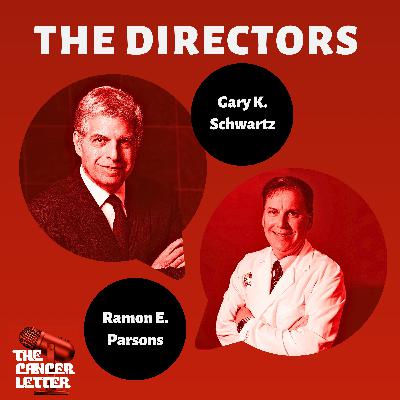
As NCI paylines drop to 4%, cancer centers are tapping into their institutional funds to provide “bridge funding,” typically in $50,000 to $100,000 increments, to enable investigators to keep their labs open until better times return—next year God willing. “It’s sort of starvation wages in terms of the grant funding,” said Ramon E. Parsons, director of Tisch Cancer Institute & Mount Sinai Cancer at Icahn School of Medicine at Mount Sinai. “And so, how do we pay for salaries for research scientists like postdoctoral scientists or graduate students? Those efforts are going to have to be sort of reduced.” The paylines raise questions about sustainability of cancer research in the United States.“I do worry about the next generation of scientists, I mean, the frustration level is pretty high over the funding levels,” said Gary K. Schwartz, director of the Case Comprehensive Cancer Center. “And this may result in people with really innovative ideas to establish their careers, deciding that it’s just not worth developing a career in cancer medicine or basic science. And what happens then? We lose the whole cadre of people who are going to be the future of this whole program.”On the first 2026 episode of The Directors Podcast, Parsons and Schwartz spoke with The Cancer Letter’s Paul Goldberg about the challenges facing their cancer centers, how they’re navigating funding difficulties, and their hopes for the future.A transcript of this episode is available: https://cancerletter.com/podcastc/20260130_1/
In last week’s issue of The Cancer Letter, Jacquelyn Cobb, associate editor, wrote a story about the then-promising legislative package that was passed by the U.S. House of Representatives Jan. 22. At the time, the package was expected to pass in the Senate, provide funding for the federal government through fiscal year 2026, and prevent a government shutdown that looms Jan. 30. Then, on Jan. 24, 37-year-old ICU nurse Alex Pretti was shot in Minneapolis while trying to document the actions of U.S. Immigration and Customs Enforcement agents. In this week’s episode of The Cancer Letter Podcast, Jacquelyn and Paul Goldberg, editor and publisher of The Cancer Letter, talk about how the future of the House-FY26 spending package—and its implications for NIH and NCI funding, as well as pediatric cancer initiatives and other important healthcare stipulations—has dissolved as lawmakers refuse to move forward a spending bill without changes to ICE and the Department of Homeland Security.“There we were, staying in our lane covering nothing but the stuff we cover, which is oncology,” Paul, editor and publisher of The Cancer Letter, said. “So, suddenly, a 38-year-old nurse from the VA gets killed while trying to document what ICE is doing in Minneapolis. “And suddenly the bill, the spending bill, which includes the Department of Homeland Security spending, is derailed. So, we are trying to stay within our lane and cover only oncology and then the world catches up, which also kind of tells you that there are no safe places anymore,” Paul said.The events of the last week reminded Paul that “staying in our lane” is not always possible. “I'm seeing one thing only,” Paul said. “There is no safe harbor that I thought we were kind of seeking so we could focus only on our stuff because The New York Times does a very nice job of covering the rest of the administration. We cover our part of the administration. Well, now we are seeing that our part of administration is becoming more like ‘Well, there's no safe harbor. It's very hard to delineate.’”Stories mentioned in this podcast include: Premarin's 84-year hold on the market ends as FDA approves a generic versionSpending bill passed by the House gives NIH $415M raise, NCI gets $128M Legislation caps proportion of NIH grants to receive multiyear funding; indirect costs remain untouchedFifth time’s a charm? Mikaela Naylon Give Kids a Chance Act is included in FY26 spending billBlood Cancer United: A new name at the right momentNIH ends fetal tissue research—again A transcript of this podcast is available: https://cancerletter.com/podcastc/20260128-fy26-funding/
“It's really, really important that every year since 1991, cancer mortality has dropped by a little bit, and it did again!” said Paul Goldberg, editor and publisher of The Cancer Letter. “Now, mortality is a good metric, age-adjusted mortality. As far as survival, well, that's not so good.”In last week’s cover story in The Cancer Letter, Paul and Jacquelyn Cobb, associate editor of The Cancer Letter, wrote about the annual cancer statistics report by the American Cancer Society. The publication reported that age-adjusted mortality has once again dropped by a small, not especially dramatic margin, but ACS focused its messaging around a different metric: the five-year relative survival rate for all cancers combined reached 70% for people diagnosed between 2015 and 2021 in the U.S. for the first time. The finding was received with widespread fanfare, but epidemiologists had some qualms with the strength of the endpoint of five-year relative survival. In this episode of The Cancer Letter Podcast, Paul and Jacquelyn talk about the nuances of last week’s data-heavy issue of The Cancer Letter.“And in this case, [ACS] decided to go with this statistic, which is kind of unexplained, that shows that 70% survival is now happening in cancer. Does it mean that people are living longer?” Paul said. “No, not necessarily, even though they are, based on mortality numbers.”Stories mentioned in this podcast include: ACS report trumpets 70% five-year survival for all cancers amid uncertain funding outlookNew Medicaid work requirements could lead to 1.6 million missed cancer screenings over two yearsWhen “safe and effective” is not “reasonable and necessary” We can curb excessive drug dosing and improve the quality of cancer careA radiation oncologist’s perspective: Why we need to accelerate early detection strategies for lung cancersBen Seon, immunologist whose work led to development of lymphoma drug Polivy, dies at 89 A transcript of this podcast is available: https://cancerletter.com/podcastc/20260121-acs/
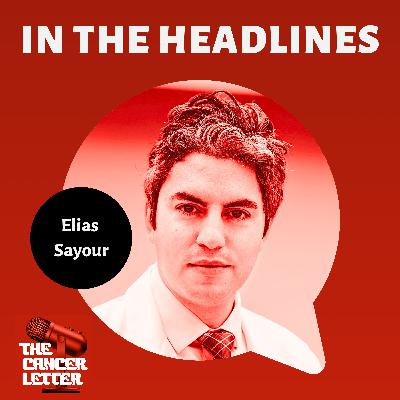
“I believe in the concept of a universal cancer vaccine,” said Elias Sayour, a pediatric oncologist at the University of Florida. “I think if this fails in a prospective phase III trial, I still believe we can engineer a vaccine that works prospectively.”The cover story of last week’s issue of The Cancer Letter was about the potential of COVID-19 mRNA vaccines to improve response to checkpoint inhibitor therapies in patients with lung cancer and melanoma. The finding was published by Sayour and his colleagues in an October Nature paper. This week on The Cancer Letter Podcast, Sayour joins The Cancer Letter team to talk about his study and why he is a believer in the promise of mRNA vaccines to help improve cancer treatment. “mRNA seems the best at doing this,” Sayour said. “That isn't to say that other vaccines couldn't harness the antiviral response in a similar manner… All I can tell you is in our preclinical models and in our observations, clinical observations as well, we did look at the Pneumovax [a non mRNA-vaccine] as just an example, a vaccine, and it did not confer the same effects as the COVID-19 mRNA vaccine. Based on that, mRNA to us seems to be very unique. But other vaccine designs that leverage these mechanisms through a non-specific manner could also perhaps achieve the same effects.”Sayour is hopeful that the COVID vaccine will show clinical benefit in the prospective phase II-III trial that is scheduled to begin enrollment in March, since it would be a boon for patients. “If it works, I do think that's revolutionary,” Sayour said. “How commercially available it is, how this can address third-world countries that may have poor access to some of these technologies as a manner of eliciting some type of a universal effect.”If the COVID vaccine does not help cancer patients in the prospective trial, Sayour said he will continue his work. He sees a future where all cancer patients receive some sort of universal cancer vaccine to reawaken their immune systems to help kill cancer cells.“It's my hope that now we could have something that's instantly available to patients at the time of diagnosis, perhaps right before surgery,” Sayour said. “Everybody gets a universal vaccine to basically awaken that immune response against their cancer. And that could be bookended with immune checkpoint inhibitors, other cancer vaccines, other types of immunotherapies, for maximal effect.”This episode is sponsored by City of Hope Cancer Center. Learn more at cityofhope.org. Stories mentioned in this podcast include: A planned randomized trial will ask an intriguing question: Do COVID vaccines potentiate checkpoint inhibitors?How a Montefiore Einstein screening program is changing the history of lung cancer in the BronxMSK’s AML researcher Bayard “Barney” Clarkson, former president of ASCO and AACR, dies at 99Paul Engstrom, Fox Chase pioneer of cancer prevention, dies at 89Patient advocate David Mitchell, 75, dies of multiple myelomaNIH agrees to review hundreds of denied or shelved grant applicationsHouse passes three-year extension of ACA subsidies with bipartisan support A transcript of this podcast is available: https://cancerletter.com/podcastc/20260114-sayour/
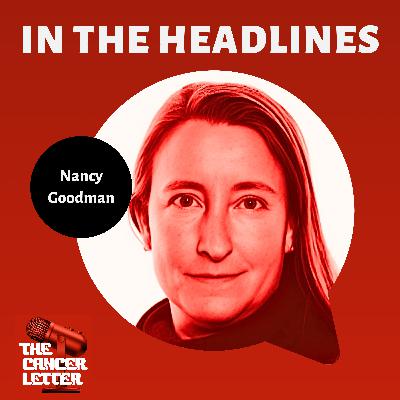
On Dec. 19, the Mikaela Naylon Give Kids a Chance Act was blocked in the Senate by Sen. Bernie Sanders (I-VT) after receiving unanimous approval from the U.S. House of Representatives Dec. 1. On this episode of The Cancer Letter Podcast, Nancy Goodman, founder and executive director of Kids v. Cancer, joins Jacquelyn Cobb, associate editor with The Cancer Letter, and Claire Marie Porter, reporter. Goodman walks Jacquelyn and Claire through the emotional highs and lows that have characterized the legislative story of the bill, which is aimed at accelerating pediatric cancer treatments and expanding access to life-saving therapies for children battling rare diseases. The legislation was named in memory of Mikaela Naylon, a 16-year-old with osteosarcoma who had advocated for the Give Kids a Chance Act and who had spent her last weeks asking Congress to pass it.The bill’s failure in the Senate was a total shock to Goodman and the other pediatric cancer advocates involved.“When the House had their vote, we brought a whole slew of kids who had cancer or who were bereaved siblings or parents and Mikaela's parents and her brother came and we all watched together. And it was just one of the most moving moments you can imagine. People were crying and just it was like this moment where we felt like Congress really cared and Congress was working and Mikaela's family felt like her death was not for nothing. And we came back to my house and celebrated,” Goodman said. “It was just this awesome party, this beautiful moment. We were just so happy. We couldn't believe it. And Senator Mullin's staff was saying they're going to have a vote soon. And we thought, ‘Oh my gosh, this can happen before Christmas. This is going to be our Christmas gift.’ So, we were just ecstatic. We thought it was going to happen.”But Sen. Sanders blocked the small Mikaela Naylon Give Kids a Chance Act in favor of pushing a larger, billion-dollar spending bill, Goodman said. “What he said was he doesn't object to the bill, but he said that he has other priorities,” Goodman explained. “He has this huge set of priorities…And he said, ‘Look, [the 2024 CR] was a bipartisan agreement. There are over a billion dollars worth of bipartisan priorities. Before we give the Republicans any opportunity to cherry-pick what they care about…let's pass the whole package.’"Sen. Sanders’s larger bill was struck down by Sen. Markwayne Mullin (R-OK), leaving the Mikaela Naylon Give Kids a Chance Act without support in the Senate.“I just wonder, Senator Sanders says he cares about kids with cancer,” Goodman said. “And I'm just asking him to show us: How does he care? Where is it?”Stories mentioned in this podcast include: Mikaela Naylon Give Kids a Chance Act nixed by Senate House passes Mikaela Naylon Give Kids a Chance Act—next step, the SenatePediatric cancer research cut from spending legislation at last minuteA transcript of this podcast is available: https://cancerletter.com/podcastc/20260107-goodman/
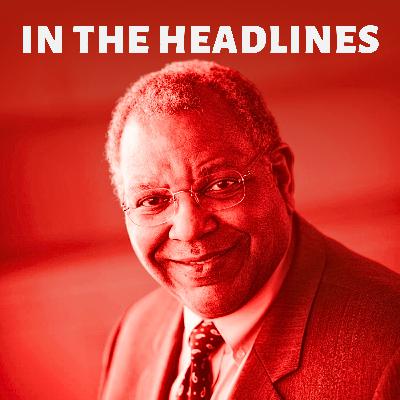
In a year that brought us new KRAS-inhibiting drugs, deepened our understanding of HER2 in breast cancer, and highlighted new potential for mRNA vaccines, the cancer field was also rocked by uncertainty of the future of research funding, equity in cancer delivery, and the integrity of review at FDA. In a lively conversation with The Cancer Letter’s Paul Goldberg, Brawley, who is the Bloomberg Distinguished Professor of Oncology and Epidemiology at Johns Hopkins University and co-editor of the Cancer History Project, started off on a positive note, highlighting several major discoveries made in 2025. “Let me talk about some of the science that excites me. In the last year, we've known for years that KRAS is important. There are a whole bunch of tumors, be it lung cancer, colon cancer, some of the brain tumors, neuroblastoma, where KRAS is an important gene,” Brawley said. “Well, this year we got inhibitors of KRAS G12D, G12V, and G12R. So, all of a sudden we have drugs that truly have the potential of inhibiting KRAS and positively affecting a whole bunch of tumors. And so to me, this is one of the things that really excites me.”Despite these great breakthroughs happening in oncology, cures and treatments are not being delivered equally in the U.S., Brawley said.This numbered among his concerns for the field, which included the loss of Rick Pazdur at FDA as well as talented young investigators choosing alternate career paths. “I think we've lost some of our young good investigators,” Brawley said. “A lot of the training grants are not being funded. I know several young, talented people who are looking to Europe. I know several young, talented people who are looking to Wall Street, go tell investment banking firms where to put their money as opposed to doing the science to develop the new drug or to develop the new understanding of cancer. So we have been harmed.”Many of the established systems that have shaped the field of oncology in the U.S. have faced a shakeup this year. Brawley and Paul agree it is time to talk about rebuilding. “We do need to talk about rebuilding,” Brawley said. “Part of the rebuilding is how do we finance it? Part of the rebuilding is how do we organize it?”Stories mentioned in this podcast include: Pazdur leaves FDA after 25-year career that shaped the agency’s oncology regulationsAs cancer scientists, we must change how we engage with the public on the impact of NIH cuts What the scientific method obscures, by George Weiner and Elizabeth JaffeeKay Dickersin: How NBCC started Project LEAD to teach science to breast cancer patients A transcript of this podcast is available: https://cancerletter.com/podcastc/20251231-brawley/
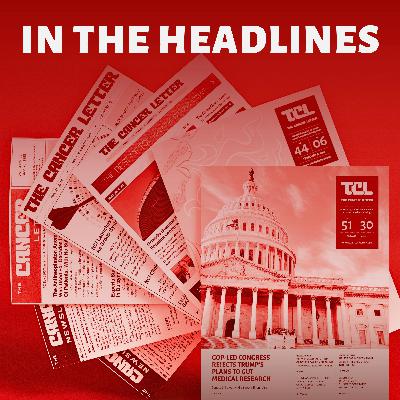
A year like 2025 has demanded a lot from all of us, between the Trump administration’s flooding of the zone, the impact of DOGE and MAHA initiatives on the National Cancer Program, and the personal toll of living amidst uncertainty. In many ways, 2025 was a test. Did the field of oncology pass? Did The Cancer Letter? Reflecting on a year of cancer news coverage and our readers’ most-read stories, Paul Goldberg, editor and publisher of The Cancer Letter, and Jacquelyn Cobb, associate editor, talk about how this year of change has impacted how The Cancer Letter serves the oncology community.“You had to stay calm because that kind of was the whole purpose of the exercise, is for people to not be calm,” Paul said. “And catastrophizing was easy, but I think all of us tried to keep catastrophizing to a personal level.”A legacy publication from 1973, this year has demanded The Cancer Letter step into the new century. Between launching this podcast, a new Cancer Policy section, and “The Directors” monthly series, The Cancer Letter has expanded.“You had been thinking about the idea for ‘The Directors’ for a while,” Jacquelyn said, “but I think that was definitely kind of a kick in the butt to get it going—where we have sort of a leadership vacuum at NCI once Kimryn Rathmell stepped down.”Hearing from the leaders in the field has a stabilizing impact, and many of these podcast episodes appear among the top stories of the year.“Stability. That's what we were bringing to this thing all through the year, because instead of catastrophizing, suddenly you could see once a month, two directors of cancer centers who are really leaders of the National Cancer Program saying, ‘Okay, we're doing this. Okay, here's what I'm worried about. But this is what I'm doing.’ Basically, two leaders of this field practice psychiatry without a license. That's really what it's about.”The field of oncology changed this year. So did we. “In the mess, there is movement,” Paul said. Jacquelyn agreed. “That really shifted my perspective when all of this started.” Stories mentioned in this podcast include: The Cancer Letter’s most-read stories of 2025The Directors, a monthly podcast series featuring two cancer center directors in conversation about what’s keeping them up at night17 and Onward, a series of guest editorials by former NCI Director Kimryn RathmellA transcript of this podcast is available: https://cancerletter.com/podcastc/20251224-year-in-review/
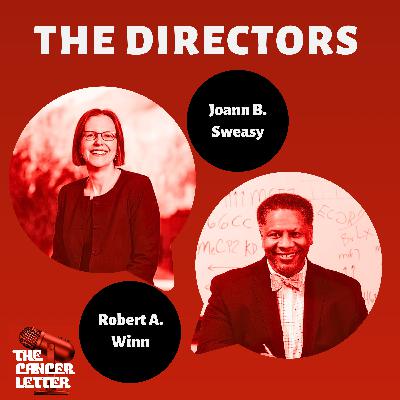
As trust in scientific and regulatory institutions frays and the meaning of “gold standard science” is increasingly contested, cancer research faces a credibility test of its own. “Cancer research is apolitical,” Joann Sweasy, director of the Fred & Pamela Buffett Cancer Center, and president of the Association of American Cancer Institutes, said. “Everyone is impacted by cancer. I don't know any family that's not impacted by cancer.”Sweasy said since the Trump administration took over federal health agencies, cancer center directors have had a lot of “strategic discussions.”“We had a lot of open discussion, which was great, but it wasn't reactive discussion,” she said. “We weren't approaching people on the Hill, our delegations, reacting to things. It allowed us time to get our facts together. So, I think it was a very strategic approach. I really do.”Those closest to this work now have an even greater responsibility to make the case for its value to the public that funds it.“We need to be also accountable and responsible for how we communicate the good news and the bad to the American public,” said Robert Winn, director of the VCU Massey Comprehensive Cancer Center, and former AACI president.Winn considers this renewed attention to communicating cancer progress a “silver lining” to the past year of instability. “We recognize that we cannot work in a vacuum as much as we had been in the past, that we do need to be also accountable and responsible for how we communicate the good news and the bad to the American public,” Winn said. “So, there's something good that came out of all that craziness.”NCI-designated cancer center directors have the responsibility of being the “north star” of the oncology community, says Sweasy.“I think we've shown that we're able to pivot when we need to pivot and work together,” she said. “ I think each of us as directors and members of our cancer center have the north star as really doing the best we can for cancer patients, cancer survivors, and their families, and to prevent cancer. So I think they're incredibly valuable. We are the national team.”Sweasy and Winn appeared together on The Directors, a monthly series which focuses on the problems that keep directors of cancer centers up at night.A transcript of this episode is available: https://cancerletter.com/podcastc/20251219_1/
Last month, FDA withdrew a proposed rule for standardized asbestos testing in talc-based cosmetics. The proposed rule, introduced in Nov. 2024 and withdrawn Nov. 2025, was mandated by the Modernization of Cosmetics Regulation Act of 2022 or MoCRA.Following an open comment period, FDA decided to withdraw the rule—citing significant public opposition and unintended consequences.“When you read the headline: ‘They're withdrawing a proposed rule that would regulate asbestos,’ it's hard to see how that could have maybe a less malicious... or not malicious, but insidious spin,” Jacquelyn said. “But like you said, it's so, so complicated.” Some experts and lobbyists suggested the withdrawal smacks of industry influence. Indeed, even if unintended—some industries will benefit from the rule reprieve. “I think this [rule withdrawal] is enormously valuable for Johnson & Johnson, even if it lasts only for a few weeks. Because at the very least, it sort of muddies the record and helps them clawback credibility,” Gardiner Harris, author of The New York Times bestselling book “No More Tears: The Dark Secrets of Johnson & Johnson,” said to The Cancer Letter.However, some other experts believe that the proposed rule was fundamentally flawed, and that a withdrawal was necessary in order to completely rewrite it, Claire said. “But, nothing has really changed,” Claire said. “It was just a proposed rule, the rule was not finalized.”An HHS spokesperson said to The Cancer Letter that a new, more “comprehensive” rule is forthcoming. Historically, it’s not unusual for FDA to withdraw a rule in order to rewrite it, and then propose it again.“A lot of insiders—FDA watchers—I'll call them, pointed out that FDA is legally required to issue this rule. They are mandated by the Cosmetics Act [MoCRA]. So I mean, that's the good news, is that the administration has to propose another and hopefully better rule,” Claire said. “I guess the concerning news is that there's no timeline for when that's going to happen. So, in the meantime, it's voluntary, and it's up to us to decide what's safe.”Stories mentioned in this podcast include: John Byrd brings blood cancer expertise to solid tumor, immunology powerhouse at UPMCFDA withdraws proposed rule for asbestos testing in talc-based cosmetics. It’s anyone’s guess whether the agency is preparing to strengthen or relax talc regulation.ESMO publishes guidances on AI tools for clinicians, patients, and researchers. Says one author: “We think there should be some degree of human oversight, otherwise, they can go completely rogue and nobody notices.”Harvey Risch, critic of COVID-19 response, tapped by White House to serve as chair of the President’s Cancer PanelA transcript of this podcast is available: https://cancerletter.com/podcastc/20251217-talc/
Last week’s issue of The Cancer Letter featured great news and terrible news. On the one hand, Anthony G. Letai, the new director of the National Cancer Institute who has been regarded as a great choice for the position by oncology leaders, has stepped into the public sphere and has been spreading a message of stability and continuity. On the other hand, Richard Pazdur retired from his position as director of FDA’s Center for Drugs Evaluation and Research after a nearly three-decade career shaping the regulatory landscape of oncology. Pazdur retired from the agency after Vinay Prasad, director of FDA’s Center for Biologics Evaluation and Research, initiated a new vaccine policy framework, which Prasad described in a memo that announced that FDA had found itself culpable in the deaths of at least 10 children who had received the COVID-19 vaccine. “He couldn't stop what really needed to be stopped, which was this effort, this reexamination of deaths from the adverse events reporting system that Prasad ran and other anti-vaxxers that purportedly found,” Paul said. “And by the way, there's no data. This is all evidence-free, that a bunch of kids died of COVID shots. So, we killed a bunch of children, which is... And FDA, of course, issued this mea culpa finding, and they want to rechange everything and change the way vaccines are approved. And now this is based on no data, based on no outside advisory committees, none of that.”Pazdur could not support this move by Prasad. “These adverse events, reporting systems, they're going to find that terrible things happen to people, but attribution is not possible using that data,” Paul said. “So, give it to somebody whose basically goal is to show that vaccinations do more harm than good and give them power to bypass normal scientific inquiry that would withstand... It's about the soul of American medicine. “And in fact, a group of former FDA commissioners, the people who have run FDA over the course of 35 years wrote an editorial to The New England Journal of Medicine saying, "This is really dangerous. That path the FDA is taking.“And so, basically Pazdur was led up to the point where he had to either sign off on this or slam the door, leave and slam the door. So, he had to leave and slam the door because you do not want to be a part of essentially the destruction of the American medical system.”Stories mentioned in this podcast include: Anthony Letai pledges to ensure stability for extramural and intramural cancer scienceIn first NCAB director’s report, Anthony Letai focuses on centralized grant review, budget outlookPazdur leaves FDA after 25-year career that shaped the agency’s oncology regulations BIO calls for the end of “constant turmoil,” urges the administration to “right the ship”Mail-out colorectal cancer screening programs extend, rather than replace, clinical care Pediatric cancer five-year survival rate has increased dramatically, AACR says in inaugural Pediatric Cancer Progress ReportA transcript of this podcast is available: https://cancerletter.com/podcastc/20251210-pazdur-letai/
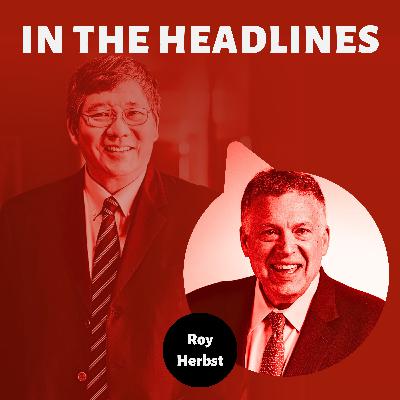
Edward Chu, director of the Montefiore Einstein Comprehensive Cancer Center, died on Nov. 13 from glioblastoma. He was 66.In the most recent issue of The Cancer Letter, Roy S. Herbst, deputy director at Yale Cancer Center, penned an obituary for Chu chronicling the career and impact of the “baritone of reason.” In this week’s episode of The Cancer Letter Podcast, Herbst sat down with Paul Goldberg, editor of The Cancer Letter, and shared stories about meeting Chu on a sailboat in Rhode Island, exploring Athens, Greece while they were both in town for a meeting, and the eulogies he heard at Chu’s funeral. Herbst has known Chu for almost 45 years.“He was just a real amazing human being, scientist, clinical researcher, but also someone who cared about people,” Herbst said on the podcast. “It hit us all very hard. Many of us have known that Eddie's been fighting this illness for a while,” Herbst added. “He's been very much a part of our lives—a friend and mentor to so many. We're all struck by his passing and sad for his family, friends, and the entire community that lost someone who did so much for cancer patients, for students, and fellows. Just a real tragedy.”Stories mentioned in this podcast include: Montefiore Einstein Director Edward Chu dies of glioblastoma at 66A transcript of this podcast is available: https://cancerletter.com/podcastc/20251203-edward-chu/
Recently, a wave of new private insurance mandates have swept the nation making fertility preservation a covered benefit for people with cancer in 21 states plus Washington, DC. Mia Sandino, an osteosarcoma survivor, chose not to undergo fertility preservation when she was diagnosed at 19. She didn’t know if she wanted kids, had no guarantee that her insurance would cover the extraordinary costs, and feared postponing treatment would delay her return to "normal life."This episode is available on Spotify, Apple Podcasts, and YouTube.On this week’s episode of The Cancer Letter Podcast, Sara Willa Ernst, a reporter with The Cancer Letter, spoke with Claire Marie Porter, reporter, on the nuances of insurance coverage for oncofertility around the country, and the barriers that persist, especially for young people with cancer.“This is a certain kind of existentialism that a lot of young people are faced with. Add on top of that, a cancer diagnosis,” Sara said on the podcast. “It’s really an unfair position that a lot of young people are put into, especially when it’s not covered by insurance—it’s not a question of ‘Do I want to freeze my eggs or not?’ It's more of a question of ‘Do I even have the choice to?’”The American Society for Clinical Oncology first created a standard-of-care guideline for fertility preservation for cancer patients in 2006, deeming it a medical necessity. “But the reality is that in the U.S., most people just don't have benefits that cover this, and it's extremely cost prohibitive,” Claire said.As the oncofertility conversation becomes normalized, the coverage gaps for cancer patients become more glaring—augmenting the already existing burden of financial toxicity many patients carry.Other stories mentioned in this podcast include: Oncofertility coverage mandates expand to 21 states and DC as political momentum buildsShane Jacobson talks about his to-do list for ACSMikkael Sekeres: My introduction to, and lessons learned from, Rick PazdurMontefiore Einstein Director Edward Chu dies of glioblastoma at 66Arnold D. Kaluzny, longtime adviser to the NCI and health services researcher, dies at 87Meeting the moment: ASCO GI Cancers Symposium delivers insights and collaborationA transcript of this episode is available: https://cancerletter.com/podcastc/20251126-oncofertility/
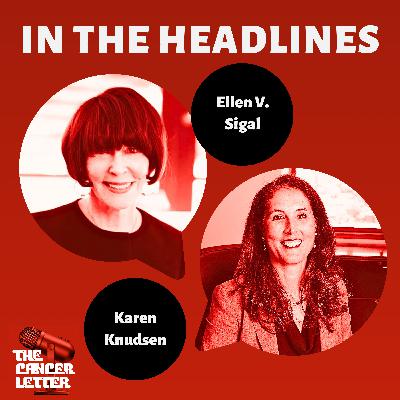
Last week, Richard Pazdur was named to the position of director of FDA’s Center for Drug Evaluation and Research. Much has been written about how Pazdur, with nearly a three-decade long career at the agency, represents a stabilizing choice for FDA as it faces inner and outer turmoil.Indeed, on this week’s episode of In the Headlines, we bring you the full audio of a conversation originally published in print in last week’s issue of The Cancer Letter between Ellen Sigal, chair and founder of Friends of Cancer Research, and Karen Knudsen, CEO of the Parker Institute for Immunotherapy, about how Pazdur is a great choice for the position—and the agency.“We're not gushers,” Sigal said. “That’s what’s so funny about this. All of us can be quite critical.” “Now we know, the three of us can gush. We've proven ourselves capable,” Knudsen said. An important piece of this conversation that has not been highlighted elsewhere is the role of Pazdur’s late wife, Mary, in his personal and professional success.“She was his rock. She was his conscience, she was able to work with him, understand him, guide him, and for sure tell him when he was wrong,” Sigal said. “That ability to have someone you trust that isn't just admiring you, that is your partner and your best friend and the trust that he had, and Mary would always speak her mind. “I admired that woman so much. She was just a gift from heaven. I don't know how, tears come to my eyes when I think of her right now. She was extraordinary, and I think she helped him, and we need to give her the credit for what Rick became.”In death, Mary Pazdur continued to inform Rick’s work as a patient-oriented regulator.“He knows personal loss. He knows what it means. He's very empathetic to patients and the real-world patient that is struggling every single day,” Sigal said. “Every decision is never going to be exact, and he has to be able to take risks, and he understands those that are important to patients. We can't ever forget in the back of his mind—not only what he went through, but he understands this instinctively—that he's protecting and helping patients.”Stories mentioned in this podcast include: Richard Pazdur, a respected insider with a plan to reengineer FDA, steps in as CDER directorRick Pazdur’s CDER appointment comes at exactly the right moment for FDAFDA to remove black box warnings on hormone therapy for menopauseSmoldering multiple myeloma: Rethinking the waiting gameA transcript of this podcast is available: https://cancerletter.com/podcastc/20251119-pazdur/
Richard Pazdur, founding director of FDA’s Oncology Center of Excellence and long-time FDA visionary, has accepted the top job at FDA’s Center for Drug Evaluation and Research following George F. Tidmarsh’s dramatic ouster from the position. “This is big. Because, you know, the whole field of oncology over the past 25 years—and [Pazdur has] run the oncology division and decided which drugs would get on the market, which drugs won't get on the market. Everybody is speaking ‘Pazdurese,’” said Paul Goldberg, editor and publisher of The Cancer Letter. “Even if you don't like Pazdur, you are speaking Pazdurese if you're doing oncology. And he's shaped it. “I don't think anybody has had more impact on this field than he has,” Paul said. “So, now, here he is, and I suspect there's some people who are unhappy, but I think there's, what I'm sensing is a lot of dancing in the streets.”In this episode of The Cancer Letter Podcast, Paul, Jacquelyn Cobb, associate editor of The Cancer Letter, and Claire Marie Porter, reporter, talk about the details of Tidmarsh’s departure and how Pazdur’s leadership may change FDA.Tidmarsh resigned from his position Nov. 2 following a lawsuit by a former associate and a probe into what an HHS spokesperson described as “serious concerns about his personal conduct.” "FDA is important to the industry,” Paul said. “The industry makes money by having a solid FDA, where people are competent, where decisions are made in a way that is at least explainable."Solid FDA leadership is central to the success of the field of oncology.“This is just as important as the fact that you know, the administration's plans to change over NIH and really gut it has been stopped,” Paul said. “This is as important as the fact that Tony [Anthony] Letai is now the NCI director. Stories mentioned in this podcast include: The Directors: Ruben Mesa and Kunle Odunsi on how immigration and diversity accelerate discoveryCDER Director Tidmarsh quits amid inspector general probe of his “personal conduct” Cancer advocates express concern about comments that signal trouble for accelerated approvalHow George Tidmarsh crossed the FDA-industry RubiconHow next generation sequencing is powering the shift to more accessible—and comprehensive—cancer careCity of Hope’s leadership in lung cancer: Precision, innovation, and a vision for cure A transcript of this podcast is available: https://cancerletter.com/podcastc/20251112-tidmarsh/
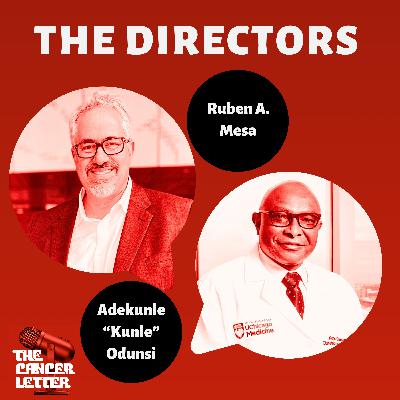
At a time when federal immigration policies are becoming stricter, Kunle Odunsi, director of University of Chicago Medicine Comprehensive Cancer Center, reflected on the fact that cancer research is a highly international community.“I was born in Nigeria, I grew up in Nigeria, I went to medical school in Nigeria, and then I did some of my training in England, in the United Kingdom,” Odunsi said. “My residency in obstetrics and gynecology was at Yale School of Medicine, so it was a very welcoming environment. “In fact, many of us in my class, four out of six, were international graduates, because Yale had the philosophy at the time that we’re just going to take the best from wherever, and that was my experience. I felt just as good as anyone else. It was a great time.”Ruben Mesa, president of Advocate Health Center Cancer Service Line, is the child of Cuban refugees and agreed with Odunsi that international collaboration is vital for a healthy research ecosystem.“I trained at Mayo Clinic, and when I was a resident and fellow, I think about some of the extraordinary individuals, folks like Kunle, again, who came and had trained from other countries, but were just exceptional individuals and really moved forward the science and brought tremendous skills also from their medical training,” Mesa said. As part of its crackdown on immigration under the Trump administration, the U.S. Citizen and Immigration Services announced that as of Sept. 21, H-1B visa petitions will require a $100,000 fee in an attempt to “curb abuses and protect American workers.” “For someone like myself, I don’t think Yale would’ve paid $100,000 to get me an H-1B visa at the time, and I’m sure it’s going to be hard,” Odunsi, who is also the director of the Comprehensive Cancer Research Center, the AbbVie Foundation Distinguished Service Professor of Obstetrics and Gynecology, and dean for oncology at University of Chicago Medicine, said. “But as I said, and as you pointed out, we have to keep our eyes on the target, on our target, and that is cancer.”A transcript of this episode is available: https://cancerletter.com/podcastc/20251107_1/
One of the first things that happened as part of President Donald Trump’s “flooding of the zone” in January was the disappearance of the site visit as part of the Cancer Center Support Grant review.In last week’s cover story, Paul Goldberg, editor and publisher of The Cancer Letter, wrote about “the high level of consternation over the disappearance of the site visit from the CCSG review” and how cancer centers are adapting to the new, centralized review process. In this episode of The Cancer Letter Podcast, Paul and Jacquelyn Cobb, associate editor of The Cancer Letter, talk about how the oncology community initially expressed a lot of concern about NIH taking over the Cancer Center Support Grant review.“But at the AACI meeting, which was here in town [Washington, DC] Oct. 19 to 21st, there was some really interesting discussion of this and about what actually is happening.”NIH convened a review group that is “pretty spectacular,” Paul said. “I mean, uber-experienced people, focused, who were able to do the reviews, and some actually are saying, ‘You're going to like this more than you like the previous system,’ which runs counter to our expectations. Because we were catastrophizing, and with good reason. I mean, sometimes, you really have to catastrophize if you're realistic. But in this case, what seems to have happened is the cuts did not materialize, thanks to Republicans in Congress and Democrats, as well. It was bipartisan. Support for NIH is still there.”Stories mentioned in this podcast include: Cancer centers adapt to life without site visits as NIH changes CCSG reviewClass action complaint alleging GRAIL insider fraud resubmitted after dismissalFriends publishes three white papers ahead of annual meeting Topics: Clinical trials on rare cancers, combination drug trials, multi-regional studiesHow GLP-1RA drugs are reshaping patient physiology and the future of oncologyA transcript of this podcast is available: https://cancerletter.com/podcastc/20251105-ccsg/
Early endpoints have the potential to get effective drugs to patients faster, but granting approval to drugs—even accelerated approval—comes with the risk that ineffective or even harmful drugs will be given to patients. “If we don't have these intermediate endpoints to get new drugs to patients, we'd have to wait… I think somebody mentioned in one of the conversations I had while I was reporting on this, that the readout would be upwards of 17 years to get information about these new drugs that are being developed if we rely on PFS, overall survival, the sort of traditional clinical endpoints,” Jacqurelyn Cobb, associate editor of The Cancer Letter, said, “So, that's sort of the general push, to make it so effective drugs, can get it to patients faster. Now, with that, of course, comes a lot of risks. And that's the balance, the conversation. That's why this is something that's so fun to cover.”In this episode of In the Headlines, Jacquelyn and Paul Goldberg, editor and publisher of The Cancer Letter, talk about Friends of Cancer Research's ctMoniTR project, a large-scale effort that aims to improve the efficiency of the development of intermediate endpoints. The ctMoniTR project aims to learn and improve upon previous development of early endpoints, such as minimal residual disease, which is now an accepted early endpoint for the accelerated approval multiple myeloma. Jacquelyn and Paul also talk through Paul’s story about the new director of the National Institute of Environmental Health Sciences, and Jacquelyn’s story about the recent results from GRAIL’s PATHFINDER 2 study, which is intended to support an FDA premarket approval application. Stories mentioned in this podcast include: Friends study points to ctDNA’s potential to serve as an intermediate endpoint in NSCLC ctMoniTR project aims to improve efficiency in development of intermediate endpointsDuke brain cancer researcher Kyle Walsh named director of NIEHSGRAIL to use new study results to seek FDA approval of Galleri MCD testOmar Abdel-Wahab, John Byrd, Lieping Chen, Robert Ferris, Wendy Garrett, Victor Velculescu are among new members of National Academy of MedicineExperts warn that loss of carcinogen surveillance threatens to increase cancer incidenceA transcript of this podcast is available: https://cancerletter.com/podcastc/20251029-ctdna/

Comments

Download from Google Play

Download from App Store
 United States