


 Claim Ownership
The Critical Mass Podcast
Subscribed: 2Played: 23
Subscribe

© 2021-2025 ADOS Advocacy Foundation, Inc.
Description
The Critical Mass Podcast is your go-to source for sharp political analysis and insightful commentary on today’s most pressing issues—examined through the lens of American Descendants of Slavery (ADOS). With a focus on reparations and a transformative Black agenda, we break down the policies, movements, and power structures shaping the future of Black America. Sponsored by the ADOS Advocacy Foundation, this podcast is more than just conversation—it’s about building the critical mass needed to fight for Reparations and a Transformative Black Agenda. Each episode provides the knowledge and tools necessary to push for real change.
8 Episodes
Reverse
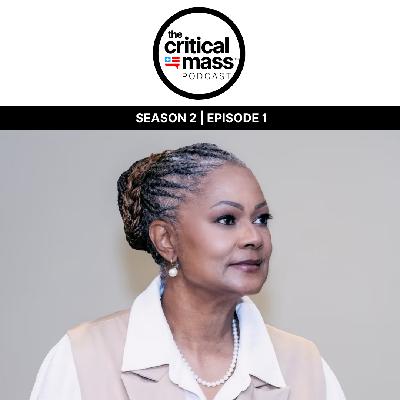
Season 2 of the Critical Mass Podcast opens with a powerful and timely conversation featuring North Carolina State Representative Carla Cunningham, a nurse, community advocate, and one of the most independent voices in the North Carolina General Assembly. In this premiere episode, we go beyond headlines and political talking points to explore the lived experiences, policy priorities, and political challenges shaping her work on behalf of the people of District 106.
From Nurse to Legislator: A Life of Service
Rep. Cunningham’s journey to the Statehouse is rooted in service. With decades of experience as a healthcare professional, she brings a frontline perspective to policymaking—one grounded in the realities families face every day. In our conversation, she reflects on how her background informs her approach to issues like healthcare access, economic stability, and community safety. Her story is a reminder that effective representation begins with understanding the people you serve.
District 106: Community First
Representing Mecklenburg County’s District 106, Rep. Cunningham emphasizes a constituent-first approach. In addition, she discusses the district’s diverse needs—from housing affordability and workforce development to education and public health—and the importance of crafting policy that reflects the lived realities of working families.
This episode highlights a central theme: representation is not about party loyalty; it is about accountability to voters.
Policy Priorities That Matter
Throughout the interview, Rep. Cunningham outlines the policy areas she believes are critical to strengthening North Carolina communities:
Expanding access to quality, affordable healthcare
Supporting workforce development and economic mobility
Addressing housing affordability and neighborhood stability
Strengthening public education and community resources
Her priorities reflect a practical, community-centered vision—one that prioritizes outcomes over ideology.
Party Conflict and Political Pressure
A major focus of this episode is the growing tension between independent legislators and party leadership. Rep. Cunningham speaks candidly about the pressures elected officials face when they choose to prioritize their constituents over party directives.
Conversely, we examine how internal party dynamics can shape policy outcomes and, in some cases, discourage independent decision-making. The conversation raises an important question for voters across North Carolina: Who should elected officials answer to—the people who elected them, or party insiders?
When Party Politics Tip the Scales
Additionally, this episode also explores concerns that party insiders are attempting to influence electoral outcomes and legislative behavior in ways that shift power away from constituents. This discussion is not about partisan rivalry; it is about democratic accountability.
When internal party mechanisms are used to reward loyalty and punish independence, voters risk losing authentic representation. Rep. Cunningham’s experience offers a case study in what happens when an elected official refuses to fall in line and instead chooses to stand with her district.
Why This Conversation Matters
As North Carolina approaches another critical election cycle, this conversation underscores the importance of voter awareness and engagement. Democracy depends on informed constituents who understand not only policy positions but also the political forces shaping those policies.
Season 2 of Critical Mass Podcast begins with a clear message: representation should never be negotiated behind closed doors. It should be earned through trust, transparency, and a steadfast commitment to the people.

In the debut episode of The Critical Mass Podcast, we sit down with Yvette Carnell, Founder of the ADOS Advocacy Foundation, for a powerful conversation about the fight for reparations and the policies shaping the future of American Descendants of Slavery (ADOS).
From her childhood and early influences to her time on Capitol Hill, Yvette shares the experiences that led her to become a leading voice in the movement. We also dive into the importance of grassroots organizing, the impact of immigration policies on Black America, and why now is the time to build the critical mass needed for real political change.
Tune in for an eye-opening discussion that lays the foundation for future conversations on power, policy, and the path toward justice.
Learn more about the ADOS Advocacy Foundation at adosfoundation.org.
Become a member and volunteer in your local area: joinados.com
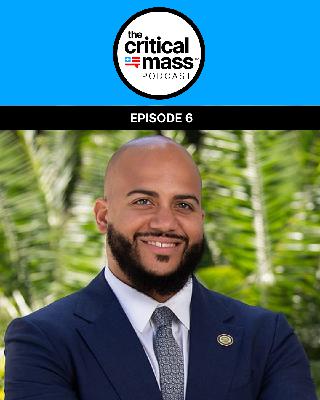
In Episode 6 of The Critical Mass Podcast, we sit down with California Assembly Member Isaac G. Bryan, joined by co-host Yvette Carnell, president of the ADOS Advocacy Foundation. Together we explore California’s shifting political landscape—from redistricting and demographics to education and equity—while taking a close look at Assembly Bill 7 and its broader implications. This conversation unpacks what’s at stake for Black Americans in California and beyond, offering insights into how state-level policy shapes national politics.
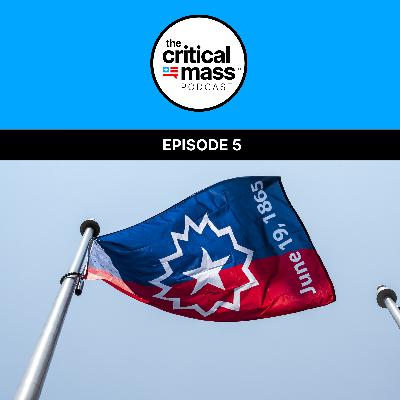
The Critical Mass Podcast Episode 5: The Reparations Framework
Featuring Yvette Carnell and Aisha Muhammed
In this powerful and timely episode, we’re joined by Yvette Carnell, President of the ADOS Advocacy Foundation, and Aisha Muhammed, Policy Director and dedicated volunteer, for a deep dive into the only comprehensive reparations framework built from the ground up for and by American Descendants of Slavery.
Together, we unpack the Phases of Repair and break down the 5 Essentials of Reparations as defined by the ADOS Advocacy Foundation. This isn’t just another conversation about justice, it’s a blueprint.
If you’ve ever asked what real reparations look like, this is an episode you can’t afford to miss.
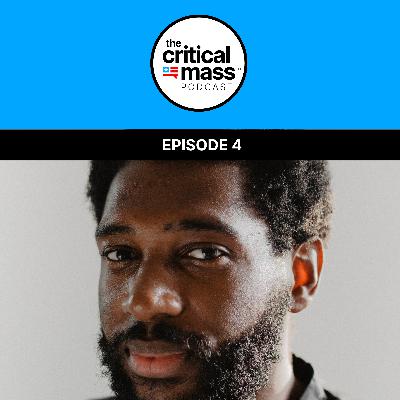
In this episode of the Critical Mass Podcast, we sit down with Jecorey Arthur—educator, musician, activist, and former Louisville Metro Councilman—to explore how art and advocacy collide to drive systemic change.
Whether you’re an educator, artist, or advocate, this conversation will challenge and inspire you to think differently about what it means to lead—and to serve.
🎧 Listen now on Apple Podcasts, Spotify, or wherever you get your podcasts.
📬 Learn more at www.jecoreyarthur.com

For centuries, Black landownership has been a symbol of freedom, self-sufficiency, and generational wealth. But time and again, that land—hard-earned and carefully passed down—has been taken, not by force in the traditional sense, but through a legal mechanism known as eminent domain.
The government’s power to seize private property for “public use” has been justified as progress—highways, parks, infrastructure. But for Black landowners, it has often meant displacement, economic devastation, and the erasure of entire communities. From the construction of the Interstate Highway System that bulldozed Black neighborhoods in the 1950s and ‘60s to the forced removal of families from land they had owned for generations, eminent domain has been wielded as a tool of systemic dispossession.
This episode of the Critical Mass Podcast dives into a case of Eminent Domain in Sparta, Georgia.
Our ADOS Advocacy Foundation Georgia chapter volunteers meeting with Sparta residents. | Source: © 2025 ADOS Advocacy Foundation, inc.
Sparta resident, Activist, Landowner and Author Janet Paige-Smith joins us to discuss her fight to stop a railroad company from using eminent domain to take their land and upwards of 50 other families’ land.
Volunteers ate with Sparta residents and learned more about the history of the area. | Source: © 2025 ADOS Advocacy Foundation, inc.
Volunteers got to work recording interviews and documenting footage of the surrounding area. | Source: © 2025 ADOS Advocacy Foundation, inc.
More about Janet Paige-Smith: https://janetpaigesmith.com/
Sign the Petition: https://www.change.org/p/protect-black-owned-land-in-hancock-county-georgia
Learn more about the ADOS Advocacy Foundation: Adosfoundation.org
See our Georgia Chapter’s Press release on the issue.
Today, we’re tackling a topic that doesn’t get nearly enough attention—the urgent need for dedicated research on American Descendants of Slavery, or ADOS, and why disaggregating racial and ethnic data is essential for justice and equity.
For too long, American Descendants of Slavery (ADOS) have been lumped into broad racial categories, erasing our unique history and the specific harms of chattel slavery and Jim Crow. Precise data is needed to address the systemic barriers that ADOS face. That’s where the American Descendants of Slavery Research Institute (Adosri.org) comes in—an organization leading the charge in ensuring that ADOS identity is recognized, studied, and accounted for in public policy.
On the ADOS RI site it states, “The researchers and collaborators who contribute to the mission of the ADOS RI are committed to continued research in the current political and social climates that are increasingly hostile to academic rigor, knowledge, expertise, and justice. We are committed to collating perspectives from different disciplines in the life, behavioral, physical, and social sciences. We are committed to producing quality insights, reports, data and analyses that aid in better understanding the various impacts of life for the ADOS people group.”
Today, we’ll explore why research tailored to ADOS is critical, the impact of disaggregated data, and how institutions and policymakers can no longer afford to ignore this issue. Stay with us—this is a conversation that matters.
The ADOS Advocacy Foundation calls for the disaggregation of American Descendants of Slavery (ADOS) as a specific ethnic identification.
Comments


Download from Google Play

Download from App Store
 United States