


 Claim Ownership
 Ripples of Rebels
Ripples of RebelsSubscribed: 0Played: 0
Subscribe

© delaneyxclara
Description
The stories of rebels and the ripples of impact they've had on the world.
delaneyxclara.substack.com
delaneyxclara.substack.com
26 Episodes
Reverse
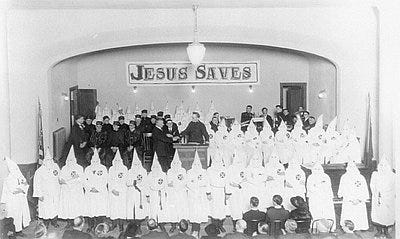
We’ve talked on other episodes about having found hoods & robes in moving trucks that past roommates and I have rented. Now, we are digging deeper into why that would happen in a “liberal” state out West.Oregon likes to brand itself as progressive, green, and forward-thinking—but its past tells a different story. In this episode, we dive into the rise of the Ku Klux Klan in Oregon during the 1920s: how they got here, why Oregon was uniquely vulnerable to their influence, and what their presence actually looked like in towns across the state—from Portland to La Grande to the logging camps of Maxville.Ripples of Rebels is a reader-supported publication. To receive new posts and support my work, consider becoming a free or paid subscriber.We break down the laws, political movements, religious tensions, anti-immigrant sentiment, and racist foundations that made Oregon one of the Klan’s strongest strongholds outside the Deep South. But we also focus on the people who pushed back. You’ll hear about the Black loggers and families in Maxville who stood their ground, the white allies who defied Governor Pierce’s Klan-aligned administration, and the quiet but powerful acts of resistance in communities—including whistleblowers who risked social and economic retaliation.We also spotlight figures like Colon Eberhard and Beatrice Cannady, whose lives sat on opposite sides of Oregon’s racial divide: one boosting Klan power in in Eastern Oregon, the other fighting segregation, discrimination, and racial terror with unshakable courage in Western Oregon.This episode brings together archival records, scholarly sources, and first-hand histories to offer a clear, honest look at Oregon’s past—because understanding these roots is the only way to recognize how they still show up today.Sources & References* “Ku Klux Klan.” Oregon Encyclopedia. (2025) * “KKK in Oregon.” Oregon History Project (Oregon Historical Society). * Horowitz, David A. Unmasking the 1920s Ku Klux Klan in Tillamook County, Oregon. Portland State University — History Faculty Publication, 2025. * “Ku Klux Klan, Tillamook, Oregon Chapter No. 8 records (1922–1929).” ArchivesWest. * “Maxville, Oregon.” Oregon Encyclopedia. * “Our Story — Maxville Heritage Interpretive Center.” * “Oregon’s Black Lumberjacks Defied the Odds.” Travel Oregon / Pendleton Pioneers. * “The 1922 Compulsory Education Act — Backed by the Klan.” ArchivesWest & Oregon Education History. Get full access to Ripples of Rebels at delaneyxclara.substack.com/subscribe
BONUS EPISODE FOR THANKSGIVING TRAVELS BABYYY! Of course it’s about Indigenous History, what else did you think I’d do it over? 💅🏼In this episode of Ripples of Rebels, we dive into the extraordinary life of Jackson Sundown, the legendary Nez Perce horseman whose talent, defiance, and cultural pride reshaped the world of rodeo. Born into a nation fighting for survival after the Nez Perce War of 1877, Sundown transformed hardship into mastery — becoming one of the most iconic bronc riders of the early 20th century.Ripples of Rebels is a reader-supported publication. To receive new posts and support my work, consider becoming a free or paid subscriber.We explore his early life, his path to rodeo greatness, and his historic win at the Pendleton Round-Up, where Indigenous and cowboy communities built unlikely bridges through sport, culture, and storytelling. Along the way, we unpack why Sundown’s legacy still matters: from the ongoing advocacy work of the Nez Perce Tribe to the importance of supporting Indigenous artists, athletes, and creators in today’s Western industries.This episode blends history, Indigenous resistance, rodeo culture, and modern activism — pulling listeners into the untold story of a man who rode not just for victory, but for his people.Indigenous-Owned / Native-Led Brands to Support* Holly Lena (Collective49) — Indigenous Alaskan ecommerce art platform on Collective49, Holly is my cousin but you can find other artists there as well.* Harris Sisters Co — Handmade traditional beadwork & leatherwork by my childhood friends. Check out their new book they just published too!* B.Yellowtail — Contemporary Native American–owned fashion & accessories brand led by designer Bethany Yellowtail.* Ginew USA — Workwear-inspired clothing blending Ojibwe, Oneida, and Mohican heritage.* Tammy Beauvais Designs — First Nations (Mohawk)–owned fashion label offering contemporary & traditional Indigenous clothing.* Dorothy Grant — Haida-owned fashion & design brand from Alaska, expressing living Haida culture through clothing.* Manitobah Mukluks — Indigenous-owned footwear brand known for mukluks and winter boots (traditional + modern blends).Books & Academic Sources* Brasser, Ted J. Riding High: Jackson Sundown and the Nez Perce Indians in Rodeo. Nez Perce Tribe Historical Publications, 2012.* Josephy Jr., Alvin M. The Nez Perce Indians and the Opening of the Northwest. Mariner Books, 1997.* McWhorter, Lucullus V. Hear Me, My Chiefs! Nez Perce History and Legend. University of Oklahoma Press, 1952.* Nerburn, Kent. Neither Wolf Nor Dog: On Forgotten Roads with an Indian Elder. New World Library, 1994.* Trafzer, Clifford E., Michelle Lorimer, and Lorene Sisquoc, eds. Why We Serve: Native Americans in the United States Armed Forces. National Museum of the American Indian, 2020. (Used for context on Native military/scouting roles during Sundown’s era.)Primary & Historical Materials* National Archives. “Record Group 75: Records of the Bureau of Indian Affairs – Nez Perce.”* Nez Perce Tribe. “History & Culture: The Flight of 1877.”* Pendleton Round-Up Association. Historical Records and Archives, 1910–1920.* The East Oregonian (newspaper archives, 1910–1917) – contemporary reporting on Sundown’s performances.* Miller, T.S. “The Last Ride of Jackson Sundown.” The Pacific Monthly, 1917.Museum, Tribal & Educational Sources* Nez Perce National Historical Park (U.S. National Park Service). “Jackson Sundown.”* Tamástslikt Cultural Institute. “Nez Perce Horse Culture Exhibits.”* Smithsonian National Museum of the American Indian. “Native Rodeo History and Indigenous Cowboy Culture.”* Pendleton Round-Up & Happy Canyon Hall of Fame Museum. “Jackson Sundown Exhibits & Archives.”Oral Histories & Tribal Testimony* Nez Perce Tribal Oral History Program. Interviews with descendants of the Wallowa band, collected 1980–2020.* Confederated Tribes of the Umatilla Indian Reservation. “Oral Histories on Indigenous Horse Traditions and Rodeo Culture.” Get full access to Ripples of Rebels at delaneyxclara.substack.com/subscribe
This episode of Ripples of Rebels examines the intersecting histories of Harvey Milk, one of the first openly gay elected officials in the United States, and Gilbert Baker, the artist and activist who created the modern Rainbow Pride Flag. Their lives—shaped by military service, state surveillance, and the political climate of 20th-century America—offer a clear window into the evolution of LGBTQ rights.Ripples of Rebels is a reader-supported publication. To receive new posts and support my work, consider becoming a free or paid subscriber.We begin with Harvey Milk’s early years, his time in the U.S. Navy, and the environment of forced secrecy surrounding queer service members. We follow Milk’s move to San Francisco, his work in local politics, and the campaigns that made him a national figure. The episode covers his assassination in 1978 and the community uprising known as the White Night Riots, situating these events within a broader pattern of state violence and resistance.From there, we shift to Gilbert Baker—Army veteran, drag performer, political organizer, and visual strategist. We trace the creation of the first hand-dyed Rainbow Flag in 1978, the political meaning behind its original eight colors, and how it became an international symbol long before corporations tried to co-opt it.Learn More 📚* Harvey Milk — Britannica“Harvey Milk | Activism, Death, Ship, & Facts”* Gilbert Baker — National Park Service“Gilbert Baker (U.S. National Park Service)”* History of the First Pride Rainbow Flag — History.com“First rainbow Pride flag premieres at San Francisco parade”* Where the Rainbow Flag Began — National Parks Conservation Association“Where the Rainbow Flag Began”* LGBTQ History of the Rainbow Flag — GLBT Historical Society“The Rainbow Flag”* Gilbert Baker Legacy — SFO Museum“A Legacy of Pride: Gilbert Baker and the 40th Anniversary of the Rainbow Flag”* Biography.com on Baker / Flag Meaning“Rainbow Pride Flag: The History & Meaning Behind the LGBTQ Symbol”* CBS News / San Francisco — Baker and Milk“How San Francisco Artist Gilbert Baker Made The Rainbow Flag An Enduring Symbol”* LGBT History Month (flag stripes & meaning)“Rainbow Flag — LGBTHM” (PDF)* Guardian — Original Flag Returns“Original rainbow Pride flag returns to its San Francisco home after 43 years”🔬 Research on Homophobia & Sexual Arousal* Adams, Wright & Lohr (1996) — “Is Homophobia Associated With Homosexual Arousal?” Journal of Abnormal Psychology* Archives of Sexual Behavior (2005) — Physiological arousal in response to erotic stimuli / “defensive function” of prejudice.* Eye-Tracking Study — “Homophobia: An Impulsive Attraction to the Same Sex?” The Journal of Sexual Medicine (2016)* Neuroimaging Study — “Neural correlates of sexual arousal in homosexual and heterosexual men” (fMRI)* Brain Activation Differences — “Patterns of brain activation differ between homosexual and heterosexual men during visually evoked sexual arousal” Get full access to Ripples of Rebels at delaneyxclara.substack.com/subscribe
Before America was even a nation, a small wooden classroom in Boston ignited a revolution — not of muskets, but of minds.In this episode of Ripples of Rebels, we trace the story of public education in the United States from its roots in Boston Latin School (1635) to the modern-day attacks on truth, teachers, and democracy itself.Ripples of Rebels is a reader-supported publication. To receive new posts and support my work, consider becoming a free or paid subscriber.We’ll explore how Horace Mann built the first “common schools,” how Catharine Beecher fought for women in education, and how Maria Montessori reimagined how children learn — challenging the industrial Prussian model that shaped American classrooms.From the Puritan colonies to the Trump-era culture wars, this episode reveals why authoritarian movements always target education first — and what that means for us now.Because the classroom has never been neutral. It’s the front line of democracy.🎧 Topics covered include:* The founding of Boston Latin School and the origins of American public education* The influence of the Prussian education model* Horace Mann’s fight for universal, free schooling* Catharine Beecher and the rise of women educators* Maria Montessori’s revolutionary learning theory* How educational philosophy evolved: behaviorism, constructivism, progressivism, humanism* The modern war on public schools — book bans, privatization, and censorship* Why dictators attack education — and how to fight backLearn actionable ways to defend public education, support teachers, and keep knowledge free for everyone.Because history reminds us: when truth is silenced, tyranny begins.📚 Learn More List:* Horace Mann, Annual Reports of the Secretary of the Massachusetts Board of Education* Catharine Beecher, Essay on the Education of Female Teachers (1835)* Maria Montessori, The Montessori Method (1912)* John Dewey, Democracy and Education (1916)* Dana Goldstein, The Teacher Wars (2014)* Diane Ravitch, Reign of Error: The Hoax of the Privatization Movement (2013)📜 Citation List:* Massachusetts Bay Colony Law (1647)* Jefferson’s Bill for the More General Diffusion of Knowledge (1779)* Mann, 12th Annual Report to the Massachusetts Board of Education (1848)* Beecher, Educational Views of Catharine E. Beecher (1871)* Montessori, The Discovery of the Child (1948) Get full access to Ripples of Rebels at delaneyxclara.substack.com/subscribe
In 1534, a group of radical believers seized control of the German city of Münster—declaring it the New Jerusalem and promising paradise on earth. What followed was a nightmare of prophecy, starvation, and power gone mad. Like Mad King type of mad.Ripples of Rebels is a reader-supported publication. To receive new posts and support my work, consider becoming a free or paid subscriber.This week on Ripples of Rebels, we step inside the walls of Münster, where faith turned to fanaticism and idealism dissolved into terror. We trace how ordinary people—disillusioned by war, corruption, and inequality—were swept into an apocalyptic vision that ended in fire and iron cages.But this isn’t just a story about religion. It’s about absolute certainty, and what happens when belief becomes a weapon. As Europe burned with reformation and revolt, similar fires sparked across the world—from the Ottoman Balkans to the Spanish conquest of the Americas. Münster’s rebellion may seem medieval, but its echoes reach directly into the present—into modern cults, nationalist movements, and political extremism that still preach salvation through domination.Through first-hand chronicles, historical context, and raw storytelling, this episode asks:What drives people to trade their humanity for heaven?And how far are we—right now—from doing the same?Learn more:“The Tailor King: The Rise and Fall of the Anabaptist Kingdom of Münster” by Anthony Arthur (2006)Links Mentioned:* Veterans’ About Face Instagram* My Protest PhotographyCitations:* Arthur, Anthony. The Tailor King: The Rise and Fall of the Anabaptist Kingdom of Münster. St. Martin’s Press, 2006.* MacCulloch, Diarmaid. The Reformation: A History. Penguin, 2003.* Williams, George H. The Radical Reformation. Truman State University Press, 2000.* Verduin, Leonard. Rebels, Reformers, and Revolutionaries: The Story of the Anabaptists. Eerdmans, 1964. Get full access to Ripples of Rebels at delaneyxclara.substack.com/subscribe
In the shadow of the Byzantine Empire’s glittering power, a quiet revolution was unfolding in the Balkans. At its heart was Saint Naum of Ohrid — a scholar, healer, and monk whose life helped ignite the literacy and spiritual awakening of the Slavic world.Ripples of Rebels is a reader-supported publication. To receive new posts and support my work, consider becoming a free or paid subscriber.This episode of Ripples of Rebels dives deep into the 9th-century world of Macedonia, when the Byzantine Empire was expanding its reach, Christianity was spreading through the Balkans, and written language itself became a tool of liberation. Alongside his mentor Saint Cyril and brother-in-arms Saint Methodius, Naum helped craft the Cyrillic alphabet, laying the foundation for Slavic identity and Orthodox faith that still shapes Southeastern Europe today.We’ll explore:* The rise of the Byzantine Empire and how it absorbed Macedonia* Saint Naum’s creation of his monastery at Lake Ohrid — a place of healing, teaching, and quiet resistance* The political and religious tensions that shaped his world* The miracles that earned his sainthood — from healing the sick to calming storms* And what his legacy teaches us about fighting ignorance, corruption, and moral decay in our own era of misinformation and censorshipThis isn’t just the story of a saint — it’s a story about how language and literacy can save civilizations. From medieval Macedonia to modern America, Saint Naum’s lessons remind us that rebellion isn’t always fought with weapons — sometimes, it’s fought with words, truth, and education.🎧 Listen now wherever you get your podcasts, and follow Ripples of Rebels for more stories of those who dared to challenge empires, rewrite history, and heal the human spirit.Learn MoreFor listeners who want to go deeper into the story of Saint Naum, the Byzantine world, and the evolution of Macedonian Orthodoxy:* Macedonian Orthodox Church – Ohrid Archbishopric: https://www.mpc.org.mk* UNESCO World Heritage: Ohrid Region – Historical and cultural overview: https://whc.unesco.org/en/list/99/* Orthodox Wiki – “Naum of Ohrid”: https://orthodoxwiki.org/Naum_of_Ohrid* BBC World History: Byzantine Empire Overview: https://www.bbc.co.uk/history/ancient/byzantine/* Encyclopaedia Britannica: Macedonia – From Antiquity to the Middle Ages: https://www.britannica.com/place/Macedonia-historical-region-EuropeDocumentaries Mentioned:* The American Southwest Film* Famous Last Words Jane Goodall* Guardian of the Land (the Indigenous History of Bigfoot)📚Citations* Curta, Florin. Southeastern Europe in the Middle Ages, 500–1250. Cambridge University Press, 2006.→ Excellent overview of the Byzantine, Bulgarian, and Slavic interactions during Saint Naum’s era.* Dvornik, Francis. Byzantine Missions among the Slavs: SS. Constantine-Cyril and Methodius. Rutgers University Press, 1970.→ Classic scholarly work on the missionary movement that Saint Naum was part of, including the creation of the Glagolitic and Cyrillic alphabets.* Fine, John V. A. The Early Medieval Balkans: A Critical Survey from the Sixth to the Late Twelfth Century. University of Michigan Press, 1983.→ Detailed explanation of the Byzantine expansion and the geopolitical struggles shaping Macedonia in Naum’s lifetime.* Crampton, R. J. A Concise History of Bulgaria. Cambridge University Press, 2005.→ Discusses the First Bulgarian Empire’s relationship to Byzantium and Saint Naum’s missionary work near Ohrid.* Popović, Miodrag. The Life of St. Naum of Ohrid: A Translation and Commentary. Macedonian Academy of Sciences and Arts, 1995.→ The most complete academic source on Saint Naum’s biography and miracles.* Runciman, Steven. A History of the First Bulgarian Empire. G. Bell and Sons, 1930.→ Contextualizes Naum’s monastic foundation under Tsar Boris I and the Christianization of the Bulgarian-Macedonian region.* Mango, Cyril. Byzantium: The Empire of New Rome. Scribner, 1980.→ Describes the Byzantine political structure, religious influence, and imperial ambitions that shaped Saint Naum’s world.* Ware, Timothy. The Orthodox Church. Penguin Books, 1993.→ Offers clear explanations of Orthodox theology, including how Macedonian Orthodoxy fits within broader Eastern Orthodoxy.* Hupchick, Dennis P. The Balkans: From Constantinople to Communism. Palgrave Macmillan, 2002.→ Connects the medieval roots of Macedonian identity and literacy to modern political struggles. Get full access to Ripples of Rebels at delaneyxclara.substack.com/subscribe
What does a song born in the rice paddies of northern Italy that brought down Mussolini have to do with political extremism in the United States? In this episode, we follow the journey of Bella Ciao — its origins among the mondine, its rise with WWII partisans fighting fascism, and its continued life as protest anthem around the world. Ripples of Rebels is a reader-supported publication. To receive new posts and support my work, consider becoming a free or paid subscriber.Then, we zoom in on the unsettling recent development: how white nationalist extremists like Nick Fuentes and the Groypers are picking up this anti-fascist anthem, twisting its meaning, and using it to mock those same values it used to defend. We also unpack the tragic death of Charlie Kirk, including alleged use of Bella Ciao in bullet casings, to explore how symbols, grief, and hate intersect in modern political culture.Along the way, we compare and contrast the Groypers with other alt-right and conservative movements: what it means when one side is explicitly anti‐Jewish and rejecting Zionism, and the other embraces Zionist Jewish supporters. We trace not only ideology, but also tactics: how culture wars are waged via music, memes, and symbols. What we learn: symbols matter, history gets reused, and staying aware of those reuses is part of resistance.Tune in for history, for investigation, and for understanding what those who love Bella Ciao can do when it is weaponized for good, and not high-jacked by modern day fascists fighting with each other.📚 Academic & Credible Sources for Further ReadingSuggested Readings (MLA Format)* Pavone, Claudio. A Civil War: A History of the Italian Resistance. Verso Books, 2013.* Fantoni, Gianluca, and Rosario Forlenza, editors. “The Italian Resistance: Historical Junctures and New Perspectives.” Modern Italy, vol. 30, no. 2, May 2025, pp. 125-130. Cambridge University Press.* Varriale, Andrea. “The Myth of the Italian Resistance Movement (1943-1945).” JSTOR, 2014.* Pezzino, Patricia. “The Italian Resistance Between History and Memory.” Journal of Modern Italian Studies, vol. 10, no. 3, 2005, pp. 294-308.* “Groypers (Groyper Army, Nick Fuentes).” Wikipedia. (Note: Use this cautiously and follow up with more rigorous sources.)* “From Alt-Right To Groyper.” Institute for Research & Education on Human Rights (IREHR).🔍 Additional Sources for Learning More* The Anti-Defamation League’s materials on white nationalism and antisemitism, especially regarding Nick Fuentes and associated movements.* National WWII Museum article: “The CLN: The Italian Resistance Unites as Mussolini’s Regime Crumbles.”* Scholarly essays on memory and myth in resistance movements, like Alessandro Portelli’s “Myth and Morality in the History of the Italian Resistance.”* Recent reports or analyses on monitoring online extremist movements like the “Hate Map” (for example, IREHR, Southern Poverty Law Center, Anti-Defamation League) to understand how the Groypers use social media or meme culture. Get full access to Ripples of Rebels at delaneyxclara.substack.com/subscribe
You all asked, and I am attempting to deliver us from evil. The evil that is misinformation and Zionist propaganda about the colonization of Palestine.The snippets I read online that upset a lot of Zionists, were all covered in this first part of the episode— there is still about 10 pages left to read.If you’d like to read along on the online archived version, or read ahead for yourself, you can find the archived article here: Changing Palestine, April 1934, National GeographicRipples of Rebels is a reader-supported podcast. Subscribe to stay in the know with a free subscription!If you would like to learn more about some of the events mentioned in this article and episode you can find them below in the order I’d recommend you listen to them in:* Pale of Settlement* What Netanyahu’s Family Did To PalestineThanks for hanging in there while I get pt. 2 recorded!Make sure you’re following along on Instagram and TikTok for more updates & reminders! Get full access to Ripples of Rebels at delaneyxclara.substack.com/subscribe
Warsaw, 1944. An eight-year-old girl named Róża Maria Goździewska stands in a makeshift hospital cellar, a Red Cross armband sliding down her thin arm. Around her lie wounded fighters of the Warsaw Uprising. She carries water, wipes foreheads, whispers encouragement. She is remembered now as the youngest nurse in the Polish Resistance.Her image is haunting—and it reminds us that the Polish Resistance was not just soldiers with weapons. It was children, teachers, doctors, and parents. It was students running secret schools when education was banned, printers producing underground newspapers, and couriers smuggling intelligence across borders to London. It was ordinary people refusing to disappear, even as Nazis tried to erase their culture and Soviets deported them into oblivion.In this episode, we walk through the Polish underground state: how it formed after the dual invasions of 1939, how leaders like Witold Pilecki, Jan Karski, and Irena Sendler risked everything, and how Anders’ exiled army carried Poland’s struggle onto foreign soil. We also trace the deeper roots of oppression—from the Pale of Settlement to Soviet labor camps—that shaped this desperate fight for survival.And then we turn to today. Because history like this isn’t just about memory—it’s a mirror. What can Americans learn from the Polish Resistance about defending democracy when institutions fail? How can we organize, build parallel systems of truth, and exercise our constitutional rights in the face of corruption and authoritarian drift?This isn’t a clean or romantic story. It’s bloody, tragic, and human. But it’s also a reminder: democracy survives not by permission, but by defiance.Learn More:* Oyneg Shabes Archive (documented by Emanuel Ringelblum’s group)* Agent Zo: The Untold Story of Fearless WWII Resistance Fighter Elżbieta Zawacka by Clare MulleyThe gripping biography of “Agent Zo,” the only woman parachuted into occupied Poland for SOE and a pivotal voice for women’s roles in the Home Army.* Warsaw Uprising MuseumExplore their digital archives and exhibitions for authentic photographs—including the iconic image of Róża Maria Goździewska, the eight-year-old “Little Nurse” of the Uprising.Works CitedDavies, Norman. Rising ’44: The Battle for Warsaw. Viking, 2003.Eberhardt, Piotr. Ethnic Groups and Population Changes in Twentieth-Century Central-Eastern Europe: History, Data, and Analysis. M.E. Sharpe, 2003.Karski, Jan. Story of a Secret State: My Report to the World. Georgetown University Press, 2013.Korbonski, Stefan. Fighting Warsaw: The Story of the Polish Underground State, 1939–1945. Hippocrene Books, 2004.Mazower, Mark. Hitler’s Empire: How the Nazis Ruled Europe. Penguin Press, 2008.Pilecki, Witold. The Auschwitz Volunteer: Beyond Bravery. Edited by Marco Patricelli, translated by Jarek Garlinski, Aquila Polonica, 2012.Piotrowski, Tadeusz. Poland’s Holocaust: Ethnic Strife, Collaboration with Occupying Forces and Genocide in the Second Republic, 1918–1947. McFarland, 1998.Sanford, George. Katyn and the Soviet Massacre of 1940: Truth, Justice and Memory. Routledge, 2005.Stachura, Peter D. Poland, 1918–1945: An Interpretive and Documentary History of the Second Republic. Routledge, 2004.Tec, Nechama. Defiance: The Bielski Partisans. Oxford University Press, 1993.Weiner, Amir. Making Sense of War: The Second World War and the Fate of the Bolshevik Revolution. Princeton University Press, 2001.Zamoyski, Adam. The Forgotten Few: The Polish Air Force in the Second World War. John Murray, 1995.Muzeum Powstania Warszawskiego (Warsaw Uprising Museum). “Róża Maria Goździewska.” Archival Photograph, 1944. Get full access to Ripples of Rebels at delaneyxclara.substack.com/subscribe
Yugoslavia didn’t just fall apart overnight—it was torn apart by rising nationalism, propaganda, and calculated violence. In this Ripples of Rebels episode, we look at the unraveling of a country once held together by diversity, and how that collapse led to the Bosnian Wars, the siege of Sarajevo, and the genocide in Srebrenica.We break down who Ratko Mladić was, now 83 yrs old, earned the name “Butcher of Bosnia,” and the war crimes that landed him in The Hague. You’ll hear quotes from refugees and survivors who lived through shelling, starvation, and mass executions—and meet the resistance leaders who risked everything to protect their communities.This isn’t just history for history’s sake. The tactics used in the 1990s Balkans—ethnic scapegoating, disinformation, and targeting of civilians—are the same warning signs we see in today’s global politics. If you care about spotting authoritarianism before it turns deadly, this episode will give you the context you need.Learn More:* FRONTLINE (PBS) — The Trial of Ratko Mladić (documentary & transcript).* International Criminal Tribunal for the former Yugoslavia — Case page & Trial Judgement (Ratko Mladić).* Human Rights Watch — Bosnia-Hercegovina reports (1994–1995).* United States Holocaust Memorial Museum — Bosnia eyewitness testimony.* Srebrenica Memorial & Survivor Stories.* Amnesty International — Srebrenica anniversary briefings and analysis.* The Guardian archive — reporting on the Siege of Sarajevo and Srebrenica.* Quo Vadis, Aida? (film) — interviews and commentary (context on art as witness).Citations:* International Criminal Tribunal for the former Yugoslavia. Case Information Sheet: Mladić (IT‑09‑92). ICTY, https://www.icty.org/en/case/mladic.* “The Trial of Ratko Mladić.” FRONTLINE, PBS, 19 Mar. 2019, https://www.pbs.org/wgbh/frontline/documentary/the-trial-of-ratko-mladic/.* Human Rights Watch. Bosnia-Hercegovina: The Massacre at Srebrenica and the Struggle for Justice, HRW reports (1993–1995), https://www.hrw.org/reports/pdfs/b/bosnia/bosnia95o.pdf.* “Srebrenica: Survivor Stories.” Remembering Srebrenica, https://srebrenica.org.uk/survivor-stories/.* United States Holocaust Memorial Museum. “Eyewitness Testimony — Bosnia and Herzegovina.” USHMM, https://www.ushmm.org/genocide-prevention/countries/bosnia-herzegovina/eyewitness-testimony.* Amnesty International. “Bosnia and Herzegovina: 25th Anniversary of Srebrenica Massacre,” 2020.* The Guardian. “The Siege of Sarajevo — archive, 1993,” The Guardian archive. Get full access to Ripples of Rebels at delaneyxclara.substack.com/subscribe
Meet the titans who shaped America’s wealth—and crushed its workers. This episode of Ripples of Rebels dives into the dark legacies of Robber Barons John D. Rockefeller, Andrew Carnegie, and J.P. Morgan. From labor exploitation and violent union crackdowns to monopolies that stifled competition and democracy, we trace their rise to power and the real human costs of their empires. We discuss the Ludlow Massacre (which will be a deeper episode later), the Homestead Strike, and more bloody moments over fighting for ethical work conditions. We also spotlight how working-class people, journalists, and political reformers fought back—and won hard-fought victories like the National Labor Relations Act. Plus, a quick look at how Morgan’s unchecked influence triggered the Panic of 1907—and how that crisis eventually helped build a more accountable financial system that is under attack by the current Trump administration, and their own shadow presidents, Elon Musk and the rest of the current oligarchy.This is a story of corrupt power, people, and the ongoing fight for economic justice— and what YOU can do about it today.Listen in, and stay rebellious.Ripples of Rebels is a reader-supported publication. This is a passion project of an educator, to help make more credible educational resources on complex topics, available for the general public. Support by subscribing for free below, or consider upgrading to a paid subscription!Learn More:Books:* Titan: The Life of John D. Rockefeller, Sr. by Ron Chernow* Andrew Carnegie by David Nasaw* The House of Morgan by Ron Chernow* The Gilded Age by Mark Twain & Charles Dudley Warner* “The Homestead Strike” – Zinn Education Project* “Standard Oil and the Rise of Monopoly Power” – The Library of Economics and Liberty* “The Panic of 1907: Lessons Learned from the Market’s Perfect Storm” – Federal Reserve Bank of BostonDocumentaries:* PBS American Experience: The Rockefellers* PBS American Experience: Andrew Carnegie and the Rise of Big BusinessPodcasts/Youtube Videos:* Networth and Chill with Vivian Tu: Elizabeth Warren Episode on the CFPB* Wealth Inequality with Robert ReichCitations:* Chernow, Ron. Titan: The Life of John D. Rockefeller, Sr. Vintage Books, 2004.* Nasaw, David. Andrew Carnegie. Penguin Books, 2007.* Chernow, Ron. The House of Morgan: An American Banking Dynasty and the Rise of Modern Finance. Grove Press, 2010.* Twain, Mark, and Charles Dudley Warner. The Gilded Age: A Tale of Today. American Publishing Company, 1873.* “Panic of 1907.” Federal Reserve History, www.federalreservehistory.org.* “Homestead Strike.” Zinn Education Project, www.zinnedproject.org.* Standard Oil Co. of New Jersey v. United States, 221 U.S. 1 (1911).* National Labor Relations Act, 29 U.S.C. § 151–169 (1935). Get full access to Ripples of Rebels at delaneyxclara.substack.com/subscribe
They walked into history with books in hand and bravery in their bones.In 1957, nine Black teenagers—known today as the Little Rock Nine—stepped into Little Rock Central High School and the heart of a national crisis. This episode unpacks their story: a showdown between federal power and state resistance, between white supremacy and nine young students who refused to back down.But this isn’t just a history lesson—it’s a warning.Ripples of Rebels is a reader-supported publication. To receive new episodes immediately and stay in the know, subscribe below!We trace the legacy of Brown v. Board of Education and how a series of Supreme Court decisions after 1954 slowly unraveled school integration efforts, paving the way for the modern resegregation of American education.You’ll learn about:• The Supreme Court cases (Milliken v. Bradley, Rodriguez, Missouri v. Jenkins, and more) that reversed civil rights gains• The abuse and courage of the Little Rock Nine—names you should know: Melba Pattillo Beals, Minnijean Brown, Ernest Green, and others• How President Eisenhower overrode the Posse Comitatus Act to send federal troops—not to suppress—but to protect• The dangerous parallels between 1957 and today: from book bans to anti-CRT laws, from school board takeovers to military threats against protestors🔍 Keywords: Little Rock Nine, Brown v. Board of Education, school segregation, Milliken v. Bradley, resegregation, Posse Comitatus Act, educational equity, Supreme Court civil rights, Eisenhower and civil rights, 1957 school integration, anti-CRT laws, book bans, Black student activism, modern segregation in schoolsCall to Action:👉 Learn how to resist today’s coordinated attacks on education.👉 Read Warriors Don’t Cry by Melba Pattillo Beals.👉 Support organizations like the Southern Poverty Law Center, Equal Justice Initiative, ACLU, and the GI Rights Hotline.👉 Get involved in local school board elections—because the fight for education is far from over.🎧 Listen now and discover the ripple effects of resistance, past and present. Get full access to Ripples of Rebels at delaneyxclara.substack.com/subscribe
What does resistance really look like? This is the true story of teenage girls who joined the Dutch Resistance during WWII and used strategy, seduction, and sabotage to fight fascism—risking everything to save lives and destroy oppression from the inside out.You’ll meet:• Freddie Oversteegen – a 14-year-old girl who scouted Nazi targets by bicycle and pulled the trigger when she had to.• Truus Oversteegen – a fearless tactician and artist who later immortalized their fight in sculpture.• Hannie Schaft – “the girl with the red hair,” a law student turned assassin, tortured and executed just days before liberation.🔗 These rebels weren’t symbols—they were strategists. And their work remains more relevant than ever.✊ Why This Story Matters NowWith the rise of book bans, anti-LGBTQ+ laws, white nationalist rhetoric, and authoritarian policing in the U.S., this episode explores how the lessons of these young women can and must be applied today.You’ll learn:• How girls and women built underground resistance networks.• What modern fascism looks like—and how it hides in plain sight.• Actionable ways you can resist injustice today using their methods.💡 RESISTANCE RESOURCES (TAKE ACTION TODAY)🧭 Mutual Aid & Local Resistance:• Mutual Aid Hub (US Directory)• Food Not Bombs chapters – Find a local group fighting hunger & police violence.• Oregon Summer Star – Trauma-informed summer camp for kids impacted by their parents being in the U.S. Military.📞 If You or Someone You Know Is Being Targeted by the U.S. Military:• GI Rights Hotline | 1-877-447-4487Confidential counseling for anyone facing enlistment, discharge, or issues of conscience related to military service.🗳️ Civic Resistance Tools:• Repro Legal Helpline – For people criminalized for pregnancy or abortion-related care.• Drag Defense Fund – Fight anti-trans and anti-drag laws through the ACLU.• Trans Lifeline – Peer support and survival services for trans people.🔥 Join the MovementWe are not powerless—and history proves it. If these girls could take action at 14, so can we.📢 Share this episode.📝 Start conversations.💸 Support mutual aid.🧠 Never stop learning.▶️ Subscribe to Ripples of Rebels on Substack or your favorite podcast platform for weekly stories that stir the soul and spark resistance. Get full access to Ripples of Rebels at delaneyxclara.substack.com/subscribe

Learn how apartheid came to define South Africa, the origins of white supremacy and land dispossession through laws like the 1913 Native Land Act, and the role of major resistance movements like the 1952 Defiance Campaign and the tragic Sharpeville Massacre. Additionally, we dig into how Elon Musks family made their fortune off of the oppression of Black South Africans during the apartheid regime. We trace Nelson Mandela’s journey during all of this, from his early activism with the ANC Youth League, to his 27-year imprisonment, and ultimately, to his presidency and efforts toward racial reconciliation.🔍 We also tackle:• The truth behind apartheid’s economic legacy, including the Musk family’s connection to apartheid-era wealth• The rise of disinformation today, including the myth of “white genocide” in South Africa• How South Africa’s history mirrors U.S. struggles with systemic racism and settler colonialismFurther Educational Resources:* “South Africa’s ‘White Genocide’?” -Professor James Ker-Lindsay* Behind the B******s Elon Musk EpisodeCitations:📚 Biographies & AutobiographiesMandela, Nelson. Long Walk to Freedom: The Autobiography of Nelson Mandela. Little, Brown and Company, 1994.https://en.wikipedia.org/wiki/Long_Walk_to_FreedomSampson, Anthony. Mandela: The Authorized Biography. Vintage, 1999.https://www.amazon.com/Mandela-Authorized-Biography-Anthony-Sampson/dp/0679781781Meredith, Martin. Nelson Mandela: A Biography. PublicAffairs, 1997.https://www.amazon.com/Nelson-Mandela-Biography-Martin-Meredith/dp/0312181329🏛️ Apartheid History & Context“Nelson Mandela Fought Apartheid—and Why His Work Is Not Complete.” National Geographic, 18 July 2018.https://www.nationalgeographic.com/history/article/nelson-mandela-fought-apartheid-work-not-complete“Milestones: 1989–1992 – The End of Apartheid.” Office of the Historian, U.S. Department of State.https://history.state.gov/milestones/1989-1992/apartheid“The Harsh Reality of Life Under Apartheid in South Africa.” History.com, A&E Television Networks, 22 Apr. 2021.https://www.history.com/articles/apartheid-policies-photos-nelson-mandela🏅 Nobel Peace Prize Recognition“The Nobel Peace Prize 1993.” NobelPrize.org, Nobel Media AB, 1993.https://www.nobelprize.org/prizes/peace/1993/summary/“Nelson Mandela – Facts.” NobelPrize.org, Nobel Media AB, 1993.https://www.nobelprize.org/prizes/peace/1993/mandela/facts/“30 Years After Madiba’s Nobel Peace Prize.” Nelson Mandela Foundation, 2023.https://www.nelsonmandela.org/news/entry/30-years-after-madibas-nobel-peace-prize🗣️ Speeches & Writings“I Am Prepared to Die.” Wikipedia, Wikimedia Foundation.https://en.wikipedia.org/wiki/I_Am_Prepared_to_Die📰 Reflections & Contemporary RelevanceRemnick, David. “Postscript: Nelson Mandela, 1918–2013.” The New Yorker, 5 Dec. 2013.https://www.newyorker.com/news/news-desk/postscript-nelson-mandela-1918-2013Zorthian, Julia. “The Deep History Behind Barack Obama’s Speech for the Centennial of Nelson Mandela’s Birth.” Time, 17 July 2018.https://time.com/5337741/barack-obama-nelson-mandela-civil-rights-apartheid/Chutel, Lynsey. “South Africa Remembers an Historic Election Every April 27. Here’s Why This Year Is So Poignant.” AP News, 27 Apr. 2024.https://apnews.com/article/18393fe2f2eeb6f0217c3ca347c40453 Get full access to Ripples of Rebels at delaneyxclara.substack.com/subscribe

Picture a boy no older than ten, bent over in the rows of a lettuce field in California’s San Joaquin Valley. The sun hasn’t yet crested the horizon, but César Chávez is already at work—hands blistered, his small frame weighed down by a burlap sack filled with crops he’ll never afford to eat. The Great Depression didn’t just steal jobs; it shattered families. When César’s parents lost their Arizona farm to foreclosure, they joined the legions of migrant workers who became America’s invisible backbone—brown hands in white-owned fields.This was César’s America. And in a small town a few hundred miles away, a young girl named Dolores Huerta watched her mother run a hotel and feed struggling families—even when they couldn’t pay. Dolores was no stranger to justice. And neither of them would stay silent for long.Ripples of Rebels is a listener-supported podcast. Support by subscribing below for free, or upgrade to a paid subscription to help improve the quality of future episodes!Explore the revolutionary activism of César Chávez and Dolores Huerta and how the fight for the dignity of farming communities is still happening today in a town you’ve probably never heard of, but have absolutely eaten food from. From their humble beginnings in migrant worker families to their leadership in the United Farm Workers (UFW), discover how they ignited a national movement that transformed labor rights in America. This episode dives deep into the 1965 Delano grape strike, the nationwide consumer boycott that followed, and how Chávez’s nuanced stance on undocumented labor evolved over time.We also shine a spotlight on Dolores Huerta’s fearless leadership and her powerful advice on resisting authoritarianism, as shared in her Democracy Now! interview. Plus, learn how Portland, Oregon came to honor Chávez with a street bearing his name—and what it means for community activism today.🎙️ Whether you’re a union organizer, a student of history, or just curious about how everyday people changed the course of American labor, this episode is packed with vivid storytelling, historical insight, and ways to take action today.🔧 Support the Cause – Follow, Donate, and Learn:📱 Follow These Union & Advocacy Accounts:• @UFWupdates (United Farm Workers)• @DoloresHuertaFDN (Dolores Huerta Foundation)• @UFWfoundation• @FarmworkerJustice• @oregonrural (Oregon Rural Action)💸 Donate to Organizations Fighting for Farmworker Justice:• United Farm Workers Foundation• Oregon Rural Action• Farmworker Justice• Dolores Huerta Foundation📚 Want to Learn More? Start Here:• 📹 UCLA Labor Center: César Chávez’s Legacy – YouTube Video• 📘 The Crusades of César Chávez by Miriam Pawel• 📗 A Dolores Huerta Reader edited by Mario T. García• 🎞️ Dolores (2017 documentary, available on streaming platforms)📎 Sources & Citations (APA-style):• García, M. T. (2008). A Dolores Huerta Reader. University of New Mexico Press.• Pawel, M. (2014). The Crusades of César Chávez: A Biography. Bloomsbury Press.• Chávez, C. (1968). “The Mexican-American and the Church” speech. Published in Commonweal Magazine.• Huerta, D. (2017). Interview with Democracy Now! Retrieved from https://www.democracynow.org• United Farm Workers. (n.d.). History of the Grape Boycott. Retrieved from https://ufw.org• UCLA Labor Center. (2022). César Chávez’s Legacy [Video]. YouTube. Retrieved from https://www.youtube.com• Oregon Historical Society. (2009). The renaming of Portland’s 39th Avenue to César E. Chávez Boulevard. Retrieved from https://ohs.org Get full access to Ripples of Rebels at delaneyxclara.substack.com/subscribe
As First Lady, humanitarian, and civil rights advocate, Eleanor redefined the role of women in American politics and society. We explore her progressive yet controversial positions, her influence on President Franklin D. Roosevelt despite his infidelities, and her lifelong commitment to justice and human rights.Learn why Eleanor Roosevelt is often excluded from mainstream feminist history, even though her work helped pave the way for every wave of feminism—from suffrage to social justice. We also break down what the “waves of feminism” are and how Eleanor’s impact continues to shape advocacy and leadership today.Whether you’re a history lover, a feminist, or just want to know why Eleanor Roosevelt is still shaking things up decades after her death, this episode offers an unfiltered look at one of the most powerful women in American history.How to get involved like Eleanor:* ACLU (American Civil Liberties Union)* Human Rights Watch* Southern Poverty Law Center (SPLC)* Court Appointed Special Advocate (CASA)More ways to learn:* Pack Horse Librarians* “Eleanor Roosevelt: The Greatest First Lady?”Citations:Black, Allida M. Casting Her Own Shadow: Eleanor Roosevelt and the Shaping of Postwar Liberalism. Columbia University Press, 1996.Cook, Blanche Wiesen. Eleanor Roosevelt, Volume One: 1884–1933. Viking, 1992.Cook, Blanche Wiesen. Eleanor Roosevelt, Volume Two: The Defining Years, 1933–1938. Viking, 1999.Cook, Blanche Wiesen. Eleanor Roosevelt, Volume Three: The War Years and After, 1939–1962. Viking, 2016.Roosevelt, Eleanor. The Autobiography of Eleanor Roosevelt. Da Capo Press, 1992.Roosevelt, Eleanor. Tomorrow Is Now: It Is Today That We Must Create the World of the Future. Penguin Classics, 2012.Beasley, Maurine H. Eleanor Roosevelt and the Media: A Public Quest for Self-Fulfillment. University of Illinois Press, 1987.Hoff-Wilson, Joan, ed. Eleanor Roosevelt: An American Journey. Blackwell, 1999.Dicker, Rory. A History of U.S. Feminisms. Seal Press, 2008.Evans, Sara M. Born for Liberty: A History of Women in America. Free Press, 1997.Coontz, Stephanie. A Strange Stirring: The Feminine Mystique and American Women at the Dawn of the 1960s. Basic Books, 2011.Thistlethwaite, Susan Brooks. “Eleanor Roosevelt: A Feminist Model of Public Theology.” Journal of Feminist Studies in Religion, vol. 2, no. 1, 1986, pp. 77–94.Scott, Joan W. “Feminism’s History.” Journal of Women’s History, vol. 16, no. 2, 2004, pp. 10–29. Get full access to Ripples of Rebels at delaneyxclara.substack.com/subscribe
Today we confront the haunting legacies of the Magdalene Laundries of the Catholic Church and their chilling influence on the Native American boarding school system, the Sixties Scoop, and the U.S. child welfare and adoption industries. With raw survivor testimony, historical records, and literary excerpts from Lakota Woman by Mary Crow Dog, we expose the brutal realities endured by Indigenous girls and women—forced labor, physical abuse, sexual violence, family separation, and coerced sterilization.We trace how Catholic-run institutions and state-backed assimilation policies worked hand in hand to erase culture, crush autonomy, and exploit the most vulnerable. We also examine the eugenics ideologies—rooted in early 20th-century American science—that justified these atrocities and continue to influence U.S. institutions today.Ripples of Rebels is a reader-supported publication. To join the rebellion through education, subscribe below!You’ll learn about real places you can visit that still hold the physical remnants of these atrocities, hear about the fight for recognition and reparations, and understand how these dark systems laid the foundation for today’s controversial child removal and adoption practices.If you’ve ever heard someone say “that history has been debunked”—this episode will show you why they’re wrong.📚 BooksCrow Dog, Mary, and Richard Erdoes. Lakota Woman. Grove Press, 1990.McCarthy, Rebecca Lea. Origins of the Magdalene Laundries: An Analytical History. McFarland & Company, 2010.Smith, Andrea. Conquest: Sexual Violence and American Indian Genocide. South End Press, 2005.Black, Edwin. War Against the Weak: Eugenics and America’s Campaign to Create a Master Race. Dialog Press, 2012.🗂️ Government & Official ReportsUnited States Congress. American Indian Policy Review Commission Final Report. Government Printing Office, 1977.Truth and Reconciliation Commission of Canada. Honouring the Truth, Reconciling for the Future: Summary of the Final Report of the Truth and Reconciliation Commission of Canada. Truth and Reconciliation Commission of Canada, 2015.https://nctr.ca/records/reports/National Inquiry into Missing and Murdered Indigenous Women and Girls. Reclaiming Power and Place: The Final Report of the National Inquiry. 2019.https://www.mmiwg-ffada.ca/final-report/United States Government Accountability Office. Indian Child Welfare Act: Agencies Need to Improve Oversight of Health and Welfare Services. GAO-05-290, 2005.https://www.gao.gov/products/gao-05-290📰 Articles & News ReportsThe Associated Press. “U.S. Catholic Church Shielded Abuse in Institutions Like Magdalene Laundries, Report Says.” NPR, 5 Feb. 2023.https://www.npr.orgHolland, Megan. “Native Women Sterilized by Indian Health Service in the 1970s Seek Justice.” Anchorage Daily News, 15 Mar. 2022.https://www.adn.com📄 Academic ArticlesLawrence, Bonita. “Real” Indians and Others: Mixed-Blood Urban Native Peoples and Indigenous Nationhood. University of Nebraska Press, 2004.Kuokkanen, Rauna. “Self-Determination and Indigenous Women’s Rights at the Intersection of International Human Rights.” Human Rights Quarterly, vol. 34, no. 1, 2012, pp. 225–250. Get full access to Ripples of Rebels at delaneyxclara.substack.com/subscribe
After WWII, hundreds of Nazi scientists weren’t punished—they were welcomed into the United States under Operation Paperclip. Nazi researchers like Wernher von Braun helped build America’s rocket programs, company towns, and even shaped the founding of government agencies like NASA.We dive deep into how U.S. eugenics programs inspired Hitler’s policies, how powerful American families funded that early racist “science,” and how the U.S. government delayed intervention in WWII while eyeing Nazi research. Learn how rural America was transformed by German scientists, how their arrival helped normalize authoritarian practices, and why 2025’s rise in book bans, surveillance, and dehumanization mirrors tactics from Nazi Germany.If you’ve ever wondered how history’s darkest choices ripple forward into today’s political climate, this is the episode you can’t afford to miss.🔎 Topics Covered:• Operation Paperclip explained• U.S. eugenics and its impact on Nazi Germany• How robber baron families supported racist science• Nazi scientists’ role in shaping NASA and rural company towns• The hidden authoritarian legacy influencing America today• Real examples of rising fascism in 2025 America🎙️ Subscribe to Ripples of Rebels for more deep dives into hidden histories that still shape our world.#OperationPaperclip #HiddenHistory #NASA #WWII #Authoritarianism #Eugenics #Resistance #HistoryPodcast #SpaceRace #RipplesOfRebelsCitations:Books:• Black, Edwin. War Against the Weak: Eugenics and America’s Campaign to Create a Master Race. Dialog Press, 2012.• Jacobsen, Annie. Operation Paperclip: The Secret Intelligence Program That Brought Nazi Scientists to America. Little, Brown and Company, 2014.• Hunt, Linda. Secret Agenda: The United States Government, Nazi Scientists, and Project Paperclip, 1945–1990. St. Martin’s Press, 1991.• Simpson, Christopher. Blowback: America’s Recruitment of Nazis and Its Effects on the Cold War. Weidenfeld & Nicolson, 1988.• Friedlander, Henry. The Origins of Nazi Genocide: From Euthanasia to the Final Solution. University of North Carolina Press, 1995.• Kevles, Daniel J. In the Name of Eugenics: Genetics and the Uses of Human Heredity. Harvard University Press, 1995.Government Documents and Reports:• United States. National Aeronautics and Space Administration (NASA). Biography of Wernher von Braun. NASA History Office, https://history.nasa.gov/vonbraun.htm.• United States National Security Agency (NSA). Untangling the Web: A Guide to Internet Research. NSA, 2007.Articles and Secondary Sources:• Lipstadt, Deborah E. “Holocaust Denial and the Rise of Antisemitism in America.” The Atlantic, 2022, https://www.theatlantic.com.• Levin, Sam. “US Surveillance Technology Now Deployed Against Protesters.” The Guardian, 2020, https://www.theguardian.com.• Southern Poverty Law Center. Hatewatch Reports on Extremism and Authoritarian Movements in the U.S. SPLC, https://www.splcenter.org.• National Public Radio (NPR). “Separated: Inside an American Tragedy.” NPR, 2019, https://www.npr.org.Historical Context Sources:• Kuhl, Stefan. The Nazi Connection: Eugenics, American Racism, and German National Socialism. Oxford University Press, 1994.• Whitman, James Q. Hitler’s American Model: The United States and the Making of Nazi Race Law. Princeton University Press, 2017.Company Towns and Labor History:• Crawford, Margaret. Building the Workingman’s Paradise: The Design of American Company Towns. Verso, 1995.• Green, Hardy. The Company Town: The Industrial Edens and Satanic Mills That Shaped the American Economy. Basic Books, 2010. Get full access to Ripples of Rebels at delaneyxclara.substack.com/subscribe
Who would have thought an anarchist & activist could be up for Sainthood? In this episode we explore the incredible life of Pacifist Nun Dorthy Day, how she’s challenged norms in life & in the path to Sainthood, and learn about the other women she has inspired to keep fighting the good fight.Ripples of Rebels is working to bring credible educational resources with intersectional, diverse perspectives to the internet. Subscribe to help support!Citations:• Coles, Robert. Dorothy Day: A Radical Devotion. Addison-Wesley, 1987.• Day, Dorothy. The Long Loneliness: The Autobiography of Dorothy Day. Harper & Row, 1952.• Ellsberg, Robert. Dorothy Day: Selected Writings. Orbis Books, 1992.• Forest, Jim. Love Is the Measure: A Biography of Dorothy Day. Orbis Books, 2006.• Miller, William D. Dorothy Day: A Biography. Harper & Row, 1982.• “Dorothy Day: Revolution of the Heart.” American Experience, PBS, 2020. https://www.pbs.org/wgbh/americanexperience/films/dorothy-day/• U.S. Conference of Catholic Bishops. “Dorothy Day.” USCCB.org. https://www.usccb.org/dorothy-day Get full access to Ripples of Rebels at delaneyxclara.substack.com/subscribe

Today we dive into the cobblestone streets of 1899 New York City, where a ragtag army of working-class kids—many orphaned, homeless, and dirt poor—took on two of the most powerful men in American media: Joseph Pulitzer and William Randolph Hearst. These “Newsies,” armed with nothing but determination, organized a strike that shook the foundations of corporate journalism.But this story isn’t just about child labor or street protests—it’s also about yellow journalism, the sensationalist media tactics used by Pulitzer and Hearst to manipulate public opinion, sell papers, and even sway political events. We’ll trace how their cutthroat rivalry fed misinformation, contributed to war fever, and laid the groundwork for the media ecosystem we live in today.Through the lens of the Newsboys Strike, we explore how media power, misinformation, and youth rebellion intersected in a moment that still echoes in today’s battles over labor rights and press ethics, and uncover how the press has always been both a tool of liberation—and manipulation.To see the Youtuber’s video I reference, click here!Citations:📚 Books & BiographiesNasaw, David.Children of the City: At Work and at Play. Anchor Press, 1985.DiGirolamo, Vincent.Crying the News: A History of America’s Newsboys. Oxford University Press, 2019.Charles River Editors.Joseph Pulitzer and William Randolph Hearst: The Lives and Careers of the Publishers Who Transformed the Media Industry. Charles River Editors, 2018.📰 Articles & Primary SourcesZinn Education Project.“July 18, 1899: Newsboys Strike in New York.” Zinn Education Project, https://www.zinnedproject.org/news/tdih/newsboys-strike/.Library of Congress.“Newsies: Topics in Chronicling America.” Library of Congress, https://guides.loc.gov/chronicling-america-newsies.City Hall Park 1899.“Newspaper Articles.” City Hall Park 1899, https://cityhallpark1899.com/newspaper-articles/.Rutgers University Center for Youth Political Participation.“Newsboys Strike of 1899.” Center for Youth Political Participation, https://cypp.rutgers.edu/newsboys-strike-of1899/.📰 Yellow Journalism & the Spanish-American WarU.S. Department of State – Office of the Historian.“U.S. Diplomacy and Yellow Journalism, 1895–1898.” Office of the Historian, https://history.state.gov/milestones/1866-1898/yellow-journalism.PBS.“William Randolph Hearst – Crucible of Empire.” PBS Online, https://www.pbs.org/crucible/bio_hearst.html.EBSCO Research Starters.“Hearst-Pulitzer Circulation War.” EBSCO Research Starters, https://www.ebsco.com/research-starters/history/hearst-pulitzer-circulation-war.🧑💼 Biographies & LegacyPulitzer Prizes.“Biography of Joseph Pulitzer.” The Pulitzer Prizes, https://www.pulitzer.org/page/biography-joseph-pulitzer.Wikipedia Contributors.“William Randolph Hearst.” Wikipedia, https://en.wikipedia.org/wiki/William_Randolph_Hearst. Get full access to Ripples of Rebels at delaneyxclara.substack.com/subscribe

Comments

Download from Google Play

Download from App Store
 United States