


 Claim Ownership
The Invisible Illness Club | Chronic Illness, Auto Immune
Subscribed: 3Played: 79
Subscribe

© Copyright 2024 All rights reserved.
Description
Are you struggling to stay positive and hopeful when dealing with your chronic illness? Has your illness impacted your relationship with family and friends? Are you struggling to find balance in your everyday life?
In this podcast you will find real life solutions for stopping the cycle of overwhelm, communicating with the people in your life, and hope and encouragement to keep going despite your illness. My mission is to help you feel seen and heard in your day to day struggles, your community, and see yourself the way God sees you.
Hi, I’m April. A wife, mom, and Jesus lover. I tried to make my life with an invisible illness fit into what my life used to be. I quickly realized that if I was going to have to live with a chronic illness, I needed to find a way to enjoy life again. I needed to breathe hope and life back into myself through learning how to live with my new reality, communicate with those around me, and see myself the way God sees me.
If you are ready to learn how to live a hope filled life with your chronic illness, this podcast is for you! Grab your cup of coffee and listen in.
In this podcast you will find real life solutions for stopping the cycle of overwhelm, communicating with the people in your life, and hope and encouragement to keep going despite your illness. My mission is to help you feel seen and heard in your day to day struggles, your community, and see yourself the way God sees you.
Hi, I’m April. A wife, mom, and Jesus lover. I tried to make my life with an invisible illness fit into what my life used to be. I quickly realized that if I was going to have to live with a chronic illness, I needed to find a way to enjoy life again. I needed to breathe hope and life back into myself through learning how to live with my new reality, communicate with those around me, and see myself the way God sees me.
If you are ready to learn how to live a hope filled life with your chronic illness, this podcast is for you! Grab your cup of coffee and listen in.
35 Episodes
Reverse
After the holidays, your body crashes and your guilt kicks in. Here’s how to rest without apology — because recovery is sacred work.
What You’ll Learn
Why your post-holiday crash isn’t weakness
How to identify guilt-driven thoughts about rest
Real-life examples of what true rest looks like
Mindset shifts to help you rest without apology
Memorable Quotes
“Recovery isn’t laziness. It’s the part your body’s been waiting for.”
“Your body doesn’t keep score — it keeps memory.”
“Rest was never meant to be earned. It’s meant to be part of the rhythm.”
“You don’t have to bounce back. You just have to breathe.”
Key Scripture
“In peace I will lie down and sleep, for you alone, Lord, make me dwell in safety.” — Psalm 4:8 (NIV)
Reflection / Journal Prompt for the Week
When was the last time you let yourself rest without guilt? What would it look like to honor your body instead of apologizing for it?
One Tiny Step for the Week
Write “Rest — nonnegotiable” in your planner. Treat it like any other appointment you wouldn’t cancel.
Resources
The Rest Without Guilt Checklist -
A simple, honest look at how to rest before you crash using a one-page checklist that helps you check in with your body, your mind, and your real capacity.
The Boundary-Setting Script Pack — Your cheat sheet for saying no, asking for help, and protecting your peace this season.
The Self-Care Toolkit — A cozy collection of checklists, prompts, and practical tools to help you rest, reset, and care for your body with kindness.
Credits
Host: April Aramanda
Podcast: The Invisible Illness Club
Music: Audio Jungle
Learn more: theinvisibleillnessclub.com
Hey friend. This one’s simple — no lessons or bullet points today. I just wanted to take a breath with you and say thank you. For real. For showing up, for listening, for being part of this messy, beautiful space we’ve built together. When I started The Invisible Illness Club, I hoped it would help women feel seen. What’s happened has been so much more. Every message you’ve sent, every episode you’ve shared, every quiet moment you’ve listened while folding laundry or driving home — it all matters. You’ve turned this podcast into more than a project. It feels like sitting across from a friend who gets it, even when words fall short. So today’s episode is my way of saying I see you, I’m grateful for you, and I’m so glad we get to walk this road together.
Memorable Moments
“Community doesn’t have to be big to be real.”
“If you’ve ever wondered whether your story matters — it does.”
“Your worth isn’t measured by what you get done. It’s who you are.”
Reflection Prompt
What moments or people carried you this year — even in the smallest ways?
One Tiny Step
Tell someone you’re thankful for them. It doesn’t have to be fancy. A text, a voice note, a hug — whatever you’ve got.
Next Steps
Revisit your favorite episodes from The Invisible Illness Club Podcast
Share this episode with a friend who needs a little reminder she’s not alone
Leave a quick review on Apple Podcasts — it really helps more women find us
Credits
Hosted and written by April Aramanda
Produced by The Invisible Illness Club
Music by Audio Jungle
Asking for help shouldn’t feel like failure — but for so many of us living with chronic illness, it does. In this episode, April gets real about the guilt, pride, and fear that make it so hard to ask for help, even when we desperately need it. From a moment of vulnerability in the shower to redefining what strength really means, this honest conversation invites you to see help not as weakness, but as connection.
🪞 What You’ll Hear
Why asking for help feels so heavy (and what’s really underneath it)
The difference between weakness and honesty
How guilt and pride keep us silent — and isolated
Learning to see help as safety, not failure
One small step you can take to practice asking for help this week
💡 One Tiny Step
Notice one thing you usually try to push through — and instead of muscling through it, say:
“I could use a little help with this.”
You don’t have to justify it. You just have to allow it.
💌 Mentioned in This Episode
The Boundary-Setting Script Pack — your free cheat sheet for saying no, asking for help, and protecting your peace
Join the Unseen Sisterhood — Weekly newsletter from people who get it!
🩵 Episode Quote
“Connection doesn’t start with perfection — it starts with permission. And asking for help is one of the bravest kinds of permission there is.”
✨ Connect with April
🌐 theinvisibleillnessclub.com
💌 Join the Unseen Sisterhood newsletter
🎧 Listen + subscribe on Apple, Spotify, or wherever you get your podcasts
🎧 Credits
Host: April Aramanda
Produced by: The Invisible Illness Club
Editing: The Invisible Illness Club
Music: Licensed via Soundstripe
Show Notes + Strategy: Created with Cherry (ChatGPT-5)
Virtual assistant agency owner Stephanie Boyle shares how living with multiple sclerosis reshaped her work, motherhood, and mindset. We dig into boundaries without guilt, pacing work with alarms and self-check questions, co-parenting through flares, and starting a business small (on your body’s timeline). This one’s a masterclass in honoring limits without losing your ambition.
Key Topics
The schedule that listens: using alarms and self-check prompts to pace work with MS
Boundaries that stick (and why “no” often becomes a better “yes” later)
Recovering people-pleasing: serving well without self-abandonment
Parenting in a flare: resilience, honest language with kids, and asking for help
Building a values-first business: starting with one client and growing sustainably
Finding your people: support systems that celebrate your “no”
Faith as a trust fall—releasing what you can’t control
Highlights & Takeaways
“If I don’t take care of myself, I can’t please others.”
Set expectations early: deadlines met, but on a spoon-friendly schedule.
When guilt creeps in, remember a past boundary you kept—and how light you felt afterward.
Compare less. Chronic illnesses—and capacities—are different in every body.
Start small in business. Five hours a week can become forty.
Choose community that congratulates your boundaries.
Quotable Moments
“My faith is a trust fall. I’m trusting God will catch me.” — Stephanie Boyle
“Hustle culture won’t get you there faster when your body needs slow.” — April Aramanda
Connect with Stephanie
Work with By Friday
Say hi on social:
Instagram: finished_byfriday
Facebook: assistancebyfriday
Connect with April / The Invisible Illness Club
Newsletter: The Unseen Sisterhood
Social Media:
Instagram: the_invisibleillnessclub
TikTok: theinvisibleillnessclub
Need ops help? Tell Stephanie April sent you 💌
In this heartfelt open letter, April shares what she wishes every doctor, nurse, and medical professional understood about life with chronic illness.
This isn’t a rant — it’s a reminder that compassion and curiosity are just as vital as prescriptions.
From the frustration of being dismissed to the healing power of the words “I believe you,” this episode invites providers — and patients — to reimagine what true care looks like.
🩵 In This Episode, You’ll Hear:
What patients with chronic illness wish their doctors truly understood
How years of being dismissed or doubted impact trust and mental health
What compassionate, trauma-informed care actually looks like
Why belief and empathy are forms of medicine too
A personal story of one doctor who changed everything with four words: “I believe you.”
🔗 Links & Resources
🌸 Join The Unseen Sisterhood Newsletter — for community, stories, and chronic illness support
💬 Read the Blog Post Version — “What I Wish Doctors Knew About People Like Me”
💗 Follow April on Instagram | TikTok | Pinterest
🎧 Listen to more episodes of The Invisible Illness Club Podcast
This episode dives into what it really looks like to support a spouse living with chronic illness. Matt shares the long, emotional journey to his MCTD diagnosis — from years of pain and self-doubt to finally finding answers. Latricia offers honest insight into the emotional weight of watching someone you love struggle and how she’s learned to listen, show up, and advocate without losing herself in the process. Together, they talk about the hard days, the moments of laughter that keep them grounded, and what love looks like when life doesn’t go as planned. Whether you’re the one who’s sick or the one standing beside them, this conversation will remind you that you’re not alone in the struggle or the strength it takes to keep going.
🛠️ Tools, Resources & Mentions:
Mixed Connective Tissue Disease (MCTD) overview – Arthritis Foundation
Invisible Illness Club Podcast archives – “You’re Not Lazy: The Truth About Chronic Illness and Invisible Effort"
🙋♀️ Guest Info:
Names: Matt & Latricia Davis
Bio: Matt and Latricia Davis have been married 14 years and have navigated multiple health diagnoses together, including Matt’s mixed connective tissue disease and epilepsy. They share their story to bring awareness to the unseen challenges couples face when chronic illness enters the picture — and to remind others that love can still thrive in hard seasons.
👉 If this episode resonated with you, share it with a friend or partner who needs encouragement today.
Join The Unseen Sisterhood for weekly stories, hope, and support for women navigating life with chronic illness.
Join Here →
Entrepreneurship is often painted as hustle, consistency, and 5 a.m. mornings. But when you live with chronic illness, that version of productivity just doesn’t fit. In this episode, I pull back the curtain on what it really looks like to run a business when your body has other plans. From working in bed with a laptop tray to building flexible schedules that honor your energy, I’ll share the practices and mindset shifts that keep me moving forward—slowly, but steadily. You’ll learn how to theme your days, use brain dumps to clear mental clutter, set flexible priorities, and reframe rest as part of the work. If you’ve ever doubted your worth or felt “behind” because of chronic illness, this conversation will remind you: you’re not lazy, you’re not failing—you’re building something beautiful, at your pace.
💬 Memorable Quotes:
“Done is often much better than perfect.”
“Rest isn’t for the lazy—rest is part of the work.”
“I am building a business that works with my body, not against it.”
“You’re not lazy, you’re not flaky. You’re living in a body with real limitations and you’re still showing up—that’s huge.”
🛠️ Tools, Resources & Mentions:
Growing Slow by Jennifer Dukes Lee (the book mentioned in the episode)
🎬 Credits:
Host: April Aramanda
Editing & Production: April Aramanda
Music: “The Invisible Illness Club” theme
Show Notes & Assets: Cherry (ChatGPT)
© The Invisible Illness Club
In this conversation, Tina Marie Medlin opens up about 30+ years with Crohn’s disease, drug reactions, major surgeries (including an ostomy), and the spiritual warfare of not giving up—like enduring six days with an NG tube and a terrifying arterial bleed she faced fully awake. Through it all, Tina discovered a calling: Warrior Braids Ministry, personalized “Warrior Boxes,” and a monthly faith-based support group that makes sure no one walks the chronic-illness road alone. We talk about pacing life with limited energy, the sting of “you look good,” why transparency matters, and how community becomes a vessel for hope. If you’re in a valley, Tina’s story offers practical compassion and a steady reminder: God still has work for you here.
⏱️ Highlights:
From denial in her 20s to drug-induced lupus and multiple biologics that failed
Ostomy surgery and living with ongoing complications
“Why I still push myself”—serving when you know it’ll cost spoons
The “mustard seed” moment: hearing God’s whisper to start a ministry
Warrior Boxes: personalized care for the newly diagnosed or struggling
Christ & Coffee Time: creative merch that funds ministry work
The hardest truths: appearance vs. reality, and not being defined only by illness
Support systems through different seasons: kids, spouse, parents, and church friends
That brutal NG-tube week and the awake arterial-clamp surgery—choosing not to give up
What “warrior” means now: honesty, community, and never quitting
🗣️ Memorable Quotes:
“If my eyes opened this morning, God still has work for me to do.” —Tina
“A warrior isn’t unbreakable; a warrior is honest. Your story can be someone else’s guide.” —Tina
“He didn’t give me Crohn’s, but He gave purpose to my having it.” —Tina
“I push because it’s not about me—it’s about what God asked me to do.” —Tina
🛠️ Tools, Resources & Mentions:
Warrior Braids Ministry: warriorbraidsministry.org
Instagram: @warriorbraidsministry
Christ & Coffee Time (proceeds fund ministry projects & Warrior Boxes)
🧭 Reflection / Journal Prompt:
Where have you felt that quiet “mustard seed” nudge in your own valley? What one small step could you take this week to follow it?
🪴 One Tiny Step for the Week:
List three people who help you feel less alone (or three you’d like to know better). Send one text today—ask for prayer, a check-in, or a coffee on Zoom.
🙋♀️ Guest Info:
Name: Tina Marie Medlin
Bio: Founder of Warrior Braids Ministry, Tina advocates for women living with chronic illness through personalized Warrior Boxes, a monthly faith-based support group, and creative merch that funds care initiatives.
Links: warriorbraidsministry.org | Instagram @warriorbraidsministry
Want gentle, honest support every week? Join The Unseen Sisterhood—your dose of encouragement for life and faith with chronic illness. Subscribe to the newsletter
🎬 Credits:
Host: April Aramanda
Guest: Tina Marie Medlin
Editing & Production: April Aramanda
Music: “The Invisible Illness Club” theme
Show Notes & Assets: Cherry (ChatGPT)
© The Invisible Illness Club
In this solo episode of The Invisible Illness Club Podcast, April breaks down the difference between acute and chronic illness with everyday examples and relatable metaphors. She explains why society easily rallies around a broken bone but struggles to grasp the lifelong challenges of chronic conditions. April also reflects on how chronic illness shapes relationships and stretches faith in ways acute illness rarely does. This conversation is for anyone living with a chronic condition—or anyone who loves and supports someone who is—offering clarity, validation, and hope.
💬 Memorable Quotes:
“Acute illness is like a thunderstorm—it blows through. Chronic illness is like the climate you live in.”
“Recovery with chronic illness isn’t an end point; it’s a cycle of good days and hard days.”
“The best gift you can give someone with a chronic illness is your presence. Not a fix, but your prayers, love, and presence.”
“Hope has been hard for me, but I’ve learned to hope for heaven where every tear will be wiped away.”
📖 Key Scriptures (if applicable):
Revelation 21:4 – “He will wipe away every tear from their eyes, and death shall be no more…”
Romans 5:3–4 – “…we rejoice in our sufferings, knowing that suffering produces endurance…”
💡 Reflection/Journal Prompts (optional):
How do you see the difference between acute and chronic illness play out in your life?
In what ways has chronic illness stretched your faith or reshaped your hope?
How can you offer presence (not fixes) to someone you love with a chronic illness?
🚶 One Tiny Step for This Week:
Reach out to a friend with a chronic illness—simply to check in, pray for them, or let them know you’re there.
🛠️ Tools, Resources & Mentions:
Join The Unseen Sisterhood newsletter → [Insert link]
Blog: The Invisible Weight of Chronic Illness
Instagram: @the_invisibleillnessclub
👉 What has your experience been with acute versus chronic illness—for yourself or someone you love? How has it shaped your relationship with God? Send me a message and share your story—I’d love to hear it.
When your labs say “normal” but your body says otherwise—Dr. Reeti Joshi shares advocacy tools, faith, and hope for chronic illness.
What You’ll Learn
Why “normal” labs can still miss real disease activity—and how doctors actually interpret results in context of your story
Concrete ways to self-advocate (questions to ask, when to seek a second opinion, and how to communicate across specialties)
How a physician with her own autoimmune disease builds trust, listens, and practices shared decision-making
Why second and third visits often unlock key history—and how to prepare for them
“Never give up”: practical encouragement for long hauls, older patients, and anyone feeling burned out by the system
The quiet power of faith/spirituality, community, and small daily rituals (hello, hot tea ☕) in the healing journey
Memorable Quotes
“Patients rarely read a textbook. In autoimmunity, you often have to turn the textbook upside down.” —Dr. Joshi
“I can’t interpret your labs without hearing your story. History is the first test.” —Dr. Joshi
“Sometimes advocacy means not taking no for an answer—and overcoming gaslighting to get the care you need.” —Dr. Joshi
“Never give up. There’s always new science coming—and there’s always a next right step.” —Dr. Joshi
“We’re very adaptable; we reshape life around illness. Part of the work is seeing how long this has really been with us.” —Dr. Joshi
Reflection / Journal Prompt for the Week
When did my symptoms truly begin (not just when they became unbearable)?
What parts of my life have I quietly reshaped around illness—and what do those patterns teach me now?
Who is my “pillar of strength” (doctor, nurse, friend, spouse, community)—and how can I lean on them this week?
One Tiny Step for the Week
Bring a 1-page “advocacy sheet” to your next appointment:
Top 3 symptoms (with impact on daily life)
3 questions you need answered
1 non-negotiable (e.g., “I need you to explain how this plan fits my actual day-to-day limits.”)
Resources
The One-Minute Joy Journal (find one thing good, even on hard days) → [Link to your product]
Contact Dr. Reeti Joshi: drreetijoshi@gmail.com
Find support & community: The Unseen Sisterhood newsletter → [Link]
Patient advocacy starter list (questions to bring):
“How does this result fit my symptoms?”
“If this lab is ‘normal,’ what else could explain my pain/fatigue?”
“What’s the next step if this plan doesn’t help in 4–6 weeks?”
“When should I seek a second opinion or a higher-level center?”
Credits
Guest: Dr. Reeti Joshi, MD, Rheumatologist
Host & Producer: April Aramanda
Show: The Invisible Illness Club Podcast
Music/Editing: Envato
This week’s episode is different. April shares from a place of grief, prayer, and reflection after the recent assassination of Charlie Kirk, the murder of a young woman on a train, ongoing school shootings, and other tragedies shaking our nation. Rather than diving into politics, this is a conversation about how Christians can process these events through the lens of faith. April talks about the weight of constant news, why our spirits were never meant to carry it all, and the importance of stepping back to listen for what God is calling us to do in these times. Whether that calling is prayer, teaching, showing mercy, or simply loving people we disagree with—this episode reminds us that the heart of our faith is love. If the world feels dark and heavy, may you walk away comforted, encouraged, and reminded that your hope is secure in Christ.
📖 Key Scriptures:
John 11:35 – Jesus wept.
Matthew 5:14–16 – You are the light of the world.
Romans 12:21 – Do not be overcome by evil, but overcome evil with good.
1 John 4:19 – We love because he first loved us.
Philippians 4:7 – The peace of God…will guard your hearts and minds in Christ Jesus.
🎬 Episode Credits (end of show notes & YouTube description):
Podcast: The Invisible Illness Club Podcast
Host: April Aramanda
Editing & Production: April Aramanda
Transcription: Otter.ai
Music: Licensed through Envato
Resources & Community: The Unseen Sisterhood Newsletter
This conversation follows Aubree’s seven-year search for a diagnosis, the emotional toll of not being believed, and the day-after prayer moment that led—miraculously—to answers. She explains CIRS in plain language, why her family had to walk away from their home and most possessions, and what rebuilding practically and spiritually looked like in the middle of a pandemic. We explore DNRS brain rewiring, reframing guilt, and holding both hope and reality with chronic illness. Aubree also shares how Mom Intentional was born: from the gap between “getting better” and having the skills and systems to actually live well. If you’re in the thick of waiting, grieving, or starting over, this one offers honesty, tools, and a steady thread of faith.
🙋♀️ Guest Info:
Name: Aubree Felderhoff
Bio: Mom of three, CIRS survivor, host of Mom Intentional. She helps overwhelmed moms build intentional systems at home and reclaim their spark after hard seasons.
🛠️ Resources & Links
Website: momintentional.com
Podcast: Mom Intentional on Apple Podcasts
Instagram: @momintentional
Mom Personality Quiz: Take the quiz here
Contact Aubree: hello@momintentional.com
🎧 Credits
The Invisible Illness Club Podcast is hosted by April Aramanda.
Editing and production by April Aramanda.
Podcast music: licensed track.
This episode dives into the shame so many of us carry when we’re living with chronic illness and can’t do what others expect—or what we expect of ourselves. From the outside, it might look like we’re resting too much, avoiding responsibilities, or being inconsistent. But the truth? We’re fighting invisible battles every single day. April shares a personal story of internalized guilt, how she learned to reframe the idea of “laziness,” and what it means to offer ourselves grace on the hardest days. If you’ve ever felt like you had to explain or justify your rest, this one’s for you
What does it look like to navigate lupus, POTS, and motherhood—all while raising a medically complex child and building a platform to support others? In this conversation, I’m joined by Keyundra Thompson, author, advocate, and founder of Secrets to Serenity. Keyundra shares her powerful story of growing up with undiagnosed symptoms, walking through a difficult pregnancy, and eventually receiving her chronic illness diagnoses. Through her journey, she’s learned how to balance caring for her children, managing her own health, and leaning on her faith to carry her through.
She’s also created a space for authors and storytellers to share their voices and bring encouragement to others who may be walking a similar road. This is an honest, hope-filled conversation about resilience, community, and why it’s okay to rest when your body says “enough.”
💬 Memorable Quote:
“Even when it’s hard, keep going and be you.” – Keyundra Thompson
📌 What You’ll Learn:
Keyundra’s journey with lupus and POTS, from childhood symptoms to diagnosis
How she balances motherhood with chronic illness, including raising a medically complex child
The role of faith in her story and why it’s been her foundation
Why boundaries and learning to say “no” are essential for survival and peace
How Secrets to Serenity is giving authors and families a safe space to share their stories
📖 Key Scriptures (if applicable):
“From the end of the earth I call to you, when my heart is faint. Lead me to the rock that is higher than I.” – Psalm 61:2
“The fruit of the Spirit is love, joy, peace, forbearance, kindness, goodness, faithfulness, gentleness, and self-control.” – Galatians 5:22–23
📝 Reflection / Journal Prompts:
When was the last time you pushed past your body’s limits? What did you learn from that experience?
Where do you need to give yourself permission to rest right now?
Who could be part of your “village” if you reached out today?
✨ One Tiny Step for This Week:
Practice saying no without explanation. Protect your energy by honoring your body’s needs before it shuts down for you.
📚 Resources:
Connect with Keyundra: Website | Facebook | Instagram | TikTok
Zire’s Big Feeling About Feeding by Keyundra Thompson – available on Amazon, Barnes & Noble, Goodreads, and her website
Secrets to Serenity Bookstore and Podcast: Secrets to Serenity
👩🎤 Credits:
Host: April Aramanda
Guest: Keyundra Thompson, author, advocate, and founder of Secrets to Serenity
Podcast: The Invisible Illness Club
This episode is for the ones holding faith in one hand and pain in the other. I share my honest journey of praying, believing, and still living with chronic illness—and the quiet shame, grief, and questions that come with it. Together, we’ll unpack the wrestle of faith when healing doesn’t come, the ways God still shows up in the waiting, and how to redefine miracles beyond physical healing. Whether you’re in a flare, walking through a diagnosis, or simply feeling forgotten, this conversation is an open door to breathe, to grieve, and to believe again—right here in the in-between.
📎 Resources & Mentions
The Unseen Sisterhood Newsletter – Weekly encouragement for living with chronic illness. Join here
Related Podcast Episode: What Chronic Illness is Teaching Me About God
Book Recommendation: Walking with God Through Pain and Suffering by Timothy Keller
Free Resource: The One-Minute Joy Journal
In this candid conversation, Shedrica opens up about her lupus diagnosis journey, the mental and emotional battles of living with an invisible illness, and how faith has been her foundation. She shares how using a physical planner transformed her daily life—helping her track symptoms, manage her household, and create space for both rest and joy. We talk about the importance of planning around your body instead of against it, using creativity as a source of healing, and finding hope when life looks different than you expected. Whether you’re newly diagnosed or years into your chronic illness journey, this episode offers encouragement, practical tips, and a reminder that you get to decide what your “brighter day” looks like.
⏱️ Timestamped Highlights + Quotes
00:00 – Introduction and welcome to guest, Shedrica Holmes
01:45 – “Not waiting—just doing what you have to do.”
03:12 – What lupus SLE is and how it impacts the body
06:45 – “The hardest thing for me is the mental… staying in a good mindset when I don’t look sick but feel terrible.”
10:22 – Becoming a mom, weight gain from medication, and discovering the power of planning
13:10 – How a physical planner became her most powerful wellness tool
17:42 – “People ask, ‘How do stickers make you happy?’ And I say—mind your own business, I’ll mind mine.”
20:15 – Why writing things down can help with insomnia and mental clarity
23:35 – Faith as the foundation for business, healing, and resilience
27:48 – “Hold on—pain ends. Maybe not the way you expect, but there is a brighter day.”
30:55 – Favorite tools, gadgets, and the joy of cooking with chronic illness
🛠️ Tools, Resources & Mentions:
Chronically Planned Podcast – Apple Podcasts | Spotify | Website
Shedrica: Instagram – @lupuspeaks | TikTok | Chronically Planned YouTube

This episode dives into the hidden emotional weight of starting over with chronic illness. What happens when you’ve finally made the leap—downsizing your home, embracing a new lifestyle—only to find that your body and heart haven’t caught up? I’m opening up about the day I broke down in our RV, what no one saw beneath the surface, and how guilt and grief can sneak into even the most “exciting” seasons. Whether you’re in a season of transition, feeling stuck between who you were and who you’re becoming, or simply tired of pushing through—it’s okay to not have it all figured out. Let this episode remind you: you’re allowed to release what no longer fits. And you don’t have to do it alone.
⏱️ Timestamps + Highlights
00:00 – Opening words
00:42 – When RV life stopped feeling exciting
01:18 – “I felt like I failed at both ends”
02:06 – Victor’s support and your internal guilt
02:45 – What people don’t see
03:30 – The reality of grief in transition
04:20 – “You’re allowed to release what no longer fits”
05:05 – The invisible grief of downsizing
06:00 – Gentle closing + invitation
📎 Resources & Mentions
– The One-Minute Gratitude Practice (That Won’t Drain Your Energy)
– Crazy Compression Socks – use code INVISIBLE for 10% off
This episode dives into Rachel’s story of loving and losing her husband to ALS and how she helped him “end well” with dignity, faith, and joy. We talk about invisible illness, caregiving, grief, honoring someone’s choices in their final days, and what it really means to live abundantly even when life hurts. Rachel also opens up about her ministry, Spirited Prosperity, and her mission to help women over 45 reclaim their stories and connect with the Holy Spirit. Whether you’re a caregiver, someone who’s grieving, or a woman wrestling with what’s next—this one will speak to you right where you are.
⚠️ Trigger Warning:
This episode contains discussion of terminal illness, grief, caregiving, and the death of a spouse.
⏱️ Timestamped Highlights + Quotes:
00:00 – Rachel’s backstory and how Spirited Prosperity began
03:20 – “We were both diagnosed with his disease.”
06:40 – The power of helping someone ‘end well’
11:50 – Why she wore red to her husband’s funeral
16:30 – The mental toll of ALS and chronic illness
21:10 – “Let them think what they want. You do what works for you.”
26:00 – How social media changed the way we share stories (and hide from them)
29:40 – On grief, change, and letting go of the plan you thought you had
33:15 – John 10:10, gratitude, and finding abundance in suffering
36:45 – “Until you’re not breathing, your story’s not over.”
🛠️ Tools, Resources & Mentions:
Rachel’s website: spiritedprosperity.com
The Widow Chose Red by Rachel K. Schneider
Instagram: @spiritedprosperity
Facebook & LinkedIn: Rachel K. Schneider
The Dash poem mentioned during the funeral
Quote referenced: “Let them.” —Mel Robbins
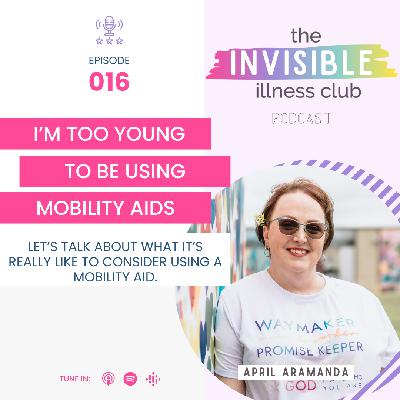
If you’ve ever felt embarrassed to use a cane, walker, or scooter because of your age or how “healthy” you look—you are not alone. This week, we’re breaking down the shame, judgment, and internalized ableism around mobility aids. I share my own experience using a rollator for the first time, plus tips and encouragement for anyone on the edge of making that decision. Because choosing support isn’t giving up—it’s choosing more life.
Memorable Quotes:
"Would you rather suffer in silence—or show up for your life?”
“You are allowed to prioritize your joy, even if it makes others uncomfortable.”
“Using a mobility aid isn’t giving up. It’s choosing more presence, more experiences, more life.”
Links:
The Unseen Sisterhood newsletter – Join for weekly encouragement and real talk.
Contact Page – To share your story or first mobility aid moment.
My Favorite Mobility Aids:
Cane
Rollator
Follow me at:
Instagram: instagram.com/the_invisibleillnessclub
TikTok: tiktok.com/@theinvisibleillnessclub
Facebook: facebook.com/theinvisibleillnessclub
Website: www.theinvisibleillnessclub.com
⚠️ Trigger Warning:
This episode contains discussion of medical trauma, near-death experiences, and infertility
Summary
Melissa Smith was born with cerebral palsy, lives with multiple chronic conditions, and has survived a life-threatening surgery. But her story isn’t about staying stuck in the pain—it’s about how she turned that pain into purpose. In this episode, Melissa shares the heart behind her business, Grace and Glory Virtual Services, and how God used her hardest moments to equip her to serve other women. We talk about grief, burnout, spiritual dry spells, and the importance of community. She also opens up about the power of prayer, her Renew & Uplift Sessions, and what keeps her going on the toughest days. This is a conversation for anyone who’s ever felt like they were barely holding on.
⏱️ Timestamped Highlights:
00:00 – Melissa shares the origins of Grace and Glory Virtual Services
05:40 – “I want others to know they’re not alone. I’ve walked that road.”
10:30 – The critical role of community for Christian women with chronic illness
15:50 – Grieving what your body can’t do and finding new ways to serve
20:00 – Supporting online entrepreneurs and caregivers with virtual services
23:45 – Near-death experience after surgery and how God showed up
32:00 – “I wouldn’t want to walk through this life without my Lord.”
35:00 – What are Renew & Uplift Sessions and who they’re for
40:00 – Final encouragement: “Even if all you can do is say His name, that’s enough.”
44:00 – Chronic illness comfort kit: tea, Tolkien, and baking shows

Comments

Download from Google Play

Download from App Store
 United States