


Safeguarding Sound Science
Subscribed: 18Played: 136
Subscribe

Description
Safeguarding Sound Science from the National Center for Science Education combats misinformation, disinformation, and misconceptions with actual science. Host Mat Kaplan talks with scientists, researchers, and other experts as they dispel common misconceptions about evolution, climate change, and the nature of science. They discuss the importance of science in our day-to-day lives, and marvel at the wonders of ongoing scientific discovery that help us better understand the world around us.
20 Episodes
Reverse

We’re all aware that data centers powering AI exact a toll on the environment. These centers demand immense amounts of electricity to run servers and meet intense processing needs, not to mention their enormous physical footprint. What’s been lost in the focus on data centers, though, is that the fossil fuel industry is using artificial intelligence, enabled by these data centers, to find, produce, and deliver more oil and gas more efficiently, with devastating effects on the planet’s climate. In this episode of Safeguarding Sound Science, our host Mat Kaplan talks with Holly Alpine, co-author of a paper in Nature that found, among other things, that AI-driven productivity gains for fossil fuel companies increase net global emissions by 0.47 to 1.8 gigatons of CO₂ annually. Alpine discusses the findings of the paper and her work as co-founder and director with her husband, Will Alpine, of the Enabled Emissions campaign, which aims to force Big Tech to acknowledge its role in the climate crisis. Holly and Will are also former Big Tech insiders — both worked at Microsoft, Holly as a sustainability lead and Will as a product manager involved with the company’s AI platform.
Read the paper: https://www.nature.com/articles/s44168-026-00411-0
Enabled Emissions: https://www.enabledemissions.com/
Learn more about your ad choices. Visit megaphone.fm/adchoices
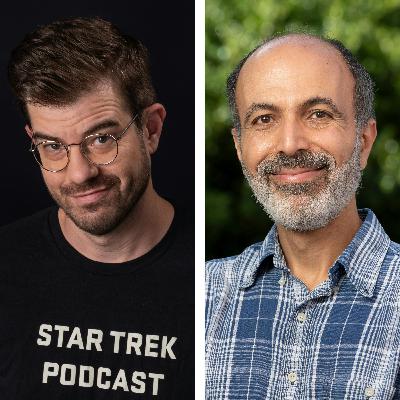
Star Trek is one of the greatest science fiction universes ever created, spawning 12 main television series and 13 movies over the last 60 years. Who among us hasn't tried the "live long and prosper" hand signal or used our old flip phones as a communicator? But what about the science behind the fiction? Mohamed Noor, professor of biology at Duke University, is the author of Live Long and Evolve: What Star Trek Can Teach Us about Evolution, Genetics, and Life on Other Worlds. He is also a science consultant for the Star Trek franchise, and he joins us to discuss the ways in which Star Trek characters and plotlines can be used to understand fundamental aspects of evolutionary biology. Joining Noor is Benjamin Ahr Harrison, co-host of the wildly popular and enjoyable Star Trek podcast, The Greatest Generation. Together with host Mat Kaplan, they share laughs, show off amazing recall of specific Star Trek episodes, and delve into the biological science of alien life forms as they boldly go where only a few humans have gone before.
Learn more about your ad choices. Visit megaphone.fm/adchoices

The understanding of evolution has had a profound positive effect on human existence, from medical advancements to conservation biology, as we have heard from so many of our guests this season. Yet, despite this fact, evolution education continues to be threatened today, from the censoring of language in textbooks to the watering down of science standards. How did we get here? What is the current state of evolution education? And how can we ensure that our children have the skills and knowledge they need to succeed in tomorrow's world? Host Mat Kaplan is joined by three science education experts from NCSE: Executive Director Amanda Townley and Science Education and Outreach Specialists Wendy Johnson and Britt Miller. Listen as they provide answers to these and many other questions about the past, present, and future of evolution education.
Learn more about your ad choices. Visit megaphone.fm/adchoices
Invasive cancers. Antibiotic resistance. Agricultural biodiversity. To better understand these and many other pressing issues of our times, we need to better understand evolution and its applicability to so much of what we encounter in modern life. So says Norman A. Johnson, the author of Darwin's Reach: 21st Century Applications of Evolutionary Biology. Host Mat Kaplan talks with Johnson about the myriad ways evolution affects each and every one of us on a daily basis, along with how applied evolutionary science may offer solutions to some of humanity's biggest challenges.
Learn more about your ad choices. Visit megaphone.fm/adchoices
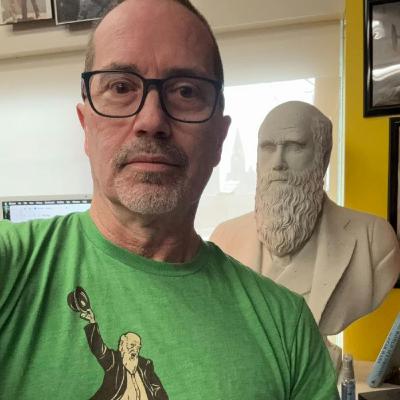
Maybe not, according to Todd Disotell, a biological anthropologist and science communicator from the University of Massachusetts. Among his many research interests, Disotell studies and teaches about disease ecology: how pathogens of every variety get to be so good at making us sick (hint: evolution is deeply involved), and how our bodies fight back. Join host Mat Kaplan for this enlightening, and sometimes sobering, look at those masters of adaptation: pathogens.
Learn more about your ad choices. Visit megaphone.fm/adchoices

Comments

Download from Google Play

Download from App Store
 United States