


 Claim Ownership
Evolutionary Insights by Anthropology.net
Subscribed: 17Played: 216
Subscribe

© Kambiz Kamrani
Description
260 Episodes
Reverse
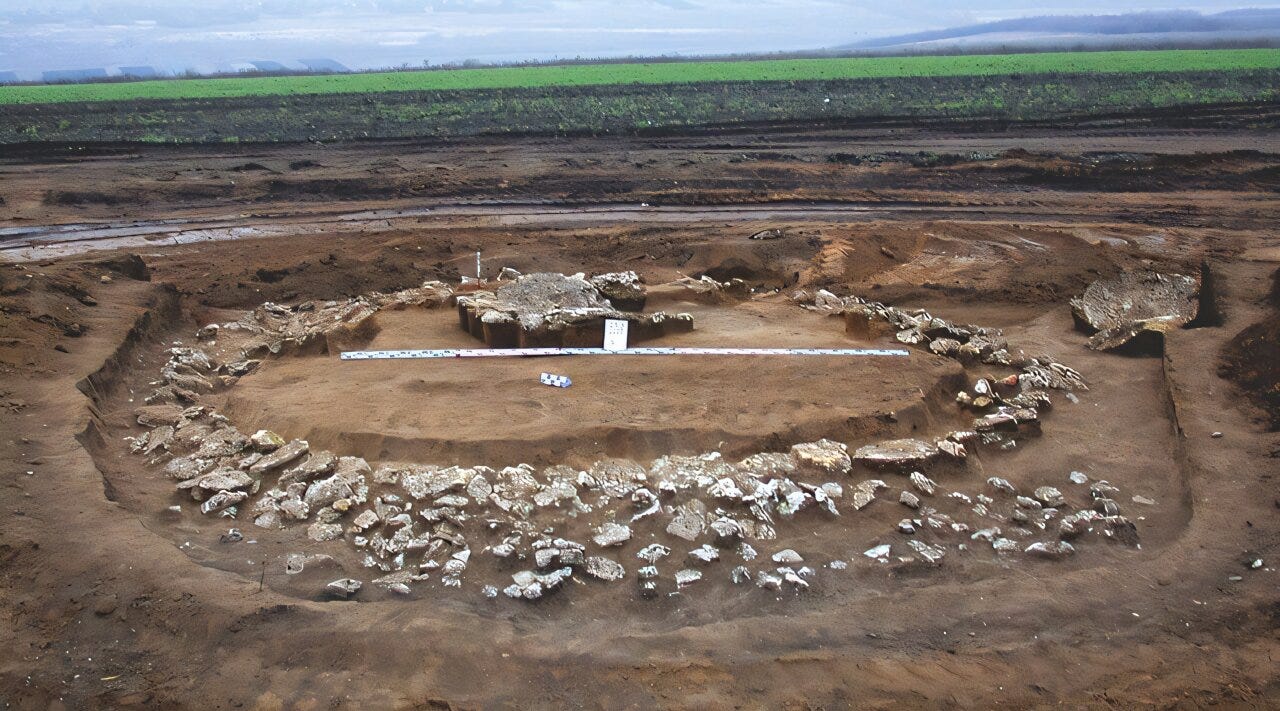
Sometime around 3700 BCE, a group of Eneolithic steppe-dwellers did something deliberate and labor-intensive at a spot along the Velykyi Kuialnyk River in what is now southern Ukraine. They scraped the topsoil off a platform down to bare yellow loam. They dug a semi-circular ditch, leaving a causeway oriented toward the southwest. They arranged stones in an elongated east-west axis around the mound they raised. At the center, they dug a pit and placed disarticulated human remains inside it — bones that appear to have been deposited in some kind of organic container, a bag or wrapping that left no trace. Then, possibly, they left the pit open for a while before filling it in.The result was not quite a tomb. The mound wasn’t built over the burial — it was already there when the burial happened. Researchers interpret this as a sanctuary first, a burial site second. Evidence of fires in the ditches resembles what we find at causewayed enclosures elsewhere, including Eneolithic enclosures scattered across the Pontic Steppe. Whatever this place was, it mattered to the people who made it.Then several centuries passed. And someone else came.The Yamna Knew What They Were Standing OnThe Early Bronze Age Yamna culture — mobile pastoralists who would eventually contribute significantly to the genetic makeup of Copper and Bronze Age Europe — had a habit of burying their dead in the mounds of the people who came before them. This is well-documented enough to be a pattern rather than a coincidence. At sites across the region, Yamna people interred their dead inside pre-existing structures, modified rock art to fit their own worldview, and routinely destroyed or repurposed Eneolithic anthropomorphic stelae in their ritual practices.Revova Kurgan 3 fits this pattern, but with an unusual level of precision. The Yamna burial at the center of the mound — burial 3, covered by two large stone slabs — was dug directly into the underlying Eneolithic layer. And the person who dug it was careful. The pit cut into the loam of the original mound without disturbing the adjacent Eneolithic burial 19. Two pits, separated by centuries, sitting side by side without touching.That kind of precision is hard to explain as accident. The research team behind the new Antiquity study, led by Svitlana Ivanova and co-authored with Alexey Nikitin, Simon Radchenko, and Dmytro Kiosak, frames this as what they call a “continuity of sacred spaces” — a deliberate ritual reuse of a predecessor’s sacred site. Kiosak acknowledges the interpretive tightrope. A prominent hilltop with good sightlines could attract any number of unrelated groups across centuries. Landscape utility is always a plausible explanation. But the central placement of the new burial, in a mound that could have been built almost anywhere nearby, suggests something more intentional than convenience.After burial 3, the Yamna kept using Revova 3. Three more burials were added at the edges of the same mound layer, dated to roughly 2885–2204 cal BCE. Then a new mound layer was added, containing burial 15. Then another layer with further Bronze Age burials. The site accumulated depth over nearly two millennia — 3711 to 1748 cal BCE, spanning four overlapping mound sequences — each generation adding its dead to the same patch of ground.What the DNA AddsThe palaeogenetic data from burial 19, the earliest individual at Revova 3, introduces a complication to any clean narrative of discontinuity. Whole genome analysis shows that this Eneolithic individual carried Usatove ancestry, linking them to people buried at nearby sites like Mayaky and Usatove. That much is not surprising. What’s interesting is the genetic overlap between the Usatove and the Yamna: approximately half of Usatove genetic ancestry is shared with the Yamna gene pool originating in the Caucasus-Lower Volga area. The individual in burial 19 also carries a Y-chromosome lineage tracing back to the Near East highlands, while their mitochondrial DNA likely came from the local steppe — the same mtDNA lineage found in Yamna individuals in the northwestern Pontic.None of this proves the Yamna people who reused Revova 3 were conscious of any genetic connection to whoever built it. But it does mean the genetic distance between the two groups was not as vast as earlier population models sometimes implied. The people are not neatly separate; the cultures were not hermetically sealed. The Yamna expansion out of the North Pontic Steppe was one of the most consequential demographic events of the prehistoric world — but it appears to have been more entangled with prior populations than the straightforward replacement model suggests.The broader interpretive framework the authors propose connects this particular mound to a wider phenomenon. Yamna and Corded Ware groups, both steppe-derived, seem to have operated with a shared symbolic toolkit — what Ivanova and colleagues describe as a kind of “Steppe-originated religion” spreading across vast territories. For mobile pastoralists covering enormous distances, religion and ritual landscape probably served practical functions: marking territory, cementing communal identity, claiming belonging in places you couldn’t physically occupy at all times. Reusing someone else’s sacred mound is not just an act of appropriation — it’s a statement of continuity, whether that continuity was remembered, invented, or simply felt.The kurgan at Revova 3 stands only 1.1 meters high. From it, a person could see 25 kilometers down the river valley. The Eneolithic people who built it chose that spot for reasons that were probably both practical and meaningful. The Yamna people who came after them chose the same spot. Whether they came because they knew something sacred had happened there, or because the landscape made it obvious, or because their own traditions pointed them toward mounds that already existed — the result was the same. A place that mattered to one group kept mattering, through cultures and centuries and significant genetic change, in ways the archaeology is only now making visible.Future work could extend this picture. Ground-penetrating radar surveys of other kurgan groups in the region might reveal buried stone structures similar to those at Revova 3, suggesting the pattern of reuse was even more widespread. For now, that work is largely suspended. Fieldwork in Ukraine is severely restricted by the ongoing war, and the research project that supported this study has concluded. Kiosak mentions the possibility of continuing related work in Moldova with local colleagues, but funding and access remain open questions.The mound is there. The layers are there. The questions are accumulating.Further Reading* Nikitin, A.G. et al. 2025. A genomic history of the North Pontic Region from the Neolithic to the Bronze Age. Nature639: 124–31. https://doi.org/10.1038/s41586-024-08372-2* Lazaridis, I. et al. 2025. The genetic origin of the Indo-Europeans. Nature 639: 132–42. https://doi.org/10.1038/s41586-024-08531-5* Penske, S. et al. 2023. Early contact between late farming and pastoralist societies in southeastern Europe. Nature 620: 358–65. https://doi.org/10.1038/s41586-023-06334-8* Ahola, M. 2020. Creating a sense of belonging: religion and migration in the context of the 3rd millennium BC Corded Ware Complex in the eastern and northern Baltic Sea Region. Norwegian Archaeological Review 53: 114–34. https://doi.org/10.1080/00293652.2020.1852305* Radchenko, S. & Tuboltsev, O. 2019. Causewayed enclosures in Ukraine? A new look at an Early Bronze Age site on the Ukrainian Steppe. Antiquity 93. https://doi.org/10.15184/aqy.2019.53* Vierzig, A. 2020. Anthropomorphic stelae of the 4th and 3rd millennia between the Caucasus and the Atlantic Ocean. Proceedings of the Prehistoric Society 86: 111–37. https://doi.org/10.1017/ppr.2020.12* Rassamakin, Y.Y. 2012. Eneolithic burial mounds in the Black Sea Steppe: from the first burial symbols to monumental ritual architecture, in S. Muller-Celka (ed.) Ancestral Landscapes (Travaux de la Maison de l’Orient 58): 293–306. Lyon: Maison de l’Orient et la Méditerranée. * Ivanova, S. et al. 2005. Kurgany drevneishykh skotovodov mezhdurechia Iuzhnogo Buga i Dnestra [Kurgans of the ancient cattle breeders between the Southern Bug and Dniester rivers]. Odesa: Institute of Archaeology, National Academy of Sciences of Ukraine. This is a public episode. If you'd like to discuss this with other subscribers or get access to bonus episodes, visit www.anthropology.net/subscribe
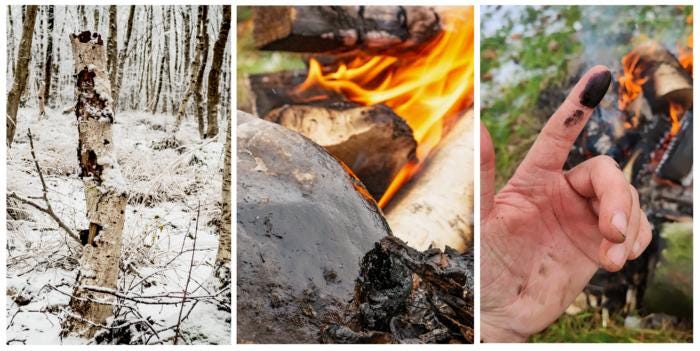
The oldest known piece of birch tar from Europe comes from the site of Königsaue, Germany, and dates to somewhere between 80,000 and 40,000 years ago. It bears finger impressions. Someone was working it, kneading it, pressing it warm against a stone tool to bind a handle. That same someone almost certainly had birch tar on their hands and skin for the duration of the process, and probably long after.That fact — the unavoidability of skin contact — is at the center of a new study by Tjaark Siemssen and colleagues published this month in PLOS One. The question they asked is one that seems obvious in retrospect: if birch tar is sticky enough to glue stone to wood, and if it coats the hands of anyone who produces it, what happens when it contacts bacteria in an open wound?The answer, it turns out, is that it kills some of them.Siemssen and colleagues produced birch tar experimentally using bark from Betula pendula and Betula pubescens, the two birch species most well-documented in the European Late Pleistocene record. They used three production methods reconstructed from Middle Palaeolithic archaeological evidence: a condensation method, in which bark burns beneath a fireproof surface like stone and the tar is scraped off; a raised clay structure method, which is closer to what the Königsaue piece likely required; and a modern tin can method drawn from Mi’kmaq oral tradition. The samples were then tested against two bacterial strains using a modified Kirby-Bauer disc diffusion assay — the standard method for measuring antibiotic activity in clinical microbiology.The results split cleanly. Against Staphylococcus aureus — a Gram-positive bacterium and the leading cause of skin and wound infections — birch tar produced measurable inhibition zones in five of six samples, ranging from 7.0 to 10.5mm. Against Escherichia coli, a Gram-negative bacterium, it did nothing at all. Zero inhibition across every sample. The tar is selective. It is not a broad-spectrum antibiotic. But S. aureus is exactly the bacterium you would want to suppress if you were applying something to a cut or abrasion, and birch tar suppresses it.The selectivity is not surprising if you know why most plant-derived antimicrobials work the way they do. Birch tar contains phenolic derivatives — catechols, guaiacols, and related compounds — that can disrupt bacterial cell walls. Gram-positive bacteria like S. aureus are more vulnerable because their outer structure is a thick peptidoglycan layer that phenolic compounds can penetrate. Gram-negative bacteria like E. coli have an additional outer membrane that acts as a barrier, blocking entry. The tar’s chemistry is not sophisticated enough to overcome that barrier, but it doesn’t need to be. Wound infections caused by S. aureus are the relevant threat.One of the study’s central findings is what did not matter: the production method. The team observed no clear relationship between how birch tar was made and how effective it was antibacterially. The condensation method, which yields the smallest amounts and has been theorized as the earliest technique Neanderthals might have used, produced tar with similar inhibitory activity to the more labor-intensive raised structure method. The most potent sample — inhibition zone of 10.5mm — came from the raised structure method using B. pendula bark. But other samples from the same method were less active, and a sample from the condensation method still suppressed S. aureus. Individual variation in bark chemistry and pyrolysis conditions matters more than the technique itself.This has a direct implication for when medicinal use could have started. If antiseptic benefit is essentially method-independent, it would have been available to Neanderthals from the earliest phase of birch tar production, at minimum during Marine Isotope Stage 7 — roughly 191,000 to 243,000 years ago — when the earliest tar-hafted tools appear in the European record.The Medicine You Couldn’t AvoidThere is something structurally different about this story compared to claims of deliberate Neanderthal medicine-making. Most of those arguments require inferring intent: a plant residue in dental calculus suggests it was consumed for its effects, but you cannot rule out incidental ingestion. The birch tar case is different. The team notes that during birch tar production, skin contamination is nearly inevitable regardless of technique, because the material is viscous and adhesive at working temperatures. You would have to make a deliberate effort to avoid contact. And the quantities needed for skin application are trivially small: approximately 0.2 grams is enough to cover 100 square centimeters of skin surface.In other words, the wound-dressing dose is essentially the handling residue.That does not mean Neanderthals understood what they were doing in any biochemical sense. But it does mean the beneficial effect was structurally available to anyone producing birch tar. If repeated contact with tar-coated skin consistently preceded faster healing of cuts and abrasions, that pattern could have been recognized and eventually formalized without requiring an explicit theory of infection. This is the kind of knowledge that ethnographic parallels suggest gets transmitted as practice, not explanation.The L’nu (Mi’kmaq) people of Eastern Canada have used birch bark oil — known in Mi’kmaq as maskwio’mi — as a wound dressing and skin ointment for generations. Production knowledge has been passed down through oral tradition from Elders, and the method using tins was recently reconstructed by Bierenstiel and colleagues. Previous laboratory work on maskwio’mi produced from Betula papyrifera has shown broad-spectrum antibacterial properties, with inhibition zones against S. aureus reaching up to 20mm — considerably higher than the experimental Palaeolithic samples in this study, possibly because industrially produced extracts concentrate the active compounds. The Saami of Lapland and the Yakut of Siberia have similarly documented uses of birch-derived materials as wound dressings and antiseptics. The convergence across independent traditions is not decisive evidence of prehistoric use, but it is consistent with it.Neanderthal Care, Materially GroundedThe broader context in which this study sits is a field that has been quietly reassembling the picture of Neanderthal life for the past decade. The case for Neanderthal healthcare is no longer speculative. At Shanidar Cave in Iraqi Kurdistan, the skeletal remains of a Neanderthal individual showed a completely healed injury to the lower leg — a severed tibia that had regenerated over years, implying sustained care from others. A different individual at the same site showed evidence of chronic disability alongside survival well into adulthood. At El Sidrón, Spain, chemical analysis of dental calculus detected signatures of chamomile (Matricaria chamomilla) and yarrow (Achillea millefolium), plants with known medicinal properties, in a Neanderthal individual — though interpretation of intent remains debated. Weyrich and colleagues’ 2017 analysis of ancient DNA from El Sidrón dental calculus documented the presence of Penicillium, a natural antibiotic mold, in one individual’s calculus. Care infrastructure — defined broadly as the social and material means by which injured or ill individuals survive — appears to have been a consistent feature of Neanderthal communities.What birch tar adds to this picture is a material substrate: something that leaves physical traces in the archaeological record and can be experimentally tested for the properties that would have made it useful. Ochre has attracted similar attention. Rifkin and colleagues have tested its UV-protective properties in vivo. Others have explored insect-repellent properties of various resinous materials. The argument in each case is the same as Siemssen et al.’s: a material that was definitely used in a technological context also had secondary properties that would have conferred biological benefit. The question is whether that benefit was incidental or recognized.The Siemssen et al. study cannot answer that. What it can do is close off one type of skepticism. The antibacterial properties of birch tar are not hypothetical or inferred from ethnographic analogy alone. They have now been demonstrated experimentally, using production methods reconstructed from Palaeolithic archaeology, and the effect is present across all three tested methods. You do not need underground pit distillation to get antiseptic birch tar. You can get it from the simplest production method anyone might have stumbled on, by burning bark beneath a flat stone.The authors frame this as a coevolutionary relationship between technological and medicinal use — the idea that the same production process, refined over generations for its hafting yield, simultaneously produced a material with wound-care utility. There is something important in that framing. It resists the temptation to sort Neanderthal activities into clean cognitive categories: here is tool production, here is medicine, here is art. The messier and more interesting possibility is that these were entangled, that a substance could be many things at once, and that the people using it may not have drawn the distinctions we keep trying to impose on them.Further Reading* Schmidt P, Koch TJ, Blessing MA, Karakostis FA, Harvati K, Dresely V, et al. Production method of the Königsaue birch tar documents cumulative culture in Neanderthals. Archaeological and Anthropological Sciences 15(6):84. 2023. https://doi.org/10.1007/s12520-023-01789-2* Mazza PPA, Martini F, Sala B, et al. A new Palaeolithic discovery: tar-hafted stone tools in a European Mid-Pleistocene bone-bearing bed. Journal of Archaeological Science 33(9):1310–1318. 2006. https://doi.org/10.1016/j.jas.2006.01.006* Hardy K, Buckley S, Collins MJ, Estalrrich A, Brothwell D, Copeland L, et al. Neanderthal medics? Evidence for food, cook
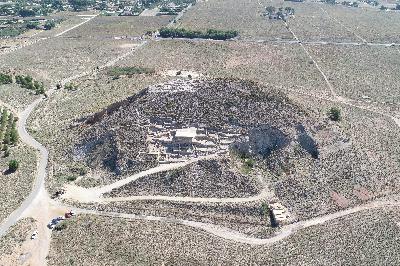
The fire that destroyed part of Cabezo Redondo around 1450 BC was, archaeologically speaking, a piece of luck. The settlement sits on a hill in the Alto Vinalopó region of southeastern Spain, a few kilometers west of present-day Villena. When flames swept through the circulation area — an outdoor platform and street connecting several houses — they sealed everything beneath carbonized debris. Wheat seeds on the floor. Esparto ropes. Charred timbers. Clay weights still clustered where they had fallen.Together, those remains constitute one of the best-preserved Bronze Age warp-weighted looms found anywhere in the western Mediterranean.A warp-weighted loom is a vertical frame. Threads hang freely from a horizontal beam at the top, held taut by weights tied to their lower ends. A weaver passes the weft thread — the horizontal one — back and forth across the hanging warp to build up the fabric. The design is simple and has proven extraordinarily durable as a concept: versions of it appear in Neolithic Europe, in Greek vase paintings, in ethnographic records from recent centuries. What rarely survives is the physical object. Wood rots. Organic fibers decay. Archaeologists working on prehistoric textile production have long been reduced to reading loom weights in isolation — the clay or stone anchors at the bottom of the threads — and inferring the rest.At Cabezo Redondo, that is no longer entirely the case.The team, led by Dr. Ricardo E. Basso Rial of the University of Granada, documented five charred timbers on a raised stone platform, all from locally sourced Aleppo pine (Pinus halepensis). Wood anatomy analysis, conducted with scanning electron microscopy and optical microscopy, confirmed the species and suggested the builders selected mature wood from the outer trunks of large trees — the kind of grain structure that provides stability over time. Esparto grass (Macrochloa tenacissima) ropes, braided and knotted, lay in direct contact with the timbers, likely used to lash structural elements together. Small cords of the same material were found still threaded through the central perforations of several loom weights, the physical remnant of how warp threads were tied on.Two of the timbers, roughly a meter long with rectangular cross-sections, are most plausibly the upright posts of the loom. Three shorter, more slender pieces would have served as crossbeams. One upright preserves a branching fork at one end, possibly adapted to cradle the upper cloth beam. Estimating the loom’s full height is difficult — the timbers are incomplete — but enough survives to partially reconstruct its form.Forty-nine clay weights were found on the platform. Forty-six lay clustered directly beside the timbers. Three others were found nearby, in the same context, their esparto cords still attached.Reading the WeightsWhat makes those weights interesting is not their number but their size. Most Bronze Age loom weights from southeastern Iberia fall in the range of 400 to 900 grams. The main group at Cabezo Redondo averages around 200 grams — small, cylindrical, with a single central perforation. Their thinness is notable too. In a warp-weighted loom, the thickness of a weight determines how much space the attached threads occupy on the loom, and the sum of all weights’ thicknesses determines the total fabric width.Using methodology developed by the Centre for Textile Research at the University of Copenhagen — an experimental approach grounded in the physical mechanics of weaving — the team modeled what this assemblage could produce.Two configurations emerge. In the first, 44 weights arranged in two rows of 22 would produce a tabby weave roughly a meter wide. Tabby is the simplest weave structure: each horizontal weft thread passes over and under each vertical warp thread in alternation. The resulting fabric would be open and lightweight, similar to gauze, with a thread count of around 5 to 10 threads per centimeter. Thread diameter was probably under half a millimeter. That kind of textile — thin, made from plant fibers like flax — dominates the preserved Bronze Age record across Iberia.The second configuration is where things get more interesting. The same 44 weights, rearranged into four rows of 11, would produce a twill weave. In a twill, the weft passes over and under pairs of warp threads rather than individual ones, creating a diagonal interlocking structure. The fabric that results is denser, more flexible, more durable — and thread density in this configuration would range from 10 to 19 threads per centimeter. Twill fabrics didn’t become widespread in Europe until the early first millennium BC. The earliest known examples from Central Europe date to roughly 1500 to 1200 BC: precisely when this loom was in use.Four larger, heavier weights were also recovered on the platform, stored nearby rather than mounted on the loom. Their presence suggests the weavers had access to multiple configurations. The platform also yielded spindle whorls — four clay examples including biconical and spherical forms not typical of earlier periods, when heavier discoid whorls associated with flax spinning dominated the record.A Craft in the OpenThe platform itself is worth pausing on. It is not a workshop. It is a raised stone surface, roughly 4.2 by 1.8 meters, partially covered by a roof supported on two timber posts, situated in the street-like space connecting several houses. Ceramic vessels, stone tools, sickle blades, and metal objects were scattered through the surrounding area. The loom sat in shared domestic space, in the middle of ordinary activity.Weaving at Cabezo Redondo was not a specialized or segregated craft the way metalworking was — the evidence for metalworking comes from non-residential contexts. Textile production appears distributed across households, embedded in the rhythms of home and neighborhood. Concentrations of loom weights appear in at least 16 different spaces across the site. House XVIII alone contained 70. Multiple households were weaving, and the variety of weight types implies multiple loom configurations and multiple fabric types in parallel use.Flax, almost certainly, remained the primary fiber. Preserved textile fragments from the region in this period are mostly plant-fiber tabbies. But the lighter weights, the new spindle whorl forms, and the possibility of twill production all suggest something was changing.That shift is what researchers call the “textile revolution”: the gradual adoption of wool as a weaving fiber, and with it a new technical vocabulary. Wool accepts dye more readily than flax. It produces denser, warmer, more patterned fabrics. Twill weaves, which emerged in parallel with wool’s adoption, enable designs using threads of different colors. The trajectory can be traced across Bronze Age Europe — from the Terramare settlements of northern Italy to the funerary textiles of Scandinavia — though it unfolds at different times in different regions. In Iberia, direct evidence for wool is still sparse. The only confirmed find so far is from Tomb 121 at the Argaric site of Castellón Alto in Granada, dated to 1800–1700 BC, and the full analysis of those textile fragments has not yet been published.Cabezo Redondo doesn’t confirm that these particular weavers were making twill fabrics from wool. No textile fragments survived the fire. What it shows is that the equipment for twill production was present, that someone at this settlement understood what four rows of weights could do that two rows could not. In the words of Dr. Basso Rial, the discovery allows us to see the loom itself — frozen at the moment of use — rather than just the partial tools that typically survive.The same fire that ended the weaving preserved the evidence of it. A meter of cloth, or the ghost of one, can still be reconstructed from the distribution of weights on a stone platform, 3,500 years after the last thread was passed.Further Reading* Mårtensson, L., Nosch, M.-L., & Andersson Strand, E. (2009). Shape of things: understanding a loom weight. Oxford Journal of Archaeology, 28, 373–398. https://doi.org/10.1111/j.1468-0092.2009.00334.x* Molina González, F. et al. (2003). La sepultura 121 del yacimiento argárico de El Castellón Alto (Galera, Granada). Trabajos de Prehistoria, 60(1), 153–158. https://doi.org/10.3989/tp.2003.v60.i1.127* Gleba, M. (2008). Textile production in pre-Roman Italy (Ancient Textiles Series 4). Oxford: Oxbow.* Grömer, K. (2016). The art of prehistoric textile making: the development of craft traditions and clothing in Central Europe. Vienna: Natural History Museum Vienna. This is a public episode. If you'd like to discuss this with other subscribers or get access to bonus episodes, visit www.anthropology.net/subscribe
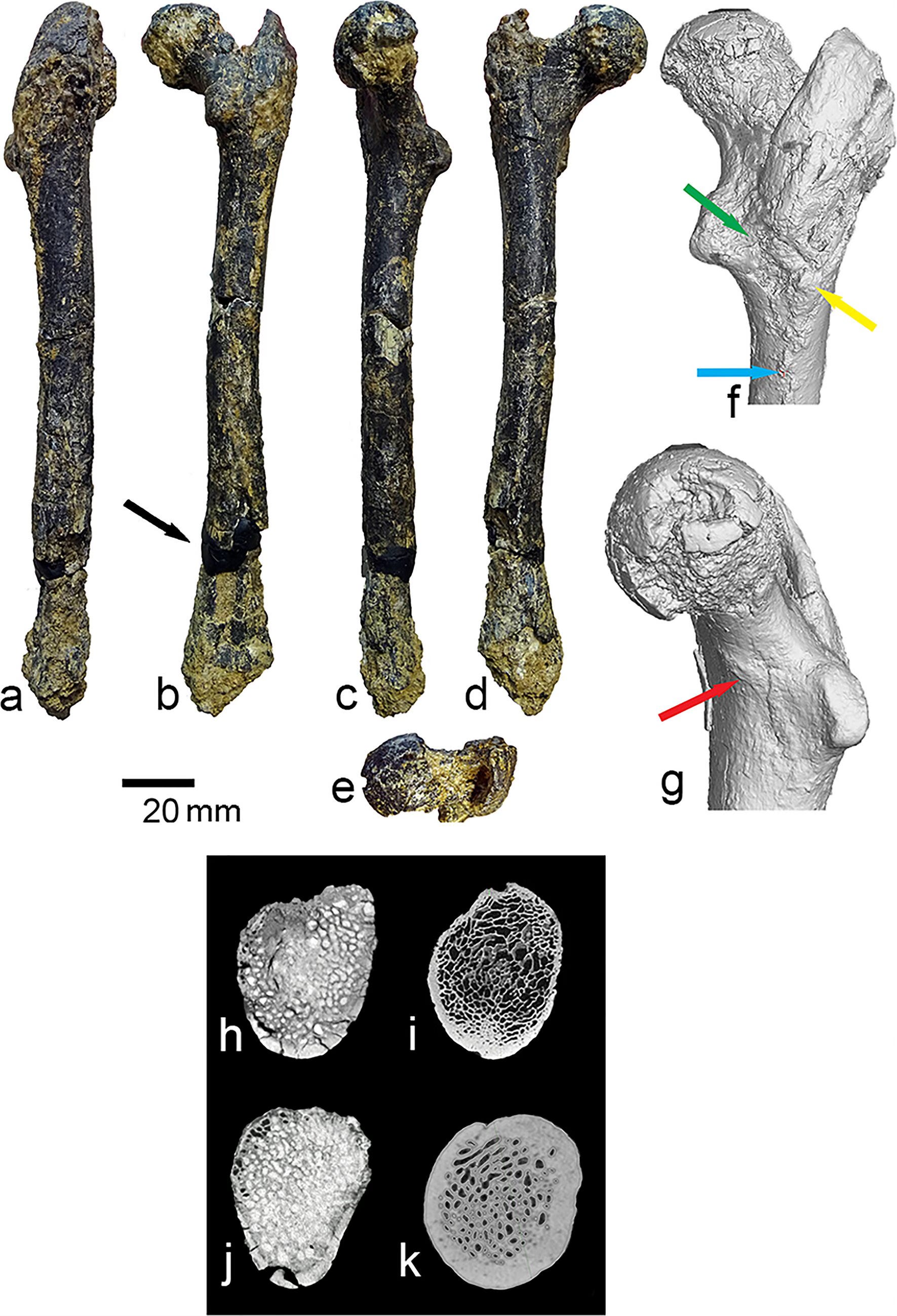
There is a gap in the fossil record just before the point where we’d expect to find our earliest ancestors, a window between roughly 10 and 6 million years ago when the lineage leading to humans was presumably doing something interesting locomotively. What we find in that window is mostly silence, punctuated by fragmentary teeth and jaw pieces from Africa and, increasingly, from unexpected places in Europe and western Asia.The Azmaka site in southern Bulgaria, near the town of Chirpan, sits in the Upper Thracian Plain. It has been producing fossils for decades, mostly from the Late Miocene, an extinct world of three-toed horses, early mastodons, and an extraordinarily rich savannah fauna. In 2016, excavators working the AZM-6 sediment horizon pulled out a nearly complete right femur. A thighbone. They didn’t know what it was at first, in the sense that its taxonomic identity required careful argument. But its anatomy was remarkable from the start.That femur, catalogued as FM3549AZM6, is now the subject of a detailed new analysis published in Palaeobiodiversity and Palaeoenvironments by a team led by Nikolai Spassov of Bulgaria’s National Museum of Natural History, along with Dionisios Youlatos, Madelaine Böhme, and David Begun. Their argument, stated plainly: this bone belongs to a hominine that was walking bipedally, at least part of the time, 7.2 million years ago, in what is now the Balkans.The date alone should give you pause. Orrorin tugenensis, found in Kenya, has long been considered the oldest convincing biped, at about 6 million years. Sahelanthropus tchadensis, from Chad, is older at around 7 million years, but its status as a biped has recently come under serious scrutiny. A 2025 analysis by Cazenave and colleagues argued there are no definitive indicators of bipedalism in the Sahelanthropus femur. If they are right, and if the Azmaka team is right about their Bulgarian bone, then the oldest known biped walked not in Africa but in southeastern Europe.What the bone actually looks likeThe femur is mostly complete. The distal epiphysis is missing, and there’s some diagenetic damage, but enough survives to take reliable measurements across fifteen variables of the proximal end, and enough shaft to characterize its overall shape. The bone was scanned at the Max Planck Institute for Evolutionary Anthropology in Leipzig. The team ran principal component analyses, canonical variates analyses, discriminant function analyses, and compared the fossil against an extensive reference collection spanning gibbons, orangutans, gorillas, chimpanzees, bonobos, cercopithecoid monkeys, and a range of fossil hominoids from the Miocene.Body mass, estimated from femoral head dimensions using regressions calibrated on chimpanzees, comes in around 23 to 24 kilograms. That’s small. It’s consistent with a female individual. For comparison, the holotype mandible of Graecopithecus freybergi from Pyrgos Vasilissis in Greece is estimated to belong to a male closer to 40 kilograms. The team attributes the Azmaka femur tentatively to cf. Graecopithecus, partly on the basis of its age: the three specimens (the Greek mandible, a premolar from an earlier Azmaka horizon, and this femur) are all confined to roughly the first 70,000 years of the Messinian stage. They’re essentially contemporaries.What actually makes this femur unusual is a cluster of features that, when you look at them individually, each tell a partial story, but together tell a stranger and more compelling one.The femoral shaft is nearly straight. In African great apes the shaft curves anteroposteriorly, an adaptation that the team interprets as related to arboreal locomotion rather than terrestrial quadrupedalism. No actively moving terrestrial quadruped primate has a strongly curved femoral shaft. The Azmaka bone looks more like an australopith’s femur in this respect than like a chimpanzee’s. The greater trochanter sits slightly below the level of the femoral head, a configuration associated with increased hip mobility, also seen in some chimpanzees but more pronounced here in a direction consistent with early hominins.The femoral neck is deep superoinferiorly, unusually so. Neck depth is associated with ground reaction forces at the hip, which is why human necks are deep too: walking upright loads the hip joint in a way that requires a structurally robust neck. The cortical bone distribution within the neck is asymmetrical, thick inferiorly and thin superiorly. This is the pattern you’d expect in an animal subject to consistent unidirectional loads on the hip, as in walking quadrupedally or bipedally. In suspensory apes like chimpanzees and orangutans, the cortical bone is distributed more evenly around the neck because forces come from multiple directions during climbing. The Azmaka specimen looks nothing like a suspensory ape in this respect. It looks like a biped, or at minimum like something doing a lot of stereotypical weight-bearing on its hind limbs.Then there’s the feature the team calls FNOL: the femoral neck oblique length, which measures the ascending, superomedially oriented medial portion of the proximal neck margin. This is a geometric detail that sounds arcane until you understand what it represents. In hominins, the proximal margin of the femoral neck is divided into a short, nearly horizontal lateral part and a long, steeply ascending medial part. This elongated medial portion is what separates the femoral head from the greater trochanter and reflects the elongation of the neck itself, which biomechanically increases the moment arm of the hip abductor muscles. That’s important for stabilizing the pelvis when you’re standing on one leg, which is exactly what you do during every stride of bipedal walking. In non-hominin hominoids, this medial portion is shorter and usually slightly concave. In the Azmaka femur, it is long and straight, grouping statistically with Orrorin, Australopithecus afarensis, Paranthropus, and Homo sapiens, and not with any of the European Miocene apes.Applying a discriminant function developed by Lovejoy and colleagues to distinguish bipedal hominids from knuckle-walking great apes, the Azmaka femur scores on the biped side of the boundary. Just barely, but clearly.A gluteal tuberosity is present on the posterior shaft surface, vertical and posterolaterally placed. In African great apes, the gluteal tuberosity is effectively replaced by a lateral spiral pilaster, a different structure associated with a different configuration of the gluteus maximus, positioned more for hip extension and climbing rather than hip stabilization during upright posture. The Azmaka femur has no lateral spiral pilaster. Its gluteal configuration most closely resembles early hominins like Orrorin and Australopithecus afarensis. A faint intertrochanteric line is also present, associated with a well-developed iliofemoral ligament, which limits hip hyperextension and is characteristic of creatures that habitually extend their hips toward or past neutral.None of these features, alone, is conclusive. Some appear in unexpected places. Gluteal tuberosities of varying development occur across many primates. A straight shaft is not unique to hominins. But the combination is coherent. The pattern points consistently in the same direction.Not a modern walker, but something newThe team is explicit that this is not obligate bipedalism. A number of features associated with fully committed bipedalism in modern humans are absent or underdeveloped: there’s no hypotrochanteric fossa, no clear obturator externus groove, and the shaft is not platymeric (flattened front-to-back) in the way typical of later bipeds. The neck-shaft angle is about 122 degrees, which is in the range of australopiths and modern humans but lower than in the African great apes, lower than in Danuvius guggenmosi (a proposed Miocene biped from Germany with a 134-degree angle), and notably lower than the estimated values for Sahelanthropus, which apparently had an angle somewhere between 138 and 148 degrees, more consistent with orangutans and the suspensory European ape Hispanopithecus than with hominins.The most accurate characterization the team offers is facultative bipedalism alongside terrestrial quadrupedalism, without the specialized arboreal features of extant great apes. This creature could walk upright. It probably also moved quadrupedally on the ground. It was not a habitual tree-swinger. The locomotor repertoire was complex, transitional, and unlike anything living today.That transitional quality is important. The pattern of bipedal features in the Azmaka femur resembles early hominins more than it resembles later ones, a relationship the authors note recalls the distinction between australopiths and Homo. Bipedalism, in other words, appears to have been a multi-phase process. The Azmaka hominine may represent phase one.Professor Spassov has described the bone’s suite of features as combining the characteristics of terrestrial quadrupeds and bipeds, clustering mostly with early bipeds but partially with African apes. Begun characterizes the specimen as a stage between arboreal ancestors like Danuvius and the later East African bipeds.The comparison with Sahelanthropus is worth dwelling on. Sahelanthropus is currently the oldest proposed hominin at about 7 million years, slightly younger than the Azmaka specimen, from Chad. Daver and colleagues argued in 2022 that several features of the Sahelanthropus femur support habitual bipedalism. Cazenave and colleagues argued the opposite in 2025. The Azmaka team has looked carefully at the Sahelanthropus femur and reached a pointed conclusion: the high neck-shaft angle, the strongly curved shaft, the highly sigmoid shape of the lateral linea aspera lip, and extensive rodent gnawing that has obscured potentially diagnostic posterior surface features, all make the bipedal argument for Sahelanthropus substantially weaker than for the Azmaka specim
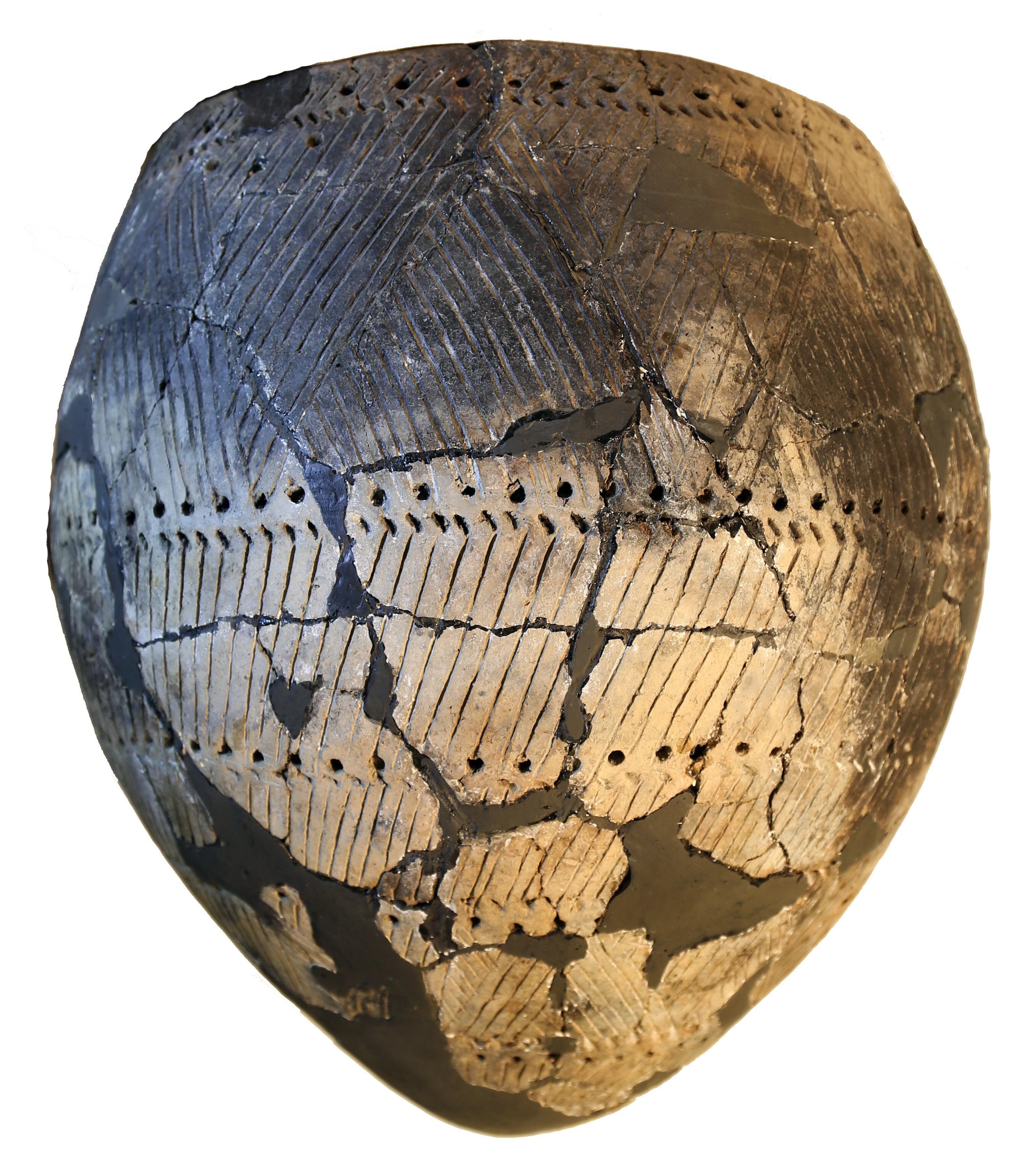
The burnt crust at the bottom of a cooking pot is not glamorous evidence. It is easy to overlook, difficult to analyze, and has spent most of archaeology’s history being scraped off and discarded. But a new study published in PLOS One by Lara González Carretero and colleagues at the University of York and the British Museum has spent considerable effort looking very closely at exactly these crusts, and what they found is harder to explain away than anyone expected.The short version: prehistoric hunter-gatherer-fishers living across Northern and Eastern Europe between roughly 5900 and 3000 BC were not just boiling fish. They were combining specific plants with specific animals into preparations that varied predictably by region. Guelder rose berries with freshwater fish at sites along the Upper Volga and Baltic coasts. Wild grasses and legumes with cyprinids in the Don River basin. Amaranthaceae leaves, stems, and inflorescences alongside fish at Serteya II and Zamostje 2. The patterning is too consistent to be coincidence. These were recipes, or at least something close to them.That claim needs unpacking, because the way we usually study prehistoric diet makes plants almost invisible.The fat problemLipid residue analysis has been the workhorse of pottery-based dietary reconstruction for decades. The technique works by extracting fatty acids absorbed into ceramic walls and identifying them chemically. It is effective, but it has a strong bias: animal fats absorb readily into pottery and persist well. Plant lipids, by contrast, either don’t survive, don’t absorb in the first place, or produce signals so diffuse they’re hard to attribute to anything specific. The result is that the standard chemical toolkit for studying what prehistoric people cooked has been generating a picture of their diet that is almost entirely made up of fish, mammals, and dairy.This is not wrong, exactly. It just isn’t complete. And the new study makes that incompleteness very concrete.González Carretero and colleagues took 85 pottery sherds with substantial preserved food crusts from 13 sites across a broad swath of Northern and Eastern Europe, from the circum-Baltic coast east through Lithuania and Poland into the Upper Volga and down through the Don basin into what is now southern Russia. They ran standard lipid residue analysis. They also looked at the crusts directly, under digital microscopes and scanning electron microscopes, hunting for plant tissue that had been carbonized but not destroyed: cell walls, seed coats, pericarp layers, the waxy epidermis of a berry, the distinctive vascular bundles of a root. In 58 of the 85 vessels, they found something identifiable.The lipids told one story. The microscopy told a different, richer one. Fatty acid isotope values clustered heavily around aquatic sources, as expected. But sitting in the same blackened crust, visible under the electron microscope, were Viburnum opulus berries, seeds from the Amaranthaceae family, fragments of wild grass husks, what appears to be sea beet root tissue, and what may be tubers from sea club-rush (Bolboschoenus maritimus). The two lines of evidence are not contradictory. They’re complementary. Animal fats dominated the lipid signal. But plants were there too, woven into the matrix, preserved as structure rather than chemistry.The team points out that this has methodological implications beyond this particular study. If plant use is this consistent and this widespread, and yet lipid analysis alone misses most of it, then decades of dietary reconstruction based on pottery residues have been systematically underestimating how much plants mattered to these communities.What was actually in the potThe site-by-site results are worth slowing down to examine.At the Lithuanian lake sites of Daktariškė 5 and Kretuonas 1B, as well as the Pomeranian coastal site of Dąbki in Poland, the pattern is consistent: freshwater fish dominate the lipid signal, and microscopy reveals fragments of Poaceae seeds alongside. At Dąbki specifically, Viburnum berries appear frequently in the crusts, co-occurring with high concentrations of freshwater fish biomarkers. What makes this interesting is that Viburnum berries are essentially absent from the broader archaeobotanical record at Dąbki. The site’s flotation samples show starch-rich roots and rhizomes, not berries. The team’s interpretation is that the berries weren’t just being eaten casually; they were being brought specifically to the pot, deliberately combined with fish, for a culinary purpose that required a vessel to accomplish.Viburnum opulus, known as kalyna in Ukraine and Russia, is mildly toxic when raw. The berries taste bitter, smell strongly when heated, and need processing to become palatable. Cooking them with fish would have both reduced the bitterness and, presumably, created a flavor combination that people in this region had decided they wanted. The plant persists in Eastern European food traditions to this day. There’s a dish called Mos’, recorded among the Nivkh people of the Russian Far East, made from pulverized dried fish mixed with fish skin, various berries, and occasionally tubers. The parallel isn’t evidence of continuity across that geographic distance, but it suggests that the general idea of combining fatty fish with acidic, astringent fruit has deep roots in foraging cuisines that developed around cold northern rivers.At Zamostje 2 and Serteya II in the Upper Volga and Dnieper-Dvina regions, a different pattern emerges. Here the crusts are full of Amaranthaceae: seeds, stems, calyces, leaf tissue. The team identified the likely species as small-seeded varieties such as Chenopodium glaucum/rubrum and Atriplex prostrata, not the larger-seeded fat hen (Chenopodium album) that typically dominates macrobotanical assemblages at these sites. The macrobotany and the pottery residues are again telling different stories, but in this case it’s not that plants were absent from the diet. It’s that the plants in the pot were different from the plants being processed or discarded elsewhere at the same site.One detail from this region is particularly striking. The Amaranthaceae remains in the crusts included both green, underdeveloped calyces, which appear in May and June, and ripe calyces with embedded seeds, which ripen from July through August. That range of developmental stages in a single residue type implies that people at these sites were gathering and cooking these plants across several months of the spring and summer growing season, not just harvesting them at peak ripeness. That’s a level of sustained, intentional plant engagement that goes well beyond opportunistic foraging.At Syltholm II in southern Denmark, the analysis produces the most complex picture. Pottery here contained root and rhizome tissue consistent with Amaranthaceae family plants, possibly sea beet (Beta vulgaris ssp. maritima), alongside what appear to be sea club-rush tubers identified by their distinctive solid parenchyma with randomly distributed vascular bundles. There were also Amaranthaceae inflorescences and seeds, freshwater fish, and traces of dairy products that lipid analysis suggests were obtained from neighboring farming communities. A pot that contained fish, foraged tubers, greens from a saltmarsh plant, and perhaps some milk or butter from a nearby Neolithic group is a lot more than forager subsistence. It’s a cuisine that drew on multiple food worlds.The pottery and the practiceThere’s a statistical dimension to this study that goes beyond identifying what was in any given pot. The team ran a Mantel test comparing the similarity of food remains across vessels against the geographic distance between sites and the technological similarity of the pottery itself. Geographic distance produced a weak but real correlation (r = 0.25). More interestingly, pottery technology produced a stronger one (r = 0.48), and that correlation remained significant even after controlling for location. Vessels that were made similarly tended to be used similarly. Vessels that were technically distinct tended to contain distinct food combinations.That finding is cautious, and the team is careful about overinterpreting it. But it points toward something genuinely hard to explain as pure ecology. If culinary practice were solely a function of what happened to grow nearby, you’d expect geography to dominate the signal. The fact that pottery technology tracks food use as well or better than geography suggests that how pots were made and what they were used for were linked by something cultural, not just environmental. Knowledge about pot-making and knowledge about cooking may have traveled together, been taught together, been part of the same set of practices people transmitted across generations and, presumably, across communities.This is not a claim that Mesolithic or Early Neolithic foragers in Eastern Europe had cuisine in any high-culture sense. But it does mean they had something more structured than opportunistic eating. They selected specific plants, ignored others that were equally available. They combined ingredients in ways that were consistent across time and across some geographic areas. They used pottery not merely to extract oil from fish for use as fuel or lubricant, a hypothesis the team is now comfortable rejecting for this assemblage, but to create food preparations that required a vessel: things that needed to be boiled, blended, softened, made edible through heat and mixing.Whether the Viburnum and fish combination tasted good to anyone outside the communities that made it is unknowable. But that someone was making it consistently, across multiple sites, over what appears to be a considerable span of time, suggests that it tasted good enough to them to keep making it. That’s a kind of cultural continuity that archaeology usually can’t access. Here, frozen in burnt crust at the bottom of a Neolithic pot, it almost can.Further Readin
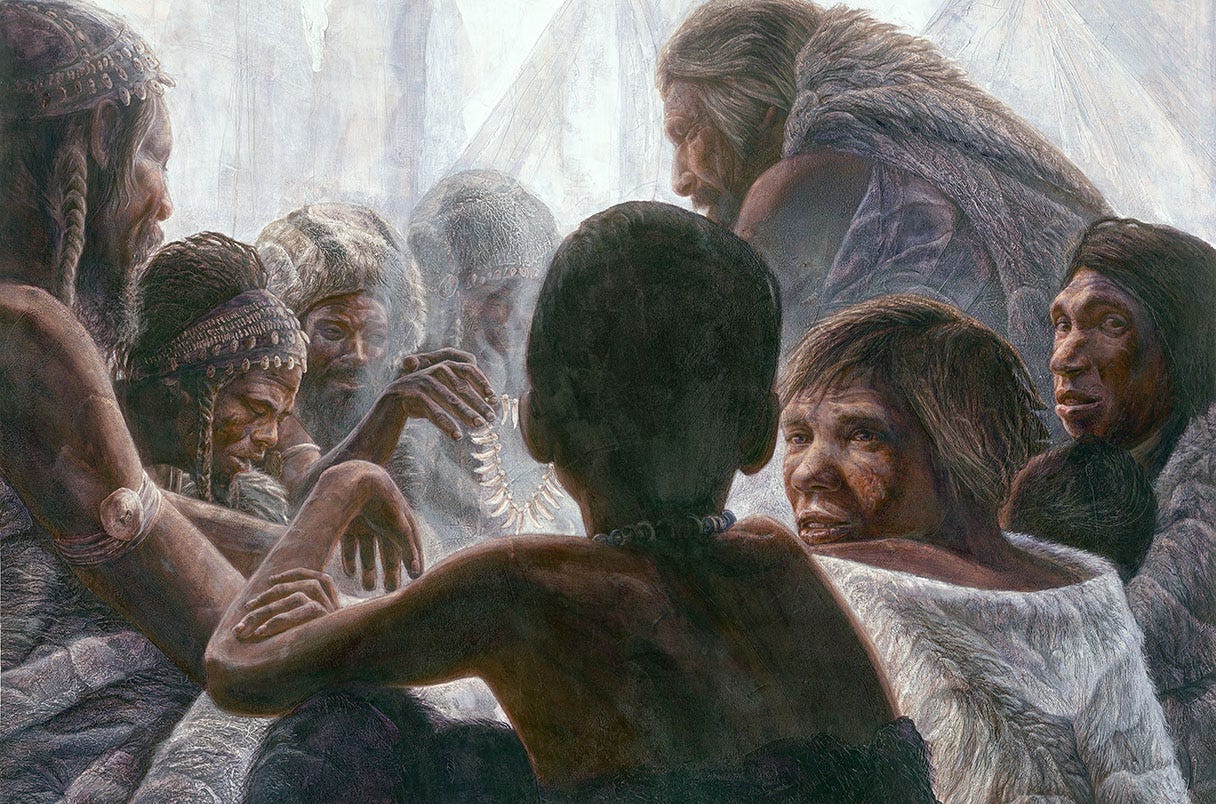
There’s a stretch of your genome that’s almost entirely free of Neanderthal DNA. Not just sparse — nearly empty. The X chromosome, in person after person, population after population, looks like something scrubbed it clean of whatever contributions our Neanderthal relatives might have made. Geneticists have known about this for years. They called the gaps “Neanderthal deserts,” and most assumed the explanation was straightforward: natural selection. The Neanderthal variants that ended up on the X chromosome were probably harmful, so they got weeded out over generations. Case closed.It wasn’t closed.A paper published in Science on February 26, 2026, by Alexander Platt, Daniel Harris, and Sarah Tishkoff at the University of Pennsylvania has reopened the question — and the answer they’ve arrived at is stranger and more interesting than genetic incompatibility. The Neanderthal desert on our X chromosome, they argue, wasn’t created by bad genes. It was created by who was sleeping with whom.To understand why this matters, you need to know one thing about sex chromosomes and inheritance. Females carry two X chromosomes; males carry one X and one Y. A father can pass his X chromosome to daughters only — never to sons. A mother always passes an X chromosome, to daughters and sons alike. This asymmetry means that when two populations interbreed, the direction of the mating matters enormously for what ends up in the X chromosome pool. If the males doing the reproducing across groups come from one population and the females from another, the X chromosomes of each group will reflect that imbalance in a predictable, traceable way.The team’s insight was to look at the problem from both ends. The Neanderthal DNA present in modern human genomes had been studied extensively. But Platt and his colleagues realized this was only half the picture. The other half — the modern human DNA that made its way into Neanderthal genomes — had received much less attention. If you could look at both sides of the exchange, you might be able to determine which direction it mostly flowed.What the Neanderthal Chromosomes Actually ShowThree high-quality Neanderthal genomes exist: specimens from the Altai Mountains in Siberia, from Chagyrskaya Cave, and from Vindija Cave in Croatia. These individuals lived at different times, ranging from roughly 122,000 to 52,000 years ago. All of them contain traces of earlier contact with Homo sapiens, the result of an interbreeding event that the researchers estimate occurred around 250,000 years ago — well before the better-known episode roughly 46,000 to 50,000 years ago that left Neanderthal DNA in the genomes of people alive today.When the team examined the autosomes — the 22 pairs of non-sex chromosomes — of these three Neanderthals, they found modern human DNA scattered across them, as expected. Then they looked at the X chromosomes. And what they found inverted every assumption.The Neanderthal X chromosomes didn’t have less modern human DNA. They had significantly more. About 62% more, relative to the autosomes. Where modern humans had a Neanderthal desert on their X chromosomes, Neanderthals had the opposite: a modern human surplus.This is the kind of mirror-image pattern that makes a hypothesis snap into focus. If the explanation for the depletion in modern humans were purely genetic toxicity — Neanderthal variants causing harm and getting selected against — then the same logic should apply in reverse. Harmful modern human variants on the Neanderthal X should also have been purged. But they weren’t. They were overrepresented. Whatever drove the pattern, it wasn’t simply bad genes on the X chromosome making hybrid offspring less fit.The team then ran simulations to test alternative explanations. Could the surplus have resulted from biased migration — say, if the Homo sapiens groups that moved into Neanderthal territory were mostly female? Even in the most extreme version of that scenario, with an entirely female migrant group, the math only produced a 1.3-fold excess of modern human DNA on the Neanderthal X. The observed excess was 1.6-fold. Something more was needed.What fit best was a mating preference. Specifically: Neanderthal males disproportionately mating with modern human females, and their offspring being preferred as partners in subsequent generations as well. The bias wasn’t a one-time event. It appears to have been persistent, operating across multiple generations, possibly across both of the major interbreeding episodes separated by roughly 200,000 years.“You need a strikingly strong phenomenon to get us there,” Platt told the New York Times.The team also checked whether the modern human DNA enriched on Neanderthal X chromosomes might be there because it conferred some advantage — i.e., whether this was positive selection for good modern human variants rather than a signature of mating patterns. The sequences in question turned out to have lower-than-average concentrations of functional elements: protein-coding regions, regulatory sequences, that sort of thing. That doesn’t rule out selection as a partial factor, but it does make a purely adaptive story less convincing.Mate preference, the team concluded, was the most parsimonious explanation.What We Can’t Know From HereThe finding raises a question that the genetics cannot answer: why?The study doesn’t resolve whether the preference was mutual, one-sided, or coerced. Sarah Tishkoff has said the team deliberately didn’t speculate about consent. Steven Churchill, a paleoanthropologist at Duke University who wasn’t involved in the research, was less restrained. If males from one species systematically paired with females from another to this degree, he told Science, it’s hard to square that with anything other than competitive, unfriendly interaction between the groups.April Nowell, a paleoanthropologist at the University of Victoria, pushed back on that framing. There’s no archaeological evidence of violence between human groups at the relevant time periods, she noted. And from the perspective of evolutionary biology, females are typically the more selective sex in mate choice. It’s at least as plausible that Homo sapiens women were choosing Neanderthal partners as that they were being taken by force.Benjamin Peter at the Max Planck Institute for Evolutionary Anthropology praised the analysis while flagging a technical concern: the observed pattern on the X chromosome might, in principle, be an artifact of the statistical methods used. He’s also pointed out that the interbreeding event the study modeled directly — 250,000 years ago — predates the episode that actually left Neanderthal DNA in people living today. Whether the same mating bias held during both episodes is an inference, not a direct observation.Rebecca Wragg Sykes, an archaeologist at the University of Cambridge, noted that the fossil and archaeological record from 250,000 years ago is too sparse to offer independent corroboration. “We still do not have a cultural signature for a hybrid social population,” she said. A skeleton in the right place, or ancient DNA from a previously unstudied site, could change the picture significantly.What we’re left with is a pattern in the genome that points clearly toward sex-biased interbreeding and toward mate preference as the likeliest cause. It’s an answer that’s also a door. It opens onto questions about Neanderthal social structure — who stayed, who moved, who chose whom — that the researchers are already beginning to investigate by looking at the ratio of X chromosome diversity to autosomal diversity in Neanderthal populations. That ratio can hint at whether females or males were the ones dispersing between groups, which has its own implications for how Neanderthal societies were organized.The genome, read carefully enough, turns out to hold not just a record of biology but something closer to a social history. What Homo sapiens and Neanderthals did when they met — who approached whom, whose children stayed, whose left — left traces that are still legible today, embedded in the DNA of everyone reading this. This is a public episode. If you'd like to discuss this with other subscribers or get access to bonus episodes, visit www.anthropology.net/subscribe
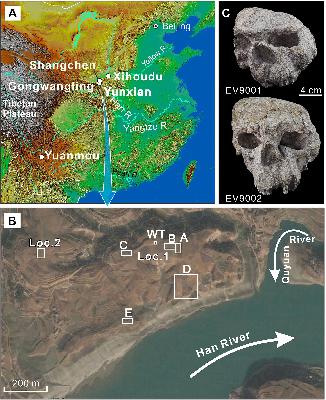
Three skulls found in the clay banks of the Han River in central China have just gotten a lot older.The fossils come from Yunxian, a site in Hubei Province that has been known since 1989, when local archaeologists turned up the first of two nearly complete Homo erectus crania during a survey. A third was found in 2021. Together they represent some of the most intact early hominin remains ever recovered in eastern Asia. The problem, for decades, was that nobody could agree on when these individuals actually lived. Early paleomagnetic work suggested the fossils predated the Brunhes-Matuyama geomagnetic reversal, implying an age somewhere around 870,000 to 830,000 years ago. Electron spin resonance dating of associated animal teeth gave a mean of around 600,000 years. Later work triangulated a range of roughly 800,000 to 1.1 million years.None of that held up.A team led by Hua Tu of Shantou University and Nanjing Normal University has now applied isochron ²⁶Al/¹⁰Be burial dating to quartz gravels pulled directly from the fossil-bearing sediment layer. Their result: 1.77 ± 0.08 million years ago. With total uncertainty incorporated, the error extends to ±0.11 Ma. A second, deeper sediment layer dated independently to 1.76 ± 0.22 Ma, which is consistent within the error ranges. Two independent measurements from the same site, pointing at the same moment in the Early Pleistocene.That is not a minor revision. It pushes the Yunxian Homo erectus back by at least 670,000 years from previous estimates. It makes these skulls the oldest securely dated H. erectus fossils found in their original context anywhere in eastern Asia.How You Date Sediments That OldThe method behind this result is worth understanding, because it’s what separates this finding from the long line of contested Yunxian ages that came before.Cosmogenic burial dating works because the same cosmic rays that constantly bombard Earth’s surface produce specific radioactive isotopes inside quartz minerals. Two in particular, aluminum-26 and beryllium-10, accumulate in quartz at known rates while rock and sediment sit near the surface. When that material gets buried deeply underground, the cosmic ray flux drops dramatically. Production stops. Radioactive decay continues. And because ²⁶Al and ¹⁰Be decay at different rates, their ratio shifts in a predictable way over time. Measure the ratio, compare it to known production and decay constants, and you can calculate how long the quartz has been underground.The standard “simple burial” version of this technique has existed for decades, but it carries a significant limitation: it assumes the sediment was buried quickly and deeply enough to stop all postburial isotope production, and that the burial event happened only once. Those assumptions fail fairly often. The isochron approach, which the Yunxian team used, is more sophisticated. Instead of relying on a single sample, it uses multiple clasts from the same depth and plots their ²⁶Al and ¹⁰Be concentrations together. Samples with different pre-burial exposure histories will lie along a consistent line if they share the same burial age. Outliers, sediments reworked from older deposits or samples with complicated burial histories, fall off that line and can be identified and excluded. One sample from the fossil-bearing layer did exactly that and was removed from the calculation.The team collected ten quartzose clasts from the same horizon where the crania were found, and another ten from a deeper gravel layer. Nine of the ten from the fossil layer yielded a clean isochron. The fact that some of the dated samples bore traces of hominin modification, knapping marks and possible manuport transport, ties the dating directly to a period of human occupation, not just sediment deposition.There is also an independent geomorphological check. Previous studies had assigned a normal polarity zone in the lower sediments to the Jaramillo subchron (roughly 990,000 to 1,070,000 years ago). The new dates imply that zone actually corresponds to the Olduvai subchron, which ran from about 1.78 to 1.95 million years ago. That’s not a small reassignment, and it requires recalibrating the entire paleomagnetic interpretation of the site. The team argues this is actually the more parsimonious reading, consistent with the burial ages and with the broader geomorphological framework of the Han River terrace sequence.One footnote worth flagging: the dating samples were collected from Trench WT, roughly 75 to 78 meters from two of the crania and 43 meters from the third. The researchers document the consistency of the sediment layer across all three trenches based on color, grain size, sedimentary structure, and the presence of a distinctive calcareous concretion horizon. That consistency is reasonable but still an inference, not a direct measurement from the skull-bearing sediment itself.Where This Leaves the Broader PictureThe figure that keeps coming up when people think about Homo erectus in Asia is Dmanisi, in the Republic of Georgia. The hominins there date to between 1.78 and 1.85 million years ago, recovered from sediments at the top of the Olduvai subchron. For years, Dmanisi sat at or near the leading edge of the H. erectus dispersal out of Africa, the earliest confirmed stop on a route that presumably continued east across the continent.At 1.77 Ma, Yunxian is marginally younger than Dmanisi, likely by a small margin within the error ranges. That alone is not shocking; H. erectus had to get from Georgia to central China somehow. But the speed implied is striking. If the species was already in the Caucasus by 1.8 million years ago and present in the Han River basin of China by 1.77 million years ago, the dispersal across several thousand kilometers of Eurasia happened very fast, geologically speaking. The Yunxian dates strengthen what the team describes as a rapid dispersal model, the idea that early H. erectus spread quickly and widely across Asia shortly after 2 million years ago rather than advancing slowly in stages over many hundreds of thousands of years.What makes that model stranger is the archaeology. The earliest stone tool sites in China predate both Dmanisi and Yunxian by a substantial margin. Xihoudu, in Shanxi Province, has been dated to around 2.4 million years ago using ²⁶Al/¹⁰Be burial dating. Shangchen, on the Chinese Loess Plateau, has evidence of hominin occupation extending back to roughly 2.1 million years ago. These sites predate the Yunxian hominins by 300,000 to 600,000 years. Something was making tools in China before H. erectus showed up, or at least before we have fossil evidence of H. erectus being there. The question of who that something was remains genuinely open.Homo erectus in the traditional sense appears in the African fossil record at around 1.9 million years ago. If the Chinese archaeological sites at Xihoudu and Shangchen are real and reliably dated, and most researchers think they are, then whoever left those tools was either a very early and as-yet-unrecognized population of H. erectus, or an entirely different hominin. Neither option is comfortable. The first requires pushing the species’ origin earlier than current evidence supports. The second requires positing another hominin dispersal event for which we have no fossil record.The Yunxian dates narrow the gap between the earliest Chinese archaeology and the earliest confirmed Chinese hominin fossils, but they don’t close it. They also raise the phylogenetic stakes. A 2025 study in Science used an assumed age of 1.0 million years for the Yunxian 2 cranium to anchor a phylogenetic analysis that placed those fossils at the base of a lineage including Homo longi and the Denisovans. At 1.77 million years, that whole analysis would need to be rerun. The team notes this directly, with some understatement.These are three skulls from a river terrace in Hubei Province that nobody outside paleoanthropology has heard of. But the number attached to them just changed, and the implications are still expanding outward.Further Reading* Feng, X., Yin, Q., Gao, F., Lu, D., Fang, Q., Feng, Y., Huang, X., Tan, C., Zhou, H., Li, Q., Zhang, C., Stringer, C., and Ni, X. (2025). The phylogenetic position of the Yunxian cranium elucidates the origin of Homo longi and the Denisovans. Science, 389, 1320–1324.* Zhu, Z., Dennell, R., Huang, W., Wu, Y., Qiu, S., Yang, S., Rao, Z., Hou, Y., Xie, J., Han, J., and Ouyang, T. (2018). Hominin occupation of the Chinese Loess Plateau since about 2.1 million years ago. Nature, 559, 608–612.* Shen, G. J., Wang, Y. R., Tu, H., Tong, H. W., Wu, Z. K., Kuman, K., Fink, D., and Granger, D. E. (2020). Isochron ²⁶Al/¹⁰Be burial dating of Xihoudu: Evidence for the earliest human settlement in northern China. Anthropologie, 124, 102790.* Luo, L., Granger, D. E., Tu, H., Lai, Z. P., Shen, G. J., Bae, C. J., Ji, X. P., and Liu, J. H. (2020). The first radiometric age by isochron ²⁶Al/¹⁰Be burial dating for the Early Pleistocene Yuanmou hominin site, southern China. Quaternary Geochronology, 55, 101022.* Tu, H., Shen, G. J., Granger, D. E., Yang, X. Y., and Lai, Z. P. (2017). Isochron ²⁶Al/¹⁰Be burial dating of the Lantian hominin site at Gongwangling in Northwestern China. Quaternary Geochronology, 41, 174–179.* Gabunia, L., Vekua, A., Lordkipanidze, D., Swisher, C. C. III, Ferring, R., Justus, A., Nioradze, M., Tvalchrelidze, M., Antón, S. C., Bosinski, G., Jöris, O., Lumley, M. A., Majsuradze, G., and Mouskhelishvili, A. (2000). Earliest Pleistocene hominid cranial remains from Dmanisi, Republic of Georgia: Taxonomy, geological setting, and age. Science, 288, 1019–1025.* Antón, S. C., Potts, R., and Aiello, L. C. (2014). Evolution of early Homo: An integrated biological perspective. Science, 345, 1236828. This is a public episode. If you'd like to discuss this with other subscribers or get access to bonus episodes, visit www.anthropology.net/subscribe
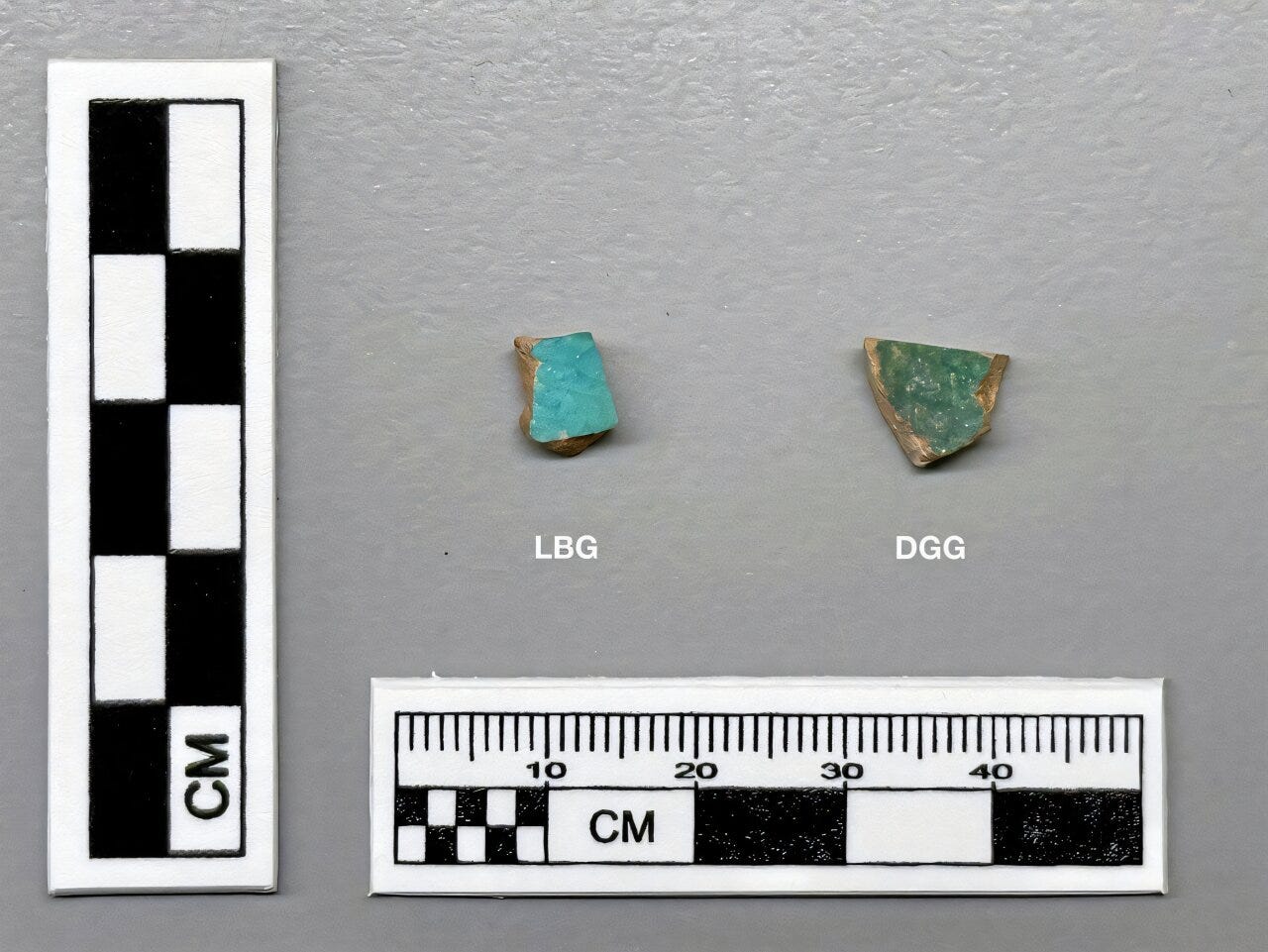
A Color That Does Not BelongThe Gobi Desert is not known for glaze.Its archaeology is usually muted in tone. Stone tools. Plain ceramics. Weathered bone. So when archaeologists walking the Delgerkhaan Uul hills of southeastern Mongolia noticed two small ceramic fragments shimmering blue green against the dust, they knew they were looking at something out of place.Not just foreign, but far-traveled.Those fragments, no bigger than a few fingers, have now become evidence for connections that stretched thousands of kilometers, linking mobile herders in the Gobi to workshops in the Persian world.Finding the SherdsCamps, Not CitiesThe sherds were discovered in 2016 during the Dornod Mongol Survey, a long-running project designed to understand how mobile communities organized their lives across the Gobi over millennia.They did not come from a palace or a city. They came from small seasonal herding camps.One site, DMS 476, is marked mostly by medieval material associated with the Kitan-Liao and Mongol periods. Another, DMS 647, includes much older stone tools that point to Neolithic activity. Neither location suggests elite residence or imperial administration.And yet, there they were.As the authors note:“The glazeware sherds were recovered from sites interpreted as small-scale, seasonal herding camps rather than permanent settlements or elite contexts.”This context matters. It reframes who had access to imported goods, and how.What the Glaze RevealedScience Steps InThe fragments were too small to identify by shape or decoration. Instead, the team turned to chemistry.Using scanning electron microscopy, energy-dispersive X-ray spectrometry, and portable X-ray fluorescence, the researchers analyzed the glaze itself. They then compared the results to hundreds of known samples from China and the Middle East.The match was clear.The glaze chemistry showed high sodium oxide and low aluminum and lime, a signature of soda-based alkaline fluxes made with relatively pure silica sand.In other words, Persian glazeware.The authors write:“The chemical composition of the glazes is consistent with Early Islamic ceramics produced in the Persian world rather than with Chinese high-fired glazes.”This rules out a Chinese origin, even though Chinese ceramics are well known from imperial centers like Karakorum.Trade Beyond the Silk Road StereotypeNot Just for ElitesPersian glazed ceramics are often interpreted as luxury goods, exchanged as tribute or diplomatic gifts among elites. That model works well in courts and capitals.It fits less comfortably in a windswept herding camp.The Gobi sherds suggest something else. They hint at trade networks that were flexible, intermittent, and embedded in nomadic life. Seasonal markets. Traveling merchants. Exchanges that did not require cities to function.Ellery Frahm puts it this way:“A far-traveled turquoise-colored glazeware sherd stands out due to its appearance, while a far-traveled but very plain sherd near it goes unnoticed.”Color, in other words, shapes what survives archaeologically and what we notice.Rare Object or Biased RecordOnly two Persian sherds have been identified so far among thousands of ceramic fragments recovered by the survey. Are they genuinely rare, or are they simply easier to spot?The authors are careful here. The Gobi is harsh. Freezing, thawing, erosion, and exposure can strip glaze from ceramics, leaving imported vessels indistinguishable from local wares.Absence, in this case, is not strong evidence.Nomads in a Connected WorldThe study joins a growing body of research showing that mobile pastoralists were not peripheral to long-distance exchange. They were participants.Other exotic materials, such as carnelian beads, appear in similar contexts across Inner Asia. Their bright colors and distant origins signal status, identity, and connection.The glazed sherds add another layer. They show that even objects associated with urban craft traditions could travel deep into landscapes shaped by mobility.As Frahm notes:“Now that we know about this phenomenon of Persian links, we can watch for less obvious indicators of these far-flung connections.”The Gobi, it turns out, was not as isolated as it looks.SummaryTwo small blue-green ceramic sherds found in seasonal herding camps in Mongolia’s Gobi Desert have been identified as Persian glazeware using chemical analysis. Their presence challenges the idea that imported luxury goods circulated only among elites and cities, revealing flexible trade networks that reached mobile pastoralists during the Early Islamic period. This is a public episode. If you'd like to discuss this with other subscribers or get access to bonus episodes, visit www.anthropology.net/subscribe
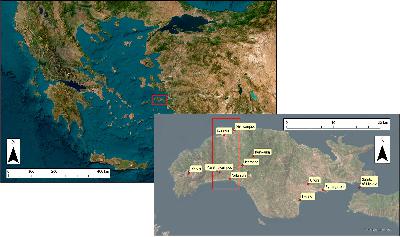
The View from the FurrowsFor generations, Samos has been cast as a maritime star. Ancient authors praised its ships, its traders, its reach across the Aegean. But if you leave the harbors and climb into the low hills of the island’s southwest, that story begins to thin out.Here, the evidence does not arrive as temples or shipwrecks. It comes as pottery fragments, sun-bleached and broken, scattered across plowed fields and terraces. More than 1,300 of them.Taken one by one, these sherds say very little. Taken together, they redraw the map of daily life.Walking the Island, Step by StepArchaeology Without TrenchesBetween 2021 and 2024, researchers from the West Area of Samos Archaeological Project did something deceptively simple. They walked.Systematically. Repeatedly. With GPS units, tablets, drones, and an almost stubborn patience for detail. The team combed the southwest of the island through intensive pedestrian survey, recording every diagnostic fragment they could see.As the project team puts it:“The primary aim was to identify areas of ancient activity through a combination of exploratory and systematic investigations of the landscape.”This kind of archaeology works outward rather than downward. Instead of digging into one site, it lets patterns emerge across kilometers of land.Fifteen Places That Would Not Stay QuietThe survey identified fifteen Areas of Interest, clusters where surface material hinted at repeated human activity. These were not fleeting campsites. The ceramics span centuries, from the Archaic period through Byzantine times.The hillsides around Marathokampos, Velanidia, and Limnionas turned out to be busy places for a very long time.Pots That Tell a Local StoryAn Inward-Facing EconomyWhen the ceramics were sorted and studied, a surprise emerged. Most of the pottery was local. Not just made nearby, but made for nearby.Imported wares were rare. Amphorae tied to long-distance trade appeared only in small numbers. Instead, everyday vessels dominated the assemblage.The researchers summarize it plainly:“The ceramics suggest a largely inward-facing economy, dominated by locally produced wares.”This does not contradict Samos’ reputation as a trading island. It complicates it. Ships may have carried Samian goods across the sea, but the people in these hills lived on what they grew, stored, cooked, and consumed themselves.Farming the SlopesThe landscape helps explain why. Southwest Samos is rugged but generous. Terraces cling to hillsides. Streams cut through basins. Olive trees and vines still follow ancient contours.Historical sources describe olives, wine, legumes, figs, livestock, and honey. The archaeological record now shows how deeply those activities were embedded in rural life.Ports, Paths, and Changing CentersFrom Seasonal Shore to Permanent SettlementOne of the most intriguing patterns is how settlement shifted over time. In some coastal areas, light seasonal use slowly thickened into permanent occupation. Small port-side installations became villages.The pottery tracks this change. Early scatters give way to denser, more varied assemblages that signal households, storage, and continuity.Networks That Ran InlandThe team also used GIS and route modeling to understand how people moved between coast and interior. The result is a picture of connectivity that does not rely on ships alone.Paths, ridges, and valleys linked farms to ports, ports to villages, and villages to one another. Maritime trade mattered. But it rested on a quiet, resilient rural backbone.As the project notes:“Rural communities functioned alongside maritime centers, forming a complex but regionally rooted network.”Why This MattersIt is easy to romanticize the ancient Mediterranean as a world of sails and empires. The pottery of southwest Samos pushes back.Most people did not live at the docks. They lived uphill, tending terraces, repairing jars, feeding families. Their economy was not global. It was dependable.By letting broken ceramics speak, this project gives voice to those lives.SummaryThe West Area of Samos Archaeological Project reveals a side of ancient Samos long overshadowed by its maritime fame. Intensive surface survey shows that southwest Samos supported a durable, largely self-sufficient rural economy for centuries. Local pottery dominates, settlement patterns shift gradually, and inland networks prove as vital as seaborne trade. The result is a richer, quieter history of how island life actually worked. This is a public episode. If you'd like to discuss this with other subscribers or get access to bonus episodes, visit www.anthropology.net/subscribe
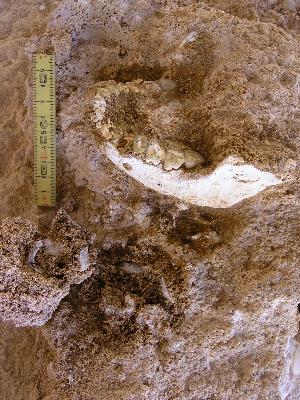
A cave overlooking a vanished shorelineOn the Atlantic edge of Casablanca, surrounded today by quarries and suburbs, there is a cave with an unassuming name: Grotte à Hominidés. For decades, archaeologists treated it as one more promising but frustratingly incomplete site from Africa’s deep past. Fossils from the right time period, roughly one million to 600,000 years ago, are notoriously rare.Now that gap has narrowed.In a paper published in Nature, Jean-Jacques Hublin and colleagues describe hominin fossils from this cave that are dated with unusual precision to about 773,000 years ago. The age places these individuals close to a pivotal evolutionary moment, when the lineage leading to Homo sapiens split from the ancestors of Neandertals and Denisovans.These are not spectacular skeletons. They are jawbones, teeth, vertebrae, and a femur bearing tooth marks from a carnivore. Yet together they speak to a question that has long hovered over human evolution: what did our last shared ancestors actually look like, and where did they live?How to date a human ancestor without guessingA magnetic timestamp in the rocksDating early human fossils often feels like triangulation by educated guesswork. Layers are missing. Methods disagree. Error bars balloon.Thomas Quarry I is different. The sediments filling Grotte à Hominidés captured a global event that geologists love because it is both sudden and unmistakable: a reversal of Earth’s magnetic field. Around 773,000 years ago, magnetic north and south flipped, marking the boundary between the Matuyama and Brunhes chrons.As Serena Perini explains:“Seeing the Matuyama–Brunhes transition recorded with such resolution in the ThI-GH deposits allows us to anchor the presence of these hominins within an exceptionally precise chronological framework for the African Pleistocene.”The team analyzed 180 magnetostratigraphic samples, an extraordinary resolution for a site of this age. The hominin bones sit squarely within the reversal itself, locking them into time with a margin of only a few thousand years.For paleoanthropology, that kind of certainty is gold.The bones in the caveFragmentary, gnawed, and revealingThe fossils likely accumulated in what was once a carnivore den. A femur shows clear signs of chewing. The assemblage includes:* A nearly complete adult mandible* Half of another adult mandible* A child’s jaw* Isolated teeth and vertebraeThese remains were scanned with micro-CT and analyzed using geometric morphometrics. The goal was not to find a new species name, but to understand where these hominins fall on the family tree.Matthew Skinner describes one key result:“Analysis of this structure consistently shows the Grotte à Hominidés hominins to be distinct from both Homo erectus and Homo antecessor, identifying them as representative of populations that could be basal to Homo sapiens and archaic Eurasian lineages.”In other words, they are not us. They are not Neandertals. They are something close to the point before that split.Africa and Europe were not as separate as we imagineEchoes of Homo antecessorSome features of the Moroccan jaws resemble fossils from Gran Dolina in Spain, often attributed to Homo antecessor. That similarity hints at ancient population connections across the western Mediterranean.But the resemblance only goes so far. Dental traits tell a different story. As Shara Bailey notes:“In their shapes and non-metric traits, the teeth from Grotte à Hominidés retain many primitive features and lack the traits that are characteristic of Neandertals.”By 773,000 years ago, these populations were already diverging. If exchanges occurred between North Africa and southern Europe, they likely happened earlier.This fits with a broader picture of the Pleistocene Sahara as a shifting filter rather than a permanent wall. During wetter periods, grasslands and waterways linked regions we now think of as isolated.A coastline rich in fossils and cluesWhy Casablanca keeps deliveringThe Moroccan Atlantic coast is a geological gift. Repeated sea level changes created dunes, caves, and cemented sands that preserve fossils with remarkable fidelity.Jean-Paul Raynal described the setting this way:“These geological formations, resulting from repeated sea-level oscillations, eolian phases, and rapid early cementation of coastal sands, offer ideal conditions for fossil and archaeological preservation.”Thomas Quarry I is already famous for early Acheulean tools dated to about 1.3 million years ago. The new hominin finds deepen its importance, showing that this coast was occupied again and again by different human populations adapting to changing environments.What these hominins mean for usClosing in on the last common ancestorGenetic evidence suggests that the split between the Homo sapiens lineage and the Neandertal Denisovan lineage occurred sometime between about 765,000 and 550,000 years ago. The Moroccan fossils sit right at the beginning of that window.Jean-Jacques Hublin puts it plainly:“The fossils from the Grotte à Hominidés may be the best candidates we currently have for African populations lying near the root of this shared ancestry.”They are not a missing link in the old sense. Evolution rarely offers clean handoffs. But they bring us closer to seeing what that ancestral population might have been like, grounded firmly in Africa and already showing regional variation.Nearly eight hundred thousand years after a predator dragged these bones into a coastal cave, they are helping us understand where our branch of the human story began.SummaryThe 773,000-year-old hominin fossils from Grotte à Hominidés in Morocco provide one of the most precisely dated windows into early human evolution. Their anatomy suggests populations close to the last common ancestor of Homo sapiens, Neandertals, and Denisovans. The discovery reinforces Africa’s central role in our origins and narrows a long-standing gap in the fossil record. This is a public episode. If you'd like to discuss this with other subscribers or get access to bonus episodes, visit www.anthropology.net/subscribe
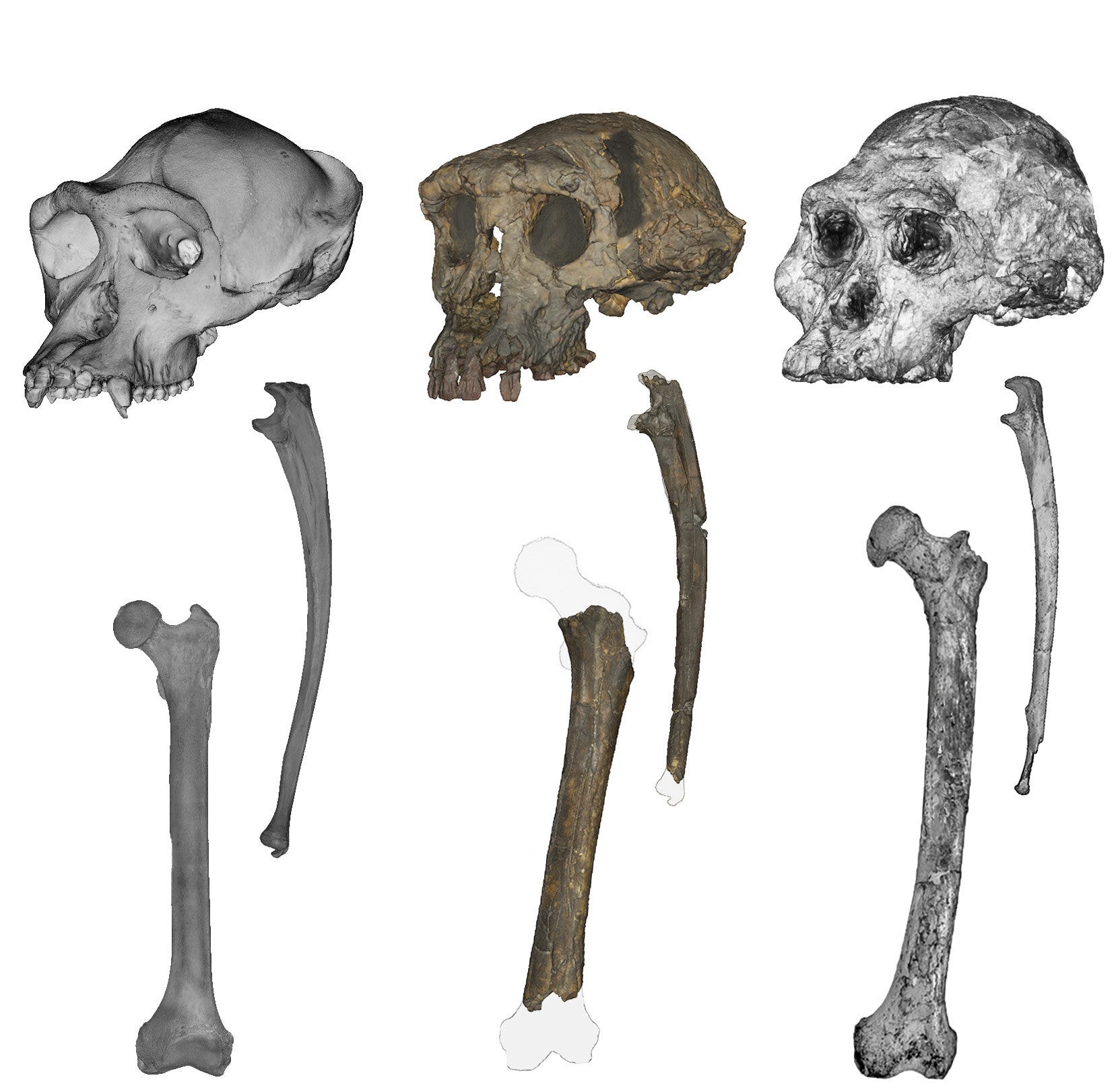
A Fossil That Refused to Sit StillWhen Sahelanthropus tchadensis was first described in the early 2000s, it arrived with a skull and a question. Was this strange, flat faced ape an early member of the human lineage or simply an extinct cousin that happened to resemble us?At roughly seven million years old, Sahelanthropus sits close to the estimated split between humans and chimpanzees. If it walked on two legs, it would push the origin of bipedalism to the very base of our family tree.For years, the debate hinged on skull anatomy and on fragmentary limb bones whose meaning was hotly contested. A new study in Science Advances shifts the discussion from speculation to structure.Reading Movement in BoneScott Williams and his colleagues focused on the femur and ulnae of Sahelanthropus, using detailed 3D analyses and comparisons with both living apes and fossil hominins. What they found was a small but decisive feature.On the femur sits a bump known as the femoral tubercle. In humans and other hominins, it anchors the iliofemoral ligament, the strongest ligament in the body. This ligament stabilizes the hip during upright walking. It has not been identified in non bipedal apes.The researchers found that Sahelanthropus had one.“The presence of a femoral tubercle provides direct evidence for habitual bipedalism,” the authors report, noting that this feature is unique to hominins.This was not the only clue.A Body Built for Two WorldsThe team confirmed two additional traits linked to upright walking. The first is femoral antetorsion, a natural twist in the thigh bone that helps align the legs for forward motion. The second is the structure of the gluteal muscles, which help keep the pelvis stable while standing and walking.Together, these features place Sahelanthropus firmly within the range of early hominins like Australopithecus, though it remained distinct from later forms.The proportions of the limbs tell a similar story. Apes tend to have long arms and short legs. Hominins shift toward longer legs. Sahelanthropus sits in between, with a femur longer than expected for an ape but shorter than in modern Homo sapiens.Williams describes the animal this way:“Sahelanthropus tchadensis was essentially a bipedal ape that possessed a chimpanzee sized brain and likely spent a significant portion of its time in trees.”It walked upright on the ground but still climbed when it needed to.Rethinking the First StepsThe implication of this work is not that Sahelanthropus looked or moved like a modern human. It did not. Instead, it suggests that bipedalism emerged in a creature that still retained many ape like traits.This fits with a growing picture of early human evolution as a patchwork. Traits did not appear all at once. Upright walking came before big brains, stone tools, or long distance running.“Despite its superficial appearance, Sahelanthropus was adapted to using bipedal posture and movement on the ground,” Williams explains.The earliest steps toward humanity may have been taken by an ape that looked nothing like us from the neck up.Why This MattersBipedalism is often treated as the defining feature of the human lineage. Finding solid evidence for it at seven million years ago reshapes the timeline of our origins.It suggests that the last common ancestor of humans and chimpanzees may already have been experimenting with upright walking. It also reminds us that evolution does not wait for perfection. It works with what is available.In the case of Sahelanthropus tchadensis, that meant standing up while still clinging to the trees.Further Reading* Lovejoy, C. O. 2009. Reexamining human origins in light of Ardipithecus. Science.* Richmond, B. G. and Jungers, W. L. 2008. Orrorin tugenensis femoral morphology. Journal of Human Evolution. This is a public episode. If you'd like to discuss this with other subscribers or get access to bonus episodes, visit www.anthropology.net/subscribe
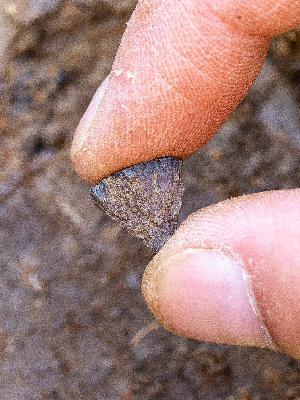
A Hearth Where There Should Not Be OneArchaeology often moves forward by millimeters. A trowel nicks an unusual surface. A researcher pauses before brushing away another layer. At Barnham, a Paleolithic site tucked into eastern England, those small moments eventually coalesced into something profound: the oldest convincing evidence that ancient hominins were not just tending fire, but making it.The study, published in Nature, pushes deliberate fire-making back to roughly 400,000 years ago. Until now, the earliest secure evidence rested around 50,000 years ago. The gap between those dates is not just chronological. It is conceptual. Fire-making marks a shift from opportunism to mastery, from waiting for lightning to acting with intention.As one researcher put it:“A controlled flame is not simply a tool but a signal of planning, knowledge, and social cohesion,” notes Dr. Mara Ellingsen, a Paleolithic fire-use specialist at Aarhus University. “Its presence implies minds capable of anticipating needs long before the moment of need arrives.”Barnham’s quiet sediments held that signal for hundreds of millennia. What finally brought it to light was a streak of clay, oddly reddened, and a set of flints that seemed fractured by forces far hotter than seasonal brushfires could provide.Those details opened a path into the deep past, toward a group of early Neanderthals who gathered beside a watering hole and learned to make fire spark on command.A Landscape That Should Have Erased EverythingThe challenge with ancient fire is not that early humans failed to use it. It is that fire rarely leaves a dependable signature. Ash disperses. Charcoal crumbles. Sediment shifts and buries or scatters what a hearth once contained. Many of the earliest traces of fire consist of burned animal bones or small pockets of heated material, ambiguous enough that scholars debate whether people created them or simply capitalized on natural lightning strikes.That ambiguity has weighed heavily on interpretations of early fire behavior. Humans and premodern hominins clearly exploited fire long before 400,000 years ago. Sites across Africa contain bones charred between 1 and 1.5 million years old, possibly from cooking or waste disposal. But those sites do not demonstrate fire-making itself. They could represent opportunistic use of landscape fires, a behavior well within the reach of hominins who recognized the value of a smoldering branch.The distinction matters. Opportunistic fire-use depends on ecological luck. Fire-making depends on knowledge. It suggests intentionality, transfer of skills, and an understanding of materials that goes beyond happenstance.At Barnham, researchers needed to determine whether the burned sediments were natural or cultural. Their analysis took years and relied on geochemistry, field experiments, and painstaking excavation. Layer by layer, they reconstructed a long-vanished pond, a stable gathering point for both animals and humans. What they uncovered contradicted any explanation tied to lightning or wildfire.Repeated burning occurred at the same spot over decades. The fires reached temperatures well over 700 degrees Celsius. The burn layer was neatly contained rather than spread across the broader landscape.Those patterns pointed to a hearth rather than a natural blaze. Yet the deciding clue was geological, not thermal.A Mineral That Should Not Have Been ThereTwo small fragments of pyrite were the final pieces of evidence. When struck against flint, pyrite produces bright sparks, a technique known ethnographically from hunter-gatherer societies around the world. Pyrite does not occur naturally at Barnham. The nearest known source lies roughly forty miles away.The presence of imported pyrite changed the conversation. It implied deliberate transport. It also suggested an understanding that certain stones could be used not simply to shape tools, but to create fire itself.A scholar familiar with Paleolithic pyrotechnology reflected on this point:“The movement of pyrite into a site where it does not belong indicates a mental map of materials and their properties,” says Dr. Silvio Marro, an archaeologist at the University of Barcelona. “Such knowledge requires teaching and repeated practice rather than chance discovery.”The combination of pyrite flakes, heat-shattered flints, localized burning, and recurring use transformed Barnham from an ordinary Pleistocene locality into a window on an emergent technology. Fire-making did not appear suddenly. It emerged gradually, likely unevenly, across different populations. Some Neanderthal groups may never have adopted the technique. Others, like those at Barnham, may have practiced it for generations.The uneven distribution of fire-making is consistent with cultural behavior rather than biological necessity. Knowledge spreads socially, often unpredictably, and can be lost as easily as it is gained.What Fire-Making Meant for Ancient HomininsTo understand the significance of Barnham, it helps to consider what controlled fire provided. It expanded dietary breadth by rendering tough roots edible and neutralizing toxins. It made meat safer, boosted caloric returns, and allowed groups to occupy cooler environments. Fire also restructured social life. Evenings around a hearth created space for shared attention, storytelling, and planning. Many researchers argue that such gatherings fostered the cognitive landscapes in which language and symbolic culture could grow.But the Barnham findings push these dynamics further back in time, into a period when early Neanderthals and their close relatives were experimenting with increasingly sophisticated behaviors.By 400,000 years ago, brain sizes across Europe and parts of Africa were approaching levels comparable to modern humans. Stone tool industries were diversifying. Sites in Britain, Spain, France, and Israel show complex patterns of mobility and resource use.Fire-making fits within that growing behavioral repertoire.One paleoanthropologist commented:“Fire use is both a practical skill and a social performance,” explains Dr. Karen Oduro of the Max Planck Institute for Evolutionary Anthropology. “Its practice reinforces group identity, teaches coordination, and shapes how time is spent. A controlled fire becomes a focal point through which knowledge and relationships are maintained.”Fire-making also altered how humans interacted with the landscape. It provided the predictability that nature often denied. A group no longer needed to wait for lightning or wander in search of embers. A spark could be summoned whenever an evening cooled or a meal required cooking.Some researchers believe that fire-making may have spread widely across Neanderthals, Denisovans, and early Homo sapiens long before 50,000 years ago. Others are more cautious, noting the scarcity of unambiguous evidence.Barnham does not resolve that debate. But it sharpens the frame through which archaeologists evaluate ancient fire traces and underscores the potential for other early hearths to be preserved in overlooked sediments worldwide.The Mystery of How Widespread Fire-Making WasThe Barnham findings prompt a broader question: did other populations 400,000 years ago know how to make fire, or was Barnham an outlier?Some experts propose that the technique may have originated in pockets before spreading socially. Others argue that a lack of archaeological visibility obscures a long and widespread tradition of fire-making. Wildfires can mimic human ones. Human fires can vanish without a trace. The line between evidence and absence is razor-thin.But the site also reminds researchers that archaeology is often limited by the constraints of preservation and chance. If a small burned patch survived at Barnham, it might survive elsewhere. If pyrite flakes escaped erosion here, they might do so again.The discovery does not rewrite everything known about ancient fire use, but it forces a reconsideration of how early controlled fire might have emerged, persisted, and circulated among hominin groups.Related Studies* Roebroeks, W., et al. (2012). “Use of fire in the Lower and Middle Palaeolithic: A review.” Proceedings of the National Academy of Sciences. https://doi.org/10.1073/pnas.1117620109A foundational analysis of early fire traces and challenges in identifying deliberate fire use.* Sorensen, A., et al. (2018). “Neanderthal fire-making technology inferred from microwear analysis.” Scientific Reports. https://doi.org/10.1038/s41598-018-24340-6Microwear evidence suggesting Neanderthals used pyrite and flint to generate sparks at multiple European sites.* Shimelmitz, R., et al. (2014). “Evidence for the repeated use of a central hearth at Qesem Cave.” Journal of Human Evolution. https://doi.org/10.1016/j.jhevol.2014.06.002Documents stable hearth use in Israel around 300,000 to 400,000 years ago, offering comparative context for the Barnham findings. This is a public episode. If you'd like to discuss this with other subscribers or get access to bonus episodes, visit www.anthropology.net/subscribe
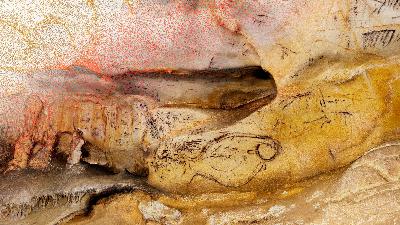
A Cave Steeped in Deep TimeLa Pileta Cave in southern Spain is more than a dark hollow in the limestone hills of Málaga province. Inside its twisting passages, walls shimmer with images painted and carved by Homo sapiens across tens of thousands of years—horses, ibex, serpentine symbols, and human silhouettes stretching back to the Upper Paleolithic and forward into the Bronze Age. Discovered in 1905 and protected as a Spanish National Monument since 1924, La Pileta has long been recognized as a “cathedral” of Iberian prehistory.The cave also contains a remarkable archaeological sequence spanning more than 100 millennia. Among its finds is a small lamp with traces of pigment from the Gravettian period, thought to be one of the oldest lighting devices on the Iberian Peninsula. Yet until recently, no digital model captured the full extent of this site’s features in three dimensions.A New Approach to Ancient WallsIn a study published in the Journal of Archaeological Science, a team from the University of Seville combined two types of laser scanning to map La Pileta Cave: a high-end terrestrial laser scanner and the LiDAR sensor embedded in an off-the-shelf smartphone. This pairing, at first glance improbable, allowed them to create a validated 3D model of the entire cave with remarkable precision.“The complementarity of both systems made it possible to obtain a complete and validated 3D model, with minimum margin of error with respect to topographic reference points,” the researchers write.While the terrestrial scanner provided a far-reaching, high-resolution metric backbone, the smartphone LiDAR excelled in tight, irregular passages inaccessible to bulky tripods. Its portability also allowed rapid data collection across multiple sessions.“Using the mobile LiDAR offered versatility and access to narrow and difficult-to-reach areas, while still capturing high-quality textures,” the team notes.What the Lasers RevealThe resulting 3D model captures the morphology of the cave and the placement of its rock art—thousands of motifs spanning millennia. Animal figures, abstract symbols, and human silhouettes emerge as digital surfaces that can be rotated, measured, and explored virtually.Scanning while suspended by rope 1. Credit: Journal of Archaeological Science (2025). DOI: 10.1016/j.jas.2025.106330The model supports more than documentation. It opens the door to preventive conservation, allowing researchers to monitor erosion, vandalism, or humidity damage over time. It also provides a foundation for public outreach and immersive education, enabling students and visitors to experience a site closed or restricted to most travelers.Caves as Living ArchivesLa Pileta’s new digital map underscores how caves serve as living archives of deep human history. Because such sites accumulate cultural layers over tens of millennia, their preservation and accurate recording are critical. By combining everyday technology with established field methods, archaeologists can now bring hidden spaces to light without disturbing them.“This model reinforces and complements archaeological work, providing new tools for understanding, preserving and disseminating cultural heritage,” concludes the team.Looking ForwardSmartphone-based LiDAR will not replace traditional fieldwork or high-resolution scanning, but it offers a nimble, low-cost complement for archaeological and speleological research worldwide. In regions where budgets or access limit large-scale surveys, pocket-sized laser sensors may extend the reach of documentation and democratize high-quality 3D recording.Related Research* Forte, M., & Campana, S. (2022). “3D technologies for heritage and archaeology: A decade of progress.” Journal of Archaeological Science: Reports, 43, 103465. https://doi.org/10.1016/j.jasrep.2022.103465* Bruno, F., et al. (2020). “Virtual tours and rock art heritage: Immersive technologies for inaccessible sites.” Heritage Science, 8(1), 73. https://doi.org/10.1186/s40494-020-00414-y* De Reu, J., et al. (2013). “Applications of 3D recording in archaeology: The examples of Ghent University.” Journal of Archaeological Science, 40(12), 4450–4460. https://doi.org/10.1016/j.jas.2013.06.038 This is a public episode. If you'd like to discuss this with other subscribers or get access to bonus episodes, visit www.anthropology.net/subscribe
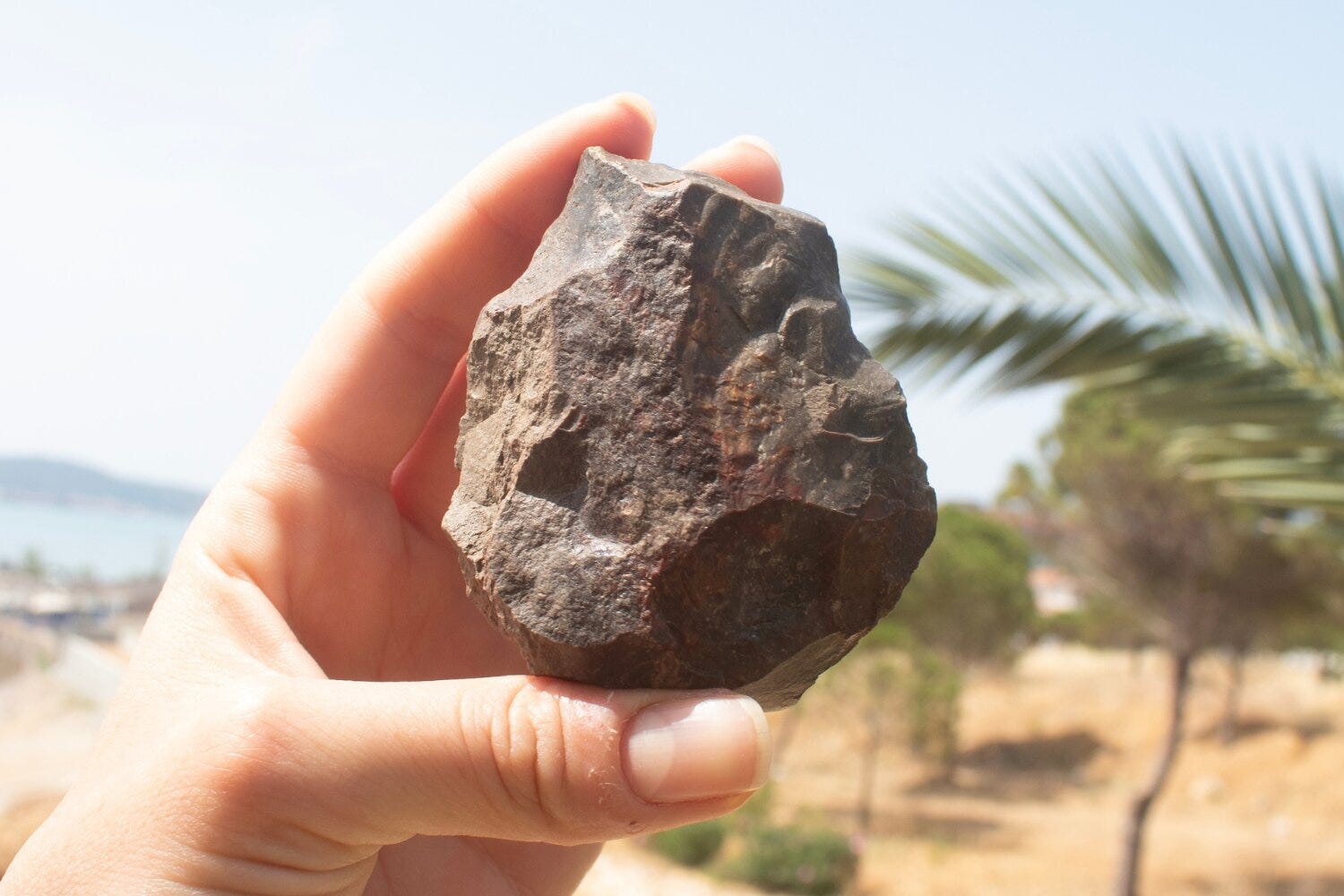
For generations, archaeologists have traced early human migrations into Europe through familiar corridors: the Balkans, the Levant, and the shores of the Mediterranean. Yet the northeastern Aegean, dotted with olive groves and seaside towns, has remained an archaeological blank spot. Now a new survey of Ayvalık on Turkey’s northwestern coast points to a Paleolithic landscape where Homo sapiens and possibly Neanderthals moved, hunted, and crafted tools during periods of low sea level when today’s islands formed a single continuous plain.“Ayvalık’s present-day islands and peninsulas would have been interior zones within an expansive terrestrial environment,” says Professor Kadriye Özçelik of Ankara University. “These paleogeographic reconstructions underscore the importance of the region for understanding hominin dispersals across the northeastern Aegean during the Pleistocene.”Lost Landscapes and Exposed CorridorsDuring glacial maxima, sea levels in the Aegean dropped by over 100 meters. What is now a patchwork of islands once stretched as a wide land corridor connecting Anatolia and Europe. Bulut and colleagues surveyed more than 200 square kilometers across this terrain, identifying ten sites and cataloging 138 stone artifacts.Among these were Levallois flakes, handaxes, and cleavers—technologies linked to the Middle Paleolithic Mousterian tradition and used by Neanderthals as well as early Homo sapiens. Such finds suggest that Ayvalık was not a marginal area but a strategic point for mobility, resource access, and possibly contact between populations.“These large cutting tools are among the most iconic artifacts of the Paleolithic,” notes Dr. Göknur Karahan of Hacettepe University. “Their presence in Ayvalık provides direct evidence that the region was part of wider technological traditions shared across Africa, Asia, and Europe.”Tools That Travelled, People Who AdaptedThe lithic assemblage revealed more than mere presence; it documented technological continuity. Levallois cores, prepared flakes, and retouched implements show a diversified toolkit. Flint and chalcedony were sourced locally, but the consistency of the assemblage with broader Aegean and Anatolian industries suggests knowledge networks stretching beyond the immediate region.“The findings paint a vivid picture of early human adaptation, innovation, and mobility along the Aegean,” Karahan explains. “Ayvalık, which had never before been studied for its Paleolithic potential, holds vital traces of early human activity.”A Region Hidden in Plain SightArchaeological visibility in Ayvalık has long been hindered by active coastlines, alluvial deposition, and urban development. Yet even a brief survey in 2022 produced a striking record. The team traversed muddy lowlands and coastal plains, identifying high-quality raw material sources, including flint nodules exposed by erosion. These conditions hint at more extensive Paleolithic deposits still buried under sediments or submerged offshore.Dr. Hande Bulut of Düzce University emphasizes that the discovery is only the beginning:“Ultimately, the results underline Ayvalık’s potential as a long-term hominin habitat and a key area for understanding Paleolithic technological features in the eastern Aegean.”Implications for Human MigrationThe Ayvalık findings challenge the simplicity of established migration models. Rather than a single northern or southern route, early humans may have moved through multiple corridors, each opening and closing with the rhythms of glacial and interglacial periods. The evidence also underscores the resilience and adaptability of Paleolithic populations to changing coastlines and shifting ecologies.Future research will need absolute dating, stratigraphic excavation, and paleoenvironmental reconstruction to clarify the temporal depth of the Ayvalık assemblage. Still, the survey offers a tantalizing glimpse of a missing chapter in the story of human dispersal.Related Research* Harvati, K., et al. (2019). “Apidima Cave fossils provide earliest evidence of Homo sapiens in Eurasia.” Nature, 571(7766), 500–504. https://doi.org/10.1038/s41586-019-1376-z* Çiner, A., et al. (2021). “Sea-level changes and submerged prehistoric landscapes in the Aegean.” Quaternary International, 585, 70–83. https://doi.org/10.1016/j.quaint.2020.08.010* Karkanas, P., & Douka, K. (2023). “Eastern Mediterranean corridors in early human dispersals.” Journal of Human Evolution, 176, 103305. https://doi.org/10.1016/j.jhevol.2023.103305 This is a public episode. If you'd like to discuss this with other subscribers or get access to bonus episodes, visit www.anthropology.net/subscribe
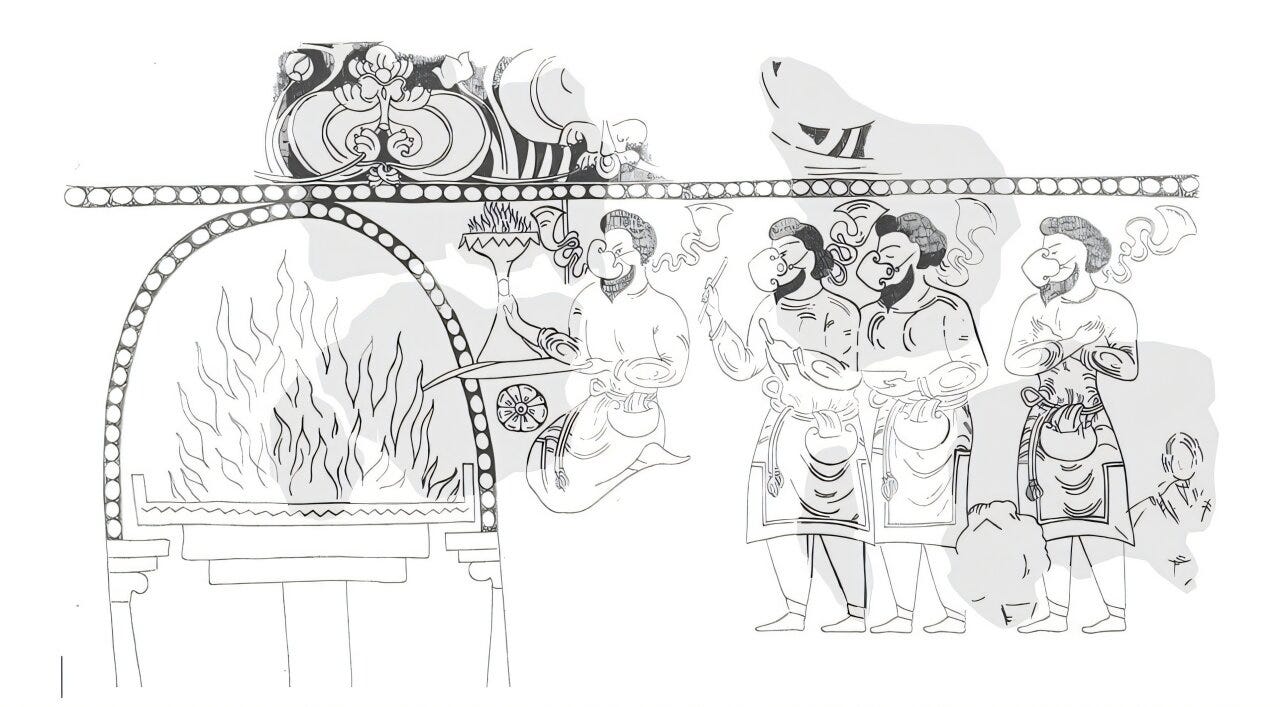
A Palace on the Edge of an EmpireIn the foothills of modern-day Tajikistan, 12 kilometers east of Panjikent, archaeologists have been piecing together a royal residence once at the heart of the Sogdian world. Known today as Sanjar-Shah, the palace belonged to a society that thrived as city-states along the arteries of the Silk Road. The Sogdians — merchants, colonists, and civic innovators — linked China, India, and Persia, trading not only goods but also religious and artistic traditions.Constructed in the 5th century AD and later expanded under the Umayyads, the palace at Sanjar-Shah mirrored other Sogdian complexes: reception halls arranged around a T-shaped corridor, Chinese mirrors, and imported belt buckles hinting at elite status and far-reaching connections. Destroyed by fire in the third quarter of the 8th century, the palace was later subdivided by peasants during the early Samanid period.Murals of a Lost ReligionAmong the debris, archaeologists have uncovered fragments of once-monumental murals. Scenes of blue lotus flowers and hunting parties echo the decorative style of Panjikent’s famed wall paintings. But in 2022–2023, researchers recovered something different — 30 fragments forming a procession of four priests and a child moving toward a stationary fire altar.“The first priest is seen kneeling before the fire altar, offering up a smaller altar to the larger one,” notes Dr. Michael Shenkar, lead author of the study published in Antiquity. This act mirrors familiar gestures in Sogdian art, where worshipers present incense to sacred flames.Such depictions are almost exclusively known from funerary ossuaries — and normally only show two priests, not four. This makes the Sanjar-Shah mural unique.Sacred Fire and Ritual AttireThe mural also preserves an extraordinary detail of ritual costume. One priest wears a padām — a mouth covering still used by Zoroastrian priests today — meant to prevent human breath from polluting the sacred flame.“It is a ritual mouth covering worn by priests to prevent their breath from polluting the sacred fire during religious ceremonies,” Shenkar explains.Another priest features a puzzling ribbon tied at the back of his neck — a motif more often associated with divine or royal figures.“At present, I am unable to provide a satisfactory explanation for the presence of the ribbon on the second priest figure. As this motif is conventionally associated with divine or royal imagery, its occurrence in this context remains problematic,” Shenkar adds.Fire in the Sogdian ImaginationThe discovery at Sanjar-Shah illuminates how Zoroastrian fire worship adapted in a Silk Road context. The Sogdians, predominantly Iranian-speaking and practicing forms of Zoroastrianism, were famous for their artistic synthesis of Persian, Indian, and Central Asian motifs. Yet direct depictions of ritual fire within palatial contexts — rather than funerary ones — have been exceedingly rare.By situating sacred fire at the heart of a royal palace, the mural suggests that fire cults may have been woven into elite ceremonial life. It also demonstrates how religious and political authority could overlap — the palace as a stage for ritual as much as for governance.A Vanished WorldBy the late 8th century, Sanjar-Shah’s palace was destroyed and its murals buried beneath rubble. The rise of Islam and the decline of Sogdian city-states shifted the region’s religious landscape. Yet in these fragments — priests frozen mid-procession, the sacred flame steady at center stage — a world of ritual and belief flickers to life again.Related Research* Grenet, F. (2015). Zoroastrianism on the Silk Road. Bulletin of the Asia Institute, 25, 1–18.* Shenkar, M. (2019). Intangible fire: Sogdian religious iconography in its historical context. Iranica Antiqua, 54, 193–215. https://doi.org/10.2143/IA.54.0.3285044* Canepa, M. P. (2018). The Iranian Expanse: Transforming Royal Identity Through Architecture, Landscape, and the Built Environment, 550 BCE–642 CE. University of California Press.* Marshak, B. I. (2002). Legends, Tales, and Fables in the Art of Sogdiana. Markus Wiener Publishers. This is a public episode. If you'd like to discuss this with other subscribers or get access to bonus episodes, visit www.anthropology.net/subscribe
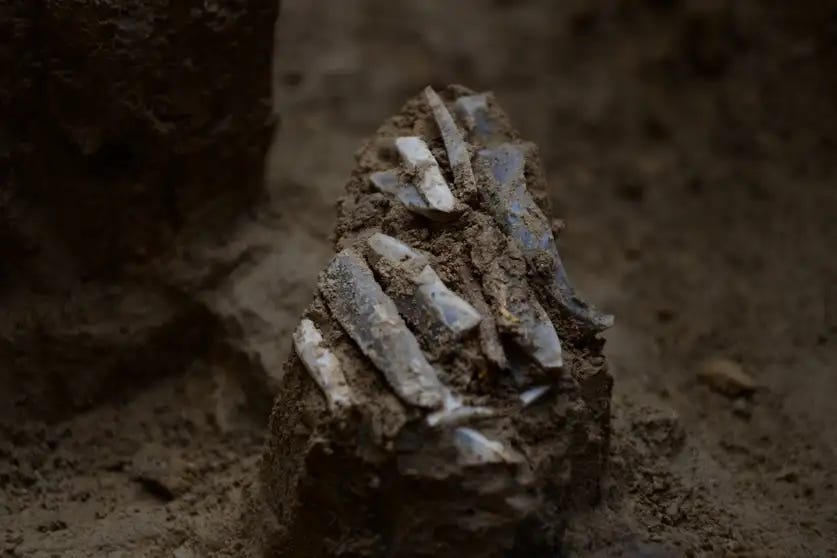
In the foothills of the Pavlovské vrchy mountains of southern Moravia, archaeologists uncovered a quiet moment in time: a hunter’s toolkit from the Gravettian period, carefully bundled, forgotten, and buried for some 30,000 years. This is not a cache of ritual offerings or a communal workshop. It is the intimate record of a single person’s gear, frozen in soil and charcoal.The assemblage, published in Journal of Paleolithic Archaeology, contains 29 stone tools — blades, points, scrapers and fragments — each one showing the signature wear of use and re-use. Together, they provide a portrait of a hunter-gatherer whose survival depended on mobility, adaptability and memory of distant landscapes.A Toolkit UnearthedThe discovery at Milovice IV, in the Czech Republic, came from a collapsed cellar first exposed in 2009 and systematically excavated over the following decade. Beneath layers of Pleistocene sediments, researchers led by Dominik Chlachula found traces of hearths, bones of horse and reindeer, and, at the heart of the site, the tightly grouped stone artefacts.“The artefacts were positioned as though still wrapped in a leather pouch that had long since decayed,” the authors report.This configuration is what makes the find so unusual. Rather than scattered debris from a workshop, the arrangement suggests a personal kit — a portable toolkit carried on the move.How a Gravettian Hunter WorkedClose analysis revealed blades dulled by scraping hides and cutting bone, points broken at the tips of spears or arrows, and evidence of hafting. Many of the tools had been reworked from older pieces, implying a strategy of recycling and repair rather than discard.Some stones tell of journeys far beyond Moravia. Roughly two-thirds of the flint came from glacial deposits over 130 kilometers to the north; other pieces originated in western Slovakia, 100 kilometers to the southeast. Whether these stones were collected directly or acquired through exchange remains unknown, but the distances point to extensive mobility or wide-reaching social ties.“Several pieces were too worn or broken to be functional,” Chlachula explains in the paper. “It is possible the hunter kept them for future recycling — or perhaps for their symbolic or personal value.”Mobility and Memory in the Ice AgeThe Gravettian period, stretching from roughly 33,000 to 24,000 years ago, represents one of the most distinctive Upper Paleolithic traditions in Europe. These were the makers of the famed Venus figurines, the artists of Pavlovian engravings, and the hunters of mammoth-rich plains. Yet their personal tools are rarely found intact.This kit from Milovice IV is more than an assortment of stone. It reflects the rhythm of seasonal rounds, the pathways across river valleys and uplands, and the mental maps needed to locate high-quality stone. It also shows how intimate and durable a single pouch of tools could be in Ice Age life.What Archaeologists Learn from Personal GearThe discovery brings a level of granularity to Upper Paleolithic life often lost in larger excavations. It allows archaeologists to reconstruct how a single person prepared for travel, hunted, and maintained equipment. This kind of evidence also challenges stereotypes of “disposable” Stone Age tools. Reuse and recycling were central strategies long before agriculture.It also invites questions about ownership and identity. Was this kit abandoned in haste? Left behind as a personal cache? Or lost when its owner did not return?Related Research* Verpoorte, A. (2009). Gravettian lithic technology at Pavlov and Dolní Věstonice. Journal of Archaeological Science, 36(3), 993–1005. https://doi.org/10.1016/j.jas.2008.11.002* Svoboda, J. A. (2016). Dolní Věstonice–Pavlov: New excavations and findings. Quaternary International, 415, 254–266. https://doi.org/10.1016/j.quaint.2015.11.063* Zupancich, A., Cristiani, E., et al. (2022). Use-wear and residue analysis of Gravettian stone tools. Journal of Archaeological Method and Theory, 29, 427–451. https://doi.org/10.1007/s10816-021-09540-z This is a public episode. If you'd like to discuss this with other subscribers or get access to bonus episodes, visit www.anthropology.net/subscribe
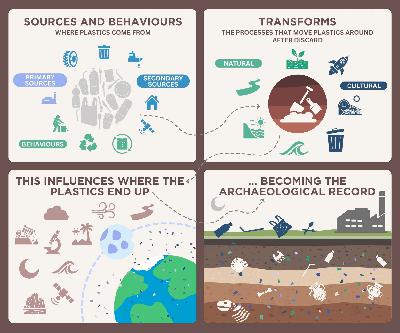
The First Truly Global MaterialStone, bronze, and iron all defined earlier chapters of human history, but they emerged regionally and spread unevenly across the globe. Plastic is different. It appeared almost everywhere at once in the mid-20th century. By the 1950s, plastics had entered households from São Paulo to Shanghai, joining the fabric of daily life with astonishing speed.A new study in Cambridge Prisms: Plastics contends that plastics are more than an environmental crisis — they’re also the defining material of a new archaeological era.“It is easy to view plastics as a toxic legacy and the cause of environmental harm, which — of course — they are,” explains Professor John Schofield of the University of York. “But as archaeologists, we can also view them from another angle entirely — as a valuable archive that documents human impacts on planetary health.”Reading an Archive Made of WasteUnlike pottery sherds or bronze blades, plastic artifacts are still largely in circulation. Yet every bottle cap, bag, or synthetic fiber that moves from use to discard leaves a material trace, one that can persist far longer than the societies that produced it. Microplastics now drift in the stratosphere, sink to the ocean floor, and lodge in soils, plants, and human tissue.The research team argues that this diffusion turns plastics into a kind of global stratigraphic marker — a future “layer” of our planet’s crust.“Plastics are everywhere — from the deep ocean to high mountains — so are ubiquitous, resilient, and toxic as they continually break down, eventually to nanoscale,” Schofield notes. “We question how society should view an archaeological record that represents such a valuable archive documenting activities and behaviors at a crucial time in human history, while at the same time being a dangerous contaminant.”The Archaeology of UsArchaeology has long concerned itself with the deep past, but in recent years it has widened its scope to contemporary material culture — a field some scholars call the “archaeology of us.” The Schofield team places plastics squarely within this movement, proposing that archaeologists track not only the accumulation of plastics but also their journeys from production to discard.Professor Alice Gorman of Flinders University, a co-author on the study, emphasizes that this archive extends beyond Earth.“Our aim is to show how plastics are more than just pollution — they’re a record of human behavior in the contemporary world that extends from the deepest oceans to the furthest reaches of the solar system, everywhere that spacecraft have traveled. There are even plastics on the moon.”A Planet-Wide EraUnlike the Bronze Age or Iron Age, the so-called “Plastic Age” began nearly simultaneously worldwide. It is enmeshed with larger planetary processes — fossil fuel extraction, industrialization, mass consumerism, and climate change. The researchers point out that this synchronicity makes plastics unique as a marker of human activity.The study also suggests practical steps. By identifying the point at which plastics transition from use to discard, archaeologists could help inform interventions to reduce pollution and conserve ecosystems.What Future Archaeologists Might FindIf archaeologists 10,000 years from now dig through 21st-century sediments, they will find traces of how humans ate, traveled, dressed, and built their lives — all through synthetic polymers. In much the same way ancient refuse heaps reveal diets and trade networks, our discarded plastic will map our cities, migration, and economies.Schofield and colleagues see this record as both a warning and an opportunity: an archive of our impact and a guide to how future generations might understand — or mitigate — what we have left behind.“We need this archive, both to help us understand and try to reduce our impacts now, but also to ensure people can understand these impacts in the future,” Schofield says.Related Research* Zalasiewicz, J., Waters, C. N., Williams, M., & Summerhayes, C. (2019). The Anthropocene as a geological time unit. Nature, 573(7773), 221–225. https://doi.org/10.1038/s41586-019-0338-4* Ford, A., & Clarke, A. (2019). “The archaeology of the contemporary past.” Annual Review of Anthropology, 48, 359–374. https://doi.org/10.1146/annurev-anthro-102218-011318* orman, A. C. (2020). Dr Space Junk vs The Universe: Archaeology and the Future. MIT Press.* Turner, A., & Arnold, R. (2018). “Plastics in the archaeological record.” Environmental Archaeology, 23(2), 106–119. https://doi.org/10.1080/14614103.2016.1260087 This is a public episode. If you'd like to discuss this with other subscribers or get access to bonus episodes, visit www.anthropology.net/subscribe
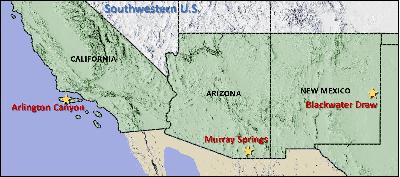
Quartz Under PressureAround 12,800 years ago, mammoths, mastodons, and saber-toothed cats still roamed North America. Then they vanished. Alongside them disappeared one of the continent’s most recognizable archaeological traditions: the Clovis technocomplex, defined by its fluted spear points and large-scale hunting strategies.A new study in PLOS One (Kennett et al. 2025) reports quartz grains deformed by pressures and temperatures far beyond what volcanoes or wildfires can produce. The grains come from three sites central to Clovis archaeology: Murray Springs in Arizona, Blackwater Draw in New Mexico, and Arlington Canyon on California’s Channel Islands.“These three sites were classic in the discovery and documentation of the megafaunal extinctions in North America and the disappearance of the Clovis culture,” explains James Kennett, emeritus professor of Earth Science at UC Santa Barbara.The team argues that the quartz offers a new proxy for a dramatic event at the Younger Dryas onset — an abrupt return to near ice-age conditions that reshaped ecosystems across the Northern Hemisphere.Cosmic Airbursts and the Younger DryasThe Younger Dryas began just as the last glacial period was giving way to a warmer climate. Its onset coincides with both megafaunal extinctions and the disappearance of Clovis technology. Several explanations have been proposed, from meltwater pulses to volcanic activity. Kennett and colleagues point to another culprit: a fragmented comet that exploded over North America.“All hell broke loose,” Kennett said in earlier remarks about the hypothesis. According to this scenario, low-altitude airbursts sent shock waves and intense heat across the landscape, igniting fires and injecting soot and dust into the atmosphere.Unlike asteroid strikes that gouge craters into the Earth, airbursts leave few visible scars. But they do leave microscopic ones — etched into minerals like quartz.Reading the RocksShocked quartz is often called the “smoking gun” of cosmic impacts. Under normal conditions, quartz grains are stable. Under extraordinary pressure, their crystal lattices fracture along distinct planes, sometimes filling with melted silica.Kennett’s team used electron microscopy and cathodoluminescence to study these grains. They found features consistent with extreme pressures and temperatures, beyond anything known from volcanism or human technology.“There are going to be some very highly shocked grains and some that will be low-shocked. That’s what you would expect from an airburst rather than a single crater-forming impact,” Kennett noted.The shocked grains occur in the same sedimentary layer that contains other impact proxies: carbon-rich “black mats,” nanodiamonds, metallic spherules, and meltglass.Why It Matters for ArchaeologyIf correct, the findings help explain why the Clovis technocomplex collapsed so suddenly. Airbursts could have destroyed habitats, altered prey availability, and destabilized the societies built around them.For archaeologists, the discovery underscores the importance of fine-grained geoarchaeological work at classic sites. Microscopic minerals can rewrite narratives built on spear points and mammoth bones.The study also highlights the global stakes of cosmic events. Similar black mats and impact proxies have been found at sites in Europe and South America, hinting at a hemispheric or even global phenomenon.Reassessing the End of an EraThe Younger Dryas impact hypothesis remains debated. Critics argue that alternative processes, like wildfires or volcanic eruptions, could produce some of the same proxies. But the shocked quartz adds a new layer of evidence to the puzzle.Whether by comet or climate, the world of Homo sapiens at the end of the Pleistocene was transformed. The Clovis hunters and the animals they pursued vanished into deep time, leaving behind stones, bones, and now, microscopic scars of a sky that may once have exploded.Related Research* Bunch, T. E. et al. (2012). “Very high-temperature impact melt products as evidence for cosmic airbursts and impacts 12,900 years ago.” PNAS. https://doi.org/10.1073/pnas.1204453109* Wittke, J. H. et al. (2013). “Evidence for deposition of 10 million tonnes of impact spherules across four continents 12,800 y ago.” PNAS. https://doi.org/10.1073/pnas.1301760110* Kennett, J. P. et al. (2009). “Impact-related younger Dryas boundary layer.” Science. https://doi.org/10.1126/science.1166197* Moore, C. R. et al. (2021). “Sedimentary proxies for the Younger Dryas impact hypothesis.” Scientific Reports. https://doi.org/10.1038/s41598-021-99373-6 This is a public episode. If you'd like to discuss this with other subscribers or get access to bonus episodes, visit www.anthropology.net/subscribe

Seeds in the RockOn the island of Gran Canaria, farmers long ago carved grain silos into volcanic bedrock. In these hidden chambers, lentils sat undisturbed for centuries. Shielded from heat and moisture, their DNA persisted — a time capsule of a food tradition spanning two millennia.A new study published in the Journal of Archaeological Science (Hagenblad et al. 2025) uses ancient DNA from these lentils to explore how Indigenous islanders, North African migrants, and European settlers shaped one another’s food systems.“The same type of lentils has been cultivated for almost 2,000 years in the Canary Islands,” says Jenny Hagenblad, senior associate professor at Linköping University. “New settlers adopted the Indigenous people’s crops and continued to grow them.”A Crop Older Than ColonizationEuropean ships reached the Canaries in the 14th century, but the islands had been inhabited for over a thousand years by peoples of North African origin. Written sources from early European encounters describe local agriculture but rarely mention lentils. The new genetic evidence shows that lentils were part of the islands’ story long before Europeans arrived.The team compared DNA from lentils excavated from rock-cut silos with contemporary samples from Spain, Morocco, and the Canaries. The genetic match shows that many lentil varieties grown on the islands today descend directly from seeds brought by the first settlers from North Africa around the 3rd century CE.Women as Knowledge KeepersArchaeologists and ethnobotanists note that plant traditions are often preserved through household knowledge. The research team suggests that Indigenous women may have played a key role in transmitting lentil cultivation, especially as intermarriage occurred after colonization.“Indigenous women, who married immigrating men, likely played an important role in preserving the knowledge of which crops to grow,” the authors write.Even today, Canarian women retain a disproportionate share of agricultural knowledge — a living echo of how plants and people entwined over generations.Lentils as Climate ArchivesThe lentils’ endurance is more than a cultural curiosity. Varieties adapted to the Canaries’ dry climate may offer valuable genetic diversity for future agriculture. As global temperatures climb and rainfall patterns shift, seeds with deep local adaptation are increasingly prized by plant breeders.Jonathan Santana, researcher at the University of Las Palmas de Gran Canaria, emphasizes that diversity exists not only between the islands and mainland but also among the islands themselves.“We see in our study that different types of lentils are grown on different islands — even islands where it was previously thought that lentils were never cultivated,” Santana explains. “It’s important to preserve lentils from different islands, because genetic diversity can prove valuable for the future of agriculture.”The Curious Case of Lanzarote LentilsOne of the study’s surprises involves the “Lenteja tipo Lanzarote,” a common label in Spanish shops. Despite the name, these lentils are not produced on Lanzarote itself. Genetic analysis shows that lentils from Lanzarote have cross-bred with Spanish mainland varieties, contributing both name and genes to Spain’s lentil stock.Jacob Morales, associate professor at the University of Las Palmas de Gran Canaria, points to the broader significance:“With the climate change that is now taking place, Canarian lentils, adapted to growing in dry and warm conditions, may be of great interest for future plant breeding.”Archaeology Meets Food HeritageThis study adds to a growing field where ancient DNA from plants is used to reconstruct past diets, farming systems, and cultural exchanges. The Canary Islands case underscores that colonization did not erase Indigenous foodways entirely. Instead, crops and knowledge flowed across generations, surviving conquest, migration, and globalization.For archaeologists, this work highlights how even small, seemingly mundane finds — a charred seed, a lentil in a silo — can speak to centuries of continuity and change.Related Research* Fuller, D.Q. et al. (2014). “Convergent evolution and parallelism in plant domestication revealed by archaeobotany and genetics.” PNAS. https://doi.org/10.1073/pnas.1308937110* Ramos-Madrigal, J. et al. (2019). “Palaeogenomic insights into the origins of the domesticated horse.” Science Advances. https://doi.org/10.1126/sciadv.aav9138* Wales, N. et al. (2014). “Ancient DNA reveals the timing and persistence of barley cultivation on the island of Bornholm.” Holocene. https://doi.org/10.1177/0959683613519685* Morales, J., & Santana, J. (2020). “Pre-Hispanic agriculture and food in the Canary Islands.” Vegetation History and Archaeobotany. https://doi.org/10.1007/s00334-020-00778-0 This is a public episode. If you'd like to discuss this with other subscribers or get access to bonus episodes, visit www.anthropology.net/subscribe
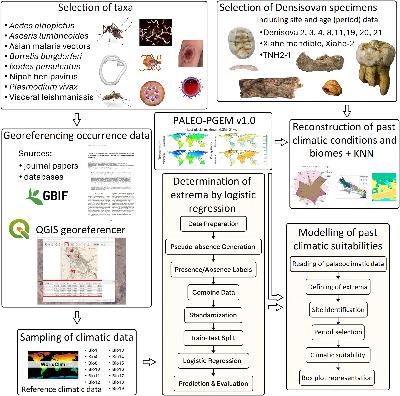
 1
1The Tropical Puzzle in Our DNALong before Homo sapiens left Africa, another hominin was roaming Eurasia. Denisovans, an extinct branch of our genus, inhabited a mosaic of landscapes stretching from the Siberian taiga to the subtropical forests of Southeast Asia. Their genes persist in modern humans, especially in Melanesia and Southeast Asia, where traces of Denisovan ancestry rise above 5 percent. But why do these archaic alleles persist — and why are they linked to immunity?A new study by Attila Trájer in the Journal of Human Evolution takes a different approach to this question: instead of focusing only on the genes, it reconstructs the environments Denisovans lived in, then compares them to the immune-related DNA we still carry.“The Denisovan genetic legacy is particularly high among present-day Melanesians and some Indigenous Philippine groups. Their ancient habitats may explain why we see certain immune alleles in these populations today,” writes Trájer.Mapping the PaleohabitatsThe study models three confirmed Denisovan sites: Denisova Cave in Siberia, Baishiya Karst Cave on the Tibetan Plateau, and Tam Ngu Hao 2 (“Cobra Cave”) in Laos. Each site tells a different ecological story.* Denisova Cave: Subarctic boreal forest, seasonal extremes, and tick-borne disease risk.* Baishiya Karst Cave: High-altitude monsoon-influenced subarctic environment, cold but with pulses of moisture.* Tam Ngu Hao 2 Cave: Humid subtropical setting with monsoon rains, likely rich in mosquitoes, helminths, and other parasites.“The Cobra Cave site stands out as a tropical or subtropical environment with optimal conditions for disease transmission,” Trájer reports.By modeling paleoclimate and known ranges of eight disease vectors (including Plasmodium vivax, Ixodes ticks, and Aedes albopictus mosquitoes), Trájer shows that Denisovan populations were likely exposed to radically different pathogen communities depending on geography. Siberian Denisovans contended with cold-weather zoonoses such as tick-borne encephalitis and Lyme borreliosis, while the Laotian Denisovans faced malaria, helminths, and Nipah-like viruses.Ancient Immunity, Modern ConsequencesThe research highlights specific Denisovan-derived immune alleles such as HLA-H*02:07 and toll-like receptor variants still present in modern populations. These genes shape how the body recognizes viruses, bacteria, and parasites.“Denisovan habitats shaped modern human disease resistance,” Trájer writes, noting that introgressed alleles may have balanced pathogen defense with autoimmune risks.Populations in Melanesia today exhibit high frequencies of these alleles, yet live in regions without the cold-weather pathogens of Siberia. This suggests the inherited alleles may have been selected in tropical or monsoon climates — precisely the conditions reconstructed at the Cobra Cave site.Why This Matters for Anthropologists and ArchaeologistsThis approach bridges two fields often kept apart: paleoecology and immunogenetics. Instead of treating Denisovans as a static genome donor, it reframes them as living organisms responding to disease landscapes — much like hunter-gatherers today. It also deepens debates over the timing and routes of archaic-human dispersals into Southeast Asia.The study further suggests that Denisovan cytochrome P450 gene variants, known for metabolizing plant and animal toxins, may have helped them survive in biodiverse environments teeming with venomous snakes, poisonous plants, and mosquito-borne parasites.Rethinking Human Evolution as an Immunological ProcessFor archaeologists, the implications are clear: sites are not just dots on a map. They’re embedded in ecosystems that left molecular fingerprints in our DNA. Future excavations at Southeast Asian caves may reveal not only stone tools or teeth but also isotopic signatures and microfossils of pathogens, shedding light on the coevolution of hominins and disease.“The Denisovan and shared archaic heritage of these alleles highlights how ancient gene variants continue to shape the modern immune landscape,” Trájer notes.Related Research* Vernot et al. (2016). “Excavating Neandertal and Denisovan DNA from the genomes of Melanesians.” Science. https://doi.org/10.1126/science.aad9416* Larena et al. (2021). “Multiple deeply divergent Denisovan ancestries in Papuans.” Nature Ecology & Evolution. https://doi.org/10.1038/s41559-020-1127-1* Dannemann, M., & Kelso, J. (2017). “The contribution of Neanderthals to phenotypic variation in modern humans.” American Journal of Human Genetics. https://doi.org/10.1016/j.ajhg.2017.09.001* Hubert et al. (2022). “Denisovan introgression and immune gene adaptation in modern humans.” PNAS. https://doi.org/10.1073/pnas.2102859119 This is a public episode. If you'd like to discuss this with other subscribers or get access to bonus episodes, visit www.anthropology.net/subscribe


Download from Google Play

Download from App Store
 United States
AI podcast, unsubscribed immediately