


 Claim Ownership
The AI Forecast: Data and AI in the Cloud Era
Subscribed: 9Played: 185
Subscribe

© 2024
Description
The introduction of the first computer. The boom of the dotcom renaissance. Now, the dawn of AI. The throughline across each of these momentous inflections in our digital lives has been data. But the presence of data doesn’t mean immediate insights and results. It’s the architectures and systems in place that determine the true value—and trust—of data. In this podcast by Cloudera, The AI Forecast: Data and AI in the Cloud Era explores the past, present, and future of enterprise AI with today’s leading companies and industry experts. You don’t want to miss this.
69 Episodes
Reverse
Enterprise AI is running into a familiar problem in the energy and manufacturing industries: the technology is moving faster than the organizations around it.
In this episode of The AI Forecast, Paul Muller sits down with Patrick Bangert, VP and Chief of AI at Occidental Petroleum, and author of “Leading Enterprise AI Programs: Optimize AI Teams for Value Creation,” to unpack the complexities of rolling out AI at enterprise scale in highly regulated industries with serious physical risks and 24/7 operations.
Together, Paul and Patrick take a closer look at:
How machine learning solves complex physical problems with predictive maintenance
Organizational change management when responses are emotional
Why reinventing organizational processes is key to AI success
The rise of shadow AI and startups as drivers of innovation
Why responsible AI and governance are essential for scaling safely
How to balance experimentation with long-term AI effectiveness
For leaders navigating enterprise AI in industrial settings, this episode offers a grounded, practical perspective on what separates hype from impact, and how to build an AI strategy that actually delivers.
Want to know more about the obstacles facing enterprise AI? Check out Ep 48 | Why Most Enterprise AI Projects Fail and How to Fix Them with Tom Harshbarger
Stay in touch with Patrick:
Patrick Bangert on LinkedIn: https://www.linkedin.com/in/patrick-bangert/
+++
Like and subscribe to The AI Forecast, sponsored by Cloudera, to stay up to date on the latest episodes. You can watch the video version of this episode on The AI Forecast.
What happens when AI stops advising and starts acting?
Agentic AI promises autonomy, speed, and a new level of intelligence in how systems operate. But as these systems begin to pursue goals and make decisions, the risks become harder to predict.
In this episode of The AI Forecast, Paul Muller sits down with futurist Nell Watson, AI ethics expert and co-author of “Safer Agentic AI: Principles and Responsible Practices,” to explore what safe, responsible AI looks like in this new era.
In this engaging conversation, Nell shares insights from her journey in AI, her work on ethics and safety, and why agentic systems represent a fundamental shift in how we think about risk. From data provenance to governance frameworks, she explains why organizations must move from reactive oversight to proactive design—and why cooperation will be critical to navigating what comes next.
Together, Paul and Nell delve into:
Why “AI is the butler for the brain”
The importance of data provenance in building trustworthy systems
How AI ethics and safety must be embedded from the start
Why governance needs to anticipate risks, not just respond to them
The role of “AI supervising AI” in maintaining control
How science fiction can help us prepare for real-world AI challenges
If you’re a business or technology leader deploying AI, this episode offers a clear, practical lens on balancing innovation with responsibility—and why safety is now a core requirement for scaling AI systems.
Stay in touch with Nell:
Nell Watson on LinkedIn: https://www.linkedin.com/in/nellwatson/
Nell’s website: https://www.nellwatson.com/
Nell Watson’s books on Amazon: https://www.amazon.com/stores/author/B0CWS75KPG
To hear more about AI governance, listen to EP 67 | The “Wobbly” Nature of AI: Governing an Unpredictable Technology
+++
Like and subscribe to The AI Forecast, sponsored by Cloudera, to stay up to date on the latest episodes. You can watch the video version of this episode on The AI Forecast.
AI governance is the Achilles heel of most enterprises. As organizations accelerate AI adoption, boardrooms face urgent questions about cybersecurity, compliance, resilience, and regulatory risk.
In this episode of The AI Forecast, Paul Muller meets with Shoshana Rosenberg, author of “Practical AI Governance: Building a Program for Oversight and Strategy,” and creator of the Prism AI Governance Framework, about how leaders can build adaptable AI governance programs that strengthen their resilience to this susceptibility.
Drawing parallels with cybersecurity, Shoshana explains why AI is a “wobbly” technology: predictive, non-deterministic, and fundamentally different from traditional software. She explores why governance cannot be owned by a single department and why boards must shift from a compliance mindset to an organizational strategy rooted in adaptability and AI literacy.
Their conversation goes in-depth on:
Why AI governance is becoming a board-level responsibility
How AI differs from traditional deterministic systems
Why resilience and adaptability matter more than box-checking compliance
The importance of AI literacy across the organization
How to balance innovation with risk management
Preparing for the evolving AI regulatory environment
Board members, CIOs, legal leaders, and AI governance pros: get practical guidance on building AI governance programs that demand trust, defy regulatory scrutiny, and dominate rapid technological change.
Stay in touch with Shoshana:
Shoshana on LinkedIn
Shoshana’s website
For more on AI governance and cybersecurity, give this episode a listen: Ep 56 | When AI Moves Fast, Security Can't Lag Behind w/ Jessica Hammond
+++
Like and subscribe to The AI Forecast, sponsored by Cloudera, to stay up to date on the latest episodes. You can watch the video version of this episode on The AI Forecast.
In this special Women Leaders In Technology episode of The AI Forecast, Wayfound.ai CEO Tatyana Mamut, PhD, makes a bold claim: AI is already acting like a workforce—and organizations are unprepared for what that means.
From econometrics to anthropology to leading roles at Salesforce, AWS, an d Nextdoor, Tatyana shares how her background shaped a fundamentally different approach to leadership. Drawing on her unconventional journey, she explains why agentic AI is forcing leaders to rethink how they manage technology, shifting from systems to a focus on teams, culture, and governance.
Together, Tatyana and Paul share their perspectives on:
Why agentic AI needs to be managed like human teams
The rise of multi-sapien workplaces (humans + AI agents)
How culture and leadership frameworks shape AI outcomes
Why unstructured data drives the most valuable insights
The role of ethics, law, and governance in controlling AI systems
Why intellectual curiosity beyond technical skill defines great leaders
This conversation goes beyond technology; Tatyana also reflects on leadership and representation in tech, challenging assumptions about opportunity, and exhibiting why diverse ways of thinking are critical in an AI-driven world.
Stay in touch with Tatyana:
Tatyana Mamut on LinkedIn: https://www.linkedin.com/in/tmamut/
Tatyana’s website: https://www.tmamut.com/
Links & Resources
Full Series Playlist: The AI Forecast: Data & AI in the Cloud Era - YouTube
Learn more about The AI Forecast: The AI Forecast | Podcast | Cloudera
Connect with Cloudera: Website | LinkedIn | YouTube
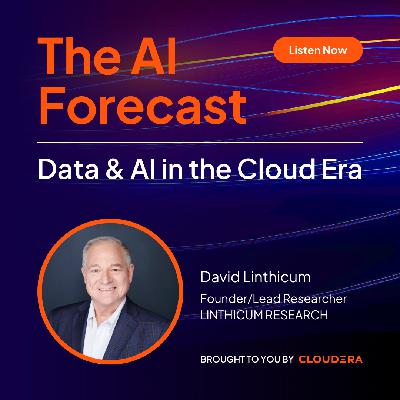
Cloud computing promised efficiency, scalability, and reliability. But as AI workloads grow more complex, many enterprises are learning the hard way that these promises don’t come automatically.
In this episode of The AI Forecast, Paul Muller sits down with Linthicum Research founder David Linthicum to talk through the real state of hybrid cloud strategy and enterprise architecture in the age of cloud computing and AI.
Together, Paul and David delve into:
Why cloud governance and resilience are now board-level concerns
The hidden costs of hybrid cloud and multi-cloud environments
Why workload repatriation is accelerating
How vibe coding can generate inefficient, high-cost AI applications
The difference between reliability and true operational resilience
Why enterprises need a common operational control plane
If you’re a technology leader scaling AI systems, this episode offers practical guidance on building governed, cost-efficient cloud architectures that won’t fail as complexity rises.
To go deeper on cloud resilience, hybrid cloud strategy, and AI workloads, listen to Ep 59 | The Secret to Creating the Cloud-Like Experience Anywhere with Adam Skotnicky.
Stay in touch with David:
David Linthicum on LinkedIn: https://davidlinthicum.com/about-david-linthicum
David’s website: https://davidlinthicum.com/about-david-linthicum
+++
Follow and subscribe to The AI Forecast for more conversations with the innovators shaping the future of enterprise AI.
Links & Resources
Full Series Playlist: https://www.youtube.com/playlist?list=PLe-h9HrA9qfAmGHgsmXUZgLL-T4Xjhlq8
Learn more about The AI Forecast: https://www.cloudera.com/resources/podcast/the-ai-forecast.html
Connect with Cloudera:
Website | LinkedIn | YouTube
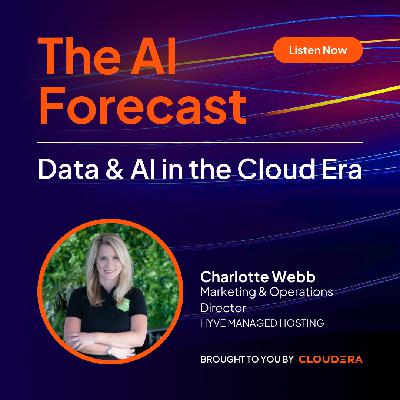
AI adoption is accelerating across small and medium-sized enterprises (SMEs), but many businesses lack the in-house expertise to build and manage AI infrastructure effectively.
In this episode of The AI Forecast, Paul Muller speaks with Hyve’s Marketing and Operations Director, Charlotte Webb, about how managed service providers (MSPs) are reshaping AI adoption for SMEs. They explore the build vs. buy debate in AI solutions and why cloud computing alone doesn’t guarantee lower costs, better performance, or compliance.
Charlotte explains how Hive takes a consultative approach to AI managed services—helping businesses align AI initiatives with long-term business strategy, digital transformation goals, and operational efficiency.
Charlotte and Paul dive headfirst into:
The risks of unmanaged AI workloads in the cloud
The role of managed services in reducing complexity and cost
Data sovereignty and regulatory compliance in AI deployments
Misconceptions about cloud computing and AI performance
Hybrid cloud and GPU infrastructure for scalable AI workloads
Real-world AI success stories, including e-commerce growth and operational gains
For those navigating AI adoption, evaluating cloud strategy, or exploring managed AI services, this episode provides actionable insights into building sustainable AI capabilities without overextending internal resources.
Stay in touch with Charlotte:
Charlotte on LinkedIn
Want to hear more about the build vs buy debate and lessons from the cloud computing era? Check out Ep 28 | Engineering for GenAI: Lessons from Past Hype Cycles with Ryan Ries of Mission Cloud
+++
Like and subscribe to The AI Forecast, sponsored by Cloudera, to stay up to date on the latest episodes. You can watch the video version of this episode on The AI Forecast.
Links & Resources
Full Series Playlist: https://www.youtube.com/playlist?list=PLe-h9HrA9qfAmGHgsmXUZgLL-T4Xjhlq8
Learn more about The AI Forecast: https://www.cloudera.com/resources/podcast/the-ai-forecast.html
Connect with Cloudera:
Website | LinkedIn | YouTube
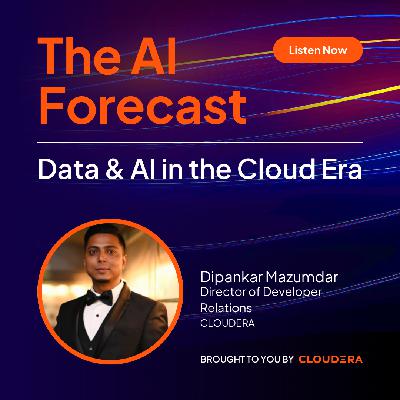
Open lakehouse architecture is becoming the foundation for production AI and enterprise AI at scale.
In this episode of The AI Forecast, Dipankar Mazumdar, Director of Developer Relations at Cloudera and co-author of the book “Engineering Lakehouse with Open Table Formats,” joins Paul Muller to explain why open lakehouse architecture is critical for moving from AI pilot to production AI.
They break down:
How Apache Iceberg and open table formats decouple storage from compute
How schema evolution enables change without costly data rewrites
How multiple engines can securely access the same data without duplication
How to prevent small-file performance bottlenecks
How to control AI compute costs at scale
How to embed governance, metadata, and data lineage into AI workloads
Production-ready AI requires scalable data architecture and governance built in from day one. AI and GenAI pilots may be everywhere, but your architecture is what truly decides what survives.
Stay in touch with Dipankar:
Dipankar Mazumdar on LinkedIn: https://www.linkedin.com/in/dipankar-mazumdar/
Dipankar’s website: https://dipankarmazumdar.github.io/
Dipankar’s book on Amazon: https://www.amazon.com/Engineering-Lakehouses-Open-Table-Formats-ebook/dp/B0DKJD39X8
+++
Follow and subscribe to The AI Forecast for more conversations with the innovators shaping the future of enterprise AI.

For decades, success in baseball was built on instinct. Scouts trusted their guts and managers leaned on tradition, meaning experience and unwritten rules shaped decisions that often went unquestioned.
Then Billy Beane changed the game.
The former Executive VP of Baseball Operations for the Oakland Athletics and pioneer of the Moneyball philosophy joins host Paul Muller on this special episode of The AI Forecast. Together, they explore how evidence-based decision-making disrupted one of the most tradition-bound industries in the world. Billy shares how shifting from intuition to analytics made data the ultimate competitive advantage in baseball.
Drawing on hard-won lessons from the front office, he explains how constraints can fuel innovation, why challenging assumptions is essential to performance, and how organizations can use data to redefine the way decisions are made. From talent evaluation to resource allocation, Billy makes the case that optimizing for success means building systems that reward evidence over ego.
Want to hear more about data-driven strategy and transformation? Check out Episode 17: How to Win in the Data Economy with Jan-Willem Middleburg.
+++
Follow and subscribe to The AI Forecast for more conversations with the innovators shaping the future of enterprise AI.
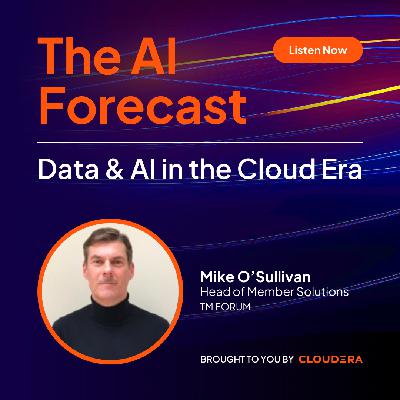
As telecom operators invest billions in next-generation networks, many are racing to deploy AI to cut costs and unlock new revenue. But beneath the push for automation and smarter infrastructure lies the deeper challenge of rethinking how connectivity itself should be trusted.
In this episode of The AI Forecast, Mike O’Sullivan, Head of Member Solutions at TM Forum, joins host Paul Muller to explore how autonomous networks could reshape customer experience and retention. Mike breaks down the financial pressure facing the industry from soaring network build costs, costly legacy systems, and flat revenues, and why cost reduction is only the first step in telecom’s AI journey.
Drawing on decades in the industry, Mike paints a clear picture: reactive telecom is out and self-optimizing, AI-powered networks are in. The future of telecom is adaptive and intelligent, and it depends on turning vast amounts of data into immediate, informed action.
If you enjoyed this conversation, check out Episode 56: When AI Moves Fast, Security Can’t Lag Behind with Jessica Hammond for more on real-time decisioning and regulated industry AI.
Stay in touch with Mike:
Mike O’Sullivan on LinkedIn: https://www.linkedin.com/in/mike-o-sullivan-35845b/
+++
Follow and subscribe to The AI Forecast for more conversations with the innovators shaping the future of enterprise AI.
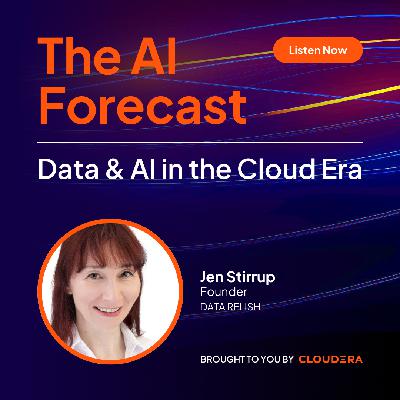
As AI and BI projects race to deliver quick wins, many organizations overlook what truly determines long-term success: the people behind the data.
In this episode of The AI Forecast, Jen Stirrup, author, speaker, and founder of Data Relish, joins host Paul Muller to dissect the difference between data literacy (reading the numbers) and data fluency (speaking the language of business). Jen challenges the industry’s obsession with AI FOMO, warning that rushing to deploy models on shaky cultural foundations is the fastest way to derail ROI.
Drawing on real-world data horror stories, she explains why tools alone cannot fix a broken culture and how mentorship, collaboration, and practical skills can empower teams to work independently and intelligently with data.
Listen in to discover:
Why poor data culture is the silent killer of AI ROI.
How to move your team from passive observation to active questioning.
Practical steps to build an environment where it is safe to challenge the data.
Did you enjoy this deep dive on data culture? Check out Episode 5: Data Doesn’t Have To Be So Complicated with Jordan Morrow for another perspective on the literacy debate.
Stay in touch with Jen:
Jen Stirrup on LinkedIn: https://uk.linkedin.com/company/jenstirrup
Jen Stirrup’s AI and data books: https://jenstirrup.com/books/
+++
Follow and subscribe to The AI Forecast for more conversations with the innovators shaping the future of enterprise AI.
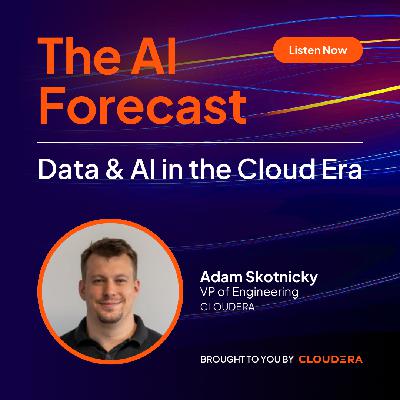
Data complexity is the enemy of innovation. Adam Skotnicky, VP of Engineering at Cloudera and founder of Taikun (acquired by Cloudera), joins host Paul Muller to explain how engineering teams can reclaim simplicity without sacrificing flexibility or control.
Together they unpack why most teams are overwhelmed by tooling and operational overhead, how platform engineering can abstract complexity away from users, and what it really means to deliver “cloud-like” agility across hybrid environments.
For those dealing with hybrid cloud sprawl, or simply wanting your data platform to do more for you, this episode is a must listen.
Stay in touch with Adam:
Adam Skotnicky on LinkedIn: https://www.linkedin.com/in/skotnicky/
+++
Follow and subscribe to The AI Forecast for more conversations with the innovators shaping the future of enterprise AI.
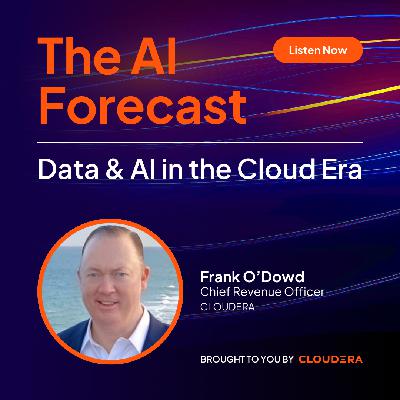
AI is reshaping how sales teams find prospects, build relationships, and close deals. Frank O’Dowd, Cloudera’s Chief Revenue Officer, joins to discuss Cloudera’s approach to AI in the sales function.
Frank details his philosophy, which is that rather than replacing the human touch, AI is helping sales professionals work smarter, offering insights, personalization, and efficiency at scale. It’s a complementary tool that can help sales teams make themselves relevant to their target audience. As Frank says in the episode, “The person with the most information always wins.”
Stay in touch with Frank:
Frank O’Dowd on LinkedIn: linkedin.com/in/frank-o-dowd-262508
+++
Follow and subscribe to The AI Forecast for more conversations with the innovators shaping the future of enterprise AI.
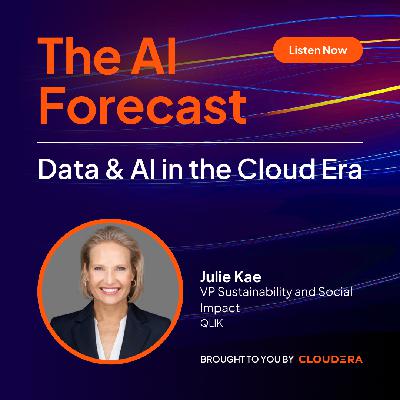
One common cause of concern around AI is how its computing may negatively impact the environment.
In this episode of The AI Forecast, Julie Kae, VP of Sustainability and Social Impact at Qlik and Executive Director of Qlik.org, joins host Paul Muller to reframe the conversation: when designed intentionally, AI isn’t a threat to ESG: it can be one of its most powerful enablers.
Drawing on more than 15 years leading data-for-good initiatives, Julie explains how AI and analytics can help organizations reduce waste, lower emissions, and create measurable social impact, without sacrificing profitability. She shares real-world examples from global nonprofits, climate initiatives, and purpose-driven enterprises, illustrating how better data, not perfect data, is often the key to progress.
The conversation also explores how by integrating sustainability, diversity, and social impact into AI as core infrastructure, businesses can create meaningful change that extends beyond profit.
Stay in touch with Julie:
Jessica Hammond on LinkedIn: https://www.linkedin.com/in/juliekae/
Qlik’s website: https://www.qlik.com/us
+++
Follow and subscribe to The AI Forecast for more conversations with the innovators shaping the future of enterprise AI.
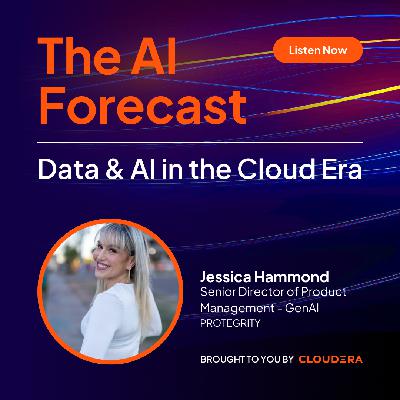
As AI adoption accelerates, so do the risks. In this episode of The AI Forecast, Jessica Hammond—Senior Director Product Management of GenAI at Protegrity—joins host Paul Muller to unpack how organizations can move fast with AI without compromising security, privacy, or compliance.
Drawing on her background in product, engineering, security, and compliance, Jessica explains why sensitive data exposure is one of the most underestimated risks in AI systems—from user-generated inputs leaking PII to agents inheriting permissions they shouldn’t have. She walks through how field-level data protection, policy-based controls, and governance embedded directly into the AI pipeline can protect data transparently, without slowing developers or re-architecting applications.
The conversation also explores why governance can’t be bolted on at the end, how data protection impacts AI evaluations and non-deterministic outputs, and what it really takes to secure AI across hybrid and multi-cloud environments.
Stay in touch with Jessica:
Jessica Hammond on LinkedIn: https://www.linkedin.com/in/jessicalhammond/
+++
Follow and subscribe to The AI Forecast for more conversations with the innovators shaping the future of enterprise AI.
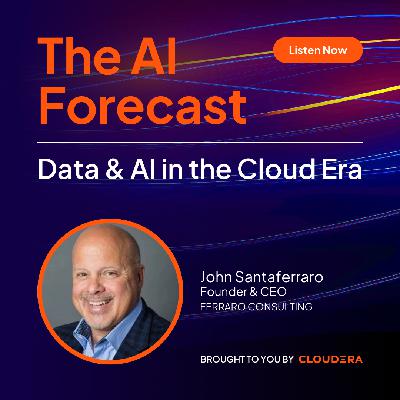
The AI Forecast welcomes back John Santaferraro, host of The Digital Analyst Podcast and CEO of Ferraro Consulting, for a candid look at what’s really coming next for AI in 2026.
John argues that despite nonstop headlines, most organizations are still dabbling with AI, not truly using the technology. He predicts that 2026 will be defined by AI literacy, strategic adoption, and a shift away from trivial use cases toward executive-level decision support. John and host Paul Muller explore why private AI will become essential for protecting intellectual property, how asking the right questions may soon matter more than having the right answers, and why agentic AI is poised to fail loudly before it succeeds.
The discussion also dives into data and agent governance, the coming wave of platform and data unification, and why causal AI—not just GenAI—may unlock the next leap in predictive power.
If you’re planning your AI strategy for 2026, this conversation will help you separate signal from noise and prepare for what’s next.
Stay in touch with John:
John Santaferraro on LinkedIn: https://www.linkedin.com/in/johnsantaferraro/
The Digital Analyst Podcast: https://www.youtube.com/playlist?list=PLivd8WaRu-XkJsuP8YAtk8T1QYRYlEkD5
Ferraro Consulting: https://www.ferraroconsulting.com/
+++
Follow and subscribe to The AI Forecast for more conversations with the innovators shaping the future of enterprise AI.
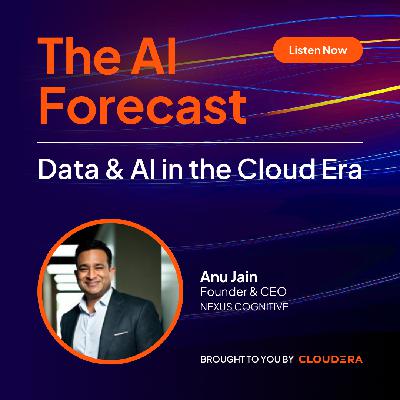
In this episode of The AI Forecast, Anu Jain, founder and CEO of Nexus Cognitive, joins host Paul Muller to introduce a transformative idea: AI doesn’t have a last-mile problem. It has a first-mile problem. While AI models and algorithms can scale instantly through the cloud, their success still depends on the quality, provenance, and readiness of the data that feeds them.
Drawing from his career spanning MicroStrategy, Deloitte, IBM Watson, Think Big Analytics, and now Nexus Cognitive, Anu explains why so many enterprise AI initiatives stall before production — not because of model complexity, but because data remains chaotic, siloed, and treated as an afterthought.
Anu explores the shift from data as “exhaust” to data as a strategic asset, the rise of composable architectures, and why he believes every piece of data needs a “digital birth certificate” to anchor trust, context, and lineage.
Stay in touch with Anu:
LinkedIn: https://www.linkedin.com/in/anujain/
Nexus Cognitive: https://www.nexuscognitive.com/
+++
Follow and subscribe to The AI Forecast for more conversations with the innovators shaping the future of enterprise AI.
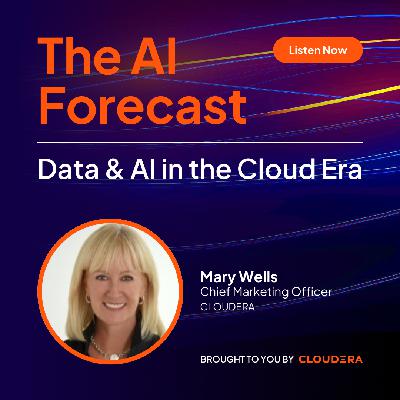
Cloudera Chief Marketing Officer Mary Wells helped spearhead the launch of Cloudera’s Women Leaders in Technology initiative, which recently celebrated its one-year anniversary. To honor this milestone, Mary joins this special edition of The AI Forecast to reflect on the impact of this program so far.
Mary Wells and host Paul Muller embark on an inspiring conversation on leadership, allyship, and navigating one of the most transformative moments in technology.
Mary reflects on more than three decades in the industry—spanning the rise of client/server, the dot-com boom, IoT, big data, and now the explosive acceleration of AI—and shares how each era shaped her leadership philosophy. She discusses why kindness is a strength, how to build teams rooted in trust and accountability, and why allyship—not exclusivity—is the secret to sustainable progress for women in tech.
The two also dive into how AI is reshaping the marketing function, from generative content and personalization to the organizational change required to keep teams confident and empowered. Mary offers candid advice for CMOs navigating AI’s demands, and for leaders everywhere looking to build culture, resilience, and relevance in a world that’s moving faster than ever.
To learn more about Cloudera’s Women Leaders in Technology, join the LinkedIn community and visit the home page.
LinkedIn Community: https://www.linkedin.com/groups/13104138/
WLIT Website: https://www.cloudera.com/about/women-leaders-in-technology.html
And to stay in touch with Mary, follow her on LinkedIn: https://www.linkedin.com/in/maryhwells/
+++
Follow and subscribe to The AI Forecast for more conversations with the innovators shaping the future of enterprise AI.
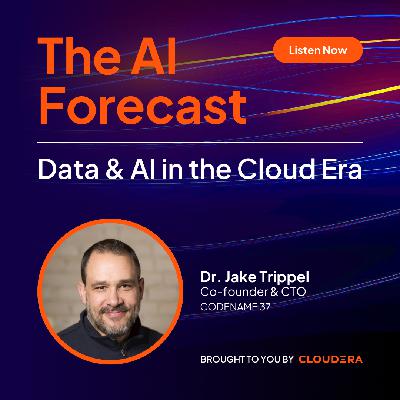
GenAI may have captured the spotlight. But according to Dr. Jake Trippel, co-founder and CTO of Codename 37, the real disruption is still ahead. Jake joins the podcast to explain why today’s LLM-centric stacks will hit architectural limits and how “AI fabrics” and shared memory meshes can unlock agent-to-agent collaboration across data silos.
From untangling decades of technical debt to the surprising move of model training back on-prem, Jake lays out pragmatic playbooks. He also shares how he runs “100 AI employees” today, what SaaS might look like in a bot-first world, and why education must embrace hyper-personalized learning while guarding against AI-enabled shortcuts.
Stay in touch with Jake:
LinkedIn: https://www.linkedin.com/in/jtrippel/
Codename 37: https://codename37.ai/
+++
Like and subscribe to The AI Forecast to stay up to date on the latest episodes. You can watch the video version of this episode on The AI Forecast YouTube page.
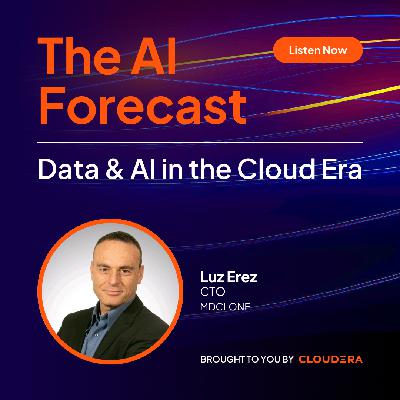
Turning complex, siloed medical data into accessible, actionable insight isn’t just a technical challenge; it’s a human one.
In this episode of The AI Forecast, Luz Erez, physicist-turned-entrepreneur and CTO of MDClone, explores how synthetic data is transforming the way we use medical information for research, innovation, and patient care.
Erez explains how MDClone’s platform manages tens of millions of patient records across hospitals worldwide—safely turning real data into synthetic datasets that preserve statistical accuracy while protecting privacy. He reveals how this breakthrough enables hospitals, researchers, and AI developers to collaborate without regulatory roadblocks, accelerating discoveries that can improve outcomes and reduce clinical workload.
Stay in touch with Luz:
LinkedIn: https://www.linkedin.com/in/erezsoft/
+++
Like and subscribe to The AI Forecast to stay up to date on the latest episodes. You can watch the video version of this episode on The AI Forecast YouTube page.
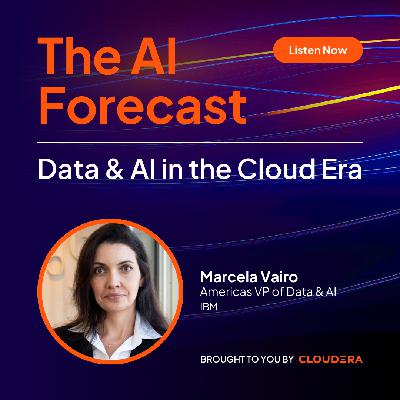
Enterprise leaders are racing to deploy generative AI, but most overlook a critical foundation: data readiness. Despite bold ambitions, less than one-third of technology leaders believe their data is prepared to support AI at scale.
Marcela Vairo, IBM’s Vice President of Data and AI for the Americas, joins The AI Forecast to explore one of the most persistent challenges in enterprise AI: why strong data foundations remain the exception, not the rule.
Drawing on more than 25 years at IBM, Marcela shares how organizations can close the gap between aspiration and execution through effective data governance, integration, and trust. She explains why governance isn’t a checkbox—it’s an enabler—and how companies can scale AI responsibly by building the right architecture, managing bias, and embracing data quality as a strategic asset.
Stay in touch with Marcela:
LinkedIn: https://www.linkedin.com/in/marcela-vairo/
+++
Like and subscribe to The AI Forecast to stay up to date on the latest episodes. You can watch the video version of this episode on The AI Forecast YouTube page.

Comments

Download from Google Play

Download from App Store
 United States