


 Claim Ownership
AI for Founders with Ryan Estes
Subscribed: 0Played: 9
Subscribe

© aiforfounders.co
Description
AI for Founders is where 47,000+ founders learn to build and scale with AI. Hosted by Ryan Estes, a Denver investor, creator, and founder, the show breaks down real strategies from top operators and AI visionaries.
AI-ready data, zero-dependency workflows, founder-led distribution, and the tools driving revenue for today’s fastest-growing companies.
If you’re a technical or non-technical founder who wants to work smarter, scale faster, and stay competitive, this podcast is your weekly unfair advantage.
AI-ready data, zero-dependency workflows, founder-led distribution, and the tools driving revenue for today’s fastest-growing companies.
If you’re a technical or non-technical founder who wants to work smarter, scale faster, and stay competitive, this podcast is your weekly unfair advantage.
136 Episodes
Reverse

Ryan opens with a founder gut check. Scale sounds sexy, but control is the real addiction. Then Marcin walks in with a real world mirror, because warehouses do not care about your pitch deck, and robots do not care about your assumptions.Sevensense builds the “eyes and brains” for mobile robots, not the whole robot. The story starts in the ETH Zurich ecosystem where robotics talent is dense, labor is expensive, and the only way to win is to build high-value systems that actually work outside the lab. Marcin explains how early industrial robots were basically obedient roombas with a job title, rigid paths, brittle behavior, and zero ability to handle a changing environment.Then the thesis lands. Vision-based navigation uses natural features, so you do not need QR codes on the floor, magnetic tape, or a warehouse redesigned around your machine. Instead, you give a robot something closer to human perception, cameras, inertial sensing, wheel and leg signals, and enough compute to reason about space. The result is not just navigation. It is adaptability.The conversation expands into the social layer. Robots need to communicate intent so humans trust them. Lights, sounds, turn signals, speed indicators. And robots need to understand humans as humans, not as just another obstacle. Predict motion. Yield. Negotiate the sidewalk dance. The future of robotics is not only engineering. It is manners.Marcin’s founder journey is a deep tech reality check. Early money gets wasted on cool R&D nobody needs. The breakthrough comes from a gritty commercial project, autonomous cleaning machines that forced them to ship systems that worked for non-roboticists, with real customers and real consequences. That pain becomes the advantage. Robustness becomes the moat.https://sevensense.aihttps://www.dymczyk.com/https://www.linkedin.com/in/dymczyk/https://www.linkedin.com/in/estesryan/https://aiforfounders.cohttps://kitcaster.com/application https://ryanestes.info

Here’s the uncomfortable truth: social media isn’t preserving your memories. It’s strip-mining their meaning.We built trillion-dollar machines so strangers can watch us live… while the people who were actually there are already scrolling past it.Founders obsess over growth, distribution, scale. Reach. Impressions. Virality.But what if the most valuable product isn’t reach?It’s recall.You host a retreat for your top 50 customers. Magic happens. Voice notes at midnight. Inside jokes. Breakthrough conversations.Two weeks later? Buried in camera rolls. Lost in Slack threads. Emotion turned into data exhaust.What if there was a product that automatically stitched those fragments into a shared living story?Not for the algorithm. For the tribe.Because here’s the conflict: attention is rented. Memory is owned.In a world optimized for attention… are you building something that deepens connection — or just consumes it?That’s the deep question.Welcome to AI for Founders, I’m Ryan Estes. And today you’ll learn how Oleg is rethinking memory itself — building technology that turns scattered moments into structured meaning. This is for founders who care about product psychology, community retention, and designing experiences people actually remember.If you’re building in AI, you need signal, not noise.Go to aiforfounders.co.That’s aiforfounders.co — where ambitious builders sharpen their edge.If this episode sparked something, leave a review like you’re time-stamping a moment that mattered.And if you’re a founder with a story worth remembering, go to Kitcaster.com. Kitcaster is the premier podcast booking agency for high-growth companies. They don’t just book interviews. They position you as the authority in your space and turn conversations into customers. Kitcaster.com. Be heard.https://www.linkedin.com/in/oleggolynker/https://www.trueli.me/https://www.amazon.com/Confessions-Unicorn-Founder-Obsession-Chasing/https://www.linkedin.com/in/estesryan/https://aiforfounders.cohttps://kitcaster.com/application https://ryanestes.info

Most founders are accidentally running a casino.Not a company.They’re bragging about ROAS, celebrating revenue spikes, and somehow… still bleeding cash.Because if you don’t know how much you should be spending, “ads” isn’t a strategy.It’s gambling with better graphics.Here’s the real conflict.AI is about to flood the world with “growth tools” that promise the moon, but they still can’t ask the right questions.AI can do the math.It just can’t build the equation.So here’s the deep question.If your business is growing, but you can’t explain why you’re not making money, are you building a company… or a very expensive coping mechanism?Welcome to AI for Founders, I’m Ryan Estes.This is for founders building with AI, especially if you sell real products, run paid media, or you’re staring at a P&L like it’s written in ancient Sumerian.You’re going to learn how to stop guessing, set a profit foundation first, and then scale like you actually mean it.And now, meet Adam.He took an e-comm brand from zero to $60 million in sales, then built Pentane, software that basically “encapsulates his brain” and tells operators what to do to get profitable.Even wilder, he plugged in an agent so you can literally ask, “How do I hit 5% net profit this month?” and get a direct answer in seconds.Founders, if you want your business to run like a system, not a mood, go subscribe to the newsletter at aiforfounders.co.If your calendar is chaos, your margins are chaos, your brain deserves better, aiforfounders.co.Join 27,000 founders who want signal, not noise, aiforfounders.co.Quick favor, leave a review of the podcast like you’re rating a parachute after you actually jumped.And a word from Kitcaster.com, if you’re a founder who should be on podcasts but you keep “meaning to,” Kitcaster books you on shows your customers already trust.They handle the outreach, the follow-up, the scheduling, and the chaos.You just show up and sound like the person who built the thing.__https://www.linkedin.com/in/adammcallinan/https://www.linkedin.com/in/estesryan/https://pentane.comhttps://aiforfounders.cohttps://bigskybravery.orghttps://kitcaster.com/application https://ryanestes.info

If stillness is the source of your best decisions, why is your calendar built like it is trying to kill it?Be honest.When was the last time your biggest breakthrough happened in a meeting?Not a brainstorm. Not a sprint. Not a Slack war.I’m talking about the idea that actually changed your trajectory. The hire you finally understood. The product pivot that suddenly made sense.It probably happened in the car.On a walk.On a random Thursday when you ditched work and went snowboarding.And yet your calendar looks like a competitive sport. Back-to-backs. Fifteen minute blocks. “Quick sync.” “Fast follow.” “Rapid alignment.”Alignment with what? Exhaustion?Here’s the uncomfortable truth.Most founders are not blocked by strategy. They’re blocked by noise. And now we’re adding AI to the noise.Welcome to AI for Founders, I’m Ryan Estes.Today you’re going to learn how a builder thinks after an exit, why exploration is not procrastination, and what “AI-native” actually means if you’re serious about product, health, and human behavior. This is for founders who want leverage without turning their life into tab toggling.My guest is Alyssa Eidam from Inkfish Studio.She built AI agents in healthcare, specifically to support clinicians and solve staffing bottlenecks, then exited after about a year and a half and did the thing most founders refuse to do. She stopped. Traveled solo. Got present. Let her attention tell her what to build next.And the big takeaway for your company is this.Do not use AI because it is powerful. Use it because it is intentional. If the system is broken, AI does not fix it, it makes it break faster.Also, “AI-native” is not a chatbot. Chat interfaces should die.AI-native is picking the exact moments in the workflow where prediction, pattern matching, and reasoning actually change what is possible. Surfacing what matters before the user even knows to ask.Founder use case.Instead of building another chat box, build a product that watches the process, detects the bottleneck, predicts the next step, and removes the need for five apps and thirty tabs. Less typing, more outcomes.Go subscribe to the newsletter at aiforfounders.co.It’s for founders building in the mess, not founders collecting prompts like trading cards.If you want ideas that ship and frameworks that punch back, you’ll like it.Leave a review of the podcast by writing one sentence that would make your smartest friend immediately hit play.https://www.inkfish.studio/https://www.linkedin.com/in/eidamam/https://www.linkedin.com/in/estesryan/https://aiforfounders.co/ https://kitcaster.com/application https://ryanestes.info
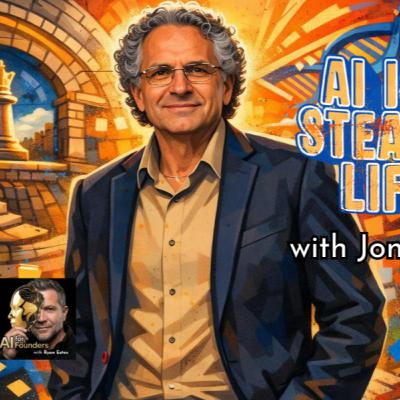
What if the most valuable asset in your company isn’t your tech stack, your team, or even your brandWhat if it’s the quiet archive sitting on your laptopIn this episode of AI for Founders, Ryan sits down with Dr. Jonathan Schaffer, a 40-year AI pioneer, professor, and now founder of a privacy-first AI platform called Kind. What unfolds is not just a product conversation. It is a philosophical reckoning with who AI is supposed to serve.From competitive chess in the 1970s to launching a company in 2026, Dr. Schaffer shares how decades of teaching, research, and observing AI hype cycles led him to one convictionThe moat is not the modelThe moat is your datahttps://synsira.comhttps://www.linkedin.com/in/estesryan/https://aiforfounders.co/ https://kitcaster.com/application https://ryanestes.info

Your startup idea is probably garbage.Not because you are dumb.Because you are in love.And love makes you build… a product nobody wants.Here’s the controversial take: If you cannot survive 10 uncomfortable customer conversations, you do not deserve to write a single line of code.Because validation is not “vibes.” It is evidence. It is bruises. It is getting told “no” until your ego stops bleeding on your roadmap.Deep question before we go any further:If your idea fails, does that mean you failed… or does it finally mean you are free to become who you said you wanted to be?Welcome to AI for Founders, I’m Ryan Estes.Today you’ll learn how one founder built a system to help you validate ideas faster, map your market, analyze real customer interviews, and even assemble a pitch deck that is not just a bedtime story for investors.This is for first-time founders, serial idea hoarders, and anyone who has ever wasted months building a “brilliant” product with zero buyers.The mind behind this is Ohad Shaked, the founder of ThinkUp Global.His whole thing is turning the founder rollercoaster into an actual map: problem, solution, personas, market sizing, competitors, interview analysis, go-to-market, and the deck.And here’s the spicy founder use case: run five ideas through the process at once, and let reality pick your next company, not your dopamine.If you want more stuff like this, go to aiforfounders.co and get the newsletter.It is basically a weekly shipment of “build less, validate more” for your brain.Also it is cheaper than learning these lessons the hard way.Again: aiforfounders.co.And if you like the podcast, leave a review like you are writing a Yelp review for my personality.Quick 15-second note from my other life: Kitcaster.com is the premier podcast booking agency for founders.If you want to get booked on shows your customers actually listen to, and turn interviews into pipeline instead of “nice conversations,” Kitcaster does it end-to-end.You show up and be interesting. They handle the rest. Kitcaster.com.Final question to sit with:What are you protecting more right now… your idea’s success, or your identity as “the person with the idea”?https://thinkup.globalhttps://www.linkedin.com/in/ohad-shaked111/https://www.linkedin.com/in/estesryan/https://aiforfounders.co/ https://kitcaster.com/application https://ryanestes.info
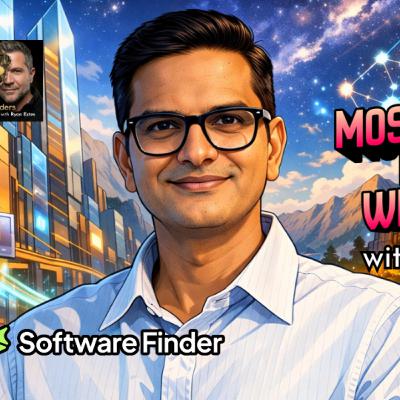
Most founders don’t have a software problem… they have a decision problem.We spend weeks “researching” tools, comparing top 10 lists, reading reviews written by people who’ve never run payroll, never closed a deal, never felt the pressure of making the wrong call. Meanwhile, your team is stuck. Momentum dies. And you call it due diligence.Here’s the tension: choosing a restaurant takes five minutes. Choosing the software that runs your company takes five weeks… and usually gets dumped on the least technical person in the room.Deep question: how many hours of your life have you burned trying to pick the “right” tool when what you really needed was the right guide?Welcome to AI for Founders. I’m Ryan Estes, and today, you’ll learn how founders and operators can shortcut the chaos of software selection with a human-centric approach, how to avoid analysis paralysis, and how to turn tech decisions into a competitive advantage. This is for builders who are tired of guessing.If you care about leverage, clarity, and smarter bets, go to aiforfounders.co.Join thousands of founders turning AI into actual ROI.Your unfair advantage is one newsletter away.If this helped you think differently, leave a review like you’re recommending your favorite hidden restaurant to a friend.And if you want your voice on the world’s top podcasts, go to Kitcaster.com, the premier podcast booking agency that gets founders in front of their ideal audience, builds authority, and turns conversations into customers.__https://www.linkedin.com/in/adnan-malik/https://www.linkedin.com/in/estesryan/https://aiforfounders.co/ https://kitcaster.com/application https://ryanestes.info

AI music companies are treating creativity like disposable garbage, and they’re about to hit a wall so hard it sparks the next artistic renaissance.Hot take: Generative AI didn’t democratize music, it cheapened it.Because when anything can make a trillion songs a second, the algorithm stops rewarding artists and starts rewarding… sludge.Here’s the tension.The stats say AI music is everywhere.But creators feel something emotionally wrong, deep in the bones.And when culture feels “wrong” like that, history usually flips the table.Creators do not want infinite options.They want constraints.Because constraints make human decisions matter again.Founders, here’s the use case you’re missing.Stop building “make content faster” tools.Build “make authorship undeniable” tools.Music is the language of emotions, so the product isn’t output, the product is the feeling of making it.Think Roblox and Fortnite. Not streaming.Not feeds that feel fake, but places that feel real.Not a billion views, a small room, shared time, witnessed creation.That’s culture. And culture moves before scale catches up.So here’s the deep question.If your product makes everything frictionless, are you freeing people… or quietly erasing the part of them that needs to struggle to feel alive?Welcome to AI for Founders, I’m Ryan Estes, and today you’re going to meet Siggi, the CEO of Overtune, to unpack why constraints fuel creativity, why witnessed creation beats generated content, and why the next music renaissance is happening in gaming, not streaming. This is for founders building creative tools who want to understand where culture is actually moving, before the numbers lie to you.Sign up for the newsletter at aiforfounders.co.We turn the chaos into signal you can actually use.No fluff, no “AI will change everything,” just the plays that make you dangerous.And if you enjoyed this, leave a review that’s not “great podcast.” Write one sentence that sounds like a startup pitch you’d actually fund.This episode is brought to you by Kitcaster.com, a premier podcast booking agency. If you’re tired of begging for attention on the internet, get booked on the shows your customers already trust. Kitcaster handles the outreach, the follow up, the scheduling, and the prep, so you just show up and deliver your story. Want to turn your expertise into pipeline, credibility, and audience growth? Visit Kitcaster.com. That’s Kitcaster by Moburst.__https://www.linkedin.com/in/sigurdur-arnason-2b690311a/https://www.overtune.comhttps://aiforfounders.co/ https://kitcaster.com/application https://ryanestes.info

"Stop hiring AI passengers, they're dead weight. If your team says 'this is what AI thinks,' fire them. Here's why..."Two billion people use AI every day, but they won't pay a dime for it. That means enterprise has to foot the entire bill, and right now, they're hemorrhaging cash on $30/month seats that nobody's actually using. The brutal truth? CEOs spend a year bragging about being "AI-first" while only 10% of employees touch the tools. The rest are paralyzed, terrified they're automating themselves into unemployment.But the smartest founders aren't just deploying AI. They're building companies where 32 people do the work of 45. The secret weapon? They demand AI drivers, not AI passengers. No cutting and pasting. No "AI said to do this." You own the decision. You own the conviction. Because when you hit turbulence, and you will, nobody's going to rally behind "well, the chatbot thought it was a good idea."Are you building a team of AI drivers who own their outcomes, or AI passengers coasting toward irrelevance?Welcome to AI for Founders, I'm Ryan Estes. You just learned the enterprise adoption playbook from Gregory Shove, 7-time founder, $250M in exits, and the guy solving the billion-dollar question: how do you get big companies to actually use AI?Get the full playbook at aiforfounders.co, weekly insights that'll have your competitors wondering how you're shipping 3x faster. Subscribe before your competition does.If this hit different, leave a review, podcasts run on ratings like startups run on caffeine.This episode is brought to you by Kitcaster.com, the premier podcast booking agency that gets founders like you on shows that actually move the needle. Stop cold pitching, start converting listeners into customers. Whether you're raising capital, launching products, or building your brand, Kitcaster puts your voice in front of audiences that matter. Visit Kitcaster.com and turn your story into your unfair advantage.https://www.linkedin.com/in/gregshove/https://www.gregshove.com/https://aiforfounders.co/ https://kitcaster.com/application https://ryanestes.info
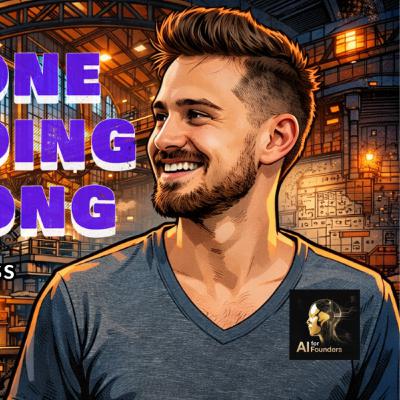
The best AI companies won't use LLMs. Here's why most founders are building the wrong thing...Everyone's chasing ChatGPT wrappers while the real money is buried inside boring businesses making $100M a year. Cabinet factories. Paint mixers. Ball-bearing manufacturers. They're sitting on decades of proprietary data, proprietary SOPs, chemical formulas, machine configurations, and nobody's talking to them because software engineers and cattle ranchers don't hang out at the same bars.The kids at Stanford and MIT are building for space and quantum computing while ignoring AI for actual industries. There's a class divide keeping founders away from the unglamorous problems that print money. Meanwhile, these factory owners would love to partner, you just have to show up, tour the facility, and actually talk to the people doing the work.Here's the play: Find a lower-middle-market company with unglamorous IP. Tour their factory. Don't waste time with the sales team, talk to the guy making $20/hour who actually runs the machines and fixes things when they break. That's where the real value lives. Give key partners early equity tied to sales milestones. Build ONE hyper-specific feature—so niche you can describe it in five words or less. Then sell one enterprise license for $83K/month. That's $1M ARR from literally four lines of code packaged as an executable.Before you even start, check three boxes: Do you have distribution on your cap table? Do you have defensible IP? Do you have an industry expert involved? If you can't check all three, don't build it.So ask yourself: Are you building a company, or are you just building your ego? Because the real arbitrage isn't in the technology, it's in the relationships nobody else is making.That's from Josh Furstoss, exited founder, CEO advisor, and the guy who launched four companies last year by finding moats where nobody's looking.This interview is for founders who want to escape the AI hype cycle, find distribution on their cap table, and build zero-to-one products that actually sell.Ready to build differently? Head to aiforfounders.co for frameworks that 27,000 AI founders use to validate their next move. Every week. Zero fluff. Just builders building.Drop a review if this made you rethink your whole strategy.This show runs on Kitcaster, the podcasting platform that makes you sound professional without the headache. Record, edit, and distribute from one dashboard. Start free at kitcaster.com.https://www.linkedin.com/in/josh-furstoss/https://www.doctorswithoutborders.orghttps://aiforfounders.co/ https://kitcaster.com/application https://ryanestes.info
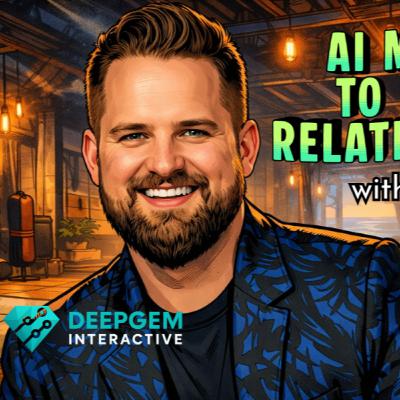
Hot take: AI isn’t killing creativity, it’s exposing how emotionally lazy founders have become.Because most people use AI to move faster, not to feel deeper. AI can either make you more human… or quietly turn you into a productivity zombie who panics when the tools shut off.Then I met Ziah Orion from Deep Gem Interactive.And instead of talking dashboards and prompts, we went somewhere unexpected.He uses generative music to help people process grief, identity, love, even their inner archetypes.Think songs for your dad, your partner, your future self.Not content. Connection tech.Founder takeaway: if your product only saves time, you’re competing on features.If it helps people feel seen, regulated, or grounded, you’re competing on meaning.So here’s the real question.What part of your life or business are you trying to automate because you’re avoiding actually feeling it?And here’s the twist.This interview turned into less of a formal conversation and more of two curious humans going deep.We barely scratched the surface of Ziah’s actual work, so we’re absolutely bringing him back to go deep on what he’s building at Deep Gem Interactive.If you’re a founder, builder, or creator who wants to use AI for human growth, not just speed, this one’s for you.We talk tools, identity, discipline, and how to build without burning out your nervous system.If AI feels exciting and terrifying at the same time, aiforfounders.co is your weekly grounding ritual.Real tools, real builders, no hype loops, just what actually works.Subscribe at aiforfounders.co before your competitors copy the insights and pretend they discovered them first.If this episode stretched your brain even a little, leave a review, it’s how the show survives in the algorithm wilderness.https://deepgeminteractive.com/https://www.linkedin.com/in/ziah-orion/https://aiforfounders.co/ https://kitcaster.com/application https://ryanestes.info
College didn’t get expensive. It got unnecessary for anyone who wants to make real money in the next 10 years.Because the future isn’t “learn more.” It’s learn fast, get licensed, get paid.America has about 700,000 registered apprentices. That’s roughly 0.4% of the workforce. Basically… nobody.Meanwhile we’ve got over a million electrician jobs open, licensed workers retiring, and data centers sucking power like a black hole.So the government did what it always does.It didn’t “incentivize” apprenticeships. It basically said:“If you want the juicy tax credits on big renewable energy projects… you need apprentices on the job.”Andy Seth saw the mess up close. The tools were trash. The bureaucracy was thicker than a Denver winter.So during COVID, he taught himself to build software, apprenticed under a real dev, and built apprentix.io.Then he did the scary founder move. He niched down hard.And it worked.He hit $1M ARR with zero W2 employees. SaaS margins. Seven-day sales cycles.Not because he “hustled harder.”Because he found the hidden lever: businesses don’t buy training. They buy revenue and compliance that doesn’t ruin their life.Founder idea: stop building better education.Build less paperwork.Every regulated industry has a compliance bottleneck begging to be turned into a software ATM.If your product disappeared tomorrow, would your customers miss the value… or would they miss the relief?If you’re a founder obsessed with leverage, niche strategy, and finding markets where demand is literally written into law, you’re going to want the full breakdown.If you like founder stories with receipts and real numbers, get on the newsletter at aiforfounders.co.It’s the closest thing to business school that won’t charge you rent. aiforfounders.co.Your next unfair advantage might be one email away. Go subscribe: aiforfounders.co.If this made you think, leave a review like you’re rating a rollercoaster you survived… and include one word: again.Founders, quick reality check: being great at what you do isn’t the bottleneck.Being known is the bottleneck.And the fastest way to become known, trusted, and repeatedly referenced is still the same: go on podcasts.Kitcaster helps founders get booked on shows your customers already listen to.Not random podcasts. Not your aunt’s mindfulness hour.The shows where buyers hang out, where deals start as conversations, and where credibility compounds.Podcasts do what ads can’t.They make you sound like the person who’s already won.You get 30 minutes to explain your thinking, tell the real story, and build trust at human speed.And if you’re thinking, “I don’t have time to pitch shows,” perfect.Kitcaster handles the targeting, outreach, booking, and coordination so you just show up and perform.If you want inbound leads that don’t feel like pulling teeth, go to kitcaster.com and get booked.https://apprentix.io/https://www.linkedin.com/in/andyseth/https://aiforfounders.co/ https://codestory.cohttps://warmstart.ai https://kitcaster.com/application https://ryanestes.info

Business owners, I already know you hate taxes.Not the “ugh, paperwork” kind of hate. I mean the kind of hate where you’d rather get dental work at a gas station than explain your P&L.And here’s the part that should scare you a little: taxes aren’t just expensive. They’re sneaky. Most founders don’t overpay on purpose.They overpay because they’re too busy.And even worse, half of you are sitting there thinking, “I hope my tax person is doing it right.” Hope is not a strategy when the IRS is involved. Believe me, I know. I’ve been audited twice.So listen, there’s finally a tool that makes this easy. It’s called deduction.com.And yes, I’m shilling for it because it’s awesome. The founder, Sai, is a buddy of mine. He’s a Denver guy. Well, he’s British, but he’s here now, so we’re claiming him.For $500, Deduction.com’s agent will complete and file your return, and there’s a human reviewing it and signing it. And right now, Sai is onboarding every single customer himself.You can say you knew him when.At that price, and I’m being dead serious, I’d have them run it just to double-check your tax preparer. Because if you catch one mistake, one missed deduction, one “oops”… it pays for itself instantly.Here’s the real question though: if taxes are the biggest bill you pay every year, why are you treating them like an afterthought?So go check out deduction.com and stop donating extra money to the government like it’s a charity.It ain’t.And tell Sai I said what’s up.https://deduction.comhttps://www.linkedin.com/in/saayuj/https://aiforfounders.co/ https://codestory.cohttps://warmstart.ai https://kitcaster.com/application https://ryanestes.info

Hot take: Healthcare doesn’t have a diagnosis problem. It has a time problem. And that time problem is quietly ruining lives.Most patients get 13 minutes with a doctor. That’s barely enough time to describe symptoms, let alone find the real cause. So you get pills, not answers. Not because doctors don’t care, but because the system doesn’t allow them to.Haresh Patel learned this the hard way. He spent 12 years building a company, burned about $30 million, and still only won after years of pivots. His takeaway is painful and useful: building the tech is the easy part. The hard part is knowing who you serve, how you make money, and why your product should exist.So this time he did something most founders won’t. He stopped building and spent two years just listening to doctors, patients, and anyone living in the gaps of modern medicine.Founder use case: steal this method. Before you build your MVP, build your “13-minute advantage.” Create a system that turns messy records, wearable data, and life context into a clean story a human expert can use fast. AI isn’t here to replace doctors. It’s here to give them their brain back.Deep question: What problem in your life or business keeps “coming back” because you’re treating symptoms instead of digging for the pearl under the mattress?If you want the full breakdown on building in healthcare, validating before coding, and why rookie thinking beats resume thinking, this is for founders, operators, and anyone obsessed with solving real problems.Three quick things: Go to aiforfounders.co and subscribe so your brain stays ahead of your calendar. Steal one idea per week and pretend it was your own, I won’t tell. If you’re building something big, you’re going to need a bigger mind, start there.And if you like the show, leave a review. Write: “I came for the strategy, stayed for the uncomfortable truth.”https://www.linkedin.com/in/hareshpatel/https://hareshpatel.ai/https://aiforfounders.co/https://codestory.cohttps://warmstart.ai https://kitcaster.com/application https://ryanestes.info
You know that moment when your “vibe coded MVP” finally gets users… and then it starts breaking in ways you can’t even explain?That’s where Mike Vitez shows up.Mike’s a computer scientist who was doing machine learning and building his own big data and clustering algorithms before AI was cool. Then he launched a software company straight out of school, watched the industry evolve from “just ship code” to “ship business outcomes” and built Saturnia Design for founders who realize: building is easy now. Building the right thing is the hard part.Here’s the conflict Mike calls out.Founders protect their idea like it’s a newborn. They build in isolation. They avoid customers because it hurts to hear the truth.And then they burn months, sometimes years, on the wrong problem.Mike’s fix is brutally simple.Stop guessing.Run real user interviews.Turn the chaos into an audit with an action list.Fix the bottlenecks that block revenue first.A novel founder use case.If your product spec is literally one sentence like “We need a launchpad,” Mike’s team will workshop it into market clarity, user personas, and a testable thesis before you waste a penny building from scratch.Deep question for founders:Are you building what feels impressive… or what your customer would actually pay for even if it bruises your ego?Stick around and you’ll learn how smart founders validate fast, why UX is a revenue lever, and when you should not build at all. This is for builders with traction who need the bridge from scrappy MVP to real product.Sign up for the newsletter at aiforfounders.co if you want founder stories that punch you in the brain.Sign up at aiforfounders.co if you want the playbook behind the wins, not the highlight reel.And yeah, aiforfounders.co if you’re done guessing and ready to ship with receipts.And if the show has helped you even once, leave a review like you’re tipping your future self.https://saturniadesign.comhttps://medium.com/@saturniadesignhttps://aiforfounders.co/ https://ambient.ushttps://codestory.cohttps://warmstart.ai https://kitcaster.com/application https://ryanestes.info
You ever watch a “non-tech” industry get quietly eaten alive by a kid with a phone and zero patience?Kai Stone went from post-college degenerate mode to building Stone Systems. A $297/month “copy-paste” software stack that helps contractors run their whole business from their PHONE. Because most contractors aren’t at a laptop. Some don’t even own one.Here’s the tension: marketing agencies lose either way.If they don’t get contractors leads, they get fired.If they get them too many leads, they STILL get fired because the calendar explodes.Kai flipped the model.Sell the baseline software first. Make it sticky. Then upsell services later, after trust.The founder lesson: don’t build “better tech.” Build tech that matches how your customer actually lives.Novel use case: if your buyers live on text messages, build your product so their phone buzz becomes the dopamine loop that keeps them paying.Deep question: What part of your life or business are you avoiding fixing because failing at it would feel like failing at YOU?What you’ll learn and who it’s for: you’ll learn Kai’s “meet them where they are” product strategy, his scrappy customer acquisition playbook, and how he thinks about churn, retention, and scaling. This is for founders selling to blue-collar, offline, or “non-tech” markets, and anyone trying to build sticky SaaS without a giant team.https://stonesystems.iohttps://www.instagram.com/kaistone808https://aiforfounders.co/ https://warmstart.ai https://kitcaster.com/application https://ryanestes.info

You raised a seed round. You sold the dream to investors. You sold the dream to your team.And now comes the part nobody budgets for… the dream might be wrong.Ali from Wednesday has seen this movie a thousand times. Founders obsess over signups, views, downloads… and then wonder why revenue is allergic to them.His move is brutal and simple: Sprint Zero.Audit the “pirate metrics” that actually matter: retention, referral, revenue.Then force a 30–45 day roadmap tied to real outcomes.Not vibes. Not vanity. Data. Customer pull.Here’s the cheat code: record your customer calls, send them to Ali’s team, and they’ll help you separate insights from noise.Because customers will say “yes”… while silently meaning “no.”He even gives retention guardrails:B2C: Day 1 = 50%, Day 7 = 25%, Day 30 = 10–15%.B2B: 20–30% retention over the first 30 days.If you miss that, you don’t need more features.You need a new direction.So here’s the founder gut-check:Are you building what makes you feel smart… or what makes customers come back when nobody’s watching?You’ll learn how to move from MVP to real PMF, how to cut your failure odds, and how to build around demand.This is for seed to Series A founders who want momentum that actually sticks.If you like founders’ playbooks without the motivational poster energy, go to aiforfounders.co.Join the newsletter and I’ll send you tactics you can steal before your next sprint planning meeting ruins your weekend.Sign up at aiforfounders.co and let’s turn your “big vision” into “customers who don’t leave.”Leave a review for the podcast like you’re tipping a bartender for a dangerously good drink.https://wednesday.ishttps://www.linkedin.com/in/alihafizji/https://aiforfounders.co/ https://warmstart.ai https://kitcaster.com/application https://ryanestes.info

Most startups don’t break because they lack talent.They break because the product quietly splits into parallel universes.One team ships a feature.Another ships the same feature… differently.Both are “right.”Everyone’s moving fast.No one’s moving together.Chris Strahl saw this up close and decided chaos was not a growth strategy.Before co-founding Knapsack, he watched high-performing teams drown in edge cases, forks, and silent product drift.Same company.Same roadmap.Multiple realities.The fix wasn’t more syncs.It was fewer interpretations.Knapsack became infrastructure.A single system where product, design, and engineering agree before shipping.Enterprise adoption.Thousands of users per account.Multi-x growth without burning people out.And here’s the founder lesson hiding underneath.Scaling isn’t about better judgment.It’s about building systems so judgment isn’t constantly required.So sit with this:What part of your business only works because you’re still manually resolving contradictions every day?Stick around and you’ll learn how real teams scale without fragmentation, why systems beat heroics, and how founders stop being the merge conflict.This is for founders, operators, product leaders, and anyone building past the early chaos stage.ist the URLS_https://designsystemspodcast.comhttps://www.linkedin.com/in/chrisstrahlhttps://knapsack.cloudhttps://wikimediafoundation.orghttps://protectourwinters.orghttps://aiforfounders.co/ https://ambient.ushttps://codestory.coahttps://kitcaster.com/application https://ryanestes.info

What if the biggest AI risk in your company isn’t hallucinations… it’s that you’re quietly turning your team into button clickers.Because right now, everyone’s “doing AI,” but most companies are just buying the same tools as their competitors and calling it strategy.Geoff Gibbins from Human Machines is obsessed with the real advantage. Not better prompts. Better collaboration between humans and AI.And here’s a novel founder use case you can steal today: an AI “collaboration coach” that watches how your team uses ChatGPT, Gemini, and Claude, then flags when you’re outsourcing judgment, missing the real question, or wasting time switching tools.So here’s the question for you:If you could test 300 ideas before lunch, see which ones actually work in the market, and only apply human judgment at the moments that truly matter… how would you redesign your week, your team, or your entire company?https://human-machines.comhttps://aiforfounders.cohttps://kitcaster.comhttps://corrix.aihttps://www.stjude.orghttps://www.linkedin.com/in/geoffgibbins/https://ryanestes.info/

It’s late December energy. The year’s basically over. The cookies are gone, the group chats are quiet, and this is the one moment where you’re allowed to stop shipping long enough to look back.Because 2025 was insane for AI. Every week felt like a new launch, a new model, a new panic, a new promise that this one would change everything. Faster code. Cheaper labor. Smarter agents. Louder fear. And somewhere in the middle of all that noise, a lot of founders quietly fell behind without realizing it.That’s why this moment matters. Not to chase headlines, but to understand what actually shifted.Ran Aroussi has been building software for 30 years, and what he’s seeing isn’t hype. It’s pressure. In 2025, delivery timelines got cut in half. Clients didn’t ask for less. They asked for more, faster. AI didn’t end projects early. It turned the same teams into factories. MVPs shipped sooner, and instead of stopping, they kept going. More features. Better architecture. Automated workflows. Less “we’ll clean this up later.”Here’s the part founders miss. The advantage isn’t the model. It’s the system around it. If your onboarding breaks at scale, if your backend can’t handle growth, if your workflows still assume humans for everything repetitive, AI just exposes the weakness faster. That’s where teams like Automaze step in, acting like a technical co-founder, rebuilding foundations while AI quietly takes over the expensive, soul-crushing work you assumed required more headcount.And looking ahead to 2026, the big question isn’t capability. It’s trust. Agents can already do more than we’re comfortable admitting. The real winners will be the founders who learn how to delegate to AI without surrendering judgment. Copilots turn into coworkers. Systems get quieter. Interfaces disappear. Output goes up. And the margin between leaders and laggards gets brutal.So here’s the question worth sitting with. If your company doubled its output overnight, would it give you freedom, or would it just raise expectations and tighten the leash?__https://automaze.io/https://aiforfounders.co/https://mxi.org/https://x.com/aroussi__https://ambient.ushttps://codestory.cohttps://warmstart.ai https://kitcaster.com/application https://ryanestes.info

Comments

Download from Google Play

Download from App Store
 United States