


 Claim Ownership
Salvador Podcast
Subscribed: 2Played: 96
Subscribe

© Salvador Duarte
Description
Conversations with thinkers on progress, science, philosophy, economics and the evolving human condition
www.progreshion.blog
www.progreshion.blog
30 Episodes
Reverse

I had the pleasure of sitting down with Tyler Cowen at the Mercatus Center last December. Here’s our conversation.Watch on Youtube or Twitter. Listen on Apple Podcasts, Spotify, or any other podcast platform. Read the transcript.Click here to support my work.Timestamps0:00 - We’re discovering talent quicker than ever5:14 - Being in San Francisco is more important than ever8:01 - There is such a thing like a winning organization11:43 - Talent and conformity on startup and big businesses19:17 - Giving money to poor people vs talented people22:18 - EA is fragmenting25:44 - Longtermism and existential risks33:24 - Religious conformity is weaker than secular conformity36:38 - GMU Econ professors religious beliefs39:34 - The west would be better off with more religion43:05 - What makes you a philosopher45:25 - CEOs are becoming more generalists49:06 - Traveling and eating53:25 - Technology drives the growth of government?56:08 - Blogging and writing58:18 - Takes on Aella, Scott Alexander, Noah Smith and more1:02:51 - The future of Portugal1:06:27 - New aesthetics program with Patrick CollisonFollow me on twitter.Follow Tyler on twitter. Get full access to Progreshion at www.progreshion.blog/subscribe
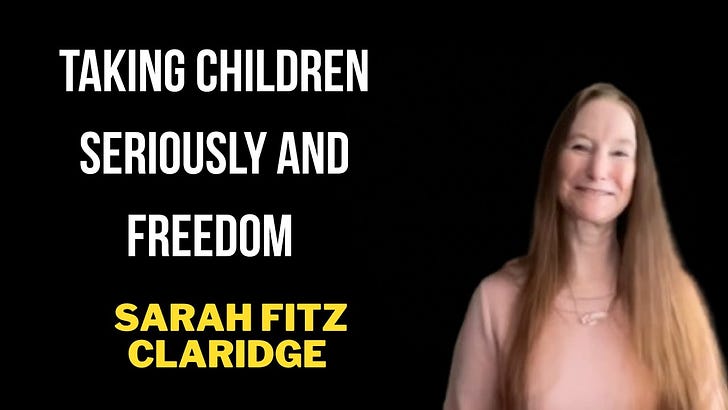
Sarah Fitz-Claridge is a writer, speaker, and the founder of Taking Children Seriously together with David Deutsch. Taking Children Seriously is a new/different view of children—as being full people whose wishes matter just like ours do, whose lack of consent matters just as much as ours does, whose reasons for their wishes make sense, just like ours do, follow Sarah on Twitter We talk about coercion, education, freedom, parenting, happiness, and what it means to truly take children seriously. Topics are outlined in the timestamps below.Watch on YouTube. Listen on Apple Podcasts, Spotify, or wherever you get your podcasts.Support my work here and follow me on Twitter hereTimestamps 00:00 – Intro00:38 – Why civilisations overlook children 11:39 – Do we still lack the knowledge of how to raise children otherwise?15:25 – Is coercion increasing in the way children are raised 27:28 – Inexplicit coercion, is it intentional?30:28 – Rationalize your reasons to your children 33:03 – We experience the childhood coercion and do the same to our kids36:56 – Does internal coercion precedes external coercion 43:57 – Teaching problem solving to children 45:46 – Balancing parental desires and child autonomy 56:08 – Coercion is not always wrong 1:01:57 – Raising children without an agenda 1:05:07 – Outcome oriented philosophies are mistaken 1:07:04 – The bucket theory of the mind 1:17:31 – Why having the right epistemology is crucial 1:31:40 – Optimism and pessimism in life 1:37:53 – The most important thing Sarah learned 1:39:24 – Advice to people Get full access to Progreshion at www.progreshion.blog/subscribe

Scott Aaronson is a theoretical computer scientist at the University of Texas at Austin, known for his pioneering work on quantum computing and computational complexity. He writes the widely read blog Shtetl-Optimized and has shaped how researchers and the public understand both the possibilities and limits of quantum technology.We talk about the reality of quantum computing, cryptography, AI progress, large language models, and what the future might look like when these technologies converge. Topics are outlined in the timestamps below.Watch on YouTube. Listen on Apple Podcasts, Spotify, or wherever you get your podcasts.Support my work here and follow me on Twitter hereTimestamps 00:00 – Intro03:25 – How computer science views quantum mechanics today06:50 – Superconducting qubits and how quantum machines are built10:15 – The rules of quantum probability explained13:41 – Quantum error correction and protecting fragile states17:06 – When quantum algorithms provide a speed-up (and when they don’t)20:31 – Skepticism and testing the limits of quantum hype23:56 – Why Scott is optimistic about scalable quantum computing27:22 – Potential applications: materials, chemistry, and beyond30:47 – Shor’s algorithm and breaking classical encryption34:12 – Bitcoin, cryptography, and the risks of a working quantum computer37:37 – Grover’s algorithm and the reality of search speedups41:03 – Large language models vs hard computational problems44:28 – What tasks AI still can’t solve (and how to test them)47:53 – GPT-4 vs GPT-3: progress, hype, and possible limits51:18 – How companies train and deploy models responsibly54:44 – The pace of change since ChatGPT launched58:09 – Power and danger: capability without aligned goals1:01:34 – Why AI is not just another technology but a civilizational shift Get full access to Progreshion at www.progreshion.blog/subscribe
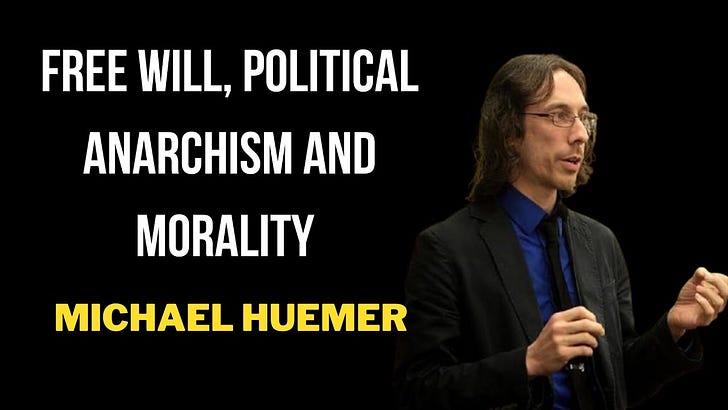
Michael Huemer is a professor of philosophy at the University of Colorado Boulder and the author of Ethical Intuitionism, The Problem of Political Authority, and more six books. He is known for his clarity, rigor, and no-nonsense philosophical reasoning and is in my opinion one of the best philosophers alive, follow Mike on Twitter We talk about the logic of free will, the illusion of the self, moral responsibility, philosophical anarchism, and how rationality might still matter in a deterministic universe. Topics are outlined in the timestamps below.Watch on YouTube. Listen on Apple Podcasts, Spotify, or wherever you get your podcasts.Support my work here and follow me on Twitter hereTimestamps 00:00 – Intro03:22 – Is the bias for determinism just another historical mistake?06:44 – Deliberation presupposes freedom10:06 – On truth, imperfection, and rational discourse13:28 – Is Huemer’s argument for free will a deductive proof?16:50 – Robots, compatibilism, and why freedom needs alternatives20:12 – You didn’t create yourself — but can you still be free?23:34 – The no-self doctrine and what it really means26:56 – Unconscious influence and degrees of freedom30:18 – Who gave the government the right to rule?33:41 – Philosophical vs political anarchism37:03 – Why most people misunderstand both government and anarchy40:25 – Defunding the police, private courts, and anarchist reform43:47 – Why civil disobedience is rare (and should happen more)47:09 – Can we have progress without chaos?50:31 – Moral progress and the abolition of slavery53:53 – What’s changing now and what’s next57:15 – Why being rational might be a moral obligation1:00:37 – One philosophical idea everyone should understand Get full access to Progreshion at www.progreshion.blog/subscribe

Brett Hall is the host of the TokCast podcast, a physicist and teacher, and one of the most insightful explainers of David Deutsch’s philosophy. He’s been writing and speaking about Popperian epistemology, optimism, and the universal reach of explanation for over a decade, follow Brett on Twitter We talk about what makes people people, why consciousness might be rarer than we think, why explanatory knowledge is the most powerful force in the universe, and what AGI and progress really mean. Topics are outlined in the timestamps below.Listen on Apple Podcasts, Spotify, or wherever you get your podcasts.Support my work here and follow me on Twitter hereTimestamps 00:00 – Intro03:18 – How The Fabric of Reality changed Brett’s worldview06:42 – Optimism, meaning, and the rejection of mysticism09:52 – What makes humans unique: universal explainers13:07 – Consciousness, personhood, and moral status16:44 – Popper’s critiques of academia and progress19:59 – Why Brett rejects labels like “Popperian” or “Deutschian”23:15 – What it means to explain something — and why we can’t define it26:21 – Explanations vs metaphors and epistemic clarity29:33 – Are good predictions overrated in science?32:55 – Why AI isn’t approaching AGI (and might be moving away)36:20 – Creativity, disobedience, and what people really are39:40 – Tools vs tool users: moral error in anthropomorphizing AI42:16 – Is empathy overrated? Sympathy, kindness, and curiosity45:02 – Why “facts” are interpretations too48:20 – Stagnation, error correction, and what still blocks progress51:14 – Brett’s vision of extending the Enlightenment54:38 – The path to AGI — and why forecasts are mostly fake58:01 – Final thoughts on truth, individuality, and cosmic responsibility Get full access to Progreshion at www.progreshion.blog/subscribe
David Deutsch is a physicist at the University of Oxford, widely considered one of the most profound thinkers alive today. He’s the author of The Beginning of Infinity and The Fabric of Reality, and a pioneer of quantum computing and Popperian epistemology, follow David on Twitter We talk about the nature of truth, creativity, optimism, education, AGI, and why error correction is the key to human progress. Topics are outlined in the timestamps below.Listen on Apple Podcasts, Spotify, or wherever you get your podcasts.Support my work here and follow me on Twitter hereTimestamps 00:00 – Intro03:13 – Can we eliminate error without ever knowing the final truth?06:21 – Why knowledge is always incomplete08:22 – Sam Harris, meditation, and mental frameworks09:41 – The mind as an explanation-generator13:22 – Anti-rational memes and the Enlightenment break17:28 – What caused progress to finally take off?20:29 – The nature of universal theories23:43 – Epistemic patience vs persuasive narratives27:16 – Institutions and pruning the “search tree” of ideas30:21 – AGI, refusal to respond, and creative isolation33:16 – Political promises and the irrationality of reelection incentives37:45 – School vs justice systems: arbitrary rules and real freedom41:43 – Creativity and the labor market44:25 – Henry Ford and the problem of sameness47:15 – Innovation, taxation, and punishment50:16 – How to become a better problem solver54:27 – Blind optimism vs blind pessimism57:59 – Popper, Bronowski, and the power of explanation1:01:22 – David’s most important lesson: Popperian epistemology Get full access to Progreshion at www.progreshion.blog/subscribe
Garett Jones is an economist at George Mason University and the author of Hive Mind, 10% Less Democracy, and The Culture Transplant. His work explores how intelligence, institutions, and ancestry shape national prosperity — often in surprising ways, follow Garett on Twitter We talk about national IQ, smarter governance, immigration policy, and why “less democracy” might sometimes mean better results. Topics are outlined in the timestamps below.Listen on Apple Podcasts, Spotify, or wherever you get your podcasts.Support my work here and follow me on Twitter hereTimestamps 00:00 – Intro03:11 – Smart people build better institutions that help everyone06:22 – IQ gaps, immigration, and intergenerational convergence09:33 – IVF, embryo selection, and boosting intelligence12:44 – Should we optimize our children’s genetics?15:55 – Axelrod, cooperation, and designing better institutions19:06 – What does “10% less democracy” really mean?22:17 – Making the case for longer political terms and elite control25:28 – Populism, Trump, and democratic decisions28:39 – Education, cosmopolitanism, and political tolerance31:50 – Why Europe is less market-friendly than the U.S.35:01 – Does democracy really cause economic growth?38:12 – Governance, boards, and the myth of top-down control41:23 – Iceland, open borders, and testing migration theory44:34 – Capitalism, communism, and cultural risk47:45 – Guest worker models and citizenship debates50:56 – Global elite summits and influence networks54:07 – Teaching general principles that stick57:18 – Public choice and win-win cooperation over 10,000 years Get full access to Progreshion at www.progreshion.blog/subscribe
Johan Norberg is a Swedish author and historian of ideas. He’s a senior fellow at the Cato Institute and the author of Progress, In Defense of Global Capitalism, The Capitalist Manifesto and more recently Peak Human. His work explores the roots of prosperity, the case for open societies, and why freedom leads to human flourishing, follow Johan on TwitterWe talk about what really drives progress, how innovation emerges, the false promises of degrowth, and why optimism is a moral stance. Topics are outlined in the timestamps below.Listen on Apple Podcasts, Spotify, or wherever you get your podcasts.Support my work here and follow me on Twitter hereTimestamps00:00 – Intro02:31 – Why trade and openness drive innovation05:03 – The mindset of responsibility and agency07:36 – Capitalism, sustainability, and environmental progress10:10 – Why human flourishing isn’t guaranteed12:42 – How human creativity builds prosperity15:17 – What profit really means in free markets17:51 – Risk-taking and the power of entrepreneurship20:27 – The decline of global inequality23:03 – Can markets handle externalities fairly?25:41 – Why regulation doesn’t mean anti-market28:15 – Cultural mixing and progress through diversity30:54 – Embracing uncertainty instead of fearing it33:20 – Against utopia: why hope must stay grounded35:59 – Degrowth and the real moral risks of stopping progress38:36 – Lockdowns, poverty, and policy trade-offs41:10 – The future of work, leisure, and meaning43:45 – Green growth and energy optimism46:12 – Literature, imagination, and moral insight48:50 – Final reflections on freedom and fallibility Get full access to Progreshion at www.progreshion.blog/subscribe
Leigh Brasington is a meditation teacher in the Theravāda Buddhist tradition and the author of Right Concentration: A Practical Guide to the Jhānas. He was authorized to teach by Ayya Khema and is known for his deep knowledge of jhāna practice and insight meditation.We talk about altered states of concentration, awakening without dogma, what it feels like to perceive without ego, and how practice transforms life. Topics are outlined in the timestamps below.Listen on Apple Podcasts, Spotify, or wherever you get your podcasts.Support my work here and follow me on Twitter hereTimestamps00:00 – Intro02:37 – Seeing reality beyond the ego05:15 – Learning the jhānas with Ayya Khema07:53 – Insight that follows deep concentration10:31 – What real meditation absorption feels like13:09 – Leigh’s critique of lighter jhāna methods15:47 – Retreat environments and access to jhānas18:25 – Teaching online vs in-person21:03 – What helps students succeed23:41 – Stories from students’ breakthroughs26:18 – Is jhāna possible for everyone?28:56 – Why we procrastinate on practice31:34 – Insight meditation and Satipaṭṭhāna34:12 – How meditation shapes happiness36:50 – Is full awakening really possible?39:28 – Letting go of the sense of self42:06 – Dependent origination explained44:44 – Emptiness and early perception47:22 – Final reflections and recommended books Get full access to Progreshion at www.progreshion.blog/subscribe
Max More is a philosopher, futurist, and one of the world’s most influential advocates for cryonics and life extension. He’s the former CEO of Alcor and a leading thinker on transhumanism, personal identity, and long-term survival, follow Max on Twitter We talk about cryopreservation, memory, the limits of death, technological ethics, and why future generations might live radically longer and freer lives. Topics are outlined in the timestamps below.Listen on Apple Podcasts, Spotify, or wherever you get your podcasts. Support my work here and follow me on Twitter hereTimestamps00:00 – Intro02:37 – How memory works through death and anesthesia05:15 – What happens to the body before legal death07:53 – Ending the inevitability of aging10:31 – How many people are signed up for cryopreservation?13:09 – What embryos teach us about freezing humans15:47 – How the procedure works: cryoprotectants and vitrification18:25 – Clinical death and revival windows21:03 – How advanced technology defines death23:41 – Governance and the future of cryonics organizations26:18 – Skepticism vs honest uncertainty28:56 – Sci-fi myths and public misunderstanding31:34 – Why Max sees biostasis as rational34:12 – The precautionary principle and political risk-aversion36:50 – What the IPCC really says about climate change39:28 – Living in extreme conditions without panic42:06 – Financial preparedness for uncertain futures44:44 – What kind of world could revive you?47:22 – Reprogramming mood and personality in the future Get full access to Progreshion at www.progreshion.blog/subscribe
Richard Y. Chappell is a moral philosopher and Associate Professor at the University of Miami. He works on effective altruism, utilitarianism, moral realism, digital minds, and the ethics of the far future. He co-authored An Introduction to Utilitarianism and writes at the blog Good Thoughts, follow Richard on Twitter We talk about doing good effectively, moral truth, AI consciousness, and why compassion needs reason. Topics and ideas are outlined in the timestamps below.Listen on Apple Podcasts, Spotify, or wherever you get your podcasts.Support my work here and follow me on Twitter hereTimestamps0:00 – Intro0:24 – What is effective altruism?4:08 – Longtermism & future risks9:34 – Beneficentrism vs utilitarianism14:56 – Donating 10%17:16 – Emotions vs reason19:09 – Writing with MacAskill20:28 – What is moral realism?24:35 – Liberalism vs relativism25:12 – Why normativity matters26:30 – Reason vs evolution28:50 – Conscious AI30:28 – Who counts morally?33:55 – Mechanistic minds?34:52 – Books that shaped him35:24 – Defining personhood37:30 – Should philosophers reach people?40:43 – Status quo bias43:07 – The meaning of life Get full access to Progreshion at www.progreshion.blog/subscribe
Jac O’Keeffe is a spiritual teacher, author, and founder of the Association for Spiritual Integrity. She guides students on the path beyond ego, and speaks openly about awakening, trauma, power dynamics, and the mystery of consciousness. We talk about spiritual awakening, teacher-student dynamics, the traps of identity, and how integrity fits into the inner path. Topics are outlined in the timestamps below.Listen on Apple Podcasts, Spotify, or wherever you get your podcasts.Support my work here and follow me on Twitter hereTimestamps 00:00 – Intro02:37 – Ego breakdowns and spontaneous mystical experiences05:15 – Helping a spirit cross over07:53 – Interactions with beings and inner dialogues10:31 – Realizing her spiritual orientation13:09 – The moment that changed everything15:47 – Intuition, autism, and social trust18:25 – Embodiment and energetic memory21:03 – Why spiritual teachers sometimes behave badly23:41 – Founding the Association for Spiritual Integrity26:18 – Why students fear giving feedback to teachers28:56 – When teachers project their unmet needs31:34 – Empowering students to reclaim their authority34:12 – Shared blind spots in the teacher-student dynamic36:50 – Projecting and mirroring in spiritual relationships39:28 – Becoming comfortable with full humanness42:06 – Misunderstanding Jesus and obedience44:44 – Doing spiritual service without funding47:22 – Consciousness incarnating to experience separation Get full access to Progreshion at www.progreshion.blog/subscribe
Avi Kahan is a writer and thinker exploring the relationship between science, metaphysics, and religious thought. His work touches on Judaism, psychology, and the philosophical foundations of belief.We talk about the metaphysics of God, the psychological architecture of religion, how science can take on religious roles, and why faith persists in the modern world. Topics are outlined in the timestamps below.Listen on Apple Podcasts, Spotify, or wherever you get your podcasts.Support my work here and follow me on Twitter hereTimestamps 00:00 – Intro02:48 – God as a mental model and personal conviction05:36 – Upbringing, exposure, and identity shaping08:25 – Jewish history, struggle, and cultural continuity11:13 – Jesus and the Inquisition story14:01 – Leadership, law, and religious structure16:50 – Religion and the suppression of doubt19:38 – Greek gods and metaphysical abstractions22:26 – Prayer, science, and embodied rituals25:15 – Freud, Jung, and metaphysical psychology28:03 – Can science itself become a religion?30:52 – Scientific awe and religious feeling33:40 – Why religion won’t die36:28 – Religious cohesion across major traditions39:17 – Community, healing, and harm through religion42:05 – Optimism and human progress44:53 – Connection, communication, and modern unity47:42 – Moral convergence and global values50:30 – Aristotle, Antiochus, and metaphysical struggle Get full access to Progreshion at www.progreshion.blog/subscribe
BJ Campbell is the author of the Handwaving Freakoutery Substack and a systems engineer with deep experience in data analysis. His writing explores media dynamics, gun policy, polarization, and the complex incentives behind cultural panic, follow BJ on Twitter We talk about how freakouts form, how institutions lose trust, the mechanics of mass persuasion, and what we can do when truth breaks down. Topics are outlined in the timestamps below.Listen on Apple Podcasts, Spotify, or wherever you get your podcasts.Support my work here and follow me on Twitter hereTimestamps 00:00 – Intro02:29 – The origin of “freakoutery” and viral moral panic05:04 – How trust breaks and narratives take over07:31 – Role of experts and institutional decay09:58 – Why media can’t afford to be accurate12:23 – Gun violence, data misuse, and tribal conclusions14:50 – BJ’s breakdown of CDC messaging failure17:18 – Do both sides cherry-pick gun data?19:46 – Why no one really wants an honest debate22:12 – The incentive systems of media and politics24:39 – Are we already in a soft civil war?27:06 – Public health as a rhetorical weapon29:33 – How memes win and outcompete facts31:59 – Algorithms and narrative feedback loops34:26 – Chaos as performance and control36:52 – Information overload and digital stress39:19 – Epistemology and the limits of modeling41:46 – Collapse of authority and search for coherence44:13 – How to rebuild trust without central control46:40 – Models, culture, and long-term thinking49:07 – What optimism looks like under breakdown51:34 – Freakoutery, faith, and the next wave54:01 – Final thoughts on rebuilding rationality Get full access to Progreshion at www.progreshion.blog/subscribe
Michael Strong is an educational entrepreneur, author, and co-founder of several ventures focused on liberating human potential — including the Academy of Thought and Industry and The Socratic Experience. He writes about innovation in education, startup cities, and moral development, follow Michael on Twitter We talk about how schooling shapes society, what freedom means in practice, and why creating better institutional environments matters more than reforming broken ones. Topics are outlined in the timestamps below.Listen on Apple Podcasts, Spotify, or wherever you get your podcasts.Support my work here and follow me on Twitter hereTimestamps 00:00 – Intro02:51 – The moral vision behind Socratic dialogue05:42 – School as an obedience-training system08:33 – The pain and purpose of adolescent development11:24 – Why most schools kill intrinsic motivation14:15 – Reimagining schools through freedom and trust17:06 – Human capital and educational entrepreneurship19:57 – Startup cities as moral ecosystems22:48 – The importance of good rules vs lots of rules25:39 – Why real liberty includes responsibility28:30 – Institutions that align with human flourishing31:21 – Virtue ethics, Aristotle, and thriving students34:12 – How to scale good ideas without bureaucracy37:03 – The future of self-directed learning39:54 – Unschooling, discipline, and long-term outcomes42:45 – Building a moral culture without coercion45:36 – School as simulation vs engagement with reality48:27 – The spiritual dimension of creative work51:18 – Final thoughts on education, meaning, and freedom Get full access to Progreshion at www.progreshion.blog/subscribe
Sam Kuypers is a physicist and researcher at the Conjecture Institute, working at the intersection of quantum theory, epistemology, and AI alignment. His work explores the deep structure of knowledge, the philosophy of time, and how models of understanding evolve, follow Sam on Twitter We talk about quantum information, how theories evolve, the failures of conventional education, and why clarity in epistemology matters more than ever. Topics are outlined in the timestamps below.Listen on Apple Podcasts, Spotify, or wherever you get your podcasts.Support my work here and follow me on Twitter hereTimestamps 00:00 – Intro02:25 – How science builds explanations vs just data04:51 – Why quantum theory still confuses people07:17 – Absurdity in textbook interpretations of collapse09:43 – Why time and causality remain misunderstood12:09 – Openness of the future and causality in physics14:35 – The arrow of time and symmetric equations17:01 – What realism really means in science19:27 – Quantum theory as deeply explanatory21:53 – Quantum entanglement and the problem of locality24:18 – Probability, measurement, and subjective views26:44 – Why alternate versions of reality can’t interact29:10 – Education as guessing, criticizing, and learning31:36 – Genuine knowledge vs passive absorption34:02 – ChatGPT and the future of learning36:28 – Unschooling and child-led epistemology38:54 – Reviving forgotten epistemological frameworks41:20 – Why the best theories aren’t widely accepted43:46 – Epistemological mistakes and the mission at Conjecture Get full access to Progreshion at www.progreshion.blog/subscribe
Henry Holtz is a meditation teacher and engineer exploring non-duality, consciousness, and the paradoxes of awakening. His work brings together deep spiritual insight with direct, embodied experience, follow Henry on Twitter We talk about the nature of awareness, the illusion of self, the trap of seeking, and how spiritual awakening unfolds through deep honesty and surrender. Topics are outlined in the timestamps below.Listen on Apple Podcasts, Spotify, or wherever you get your podcasts.Support my work here and follow me on Twitter hereTimestamps00:00 – Intro02:50 – The shift from “I am the thinker” to “thoughts arise in me”05:40 – How meditation reveals what was always the case08:30 – Chasing spiritual states vs recognizing the present11:20 – The illusion of a future enlightenment14:10 – How self-improvement becomes another ego game17:00 – Is there ever an endpoint to the spiritual path?19:50 – Practice vs surrender and the apartment metaphor22:40 – How meditation helps in daily life and engineering25:30 – Stress, discipline, and clarity at work28:20 – The “dark night of the soul” and spiritual depression31:10 – Letting go of self-improvement and facing sadness34:00 – Stability, grounding, and small daily actions36:50 – The illusion of self and what the robber sees39:40 – The mind’s frameworks can’t contain reality42:30 – Spiritual traps: idolizing teachers and bypassing the present45:20 – Searching for awareness while looking from it48:10 – The deeper paradoxes of perception and being51:00 – What is the default mode network and its spiritual role? Get full access to Progreshion at www.progreshion.blog/subscribe
Jacob Falkovich is the writer behind Second person dating, a blog and Substack weaving together rationality, relationships, and culture. His work explores how dating works in the real world — not the fairy tale or the algorithm — and what it means to be honest, strategic, and human, follow Jacob on Twitter We talk about the epistemology of dating, the myth of soulmates, polyamory, emotional rationality, and how to escape the hidden scripts of modern romance. Topics are outlined in the timestamps below.Listen on Apple Podcasts, Spotify, or wherever you get your podcasts.Support my work here and follow me on Twitter hereTimestamps 00:00 – Intro02:43 – Dating as an inference problem, not a competition05:26 – How “active inference” applies to attraction08:09 – Everything you do sends a signal — whether you know it or not10:52 – Selection effects and dating dynamics in apps13:35 – Why dating apps are broken markets16:18 – Soulmate fantasies, agency, and gender roles19:01 – Mimetic stories and the identity of being “unlovable”21:44 – How status games distort love and dating24:27 – Authenticity vs strategic presentation27:10 – Why lying on dating apps ruins your filter29:53 – Polyamory, open relationships, and cringe signaling32:36 – Jealousy, drama, and doing it for the wrong reasons35:19 – Love as transformation, not optimization38:02 – Rationalists, emotions, and long-term unpredictability40:45 – Relationships as prediction problems, not utility hacks43:28 – What Jacob learned from 10 years with his wife46:11 – Breaking social scripts through cultural contrast48:54 – The cost of following the script vs living with intention Get full access to From the Lotus World at www.fromthelotus.world/subscribe

We dived deep into how the differences of hierarchy and decentralization can make everyone heard, microsolidarity replacing the traditional institutions, the potential of online communities and much more!Follow me on TwitterFollow Rich on Twitter Support me Get full access to From the Lotus World at www.fromthelotus.world/subscribe

We dived deep into the machine learning optimization predictions, human decision making and emotions, probabilistic reasoning as the core of forecasting and much more!Follow me on TwitterFollow George on Twitter Support me Get full access to From the Lotus World at www.fromthelotus.world/subscribe

Comments

Download from Google Play

Download from App Store
 United States