


 Claim Ownership
Believe in Balance Podcast
Subscribed: 0Played: 1
Subscribe

© David Dansereau,MSPT
Description
Audio education on all things health and balance from the Substack for physical therapist David Dansereau's Free and Premium Achieve Balance Newsletter, Course & Coaching Community (intended to enhance learning on the go!)
achievebalance.substack.com
achievebalance.substack.com
26 Episodes
Reverse

Trusted Partners in AgeTechWhile older adults are adopting technology at increasing rates, several significant barriers still prevent widespread adoption. My most recent video helps explain how I use my smart ‘tech-ready’ checklist to help my aging clients and their family members solve both the critical trust and tech readiness care gaps to aging in place.If you missed my last podcast episode 18 I covered the key differences between a Certified Aging in Place Specialist (CAPS) and an Age Tech Specialist. You can listen on Substack via the link below or find it on your favorite podcast players.Trust, Privacy, and Security According to AARP’s 2026 Tech Trends report, data privacy remains the top-rated barrier to tech adoption. Older adults are highly concerned about what personal data is being collected, whether it is secure, and the risks of identity theft. These fears are especially pronounced with new tools like AI, where users worry about AI-generated scams (such as fake phone calls mimicking family members) and the overexposure of their personal information. Tip: A first step in ‘tech safety 101’ with my clients is always keep up with the latest software updates to all the devices they connect with online! The latest AARP report shows that the average 50 plus year old household owns over 7 connected devices, that’s great but it also presents increased safety risks if these devices are outdated.Thanks for reading Achieve Balance! This post is public so feel free to share it.Information Overload and Confusion The pace of innovation can be exhausting. The 2025 Linkage Connect report found that the single greatest barrier for older adults—particularly for women 75 and older—is simply keeping up with the latest technology and not knowing what to buy. Many older adults feel overwhelmed by the sheer number of options available on the market.Lack of Perceived Value Older adults tend to adopt technology based on clear “needs” rather than “wants”. If a device does not meet a practical need, they are unlikely to use it; for example, many skip smart home automation because they simply don’t see the benefit. AARP notes that understanding the relative value of a product—answering the question, “Why should I care?”—has become the second most significant barrier to adoption.One of the consulting roles I take seriously is to keep up with the latest technology trends (see the agetech map below) and help my clients understand why they should care when it comes to home safety and agetech solutions that can keep them thriving and independent in their homes. Finding effective and affordable agetech solutions extends to their families as well, as the latest caregiver report demonstrated the 63 million Americans now provide care to a family member, which has increased over 45% in recent years.Thanks for reading Achieve Balance! Subscribe for free to receive new posts and support my work.Coming Up Next in my Achieve Balance Agetech Series:My SmartMoves Home AgeTech Market Report with a focus on market drivers and health and wellness innovations.See correct answer to this poll in my tip section in this article! This is a public episode. If you would like to discuss this with other subscribers or get access to bonus episodes, visit achievebalance.substack.com
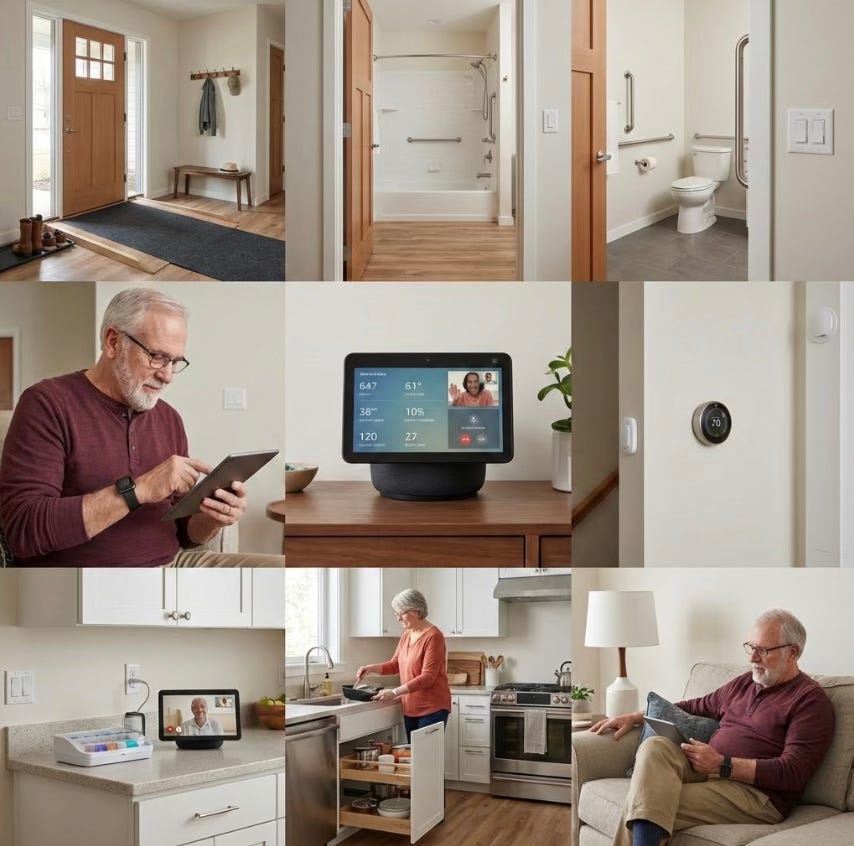
Welcome back to Ep 18 of the Believe in Balance Podcast!I’m your host David Dansereau a physical therapist as well as both a Certified Aging in Place Specialist and a Certified Age Tech Specialist. Today, I’m diving into these specialties because with the different titles it can be confusing. After the last episode when I discussed Digital Frontiers in AgeTech, I was asked by someone at the event curious about my titles what an ‘AgeTech’ specialist does. There are indeed many similarities and it can be confusing so what’s the difference between these two key professionals who help older adults stay independent—the Certified Aging in Place Specialist, or CAPS, and the Certified AgeTech Specialist?While both are focused on improving the lives of seniors, their approaches, tools, and expertise are quite distinct. Understanding these roles is crucial for anyone looking to make informed decisions about home modifications and technology. Listen and learn in this episode!If you are short on time I included a key visual in this episode show notes:Show Mentions: This is a public episode. If you would like to discuss this with other subscribers or get access to bonus episodes, visit achievebalance.substack.com
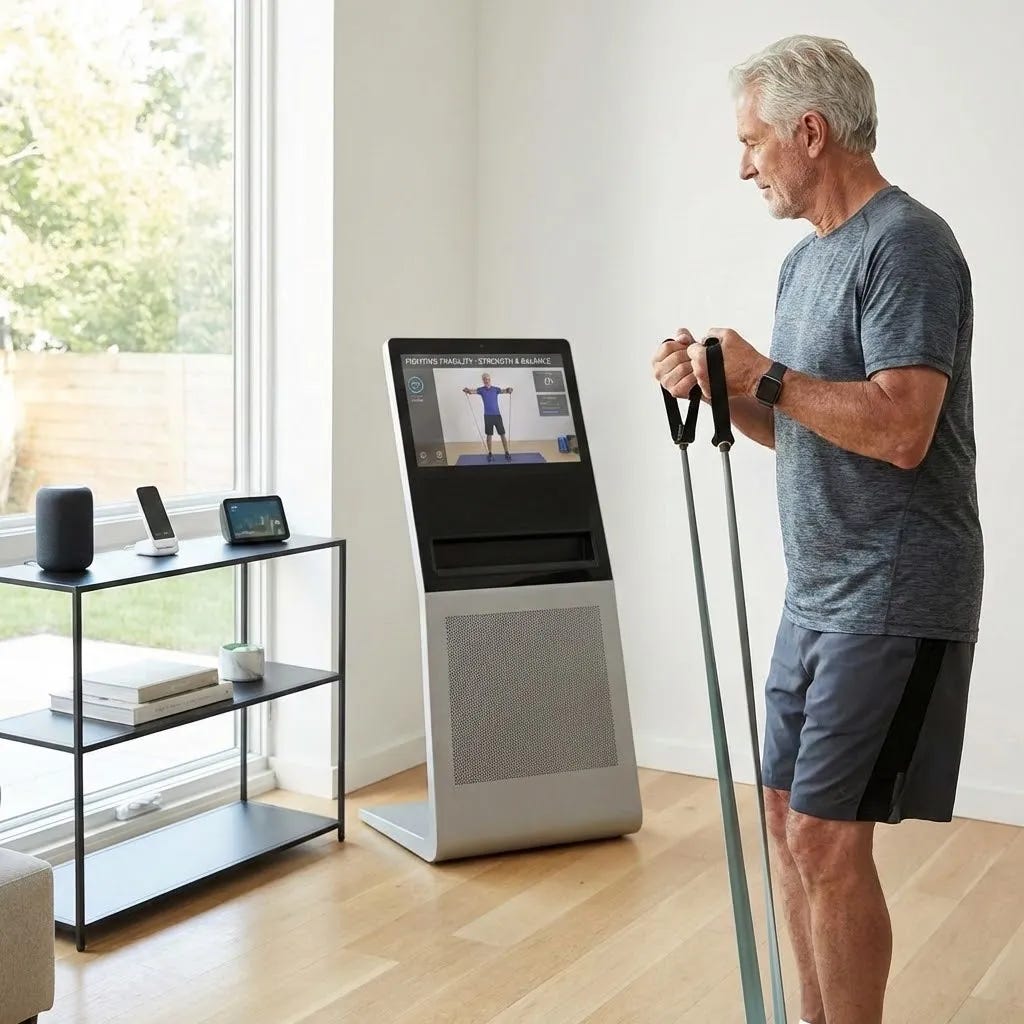
Believe in Balance Podcast Episode 17Host: David Dansereau, MSPT, CAPSLast week I had the opportunity to attend Digital Frontiers in Frailty: Opportunities for Early Detection and Clinical Action, a hybrid full day workshop hosted by the Massachusetts AI & Technology Center (MassAITC) that brought together clinicians, engineers, researchers, and innovators to reimagine how we detect, monitor, and ultimately acton frailty in aging adults. The following episode and companion article linked below in these show notes is my review and takeaways from the workshop.As a physical therapist deeply invested in preserving independence, functional mobility, and strength across the lifespan for my clients, what struck me most was how consistently movement, exercise capacity, balance integrity, and strength emerged as central themes in every session — not just as outcomes to measure, but as actionable targets for intervention.Enjoy this episode and please chime in over on Substack or leave the show a review on your favorite podcast player!References: This is a public episode. If you would like to discuss this with other subscribers or get access to bonus episodes, visit achievebalance.substack.com
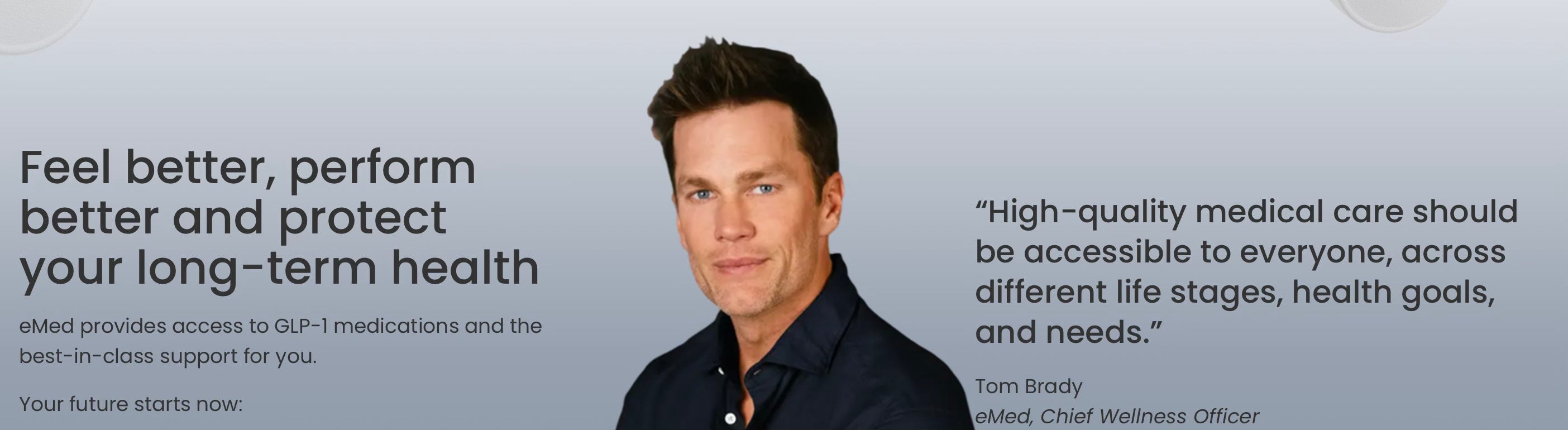
If you missed my last episode on The GLP Gold Rush listen to Episode 15 as it will give more context to this follow-up and latest episode on the state of GLP use.Here’s the press release announcement from eMed welcoming Brady as Chief Wellness Officer.I’ll let you know if they get back to me for an interview to help us understand why they are different and why we should all dive in with the GOAT on GLPs.Don’t hold your breath on my update on if Tom will join us, but if you don’t ask the answer is automatically no, so I asked.Mentions:Thanks for reading Achieve Balance and Listening to the Believe in Balance Podcast! This post and audio is public so feel free to share it.Chime In! This is a public episode. If you would like to discuss this with other subscribers or get access to bonus episodes, visit achievebalance.substack.com

As the New Year kicks off, so do weight loss resolutions—and right on cue, a new wave of GLP-1 medications has arrived, this time in pill form. Marketed as more convenient, more accessible, and easier than ever, these drugs are poised to open the floodgates for mass adoption. But behind the headlines is a familiar story: a high-stakes race for market share, billions in projected profits, and a pharmaceutical industry perfectly timed to capitalize on our collective desire for a fresh start. In today’s episode, I’m unpacking what the economic costs of GLP-1s really means—for patients, for the healthcare system, and perhaps for the future of weight loss and behavior change. Are we manufacturing a new generation of lighter but weaker adults— in other words an epidemic of “thin frailty.”Stay tuned I’ll unpack it in episode 15 from a PT perspective!This episode is based on my recent article on Substack Read and Listen to More on GLPTom Brady now a GLP ‘Chief Wellness officer’ at eMed-Episode 16 just released with this press announcement. (Oh boy, let’s Go?!?!) This is a public episode. If you would like to discuss this with other subscribers or get access to bonus episodes, visit achievebalance.substack.com
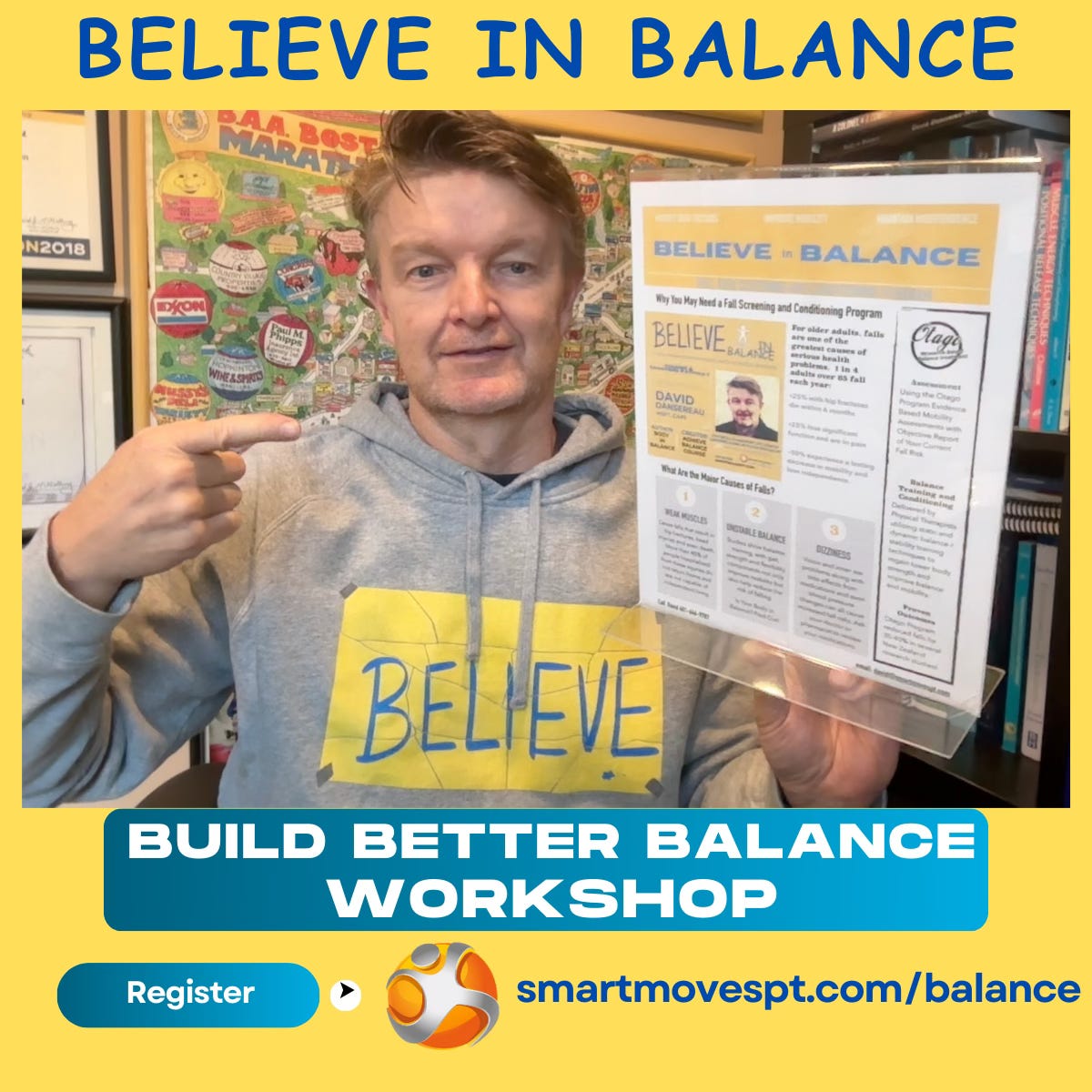
The research on aging well and utilizing a balanced strength training program to offset sarcopenia (big word for-AGE ADJUSTED LOSS OF LEAN MUSCLE MASS) in our aging population is not new. In fact, the science behind staying strong into our 80s and beyond has been well documented for many years. One this episode: To highlight this fact, I’m going to jump into my ‘PT way back time machine’ to highlight a report on the science I presented while researching sarcopenia and the elderly back in my PT student training days. On this episode I’m reading my report I presented in PT graduate school from back in 2019 and comparing it to a recent podcast on the same topic some 25 years later by popular longevity expert, Dr. Peter Attia. After you listen to this episode, it hopefully begs the question to start thinking about why we aren’t doing more to boost senior fitness and health and longevity IQ.What hasn’t moved on this needle with all this new data is how we build programs to engage and encourage more seniors to contribute to their ‘longevity retirement fund’ (their muscle and strength levels) and get them building instead of breaking down muscle with age. My wish: I hope you listen to understand how to best prepare now to ‘fund’ your own healthy retirement and comment on this episode! We dove deep in to the financial impact of what it costs to remain inactive in retirement on my recent workshop.If you missed it:Here’s the Solution I’m Building to Address The Problem:During my Believe in Balance Workshop you’ll learn:* The key strength and balance exercises that reduced falls between 35 and 40% for sedentary older adults using the proven Otago research-based balance assessment and treatment pathway. Learn the secrets to performing these quick mobility assessments and exercises!* Which functional measurements are used to quickly screen for your current balance, lower body mobility and strength levels.* Home mobility and fall prevention safety checklist before you get started* New tech tools to remotely assess and engage you in your balance training* Nutrition? Yes, that plays a role in your balance performance for sure and we’ll be talking about it, especially your protein needs with aging!* Case Studies- 2 spotlights using the program from my clients’ experiences* How you can get started with free access to our balance training course starter program before the official launch and connect with me to guide you through getting started with the program to jump-start your success!Thanks for reading Achieve Balance! Subscribe for free to receive new posts and support my work.Show mentions:The Drive Podcast by Peter Attia: Rethinking protein needs for performance, muscle preservation and longevityIn this episode both guests make the case for a higher protein intake based on four fundamental tenets. They argued (with evidence) that the current RDA is too low for optimal muscle health, that higher protein intakes are not only better, but likely necessary to build and maintain muscle with age; that higher protein intakes are optimal for physically-active individuals; and that there are no health risks associated with higher protein intakes. Bottom line: Listen to my episode and theirs and make your own decision!Chime in below! This is a public episode. If you would like to discuss this with other subscribers or get access to bonus episodes, visit achievebalance.substack.com
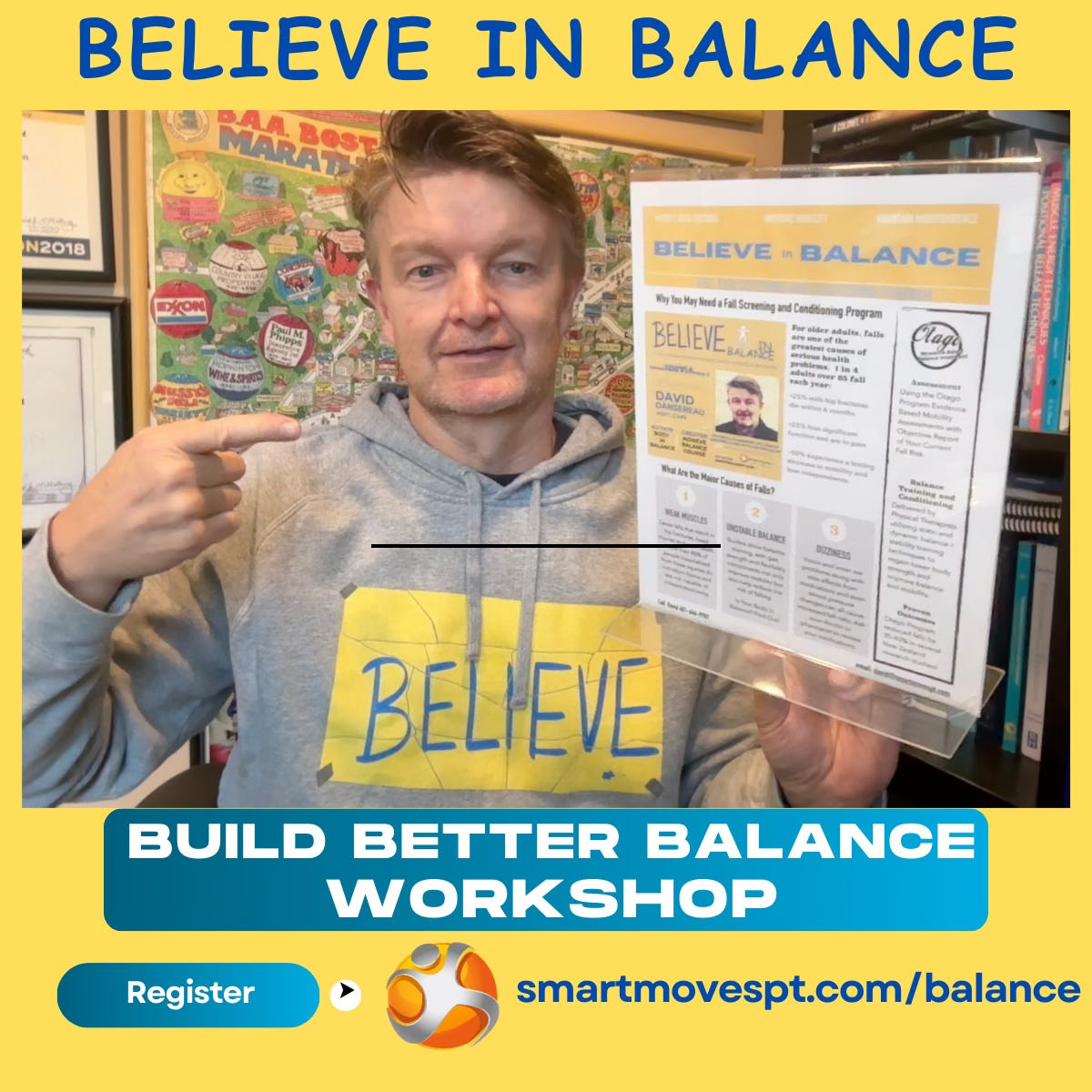
This podcast references an article I wrote many years ago for Stroke Smart Magazine’s Mobility Column. I feel it is appropriate today to share and build on the resources from the recent pre-launch of my new balance course, Believe in Balance.Thanks for reading and listening to the Achieve Balance podcast! This post and podcast episode is public so feel free to share it.Balance, a task we mastered early in life seems simple enough, but as we age or encounter a neurological insult like a stroke or other challenge that impairs mobility, balance often needs to be relearned. This may mean that the brain has to find new pathways, or a new route to learn how to maintain balance. Scientists call this ability of the brain to be constantly reshaped when challenged, neuroplasticity.definition (noun)-The ability of the brain to form and reorganize synaptic connections, especially in response to learning or experience or following injury.Let’s break down that fancy word with a real world examples so you might learn how they can be applied to your current balance abilities.Resources mentioned in this episode:If you missed the first Believe in Balance Workshop here’s a link to learn more about this new program and how to get access to the rebroadcast.If you missed the follow-up live Q and A for questions that came in after the workshop you can access here: This is a public episode. If you would like to discuss this with other subscribers or get access to bonus episodes, visit achievebalance.substack.com
Here’s the links mentioned during the Q and A session:Register for the Believe in Balance Workshop replay: https://smartmovespt.com/balanceTake the Workshop Survey to get access to the guidebook and app This is a public episode. If you would like to discuss this with other subscribers or get access to bonus episodes, visit achievebalance.substack.com
Here’s the video for the free trial offer for my preferred app to access my Believe in Balance Program.Here’s how it works:* Complete the Workshop Survey* Accept the Free 7 Day Trial Offer* Access the complete Believe in Balance Exercise and Conditioning Program through my preferred client app free for one week. * No payment or appointment required. Pay $47/year thereafter if you decide it is working for you! * Allow 48 hours for App access- I had lots of interest!* I will email you or text you in the portal to request payment when free trial expires.Missed All This?Reach out to me in the comments or message me below, I’ll let you know when the rebroadcast goes live!Update: Great News- Workshop Rebroadcast is Now Available through October This is a public episode. If you would like to discuss this with other subscribers or get access to bonus episodes, visit achievebalance.substack.com
If you are not building you are breaking down. Or perhaps shutting down in the case of our government (most likely) today:(But that’s not stopping us, we aren’t shutting down today. In fact we are talking about it on this podcast episode how we are going live in a few hours with our balance workshop.We are still going live in a few hours with our first Believe in Balance Workshop!Thanks for reading Achieve Balance! This post is public so feel free to share it.Here’s Why:Falls are NOT a normal part of aging - and many are preventable. Just like government shutdowns perhaps.Did you know? Preventing falls means more than avoiding injury, it’s about staying independent, confident, and engaged for our family members, patients, communities and ourselves!In this workshop I’ll cover how I’m building resources to support keeping you on your feet and the doors to your life open! I am committed to supporting this vision by making evidence-based program and assessments affordable and partner to offer falls prevention tools and workshops direct to consumer and to everyone who works with older adults.While the government is shutting down, slashing programs, and cutting services to veterans and seniors I’m commited to staying open and offering support.Learn more on my first Believe in Balance Workshop coming October 1st! This is a public episode. If you would like to discuss this with other subscribers or get access to bonus episodes, visit achievebalance.substack.com
Thanks for reading Achieve Balance! Subscribe for free to receive new posts and support my work.On this episode I’ll provide and overview of my new Believe in Balance Fall Prevention Course and Conditioning Pathway and Free Launch Webinar October 1stPurposeTo implement an evidence-based, standardized fall prevention pathway that reduces falls, improves patient outcomes, and supports quality reporting across care settings and to empower patients with the knowledge and tools to restore faith in their balance and take charge of their own health.Why It Matters* Falls are the leading cause of injury-related hospitalizations and death in adults >65.* National benchmarks (CMS, Joint Commission, AHRQ) increasingly tie fall prevention to reimbursement, quality, and patient safety and quality of life scores.* Changes to reimbursement patterns and the uncertain federal economic healthcare landscape is allowing falls screening to ‘fall’ through the cracks and is putting seniors at risk.* Evidence-based programs can reduce fall rates 25–40% with proper implementation.Thanks for reading Achieve Balance! This podcast and post is public so feel free to share it.Solution: Believe in Balance Fall Prevention Pathway by SmartMovesPTSmartMovesPT provides a scalable digital course and platform combining clinician training, validated risk assessments, patient education, and digital and print home exercise programs (HEPs) within a guided workflow.Core Elements:* Clinician Education & CEU Courses (STEADI, TUG, Berg, Fall Risk Strategies).* Validated Fall Risk Assessments (TUG, 30s Chair Stand, 4-Stage Balance, SmartMovesPT Movement Screen-from David’s book Body in Balance).* Tailored Exercise Programs (strength, static/dynamic balance, gait training, dual-tasking, functional transfer practice and therapeutic exercises coached by a PT to boost mobility confidence).* Patient Engagement Tools (videos, handouts, adherence tracking, reassessment).* Care Pathway Workflow (screen → assess → intervene → monitor → re-assess).Includes Outcome Reporting (track fall incidence, functional gains, patient-reported confidence and incorporates affordable digital tools to boost engagement and retention).Want to learn more about Believe in Balance? This is a public episode. If you would like to discuss this with other subscribers or get access to bonus episodes, visit achievebalance.substack.com
Thanks for reading Achieve Balance! This post is public so feel free to share it.(Tip: Sorry in advance for the slight delay at start of this video-trying to record straight from Substack to video NEVER works on a Mac, don’t try it!)Take 2- The Office Check-inWasn’t sure where to post this video (either at Know Stroke or here on Achieve Balance) since the subject within crosses both themes and content areas I am writing about on Substack.How are we to Achieve Balance when the ‘health care’ systems around us are collapsing in front of our eyes?Please watch the video- I need your feedback and please do send me some hope! Also if you just want to comment about the roads in Rhode Island if you’ve been through our state to head to the Cape or up to Boston recently, chime in below. Here was my original video post before I walked in to the medical office and had thoughts for Take 2.Take 1- The Pre-Checkin and the patient portalAre you using it for help in your own medical management?This was the short video I was going to post as a note to get your feedback how/if you are using your patient portal within your provider’s EMR/EHR. Do You Use Your Provider’s Patient Portal to Help You Stay Well and Achieve Balance?Message me if you found the post it note tip helpful! Thanks!!PollBottom Line: Hope is a good thing, but hope is not a plan. Rhode Island needs a better plan to keep up its’s roads, its medical infrastructure, its payment and reimbursement rates, and its provider incentives to keep talent from leaving the state or the healthcare system will crumble. It’s already heading there fast.Until next time, stay well, keep the faith and keep moving forward.-David This is a public episode. If you would like to discuss this with other subscribers or get access to bonus episodes, visit achievebalance.substack.com
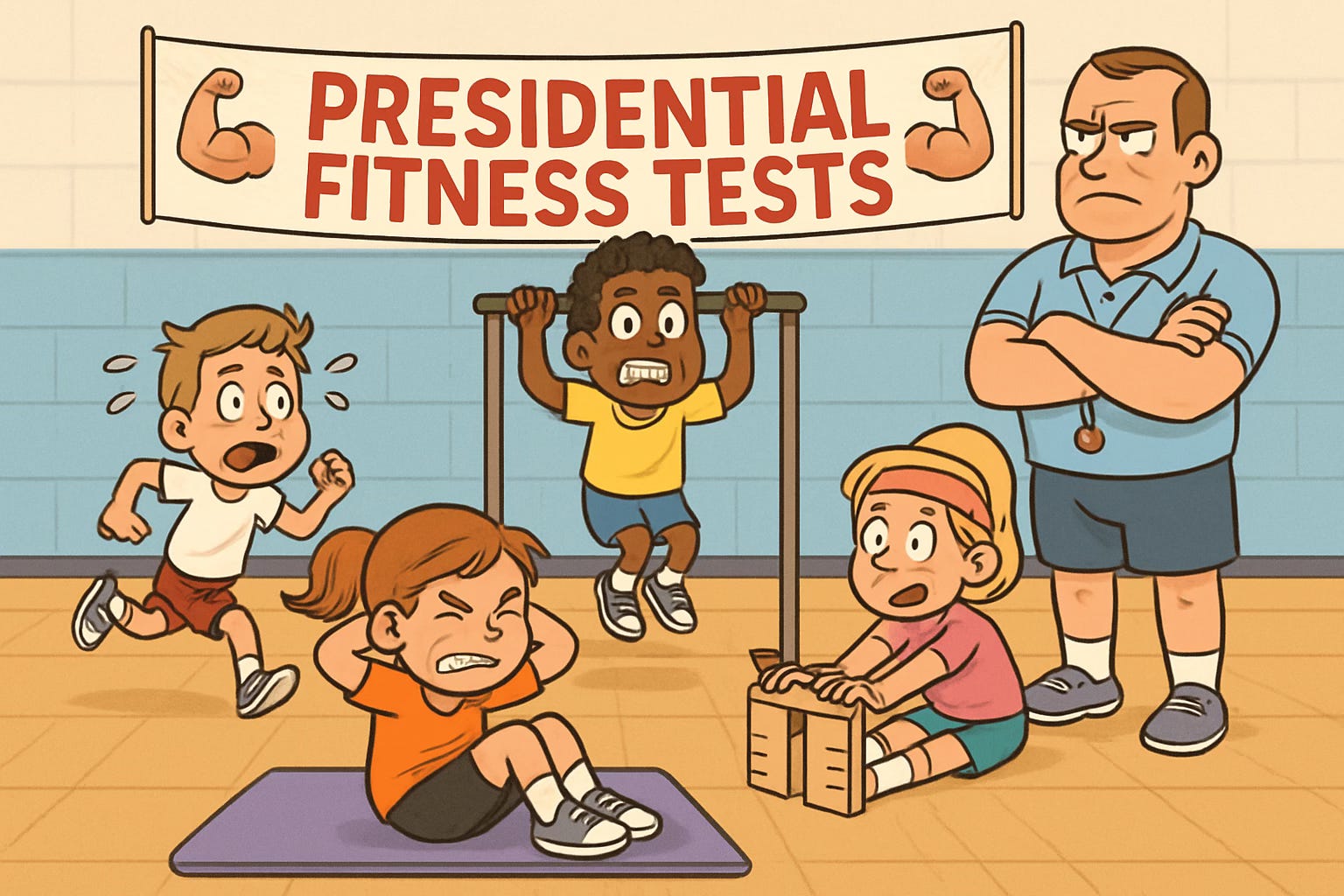
Thanks for all the feedback I received on last episode on using medical alert systems or personal emergency response systems (PERS) in your home. Also had a few great comments that came in from ‘Ask The PT’, the episode I did on what I have in my home PT treatment bag and bring to clients homes. I heard this helped a few listeners select home fitness equipment. Thank you! Please keep the feedback coming!In this episode, I hope to make you laugh a bit-we all need it right now!On this episode:I’m offering a satirical piece riffing on the recent ‘executive order’ last week announcing the return of the Presidential Fitness Test under President Trump. It plays with exaggeration, irony, and political commentary, and pokes fun at both the absurdity of the announcement and the disconnect between public health initiatives and political accountability. I even end with my comment that this episode would make great content for a SNL skit if they haven’t done it already. I’m not sure I can’t stay up that late these days but if anyone know Colin Jost or Michael Che, please pass this show note along to them!Here’s the free SNL script below:TV Sketch / SNL Weekend Update About Presidents Fitness Test[Colin Jost]: Big news this week—Donald Trump has signed an executive order bringing back the Presidential Fitness Test in schools. Because when I think of physical health, I think of... a 78-year-old man who considers walking to the podium cardio.[Michael Che]: The test will include mile runs, push-ups, and sit-and-reach. Which is ironic, because the only thing Trump has ever reached for is a second scoop of ice cream.[Colin]: A spokesperson says the program is part of a new initiative called Make America Healthy Again, or MAHA. It replaces Michelle Obama’s “Let’s Move” with Trump’s version, “Let’s Waddle.”[Michael]: There’s now talk of requiring members of Congress to take the test as well. Which would be great—because nothing says ‘qualified to lead’ like watching Lindsey Graham try to climb a rope in a suit.[Colin]: Trump reportedly declined to take the test himself, saying, quote, “I already passed the Presidential Golf Cart Endurance Trial—18 holes, no breaks, very sweaty with heel spurs and a few extra ball drops by my caddy but that’s not cheating kids!”That’s all, have a good night! (and I hope this made you laugh, we all need it right now)!Comments welcome by reaching out below on my Substack Feed! This is a public episode. If you would like to discuss this with other subscribers or get access to bonus episodes, visit achievebalance.substack.com
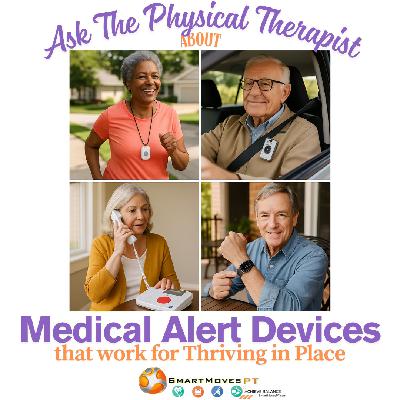
Here’s a fast start guide to help seniors and loved ones evaluate and purchase the best medical alert systems (aka Personal Emergency Response Systems or PERS) for home safety and fall prevention. I’ll be diving deeper into this topic for a new module in my Believe in Balance course. Below is a summary of some of my early research with quick tips to consider when evaluating medical alert systems. Top independently reviewed devices are included with links to learn more and order. Thanks for reading Achieve Balance! Subscribe for free to receive new posts and support my work.Why Consider a Medical Alert System?* Provides 24/7 emergency help at home or on-the-go.* Reduces risk of delayed medical care after falls.* Supports independence and peace of mind for seniors and loved ones.Key Features to Look For* Fall Detection: Automatically alerts help when a fall is detected.* Type of Monitoring: Landline, cellular, or GPS-based for mobile use.* Response Time & Center Quality: 24/7 certified monitoring.* Ease of Use: Simple wearables and easy setup.* Cost & Contracts: Watch for hidden fees and long-term agreements.* Discounts and Benefits: Check Your Insurance Coverage, ie) Medicare Advantage Plans, AARP and possible coverage with Veterans benefitsTop-Rated Systems at a Glance1. Medical Guardian* Why it stands out: Rated Best Overall by NCOA; fast response, long range, diverse device options * Offers home base, mobile pendants, smartwatches, GPS on-the-go.* Monitoring starts around $29.95–$36.95/month, no long-term contract 2. Bay Alarm Medical* Touted for outstanding customer service, price-lock guarantee, and discounts * Basic plan starts at $24.95/month, with fall detection add-on (~$10/month) 3. MobileHelp* Best Value pick: lowest starting cost (~$24.95/month), no hidden fees, 30-day trial * Offers in-home and on-the-go devices; fall-detection pendants; 4G LTE connectivity. Honorable MentionsLively – integrates with Jitterbug phones, offers fall detection pendants ADT Medical Alert – lifetime warranty, no hidden fees, cellular/base range options Action Steps ✅ Decide: Do you need a home system or mobile coverage (for outdoor use)?✅ Prioritize: Fall detection is essential for higher-risk individuals. ✅ Check: Trial periods and avoid long-term contracts. ✅ Review: Compare monthly & upfront costs carefully. ✅ Test: Use trial periods to confirm comfort and reliability.“What about using my Apple Watch with the Fall Detection Feature??”I cover this option and the pros and cons, with costs in my new courseTrusted Resources & Reviews* National Council on Aging (NCOA): ncoa.org* SafeWise: safewise.com* Consumer Reports: consumerreports.org* SeniorLiving.org: seniorliving.orgFinal Tips* Best Overall: Medical Guardian — full-featured options and strong support.* Best Value: MobileHelp — affordable and transparent.* Best Budget: Bay Alarm Medical — lowest price with good service.Stay Safe, Stay Independent- Take Charge of Your Health!!To learn more about my upcoming new Believe in Balance Course with a comprehensive review of fall detection and medical alert systems subscribe to my Substack and podcast for updates.Thanks for reading Achieve Balance! Subscribe for free to receive new posts, course updates and support my work.For a personalized comparison chart or for local deals get on my list, and always talk with your healthcare provider or reach out to a trusted aging services advisor or Certified Aging in Place (CAPS) professional for best fit for your individual needs.Resources and Disclosures: I am an Amazon associate and the links in this post are connected to my account. This does not affect my evaluation of the products listed. They were all independently tested for 2025 by the reviews mentioned in this article. Purchasing through my links does not change the price you pay, all current offers and pricing are up to date and adjusted for sales on Amazon’s platform by the vendor and reflected here. This is a public episode. If you would like to discuss this with other subscribers or get access to bonus episodes, visit achievebalance.substack.com
Believe in Balance Podcast Episode 10Bright Minds: A Campaign to Empower the Next Generation Against StrokeIn 2006, I experienced a life-altering stroke. As a father, nutritionist, and physical therapist, I faced both personal and professional crossroads. What challenged me most in the aftermath wasn’t just my own recovery—it was trying to explain what had happened to me in a non threatening way to my young children who were all under 8 years old at the time of my stroke. I quickly discovered that stroke education for kids was virtually nonexistent, and the materials that did exist were either too clinical or too frightening for young minds to digest.That moment sparked the idea that would later evolve into several iterations of my Bright Minds Campaign. I’ll cover this program in this episode.To learn more about this program check the resources linked below or message me with your thoughts.Resources:Lessons Learned and Video Update on Bright Minds https://knowstroke.substack.com/p/lessons-learned-from-my-bright-minds Main Bright Minds Landing Page https://www.know-stroke.org/brightmindsThanks for reading Achieve Balance! This podcast and post is public so feel free to share it. This is a public episode. If you would like to discuss this with other subscribers or get access to bonus episodes, visit achievebalance.substack.com
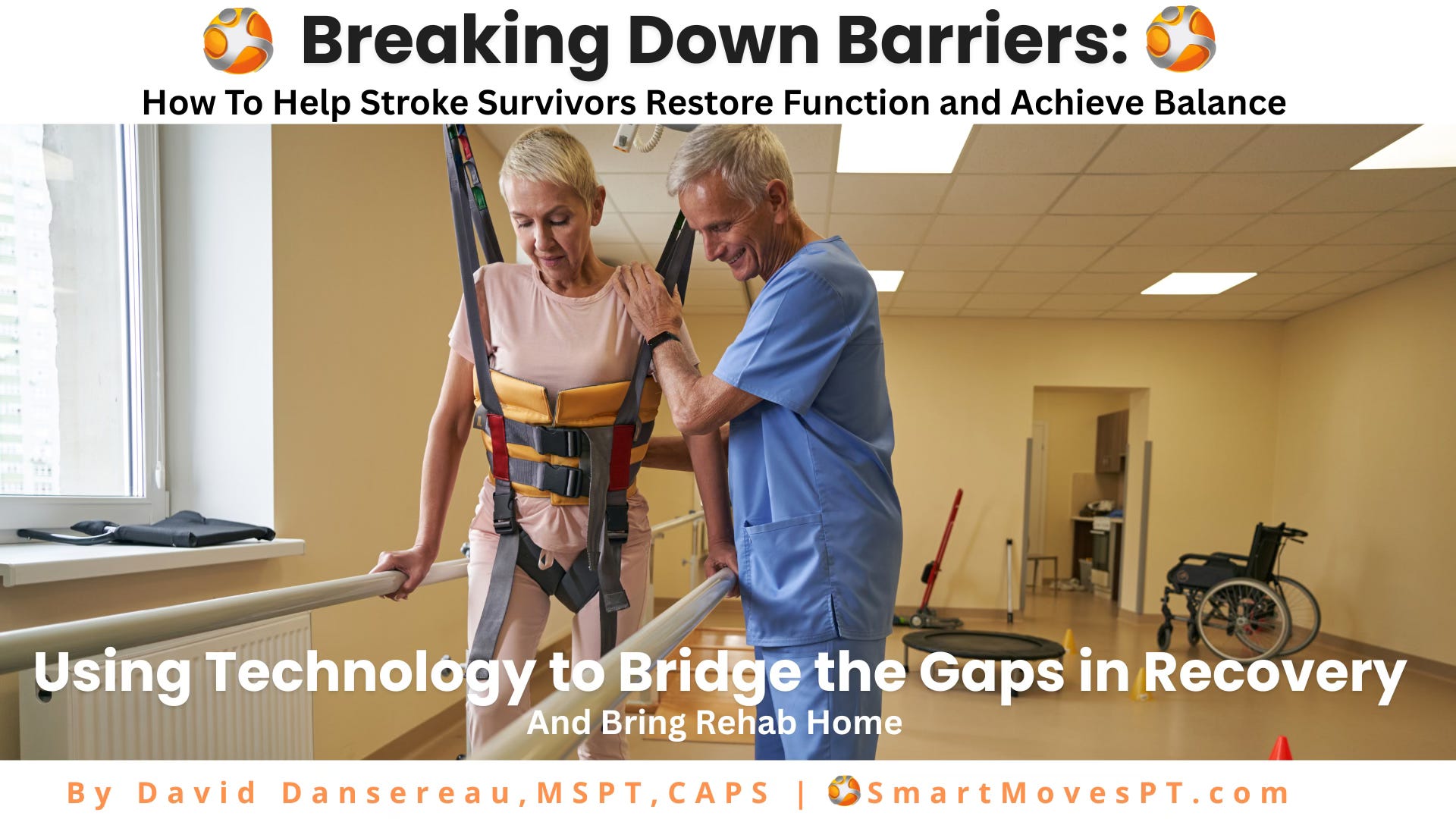
Thanks for reading Achieve Balance! Subscribe for free to receive new posts and support my work.Measuring Outcomes with Tech-Enabled Solutions to Overcome the 'Slinky Effect'The "Slinky Effect," as I described in my last Linkedin article and on my Know Stroke blog, refers to the inconsistent and often regressive nature of stroke recovery, where patients experience periods of progress followed by setbacks often caused by lack of services especially in the later phases of longitudinal care planning and support. This is often where the Slinky bends towards a downward spiral in the rehab outcomes curve I demonstrated in my video. This phenomenon highlights the need for continuous, adaptive, and engaging rehabilitation strategies to maintain momentum in recovery and support survivors throughout their individual recovery journeys. Emerging technologies offer promising solutions to address these challenges, providing innovative approaches to enhance and sustain stroke rehabilitation. The sad reality is, many of these tech rehab solutions will never get to market and when they emerge from university research labs the challenge just begins. Getting these rehab tech enabled solutions into users hands, around their waists, or on their feet, and bringing rehab into their home so they can benefit is an uphill climb. Overcoming these rehab barriers in stroke is something I’ve been writing about and building solutions for during the last half of my career and will be a major theme in my upcoming new book, Closure After Stroke.- David DansereauI’ve been blessed throughout my long health and rehab career to have provided care in many roles, from corporate health, wellness and research, to hospital based skilled inpatient, outpatient and home rehab roles, to owning multiple rehab and wellness private practices, to consulting in rehab tech with founders looking to understand clinical rehab workflows, to a clinical lead role in a university engineering and innovation lab studying wearable technologies in medicine , to teaching and mentoring at university on digital health, volunteering for health advocacy and career mentoring in public schools, to a startup founder with many lessons learned in digital health and telerehabilitation reimbursement, and finally to a forever patient advocate to help my clients get access to these great technologies to take charge of their own health, I’ve seen and tried just about all of it and that’s why I’ll be sharing my lessons learned in my new book and providing a brief summary in this podcast episode on the categories of technologies that have potential to improve stroke care and optimize long term stroke outcomes. Categories of rehab tech highlighted in this episode:* Category 1: Wearable Technology for Home Monitoring and Real-Time Feedback* Category 2. Supported Gait and Robotic-Assisted Therapy* Category 3. Virtual Reality (VR) and Augmented Reality (AR)* Category 4. Functional Electrical Stimulation (FES)* Category 5. Telemedicine and Remote Monitoring* Category 6. Music-Supported Therapy* Category 7. Artificial Intelligence (AI)-Powered Rehabilitation PlatformsBy integrating these technological advancements into stroke rehabilitation programs, we can address the challenges posed by the "Slinky Effect," providing patients with continuous, adaptive, and engaging therapy options that they deserve to promote sustained recovery and improved quality of life.Full chapter deep dive of this podcast episode will be released soon on Know Stroke.Thanks for reading Achieve Balance! Subscribe for free to receive new posts and support my work. This is a public episode. If you would like to discuss this with other subscribers or get access to bonus episodes, visit achievebalance.substack.com

Believe in Balance Podcast Episode 9By David Dansereau,MSPT Nutritionist, and Volunteer School Health EducatorIn a deeply concerning move last month and policy shift away from ‘Making America Healthy Again', the U.S. Department of Agriculture announced it is cutting $1 billion in funding from two key programs that support schools and food banks in purchasing fresh food from local farms.These programs are the Local Food for Schools Cooperative Agreement Program and the Local Food Purchase Assistance Cooperative Agreement Program. Both initiatives enabled schools and food banks to procure fresh produce, dairy, and meats directly from local farms and ranchers. The termination of these programs is shortsighted, is poised to have detrimental effects on public health, particularly among vulnerable populations, and may lead to increased healthcare expenditures in the long termThis decision threatens to unravel the slow progress schools have made in improving access to nutritious food for underserved communities, especially children.As a healthcare professional, nutritionist, and volunteer school health educator for over a decade also serving on multiple school health and wellness committees in my district to try to bring more opportunities to support the health of young bright minds, I see this as a step backward—not only for public health but for the sustainability of our entire healthcare system.I’ll unpack it all in this episode!Thanks for listening to this Believe in Balance Episode. Join me over at Achieve Balance to chime in! This episode and linked post is public so feel free to share it.Chime in!Connect with me on Linkedin where this article and podcast episode originated!Achieve Balance Article- The USDA’s $1 Billion Federal Food Cuts Jeopardize the Health of America’s Youngest Bright Minds and Our Future Healthcare System This is a public episode. If you would like to discuss this with other subscribers or get access to bonus episodes, visit achievebalance.substack.com
Episode 8Did you recently receive a direct mailer to your home from Hinge Health for virtual physical therapy? I’ll break this offer down in this episode of Believe in Balance.If you don’t have time to listen to the full episode, here’s a quick tip. Check out the fine print along with your health insurance benefits plan administrator. Read many patient stories in the social forums to be sure free, really means free or just no copay and billed to your insurance. There’s a big difference.Even if you just want that “free massage gun”.Read my article on Linkedin referenced in this episode: https://www.linkedin.com/pulse/battle-pt-anywhere-david-dansereauChime in! This is a public episode. If you would like to discuss this with other subscribers or get access to bonus episodes, visit achievebalance.substack.com
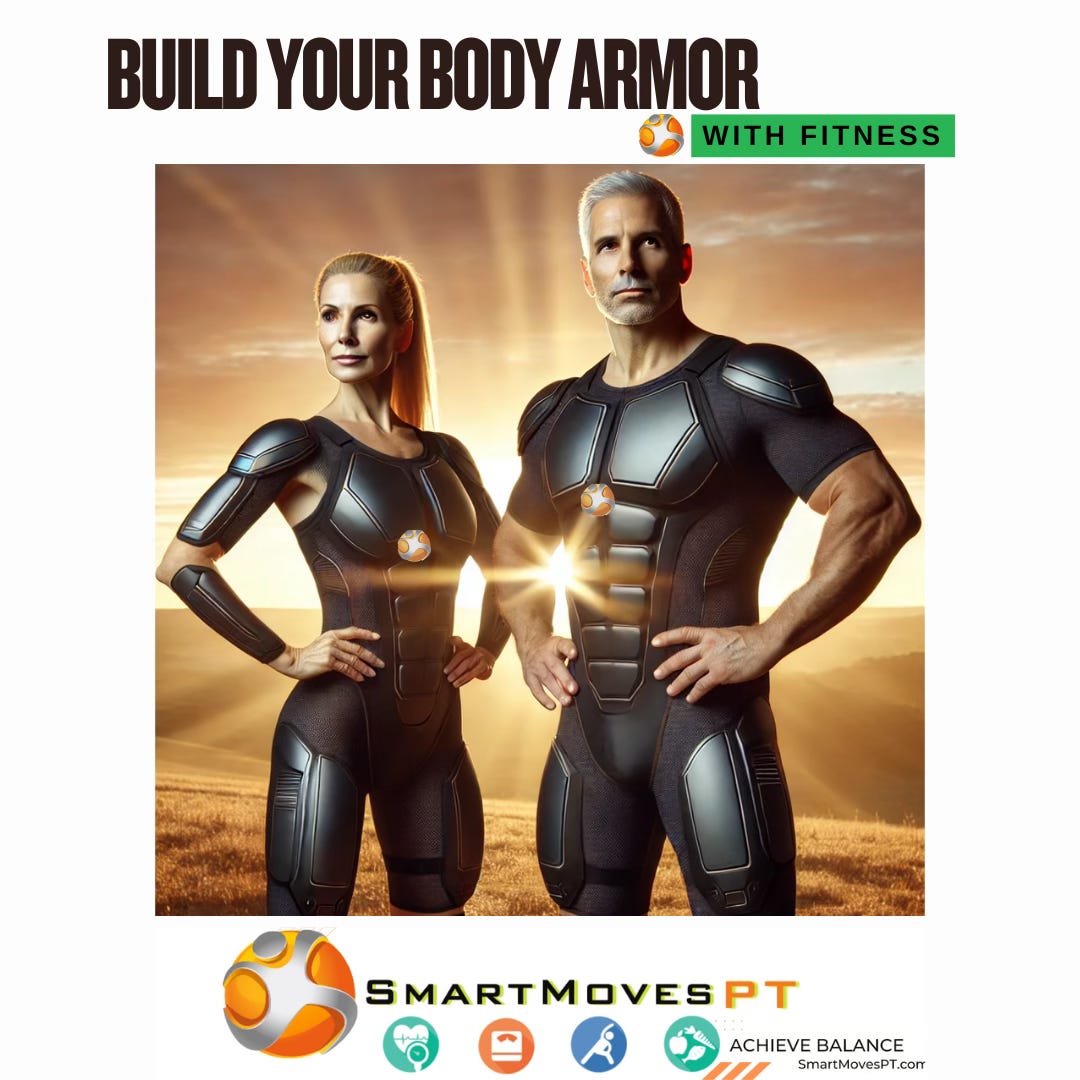
Greet Your Day With MovementArticle by David Dansereau,MSPT at Achieve BalanceGreeting your day with movement provides the most valuable return on investment, your improved health.Building fitness is like building your own body armor and the time invested can pay lasting dividends. - David Dansereau, MSPTStaying strong and fit is the most powerful way to prepare your body and mind for the challenges ahead. As a seasoned physical therapist and movement expert, I’ve seen firsthand how intentional morning movement can prime the nervous system, enhance mobility, and fortify resilience against daily stressors.Whether it’s starting the day with a deep breathing ritual, stretching, walking, strength training, or dynamic mobility work, incorporating movement into your morning routine builds a foundation of strength and vitality that lasts throughout the day. Body ArmorI equate starting your day with movement to building your body armor or suiting up for the day ahead with fitness. I’m blessed to be able to work with many clients (I refer to them as my athletes) that are challenged by their mobility and realize how exercise is their lifeline to continued independence. Many of my athletes of all ages have had health challenges and diagnosis that have impaired their mobility. Conditions that include MS, Parkinson's Disease and stroke or other brain injuries and they come to realize exercise is their best medicine to fight back against an unfair set of circumstances.Fitness and continued movement is indeed their body armor and it can be yours too especially if you have been blessed with good health now and desire to continue to thrive and build reliance as you age. Thanks for listening and reading Achieve Balance! Subscribe for free to receive new posts and support my work.In fact on Episode 70 of our Know Stroke Podcast we were joined by occupational therapist, adaptive fitness expert and founder of Fit to Function Recovery Gym, Jenna Muri-Rosenthal who spoke to the power of building fitness as the opposite of sickness. I love her quote heard in this soundbite!“What is really the opposite of sickness? It’s not just wellness, it’s fitness”. -Jenna Muri-Rosenthal of Fit to Function Recovery, Boston MAThe Science Behind Morning MovementYour body is designed to move. After hours of sleep, the body naturally experiences stiffness due to decreased circulation, joint fluid viscosity, and muscular tightness. It’s oftentimes, we are being less active throughout the day that causes this as opposed to blaming it simply on aging and things ‘slowing down’.Either way, movement acts as a reset button at any age, stimulating circulation, oxygenating tissues, and enhancing neuromuscular coordination and good mood enhancing hormones.Here’s what one of my 70 year old intentionally fit clients said recently about how they are using fitness as their best investment to harness their own super powers!I’m no longer ‘faster than a speeding bullet’. And I ‘can no longer ‘leap tall buildings in a single bound’.I realize I am now older. But I’m still pretty good at what I do when I’m called on! -JBHere’s what happens when you greet your day with movement :* Increased Blood Flow & Oxygenation: Movement increases circulation, delivering oxygen and nutrients to muscles, joints, and the brain. * Improved Joint Mobility & Flexibility: After a night of inactivity, synovial fluid (your joints’ natural lubricant) is stagnant. Gentle movement stimulates its production, reducing stiffness and preparing the body for physical activity. * Enhanced Neuromuscular Activation: Morning exercise activates key stabilizing muscles, improving posture, coordination, and balance. * Stress Reduction & Mental Clarity: Exercise releases endorphins and lowers cortisol levels, reducing stress and improving mood. * Metabolic Boost & Fat Burning: Morning movement jumpstarts metabolism, encouraging fat oxidation and improving insulin sensitivity. * Boost BDNF: Exercise has been shown to increase BDNF (brain derived neurotropic factor) levels in the brain, which can have numerous benefits for mental and physical well-being. BDNF is a protein that plays a crucial role in brain health, including neurogenesis (the growth of new neurons), neuroplasticity (the brain's ability to adapt and change), and cognitive function.* Habit Stacking: PT Pro Tip-Get it done early in the day, you’ll have less excuses this way to put it off until you get home when there will be more excuses to ‘do it tomorrow’. These small wins start stacking up into lasting daily habits and exercise is often the gateway to spark other healthy behavior changes!A Simple Morning Routine to Get Started Building Your Own Body ArmorHere’s a Morning Ritual for Better Physical and Mental StrengthStart the day with deep breathing and gratitude (focus on what you are grateful for about your body instead of what is ‘wrong’ or what you may currently dislike-or simply put-be kind to yourself!). Then layer in a bit more movement after this mental warm-up.Repeat affirmations: "This morning, I am getting stronger." "I am building my body armor."Here’s How: You don’t need an hour-long workout—just 5–15 minutes of intentional movement can make a difference. I prefer this done outside if possible and while the sun is rising to greet the day.Try this:* Dynamic Deep Breathing and Stretching (2-3 min) – Neck rolls, spinal twists, and hip circles to loosen up and greet the day.* Bodyweight Activation (5 min) – Squats, push-ups, lunges, and planks for strength.* Cardio Boost (3-5 min) – Jumping jacks, jump roping,high knees, or a brisk walk to elevate heart rate. Combine 2-3 into a repeat circuit if you have more time!SmartMoves PT Final Thoughts:Your morning movement is an investment in your physical and mental resilience. By prioritizing movement, you enhance your ability to take on the day’s challenges with strength, focus, and confidence. Build your body armor—one breath, one step, one stretch, one rep at a time then keep moving forward.Once you get started, you’ll soon find you miss it if you skip a few days! If you need help getting started, reach out to a local PT, we are the movement experts after all.Chime in!What are you doing to build your body armor?Join the conversation! This is a public episode. If you would like to discuss this with other subscribers or get access to bonus episodes, visit achievebalance.substack.com
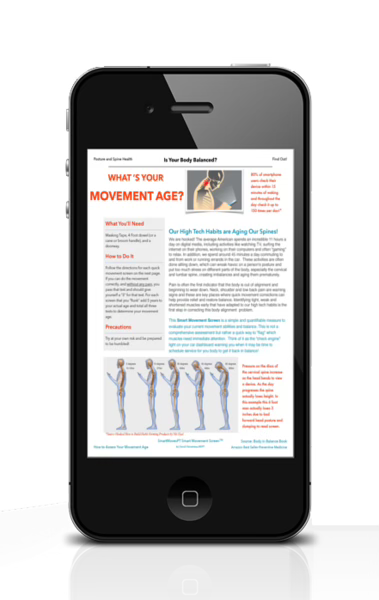
Our High Tech Habits Are Hurting Our Spines!Thanks for reading Achieve Balance! Subscribe for free to receive new posts and support my work.We are hooked:(The average American spends an incredible 11 hours a day on digital media, including activities like watching TV, and surfing the internet. Then we often sit and ‘game’ at the end of the day to relax or ‘doom scroll’ on social media after coming home from an oftentimes long seated commute in our vehicles.All these extended seated positions can wreak havoc on a person’t posture and put too much stress on different parts of the body, especially the cervical and lumbar spine, in effect aging them prematurely.So What Can We Do About It?Take my Smart Movement Screen! It’s a simple and quantifiable mobility measurement tool used to evaluate your current movement abilities and balance. This is not a comprehensive assessment rather a quick screen and preview from my ‘Exercise-Rest-Recovery Module’ to ‘flag’ which muscles might need attention. On this replay, I’m offering my resource toolkit as well to help you discover your ‘Movement Age” and corrective exercise suggestions if you need help.Think of it as a ‘check engine’ light on your car dashboard warning you when it may be time to schedule service, in this case for your body to get back in balance!Watch the Video Then Try The Smart Movement Screen! Also added bonus see the balance and fall screening assessment I use in practice as part of this movement screening preview!My Mobility Assessment Video is Back Open as a Free Gift from my Achieve Balance Course Module 5 for a Limited TimeAbout Your Course HostDavid Dansereau,MSPTDavid is the author of the Amazon Best Selling Book in Preventive Medicine -Body in Balance. He is also the Founder of SmartMovesPT,LLC and the Co-Host of the Know Stroke Podcast. In this special webinar, David will be opening back up a module from his Achieve Balance Course designed to provide participants with the tools and skillset to take charge of their health and restore their body back to balance. This gift is part of his Smart Movement Screen to help you measure your mobility, before you begin to build a corrective exercise plan.Remember, You Can’t Manage What Your Aren’t Measuring.So Start Measuring Your Mobility Today!Did you know? 80% of smartphone users check their devices within 10 minutes of waking and throughout the day check their devices up to 150 times-It’s no wonder our spines are not aligned!!- David Dansereau,MSPT,CAPS This is a public episode. If you would like to discuss this with other subscribers or get access to bonus episodes, visit achievebalance.substack.com

Comments

Download from Google Play

Download from App Store
 United States